Published on · updated on
Some links on this page are affiliate links: if you buy through them, Estate Romana receives a small commission, at no extra cost to you. As an Amazon Associate, Estate Romana earns from qualifying purchases.
Rome in 3 days with kids works if each day has just one area, one big outdoor moment and a real break after lunch. The first day is the day of gladiators and chariots: Colosseum, Forum, Circus Maximus and the Bocca della Verità. The second is the green day, all in and around Villa Borghese, with the Bioparco in the morning and Explora, the children’s museum, in the afternoon. The third is the center on foot, from the fountains to the cats of Largo Argentina, with the evening in Trastevere.
That’s 13 stops in all, four or five a day, and none takes more than half a day. Plenty of things are left out, Vatican Museums included, and further on we explain why. Below you’ll find the schedule table, the button to save it, then each day in the order it makes sense to do it, with what needs booking and what you can skip when the kids are tired.
Data checked on October 3, 2026 against the websites of the Colosseum Archaeological Park, the Bioparco di Roma, Explora Museo dei Bambini and the Ministry of Culture for the Pantheon. Visit times and walking distances are estimates, calculated at the pace of a family and not that of an adult alone. Hours and entry rules for places not mentioned should be checked on the operator’s website.

Rome in 3 days with kids in brief
- What: an itinerary for Rome in 3 days with kids, 13 stops divided into three areas of the city, with at most five stops a day and a long break after lunch.
- Day 1: Colosseum and Roman Forum in the morning, then Circus Maximus and the Bocca della Verità in the afternoon, all in the same area on foot.
- Day 2: Bioparco di Roma in the morning, picnic at Villa Borghese, the Pincio terrace and Explora Museo dei Bambini at Via Flaminia 80/86, open Tuesday through Sunday.
- Day 3: Trevi Fountain, Pantheon, the cats of Largo Argentina and Piazza Navona, with dinner in Trastevere.
- Book ahead: the Colosseum, free for under-18s but with mandatory booking for them too, and Explora, which runs in shifts of an hour and 45 minutes.
- Good to know: Explora is closed on Mondays and the Bioparco closes at 17:00 from October 25 to December 31, with last entry an hour earlier.
- Leave out: the Vatican Museums with kids under 10, because the route is long, one-way and almost always crowded.
The Rome in 3 days with kids schedule
| Day | Morning | Afternoon | Evening |
|---|---|---|---|
| 1. Gladiators and chariots | Colosseum, Roman Forum | Circus Maximus, Bocca della Verità | Rest and dinner near the hotel |
| 2. The green day | Bioparco di Roma (Rome Zoo) | Villa Borghese, Pincio, Explora | Piazza del Popolo |
| 3. Fountains, domes and cats | Trevi Fountain, Pantheon | Largo Argentina, Piazza Navona | Trastevere |
Save this itinerary in My Trip
The button opens “My Trip” with the 13 stops already loaded day by day. There you add the dates, the tickets you’ve bought and the hotel, and remove the stops you’re not interested in. The itinerary stays on the phone or computer you’re using.
Day 1: from the Colosseum to the Circus Maximus
The first day is the hardest, which is why it goes first, when curiosity is at its peak and legs are fresh. The Colosseum is the stop almost every kid already knows from books or cartoons, and it’s worth making the most of that: tell them beforehand who the gladiators were, where the animals came in, how the arena was covered with the velarium. Inside, an hour and a half is enough for the youngest, two hours for those who are 10 or older.
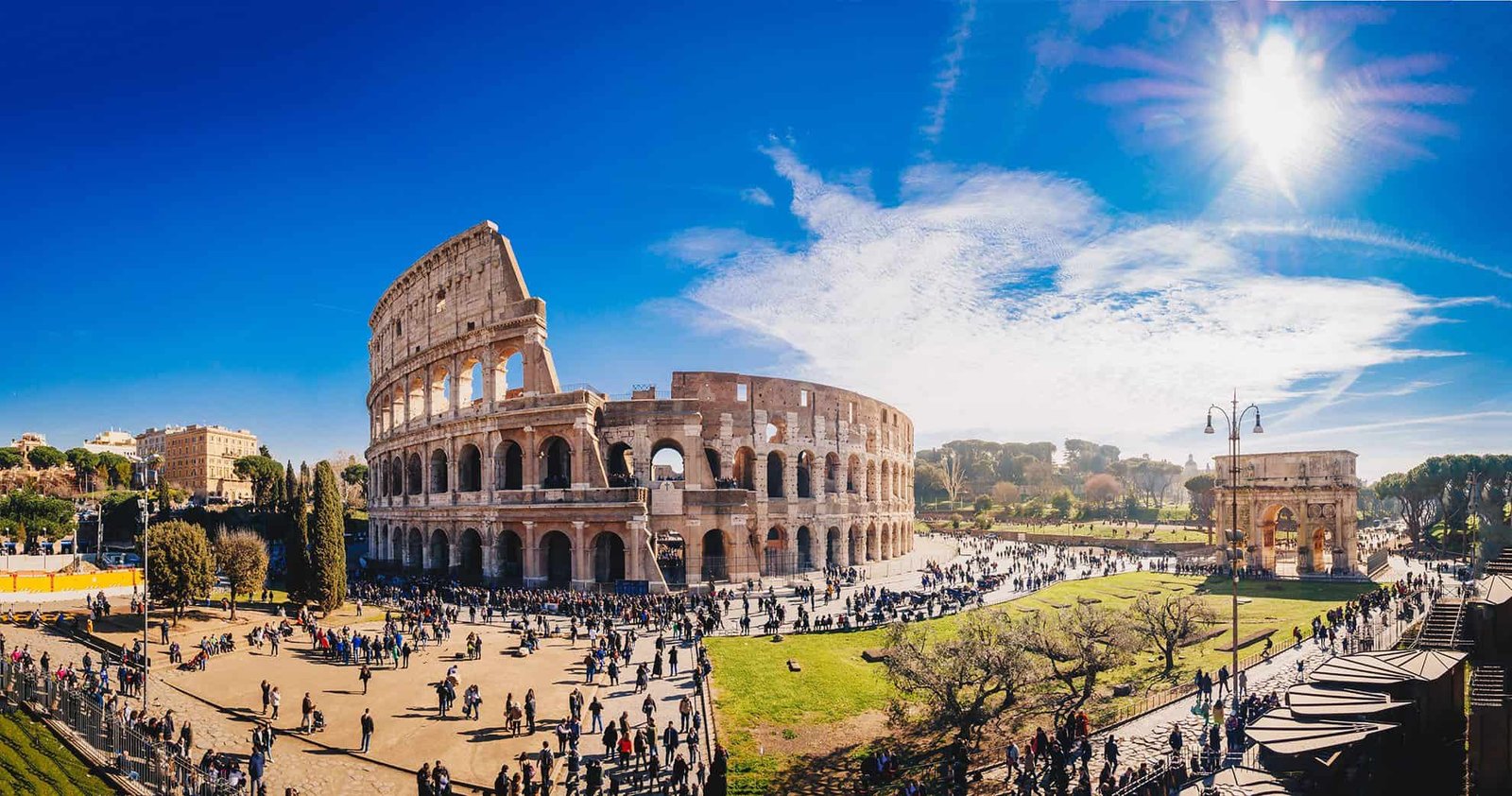
What to book ahead: the ticket. According to the Colosseum Archaeological Park’s page on free admission, under-18s get in free but must still book their own ticket on the official sales site. Dates open 30 days before the visit, and from October 25, 2026 to February 28, 2027 the area closes at 16:30. If the official slots are sold out, there are still admission with audio guide on GetYourGuide, the Tiqets options for the Colosseum or, for older kids, a tour with a licensed guide of the Colosseum, Forum and Palatine.
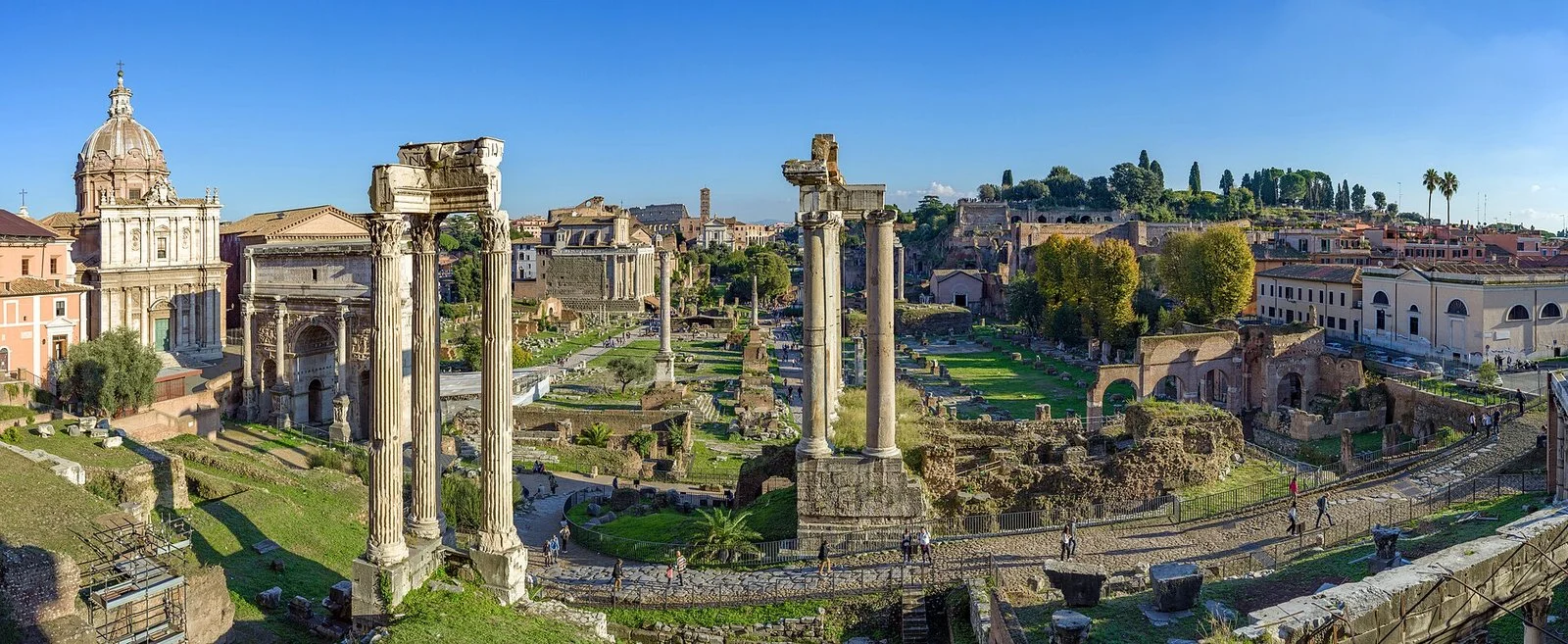
The Roman Forum is included in the same ticket, but with kids it has to be taken in small doses. It’s ruins scattered over uneven ground, with little shade, and at age six they make less sense than the Colosseum. The advice is to go in, pick three things to look for together (the Arch of Titus, the House of the Vestals, Via Sacra) and leave after an hour, before boredom sets in. A light stroller gets through, a heavy one doesn’t: for the youngest, a baby carrier is better.
For lunch and rest you head toward the Circus Maximus, some 10 minutes on foot, or one stop on metro line B. It’s a big, long lawn where chariots once raced, and today it’s the best place of the day to let the kids run. Telling them that under that grass was the biggest stadium in Rome works better than any reconstruction. Bring something to eat and stay at least an hour.
The last stop is five minutes away: the Mouth of Truth, in the portico of the church of Santa Maria in Cosmedin. The photo with your hand inside the mask is one of the memories kids take home most gladly, and the legend of the liar who loses his hand is best told beforehand, in line. The line can be long in the afternoon: hours are on the operator’s website. Along the way stop at a nasone, the public drinking fountains with drinkable water: teach the kids right away to plug the spout with a finger so the water comes out of the little hole at the top.
If you’re tired, what to skip: the Forum. The Colosseum alone is enough to make the day, and the Circus Maximus is a few minutes away anyway. In the evening, no plans: dinner near the hotel and early to bed, because the second day starts when the gates open.
Day 2: Bioparco, Villa Borghese and Explora
The second day is the reward for the effort of the first, and it’s the day kids remember most. It starts with the Bioparco di Roma (Rome Zoo), inside Villa Borghese. According to the Bioparco’s ticket page, until October 24 the park is open from 9:30 to 18:00 and from October 25 to December 31 from 9:30 to 17:00, with ticket offices closing and last entry an hour earlier. Kids under one meter tall don’t pay. For the others there’s a reduced rate up to age 10.
Allow three hours, which is an estimate: with little kids it’s enough, with older ones who want to read every sign it isn’t. The fixed-date ticket is bought on the official site. If you prefer a single app for all the tickets of the trip, you’ll find the Bioparco on Tiqets too. Arriving at opening changes the visit: the animals are more active in the morning and the paths are still empty.
Once out of the Bioparco you’re already inside Villa Borghese
, the most convenient park in the center for a family. It’s time for a packed lunch on the lawn, or a sandwich bought before going in. The little lake with the little temple, the paths where you rent bikes and pedal rickshaws, and the historic rides keep the kids busy with no need for a plan. Leave at least a couple of hours free: it’s the long break of the day, and the most effective.
Around mid-afternoon you cross the park to the Pincio, the terrace overlooking Piazza del Popolo. From above the kids see the square with the obelisk and, on clear days, the dome of St. Peter’s. You walk down the ramps to the square, a short walk and almost all downhill, which connects to the last stop.
From Piazza del Popolo you leave through the gate and in a few minutes along Via Flaminia you reach Explora Children's Museum of Rome. It’s a hands-on museum, designed for children from early childhood to elementary school. According to Explora’s website, it’s open Tuesday through Sunday, closed Monday, with four shifts of an hour and 45 minutes: 10:00, 12:00, 15:00 and 17:00. For this itinerary the right shift is the one at 15:00 or 17:00, to be booked on the museum’s online ticket office.
If you’re tired, what to skip: the Pincio. From the Bioparco you can also reach Piazza del Popolo by going down directly toward Piazzale Flaminio. If your trip falls on a Monday, swap: Explora doesn’t open, and this day should be moved to the second or third day, which hold up in any order.
Day 3: fountains, domes and cats
The third day is all on foot, but in short stages, and for the kids it’s a treasure hunt. You start from the Trevi Fountain, as early as possible: after mid-morning the crowd makes it hard to hold a child’s hand. The coin tossed over the shoulder is the ritual they like most, and it’s worth having one each already in your pocket. 20 minutes is enough. Close access to the basin follows the rules set by the city.
In 10 minutes you reach the Pantheon. According to the Ministry of Culture’s page, it’s open every day from 9:00 to 19:00, with last entry at 18:30, and the ticket is free for anyone under 18. Adults pay, and the minor’s ID may be requested at the entrance. The hole in the dome, through which light and rain come in, is worth the stop by itself: ask the kids where the water goes. Adults can get the ticket on the official portal or among the Pantheon admissions on GetYourGuide.
Another five minutes south and you reach Largo di Torre Argentina, the square with the remains of four temples below street level. A colony of cats lives here, looked after by the volunteers of the Cat Sanctuary at Largo Argentina: the kids look for them among the columns from the railing, and the story that Julius Caesar was killed right in this area wins them over. 20 minutes is enough. The sanctuary’s hours are on the operator’s website.
Lunch works well around Piazza Navona, which has the elongated shape of the Stadium of Domitian it is built on. It’s pedestrian, wide, with three fountains, and the kids can move around without cars. Street artists and portrait painters do the rest. If the afternoon is hot or the pace slows, it’s time to go back to the hotel for an hour or two.
In the evening you cross the Tiber on Ponte Sisto and have dinner in Trastevere, in the side streets rather than the main square. To book a table for families there’s TheFork, and for addresses the Estate Romana restaurant map. With older kids and energy to spare, from the neighborhood you can climb up to the Janiculum for the view.
If you’re tired, what to skip: Largo Argentina and Trastevere. The day also ends well at Piazza Navona with a gelato, which for many kids remains the best memory of the three days.
What not to put in an itinerary with kids?
The contrary position is this: with kids under 10 the Vatican Museums in three days aren’t worth the effort. The route to the
Sistine Chapel is long, one-way, often crowded, and you can’t turn back halfway. A tired child at the second kilometer of corridors ruins the morning for the whole family. If you want to see the Vatican, St. Peter’s Basilica with the square is free and takes an hour: it can be added to the evening of the third day, but it isn’t essential.
The other common mistake is cramming two big visits into the same day, for example the Colosseum in the morning and a museum in the afternoon. Adults hold up, kids don’t, and the second visit ends in tantrums. One demanding place a day, plus a park or a square to run in, is the measure that lasts through the third day. The same goes for theme parks outside the city: wonderful, but to be saved for a fourth day.
How to organize Rome in 3 days with kids
A few practical rules make more difference than any stop. Demanding visits go in the morning, when the kids are rested, and the early afternoon should be left free: an hour at the hotel or on a lawn is worth more than one extra monument. In the hot months water is not a problem, because in Rome the nasoni are everywhere. In the cold months the archaeological area closes early and the first day should start at opening.
A stroller is useful in parks and squares, less so in the archaeological area and on the cobblestones of the center. With kids under three the baby carrier is often the most comfortable solution, with a light folding stroller for the rest. For the older ones, a backpack of their own, with a water bottle and hat, makes them part of the trip. If the trip is in a few days, order now: the delivery date estimated at the time of the order is what counts, and many stores let you ship to the hotel, if the property accepts packages.
For those who want to see the center without walking too much, golf cart tours are an alternative designed precisely for families and small children. The best-reviewed options are the golf cart tour with artisanal gelato tasting, the one on Via Appia with the catacombs and the private night tour of Rome. Before booking, read the minimum age and the car seat rules on the product page.
Where to stay for this itinerary?
With kids the area matters more than ever, because the after-lunch break only works if the hotel is close. For this plan the best locations are three. The Monti neighborhood, a few steps from the Colosseum, convenient for the first day and served by metro line B. The Tridente, between Piazza del Popolo and Piazza di Spagna, right next to Villa Borghese and Explora. The historic center around the Pantheon, where the third day is all on foot, at higher prices.
For large families it’s worth looking for apartments or family rooms and filtering for crib and free cancellation. To compare areas there are Hotels.com and Booking.com. Trastevere is lovely in the evening but far from the metro, and for a family the morning trips get long.
How do you get around Rome with kids?
On foot within each area, with short metro rides between one area and another: line B for the Colosseum and the Circus Maximus, line A for Flaminio and Spagna. Distances between stops on the same day range from five to 20 minutes at an adult pace. With kids, count double. Tickets and rules for minors are on the website of Rome’s transit company.
If you want a single pass for transport and admissions you can consider the Rome City Pass by Turbopass, but with kids do the math carefully: the Colosseum and the Pantheon are already free for them. To arrive by train, schedules and family fares can be compared on Trainline. A car in the center isn’t needed. It becomes useful only for a day trip outside Rome, and in that case you rent it for a day with
Free2Move.
What to book before leaving?
Two things are essential: the Colosseum, even for the kids who get in free, as soon as sales open for your date, and Explora, choosing the afternoon shift. It’s worth getting the fixed-date Bioparco ticket ahead on weekends and long holiday weekends. The Pantheon ticket is for adults. The rest of the program, that is, squares, parks and Trastevere, requires no tickets.
Then the hotel, with a cancellable rate, and the trip. For those looking for one more activity for the kids, cooking workshops are a great idea for an evening: the gelato and ravioli class near Piazza Navona or the pizza and pasta one. The other experiences are among the activities in Rome on GetYourGuide and the attractions of Rome on Tiqets.
What changes if it rains?
The most exposed day is the second, almost entirely outdoors. If rain is forecast, swap it with another day and keep Explora, which is indoors: you can book two shifts on the same day, one in the morning and one in the afternoon. The Pantheon in the rain is a sight, with the water falling through the oculus, and the kids remember it. The wet Forum is slippery: in that case keep only the Colosseum. More indoor ideas are on the museums of Rome page.
And with one day more or less?
With two days you keep the first and the second, and the fountains of the center can be seen on the evening of the first day. With a fourth day the choices for families are many. The Catacombs of San Callisto and the Appia Antica Park go well together, with the visit to the catacombs of San Callisto. Villa Doria Pamphilj is the biggest park for running around. Cinecittà World is the movie-themed amusement park, for a full day.
Day trips outside Rome each require a full day. Ostia Antica is the Roman city where kids walk in the streets and houses, with admission with audio guide. The Park of the Monsters of Bomarzo is a wood of giant sculptures that thrills all ages. Lake Bracciano with the Odescalchi Castle combines beach and castle. Villa d’Este in Tivoli is liked for its water features. More ideas are in Near Rome.
What to bring for Rome in 3 days with kids
The right backpack lightens more than half the effort. For each category we point to several searches, because individual models often sell out. Prices change, so check them at the time of purchase.
Getting around
- Light travel stroller: folds with one hand, to take on the metro and buses.
- Baby carrier: for the Forum and the cobblestones, where wheels struggle.
- Child carrier backpack: for those who walk a lot with a child between one and three years old.
For the kids
- Kids’ backpack: their own, with their own things inside.
- Kids’ water bottle: to fill at the nasoni, with good, free water.
- Sun hat for kids: the Circus Maximus and the Forum are almost without shade.
- Sunscreen for kids: even in fall, in the middle hours of the day.
- Rain jacket for kids: more practical than an umbrella with a child by the hand.
To read and to play
- Rome guide for kids: to leaf through together the evening before each day.
- Books on ancient Rome for kids: gladiators and emperors before going into the Colosseum.
- Travel games for kids: for lines and the train.
- Roman legionary costume: for photos in front of the Colosseum, or for the return home.
Technology
- Power bank, 10,000 mAh: tickets, maps and photos drain the phone before evening.
- Volume-limited headphones for kids: for audio guides and the train ride.
- Bracelet or tracker for kids: extra peace of mind in crowded squares.
Frequently asked questions
Is Rome in 3 days with kids too little?
No, if you accept leaving something out. Three days are enough for the archaeological area, a day of parks and animals, and the center of the fountains, which are the three things kids remember most. What’s missing, like the Vatican Museums or day trips outside the city, is better in a second trip, when the kids are older.
Do kids pay for a Colosseum ticket?
No, under-18s get in free, but booking is mandatory for them too. This is stated by the Colosseum Archaeological Park, which refers to its own sales site for booking the free ticket. It’s best to do it together with the adults’ tickets, as soon as sales open 30 days before the chosen date, because the morning slots sell out early.
At what age is it best to bring kids to Rome?
From age six up, kids understand the stories of gladiators and chariots and walk enough to handle three days. With the youngest the trip works just the same, but it has to be built around the Bioparco, Explora and the parks, with the stroller or baby carrier. Between eight and 12 years old the itinerary can be enriched with Ostia Antica.
How much walking is there in three days with kids?
Between 15 and 20 kilometers in all, depending on detours and pace: it’s an estimate, not a measurement. The first day is the hardest because of the uneven ground of the Forum. The second is the lightest, because you spend a lot of time sitting in the park. The third is all flat, with stops a few minutes from each other.
Is Explora also suitable for older kids?
Explora is designed mainly for children from early childhood to elementary school. The museum’s website divides the activities by nursery, preschool and elementary school. With kids over 11 it’s better to replace it with another afternoon stop, for example a bike ride in Villa Borghese or a cooking class.
What to do if the trip falls on a Monday?
Move the green day to another day, because Explora is closed on Mondays. The three days hold up in any order: Monday can be devoted to the Colosseum and the Circus Maximus or to the historic center. Before leaving, also check the extraordinary closures of the individual places on each operator’s site.
How does “Save this itinerary” work?
The button under the table opens Estate Romana’s “My Trip” with the 13 stops already divided into the three days. From there you can add dates, remove or add places, mark the tickets you’ve bought and send the itinerary to whoever is traveling with you. No registration needed: the trip stays saved on the device you’re using.
Who wrote this and from what sources
The text comes from the editorial team of Tour Leader Pro, the Rome-based outfit that designs itineraries, visits and cultural events across Rome and Lazio. Hours, free admission and booking rules come from the websites of the Colosseum Archaeological Park, the Bioparco, Explora and the Ministry of Culture, as of the date given at the top. Visit times and distances are estimates. Let us know what you find changed.
Organizing three days like this, for your own family or with other families of friends, means fitting together timed bookings, museum shifts, closing days and the pace of the youngest. A useful resource for anyone organizing group trips is Tour Leader Pro. If Rome is just the first stop of a longer vacation, taking in the lake, the Tuscia and the Lazio seaside, a useful resource for putting together a multi-day itinerary is Italy Planner.