The Museum Transforms (URBS Construction Sites) at Museo Nazionale Romano, February 18 to December 16, 2026
In short. The Museum Transforms (Il Museo si trasforma) is the lecture series with which the Museo Nazionale Romano tells the public about the construction sites of the URBS program.
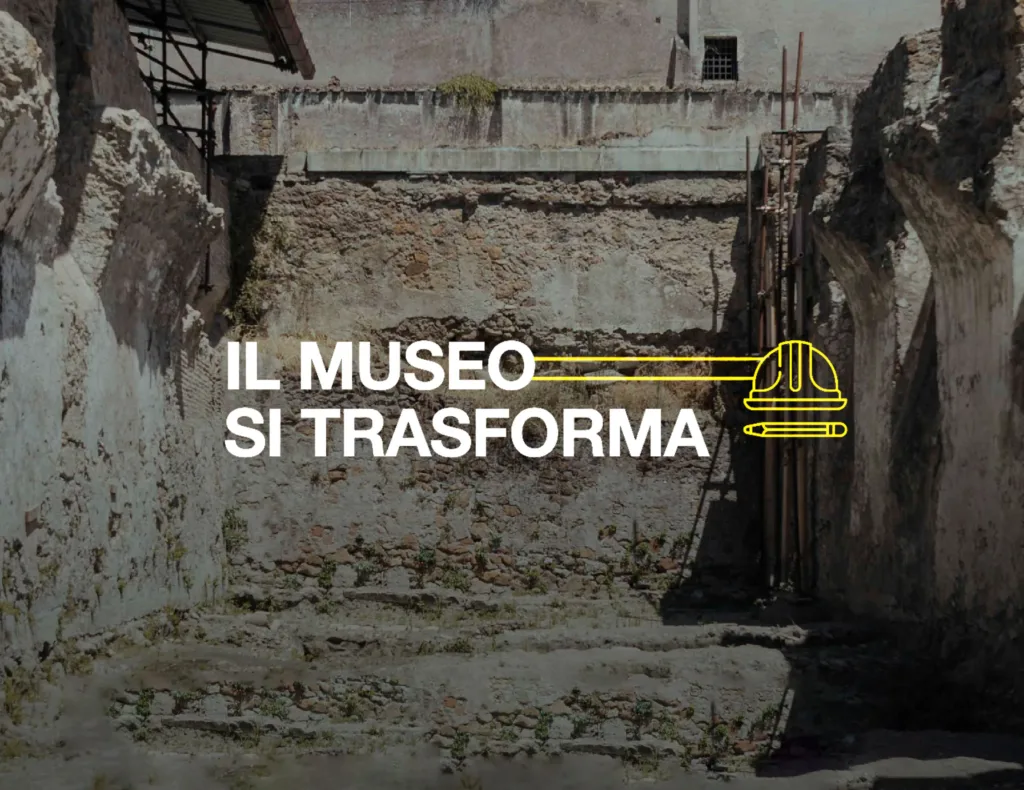
The Museum Transforms (Il Museo si trasforma) is the lecture series with which the Museo Nazionale Romano tells the public about the construction sites of the URBS program. From the city to the Roman countryside: nine meetings from February 18 to December 16, 2026, always on Wednesday at 17:00, coordinated by Federica Rinaldi and Saveria Petillo. After the meeting of Wednesday, October 21 at the Baths of Diocletian, two appointments remain on the calendar: Wednesday, November 18 at the Baths of Diocletian, at Via Enrico de Nicola 78, reachable from Termini station, and Wednesday, December 16 at Palazzo Altemps, at Via di Sant'Apollinare 8, near Piazza Navona. Entry is free within the limit of available seats, with mandatory booking on the booking link indicated by the official site of the Museo Nazionale Romano. The talks are entrusted to the working groups coordinated by the project leaders and works directors, with the designers and the firms involved. The lectures already held can be watched again on the Museum's official video channel.
Language: performed in Italian. No English version or English surtitles are announced.
The Museum Transforms at a glance: dates, venues, entry
Two meetings are still scheduled, at 17:00: November 18, 2026 at the Baths of Diocletian and December 16, 2026 at Palazzo Altemps, with free entry by booking.
The time
All the lectures begin at 17:00. It's a time designed for those who leave work in the early afternoon and for those who visit the museum the same day: you can go in in the morning, see the collections and return in the afternoon for the meeting.
The day
The series is held on Wednesday, once a month, and all the 2026 dates fall on the third Wednesday of the month. The regularity helps: those who follow the series know when the museum opens the doors of its construction sites.
Entry
Entry is free within the limit of available seats, with booking at the link indicated by the Museo Nazionale Romano on the initiative's official page. Free doesn't mean without rules: without a booking the seat isn't guaranteed.
Who organizes
The series is promoted by the Museo Nazionale Romano and coordinated by Federica Rinaldi and Saveria Petillo. The speakers are the working groups of the individual construction sites: project leaders, works directors, designers, firms.
For those who can't be there
The first four lectures at the Crypta Balbi, from February to May, have been published on the Museum's video channel and can be watched again. It's a valuable service for those who live outside Rome or come late to the series.
The complete program of The Museum Transforms 2026
The series The Museum Transforms is divided into three blocks, one for each venue: five meetings at the Crypta Balbi from February to June, three at the Baths of Diocletian from September to November, one at Palazzo Altemps in December.
Crypta Balbi, February to June
The first block took place at the Santa Caterina dei Funari venue, on Via dei Funari. On February 18 the subject was the Renaissance cloister. On March 18 the new data from the archaeological excavation and the prospects for its enhancement. On April 15 the new museum, presented as a challenge among protection, conservation and enhancement. On May 20 the shared spaces, with archives and libraries, and on June 17 the second part of the same theme, with laboratories and a study center.
Baths of Diocletian, September to November
After the summer break the series resumed on September 16 at the Baths of Diocletian with Rome before Rome: the new Museum. On October 21 the topic was the halls, with the restorations and installations under way. On November 18 it will be the new entrance and the new visitor routes.
Palazzo Altemps, December
The series closes on December 16 at Palazzo Altemps with the restoration of one of the museum's rooms and the redevelopment of the access areas, as the official program indicates.
The editors' reading
The program has a clear logic: start from the most radical construction site, the Crypta Balbi, move to the largest venue, the Baths, and close with the most refined, Altemps. Of all of them, the two evenings of October and November at the Baths are the most useful to those who want to understand how the Museo Nazionale Romano will change in the coming years.
The URBS program: from the city to the Roman countryside
URBS. From the City to the Roman Countryside is the large works project at the center of the series, funded, according to the Ministry of Culture's presentation, by the funds of the National Complementary Plan to the PNRR.
A museum under construction
The Museo Nazionale Romano chose not to close its doors during the works, but to tell them. The series was born precisely for this: to show the public the interventions under way and their progress while they happen, and not after the fact.
Who speaks
The choice of speakers is the real novelty. These aren't lectures by art historians on the collections, but meetings with those who materially transform the buildings: project leaders, works directors, designers and firms. It's rare to hear a firm explain, in a state museum, how it worked.
Why it interests non-specialists too
A restoration site inside the Baths of Diocletian or at Palazzo Altemps isn't just a technical subject. It decides how we will see the works, where we will enter from, how much time we will spend in the rooms. Those who often visit Roman museums have an interest in knowing how they will change.
The title
The program's subtitle, from the city to the Roman countryside, says the ambition: not a single building, but a system of places. The lecture series shows the part of it that concerns the venues of the Museo Nazionale Romano.
A curiosity about The Museum Transforms (URBS Construction Sites) at Museo Nazionale Romano, February 18 to December 16, 2026
The curiosity is that the Museo Nazionale Romano tells its own transformation at a moment when its history is made of continual transformations. The museum was established by the law of March 7, 1889 and was housed in the Baths of Diocletian and in the monastery of the basilica of Santa Maria degli Angeli e dei Martiri. In the 1990s it was deeply redesigned and divided into four venues: the Baths, Palazzo Massimo, Palazzo Altemps and the Crypta Balbi.
The 2026 series touches three of these four venues. Palazzo Massimo is the only venue that doesn't appear in the lecture program: the story, this time, concerns the other three.
A second curiosity concerns the titles of the lectures. Rome before Rome, the meeting of September 16 at the Baths, is devoted to the new museum: the Baths house the sections of epigraphy and protohistory. The story of the city before the city will therefore have a new home right inside the baths of the emperor who governed it at the sunset of the empire.
And finally the choice to close at Palazzo Altemps by talking about entrances: after months of halls, cloisters and excavations, the last word of the series is on how you enter a museum.
The Baths of Diocletian, venue of the October and November lectures
The Baths of Diocletian, at Via Enrico de Nicola 78, were the largest baths of ancient Rome: begun in 298 by the emperor Maximian, they opened in 306, shortly after the abdication of Diocletian and of Maximian himself.
The dimensions
The complex extended within an enclosure of 380 by 365 meters, over almost 14 hectares, and could hold up to 3,000 people at once. Even in the 5th century Olympiodorus of Thebes wrote that they counted 2,400 basins. The central block measured 250 by 180 meters.
The exedra and the square
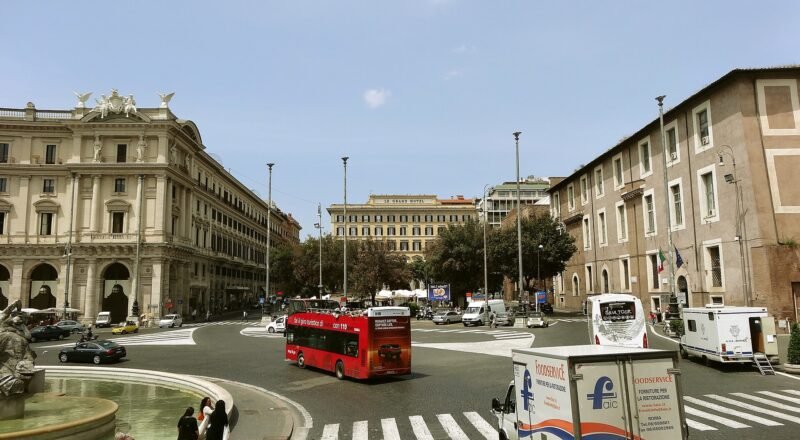
To grasp the dimensions you only need to look at Piazza della Repubblica: the semicircular colonnade built at the end of the 19th century by Gaetano Koch exactly follows the hemicycle of the baths' exedra. The popular name, Piazza Esedra, is still in use.
Termini
The baths were fed by a branch of the Aqua Marcia that carried water into a large cistern, the botte di Termini, more than 90 meters long. It was destroyed in 1876 to build the station, which took its name precisely from the baths.
Michelangelo's basilica
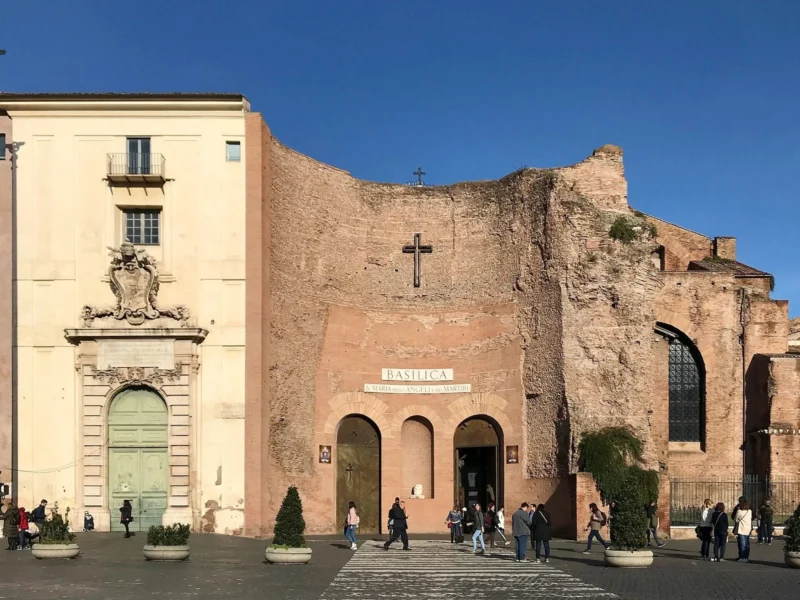
In 1561 Pope Pius IV commissioned Michelangelo to turn part of the baths into a church and to design the Carthusian monastery: the basilica of Santa Maria degli Angeli e dei Martiri was born, later deeply modified by Luigi Vanvitelli in 1749. The monastery, expropriated after 1870, became in 1889 the first seat of the Museo Nazionale Romano.
Granaries and oil mills
For the Jubilee of 1575 Gregory XIII turned the Octagonal Hall and other large halls into grain stores. In 1763 Clement XIII had 10 oil wells dug under those stores, each able to hold up to 44,000 liters. In 2000 these spaces were converted into exhibition space.
Something nobody tells you about The Museum Transforms (URBS Construction Sites) at Museo Nazionale Romano, February 18 to December 16, 2026
What nobody says is that a lecture on the construction site is the best way to see a museum that is changing before it changes. Those who return to the Baths of Diocletian in a few years will find a new entrance and new routes, and that is exactly the topic of the November 18 meeting. Hearing it during the works means being able to compare, when the site is finished, the project with the result.
Second thing: the audience at these meetings isn't made only of archaeologists. The lectures are open to everyone, free by booking, and the language of someone who runs a construction site is often more concrete than that of an academic essay. They talk about walls, systems, schedules, choices. For those who have never heard a restoration told from the inside it's a discovery.
Third: the booking. The halls of the Baths are large but not infinite, and the free-entry-with-booking formula attracts a loyal audience. Those who decide at the last moment risk not finding a seat.
Fourth: the series is conceived as a path. Watching first the Crypta Balbi lectures published on the Museum's video channel helps understand the method, and makes the autumn meetings clearer.
Palazzo Altemps, venue of the last lecture
Palazzo Altemps, at Via di Sant'Apollinare 8, a few dozen meters from Piazza Navona, has been state property since 1982 and since 1997 the seat of the Museo Nazionale Romano devoted to the history of collecting.
From Riario to Altemps
The palace was born in the 15th century for Girolamo Riario, a nephew of Sixtus IV, to a design attributed to Melozzo da Forlì. In 1511 it passed to Cardinal Francesco Soderini, who enlarged it with Antonio da Sangallo the Elder and Baldassarre Peruzzi. In 1568 it was bought by Cardinal Marco Sittico Altemps, a nephew of Pius IV, who gathered there the first collection of ancient sculptures.
The theater and the Arcadia
To Giovanni Angelo Altemps is owed the palace's first theater. In 1690 the Accademia dell'Arcadia was founded here. In the 18th century the palace was rented as a French diplomatic seat by Cardinal Melchior de Polignac: Metastasio performed there and Mozart also played, during his Roman stay.
The works
Altemps houses the sculptures of the Boncompagni Ludovisi, Mattei, Altemps and Del Drago collections. Among the best-known works are the Galata suicida, the Ludovisi Throne, the Ludovisi Sarcophagus, the Ludovisi Acrolith, the Ludovisi Hera and Ares.
The December site
The last meeting of the series, on December 16, concerns a room of the palace and the redevelopment of the museum's access areas, according to the title published by the Museo Nazionale Romano. Those who know Altemps know how much the entrance conditions the visit: it's a less showy subject than a major restoration, but a decisive one.
The Crypta Balbi, venue of the first part of the series
The Crypta Balbi is the venue of the Museo Nazionale Romano devoted to urban archaeology, built on the porticoed courtyard of the theater erected by Lucius Cornelius Balbus in 13 BC.
An entire block
The complex, bought by the state in 1981, occupies an entire block between Via delle Botteghe Oscure, Via dei Polacchi, Via dei Delfini and Via Caetani, with the churches of Santa Caterina dei Funari and San Stanislao dei Polacchi. The museum was inaugurated in 2001.
A museum of the city
The particularity of the Crypta Balbi is to tell the evolution of a piece of city over the centuries, from Roman times to the Middle Ages, with attention to craft activities between the 7th and 10th centuries, the centuries called dark. For me it's one of the smartest museums in Rome.
The deepest site
The five lectures of the first part of the series, from the Renaissance cloister to the new museum, up to the archives, libraries, laboratories and study center, show that at the Crypta Balbi the transformation is the most radical of the whole program.
The advice I give you for visiting The Museum Transforms (URBS Construction Sites) at Museo Nazionale Romano, February 18 to December 16, 2026
The advice is to turn the lecture into a half day at the museum. Book the November 18 meeting, arrive at the Baths of Diocletian in the early afternoon and first visit the open rooms, the cloister and the halls. At 17:00, when the lecture begins, you will already know which spaces are being discussed, and every word from the works director will have a precise image.
Second piece of advice: watch again at least one of the lectures already published. The one of April 15 on the new Crypta Balbi museum, for example, explains the series' method better than any presentation.
Third: consider the two meetings at the Baths together. On October 21 the subject was the halls, the restorations and the installations. On November 18 it will be the new entrance and the routes. Together they tell how the museum will be from the entrance to the last room.
Finally, December 16 at Palazzo Altemps: a lecture at 17:00 in mid-December, near Piazza Navona, ends on a holiday evening in the historic center. It's a good way to end the year with a museum.
The Museo Nazionale Romano: history of a museum in four venues
The Museo Nazionale Romano is a state museum of the Ministry of Culture, with special autonomy since 2016, which gathers collections on the history and culture of ancient Rome distributed across four venues.
The birth
Established by law on March 7, 1889, the museum was to collect the city's antiquities, dated between the 5th century BC and the 3rd century AD. Earlier collections flowed into it, such as the Museo Kircheriano and the first Antiquarium of the Palatine, and the finds that emerged from the urban transformations of the new capital.
The 20th century
A first great expansion came with the National Exhibition of 1911 and the acquisition of the main core of the Ludovisi collection. The historic installation was completed in the 1930s.
The four venues
The special law for the antiquities of Rome of 1981 made it possible to acquire Palazzo Massimo, Palazzo Altemps and the Crypta Balbi. In the 1990s the works were divided among the venues: the Baths with epigraphy, protohistory and large monuments, Palazzo Massimo with ancient art and the numismatic collection, Altemps with Renaissance collecting, the Crypta Balbi with the late antique and early medieval city.
Rescued art
Since June 2022 the Octagonal Hall of the Baths has housed the Museum of Rescued Art, where finds that were illegally excavated or exported and then recovered by the state are exhibited on rotation.
Another well-known fact, and yet rarely mentioned
It's well known that Termini station is named for the baths. It's less often remembered what precisely happened: the great cistern of the Baths of Diocletian, the botte di Termini, more than 90 meters long, was destroyed in 1876 precisely to make room for the station. The modern city, on arriving, erased the reservoir that gave it its name, but the name remained.
A second well-known and little-cited fact concerns the basilica of Santa Maria degli Angeli. It's known that it is by Michelangelo. It's forgotten that the dedication to the martyrs came from a belief, now refuted, that the baths had been built by enslaved Christians. Diocletian had in any case been the emperor of the last great persecution of 303, and the dedication took on that memory.
The third concerns the damage. The baths weren't destroyed by barbarians, but mostly by Romans: between 1586 and 1589 Sixtus V, to build his villa on the Esquiline, demolished, even with explosives, the remains of the calidarium area for about 100,000 cubic meters of material. Today's construction site, with its restorations and its new routes, also works on those wounds.
How to get to the venues of The Museum Transforms
The Baths of Diocletian, at Via Enrico de Nicola 78, can be reached from Termini station. Palazzo Altemps, at Via di Sant'Apollinare 8, is a few dozen meters from Piazza Navona.
At the Baths of Diocletian
The Baths can be reached from Termini station, which indeed takes its name from them. Those arriving in Rome by train for the lecture can go on foot. For metro, bus and tram it's best to check the route on the ATAC planner on the day of the meeting.
At Palazzo Altemps
Palazzo Altemps is in the Ponte district, in the historic center, right next to Piazza Navona. For up-to-date surface lines it's best to use the ATAC route planner on the day of the lecture.
At the Crypta Balbi
The Santa Caterina dei Funari venue, on Via dei Funari, hosted the first part of the series. The Crypta Balbi complex occupies the block facing Via delle Botteghe Oscure.
By car
All the venues are in limited traffic zones or in areas where parking is difficult. For a 17:00 lecture on a Wednesday, public transport is the only reasonable choice.
The right photo to take at The Museum Transforms (URBS Construction Sites) at Museo Nazionale Romano, February 18 to December 16, 2026
The right photo, for a series called The Museum Transforms, is the one of the construction site. The official image of the series released by the Museum says it clearly: ancient walls, scaffolding, a hard hat and a pencil drawn into the title. During the lectures the rooms and the works are shown. Before photographing, ask the staff what is allowed.
At the Baths of Diocletian the classic photo is Michelangelo's cloister, with the sculptures and finds arranged in the porticoes. But the one I recommend is another: the great bath halls with the signs of the restoration under way. In a few years they will be different, and the photo will become a document.
Outside, the photo to take is Piazza della Repubblica seen from the exedra: the Gaetano Koch buildings that follow the ancient perimeter show in a single image how large the baths were.
At Palazzo Altemps, on December 16, the inner courtyard is the most beautiful subject. And, if the site allows, the access areas that will be discussed in the lecture.
Around the Baths of Diocletian: what to see
The Baths of Diocletian are at the center of a district rich in monuments, between Piazza della Repubblica, Termini station and the Esquilino.
Palazzo Massimo
In the same area is Palazzo Massimo alle Terme, the venue of the Museo Nazionale Romano with ancient art: the frescoes of the villa of Livia at Prima Porta, the sculpture hall, the coin cabinet. It's the visit to pair with a lecture at the Baths.
Santa Maria degli Angeli
The basilica of Santa Maria degli Angeli e dei Martiri occupies the central hall of the baths: the ancient look of the interior has been largely preserved, with the cross vaults supported by eight monolithic granite columns.
The National Library
Among the places around the Baths is also the National Central Library of Rome, a reference point for scholars.
The Octagonal Hall
The Octagonal Hall, a former papal granary, houses the Museum of Rescued Art: a short visit that fits well before 17:00.
Some important events that happened here in history
The history of the Baths of Diocletian begins in the autumn of 298, when Maximian, back from Africa, started the construction site. To build the baths an entire district was dismantled, with private houses and buildings regularly purchased. The dedicatory inscription, today reassembled in eight fragments in the museum's entrance hall, makes it possible to date the opening between May 1, 305, when Diocletian and Maximian abdicated, and July 25, 306, the death of Constantius Chlorus.
The baths remained in use until 537, when Vitiges's Goths cut the aqueducts. Centuries of abandonment and plundering followed. In 1561 Pius IV entrusted to Michelangelo the transformation of the frigidarium into a church and the construction of the Carthusian monastery. In 1575 Gregory XIII made them the Jubilee granaries. In 1749 Vanvitelli rotated the basilica's orientation by 90 degrees. In 1763 Clement XIII dug the oil mills there.
After 1870 the monastery was expropriated, and in 1889 it became the first seat of the Museo Nazionale Romano. In 1911 the National Exhibition brought a great expansion. In the 1990s the museum was divided among four venues. In 2000 the halls of the papal annona became exhibition spaces. In 2016 special autonomy arrived. In 2022 the Octagonal Hall welcomed the Museum of Rescued Art.
2026 is the year of the URBS construction site and of the series The Museum Transforms, which on September 16 returned to the Baths after the summer break.
Who has passed through The Museum Transforms (URBS Construction Sites) at Museo Nazionale Romano, February 18 to December 16, 2026
Through the Baths of Diocletian have passed, first of all, the emperors who wanted them: Diocletian and Maximian, whose names are in the dedicatory inscription. Then thousands of Romans: up to 3,000 people at once, according to estimates based on the size of the complex.
In the 16th century Michelangelo worked there, called by Pius IV to turn the baths into a basilica and monastery. Andrea Palladio, fascinated by the ruins, drew them in their entirety. In the 18th century came Luigi Vanvitelli, and through those same spaces passed the popes of the annona, Gregory XIII and Clement XIII.
Through Palazzo Altemps, venue of the last lecture, passed the Riarios and Caterina Sforza, for whose wedding the palace was conceived, the cardinals Soderini and Altemps, the academics of the Arcadia founded in 1690, and according to chronicles Metastasio and Mozart.
In 2026 the speakers of the series pass through: Federica Rinaldi and Saveria Petillo, who coordinate it, and the project leaders, works directors, designers and firms who are transforming the museum. And the public, free of charge, one Wednesday a month.
Where to eat before or after the lecture
Around the Baths of Diocletian, between Termini, Piazza della Repubblica and the Esquilino, the dining offer is wide and varies in prices and cuisines.
Before 17:00
A coffee or a snack in Piazza della Repubblica area is enough to arrive in the hall without hurry. Those who visited the museum in the morning can have lunch toward Via Nazionale or in the Monti district, a short distance away.
After the lecture
A 17:00 lecture ends in time for dinner. The Esquilino, toward Piazza Vittorio, offers cuisines from many countries. The Monti district has Roman trattorias and venues.
At Palazzo Altemps
On December 16, on leaving Altemps, Piazza Navona and the streets of the Ponte district offer trattorias, wine bars and venues for every need. In the holiday period it's best to book.
Accessibility and practical information
The series The Museum Transforms has free entry with mandatory booking. For specific accessibility needs it's best to write to the Museo Nazionale Romano at the email address indicated on its official site.
Contacts
The Museo Nazionale Romano can be reached at mn-rm@beniculturali.it. The tourism portal of Roma Capitale also lists the museum's official social channels, where the lectures are announced.
With teenagers
A one-hour technical lecture isn't an activity for children. It may however greatly interest students of architecture, archaeology, restoration and engineering, and high school students curious to know how work is done on a historic construction site.
The recordings
Those who can't travel or have difficulty reaching the venue can watch the lectures already held on the Museum's video channel, which has published the Crypta Balbi meetings.
The Museum Transforms in the Roman autumn
The last three lectures of the series fall between October and December 2026, in the season when Rome fills with cultural events and museums return to the center of the days.
October
On October 21, at the Baths, the topic was the halls, on an autumn afternoon well suited to spending a few hours beforehand in the museum's cloister and gardens.
November
On November 18 the new entrance and the new routes will be discussed. With the shorter days, the 17:00 lecture falls at sunset: a good moment to close the day in a museum.
December
On December 16, at Palazzo Altemps, the series closes. It's the last useful Wednesday before the holidays, and a smart way to spend a December afternoon in the historic center.
Frequently asked questions about The Museum Transforms
When are the next lectures of The Museum Transforms?
The next lectures of The Museum Transforms are on November 18, 2026 at the Baths of Diocletian and December 16, 2026 at Palazzo Altemps. All the meetings begin at 17:00 and are part of the series devoted to the construction sites of the URBS program.
Is The Museum Transforms free?
Yes, the lectures of The Museum Transforms have free entry within the limit of available seats, with mandatory booking at the link indicated by the Museo Nazionale Romano on the series' official page. Without a booking the seat isn't guaranteed.
Where are the lectures of The Museum Transforms held?
The Museum Transforms takes place at three venues of the Museo Nazionale Romano: the Crypta Balbi at Santa Caterina dei Funari from February to June, the Baths of Diocletian at Via Enrico de Nicola 78 from September to November, and Palazzo Altemps at Via di Sant'Apollinare 8 in December.
What is the URBS program?
URBS. From the City to the Roman Countryside is the works program that the series The Museum Transforms tells the public about, funded according to the Ministry of Culture by the National Complementary Plan to the PNRR. It concerns restorations, new installations, new entrances and routes at the museum's venues.
Who speaks at the lectures?
The series The Museum Transforms is coordinated by Federica Rinaldi and Saveria Petillo. The talks are given by the working groups led by the project leaders and works directors, with the participation of the designers and firms involved in the construction sites.
Can you watch the lectures already held?
Yes, the lectures of The Museum Transforms at the Crypta Balbi, from February to May 2026, have been published on the official video channel of the Museo Nazionale Romano, as indicated on the series' page on the museum's site.
How do you get to the Baths of Diocletian?
The Baths of Diocletian, venue of The Museum Transforms in October and November, are at Via Enrico de Nicola 78 and can be reached from Termini station, which takes its name from the baths. For metro, bus and tram it's best to use the ATAC route planner.
In closing
At the Baths of Diocletian the most frequent question is always the same: why are so many rooms closed? The series The Museum Transforms is the best answer, given by those who run the construction sites. The clear advice: book November 18, arrive an hour early to see the cloister, and listen. In a few years, entering by a new entrance, you will know why it is there.
Article written by the editorial team of Tour Leader Pro, contact them for Private/Corporate/V.I.P. Tours and Experiences.
Planning a trip to Rome? The English guides for visiting the city are on ItalyPlanner.com.
Contact Information
Nearby
 Basilica of Santa Maria degli Angeli e dei Martiri100 m
- Michelangelo’s Cloister100 m
- MuSEd – Mauro Laeng Museum of School and Education100 m
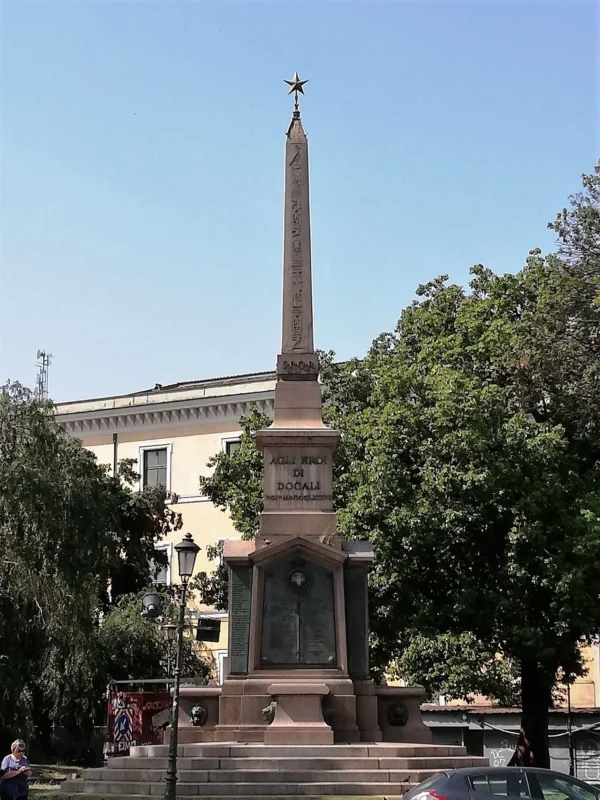
- Dogali Obelisk100 m
- Octagonal Hall of the Baths of Diocletian – National Roman Museum200 m
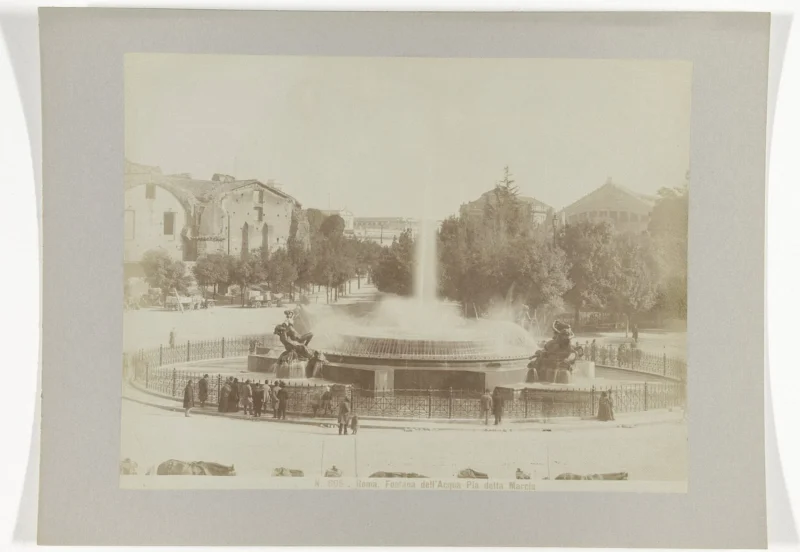
- Piazza della Repubblica200 m
Upcoming events nearby
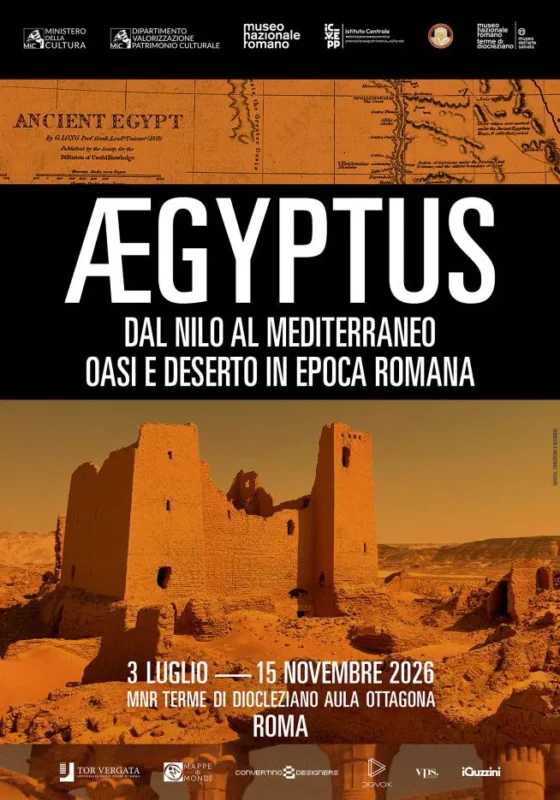
- AEGYPTUS. Dal Nilo al Mediterraneo at the Baths of Diocletian, through November 15, 2026200 m
- MedFilm Festival 2026 in Rome, November 5 to 15, 2026200 m
- Hank Willis Thomas and Man Ray. Tomorrow I shall contradict myself at Galleria Continua, September 25 to December 31, 2026200 m
- Swan Lake at Teatro dell’Opera di Roma, December 17 to 31, 2026400 m

You might also like
- Mahler’s Third Symphony by John Neumeier at Teatro dell’Opera di Roma, February 4 to 10, 2027
- The Rake’s Progress at Teatro dell’Opera di Roma, November 27 to December 5, 2026
- Aggiungi un posto a tavola at the Teatro Brancaccio in Rome, December 10 to December 20, 2026
- Otello with Giorgio Pasotti and Giacomo Giorgio at Teatro Ambra Jovinelli, February 24 to March 7, 2027
- Raffaella il Musical at Teatro Brancaccio, February 10 to March 6, 2027
- Lucia di Lammermoor at Teatro dell’Opera di Roma, February 21 to 28, 2027