Hank Willis Thomas and Man Ray. Tomorrow I shall contradict myself at Galleria Continua, September 25 to December 31, 2026
In short. Hank Willis Thomas and Man Ray, Tomorrow I shall contradict myself is the exhibition that puts the master of the avant-garde and the American conceptual artist in dialogue for the first time.
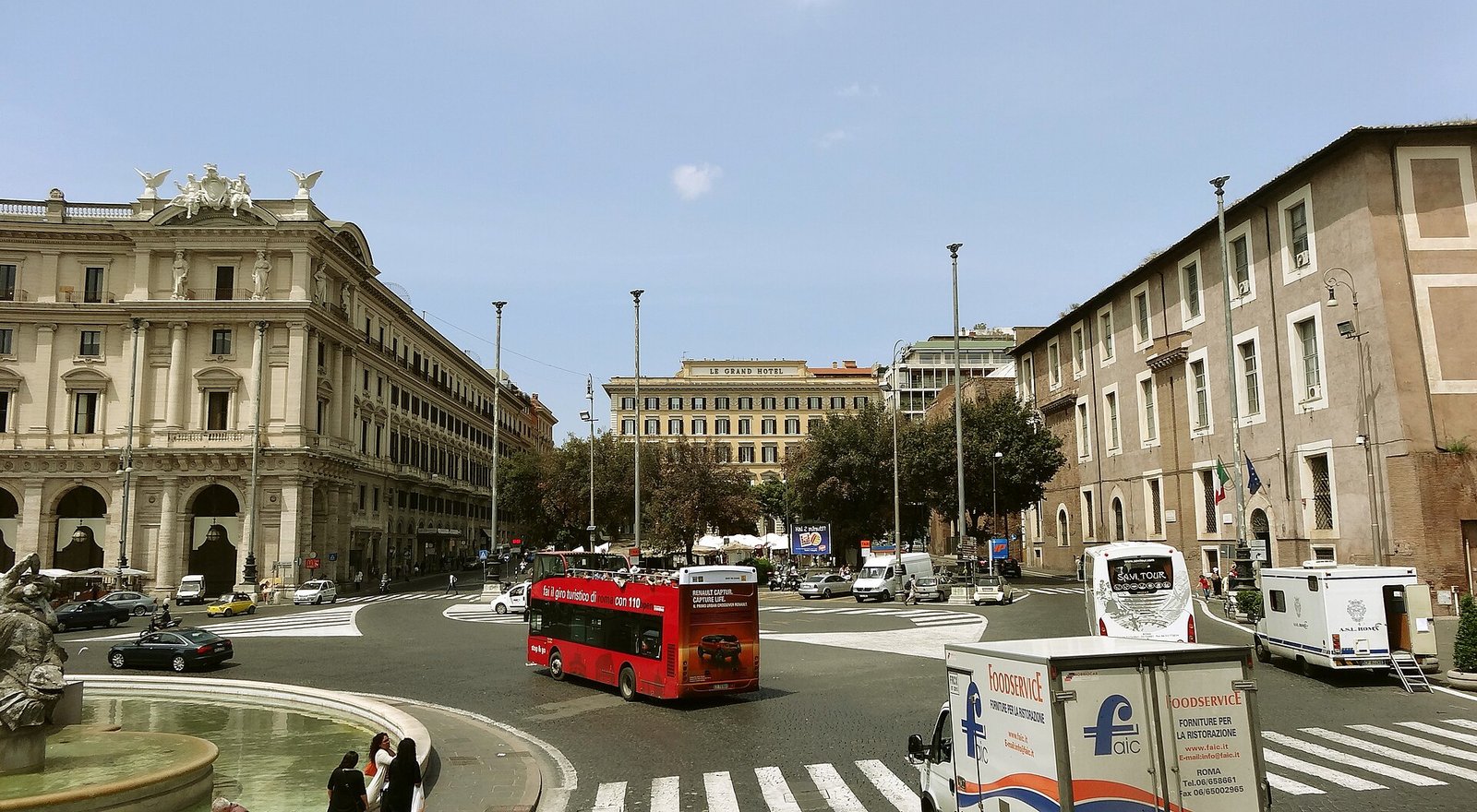
Hank Willis Thomas and Man Ray, Tomorrow I shall contradict myself is the exhibition that puts the master of the avant-garde and the American conceptual artist in dialogue for the first time. In Rome it can be visited from September 25 to December 31, 2026 in the spaces of Galleria Continua / Roma, inside The St. Regis Rome, Via Vittorio Emanuele Orlando 3. The gallery is open Tuesday to Saturday, from 11:00 to 13:00 and from 14:00 to 19:00. For information, call +39 331 6975728 or write to roma@galleriacontinua.com. It is a private gallery: the gallery does not publish an admission ticket and all updated information is on the official website of Galleria Continua. To get there by public transport, the reference is the ATAC route planner. The gallery is in the block between Piazza della Repubblica, the Baths of Diocletian and the Moses fountain.
Man Ray died 50 years ago, and in that same 1976 Hank Willis Thomas was born. The coincidence is the starting point of a double exhibition that Galleria Continua presents together in Rome and San Gimignano, and that rests on a precise idea: contradiction as a working method. In Rome the setting adds a layer of reading: the works are shown inside one of the city's grand historic hotels, inaugurated by César Ritz in 1894. Avant-garde art and Belle Époque marble, a short walk from Termini. It is one of the most interesting gallery exhibitions of this autumn.
Tomorrow I shall contradict myself: what you see
Tomorrow I shall contradict myself brings together Man Ray and Hank Willis Thomas for the first time in a thematic, multimedia dialogue between two voices who, according to the official presentation, question perception, authorship and the politics of representation.
A double anniversary
Man Ray died in Paris on November 18, 1976. Hank Willis Thomas was born in 1976 in Plainfield, New Jersey. The exhibition thus celebrates half a century since the death of the first and the birth of the second, and uses the distance of two generations to measure what remains today of the lesson of the avant-garde.
Two locations, one exhibition
The project was presented simultaneously in two locations of the gallery: in Rome, with the opening on September 25, and in San Gimignano, from September 26. The Roman location closes on December 31, 2026. The Tuscan one stays open until January 31, 2027.
The title
The title announces a contradiction for tomorrow and takes up the idea, dear to Man Ray, that contradiction is a form of freedom. The Roman press reported a phrase of his in this sense, a declaration of love for contradictions, and the project turns it into a key to reading: dreamlike visions, symbols, challenges to the author and to common perception.
A guiding work
Among the works by Hank Willis Thomas chosen to present the exhibition is To Be Continued, Unnoticed, from 2021: a UV print on retroreflective vinyl mounted on Dibond, 171.5 by 171.5 centimeters. The support alone, a vinyl that sends the light back, says that the theme is perception: what is seen, from where, in what light.
A gallery in a hotel
The gallery documents the Roman installation with photographic views by Giorgio Benni, taken in the rooms of The St. Regis Rome. Visitors find themselves looking at photographs and avant-garde objects among spaces designed for luxury hospitality: a contrast the exhibition uses to its advantage.
Who Man Ray was: biography and career
Man Ray, born Emmanuel Radnitzky in Philadelphia on August 27, 1890 and died in Paris on November 18, 1976, was a painter, photographer, filmmaker and graphic artist, an exponent of Dadaism and Surrealism. He is remembered above all as a photographer.
From Philadelphia to New York
The son of Russian immigrants of Jewish origin, he grew up in New York. After high school he turned down a scholarship in architecture to devote himself to art, and in 1908 he worked as a draftsman and graphic artist. From 1912 he signed his works with the pseudonym Man Ray. In 1914 he bought his first camera, to photograph his own works.
The friendship with Duchamp and American Dada
In 1915 the collector Walter Conrad Arensberg introduced him to Marcel Duchamp, who would become a great friend. With him he gave life to the American branch of the Dada movement. In 1921, after the only issue of the magazine New York Dada, he concluded that Dada could not live in New York.
Paris and the iron with nails
In 1921 he followed Duchamp to Paris, where he met André Breton and Philippe Soupault. In Soupault's bookshop he held his first Paris exhibition, with Cadeau: a clothes iron with a row of nails glued onto the plate, made unusable. The first copy was stolen during the exhibition. Man Ray made replicas in the following years, up to a multiple in 5,000 copies in 1974.
The rayographs
In 1922 he produced the first photograms without a camera, which he called rayographs: images obtained by placing objects directly on sensitive paper. The discovery, according to the account handed down, was an accident in the darkroom. It is the technique that more than any other made Man Ray an innovator of photographic language.
The first Surrealist photographer
In 1924 Surrealism was officially born, and Man Ray became its first photographer. He published fashion photos in Vogue, portrayed James Joyce, Gertrude Stein, Jean Cocteau. Kiki de Montparnasse became his favorite model. In 1925 he took part in the first Surrealist exhibition at the Galerie Pierre in Paris, with Arp, Ernst, Masson, Miró and Picasso. With Lee Miller, his companion and assistant, he systematically used solarization.
Cinema
Man Ray was also the author of avant-garde films considered precursors of Surrealist cinema: Le retour à la raison (1923), Anémic Cinéma with Duchamp, Emak-Bakia (1926), L'étoile de mer (1928), Les mystères du château de Dé (1929).
The last years
The war forced him to return to the United States in 1940: he lived in Los Angeles, taught, exhibited. After the conflict he went back to Paris, where he lived until his death. In 1976 he exhibited his photographs at the Venice Biennale. He is buried in Montparnasse cemetery. His epitaph reads "Unconcerned, but not indifferent."
Who is Hank Willis Thomas: biography and career
Hank Willis Thomas, born in 1976 in Plainfield, New Jersey, is a conceptual artist who investigates mass media, identity, popular culture and point of view, working with sculpture, photography, screen printing, mixed media, installations and public projects.
Everything is frame and context
The artist's website quotes a phrase of his that sums up the method: all his work is about frames and contexts, because where you stand determines the perception of truth and of what matters. Thomas often works on archival materials and traditional iconographies, to rewrite the Western imaginary and bring out its mechanisms of power.
The collective projects
His practice is founded on collaborative projects: Question Bridge, a multimedia platform of recorded questions and answers. In Search of the Truth, the traveling comic-bubble-shaped booth known as The Truth Booth. The Writing on the Wall, on justice and prison. For Freedoms, the collective he cofounded and which received the ICP Infinity Award in 2017.
The awards
Thomas received the Guggenheim Fellowship (2018), the Gordon Parks Foundation Fellowship (2019), the AIMIA AGO Photography Prize (2017), the Soros Equality Fellowship (2017), the Aperture West Book Prize (2008) and grants from the Rockefeller Foundation and the New York Foundation for the Arts. The Italian press also recalls the Medal of Arts of the State Department's Art in Embassies program and his role on the Public Design Commission of New York. In 2026 he is on the Time 100 Art list.
The public works
Many of his works are permanently installed in American public spaces. The Embrace, a memorial to Martin Luther King and Coretta Scott King made with MASS Design Group, was inaugurated on January 13, 2023 at Boston Common. Unity is at the entrance of the Brooklyn Bridge. Reach is suspended in O'Hare airport in Chicago. Duality is on the Miami Underline. All Power to All People joins the Afro pick and the raised fist of Black Power.
The 2026 exhibitions
2026 is an intense year: the exhibition Afterimage at Galleria Continua Paris Matignon (from September 17 to November 28), a presentation at Rockefeller Center in New York, LOVERULES at the Zimmerli Art Museum with nearly 90 works, a new work at the FLAG Art Foundation. Tomorrow I shall contradict myself fits into this calendar as the most explicit tribute to a master of reference.
Man Ray and Hank Willis Thomas: why put them together
Man Ray has long been a point of reference for Hank Willis Thomas's practice, and the exhibition makes this link explicit through the theme of contradiction, perception and representation.
The displaced object
Man Ray moved the boundary between artwork and common object: the iron with nails, the metronome with the glued-on eye. Thomas works on images from advertising, sport, history, and shifts their context to make them speak differently. In both, the gesture is at once ironic and critical.
Photography as a testing ground
Man Ray's rayographs are photographs without a camera. Thomas's prints on retroreflective vinyl play with the light that hits them. In both cases photography stops being a document and becomes an experience to verify with your eyes.
Half a century later
The meaning of the exhibition, as the press has read it, is that Thomas takes up Man Ray's challenges 50 years later and brings them into the complexity of the present: politics, power, history understood as a material that changes meaning.
Galleria Continua: from San Gimignano to Rome
Galleria Continua was founded in 1990 in San Gimignano by Mario Cristiani, Lorenzo Fiaschi and Maurizio Rigillo, in a former cinema, with the idea of giving continuity to contemporary art in a landscape marked by ancient art.
An international network
In 2004 the gallery opened in Beijing, in 2007 it inaugurated Les Moulins in the Paris countryside for large-format works, in 2015 a space in Havana. In 2020 came São Paulo and Rome. In 2021 Paris, in the Marais, and a space at the Burj Al Arab in Dubai. In 2024 a third French location, at Matignon.
The Roman location
The Rome location opened in 2020, the year of the 30th anniversary, with a declared mission: an open interculturality and new forms of encounter between art and the public. The choice to place it inside a grand historic hotel goes in this direction: bringing art where you don't expect it, as it was with the cinema of San Gimignano.
The St. Regis Rome, formerly the Grand Hotel de Rome
The St. Regis Rome, which hosts Galleria Continua / Roma, is the former Grand Hotel de Rome, inaugurated by César Ritz in January 1894 and today one of the oldest hotels in the capital.
A hotel wanted by the government
The idea came from the Marquis di Rudinì, prime minister and foreign minister, who wanted to give Rome a hotel on a par with the other European capitals. He convinced César Ritz, who in 1893 bought the area near the Baths of Diocletian, between the Moses fountain and Piazza Esedra, where Filippo Cavallini had started a hotel building designed by Giulio Podesti. The position was strategic: close to the station, to the ministries of Via XX Settembre and to the Quirinale.
Belle Époque firsts
The hotel had electric lighting and two elevators. Every suite had a bathroom with hot and cold water, a first in Italy, with fixtures imported from London. The old elevator, one of the first in Rome, is still in operation. To run the restaurant Ritz called Auguste Escoffier and Pierre Louis. The furnishings were chosen by Ritz's wife.
The transformations
In the 1920s the property passed to the Sindacato Italiano Sviluppo Alberghi and then to CIGA. In 1985 the Aga Khan bought CIGA. In 1999 the hotel passed to Starwood and reopened under the name St. Regis Grand Hotel. In 2014 it was sold to Qatar's Constellation Holding: three years of work, the restoration of the Ritz Ballroom with Mario Spinetti's frescoes, and the reopening in 2018.
How to get to Galleria Continua / Roma
Galleria Continua / Roma is inside The St. Regis Rome, at Via Vittorio Emanuele Orlando 3, in the block between Piazza della Repubblica and the Baths of Diocletian.
By public transport
For the best combination of metro, bus and tram from your starting point, the ATAC route planner is the right tool. The area is close to the railway station, as the accounts of the hotel's founding recall.
On foot
Those in the center can arrive on foot from Piazza della Repubblica, with the Basilica of Santa Maria degli Angeli, or from the Quirinale along Via XX Settembre.
By car
The gallery does not indicate any parking: in such a central area the car is the least convenient choice.
Hours and information for visiting Tomorrow I shall contradict myself
Tomorrow I shall contradict myself can be visited Tuesday to Saturday, from 11:00 to 13:00 and from 14:00 to 19:00, until December 31, 2026.
Two different schedules
The city's tourist portal indicates opening Monday to Friday. The gallery's official press release instead indicates Tuesday to Saturday. The gallery's indication holds, but for a group or for a Monday visit it's best to call first.
The lunch break
The gallery closes between 13:00 and 14:00: a detail to remember for those planning the visit in late morning.
How much time you need
For a gallery exhibition, three quarters of an hour is enough. Those who love Man Ray's photography should take an hour: the works ask to be looked at closely.
Contacts
Telephone +39 331 6975728, email roma@galleriacontinua.com. The complete press release, in Italian and English, can be downloaded from the official page of the exhibition.
A curiosity about Hank Willis Thomas and Man Ray. Tomorrow I shall contradict myself at Galleria Continua, September 25 to December 31, 2026
The best curiosity concerns Man Ray's first Cadeau, the iron with 14 nails glued onto the plate. It was shown in the artist's first Paris exhibition, in Philippe Soupault's bookshop, and vanished: it was stolen during the exhibition. Man Ray didn't flinch, and made other versions in 1963, 1970, 1972, up to a multiple of 5,000 copies in 1974, today sought after by collectors. An object born to be useless, stolen, replicated in series: the contradiction of the exhibition's title, already all there.
A second curiosity concerns another work, the Object to Be Destroyed: a metronome with the photograph of an eye glued onto the pendulum. The original was lost, and legend has it that a visitor took the title literally and really destroyed it.
The third concerns the location. In the Grand Hotel de Rome, today the St. Regis, César Ritz installed private bathrooms with hot and cold water in every suite: a first in Italy, with fixtures brought in from London. A modernity that, in 1894, made the news as much as the avant-gardes would 30 years later.
One thing nobody tells you about Hank Willis Thomas and Man Ray. Tomorrow I shall contradict myself at Galleria Continua, September 25 to December 31, 2026
What nobody says is that to see this exhibition you enter a luxury hotel, and many visitors hesitate at the door. There's no need: Galleria Continua / Roma is open to the public at the hours indicated, Tuesday to Saturday, and those who come for the exhibition are expected. Just ask at the reception or follow the signs to the gallery. It's a chance to see from the inside one of the city's historic hotels, without booking a room.
The second thing is that the information on hours doesn't match: the city portal says Monday to Friday, the gallery says Tuesday to Saturday. On Saturday, therefore, the gallery is open according to the official source. On Monday, better to check. A phone call settles any doubt.
The third thing is the break: the gallery closes between 13:00 and 14:00. Those who arrive at half past noon have barely half an hour. Better to go in at 11:00 or after 14:00, with all the time to look.
My advice for visiting Hank Willis Thomas and Man Ray. Tomorrow I shall contradict myself at Galleria Continua, September 25 to December 31, 2026
My advice is to combine the exhibition with a visit to the Baths of Diocletian and Palazzo Massimo, which are a few steps away. A Saturday morning: at 11:00 you go into the gallery, at 12:00 you cross Piazza della Repubblica and enter the Basilica of Santa Maria degli Angeli, in the afternoon you visit the museum. In a few hours you go from the avant-garde of the 20th century to Roman antiquity, through a Belle Époque hotel: a route only Rome allows.
Second piece of advice: before going, refresh your memory on Man Ray's rayographs. Knowing they are photographs made without a camera, by placing objects on sensitive paper, changes the way you look at Thomas's works too, which work on the same boundary between image and object.
Third: don't be in a hurry in front of Thomas's works. Move, change angle, get closer: the point of view, says the artist, determines the perception of truth, and his works put it to the test.
Last: if you pass through San Gimignano by January 31, 2027, visit the other half of the exhibition too. The two locations were conceived together.
Another well-known fact, yet rarely cited
It is well known that Man Ray was the photographer of Surrealism. It is cited less often that his pen name is a youthful invention: in 1912, at 22, Emmanuel Radnitzky began to sign his works as Man Ray, and from then on never stopped. And it is forgotten that for him photography was, at first, a service: he bought his first camera in 1914 to document his paintings. The painter he wanted to be became the photographer the world remembers.
A second fact known and little told concerns the hotel that hosts the gallery. On January 12, 1923 Mussolini formally convened the Grand Council of Fascism here for the first time. And on February 28, 1941 King Alfonso XIII of Spain died here, in exile. Those who enter today to see Man Ray and Hank Willis Thomas walk in rooms that have seen important pages of 20th-century history go by. That an artist who works on the memory of power and on the representation of history is shown right there is a coincidence worth noting.
Finally, a fact about the gallery: Galleria Continua was born in a former cinema in San Gimignano. Bringing art to places built for something else has always been its style.
The right photo to take at Hank Willis Thomas and Man Ray. Tomorrow I shall contradict myself at Galleria Continua, September 25 to December 31, 2026
The right photo is a work by Hank Willis Thomas shot at an angle, moving a few steps: his prints on retroreflective vinyl, like To Be Continued, Unnoticed, play with the light, and two shots from different points tell the theme of the exhibition, that is point of view, better than one. Always ask the staff if photography is allowed, and respect the instructions.
The second photo tells the place: an avant-garde work framed together with a detail of the hotel's rooms, wood paneling, a marble, a door. It is the contrast the Roman installation rests on, and the gallery's official views show it well.
The third is outside: the facade of the old Grand Hotel on Via Vittorio Emanuele Orlando, with the St. Regis sign, and a little further on the exedra of Piazza della Repubblica. An image that tells the hotel built to give Rome hospitality worthy of a European capital.
Some important events that happened here in history
In 1893 César Ritz, at the invitation of the Marquis di Rudinì, bought the area near the Baths of Diocletian, between the Moses fountain and Piazza Esedra, where a large hotel building designed by Giulio Podesti was already under construction. In January 1894 he inaugurated the Grand Hotel de Rome with a grand reception: the accounts of the time called it one of the most splendid hotels in Europe.
On January 12, 1923 Benito Mussolini formally convened the Grand Council of Fascism here for the first time, a few months after the March on Rome. The same year the owning company was put into liquidation and the hotel passed to CIGA.
On February 28, 1941 King Alfonso XIII of Spain, who lived in exile in Rome, died in the hotel.
In 1963 a cycle of modernization works began. In 1985 CIGA was bought by the Aga Khan. In 1999 the hotel was sold to Starwood and reopened under the name St. Regis Grand Hotel. After the 2014 sale to Constellation Holding, three years of work led to the reopening in 2018, with the restoration of the Ritz Ballroom and its frescoes by Mario Spinetti.
In 2020, the year of its 30th anniversary, Galleria Continua opened its Roman location here.
Who has passed through Hank Willis Thomas and Man Ray. Tomorrow I shall contradict myself at Galleria Continua, September 25 to December 31, 2026
Writers, statesmen and stars have passed through the old Grand Hotel de Rome, today the St. Regis. The first name is that of the founder, César Ritz, with his wife who chose the furnishings, and of the chefs Auguste Escoffier and Pierre Louis, called to run the restaurant. Among the guests remembered are Leo Tolstoy, the German chancellor von Bülow, Mussolini right after the March on Rome, and later von Ribbentrop and Göring.
In the years of the Dolce Vita actresses like Ava Gardner, Zsa Zsa Gábor, Lauren Bacall and Martine Carol lived here. In more recent years the guests have included Robert De Niro, the Kennedys and the Agnellis. King Alfonso XIII of Spain spent the last days of his exile here.
Since 2020 the hotel has also welcomed the artists of Galleria Continua. In the autumn of 2026 it is the turn of Man Ray, the photographer who portrayed James Joyce, Gertrude Stein and Jean Cocteau, and of Hank Willis Thomas, the artist of American public memorials. A hotel that hosted kings and dictators becomes, for three months, the home of two artists who made contradiction and freedom their trade.
What to see around Galleria Continua / Roma
The gallery is in one of the areas richest in monuments of modern and ancient Rome, between Termini station and the Quirinale.
The Baths of Diocletian
The Baths of Diocletian are a few steps away, with the Octagonal Hall.
Palazzo Massimo
Palazzo Massimo alle Terme, a museum site dedicated to antiquity, is the ideal complement to a 20th-century exhibition.
Toward the Quirinale
Along Via XX Settembre you reach the Quirinale, with Sant'Andrea al Quirinale and the Scuderie del Quirinale.
Where to eat near Piazza della Repubblica
The area between Termini and Piazza della Repubblica offers everything, from bars for a quick lunch to hotel restaurants. The quality improves the farther you get from the station.
A quick lunch
With the gallery's break between 13:00 and 14:00, a quick lunch in the surrounding streets is the most practical solution: bakeries, hot food counters and bars are not lacking.
A special-occasion dinner
Those who want to extend the atmosphere of the venue can stay inside the hotel, which has a bar and restaurant: a choice for an occasion, not for every day.
Frequently asked questions about Hank Willis Thomas and Man Ray in Rome
When can you see the Man Ray and Hank Willis Thomas exhibition in Rome?
The exhibition Tomorrow I shall contradict myself by Hank Willis Thomas and Man Ray is open in Rome from September 25 to December 31, 2026, at Galleria Continua / Roma. The hours are Tuesday to Saturday, from 11:00 to 13:00 and from 14:00 to 19:00.
Where is Galleria Continua in Rome?
Galleria Continua / Roma is inside The St. Regis Rome, at Via Vittorio Emanuele Orlando 3, near Piazza della Repubblica and the Baths of Diocletian. For public transport, use the ATAC route planner.
How much does it cost to enter the exhibition?
For the Galleria Continua exhibition in Rome the gallery does not publish an admission ticket: it is a private gallery. For any information, including for groups, you can write to roma@galleriacontinua.com or call +39 331 6975728.
Do you need to be a guest of the hotel to see the exhibition?
No, to see the Galleria Continua exhibition you don't need to be a guest of the St. Regis Rome. The gallery is open to the public at the hours indicated: just show up and ask for directions to the exhibition space.
Who is Hank Willis Thomas?
Hank Willis Thomas is an American conceptual artist born in 1976 in Plainfield, New Jersey, who works on mass media, identity and point of view. He is a cofounder of the collective For Freedoms and the author of public works such as The Embrace in Boston.
Is there another location for the exhibition?
Yes, Tomorrow I shall contradict myself is also presented at Galleria Continua in San Gimignano, from September 26, 2026 to January 31, 2027. The two locations are part of the same project and complete each other.
What is there to see near the gallery?
Near Galleria Continua / Roma are the Baths of Diocletian, the Basilica of Santa Maria degli Angeli, Palazzo Massimo alle Terme and, toward Via XX Settembre, the Quirinale with the Scuderie. All within a short walk.
Final advice on Tomorrow I shall contradict myself
In our view gallery exhibitions are the best way to understand today's art without lines and without tickets, and this one has something more. It puts Man Ray next to a living artist who considers him a master, and it does so inside a hotel that has seen Tolstoy and Alfonso XIII pass through. My advice is to go on a Saturday morning, look at Thomas's vinyls from several angles and then cross the square toward the Baths of Diocletian. The 20th century and antiquity, in an hour's walk.
Article written by the editorial team of Tour Leader Pro, contact them for Private/Corporate/V.I.P. Tours and Experiences.
Planning a trip to Rome? The English guides for visiting the city are on ItalyPlanner.com.