Lucia di Lammermoor at Teatro dell’Opera di Roma, February 21 to 28, 2027
In short. Lucia di Lammermoor by Gaetano Donizetti is on at Teatro Costanzi, home of Teatro dell'Opera di Roma, at Piazza Beniamino Gigli 7, from February 21 to 28, 2027, in a new production by Karole Armitage with Giacomo Sagripanti on the podium.

Lucia di Lammermoor by Gaetano Donizetti is on at Teatro Costanzi, home of Teatro dell'Opera di Roma, at Piazza Beniamino Gigli 7, from February 21 to 28, 2027, in a new production by Karole Armitage with Giacomo Sagripanti on the podium. There are seven performances: Sunday the 21st at 19:00 (opening night), Tuesday the 23rd, Wednesday the 24th, Thursday the 25th and Friday the 26th at 20:00, Saturday the 27th at 18:00 and Sunday the 28th at 16:30. On Saturday the 20th at 18:00 there is a youth preview. The theater can be reached by metro line A, Repubblica Teatro dell'Opera station, or by the buses on Via Nazionale (H, 40, 60, 64, 70, 71, 170). For Lucia's price tier, the official price list runs from €26 to €200 for opening night and from €22 to €160 for the other performances. Single tickets for the shows of the 2026/27 season have been on sale since October 8, 2026 at the theater's box office and on the authorized presale network indicated on the venue's official website.
Language: in Italian with English surtitles.
Lucia di Lammermoor at Costanzi in brief: dates, times and cast
Lucia di Lammermoor is the only opera title in February at Teatro dell'Opera di Roma in the 2026/27 season. It comes after Andrea Chénier and Mahler's Third Symphony choreographed by John Neumeier, and precedes I due Foscari, from March 13 to 21. It is a new production by the theater, sung in Italian with Italian and English surtitles.
The performance calendar
- Saturday, February 20, 18:00: youth preview.
- Sunday, February 21, 19:00: opening night, series A.
- Tuesday, February 23, 20:00: performance outside the series.
- Wednesday, February 24, 20:00: series B.
- Thursday, February 25, 20:00: performance outside the series.
- Friday, February 26, 20:00: series C.
- Saturday, February 27, 18:00: series D.
- Sunday, February 28, 16:30: series E, last performance.
The cast
The theater announces two casts. In the title role is Jessica Pratt, with Gilda Fiume on the 23rd, 25th and 27th. Sir Edgardo di Ravenswood is Xabier Anduaga, with René Barbera on the same three evenings. Lord Enrico Ashton is Germán Enrique Alcántara, with Bogdan Baciu on the 23rd, 25th and 27th. Raimondo Bidebent is Michele Pertusi, with Marko Mimica on the same dates. Completing the cast are Leonardo Cortellazzi as Lord Arturo Bucklaw, Sofia Koberidze as Alisa and Paolo Antognetti as Normanno.
The artistic team
Giacomo Sagripanti conducts. The direction is by Karole Armitage, sets and costumes are by Daniela Ciancio, lighting by Valerio Tiberi. The Chorus of Teatro dell'Opera di Roma is prepared by Ciro Visco, and in the pit is the theater's Orchestra.
Lucia di Lammermoor, Donizetti's serious masterpiece
Lucia di Lammermoor is a tragic drama in three acts by Gaetano Donizetti to a libretto by Salvadore Cammarano, based on Walter Scott's novel The Bride of Lammermoor, and it premiered with great success at the Real Teatro di San Carlo in Naples on September 26, 1835. It is the most famous of the serious operas of the composer from Bergamo.
A score written in six weeks
The contract with San Carlo was signed on November 9, 1834, with a fee of 2500 ducats. The royal commission that ran the theaters was slow to choose the librettist, though, and only at the end of May 1835, prompted by Donizetti, approved Cammarano's name. The composer then worked at an impressive speed, mostly in Naples at Villa De Majo, in what is now the Arenella district. The autograph carries the date July 6, 1835 on its last page. It took him less than six weeks to write Lucia.
The plot in a few lines
Scotland, early 18th century. The Ashtons have usurped the Ravenswoods' property, and Lucia Ashton secretly loves Edgardo, last heir of the enemy family. Her brother Enrico, to save the house, forces her to marry the wealthy Arturo Bucklaw, making her believe with a forged letter that Edgardo has betrayed her. Edgardo bursts in at the signing of the wedding contract and curses his beloved. On the wedding night Lucia kills her groom and appears before the guests with the dagger in her hand, lost in delirium. She dies shortly after. At dawn, among the tombs of his ancestors, Edgardo learns the news and stabs himself.
The pages to recognize
- “Regnava nel silenzio,” the cavatina in which Lucia tells Alisa about the ghost's apparition at the fountain.
- “Verranno a te sull'aure,” the farewell duet between Lucia and Edgardo with the exchange of rings.
- “Chi mi frena in tal momento,” the sextet of the wedding contract, one of the most famous ensembles in the repertoire.
- “Il dolce suono mi colpì di sua voce,” “Ardon gl'incensi” and “Spargi d'amaro pianto”: the mad scene.
- “Tu che a Dio spiegasti l'ali,” the tenor's final cabaletta, considered one of the most beautiful tenor pages of the 19th century.
A success that never stopped
Of Donizetti's more than 70 operas, only four never left the repertoire after his death: Lucia, L'elisir d'amore, Don Pasquale and La favorita. After Naples, Lucia was staged right away in Genoa, Milan, Venice, Trieste, Bologna and Parma. In 1837 it triumphed at the Théâtre-Italien in Paris, in 1838 it reached London and in 1839 La Scala. On August 6, 1839 the French version, Lucie de Lammermoor, debuted at the Théâtre de la Renaissance, and in 1846 this too entered the Opéra.
The mad scene, heart of Lucia di Lammermoor
Lucia's mad scene is probably the most famous scene of madness in the history of opera, and it is number 14 of the score: recitative “Il dolce suono,” cantabile “Ardon gl'incensi,” tempo di mezzo and cabaletta “Spargi d'amaro pianto.” It is also the reason many people go to hear Lucia.
The lost glass harmonica
In the autograph Donizetti entrusted the accompaniment of the delirium to the glass harmonica, with a part written for a specific soloist, Domenico Pezzi. Pezzi left San Carlo after a quarrel with the management, and the composer had to rewrite the part for the flute. For the whole 19th century the glass harmonica was no longer talked about. The circumstance became known again only in 1941, with the facsimile publication of the autograph. Since 1970 the scene has been performed several times in the original version.
The cadenza with the flute
The long cadenza with the flute that audiences expect today is not by Donizetti. In the autograph there is only an arpeggio, a sketch on which the singer was supposed to improvise. The traditional cadenza was notated in 1889 at the Opéra Garnier for Nellie Melba's debut in the role, after 10 weeks of rehearsals, and her teacher Mathilde Marchesi published three versions of it. In the 20th century sopranos such as Luisa Tetrazzini and Maria Callas made it canonical, to the point that many believe it to be original.
A scene that breaks proportions
Donizetti deliberately alters the relationships between the parts: the recitative is longer than the cantabile, the cadenza reaches the length of the aria that precedes it, the cabaletta is at a moderate tempo and expanded. The music recalls the cavatina of the first act, which in turn recalls the ghost: Lucia's fate was written from the beginning.
Who closes the opera
During the 1835 rehearsals Fanny Tacchinardi Persiani, the first Lucia, would have liked to close the opera herself, as prima donna. Donizetti and the tenor Gilbert Duprez insisted on the tomb scene. That is why, after the delirium, the show goes on: the last word belongs to Edgardo. Don't leave after the mad scene.
Jessica Pratt, the Lucia of reference of our time
Jessica Pratt is a coloratura soprano born in Bristol on June 20, 1979 and raised in Australia, where she has lived since 1991. She is recognized above all for her Lucia di Lammermoor, which she has sung more than 100 times around the world.
The Roman training
The daughter of a tenor and music director, she studied trumpet for 10 years before turning to singing. In 2003 she won the Australian Singing Competition, which took her to Europe. Gianluigi Gelmetti invited her to refine her training at Teatro dell'Opera di Roma itself, and in Rome she also studied with Renata Scotto at the Accademia Nazionale di Santa Cecilia, before moving to Milan in 2006 to work with Lella Cuberli. For her, Costanzi is a homecoming.
Lucia, from Pavia to the Metropolitan
Her first Lucias came in the Italian theaters of Pavia and Cremona in October 2007, then at the Opernhaus in Zurich, in Florence, in Geneva, at San Carlo and at La Fenice in 2011, at La Scala and in Amsterdam in 2014, at Regio di Torino in 2016. In 2018 she sang it at the Metropolitan in New York, and at the Théâtre des Champs-Élysées in Paris she performed it in concert form on the evening for the 40 years since the death of Maria Callas.
The bel canto repertoire
Alongside Lucia, a vast repertoire: Rossini (Armida, Semiramide, Tancredi, Adelaide di Borgogna, Ciro in Babilonia at the Rossini Opera Festival), Bellini (La sonnambula, I puritani), Donizetti (Linda di Chamounix, Rosmonda d'Inghilterra, Lucrezia Borgia), and the Queen of the Night, with which she debuted at Covent Garden and, in 2016, at the Metropolitan. In 2013 she received the Siola d'Oro dedicated to Lina Pagliughi. In 2025 she was Partenope 1 in the posthumous premiere of Ennio Morricone's only opera, at San Carlo.
Already applauded in Rome
At Teatro dell'Opera di Roma Jessica Pratt sang Linda di Chamounix in 2016, one of the two Donizetti titles that entered her repertoire that year. 10 years later she returns with the role that made her famous.
Xabier Anduaga, the Edgardo of opening night
Xabier Anduaga is a Spanish tenor born in San Sebastián in 1995, trained at the Musikene conservatory, first prize ex aequo and zarzuela prize at the Operalia competition in Prague in 2019.
The Pesaro school
In 2016 he took part in the Accademia Rossiniana in Pesaro, where he was Cavalier Belfiore in Il viaggio a Reims. The same year he made his debut in a staged opera at Teatro Arriaga in Bilbao as Don Ramiro in La Cenerentola. He returned to the Rossini Opera Festival with Le siège de Corinthe and other roles.
Almaviva around the world
Count Almaviva in Il barbiere di Siviglia has taken him to Saint Petersburg, Rouen, Beijing, Parma, Paris and Naples. On April 14, 2023 he debuted at the Metropolitan as Nemorino in L'elisir d'amore, and on February 23, 2024 at the Staatsoper in Vienna as Ernesto in Don Pasquale.
Why he matters as Edgardo
Edgardo calls for a tenor who combines dramatic momentum and lyricism, up to the finale that closes the opera. A tenor raised in Rossinian and Donizettian bel canto, barely past 30, is the most interesting choice in the cast: Anduaga's finale is worth the evening on its own.
Karole Armitage, the director of the new Lucia
Karole Armitage is an American dancer and choreographer born in Madison, Wisconsin, on March 3, 1954, director of the New York company Armitage Gone! Dance. In the 1980s she was called “the punk ballerina.”
From Balanchine to Cunningham
She began her career in 1973 in the Ballet du Grand Théâtre de Genève, a company tied to the repertoire of George Balanchine. From 1976 to 1981 she was in the Merce Cunningham Dance Company. In the 1980s she led her own company in New York, collaborated with David Salle and Jeff Koons, created a work for American Ballet Theatre at the invitation of Mikhail Baryshnikov and five ballets for the Paris Opéra, one of which was commissioned by Rudolf Nureyev.
Italy and opera
From 1995 to 1998 she directed MaggioDanza, the ballet company of the Maggio Musicale Fiorentino. She was then resident choreographer of the Ballet de Lorraine in Nancy and, in 2004, directed the contemporary dance festival of the Venice Biennale. As an opera director she has worked at San Carlo in Naples, at Châtelet in Paris, at the Athens Opera and in Amsterdam. Her Orfeo ed Euridice for San Carlo was filmed by Rai and released on DVD.
Broadway, Madonna, the movies
She received a Tony nomination for the choreography of Hair on Broadway, choreographed Madonna's “Vogue” and Michael Jackson's “In the Closet,” the Cirque du Soleil show Amaluna and several films by James Ivory. In 2009 France named her Commandeur of the Order of Arts and Letters.
What to expect
A choreographer directing Lucia makes you think above all of the mad scene, where the protagonist's body counts as much as her voice. It's the production's strongest bet, and the reason this Lucia deserves the curiosity even of those who have seen it many times.
A curiosity about Lucia di Lammermoor at Teatro dell'Opera di Roma, from February 21 to 28, 2027
The 2026/27 season of Teatro dell'Opera di Roma is titled “Il dolce suono mi colpì”: these are the words with which Lucia opens the mad scene. The theater has therefore taken the title of the entire season from the very opera that goes on stage in February, and it's hard to imagine a clearer signal of which is, for the management, the symbol production of the year.
The phrase is not chosen at random on the musical level either. “Il dolce suono mi colpì di sua voce” is the recitative in which Lucia, by now beside herself, thinks she hears Edgardo's voice. It is the start of the page that Donizetti had imagined with the glass harmonica, the instrument with the trembling timbre already associated at the time with the alteration of the mind. The scene that follows, with its cadenza for voice and flute, is what the whole evening is waiting for.
And there is a curious Roman precedent. In April 2015, during the intermission of a Lucia at Teatro dell'Opera, the glass harmonica player Sascha Heckert tried out his instrument in the Costanzi hall: his photograph still illustrates one of the pages dedicated to the opera. The theater hasn't said if the new production will use the flute or the glass harmonica. Whoever is in the hall will understand it in the first bars of the delirium.
The two casts of Lucia di Lammermoor compared
Lucia di Lammermoor at Costanzi has two complete casts: Pratt, Anduaga, Alcántara and Pertusi on the evenings of February 21, 24, 26 and 28. Fiume, Barbera, Baciu and Mimica on the 23rd, 25th and 27th. Arturo, Alisa and Normanno stay the same in all the performances.
The first cast
It is the cast of the big names: a Lucia of international reference, a tenor who won Operalia, Michele Pertusi in the role of Raimondo. For anyone who wants the “record-style” Lucia, there are four dates, opening night included.
The second cast
Gilda Fiume, René Barbera, Bogdan Baciu and Marko Mimica sing the Tuesday, Thursday and Saturday afternoon performances. In the opera house the second cast is often the one of surprises, and the Saturday evening at 18:00 is convenient for those coming from outside Rome.
One thing nobody tells you about Lucia di Lammermoor at Teatro dell'Opera di Roma, from February 21 to 28, 2027
What nobody says is that the Lucia we know is full of changes that are not Donizetti's. The protagonist's main parts, in the Ricordi edition used for decades, are transposed lower than the autograph: the cavatina from E-flat to D major, the duet with Enrico from A to G, the mad scene from F to E-flat. In some cases the composer himself allowed it. In others he brought the pieces back to the original key as soon as he could.
Then there are the traditional cuts. Two pages are often omitted: Raimondo's aria in the second act and the Wolferag tower scene, the duet in which Enrico and Edgardo challenge each other to a duel. Anyone who knows the opera from the records of the 1950s may never have heard them. If a new production restores them, the story gains a piece: you understand better why Edgardo, at dawn, is among the tombs of the Ravenswoods.
Finally, the text. Between Cammarano's printed libretto and the sung words there are dozens of differences introduced by Donizetti to make the verses more singable. The most famous: Cammarano had written “Spargi di qualche pianto,” Donizetti corrected it to “Spargi d'amaro pianto.” With the surtitles in Italian, those who follow the text can notice it.
Tickets and prices for Lucia di Lammermoor at Costanzi
Lucia di Lammermoor belongs to the highest price tier of the opera titles of the season, the same as Andrea Chénier and Il trovatore: from €26 to €200 for opening night, from €22 to €160 for the other performances, depending on the section. Single tickets are on sale from October 8, 2026. The full price list is on the Prices page of the official website.
The price list by section
- Top orchestra seats, rows 1-13: €190 for opening night, €155 for the other performances.
- Orchestra seats, rows 14-19 and sides: €175 and €140.
- Central orchestra boxes, first and second tier, front seats: €200 and €160. Rear seats: €170 and €125.
- Side boxes, first tier: €150 and €110 in front, €80 and €60 in the rear.
- Side boxes, second tier: €100 and €80 in front, €55 and €35 in the rear.
- Side boxes, third tier: €75 and €49 in front, €35 and €25 in the rear.
- Balcony first row: €90 and €65. Second and third rows: €70 and €45.
- First gallery: €30 and €25. Second gallery: €26 and €22.
Where to buy
The theater's box office is at Piazza Beniamino Gigli 1, open Monday through Saturday from 10:00 to 18:00 and Sunday from 9:00 to 13:30, closed on holidays. Tickets for the day's performance are sold from one hour before until 15 minutes after the start. Online you buy through the authorized presale network indicated on the show page. Use only the foundation's channels.
Payments, discounts and subscriptions
At the counter you can pay in cash, by debit card, by credit card and by check made out to the foundation. The Carta del Docente and the Carta della Cultura are accepted. For some evenings the theater may apply a last-minute discount of 25 percent on tickets sold in the last hour, excluding balcony and gallery. Lucia is part of the 2026/27 subscriptions with series A, B, C, D and E. The performances on the 23rd and 25th are outside the subscription and therefore, generally, the easiest to find.
The advice I give you for visiting Lucia di Lammermoor at Teatro dell'Opera di Roma, from February 21 to 28, 2027
My advice for Lucia di Lammermoor at Costanzi is the performance on Friday, February 26 at 20:00, with the cast of Jessica Pratt and Xabier Anduaga, in the first row of the balcony or in a front seat of a second-tier side box. You pay replica prices and you hear the Lucia that many people make the trip for.
Here's the reasoning. The opening night of the 21st has the charm of an inaugural evening and the highest prices, up to €200. The last performance, Sunday the 28th at 16:30, is convenient but you walk out with the afternoon already over. The Friday evening combines main cast, replica price and a Rome still lively on the way out. Anyone who prefers the afternoon should choose Sunday the 28th. Anyone who wants to discover the second cast, Saturday the 27th at 18:00.
In the hall: Lucia is an opera of voices, and the mad scene comes through clearly in the balcony, which at a replica costs €65 in the first row. A front seat in a second-tier side box costs €80 and gives a close-up view. On a tight budget, the first gallery at €25: you see from far away, but you hear everything.
Last recommendation: arrive 40 minutes early. In February you arrive in a coat and with an umbrella, and the coat check is mandatory. And listen at home first to the mad scene in a historic recording: in the hall you'll recognize it bar by bar.
How to get to Teatro dell'Opera for Lucia di Lammermoor
For Lucia di Lammermoor the simplest way is metro line A to Repubblica Teatro dell'Opera: from the square Costanzi is a few minutes on foot, even on a rainy February evening.
By metro
Line A stops at Piazza della Repubblica. From Termini you take the same line for one stop, or you walk for about 10 minutes along Via del Viminale.
By bus
The lines indicated by the theater are these:
- Via Nazionale: H, 40, 60, 64, 70, 71, 170, 116T.
- Via Depretis: 70, 71.
- Via Cavour: 16, 75, 84, 150 (holidays), 360, 590, 649, 714.
- Termini station: 16, 38, 75, 86, 90, 217, 310, 360, 649, 714.
By taxi
At the theater's entrance there is a taxi service for the public with Radio Taxi 6645, and during the intermission the hall staff collects reservations for the return. The theater also indicates 06 6696. After the 20:00 performances it's the solution I recommend.
By car
The area between Via Nazionale, the Viminale and Termini is central and congested: it's better to leave the car in a park-and-ride along line A and continue by metro.
Another well-known fact, and yet rarely mentioned
Everyone knows that Lucia di Lammermoor comes from Walter Scott's novel. Few remember that Donizetti wasn't the first to set it to music: before his Lucia there were at least five melodramas on the same subject, in just six years.
The novel, published in 1819, was published in Italian in Milan in 1824 by Vincenzo Ferrario, in Gaetano Barbieri's translation. Next came Le nozze di Lammermoor by Michele Carafa at the Théâtre-Italien in Paris in 1829. Then La fidanzata di Lammermoor by Luigi Rieschi in Trieste in 1831, with a protagonist named Ida. A Danish opera by Ivar Frederick Bredal to a libretto by Hans Christian Andersen in 1832. Ida by Giuseppe Bornaccini in Venice in 1833. And La fidanzata di Lammermoor by Alberto Mazzuccato in Padua in 1834. The music of almost all of them is lost.
The second well-known and rarely cited fact concerns tenors. According to the scholar William Ashbrook, Edgardo was the first role in which a tenor in the modern sense of the term made his debut: Gilbert Duprez, the first Edgardo, was among the first to use the chest register in the high notes too, abandoning the falsetto of the tenori contraltini. Anyone listening to Anduaga or Barbera in the finale hears, in a sense, the birth of the tenor voice as we know it.
Teatro Costanzi, the hall of Lucia di Lammermoor
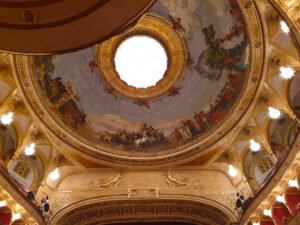
Teatro Costanzi has 1,560 seats among orchestra, three tiers of boxes, balcony and gallery, under the dome frescoed by Annibale Brugnoli. At the inauguration, in 1880, it had up to 2,212.
A sounding box
Domenico Costanzi entrusted the design in 1879 to the Milanese Achille Sfondrini, a theater specialist, who conceived the horseshoe-shaped hall as a sounding box. The construction lasted just 18 months. For an opera like Lucia, built on the protagonist's pianissimos and on the dialogue with a solo instrument, the acoustic quality of the hall is decisive.
Front boxes and rear boxes
The price list distinguishes front and rear seats in the boxes, with very different prices: from the back of a side box you see little of the stage. In Lucia the direction by a choreographer makes sight more important than usual, and the rear seat suits only those who want mostly to listen.
The foundation's other halls
The Fondazione Teatro dell'Opera also runs Teatro Nazionale at Via del Viminale 51 and, in summer, the Baths of Caracalla. For the full history of the theater there is our page on Rome Opera House.
House rules and dress code for Lucia di Lammermoor
At Teatro dell'Opera di Roma, for the inaugural evening and for opening nights, dark attire is welcome: this applies to the opening of Lucia, Sunday, February 21 at 19:00. For the other performances the theater indicates no specific code.
Mandatory coat check
Umbrellas, hats, bags, helmets, cameras and recording devices must be left at the coat check. Phones, photographs and recordings are forbidden in the hall. Food and drinks are allowed only at the theater's bars, and smoking is not allowed in any area.
Late arrivals
Once the performance has begun there is no entry to the orchestra or to the numbered seats of the balcony and gallery: latecomers wait in the foyer. Lucia opens with a dark prelude, marked by the timpani like a funeral march, and immediately after with the hunting chorus: missing it means missing the tone of the whole opera.
Information
For lost property the theater indicates 06 48160284. The full rules are on the General Information page of the official website.
The right photo to take at Lucia di Lammermoor at Teatro dell'Opera di Roma, from February 21 to 28, 2027
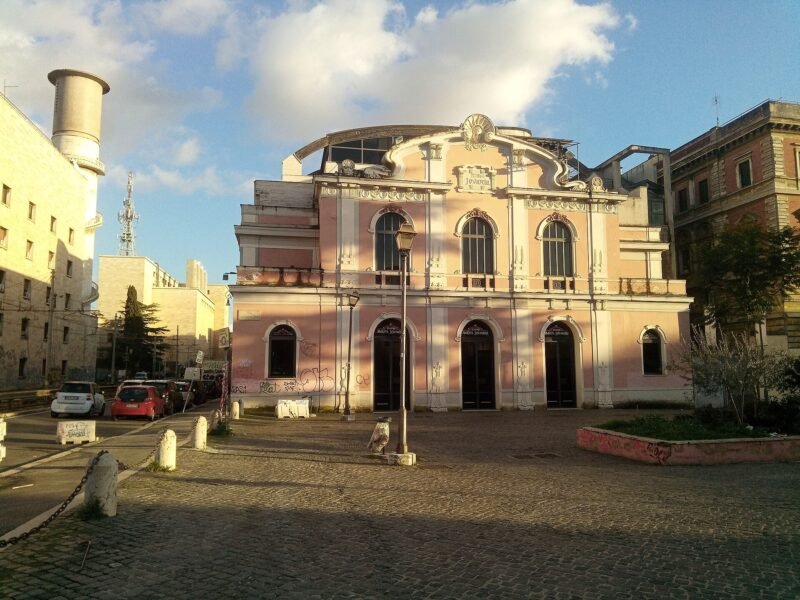
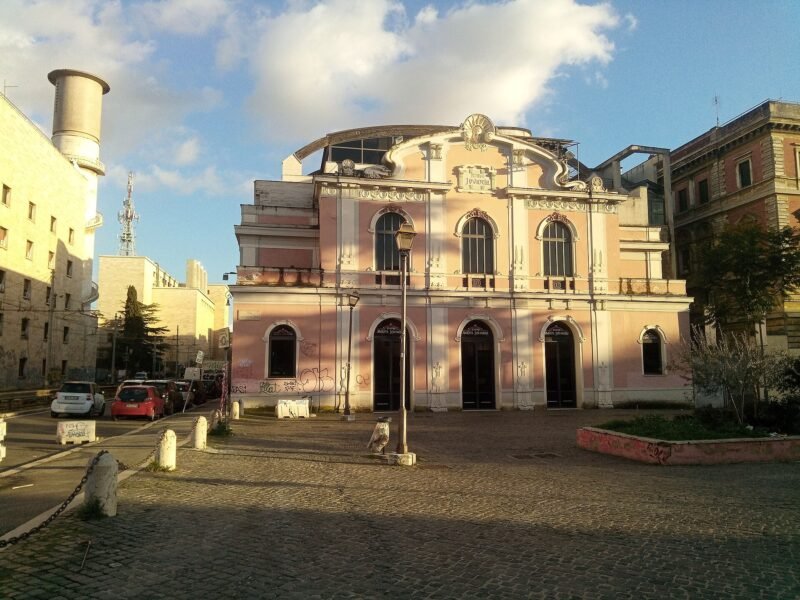
Photography isn't allowed in the hall at Costanzi, not even during the applause: the right photo of your Lucia is taken outside, in Piazza Beniamino Gigli, before going in, with the illuminated facade and the lit foyer behind you.
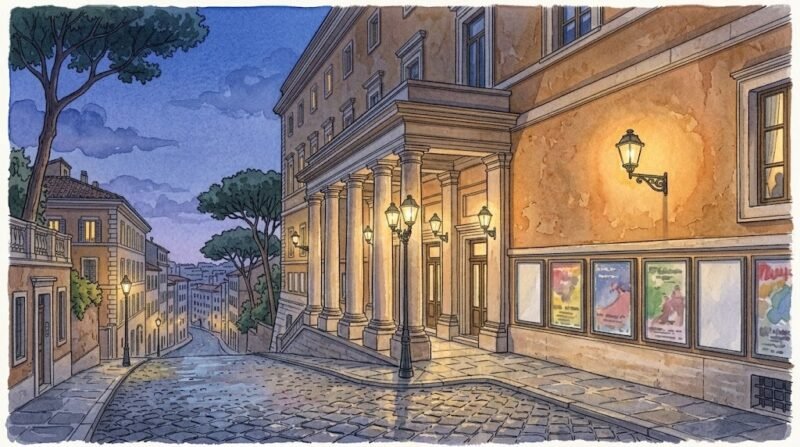
The square is the one onto which Marcello Piacentini moved the theater's entrance in the renovation that followed the purchase by the city, in 1926. At the end of February it gets dark early: even for the 18:00 performance you arrive with the lights on, and it's the moment when the entrance looks its best. It carries the name of the tenor Beniamino Gigli, and being photographed there before an evening of bel canto has a precise meaning.
The advice: photograph people, not the building. The friends who came to hear Jessica Pratt, the kids at the February 20 preview, the couple with the program in hand. The building is in any archive, your evening is not.
The hall, with Brugnoli's dome and the great crystal chandelier lit for the first time in 1928, you take home with your eyes. Whoever wants to see it at leisure can book one of the guided tours organized by the theater. And the official image of the production is on the foundation's website.
A few important events that happened here in history
Teatro Costanzi was inaugurated on November 27, 1880 with Rossini's Semiramide, in the presence of Umberto I and Queen Margherita, and took the name Teatro dell'Opera di Roma in 1946. In between there are two world premieres that changed the history of Italian opera.
The dates to remember
- 1879: Domenico Costanzi commissions the design from Achille Sfondrini.
- November 27, 1880: inauguration with Semiramide, after 18 months of work.
- May 17, 1890: world premiere of Pietro Mascagni's Cavalleria rusticana.
- January 14, 1900: world premiere of Giacomo Puccini's Tosca.
- 1907: management passes to the impresario Walter Mocchi. From 1912 it is led by the soprano Emma Carelli.
- 1926: the City of Rome buys the theater, which becomes Teatro Reale dell'Opera. Renovation by Marcello Piacentini.
- February 27, 1928: second inauguration with Arrigo Boito's Nerone. The crystal chandelier is lit.
- 1935: the permanent chorus is born, wanted by Tullio Serafin.
- 1946: the name becomes Teatro dell'Opera di Roma.
- 1958: new work by Piacentini ahead of the 1960 Olympics.
- April 2015: in a Lucia di Lammermoor at Costanzi the glass harmonica is tried out during the intermission.
- February 21, 2027: opening night of Karole Armitage's new Lucia.
There is a calendar coincidence worth noting: February 27, the day of the second inauguration in 1928, falls this year on the second-to-last performance of Lucia. The theater that calls itself the cradle of verismo celebrates the anniversary that evening with the masterpiece of romantic bel canto that preceded verismo by half a century.
Who has passed through Lucia di Lammermoor at Teatro dell'Opera di Roma, from February 21 to 28, 2027
Through Teatro Costanzi have passed Umberto I and Queen Margherita, present at the 1880 inauguration, and the musicians the theater indicates as those who marked its destiny: Pietro Mascagni, Giacomo Puccini, Ottorino Respighi. For Lucia, though, the list that interests us begins with a singer of today.
Jessica Pratt refined her training at Teatro dell'Opera di Roma, invited by Gianluigi Gelmetti after winning the 2003 Australian Singing Competition, and sang Linda di Chamounix here in 2016. Returning to Costanzi with Lucia, the role she has performed more than 100 times, closes a circle begun 20 years ago a few steps from Piazza della Repubblica.
Then the names from the history of the house: Emma Carelli, soprano, who from 1912 led the Impresa Costanzi and brought to Rome La fanciulla del West, Turandot, Il trittico and Diaghilev's Ballets Russes. Walter Mocchi, the impresario, her husband. Marcello Piacentini, who put his hand to the building again in 1926 and 1958. Tullio Serafin, who in 1935 wanted the permanent chorus. And the conductors remembered by the theater in the histories of its orchestra and its chorus: Victor de Sabata, Gianandrea Gavazzeni, Herbert von Karajan, Carlo Maria Giulini, Karl Böhm, Zubin Mehta, Georg Solti, Riccardo Muti.
Among these there is a thread that leads straight to Lucia. Gianandrea Gavazzeni, one of those conductors, had written in 1937 one of the two books that, together with Guglielmo Barblan's of 1948, swept away musicology's reservations about Lucia and allowed it to be called a masterpiece without embarrassment.
Around Costanzi: what to see before Lucia di Lammermoor
Costanzi is between Via Nazionale, Via del Viminale and Via Depretis, a few minutes from Piazza della Repubblica and Termini: an afternoon in February among museums and churches, and the evening at the theater, can all be organized on foot.
Piazza della Repubblica and the baths
Coming out of the metro you are in Piazza della Repubblica, with the Basilica of Santa Maria degli Angeli e dei Martiri carved out of the Baths of Diocletian. Toward Termini is Palazzo Massimo alle Terme, home of the National Roman Museum: in February it's quiet, and two hours of museum before a 20:00 performance is the program I suggest most gladly.
A church for the Baroque
From the other side of the square you reach Santa Maria della Vittoria in a few minutes. A short stop, perfect to fill the half hour before the doors open.
Toward Monti and Santa Maria Maggiore
Going down Via Nazionale you get to rione Monti, with its narrow streets and evening life. Past Via Cavour, Basilica of Santa Maria Maggiore is a full quarter of an hour's walk away.
Where to eat before and after Lucia di Lammermoor
Around Teatro dell'Opera you eat on Via Nazionale, in the streets of the Viminale, toward Termini and above all in the nearby rione Monti. In the theater you can only eat or drink at the inner bars, so dinner has to be planned before or after.
Before the show
For the 19:00 opening night and for the Saturday 18:00 performance, a late lunch and a light aperitivo are best, leaving dinner for after. For the 20:00 performances you dine early, around 18:30, a few minutes from the theater. For the Sunday 16:30 performance a proper Sunday lunch and a coffee at the theater's bar are enough.
After the show
Monti is the natural choice after the afternoon performances: you walk down from Via Nazionale and find osterias, wine bars and pizzerias. After the 20:00 performances book ahead, because late at night many kitchens close.
The criterion
I don't name places: they change management more often than productions change directors. Avoid the menus translated into five languages hanging on the door in the streets around Termini and go a few streets toward Monti.
Lucia di Lammermoor for young people, kids and people with disabilities
For Lucia di Lammermoor Teatro dell'Opera has scheduled a youth preview on Saturday, February 20 at 18:00, the evening before the debut.
Under 30
The theater offers people under 30 the Carta Giovani Opera and a dedicated subscription. Conditions and validity for 2026/27 are in the ticketing section of the official website.
With kids
The theater doesn't publish age guidelines. Lucia works from age 13 or 14: the story is clear, the characters sharp, and the mad scene makes an impression. Tell the plot beforehand and let them listen at home to the sextet and “Spargi d'amaro pianto”: in the hall the evening changes face. The Sunday 16:30 performance is the most suitable time.
Accessibility
For specific needs it's best to contact the box office before buying, at 06 48160255 or 06 4817003 or at ufficio.biglietteria@operaroma.it. Those with mobility difficulties should avoid the gallery. The taxi service at the entrance, bookable during the intermission, is a concrete help at the end of the evening.
February in Rome and the season around Lucia di Lammermoor
February in Rome is one of the quietest months of the year for museums and one of the fullest for theaters. At Costanzi, Lucia comes after the ballet on Mahler's Third Symphony, from February 4 to 10, and before Verdi's I due Foscari, from March 13 to 21.
The weather
Late February evenings are cool and often damp: coat and umbrella, which will end up in the coat check anyway.
For those following the season
Anyone who saw Andrea Chénier at Teatro dell'Opera in January finds in Lucia the same price list and an opposite musical world: from verismo to romantic bel canto. Later on, in May, there is Il barbiere di Siviglia with Cecilia Bartoli.
Frequently asked questions about Lucia di Lammermoor at Costanzi
When does Lucia di Lammermoor play at Teatro dell'Opera di Roma?
Lucia di Lammermoor plays at Teatro Costanzi from February 21 to 28, 2027: Sunday the 21st at 19:00, Tuesday the 23rd, Wednesday the 24th, Thursday the 25th and Friday the 26th at 20:00, Saturday the 27th at 18:00 and Sunday the 28th at 16:30. On Saturday, February 20 at 18:00 there is the youth preview.
How much are tickets for Lucia di Lammermoor at Costanzi?
For Lucia di Lammermoor the official price list of Teatro dell'Opera runs from €26 to €200 for opening night and from €22 to €160 for the other performances, depending on the section. The first gallery costs €25 at the repeat performances, the first balcony row €65. Single tickets have been on sale since October 8, 2026.
Who sings in Lucia di Lammermoor in Rome in 2027?
In the Lucia di Lammermoor at Costanzi the title role is Jessica Pratt, with Gilda Fiume on February 23, 25 and 27. Edgardo is Xabier Anduaga, alternating with René Barbera. Enrico is Germán Enrique Alcántara, alternating with Bogdan Baciu. Raimondo is Michele Pertusi, alternating with Marko Mimica.
Who conducts and who directs the new Lucia?
The new Lucia di Lammermoor at Teatro dell'Opera di Roma is conducted by Giacomo Sagripanti, directed by the American choreographer Karole Armitage, with sets and costumes by Daniela Ciancio and lighting by Valerio Tiberi. The chorus is prepared by Ciro Visco.
Does Lucia di Lammermoor have surtitles?
Yes, Lucia di Lammermoor at Costanzi is sung in Italian with Italian and English surtitles. It's a useful aid even for those who know the opera, because it lets you follow Cammarano's text in the ensemble scenes.
How do you get to Teatro Costanzi?
Teatro Costanzi is reached by metro line A, Repubblica Teatro dell'Opera stop, a few minutes on foot, or by the buses on Via Nazionale (H, 40, 60, 64, 70, 71, 170) and Via Depretis (70, 71). At the exit there is a taxi service that can be booked during the intermission.
Do you need formal dress for Lucia di Lammermoor?
For the opening of Lucia di Lammermoor, Sunday, February 21, Teatro dell'Opera indicates dark attire as welcome, as for all opening nights. For the other performances there is no specific code: neat clothing is fine. Bags and umbrellas must be left at the coat check.
Is Lucia di Lammermoor suitable for kids?
Lucia di Lammermoor is suitable for kids from 13 or 14 on up: the plot is clear and the music immediate. For under-30s Teatro dell'Opera offers the youth preview on February 20 and the Carta Giovani Opera.
In closing
For opera lovers the advice is always the same: if in your life you hear only one Donizetti opera in the theater, make it Lucia, and if possible with a great Lucia. In February 2027 at Costanzi all the conditions are there. Buy early, choose the cast before the date, and after the mad scene stay seated: the opera ends with Edgardo.
Article written by the editorial team of Tour Leader Pro, contact them for Private/Corporate/V.I.P. Tours and Experiences.
Planning a trip to Rome? The English guides to visiting the city are on ItalyPlanner.com.
Contact Information
Nearby
 Rome Opera House100 m
- St. Paul’s Within the Walls100 m
- Basilica of San Vitale100 m
- Teatro Nazionale100 m
- Enrico Fermi Center – Historical Museum of Physics and Study and Research Center at the Viminale200 m
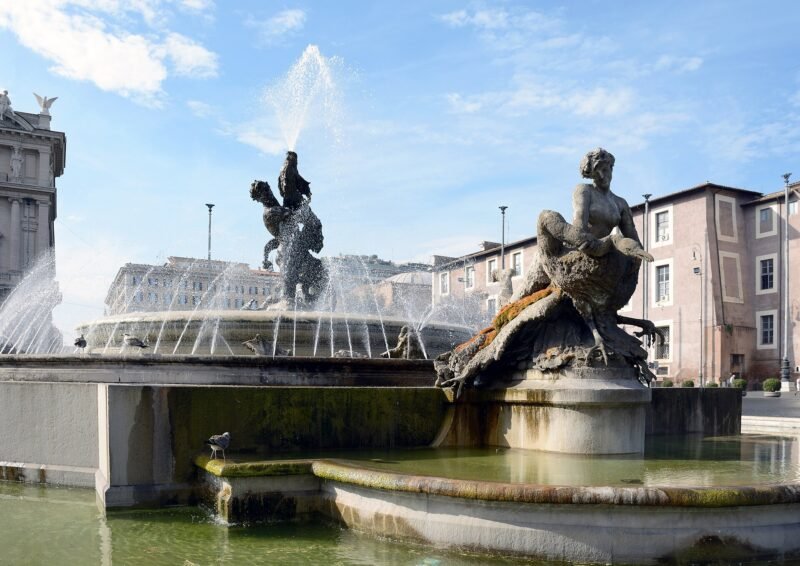
- Fontana delle Naiadi200 m

Upcoming events nearby
- Swan Lake at Teatro dell’Opera di Roma, December 17 to 31, 2026100 m
- Andrea Chénier at the Teatro dell’Opera di Roma, January 17-26, 2027100 m
- Il barbiere di Siviglia with Cecilia Bartoli at Teatro dell’Opera di Roma, May 27, 2027100 m
- Goecke / Robbins / Bausch at Teatro dell’Opera di Roma, from October 27 to November 8, 2026100 m


You might also like
- Mahler’s Third Symphony by John Neumeier at Teatro dell’Opera di Roma, February 4 to 10, 2027
- The Rake’s Progress at Teatro dell’Opera di Roma, November 27 to December 5, 2026
- Aggiungi un posto a tavola at the Teatro Brancaccio in Rome, December 10 to December 20, 2026
- Otello with Giorgio Pasotti and Giacomo Giorgio at Teatro Ambra Jovinelli, February 24 to March 7, 2027
- Raffaella il Musical at Teatro Brancaccio, February 10 to March 6, 2027
- Educazione sentimentale with Giuseppe Fiorello at Ambra Jovinelli, February 10 to 21, 2027