Educazione sentimentale with Giuseppe Fiorello at Ambra Jovinelli, February 10 to 21, 2027
In short. Educazione sentimentale, a monologue written and directed by Ivan Cotroneo with Giuseppe Fiorello, plays at Teatro Ambra Jovinelli, Via Guglielmo Pepe 43 (00185 Rome), from February 10 to 21, 2027, for 11 performances: the evening shows…
Educazione sentimentale, a monologue written and directed by Ivan Cotroneo with Giuseppe Fiorello, plays at Teatro Ambra Jovinelli, Via Guglielmo Pepe 43 (00185 Rome), from February 10 to 21, 2027, for 11 performances: the evening shows at 21:00, three shows at 19:30 (Thursday February 11, Wednesday February 17 and Friday February 19) and the Sundays at 17:00, with Monday the 15th off. The show is produced by Diana Or.i.s. The theater is in Esquilino, a few minutes' walk from the Vittorio Emanuele stop on Metro A and a quarter of an hour from Termini. Prices are published on the authorized presale circuit named by the theater. Tickets are bought with the purchase button on the show's page on the official Ambra Jovinelli website or at the box office on Via Guglielmo Pepe.
Language: performed in Italian. No English version or English surtitles are announced.
Educazione sentimentale at Ambra Jovinelli: dates, times and tickets
Educazione sentimentale plays at Ambra Jovinelli from February 10 to 21, 2027, with 11 performances in two weeks and start times that change almost every day.
The first week
Wednesday, February 10 at 21:00, Thursday the 11th at 19:30, Friday the 12th at 21:00, Saturday the 13th at 21:00 and Sunday the 14th at 17:00. This is the schedule published by the theater on the show's page.
The second week
Tuesday, February 16 at 21:00, Wednesday the 17th at 19:30, Thursday the 18th at 21:00, Friday the 19th at 19:30, Saturday the 20th at 21:00 and the last performance on Sunday, February 21 at 17:00. On Monday the 15th the theater is closed.
Tickets
The show's page on the Ambra Jovinelli website has a purchase button linked to the theater's presale circuit, where sections and prices are shown. Alternatively there is the box office on Via Guglielmo Pepe, during the hours published by the theater.
Author, performer, production
The text and direction are by Ivan Cotroneo, the only performer is Giuseppe Fiorello, and the production is by Diana Or.i.s. The official photographs of the show are by F. Cestari.
Educazione sentimentale: what the show is about
Educazione sentimentale is a one-act play with a single protagonist, Daniele Canonico, a 50-year-old man originally from the South, who tells the audience about his upbringing.
An average man
Daniele presents himself as an ordinary man. His story is that of entering the world of males, which began in childhood: a rough road, full of obstacles, traps, trials and constant, exhausting tests of masculinity. Through the stages of school and then work, the monologue draws the path of a boy, a teenager and finally a man called on to prove to the world his ability to be male.
The stages of a human comedy
The theater describes the show as a journey in the manner of a human comedy. There is the need to find a little girlfriend already in elementary school. There is the theory of honor, with the defense of the reputation of the women in the family. There is puberty and the physical comparison with friends. There is the idea of needing a woman at your side who respects her man. Then come adulthood, marriage, a teenage daughter, and the trials of maturity.
The change of tone
At a certain point the story changes register and offers an upside-down perspective: it shows how much that sentimental education has condemned Daniele to incomprehension. He doesn't know it. At most he senses it, and in the tears over what he has made of his life he finds no answers. This is the point where the comedy reveals what it is.
Ivan Cotroneo's note on Educazione sentimentale
Ivan Cotroneo, in the note published by the theater, explains that he conceived Educazione sentimentale as a funny text that reveals its true nature only in the last 10 minutes.
An indictment
That nature, according to the author, is an indictment of a gendered social education that never aims at respect for women as subjects. Cotroneo speaks of the tragedy of a ridiculous man, like many others, and like many capable of gestures he can't control.
The choice of the actor
For this undertaking, Cotroneo writes, he was looking for a superb performer who was also able to create empathy with the audience: that is why he asked Giuseppe Fiorello to share the adventure with him. The author adds that the project, in this historical moment, has for him the character of necessity and urgency.
Why the laughter
The construction is clear: make people laugh for almost the whole time, so that the audience recognizes something familiar in the protagonist, and then pull the ground out from under their feet. It's a technique that forces the spectator to ask what they were laughing at until a moment before.
Who is Giuseppe Fiorello: his biography
Giuseppe Fiorello, known as Beppe, was born in Catania on March 12, 1969 and grew up in Augusta. An actor, producer, screenwriter and director, he won the Nastro d'argento in 2023 as best first-time director with Stranizza d'amuri.
The beginnings
The younger brother of the showman Rosario and of the writer and host Catena, he began by working beside Rosario as a technician in vacation villages. In 1994 he moved to Radio Deejay under the stage name Fiorellino, alongside Marco Baldini, Luca Laurenti and Amadeus, and the same year made his television debut hosting Karaoke. He also tried music with the pop group Patti chiari.
The encounter with film
In 1996, in a bookstore in Riccione, he met Niccolò Ammaniti, who suggested an audition for a Marco Risi film that Ammaniti had written. In 1998 Fiorello made his film debut with L'ultimo capodanno. The same year he played appuntato Nocelli, code name Parsifal, in the miniseries Ultimo with Raoul Bova. In 1999 he appeared in Anthony Minghella's The Talented Mr. Ripley, alongside Matt Damon, Gwyneth Paltrow, Jude Law and Cate Blanchett. In 2000 he co-starred with Carlo Verdone in C'era un cinese in coma.
The face of television biographies
In the 2000s he became one of the leads of Rai fiction about real figures: Salvo D'Acquisto in 2003, Valentino Mazzola in Il Grande Torino, Joe Petrosino, Giuseppe Moscati, the bandit Sante Pollastri in La leggenda del bandito e del campione. In 2013 he played Domenico Modugno in Volare, la grande storia di Domenico Modugno, which earned him honorary citizenship of Polignano a Mare. Next came L'oro di Scampia, Io non mi arrendo, I fantasmi di Portopalo, Il mondo sulle spalle, Gli orologi del diavolo.
Auteur cinema
In film he has worked with Giuseppe Tornatore in Baarìa, with Emanuele Crialese in Terraferma, with Ferzan Özpetek in Magnifica presenza. In 2016 he played Paolo Borsellino in Fiorella Infascelli's Era d'estate, alongside Massimo Popolizio as Giovanni Falcone.
Theater
In theater the title of his career is Penso che un sogno così, a tribute to his father and to Domenico Modugno, written with Vittorio Moroni. Staged since 2013, it even reached the United States, and after more than 350 performances across Italy it became a Rai 1 special in January 2021.
Directing
On March 23, 2023 Stranizza d'amuri came out, the first film directed and co-produced by Fiorello, loosely inspired by a news event that took place in Sicily around 1982. It earned him the Nastro d'argento for best first-time director and the Biglietto d'oro Cinecittà in Sorrento. In 2024 he returned to Canale 5 with the series I fratelli Corsaro. In April 2026 he hosted on Rai 1, from Teatro Massimo in Palermo, the evening Siamo danza.
Who is Ivan Cotroneo, author and director
Ivan Cotroneo, born in Naples on February 21, 1968, is a writer, screenwriter, director, translator and television author. With Ferzan Özpetek he wrote Mine vaganti, winner of the 2010 Globo d'oro for screenplay.
His training
After leaving law school, he moved to Rome and in 1992 graduated in screenwriting from the Centro Sperimentale di Cinematografia. His first jobs were with Pappi Corsicato. Then came Paz!, from the characters of Andrea Pazienza, and screenplays for Maria Sole Tognazzi, Renato De Maria and Luca Guadagnino with Io sono l'amore.
Novels and directing
For Bompiani he published Il re del mondo, Cronaca di un disamore, La kryptonite nella borsa and Un bacio. From La kryptonite nella borsa he drew in 2011 his first film as a director, presented in competition at the Rome International Film Festival. In 2016 he directed Un bacio, winner of the Ciak giovani. He is the Italian translator of the works of Hanif Kureishi and Michael Cunningham.
Television
He wrote for L'ottavo nano and for Parla con me by Serena Dandini, created Tutti pazzi per amore, co-authored with Mika the show Stasera casa Mika, awarded the Rose d'Or, and created and directed La compagnia del Cigno for Rai 1. In 2022 he directed the documentary on Laura Pausini.
Theater
For the theater he adapted Patrick Marber's Closer and Bret Easton Ellis's The Rules of Attraction, and wrote for Claudio Gioè the monologue Se stanotte sono qui. Educazione sentimentale returns to the monologue form, this time with text and direction.
A curiosity about Educazione sentimentale with Giuseppe Fiorello at Ambra Jovinelli: February 10 to 21, 2027
The most interesting curiosity concerns the structure. Cotroneo built Educazione sentimentale as a funny text that turns over only in the last 10 minutes: a proportion declared by the author himself, rare for a show that wants to be an indictment. Usually texts of denunciation lay their cards on the table right away. Here the denunciation arrives after an hour of laughter, when the audience has already recognized in the protagonist someone they know, maybe themselves. It's a mechanism that turns the spectator into an accomplice before making them a witness.
The second curiosity concerns the character's name. Daniele Canonico has a surname that sounds like a rule: canonical is what follows the canon, the norm. In our view it's not a detail: the protagonist is a man who followed the male canon his whole life, and precisely for that reason doesn't understand what happened to him. His age, 50, also places him in a generation raised on those models and now faced with sons and daughters who have others.
Third curiosity: the contrast between the performer and the character. Giuseppe Fiorello built a large part of his television career on exemplary men, often civic heroes: Salvo D'Acquisto, Joe Petrosino, Giuseppe Moscati, and Paolo Borsellino in film. In Educazione sentimentale he plays instead an ordinary man and anything but exemplary, ridiculous and capable of gestures he doesn't control. For his audience it's a sharp reversal, and perhaps for that very reason an effective one.
Teatro Ambra Jovinelli, the variety hall
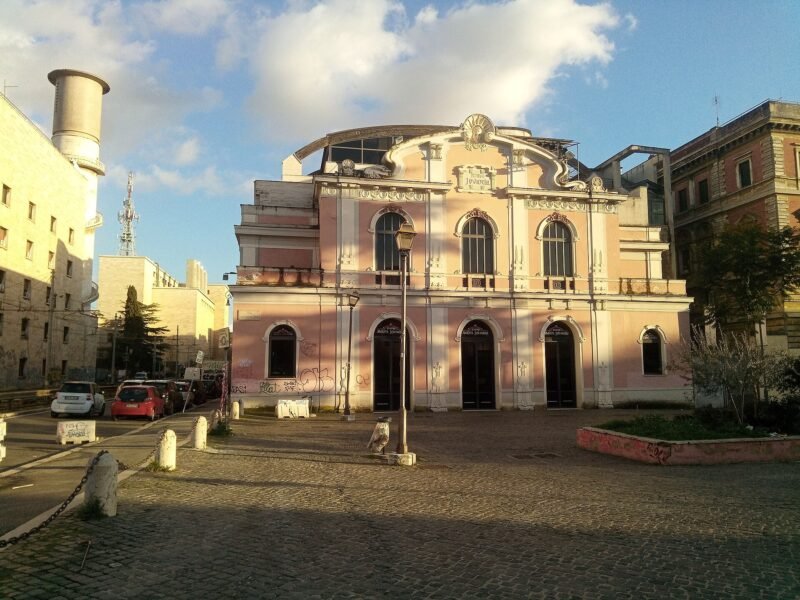
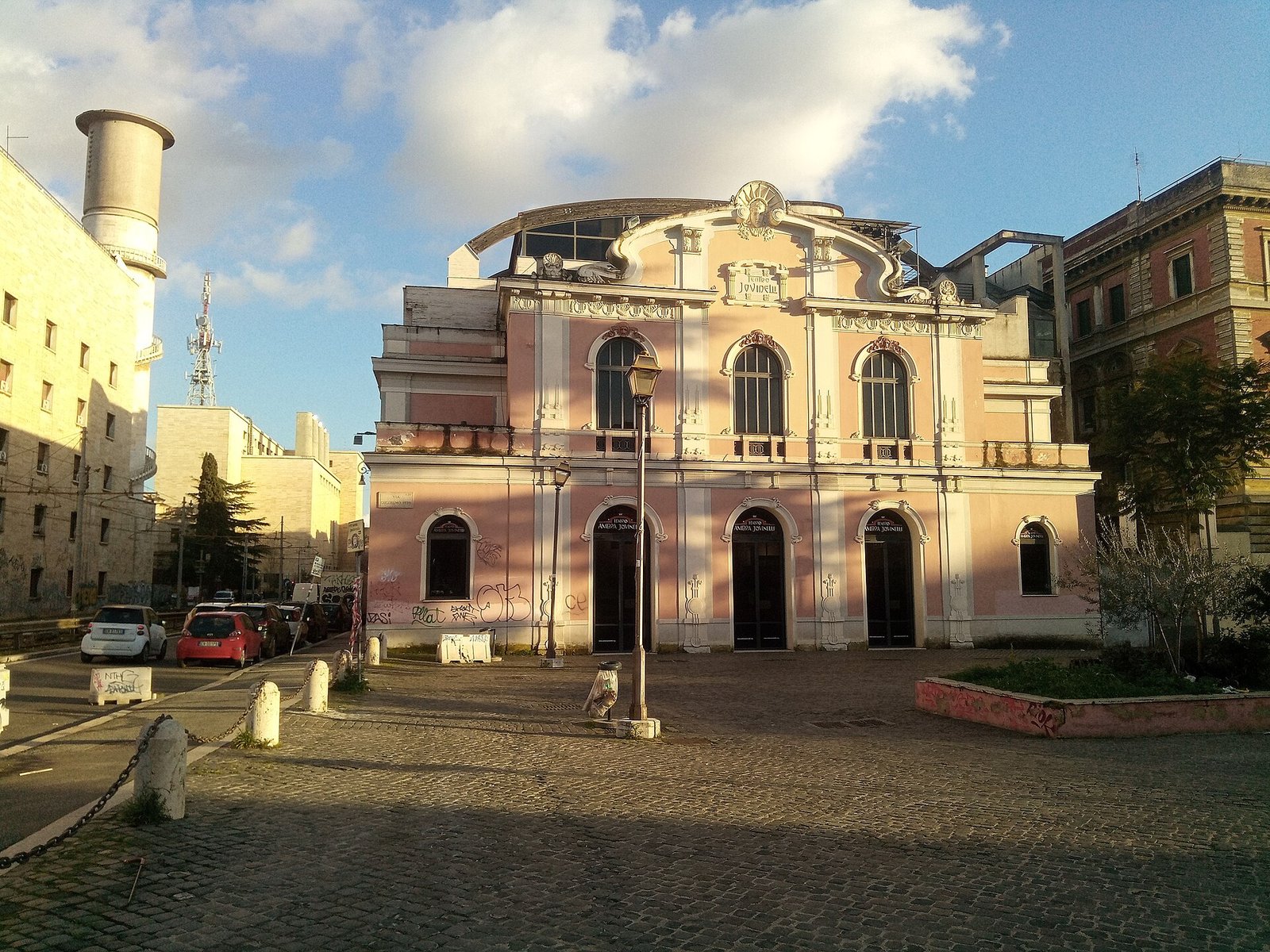
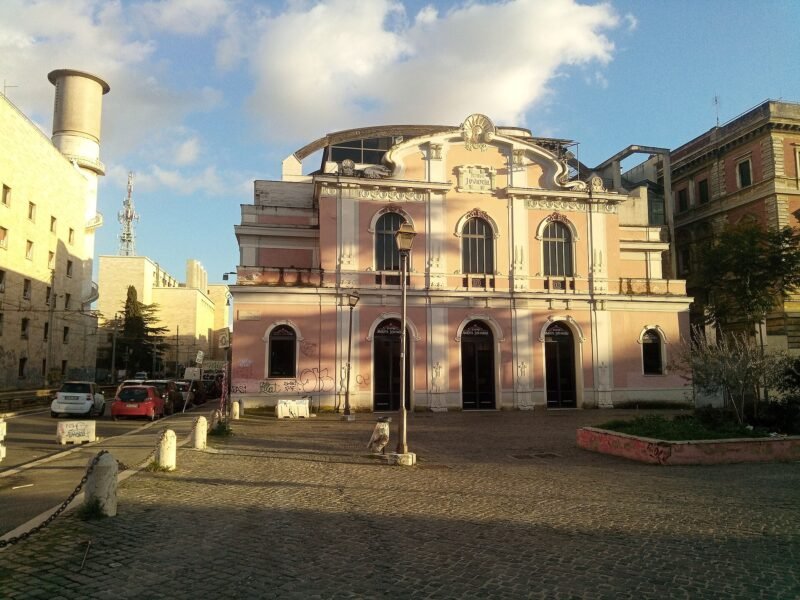
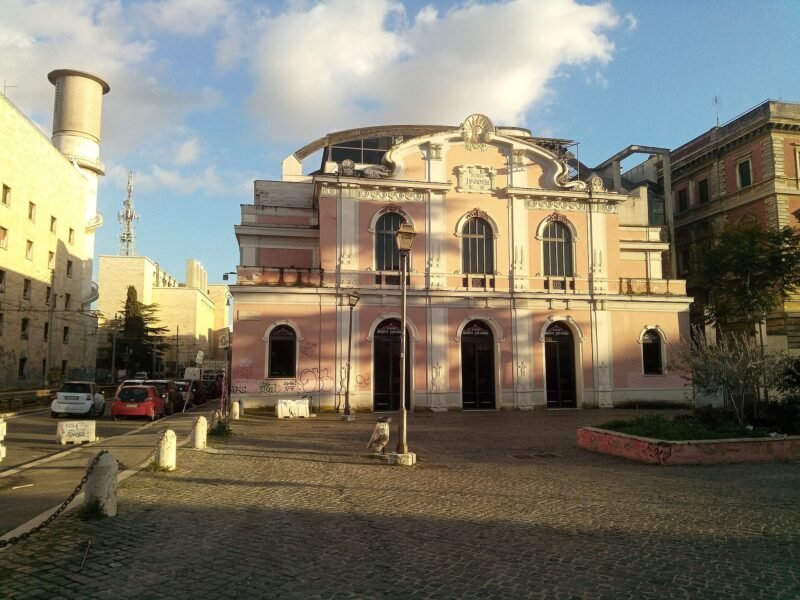
Ambra Jovinelli is the Liberty-style theater of Esquilino. Inaugurated on March 3, 1909 by the impresario Giuseppe Jovinelli, from Caserta, as a luxury variety house, it reopened in 2001 as a comedy theater and since 2010 has had Fabrizia Pompilio as artistic director.
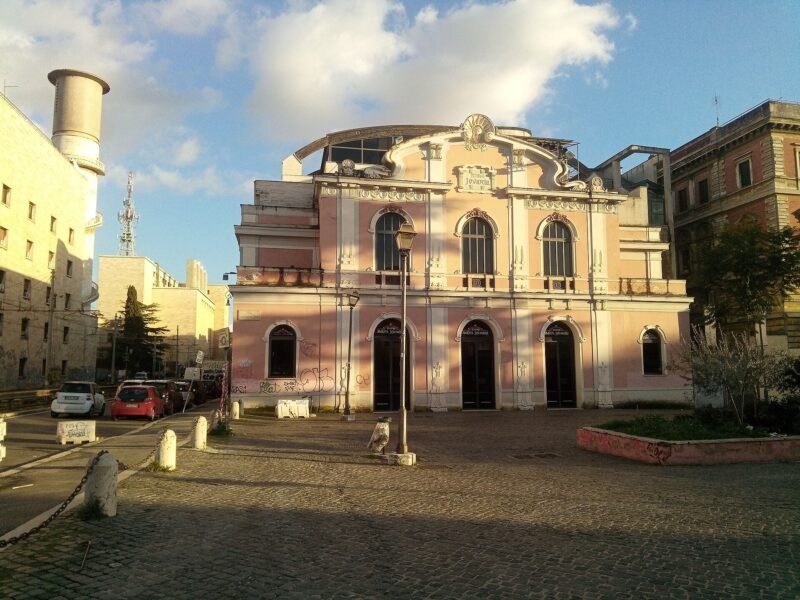
The Liberty-style facade
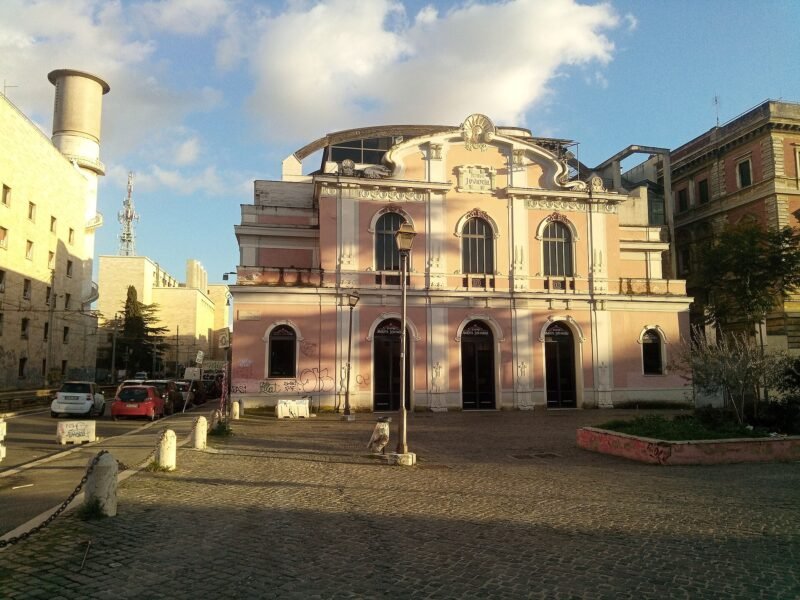
After the contributions of Pietro Chiodelli and Giacomo Radiconcini, the project was entrusted in 1907 to Ulderico Bencivenga: a two-story facade with wide openings, a crown of arched lines, stucco pilasters decorated with flowers and, at the center of the entablature, a shell with a human face. The horseshoe-shaped hall originally had about a thousand seats and entirely electric lighting, a novelty for the time.
Falls and rebirths
In the 1950s it became a variety cinema under the name Ambra Jovinelli, in the 1970s a red-light movie theater. On April 29, 1982 a fire destroyed the structure. In July 1996 a collective of young artists occupied the abandoned theater. In 1997 the facade was placed under protection by the Ministry. On January 25, 2001 the hall reopened with Serena Dandini as artistic director.
The hall today
The restoration rebuilt the look of the early 1900s and tripled the interior volume without touching the exterior: the hall was raised by five meters and underneath were created the Piccolo Jovinelli, a bar and other spaces. The cast-iron columns that held up the boxes now support the two galleries.
Something nobody tells you about Educazione sentimentale with Giuseppe Fiorello at Ambra Jovinelli: February 10 to 21, 2027
What isn't said, because the show is presented as a comic monologue, is that the ending changes everything. Cotroneo says it openly: the text is funny until the last 10 minutes, then reveals itself as an indictment. Anyone going to the theater expecting only Beppe Fiorello's likability risks coming out thrown off. Anyone who knows beforehand, in our view, enjoys the comic part more too, because they recognize in the laughs the signs of what's about to come.
The second thing concerns the place. Ambra Jovinelli was born as a theater of variety, of comedians, of male character sketches. Petrolini and Totò debuted here, and here people laughed at men and women with the codes of the early 1900s. Bringing to this hall a monologue that dismantles traditional male education has a particular flavor: it's like putting the old variety on trial in its own courtroom.
Third thing: the times. In 11 performances there are three different start times, 21:00, 19:30 and 17:00, and the distribution doesn't follow the day of the week. Thursday the 11th starts at 19:30, Thursday the 18th at 21:00. Friday the 12th at 21:00, Friday the 19th at 19:30. Checking your ticket before leaving the house is not an excessive precaution.
How to get to Ambra Jovinelli
Teatro Ambra Jovinelli is at Via Guglielmo Pepe 43, near Piazza Vittorio and Termini station. Metro A, Vittorio Emanuele stop, is the simplest solution.
By metro
From the Vittorio Emanuele stop, Via Guglielmo Pepe is a few minutes' walk. Alternatively, get off at Termini, where lines A and B cross, and walk across Esquilino: a quarter of an hour at an easy pace.
By train
If you arrive on regional trains you can get off at Roma Laziali station, next to Termini, the closest to the theater.
By bus and by car
For surface lines, use ATAC's route planner. In the evening, street parking in Esquilino is difficult: better to leave the car in a garage around Termini and continue on foot.
My advice for seeing Educazione sentimentale with Giuseppe Fiorello at Ambra Jovinelli: February 10 to 21, 2027
The advice is to go as a pair, and not to go alone with the wrong person. Educazione sentimentale is a show that, according to its author, is about respect for women as subjects: it's a text made to be discussed on the way out. In our view it's ideal for a couple, for a father with a grown son, for friends who want to talk about it over dinner. Less suitable for anyone looking only for a light evening.
The second piece of advice concerns where to sit. A monologue lives on the direct relationship between performer and audience, and Cotroneo chose Fiorello precisely for his ability to create empathy. In the Ambra hall it's best to sit in the orchestra, in the front rows or in the center, where the performer's gaze arrives unfiltered.
Third piece of advice: choose one of the 19:30 performances, Thursday the 11th, Wednesday the 17th or Friday the 19th. You get out in time for a real dinner in Esquilino or in Monti, and the conversation the show inevitably sparks has all the space it deserves.
Another well-known fact, yet rarely mentioned
It's well known that Beppe Fiorello is Rosario's brother. Less remembered is that his public debut was under the stage name Fiorellino, at Radio Deejay in 1994, and that the same year he replaced his brother as host of Karaoke on Mediaset: an experience the actor himself has said he regretted, because of the very low ratings that led to the show's suspension. The move to film, two years later, came from a chance meeting in a bookstore in Riccione with Niccolò Ammaniti.
A second known and rarely cited fact concerns the theater. Fiorello is known mostly for television, but his show on Modugno, Penso che un sogno così, passed 350 performances and went as far as the United States, to Atlantic City and Foxwood. The theater audience, even before the television one, knows his ability to hold the stage alone for an entire evening: the gift that Educazione sentimentale puts to the test.
Finally, a fact about Cotroneo: besides being a screenwriter and director, he is the official Italian translator of the works of Hanif Kureishi and Michael Cunningham, and he has taught a screenwriting workshop at DAMS at Roma Tre University. His theater writing comes from a daily work on other people's words, even before his own.
Esquilino around Ambra Jovinelli
Esquilino is the district between Termini, Santa Maria Maggiore and Porta Maggiore, with the Umbertine buildings constructed around Piazza Vittorio Emanuele II after Italian unification: one of the most multiethnic neighborhoods in the city.
Piazza Vittorio
Piazza Vittorio is a large arcaded square. In the gardens at the center is Porta Alchemica, with its enigmatic inscriptions. Before an evening show, with the street lamps lit, it's a short and unusual walk.
The market
Not far away is Nuovo Mercato Esquilino, with spices, vegetables and products from half the world: to visit in the morning, for those spending the day in the area before a Sunday matinee.
Toward Monti
Heading up toward Santa Maria Maggiore you reach Monti, the district of workshops and little squares between the basilica and the Forums. The entry on Rione Monti helps you choose a route before or after the show.
The right photo to take at Educazione sentimentale with Giuseppe Fiorello at Ambra Jovinelli: February 10 to 21, 2027
The right photo is of the Liberty-style facade of Ambra Jovinelli, protected by the Ministry in 1997: the shell with the human face at the center of the entablature, the pilasters with stucco flowers, the large openings. In the evening, with the sign lit and the Educazione sentimentale poster with Fiorello's face, the facade is the most complete portrait of the night: a theater from 1909 hosting a monologue about the present.
It's best to shoot from the opposite sidewalk of Via Guglielmo Pepe, to get the whole facade in the frame. No photos during the show: in a monologue, even more than in an ensemble comedy, the flash breaks the thread between performer and audience.
The second photo is taken inside the hall, before the start and if the staff allows it: the cast-iron columns holding up the two galleries are the same ones that once held up the variety boxes. Looking at them with that awareness changes the way you see the hall.
Some important events that happened here in history
The history of Ambra Jovinelli reads by dates. On March 3, 1909 the theater opens with Raffaele Viviani and his sister Luisella, called by Giuseppe Jovinelli. In 1910 Ettore Petrolini signs with Jovinelli the contract that launches him: the documents of that relationship are kept in the Fondo Petrolini of the Biblioteca e Museo teatrale del Burcardo. Between 1919 and 1921 Totò debuts here and becomes the audience's favorite, presenting himself as an imitator of Gustavo De Marco. In the 1940s and 1950s the hall also hosts boxing matches, with the ring set up in the theater.
In the 1950s it becomes a variety cinema with the current name. In the 1970s a red-light movie theater. April 29, 1982: the fire. July 1996: the occupation by young artists. 1997: the ministerial protection of the facade. January 25, 2001: the reopening as a comedy theater with Serena Dandini. On December 26, 2010 the management of Fabrizia Pompilio begins.
Educazione sentimentale arrives in this history as a small paradox. The variety that made Jovinelli great was full of male character sketches and jokes about women. More than a century later, on the same stage, a monologue uses laughter to show the price of those models.
Who has passed through Educazione sentimentale with Giuseppe Fiorello at Ambra Jovinelli: February 10 to 21, 2027
The stage of Ambra Jovinelli has seen more than a century of Italian comedy pass. In the era of the Jovinelli family there are Raffaele Viviani, Ettore Petrolini, Gustavo De Marco, Totò, and then Gennaro Pasquariello, Romolo Balzani, Claudio Villa, Nino Taranto, Franco Franchi and Ciccio Ingrassia, Rita Pavone, Alberto Sordi.
After the 2001 reopening came Ascanio Celestini, Marco Paolini, Lillo and Greg, Neri Marcorè, Valerio Mastandrea, Sabina and Corrado Guzzanti, Vincenzo Salemme, Lella Costa, Moni Ovadia, Silvio Orlando, Paolo Rossi. Under Fabrizia Pompilio's management, since 2010, the program has hosted Stefano Accorsi, Massimo Ranieri, Virginia Raffaele, Pierfrancesco Favino, Paola Cortellesi, Elio Germano. Serena Dandini, first artistic director of the reborn theater, is the same one for whom Ivan Cotroneo wrote L'ottavo nano and Parla con me: the author of Educazione sentimentale returns, in a way, to a house he knows.
In the 2026/2027 season Ambra also hosts Luca Bizzarri and Tutti gli uomini che non sono. From February 10 to 21, Giuseppe Fiorello passes through and, through his voice, Daniele Canonico: a 50-year-old man from the South, the son of an education he didn't choose.
The theme: male education on stage
Educazione sentimentale tackles, with the tools of comedy, a theme the author considers urgent: the way society educates males from childhood to an idea of masculinity that excludes respect for women.
The form of the story
The choice of the monologue puts the audience in a precise position: Daniele speaks directly to the hall, tells his story the way he'd tell it to a friend. The spectator is called to recognize themselves, to laugh, and finally to take a distance.
The tests of masculinity
The presentation insists on the continuous tests the protagonist must pass: the little girlfriend in elementary school, family honor, the comparison with friends, the wife who must respect him. These are stages many spectators will recognize, and that's exactly why they're funny.
The father of a daughter
The turning point comes when Daniele is an adult, married, with a teenage daughter. It's the point where the education he received collides with the life of the next generation, and where the monologue shows its bitterest face.
Who to go with and practical information
Educazione sentimentale is a show for adults and older teenagers: the theater gives no age limit, but the themes and the dramatic ending make it, in our view, suitable from 14 or 15 up.
With teenage children
For a parent with a teenage son or daughter, the show is a rare chance to talk about respect, male models and relationships starting from a story told with irony.
Accessibility
After the restoration the Ambra Jovinelli hall is five meters above street level: anyone with accessibility needs should contact the theater before buying, to get information on routes and suitable seats.
Arriving on time
With three different start times, it's best to be at the theater a quarter of an hour early: the foyer fills quickly and in a monologue, entering after the show has started is particularly unpleasant for everyone.
Where to eat before or after the show
Esquilino is the right neighborhood for anyone who wants to eat Chinese, Indian, Bengali, Ethiopian or Middle Eastern food at moderate prices. For a Roman trattoria, head up toward Santa Maria Maggiore or move to Monti.
With a 21:00 start
For the evening shows there are two options: a long aperitivo around 19:00 and dinner afterward, or an early dinner, around 19:30, at one of the places near the theater.
With a 19:30 start
On Thursday the 11th, Wednesday the 17th and Friday the 19th you get out in time for a real dinner in Monti, where osterias and trattorias stay open even after 22:00.
The Sundays
The 17:00 performances on February 14 and 21 leave the evening free: a late lunch in Esquilino and a dinner on the way out, with no rush.
Frequently asked questions about Educazione sentimentale at Ambra Jovinelli
When does Educazione sentimentale play at Ambra Jovinelli?
Educazione sentimentale with Giuseppe Fiorello plays at Teatro Ambra Jovinelli in Rome from February 10 to 21, 2027, with 11 performances: evening shows at 21:00, three shows at 19:30 (February 11, 17 and 19) and Sundays at 17:00. Monday the 15th is a day off.
Who wrote Educazione sentimentale?
Educazione sentimentale is written and directed by Ivan Cotroneo, screenwriter of Mine vaganti and director of La kryptonite nella borsa and Un bacio. The show is produced by Diana Or.i.s. and performed by Giuseppe Fiorello.
What is Educazione sentimentale about?
Educazione sentimentale is the monologue of Daniele Canonico, a 50-year-old man from the South who tells of his formation as a male amid tests of masculinity, honor and marriage. Comic for almost its whole length, in the last minutes it becomes an indictment of gender education.
Is it a comedy?
Educazione sentimentale is presented as a comic monologue, and for the most part it's funny. But the author Ivan Cotroneo warns that in the last 10 minutes the text reveals itself as the tragedy of a ridiculous man: the ending changes tone.
How much do tickets cost?
Ticket prices for Educazione sentimentale are shown on the presale circuit linked from the show's page on the Ambra Jovinelli website. Tickets can also be bought at the theater's box office at Via Guglielmo Pepe 43.
How do you get to Teatro Ambra Jovinelli?
Teatro Ambra Jovinelli, at Via Guglielmo Pepe 43, is reached by Metro A, Vittorio Emanuele stop, a few minutes' walk, or from Termini with a quarter-hour walk. By car, a garage near Termini is best.
Who is Giuseppe Fiorello?
Giuseppe Fiorello, born in Catania in 1969, is an actor, producer and director. A lead in fiction such as Volare on Domenico Modugno and in films such as Baarìa and Magnifica presenza, he directed Stranizza d'amuri, winner of the 2023 Nastro d'argento for best first-time director.
Final advice on Educazione sentimentale at Ambra Jovinelli
An actor loved by the general public, an author who knows how to make people laugh and hurt in the same text, a Liberty-style theater born for variety and reborn several times: Educazione sentimentale brings together three different stories in a single monologue. The advice is to go with someone worth talking about it with afterward, to choose a seat in the orchestra near the stage and, if possible, a 19:30 performance, to leave dinner the time for the discussion. And not to be fooled by the laughs of the first hour: the meaning of the show is in the last 10 minutes.
Article written by the editorial team at Tour Leader Pro. Contact them for Private/Corporate/V.I.P. Tours and Experiences.
Planning a trip to Rome? English-language guides for visiting the city are on ItalyPlanner.com.
Contact Information
Nearby
 Teatro Ambra Jovinelli100 m
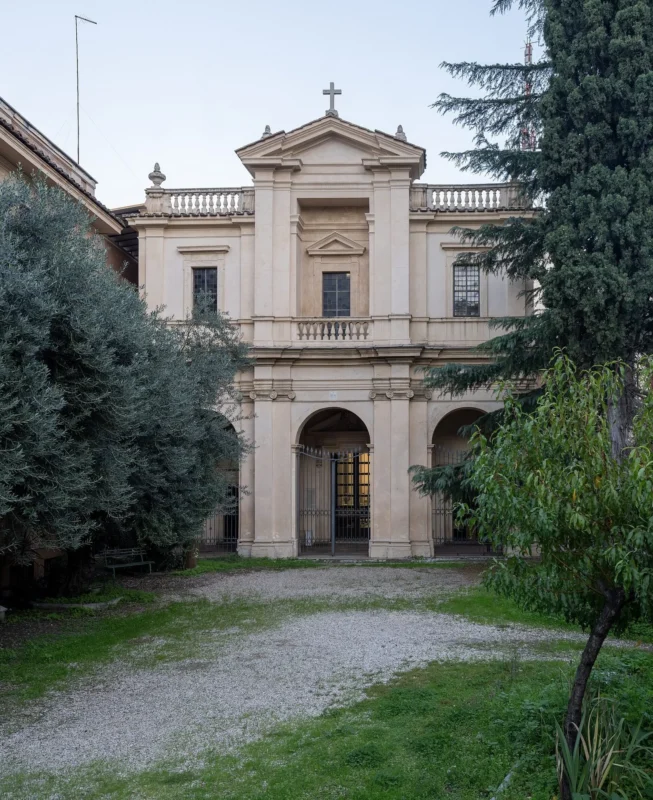
- Santa Bibiana100 m
- Nuovo Mercato Esquilino100 m
- Underdog’s200 m
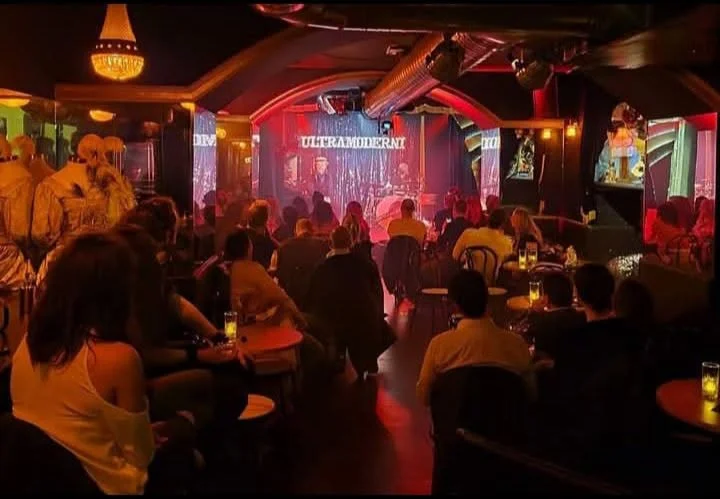
- La Conventicola degli Ultramoderni200 m
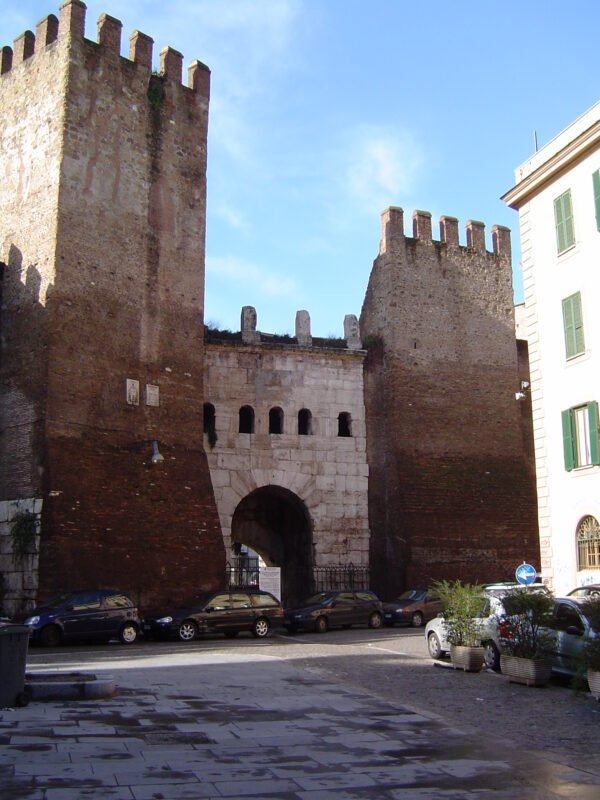
- Porta Tiburtina300 m


Upcoming events nearby
- Arianna Porcelli Safonov, Odiario at Teatro Ambra Jovinelli, November 7 and 8, 2026100 m
- La cosa giusta with Dino Abbrescia and Massimo De Lorenzo at the Ambra Jovinelli, January 13-24, 2027100 m
- Le nostre donne with Luca Bizzarri at Teatro Ambra Jovinelli, March 10 to 21, 2027100 m
- Incendi with Frédérique Loliée and Filippo Dini at Ambra Jovinelli, January 27 to February 7, 2027100 m
You might also like
- Fuori di tela by Filippo Caccamo at Teatro Brancaccio, February 4, 2027
- Marco Travaglio, Cornuti e contenti at Teatro Brancaccio, January 25, 2027
- Mahler’s Third Symphony by John Neumeier at Teatro dell’Opera di Roma, February 4 to 10, 2027
- The Rake’s Progress at Teatro dell’Opera di Roma, November 27 to December 5, 2026
- Molière, l’arte della beffa with Alessio Boni at Teatro Ambra Jovinelli, March 31 to April 11, 2027
- Din Don Down with Paolo Ruffini and Compagnia Mayor Von Frinzius at Teatro Brancaccio: March 27, 2027