La Conventicola degli Ultramoderni
In short. La Conventicola degli Ultramoderni is a cultural association based at via di Porta Labicana 32, in the San Lorenzo neighborhood, a short walk from the Roma Termini rail yard and the Verano cemetery.
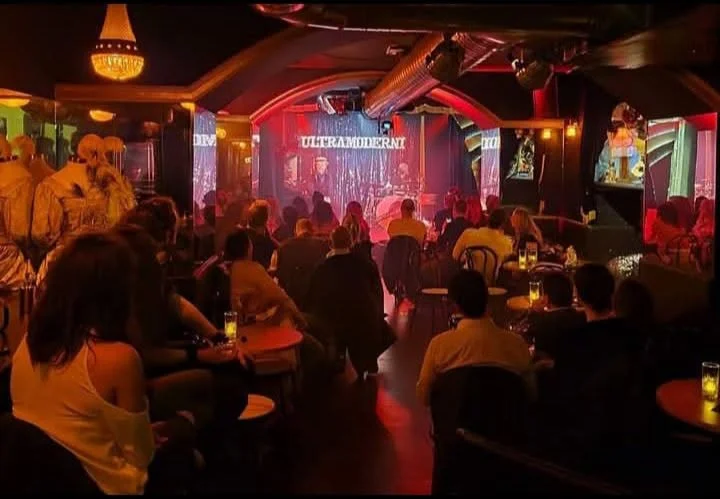
La Conventicola degli Ultramoderni is a cultural association based at via di Porta Labicana 32, in the San Lorenzo neighborhood, a short walk from the Roma Termini rail yard and the Verano cemetery. It is not an ordinary nightlife venue: it is a membership space created to promote Italian and international music and variety from the early 1900s, brought back to life through cabaret, burlesque and café chantant shows with a live orchestra. The project is the work of Sior Mirkaccio and Madame De Freitas, who met in 2011 and since then have built, show after show, one of the reference points of the contemporary variety scene in the capital. Performances run from Thursday to Saturday, entry is reserved for members, and the hall traditionally closes in August. Visitors arriving in Rome for a weekend who want something beyond the circuit of museums and ruins will find here one of the most frequently described examples of independent live entertainment in the city.
Where La Conventicola degli Ultramoderni is and how to get there
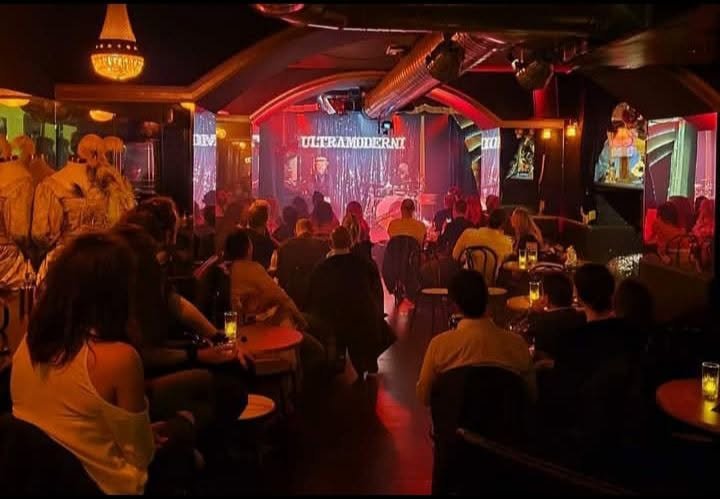
The address is via di Porta Labicana 32, on the San Lorenzo side facing the Termini rail yard, a few dozen meters from the intersection with via dei Volsci and from the bundle of tracks that marks the boundary between the university quarter and the station. Visitors arriving in Rome by train have the advantage of reaching the area on foot in under 10 minutes from the via Giolitti exit, going around the rail yard along via dei Marsi or via dei Sabelli. This is one of the reasons many visitors choose to stay right between San Lorenzo and the Esquiline when they plan an evening here: it completely avoids the need for transport to get back, which in the small hours in Rome can be less straightforward.
By bus and tram
The San Lorenzo area is served by several surface lines that connect the neighborhood to the historic center and to Termini: the lines running along viale dello Scalo San Lorenzo and via Tiburtina remain the most direct way to get there from Piazza Vittorio, the Esquiline or the Nomentano. The tram that runs along viale Regina Elena and via dei Ramni is a convenient alternative for those coming from San Giovanni or Pigneto through Porta Maggiore. On show evenings, from Thursday to Saturday, late-night service becomes something to consider: it's worth checking the last useful departure times on the city mobility app before leaving home.
By metro and on foot
The nearest Line B metro station is Roma Termini, from which it's a little over 10 minutes on foot, crossing the via Marsala bridge or walking along the freight rail yard. Alternatively, the Tiburtina stop, on the same line, lets you come down toward San Lorenzo from the north, passing through the Sapienza university quarter. Those staying in the San Lorenzo or Esquiline areas can easily walk: the neighborhood can be crossed in a few minutes from one end to the other, and it is among the densest in the entire city for venues, galleries and independent spaces. For those staying farther away, toward the historic center or Prati, the walk becomes long and it's worth considering a public transport option or a taxi, especially on the way back.
By car and from the airports
The area falls within the green limited-traffic zone that covers a large part of the historic center in the evening hours, so it's worth checking the times before driving. Paid street parking is available along via dei Marsi and the nearby streets, but on show evenings the neighborhood fills up quickly: those arriving by car should expect to leave the vehicle about 10 minutes on foot from the entrance. From Fiumicino airport, the simplest option remains the Leonardo Express train to Termini, followed by a walk or a short bus ride. From Ciampino, a direct connection to Termini or a taxi is the better choice, considering that evening shuttle bus times may not cover a late-night return.
What you'll see along the way
Walking from Termini toward via di Porta Labicana takes you through one of the most characteristic stretches of the border between the Rome of the major rail arteries and the Rome of the working-class neighborhoods: underpasses, murals, small shops open late and the constant flow of students heading to the Sapienza. This route, especially on summer evenings, gives a good sense of the neighborhood's atmosphere before you even arrive, and it's worth walking rather than skipping it with a means of transport, when the timing and the tiredness of the trip allow.
What La Conventicola degli Ultramoderni really is
Behind the grand name is a real cultural association, with a statute, a membership system, and a weekly program built around one clear idea: variety theater not as an archive relic but as a living form, able to speak to today's audience without slipping into nostalgia. The story begins less than 10 years ago in a small hidden room in San Lorenzo, and it grew show by show until, according to several journalistic accounts, it became one of the most cited spaces when people talk about the underground scene and live entertainment in Rome. The chosen formula, a cultural association with members rather than an open-to-everyone club, is not a bureaucratic detail. It sets the tone of the evenings, the size of the room, and the almost personal relationship between those who step onto the stage and those who sit at the tables.
Membership and entry rules
Access is reserved for the association's members, and the most direct way to become one is to write to the official contacts listed on the website and social channels, where the procedure is explained. There is a selector at the entrance, a choice that fits the philosophy of the space: the room is small, the seats are limited, and the care of the atmosphere also depends on who fills it. Hours, fees, and membership procedures can change from one season to the next, so it's always best to check them on the association's official channels before planning the evening. Anyone writing for the first time should indicate the desired date and the number of people in the group, so they can receive precise information on availability and how to pay the membership fee.
Sior Mirkaccio and Madame De Freitas
The two names that come up in every account of the Conventicola are Sior Mirkaccio, who often opens the evenings at the piano, and Madame De Freitas. Their artistic partnership, which began in 2011, has over the years become the creative engine of the space: from the choice of repertoire to the staging, up to training the new generations of artists who perform on stage. In interviews collected over time by the specialized press, the two founders have repeatedly stated one point: the Conventicola does not want to be a museum of the past, but a place where the language of period variety is reinterpreted with contemporary tools and sensibility, while remaining faithful to the craftsmanship of the trade.
Why it's worth arriving early
Arriving with a good margin before the start time is not only a matter of finding a seat. It also means being able to enjoy the welcome at the bar calmly, a moment that people who frequent the space often describe as an integral part of the experience, just as much as the show itself. Anyone who arrives at the last minute risks finding themselves at a table with the show already underway, missing the entry and settling-in phase that the setup is specifically designed to offer.
The membership-based cultural association model
In Italy, the cultural association model with a membership card is a widespread tool, historically tied to the world of clubs, independent music clubs, and spaces that grow around a specific artistic project rather than a general commercial activity. It is not a bureaucratic expedient for its own sake. It creates a different relationship between those who run the space and those who attend it, with shared rules of conduct and, often, more selective access than a venue open to the general public. The Conventicola fits into this tradition, combining it with a very defined artistic project: the café chantant variety show reinterpreted in a contemporary key.
Large groups and private events
Anyone who wants to organize an evening for a large group, a birthday, or a company event can ask the association about the availability of dedicated formats, keeping in mind that the small capacity of the room still requires planning well in advance compared with a single regular show night. The most up-to-date information on this type of request should always be checked directly with the Conventicola staff, because the formats for groups and special events can change from one season to the next depending on calendar availability.
Café chantant variety: a genre back in fashion
To understand what happens during an evening at the Conventicola, it helps to remember what the café chantant was: a type of show born between the late 19th and early 20th centuries, popular in Paris as well as in Naples and Rome, which mixed song, dance, comedy, and improvisation into a single program designed for an audience seated at tables, with drinks in front of them, not in theater armchairs. For decades this format stayed on the margins of Italian collective memory, often confused with avanspettacolo or reduced to a nostalgic cliché. In recent years it has been rediscovered in several European cities, helped also by growing interest in burlesque as an independent art form, built on technique, irony, and stagecraft, more than on simple striptease.
Why It Still Works Today
The reason formats like this keep drawing audiences, in Rome as elsewhere, lies in the combination of the intimacy of the room and the unpredictability of the program: you never know exactly what you'll see, because the cast and the numbers change from week to week, and this makes every evening different from the previous one, even for people who come back many times. It's a model that is the opposite of the big standardized show, and for this very reason it requires a small room, a close-knit audience, and a relationship of trust between those who organize and those who take part, elements that the membership system helps to maintain over time.
Roman variety theater past and present
Rome has a tradition of variety theaters whose roots go back to the first decades of the twentieth century, when venues such as the Ambra Jovinelli, still active as a theater today in the Esquiline neighborhood, hosted avanspettacolo shows that mixed music, comedy and variety acts for a popular audience. That tradition, with varying fortunes, lasted through the century until it thinned out after the Second World War, due to the arrival of television and the gradual shift of audiences toward other forms of entertainment. Initiatives like the Conventicola fit into a phase of rediscovering that language, not out of nostalgia for its own sake but because the live variety format, with its unpredictability and the physical closeness between performers and audience, continues to offer something that television and streaming can't replicate.
The burlesque revival around the world
The burlesque component of the show fits into a broader movement, that of neo-burlesque, which began in the United States in the 1990s and later spread to Europe. It revived a nineteenth-century theatrical genre based on irony, choreographic technique and character building, and moved it away from the sleazy image it had taken on in some twentieth-century developments. Cities like London, Paris and New York have seen a flourishing of schools, festivals and venues dedicated to this discipline over the last two decades, and Italy too, later than other European countries, has seen its own scene take shape, of which Rome, and in particular experiences like the Conventicola, today represent one of the most frequently cited reference points.
The show: variety, burlesque and live music
Each evening at the Conventicola features about a dozen performers, including singers, comedians, musicians and burlesque dancers, in a program that changes constantly and favors swing, vintage songs and café chantant numbers. The music is never recorded. The shows are accompanied by the Ultracomplessino, which the organizers themselves describe as the smallest orchestra in the world, yet still capable of filling the room with a full sound, almost like a large jazz ensemble. The running order alternates pure musical moments, such as the piano opening, with burlesque numbers, comic bits and group choreography, in a sequence designed to hold attention without ever staying in the same register for too long.
The setup and the atmosphere
The décor recalls the cabarets of the mid-twentieth century, with velvet, warm lights and a theatrical taste that plays on the allure of black-and-white cinema. The distance between stage and audience is minimal. The performers interact with the public, walk among the tables, and involve those seated in the front row, and this direct contact is probably the element visitors most often mention after an evening here. The table service follows the same theatrical logic too: the waiters move between one number and the next without breaking the rhythm of the evening, in a balance the organizers have refined over the years, performance after performance.
The stars of the stage
Among the figures who have built the Conventicola's repertoire over the years are Calomino, devoted to vintage Italian gramophone music, Rose Selavy in the role of a diva from across the ocean, and Ginevra Joyce, internationally recognized in the world of burlesque. Alongside them, the Ultrastelle rotate in, the group of young showgirls who represent the space's generational renewal, together with comedians and musicians who rotate from week to week. It's not unusual for the evening's lineup to include guest performers as well, artists who work the burlesque and cabaret circuit in other Italian cities and who find in the Conventicola a stage to perform on for an knowledgeable and engaged audience.
As is tradition in the world of burlesque and cabaret, many of the performers appear under a stage name built specifically for the character, a convention that goes back to the very origins of the genre and that makes it possible to clearly separate the private identity from the theatrical one. It's an aspect that adds another layer of stage fiction to the evenings, in line with the overall aesthetic of the space, where every detail, from the names to the costumes, helps build a coherent world for the entire length of the show.
The audience and participation
Those who have known La Conventicola for a while say the audience is not a simple silent spectator: they applaud, respond to the jokes, and sometimes get pulled directly into a number. This is what sets the space apart from a traditional theater, and it asks first-time guests to be willing to play along rather than watch from a distance. For this reason, the evening is recommended for those looking for an immersive experience, and less for those who prefer to watch a show while staying out of the scene.
A Curiosity About La Conventicola degli Ultramoderni
Since 2016, a year often cited as the turning point for regular programming, the association has staged over 900 performances of its shows: a number that shows how well the weekly variety format, seemingly niche, has built a loyal audience able to fill the room almost every weekend for years. Another curiosity concerns the cocktails: the bar menu, curated by a bartender of Brazilian origin, follows the same staging principle as the stage, with names and presentations that recall the vintage imagery of the space. The name of the orchestra, the Ultracomplessino, also plays with the same ironic tone that runs through the whole project. Calling itself the smallest orchestra in the world is, at once, a statement of intent and a small dig at the great orchestras that period variety used to evoke on posters.
The Ultrascuola and Artistic Workshops
Alongside the evening programming, the association runs a teaching activity called Ultrascuola, with courses and workshops ranging from chorus line to burlesque, designed for those who want to approach the language of variety as performers, not just as spectators. It is a less known side compared with the weekend shows, but it is an integral part of the project: many of the performers who take the stage today came through these very courses, in a continuous exchange between those who teach and those who learn. The presence of figures like Ginevra Joyce, who combines work as a performer with teaching as a trainer, makes the Ultrascuola a natural stepping stone for anyone who, after watching a show from the audience, decides to try the stage themselves.
Anyone interested in taking the courses should check directly with the association about the active schedules. These follow a separate program from the evening shows and may change from one season to the next, depending on teacher availability and audience demand.
Something Nobody Tells You About La Conventicola degli Ultramoderni
What is rarely talked about is how much teamwork, and how much time, lies behind an hour and a half of show that seems improvised. Behind the scenes of a small room like this there is no space for large dressing rooms or for an organizational machine like a major theater's. Costumes, quick changes, orchestra rehearsals and coordination among different artists all take place in cramped spaces, with logistics that the most loyal members only sense by seeing how smoothly one number flows into the next. Another little-discussed detail is that the project grew without the backing of a large production behind it. It built its credibility show after show, with word of mouth as the main driver of growth for years, before the attention of the national press arrived and, more recently, television too. Many longtime members say they discovered the space through a friend who brought them the first time, not through an advertising campaign. It is a model of organic growth that is rare to find in an urban setting like Rome, where most evening offerings aim for immediate visibility rather than the slow building of a community.
My Advice for Visiting La Conventicola degli Ultramoderni
Book or get in touch with the association well in advance of the evening you have in mind. Since it is a membership space with limited seats, arriving without having first checked availability and access procedures means risking being left outside. Dress neatly, without overdoing it. A period costume is not required, but the overall atmosphere rewards those who show up with a bit of polish, in keeping with the spirit of the evening. Arrive with some time to spare before the start time, so you can find a seat comfortably and enjoy the welcome at the bar before the show begins. If it's your first time, choose a Thursday or the start of the weekend rather than cutting it close at the last minute. The room is small, and filling it is easier than it seems.
Another practical tip concerns the trip home. Since this is a space that comes alive mainly in the evening and at night, plan your route home in advance, checking the last public transport connections or keeping a taxi service contact handy. If you're traveling with a large group, let the association know in advance. The tables are set up for smaller numbers, and a last-minute request for many people can be harder to manage than a booking arranged a few days ahead.
What to avoid
Avoid showing up without first checking the membership requirement: it's not a space where you can stop by on a whim while walking down the street. Also avoid expecting a loud, club-style venue: La Conventicola is designed to be listened to and watched, not just walked through, and anyone looking for an electronic night format will probably be thrown off by the more theatrical rhythm of the program. Finally, avoid planning a visit in August without first checking the official channels: the summer closure, common to many independent cultural venues in the city, traditionally applies to this space too.
Another well-known fact, yet rarely mentioned
Many people know that La Conventicola offers burlesque shows, few remember that the overall setup is designed as a true variety show, with musical, comedy and choreographed numbers alternating in the same evening, just as they did in the café chantants of the early 1900s. So it's not just a striptease show in period costume, as it's sometimes summed up for simplicity: it's a broader container, which brings together Live Music, comedy and figure theater under a single aesthetic umbrella. A second aspect rarely mentioned concerns the international audience: the reviews collected over time on the main travel platforms show a significant share of foreign visitors, who came to Rome precisely thanks to online word of mouth more than thanks to local fame, a sign of how much the space has built a reputation that goes beyond the boundaries of the usual Roman audience.
San Lorenzo, the neighborhood around La Conventicola
San Lorenzo is one of the Roman neighborhoods with the highest concentration of student life, because of its proximity to Sapienza, and of the independent art scene. Born as a working-class neighborhood in the late 1800s outside the Aurelian Walls, between Termini station and the basilica that gives it its name, the neighborhood has a history marked by dramatic moments too: the Allied bombing of July 19, 1943 hit this very area hard, and still today several buildings and memorials in the neighborhood tell the story of that passage in the city's history. In the post-war period, with the expansion of Sapienza and the arrival of generations of out-of-town students, San Lorenzo gradually changed its face, becoming in recent decades one of the liveliest urban laboratories in the capital, where historic public housing, universities, independent art galleries and venues of every kind coexist.
The neighborhood also has a history of social and political activism that goes back to the 1970s, when it was one of the symbolic places of the Roman student movements, and which in the following years found continuity in Social Centers and associations that still animate part of the area's cultural life today. It's in this fabric, made of public housing, university and associations, that in the 2010s room was also found for a different artistic project like that of La Conventicola, able to reach a wider audience than the one traditionally tied to neighborhood activism, while operating in the same urban context.
Sapienza, university museums and Verano
A few steps from La Conventicola is the San Lorenzo container, a space created for neighborhood cultural and social initiatives, while continuing toward the university you come across the Museo dell'Arte Contemporanea della Sapienza and the Gipsoteca, both part of the university museum circuit, along with the Anthropology Museum named after Giuseppe Sergi. If you feel like a more secluded walk, you can stop at the Verano cemetery, one of the largest monumental cemeteries in Italy, with a sculptural heritage that is worth a visit in itself, or go through the basilica of San Lorenzo fuori le Mura, which gives the neighborhood its name and which houses, among other things, the remains of Pius IX.
The Sapienza University City, with its rationalist layout of the 1930s signed by Marcello Piacentini and by a group of architects that also included Giovanni Michelucci and Gio Ponti, remains one of the most accomplished examples of 20th-century architecture in Rome, and its presence has permanently marked the life of the surrounding neighborhood, bringing tens of thousands of students to fill the streets of San Lorenzo every day. It's also for this reason that the neighborhood has developed, over time, such a dense and varied offer of evening entertainment, of which La Conventicola today represents one of the most recognizable names.
Venues, murals and Nightlife
San Lorenzo is also one of the densest neighborhoods in Rome for venues, beer pubs and small cultural spaces, with a scene that over the years has been enriched with murals, temporary galleries and independent initiatives like the neighborhood's people's gym. Before or after the show at La Conventicola, the web of streets between Via dei Volsci, Via degli Equi and Via dei Marsi easily offers an alternative for dinner or an aperitivo, without needing to leave the area. If you like Live Music in a broader sense, not just period variety, in Rome you'll also find other seasonal offerings linked to swing and outdoor jazz, like the evenings that liven up Villa Celimontana in summer.
Trattorias, pizzerias and wine bars of the neighborhood
San Lorenzo is one of the Roman neighborhoods with the highest concentration of places to eat and drink, from historic trattorias tied to the neighborhood's popular tradition, to pizzerias by the slice open until late, to wine bars that in recent years have attracted the younger, more international crowd of the university area. Anyone planning an evening at the Conventicola can easily build a light dinner around the show in the nearby streets, keeping in mind that on weekends the best-known places in the neighborhood fill up fast and it's best to arrive with some time to spare or book a table, especially if you're in a group.
Street Art and Independent Galleries
From the 1990s onward San Lorenzo has also become an open-air laboratory for Roman street art, with murals that have multiplied on the shutters and facades of the neighborhood, often tied to urban regeneration projects shared with local associations. Alongside the murals, the neighborhood hosts independent galleries and small exhibition spaces that complement the programming of the big museums in the center with more experimental offerings, in keeping with the spirit that also drives the Conventicola.
The Right Photo to Take at La Conventicola degli Ultramoderni
The best shot is almost never the one straight on to the stage during the main act, where low lights and constant movement make a good result difficult. It's better to aim for a detail of the setup, like the bar corner with the cushions and warm lights, or a moment of pause between one act and the next, when the performers move among the tables and the distance between room and stage truly disappears. If you want a more discreet souvenir, you can focus on the set details, from costumes to vintage microphones, which show the aesthetic of the space better than a group photo taken in the dark. It's worth remembering that, as in many membership-only spaces with live performers, the rules on photos and video during the show can be stricter than at an ordinary venue. It's better to ask for confirmation on site before shooting during the acts, out of respect for the performers' work and the association's instructions.
Some Important Events That Happened Here in History
The Conventicola's story began less than 10 years ago in a small room in San Lorenzo, with an artistic project built almost by hand by its two founders. 2016 marks the start of a regular, ongoing program, which in the following years leads the association to pass 900 performances, a milestone that few independent Roman projects can claim with the same consistency. Over the years the artistic company has grown, going from a small core of performers to a larger cast, able to sustain four evenings a week at a steady level, and the creation of the Ultrascuola has made it possible to train in-house a part of the new recruits who perform today. More recently, in the spring of 2026, the story of the space also reached television with a dedicated documentary broadcast on Sky Arte, which told the birth and growth of the project behind the scenes through the testimonies of its protagonists, helping make the Conventicola known also to an audience that doesn't usually follow the Roman variety scene.
Who Has Performed at La Conventicola degli Ultramoderni
Over the years, dozens of artists have taken turns on the Conventicola stage who today are reference points of the Italian variety and burlesque scene, from Calomino to Rose Selavy, to Ginevra Joyce, whose reputation in the burlesque world goes beyond national borders. Among the audience, the growing fame of the space has drawn the attention of publications and content creators who cover nightlife and underground culture in Rome, helping build over the years a reputation that now brings visitors from outside the city too, curious to discover one of the most talked-about spaces when it comes to live entertainment in the capital. Reviews published over time on international travel platforms often speak of an experience outside the usual patterns of Roman tourism, an element that has contributed not a little to spreading the association's name well beyond the borders of the neighborhood where it was born.
The Rhythm of a Typical Week
In the association's regular program, Thursday is often the opening night of the week, generally more intimate than the weekend, with an audience that includes both longtime members and people coming to the space for the first time. Friday and Saturday concentrate the most intense part of the program, with the room tending to fill up more quickly and with a cast that on weekends is often expanded compared to weeknights. It's a pattern common to many small live entertainment venues, designed to spread attendance across the week without concentrating the whole audience in a single evening.
The Best Season for a First Visit
There is no strictly best time of year for a first visit, since the programming, when active, follows the same weekly rhythm from September to July. Some people prefer the autumn and winter evenings, when the warm, cozy atmosphere of the room pleasantly contrasts with the cold outside. Others choose late spring, when the mild temperatures make the walk there and back through San Lorenzo even more enjoyable. In both cases, the most important variable remains the availability of seats, not the season.
The seasonal breaks
Beyond the traditional August closure, common to a large part of Rome's cultural and entertainment offering, the programming may have shorter breaks around the year-end holidays or during transition periods between one artistic season and the next. Here too, the advice remains the same: check the updated calendar on the official channels before planning the evening, and avoid taking for granted a continuous programming all year round.
When to go to La Conventicola degli Ultramoderni
Shows are usually held between Thursday and Saturday, with the room traditionally closed in the month of August, in line with the habits of a large part of Rome's venues. The weekend remains the time with the richest programming, while Thursday can be an interesting choice for those looking for a slightly more intimate atmosphere. Before planning the evening, it's always worth checking the updated calendar on the association's official channels, because hours and opening days can vary from one season to the next.
Who to go with
The show works well both for a couple's evening and for a group of friends, thanks to the convivial tables and the informal atmosphere that encourages interaction. Less suitable for those looking for a quiet venue: La Conventicola is designed to be experienced with participation, not simply watched from a distance. Because of the nature of the shows, which include burlesque numbers, the evening is meant for an adult audience. It's not an activity to plan with children in tow.
Accessibility
Since this is a compact space set in a building in the historic San Lorenzo neighborhood, anyone with specific accessibility needs should contact the association before booking to get precise information on entrances, steps and table arrangement. These details can change over time and are always best checked case by case rather than taken for granted.
The dress code, if we can call it that
There is no formal dress code required at the door, but the general atmosphere of the space, with its aesthetic carefully curated down to the smallest details, naturally invites you to dress with a minimum of care. Some members choose to echo the vintage style of the evenings in their clothing, with outfits inspired by the 1930s and 1940s, but this is by no means a requirement. What matters most, according to those who have been attending the space for a while, is to show up willing to take part, rather than with a specific wardrobe.
Other venues on the Rome live scene
If you're fascinated by the variety-show format with live music, Rome has other options for continuing to explore related genres. They are different in format and seasonality, though. In summer, for example, Villa Celimontana has hosted for years a free jazz and swing series that brings life to Rome's evenings, with a mixed audience ranging from live music enthusiasts to families looking for an outdoor evening out. These experiences differ from the intimate room of La Conventicola in context and size, but they share the same focus on music played live, without recorded tracks, as the heart of the show. The Esquiline neighborhood too, with its history of variety theaters and the nearby Ambra Jovinelli still active, remains a useful reference for those who want to broaden their view to the wider panorama of Rome's live entertainment, between twentieth-century tradition and new independent proposals like the one born in San Lorenzo.
A project that keeps growing
From the initial core of a few people to the current structure, capable of supporting four evenings a week, a training school and a constant presence in the media, the trajectory of La Conventicola shows well how an independent artistic project can grow without losing its character. It keeps the same intimate scale and the same direct relationship with the audience that made it recognizable from its first years of activity. It's a path worth remembering for anyone approaching this space for the first time: behind the show evening, orderly and seemingly easy to follow, there is work built over time, performance after performance.
What sets La Conventicola apart from the rest of the city's offering
Compared with the big theaters and the more structured entertainment venues, La Conventicola keeps a craft-like dimension. It comes from the limited number of seats, the membership system and the constant presence of the founders in running the space. You notice the difference from the first few minutes of an evening: there is none of the typical distance of a big show, but a more direct relationship between those who organize, those who perform and those who take part. This is probably the most distinctive element cited by those who come back more than once.
Frequently asked questions about La Conventicola degli Ultramoderni
Where Is La Conventicola degli Ultramoderni?
La Conventicola degli Ultramoderni is located at via di Porta Labicana 32, in the San Lorenzo neighborhood of Rome, a few minutes on foot from Termini station, on the side that faces the rail yard. If you arrive by train, you can reach the area on foot in less than 10 minutes from the via Giolitti exit.
What Is La Conventicola degli Ultramoderni, Really?
La Conventicola degli Ultramoderni is a cultural association with bylaws, a membership system and a weekly program built around variety as a living form, not as an archive relic. The project started less than 10 years ago in a small hall in San Lorenzo, and since 2016 it has had a regular, ongoing program.
What Kind of Show Do You See at La Conventicola degli Ultramoderni?
Each evening at La Conventicola degli Ultramoderni features about a dozen performers, including artists, comedians, musicians and burlesque dancers, in a program that changes constantly and favors swing, vintage songs and café chantant numbers. Live Music is handled by the Ultracomplessino, described by the organizers as the smallest orchestra in the world.
How Do You Get Into an Evening at La Conventicola degli Ultramoderni?
Since it is a membership space with limited seats, to attend an evening at La Conventicola degli Ultramoderni it's best to book or get in touch with the association well in advance through the official channels, where the current membership and access procedures are listed.
When Are the Shows Held at La Conventicola degli Ultramoderni?
Shows at La Conventicola degli Ultramoderni are usually held from Thursday to Saturday. The venue traditionally stays closed in August, as is the case for a large part of Roman venues. The weekend has the richest program, while Thursday usually offers a more intimate atmosphere.
What Is the Ultrascuola of La Conventicola degli Ultramoderni?
The Ultrascuola is the educational activity the association runs alongside its evening program, with courses and workshops that range from chorus line to burlesque, designed for people who want to get hands-on with the language of variety. Many of the performers who now take the stage at La Conventicola have also taken these courses.
Who performed at the Conventicola degli Ultramoderni?
Over the years, the stage at La Conventicola degli Ultramoderni has hosted a range of names now known in the Italian variety and burlesque scene, including Calomino, Rose Selavy and Ginevra Joyce, whose reputation in the world of burlesque goes beyond national borders.
What's around La Conventicola degli Ultramoderni
Beyond the San Lorenzo neighborhood, anyone organizing an evening here can easily build an itinerary that includes Termini station, the Esquiline and the historic center, all reachable in a few minutes on foot or with a short bus ride. If you have a full day before the show, you can combine a visit to the basilica of San Lorenzo fuori le Mura, a stroll through the Verano cemetery or a stop at the museums of La Sapienza, and then end the evening at La Conventicola. This route brings together historic Rome and the more contemporary side of the university quarter.
For those coming from outside Rome who want to plan their whole stay around evenings like this one, a useful guide to itineraries, neighborhoods and travel ideas in Italy is available on Italy Planner. Those who work professionally guiding groups and visitors in the capital can find dedicated resources on Tour Leader Pro, useful for including independent venues like this one in a wider city tour program.
A good way to build a full day around the evening is to think of San Lorenzo as the evening stop of an itinerary that, during the day, covers the Esquiline and its markets, continues toward the museums in the Termini area, and ends, as mentioned, with the show at La Conventicola. This route lets you alternate between the better-known monumental Rome and the side that traditional tourist circuits tend to miss, giving a more complete picture of the city to anyone with only a few days available.
La Conventicola in the media and on social media
In recent years La Conventicola has built a steady presence on social media, with content that documents behind the scenes, excerpts from the shows and the daily life of the association, helping keep the bond with the members alive even outside the nights with a program. At the same time, attention from the press specialized in nightlife and Roman underground culture has grown over the years, arriving, in the spring of 2026, at the documentary aired on Sky Arte, a step that marked a leap in visibility for a project born in a small neighborhood room.
Un progetto seguito anche fuori Roma
The media coverage it has received over time, culminating in the Sky Arte documentary, has made La Conventicola a known name even to people who don't live in Rome and don't usually go to the San Lorenzo neighborhood, helping bring to the room an audience that is increasingly varied in geographic origin. It's a phenomenon common to several independent cultural spaces that, starting from a strictly local dimension, end up attracting visitors who came to Rome on purpose, even just for one evening of shows, an element that over the years has helped consolidate the reputation of the space well beyond the boundaries of the neighborhood where it was born.
Visitor reviews
On the main travel review platforms, La Conventicola collects generally very positive ratings, with high average scores and comments that often insist on the same elements: the quality of the live music, the care for the set details and the direct involvement of the artists with the audience. It's a kind of feedback consistent with the nature of the space, designed more for an immersive experience than for a show to watch from a distance, and it helps explain why word of mouth is still, today, the main engine of growth of its fame.
Quick questions about La Conventicola degli Ultramoderni
Where exactly is La Conventicola degli Ultramoderni?
The address is Via di Porta Labicana 32, in the San Lorenzo district, a few minutes on foot from Rome Termini station.
How do you become a member?
The most direct way is to contact the association through the official channels listed on the website and on social media, where updated information on membership and access is provided.
What kind of shows can you see?
Variety nights with cabaret, burlesque and café chantant, accompanied by the live music of the Ultracomplessino, with singers, comedians, musicians and dancers taking turns on stage.
What are the opening days?
The shows are generally held from Thursday to Saturday, with a traditional closure in the month of August. For the updated schedule, it's always best to check the official channels.
Who founded La Conventicola degli Ultramoderni?
The project bears the signature of Sior Mirkaccio and Madame De Freitas, whose artistic partnership, born in 2011, has become over the years the creative engine of the space.
Is it suitable for people who don't know the world of burlesque?
Yes, the variety format makes the show accessible even to those who have never attended a night of this kind: the musical and comic component sits alongside the more strictly burlesque one.
Is it suitable for children?
No, because of the nature of the shows, which include burlesque numbers, the evening is designed for an adult audience.
How do you get there from Termini?
On foot in about 10 minutes, crossing Via Giolitti and running alongside the rail yard in the direction of San Lorenzo.
Is there a live orchestra?
Yes, the music is entrusted to the Ultracomplessino, described by the organizers themselves as the smallest orchestra in the world, but able to carry the whole show without recorded backing tracks.
Are there courses for those who want to perform?
The association runs the Ultrascuola, a path of workshops and artistic courses ranging from chorus line to burlesque, open to those who want to approach the language of variety as performers too.
Can you book online?
The contact and booking methods are listed on the association's official channels, where you can write to check availability and receive the instructions for membership.
What is there to see in the surrounding area?
The Verano Cemetery, the Basilica of San Lorenzo fuori le Mura, the container San Lorenzo and the Sapienza university museums are all reachable on foot in a few minutes from La Conventicola.
How long does a show last?
The length varies according to the program of the evening, but the typical structure of a variety show with several numbers in succession generally takes up a large part of the evening, between the musical opening and the finale.
Has it been featured on television?
Yes, in the spring of 2026 a documentary dedicated to the history and the artistic scene of La Conventicola degli Ultramoderni aired on Sky Arte.
What is the best way to plan your first visit?
Contact the association in advance for membership, choose a date between Thursday and Saturday avoiding the month of August, and arrive with some time to spare before the start of the show to enjoy the welcome at the bar too.
Can you take photos during the show?
The rules may be stricter than at any other venue, out of respect for the artists’ work: it’s best to ask for confirmation on site before taking photos or filming during the acts.
Does La Conventicola organize private events or events for large groups?
For requests of this kind, such as birthdays or corporate events, it’s best to contact the association directly, bearing in mind that the room’s reduced capacity requires scheduling well in advance.
What is the Ultracomplessino?
It’s the name the organizers chose for the orchestra that performs live with the shows, ironically called the smallest orchestra in the world, even though it manages to carry the entire evening without recorded tracks.
What’s the difference between variety and burlesque?
Burlesque is one of the components of the show, but La Conventicola’s format is a broader variety show, alternating musical, comic and choreographic acts in a single program, modeled on the café chantant of the early 20th century.
Why is the neighborhood called San Lorenzo?
The name comes from the Basilica of San Lorenzo fuori le Mura, one of Rome’s oldest places of worship, around which the district developed starting in the late 19th century.
Is it worth booking a restaurant nearby?
San Lorenzo has a very wide choice of trattorias, pizzerias and wine bars, but on weekends the most popular places fill up fast: booking ahead, or arriving with some time to spare before the show, avoids unnecessary waits.
How big is the room?
The space is deliberately limited: the room’s compact size is an integral part of the experience and helps create the direct contact between artists and audience that characterizes the evenings.
Can you get there straight from the airport the same evening?
It’s possible, but it’s worth planning the timing carefully: from Leonardo da Vinci in Fiumicino, the train plus the trip to San Lorenzo takes about an hour in total, while from Ciampino the times vary depending on the connection you choose.
Contact Information
Via di Porta Labicana, 32
Roma Roma Città, Roma Città