Incendi with Frédérique Loliée and Filippo Dini at Ambra Jovinelli, January 27 to February 7, 2027
In short. Incendi by Wajdi Mouawad, with Frédérique Loliée and Filippo Dini and directed by Marco Lorenzi, plays at Teatro Ambra Jovinelli, at Via Guglielmo Pepe 43 (00185 Rome), from January 27 to February 7, 2027, for 12 performances at…
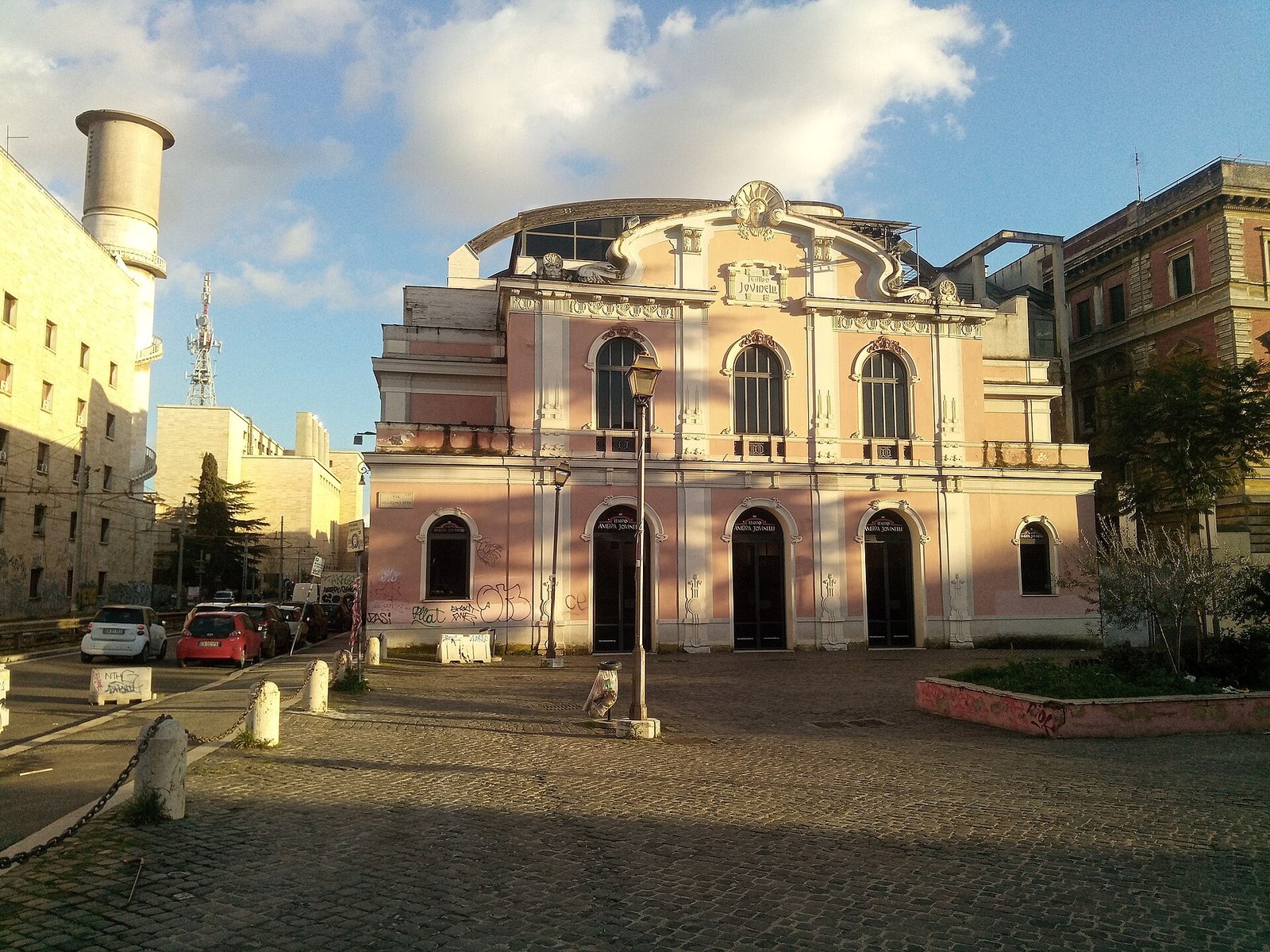
Incendi by Wajdi Mouawad, with Frédérique Loliée and Filippo Dini and directed by Marco Lorenzi, plays at Teatro Ambra Jovinelli, at Via Guglielmo Pepe 43 (00185 Rome), from January 27 to February 7, 2027, for 12 performances at different times: at 21:00 on January 27, 29 and 30 and February 2, 4 and 6. At 19:30 on January 28 and February 3 and 5. At 16:30 on Saturday, January 30. At 17:00 on Sundays, January 31 and February 7. The show is a production of the Teatro Stabile del Veneto, Teatro Nazionale. The theater is a few minutes on foot from the Vittorio Emanuele stop of Metro Line A and from Termini station. Prices are published on the theater's official website at the time of purchase. Tickets are bought from the show page on the Ambra Jovinelli website, which links to the presale network authorized by the organizer, or at the box office on Via Guglielmo Pepe.
Language: performed in Italian. No English version or English surtitles are announced.
Incendi at Ambra Jovinelli: dates and times of the 12 performances
Incendi stays on the program at Ambra Jovinelli for two weeks, from Wednesday, January 27 to Sunday, February 7, 2027, with a break on Monday, February 1 and 12 performances in all.
The first week
The debut is Wednesday, January 27 at 21:00. On Thursday the 28th the start is moved up to 19:30, and on Friday the 29th it goes back to 21:00. On Saturday, January 30 there are two performances, at 16:30 and 21:00. On Sunday the 31st the week closes with the 17:00 matinee.
The second week
After the Monday off, the run resumes on Tuesday, February 2 at 21:00. Wednesday the 3rd at 19:30, Thursday the 4th at 21:00, Friday the 5th again at 19:30, Saturday the 6th at 21:00. The last performance is Sunday, February 7 at 17:00.
Why you should note the time
The calendar alternates several evening and afternoon start times with no fixed rule by day of the week: on Thursday the 28th it starts at 19:30, on Thursday the 4th at 21:00. For a long and dense text like Incendi, arriving after the start means missing the backstory on which the whole story rests.
Tickets
The show page on the Ambra Jovinelli website has a purchase button linked to the authorized presale network. Prices by section appear when you choose your seat. Alternatively, you can buy at the theater's box office.
What you will see: Incendi according to Marco Lorenzi
Incendi is a contemporary tragedy by Wajdi Mouawad that, as director Marco Lorenzi writes in the notes published by the theater, has its roots in ancient myths and openly recalls Oedipus, reversing the point of view: here it is a woman, Nawal, who goes through the destiny.
The story
At the center of the text are a mother and her two twin children, Jeanne and Simon. When Nawal dies, her will sends them on a journey to their mother's home country to deliver two letters, one to a father they believed dead, the other to a brother whose existence they did not know. It is a journey into memory. The director's notes speak of a memory that resists, hides and burns beneath the surface.
A female genealogy
Lorenzi names as the heart of the show a clear and powerful female line, grandmothers, mothers and daughters, in which pain, silence and anger are passed down like an invisible inheritance. The political question of the text, according to the director, is if it is possible to interrupt the transmission of violence from one generation to the next.
Silence as a starting point
The silence of Nawal, that of the family, that of History: this is where Lorenzi says he wants to start. A silence full of ashes, beneath which the fire that gives the work its title keeps burning. The theatrical gesture, in his words, consists of lifting this ash to bring out what has remained hidden, without claiming to explain it.
Times and places that overlap
The story crosses many places and many times. The direction does not want to simplify this complexity but to make it visible: a space marked by a few essential elements, which the actors transform with their bodies and their relationships, a time that is not linear but simultaneous, in which past and present coexist. Generations can meet on stage, the dead can look at the living.
The team
On stage, with Frédérique Loliée and Filippo Dini, are Aleksandar Cvjetkovic, Elio D'Alessandro, Gennaro Di Biase, Giovanni Drago, Barbara Mazzi, Emilia Piz and Sara Verteramo. Lighting design is by Umberto Camponeschi, costumes by Alessio Rosati, sound design by Massimiliano Bressan. Sets and video direction are by Daniele Spanò, assistant director Lorenzo De Iacovo.
Who Wajdi Mouawad is, the author of Incendi
Wajdi Mouawad is a playwright, director, actor, writer and filmmaker born in Deir el-Qamar, Lebanon, on October 16, 1968, and naturalized Canadian.
From Lebanon to Quebec
In 1978 the family left Lebanon for France and settled near Rouen. In 1983 it moved to Montreal, where Mouawad graduated in 1991 from the National Theatre School of Canada. The double migration, first to Europe then to America, runs through much of his writing.
Theater and awards
In 1998 his Willy Protagoras enfermé dans les toilettes was voted best production by the Quebec theater critics' association. From 2000 to 2004 he directed the Théâtre de Quat'sous in Montreal. In 2000 he received the Governor General's Literary Award for drama and in 2002 the French government made him a knight of the Order of Arts and Letters. Since 2007 he has been artistic director of the French theater of the National Arts Centre in Ottawa.
Turning down the Molière
In May 2005 he was due to receive the Molière Prize as best francophone author for Littoral. He refused it, as an act of protest against a theater system that, in his view, took no account of reading and of the unpublished texts ignored by directors.
The cycle on inheritance
Incendi, written in 2003, is part of a cycle of four works on the theme of inheritance, with Littoral, Forêts and Ciels. In Italy the text is published by Titivillus in the translation titled Incendi. Later works include Tous des oiseaux, translated into Italian as Come gli uccelli, and Mère.
Novels and film
Mouawad is also a novelist: Visage retrouvé and Anima have been translated into Italian by Fazi. In 2004 he directed the film Littoral, based on his play.
Frédérique Loliée and Filippo Dini, the leads
Filippo Dini, an actor and director from Genoa born on April 7, 1973, has been since December 2023 artistic director of the Fondazione Teatro Stabile del Veneto, Teatro Nazionale, which produces Incendi.
Dini's training
Dini took his first steps at the Associazione per la ricerca teatrale in Genoa and from 1994 to 1996 attended the Teatro Stabile di Genova school. In 1998 he founded the company Gloriababbi Teatro. In the following years he worked with Giampiero Rappa, Fausto Paravidino, Giorgio Barberio Corsetti, Carlo Cecchi, Valerio Binasco, Luca Barbareschi and Paolo Magelli.
Awards and productions
In 2013 he is the lead in The King's Speech (Il discorso del re) directed by Barbareschi, which earned him the Premio Le Maschere del Teatro Italiano and a nomination for the Ubu Prize. As a director he signed in 2015 Chekhov's Ivanov, awarded Le Maschere for best direction. Then La guerra dei Roses, Così è (se vi pare), Misery, A Doll's House, Arthur Miller's The Crucible, which in 2023 earned him the Flaiano Prize for direction, August: Osage County, I parenti terribili, The Seagull. In May 2026 he directed and starred in Euripides' Alcestis at the Greek Theater of Syracuse.
Film and television
In film he has worked with Nanni Moretti, Ferdinando Cito Filomarino, Francesca Comencini, Donato Carrisi and the D'Innocenzo brothers. On television the general public knows him as prosecutor Maurizio Baldi in the series Rocco Schiavone with Marco Giallini.
Frédérique Loliée
Frédérique Loliée is the female performer the theater lists at the head of the cast, beside Dini. The distribution of roles is not published. In a text that the direction builds around a line of women, mothers and daughters, the presence of a lead actress beside the director of the Stabile del Veneto is the first indication of where the weight of the evening will fall.
Marco Lorenzi and the second Mouawad
For Marco Lorenzi, Incendi is the second encounter with Mouawad after Come gli uccelli, which he calls in the director's notes an intense and happy journey. Incendi, he writes, is not a chance choice but the continuation of a dialogue with an author he feels is necessary today more than ever.
Incendi and Denis Villeneuve's film
From Mouawad's text Denis Villeneuve made in 2010 the film Incendies, released in Italy as La donna che canta and nominated for the 2011 Oscar for best foreign film.
A story inspired by reality
The story is inspired by the life of Souha Fawaz Bechara and by events that happened during the Lebanese civil war. Neither the text nor the film names Lebanon explicitly, but the references are evident: a choice that makes the story universal.
The Italian title of the film
The Italian title of the film comes from Nawal's nickname in the prison where she is held for many years: the woman who sings. Those who have seen the film will recognize the structure of the story, but the theater gives back Mouawad's words in full, with his monologues and his jumps in time.
Before or after
In our view it is better to see the film after the show, not before. The strength of Incendi also lies in the gradual discovery of the truth, and already knowing the solution takes something away from the experience in the hall.
Ambra Jovinelli, the Liberty-style theater of the Esquilino
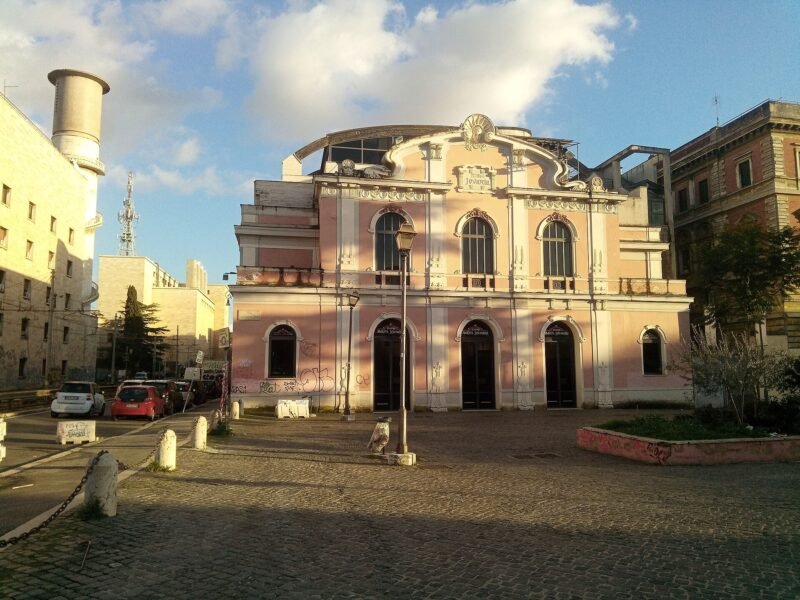
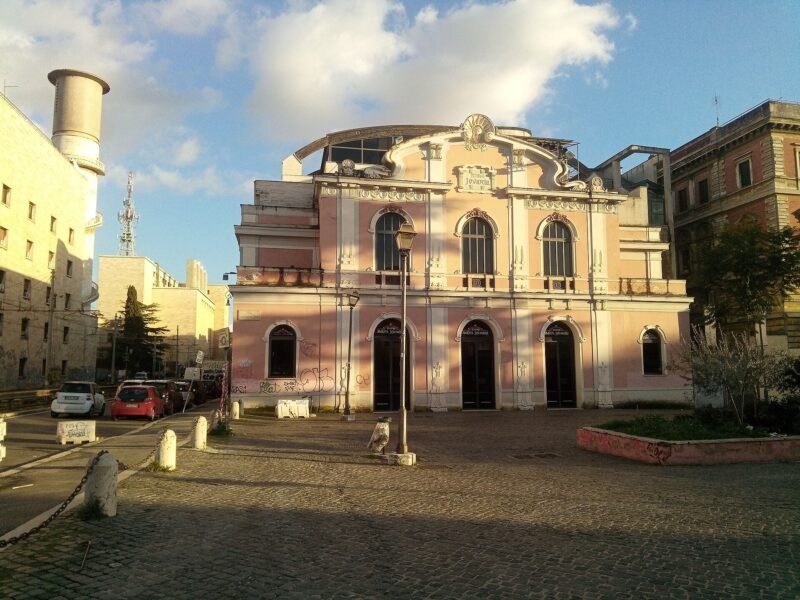
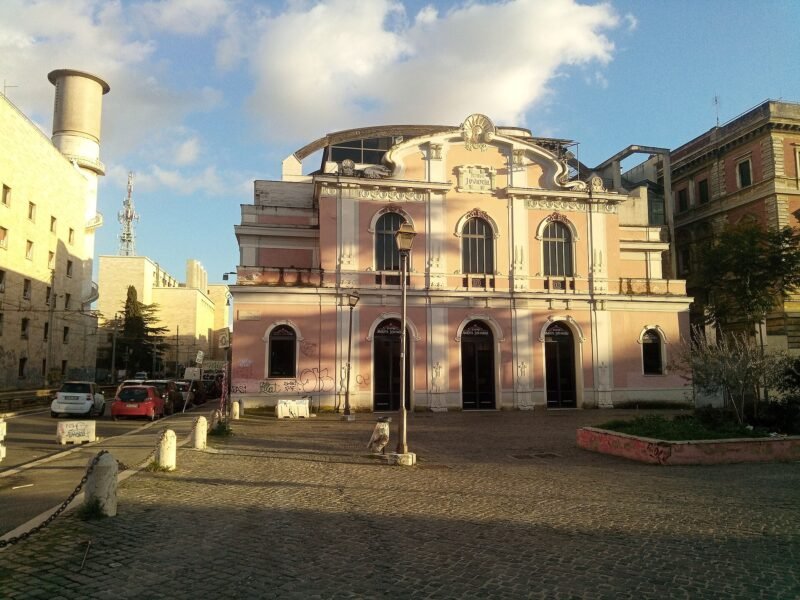
The Teatro Ambra Jovinelli was inaugurated on March 3, 1909 at the wish of impresario Giuseppe Jovinelli from Caserta, who wanted a variety theater with the luxurious look of a prose theater.
The design
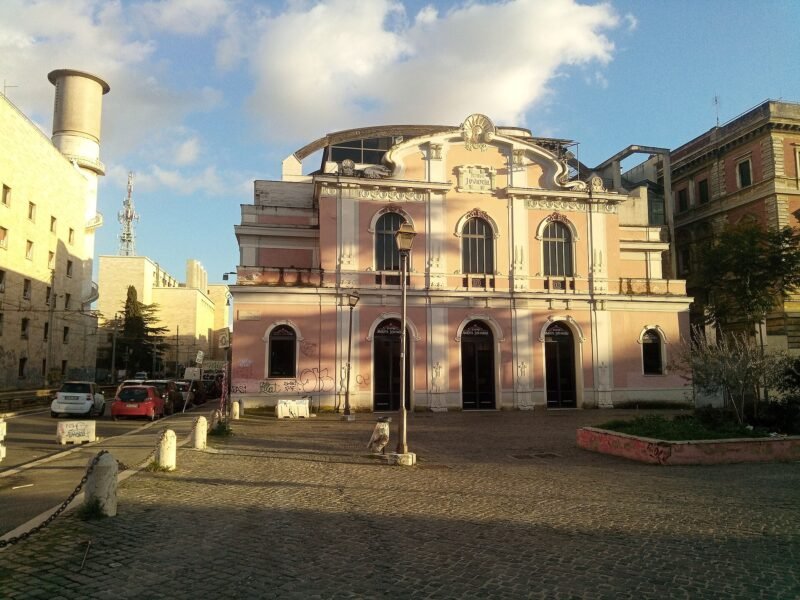
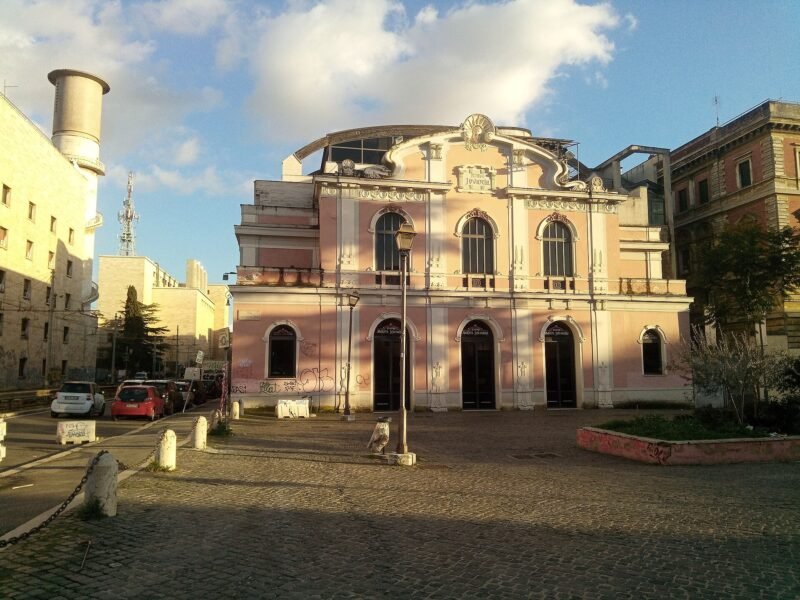
The theater rose in the vanished Piazza Guglielmo Pepe, in the Esquilino district. After the designs of Pietro Chiodelli and Giacomo Radiconcini, work began in 1906. The year after, Ulderico Bencivenga took over as designer. The two-story facade has wide openings, a crown of arched lines and stucco pilasters decorated with flowers, with a shell and a human face at the center of the entablature.
From variety to cinema
Before the Great War the Jovinelli was one of the most important variety theaters in the capital, with cabaret singers, comic character performers, acrobats and quick-change artists. After the war came the competition of cinema, the avanspettacolo and, in the 1950s, the name Ambra Jovinelli, chosen to appear among the first in the alphabetical list of cinemas in the newspapers.
A theater that really burned
On April 29, 1982 a fire, caused by a technical fault, destroyed the structure, which stayed closed and abandoned for years. In 1996 a group of young artists occupied it to draw public attention. In 1997 the facade was placed under protection by the Ministry. On January 25, 2001 the Ambra reopened as a theater. Since 2010 the artistic director has been Fabrizia Pompilio.
The hall today
The restoration rebuilt the look of the early 1900s and raised the hall by five meters, creating beneath it the Piccolo Jovinelli and other rooms. The cast-iron columns that once held up the boxes now support the two galleries.
A curiosity about Incendi with Frédérique Loliée and Filippo Dini at Ambra Jovinelli, January 27 to February 7, 2027
The curiosity lies in the title and the place. Incendi is staged in a theater that really did know a fire: on the night of April 29, 1982 the flames destroyed the Ambra Jovinelli, which stayed in ruins for almost 20 years before coming back to life. In the director's notes Marco Lorenzi describes Mouawad's text as a theater that burns and speaks of a silence full of ashes, beneath which a fire never put out keeps smoldering. On Via Guglielmo Pepe the metaphor has a concrete counterpart: the hall where the audience sits was rebuilt after the flames, and the cast-iron columns of the galleries are among the original elements that survived.
The second curiosity concerns the production. Filippo Dini, the male lead, has been since December 2023 artistic director of the Teatro Stabile del Veneto, the body that produces the show. The director of a national theater choosing to act in a production directed by someone else is less common than you might think, and says a lot about the importance the production house gives to this title.
The third curiosity concerns Mouawad and awards: in 2005 the author refused the Molière for Littoral, the first text of the same cycle as Incendi. A playwright who gives up the most important recognition of French theater in protest against the way texts are read is consistent with a work that asks the spectator to look without turning away.
One thing nobody tells you about Incendi with Frédérique Loliée and Filippo Dini at Ambra Jovinelli, January 27 to February 7, 2027
What is not said is that the Ambra Jovinelli, for many Romans, is the theater of comedy: the variety of Petrolini and Totò, the 2001 reopening as a comedy theater, the monologues of television's best-loved comedians. Incendi brings to that hall a tragedy, and one of the harshest in contemporary theater. Those who buy a ticket trusting the place, expecting a light evening, should know they will find war, violence, imprisonment and a final revelation that many spectators remember for years. There are no gratuitous scenes, and the director insists that violence is not turned into spectacle, but the subject remains heavy.
The second thing concerns age. The theater indicates no limits, but in our view Incendi is a show for adults and for teenagers from age 16, who are best prepared before the viewing. For students who have read Oedipus Rex it is a rare chance to see how a present-day author rewrites the myth.
The third thing is the most practical. The calendar alternates 21:00, 19:30, 16:30 and 17:00, and the times change even between two consecutive Thursdays. For a long text in which the first scenes hold the key to everything, arriving late is a mistake that cannot be recovered. Choose the date by looking at the time, not the day.
How to get to the Ambra Jovinelli
Teatro Ambra Jovinelli is at Via Guglielmo Pepe 43, in the Esquilino district, a short distance from Piazza Vittorio Emanuele II and Termini station. The simplest solution is Metro Line A to Vittorio Emanuele.
By Metro
From the Vittorio Emanuele stop of Line A, Via Guglielmo Pepe is reached on foot in a few minutes, crossing or skirting the square. Those arriving on Line B change at Termini, where the two lines cross, or get off at Termini and continue on foot for a quarter of an hour through the Esquilino.
By train
For those arriving on regional trains the nearest station is Roma Laziali, beside Termini. From there the theater is reached on foot in a few minutes. It is a convenience for those coming from out of town for one of the matinees.
By bus
Many surface lines serve Piazza Vittorio and the Termini area. To choose the best route, especially in the evening and on holidays, it is best to use the ATAC route planner, updated for detours.
By car
In the evening, street parking in the Esquilino is difficult. It is best to leave the car in a garage in the Termini area and continue on foot, or to leave it near a Metro Line A station on the outskirts.
The advice I give you for visiting Incendi with Frédérique Loliée and Filippo Dini at Ambra Jovinelli, January 27 to February 7, 2027
The advice is to arrive prepared on the myth, not on the plot. Rereading Sophocles' Oedipus Rex beforehand, or at least recalling its structure, lets you catch the reversal that Lorenzi names as the key to the staging: here it is a woman, Nawal, who carries the weight of destiny and tries to break it. Conversely, it is best to avoid reading detailed summaries or watching Villeneuve's film before the evening: the final revelation is built to strike those who don't know it.
Second piece of advice, on seats. In a production that uses video direction and a stage space to be continually transformed, the central orchestra at mid-distance offers the most complete view. The Ambra's two galleries, supported by the original cast-iron columns, give a good overall view but take you away from the faces, and in a text made of silences the faces count.
Third piece of advice: choose the date according to what you will do afterward. Incendi leaves you with questions and a wish to talk about them. The 19:30 performances on January 28 and February 3 and 5 are the best for those who want a quiet dinner on the way out, maybe in Monti. The weekend matinees leave the evening free to digest the show at leisure.
Finally, in our view, it is best not to go alone. It is a show that asks to be discussed, and the walk toward Piazza Vittorio is the right place to begin.
Another well-known fact, yet rarely mentioned
It is well known that Incendi owes its international fame also to Denis Villeneuve's film, nominated for the Oscar in 2011, before the Canadian director became known to the general public for his science fiction cinema. Much less often cited is that Nawal's story is inspired by the life of a real woman, Souha Fawaz Bechara, and by episodes of the Lebanese civil war. The country's name never appears, neither in the text nor in the film. Mouawad leaves the place unnamed to make the story one of all civil wars, and this explains why the text is staged all over the world.
A second little-cited fact concerns the author's biography. Mouawad was 10 when his family left Lebanon for France in 1978, and 15 when he moved to Montreal. The journey of the twins Jeanne and Simon, who leave Canada for their mother's home country, is the reverse of the route the writer took as a boy.
The third fact concerns the cycle. Incendi is the second of four texts on the theme of inheritance, written over a few years: Littoral, Incendi, Forêts, Ciels. In all four, children have to reckon with what their parents left them, and in all four the truth is won by traveling. Lorenzi, in the notes, cites a line of the author's: there are truths that can be revealed only on condition of discovering them.
The right photo to take at Incendi with Frédérique Loliée and Filippo Dini at Ambra Jovinelli, January 27 to February 7, 2027
The right photo is the Liberty-style facade on Via Guglielmo Pepe, from the opposite sidewalk, with the sign lit and the Incendi poster. The framing should be kept wide, to include the two stories of the front and the crown of arched lines, and then tight on the entablature, where the shell with the human face at the center is the most recognizable detail of Bencivenga's design. In the evening, at the hour when the audience goes in, the warm light of the entrance contrasts with the dark street. It is the image that best tells of a theater reborn after the fire.
In the hall, during the show, no photos and no filming. In a tragedy built on silences, the glow of a screen or the sound of a shutter disturbs the whole house, and the actors sense it. Before the start, if staff allow, it is worth looking toward the galleries and the cast-iron columns: they are the elements of the 1909 theater that survived the 1982 fire, and with this title on the program they take on an extra meaning.
For those who choose a matinee, on the way out there is the last light of a winter afternoon. Piazza Vittorio with its porticoes, a few steps away, is the day's second photo.
The Esquiline Hill around the Ambra Jovinelli
The Esquilino is the district between Termini, Santa Maria Maggiore and Porta Maggiore, built after Unification with the Umbertine buildings around Piazza Vittorio Emanuele II: one of the most multiethnic neighborhoods in Rome.
Piazza Vittorio and the Porta Alchemica
In the center of the large arcaded square is a garden that holds the Porta Alchemica, with its enigmatic inscriptions. Before a show about the search for a hidden truth, stopping in front of a door that nobody has ever known how to open has a coherence of its own.
The market
The Nuovo Mercato Esquilino gathers spices, vegetables and products from half the world, including those of the eastern Mediterranean the story of Nawal comes from. It is a daytime market, to visit in the morning.
Toward Monti and the basilicas
Going up toward Santa Maria Maggiore you reach the Monti district, with its workshops and little squares. Along Via Merulana you meet Palazzo Merulana and the Auditorium of Maecenas, and farther on the Teatro Brancaccio.
Some important events that took place here in history
The history of the Ambra Jovinelli begins on March 3, 1909, with an inauguration entrusted to Raffaele Viviani and his sister Luisella, called by Giuseppe Jovinelli. In 1910 Ettore Petrolini got his first important contract precisely from Jovinelli. Between 1919 and 1920 Totò debuted here, presenting himself as an imitator of Gustavo De Marco, a comedian of great success on that same stage in the years before the war. He immediately became the audience's favorite and stayed until 1921. In the 1940s and 1950s the hall also hosted boxing matches, with the ring set up in the theater and a packed audience.
In the 1950s the theater became a variety cinema and took the name Ambra Jovinelli. In the 1970s it was an adult cinema. On April 29, 1982 a fire destroyed the entire structure. The Jovinelli family sold the building in 1990. In July 1996 a group of young artists and intellectuals organized shows and exhibitions inside the dilapidated building to ask for its recovery, and in 1997 the facade was placed under protection by the Ministry of Cultural Heritage. The reopening as a theater came on January 25, 2001.
Incendi fits into this history as a title the hall seems to have been waiting for: a tragedy about the fire that smolders under the ashes, in a theater that was reborn from the ashes. For the two weeks of performances the Ambra, born for variety, hosts one of the most important works of contemporary francophone drama.
Who has played Incendi with Frédérique Loliée and Filippo Dini at Ambra Jovinelli, January 27 to February 7, 2027
More than a century of Italian entertainment has passed through the stage on Via Guglielmo Pepe. In the years of the Jovinelli family there were Raffaele Viviani, Ettore Petrolini, Gustavo De Marco and Totò, and then Gennaro Pasquariello, Romolo Balzani, Claudio Villa, Nino Taranto, Franco Franchi and Ciccio Ingrassia, Alberto Sordi. After the 2001 reopening came Ascanio Celestini, Marco Paolini, Neri Marcorè, Valerio Mastandrea, Silvio Orlando, Moni Ovadia, Lella Costa. Under the management of Fabrizia Pompilio the program has hosted Stefano Accorsi, Pierfrancesco Favino, Elio Germano and Paola Cortellesi.
It is a history of actors able to move from comic to dramatic, and Filippo Dini belongs to this breed. His career includes the comedy of La guerra dei Roses and The King's Speech, Chekhov and Ibsen, Arthur Miller and Euripides, and the popular television of Rocco Schiavone. With him comes to Rome a company of 10 performers, from Frédérique Loliée to Aleksandar Cvjetkovic, Elio D'Alessandro, Gennaro Di Biase, Giovanni Drago, Barbara Mazzi, Emilia Piz and Sara Verteramo, and the creative team of Marco Lorenzi.
And through the Ambra, by way of his words, passes Wajdi Mouawad: an author born in Lebanon, raised in France and Quebec, who with Incendi wrote one of the most frequently staged tragedies of our time.
Where to eat before or after Incendi
The Esquilino offers cuisines from many countries at low prices, from Chinese to Indian, from Bengali to Ethiopian and Middle Eastern. For a Roman trattoria it is best to go up toward Santa Maria Maggiore or move to Monti.
With the 21:00 performances
For the 21:00 evening performances you can have an early dinner, around 19:00, in one of the places near the theater, or have an aperitivo and dine afterward, knowing the show is demanding and that it will be late on the way out.
With the 19:30 performances
On January 28 and February 3 and 5 you get out in time for a real dinner. It is the best solution for those who want to talk about the show at the table.
The matinees
Saturday, January 30 at 16:30 and the Sundays at 17:00 leave the evening free: late lunch in the Esquilino, theater, dinner without hurry.
Accessibility and practical information
After the restoration the Ambra Jovinelli hall sits five meters above street level. Those with accessibility needs should contact the theater before buying to get directions on routes and suitable seats.
Arriving on time
The foyer fills up fast and picking up tickets takes a few minutes, so it is best to be in the theater at least a quarter of an hour before the start.
With teenagers
Incendi deals with war, violence and imprisonment. It is suited to adults and to teenagers from age 16, ideally prepared before the viewing. For classes studying Greek tragedy it is an excellent complement.
Late January and early February in Rome
The two weeks of Incendi fall in a quiet period for the city: the holidays are over, before Carnival, with theaters in the middle of the season.
The weather
Straddling January and February the evenings are cold and often damp. A heavy coat and an umbrella are the minimum kit for the walk from the Metro.
The other shows
In the same days the city offers very different titles: at Sala Umberto, from January 27 to 31, Joe Orton's comedy What the Butler Saw (Ciò che vide il maggiordomo). At Teatro Brancaccio, on January 27, Il Cantico by Angelo Branduardi. The complete Ambra program is on the theater's official website.
Frequently asked questions about Incendi at Ambra Jovinelli
When does Incendi play in Rome?
Incendi plays at Teatro Ambra Jovinelli from January 27 to February 7, 2027, with 12 performances: at 21:00 on January 27, 29 and 30 and February 2, 4 and 6. At 19:30 on January 28 and February 3 and 5. At 16:30 on January 30. At 17:00 on January 31 and February 7.
Who is in Incendi at Ambra Jovinelli?
In Incendi the performers are Frédérique Loliée and Filippo Dini, with Aleksandar Cvjetkovic, Elio D'Alessandro, Gennaro Di Biase, Giovanni Drago, Barbara Mazzi, Emilia Piz and Sara Verteramo. The director is Marco Lorenzi, the production is by the Teatro Stabile del Veneto, Teatro Nazionale.
What is Incendi by Wajdi Mouawad about?
Incendi tells the story of Nawal and her twin children, Jeanne and Simon, who on their mother's death leave for her home country to deliver two letters, to a father and a brother they never knew. It is a contemporary tragedy that takes up the myth of Oedipus from a woman's point of view.
Is Incendi the same text as the film La donna che canta?
Incendi is the stage text by Wajdi Mouawad from which Denis Villeneuve made in 2010 the film Incendies, released in Italy as La donna che canta and nominated for the Oscar for best foreign film. Marco Lorenzi's show starts from the original text.
How do you buy tickets for Incendi?
Tickets for Incendi are bought from the show page on the Teatro Ambra Jovinelli website, which links to the authorized presale network, or at the theater's box office on Via Guglielmo Pepe. Prices by section are shown at the time of purchase.
Where is Teatro Ambra Jovinelli?
Teatro Ambra Jovinelli is at Via Guglielmo Pepe 43, in the Esquilino district, near Piazza Vittorio and Termini station. The most convenient stop is Vittorio Emanuele on Metro Line A. For regional trains the nearest station is Roma Laziali.
Is Incendi suitable for teenagers?
Incendi is a tragedy that deals with war, violence and imprisonment. In our view it is suited to adults and to teenagers from age 16, prepared before the viewing. The theater indicates no age limits for the show.
The final advice on Incendi
Incendi is the show to choose for those who want, at least once in the season, a real tragedy: a text that has gone around the world, a director on his second encounter with his author, a lead who runs a national theater and chose to return to the stage for this story. The advice is to book in the central orchestra, choose the date by looking at the time, arrive with the myth of Oedipus in mind and without having seen the film, and allow yourself after the curtain the time for a walk in the Esquilino. In a theater reborn from fire, Mouawad's questions need a bit of road to settle.
Article written by the editorial team of Tour Leader Pro, contact them for Private/Corporate/V.I.P. Tours and Experiences.
Planning a trip to Rome? The English guides to visiting the city are on ItalyPlanner.com.
Contact Information
Nearby
 Teatro Ambra Jovinelli100 m
- Santa Bibiana100 m
- Nuovo Mercato Esquilino100 m
- Underdog’s200 m
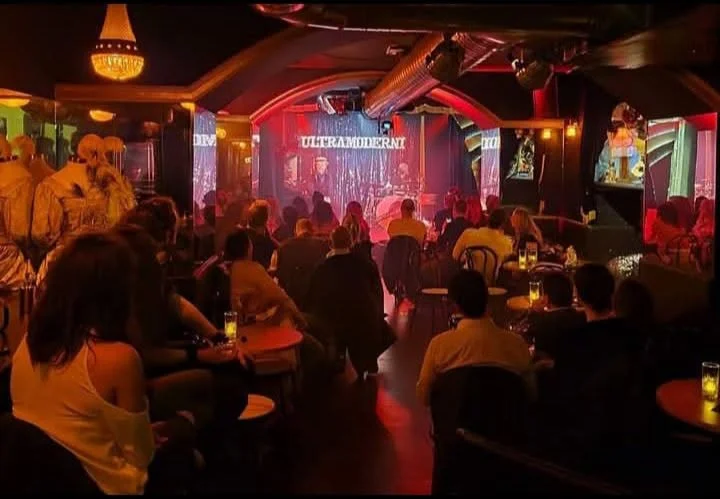
- La Conventicola degli Ultramoderni200 m
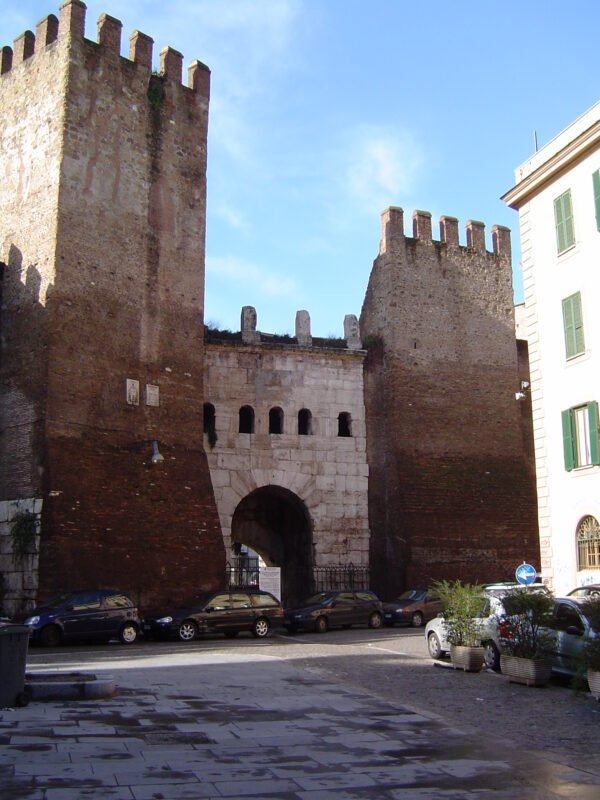
- Porta Tiburtina300 m

Upcoming events nearby
- Arianna Porcelli Safonov, Odiario at Teatro Ambra Jovinelli, November 7 and 8, 2026100 m
- La cosa giusta with Dino Abbrescia and Massimo De Lorenzo at the Ambra Jovinelli, January 13-24, 2027100 m
- Le nostre donne with Luca Bizzarri at Teatro Ambra Jovinelli, March 10 to 21, 2027100 m
- Andrea Scanzi, Ora o mai più at Ambra Jovinelli, March 23, 2027100 m
You might also like
- Mahler’s Third Symphony by John Neumeier at Teatro dell’Opera di Roma, February 4 to 10, 2027
- The Rake’s Progress at Teatro dell’Opera di Roma, November 27 to December 5, 2026
- Aggiungi un posto a tavola at the Teatro Brancaccio in Rome, December 10 to December 20, 2026
- Otello with Giorgio Pasotti and Giacomo Giorgio at Teatro Ambra Jovinelli, February 24 to March 7, 2027
- Raffaella il Musical at Teatro Brancaccio, February 10 to March 6, 2027
- Lucia di Lammermoor at Teatro dell’Opera di Roma, February 21 to 28, 2027