Teatro di Roma 2026-2027 Season, Il teatro è vita, September 30, 2026 to May 30, 2027
In short. Teatro di Roma 2026-2027 Season, titled Il teatro è vita (Theater Is Life), is played out across four venues: Teatro Argentina at Largo di Torre Argentina 52, Teatro Valle Franca Valeri at Via del Teatro Valle 21, Teatro India on…

Teatro di Roma 2026-2027 Season, titled Il teatro è vita (Theater Is Life), is played out across four venues: Teatro Argentina at Largo di Torre Argentina 52, Teatro Valle Franca Valeri at Via del Teatro Valle 21, Teatro India on Lungotevere Vittorio Gassman 1 and Teatro di Villa Torlonia at Via Lazzaro Spallanzani 1. The calendar published by Teatro di Roma starts on September 30, 2026 at Teatro India and ends on May 30, 2027, with the last titles at the Valle and the Torlonia. Roma Capitale's tourism portal gives the main span as October 16, 2026 to May 31, 2027. For the Argentina there's tram 8 with a stop at Torre Argentina, for the Valle you walk from Corso Rinascimento and the Pantheon, for the India you need the buses from Piazza della Radio or Roma Trastevere station, for Villa Torlonia metro B to Policlinico or Bologna. Prices, subscriptions and the TdR Card 2026/2027 are published on the official Teatro di Roma website, where tickets are also sold, as well as at the theaters' box offices.
Language: performed in Italian. No English version or English surtitles are announced.
Teatro di Roma 2026-2027 at a glance: four venues and over 90 titles
The figure to keep in mind is one: over 90 titles in four venues, with the reopening of Teatro Valle as Casa della Drammaturgia Contemporanea, the house of contemporary playwriting. The artistic direction is by Luca De Fusco, alongside Lea Giamattei, and the formula chosen in the May 2026 press release is clear-cut: four venues, four visions, one great theater. Within this perimeter come reinterpreted classics, today's Italian and foreign playwriting, experimental work, and a new festival, Capitale Danza, which brings to Rome some of the most sought-after choreographers in Europe and the Middle East.
Dates to mark
The first title on the calendar is La colonia, at Teatro India on September 30, 2026. October evenings light up early: What the body does not remember at the Argentina on October 8 and 9, Anche in casa si possono provare emozioni forti at the India from October 8 to 11, Albert eD io at the Torlonia on the 10th and 11th, Four Seasons Changed at the Argentina on October 11. The last useful week is at the end of May 2027, when Bella figura closes the Valle and Spettacolo politicamente scorretto closes the Torlonia, both on May 30.
One season, four identities
Each venue has a precise role. The Argentina is the home of big productions and international shows. The Valle is dedicated to playwriting, Italian and foreign, with seasoned actors and directors. The India hosts experimental work, young companies, dance and projects that need flexible spaces. The Torlonia, a small 19th-century theater inside a public park, hosts intimate titles, monologues and family shows. Understanding this division helps you choose: if you're looking for big Shakespeare, go to the Argentina. If you want to discover a new playwright, look at the Valle and the India.
Teatro Argentina program in the Il teatro è vita season
At the Argentina, Teatro di Roma concentrates the names of European directing: Wim Vandekeybus, Michiel Vandevelde, Romeo Castellucci, Luca De Fusco, Massimo Popolizio, Valerio Binasco, Roberto Andò with Lino Musella, Leonardo Lidi, Stefano Massini, Peter Stein, Emma Dante, Leonardo Petrillo with Mariano Rigillo. It's the most recognizable core of the season, the one that alone justifies a subscription.
Fall at the Argentina: De Fusco, Shakespeare and Ford
The heart of the fall is Shakespeare's Otello (Othello) directed by Luca De Fusco, on stage from November 4, 2026, a reading that moves the tragedy into the 20th century. From December 2 to 13 De Fusco also directs Peccato che fosse una sgualdrina, John Ford's 'Tis Pity She's a Whore, one of the rawest texts of English Jacobean theater, with Mersila Sokoli on stage. Before that, in October, Faust Fatto, non detto occupies the hall from the 15th to the 18th.
Winter at the Argentina: Bennett, Goldoni, Moscato
2027 starts with La pazzia di Re Giorgio, Alan Bennett's The Madness of George III, from January 9 to 31: court intrigue, irony and power around the English king who lost his mind. From February 2 to 14 comes Carlo Goldoni's Una delle ultime sere di Carnovale directed by Valerio Binasco, the comedy with which Goldoni said goodbye to Venice before leaving for Paris. From February 18 to 28 Non posso narrare la mia vita, built on Gli anni piccoli and other texts by Enzo Moscato, brings the language of the great Neapolitan author back to Rome.
Spring at the Argentina: Hamlet, Stein, Batsheva
From March 2 to 14, 2027 Amleto (Hamlet) is staged. From March 16 to 25 Lo zar starts from a precise fact: in 2000 Vladimir Putin told his life story publicly, the only time, ahead of the elections. From March 31 to April 11 Peter Stein takes on Platonov, Chekhov's early play. Then, from April 14 to 25, L'angelo del focolare, and from April 28 to 30 Ezra in gabbia, written and directed by Leonardo Petrillo with Mariano Rigillo and Anna Teresa Rossini. May belongs to dance: Portrait on the 8th and 9th, after more than 170 performances in France and abroad, and Momo by Ohad Naharin with the Batsheva Dance Company on the 15th and 16th.
Teatro Valle reopens as Casa della Drammaturgia Contemporanea
The novelty that defines the season is the Valle: the oldest theater in the city still in operation reopens as Casa della Drammaturgia Contemporanea, with a program bringing together Italian and foreign plays, from the 20th century to today. The names announced are Francesco Piccolo, lacasadargilla, Silvia Costa, Daria Deflorian, Ruggero Cappuccio with Claudio Di Palma, Carlo Sciaccaluga with Luca Lazzareschi, Alessandro Gassmann, Giuseppe Dipasquale with Alessio Vassallo and Ninni Bruschetta, Gabriele Lavia, Valerio Santoro with Franco Branciaroli and Giovanna Di Rauso, Raphael Tobia Vogel with Ambra Angiolini, Piero Maccarinelli with Massimo De Francovich and Maximilian Nisi, Emma Dante, Giorgio Sangati with Maria Paiato, Lucia Rocco.
Valle titles from October to January
It opens with La sera della prima, from October 16 to 18, 2026, followed by Caryl Churchill's Escaped Alone from October 23 to November 1, Memoria di ragazza from November 10 to 22, Che dolore terribile è l'amore from November 26 to December 6, Casanova from December 9 to 13 and Peter Shaffer's Equus from December 15 to 20. In January 2027 come Stato contro Nolan from the 14th to the 24th and Il male oscuro, from Giuseppe Berto's novel, from the 26th to the 31st.
Valle titles from February to May
February brings Ingmar Bergman's Dopo la prova (After the Rehearsal) from the 4th to the 14th and Vitaliano Brancati's La governante from the 23rd to the 28th, a drama about hypocrisy and respectability that censorship blocked for a long time. From March 11 to 21 there's Martin McDonagh's La Reginetta di Leenane (The Beauty Queen of Leenane). From April 8 to 18 Visita al padre. From April 20 to 30 Emma Dante brings to the Valle In cerca dei sei personaggi, from Luigi Pirandello, in the hall where Six Characters premiered in 1921. From May 4 to 13 Il delirio del particolare tells the story of the architect Carlo Scarpa. From May 20 to 30 Yasmina Reza's Bella figura closes the season.
Teatro India program: experimental work, new voices, dance
At the India the season lines up more than 30 titles, many of them for just two or three nights. The press release names Caterina Filograno, Francesca Astrei, Kepler-452, Pascal Rambert with Sandro Lombardi, Valerio Vestoso with Antonio Bannò, Gabor Tompa, Matthias Martelli, Tindaro Granata, Jacopo Gassmann, Claudio Fava, Lino Guanciale, Gabriele Russo with Arianna D'Angiò, Davide Sacco, Margarita Mladenova, Arturo Armone Caruso, Malicho Vaca Valenzuela.
The India in the fall
After La colonia on September 30, October and November fill up: Anche in casa si possono provare emozioni forti from October 8 to 11, Gli elefanti nella stanza from October 17 to November 1, Gone from October 28 to November 1, Viaggio a Hong Kong from November 3 to 8, La firma from November 11 to 15, Ending from November 16 to 23, Bodies on Glass on the 18th and 19th, Amae no Kōzō on the 21st and 22nd, Jon Fosse's I am the Wind from November 25 to 29 and Pinocchia from the 27th to the 29th. Around Christmas, from December 22 to January 6, Storie di Natale is the family title.
The India in 2027
January sees Marmocchio on the 23rd and 24th and Lu Santo Jullàre Francesco from the 27th to the 31st, Dario Fo's text on Francis of Assisi. February: Clàssics on the 6th and 7th, Vorrei una voce from the 9th to the 14th, The Body of an America from the 20th to the 28th. March: La Firma. Non ti fidare from the 3rd to the 7th, Flusso from the 6th to the 14th, Madri from the 17th to the 21st. April: Neanche parenti from the 1st to the 4th, Asfalto from the 2nd to the 4th, Lettera di una sconosciuta from the 13th to the 18th, Il canto della sirena on the 17th and 18th, Crazy Grass on the 23rd and 24th. May, the busiest month: In relation to whom? on the 4th and 5th, La mezzanotte della danza on the 6th, Crocodile on the 7th and 8th, Rendez-Vous on the 11th and 12th, Outbreak on the 14th and 15th, Cuor di coniglio on the 16th, Resteremo per sempre qui buone ad aspettare from the 19th to the 23rd, Logorante, ma vivo from the 21st to the 23rd, Reminiscencia on the 25th and 26th.
Teatro di Villa Torlonia program
At the Torlonia the season is made of small forms, suited to an intimate hall inside the park. The names in the press release are Giuseppe Pestillo, Virginia Landi, Gaia Ginevra Giorgi, Danilo Capezzani, Maximilian Nisi with Viola Graziosi, Elena Arvigo, Simonetta Solder, Sabrina Scuccimarra, Luisa Merloni with Manuela Cherubini, Serena Sinigaglia, Alessio Pizzech with Mario Incudine, Riccardo Caporossi, Enrico Torzillo.
Torlonia titles through December
Albert eD io on October 10 and 11, Pazzo ad Arte from the 15th to the 18th, Charlie Gordon on the 24th and 25th, Witch is from October 29 to November 1, Ode alla vita on November 14 and 15, May falling asleep never open our mouths from November 19 to 22. In December two long evenings of prose: Alberto Moravia's Racconti romani (Roman Tales), part one from the 3rd to the 6th, part two from the 10th to the 13th. From December 17 to January 6 La mosca Verdolina is the holiday title.
Torlonia titles in 2027
Petite histoires sans paroles on January 16 and 17, Heiner Müller's Quartett from the 21st to the 24th, Crisotemi from the 28th to the 31st. February: Gertrude, Lucia e le altre from the 3rd to the 7th, Week-end from the 11th to the 14th, Ho un pezzettino in gola on the 20th and 21st, Lei non sa cosa vuole from the 25th to the 28th. March: Beata oscenità from the 4th to the 7th, Archimede from the 18th to the 21st. April: Vita a rate from the 16th to the 30th. May: Spettacolo politicamente scorretto from the 21st to the 30th.
Capitale Danza, the festival that joins the season
Capitale Danza 2027 is the contemporary dance festival that Teatro di Roma includes in its season for the first time, with a dedicated subscription campaign. The press release lists Mehdi Kerkouche, Ohad Naharin, Marah Haj Hussein with Nur Garabli, Gabriella Stazio, Martin Harriague, Simone Repele and other artists. The title that will draw the biggest audience is Ohad Naharin's Momo with the Batsheva Dance Company, at the Argentina on May 15 and 16, 2027: a work Teatro di Roma describes as an exploration of the coexistence of primal energy and tenderness.
Why it matters
Rome has always suffered from dance programming scattered across many venues. Putting a festival inside the public theater's season means giving it subscribers, promotion and a fixed date on the calendar. In our opinion, if the formula holds, Capitale Danza will become the main reason a new audience walks into the India and the Argentina.
Luca De Fusco and the direction of Teatro di Roma
Luca De Fusco is the artistic director of Teatro di Roma, and this season he directs two productions at the Argentina, Otello and Peccato che fosse una sgualdrina. A Neapolitan, he previously ran Teatro Stabile del Veneto and Teatro Stabile di Napoli, where he built a repertoire based on the classics and on the great European dramaturgies, often with strong work on image and music. At Teatro di Roma he brings the same idea: a house of strong directing, able to hold together big names and young companies.
The artistic team
Working alongside De Fusco is Lea Giamattei, named by Roma Capitale's tourism portal in the season's artistic direction. The editorial line can be read in the subtitle of the press release: an ecosystem of excellent directing, classics and contemporary experimental work, international visions, new artistic geographies. Translated: fewer routine titles, more recognizable projects, and a clear division of work among the venues.
Teatro di Roma as an institution
Fondazione Teatro di Roma is a Teatro Nazionale, has its registered office at Via de' Barbieri 21, a stone's throw from the Argentina, and runs the Argentina, the India, the Torlonia and now the Valle. Besides the season, it organizes theatrical tours, training, the Laboratorio Teatrale Integrato Piero Gabrielli and programming for young people.
The four Teatro di Roma venues: what they're like
Teatro di Roma works across four very different buildings, and knowing what they're like changes the way you choose a show.
Teatro Argentina
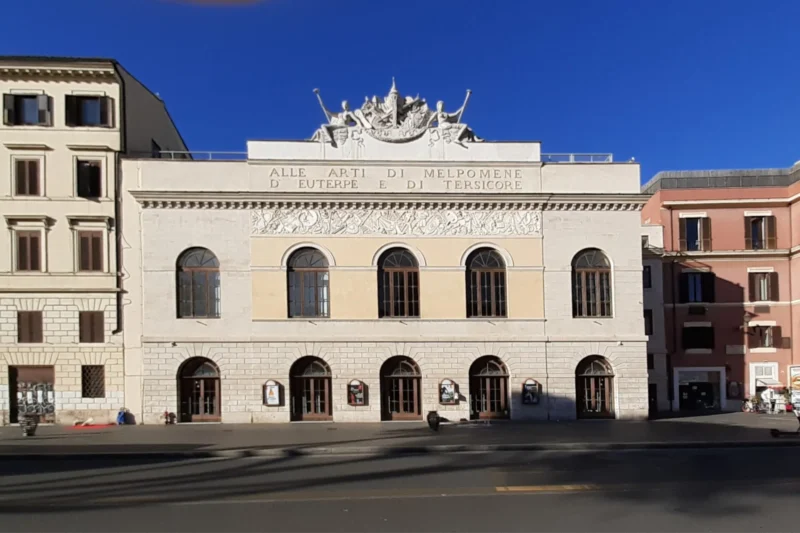
The Argentina has 720 seats, according to Teatro di Roma's figures: 354 in the orchestra and 366 in six tiers of boxes. It's an Italian-style horseshoe hall, red and gold, commissioned by the Sforza Cesarini family and designed by the architect Gerolamo Theodoli. Inaugurated in January 1732, it got its neoclassical facade only in 1826, designed by Pietro Holl. The name doesn't come from the South American country, but from the tower of Burchard, a papal master of ceremonies born in Strasbourg, Argentoratum in Latin.
Teatro Valle Franca Valeri
The Valle, in the Sant'Eustachio district, was funded by Camillo Capranica and inaugurated on January 7, 1727 with a wooden structure, five tiers of boxes and a top gallery, designed by Tommaso Morelli. Reworked several times, with interventions by Giuseppe Valadier and Gaspare Salvi completed in 1822, it's owned by Roma Capitale and since September 13, 2021 has borne the name of Franca Valeri. Its capacity, according to published sources, is about 900 seats.
Teatro India
The India is a former factory: the Mira Lanza area, on the Tiber, where at the start of the 20th century chemicals were produced, then glycerin and soap. Closed in 1952, it was partly bought by the City and opened as a theater in 1999. The name was chosen by Mario Martone, then director, as a pair with Argentina: another country, another metaphor of travel. Three halls, flexible spaces, dark brick, and outside the Gazometro.
Teatro di Villa Torlonia
The Torlonia is the 19th-century theater of the Torlonia princes' villa, on Via Nomentana. Designed by Quintiliano Raimondi during the works commissioned by Alessandro Torlonia, it was restored and reopened in 2013. It's the Foundation's smallest venue and the one with the homiest atmosphere: you enter from the park, and between acts you breathe garden air.
A curious fact about Teatro di Roma 2026-2027 Season, Il teatro è vita, September 30, 2026 to May 30, 2027
The most delightful curious fact of the season concerns two names. Teatro India is called that because Mario Martone, when he opened it in 1999, wanted a country name to pair with Argentina: two faraway states, two metaphors of travel. But the Argentina, in reality, has nothing to do with South America. The name comes from the tower of the palace of Johannes Burckardt, known as Burcardo, a papal master of ceremonies born in Strasbourg, a city called Argentoratum in Latin. Burckardt signed himself episcopus argentinensis, and the tower, the square and the theater inherited the name.
The result is a game of mirrors few spectators notice: the India was named with a country in mind that the Argentina never was. It's the kind of detail to remember when passing Largo Argentina, and it always works, because it overturns the obvious.
The second curious fact is about the calendar. Emma Dante brings to the Valle, from April 20 to 30, 2027, In cerca dei sei personaggi, from Luigi Pirandello. The Valle is the theater where Six Characters in Search of an Author had its world premiere, on May 9, 1921, on an evening that ended with the audience divided and the author heckled on his way out. 106 years later, the text returns to its hall, rewritten by one of the freest directors in Italian theater. If you love coincidences, you can choose the performance closest to May 9: there isn't one exactly on that date, but April 30 comes close enough.
Why the reopening of the Valle is the real news
The Valle comes back to life with a full season, after years of closures, occupations and partial openings. Closed with the abolition of the Ente Teatrale Italiano in 2011, occupied from June 14, 2011 to August 11, 2014, transferred to Roma Capitale in 2016 with funding for restoration, partly reopened in 2018 and named after Franca Valeri in 2021, the theater had never had, since then, a stable identity. Casa della Drammaturgia Contemporanea gives it one.
A theater of premieres
For two centuries the Valle was a theater of premieres. It staged the Rome premiere of Mozart's Don Giovanni in 1811, Rossini's La Cenerentola in 1817, several Donizetti operas in the 1820s and 1830s, and indeed Six Characters in 1921. Dedicating this hall to new plays is a choice consistent with its history.
What to expect in the hall
The Valle is an Italian-style theater with boxes, more intimate than the Argentina. For spoken-word plays, like Brancati's La governante or McDonagh's The Beauty Queen of Leenane, the orchestra level and the lower boxes offer the best view. It's worth trying it at least once in the season, if only to see how a contemporary text sounds in an 18th-century hall.
Something nobody tells you about Teatro di Roma 2026-2027 Season, Il teatro è vita, September 30, 2026 to May 30, 2027
What nobody tells you is that the four Teatro di Roma venues call for four evenings organized differently. The Argentina and the Valle are in the historic center, less than 10 minutes' walk from each other, inside the limited traffic zone: if you arrive by car, leave it outside and continue by tram 8 or on foot. The India is on the Tiber, between Marconi and Ostiense, far from the center: in the evening it's best to think about getting back before going in, because after the show runs thin out. The Torlonia is inside Villa Torlonia, and the entrance from Via Spallanzani should be located calmly the first time.
The second thing concerns how long shows run. At the Argentina and the Valle titles stay on stage for one or two weeks. At the India and the Torlonia many shows last two, three or four nights. If you wait for word of mouth to decide, at the India you risk arriving after the curtain has already fallen for good. The practical rule is the reverse of the usual one: for big productions there's time, for small ones you have to act right away.
Third point, not obvious on the website: Teatro di Roma also programs outside its four venues. The season calendar includes titles at Teatro Elsa Morante, and the previous summer the festival at the Roman Theater of Ostia Antica. If you follow the Foundation closely, it's worth checking those items too.
How to get to Teatro di Roma venues
The four venues are reached by different means. Below are the simplest options for each.
Teatro Argentina, Largo di Torre Argentina 52
Tram 8 stops at Torre Argentina, in front of the sacred area. Largo Argentina and Corso Vittorio Emanuele II are crossed by many surface lines linking Termini, Piazza Venezia, the Vatican and Trastevere. No metro station is right by the theater. By car you have to reckon with the historic center's limited traffic zone and the lack of theater parking.
Teatro Valle, Via del Teatro Valle 21
The Valle is between Sant'Andrea della Valle, the Pantheon and Piazza Navona. From the Argentina it's a few minutes on foot, via Corso Vittorio Emanuele II or Via dei Sediari. So the same surface lines as for the Argentina apply, and the same warning about the limited traffic zone.
Teatro India, Lungotevere Vittorio Gassman 1
The India is reached by the buses stopping at Piazza della Radio, by tram 8 along Viale Trastevere, or from Roma Trastevere station, about 700 meters away. Metro B, Garbatella stop, is about a kilometer away. It's the venue where a car makes the most sense, because it's outside the historic center.
Teatro di Villa Torlonia, Via Lazzaro Spallanzani 1
Villa Torlonia is on Via Nomentana. The most convenient metro B stops are Policlinico and Bologna. Several bus lines run on the Nomentana, and trams 3 and 19 stop on Viale Regina Margherita. The theater is in the part of the park toward Via Spallanzani.
My tip for Teatro di Roma 2026-2027 Season, Il teatro è vita, September 30, 2026 to May 30, 2027
My tip is to build the season on three evenings, one per venue, before thinking about a subscription. A big production at the Argentina, for example Peter Stein's Platonov or Valerio Binasco's Una delle ultime sere di Carnovale. A contemporary play at the Valle, maybe The Beauty Queen of Leenane or Emma Dante's In cerca dei sei personaggi. And a short show at the India, chosen from the two-night titles. After three venues you understand which language is yours, and the subscription becomes a reasoned choice and not an act of faith.
Second tip: look at the calendar by weeks, not by titles. In some weeks, especially in November and May, the India, the Torlonia and the Argentina have shows at the same time, and with a little organization you can see two titles on two consecutive evenings. May 2027 is the richest month: Batsheva at the Argentina, about 10 titles at the India, Bella figura at the Valle, Spettacolo politicamente scorretto at the Torlonia.
Third tip, a practical one: sign up for Teatro di Roma newsletter and check the official website for prices, discounts and the TdR Card, because conditions change from venue to venue and from title to title. Don't buy tickets from channels other than those listed by the theater: the venues' box offices and the official website are enough.
Another well-known fact, yet one that's rarely mentioned
Everyone knows that at the Argentina, on February 20, 1816, the premiere of Rossini's The Barber of Seville was a flop, with the audience full of supporters of Paisiello's Barber. Less often mentioned is that the same hall, in 1849, was the stage of a political event: at the premiere of Giuseppe Verdi's La battaglia di Legnano, according to Teatro di Roma's account, the demonstrations against the papal government began that led to the Roman Republic.
And there's an even less remembered fact, linking ancient history to today's season. Teatro Argentina stands over part of the complex of the Theater of Pompey, and the Curia where Julius Caesar was killed in 44 BC belonged to that complex. Teatro di Roma tells this in its own tours: the history of this theater starts with a political assassination. In a season in which the Argentina stages Otello, Lo zar, La pazzia di Re Giorgio and Amleto, four stories of power, violence and deception, the fact takes on a particular flavor.
Finally, the Valle: Giacomo Leopardi, in a letter to his brother Carlo in January 1823, described it as cold and empty. 200 years later, the challenge of Casa della Drammaturgia is to prove him wrong, filling it with audiences and new plays.
The right photo to take at Teatro di Roma 2026-2027 Season, Il teatro è vita, September 30, 2026 to May 30, 2027
Each venue has its photograph. At the Argentina, the right photo is taken from the orchestra level before the lights go down, with the lens pointing up: six tiers of red and gold boxes, the green ceiling, the great chandelier. It's the image that tells the theater better than any description. Outside, in the evening, from the other side of the square, you can frame the neoclassical facade and the lit columns of the sacred area together.
At the Valle, the photo to take home is the hall from the back of the orchestra level, with the boxes and the painted ceiling. Outside, the facade on Via del Teatro Valle, squeezed between buildings, conveys well the Rome of the 18th century, made of theaters wedged into the fabric of the districts.
At the India, the photo is outside: the dark brick naves of the old factory, and behind, in the sky, the outline of the Gazometro. At sunset, before the 19:00 or 20:00 shows, the light on the Tiber makes the shot even sharper. At the Torlonia, finally, the best photo is of the small theater building seen from the park, with the villa's avenues around it. Inside, once the show has started, your phone should be off: in such an intimate hall, a lit screen is noticed from the first row to the last.
Some important events that happened here in history
The Argentina was inaugurated in January 1732 with Domenico Sarro's Berenice. On February 20, 1816 Rossini's The Barber of Seville premiered there, in 1822 Donizetti's Zoraida di Granata, in 1827 Niccolò Paganini played there, and Verdi presented I due Foscari there in 1844 and La battaglia di Legnano in 1849. After 1870 the theater passed to the City, and the opening of Corso Vittorio Emanuele II put it at the center of the new capital.
The Valle opened on January 7, 1727. It staged the Rome premiere of Mozart's Don Giovanni on June 10, 1811, Rossini's Demetrio e Polibio in 1812, Torvaldo e Dorliska in 1815, La Cenerentola on January 25, 1817. In 1849, during the Roman Republic, the actors Tommaso Salvini and Gustavo Modena enlisted in the National Guard. On May 9, 1921 Pirandello's Six Characters in Search of an Author premiered. In 1959 the premiere of Luigi Squarzina's Romagnola was disrupted by a group of Fascists, and the audience responded by applauding the show.
The India is the story of a factory: Mira, then Mira Lanza, which produced glycerin during World War I and soap in the following years, until it closed in 1952. In 1999 part of the area was turned into a theater. Villa Torlonia, finally, went through the 20th century as Mussolini's residence, from the 1920s to 1943, then as an Allied command. The park has been public since 1978, the theater was reopened in 2013.
Who has passed through Teatro di Roma 2026-2027 Season, Il teatro è vita, September 30, 2026 to May 30, 2027
Rossini, Donizetti, Verdi and Paganini passed through the Argentina. Teatro di Roma recalls that the works of Gabriele D'Annunzio and Luigi Pirandello were staged there, and that Marcel Proust described its boxes as small suspended drawing rooms. In the 20th century the Argentina was run by Vito Pandolfi, Franco Enriquez, Luigi Squarzina, Maurizio Scaparro, Pietro Carriglio, Luca Ronconi, Mario Martone, Giorgio Albertazzi, Gabriele Lavia, Antonio Calbi, Giorgio Barberio Corsetti, up to Luca De Fusco.
At the Valle actors like Tommaso Salvini and Gustavo Modena worked. Leopardi wrote about it, and Pirandello saw his most famous play born there. The India, since its opening, has been linked to the name of Mario Martone, who wanted it and named it.
The 2026-2027 season adds new names to this list. Peter Stein, one of the masters of European directing, brings Platonov to the Argentina. Ohad Naharin, choreographer of the Batsheva Dance Company and inventor of the Gaga movement language, arrives with Momo. Romeo Castellucci, Wim Vandekeybus, Emma Dante, Massimo Popolizio, Valerio Binasco, Roberto Andò, Gabriele Lavia, Alessandro Gassmann, Lino Guanciale, Pascal Rambert, Mariano Rigillo: these are the artists who, between October and May, will pass through the four venues. For theater lovers, it's a season that reads like a yearbook.
What's around the four venues
Each Teatro di Roma venue is a door onto a different neighborhood, and it's worth using it.
Around the Argentina and the Valle
In front of the Argentina is the sacred area of Largo Argentina, with four temples from the Republican period and the cat colony of the cat sanctuary. The historical picture of the area is told in our guide to Largo Argentina and Campo Marzio. A few minutes away are the Pantheon, Piazza Navona, Campo de' Fiori and the Jewish Ghetto. A walk before the show, between 20:00 and 21:00, is part of the experience.
Around the India
The India is between Ostiense, Marconi and Testaccio. The Gazometro is in view, and the area of Via del Porto Fluviale and Ostiense hosts some of the city's best-known murals, collected in the guide to Ostiense street art. In summer the India turns into an arena, with the India Città Aperta program.
Around the Torlonia
Teatro di Villa Torlonia is inside the park, with the Casino Nobile, the Casina delle Civette, the Serra Moresca and the granite obelisks. For a daytime visit before the show, our page on Villa Torlonia collects opening hours and routes.
How to plan an evening at the theater with Teatro di Roma
An evening at the Argentina or the Valle is planned like a dinner downtown: you arrive on foot, eat before or after, go back by public transportation or taxi. At the India and the Torlonia the evening is different, more neighborhood-like.
Where to eat before and after
Around the Argentina and the Valle the options are those of the historic center: Roman trattorias, pizzerias, wine bars, places serving Ghetto cuisine. It's best to book on weekends, and to choose a place on your way back. Around the India the Ostiense and Piazza della Radio area offers pizzerias and neighborhood spots, more informal. Near Villa Torlonia, on the Nomentana and in the streets of the Trieste district and Piazza Bologna, there are trattorias and bistros suited to a quick dinner.
Times and timing
Start times vary from title to title and from venue to venue. They're shown on each show's page on the official website. The rule is to arrive at least 30 minutes early: the box offices have lines on opening nights, and picking up booked tickets takes time.
With children
Teatro di Roma has a Teatro Ragazzi program, between the India and the Torlonia, and titles designed for families during the holidays: Storie di Natale at the India from December 22 to January 6, La mosca Verdolina at the Torlonia from December 17 to January 6. For little ones, the Torlonia is the ideal venue: a short distance from the stage, short shows, and the park around it to let off steam before and after.
Accessibility at Teatro di Roma venues
Teatro di Roma has a section dedicated to accessibility on its website. At the Argentina the historic building doesn't allow all barriers to be removed, but there are elevators and reserved seats on the orchestra level for people with disabilities, with the companion in a nearby seat. For holders of a companion allowance there's a free ticket for the companion. For the Valle, the India and the Torlonia the conditions should be checked with the box office before buying: they're very different buildings, and the solution needs to be agreed venue by venue.
The Laboratorio Piero Gabrielli
For years Teatro di Roma has supported the Laboratorio Teatrale Integrato Piero Gabrielli, which puts young people with and without disabilities on stage. It's a part of the Foundation's public mission worth knowing about.
Tickets, subscriptions and the TdR Card
Tickets and subscriptions for the Il teatro è vita season are sold on the official Teatro di Roma website and at the venues' box offices. The theater has launched the 2026/2027 subscription campaign and a campaign dedicated to Capitale Danza 2027, plus the TdR Card 2026/2027. Prices and conditions are published on the official website, title by title. At the Argentina, for example, price bands vary between orchestra seats, orchestra-level boxes and upper tiers, and there are discounts for young people and over-65s.
The time of year
The season covers the Roman fall, winter and spring. October and May are the most pleasant months for going out in the evening. From December to February, keep cold and rain in mind for the trip home, especially for the India and the Torlonia, which require a stretch on foot from public transportation.
Frequently asked questions about Teatro di Roma 2026-2027 season
When does Teatro di Roma 2026-2027 season start and end?
Teatro di Roma 2026-2027 season, titled Il teatro è vita, starts on September 30, 2026 with La colonia at Teatro India and ends on May 30, 2027, with Bella figura at the Valle and Spettacolo politicamente scorretto at the Torlonia. Roma Capitale's tourism portal gives the main period as October 16, 2026 to May 31, 2027.
Which theaters host Teatro di Roma season?
Teatro di Roma season takes place in four venues: Teatro Argentina at Largo di Torre Argentina 52, Teatro Valle Franca Valeri at Via del Teatro Valle 21, Teatro India on Lungotevere Vittorio Gassman 1 and Teatro di Villa Torlonia at Via Lazzaro Spallanzani 1. The Valle reopens as Casa della Drammaturgia Contemporanea.
What are the main shows at Teatro Argentina?
At Teatro Argentina the 2026-2027 season offers Otello and Peccato che fosse una sgualdrina directed by Luca De Fusco, Alan Bennett's La pazzia di Re Giorgio, Goldoni's Una delle ultime sere di Carnovale with Valerio Binasco, Amleto, Lo zar, Platonov directed by Peter Stein, and Ohad Naharin's Momo with the Batsheva Dance Company on May 15 and 16, 2027.
What's on at the reopened Teatro Valle?
Teatro Valle hosts Teatro di Roma's Casa della Drammaturgia Contemporanea, with titles like Escaped Alone, Equus, Il male oscuro, Brancati's La governante, McDonagh's The Beauty Queen of Leenane, Emma Dante's In cerca dei sei personaggi from April 20 to 30, 2027 and Bella figura from May 20 to 30, 2027. The first title is La sera della prima, from October 16 to 18.
What is Capitale Danza?
Capitale Danza is the contemporary dance festival that joins Teatro di Roma's 2026-2027 season, with a dedicated subscription campaign. Among the artists announced are Mehdi Kerkouche, Ohad Naharin, Marah Haj Hussein with Nur Garabli, Gabriella Stazio and Martin Harriague. The dates are spread between Teatro Argentina and Teatro India.
Where can I buy Teatro di Roma tickets?
Tickets for Teatro di Roma season are sold on the official website teatrodiroma.net and at the venues' box offices. The website publishes prices, discounts, subscriptions, the TdR Card 2026/2027 and the Capitale Danza 2027 campaign. It's best to avoid channels not listed by the theater.
Are there shows for children in Teatro di Roma season?
Teatro di Roma has a Teatro Ragazzi program between Teatro India and Teatro di Villa Torlonia, and during the holidays offers Storie di Natale at the India from December 22, 2026 to January 6, 2027 and La mosca Verdolina at the Torlonia from December 17 to January 6. The Torlonia, small and inside a park, is the venue best suited to children.
How do I get to Teatro India?
Teatro India, on Lungotevere Vittorio Gassman 1, is reached by the buses stopping at Piazza della Radio, by tram 8 on Viale Trastevere or from Roma Trastevere station, about 700 meters away. Metro B, Garbatella stop, is about a kilometer away. Outside the historic center, the India is the most convenient venue if you arrive by car.
My final tip on Teatro di Roma season
If I had to choose a single title, I'd go to the Valle for Emma Dante's In cerca dei sei personaggi: a text born in that very hall, reread by a director who has never been afraid of Pirandello. If I could choose three, I'd add Peter Stein's Platonov at the Argentina and one of the short evenings at the India in May, chosen almost at random, for the pleasure of discovering something. A season with four venues is best enjoyed moving between neighborhoods: theater, in Rome, is also a way of crossing the city.
Article written by the editorial team of Tour Leader Pro, contact them for Private/Corporate/V.I.P. Tours and Experiences.
Planning a trip to Rome? The English-language guides for visiting the city are on ItalyPlanner.com.
Contact Information
Nearby
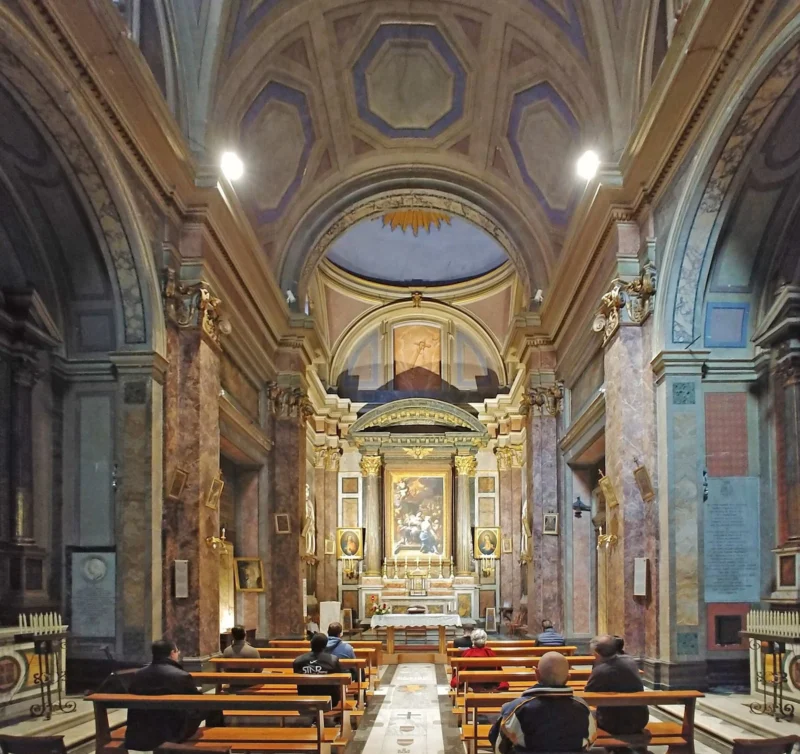
 Teatro Centrale100 m
- Teatro Argentina100 m
- Largo Torre Argentina – Sacred Area of Campo Marzio100 m
- Cat Sanctuary at Largo Argentina100 m
- San Carlo ai Catinari200 m
- Santa Maria in Publicolis200 m
Upcoming events nearby
- Sciroppo di Teatro 2026 at Teatro di Roma, March 21 to December 30, 2026100 m
- Othello at Teatro Argentina, November 4 to 29, 2026100 m
- The Madness of King George with Massimo Popolizio at Teatro Argentina in Rome, January 9 to 31, 2027100 m
- Una delle ultime sere di Carnovale at Teatro Argentina, February 2 to 14, 2027100 m
You might also like
- Le dieu du carnage with Antonio Zavatteri at Teatro Quirino, March 30 to April 4, 2027
- L’uomo, la bestia e la virtù with Vanessa Gravina at Teatro Quirino, March 16 to 21, 2027
- Ispettore in casa Birling with Ettore Bassi and Galatea Ranzi at Teatro Quirino, March 2 to 7, 2027
- Belle Ripiene at Teatro Sistina in Rome, from April 8, 2027
- Sfidati di me, Paolo Kessisoglu at Teatro Sala Umberto, April 1 to 4, 2027
- L’anatra all’arancia with Emilio Solfrizzi at Teatro Quirino, April 20 to May 2, 2027