Seoul Philharmonic Orchestra in Rome at Auditorium Parco della Musica, May 10, 2027
In short. The Seoul Philharmonic Orchestra in Rome: led by its music director Jaap van Zweden, the orchestra plays Auditorium Parco della Musica Ennio Morricone on Monday, May 10, 2027 at 20:00, in Sala Santa Cecilia, Viale Pietro de Coubertin 30…
The Seoul Philharmonic Orchestra in Rome: led by its music director Jaap van Zweden, the orchestra plays Auditorium Parco della Musica Ennio Morricone on Monday, May 10, 2027 at 20:00, in Sala Santa Cecilia, Viale Pietro de Coubertin 30 (00196 Rome), with pianist Jaehong Park. The program features Rachmaninov's Piano Concerto No. 3 and Tchaikovsky's Symphony No. 5. The concert is outside the subscription series, on the Accademia Nazionale di Santa Cecilia's program. Prices published by the Accademia are €50 in section I, €40 in section II and €25 in section III. From the center, take Metro A to Flaminio and then tram 2 to the Flaminia/Reni or Apollodoro stops, and from Termini there's bus 910. The only authorized sellers listed by the Accademia are the official presale network, the Auditorium box office and the one at Via Vittoria 6.
One of South Korea's oldest orchestras, the first Asian orchestra to sign a recording deal of this scale with Deutsche Grammophon, and a Dutch conductor who at 19 was already concertmaster of Amsterdam's Concertgebouw: for one night Sala Santa Cecilia hosts the symphonic music of Seoul, with two of the most beloved works in the Russian repertoire.
Seoul Philharmonic in Rome: date, program and tickets
The Seoul Philharmonic Orchestra plays Sala Santa Cecilia on Monday, May 10, 2027 at 20:00, in a concert outside the Accademia Nazionale di Santa Cecilia's subscription series.
The program
The first half features Sergei Rachmaninov's Piano Concerto No. 3 in D minor, Op. 30, with Jaehong Park at the piano, and the second Pyotr Ilyich Tchaikovsky's Symphony No. 5 in E minor, Op. 64. Two of the most performed Russian scores in the world.
Prices
The Accademia publishes three tiers: section I at €50, section II at €40, section III at €25. For an international orchestra on tour these are modest prices, in line with the season's concerts.
Where to buy tickets
The only authorized sellers listed by the Accademia are the official presale network outlets, the Auditorium Parco della Musica box office and the one at Via Vittoria 6. The Accademia warns that it takes no responsibility for markups charged by unauthorized sellers.
Contacts
The Accademia's info line is 06 8082058, and the email addresses are info@santacecilia.it and biglietteria@santacecilia.it. General notices for the public, from entering the hall to rules for minors, are published on the Accademia's website. Read them before buying, especially if you're coming with young people or with someone who has special needs.
The program: Rachmaninov and Tchaikovsky
The concert lines up two masterpieces of late Russian Romanticism: Rachmaninov's Third Piano Concerto, from 1909, and Tchaikovsky's Fifth Symphony, from 1888.
Rach 3
The Concerto No. 3 in D minor, composed in 1909 on the family estate of Ivanovka, is one of the best-known works for piano and orchestra and, for many, one of the hardest in the standard repertoire: it demands rock-solid virtuoso technique and great stamina, with the piano playing almost nonstop for some 40 minutes. The general public knows it as Rach 3, a nickname made popular by the 1996 film Shine.
New York, 1909
Rachmaninov wrote it for his first US tour, and with no time to practice in Russia he took a silent keyboard with him on the ship. The premiere was in New York on November 28, 1909, with the composer at the piano and the New York Symphony Orchestra conducted by Walter Damrosch, and a few weeks later he played it with Gustav Mahler on the podium. Its fame came in later years thanks to Vladimir Horowitz.
Tchaikovsky's Fifth
The Symphony No. 5 in E minor, Op. 64 was composed in 1888 and first performed on November 17 of that year. It rests on a theme that runs through all four movements and that, in the traditional reading, represents fate: somber in the introduction given to the clarinet, transfigured in the finale in a major key.
The horn and the waltz
The second movement opens with the famous horn solo, one of Tchaikovsky's best-known melodies, and the third is a waltz, the shortest movement, recalling the world of his ballets. In the finale, in the composer's words, the theme is Providence: anxiety before fate turns into an almost mystical warmth.
Who the Seoul Philharmonic Orchestra is
The Seoul Philharmonic Orchestra is the city of Seoul's orchestra and one of the oldest in South Korea: since 2005 it has been an independent foundation, and since January 2024 its music director has been Jaap van Zweden.
Origins
Sources disagree on its founding date: reference works give both 1945 and January 1948, with an inaugural concert in February 1948 conducted by Seong-Tae Kim, and the orchestra celebrated its 80th anniversary in 2025. During the Korean War its activity stopped and resumed under the name Naval Symphony Orchestra. In 1957 a metropolitan council ordinance made it the city's orchestra, the first Korean orchestra funded by a public body.
Tours
Its first tour abroad was to Japan in 1965, followed by Southeast Asia in 1977, the United States in 1982, 1986 and 1996, Europe in 1988, before the Seoul Olympics, and Beijing in 1997. In 2014, with Myung-Whun Chung, the orchestra made its debut at the BBC Proms in London.
The Myung-Whun Chung era
Refounded in 2005, the orchestra entrusted its music directorship to Myung-Whun Chung, who led it until December 2015. In those years the Seoul Philharmonic signed with Deutsche Grammophon, in 2011, a deal for 10 albums in five years, the first of this scale for an Asian orchestra. After Chung came Osmo Vänskä, from 2020 to 2022, and Jaap van Zweden, from 2024.
Contemporary music
According to the Los Angeles Times, the Seoul Philharmonic has a reputation for performing more new music than any other major Asian orchestra. From 2006 to 2018 composer Unsuk Chin was composer in residence and led the Ars Nova series, with about 100 Korean premieres through 2011 of composers like Webern, Stravinsky, Messiaen, Cage, Scelsi, Ligeti and Boulez. The recording of Chin's music won an International Classical Music Award and a BBC Music Magazine Award.
Who Jaap van Zweden is
Jaap van Zweden is a Dutch conductor and violinist born in Amsterdam on December 12, 1960: today he's music director of the Seoul Philharmonic and, from the 2026-2027 season, of the Orchestre Philharmonique de Radio France.
The violin
He began studying violin at five, encouraged by his pianist father, and at 15 won the Oskar Back competition, which opened the doors of the Juilliard School, where he studied with Dorothy DeLay. In 1979, at 19, he became concertmaster of the Royal Concertgebouw Orchestra in Amsterdam, the youngest ever in that role.
The podium
He began conducting after Leonard Bernstein invited him to lead an orchestra rehearsal in Berlin, and became a full-time conductor in 1997. In the Netherlands he led the Orkest van het Oosten, the Residentie Orkest in The Hague, with which he recorded the complete Beethoven symphonies, and the Radio Filharmonisch Orkest, and in Belgium the Antwerp Symphony Orchestra.
Dallas, Hong Kong, New York
From 2008 to 2018 he was music director of the Dallas Symphony, from 2012 to 2024 of the Hong Kong Philharmonic, and from 2018 to 2024 of the New York Philharmonic, whose final concert under him was in July 2024. Since January 2024 he has been in Seoul, with an initial five-year contract.
The Papageno foundation
In 2000, with his wife, artist Aaltje van Zweden, he created the Papageno foundation, which offers music therapy to autistic children.
A curious fact about the Seoul Philharmonic Orchestra in Rome at Auditorium Parco della Musica, May 10, 2027
The loveliest curious fact links the Korean orchestra to the hall hosting it. Sala Santa Cecilia was inaugurated on December 21, 2002 with the Accademia's orchestra conducted by Myung-Whun Chung. Three years later, in 2005, Chung himself became music director of the Seoul Philharmonic, which he led for 10 years, all the way to its Proms debut in London and the Deutsche Grammophon deal. The Seoul orchestra thus plays in a hall its longtime director christened.
The second curious fact is a thread running through New York. Rachmaninov played his Third Concerto, a few weeks after the premiere, with Gustav Mahler on the podium, then music director of the New York Philharmonic. More than a century later, from 2018 to 2024, the same post was held by Jaap van Zweden, who conducts the concert in Rome.
The third concerns pop. In 2020 the Seoul Philharmonic founded the label SM Classics with SM Entertainment, devoted to orchestral versions of K-pop songs, and in February 2025 it presented with SM a K-pop concert with live orchestra, billed as the world's first. A symphony orchestra with a long tradition that also speaks to the young people of its time.
Sala Santa Cecilia at Auditorium Parco della Musica
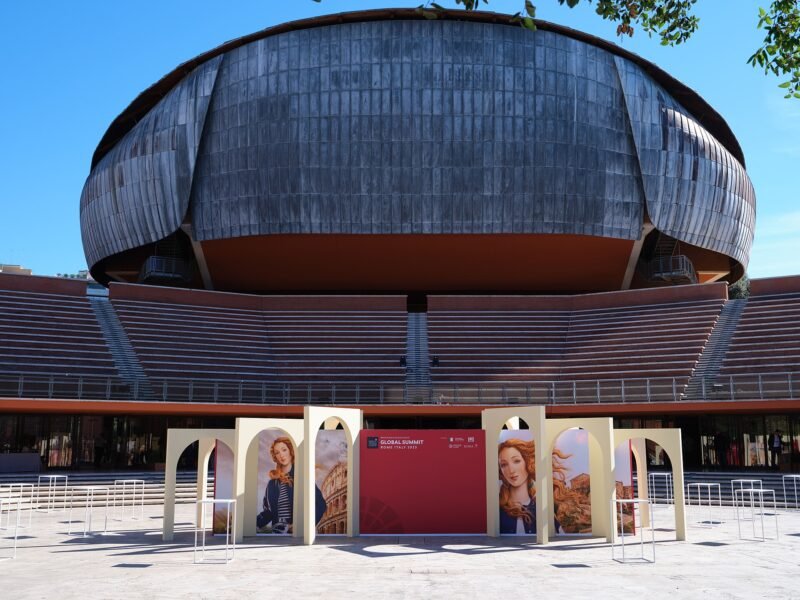
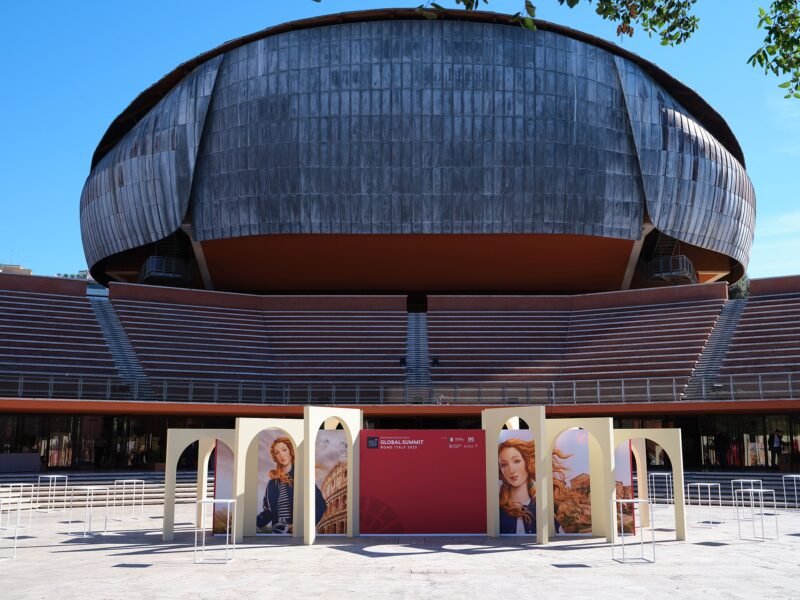
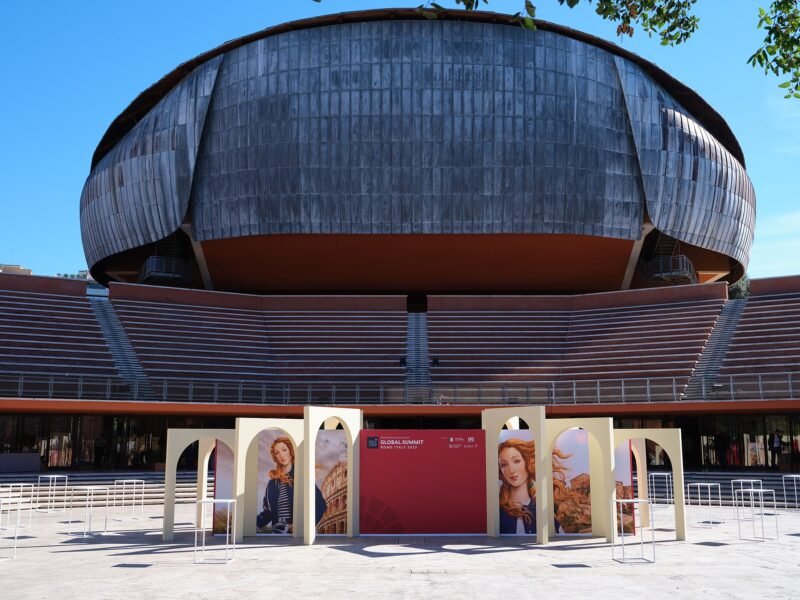
Sala Santa Cecilia is the largest of the concert halls at Auditorium Parco della Musica Ennio Morricone: 2,756 seats, designed by Renzo Piano for symphonic music and inaugurated on December 21, 2002.
The cherry wood ceiling
The ceiling is made of 26 shells of American cherry wood, each about 180 square meters. The hall works like a sound box, with a gallery running all around, even behind the orchestra. The reverberation time is 2.2 seconds, a rare value in Italy, well suited to the massed sound of a Tchaikovsky symphony.
Where to sit
Those who know the hall say the sound intensity seems to drop up to the 10th row and then stay constant: there's no need to sit right up against the stage. For the Rachmaninov concerto, side gallery seats on the keyboard side let you see the pianist's hands, while for the symphony the center orchestra remains the most balanced choice.
Renzo Piano's beetles
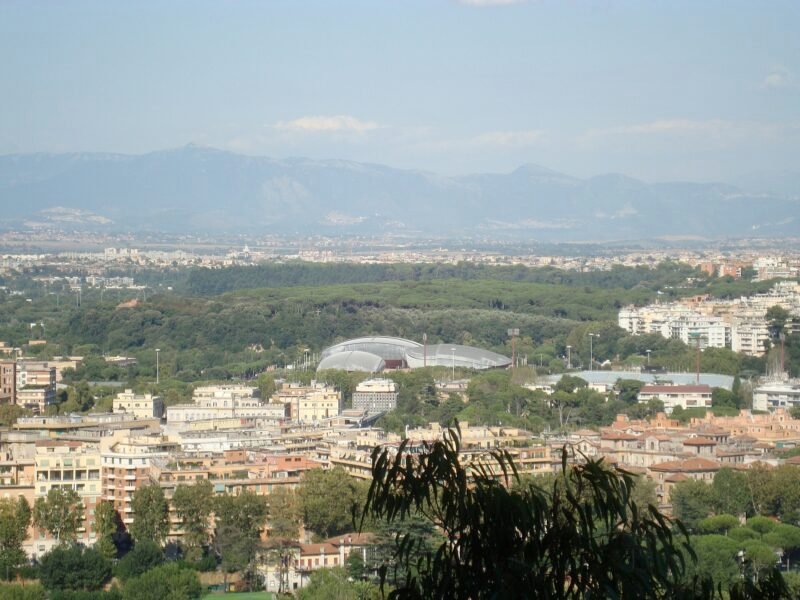
From outside the halls look like giant lead-clad beetles on brick bases, arranged in a fan around the open-air cavea named after Luciano Berio. Piano won the competition in 1993 and worked with acoustician Jürgen Reinhold of the Müller-BBM firm and landscape architect Franco Zagari.
Something nobody tells you about the Seoul Philharmonic Orchestra in Rome at Auditorium Parco della Musica, May 10, 2027
What nobody tells you is that Sala Santa Cecilia is built on a level well above the ground, because the remains of a Roman villa turned up underground, and that the galleries are reached by just two elevators. If you have a gallery seat and trouble with stairs, arrive well ahead of time.
The second thing concerns prices. A concert by an international visiting orchestra, with a conductor who has led the New York Philharmonic, costs between €25 and €50 here: less than many pop concerts in the same hall. Section III, at €25, is one of the best-value chances of the spring to hear a great orchestra live.
Third: the Auditorium's on-site parking has limited spaces and steep rates, and Viale Pietro de Coubertin is closed to cars on the stretch by the entrance. In mid-May, moreover, the north of the city hosts the Internazionali tennis tournament at Foro Italico, across the Tiber: the car is the worst choice.
How to get to Auditorium Parco della Musica
Auditorium Parco della Musica Ennio Morricone is reached by tram 2, Flaminia/Reni or Apollodoro stops, and by buses 910, 982, 168 and 53: the metro doesn't come this far, and the nearest station is Flaminio, on line A.
Metro A and tram 2
From Flaminio station you come out on Piazzale Flaminio and take tram 2 along Via Flaminia. Get off at Flaminia/Reni or Apollodoro and walk a few minutes toward Viale Pietro de Coubertin, through the Villaggio Olimpico.
Bus 910 from Termini
The 910 leaves from Piazza dei Cinquecento, in front of Termini station, and takes you to the Auditorium with no changes. If you arrive by train or are staying near the station, it's the most straightforward option.
Other lines
The 53 links Piazza Mancini and the center, the 982 comes from Viale XVII Olimpiade area and Quattro Venti station, and the 168 comes from Tiburtina station and runs on weekdays, so it's usable on Monday. For return times, use the transit company's journey planner.
By car
Viale Pietro de Coubertin is closed to traffic on the Auditorium stretch, and the on-site parking is paid and has few spaces. On concert nights cars swamp the streets of the Villaggio Olimpico: the tram is better.
My tip for the Seoul Philharmonic Orchestra in Rome at Auditorium Parco della Musica, May 10, 2027
My tip is to listen to a historic recording of Rachmaninov's Third beforehand: the composer's own with the Philadelphia Orchestra and Eugene Ormandy, recorded between 1939 and 1940, or one by Horowitz, who made the concerto his signature piece. Knowing the score helps you follow the long first movement cadenza, of which Rachmaninov wrote two versions, one lighter and one denser: hearing which one the soloist chooses is one of the pleasures of the evening.
The second tip is about seats. For the concerto, the side gallery on the keyboard side lets you see the pianist's hands, and if you prefer the orchestral balance of the symphony, choose the center orchestra beyond the 10th row. With only three sections and modest prices, section II at €40 is in our opinion the best compromise.
The third is to arrive early. It's a Monday night: leave the office, take the metro to Flaminio and the tram to the Auditorium, grab something at the foyer bar and go into the hall without rushing, leaving time to look up at the cherry wood ceiling before the lights go down.
Another well-known fact, yet one rarely mentioned
It's well known that Rachmaninov's Third Concerto is one of the hardest in the repertoire. Much less often mentioned is that Józef Hofmann, the great pianist it's dedicated to, never played it in public: Rachmaninov's hands were very large and nimble, and the concerto was written to fit them, so much so that the composer found it easier than the Second. A score dedicated to a virtuoso who never performed it.
A second rarely mentioned fact concerns the recording history: the first recording of the Third was made in 1930 by Vladimir Horowitz with the London Symphony Orchestra conducted by Albert Coates, and in 1958 Van Cliburn played it at the International Tchaikovsky Competition, winning first prize. Rachmaninov's concerto and Tchaikovsky's name, paired on the Rome program, were already paired in that victory.
The third concerns Jaap van Zweden: before becoming one of the world's most in-demand conductors, at 19 he was the youngest concertmaster in the history of Amsterdam's Concertgebouw. When you see him on the podium, you're seeing a violinist who learned to conduct by watching the great conductors who passed through that orchestra.
The right photo to take at the Seoul Philharmonic Orchestra in Rome at Auditorium Parco della Musica, May 10, 2027
The right photo is taken before the concert, from the top of the cavea, with Renzo Piano's beetles reflecting the last light of a May evening. If you can include the entrance to Sala Santa Cecilia with the audience going in, the photo tells the story of the evening better than a portrait.
A second frame is worth it from the terrace over the Roman villa remains between the halls: ancient and contemporary in the same shot. Inside the hall, before the start and if staff allow it, the shot to take is upward, at the 26 cherry wood shells of the ceiling.
During the concert your phone stays off: in such a sensitive hall every click is audible, and in the silence before the horn solo of the Fifth even a lit screen becomes a distraction. The right moment is the final applause, if staff allow it.
Some important events that happened here in history
During the Auditorium's construction the remains of a Roman villa from the 3rd century BC turned up, built on the site of a 6th-century BC farm: the discovery forced Renzo Piano to change the design, moving two of the halls to the west. The finds are displayed in a small museum beneath the cavea.
The modern story begins with a demolition: in 1936 the Augusteo concert hall was torn down, and for more than 60 years Rome was left without an auditorium built for symphonic music. In 1992 the city council chose the Villaggio Olimpico site, and in 1993 Piano won the competition. On April 21, 2002 Sala Sinopoli and Sala Petrassi opened, and on December 21, 2002 Sala Santa Cecilia was inaugurated with Myung-Whun Chung on the podium.
Since 2003 the Auditorium has been the permanent home of the Accademia's season, since 2006 it has hosted the Rome Film Festival, and in 2020 the city council approved naming it after Ennio Morricone. A hall born with a Korean conductor welcomes, 24 years later, the orchestra that conductor brought onto the international stage.
Who has passed through the Seoul Philharmonic Orchestra in Rome at Auditorium Parco della Musica, May 10, 2027
Sala Santa Cecilia has had heavyweight guests from day one: the inaugural concert on December 21, 2002 was conducted by Myung-Whun Chung. Since then the hall has been home to the Accademia's orchestra and its conductors, from Antonio Pappano to Daniel Harding, and to the great soloists of the season, from Evgeny Kissin on down.
This season, besides the Seoul Philharmonic, the hall welcomes Kirill Petrenko with the Santa Cecilia Orchestra, Joe Hisaishi and, a few days after the Koreans, from May 13 to 17, Pagliacci conducted by Daniel Harding. The full picture is in the 2026/2027 Santa Cecilia season.
The Seoul Philharmonic's history includes Myung-Whun Chung, Osmo Vänskä, Thierry Fischer, Markus Stenz and Unsuk Chin, and Korean musicians like Kyung-Wha Chung, Kun-Woo Paik and Dong-Suk Kang, who grew in part through its concerts. Van Zweden's career includes Leonard Bernstein, Dorothy DeLay and the orchestras of Amsterdam, Dallas, Hong Kong and New York. On May 10, 2027 Sala Santa Cecilia welcomes the orchestra that the conductor of its inaugural night brought all the way to the Proms in London.
How to plan the evening of May 10
The Seoul Philharmonic concert falls on a Monday at 20:00: a weeknight that's easy to organize with a little planning, between work, transit and dinner.
From the office to the Auditorium
If you work in the center, you can leave around 18:30, take Metro A to Flaminio and tram 2 to Flaminia/Reni or Apollodoro, with time for a coffee or a sandwich at the foyer bar before the start. The 168, a weekday line, is an alternative if you're leaving from the Tiburtina area.
First half and intermission
The program is split into two halves, the Rachmaninov concerto and the Tchaikovsky symphony: if there's an intermission between them, it's the right moment to stretch your legs on the terrace overlooking the Roman villa.
Getting home
The concert ends late in the evening. For the trip back, check evening tram and bus times in advance, or book a taxi, and if you're eating after the concert, Ponte Milvio has the widest choice.
Accessibility and practical information
Sala Santa Cecilia sits above ground level and the galleries are reached by just two elevators: if you have accessibility needs, contact the Accademia's box office in advance, at 06 8082058 or biglietteria@santacecilia.it.
Reduced mobility
Arrive well ahead of time and ask staff right away for the elevator route: in a 2,756-seat hall, the elevators become a bottleneck in the minutes before the start.
With young people
Tchaikovsky's Fifth, with its waltz and triumphant finale, is one of the best symphonies for newcomers to classical music, and Rachmaninov's Third fascinates kids who study piano. The concert is on a Monday night, and the rules for minors are in the Accademia's notices.
The neighborhood around the Auditorium
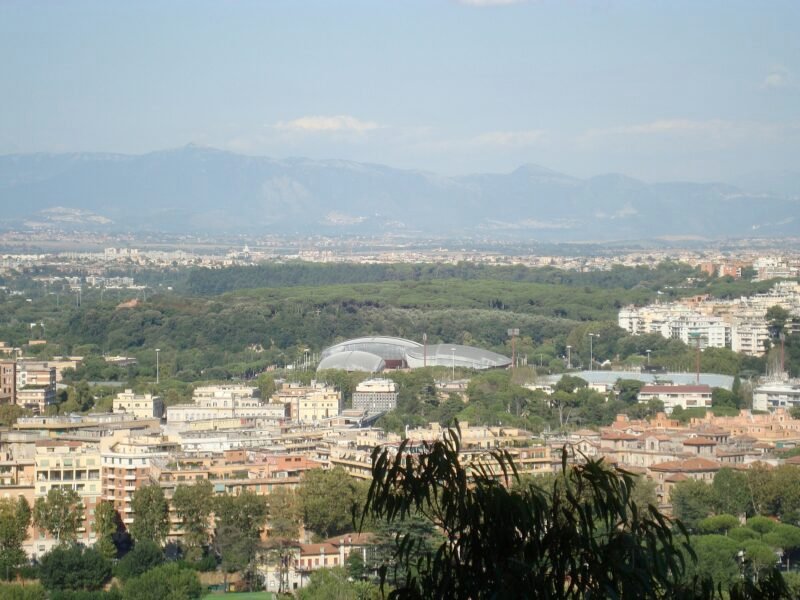
The Auditorium covers an area of about 55,000 square meters between Villa Glori, the Villaggio Olimpico, the Corso di Francia viaduct and Viale Maresciallo Pilsudski: a piece of 20th-century Rome where contemporary architecture meets greenery.
The Villaggio Olimpico and Flaminio
The Villaggio Olimpico is the neighborhood you walk through from the tram. Not far away are MAXXI, the city's other great piece of contemporary architecture, and Teatro Olimpico.
Toward the Tiber
From the Auditorium you head down to the river and the Ponte della Musica, which links Flaminio to Foro Italico, and farther north, beyond Piazza Mancini, is Milvian Bridge.
Toward the center
Tram 2 takes you back to Piazzale Flaminio and Piazza del Popolo, where Villa Borghese and the Tridente begin.
Where to eat before or after the concert
Inside the Auditorium there's a bar and café in the foyer and a bar-restaurant also accessible from the street: the handiest option if you're coming straight from work.
In the neighborhood
Between the Villaggio Olimpico, Via Flaminia and Piazza Mancini there are pizzerias, trattorias and neighborhood bars, frequented more by residents than by tourists. Some places are closed on Mondays: check and book.
Milvian Bridge
If you'd rather eat after the concert, Ponte Milvio, a few minutes away, has the widest choice, with places open late.
Mid-May in Rome: music, opera and tennis
The Seoul Philharmonic concert falls in one of the richest weeks of the year for music lovers in Rome.
Opera
From May 13 to 17 the Accademia presents Pagliacci conducted by Daniel Harding at the Auditorium, and from May 14 to 22 Teatro dell'Opera stages Shostakovich's Lady Macbeth of the Mtsensk District, another Russian masterpiece.
Tennis
Until May 16, across the Tiber, the Internazionali BNL d'Italia 2027 are being played: if you're in Rome for the tournament, you can walk to the Auditorium across the Ponte della Musica.
Frequently asked questions about the Seoul Philharmonic in Rome
When does the Seoul Philharmonic Orchestra play in Rome?
The Seoul Philharmonic Orchestra plays in Rome on Monday, May 10, 2027 at 20:00, in Sala Santa Cecilia at Auditorium Parco della Musica Ennio Morricone, in a concert outside the Accademia Nazionale di Santa Cecilia's subscription series.
Who conducts the Seoul Philharmonic at the Auditorium?
The Seoul Philharmonic's concert at the Auditorium is conducted by Jaap van Zweden, the orchestra's music director since 2024 and formerly music director of the New York Philharmonic. Jaehong Park is at the piano.
What does the Seoul Philharmonic play in Rome?
In Rome the Seoul Philharmonic performs Rachmaninov's Piano Concerto No. 3, with Jaehong Park as soloist, and Tchaikovsky's Symphony No. 5.
How much are tickets for the Seoul Philharmonic?
Tickets for the Seoul Philharmonic at the Auditorium cost €50 in section I, €40 in section II and €25 in section III, according to the Accademia Nazionale di Santa Cecilia.
Where can I buy tickets?
Tickets for the Seoul Philharmonic are sold only by sellers authorized by the Accademia di Santa Cecilia: the official presale network, the Auditorium Parco della Musica box office and the one at Via Vittoria 6. Info line 06 8082058.
How do you get to Auditorium Parco della Musica?
You get to Auditorium Parco della Musica by Metro A to Flaminio and then tram 2 to Flaminia/Reni or Apollodoro. From Termini there's bus 910 with no changes, and the 53, the 982 and, on weekdays, the 168 also stop there.
Why is Rachmaninov's Third called Rach 3?
Rachmaninov's Piano Concerto No. 3, on the program with the Seoul Philharmonic, is known to the general public as Rach 3: the nickname became popular after the 1996 film Shine, about the life of pianist David Helfgott.
What does outside the subscription series mean?
The Accademia di Santa Cecilia lists the Seoul Philharmonic concert as outside the subscription series: it isn't part of the symphonic season's subscription cycles, and tickets are sold individually, even to non-subscribers, at €50, €40 and €25.
Final tip on the Seoul Philharmonic at the Auditorium
A Korean orchestra that grew up with the conductor who opened Sala Santa Cecilia, a conductor who was concertmaster of the Concertgebouw at 19 and music director of the New York Philharmonic, the concerto pianists fear most and one of Tchaikovsky's best-loved symphonies, at prices between €25 and €50: May 10 is one of the most interesting symphonic evenings of the Roman spring. My tip is to buy from authorized sellers, choose section II, arrive by tram and listen to Horowitz's Rach 3 beforehand.
Article written by the editorial team of Tour Leader Pro, contact them for Private/Corporate/V.I.P. Tours and Experiences.
Planning a trip to Rome? The English-language guides for visiting the city are on ItalyPlanner.com.
Contact Information
Nearby
 Museum of Musical Instruments (MUSA)100 m
- Auditorium Parco della Musica100 m
- Villa Glori500 m
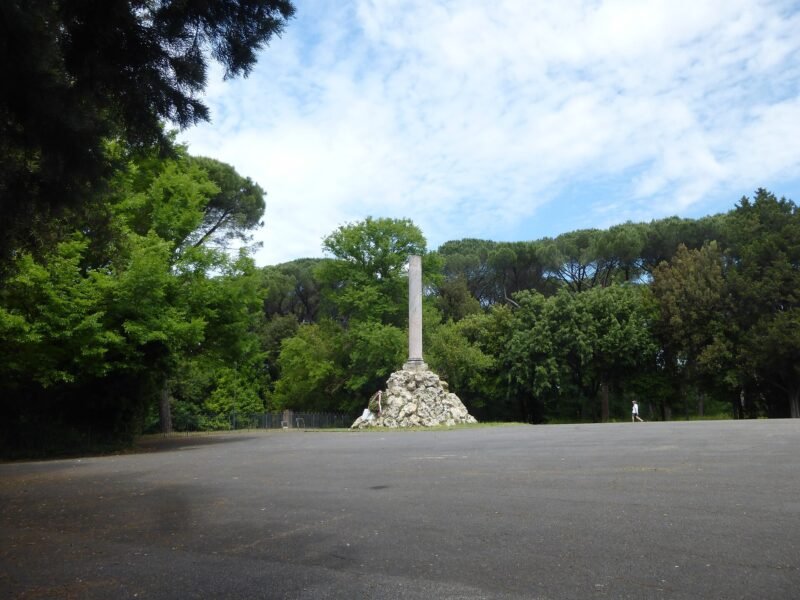
- Fountain of Anna Perenna500 m
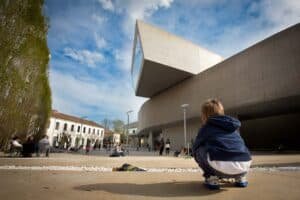
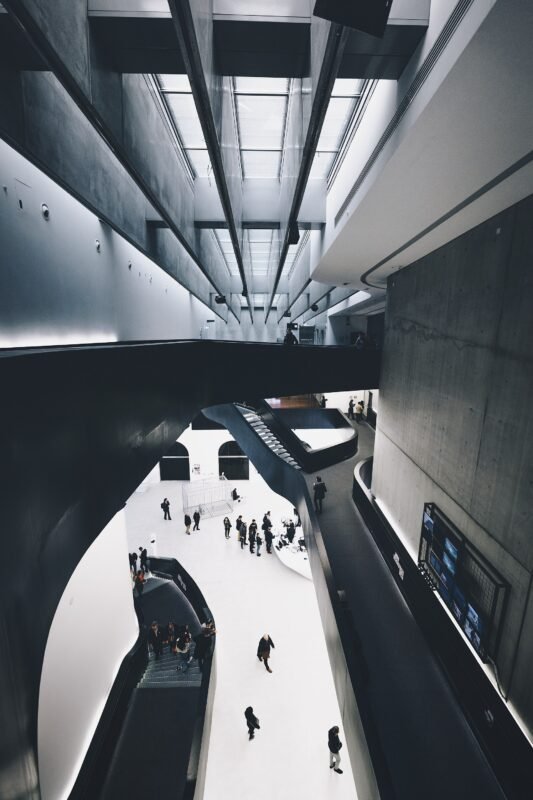
- MAXXI – National Museum of 21st Century Arts700 m
- Flaminio700 m
Upcoming events nearby
- Roma Jazz Festival 2026, November 1 to 24 at the Auditorium and Casa del Jazz100 m
- Evgeny Kissin and András Schiff at Santa Cecilia, November 9, 2026100 m
- Roma Gospel Festival 2026 at Auditorium Parco della Musica, December 13, 2026 to January 1, 2027100 m
- Santa Cecilia 2026/2027 Concert Season at Auditorium Parco della Musica, October 21, 2026 to June 5, 2027100 m



You might also like
- Daniel Harding Conducts Ravel and Debussy at Auditorium Parco della Musica, April 8, 9 and 10, 2027
- Argerich and Capuçon for Beethoven at Auditorium Parco della Musica, April 6, 2027
- Gustavo Gimeno and Frank Peter Zimmermann at Auditorium Parco della Musica, April 1, 2 and 3, 2027
- Manfred Honeck Conducts Beethoven at Santa Cecilia: March 25, 26 and 27, 2027
- Grigory Sokolov at Santa Cecilia, March 22, 2027
- Charles Dutoit and Martha Argerich at Auditorium Parco della Musica, March 18, 19 and 20, 2027