Manfred Honeck Conducts Beethoven at Santa Cecilia: March 25, 26 and 27, 2027
In short. Manfred Honeck conducts the Orchestra and Chorus of the Accademia Nazionale di Santa Cecilia in Sala Santa Cecilia at Auditorium Parco della Musica Ennio Morricone, at Viale Pietro de Coubertin 30, on Thursday, March 25, 2027 at 19:30,…
Manfred Honeck conducts the Orchestra and Chorus of the Accademia Nazionale di Santa Cecilia in Sala Santa Cecilia at Auditorium Parco della Musica Ennio Morricone, at Viale Pietro de Coubertin 30, on Thursday, March 25, 2027 at 19:30, Friday the 26th at 20:00 and Saturday the 27th at 18:00. The program is the Italian premiere of Peccato, ormai è troppo tardi by the Estonian Jüri Reinvere, Beethoven's First Symphony and the oratorio Christ on the Mount of Olives, with the soprano Liv Redpath, the tenor Juan Francisco Gatell and the bass Irakli Pkhaladze, the chorus is prepared by Andrea Secchi. Tickets range from 23 to 54 euros depending on the section and are bought on the official website of the Accademia di Santa Cecilia, which links to the authorized presale circuit, at the Auditorium box office or at the one at Via Vittoria 6. You get there by Metro A to Flaminio and then tram 2 to the Apollodoro stop, or by bus 910 from Termini.
The concert is one of the moments with which the Accademia celebrates the 200th anniversary of Beethoven's death, 1827-2027. On the podium is the music director of the Pittsburgh Symphony Orchestra, a Grammy winner, and the three evenings fall in the days before Easter 2027: the oratorio on Jesus's night in Gethsemane arrives in the hall during Holy Week.
Honeck and Beethoven at Santa Cecilia: Dates, Times and Series
Manfred Honeck's concert is repeated three times in Sala Santa Cecilia: Thursday, March 25, 2027 at 19:30, Friday the 26th at 20:00, Saturday the 27th at 18:00. The three evenings correspond to three subscription series.
The series
Thursday corresponds to series G-G2, Friday to series V-V2, Saturday to series S-S2. Anyone buying a single ticket can choose the date freely, anyone with a subscription finds the concert in their own series.
Which evening to choose
Saturday at 18:00 is the most convenient time for those coming from out of town or with kids, and leaves the evening free for dinner. Thursday at 19:30 suits those leaving work who want to get home early. Friday at 20:00 is the classic time for an evening concert.
Punctuality
The Accademia warns that concerts start on time: latecomers are not admitted to the hall and follow the concert in the listening rooms, until seats run out. With an opening piece as short as Reinvere's, a delay of a few minutes can mean missing it entirely.
Tickets and Prices
Tickets for Honeck and Beethoven cost 54 euros in section I, 47 in II, 37 in III, 35 in IV, 30 in V and 23 in VI. Presale for concerts from March 3, 2027 to the end of the season has been open since January 12, 2027.
Where to buy them
The only channels authorized by the Accademia are the presale circuit to which the button under the chosen date links, with its points of sale, the box office of Auditorium Parco della Musica Ennio Morricone and the box office at Via Vittoria 6. The Accademia takes no responsibility for markups applied by unauthorized resellers.
Young people and information
The Accademia has a section dedicated to discounts for young people. For reductions and availability the infoline is 06 8082058, with the addresses info@santacecilia.it and biglietteria@santacecilia.it.
The right section
In Sala Santa Cecilia the sound intensity seems to drop up to the 10th row and then stay constant: the middle sections offer an excellent balance between price and listening. With chorus and soloists on stage, the central seats better render the balance between voices and orchestra.
The Program: Reinvere, the First Symphony and Christ on the Mount of Olives
The program sets Beethoven against contemporary music: an Italian premiere by Jüri Reinvere, the First Symphony in C major, Op. 21, and the oratorio Christ on the Mount of Olives.
Peccato, ormai è troppo tardi
Reinvere's piece, in its Italian premiere, carries a title that recalls the last words attributed to Beethoven, spoken shortly before he died, when a case of wine was brought to him that he knew he could no longer taste. It's an unusual way to open a celebratory concert: not with a monument, but with a human and almost ironic gesture, the last of a man who knew he was at the end.
The First Symphony
Symphony No. 1 was composed between 1799 and 1800 and first performed on April 2, 1800 at the Burgtheater in Vienna. The Accademia presents it as a page still tied to the classical tradition but already crossed by new formal balances. The slow introduction opens with a chord foreign to the home key, a harmonic boldness that must have startled the first listeners, the third movement, marked as a minuet, is in reality a driving scherzo.
Christ on the Mount of Olives
The oratorio, Op. 85, tells of Jesus's torment in the garden of Gethsemane before the crucifixion. Beethoven began it in the fall of 1802, shortly after the Heiligenstadt Will, to a German libretto by the poet Franz Xaver Huber, and wrote it in a few weeks. The Accademia defines it as an oratorio of maturity, an intense and dramatic page in which the composer takes on the theme of suffering and choice, placing at the center the moral strength of man in the face of trial.
The voices
The oratorio is written for soprano, tenor and bass soloists, chorus and orchestra. The tenor sings Jesus, the soprano a Seraph, the bass the apostle Peter: at Santa Cecilia the three parts are entrusted to Juan Francisco Gatell, Liv Redpath and Irakli Pkhaladze. A complete performance lasts about 50 minutes.
Who Is Manfred Honeck: Biography
Manfred Honeck was born on September 17, 1958 in Nenzing, Austria, near the border with Switzerland and Liechtenstein, one of the nine children of Otto and Frieda Honeck. He has been music director of the Pittsburgh Symphony Orchestra since the 2008-2009 season.
From violin to podium
He began as a violinist, trained at the University of Music and Performing Arts in Vienna, then moved to the viola and played in the Wiener Philharmoniker and in the orchestra of the Vienna State Opera. His brother Rainer Honeck is concertmaster of the Wiener Philharmoniker. As a conductor he started as Claudio Abbado's assistant at the Gustav Mahler Jugendorchester, in 1987 he founded the Vienna Jeunesse Orchestra.
The milestones
He conducted regularly at the Zurich Opera from 1991 to 1996, receiving the European Conductor's Award in 1993, he was music director of the Norwegian National Opera in Oslo, principal guest conductor of the Oslo Philharmonic, music director of the Swedish Radio Symphony Orchestra from 2000 to 2006, principal guest conductor of the Czech Philharmonic and general music director of the Stuttgart State Opera from 2007 to 2011, where he conducted, among others, Les Troyens, Idomeneo, Aida, Der Rosenkavalier, Dialogues des Carmélites, Lohengrin and Parsifal.
Pittsburgh
Appointed in 2007 as the ninth music director of the Pittsburgh Symphony Orchestra, he has seen his contract extended several times, through the 2032-2033 season according to the June 2026 announcement. With the orchestra he has recorded for Exton and for Reference Recordings, in 2018 he won the Grammy for best orchestral performance with Shostakovich's Fifth and Barber's Adagio for Strings. In September 2026 the Philharmonia Orchestra of London announced his appointment as principal conductor starting in September 2028.
Honors
In 2016 the Austrian federal president conferred on him the title of professor, he holds four honorary degrees from American universities, and in 2018 the International Classical Music Awards named him artist of the year. Since 2023 he has been honorary conductor of the Bamberger Symphoniker.
Honeck and Beethoven
Beethoven holds an important place in Honeck's discography with Pittsburgh: among his recordings are the Fifth and the Seventh, the Eroica and the Ninth. The Rome concert lets him take on two less frequently performed pages, the First and the oratorio.
The recordings
With the Pittsburgh Symphony he recorded for Reference Recordings the Fifth and the Seventh in 2015, the Third, the Eroica, live in 2018, and the Ninth in 2021. In the same series are Bruckner, Dvořák, Tchaikovsky, Richard Strauss and Shostakovich.
A Catholic interpreter for a sacred oratorio
Biographies recall that Honeck is a practicing Catholic, known for praying before concerts. For an oratorio like Christ on the Mount of Olives, which places at the center Jesus's moral choice in the face of trial, it's a detail that adds meaning to his presence on the podium during Holy Week.
A Curiosity About Manfred Honeck Conducts Beethoven at Santa Cecilia, March 25, 26 and 27, 2027
The three evenings fall in the week before Easter 2027, which is celebrated on Sunday, March 28: the last performance, Saturday the 27th, is on the eve of Easter. An oratorio on the night in Gethsemane, heard in the days of Holy Week, finds again the liturgical time for which it was conceived.
The coincidence has a historical precedent. After the premiere of April 5, 1803 at the Theater an der Wien, Christ on the Mount of Olives was performed four times in 1804 and then taken up every year around Easter, always sold out, until 1825, when the court music authority banned its performances. For more than 20 years, in Vienna, Beethoven's oratorio was an Easter custom.
The second curiosity is about the title of Reinvere's piece. The last words attributed to Beethoven, according to the Accademia's presentation, are not about music or death, but about a case of wine that arrived too late. The Estonian composer chose to open the bicentenary with that everyday regret, far from the heroic image of the composer.
The third is in the numbering. Christ on the Mount of Olives carries Op. 85, a high number for a work of 1803: 10 years passed between composition and publication by Breitkopf und Härtel, after a revision in 1811, and the opus number was assigned only then. That's why a youthful oratorio looks, reading the catalog, like a work of maturity.
Jüri Reinvere, the Composer of the Italian Premiere
Jüri Reinvere was born in Tallinn on December 2, 1971, an Estonian composer, poet and essayist, he has lived in Germany since 2005 and in Frankfurt am Main since 2017.
Training
He studied at the Tallinn music high school from 1979 to 1990, with Lepo Sumera as his first composition teacher, then at the Chopin Academy in Warsaw and the Sibelius Academy in Helsinki, where he graduated in 2004. He has worked as a pianist, organist, radio essayist and television producer.
Bergman and Laretei
In 1993 he met the Estonian-Swedish pianist and writer Käbi Laretei, whom he considers his most important mentor, and through her the director Ingmar Bergman, who introduced him to the theater of Ibsen and Strindberg.
The operas
In 2000 he won UNESCO's International Rostrum of Composers, which awarded him again in 2006. He has written the operas Puhdistus, after Sofi Oksanen, for the Finnish National Opera in 2012, Peer Gynt for the Norwegian National Opera in 2014 and Minona, to his own libretti. His music has been conducted by Andris Nelsons, Paavo Järvi, Franz Welser-Möst and Pablo Heras-Casado, and performed by the Berliner Philharmoniker, the Cleveland Orchestra and the Gewandhausorchester of Leipzig.
Sala Santa Cecilia, Where the Concert Is Heard
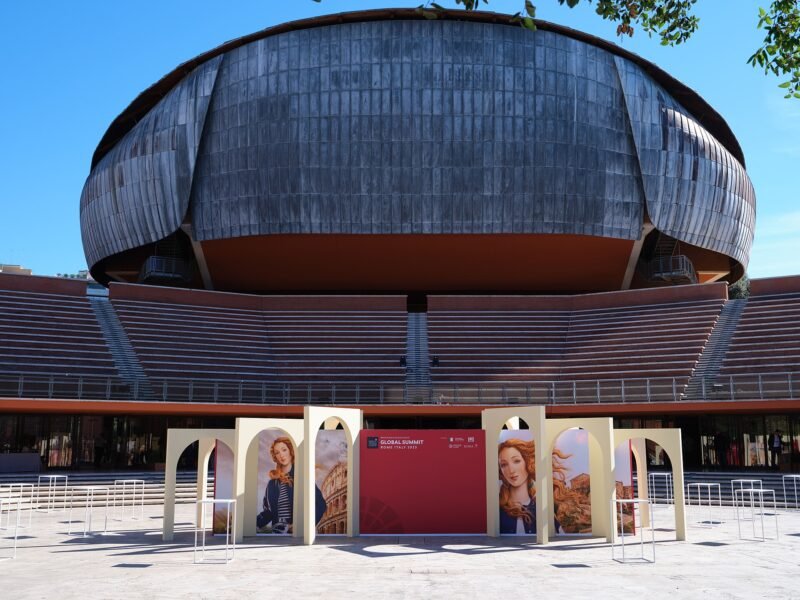
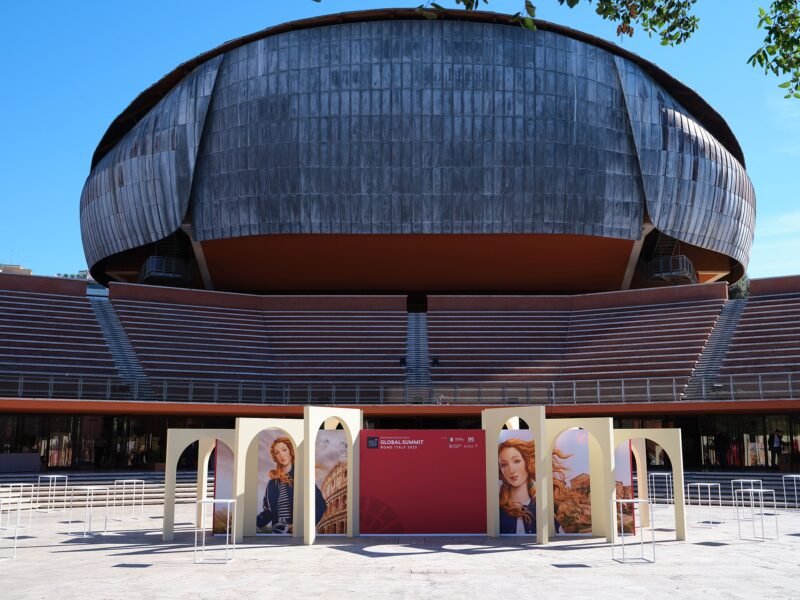
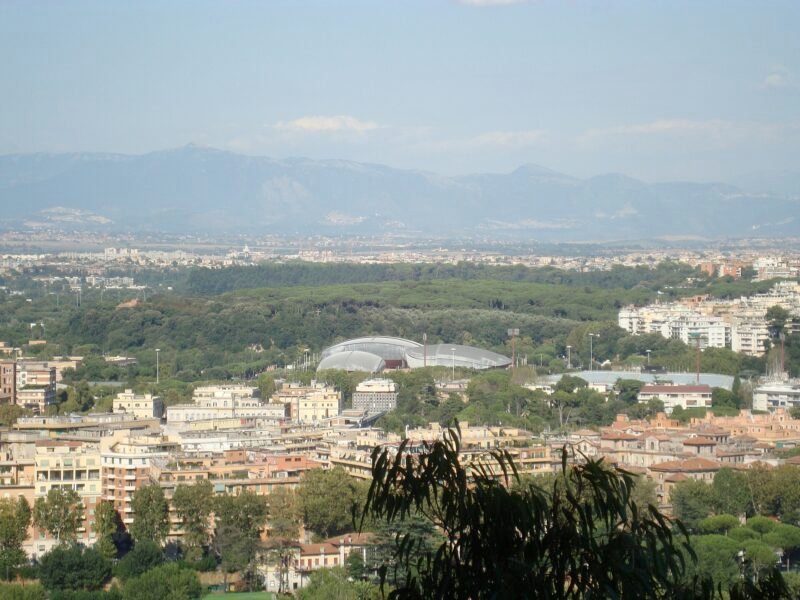
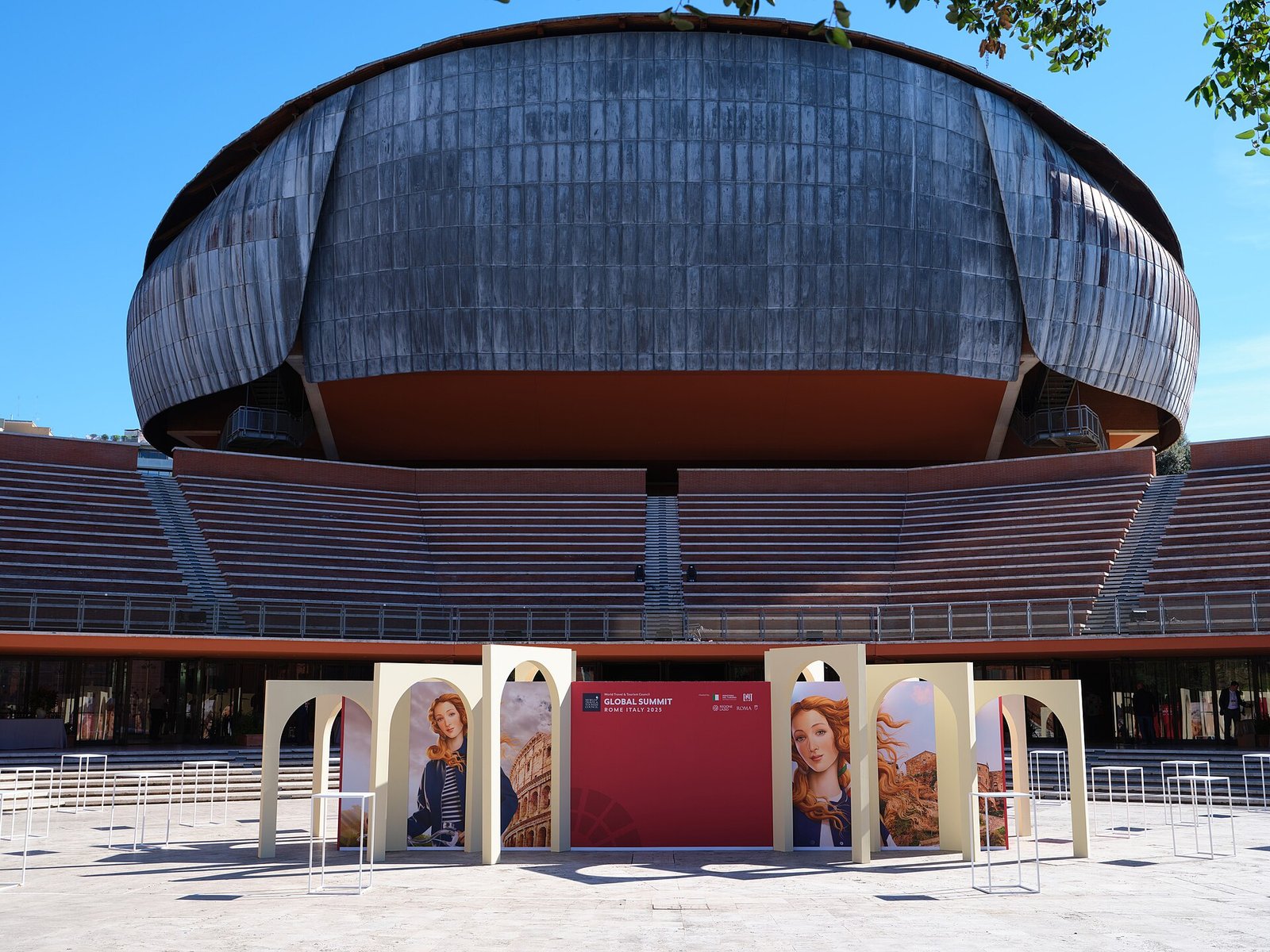
Sala Santa Cecilia is the largest of the three concert halls of Auditorium Parco della Musica Ennio Morricone: 2,756 seats, designed by Renzo Piano for symphonic music and inaugurated on December 21, 2002 with the Accademia's orchestra conducted by Myung-whun Chung.
The cherry-wood ceiling
The ceiling is made of 26 shells of American cherry wood, each with an average surface of about 180 square meters: the whole hall works as a sounding board. The reverberation time is 2.2 seconds, an unusual value in Italy.
Chorus and orchestra
The stage is very wide and around it, even behind the performers, runs a gallery with more seats. In an oratorio with chorus, orchestra and three soloists, the hall shows all its qualities: the voices of the chorus blend under the wooden shells and the soloists, at the front of the stage, come across clearly even in the far sections.
Architecture
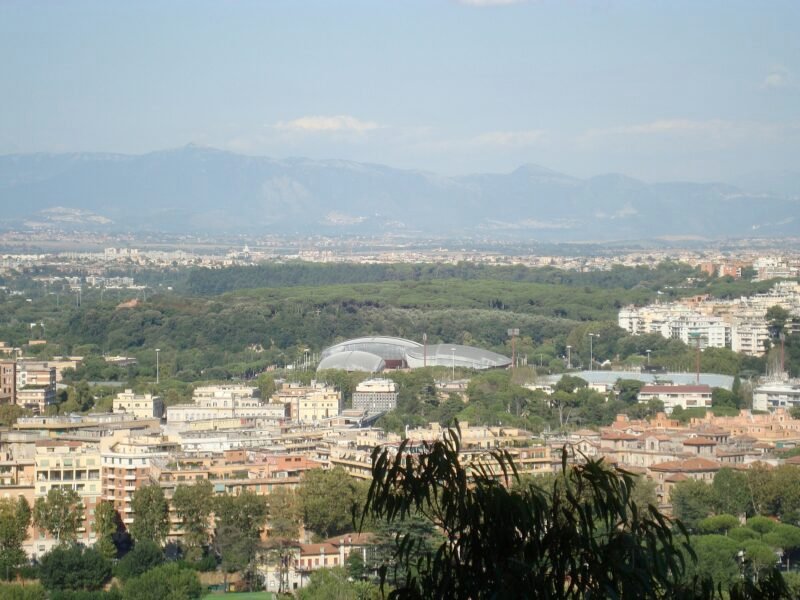
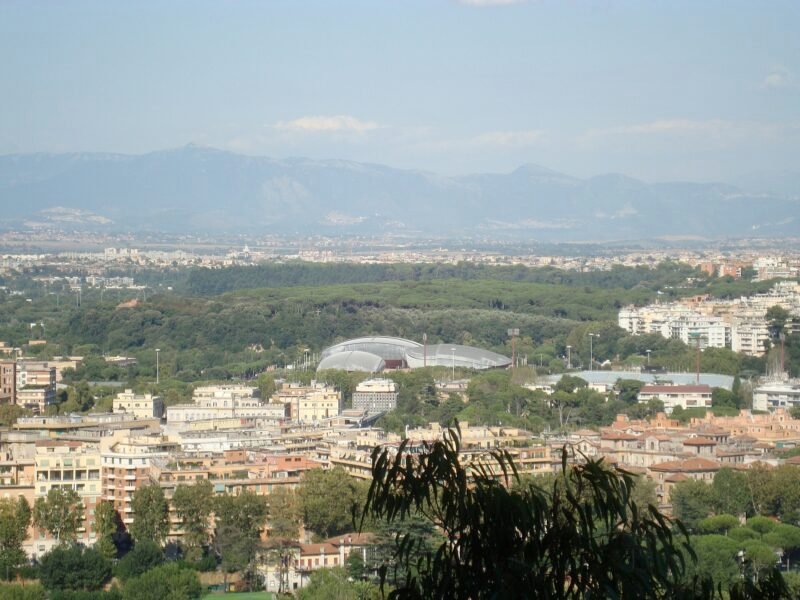
Renzo Piano won the 1993 competition and worked with the acoustician Jürgen Reinhold of the Müller-BBM firm and with the landscape architect Franco Zagari. From outside, the three halls look like three large beetles covered in lead sheets, arranged around the cavea named after Luciano Berio.
Something Nobody Tells You About Manfred Honeck Conducts Beethoven at Santa Cecilia, March 25, 26 and 27, 2027
What the presentations don't say is that Christ on the Mount of Olives is one of Beethoven's least performed works, and that the composer himself was dissatisfied with it. Hearing it live, with an orchestra and chorus of this level, is a rare opportunity.
Beethoven criticized both the performance of the premiere and Huber's libretto. In a letter of 1824 he wrote that he would have preferred to set Homer, Klopstock or Schiller to music, the editors at Breitkopf und Härtel agreed and had the text reworked, but Beethoven was not satisfied with the corrections either. The critics' reception in 1803 was mixed, and over time the oratorio slipped to the margins of the repertoire. And yet the final chorus became popular on its own, like an Alleluia, often sung by church and school choirs.
The second thing is the order of the program. Putting the First Symphony next to the oratorio means placing two almost contemporary works, from 1800 and from 1802-1803: this is the Beethoven in his thirties, before the great symphonies. In our view it's the best way to celebrate a bicentenary: not with the Ninth, but with the young composer who didn't yet imagine the Ninth.
The third is practical. Saturday at 18:00 is the eve of Easter: anyone with family commitments in the evening can hear the concert and get home for dinner, but should allow for holiday traffic. Seat availability for each evening can be checked on the Accademia's website.
My Advice for Visiting Manfred Honeck Conducts Beethoven at Santa Cecilia, March 25, 26 and 27, 2027
My advice is to choose a central seat in the middle sections and to read the text of the oratorio beforehand, available in editions of the libretto. Knowing that the tenor is Jesus, the soprano a Seraph and the bass Peter makes the drama much clearer, since it has no scenes or costumes.
The second is about choosing the evening. Anyone coming with kids or from out of town has in Saturday at 18:00 the ideal time, anyone who wants to experience the oratorio in the atmosphere of Holy Week finds the same atmosphere in all three evenings. Thursday, in our view, is the most intimate evening.
The third is about the opening piece. Reinvere's piece is an Italian premiere: it's best heard without expectations, knowing that the title refers to Beethoven's death and his last regret. Right after, the First Symphony brings us back to his youth: the contrast is intended.
The fourth is about the week. Three days earlier, on Monday, March 22, Grigory Sokolov plays a recital in the same hall, on March 18, at Teatro Costanzi, the Orchestra Nazionale Barocca dei Conservatori performs the same First Symphony on period instruments. Hearing it twice in one week, with two orchestras and two different sets of instruments, is a comparison that only Rome, that month, makes possible.
How to Get to Auditorium Parco della Musica
The route suggested by the venue is Metro A to Flaminio, then tram 2 toward Piazza Mancini to the Apollodoro stop, on Via Flaminia, about 500 meters on foot from the entrance.
By bus
Lines 910 from Termini to Piazza Mancini, 53, 982 and 168 pass near the Auditorium.
By train
From Piazzale Flaminio you can take the Roma Nord railway and get off at Piazza Euclide, about 600 meters from the Auditorium.
By car
The Auditorium has two paid parking lots, both with spaces reserved for people with disabilities: an open-air one with access from Viale Pietro de Coubertin and a covered multistory one with access from Viale de Coubertin and from Viale Maresciallo Pilsudski.
Getting home
The running time of the concert has not been published. Before going in, it's best to check on the transit company's journey planner the last runs for your area, especially on Friday.
Another Well-Known Fact, Yet Rarely Mentioned
It's well known that Beethoven's Ninth Symphony sets Schiller to music, it's cited less often that Schiller's name also appears in the story of Christ on the Mount of Olives. In a letter of 1824, going back to Huber's libretto, Beethoven wrote that he would have preferred to set Homer, Klopstock or Schiller, more difficult poets but worthy of the effort. Almost 20 years after the oratorio, he had in fact set Schiller to music, in the Ninth.
It's a thread that links Beethoven's first great sacred vocal work to his last symphony, 20 years apart. Anyone who hears the oratorio in March and the Ninth conducted by Daniel Harding in April, in the same hall, can follow this path within a month.
A second well-known and little-cited fact is about the oratorio in the United States: it was performed there for the first time in 1809 and was Beethoven's first American success. That the conductor in Rome is the music director of an American orchestra, the Pittsburgh Symphony, ideally closes a circle more than two centuries long.
The Right Photo to Take at Manfred Honeck Conducts Beethoven at Santa Cecilia, March 25, 26 and 27, 2027
The right photo is taken before the start, from the gallery, with the stage full: the orchestra in the center, the chorus on the risers, the cherry shells of the ceiling above. It's the image of a symphonic hall at the peak of its artistic capacity.
The second is taken outside, from the cavea, with the three halls by Renzo Piano. On Saturday at 18:00, at the end of March, you arrive in daylight and leave in the dark: anyone who wants the photo with the beetles lit up takes it on the way out, around 20:00.
The third is the one of the concert program, with the names of Beethoven and Reinvere side by side: a memento of the bicentenary that in a few years will have a precise value.
During the concert, phones off, without exceptions: in an oratorio the chorus's pianissimos are the most fragile moment, and a lit screen disturbs dozens of people.
Some Important Events That Happened Here in History
During the works for the Auditorium, the remains of a Roman villa of the 3rd century BC emerged, built on the site of a small farm of the archaic era, of the 6th century BC. The discovery forced Renzo Piano to change the design, the finds are displayed in a museum created under the cavea.
From a lost auditorium to the competition
In 1936 the Augusteo hall was demolished, and for more than 60 years Rome remained without an auditorium built for symphonic music. In 1993 the city announced the competition, and on July 27, 1994 Renzo Piano's design won.
The inauguration
On April 21, 2002 the Petrassi and Sinopoli halls were inaugurated, on December 21 Sala Santa Cecilia, with the Accademia's orchestra conducted by Myung-whun Chung. Since 2006 the Auditorium has hosted the Rome Film Fest, in 2020 it took the name of Ennio Morricone.
The bicentenary season
The 2026/2027 season opened in this hall with Wagner's Siegfried conducted by Daniel Harding, Honeck's concert is one of the chapters with which the Accademia marks the 200 years since Beethoven's death.
Who Has Passed Through Manfred Honeck Conducts Beethoven at Santa Cecilia, March 25, 26 and 27, 2027
The first to pass through Sala Santa Cecilia was Myung-whun Chung, who inaugurated it on December 21, 2002, Luciano Berio, who led the Accademia in those years, gave his name to the cavea. Then the conductors of the Orchestra of Santa Cecilia, from Antonio Pappano to Daniel Harding, the current music director.
In the current season those who have passed through this hall include Kirill Petrenko, on the podium of the Accademia's orchestra in November, Jakub Hrůša with Daniil Trifonov in January, and Evgeny Kissin with András Schiff as a duo.
At the end of March 2027 Manfred Honeck passes through, a former violist of the Wiener Philharmoniker and music director in Pittsburgh, with three soloists and the Accademia's Chorus prepared by Andrea Secchi. With them, the music of Jüri Reinvere passes through for the first time in Italy, a composer who had Käbi Laretei and Ingmar Bergman as mentors. And ideally the young Beethoven passes through here, the one of the First and of the oratorio, in the year in which the world remembers his death.
The Accademia Nazionale di Santa Cecilia
The Accademia Nazionale di Santa Cecilia is one of the oldest musical institutions in the world: born as a congregation of musicians, today it has an academic body, a symphonic orchestra and chorus and advanced educational activity. Since 1998 it has been a foundation, with Daniel Harding as music director.
The orchestra and the chorus
The Orchestra and Chorus are the protagonists of the symphonic season. The chorus, prepared for this concert by Andrea Secchi, finds in the oratorio repertoire one of its most natural grounds.
The Accademia inside the Auditorium
The Auditorium is the Accademia's main home, where it keeps the Bibliomediateca and the Musical Instruments Museum. The overview of the season is on the page for the 2026/2027 season of Santa Cecilia.
Accessibility and Kids
Auditorium Parco della Musica states a design conceived for full accessibility, people in wheelchairs can reserve their seat in the hall at 06 8024 1281, every day from 11:00 to 18:00. Reserved seats are limited by law, and both parking lots have dedicated spaces.
With kids
The Saturday performance at 18:00 is the best suited to kids. An oratorio with a clear story, Jesus, an angel and Peter, and a Beethoven symphony are a good first encounter with symphonic music for those who already have some years of listening behind them.
Surroundings and Where to Eat
Around the Auditorium, within a kilometer, are MAXXI, Ponte della Musica and Ponte Milvio, the area of venues open until late.
Before the concert
MAXXI is a few minutes on foot. Inside the complex is the Aristaios Museum, with the collection of Giuseppe Sinopoli, and in the foyer a bar, a café and a bookstore.
After the concert
For dinner, the widest choice is at Milvian Bridge. On the evening of March 27, the eve of Easter, many restaurants have special menus and hours: it's best to book ahead.
Frequently Asked Questions About Honeck and Beethoven at Santa Cecilia
When does Manfred Honeck conduct at Santa Cecilia in 2027?
Manfred Honeck conducts the Orchestra and Chorus of Santa Cecilia in Sala Santa Cecilia at Auditorium Parco della Musica on Thursday, March 25, 2027 at 19:30, Friday the 26th at 20:00 and Saturday the 27th at 18:00, with the same program dedicated to Beethoven.
What do you hear at Honeck's concert?
Manfred Honeck's concert at Santa Cecilia includes the Italian premiere of Peccato, ormai è troppo tardi by Jüri Reinvere, Beethoven's First Symphony and the oratorio Christ on the Mount of Olives, with Liv Redpath, Juan Francisco Gatell and Irakli Pkhaladze.
How much do tickets for Honeck and Beethoven cost?
Tickets for Honeck and Beethoven at Santa Cecilia cost from 23 to 54 euros: 54 in section I, 47 in II, 37 in III, 35 in IV, 30 in V, 23 in VI. Presale for concerts from March has been open since January 12, 2027.
Where do you buy tickets?
Tickets for Honeck's concert are bought from the website of the Accademia di Santa Cecilia, which links to the authorized presale circuit, at the box office of Auditorium Parco della Musica or at the box office at Via Vittoria 6. The infoline is 06 8082058.
Why does the concert celebrate Beethoven?
The Accademia di Santa Cecilia dedicates Honeck's concert to the 200th anniversary of Beethoven's death, which occurred in 1827. Reinvere's piece takes its title from the last words attributed to the composer.
How do you get to Auditorium Parco della Musica?
Auditorium Parco della Musica is reached by Metro A to Flaminio and then tram 2 to the Apollodoro stop, about 500 meters from the entrance. Buses 910, 53, 982 and 168 also pass nearby, there are two paid parking lots.
What happens if I arrive late?
At the Accademia di Santa Cecilia concerts start on time: anyone who arrives late to Honeck's concert is not admitted to the hall and follows the music in the listening rooms, until seats run out. It's best to arrive at least half an hour early.
Final Advice on Honeck and Beethoven at Santa Cecilia
A conductor who comes from the Wiener Philharmoniker and has led an American orchestra for almost 20 years, an Italian premiere that takes its title from Beethoven's last words, his First Symphony and a rare oratorio on the night in Gethsemane, in the week before Easter: the late March concert is one of the smartest ways Rome remembers the bicentenary. My advice is to choose the most convenient evening, take a central seat in the middle sections and read the oratorio's libretto before going into the hall.
Article written by the editorial team of Tour Leader Pro, contact them for Private/Corporate/V.I.P. Tours and Experiences.
Planning a trip to Rome? The English-language guides to visiting the city are on ItalyPlanner.com.
Contact Information
Nearby
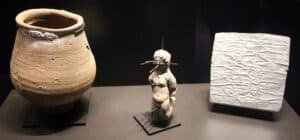
 Museum of Musical Instruments (MUSA)100 m
- Auditorium Parco della Musica100 m
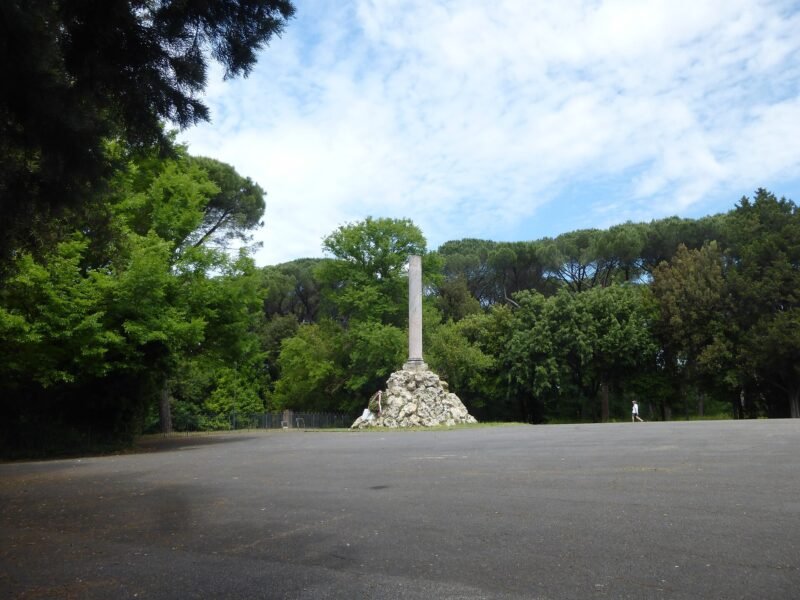
- Villa Glori500 m
- Fountain of Anna Perenna500 m
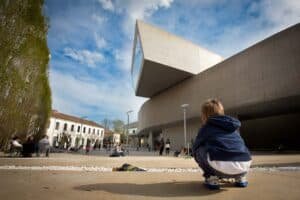
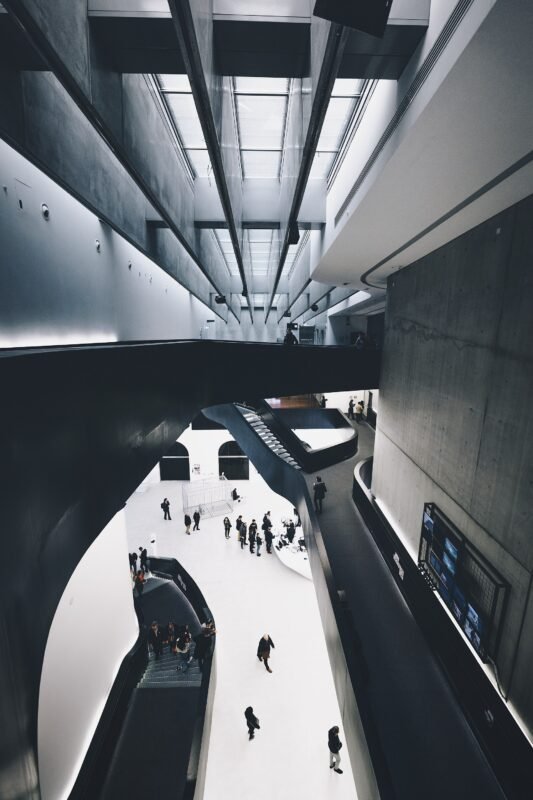
- MAXXI – National Museum of 21st Century Arts700 m
- Flaminio700 m
Upcoming events nearby
- Roma Jazz Festival 2026, November 1 to 24 at the Auditorium and Casa del Jazz100 m
- Evgeny Kissin and András Schiff at Santa Cecilia, November 9, 2026100 m
- Roma Gospel Festival 2026 at Auditorium Parco della Musica, December 13, 2026 to January 1, 2027100 m
- Santa Cecilia 2026/2027 Concert Season at Auditorium Parco della Musica, October 21, 2026 to June 5, 2027100 m



You might also like
- Daniel Harding Conducts Ravel and Debussy at Auditorium Parco della Musica, April 8, 9 and 10, 2027
- Argerich and Capuçon for Beethoven at Auditorium Parco della Musica, April 6, 2027
- Gustavo Gimeno and Frank Peter Zimmermann at Auditorium Parco della Musica, April 1, 2 and 3, 2027
- Grigory Sokolov at Santa Cecilia, March 22, 2027
- Charles Dutoit and Martha Argerich at Auditorium Parco della Musica, March 18, 19 and 20, 2027
- Lucas and Arthur Jussen at Auditorium Parco della Musica, March 17, 2027