Roma Jazz Festival 2026, November 1 to 24 at the Auditorium and Casa del Jazz
In short. The Roma Jazz Festival 2026, the 50th edition, runs from November 1 to 24, 2026 in two venues: Auditorium Parco della Musica Ennio Morricone, Viale Pietro de Coubertin 30, 00196 Rome, and Casa del Jazz, Viale di Porta Ardeatina 55, 00154 Rome.
The Roma Jazz Festival 2026, the 50th edition, runs from November 1 to 24, 2026 in two venues: Auditorium Parco della Musica Ennio Morricone, Viale Pietro de Coubertin 30, 00196 Rome, and Casa del Jazz, Viale di Porta Ardeatina 55, 00154 Rome. There are 16 events, the first on Sunday, November 1 at 18:00 with Paolo Fresu in Sala Sinopoli, the last on Tuesday, November 24 at 20:00 with Jason Miles in Sala Petrassi. You get to the Auditorium by tram 2 from Piazzale Flaminio (metro A, Flaminio stop) to the Apollodoro stop, by buses 910, 53, 982 and 168 or by the Roma Nord railway to Piazza Euclide. You get to Casa del Jazz by metro B to Piramide or by bus 714, Colombo/Marco Polo stop. The prices published by the two venues range from the 20-euro flat ticket for the Casa del Jazz concerts to the "starting from" prices of 24, 30, 33, 35 and 40 euros for the Auditorium concerts. For nights with no price listed, the figures published on the official website and by the authorized seller named by the organizers apply. Tickets are sold on the presale circuit authorized by the organizers, reachable from the official festival program, or at the Auditorium box office, open every day from 11:00 to 20:00 and on show nights until 21:30.
Language: a performance based on dance, music or visual acts; no English version is announced, any spoken parts are in Italian.
The Roma Jazz Festival 2026: 50 years and a centenary
The 50th edition of the Roma Jazz Festival coincides with the 100th anniversary of Miles Davis's birth, and the festival decided to make it its theme: "Rileggere Miles, ripensare il jazz" (Rereading Miles, rethinking jazz). The subtitle that Casa del Jazz and the Auditorium use for this edition is "Anniversary." The artistic director is Mario Ciampà, who in the presentation text insists on a precise point: not a commemoration, but a rereading. It's a distinction that matters. Tributes to the great dead, in jazz as elsewhere, risk becoming ceremonies where the master's repertoire is played with a solemn face. Here the idea is different: to entrust Davis to musicians who knew him, or who inherited his method more than his notes, and let them take him somewhere else.

The link between the festival and Davis isn't a calendar pretext. The official text recalls that Miles Davis took the Roma Jazz Festival stage several times, each time with music different from the last, and that his last Rome concert, on July 23, 1991 at Stadio Olimpico in front of 20,000 people, remains one of the most memorable episodes of this shared history. For a festival born in 1976, rereading Davis also means rereading itself.
In our view the 2026 lineup is more interesting than the names at the top suggest. Alongside the international stars there are young groups and Italian projects that, at Casa del Jazz, you hear in a hall of about 150 seats. That's where the festival shows its liveliest side.
Half a century of Roma Jazz Festival: from the Janiculum to the Auditorium
The Roma Jazz Festival was born in 1976 on the Janiculum, at the Quercia del Tasso, as part of the Estate Romana events. The history of the festival is the history of its moves. After a few years it moved to EUR, onto the steps of the Palazzo della Civiltà e del Lavoro, and then to the Tre Fontane area, where Euritmia was born, which the festival itself calls the capital's first village devoted to music. Then came several years at the Foro Italico, in the Stadio del Tennis space, and the presentation of the 50th edition also lists the Circus Maximus among the places it passed through.
The turning point came with Auditorium Parco della Musica, where the festival landed from its opening in 2002. The stated reason is simple and right: bringing music back to spaces suited to listening. If you've heard a jazz concert outdoors, with the wind carrying away the cymbals, you understand the difference.
On the numbers, the festival's sources don't match. The presentation of the 50th edition speaks of over a thousand concerts. The history page of the website gives over 2,000, with about a million total attendees. Either way the substance is clear: few European jazz festivals have comparable continuity.
Recent editions have had theme titles. In 2023 "Transition," from November 2 to 26. In 2024 "Hybrid," the 48th edition with 25 concerts between Auditorium Parco della Musica, Casa del Jazz and Club Monk, plus an extra event on April 23, 2025 with Kamasi Washington. In 2025 "Harmony," from November 1 to 23. The official archive goes back to the 2018 edition, passing through "No Border" (2019), "Jazz for Change" (2020), "Jazz Code" (2021) and "Immersivity" (2022).
The full program of the Roma Jazz Festival 2026, concert by concert
The official program of the Roma Jazz Festival 2026 has 16 events in 24 days: 11 at Auditorium Parco della Musica (Sala Sinopoli, Sala Petrassi, Teatro Studio Borgna) and four at Casa del Jazz, plus a show for children. I list them in order, with hall, time and price when published by the venue.
Sunday, November 1, 18:00: Paolo Fresu, "Kind of Lives" (Auditorium, Sala Sinopoli)
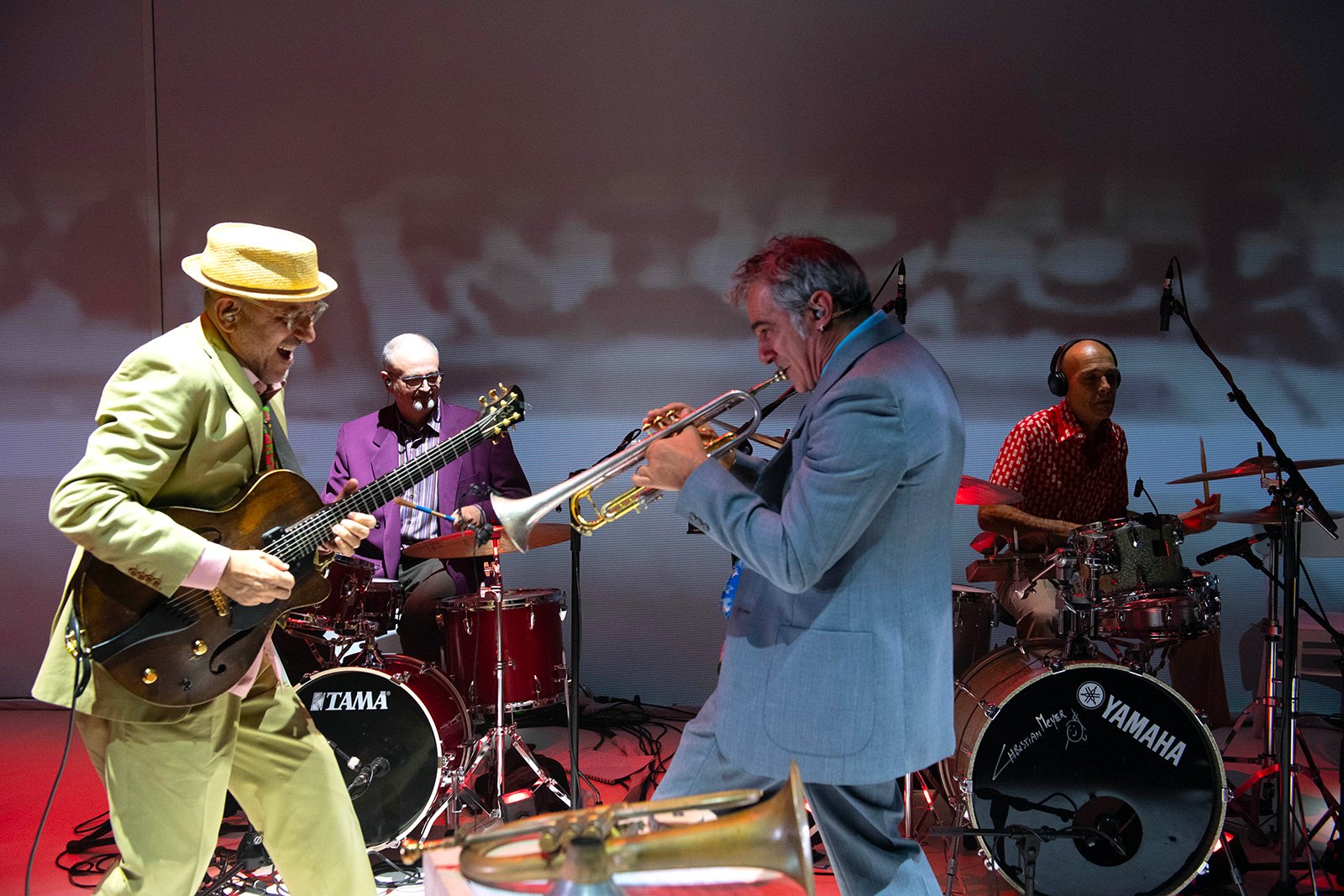
The opening is entrusted to the Italian musician most naturally associated with Davis. "Kind of Lives" is Paolo Fresu's new recording project and the concert version of "Kind of Miles," the musical and theatrical work written and performed by Fresu himself, staged for over 50 performances. On stage is a large lineup ideally divided into two ensembles: one looks to the early Davis of the 1950s, the other to his revolutionary turn. With Fresu (trumpet, flugelhorn) are Bebo Ferra on electric guitar, Christian Meyer and Stefano Bagnoli on drums, Dino Rubino on piano and Fender Rhodes, Federico Malaman on electric bass, Filippo Vignato on trombone and synth, Marco Bardoscia on double bass. Tickets from 40 euros. Two drum kits on stage are already a statement of intent: the sound will be dense.
Wednesday, November 4, 20:00: Kurt Elling and Yellowjackets, "Celebrate Weather Report" (Auditorium, Sala Petrassi)
A singer and a historic fusion band pay tribute to Weather Report, the group that renewed the way jazz is made and heard, thanks in part to Jaco Pastorius's bass. The announced repertoire includes pieces like "Elegant People" and "Black Market." Kurt Elling has won two Grammys. Yellowjackets, founded in the late 1970s by guitarist Robben Ford and now led by the other founder, keyboardist Russell Ferrante, have won as many. The lineup is Elling (vocals), Ferrante (keyboards), Bob Mintzer (sax), Dane Alderson (bass), William Kennedy (drums). From 40 euros. Yellowjackets already know this audience: they were at the festival on November 11, 2023, in Sala Sinopoli.
Thursday, November 5, 20:00: Steve Coleman and Five Elements (Auditorium, Sala Petrassi)
American saxophonist, composer and bandleader Steve Coleman is one of the most creative names in contemporary jazz: he mixes jazz, hip hop and funk and has built a language that weaves together the threads of the music of the African diaspora. Five Elements is his longtime group, a deliberately fluid ensemble in constant change. With Coleman (alto sax) are Jonathan Finlayson (trumpet), Rich Brown (electric bass) and Sean Rickman (drums). From 35 euros. It's the concert for those who love rhythm as architecture: very fast grooves, tight unisons, no concessions.
Friday, November 6, 20:00: Hamilton de Holanda and Gonzalo Rubalcaba, "Collab" (Auditorium, Sala Petrassi)
Havana pianist Gonzalo Rubalcaba, winner at the latest Grammys, and Rio de Janeiro mandolinist Hamilton de Holanda present "Collab," the album that unites the Afro-Cuban and Brazilian currents of jazz. The Auditorium speaks of the project's world premiere. The festival points out that it's the first time the two have played together at the Roma Jazz Festival. De Holanda plays the 10-string mandolin and brings with him choro, samba and bossa nova. Rubalcaba brings Afro-Cuban rhythms and the harmonies of contemporary jazz. Duo, mandolin and piano. From 35 euros. If you're looking for a refined concert to hear as a couple, this is the right night of the first week.
Saturday, November 7, 19:30: EIC Eden Inverted Collective by Zoe Pia, "Atlantidei" (Casa del Jazz)
Clarinetist and multi-instrumentalist Zoe Pia is one of the most important voices of the new Sardinian music scene and plays the launeddas, the ancient reed instrument of Sardinia. "Atlantidei" was born from a journey to the edges of the island, around the sea stacks of the southwestern coast, and from the legend that identifies Sardinia with Atlantis. The compositions draw on the imaginary map of Atlantis drawn by Athanasius Kircher in the 1665 "Mundus Subterraneus." The collective is made up of musicians under 35 from Italian opera and symphony orchestras: with Zoe Pia (clarinet, launeddas, live electronics) are percussionists Mattia Pia and Paolo Nocentini, permanent members of the Arena di Verona, Nicola Ciccarelli and Carlo Alberto Chittolina. Flat ticket 20 euros. One warning: the concert page on the festival website lists Sala Petrassi at 20:00, but the general program, Casa del Jazz and the Auditorium all list Casa del Jazz, Sala concerti Armando Trovajoli, at 19:30. The second is the one that counts, and it's also the one on the ticket.
Sunday, November 8, 18:00: Domenico Rizzuto Trio, "Disastri Quotidiani" (Casa del Jazz)
Trumpeter, percussionist and composer Domenico Rizzuto presents the new album "Disastri Quotidiani," a work that blends electronics, jazz and psychedelic rock in an ideal journey from the shores of the Mediterranean to the northern seas. Afro-Mediterranean rhythms, suspended atmospheres, electronics. With Rizzuto (trumpet and electronics) are Leonardo Guelpa (electric guitar) and Pierpaolo Tancredi (drums). Flat ticket 20 euros. A Sunday afternoon at Casa del Jazz, with the park around it, is one of the small pleasures of this festival.
Friday, November 13, 19:30: Eleonora Strino Trio, "Lumithia" (Casa del Jazz)
Eleonora Strino took her first steps in Roberto De Simone's orchestra. Her meeting in Berlin with double bassist Greg Cohen opened her international career. In 2022 she took part in the International Guitars Night tour and was the first woman in the trio The Great Guitarists. In 2026 she released "Lumithia," a solo guitar record built like a diary around real and imaginary female figures, writers, characters from novels, revolutionaries, and debuted with a tour of the United States. Live she plays in a trio with Giulio Corini (double bass) and Zeno De Rossi (drums). Flat ticket 20 euros.
Saturday, November 14, 19:30: Nexus Quartet, "Appunti di Viaggio" (Casa del Jazz)
A very young group from Naples, Nexus Quartet weaves together European jazz and the language of the most recent American scene, without losing the melodic streak of home. It has played regularly in Italy and has a long residency in a jazz club in Bahrain behind it. At the festival it presents its debut album "Appunti di Viaggio," announced for release in September. Enrico Valanzuolo (trumpet, flugelhorn), Luigi Lombardi (piano), Alessandro Vai (double bass), Marco Gagliano (drums). Flat ticket 20 euros. It's the gamble of the lineup, and gambles in a small hall are often won.
Monday, November 16, 20:00: Enzo Favata, "Atlantico Reunion" (Auditorium, Sala Petrassi)
In 1999 Enzo Favata's "Atlantico" marked a turning point for Italian world music: jazz, South American sounds, poetry and storytelling, born as a literary tribute to the great South American writers and turned into a journey of over 400 concerts across Italy, Europe and South America. More than 25 years later the original quintet reunites: Favata (soprano sax, bass clarinet, Andean flutes), Daniele Di Bonaventura (bandoneon), Marcello Peghin (10-string guitar), Salvatore Maltana (double bass), UT Gandhi (drums). From 24 euros, the lowest entry price among the Auditorium concerts with a published price. Sardinia and South America in the same sound: a reunion worth a Monday night.
Tuesday, November 17, 20:00: Erik Truffaz and Antonio Lizana, "New Sketches of Spain" (Auditorium, Sala Petrassi)
French-Swiss trumpeter Erik Truffaz, a leading figure of French electro-jazz, started out playing in his father's dance band. In the 1990s he made his name with the Prix Special, then moved through drum'n'bass, hip hop and world music. Antonio Lizana, saxophonist and singer, is one of the best-known representatives of new flamenco jazz: born and raised in San Fernando, in the province of Cádiz, he recorded an NPR Tiny Desk concert and has worked with Arturo O'Farrill and Alejandro Sanz. Their project is a contemporary tribute to Davis's "Sketches of Spain," with dancer Ana Perez on stage. Lineup: Truffaz (trumpet), Lizana (vocals, alto sax, flute), Renaud Gabriel Pion (bass clarinet, English horn, arrangements), Pau Figueres (flamenco guitar), Arin Keshishi (electric bass), Manuel de la Torre (drums), Vincent Thomas (percussion). From 33 euros.
Wednesday, November 18, 20:00: Gregory Hutchinson, "Kind of Now, The Pulse of Miles Davis" (Auditorium, Sala Petrassi)
Drummer Gregory Hutchinson, called by Jazz Magazine the drummer of his generation, rereads Davis starting from the drive of the great drummers who played with him: Philly Joe Jones, Jimmy Cobb, Tony Williams. The record moves through the Davis repertoire from the bebop of the 1950s to post-bop and on to the electric era of "Bitches Brew," with three original tracks: "Marley's Mood," "Ellehcem's Time" and "I'm Done." Hutchinson started in the late 1980s and has played and recorded with Roy Hargrove, Betty Carter, Joshua Redman, Dianne Reeves, John Scofield and Ray Brown, on over 150 recordings. With him are Aaron Parks (piano), Milena Casado (trumpet), Seamus Blake (saxophone), Jasen Weaver (bass). From 30 euros. For me it's the smartest concert on the Davis theme: it looks at Miles from the point of view of the people who kept his time.
Saturday, November 21, 20:00: Jeremy Pelt Quintet (Auditorium, Teatro Studio Borgna)
Trumpeter Jeremy Pelt celebrates turning 50 with a European tour that comes through Rome. From California, a graduate of Berklee College of Music in Boston, he started out in New York in the late 1990s. He has more than 25 albums under his name, has worked with the Mingus Band and plays with the Roy Hargrove Big Band and the Duke Ellington Big Band. His style holds together tradition and electronics, neo-bop and ballads. His latest album is titled "Woven." In a quintet with Jalen Baker (vibraphone), Mykhailo Mendelenko (guitar), Leighton Harrell (bass), Jared Spears (drums). From 30 euros. Teatro Studio has 300 seats: a trumpet like that, a few meters away, is something else.
Sunday, November 22, 11:00: Fiabe Jazz, "I Musicanti di Brema Swing Band" (Auditorium, Teatro Studio Borgna)
The theater and music show for children by Teatro Popolare d'Arte is back, after appearing in previous editions with "Kappuccetto Rosso," "Cenerentola Rock!" and "Aladino e il genio della musica." This year the Brothers Grimm tale "The Town Musicians of Bremen" becomes a comic journey about the strength of the group, starting from an almost empty stage. Concept and script by Roberto Caccavo, on stage with Francesco Giorgi, Niccolò Curradi, Lorenzo Lucci and Pedro Judkowski. The price is published on the official website and by the authorized seller.
Sunday, November 22, 18:00: Rosa Brunello, "We Are Surging Waters" (Auditorium, Teatro Studio Borgna)
Bassist and composer Rosa Brunello presents an album inspired by contemporary social movements and a trip to Senegal: a musical Mediterranean where cultures interweave, with themes like peace, freedom, women's emancipation and memory. The lineup has an international reach: Brunello (double bass, electric bass, percussion), Yazz Ahmed (trumpet, flugelhorn), Tamar Osborn (baritone sax, flute), Luca Tapino (trombone), Enrico Terragnoli (guitar, synth), Marco Frattini (drums, percussion). Price on the official website.
Monday, November 23, 20:00: Chiara Civello and Clap! Clap!, "CCCC" (Auditorium, Teatro Studio Borgna)
Singer and songwriter Chiara Civello, with a career across Europe, the United States and Brazil, meets Clap! Clap!, the stage name of producer Cristiano Crisci, who works on electronics, timbral research and club culture. "CCCC" crosses electronics, jazz and art-pop. The album, expected in the autumn, is previewed by the single "Me And The Trees." With them are Dario Bassolino (keyboards) and Gabriel Prado (percussion). Price on the official website. It's the event farthest from jazz in the strict sense, and for that very reason useful if you're bringing friends who don't go to jazz much.
Tuesday, November 24, 20:00: Jason Miles, "100 Miles for Miles Davis" (Auditorium, Sala Petrassi)
The closing night is the closest to Davis in a biographical sense. Keyboardist, producer and arranger Jason Miles has worked for over 50 years in the music industry, with Aretha Franklin, Whitney Houston, Michael Jackson, Chaka Khan and Diana Ross, but above all he was the architect of the sound of three Davis albums: "Tutu," "Amandla" and "Siesta." "100 Miles for Miles Davis" is his tribute to his mentor, eight original compositions between jazz and fusion. On stage are Jason Miles (keyboards, synthesizers), Randy Brecker (trumpet), Ada Rovatti (sax) and Gene Lake (drums), with a bass that the official page credits to Malaman. Price on the official website.
The Miles Davis thread in the Roma Jazz Festival 2026: four ways to reread him
Five concerts of the Roma Jazz Festival 2026 look explicitly to Miles Davis, and each does so from a different angle. It's worth understanding them before choosing, because they're not interchangeable.
The whole story: Paolo Fresu
"Kind of Lives" is the only project that tries to hold together Davis's entire arc, from his early period in the 1950s to the later turn, entrusting the two souls to two separate ensembles on the same stage. It comes from a theater show and keeps its narrative structure. The festival's presentation text calls Fresu the voice of the European trumpet that more than any other has carried that legacy toward other horizons: it's a judgment many fans would endorse.
From the drums: Gregory Hutchinson
Hutchinson flips the perspective: instead of starting from the trumpet he starts from time, that is from the drummers who accompanied Davis through his transformations, Philly Joe Jones, Jimmy Cobb, Tony Williams. It's a musician's idea, and the result promises to be the most technical and at the same time most physical portrait of the centenary.
A single record, rewritten: Truffaz and Lizana
"New Sketches of Spain" takes a single album and brings it into the present, with Antonio Lizana's real flamenco and Ana Perez's dancing. The gamble is avoiding the Spanish postcard. The presence of an arranger like Renaud Gabriel Pion on English horn and bass clarinet suggests work on the orchestral colors of the original.
The one who was there: Jason Miles
Jason Miles doesn't reread from the outside: he worked on the sound of "Tutu," "Amandla" and "Siesta," the 1980s albums that the festival ties to the electric turn of that decade. His tribute is made of original compositions, not covers, and he brings Randy Brecker with him. He's the lineup's direct witness.
To these four add Jeremy Pelt, named by the artistic director among the performers of the theme: a trumpeter who absorbed Davis's habit of changing skin more than his repertoire. If I had to pick two, I'd take Hutchinson and Jason Miles: the first for the idea, the second for the history.
Auditorium Parco della Musica Ennio Morricone, home of the Roma Jazz Festival since 2002
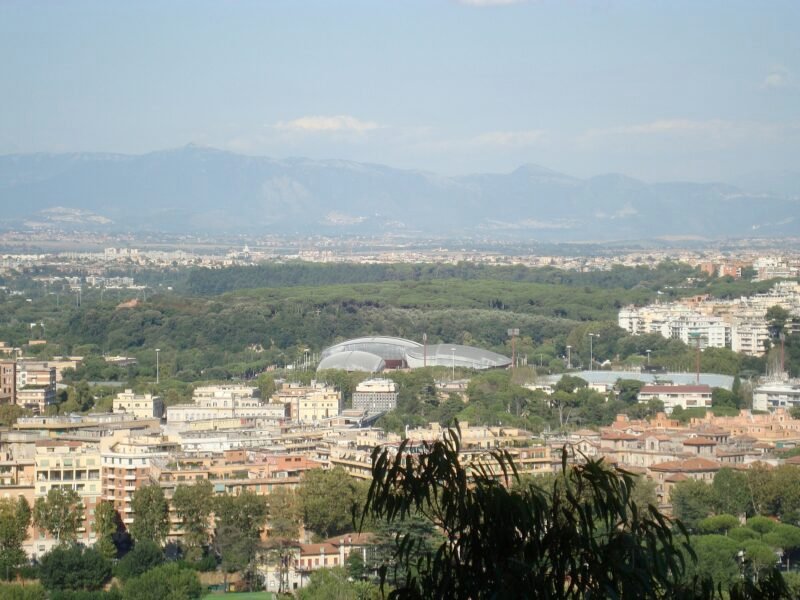
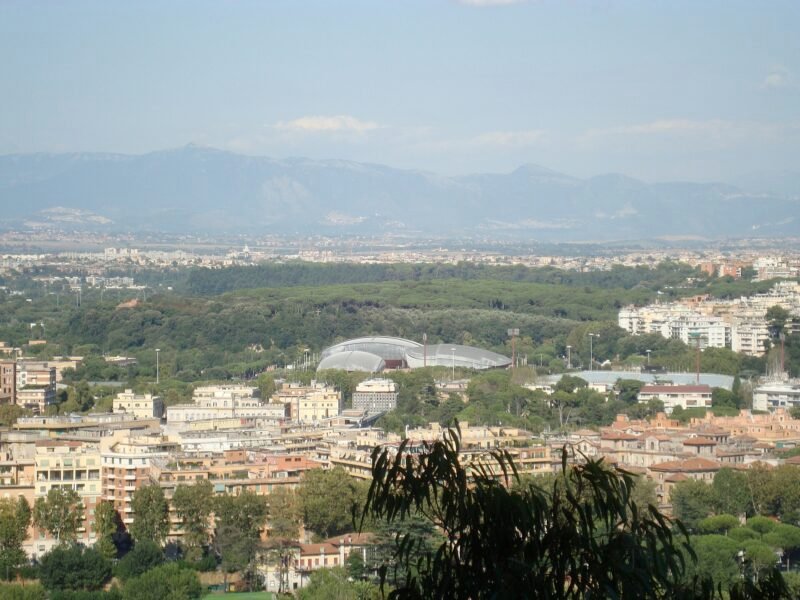
Auditorium Parco della Musica Ennio Morricone, at Viale Pietro de Coubertin 30, is the main venue of the Roma Jazz Festival 2026: it hosts 12 of the 16 events, spread across Sala Sinopoli, Sala Petrassi and Teatro Studio Borgna. Designed by Renzo Piano and run by Fondazione Musica per Roma, it was built to give a permanent home to the Accademia Nazionale di Santa Cecilia and today hosts music of every genre, dance, theater and art. It lies between the Tiber, the Parioli hill and the Villaggio Olimpico, in an area that the 1993 competition placed between the Villaggio Olimpico and the Flaminio stadium. Full venue page: Auditorium Parco della Musica in Rome.
Renzo Piano described it as a city of music: three indoor halls, an outdoor amphitheater, large rehearsal and recording rooms, and around them a park that comes down from Villa Glori. The halls are shaped like large sound boxes, the "lutes" the architect himself talks about. Inside the complex there are also an archaeological museum, with the remains of the Roman villa that emerged during construction, the Aristaios museum with Giuseppe Sinopoli's collection, a museum of musical instruments and two exhibition spaces, AuditoriumGarage and AuditoriumArte.
Sala Sinopoli, 1,133 seats
Dedicated to composer and conductor Giuseppe Sinopoli, it's the hall of the opening concert with Paolo Fresu. It has an adjustable layout, walls clad in American cherry wood panels and galleries in sandblasted brick. For an eight-piece group with two drum kits it's the logical choice: big enough for Fresu's audience, intimate enough to hear the details.
Sala Petrassi, 673 seats
It's the hall at the heart of the festival: Elling and Yellowjackets, Coleman, De Holanda and Rubalcaba, Favata, Truffaz and Lizana, Hutchinson, Jason Miles. Named after Petrassi, one of the greatest Italian composers of the 20th century, it's a multipurpose space on two levels, orchestra and gallery. The walls that frame the stage can rotate to change the size of the stage, and the hall walls are covered with acoustic curtains. In acoustic configuration the stage is entirely in American cherry wood.
Teatro Studio Borgna, 300 seats
Dedicated to Gianni Borgna, longtime city councilor for culture of the City of Rome and president of Fondazione Musica per Roma, it's a regularly shaped hall, with no vertical architectural elements, entirely clad in cherry wood, with movable acoustic panels and curtains. The stage is at floor level and there's no curtain. Here Jeremy Pelt, Rosa Brunello and Chiara Civello with Clap! Clap! play, and the Fiabe Jazz show takes place. It's the hall where jazz is heard as in a club, but with theater acoustics.
Casa del Jazz: the confiscated villa where the Roma Jazz Festival plays small
Casa del Jazz, at Viale di Porta Ardeatina 55, hosts four concerts of the Roma Jazz Festival 2026, all in the Sala concerti Armando Trovajoli: Zoe Pia on November 7, Domenico Rizzuto on the 8th, Eleonora Strino on the 13th, Nexus Quartet on the 14th. Like the Auditorium, the venue is run by Fondazione Musica per Roma. Full page: Casa del Jazz in Rome.
The history of the place is one of the most meaningful in contemporary Rome. The project, wanted by Mayor Veltroni, comes from the confiscation of the villa that belonged to Enrico Nicoletti, a boss of the Banda della Magliana, then assigned to the City of Rome. At the entrance a plaque with the names of mafia victims, made with Don Ciotti's association Libera, recalls the meaning of that return to the city.
What it's like
The villa, Villa Osio, covers 2,500 square meters and is surrounded by a park of 25,240 square meters, open every day from dawn to sunset. The complex is made up of three buildings: the main one has the concert hall, with a recording system that allows concerts to be turned into records. The second has rehearsal and recording rooms and guest quarters for visiting musicians. The third has a restaurant. On the hall's capacity, the venue's pages give two figures, 134 seats in one and about 150 in the other: either way, a few rows and musicians within eyeshot.
Why it matters for this festival
At Casa del Jazz the festival puts its youngest or most experimental projects, at a flat price of 20 euros. If you've followed jazz for a while, you know it's in halls like this that you discover musicians before they become Sala Petrassi names. During the year the same venue hosts other series, from Summertime at Casa del Jazz in the summer months to Una Striscia di Terra Feconda between September and October: the place has a loyal audience, and seats run out.
How to get to the Auditorium and Casa del Jazz for the Roma Jazz Festival
The two venues of the Roma Jazz Festival are at opposite ends of the city: the Auditorium is in the north, in the Flaminio neighborhood at the foot of Parioli, Casa del Jazz in the south, between the Aventine, San Saba and Via Cristoforo Colombo. Between them there are about six and a half kilometers as the crow flies: you don't do two concerts on the same night, and you don't improvise the trip.
To the Auditorium by tram and metro
The solution recommended by the venue is metro A to Flaminio, then tram 2 (end of the line Piazzale Flaminio, toward Piazza Mancini). The stop to use is Apollodoro, on Via Flaminia, about 500 meters on foot from the entrance. From the historic center it's the most reliable route, in the evening too.
To the Auditorium by bus and train
Lines 910 (Termini, Piazza Mancini), 53 (Piazza Mancini, Largo Chigi), 982 (Viale XVII Olimpiade, Quattro Venti station) and 168 (Largo Maresciallo Diaz, Tiburtina station) pass near the Auditorium. If you're coming from Piazzale Flaminio you can also use the Roma Nord railway and get off at Piazza Euclide, about 600 meters away. The 910 from Termini is convenient if you're staying near the station.
To the Auditorium by car
The Auditorium has two paid parking lots, both with spaces reserved for people with disabilities: a surface lot in front of the complex, accessed from Viale Pietro de Coubertin, and a covered multistory one accessed from Viale de Coubertin and Viale Maresciallo Pilsudski. On nights when several events overlap, it's best to arrive early.
To Casa del Jazz by metro
The venue recommends metro B, Piramide stop. From the station to the villa it's just under a kilometer on foot: a good 15 minutes, to factor in especially on November 7 and 13, when things start at 19:30.
To Casa del Jazz by bus and car
Bus 714 stops at Colombo/Marco Polo. Casa del Jazz lists it with a frequency of six minutes. If you come by car there's a parking lot next to the villa, on Via Cristoforo Colombo at the corner of Viale di Porta Ardeatina.
Getting home
The running time of the individual concerts isn't published. Before going out, check the last runs of tram 2, the metro and the night lines for your area on the transit company's journey planner. The rule: decide how you'll get home before going into the hall, not after.
Roma Jazz Festival 2026 tickets and prices
Roma Jazz Festival 2026 tickets are sold concert by concert: no pass for the whole festival appears to have been published. You buy them online on the presale circuit authorized by the organizers, reachable from the purchase buttons on the festival website and on the websites of the two venues, or at the Auditorium box office, open every day nonstop from 11:00 to 20:00 and on show nights until 21:30. There's also a paid call center, 892.101.
The published prices
For the Auditorium concerts the venue gives the lowest entry price: from 40 euros Paolo Fresu and Kurt Elling with Yellowjackets. From 35 euros Steve Coleman and the De Holanda and Rubalcaba duo. From 33 euros Truffaz and Lizana. From 30 euros Gregory Hutchinson and Jeremy Pelt. From 24 euros Enzo Favata. At Casa del Jazz the ticket is a flat 20 euros for all four concerts. For Fiabe Jazz, Rosa Brunello, Chiara Civello with Clap! Clap! and Jason Miles, prices are published on the official website and by the authorized seller named by the organizers.
Casa del Jazz box office
The Casa del Jazz box office opens on show days at 19:00 and stays open until 40 minutes after the start. Discounts and tickets for people with disabilities are issued only at the Auditorium's main box office.
Entering the hall and latecomers
In both venues entry to the hall is normally allowed from half an hour before the start until five minutes before. Once the show has started, the rules don't allow entry. When the organizer allows it, staff direct you to seats other than the ones you bought. In case of cancellation, refunds for online purchases go through the circuit provider, those made at the box office through the point of sale.
Accessibility: the Roma Jazz Festival for people with mobility or visual impairments
Auditorium Parco della Musica and Casa del Jazz both state that they're designed for full accessibility. Wheelchair users can book their place in the hall at 06 8024 1281, active every day from 11:00 to 18:00. Reserved spaces are limited by law, so it's best to act early. Fondazione Musica per Roma offers a 20 percent reduced ticket for people with disabilities and, where needed, free entry for the companion. For people with 100 percent disability, the 20 percent reduction applies to both. Blind people are entitled to a 50 percent discount. At the Auditorium the welcome staff direct you to elevators and routes for blind visitors. Both Auditorium parking lots have reserved spaces.
The Roma Jazz Festival with kids: Fiabe Jazz and the rest of the program
The event designed for children is Fiabe Jazz, on Sunday, November 22 at 11:00 at Teatro Studio Borgna, with "I Musicanti di Brema Swing Band" by Teatro Popolare d'Arte. The format returns after previous editions and uses comedy, actors and musicians to bring the little ones closer to jazz. A practical tip: a Sunday morning at the Auditorium pairs well with the Claudio Abbado roof gardens, where there's a children's play area, and with the park around the halls. For older kids curious about music, Rosa Brunello's Sunday concert at 18:00 in the same theater, or Domenico Rizzuto's at Casa del Jazz on November 8, have times that also suit those who have school the next day.
Where to eat before or after the Roma Jazz Festival concerts
At the Auditorium it's not a problem: inside the complex there are bars, restaurants and shops, grouped by the venue under the heading Food and Shop, and for a quick dinner before 20:00 they're enough. If you'd rather go out, along Via Flaminia and toward Piazza Mancini you'll find neighborhood trattorias and pizzerias, frequented more by Romans than by visitors. Flaminio isn't an area of tourist restaurants, and that's a plus. At Casa del Jazz one of the villa's three buildings houses a restaurant. Nearby, toward Piramide and San Saba, there are trattorias and neighborhood spots. For an aperitivo before a 19:30 concert, the Piramide area is the most convenient, on the way between the metro and the villa.
What's around the Roma Jazz Festival venues
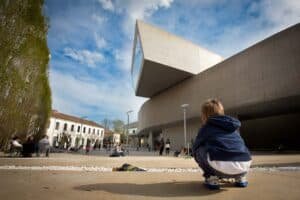
Around Auditorium Parco della Musica, less than a kilometer away, are MAXXI, the national museum of 21st-century arts on Via Guido Reni, and a little farther the Ponte della Musica over the Tiber. Villa Glori, from which, according to Renzo Piano, the music park ideally comes down, and the Flaminio stadium are a few minutes' walk away. If you love 20th-century architecture, you have a whole afternoon of things to see here before the concert. The Auditorium itself also hosts the Rome Film Fest.
Casa del Jazz is in a completely different area, between the Aventine and the Appia. About 600 meters away are the Baths of Caracalla, a kilometer away the Pyramid of Cestius, and the villa looks onto Viale di Porta Ardeatina, along the line of the Aurelian Walls. If you want to continue the night with more jazz, Rome has historic clubs like Alexanderplatz Jazz Club.
November in Rome: the month of the Roma Jazz Festival
For years the Roma Jazz Festival has filled the month of November, and the choice makes sense. It's the month when Rome goes back to the Romans: fewer crowds at the most visited sites, short days, cool and often damp evenings. You go out early, you eat early, and a concert at 20:00 falls at the right hour. Sunday, November 1, the opening day with Fresu, is All Saints' Day: transportation runs on a holiday schedule, so keep that in mind. Bring a warm layer and an umbrella: from the tram to the hall the walk is short, but outdoors. At Casa del Jazz the park is open until sunset, which comes early in November. You can still reach the villa from the avenue, but the walk among the trees has to be done beforehand.
A curious fact about the Roma Jazz Festival 2026, November 1 to 24 at the Auditorium and Casa del Jazz
The finest curious fact of this edition is a legend the festival itself tells when presenting the concert by Erik Truffaz and Antonio Lizana. According to this story, the idea for "Sketches of Spain" came to Miles Davis after he took his wife, Frances Taylor Davis, to see a performance by flamenco dancer Roberto Iglesias. Davis was captivated by traditional Spanish music and drew from it one of his key records, the one the festival considers the opening of jazz to world music.
The nice thing is that today the story repeats in reverse. At the November 17 concert in Sala Petrassi, dance returns to the stage: Ana Perez dances flamenco in front of Truffaz's trumpet, while Lizana, raised in San Fernando, in the province of Cádiz that the festival calls one of the cradles of flamenco, sings and plays sax. What for Davis was something heard, for the Roman audience will be something seen.
Then there's a second curious fact, less romantic but rarer. Zoe Pia's November 7 concert takes the titles of its pieces from a map of Atlantis drawn by a 17th-century scholar, Athanasius Kircher, in the 1665 "Mundus Subterraneus." Kircher was a scholar whom Casa del Jazz calls "master of a hundred arts," with considerable weight in musicology too. That a record of launeddas and electronics should come from an imaginary 17th-century map is the kind of short circuit only jazz allows itself without embarrassment.
Something nobody tells you about the Roma Jazz Festival 2026, November 1 to 24 at the Auditorium and Casa del Jazz
What almost nobody points out is a detail about times. The Casa del Jazz box office opens on show days at 19:00. On Sunday, November 8, though, Domenico Rizzuto's concert starts at 18:00. If you're counting on buying your ticket on site that Sunday afternoon, you risk finding the window still closed close to the start, or discovering that the hall of about 150 seats is already full. For Casa del Jazz concerts there's only one rule: ticket bought beforehand, online.
The second detail concerns the Auditorium halls. The festival doesn't use the large Sala Santa Cecilia, with 2,744 seats, where Pat Metheny played in 2024. This year the concerts are in Sala Sinopoli (1,133 seats), Sala Petrassi (673) and Teatro Studio Borgna (300). That means two things. The first is good: you listen up close, in halls designed for sound, and even the cheapest seats aren't very far from the stage. The second is less good: seats are few, and for the most awaited names, Fresu, Elling, Hutchinson, Jason Miles, it's not wise to wait until November to decide.
Finally, a warning: on the festival website, Zoe Pia's page still lists Sala Petrassi at 20:00, while the general program, Casa del Jazz and the Auditorium place it at Casa del Jazz at 19:30. If you read only that page, you'd go to the other side of Rome.
My advice for the Roma Jazz Festival 2026, November 1 to 24 at the Auditorium and Casa del Jazz
My advice is to treat each concert as half a day, not two hours. The festival's two venues are places to enjoy before the music starts.
At the Auditorium, arrive in the afternoon. The complex is open from 11:00 to 20:00, and besides the halls there are the archaeological museum with the remains of the Roman villa found during construction, the museum of musical instruments, the exhibition spaces and the Claudio Abbado roof gardens. A walk among Renzo Piano's "lutes," a look at the museum, a quick dinner at the spots inside, and at 20:00 you're in the hall without rushing. If you have time, stop at MAXXI first, 700 meters away.
At Casa del Jazz do the opposite: arrive in daylight, because the Villa Osio park closes at sunset and in November sunset comes early. Get off at Piramide, walk to the villa, read the plaque at the entrance with the names of mafia victims: it's the right way to understand where you're about to hear music. If you have a whole afternoon, you can start from the Baths of Caracalla, 600 meters away.
And a piece of advice on choosing: don't limit yourself to the famous names. A night at Casa del Jazz costs 20 euros, less than half a concert in Sala Sinopoli, and often leaves the strongest memory.
Another well-known fact, and yet not often mentioned
It's known that Auditorium Parco della Musica is by Renzo Piano. It's less often remembered why Rome needed it. For 66 years the orchestra of the Accademia di Santa Cecilia had no permanent home. In 1936, to bring the Mausoleum of Augustus back to light, the Augusteo was demolished, the hall where the Orchestra and Chorus of the Accademia di Santa Cecilia had worked since 1908. From then on, successive administrations chased the project of a new auditorium for decades, with figures like Giuseppe Sinopoli and Vittorio Emiliani on the front line.
The solution came with the 1993 international competition, won on July 27, 1994 by Renzo Piano's design. The design was delivered to the City on January 15, 1995. The following November work stopped because of the discovery of the remains of an ancient Roman villa, which instead of being sacrificed was integrated into the complex. On April 21, 2002, the day of Rome's birthday, Sala Petrassi and Sala Sinopoli were inaugurated, Sala Santa Cecilia on December 21 of the same year.
The detail that ties all this to the festival: Sala Sinopoli, where Paolo Fresu opens the 50th edition, bears the name of one of the men who fought hardest for Rome to finally have its auditorium. And the Roma Jazz Festival has been there since the first year. After the death of Ennio Morricone, in 2020, the complex was named after him.
The right photo to take at the Roma Jazz Festival 2026, November 1 to 24 at the Auditorium and Casa del Jazz
At the Auditorium the photo to take is of the three halls seen from the cavea, the outdoor amphitheater named after Luciano Berio, which is the center of the complex. From there the great roofs of the halls are seen side by side, like instruments resting in a circle: it's the image that best explains Renzo Piano's idea of a city of music. In November the best moment is the hour before the concert, when the sky darkens and the foyer windows light up. A low framing, from the back of the cavea, holds together the empty steps and the lit halls.
The second photo is inside, before the lights go down. Sala Petrassi and Teatro Studio Borgna are clad in cherry wood, and with the house lights still on the warm color of the walls makes a much finer photo than the empty stage. During the concert, though, the phone goes in your pocket, out of respect for the musicians and for whoever is sitting next to you.
At Casa del Jazz the photo is the villa seen from the entrance avenue, with the park around it, ideally in the last light. And then another, less obvious one: the plaque with the names of mafia victims. It's not a postcard image, but it's the one that really tells the story of the place where the hall stands. If you post it with two lines of explanation, you do a small service to whoever sees it.
Some important events that happened here in history
The events that matter, for this festival, are of two kinds: those of its venues and those of its history.
For the Auditorium: in 1993 the City of Rome announced the international competition for the new auditorium in the area between the Villaggio Olimpico and the Flaminio stadium, then rundown and abandoned. On July 27, 1994 the design by Renzo Piano and the Renzo Piano Building Workshop won. During construction the remains of an ancient Roman villa emerged, integrated into the complex and now open to visitors in the archaeological museum. In July 1999 the City founded the management company Musica per Roma, turned into a Foundation in 2004. On April 21, 2002 the Petrassi and Sinopoli halls were inaugurated, on December 21 Sala Santa Cecilia. In the early months of 2003 the complex was running at full capacity. In 2020, after the death of Ennio Morricone, the Auditorium took his name.
For Casa del Jazz, the founding event is the confiscation of the villa of Enrico Nicoletti, a member of the Banda della Magliana, and its assignment to the City of Rome, which turned it into a center devoted to jazz with a concert hall, recording studios and guest quarters for musicians.
For the festival: 1976 on the Janiculum, at the Quercia del Tasso. The years in EUR on the steps of the Palazzo della Civiltà e del Lavoro. Euritmia at Tre Fontane. The Stadio del Tennis at the Foro Italico. The Miles Davis concert at Stadio Olimpico on July 23, 1991, his last in Rome, in front of 20,000 people. The arrival at the Auditorium in 2002. And now the 50th edition, built around the Davis centenary.
Who has played the Roma Jazz Festival 2026, November 1 to 24 at the Auditorium and Casa del Jazz
The list of musicians who have played the Roma Jazz Festival is a small history of jazz. The official website names Miles Davis, Dizzy Gillespie, Sarah Vaughan, Sonny Rollins, Wayne Shorter, McCoy Tyner, Ray Charles, B.B. King, Herbie Hancock, Chick Corea, Michael Brecker, Elvin Jones, Pharoah Sanders, Dee Dee Bridgewater, Egberto Gismonti, all the way to Esperanza Spalding, Kamasi Washington, Shabaka Hutchings, Robert Glasper and Snarky Puppy.
In the Auditorium years, the festival's photo archive documents specific nights. On November 16, 2008 Chick Corea and John McLaughlin brought the Five Peace Band, with Kenny Garrett, Christian McBride and Vinnie Colaiuta. The 2009 edition saw Sonny Rollins on November 11, Diana Krall on the 15th and Jamie Cullum on the 17th. Also at the Auditorium, on November 30 of that year, Richard Galliano played solo. On November 13, 2011, in the "Jazz Appeal" edition, Pat Metheny arrived in a trio with Larry Grenadier and Bill Stewart. On October 22, 2012, for "Visual Jazz," it was Herbie Hancock's turn. November 14, 2015 was Gregory Porter's night.
More recently: Yellowjackets in Sala Sinopoli on November 11, 2023, in the "Transition" edition, which had opened with Ibrahim Maalouf and also brought John Scofield and Avishai Cohen. Pat Metheny alone, with the Orchestrion, in Sala Santa Cecilia on November 4, 2024. Makaya McCraven, David Murray, Bilal, Amaro Freitas, Peter Erskine with Mike Mainieri and Cécile McLorin Salvant in 2025. This year Yellowjackets return, this time with Kurt Elling, and a musician who really worked with Davis arrives, Jason Miles.
Which Roma Jazz Festival 2026 concert to choose
If you have only one night, the Roma Jazz Festival 2026 offers very different choices, and it's best to pick them by taste, not by fame.
If you're coming for Davis: Gregory Hutchinson on November 18 or Jason Miles on the 24th. If you want the big Italian name: Paolo Fresu on November 1, knowing it will be the most in-demand night. If you love the voice: Kurt Elling with Yellowjackets on the 4th. If you're after pure rhythmic energy: Steve Coleman on the 5th. For an elegant night: De Holanda and Rubalcaba on the 6th. If you love Mediterranean crossovers: Favata on the 16th or Truffaz and Lizana with flamenco dance on the 17th. To discover someone before everyone else: one of the four Casa del Jazz concerts, at 20 euros. With kids: Fiabe Jazz, Sunday the 22nd at 11:00.
The ideal combination for a visitor staying in Rome for a week in mid-November: Nexus Quartet at Casa del Jazz on Saturday the 14th, Favata at the Auditorium on Monday the 16th, Hutchinson on Wednesday the 18th. Three nights, three halls, three ways of understanding jazz.
Frequently asked questions about the Roma Jazz Festival 2026
When does the Roma Jazz Festival 2026 take place?
The Roma Jazz Festival 2026 runs from November 1 to 24, 2026 and is the 50th edition. The first concert is on Sunday, November 1 at 18:00 with Paolo Fresu in Sala Sinopoli. The last is on Tuesday, November 24 at 20:00 with Jason Miles in Sala Petrassi. In all there are 16 events, almost all at 20:00 or 19:30, with some Sundays at 18:00 and the children's show at 11:00.
Where are the Roma Jazz Festival concerts held?
The Roma Jazz Festival 2026 concerts are held in two venues. 12 events are at Auditorium Parco della Musica Ennio Morricone, Viale Pietro de Coubertin 30, in the Sinopoli, Petrassi and Teatro Studio Borgna halls. Four concerts are at Casa del Jazz, Viale di Porta Ardeatina 55, in the Sala concerti Armando Trovajoli: Zoe Pia, Domenico Rizzuto, Eleonora Strino and Nexus Quartet.
How much are Roma Jazz Festival 2026 tickets?
Roma Jazz Festival 2026 tickets at Casa del Jazz have a flat price of 20 euros. At the Auditorium the published prices start at 24 euros for Enzo Favata, 30 euros for Hutchinson and Pelt, 33 for Truffaz and Lizana, 35 for Coleman and for De Holanda with Rubalcaba, 40 for Fresu and for Elling with Yellowjackets. The other prices are on the official website.
How do you get to Auditorium Parco della Musica by public transportation?
You get to Auditorium Parco della Musica by metro A to Flaminio and then by tram 2 to the Apollodoro stop, about 500 meters away. Alternatively there are buses 910 from Termini, 53, 982 and 168, or the Roma Nord railway to Piazza Euclide. The Auditorium also has two paid parking lots.
How do you get to Casa del Jazz?
Casa del Jazz, at Viale di Porta Ardeatina 55, can be reached by metro B, getting off at Piramide and walking just under a kilometer, or by bus 714, Colombo/Marco Polo stop. By car you park in the area next to the villa, on Via Cristoforo Colombo at the corner of Viale di Porta Ardeatina.
What is the theme of the Roma Jazz Festival 2026?
The theme of the Roma Jazz Festival 2026 is "Rileggere Miles, ripensare il jazz" (Rereading Miles, rethinking jazz), devoted to the 100th anniversary of Miles Davis's birth. Artistic director Mario Ciampà presents it as a rereading and not a commemoration, entrusted among others to Jason Miles, Paolo Fresu, Gregory Hutchinson, Jeremy Pelt and Erik Truffaz.
Is the Roma Jazz Festival suitable for kids?
The Roma Jazz Festival 2026 has a show devoted to children: Fiabe Jazz, "I Musicanti di Brema Swing Band," on Sunday, November 22 at 11:00 at the Auditorium's Teatro Studio Borgna, by Teatro Popolare d'Arte. It combines comic theater and live music to bring the little ones closer to jazz, starting from the Brothers Grimm tale.
Can you enter once the concert has started?
At the Auditorium and Casa del Jazz, the venues of the Roma Jazz Festival, entry to the hall is normally allowed from half an hour before until five minutes before the start. Once the show has started, the rules don't allow entry. If the organizer allows it, staff direct you to seats other than the ones you bought. Better to arrive with time to spare.
Let's close with a piece of advice for when Rome has a festival like this one: pick a big name and an unknown name, and buy the two tickets together. The first will give you the night you expect, the second the one you'll remember. This year the right pair, for me, is Gregory Hutchinson in Sala Petrassi and one of the four Casa del Jazz concerts. And for Casa del Jazz concerts, I'll say it again, buy the ticket beforehand: the hall is small and Rome's jazz audience knows it well.
Article written by the editorial team of Tour Leader Pro, contact them for Private/Corporate/V.I.P. Tours and Experiences.
Planning a trip to Rome? The English guides for visiting the city are on ItalyPlanner.com.
Contact Information
Nearby
 Museum of Musical Instruments (MUSA)100 m
- Auditorium Parco della Musica100 m
- Villa Glori500 m
- Fountain of Anna Perenna500 m
- MAXXI – National Museum of 21st Century Arts700 m
- Flaminio700 m
Upcoming events nearby
- Evgeny Kissin and András Schiff at Santa Cecilia, November 9, 2026100 m
- Roma Gospel Festival 2026 at Auditorium Parco della Musica, December 13, 2026 to January 1, 2027100 m
- Santa Cecilia 2026/2027 Concert Season at Auditorium Parco della Musica, October 21, 2026 to June 5, 2027100 m
- Radici nel Cemento at Auditorium Parco della Musica, November 5, 2026100 m



You might also like
- 63rd Nuova Consonanza Festival in Rome, November 6 to December 20, 2026
- Giorgia Fumo, Out Of Office at Teatro Olimpico, November 16 and 17, 2026
- Igor Sibaldi at Teatro Olimpico with Vuoi?, November 10, 2026
- Nubras Ensemble at Auditorium Parco della Musica, February 27, 2027
- La Vie en Rose and Bolero by Balletto di Milano at Teatro Olimpico, April 2 to 4, 2027
- Le Coliche in 10 anni di Coliche e siamo ancora vivi at Teatro Olimpico, March 25 and 31, 2027