La Vie en Rose and Bolero by Balletto di Milano at Teatro Olimpico, April 2 to 4, 2027
In short. La Vie en Rose and Bolero, the dance evening by Balletto di Milano with choreography by Adriana Mortelliti, is on at Teatro Olimpico in Rome, at Piazza Gentile da Fabriano 17 (00196 Rome), from April 2 to 4, 2027, in four performances:…
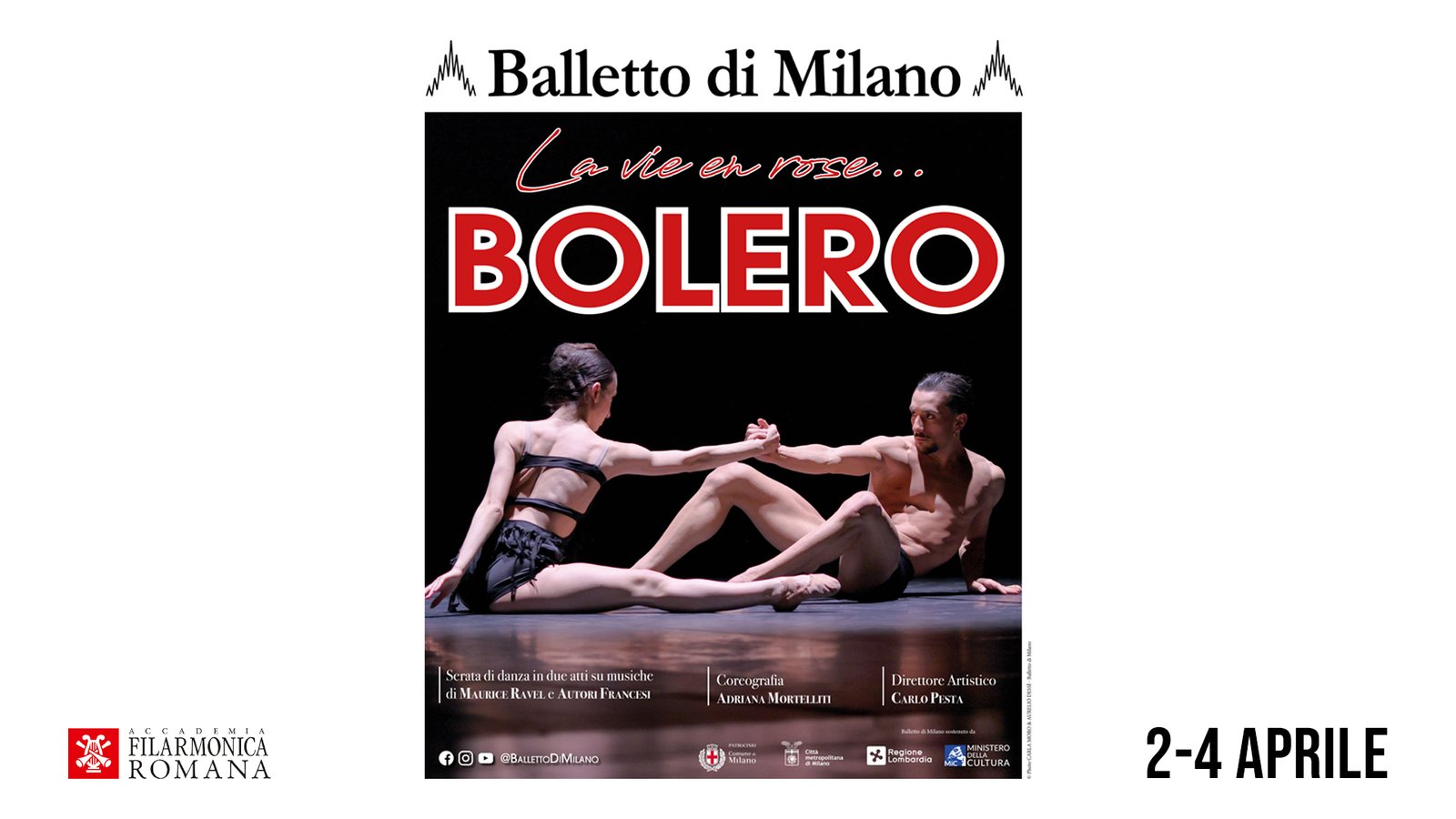
La Vie en Rose and Bolero, the dance evening by Balletto di Milano with choreography by Adriana Mortelliti, is on at Teatro Olimpico in Rome, at Piazza Gentile da Fabriano 17 (00196 Rome), from April 2 to 4, 2027, in four performances: Friday, April 2 at 20:30, Saturday, April 3 at 16:30 and 20:30, Sunday, April 4 at 17:00. You get there by metro A to Flaminio and then tram 2 to the terminus at Piazza Mancini, from where you walk about 500 meters along Viale del Pinturicchio. Alternatively there is bus 910 from Termini to the Pannini stop. The prices published by the theater range from €25 (side balcony with railing) to €37 (gold top orchestra seat), plus a presale fee of €3.80 to €5.60. Reduced rates are available for under 12s. Tickets are bought on the venue's official website, with an online fee of €1.50 per ticket, or at the theater's box office. The show is in collaboration with the Accademia Filarmonica Romana.
Language: performed in Italian. No English version or English surtitles are announced.
An evening in two acts devoted to France: in the first, songs by Édith Piaf, Charles Aznavour, Jacques Brel and Yves Montand become little danced stories, in the second Maurice Ravel's Boléro builds up to the last bar. The theater presents it as one of the signature choreographies of Balletto di Milano, in the repertoire since 2012 and taken to Italy, Switzerland, Russia, France, Morocco and Estonia. It is the kind of show suited to those who don't usually go to dance: melodies everyone knows, a reasonable length, a finale that sweeps you along.
La Vie en Rose and Bolero at Olimpico: dates and times of the four performances
La Vie en Rose and Bolero by Balletto di Milano is on at Teatro Olimpico from April 2 to 4, 2027, for one weekend, with four performances.
All the performances
- Friday, April 2, 2027, at 20:30.
- Saturday, April 3, 2027, at 16:30.
- Saturday, April 3, 2027, at 20:30.
- Sunday, April 4, 2027, at 17:00.
Which performance to choose
Saturday has two performances, one in the afternoon and one in the evening: the afternoon one at 16:30 and the Sunday one at 17:00 are the most convenient for those coming with children or from outside Rome. Friday evening is the performance for those leaving the office who want to start the weekend with dance.
In the Olimpico season
The show is part of the 2026/2027 season of Teatro Olimpico, in a spring that alternates comedy, magic and dance in the hall. A few days later, from April 7, the illusionists Disguido arrive with Cinemagic.
What you see: a dance evening in two acts
La Vie en Rose and Bolero is a dance evening in two acts on French songs and music by Maurice Ravel, with choreography by Adriana Mortelliti and costumes by Armani, Max Mara and Atelier Bianchi.
First act: La vie en rose
The first act is "La vie en rose," which the theater describes as an ironic and nostalgic work, joyful and moving, built on the most beautiful French songs. Among the authors and performers, besides Aznavour, are Édith Piaf, Jacques Brel and Yves Montand. The song lyrics become danced tableaux that tell everyday stories: love, nostalgia, the irony of every day.
The hinge: Dans tes bras
Closing the first part is "Dans tes bras" by Charles Aznavour. The theater stresses that its unmistakable musical backdrop serves as a prelude to the Boléro. It is an intelligent directorial idea: the song carries the spectator from the chanson to the concert hall without a jolt.
Second act: Ravel's Boléro
The second act is the famous Boléro by Maurice Ravel, in the version by Balletto di Milano. The company presents it as something more than a game of seduction: the eternal story of a birth, of an inevitable attraction toward a similar being, of a multiplication of encounters. Sinuous bodies that intertwine and follow the crescendo of the music to the finale.
The costumes
The costumes carry the signatures of Armani, Max Mara and Atelier Bianchi. For an evening devoted to France it is curious that it is Italian fashion dressing the dancers. But the chanson, after all, has always been a matter of elegance, and Balletto di Milano brings its city onstage in this way too.
Adriana Mortelliti, the evening's choreographer
The choreography of La Vie en Rose and Bolero is by Adriana Mortelliti, who received the Rieti Danza Prize as best choreographer for "La vie en rose."
A prize for the danced chanson
The Rieti Danza Prize came precisely for the first act of the evening, the work on French songs. It is the recognition of a choreographic writing that works on the text of the songs, turning words into gestures and situations: harder than it looks, because the chanson lives on nuance.
Two languages in one evening
Signing both acts means moving from a sequence of short tableaux, each with its own tone, to a single construction that grows without interruption. The first act asks for variety, the second for obstinacy. Mortelliti holds the two together with a passage, "Dans tes bras," which is also her signature on the evening.
A signature choreography
The theater calls La Vie en Rose and Bolero one of the signature choreographies of Balletto di Milano, a flagship title that sells out. Since 2012 the evening has been taken to six countries: Italy, Switzerland, Russia, France, Morocco and Estonia. Few Italian dance shows have such a long life in the repertoire.
Balletto di Milano: history of the company
Balletto di Milano is a nonprofit association directed since 1998 by Carlo Pesta, recognized and supported by the Ministry of Culture, by the Lombardy Region, which has granted it recognition of regional relevance, and by the Municipality of Milan.
The first Italian company at the Bolshoi
According to the history published by the company, Balletto di Milano was the first Italian company to perform at the Bolshoi Theater in Moscow, in 1999. In 2011, the Italy-Russia Year of Culture, the Russian Ministry of Culture invited it to Moscow for the dance season of the Youth Theater. In 2015 it took part in the Saaremaa Opera Festival in Estonia, awarded as the best Estonian event of the year.
Ambassador of Italian dance
The company often works abroad under the aegis of the Italian Embassies, so much so that it earned the title "Ambassador of Italian dance in the world." Between 2017 and 2019 it gave over 270 performances. It co-produced a Nutcracker with the Kilden Opera House in Norway in 2017, opened the FITUC festival in Casablanca in the year Italy was guest of honor, took part in the celebrations of Estonia's 100 years in Tallinn in 2018 and in the Batumi Festival in Georgia. In 2020 it began a multi-year collaboration with the Cairo Opera House.
The restart and the Milan residencies
After the pandemic the company returned to the stage with 120 performances in the 2022/2023 season, in Italy and in Latvia, Lithuania, Estonia, Switzerland, France and Egypt. In Milan, in 2012, the association renovated the former Teatro Orione, inaugurating Teatro di Milano, the city's first theater mainly devoted to dance. From 2018 to 2021 it was in residence at Teatro degli Arcimboldi, and since 2022 it has been in artistic residence at Teatro Lirico Giorgio Gaber.
The big names
Over its history Balletto di Milano has collaborated with Carla Fracci, Luciana Savignano, Raffaele Paganini, Oriella Dorella, Denys Ganio, Giuseppe Carbone, Micha van Hoecke, Vittorio Biagi and Gheorghe Galante, among others. Today choreographers such as Giorgio Madia and Teet Kask work with the company, alongside authors born within it, like Mortelliti.
Awards
The company has received, among others, the Special Box Office Excellence Award at the Oscar della Danza. Artistic director Carlo Pesta is a Knight Officer of the Italian Republic for merits in artistic work. The repertoire includes, besides this evening, "Anna Karenina," "Carmen," "Cinderella," "Swan Lake," "Scheherazade's 1,000 and One Nights," "The Nutcracker," "Notre-Dame de Paris" and "Romeo and Juliet."
Tickets and prices for La Vie en Rose and Bolero
Tickets for La Vie en Rose and Bolero at Teatro Olimpico cost €25 to €37 plus the presale fee, with an online fee of €1.50 per ticket. For under 12s prices drop from €15 to €21 plus presale.
Orchestra
Gold top orchestra seat €37 plus €5.60 presale. Side top orchestra seat €35 plus €5.30, under 12 €21 plus €3.20. Orchestra seat €30 plus €4.50, under 12 €18 plus €2.70. The gold top orchestra seat has no under 12 rate.
Balcony
Balcony €30 plus €4.50, under 12 €18 plus €2.70. Balcony with railing and side balcony €28 plus €4.20, under 12 €16.80 plus €2.50. Side balcony with railing €25 plus €3.80, under 12 €15 plus €2.30.
What you really spend
The theater specifies that the presale fee is always required when the ticket is issued. A gold top orchestra seat bought online therefore costs €44.10, and one in the side balcony with railing €30.30. A family of two adults and two children under 12 in the orchestra spends, presale and online fees included, about €116.
Where to buy
Tickets are bought on the official website of Teatro Olimpico or at the box office on Piazza Gentile da Fabriano. For information the theater gives the address biglietti@teatroolimpico.it.
A curiosity about La Vie en Rose and Bolero by Balletto di Milano at Teatro Olimpico, April 2 to 4, 2027
The curiosity of this evening is a name that appears in small print on the theater's page: Accademia Filarmonica Romana. The Balletto di Milano show is in collaboration with the Filarmonica, and anyone who knows the history of the Olimpico knows it is no ordinary partner.
In the postwar years it was the Accademia Filarmonica Romana itself that rented the old cinema in Flaminio and made it a concert and dance hall. At the end of the 1970s, when the owning company and the operator went bankrupt and the building was put up for sale, the Filarmonica's president, Adriana Panni, promoted a subscription among citizens, professionals and enthusiasts: in 1980 Teatro Olimpico spa was born, which bought the property. Without the Filarmonica, in short, this theater might no longer exist.
There is a second thread tying the Filarmonica to dance at the Olimpico. In the years when the Accademia animated the hall, the theater hosted productions in which music and visual arts met, with sets by Giacomo Manzù, Mirko and Corrado Cagli that still decorate the foyer today. From 1981 dance became one of the hall's vocations: the Momix, Maurice Béjart, the Bolshoi, Baryshnikov.
Seeing Ravel's Boléro in this hall, with the Filarmonica's mark on the poster, means stepping into a history 70 years long. Look up at the foyer's sets before going in: they are the memory of that history.
The history of Teatro Olimpico
Teatro Olimpico on Piazza Gentile da Fabriano was Cine-Teatro Olimpico from 1936 and Teatro Olimpico from 1981. It faces Lungotevere Flaminio, in front of Ponte della Musica.
A 1930s cinema
The block was built between 1935 and 1936 by the firm Garbarino, Sciaccaluga and Mezzacane for the Società Generale Immobiliare, in the same years as the Foro Italico on the other bank of the Tiber. Until the 1950s, war aside, the hall operated as a cinema, with variety acts during the intermissions.
The Filarmonica and the 1980 subscription
In the postwar years the Accademia Filarmonica Romana rented the theater. In 1980 Teatro Olimpico spa, born from the subscription promoted by Adriana Panni, bought the property. Panni was its president until 1994.
From 1981 to today
From 1981 the program opened to prose, dance and big-draw comedy. In the 2009/2010 season, according to Agis rankings, the Olimpico was the second theater in Rome and the seventh in Italy by number of spectators.
Something nobody tells you about La Vie en Rose and Bolero by Balletto di Milano at Teatro Olimpico, April 2 to 4, 2027
What almost nobody says about this evening is that the highest and the lowest price are close: between the gold top orchestra seat and the side balcony with railing there are 12 euros of difference. In a theater of over 1,400 seats, for a dance show, this changes how you choose.
For a concert or a comedian the rule is simple: the closer, the better. For the Boléro, no. The choreography of the second act, as the company describes it, is a multiplication of encounters, bodies that add up and intertwine following the crescendo of the music. It is a design that reads better from above, from the central balcony, which costs €30 like the orchestra seat and offers a frontal view of the whole stage.
The first act, instead, lives on expressions and details: the songs of Piaf and Brel are little stories, and the dancers' faces count. Those who want to enjoy it up close choose the orchestra. The best compromise is the central balcony: you lose a little detail in the first act, you gain everything in the second.
The second thing nobody says concerns under 12s: the reduced rate exists for every section except the gold top orchestra seat. Those who bring children and want to save choose the other sections, where the reduced ticket costs about 40 percent less than the full one.
The hall of Teatro Olimpico and seats for dance
Teatro Olimpico has 1,410 seats, 966 in the orchestra and 444 in the gallery, with the orchestra in a sloping amphitheater layout: for a dance show it is a hall that sees well almost everywhere.
Orchestra
The rows rise toward the back at constant heights: those who sit behind see over the heads of those in front. The first rows of the gold top orchestra seats are the closest to the dancers, and for the first act, made of expressions and stories, they make sense.
Gallery and balcony
The gallery, which at the box office corresponds to the balcony, is horseshoe-shaped. The central balcony offers a frontal view from above, ideal for the Boléro. The side sections and those with railing cost less and see a bit less.
The foyer
The round foyer and the corridors preserve historic sets created for the Filarmonica. Arrive a quarter of an hour early to look at them calmly.
My advice for visiting La Vie en Rose and Bolero by Balletto di Milano at Teatro Olimpico, April 2 to 4, 2027
My advice is to take two seats in the central balcony for the Saturday performance at 20:30, to buy them at the box office and to arrive with Ravel's Boléro already in your ears.
The central balcony costs as much as the orchestra seat and gives the best view of the second act, which is the culminating moment of the evening. Saturday evening is the performance with the fullest atmosphere: the theater fills up, and Ravel's crescendo in a sold-out hall has an effect that the afternoon doesn't fully give back. The box office avoids the online fee, which here is modest, but above all lets you choose the seat with someone who knows the hall.
On the Boléro: everyone thinks they know it, few have listened to it carefully from beginning to end. It is music built on repetition and crescendo, as the company's presentation recalls. Listening to it once before the show lets you follow the choreography knowing where the music is going, and enjoy the construction instead of waiting for the finale.
For the first act, instead, brush up on your chanson: Piaf's "La vie en rose," some Brel, some Aznavour. Recognizing the songs while the dancers tell them is half the fun.
How to get to Teatro Olimpico
Teatro Olimpico is reached by metro A to Flaminio and tram 2 to the terminus at Piazza Mancini, from where you walk about 500 meters along Viale del Pinturicchio.
Metro A and tram 2
From Piazzale Flaminio tram 2 takes you to Piazza Mancini. From there to Piazza Gentile da Fabriano is a few minutes on foot. It is the simplest solution for all the performances.
Bus
The lines listed by the theater are 220, 232, 233, 280, 301, 446, 48, 910 and 911. The 910 starts from Termini: get off at the Pannini stop and walk about 300 meters along Viale del Pinturicchio. The 200, 201 and 53 also arrive at Piazza Mancini. For Sunday schedules it's best to check the route planner of the transport company.
By car
From the center take Viale del Muro Torto toward Piazzale Flaminio, then Via Luisa di Savoia and the Lungotevere to Lungotevere Flaminio. From the north, cross Ponte Duca d'Aosta from the Foro Italico. Parking around the theater is hard on show nights: for the Saturday evening performance, public transport is the more relaxed choice.
Another well-known fact, yet rarely cited
It is well known that Teatro Olimpico is one of the homes of dance in Rome. It is cited less often how long and international its dance history is, which began right after the turning point of 1981.
In April 1982 Moses Pendleton's Momix debuted at the Olimpico, and they would become regular guests of the hall. They return this season too with Botanica. The Lindsay Kemp Company arrived in 1989 and in 1993. In the 1990s Mikhail Baryshnikov passed through with the White Oak Dance Project, in October 1995, and the Bolshoi Ballet, in September 1996. Among the dance figures the theater remembers are also Maurice Béjart, Antonio Gades and Joaquín Cortés.
Balletto di Milano fits into this history with a double link. The first is the Bolshoi: the Milan company claims to have been the first Italian one to perform in the Moscow theater, in 1999, three years after the Bolshoi Ballet had passed through the Olimpico. The second is the Italian tradition: among the artists the company has collaborated with is Carla Fracci, the most beloved name in Italian ballet.
This season's program, moreover, confirms the vocation: at the Olimpico Italian dance also comes through Balletto di Roma, from Nutcracker to Astor, un secolo di tango. Those who love dance have a regular appointment in this hall.
The right photo to take at La Vie en Rose and Bolero by Balletto di Milano at Teatro Olimpico, April 2 to 4, 2027
The right photo of this evening is taken on the way out, on Ponte della Musica in front of the theater, with the Tiber below and the lights of the Lungotevere around. After the Boléro's crescendo, a few steps on the bridge are the best way to let the emotion settle.
The bridge connects Flaminio to the Foro Italico, and from the middle of the span you see the river, the lights of the two banks and, turning around, the Rationalist facade of the theater with its travertine base. In early April, after the afternoon performance, the sunset light on the river deserves a stop. After the evening one, the reflection of the street lamps on the water.
The second photo is taken on arrival: the theater's facade with the show's poster. The official image released by the Olimpico for La Vie en Rose and Bolero is the one you find on the theater's page. Photographing it with your ticket in hand is the simplest keepsake.
Inside, during the show, no phones. In a ballet the glow of a screen disturbs those who watch and, worse, those who dance. The Boléro, moreover, is enjoyed only with full attention: a crescendo is not watched through a screen.
Some important events that happened here in history
On March 4, 1965 Pierre Boulez conducted at Teatro Olimpico the Italian premiere of Igor Stravinsky's "Abraham and Isaac" and the European premiere of his "Elegy for Kennedy": it is the most important date in the hall's musical history, tied to the Accademia Filarmonica Romana.
In the following years the Olimpico hosted productions in which art and music met: Stravinsky's "Histoire du soldat" from October 11 to 14, 1966, with a backdrop by Giacomo Manzù. Niccolò Castiglioni's "Tre misteri" in 1968, with a sculpture by Mirko. Stravinsky's "Mass" in October 1975, with the golden forms of Corrado Cagli. Those sets are still in the foyer.
1980 is the year of the corporate turning point, with the birth of Teatro Olimpico spa. From 1981 the hall changes name and vocation: in April 1982 the Momix debut, the Lindsay Kemp Company arrives in 1989, Baryshnikov in 1995, the Bolshoi Ballet in 1996.
The Balletto di Milano evening, with the Filarmonica's mark, ties together the two halves of this history: the hall of classical music of the 1960s and the home of dance that the Olimpico became after 1981.
Who has passed through La Vie en Rose and Bolero by Balletto di Milano at Teatro Olimpico, April 2 to 4, 2027
On the stage of Teatro Olimpico, for dance, have passed Mikhail Baryshnikov, Maurice Béjart, the Bolshoi Ballet, Antonio Gades, Joaquín Cortés, Lindsay Kemp and the Momix. For classical music Arturo Benedetti Michelangeli, Jessye Norman, Zubin Mehta, Giuseppe Sinopoli, Luigi Dallapiccola and Pierre Boulez.
For song, the theater's memory keeps Marillion in February 1988, Lucio Dalla with "Henna" in April 1994, the Pooh in October 1994, Giorgio Gaber on January 28, 1998. A name, Gaber's, that Balletto di Milano knows well: since 2022 the company has been in residence at Teatro Lirico in Milan, which bears his name.
Then comedy, the most Roman part of this history: Gigi Proietti, Enrico Brignano, Vincenzo Salemme, Lillo and Greg, Max Giusti, and Dario Fo, whom the theater remembers among its protagonists.
Balletto di Milano, for its part, brings to the Olimpico a history of collaborations that includes Carla Fracci, Luciana Savignano, Raffaele Paganini and Oriella Dorella. They are names that part of the Roman public applauded for decades: seeing them evoked, even just in the company's biography, gives the evening a continuity with the great season of Italian dance.
Flaminio around the theater
Teatro Olimpico is in the Flaminio neighborhood, north of Piazza del Popolo, between the Auditorium, the MAXXI and Ponte della Musica: a quiet neighborhood where the weekend is spent well even before and after the show.
The Tiber and the Foro Italico
In front of the theater Ponte della Musica leads to the Foro Italico. Those who arrive early for the afternoon performance can take a short walk along the river.
Auditorium and MAXXI
In the interior of the neighborhood are the Auditorium Parco della Musica and the MAXXI. A Saturday made of a museum in the morning and dance in the afternoon is a complete day.
Milvian Bridge
Going up the Tiber you reach Milvian Bridge, with its square full of venues: the natural destination after the evening performance.
Where to eat before and after the show
Around Teatro Olimpico, between Piazza Mancini, Via Flaminia and Piazza Gentile da Fabriano, there are pizzerias, trattorias and neighborhood bars.
Before the show
For the 20:30 performances a dinner at 19:00 in the area is the most convenient solution. For the Saturday and Sunday afternoon ones, an unhurried lunch in the neighborhood.
After the show
The evening lasts less than an opera, and after the evening performances there is time left to eat. Ponte Milvio is the area with the most choice. On the first weekend of April it's best to book. I'm not naming places, because they change more often than the programs: the criterion is to avoid places with the tourist menu and choose those full of neighborhood people.
With children and accessibility
La Vie en Rose and Bolero has reduced rates for under 12s in all sections except the gold top orchestra seat: it is one of the dance shows best suited to families in the Olimpico season.
With children
In our view it is an evening suited to children from age eight up, especially those who do dance. The first act, made of short tableaux and catchy songs, keeps them attentive. The Boléro, with its crescendo, wins them over. The Saturday performance at 16:30 and the Sunday one at 17:00 are the most convenient.
Accessibility
Those with reduced mobility needs should contact the box office before buying, at the address biglietti@teatroolimpico.it, to learn about suitable seats and access arrangements. The orchestra is sloped, in an amphitheater layout, and the gallery is on the upper floor: better to state your needs when booking.
Frequently asked questions about La Vie en Rose and Bolero
When is La Vie en Rose and Bolero on at Teatro Olimpico?
La Vie en Rose and Bolero by Balletto di Milano is on at Teatro Olimpico in Rome from April 2 to 4, 2027: Friday, April 2 at 20:30, Saturday, April 3 at 16:30 and 20:30, Sunday, April 4 at 17:00.
How much are Balletto di Milano tickets at the Olimpico?
Tickets for La Vie en Rose and Bolero at Teatro Olimpico cost from €25 in the side balcony with railing to €37 in the gold top orchestra seat, plus a presale fee of €3.80 to €5.60. Online, an additional fee of €1.50 per ticket applies. For under 12s prices range from €15 to €21.
What music is in the show?
In the first act of La Vie en Rose and Bolero the dancers perform to French songs by Charles Aznavour, Édith Piaf, Jacques Brel and Yves Montand. Aznavour's "Dans tes bras" closes the first part. The second act is entirely devoted to Maurice Ravel's Boléro.
Who is the choreographer?
The choreography of La Vie en Rose and Bolero is by Adriana Mortelliti, who received the Rieti Danza Prize as best choreographer for "La vie en rose." The costumes are by Armani, Max Mara and Atelier Bianchi.
Is the show suitable for children?
La Vie en Rose and Bolero is suitable for families: Teatro Olimpico offers under 12 rates in all sections except the gold top orchestra seat. The afternoon performances on Saturday, April 3 at 16:30 and Sunday, April 4 at 17:00 are the most convenient for those bringing children.
Where is Teatro Olimpico and how do you get there?
Teatro Olimpico is at Piazza Gentile da Fabriano 17, in the Flaminio neighborhood, across from Ponte della Musica. You get there by metro A to Flaminio and tram 2 to Piazza Mancini, or by bus 910 from Termini to the Pannini stop.
Who is Balletto di Milano?
Balletto di Milano is a dance company directed since 1998 by Carlo Pesta, supported by the Ministry of Culture, the Lombardy Region and the Municipality of Milan. According to its official history it was the first Italian company to perform at the Bolshoi in Moscow, in 1999, and since 2022 it has been in residence at Teatro Lirico Giorgio Gaber.
To close, the advice in brief: central balcony, Saturday evening, and the Boléro listened to once with attention before leaving home. Then, on the way out, five minutes on Ponte della Musica. It is one of the easiest dance evenings to love in the whole Roman spring.
Article written by the editorial team of Tour Leader Pro, contact them for Private/Corporate/V.I.P. Tours and Experiences.
Planning a trip to Rome? The English guides to visiting the city are on ItalyPlanner.com.
Contact Information
Nearby
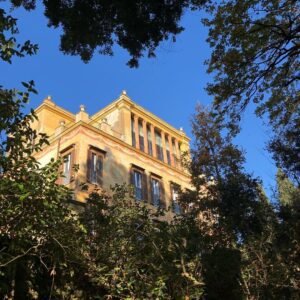
 Teatro Olimpico100 m
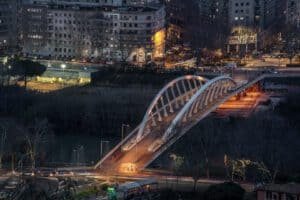
- Ponte della Musica – Armando Trovajoli200 m
- Flaminio400 m
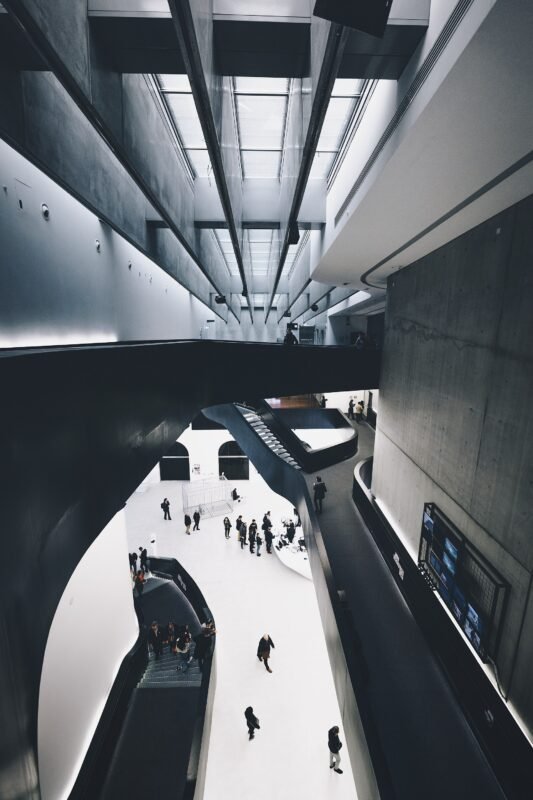
- MAXXI – National Museum of 21st Century Arts500 m
- Alberto Moravia House Museum700 m
- Villa Mazzanti700 m

Upcoming events nearby
- Maurizio Battista at Teatro Olimpico, Se non vinco… imparo, November 4 to 29, 2026100 m
- Angelo Pintus at Teatro Olimpico, Loro non sanno niente, January 14 to February 14, 2027100 m
- Slava’s SnowShow at Teatro Olimpico, January 27 to February 7, 2027100 m
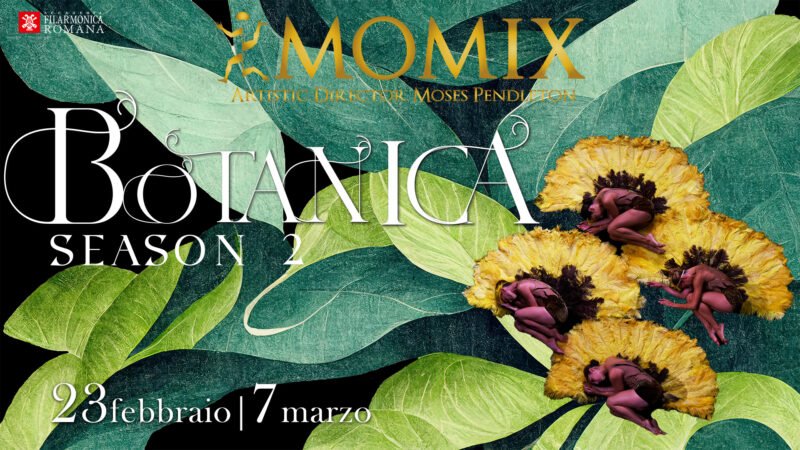
- MOMIX Botanica at Teatro Olimpico, February 23 to March 7, 2027100 m



You might also like
- Cinemagic by Disguido at Teatro Olimpico, April 7 to 11, 2027
- Le Coliche in 10 anni di Coliche e siamo ancora vivi at Teatro Olimpico, March 25 and 31, 2027
- Marta e Gianluca in Io e Gianlu at Teatro Olimpico, March 23 and 24, 2027
- PanPers, Terapia di coppia at Teatro Olimpico, March 16 and 17, 2027
- Coppia aperta quasi spalancata with Chiara Francini at Teatro Olimpico, March 12 to 14, 2027
- Io Marte Tu Mercole with Scintilla and Federica Camba at Teatro Olimpico, March 10, 2027