Igor Sibaldi at Teatro Olimpico with Vuoi?, November 10, 2026
In short. Igor Sibaldi at Teatro Olimpico in Rome, Piazza Gentile da Fabriano 17, presents the talk Vuoi?
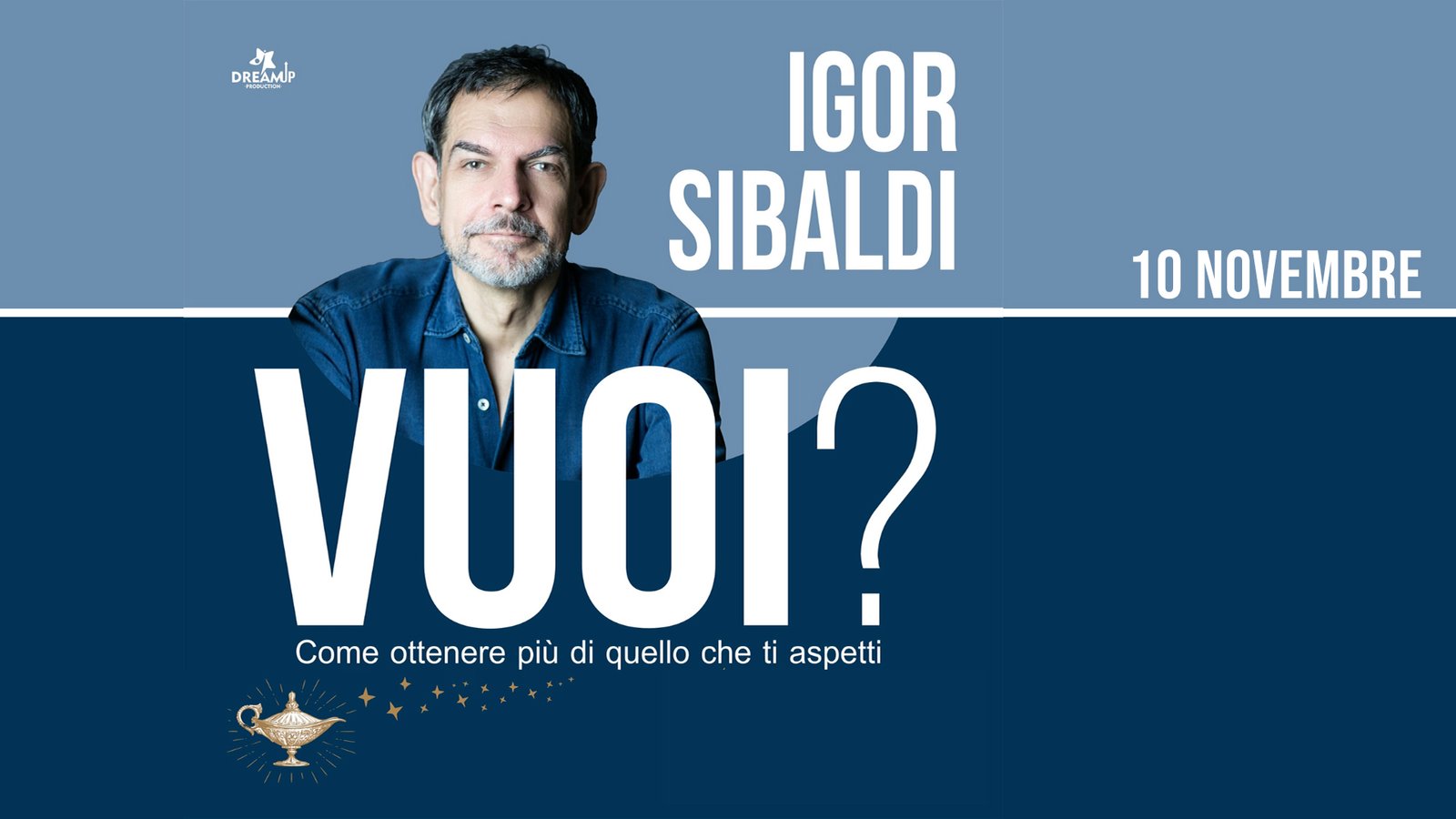
Igor Sibaldi at Teatro Olimpico in Rome, Piazza Gentile da Fabriano 17, presents the talk Vuoi? Come ottenere più di quello che aspetti (Do You Want? How to Get More Than You Expect) on Tuesday, November 10, 2026, at 20:30, with the end expected at 22:00. You get there on metro line A to Flaminio and then tram 2 to Piazza Mancini terminus, from where you walk about 500 meters along Viale del Pinturicchio, or alternatively bus 910 from Termini to the Pannini stop, about 300 meters away. The prices published by the theater range from 20 euros (side balcony with balustrade) to 30 euros (poltronissima gold), plus a booking fee of 3 to 4.50 euros depending on the section. Orchestra seats and center balcony cost 25 euros. Tickets are sold on the venue's official website, with an online fee of 1.50 euros per ticket, or at the theater box office.
Language: performed in Italian. No English version or English surtitles are announced.
A single evening, an hour and a half, one man on stage talking about will. Sibaldi is a writer who fills theaters without music and without sets, and that already says something. The theme of Vuoi? is the simplest and the slipperiest there is: what it means to really want something, and why we do it so rarely. Those who know him from his books know what to expect. Those who don't will find here who he is, what he has written, what he'll say, and how to plan the evening in Flaminio.
Igor Sibaldi, Vuoi? in brief
Vuoi? (Do You Want?) is a talk by Igor Sibaldi scheduled at Teatro Olimpico in Rome on Tuesday, November 10, 2026, at 20:30, in the theater's 2026/2027 season.
Date and time
It's a one-time event: Tuesday, November 10, 2026, show at 20:30, with the end given by the theater as 22:00. An hour and a half of talk, with no intermission announced.
The format
The theater calls it a talk: a lecture in a theater, built for a large audience. It's the format Sibaldi has worked in for almost 30 years, and one that has helped make his name known well beyond the readers of his books.
The season
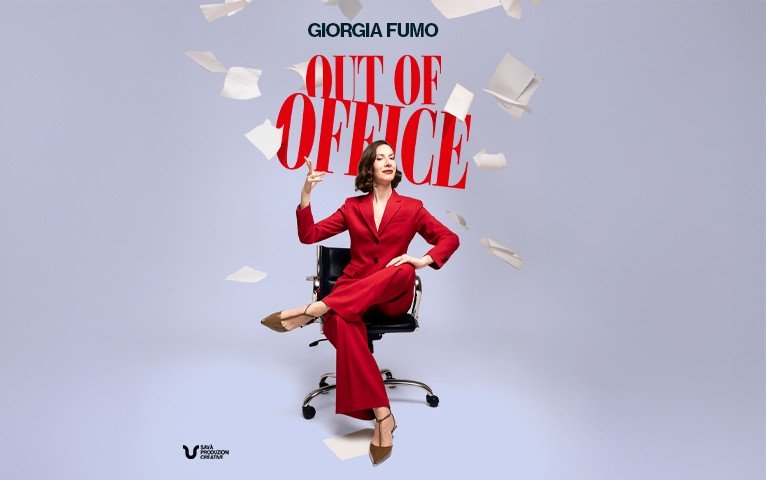
The talk is part of Teatro Olimpico's 2026/2027 Season category, between the shows of Maurizio Battista, who has the stage almost all of November, and comedian Giorgia Fumo with Out Of Office.
A Tuesday
November 10 is a Tuesday, the day when Battista, on stage at the Olimpico from November 4 to 29 from Wednesday to Sunday, leaves the stage free. Sibaldi takes the comedian's night off: a cohabitation that says a lot about the variety of this theater's program.
What the talk Vuoi? is about
The talk Vuoi? starts from a sharp statement, published by Teatro Olimpico in its presentation: being free means knowing how to want, and Sibaldi explains how to really want, with courage, without compromise and without illusions.
What wanting is not
The presentation proceeds by exclusion. Wanting isn't letting yourself be persuaded, it isn't daydreaming about your desires, it isn't obeying your needs and, above all, it isn't forcing yourself to make efforts of will. It's a reversal of the common idea, the will as a muscle to be trained, and the starting point of the whole evening.
What wanting is
Wanting, according to Sibaldi, is always discovering yourself and being amazed. It's changing your future and even your past, opening the way to hidden abilities, impulses, intuitions, possibilities different from the ones you're used to staying within.
A collective matter
The argument doesn't stay private. If you learn to want in everyday life, the presentation argues, you produce a new form of society. And precisely for this reason, according to Sibaldi, it's so rare for anyone to really want: the talk shows how many conditionings and how many fears, since childhood, block this experience of freedom, from guilt to advertising to politics.
The angels of wanting
Then there's the most typically Sibaldian part: the allies of wanting, which the presentation calls angels. Beauty, joy, sincerity and, surprisingly, discontent, irresponsibility, which can turn into a form of trust, and a few moments of solitude. The image chosen is that of Aladdin, who uses the magic lamp without asking anyone's permission.
Desiring and wanting
The presentation ends on a distinction that sums up the evening: desiring opens possibilities, but it's wanting that changes the trajectory. Those who have read Sibaldi's books on desires will recognize here a step forward, from desire as an exercise to will as a choice.
Who Igor Sibaldi is
Igor Sibaldi, born in Milan on June 15, 1957, to a Russian mother and an Italian father, is a writer, Slavicist, playwright and translator, a scholar of theology and depth psychology, and the author of more than 30 books translated into many languages.
His training in Milan
He graduated in 1981 in Slavic Languages and Literatures from the Università Statale di Milano. His double origin, Russian and Italian, is the key to the first half of his career: for him Russian isn't a language of study, it's a family language.
The Slavicist
His first works were translations. As early as 1977, before graduating, he translated Aleksandr Blok for the magazine Sipario. In 1979 he published his translation of Dostoevsky's Netochka Nezvanova, and in the 1980s he translated Blok, Vsevolod Ivanov and Yury Tynyanov for Editori Riuniti.
Tolstoy and Dostoevsky for Mondadori
Between the late 1980s and the 1990s Sibaldi became one of the leading names for Russian literature in Mondadori's editions. He translated and introduced Notes from Underground in 1987, edited Dostoevsky's Short Novels in 1990, The Brothers Karamazov in 1994 and The Idiot in 1995. For Tolstoy he edited All the Stories in 1991, the Short Novels in 1992, and in 1999 signed the translation of War and Peace. He also wrote the afterword to Bulgakov's The Master and Margarita and the introductory essays to Chekhov's stories, and translated Gogol for the volume of his Works.
The sacred scriptures
From Russian literature he moved on to sacred texts, with a philologist's method. He translated the Gospel of John from ancient Greek in the volume Il codice segreto del Vangelo, from 2005, and parts of Genesis and Exodus from ancient Hebrew in Il libro della Creazione and Storia di Abramo. His first essay in this field, I miracoli di Gesù e la tecnica dei miracoli nei Vangeli canonici, came out with Mondadori in 1988.
His thought
His thought, according to the biography published by Teatro Olimpico, comes from an original synthesis of references: Dostoevsky and Tolstoy, Carl Gustav Jung, Heraclitus, Carlos Castaneda, Theodor Adorno, Hegel, Sigmund Freud and the Bible. At its center is the idea that human beings must recover their most authentic dimension, their own Self, and that angels, understood as emanations of the unconscious, act as inner forces pushing in that direction.
The speaker
Since 1997 Sibaldi has given lectures and seminars in Italy, in Switzerland and in Central and North America, on topics such as freedom, desire, courage, consciousness, the Theory of Everything and the Technique of the 101 Desires. It's this activity, even more than the books, that has made him a name able to fill a hall of more than a thousand seats.
Igor Sibaldi's books: a bibliography to find your way
Igor Sibaldi's bibliography runs to more than 30 titles and spans novels, theater, philosophical and theological essays, with publishers such as Mondadori, Frassinelli, Sperling and Kupfer, Salani, Mursia and Tlon.
Angels and invisible masters
The best-known strand is that of angels and spirit guides: I maestri invisibili from 1997, Il frutto proibito della conoscenza from 2000, Il libro degli angeli from 2007, reissued in 2016 as Il libro degli Angeli e dell'io celeste. These are the books that built his widest audience.
Desires
The theme of Vuoi? has clear roots. In 2013 came Libro dell'abbondanza, in 2016 Il mondo dei desideri. 101 progetti di libertà for Tlon, in 2017 Guida ai desideri, and in 2024 Ribellarsi al destino. Impara a non rassegnarti e prendi sul serio i tuoi desideri, for Mondadori. The November 10 talk is the point of arrival of this path.
Russian literature revisited
Sibaldi has never abandoned his Russians. In 1996 he published I grandi peccatori, a history of Russian literature through its characters, and in 2017 Il coraggio di essere idiota, on happiness according to Dostoevsky.
The novels
Alongside the essays there's fiction: La congiura in 1994, La trama dell'angelo in 1995, Quando hai perso le ali in 2008, Eterno amore in 2019. In recent years he started a cycle with La Russia non esiste. Storia di Nil, from 2023, and La guerra è finita. Nil a Parigi, from 2025, both for Mondadori.
Theater
Sibaldi is also a playwright: Francesco e i burattini in 2013, Dioniso in 2015, Misura x misura. Elogio dell'impossibile in 2017. An author who writes for the stage knows how to hold an audience, and at Teatro Olimpico it shows.
Why go hear Igor Sibaldi live
Igor Sibaldi live is a different experience from his books: Teatro Olimpico describes his lectures as able to combine rigor, depth and clarity, bringing the great existential themes into everyday life and the world of work.
A wide-ranging audience
In the hall, at these events, you find longtime readers and curious newcomers, professionals, teachers, couples, groups of friends. You don't need to have read anything: the talk is designed for people who arrive without preparation.
Our opinion
You can be skeptical about angels and still be won over by the philologist. Sibaldi is first of all a great reader, of Dostoevsky, of Genesis, of Jung, and the pleasure of listening to him is in the way he moves from one text to another with ease. Anyone looking for a corporate motivation course has picked the wrong evening. Anyone looking for an hour and a half of thinking out loud will find it.
An evening for two
It's an evening that works well as a couple or among friends, because the best part comes after: on the way out, along the Lungotevere, you discuss what you really want. Few shows have this side effect.
Tickets and prices for Igor Sibaldi at Teatro Olimpico
Tickets for Vuoi? at Teatro Olimpico cost, according to the price list published by the theater, from 20 to 30 euros plus a booking fee ranging from 3 to 4.50 euros, with an online fee of 1.50 euros per ticket.
The sections
Poltronissima gold 30 euros plus 4.50 booking fee, side poltronissima 27 plus 4.10, orchestra 25 plus 3.80, balcony 25 plus 3.80, balcony with balustrade 24 plus 3.60, side balcony 23 plus 3.50, side balcony with balustrade 20 plus 3 euros. The theater specifies that the booking fee is always required when the ticket is issued.
Where to buy them
Tickets are sold on Teatro Olimpico's official website, from the show page, and at the box office in Piazza Gentile da Fabriano. For information the theater answers at biglietti@teatroolimpico.it.
Where to sit
For a talk the voice is everything, and the view matters less than for a dance show. The center balcony, at the same price as the orchestra, offers a frontal view and excellent sound. The Olimpico's sloped, amphitheater-style orchestra guarantees good visibility even from the back rows.
A curious fact about Igor Sibaldi, Vuoi? at Teatro Olimpico, November 10, 2026
The curiosity lies in Sibaldi's biography, and it's one that surprises even his readers. The author of the books on angels and desires, who today fills theaters with his talks, was for 20 years one of the leading translators of Russian literature in Italy. Anyone who has read War and Peace in the Oscar Mondadori series, or The Brothers Karamazov and The Idiot with his introductory essays in the Mondadori editions of the 1990s, has probably already come across his name without connecting it to the speaker.
The second curiosity concerns his beginnings. Sibaldi published his first translation, Aleksandr Blok's The Puppet Show, in the theater magazine Sipario in the summer of 1977, at 20, four years before graduating. The first text he translated, then, was a text for the stage: a small Symbolist drama. Almost half a century later, that young man from Milan steps onto a Roman stage to speak alone to about a thousand people.
The third concerns the theme. The title Vuoi? is a question, with a question mark. It isn't the promise of a method, it's a provocation aimed at those sitting in the audience: before asking yourself how to get something, ask yourself if you really want it. It's the same gesture as Dostoevsky, whom Sibaldi translated for years: asking the question and leaving the weight of the answer to the reader.
Teatro Olimpico: from 1930s cinema to home of the spoken word
Teatro Olimpico in Piazza Gentile da Fabriano has been active as Cine Teatro Olimpico since 1936 and as Teatro Olimpico since 1981. It's on the Lungotevere Flaminio, at the level of Ponte della Musica, and it hosts most of the concerts of Accademia Filarmonica Romana.
The construction
The block that includes the theater was built in 1935 and 1936 for the Società Generale Immobiliare, in the years when the Flaminio district and the Foro Italico were being created. The complex occupies the northern part of the block between Piazza Gentile da Fabriano, Lungotevere Flaminio, Viale del Vignola and Via Giorgio Vasari.
Cinema, variety, music
Until the 1950s the hall worked mainly as a cinema, with variety acts during the intermissions. After the war Accademia Filarmonica Romana rented it for its season, and under the presidency of Adriana Panni it went through a period of great vitality.
1980: the citizens' theater
In the late 1970s the owner and the cinema company went bankrupt and the building was put up for sale. Adriana Panni promoted a subscription and brought many citizens together in Teatro Olimpico spa, which bought the property in 1980. Since 1981 the program has opened decisively to drama, dance, comedy and, in recent years, to lectures and talks by writers and thinkers.
The hall
The hall has 1,410 seats, 966 in the orchestra and 444 in the gallery. The orchestra is arranged as a sloped amphitheater, and the gallery has a wide horseshoe shape. The stage measures about 10 meters deep by 12 wide: for a single person it's an enormous space, and filling it with the voice alone is a test of performance.
Something nobody tells you about Igor Sibaldi, Vuoi? at Teatro Olimpico, November 10, 2026
What's rarely said is that a lecture in a 1,410-seat theater is a very different experience from a lecture in a bookstore. In a small room you listen to an author. In a hall like the Olimpico you take part in a collective event, with its reactions, its sudden laughter, the silences of a thousand people. Sibaldi knows this dynamic well, after almost 30 years of lectures, and he uses it: the audience becomes part of the talk.
The second thing concerns the time. The theater gives the end as 22:00, but talks of this kind tend to live on afterward, in the foyer, where readers stop to talk among themselves and, when possible, with the author. The theater doesn't announce a book signing: if it matters to you, bring your book with you and ask the house staff if a meet-and-greet is planned. Don't count on it, though.
The third point concerns the price. With tickets from 20 to 30 euros plus booking fee, Sibaldi's talk costs less than many comedy shows in the same season. For an hour and a half with one of Italy's best-known popularizers of philosophy and spirituality it's an honest deal, and the center balcony seats, at 25 euros, are the best compromise between cost and listening.
My advice for seeing Igor Sibaldi, Vuoi? at Teatro Olimpico, November 10, 2026
Arrive with a question. Not one to ask Sibaldi, but one to ask yourself: something you've wanted for a long time and have never really decided to want. The talk is built to work on this gap, and those who arrive with a concrete case in mind leave with something more than those who come only out of curiosity.
Second piece of advice, a practical one: bring a notebook and a pen. Sibaldi is a dense speaker, he quotes authors, texts, Hebrew and Greek words, and at the end of the evening many spectators would like to remember a title or a sentence. It's hard to write in the dark of the hall, but a few keywords are enough.
Third, about the evening: it's a Tuesday, and Flaminio on a weekday is quiet. Arrive 20 minutes early, take a short walk on Ponte della Musica before going in, and book dinner for after, not before. Leaving at 22:00 and sitting down at a table to discuss what you really want is the best way not to lose what you've heard.
Finally, if you come as a group, buy your tickets together: adjacent seats, in a 1,410-seat hall, sell out before single ones.
Another well-known fact, yet seldom mentioned
Teatro Olimpico doesn't belong to a public body or to a big group: it belongs to a joint-stock company born in 1980 from a citizens' subscription. Many people in Rome know this, but it's rarely mentioned.
In the late 1970s the theater was at risk of disappearing. The company that owned the building and the cinema company that ran it had gone bankrupt, and a big neighborhood cinema could easily become something else. Adriana Panni, then president of Accademia Filarmonica Romana, raised capital among professionals, entrepreneurs, intellectuals and ordinary enthusiasts. Teatro Olimpico spa was born, with a broad shareholder base, and it bought the building from the Società Generale Immobiliare and still owns it. Panni was its president from 1980 to 1994.
The consequence can be read in the program. A private theater that has to support itself needs full houses, and this explains its openness to very different genres: comedy, international dance, concerts, the Filarmonica, and evenings of talk like Sibaldi's. There's a subtle consistency between the theater's history and the theme of the talk. A group of citizens, in the late 1970s, really wanted something, and they got it. Vuoi? is heard in a hall that is itself the proof of what Sibaldi talks about.
How to get to Teatro Olimpico
Teatro Olimpico can be reached on metro line A to Flaminio and then tram 2 to Piazza Mancini terminus, from where it's about 500 meters on foot along Viale del Pinturicchio. These are the directions given by the theater itself.
Metro A and tram 2
From Flaminio station, in Piazzale Flaminio, tram 2 takes you to Piazza Mancini terminus. From there you walk along Viale del Pinturicchio to Piazza Gentile da Fabriano: five minutes on foot. From Termini the route is the same.
Bus
The lines with stops near the theater listed by the Olimpico are 220, 232, 233, 280, 301, 446, 48, 910 and 911, plus tram 2. The 910 leaves from Termini toward Mancini: get off at the Pannini stop, turn left onto Viale del Pinturicchio and walk about 300 meters. Lines 200, 201, 53 and the night line n24, useful for getting back, also reach Piazza Mancini.
Roma Viterbo railway
If you're coming on the Roma Nord line, get off at Flaminio and take tram 2 to Piazza Mancini.
By car
From the center take Viale del Muro Torto toward Piazzale Flaminio, then Via Luisa di Savoia, Lungotevere Arnaldo da Brescia and Lungotevere delle Navi to Lungotevere Flaminio. From the north you cross Ponte Duca d'Aosta from the Foro Italico. On Tuesdays parking is less difficult than on weekends, but in the area it's never a given.
The right photo to take at Igor Sibaldi, Vuoi? at Teatro Olimpico, November 10, 2026
The right photo, for an evening like this, is taken outside, on Ponte della Musica, which is right in front of Piazza Gentile da Fabriano. The bridge crosses the Tiber in front of the theater and leads to the Foro Italico: on a November evening, with the lights on and the dark river below, it offers a double shot, on one side the Rationalist facade of the Olimpico with its high travertine base, on the other the bank of the Foro Italico.
The second photo is of the lit facade, with the sign and the audience waiting. The best moment is about 20 minutes before 20:30, when the square fills up. Shoot from the opposite side, to get the whole building.
The third, for readers, is a simple idea: your favorite Sibaldi book, with the cover clearly visible, resting on the armrest of your seat before the lights go down. It's a photo that tells the story of the evening better than a selfie in front of the poster, and it doesn't bother anyone.
During the talk, on the other hand, no photos and no videos. A lecture lives on concentration, and the glow of a screen in a dark hall distracts the speaker and those sitting behind. If you want a souvenir of the hall, photograph the round foyer before going in.
Some important events that happened here
On March 4, 1965, Pierre Boulez conducted a concert at Teatro Olimpico with the Italian premiere of Igor Stravinsky's Abraham and Isaac and the European premiere of his Elegy for J.F.K. It's perhaps the most important date in the hall's musical history. And there's a coincidence a Sibaldi reader will appreciate: Abraham and Isaac is a sacred ballad on the Hebrew text of Genesis, the same book Sibaldi translated from ancient Hebrew in Il libro della Creazione and Storia di Abramo.
In the following years the Olimpico hosted productions in which art and music met: Stravinsky's L'Histoire du soldat in October 1966 with a backdrop by Giacomo Manzù, Niccolò Castiglioni's Tre misteri in 1968 with a sculpture by Mirko, Stravinsky's Mass in 1975 with the golden forms of Corrado Cagli.
1980 is the turning point: Teatro Olimpico spa was born and bought the building. From 1981 the hall changed name and vocation. Moses Pendleton's Momix debuted here in April 1982, the Lindsay Kemp Company brought A Midsummer Night's Dream in 1989, Mikhail Baryshnikov came with the White Oak Dance Project in October 1995, the Bolshoi Ballet in September 1996, the Béjart Ballet Lausanne in 2004.
In the 2009/2010 season the Agis rankings placed the Olimpico second in Rome and seventh in Italy by number of spectators: the result, in numbers, of a bet made 30 years earlier by a group of citizens.
Who has passed through Igor Sibaldi, Vuoi? at Teatro Olimpico, November 10, 2026
The stage of Teatro Olimpico has seen musicians such as Arturo Benedetti Michelangeli, Jessye Norman, Zubin Mehta, Giuseppe Sinopoli, Luigi Dallapiccola and Pierre Boulez, linked to the long presence of Accademia Filarmonica Romana.
For pop and singer-songwriter music, the theater's memory includes Marillion in February 1988, Lucio Dalla with Henna in April 1994, Pooh in October of the same year, Giorgio Gaber with Un'idiozia conquistata a fatica on January 28, 1998. For dance, Baryshnikov, Joaquín Cortés, Lindsay Kemp, Maurice Béjart, the Bolshoi, Antonio Gades and Momix.
For the spoken word and the stage, the theater remembers Dario Fo and Gigi Proietti, who brought A me gli occhi here in May 1996, and then Enrico Brignano, Vincenzo Salemme, Aldo Giovanni e Giacomo, Neri Marcorè, Lillo e Greg, Massimo Ranieri. Among the protagonists of its history it also names Marco Travaglio: a sign that on this stage the monologue of ideas, not only comic ones, already has a tradition.
On November 10, 2026, Igor Sibaldi joins them, a Slavicist, translator of Tolstoy and Dostoevsky, interpreter of Genesis and the Gospel of John. In a theater that has seen Stravinsky conducted by Boulez and Gaber with his theater-song, a man who talks about will with Dostoevsky in one hand and the Bible in the other isn't out of place. On the contrary, it confirms a vocation the Olimpico has cultivated for more than 40 years: being home to every genre.
Flaminio around Teatro Olimpico
Teatro Olimpico is in the Flaminio district, north of Piazza del Popolo, in an area that in the last 20 years has become one of Rome's cultural hubs, with Auditorium Parco della Musica, the MAXXI and Ponte della Musica.
Ponte della Musica and the Foro Italico
Opposite the theater, Ponte della Musica leads to the other bank of the Tiber, to the Foro Italico, built in the same years as the theater. A walk before the talk, among the architecture of the 1930s, is the best way to get into the evening.
The Auditorium and the MAXXI
A short distance away are Auditorium Parco della Musica and the MAXXI. Anyone coming from outside Rome can combine an exhibition in the afternoon with Sibaldi in the evening.
Milvian Bridge
Going up the Tiber you reach Milvian Bridge, with its square full of bars and restaurants, a few minutes away by taxi after 22:00.
Toward the center
In the opposite direction, along Via Flaminia, you find the National Etruscan Museum of Villa Giulia, on the edge of Villa Borghese, and then Piazza del Popolo, where tram 2 starts.
Where to eat before or after the talk
Around Teatro Olimpico, between Piazza Mancini, Via Flaminia and Piazza Gentile da Fabriano, there are pizzerias, trattorias and bars frequented by the audiences of the theater and the Auditorium, with a neighborhood offering free of tourist pretensions.
Before 20:30
With a 20:30 start, a quick dinner at 19:00 is the most practical solution: a pizza, a plate of pasta, a tramezzino at the bar. Avoid arriving in the hall with the check still to be paid.
After 22:00
With the end expected at 22:00, dinner afterward is the best choice. On Tuesdays the places in Flaminio are quiet, and at Ponte Milvio the kitchens stay open late even on weekdays.
As a group
For a group it's best to book a table before buying the tickets. The neighborhood is residential, and on show nights the places closest to the theater fill up in the same half hour.
Accessibility at Teatro Olimpico
Anyone with reduced mobility who wants to attend Igor Sibaldi's talk at Teatro Olimpico should contact the box office before buying, at biglietti@teatroolimpico.it, to find out which seats are suitable and how to get in.
The orchestra is arranged as a sloped amphitheater, and the gallery is on the upper floor: these are things to consider when choosing a section. For anyone with hearing difficulties, in a talk that relies entirely on the voice, it's best to ask the box office for the seats with the best sound, usually central ones.
November in Rome: the season of indoor evenings
November is the month when the Roman theater season gets into full swing, and at Teatro Olimpico Sibaldi's talk falls in a month dominated by the run of Maurizio Battista, Se non vinco... imparo, from November 4 to 29.
For those coming from out of town it's a good time to visit Rome: fewer crowds than in spring, museums open, full programs. The evenings get shorter and the rains begin: an umbrella and a waterproof jacket are the right equipment for the walk from the tram to the theater. A day between Flaminio and the center, with Sibaldi in the evening, is a way of seeing the city you won't find in guidebooks.
Frequently asked questions about Igor Sibaldi at Teatro Olimpico
When is Igor Sibaldi at Teatro Olimpico in Rome?
Igor Sibaldi is at Teatro Olimpico in Rome on Tuesday, November 10, 2026, at 20:30 with the talk Vuoi? Come ottenere più di quello che aspetti. The theater gives the end as 22:00: an hour and a half of lecture, on a single date.
How much are tickets for Igor Sibaldi in Rome?
Tickets for Igor Sibaldi at Teatro Olimpico cost from 20 euros in the side balcony with balustrade to 30 euros in the poltronissima gold, plus a booking fee of 3 to 4.50 euros. Orchestra and center balcony cost 25 euros plus 3.80. Online there's an added fee of 1.50 euros per ticket.
Where do you buy tickets for Igor Sibaldi's Vuoi?
Tickets for Igor Sibaldi's Vuoi? are sold on Teatro Olimpico's official website, from the show page, or at the box office at Piazza Gentile da Fabriano 17. For information the theater answers at biglietti@teatroolimpico.it.
What is Igor Sibaldi's talk Vuoi? about?
Igor Sibaldi's talk Vuoi? is about what it means to really want: not letting yourself be persuaded, not daydreaming, not forcing yourself to make efforts of will, but discovering yourself. Sibaldi talks about the conditionings that block wanting and about its allies, from beauty to joy to discontent.
Who is Igor Sibaldi?
Igor Sibaldi is a writer, Slavicist and translator born in Milan in 1957 to a Russian mother and an Italian father. He has translated Tolstoy and Dostoevsky, the Gospel of John and parts of Genesis, has written more than 30 books and since 1997 has given lectures in Italy, Switzerland and America.
How do you get to Teatro Olimpico by public transit?
Teatro Olimpico can be reached on metro line A to Flaminio and tram 2 to Piazza Mancini, then about 500 meters on foot. Alternatively, bus 910 from Termini to the Pannini stop, about 300 meters from the theater.
How many seats does Teatro Olimpico have?
Teatro Olimpico in Rome has 1,410 seats: 966 in the orchestra, arranged as an amphitheater, and 444 in the horseshoe-shaped gallery. For a talk the center balcony offers a good compromise between price, view and sound.
Final advice
People usually go to the Olimpico to laugh. This time it's worth going to think. Sibaldi isn't for everyone, and he doesn't claim to be: those looking for recipes will be disappointed, those who accept an uncomfortable question will leave with something to do. My advice is clear: go as a couple, sit in the center balcony, and book dinner for afterward. That's when the evening really begins.
Article written by the editorial team of Tour Leader Pro, contact them for Private/Corporate/V.I.P. Tours and Experiences.
Planning a trip to Rome? The English-language guides for visiting the city are on ItalyPlanner.com.
Contact Information
Nearby
 Teatro Olimpico100 m
- Ponte della Musica – Armando Trovajoli200 m
- Flaminio400 m
- MAXXI – National Museum of 21st Century Arts500 m
- Alberto Moravia House Museum700 m
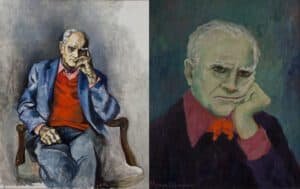
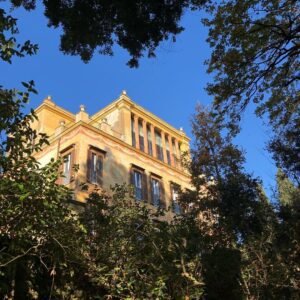
- Villa Mazzanti700 m

Upcoming events nearby
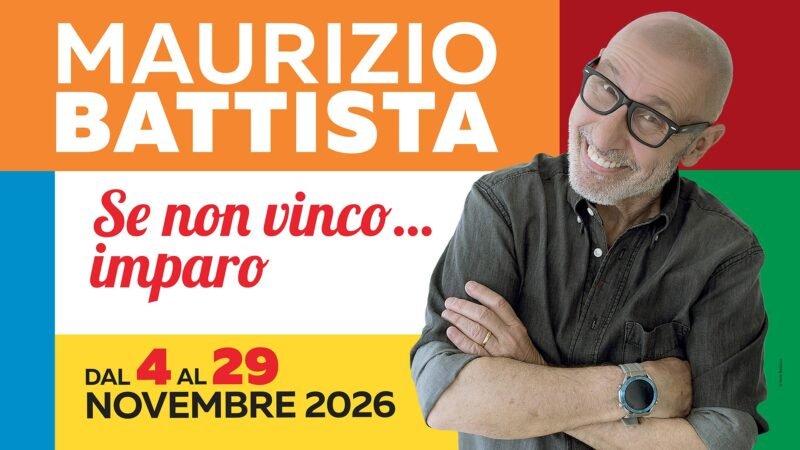
- Maurizio Battista at Teatro Olimpico, Se non vinco… imparo, November 4 to 29, 2026100 m
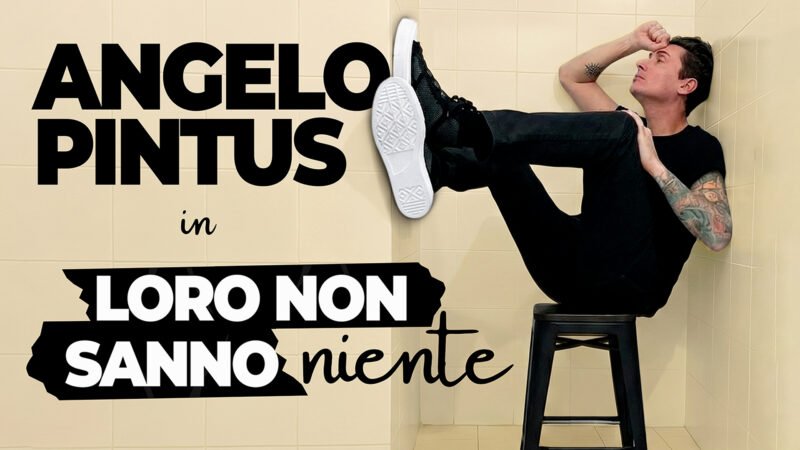
- Angelo Pintus at Teatro Olimpico, Loro non sanno niente, January 14 to February 14, 2027100 m
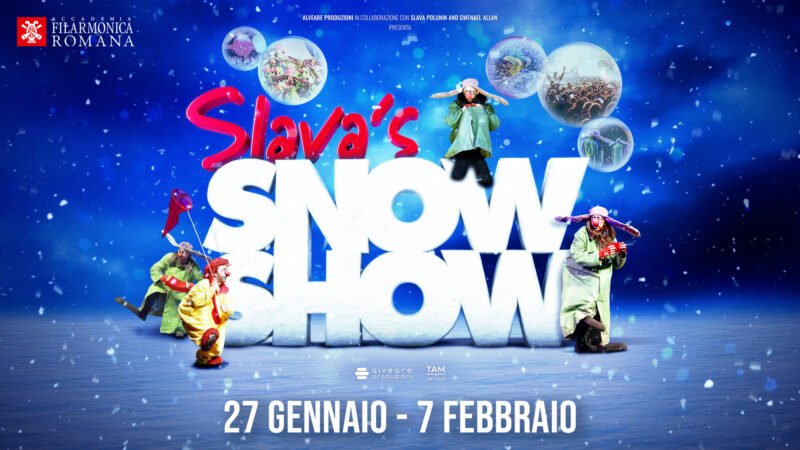
- Slava’s SnowShow at Teatro Olimpico, January 27 to February 7, 2027100 m
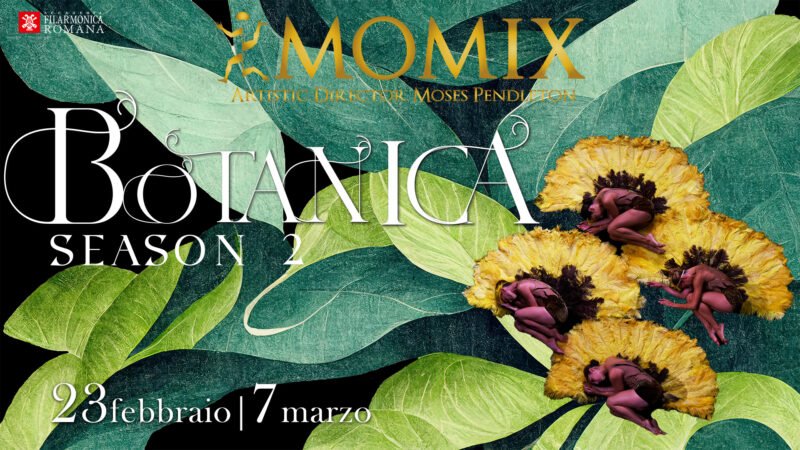
- MOMIX Botanica at Teatro Olimpico, February 23 to March 7, 2027100 m
You might also like
- Giorgia Fumo, Out Of Office at Teatro Olimpico, November 16 and 17, 2026
- Ghemon in La prima volta, l’ultima volta, l’unica volta at Auditorium Parco della Musica, April 19, 2027
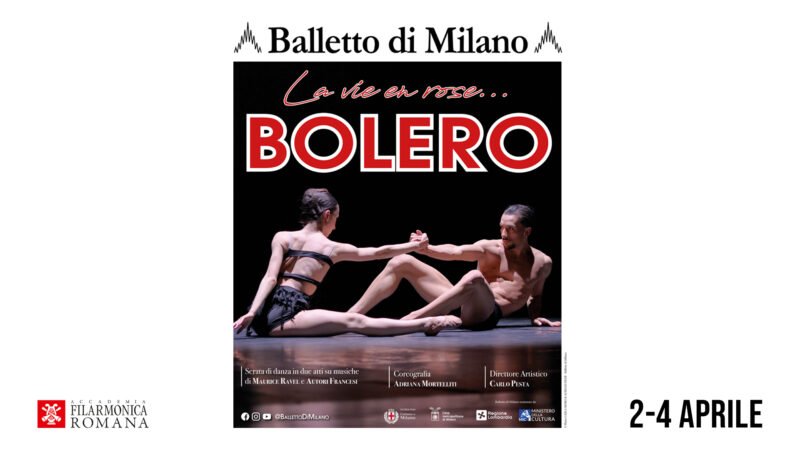
- La Vie en Rose and Bolero by Balletto di Milano at Teatro Olimpico, April 2 to 4, 2027
- Le Coliche in 10 anni di Coliche e siamo ancora vivi at Teatro Olimpico, March 25 and 31, 2027
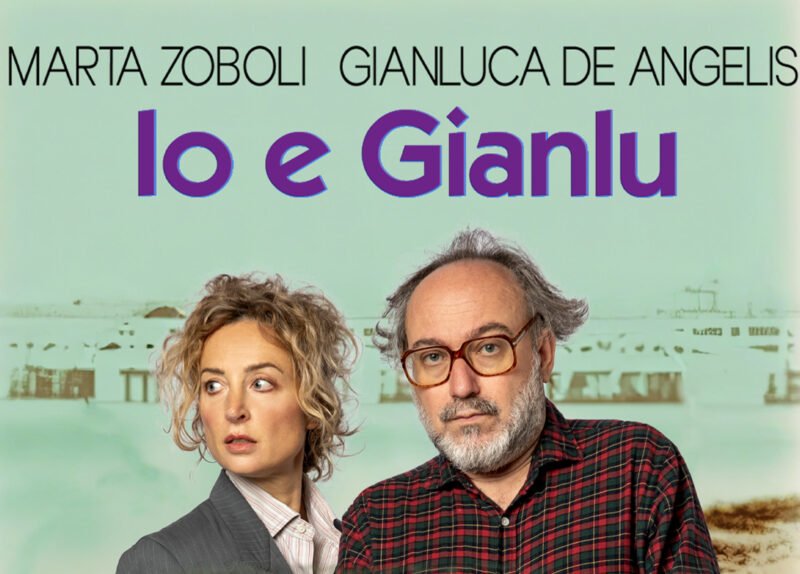
- Marta e Gianluca in Io e Gianlu at Teatro Olimpico, March 23 and 24, 2027
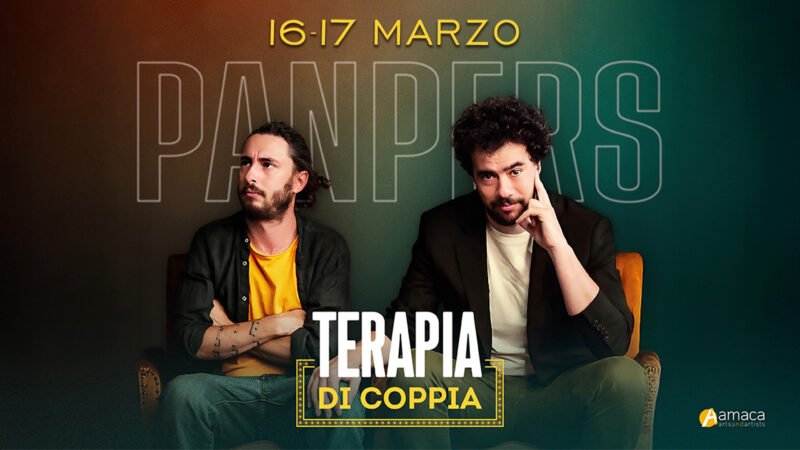
- PanPers, Terapia di coppia at Teatro Olimpico, March 16 and 17, 2027