Radici nel Cemento at Auditorium Parco della Musica, November 5, 2026
In short. Radici nel Cemento play Teatro Studio Borgna at Auditorium Parco della Musica Ennio Morricone, Viale Pietro de Coubertin 30, Rome, on Thursday, November 5, 2026 at 20:00.
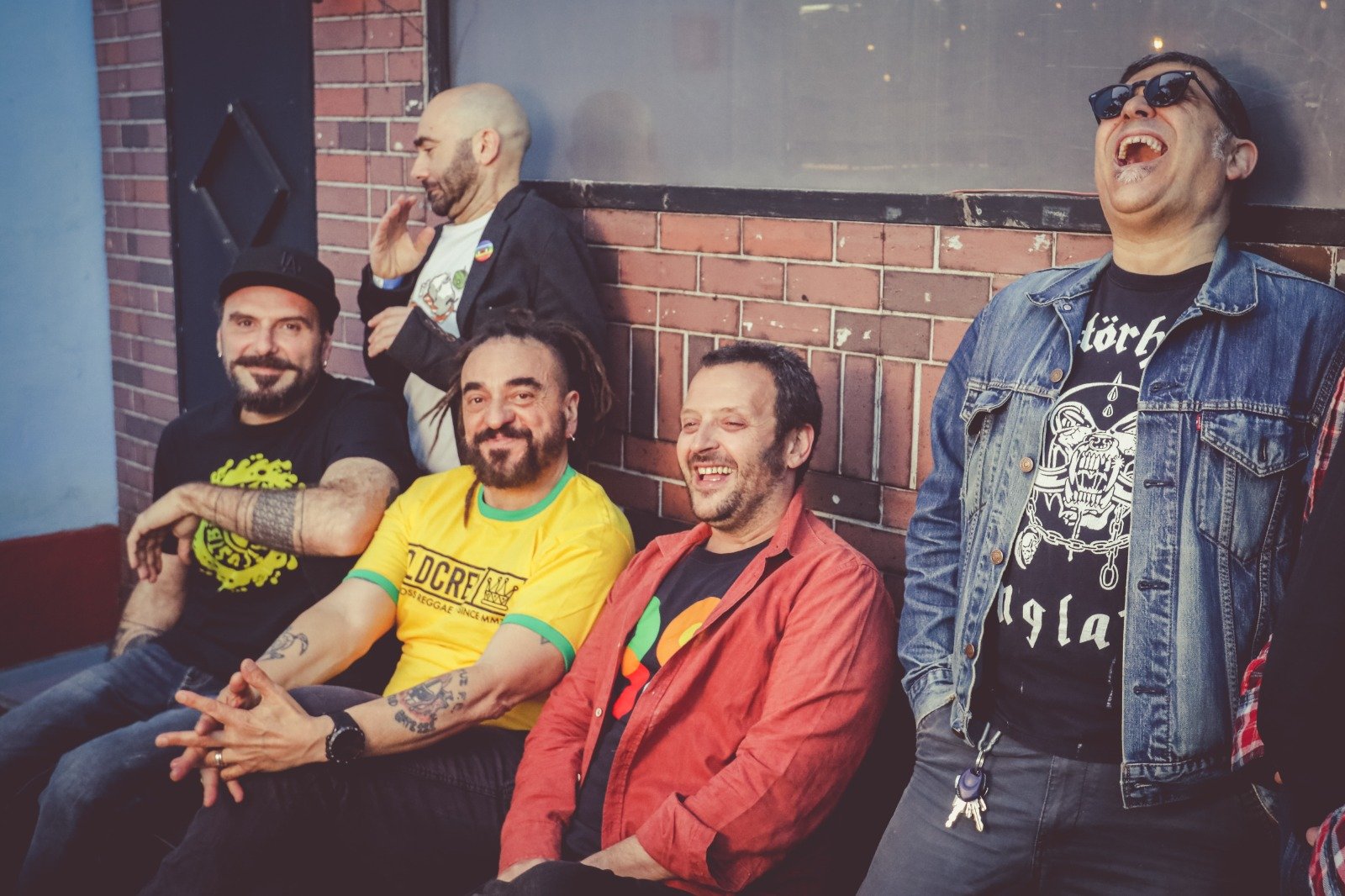
Radici nel Cemento play Teatro Studio Borgna at Auditorium Parco della Musica Ennio Morricone, Viale Pietro de Coubertin 30, Rome, on Thursday, November 5, 2026 at 20:00. You get there on Metro A to Flaminio and then tram 2 to the Flaminia/Reni or Apollodoro stops, or on buses 910, 982 and 53, which stop in front of the entrance. The official Auditorium website lists tickets from €17. They're sold from the event page on auditorium.com, which links to the presale network authorized by the organizers, or at the complex's box office.
Radici nel Cemento at the Auditorium in brief
The Radici nel Cemento concert is a single date, in a 300-seat hall, as part of the Auditorium Parco della Musica Pop/Rock program. For a band born on the Roman coast more than 30 years ago, it's a homecoming in one of the most intimate halls in the city.
Date, time and hall
Thursday, November 5, 2026, 20:00, Teatro Studio Borgna. It's a concert hall schedule, not a club one: it starts early and you leave in time to get home by public transport. Be in the foyer half an hour before.
Tickets and prices
The Auditorium lists a starting price of €17. Price bands and availability are on the official event page, from which you buy on the authorized network. The complex's box office, on Viale Pietro de Coubertin, remains the alternative if you prefer to buy in person.
The genre
Reggae above all, with dub touches and the faster pace of rocksteady and ska. It's the language the band has played since 1993, and the Auditorium page links it to a specific era: when this music was, on Italian streets, a form of community and social life.
Who it's for
For people who danced to the offbeat in the 1990s in social centers and at street parties, and for those who know that era only by hearsay. A seated hall like the Borgna changes the rules: you listen more, you dance in the aisles, and the sound reaches the last row clearly.
What you'll hear at the Radici nel Cemento concert
The November 5 concert comes after a 2025 that the Auditorium page calls the band's year of maturity and after the release, from March 21, of a series of new singles that began with «Se resto solo». The set list isn't published, but the repertoire the band builds its concerts on spans 30 years of records.
The new singles
The Auditorium describes «Se resto solo» as an intimate, introspective song, the first in a series of releases that over the summer were joined by guests tied to the group's long career. Reggae remains the soul of the story: at the center are Daniele Coccia's voice and Giandomenico Anellino's guitar, which converses with the other instruments and, according to the official presentation, creates an unusual atmosphere for the genre.
The classic repertoire
If you have the records at home, you'll recognize titles like «Sogno albanese», the band's first music video, «Alla rovescia», «Pappa e ciccia», «Echelon», «Ansai come ce piace» and «La ginnastica der core». They may not all be there: a band with eight studio albums has to choose, and the fun of a night like this is finding out what's left out.
The family covers
The group has a long habit of reinterpretations. The Clash's «Guns of Brixton», recorded in 1998 with Laurel Aitken and Fermin Muguruza. Renato Zero's «Mi vendo» turned into ska. «Skarabiniere» by Filo da Torcere, a song from the early 1990s Rome ska scene. The Pogues' «Fiesta» on the live album. They're signs of a precise taste, between English punk, Italian song and folk tradition.
The sound in a concert hall
Reggae is music of bass and drums, and in a club the bass often swallows everything. Teatro Studio Borgna, with its wooden walls and movable acoustic panels, instead brings out the horns, the offbeat guitars and the voices. It's a rare chance to hear this music in concert hall conditions.
Radici nel Cemento: biography of a band from the Roman coast
Radici nel Cemento are a reggae group from Fiumicino, formed in 1993 under the English name Roots in Concrete and renamed Radici nel Cemento in May 1995, when the lineup settled and the concerts in Rome and the surrounding area began.
The coast and the name
The name says it all: Caribbean roots planted in the concrete of a coastal suburb, among the airport, the canal port and apartment blocks. In the early years the group played mostly in the Rome area, in the self-managed circuits that in that decade were the real concert network for independent bands.
The first record with Gridalo Forte
In 1996 the first album came out, titled with the band's name, on Gridalo Forte Records, the Rome label tied to the city's ska scene. The record was well received and took the group on tour in Italy, with dates also in France, Spain and Switzerland.
Charlie Anderson and Laurel Aitken
In 1997 the band worked with Charlie Anderson of the Selecter on two concerts in Rome. The following year it backed Laurel Aitken, known as the Godfather of Ska: for an Italian reggae and ska group it was a kind of anointing. In that same 1998 the second album came out, «Popoli in vendita», preceded by the single «Guns of Brixton» with Aitken and with Fermin Muguruza, singer of the Basque bands Negu Gorriak and Kortatu.
Alla rovescia and the collaborations
The third record, «Alla rovescia», arrived in 2001 and is the most diverse of the early works. Guests include Roy Paci and Madaski of Africa Unite, with Evy Arnesano on keyboards and backing vocals. Three music videos came from the record: «Alla rovescia», «Pappa e ciccia» and «Echelon».
UB40 and Alton Ellis
On the following tour the band opened for UB40 at the Palavobis in Milan and at Rototom Sunsplash served as backing band for Alton Ellis, one of the fathers of Jamaican rocksteady. These dates explain the respect the group enjoys on the European reggae scene.
The V2 years
In 2004 «Occhio!» came out on V2 Records, with the video for «Ansai come ce piace», and in 2006, again on V2, «Ancora non è finita», the record with the covers of «Mi vendo» and «Skarabiniere». In 2008 the band released «Il paese di Pulcinella» on its own label, RNC Produzioni.
A new voice and Fiesta
In 2009 Adriano Bono, on vocals, ukulele and flute since 1993, left the group. The band reorganized around Rastablanco and in 2011 released its first live album, «Fiesta!», recorded on the 2010 tour. In 2013 came «7», its seventh studio work, followed by a long series of singles, from «Soleluna» to «L'acqua».
Fuego y Corazòn and the latest singles
In 2016 came the single «La ginnastica der core», and in 2018 the album «Fuego y Corazòn» on Goodfellas and the single «Il valore del lavoro vero». Then «Music biz» in 2023 and «Nuove vibrazioni» in 2024. In 2025 the tour mentioned on the Auditorium page went through Festa in Tenda, TNT Fest, Bababoom Festival, Reggae Fest, A Piedi Nudi Festival, the Radio Onda d'Urto festival, Notte dei Briganti and Reggae For Gaza in Rome.
The lineup
Over the years the band has changed many musicians: the classic lineup included vocals and guitars, a horn section with saxophones and trombone, drums and a dub mixing engineer. The Auditorium's presentation for the Rome concert highlights Daniele Coccia's voice and Giandomenico Anellino's guitar.
The scene Radici nel Cemento come from
The Auditorium places Radici nel Cemento among the most representative bands of a generation, alongside Almamegretta, 99 Posse, Sud Sound System, Modena City Ramblers, Africa Unite and Pitura Freska. It's the scene that in the 1990s brought reggae and offbeat music into Italian dialects and themes.
Rome and Gridalo Forte
In Rome that era has a symbolic label, Gridalo Forte Records. In 1991 it released «Balla e difendi», a compilation with four Rome bands: Filo da Torcere, Banda Bassotti, AK47 and Red House. Five years later the same label produced the Radici nel Cemento debut, and in 1997 included them on the compilations «Para todos todo nada para nosotros» and «Punk reggae party».
Compilations and tributes
The group's name appears on many compilations from those years: «Radical Mestizo Dospuntomil» in 1999, «Si reggae forte» in 2003 and «Strummer. A Clash Tribute» in 2006, with a new version of «Guns of Brixton». In 1999 the band also took part in Fermin Muguruza's «Brigadistak sound system».
Our verdict
Among the bands of that generation, Radici nel Cemento are one of those that have stayed most firmly on the reggae course, without chasing pop. It's a choice that paid little in the charts and a lot in credibility: at the Borgna on November 5 you'll find a band that has never changed trade.
Teatro Studio Borgna, the concert hall
Teatro Studio Gianni Borgna is the smallest hall at Auditorium Parco della Musica: about 300 seats, a regular plan with no vertical elements, walls entirely paneled in cherry wood, and movable acoustic panels and curtains that let the hall's response be adjusted.
Who was Gianni Borgna
The hall is named after Gianni Borgna, for many years the city of Rome's councilor for culture and president of Fondazione Musica per Roma, the body that runs the complex. It's a tribute to the man who closely followed the birth of the Auditorium and its first season.
A flexible hall
The regular shape and variable acoustics make the Borgna the most adaptable hall in the complex: it hosts jazz, singer-songwriters, talks and children's shows. In the same fall it hosts the Roma Jazz Festival and concerts by singer-songwriters and producers. For reggae it's an unusual and happy choice.
Where to sit
With 300 seats, no seat is really far away. The central rows give the best balance between voice and instruments, and the front rows are for those who want to see the musicians' hands and feel the bass in their stomach.
Auditorium Parco della Musica Ennio Morricone
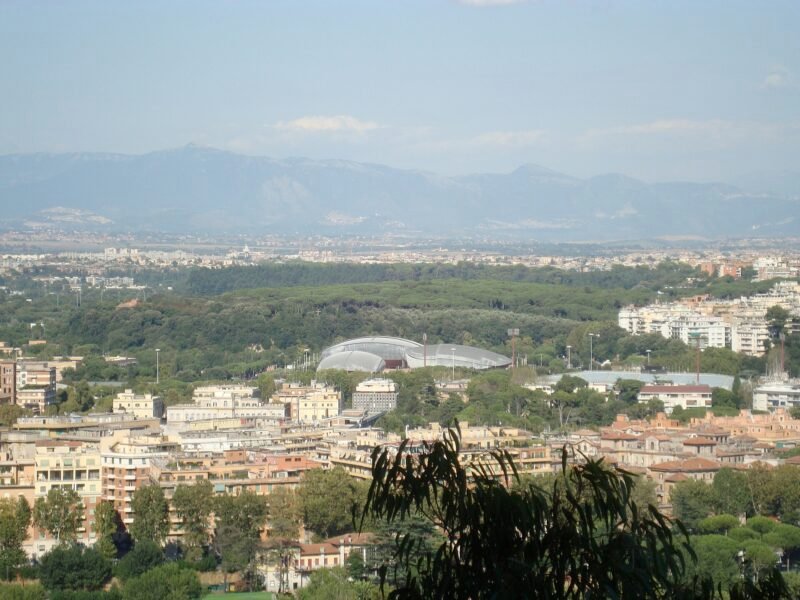
Auditorium Parco della Musica, at Viale Pietro de Coubertin 30, is the complex designed by Renzo Piano between Flaminio, Villa Glori and the Villaggio Olimpico. It opened in 2002, has been named after Ennio Morricone since 2020 and is run by Fondazione Musica per Roma.
The halls around the cavea
The complex covers about 55,000 square meters. The main halls are separate volumes, with brick bases and lead-sheet roofs, arranged around the open-air cavea named after Luciano Berio: Sala Santa Cecilia, Sala Sinopoli, Sala Petrassi and Teatro Studio Borgna. The acoustics were designed by Jürgen Reinhold of the Müller BBM studio in Munich.
More than 60 years without a hall
Rome had been without a large symphony hall since 1936, when the Augusteo was demolished. The debate lasted decades: the Villaggio Olimpico site was chosen in 1992, Piano won the competition in 1993, and construction ran from 1995 to 2002.
The Roman villa under the halls
During excavation, the remains of a Roman villa came to light, preceded by an Archaic period farm. The design was changed and two halls were moved west to save them. The remains can be seen between Sala Santa Cecilia and Sala Sinopoli, and the finds are displayed in a small museum under the cavea.
How to get to the Auditorium for the Radici nel Cemento concert
You reach Auditorium Parco della Musica on Metro A to Flaminio and tram 2 to the Flaminia/Reni or Apollodoro stops, or on buses 910, 982 and 53, which stop in front of the entrance.
Metro A and tram 2
It's the most reliable combination on a weeknight: metro to Flaminio, tram 2 along Via Flaminia, then a few minutes on foot. At 19:00 on a Thursday, traffic on Via Flaminia is heavy for cars, not for the tram.
Buses
Lines 910, 982 and 53 are convenient if you're coming from Parioli, Prati or the north of the city. November 5 is a weekday, so regular service applies. For the trip back, check the last buses before you go in.
By car
The Auditorium has paid on-site parking. Parking on the streets of the Villaggio Olimpico, a residential neighborhood, is difficult on concert nights: better to use the complex's parking or public transport.
On foot or by bike
From Piazza del Popolo you get there along Via Flaminia in about half an hour. From the Foro Italico you cross the Tiber on Ponte della Musica.
How to plan the Radici nel Cemento evening
A 20:00 concert on a weekday takes a little planning: leaving work, eating light or afterward, arriving with time to spare. And on November 5 there's more than one event at the Auditorium, so the forecourt fills up early.
Before the concert
If you arrive an hour early you can walk around the outside of the halls and look down on the remains of the Roman villa. It's a short walk, lit up in the dark, that shows how the complex is built.
After the concert
A concert like this usually ends around 22:00. The Flaminio neighborhood and the Milvian Bridge area have places open late for a drink or a pizza after the show.
With children
A seated hall at 20:00 is a good first concert for a curious kid: theater-level volume, no crush. For conditions of entry for minors, the Auditorium box office rules apply.
What's around the Auditorium
Flaminio is the neighborhood where 20th-century and contemporary architecture talk to each other: the 1960 Villaggio Olimpico, Zaha Hadid's MAXXI and Pier Luigi Nervi's Palazzetto dello Sport.
MAXXI
A few minutes' walk along Via Guido Reni is MAXXI, the national museum of 21st-century arts. An afternoon at the museum and an evening at the Borgna make a sensible day in the same neighborhood.
Toward the Tiber
Ponte della Musica links Flaminio to the Foro Italico, and further north Ponte Milvio ends the walk with one of the oldest bridges in the city.
Other fall concerts
In the same weeks the Auditorium hosts the Roma Jazz Festival, with several concerts at Teatro Studio Borgna itself. The page on Auditorium Parco della Musica describes the complex in detail.
Where to eat near the Auditorium
Inside the Auditorium there's a bar in the foyer, a café and a bar-restaurant also reachable from the street. Outside, Via Flaminia and the Flaminio neighborhood have trattorias, pizzerias and bars used mostly by locals.
Before 20:00
With a 20:00 concert, the real dinner comes afterward. Beforehand, something at the complex's bar or a slice of pizza along Via Flaminia, where the bakeries stay open into the evening, is enough.
After the concert
On Thursday nights Ponte Milvio is lively and keeps flexible hours, while the Flaminio trattorias close earlier, so after 22:00 it's best to call ahead.
Accessibility at the Auditorium and Teatro Studio Borgna
Auditorium Parco della Musica is a modern complex, with level paths between the forecourts and the halls. For seats reserved for people with disabilities and their companions, contact the box office and the official Fondazione Musica per Roma contacts, info@musicaperroma.it.
The outdoor paths
Between the entrance and the halls you walk across wide forecourts, partly in the open air. On a November evening a jacket is a good idea even for those few minutes.
A curious fact about Radici nel Cemento at Auditorium Parco della Musica, November 5, 2026
The band's first name was in English: Roots in Concrete. In 1993, on the Fiumicino coast, a group of young people playing reggae chose a language that looked to Jamaica and London. Two years later, in May 1995, came the translation: Radici nel Cemento. The change isn't a detail. In those years Italian offbeat bands were discovering they could sing reggae in Italian and in dialect, and tell the story of their neighborhood with the same urgency Jamaicans told the story of Kingston.
The band has stayed true to that idea in its titles too: «Sogno albanese» in the late 1990s, «Popoli in vendita», «Il paese di Pulcinella», «Il valore del lavoro vero». And it brought Roman dialect into reggae, from «Ansai come ce piace» to «La ginnastica der core».
There's another curiosity, about the hall: given its history, the band grew up at outdoor parties and in self-managed circuits, yet on November 5 it plays in a cherry wood hall designed by Renzo Piano and named after a councilor for culture. 30 years later, the concrete in the name meets the wood of a concert hall. It's a good sign of how Rome's cultural institutions have learned to look at that scene.
Something nobody tells you about Radici nel Cemento at Auditorium Parco della Musica, November 5, 2026
Teatro Studio Borgna is a seated hall, and a reggae concert in a seated hall is a small paradox. Reggae was born for sound systems, for moving feet, for bodies following the bass. If you expect a club dance floor you'll be thrown. If you accept the situation, you'll discover something that gets lost in clubs: listening.
In a 300-seat hall with wooden walls and adjustable acoustic panels you hear the details: the clean offbeat of the guitar, the horn lines, the vocal harmonies, the dub mixing work, which in a band of this kind is a real instrument. The Auditorium's presentation stresses precisely the dialogue between Giandomenico Anellino's guitar and the other instruments: it's a sound to hear up close.
The second thing nobody says: the time. At 20:00 on a Thursday at the Auditorium, the evening has only just begun. You leave around 22:00 with the whole night ahead and public transport still running. If you're over 40 and remember concerts that started at midnight, it's a kindness. If you're 20, it's a chance for a long after-show in Ponte Milvio.
My tip for seeing Radici nel Cemento at Auditorium Parco della Musica, November 5, 2026
My advice is simple: come prepared on the repertoire. A seated hall focuses attention on the lyrics, and Radici nel Cemento's lyrics are half their value. In the days before, put on your headphones and play «Popoli in vendita» from 1998 and «Alla rovescia» from 2001, the two records that set the band's sound, then «Fuego y Corazòn» from 2018 and the new single «Se resto solo». In an hour you'll have 30 years of history.
Second tip: buy your ticket early. 300 seats isn't many, and a group with a loyal following in the Rome area can fill the hall. The starting price published by the Auditorium is €17, more like a movie ticket than a concert.
Third: take tram 2. Via Flaminia at 19:00 on a weekday is jammed, and the Auditorium parking fills up on busy nights. The tram drops you a few minutes' walk from the entrance and on the way back takes you to Flaminio, where Metro A is still running.
Finally: don't sit too far forward if you want to dance. The side and back rows leave room to move without bothering those who prefer to listen.
Another well-known fact that rarely gets mentioned
Everyone knows Auditorium Parco della Musica is the work of Renzo Piano. Less often mentioned is that the design was changed midway because of, or thanks to, a Roman villa. During excavation, in the construction years between 1995 and 2002, the remains of a villa preceded by an Archaic period farm came to light. The design was changed: two of the halls were moved west so as not to destroy the finds.
Today the remains can be seen outdoors between Sala Santa Cecilia and Sala Sinopoli, and the finds are displayed in a small museum under the cavea. It's the usual Roman paradox: you can't build anything new without running into something very old.
There's a second well-known and rarely mentioned fact, about the band. Radici nel Cemento have shared the stage with two central figures of Jamaican and British music: Laurel Aitken, known as the Godfather of Ska, in 1998, and Alton Ellis at Rototom Sunsplash, after «Alla rovescia» came out. Few Italian groups can say they've played with both. In accounts of Italian reggae these episodes often end up in a footnote. They'd deserve a chapter.
The right photo to take at Radici nel Cemento at Auditorium Parco della Musica, November 5, 2026
The right photo is taken outside, before going in. The three large volumes of the main halls, with their lead roofs catching the lights in the evening, seen from the forecourt toward the cavea, are the most recognizable image of the Auditorium. In early November it's already dark at 19:00, and the complex's lights are at their best.
Inside Teatro Studio Borgna, before the house lights go down, the cherry wood of the walls gives a warm color that no stage light can reproduce. A photo of the empty hall with the stage ready, the instruments in place and the lights still on tells the story of a band born in self-managed circuits meeting a concert hall.
During the concert the usual rule applies: follow the Auditorium's instructions on photos and filming, no flash, phone low so you don't block the view of the people behind. One good photo, with the band backlit and the horns in the foreground, is worth more than a whole video you'll never watch again.
On the way out, the lit remains of the Roman villa between Santa Cecilia and Sinopoli make one last shot few people take: two millennia in a single frame.
Some important events that happened here
The Auditorium's history begins before the Auditorium. In 1936 the Augusteo, the hall where Rome listened to symphonic music, was demolished, and the city went decades without a suitable venue. The debate dragged on until 1992, when the site of the Villaggio Olimpico, built for the 1960 Games, was chosen. In 1993 Renzo Piano won the competition, and in 1995 construction began.
During the work the ground gave up a Roman villa and an Archaic farm: the design was changed and the halls moved. In 2002 the complex opened. In 2020 it was named after Ennio Morricone, the Roman composer whose name is tied to cinema all over the world.
The Teatro Studio is named after Gianni Borgna, the city's councilor for culture and president of Fondazione Musica per Roma: the most flexible hall in the complex remembers the man who oversaw its birth.
The band's history has its dates too: 1993, formed in Fiumicino. 1995, the Italian name. 1996, the first album for Gridalo Forte. 1998, «Popoli in vendita» and the stage with Laurel Aitken. 2001, «Alla rovescia». 2004 and 2006, the V2 records. 2009, Adriano Bono leaves. 2011, «Fiesta!». 2013, «7». 2018, «Fuego y Corazòn». 2025, the festival tour. 2026, the new singles and the night at the Borgna.
Who has passed through Teatro Studio Borgna
Every season Teatro Studio Borgna hosts musicians of very different genres. In the same fall of 2026 the hall hosts Davide Boosta Di Leo's piano with «Pianorama» on November 1, singer-songwriter Gaia Banfi with «L'ultima Maccaia» on November 15, and several Roma Jazz Festival concerts, from trumpeter Jeremy Pelt's quintet to Rosa Brunello, through to the meeting of Chiara Civello and Clap! Clap!.
Radici nel Cemento's own path, meanwhile, has crossed names that matter in the history of offbeat music: Charlie Anderson of the Selecter, with whom the band played two concerts in Rome in 1997, Laurel Aitken, backed in 1998, Fermin Muguruza, the Basque voice of Negu Gorriak and Kortatu, a guest on «Guns of Brixton», Roy Paci and Madaski of Africa Unite on the record «Alla rovescia», UB40, for whom the band opened at the Palavobis in Milan, and Alton Ellis at Rototom Sunsplash.
On November 5 the band brings all this baggage to the Borgna. For a hall that usually hosts jazz and singer-songwriters, it's a different kind of night. For the Rome audience that has followed the band since the Gridalo Forte days, it's a date with a piece of its own history.
The Radici nel Cemento records to hear before the concert
Eight studio albums, a live record and a long series of singles: Radici nel Cemento's discography is large enough to need a short guide.
The 1990s
«Radici nel Cemento» (1996) and «Popoli in vendita» (1998), both on Gridalo Forte, are a snapshot of the Rome scene in those years. The second includes «Guns of Brixton» with Laurel Aitken and Fermin Muguruza.
The 2000s
«Alla rovescia» (2001), «Occhio!» (2004), «Ancora non è finita» (2006) and «Il paese di Pulcinella» (2008) are the mature period, with the collaborations and the big opening slots.
Live and beyond
«Fiesta!» (2011) is the record to choose if you want to understand what happens on stage. Then «7» (2013), «Fuego y Corazòn» (2018) and the recent singles up to «Se resto solo».
November in Rome, the concert season
In early November Rome enters the season of indoor concerts. The summer arenas are dismantled, the halls reopen, and the Auditorium has its busiest season, with festivals, series and single concerts.
The weather
Early November evenings are cool and often damp. A jacket is essential for the Auditorium's forecourts, which are outdoors. Inside the halls the temperature is controlled.
Other things to do
In the same week Rome's MedFilm Festival, the festival of Mediterranean cinema, begins: if you love the cultures of the Mediterranean shores, you'll find more than one reason to go out in the evening.
Frequently asked questions about Radici nel Cemento in Rome
When do Radici nel Cemento play Rome?
Radici nel Cemento play Rome on Thursday, November 5, 2026 at 20:00, at Teatro Studio Borgna in Auditorium Parco della Musica Ennio Morricone. It's the only Rome date announced by the Auditorium in its fall Pop/Rock program.
How much are tickets for Radici nel Cemento at the Auditorium?
Tickets for Radici nel Cemento at the Auditorium start at €17, according to the official event page. They're sold on auditorium.com, which links to the authorized presale network, or at the Auditorium box office on Viale Pietro de Coubertin.
Where is Teatro Studio Borgna?
Teatro Studio Borgna is inside Auditorium Parco della Musica Ennio Morricone, at Viale Pietro de Coubertin 30, in the Flaminio neighborhood. It's the smallest hall in the complex, with about 300 seats and cherry wood walls.
How do you get to Auditorium Parco della Musica by public transport?
You reach Auditorium Parco della Musica on Metro A to Flaminio and then tram 2 to the Flaminia/Reni or Apollodoro stops. Alternatively, buses 910, 982 and 53 stop in front of the complex entrance.
What kind of music do Radici nel Cemento play?
Radici nel Cemento play reggae, with dub touches and rocksteady and ska passages. The band formed in Fiumicino in 1993 and belongs to the generation that in the 1990s brought reggae into the Italian language and Italian themes, alongside Almamegretta, Sud Sound System and Africa Unite.
Who sings in Radici nel Cemento today?
In its presentation of the Rome concert, the Auditorium names Daniele Coccia's voice and Giandomenico Anellino's guitar as central to Radici nel Cemento's current sound. The lineup has changed several times in 30 years of activity.
Is there parking at Auditorium Parco della Musica?
Auditorium Parco della Musica has paid on-site parking. On concert nights it fills up, and parking on the residential streets of the Villaggio Olimpico is difficult: on November 5, tram 2 from Flaminio remains the easiest option.
In closing
Many bands from the Italian reggae era got lost along the way or changed their skin. Not Radici nel Cemento: 30 years later they still play the same music, with the same idea of community. My advice is not to leave the ticket in the drawer of good intentions: a 300-seat hall, at 20:00 on a Thursday, at a movie-ticket price, is the most civilized way to hear a band that made the history of offbeat music in Rome.
Article written by the editorial team of Tour Leader Pro, contact them for Private/Corporate/V.I.P. Tours and Experiences.
Planning a trip to Rome? The English-language guides for visiting the city are on ItalyPlanner.com.
Contact Information
Nearby
 Museum of Musical Instruments (MUSA)100 m
- Auditorium Parco della Musica100 m
- Villa Glori500 m
- Fountain of Anna Perenna500 m
- MAXXI – National Museum of 21st Century Arts700 m
- Flaminio700 m
Upcoming events nearby
- Roma Jazz Festival 2026, November 1 to 24 at the Auditorium and Casa del Jazz100 m
- Evgeny Kissin and András Schiff at Santa Cecilia, November 9, 2026100 m
- Roma Gospel Festival 2026 at Auditorium Parco della Musica, December 13, 2026 to January 1, 2027100 m
- Santa Cecilia 2026/2027 Concert Season at Auditorium Parco della Musica, October 21, 2026 to June 5, 2027100 m



You might also like
- Kyle Dixon and Michael Stein, The Music of Stranger Things at Auditorium Parco della Musica, November 19, 2026
- Antonio Pappano conducts Petrassi and Tchaikovsky at Santa Cecilia, Auditorium Parco della Musica, November 19, 20 and 21, 2026
- The Queen of Rock, A tribute to Tina Turner at Teatro Olimpico, March 18 to 21, 2027
- Queen at the Opera: The Great Return at Teatro Olimpico, January 11 to 13, 2027
- Una Storia Unica: Banco del Mutuo Soccorso, Of New Trolls, Le Orme feat. Bernardo Lanzetti at Auditorium Parco della Musica, February 21, 2027
- Chuck Ragan at Auditorium Parco della Musica, December 12, 2026