Queen at the Opera: The Great Return at Teatro Olimpico, January 11 to 13, 2027
In short. Queen at the Opera, the symphonic rock show dedicated to the music of Queen, plays Teatro Olimpico in Rome on Monday, January 11, Tuesday, January 12 and Wednesday, January 13, 2027, always at 20:30, with the new staging The Great…
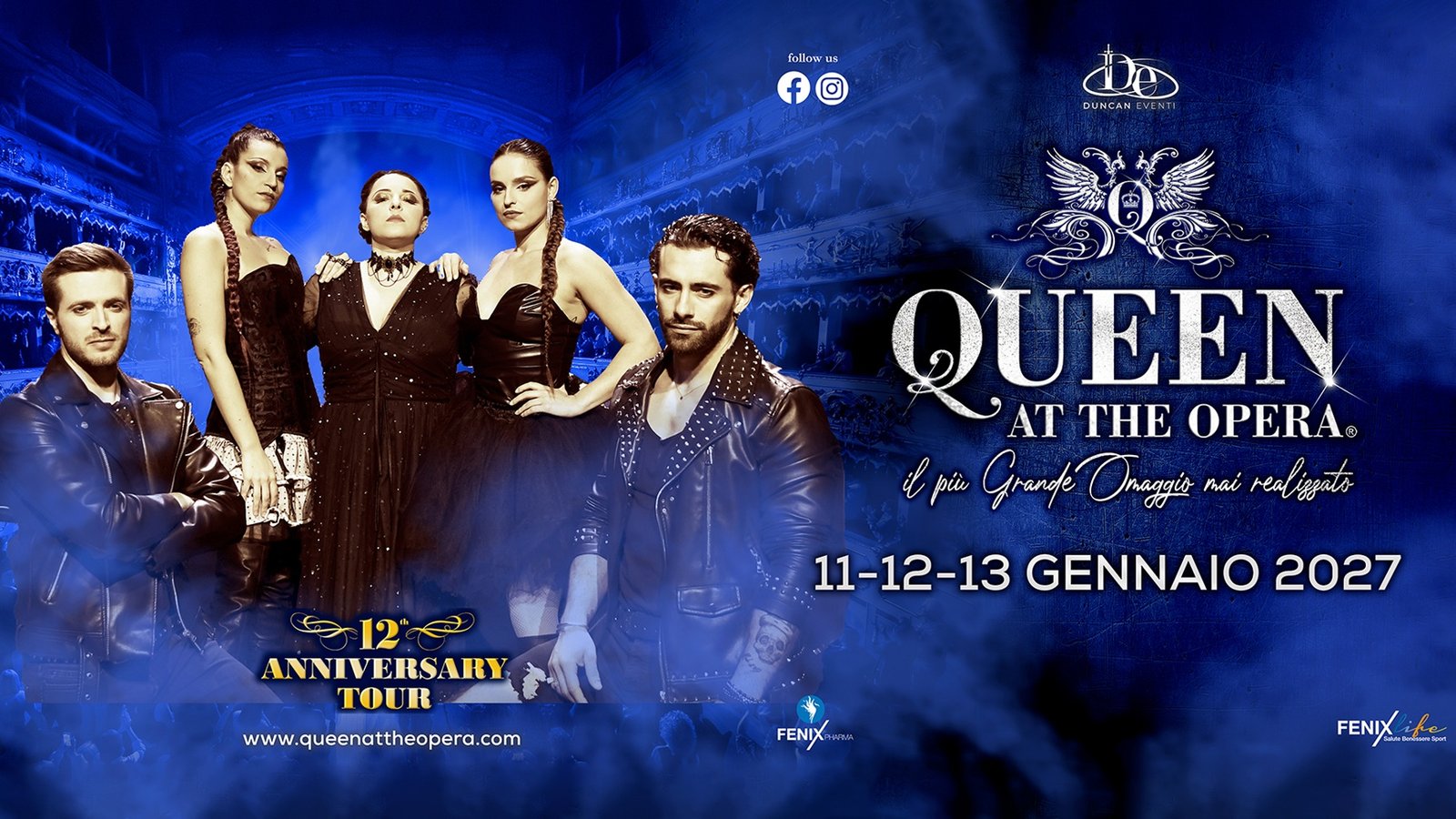
Queen at the Opera, the symphonic rock show dedicated to the music of Queen, plays Teatro Olimpico in Rome on Monday, January 11, Tuesday, January 12 and Wednesday, January 13, 2027, always at 20:30, with the new staging The Great Return of the 12th Anniversary Tour. The theater is at Piazza Gentile da Fabriano 17 (00196 Rome), in the Flaminio district, facing the Tiber embankment in front of the Ponte della Musica. You get there by metro line A to Flaminio and then tram 2 along Via Flaminia toward Piazza Mancini. The price list published by the theater runs from 25 euros for the Balconata laterale con balaustra (side balcony with railing) to 50.50 euros for the Poltronissima Gold, plus a presale fee (from 3.80 to 7.60 euros) and, for online purchases, a fee of 1.50 euros per ticket. Tickets are sold at the theater's box office, on the official Teatro Olimpico website and through the presale network authorized by the organizers.
Three evenings in January, in a hall of about 1,400 seats, for a show that has toured Italian theaters for 12 years with the same idea: take the songs of Freddie Mercury, Brian May, Roger Taylor and John Deacon and have a rock band and an orchestra play them together, with lyric voices and pop voices on the same stage. It is not a cover band and does not pretend to be one. It is a theatrical concert, and the Olimpico, born between variety and cinema and grown up with the music of the Accademia Filarmonica, is the right place to hear it.
What Queen at the Opera is
Queen at the Opera is an original DuncanEventi production, conceived by the music producer and artistic director Simone Scorcelletti, which blends Queen's repertoire with symphonic music and theatrical staging. The theater presents it as one of the most important European productions dedicated to the musical universe of the English band.
An idea born in 2015
The show debuted in 2015. At the start of 2025, for the 10th anniversary, the production declared 425 performances in Italy and abroad. The 2027 tour is the 12th year of the title. The producer has always insisted on one point: from the first rehearsals Queen at the Opera was conceived as a show, not as a tribute. For those sitting in the hall, the difference can be heard in the arrangements and in the lighting direction more than in the costumes.
Rock and orchestra
The heart of the project is the meeting between a rock band and a string orchestra. The theater writes that orchestra, band and voices coexist in balance: the electric guitar is not sacrificed to the strings, and the strings do not act as a decorative carpet. In earlier editions the ensemble on stage numbered about 30 professionals, musicians and singers together.
Authorized by Queen
The production claims that the show is officially authorized by Queen themselves, and has said so several times in the presentations of the tours. It is information that matters: it means the repertoire is performed with the consent of those who hold the rights, and that the symphonic arrangements were built on that basis.
The Great Return
The 2027 subtitle is The Great Return. The anniversary tour stops, among other cities, in Turin, Milan, Florence and Rome, bringing the show to the main Italian theaters.
What you will hear at Queen at the Opera: the repertoire
The official Teatro Olimpico page lists among the songs in the program Bohemian Rhapsody, Somebody to Love, The Show Must Go On, Who Wants to Live Forever, Radio Ga Ga and We Are the Champions, alongside many other Queen hits.
Bohemian Rhapsody
It is the song that justifies the idea of the show all by itself. Bohemian Rhapsody was already an opera in miniature when it came out in 1975, with its choral section, its ballad and its hard rock burst. With a real orchestra and a soprano on stage, the operatic part stops being a parody and becomes what the title promised.
The ballads
Who Wants to Live Forever and The Show Must Go On are the songs where the strings make the difference. The first was born for a film soundtrack and already had a wide orchestration. The second is Mercury's last great performance. These are the moments when the Olimpico's hall, wide and intimate, is at its best.
The stadium anthems
Radio Ga Ga and We Are the Champions are songs written to be sung by thousands of people. In a theater they become something else: the audience takes part all the same, but without the echo of the stadium you hear the vocal harmonies better.
The soprano and Montserrat Caballé
In recent editions the soprano Giada Sabellico sang the pieces that Mercury had recorded with Montserrat Caballé. The full 2027 setlist is not published, but the presence of a soprano in the main cast suggests that chapter, the closest to real opera, remains central.
The cast of Queen at the Opera: Francesco Montori, Giada Sabellico, Piero Gallo
The 2027 vocal cast is led by Francesco Montori and the soprano Giada Sabellico, at the head of a company of four performers. Original symphonic arrangements and orchestra direction are by Maestro Piero Gallo.
Francesco Montori
Montori is one of the show's longtime voices and has important international musical-theater experience behind him, according to the production's presentations. In 2027 he leads the company: Mercury's repertoire, the most exposed part of the evening, falls to him.
Giada Sabellico
A soprano, Giada Sabellico brings to the stage the lyric voice that gives meaning to the show's title. On the 10th anniversary tour she was the singer called on to carry the duets born from the meeting of Mercury and Caballé. In 2027 she is beside Montori at the head of the cast.
Piero Gallo
The show's musical identity is signed by Piero Gallo, author of the symphonic arrangements and orchestra conductor. The theater credits him with having turned Queen's great hits into an experience in which orchestra, rock band and voices find a balance. He is the real author of the show, more than any singer.
Simone Scorcelletti and DuncanEventi
The creator and producer is Simone Scorcelletti, artistic director of DuncanEventi. In the 10th anniversary presentations he explained that he chose the performers after hundreds of auditions. Over the years the cast has changed. Among the voices that have alternated on stage were Federica Morra, Alessandro Marchi and Luana Fraccalvieri.
Queen at the Opera in 12 years: the Roman stops
Queen at the Opera is no stranger to Rome: in March 2025, during the 10th Anniversary Tour, it took over Auditorium Conciliazione for four evenings, from March 13 to 16. The 2027 return changes hall and neighborhood.
The 10th anniversary
The 2025 tour had stopped in Florence, Ascoli Piceno, Turin, Rome, Mantua, Milan, Pescara, Messina, Catania, Palermo, Genoa, Ancona and Bassano del Grappa. It is the geography of a show that lives in traditional theaters and large concert halls, and that has built its audience city by city.
From Auditorium Conciliazione to the Olimpico
The Auditorium on Via della Conciliazione is a concert hall. The Olimpico is a theater with a real stage, an orchestra pit and a horseshoe-shaped gallery. For a show that bets on staging, lights and visuals included, the change is a gain.
The audience
The audience of Queen at the Opera is cross-generational: people who saw Queen in the 1980s, people who discovered them through the movies, people who bring their children. The theater itself speaks of an experience able to move audiences of every generation.
Dates, times and prices of Queen at the Opera at Teatro Olimpico
The three performances of Queen at the Opera at Teatro Olimpico are Monday, January 11, Tuesday, January 12 and Wednesday, January 13, 2027, all at 20:30.
The price list
The theater publishes the full price by section and, separately, the presale fee: Poltronissima Gold 50.50 euros plus 7.60. Poltronissima laterale 43 euros plus 6.50. Poltrona and Balconata 36.90 euros plus 5.50. Balconata con balaustra 30 euros plus 4.50. Balconata laterale 29 euros plus 4.40. Balconata laterale con balaustra 25 euros plus 3.80. The presale fee is always charged when the ticket is issued. Online, a fee of 1.50 euros is added.
Which evening to choose
They are three weeknights, and the difference is minimal. Monday is the Roman premiere, with the energy and the occasional imprecision of every debut. Wednesday is the last, often the warmest. If you are coming from outside Rome, you can choose the one that fits best with your train.
Where to sit
For a concert with orchestra, the Olimpico's gallery is not a second choice: the sound arrives full and you see the whole stage, with the band and the strings together. The central Balconata costs the same as the orchestra-level Poltrona, and is preferable. The Poltronissima Gold is worth the money for those who want to see the singers' faces up close.
Teatro Olimpico, the hall of Queen at the Opera
Teatro Olimpico at Piazza Gentile da Fabriano 17 is a 1930s movie theater and playhouse, active as a theater since 1981, with a hall of about 1,400 seats between orchestra level and gallery. The full listing is that of Teatro Olimpico.
A block from 1936
The building was constructed between 1935 and 1936 by the firm Garbarino, Sciaccaluga and Mezzacane for the Società Generale Immobiliare, in the same years when the Flaminio district and the Foro Italico were being built. Reinforced concrete, facades in the taste of the period, travertine in the base and the cornices.
Between variety and cinema
The hall was conceived halfway between a variety theater and a movie house, and for almost 20 years it was mainly a screening room with avanspettacolo (warm-up variety) numbers in the intervals. An origin that explains its aptitude for hosting popular, well-built shows like this one.
Orchestra level, gallery, stage
The orchestra level has 966 raked seats, amphitheater style. The gallery, wide and horseshoe-shaped, has 444. The stage measures about 10 meters in depth by 12 in width, with the orchestra pit. For a production that combines band and strings, there is room.
The foyer
The circular foyer preserves stage elements from historic Filarmonica productions: Corrado Cagli's gilded sets for Stravinsky's Mass, Giacomo Manzù's backdrop for the Histoire du soldat, Mirko's sculpture for Niccolò Castiglioni's Chordination. Arrive early and take a look.
A curiosity about Queen at the Opera: The Great Return at Teatro Olimpico, January 11 to 13, 2027
The title Queen at the Opera plays on two of the band's albums. A Night at the Opera, from 1975, is the record of Bohemian Rhapsody. A Day at the Races, from 1976, is its follow-up. Both titles came from Marx Brothers films, and Queen chose them with irony, for a rock that allowed itself choruses, multi-part harmonies and quotations from melodrama. DuncanEventi's show takes that joke seriously: if Queen had brought opera into rock, here the attempt is to bring rock back into an opera house, with an orchestra and a soprano.
The curiosity has a Roman side. Teatro Olimpico has an orchestra pit and for decades was the home of the Accademia Filarmonica Romana, which had Stravinsky performed there under Pierre Boulez. A stage born for variety, grown up with 20th-century music, now hosts an orchestra accompanying Radio Ga Ga. It is a coherence more than a contradiction: Queen were a cultured band disguised as a popular band, and the Olimpico is a cultured hall that has never been afraid of a wide audience.
A detail to keep in mind in the hall: in the duets with the soprano you recognize the Barcelona project, the album Freddie Mercury recorded with Montserrat Caballé in the late 1980s, whose title song became the anthem of the 1992 Barcelona Olympic Games. It is the moment when the show's title stops being a slogan.
Queen and Freddie Mercury: why their music holds up with an orchestra
Queen were formed in London in 1970 with Freddie Mercury, Brian May and Roger Taylor. In 1971 the bassist John Deacon joined. They wrote songs that were already orchestral in the making: layered choruses, multi-part harmonies, tempo changes.
Four writers
Everyone in the band wrote. Mercury signed Bohemian Rhapsody and Somebody to Love, May We Will Rock You and Who Wants to Live Forever, Taylor Radio Ga Ga, Deacon Another One Bites the Dust. It is one of the reasons the repertoire is so varied and lends itself to different readings.
A sound already symphonic
A Night at the Opera, from 1975, fused rock and opera, with Bohemian Rhapsody, Love of My Life and You're My Best Friend. Critics described it as a staging that echoed operetta. When an arranger writes for real strings starting from those records, half the work is already done.
The Show Must Go On
Mercury died on November 24, 1991, at the age of 45. The Show Must Go On, released as a single a few weeks earlier with Greatest Hits II, became his farewell. In a show that often closes with the big anthems, it is the song that makes the hall fall silent.
Something nobody tells you about Queen at the Opera: The Great Return at Teatro Olimpico, January 11 to 13, 2027
The protagonist of Queen at the Opera is not the singer who plays Freddie Mercury, and anyone going to the theater expecting a lookalike will be surprised. The show does not seek imitation: the singers don't wear the white tank top of Wembley and don't copy the mustache. The center of the evening is the score, that is, the arrangements by Piero Gallo, who is author and conductor at once. Listen to the orchestra before the voices: that is where you find out if the evening works.
Two practical consequences follow. The first: the best seat is not necessarily the closest to the stage. From the front row you see the faces, but the sound of a large ensemble comes together a few meters away, and from the center gallery of the Olimpico you hear the balance between band and strings that is the real point of the show. The second: an audience used to rock concerts tends to sing everything. Here it works in the choruses of the anthems, less in the ballads, where the orchestra works on the soft passages and the silences.
The verdict is clear: there are too many tributes to great bands, and almost all of them are useless. This is one of the few with a musical reason to exist, and the reason is written on the conductor's stand.
How to get to Teatro Olimpico for Queen at the Opera
You reach Teatro Olimpico by metro line A to the Flaminio stop and then tram 2 along Via Flaminia toward Piazza Mancini. From Flaminia to the theater it is a few minutes on foot toward the Tiber.
Metro and tram
The Flaminio stop on metro line A is in Piazzale Flaminio, next to Porta del Popolo. Tram 2 goes up Via Flaminia as far as Piazza Mancini. In the evening the service thins out: check the schedules before going out, especially for the return after 23:00.
On foot from the Ponte della Musica
The Ponte della Musica, reserved for pedestrians, bicycles and public transport, connects Lungotevere Cadorna, on the Foro Italico side, with Piazza Gentile da Fabriano. Those coming from Prati or from the Della Vittoria district cross the river and find themselves in front of the theater.
From the center
From Piazza del Popolo you can walk up Via Flaminia. It is a flat but long walk, and in January, with dark at five and the wind off the river, I recommend it only to those who have time and a serious coat.
By car and taxi
The theater is connected to the rest of the city by the Lungotevere, but parking in the streets of Flaminio is hard on show nights, and 1,400 people leaving together block the square. A taxi is the most convenient solution for the return. It is best to move a few dozen meters away from the exit, where traffic clears sooner.
The advice I give you for visiting Queen at the Opera: The Great Return at Teatro Olimpico, January 11 to 13, 2027
It is best to treat Queen at the Opera as a symphonic concert, not as a stadium night: arrive early, choose your seat for the sound and listen to the right records before leaving the house. The show starts at 20:30 on a weeknight, and at that hour Flaminio is full of cars of people coming home from work. Aim to be in Piazza Gentile da Fabriano at 20:00, with time for the coat check and a look at the foyer.
On seats: the central Balconata, at the same price as the Poltrona, gives back the balance between orchestra and band better. If you want the orchestra level, choose the center rows of the Poltronissima laterale, which costs less than the Gold and loses little.
The afternoon before, listen again to A Night at the Opera from beginning to end, and then to Mercury and Caballé's Barcelona. The first reminds you how much Queen were already a small orchestra. The second prepares you for the duets with the soprano. You will arrive in the hall knowing what to listen for, and the show will give you more.
One last thing: the return. If you don't live in Flaminio, book the taxi or check the last tram before going in. Coming out after an hour and a half of Queen and waiting in the cold is not part of the show.
The Flaminio district around Queen at the Opera
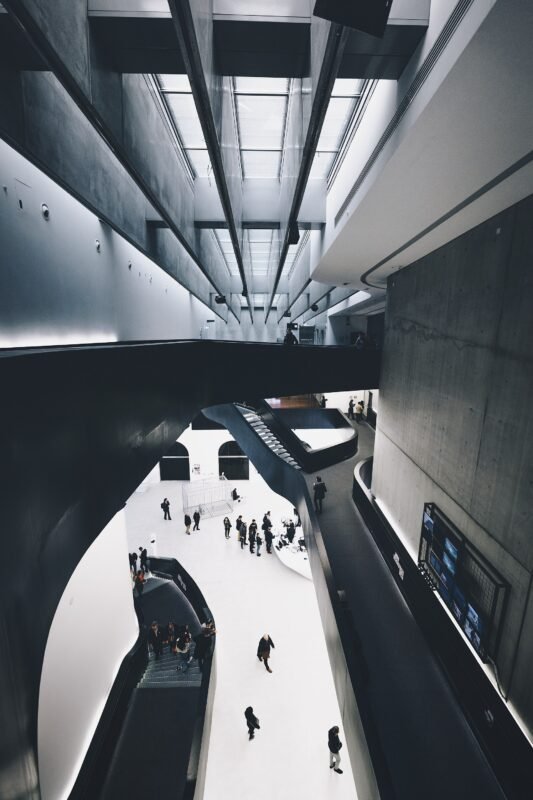
Flaminio, the first district of Rome between Via Flaminia and the Tiber, became in the 20th century a hub of sport, culture and entertainment, with the Auditorium, the MAXXI and the Ponte della Musica a few minutes from the theater.
The MAXXI
The MAXXI, the national museum of 21st-century arts, is on Via Guido Reni. Designed by Zaha Hadid and opened in 2010, it is the most natural visit for a winter afternoon before the show.
Auditorium Parco della Musica
On the other side of Via Flaminia is Renzo Piano's Auditorium Parco della Musica. Even without a concert, a walk around the three halls is a lesson in architecture.
The Ponte della Musica
Inaugurated in 2011 and named after Armando Trovajoli, the bridge connects the theater to the Foro Italico. The design comes from a 2000 competition won by Buro Happold with Kit Powell-Williams Architects.
Milvian Bridge
Going north up Via Flaminia you reach Milvian Bridge, today one of the liveliest evening areas in north Rome. For an after-theater outing it is the natural direction.
Another well-known fact, yet rarely mentioned
Everyone knows Queen filled stadiums: 707 concerts in 26 countries between 1971 and 1986, Live Aid at Wembley in 1985, the 120,000 spectators at Knebworth in August 1986, the last concert with Mercury. Less often mentioned is their link with Italy: on February 3, 1984, Queen were guests at the Sanremo Festival, and the album The Works, released that month, went to the top of the Italian chart. Radio Ga Ga, which had anticipated it, is one of the songs the Queen at the Opera orchestra plays in Rome.
The other little-remembered fact concerns the orchestra itself. For years Queen had written in the credits of their records that they used no synthesizers, and built with layered voices and guitars what others entrusted to keyboards. Recording Bohemian Rhapsody took three weeks, one of them for the vocal parts alone. When the band really did use a symphony orchestra, in Who Wants to Live Forever for the Highlander soundtrack, the result became one of their classics. Queen at the Opera starts from there: no plot, no characters, only the songs reread for orchestra and voices. It is a formula closer to a symphonic concert than to a musical comedy, and for that reason it ages well.
Then there is a figure that concerns Italy. Since 2015 the show has toured almost every region, from the historic theaters of Sicily to the arenas of the Veneto, with hundreds of performances. Few live-music titles produced in our country have a similar continuity. The Roman audience already welcomed it in 2025 at Auditorium Conciliazione. The return less than two years later, in a bigger hall, says a lot about its staying power.
The right photo to take at Queen at the Opera: The Great Return at Teatro Olimpico, January 11 to 13, 2027
The right photo is taken before the show, outside. In the evening Teatro Olimpico has its facade lit on the square and the Lungotevere behind it. Moving toward the mouth of the Ponte della Musica gives you a frame with the white bridge in the foreground and the theater's sign in the background. In January, at eight, it is already fully dark: the lights of the bridge and the theater do all the work, and a phone is enough.
The second photo is in the circular foyer. Cagli's gilded sets and Manzù's backdrop have been there for decades, and they tell the musical history of the hall better than any caption. A photo with your Queen at the Opera ticket in front of those panels puts two stories together: the Filarmonica's and Queen's.
In the hall, during the show, no flash and no video: they bother your neighbors and ruin your evening more than theirs. If you really want a keepsake, wait for the final applause, when the cast comes to the front with the orchestra behind. It is the only moment when stage, band and strings are all lit together, and the only one in which a photo from the gallery conveys the scale of the show.
How to plan the evening with Queen at the Opera
With the start at 20:30 on a weekday, the evening of Queen at the Opera is planned around an afternoon in Flaminio or a dinner after the show.
The afternoon in Flaminio
The MAXXI closes the afternoon. The Auditorium often has its cafés open. Those with a few hours can take a walk between the two and reach the theater on foot, passing through the Olympic Village.
Eating before
Between Via Flaminia and Viale del Vignola there are neighborhood bars and restaurants for a quick meal. A sit-down dinner before 20:30 is possible only if you start early.
Eating after
After the show, around 22:30, the widest choice is in Ponte Milvio, reachable by taxi in a few minutes. Book: on January weeknights tables can be found, but not at the last minute.
Some important events that took place here in history
On March 4, 1965, Pierre Boulez conducted at Teatro Olimpico the Italian premiere of Igor Stravinsky's Abraham and Isaac and the European premiere of his Elegy for J.F.K. It was one of the most important evenings of the long season in which the Accademia Filarmonica Romana, renting the theater since the postwar years, brought 20th-century music to Flaminio.
The hall had had another life before. Built in 1935 and 1936, it was run as a movie theater from the late 1930s to the 1950s, with a wartime interruption, and with avanspettacolo numbers between one screening and the next. The traces of the Filarmonica's season are in the foyer: Manzù's backdrop for the 1966 Histoire du soldat, Mirko's sculpture for the 1968 Chordination, Cagli's sets for the 1975 Stravinsky Mass.
1980 was the year of the turning point. The company that owned the hall and the body that ran it went bankrupt, and the Olimpico was put up for sale. Adriana Panni promoted a subscription among citizens, professionals and music lovers: Teatro Olimpico spa was born, which bought the property and still owns it. From 1981 the program opened to dance, plays and comedy.
Dates that entered the city's memory followed: the Momix from 1982, the Lindsay Kemp Company in 1989, Mikhail Baryshnikov's White Oak Dance Project in 1995, the Bolshoi Ballet in 1996, the Béjart Ballet Lausanne in 2004. For an orchestra playing Queen, the hall of Boulez and Baryshnikov is respectable company.
Box office, accessibility and services at Teatro Olimpico
The box office of Teatro Olimpico, at Piazza Gentile da Fabriano 17, is open every day from 10:00 to 19:00 without a break. It answers at biglietti@teatroolimpico.it and at 349 2378200.
Information and changes
For sections, availability and fares, the reference is the box office. For tickets bought on the external presale network, the theater says to contact the network itself.
Accessibility
The hall has a sloping orchestra level and a raised gallery. Those with needs related to disability or reduced mobility must contact the box office before buying, for dedicated seats, companions and access routes.
With children
The show has no problematic content and the repertoire is known even to the youngest, thanks to the movies. The real limit is the hour: an hour and a half of music starting at 20:30 on a school day is a lot for a small child. From age 10 up, with a teenager who loves music, it is a nice first evening at the theater.
The rest of the season
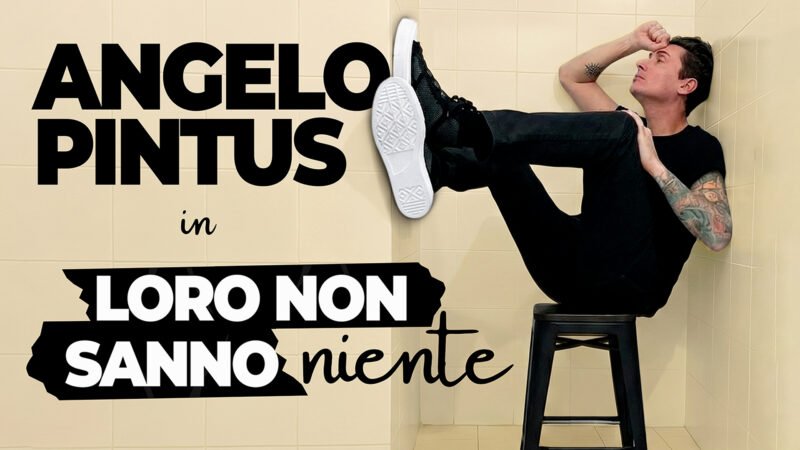
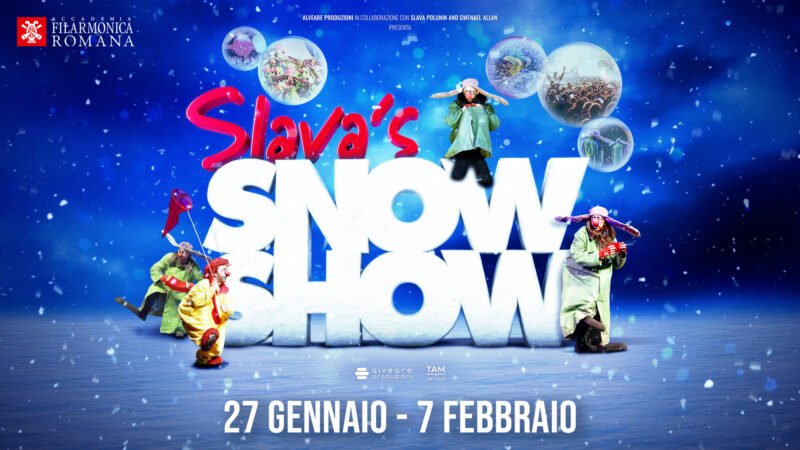
The same winter the Olimpico hosts, among others, Angelo Pintus and Slava's SnowShow. The full program is on the theater's website.
January in Rome, the season of Queen at the Opera
The Roman performances of Queen at the Opera fall in the week after Epiphany, when the city empties of holiday visitors and goes back to its weekday rhythm.
The weather
January is the coldest month of the year in Rome, with evenings often clear and damp along the river. Lungotevere Flaminio is windy in the evening: dress for the wait at the entrance and for the return.
A quieter city
After the holidays the museums are less crowded and the restaurants more available. For those coming from out of town, a couple of days in Rome in mid-January cost less and give more than in December.
Who has passed through Queen at the Opera: The Great Return at Teatro Olimpico, January 11 to 13, 2027
Pierre Boulez, Arturo Benedetti Michelangeli, Zubin Mehta, Jessye Norman, Giuseppe Sinopoli, Dario Fo, Giorgio Gaber, Lucio Dalla, Mikhail Baryshnikov and Gigi Proietti have passed through the stage of Teatro Olimpico. For a show that puts symphonic music and rock together, it is hard to imagine a more fitting genealogy.
Classical music came with the Accademia Filarmonica Romana. Alongside Boulez, who in 1965 conducted Stravinsky premieres there, performers such as Benedetti Michelangeli and Jessye Norman passed through, conductors such as Mehta and Sinopoli, composers such as Luigi Dallapiccola. The soprano who sings the Mercury and Caballé duets in 2027 treads the same stage as Jessye Norman.
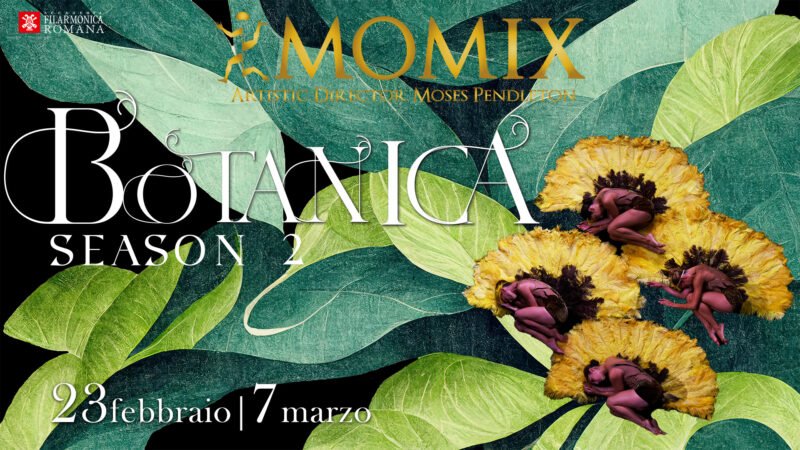
Rock and the singer-songwriter tradition have been there too: Marillion in February 1988, Pooh with Musica dentro in October 1994, Lucio Dalla with Henna in April of the same year, the Nomadi, Nicola Piovani, Massimo Ranieri. Dance brought Baryshnikov, Joaquín Cortés, Lindsay Kemp, Maurice Béjart, Antonio Gades, Moses Pendleton's Momix, who return this season with Botanica.
Comedy is the largest family: Proietti, Enrico Brignano, Vincenzo Salemme, Maurizio Battista, Aldo, Giovanni and Giacomo, Lillo and Greg. Among these names, an orchestra playing We Are the Champions is not out of place: the Olimpico has always been a theater that held the cultured and the popular together, like Queen.
Frequently asked questions about Queen at the Opera in Rome
When is Queen at the Opera on at Teatro Olimpico?
Queen at the Opera is on at Teatro Olimpico in Rome on Monday, January 11, Tuesday, January 12 and Wednesday, January 13, 2027, always at 20:30. It is the Roman stop of the 12th Anniversary Tour, titled The Great Return, which in 2027 also visits Turin, Milan and Florence among other cities.
How much do Queen at the Opera tickets cost in Rome?
Tickets for Queen at the Opera at Teatro Olimpico run from 25 euros for the Balconata laterale con balaustra to 50.50 euros for the Poltronissima Gold, plus the presale fee, from 3.80 to 7.60 euros depending on the section. Online, a fee of 1.50 euros per ticket is added.
Where do you buy tickets for Queen at the Opera?
Tickets for Queen at the Opera are sold at the box office of Teatro Olimpico, open every day from 10:00 to 19:00, on the theater's official website and through the presale network authorized by the organizers. For information the theater answers at biglietti@teatroolimpico.it and at 349 2378200.
Who sings in Queen at the Opera in 2027?
The vocal cast of Queen at the Opera in 2027 is led by Francesco Montori and the soprano Giada Sabellico, at the head of a company of four performers. The symphonic arrangements and the orchestra direction are by Maestro Piero Gallo.
Is Queen at the Opera a cover band?
Queen at the Opera is not a cover band. It is a theatrical production by DuncanEventi, conceived by Simone Scorcelletti, that rereads Queen's repertoire with a rock band, an orchestra and lyric and pop voices. The production states that the show is officially authorized by Queen.
What songs do you hear at Queen at the Opera?
Teatro Olimpico lists among the songs of Queen at the Opera Bohemian Rhapsody, Somebody to Love, The Show Must Go On, Who Wants to Live Forever, Radio Ga Ga and We Are the Champions, along with many other hits of the band. The full setlist is not published.
How do you get to Teatro Olimpico by public transport?
Teatro Olimpico, at Piazza Gentile da Fabriano 17, is reached by metro line A to Flaminio and then tram 2 along Via Flaminia toward Piazza Mancini. From Prati and the Foro Italico you arrive on foot by crossing the Ponte della Musica.
Is Queen at the Opera suitable for children?
Queen at the Opera has no problematic content and Queen's songs are known even to teenagers, but the 20:30 start on a weeknight makes it better suited from age 10 up. For particular access needs it is best to call the Teatro Olimpico box office first.
In closing
Nights dedicated to Queen are many, and almost all of them rest on nostalgia. Queen at the Opera rests on the arrangements, and that is why after 12 years it is still on the road. The advice is simple: take a seat in the center gallery, arrive at eight, listen to the orchestra before the singers. And if on the way out you find yourself humming Bohemian Rhapsody on the Ponte della Musica, the evening has done its job.
Article written by the editorial team of Tour Leader Pro, contact them for Private/Corporate/V.I.P. Tours and Experiences.
Planning a trip to Rome? The English-language guides to visiting the city are on ItalyPlanner.com.
Contact Information
Nearby
 Teatro Olimpico100 m
- Ponte della Musica – Armando Trovajoli200 m
- Flaminio400 m
- MAXXI – National Museum of 21st Century Arts500 m
- Alberto Moravia House Museum700 m
- Villa Mazzanti700 m

Upcoming events nearby
- Maurizio Battista at Teatro Olimpico, Se non vinco… imparo, November 4 to 29, 2026100 m
- Angelo Pintus at Teatro Olimpico, Loro non sanno niente, January 14 to February 14, 2027100 m
- Slava’s SnowShow at Teatro Olimpico, January 27 to February 7, 2027100 m
- MOMIX Botanica at Teatro Olimpico, February 23 to March 7, 2027100 m

You might also like
- Una Storia Unica: Banco del Mutuo Soccorso, Of New Trolls, Le Orme feat. Bernardo Lanzetti at Auditorium Parco della Musica, February 21, 2027
- Chuck Ragan at Auditorium Parco della Musica, December 12, 2026
- Cartoon Heroes with Vince Tempera and the Raggi Fotonici at Auditorium Parco della Musica, December 23, 2026
- La Sera dei Miracoli, Tribute to Lucio Dalla at Teatro Olimpico, December 15, 2026
- Nubras Ensemble at Auditorium Parco della Musica, February 27, 2027
- Simone Avincola canta Carella at Auditorium Parco della Musica, February 26, 2027