MOMIX Botanica at Teatro Olimpico, February 23 to March 7, 2027
In short. Moses Pendleton's MOMIX bring "Botanica Season 2" to Teatro Olimpico in Rome, Piazza Gentile da Fabriano 17 (Flaminio neighborhood), from Tuesday, February 23 to Sunday, March 7, 2027: Tuesday to Friday at 20:30, Saturday at 16:30 and 20:30, Sunday at 17:30.
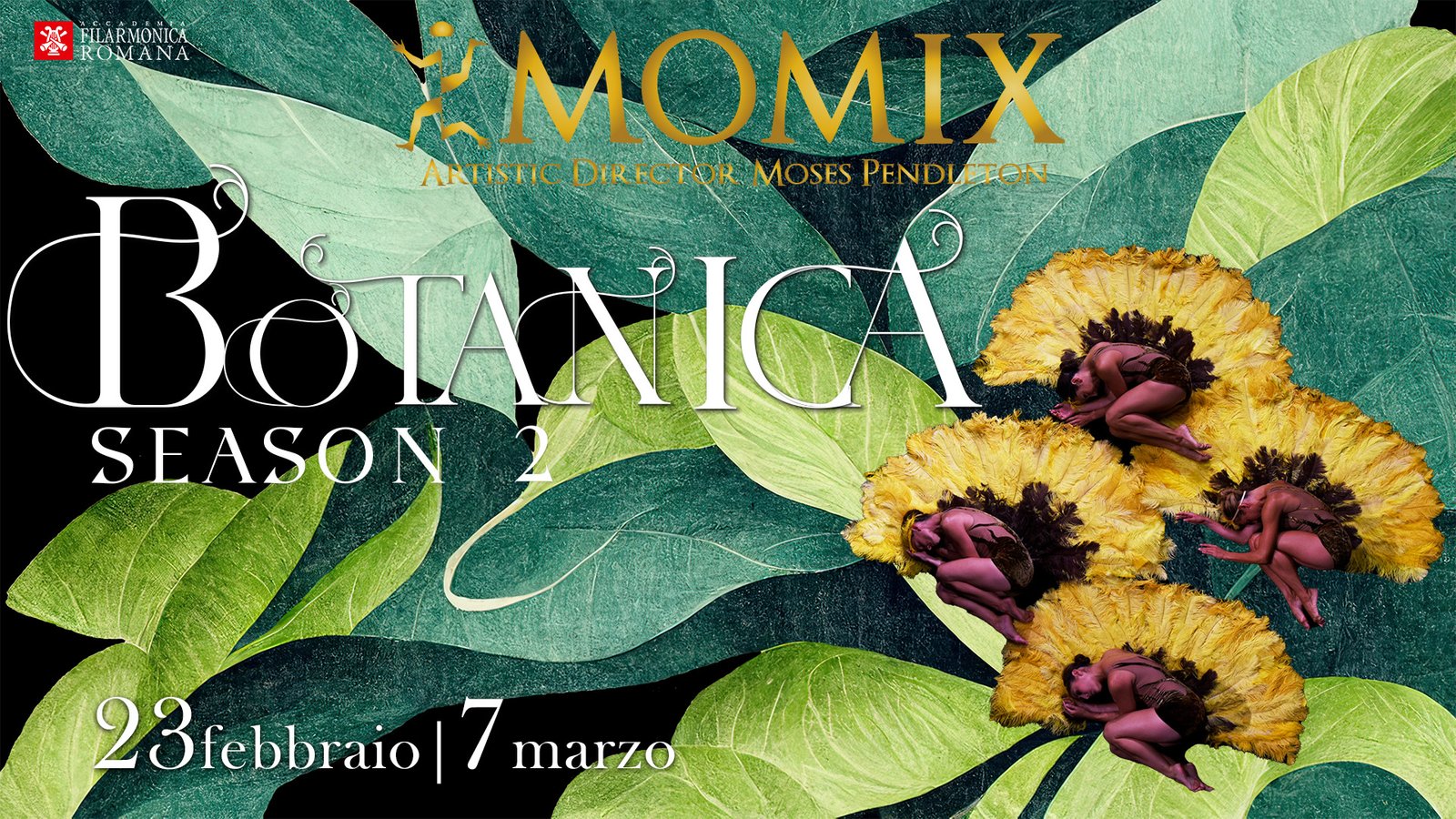
Moses Pendleton's MOMIX bring "Botanica Season 2" to Teatro Olimpico in Rome, Piazza Gentile da Fabriano 17 (Flaminio neighborhood), from Tuesday, February 23 to Sunday, March 7, 2027: Tuesday to Friday at 20:30, Saturday at 16:30 and 20:30, Sunday at 17:30. The show runs about 90 minutes, intermission included, and is presented in collaboration with the Accademia Filarmonica Romana. You get to the theater by Metro Line A to Flaminio and from there by tram 2, which runs from the terminus at Piazzale Flaminio along Via Flaminia and Viale Tiziano to Piazza Mancini. You get off the line toward the Tiber, near Ponte della Musica. The price list published by the theater runs from €31 plus €4.60 presale (side balcony with railing, €35.60 in total) to €50.50 plus €7.50 presale (poltronissima gold, €58 in total), with reduced prices for kids aged 3 to 12 and a fee of €2.50 per ticket for online purchase. Tickets are bought on the official website of Teatro Olimpico, at the box office on Piazza Gentile da Fabriano, open every day from 10:00 to 19:00, and through the presale network authorized by the organizers.
Language: opera sung in its original language; no English surtitles are announced, so check with the theater.
12 acrobatic dancers, two acts, a garden that changes shape under the light: this is how the Roman return of one of the American company's best-loved titles presents itself. The MOMIX, in Rome, are not occasional guests. They have been at home at Olimpico for over 40 years, and this revival arrives in a hall that knows their language better than any other in Italy.
MOMIX and "Botanica Season 2": what kind of show it is
"Botanica Season 2" is the new version of "Botanica," the show Moses Pendleton created in 2009 and dedicated to the wonders of nature, renewed in 2026 with updated technological effects and visual projections. The company describes it as a journey through the changing images of nature, marked by the rhythm of the seasons and the passing of a day. The theater presents it with the words of Pendleton himself, who speaks of a return to "our original garden," where "new ideas were allowed to take root."
Pendleton's garden
The starting point is always the same: nature as teacher. Pendleton has told the press that his inspiration comes from the world of plants, animals and minerals, and that his garden counts for him far more than the urban environment. In "Botanica" this idea becomes structure: the scenes follow one another like phases of a life cycle, from bud to bloom, from morning light to evening shade. There is no story with characters and dialogue. There is a sequence of visions, each built to surprise the eye.
Wasps, marigolds and trunks
The official note lists some of the transformations on stage: the dancers become wasps as light as hummingbirds, luminous marigolds, trunks and tree architectures. The company adds the sensuality of the marigolds, the grandeur of branches reaching toward the sky and the vital energy of the sun. Anyone who has already seen the MOMIX will recognize the method: the human body disappears inside an object, a fabric, a silhouette, and reappears as something else. The audience finds itself wondering where the dancer ends and where the illusion begins.
A revival that is not a revival
The theater insists on one point: more than a revival, this second chapter makes the original show bloom again, enriching it with new surprises. The company speaks of unprecedented technological effects and three-dimensional images. The Roman presentation speaks of a stage transformed into a living terrarium. The difference from 2009 therefore lies mainly in the technology of light and projection, which in the last 15 years has changed the way illusion is built in the theater.
Two acts, 12 performers
According to the presentation issued by the Accademia Filarmonica Romana for the debut of the new version, 12 acrobatic dancers alternate on stage, in two acts for a total of an hour and a half. The theater confirms the running time of 90 minutes with one intermission. It's a good length: long enough to build a world, short enough not to tire those who come with children or who arrive at the theater after a day of work.
The meaning of the show
Pendleton, in the statements published by the theater, says he is constantly inspired by the energy of the sun, by how it sculpts a landscape, nourishes a flower, casts a shadow that becomes part of the dance. He adds that the show serves to remind us that we are not separate from nature, but a part of it. The company's presentation closes with a theme that matters today: safeguarding the beauty of the planet as a task that belongs to everyone. No sermon on stage, though: the message comes through wonder.
The soundtrack of Botanica: from Vivaldi to Peter Gabriel
The music of "Botanica Season 2" was chosen by Pendleton himself and runs from Antonio Vivaldi's Four Seasons to electronic music, with echoes of traditional Indian music and pieces by Peter Gabriel. The company describes the score as eclectic, able to go from birdsong to Vivaldi. It's a recorded soundtrack, not performed live, conceived as a palette at the service of the images.
The Four Seasons
Vivaldi was already the heart of the first "Botanica," and the choice has an obvious logic: a show that follows the cycle of the seasons finds in the most famous concerto of the Venetian 1700s its natural frame. The Italian audience will recognize the themes at the first bar, and this creates a curious effect of familiarity inside a completely unexpected visual world.
Electronics and Indian echoes
Alongside Vivaldi, the Filarmonica's presentation cites electronic music and echoes of the Indian tradition. The contrast serves to break the rhythm: the more mechanical scenes, those in which the dancers become insects or structures, call for pulsing sounds, and the more contemplative ones breathe with the strings.
Peter Gabriel, an old friend
Peter Gabriel's presence is not a casual tribute. In 1991 the MOMIX debuted "Passion," built on the soundtrack Gabriel wrote for "The Last Temptation of Christ." Finding him again in "Botanica Season 2" means mending a thread 35 years long in the company's history.
MOMIX dates and times at Teatro Olimpico
"Botanica Season 2" is on at Teatro Olimpico from Tuesday, February 23 to Sunday, March 7, 2027, with shows Tuesday to Friday at 20:30, Saturday at 16:30 and 20:30, Sunday at 17:30. The calendar covers two full weeks, and the rhythm of the performances is the typical one for big dance productions at Olimpico: evenings on weekdays, a double bill on Saturday, afternoon on Sunday.
The first week
It begins Tuesday, February 23 at 20:30, with evening performances Wednesday the 24th, Thursday the 25th and Friday, February 26. On Saturday, February 27 there are two shows, at 16:30 and 20:30. On Sunday, February 28 the performance is at 17:30.
The second week
The pattern repeats from Tuesday, March 2: evening shows at 20:30 through Friday, March 5, a double bill on Saturday, March 6 at 16:30 and 20:30, closing Sunday, March 7 at 17:30. The last performance therefore falls on a Sunday afternoon, a convenient time for those coming from out of town too.
The Monday day off
The published schedule has shows from Tuesday to Sunday, so on Monday, March 1 the company rests. If you're planning a long weekend in Rome, keep that in mind: on Monday evening Olimpico, for MOMIX, is closed.
The afternoon performances
The Saturday 16:30 and Sunday 17:30 performances end around 18:00 and 19:00. They are the best suited to families and to those who prefer to head home in the light of the first days of March, when the days start getting longer.
Tickets and prices for Botanica at Teatro Olimpico
Tickets for "Botanica Season 2" at Teatro Olimpico cost from €35.60 to €58, presale included, with a reduced rate for kids aged 3 to 12 that runs from €24.90 to €34. The theater lists the full price and the presale fee separately, and specifies that the presale fee is always required when the ticket is issued. For online purchase, a fee of €2.50 per ticket is added.
The full price list
Poltronissima gold: €50.50 plus €7.50 presale, €58 in total. Poltronissima laterale: €42 plus €6.30, that is €48.30. Poltrona: €39 plus €5.90, that is €44.90. Balcony: same price as the poltrona, €39 plus €5.90. Balcony with railing: €35 plus €5.20, that is €40.20. Side balcony: €33 plus €5, that is €38. Side balcony with railing: €31 plus €4.60, that is €35.60.
The reduced rate for kids aged 3 to 12
The reduced price applies in all sections except poltronissima gold. Poltronissima laterale: €29.40 plus €4.60. Poltrona and balcony: €27.30 plus €4.10. Balcony with railing: €24.50 plus €3.70. Side balcony: €23.10 plus €3.50. Side balcony with railing: €21.70 plus €3.20. For a family of four the difference from the full price is significant, and it makes MOMIX one of the most accessible dance shows of the season.
Where to buy them
The main channel is the Teatro Olimpico website, which links to its own online ticket office. The alternative is the box office at Piazza Gentile da Fabriano 17, open every day from 10:00 to 19:00 without a break. For information the theater gives the address biglietti@teatroolimpico.it and the number 349 2378200. There is also the presale network authorized by the organizers. My advice is to buy from the theater: you see the seating chart, you choose your seat, and if there are problems you have a direct contact.
Groups and Cral
Teatro Olimpico has a promotions office dedicated to groups and Cral, reachable at ufficiopromozione@teatroolimpico.it. For a dance school, an association or a corporate group, it's best to write before opening sales internally: the conditions for groups are not published on the show page and must be requested directly.
Which section to choose
With MOMIX the choice of seat matters more than with a monologue. Many illusions read better from above, where you take in the overall design of the figures on stage, while the center orchestra gives you the physicality of the bodies and the precision of the movements. For a first encounter with the company, the center balcony is better: it costs the same as the poltrona and offers the overall view this show demands.
Who Moses Pendleton is: the biography of the founder of MOMIX
Moses Pendleton, born March 28, 1949 and raised on a Vermont farm, is the choreographer who founded Pilobolus in 1971 and a few years later created MOMIX, the company he has directed for over 45 years. The company defines him as one of the most innovative and most frequently staged American choreographers and directors of the last 50 years. His career spans dance, opera, film, television, Olympic ceremonies and photography.
The Vermont farm
Pendleton was born and raised on a dairy farm in Lyndonville, in northern Vermont. As a boy he took his Holstein cows to the Caledonia County fair. He attended Lyndon Institute, where he graduated in 1967, pursuing classical studies, art and sports, especially skiing. This rural childhood is not a biographical detail: it is the root of his whole imagery, made of plants, animals and natural cycles.
Dartmouth and Pilobolus
In 1971 he graduated in English literature from Dartmouth College and in the same year, still a senior, he founded Pilobolus with some classmates. The group got noticed for a new mix of acrobatics, body sculpture and humor. In 1972 Pilobolus received the Scotsman Award at the Edinburgh Festival, in 1975 the Berlin critics' prize, and in 1977 Pierre Cardin presented them on Broadway. In the same year Pendleton won the Guggenheim fellowship. He remained a permanent member of the group until 1980.
Paris, Lake Placid and the birth of MOMIX
In 1979 Pendleton choreographed and performed at the Paris Opéra the "Integrale Erik Satie," which included the revival of the 1924 Dadaist ballet "Relâche." In 1980 he choreographed the closing ceremony of the Lake Placid Winter Olympic Games, where he also danced a solo titled "Momix." The company he founded together with Alison Chase took its name from that solo. The company's website gives 1980 as the founding year and 1981 as the year of the first international performances.
Opera and Italy
Pendleton's relationship with Italy is old and deep. In 1982 he created the role of the Fool in Mussorgsky's "Khovanshchina," staged by Yuri Lyubimov at La Scala in Milan. In 1993 he did the choreography for "Carmen" directed by Lina Wertmüller at the Bavarian State Opera in Munich. In 1994 he received the gold medal of the Arena di Verona as director of MOMIX, and in 1999 the Premio Positano for choreography. In 2004 he did the choreography for 12 weeks of "Fiorello," the Rai variety show that led the ratings that season. In June 2024 he received the Taobuk Award, dedicated to intellectuals and artists who have left a cultural mark on the international scene.
Other works and other stages
In 1982 he staged and performed "Tutuguri," from the writings of Antonin Artaud, at the Deutsche Oper in Berlin. In 1985 he choreographed Stravinsky's "Pulcinella" for the Ballet de Nancy, in 1987 Rameau's "Platée" for Spoleto Festival USA, in 1988 a revival of Cocteau's "Les Mariés de la Tour Eiffel" in New York. In 2008 he created "Picarte" and "F.L.O.W." for Diana Vishneva, étoile of the Kirov. For the opening ceremony of the 2014 Sochi Winter Olympics he did "The Doves of Peace," with Vishneva and 50 Russian dancers.
Video, film and television
Few choreographers have crossed pop culture as he has. In 1984 he worked on the video for Julian Lennon's "Too Late for Goodbyes," directed by Sam Peckinpah. In 1989 he choreographed Prince's "Batdance" for the film "Batman." In 1991 he was co-star, alongside Charles Dutoit and the Montréal Symphony Orchestra, of the Rhombus Media film on Mussorgsky's "Pictures at an Exhibition," which won an International Emmy. His program "Moses Pendleton Presents Moses Pendleton" for ABC Arts won a CINE Golden Eagle in 1982.
Awards and degrees
Besides the Guggenheim and the Italian awards, Pendleton received in 1998 the Governor's Award of the Connecticut Commission on the Arts and in 2002 the American Choreography Award, together with Daniel Ezralow and David Parsons, for "Aeros," created with the Romanian Olympic gymnastics team. In 2010 the University of the Arts in Philadelphia conferred an honorary doctorate on him, in 2021 Dartmouth College did the same, and in 2025 the University of Texas at Dallas gave him the Richard Brettell Award for the arts.
The photographer
Less known to the general public is Pendleton the photographer. The company describes him as a passionate photographer, with exhibitions in Rome, Milan, Florence and Aspen. Anyone who watches "Botanica" with this detail in mind understands certain compositions better: many scenes are built like still images that come to life, conceived first with the eye of the photographer and then with that of the choreographer.
The history of MOMIX in 45 years
MOMIX is a dance and visual illusion company based in Washington, Connecticut, founded by Moses Pendleton and directed by him for more than 45 years. The company combines acrobatics, dance, gymnastics, mime, props and projections. In 2026, according to the official chronology, it reached 10,000 performances.
A name from the barn
The name has a surprising origin: it comes from that of a cattle feed. For a man who grew up taking cows to county fairs, the choice sounds like a statement of intent. No grand name, no stage word: a product of the farm, turned into one of the most recognizable names in world dance.
The big titles
The company's official chronology marks the main stages. In 1991 "Passion," to the music of Peter Gabriel. In 1994 "Baseball," a tribute to the American national sport created with the San Francisco Giants. In 2002 "Opus Cactus," on the Southwest desert, with Ballet Arizona. In 2005 "Lunar Sea," built entirely in black light with the Aspen Santa Fe Ballet. In 2009 "Botanica." In 2013 "Alchemy," on the four elements. In 2015 "Viva Momix," for the 35th anniversary. In 2019 "Alice," a rereading of Lewis Carroll. In 2026 the new version of "Botanica."
Cynthia Quinn
Beside Pendleton for decades has been Cynthia Quinn, now associate director. Raised in Southern California, a graduate of the University of California at Riverside with Phi Beta Kappa recognition, in the 1980s she danced with Pilobolus on Broadway and on tour across the United States, Europe, Canada, Israel and Japan. She joined MOMIX in 1983. She has assisted Pendleton on many of his creations for opera and ballet, co-created with him "White Widow," the number that appears in Robert Altman's film "The Company," and worked on the Sochi choreography. The Filarmonica's presentation identifies her as the wife and co-director of the company.
Light as an instrument
MOMIX's illusions come above all from light. By working on it, the dancers manage to make themselves look huge or vanish, to merge or double. The costumes and stage machines do the rest, often worn by the performers themselves. The company itself sums up its method in four words: light, shadow, fabric, human body.
A curiosity about MOMIX Botanica at Teatro Olimpico, February 23 to March 7, 2027
The first version of "Botanica" and its new edition debuted in the same city: Bologna. According to the presentation issued by the Accademia Filarmonica Romana, the world premiere of "Botanica Season 2" was held at Teatro Celebrazioni in Bologna on Tuesday, April 7, 2026 at 21:00, in the same city that had hosted the world premiere of "Botanica" in 2009. An American choreographer from Vermont who twice chooses an Emilian city to christen the same show says a lot about the bond between MOMIX and the Italian audience.
From there the new version's first international tour began, all Italian in the spring of 2026: Bologna from April 7 to 11, Mestre at Teatro Toniolo, Genoa at Politeama Genovese, then Rome at Olimpico from April 28 to May 10, followed by Vicenza, Florence at Teatro Verdi and Trieste at Rossetti. Rome had the longest stop of the tour, almost two weeks.
The second curiosity concerns the props. The company's official chronology recalls that the 2009 "Botanica" was born with props designed by the puppeteer Michael Curry. This is not a detail: in MOMIX the object is half the dancer. A silhouette, a light armor, a fabric stretched over a structure are what allow the body to become flower, insect, tree. That a puppeteer designed them explains why many figures in "Botanica" have the suspended grace of a large puppet animated from inside.
The last curiosity is Roman. The return of February 2027 comes less than a year after the new version's first Roman run, in the spring of 2026. It's rare for a theater to reprogram the same dance title at such a short distance: at Olimpico it happens because the MOMIX audience is loyal, and because the spring stop, according to local reports, drew a large turnout and a long final ovation.
From Botanica 2009 to Botanica Season 2
"Botanica" debuted in 2009 and returned to the stage in 2026 in a new version, which the company defines as a revival with updated technology and new surprises. In between are almost 20 years of tours, repeat performances and technical evolution, which have changed above all the way light and projected images are handled.
The first Botanica at Olimpico
The first "Botanica" played at Teatro Olimpico as early as the 2009/2010 season and was on the program again in March 2011. Anyone who saw it then will find the general structure, the plant themes, the cycle of the seasons. But they will find a different stage, because the updated projections turn the scene into what the theater calls a living terrarium.
What changes
Pendleton speaks of a second chapter that makes the show bloom again, with new ideas grown on the same ground. The company points to unprecedented technological effects and three-dimensional images. The two-act structure, Vivaldi's music as the backbone and the botanical inspiration remain. The scenes, the effects and some visual solutions change.
Teatro Olimpico, the Roman home of MOMIX
Teatro Olimpico at Piazza Gentile da Fabriano 17 is a hall of 1,410 seats built in 1935 and 1936, active as a movie theater from 1936 and as a theater from 1981. It is located on Lungotevere Flaminio, near Ponte della Musica, and is the venue for most of the shows organized by the Accademia Filarmonica Romana.
A building from the 1930s
The entire block that includes the theater was built by the firm Garbarino, Sciaccaluga and Mezzacane on behalf of the Società generale immobiliare, which had bought the property from the Banca Commerciale Italiana in 1935. These were the years when the Flaminio neighborhood and Foro Italico were born. The building is reinforced concrete, with travertine facades in the typical style of the era, both in the very tall base and in the frames of doors and windows.
From cinema to the Filarmonica
From the late 1930s to the 1950s, with the interruption of the war, Olimpico worked mainly as a movie theater, with variety acts in the intervals. For this reason, from the start it had both dressing rooms and theatrical equipment and projection machinery. After the war the Accademia Filarmonica Romana rented the hall for its season. In 1980 Teatro Olimpico spa was born, also owned in part by the Filarmonica, which bought the property from the Società generale immobiliare. From 1981 the programming opened decisively to theater, dance and comedy.
The hall
There are 1,410 seats: 966 in the orchestra, laid out like an amphitheater on a sloping cavea, and 444 in the gallery, which has a broad horseshoe shape with curved tiers. The hall is very wide. The stage measures about 10 meters deep by 12 wide, with a removable wooden floor and an orchestra pit. For a show like "Botanica," where the overall view matters, the width of the hall and the wraparound gallery are a concrete advantage.
The foyer and the artworks
The theater has a circular rotunda foyer and wide corridors on the ground floor and in the gallery. Some historic stage designs are displayed here: the gilded forms sets by Corrado Cagli for Stravinsky's "Mass" (1975), the backdrop by Giacomo Manzù for the "Histoire du soldat" (1966), the stage design by Alfred Silbermann for the same "Mass" in 2001, the sculpture by Mirko for "Chordination" from Niccolò Castiglioni's "Tre misteri" (1968). Arrive early, and look at them: they are a small museum of Roman musical life in the 20th century.
One thing nobody tells you about MOMIX Botanica at Teatro Olimpico, February 23 to March 7, 2027
Moses Pendleton has been an academician of the Accademia Filarmonica Romana since 2012, the first choreographer to receive this appointment in an institution founded in 1821. It's a detail the show's promotion barely mentions, but it explains a lot. The MOMIX don't arrive in Rome as just any touring company, rented for a couple of weeks. They arrive inside an institutional relationship that the Filarmonica itself describes as a collaboration of over 40 years between the company, the theater and the academy.
The history of the hall confirms this bond. The MOMIX were at Olimpico as early as April 1982 with "Dance Theatre," just a year after the hall had begun its life as a proper theater. They came back with "Baseball" in November 1996, with "Botanica" in the 2009/2010 season and again in 2011, and with many other titles. Accounts of the theater's history call them a regular guest of the hall.
The practical consequence is just one, and few people mention it: at Olimpico the MOMIX have an audience that comes back. Many spectators saw them as kids and now bring their own children. This means two things. First, it's prudent to treat weekend performances as the most in demand and to move early, especially for Saturday afternoon. Second, the hall has a particular air, that of an eagerly awaited appointment, not of a novelty to discover. If you come for the first time, you find yourself surrounded by people who already know when to hold their breath.
There is also an almost hidden aspect: the link with the Filarmonica also comes through the name. The Roman academy has a history of art music, with Alfredo Casella, Luciano Berio and Hans Werner Henze among its artistic directors. That this very institution made an American choreographer from Vermont one of its academicians says how much the MOMIX, in Rome, are considered part of the city's musical life.
The Accademia Filarmonica Romana and MOMIX
The Accademia Filarmonica Romana is a private nonprofit organization founded in Rome in 1821, which organizes chamber and symphonic music concerts, ballets and musical theater shows. "Botanica Season 2" is presented in collaboration with the academy, which in the second postwar period made ballet and chamber theater one of the distinctive features of its programming.
Two centuries of music
The academy was born from a group of amateur musicians led by the composer Raffaele Muti Papazzurri, to perform chamber and symphonic music and operas in concert form when censorship prevented their staging. It went through interruptions and refoundings, up to the one in 1946 with Alfredo Casella as artistic director. The administrative seat is the Casina Vagnuzzi at Via Flaminia 118, near Piazza del Popolo. Concerts were held first at Teatro Eliseo and then at Olimpico.
The artistic directors
Among the academy's artistic directors are Goffredo Petrassi, Roman Vlad, Massimo Bogianckino, Gioacchino Lanza Tomasi, Luciano Berio and Hans Werner Henze. Since 2024 the artistic director has been Domenico Turi. A history of this weight explains why the academy considers the collaboration with MOMIX part of its own identity.
A choreographer academician
In 2012 the academy named Moses Pendleton an academician, the first choreographer in its history to receive this title. It's the formal recognition of a relationship born in the 1980s and grown, show after show, on the same stage on Piazza Gentile da Fabriano.
How to get to Teatro Olimpico for MOMIX
You get to Teatro Olimpico by Metro Line A to Flaminio station and then by tram 2, the line that connects Piazzale Flaminio to Piazza Mancini along Via Flaminia and Viale Tiziano. Line 2 is the shortest of Rome's tram network, about 2.7 kilometers, and runs entirely within the Flaminio neighborhood. Since 2010 its terminus at Piazzale Flaminio has been a truncated terminus on Via Flaminia.
Metro A and tram 2
From Flaminio station on Metro Line A you exit onto Piazzale Flaminio, where tram 2 starts. You travel toward Piazza Mancini along Via Flaminia and get off at the stretch closest to Lungotevere Flaminio, then walk toward the river to Piazza Gentile da Fabriano. If you don't know the area well, use Ponte della Musica as a reference: the theater is at the level of the bridge, on the Flaminio side.
On foot from Ponte della Musica
Ponte della Musica, named after Armando Trovajoli, is reserved for pedestrians, bicycles and public transit and connects Lungotevere Flaminio with Lungotevere Cadorna, that is, Flaminio with Foro Italico. If you arrive from Prati or from the stadium area, you can cross it on foot and find yourself in front of the theater. The bridge can also be reached from the Flaminio and Lepanto stations of Metro Line A and from Piazza Euclide station.
By car
The theater is on the Lungotevere, connected with the whole city, and the area is surrounded by wide tree-lined streets. On show nights, though, finding a spot near the hall is a gamble, especially on Saturday when there are two performances and the audiences overlap. The advice is firm: if you can, leave the car at home.
By taxi
The taxi remains the simplest solution for midweek evenings, especially at the exit around 22:00. Just say Teatro Olimpico, Piazza Gentile da Fabriano.
My advice for visiting MOMIX Botanica at Teatro Olimpico, February 23 to March 7, 2027
It's best to choose a midweek performance of the second week, between Tuesday, March 2 and Friday, March 5, 2027, and take a seat in the center balcony. The reasons are practical. The first nights of a run are for the company to get the measure of the hall, and the last weekend nights are the most crowded. The heart of the second week, instead, offers a show that is already well broken in and, in all likelihood, a calmer hall.
On the seat, the judgment is precise. With MOMIX the view from above is not a fallback. Many scenes in "Botanica" are built like images: bodies forming flowers, silhouettes opening like petals, figures appearing and disappearing in the dark. From the center balcony you take in the whole design, and the price is identical to that of the orchestra poltrona: €39 plus €5.90 presale. If you want to see the dancers' muscular work, the effort and the precision, choose instead the first rows of the poltronissima laterale.
Arrive at least half an hour early. It's for picking up your tickets if you haven't printed them, for finding your seat calmly in a hall of 1,410 people, and above all for looking at the stage designs displayed in the foyer: Cagli, Manzù, Mirko. It's a small lesson in Roman theater history that almost nobody stops to see.
Last piece of advice: no phone during the show. The MOMIX illusions live on total darkness. A lit screen in the orchestra breaks the spell 10 rows away. Keep it off until the intermission, and enjoy the second act without distractions.
How to organize the evening with MOMIX at Olimpico
An evening with "Botanica Season 2" lasts about 90 minutes with intermission: if you go in at 20:30, you come out around 22:00. It's a schedule that leaves room for dinner before or after, and doesn't force you to rush.
Before the show
For the evening performances it's best to get to the neighborhood around 19:30. There's time for an aperitivo or a quick dinner along Via Flaminia, and to walk to the theater at a relaxed pace. If you're coming from the center, you can stop at Piazza del Popolo, a few steps from the tram 2 terminus, and start from there.
The intermission
The intermission divides the two acts. It's the moment to stretch your legs and to see up close the audience of a hall that has seen Baryshnikov and the Bolshoi come through. Don't wander too far: the second act starts on time.
After the show
On the way out, after 22:00, Flaminio is quiet. If you're hungry, you'll find neighborhood pizzerias and trattorias between Via Flaminia and Piazza Mancini. If you prefer the center, take the tram to Piazzale Flaminio and cross Porta del Popolo: in a few minutes you're in the trident.
Another well-known fact, yet rarely cited
Rome's first tram started right from Piazzale Flaminio: the city's first tramway was inaugurated on August 2, 1877 and connected Piazzale Flaminio with Ponte Milvio. It's a fact known to transport enthusiasts, but rarely mentioned to those who take tram 2 to Olimpico today. And yet the line that leads to the theater runs, in part, along the same Via Flaminia on which the capital's first urban rail ran.
The story doesn't end there. On Sunday, July 6, 1890, along the Ponte Milvio line on Via Flaminia, the Società Romana Tramways Omnibus gave the public demonstration of Rome's first electric tram, in the presence of King Umberto I. The system proved unreliable and the installation was dismantled shortly after. Regular electric traction came only in 1895, on another line. The Ponte Milvio section was the last on the network to switch from horses to electricity, in 1904.
In the 20th century the tram on the Flaminia disappeared and came back several times. Line 1 between Piazzale Flaminio and Ponte Milvio was suppressed in 1960, in the middle of the Olympic season, when the city favored the automobile. Between 1982 and 1983 the track along Via Flaminia between Viale delle Belle Arti and Piazza Mancini was rebuilt. On June 7, 1990, on the occasion of the soccer World Cup, the tracks returned to Piazzale Flaminio with the new line 225, which since November 1, 2000 has been called line 2.
When you board the tram to go see MOMIX, then, you are traveling one of the oldest roads of Roman public transport. There's a certain coherence: a company that turns bodies into plants and insects, reached by a means of transport that in Rome was born, died and was reborn on the same route.
The right photo to take at MOMIX Botanica at Teatro Olimpico, February 23 to March 7, 2027
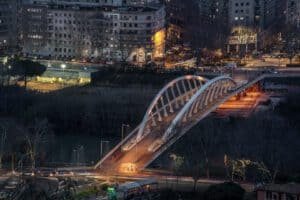
The right photo isn't taken in the hall, where during the show the phone stays off, but outside: the travertine facade of Olimpico with Ponte della Musica in the background. The bridge, inaugurated on May 31, 2011, is 190 meters long and has two large lowered steel arches, slightly tilted outward, with no horizontal connection at the top. Seen from Piazza Gentile da Fabriano, at sunset or with the evening lighting, it draws a clean curve that pairs well with the theater's rationalist geometry.
The best spot is the start of the bridge on the Flaminio side. From there you frame the theater with its facade, and turning around you get the perspective of the arches toward Foro Italico. The side walkways, meant for pedestrians, have a floor of wooden slats that in winter, after rain, reflects the lights: a good opportunity for those who like night photos.
A curiosity to tell whoever is taking pictures with you: the inauguration of the bridge was planned for April 21, 2011, the birthday of Rome, but was postponed to May 31 because of a defective batch of 2,000 bangkirai wood slats, which had to be removed and replaced. In 2013, after the death of the composer Armando Trovajoli, his name was added to the bridge's name.
Inside the theater, before the show and at the intermission, the photo to take is a different one: the historic stage designs in the circular foyer, in particular the gilded forms by Corrado Cagli. They are a perfect backdrop, and they tell the story of the hall better than any caption. For images of the show, rely on the company's official photos.
Botanica and MOMIX with kids
"Botanica Season 2" has a reduced price for kids aged 3 to 12, from €24.90 to €34 presale included, in all sections except poltronissima gold. The fact that the theater offers a rate from age 3 already says a lot: it's a show designed to be seen as a family.
Why it works with little ones
There are no words to follow or plot to understand. There are changing images, animals and flowers born from bodies, colors and music. A six-year-old reads "Botanica" with the same immediacy as an adult, maybe more. The length, 90 minutes with one intermission, is manageable even for the youngest.
Which performance to choose
For families the right performances are Saturday at 16:30 and Sunday at 17:30. You're out before dinner, and the next day nobody has to get up tired for school. Saturday afternoon is, however, the most requested slot: it's best to book in advance.
The darkness in the hall
The MOMIX illusions come from light and therefore from darkness. For a very small child the shift to total darkness can be startling. Explaining it beforehand, like a magic trick, helps. If you have sensitive kids, pick a seat near the aisle, so you can get up without disturbing anyone.
Some important events that happened here in history
On March 4, 1965, Pierre Boulez conducted at Teatro Olimpico a concert with the Italian premiere of Igor Stravinsky's "Abraham and Isaac" and the European premiere of the same composer's "Elegy for J.F.K." It's one of the most important concerts in the history of the hall, and it falls almost exactly 62 years before the close of "Botanica Season 2," on March 7, 2027.
That concert belongs to the season in which the Accademia Filarmonica Romana, under the presidency of Adriana Panni, brought the greatest Italian and foreign musicians to Olimpico. Stravinsky is a recurring presence: in the foyer you can still see Giacomo Manzù's backdrop for the "Histoire du soldat," performed from October 11 to 14, 1966, and Corrado Cagli's gilded forms sets for the "Mass," performed on October 29, 30 and 31, 1975. In 1968, from October 2 to 4, "Chordination," from Niccolò Castiglioni's "Tre misteri," was staged, with a sculpture by Mirko.
In 1980 Teatro Olimpico spa was born, with Adriana Panni as its first president, and bought the property. From 1981 the hall became a full-time theater, and in April 1982 the MOMIX arrived there with "Dance Theatre." The great dance evenings followed: Mikhail Baryshnikov's White Oak Dance Project from October 10 to 15, 1995, the Bolshoi Ballet from September 23 to 26, 1996, the Béjart Ballet Lausanne in October 2004, the Lindsay Kemp Company in February 1989 with "A Midsummer Night's Dream."
In the 2009/2010 season, according to AGIS rankings, Olimpico ranked as the second theater in Rome and the seventh in Italy for attendance. It was the season in which the hall hosted the first "Botanica." The new version, in the spring of 2026, according to local reports drew a large turnout and a long final ovation, confirming that the relationship between that stage and that company has held for 45 years.
Flaminio around MOMIX: what to see before and after
Teatro Olimpico is in the Flaminio neighborhood, born between the 1920s and 1930s along with Foro Italico, and connected by Ponte della Musica to the other bank of the Tiber. The bridge ideally joins Auditorium Parco della Musica, Villa Glori park, MAXXI and Olimpico on one side with Foro Italico, Monte Mario and the Rai auditorium on the other.
MAXXI and the Auditorium
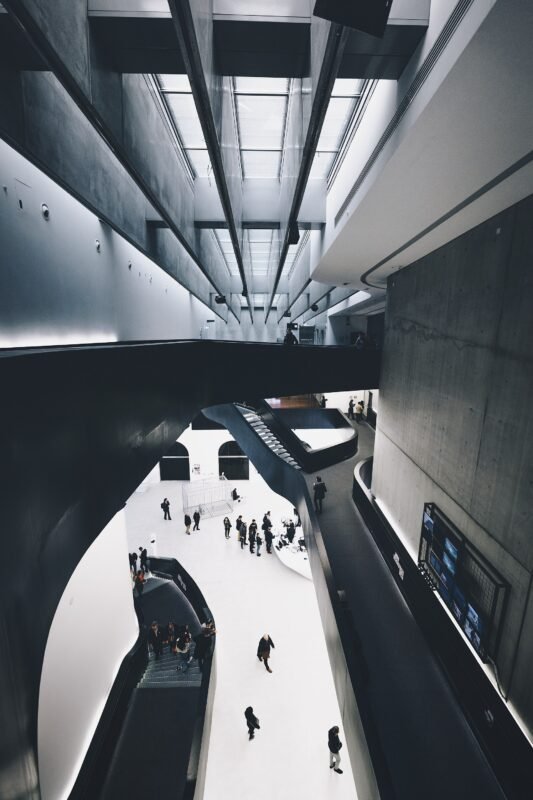
MAXXI and Auditorium Parco della Musica are the two big cultural hubs of the neighborhood. If you choose an afternoon performance, you can devote the morning to one of the two and reach the theater in the early afternoon. With MOMIX the pairing with contemporary art works: same curiosity about forms, same taste for surprise.
Foro Italico and Stadio Olimpico
Crossing Ponte della Musica you reach Foro Italico and, farther on, Stadio Olimpico. The sports complex is the same age as the neighborhood that hosts the theater, and a walk among its architecture is the best way to understand the era in which Olimpico was built.
Milvian Bridge
Going up the Tiber you reach Milvian Bridge, the terminus of Rome's first tramway in 1877. Today it's a lively area in the evening, with bars and restaurants, useful for those who want to extend the night after the show.
Piazza del Popolo and Villa Borghese
On the other side of line 2, Piazzale Flaminio leads to Piazza del Popolo, with the Flaminio obelisk at its center, and to Villa Borghese. Along Via Flaminia, near Piazza del Popolo, there is also the Casina Vagnuzzi, administrative seat of the Accademia Filarmonica Romana. If you have time, a short distance away are the Etruscan Museum of Villa Giulia and Galleria Nazionale in Valle Giulia.
Who has passed through MOMIX Botanica at Teatro Olimpico, February 23 to March 7, 2027
Arturo Benedetti Michelangeli, Jessye Norman, Zubin Mehta, Giuseppe Sinopoli, Luigi Dallapiccola and Pierre Boulez have passed through the Olimpico stage, and then Mikhail Baryshnikov, the Bolshoi, Maurice Béjart, Lindsay Kemp, Antonio Gades and Joaquín Cortés. It's hard to find in Rome a hall with an equally rich history in international dance, and MOMIX are its most constant presence.
In dance, the list is impressive. Besides Baryshnikov with the White Oak Dance Project in 1995 and the Bolshoi in 1996, the hall has hosted the Béjart Ballet Lausanne in 2004, the Lindsay Kemp Company several times starting in 1989, and American Ballet Theatre II scheduled in 2011. Moses Pendleton himself, with his company, has come through here many times from 1982 onward.
In pop and singer-songwriter music, Olimpico has welcomed Marillion in February 1988, the Nomadi, the Pooh with "Musica dentro" from October 25 to 30, 1994, Lucio Dalla with "Henna" from April 5 to 7, 1994, and Giorgio Gaber with "Un'idiozia conquistata a fatica" on January 28, 1998. Among the greats of comedy, Gigi Proietti came through with "A me gli occhi" in May 1996, along with Enrico Brignano, Vincenzo Salemme, Maurizio Battista, Aldo Giovanni e Giacomo, Neri Marcorè, Ale e Franz, Gioele Dix, besides Dario Fo's author projects.
Among the artistic directors of the Accademia Filarmonica, which has made Olimpico its home, were Goffredo Petrassi, Luciano Berio and Hans Werner Henze. In the 2026/2027 season, around MOMIX, the theater's program lines up Alessandro Bergonzoni with "Arrivano i Dunque" and Federico Buffa with "Number 23," dedicated to Michael Jordan: a sign that the eclecticism of the hall remains its hallmark.
Late February and early March in Rome: the time of the show
The performances of "Botanica Season 2" fall between February 23 and March 7, 2027, straddling the end of winter and the start of the Roman spring. It's a transitional period, with days getting longer and a city less crowded than in the peak tourist months.
The weather
At the end of February the evenings can still be cold and damp, especially on the Lungotevere. Bring a real coat and an umbrella: between the tram, waiting at the entrance and the night exit, you spend more time outdoors than you'd think.
Quieter museums
Late February and early March are good weeks to visit the museums of Flaminio and the center without the spring lines. If you're coming from out of town, you can build a whole weekend around the show, at a more relaxed pace than in April or May.
Where to eat near Teatro Olimpico
Around Teatro Olimpico, between Via Flaminia, Viale Tiziano and Piazza Mancini, you'll find bars, pizzerias, neighborhood trattorias and places for an aperitivo. Flaminio is a residential neighborhood, and its offering is that of a lived-in area, not a tourist one: less choice than in the center, more reasonable prices.
Before the evening performance
With a show at 20:30 the most convenient solution is a light dinner or a long aperitivo in the neighborhood, between 19:00 and 20:00. A slice of pizza or a quick dish is enough: the intermission is short and the show ends early, leaving room for a dessert afterward.
After the show
If you come out at 22:00 and want a proper dinner, you can head toward Ponte Milvio, an animated area in the evening, or go back toward Piazza del Popolo and the center. In both cases it's best to book, especially on Friday and Saturday.
With the afternoon performances
On Saturday and Sunday, with shows at 16:30 and 17:30, the best solution is a quiet lunch and then the theater. On the way out, around 18:00 or 19:00, you're still in time for dinner in the center.
Box office, contacts and accessibility of Teatro Olimpico
The box office of Teatro Olimpico, at Piazza Gentile da Fabriano 17, is open every day from 10:00 to 19:00 without a break. For information the theater gives the address biglietti@teatroolimpico.it and the number 349 2378200.
Information and contacts
Besides the box office, the theater has a promotions office for groups and Cral (ufficiopromozione@teatroolimpico.it). For information on the season, the official website publishes the complete 2026/2027 program and the subscription options. Anyone who bought tickets on the external presale network must contact that network for any problems, as the theater specifies.
Accessibility
The access conditions for people with disabilities and the reserved seats are not stated on the show page. The advice is to write or call the box office before buying, stating your needs: in a hall with a sloping amphitheater orchestra and a tiered gallery, the choice of section makes the difference.
Frequently asked questions about MOMIX Botanica at Teatro Olimpico
When are MOMIX on at Teatro Olimpico in Rome?
MOMIX bring "Botanica Season 2" to Teatro Olimpico from Tuesday, February 23 to Sunday, March 7, 2027. Shows are Tuesday to Friday at 20:30, Saturday at 16:30 and 20:30, Sunday at 17:30. On Monday the company rests, according to the schedule published by the theater.
How much do tickets for Botanica at Teatro Olimpico cost?
Tickets for "Botanica Season 2" at Teatro Olimpico cost from €35.60 to €58, presale included. The full price runs from €31 to €50.50, plus the presale fee. For kids aged 3 to 12 there is a reduced rate from €24.90 to €34. Online, a fee of €2.50 per ticket is added.
How long is the show Botanica Season 2?
MOMIX's "Botanica Season 2" lasts about 90 minutes, intermission included, according to Teatro Olimpico. The show is divided into two acts. If you go in at 20:30, you come out around 22:00. The Saturday and Sunday afternoon performances end before dinner.
Is MOMIX's Botanica suitable for kids?
"Botanica Season 2" is suitable for kids, and Teatro Olimpico offers a reduced price for ages 3 to 12 in all sections except poltronissima gold. There is no dialogue to follow, but images, music and visual illusions. The best performances for families are the Saturday and Sunday afternoon ones.
How do you get to Teatro Olimpico by public transit?
Teatro Olimpico, at Piazza Gentile da Fabriano 17, can be reached by Metro Line A to Flaminio and then by tram 2, which runs from Piazzale Flaminio to Piazza Mancini along Via Flaminia. From the line you walk toward the Tiber to the level of Ponte della Musica, where the theater is.
Where do you buy tickets for MOMIX in Rome?
Tickets for MOMIX at Teatro Olimpico are bought on the theater's official website, at the box office at Piazza Gentile da Fabriano 17, open every day from 10:00 to 19:00, and through the presale network authorized by the organizers. For groups and Cral there is a dedicated promotions office.
What is the difference between Botanica and Botanica Season 2?
"Botanica Season 2" is the new version of the show MOMIX created in 2009, renewed in 2026 with unprecedented technological effects, three-dimensional images and updated projections. The themes of nature and the seasons and the music of Vivaldi remain. Several scenes and the visual solutions change.
Who is Moses Pendleton?
Moses Pendleton is the American choreographer who founded MOMIX and is its artistic director. Born in 1949 on a Vermont farm, he founded Pilobolus in 1971. He has worked for the Paris Opéra, La Scala, the Lake Placid and Sochi Olympics, and since 2012 he has been an academician of the Accademia Filarmonica Romana.
The verdict on MOMIX at Olimpico
MOMIX at Olimpico is one of the few certainties of the Roman theater season: a company that knows the hall, a hall that knows the company, an academy that has tied them together for over 40 years. "Botanica" is the right title for anyone who has never seen them and the right title for anyone who wants to bring someone along. The final advice is simple: choose a midweek performance of the second week, take the center balcony, arrive early to look at the foyer and keep your phone in your pocket. Pendleton does the rest.
Article written by the editorial team of Tour Leader Pro, contact them for Private/Corporate/V.I.P. Tours and Experiences.
Planning a trip to Rome? The English guides for visiting the city are on ItalyPlanner.com.
Contact Information
Nearby
 Teatro Olimpico100 m
- Ponte della Musica – Armando Trovajoli200 m
- Flaminio400 m
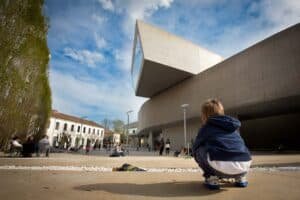
- MAXXI – National Museum of 21st Century Arts500 m
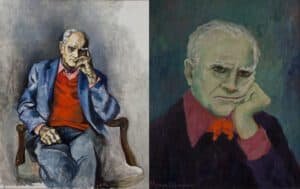
- Alberto Moravia House Museum700 m
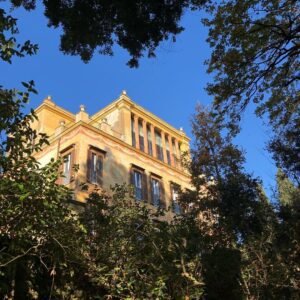
- Villa Mazzanti700 m

Upcoming events nearby
- Maurizio Battista at Teatro Olimpico, Se non vinco… imparo, November 4 to 29, 2026100 m
- Angelo Pintus at Teatro Olimpico, Loro non sanno niente, January 14 to February 14, 2027100 m
- Slava’s SnowShow at Teatro Olimpico, January 27 to February 7, 2027100 m
- Giorgia Fumo, Out Of Office at Teatro Olimpico, November 16 and 17, 2026100 m




You might also like
- The Nutcracker by Balletto di Roma at the Teatro Olimpico, December 17 to 20, 2026
- La Vie en Rose and Bolero by Balletto di Milano at Teatro Olimpico, April 2 to 4, 2027
- Alessandro Bergonzoni Arrivano i Dunque at Teatro Olimpico, February 20 and 21, 2027
- Back To Hawkins at Teatro Olimpico, February 17, 2027
- Selene Calloni Williams: Tu sei la Foresta at Teatro Olimpico in Rome, February 16, 2027
- Raul Cremona Bravissssssimo! at Teatro Olimpico, February 9, 2027