Alessandro Bergonzoni Arrivano i Dunque at Teatro Olimpico, February 20 and 21, 2027
In short. Bergonzoni, Arrivano i Dunque at Teatro Olimpico: Alessandro Bergonzoni brings his new show, Arrivano i Dunque (Avannotti, sole Blu e la storia della giovane Saracinesca), to Teatro Olimpico in Rome, Piazza Gentile da Fabriano 17, on…
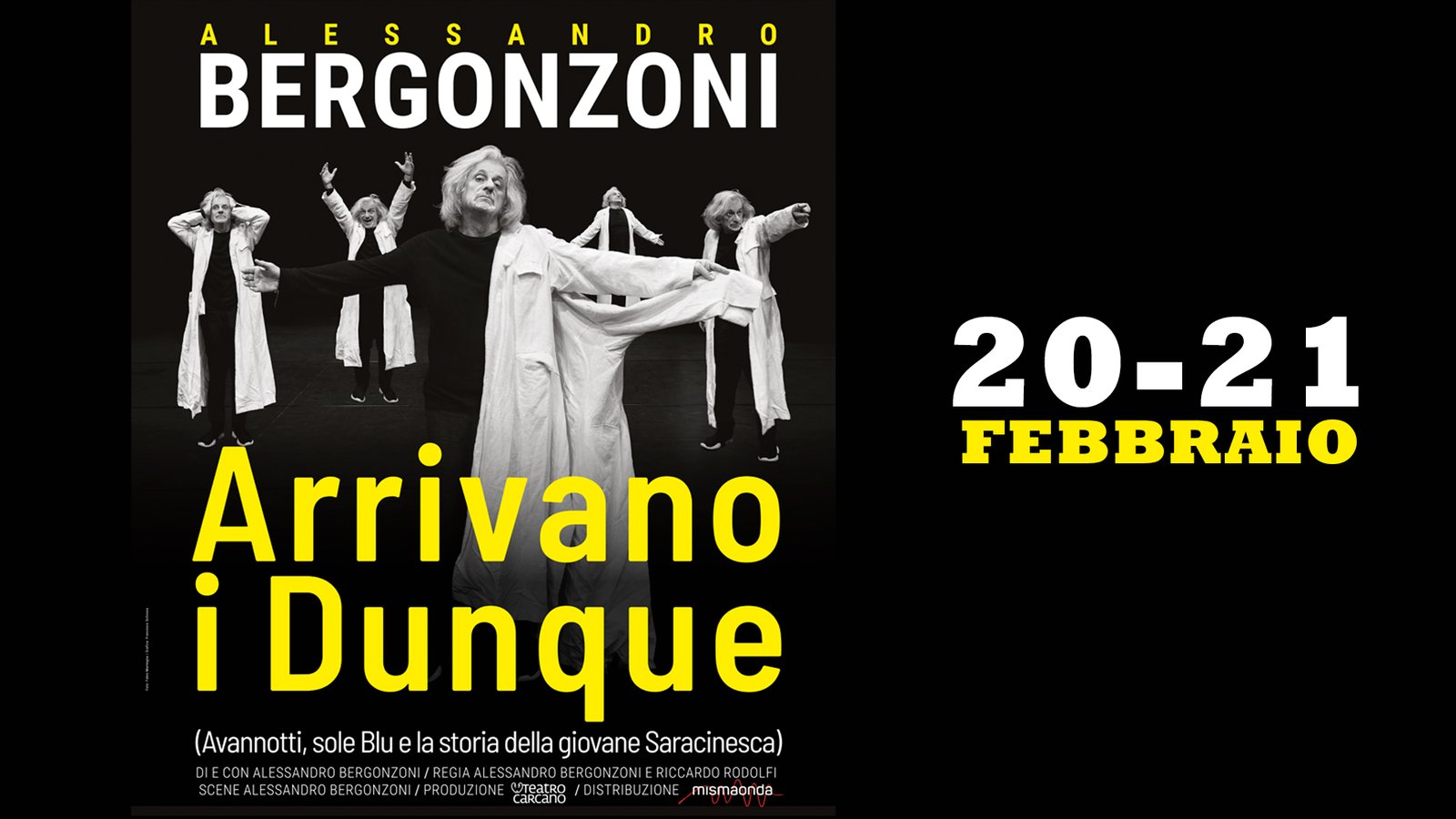
Bergonzoni, Arrivano i Dunque at Teatro Olimpico: Alessandro Bergonzoni brings his new show, Arrivano i Dunque (Avannotti, sole Blu e la storia della giovane Saracinesca), to Teatro Olimpico in Rome, Piazza Gentile da Fabriano 17, on Saturday, February 20 and Sunday, February 21, 2027. The theater gives start times of 20:30 and 17:30, and the time of each performance appears at the moment of purchase. You get to the theater by metro A to Flaminio and then tram 2 to the terminus at Piazza Mancini, from where about 500 meters remain on foot along Viale del Pinturicchio. The prices published by Teatro Olimpico range from €20 for the side balcony with railing to €30 for the gold poltronissima, plus a presale fee of €3 to €4.50. For under 12s there are reduced prices in all sections, and for online purchases a fee of €1.50 per ticket is added. Tickets are bought on the theater's official website, at the box office or on the presale circuit authorized by the organizers.
Language: performed in Italian. No English version or English surtitles are announced.
Alessandro Bergonzoni at Teatro Olimpico in brief
Arrivano i Dunque is Alessandro Bergonzoni's new show, which debuted in 2025 after the long tour of Trascendi e sali, and it is on stage at Teatro Olimpico on February 20 and 21, 2027 with two performances.
One weekend
Saturday, February 20 and Sunday, February 21, with the 20:30 and 17:30 start times given by the theater. Two performances over the weekend: one evening and, in all likelihood, one afternoon, the most convenient format for those coming from outside Rome.
What you will see
A monologue, as always with Bergonzoni: a man alone on stage who builds worlds with words. The theater presents it as a multifunctional scenic space, in which the author continues the artistic research of recent years, between comic writing and civic commitment.
Who it is for
For those who love language, wordplay taken to the point of paradox, comedy that demands attention. Anyone looking for the easy joke will be thrown off. Anyone who agrees to follow the author through his logical leaps will leave with a head full of ideas. In our view Bergonzoni is the most original Italian comic writer of his generation, and should be seen live at least once.
Arrivano i Dunque: the show
Arrivano i Dunque (Avannotti, sole Blu e la storia della giovane Saracinesca) is Alessandro Bergonzoni's sixteenth theater show, which debuted in 2025 and is presented as an auction of thoughts in which to put the voice of things up for sale.
The title
The dunque are the conclusions, the points you arrive at. In the presentation Bergonzoni explains the title with the feeling that the times are full, and accompanies it with three questions that are already a show in miniature: "Manca poco? Tanto è inutile? Non per niente tutto chiede!" The subtitle, with young fish, a blue sun and a young shutter, promises instead the usual gallery of impossible images.
Crealtà
The theater identifies the hallmark of the show, alongside the comic writing, in Crealtà, another verbal invention of the author: the attempt to recreate a reality that is no longer enough and must be reinvented day by day, toward a future of peace and a more welcoming world. It is the moral tension that has run through his works for years.
Arte e sorte
The presentation text piles up pairs of words that attract each other by sound and repel each other by meaning: arte e sorte, fiamminghi e piromani, van Gogh e Bangkok, bene e Mahler, stigmate e astigmatici. It is the Bergonzoni method boiled down: the word does not describe, it generates. The listener has to agree to lose the thread and find it again two sentences later, in another place.
A stage for commitment
The presentation recalls that in recent years Bergonzoni has taken part in person in artistic and social events. Arrivano i Dunque continues that path: comedy and civic conscience in the same sentence, without sermons.
Alessandro Bergonzoni: biography
Alessandro Bergonzoni, born in Bologna on July 21, 1958, is a comedian, cabaret performer, playwright, writer, humorist, actor, visual artist and lyricist, winner of the Ubu prize for best actor for the show Nel.
The beginnings in Bologna
After the Accademia Antoniana and a law degree, he starts working with Claudio Calabrò. From his first works he defines his themes: comic absurdity, the rejection of the real as a point of reference and play with language that produces surreal situations. He debuts at 24, in 1982, with Scemeggiata.
Television and the first recognition
In 1985 the Maurizio Costanzo Show launches him on television. In 1986 he takes part in Il bello della diretta on Rai Uno, hosted by Loretta Goggi. In 1988 the show Non è morto né Flic né Floc receives the special mention of the IDI prize. Between 1988 and 1989 he multiplies his appearances on radio and television, on Buona Domenica and Babele, and begins the meetings with university and high school students about comedy, which he continues to this day.
Le balene restino sedute
In 1989 he publishes with Mondadori Le balene restino sedute, which wins the Palma d'Oro of Bordighera as best comic book of the year. The show of the same name comes out of it, on tour for more than two years. From 1991 he works for Radio2, with more than 140 episodes of three daily programs: Zitta che si sente tutto, Il vento ha un bel nasino, awarded by critics as the best comic program of 1992, and Missione sguazzino.
Newspapers, songs, Stadio
He writes for the Corriere della Sera, for Max and Comix, for the literary magazines Panta, Il racconto and Storie, and edits a weekly column in the Emilia edition of Repubblica. He collaborates with Stadio for a long time: he signs the concept and the title of Siamo tutti elefanti inventati, from 1991, the song L'appostamento and the titles of several albums by the group. In 2001 he writes the lyrics of Bomba Boomerang for Piero Pelù.
The shows of the 1990s
Anghingò in 1992, La cucina del frattempo in 1994, Zius in 1997, translated into French after an invitation from the Istituto italiano di cultura in Paris, Madornale 33 in 1999, performed for three years. In 1995 he wins the Saint Vincent prize and the Gradara Ludens.
The prizes of maturity
Predisporsi al micidiale, from 2004, earns him the prize of the Associazione nazionale dei critici di teatro. In 2007 Nel debuts, with which he wins the Ubu prize for best actor in 2009. In 2008 he receives the Hystrio prize. Next come Urge, on tour for four years from 2010, Nessi, from 2014, and Trascendi e sali, from 2018 to 2021. In 2022 he receives the Premio nazionale Cultura della Pace.
Cinema, books, commitment
In film he is the circus director in Roberto Benigni's Pinocchio, from 2002, and Mago Festone in Mimmo Paladino's Quijote, from 2006. Among his books are Il grande Fermo e i suoi piccoli andirivieni, Opplero, Bastasse grondare, L'amorte and Aprimi cielo, from 2020. Since 2000 he has been a testimonial of the Casa dei Risvegli Luca De Nigris in Bologna. He has given lectures at the Festival della Filosofia in Modena and has spoken to the Oxford University Italian Society. The character of the Wizard of Words, who appeared in Topolino, is inspired by him.
Bergonzoni's language: how to listen to him
Alessandro Bergonzoni's theater is founded on language: neologisms, assonances, words broken apart and put back together, logic that starts from a double meaning and ends up somewhere else.
Don't look for the plot
A Bergonzoni show is not told, it is crossed. Sentences generate other sentences, images multiply, meaning lights up intermittently. My advice is to let yourself be carried: the overall design appears at the end, like a mosaic seen from afar.
Laughing and thinking
You laugh a lot, but with a different kind of laughter from television cabaret: it arrives late, when the wordplay dissolves in your head. For years his theater has been crossed by civic themes, from care to peace, and laughter is the way in to those themes.
An art that is also visual
Bergonzoni is also a visual artist, and his shows have a strong scenic component. The presentation of Arrivano i Dunque speaks of a multifunctional scenic space: expect a space that is part of the discourse.
Teatro Olimpico: Bergonzoni's stage
Teatro Olimpico in Piazza Gentile da Fabriano, built as a cinema theater in 1936 and named as such since 1981, faces Lungotevere Flaminio opposite the Ponte della Musica and is the home of the Accademia Filarmonica Romana.
A theater from the 1930s
The building was built between 1935 and 1936 by the firm Garbarino, Sciaccaluga e Mezzacane for the Società Generale Immobiliare, in the years of the Foro Italico. Until the 1950s it was mostly a cinema, with variety acts during the intervals.
Bought by the citizens
At the end of the 1970s, after the owning company went bankrupt, Adriana Panni, president of the Filarmonica, promoted a public subscription. In 1980 Teatro Olimpico spa bought the building. Since 1981 the program has hosted drama, dance, comedy and popular music.
A big hall for a monologue
The hall has 1,410 seats, 966 in the stalls on sloping rows and 444 in a horseshoe gallery. The stage is about 10 meters deep and 12 wide. For a monologue of words it is a large hall: the sloping stalls help, but listening requires attention. The theater, after all, has a long comic tradition, from Proietti to Brignano.
Tickets and prices for Arrivano i Dunque
Tickets for Alessandro Bergonzoni's Arrivano i Dunque at Teatro Olimpico cost from €20 to €30 plus presale, with discounts for under 12s and an online fee of €1.50.
The price list section by section
Gold poltronissima €30 plus €4.50 presale, reduced €21 plus €3.20. Side poltronissima €27 plus €4.10, reduced €18.90 plus €2.80. Poltrona and balcony €25 plus €3.80, reduced €17.50 plus €2.60. Balcony with railing €24 plus €3.60, reduced €16.80 plus €2.50. Side balcony €22 plus €3.30, reduced €15.40 plus €2.30. Side balcony with railing €20 plus €3, reduced €14 plus €2.10. The presale fee is always required.
Where to buy them
On the official website of Teatro Olimpico, which links to its own sales system, at the box office or on the presale circuit authorized by the organizers. For information: biglietti@teatroolimpico.it.
Where to sit for a monologue
For Bergonzoni the word comes first of all: it is best to sit close. Here, unlike at a dance show, the poltronissima is worth the price difference, which is only €5 compared with the poltrona. The actor's face, the pauses, the changes of tone are better caught from the front rows.
How to get to Teatro Olimpico for Bergonzoni
You reach Teatro Olimpico by metro A to Flaminio and tram 2 to Piazza Mancini, then about 500 meters on foot along Viale del Pinturicchio.
Metro A and tram 2
From Piazzale Flaminio tram 2 goes up Via Flaminia to Piazza Mancini. From Termini: metro A to Flaminio, then the tram. Those who take the Roma Nord railway also get off at Flaminio.
Buses
The lines indicated by the theater are 220, 232, 233, 280, 301, 446, 48, 910 and 911. The 910 from Termini stops at Pannini, about 300 meters away. At Piazza Mancini the 200, the 201, the 53 and the night bus n24 also arrive.
By car
From the center: Viale del Muro Torto, Piazzale Flaminio, Via Luisa di Savoia, Lungotevere Arnaldo da Brescia and Lungotevere delle Navi to Lungotevere Flaminio. From the north: Lungotevere Maresciallo Diaz, Ponte Duca d'Aosta and then right. On weekends parking is difficult, and on Sunday afternoon the Flaminio can be taken up by the audiences of other events in the area.
How to organize the day for Arrivano i Dunque
With two performances over the weekend, Arrivano i Dunque suits both a Saturday evening and a Sunday afternoon at the Flaminio.
Saturday night
Have an early dinner in the area, around 19:00, then the theater. After the show Milvian Bridge, a few minutes away, offers venues open late.
Sunday afternoon
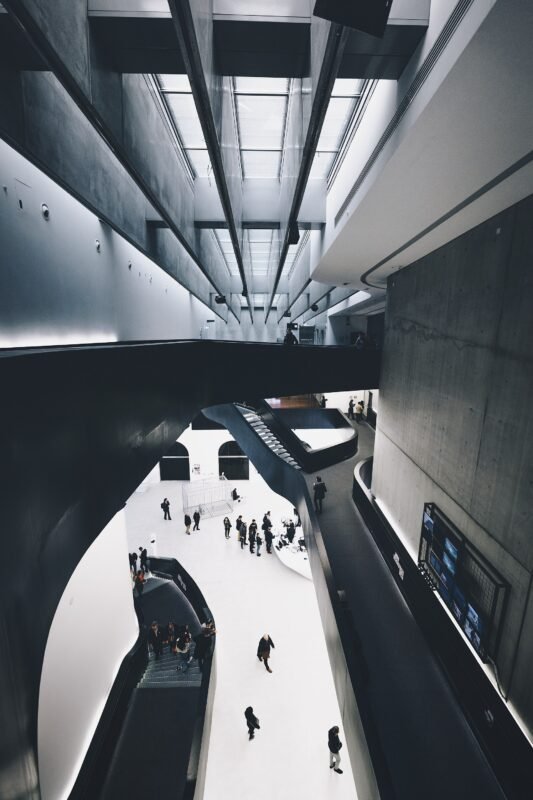
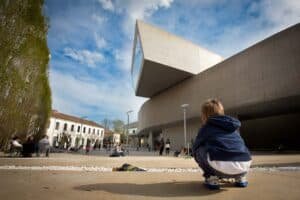
A relaxed lunch, a walk or a visit to the MAXXI or to Auditorium Parco della Musica, then the theater. Leaving in the late afternoon there is time left for dinner in the center, going down toward Piazza del Popolo on tram 2.
Where to eat before or after Bergonzoni
Around Teatro Olimpico, between Piazza Mancini, Via Flaminia and Piazza Gentile da Fabriano, there are pizzerias, trattorias and bars used to the audiences of the theater and the Auditorium.
Before the show
On Saturday a dinner at 19:00. On Sunday an unhurried lunch. On weekends it is best to book, because the nearest places also work with the Auditorium's audience.
After the show
On Saturday Ponte Milvio is the choice for those who want to stay out late. On Sunday, after the afternoon performance, the Flaminio still offers bars and trattorias for a long aperitivo.
Accessibility at Teatro Olimpico
Anyone with reduced mobility who wants to see Bergonzoni at Teatro Olimpico should contact the box office before buying, writing to biglietti@teatroolimpico.it.
What to ask
Which seats are suitable, how to access the hall, what conditions apply to companions. The stalls are on a slope and the gallery is on the upper floor.
For those who hear less well
A show built on wordplay requires precise listening. Anyone with hearing difficulties would do well to choose the central stalls, in the front rows.
Bergonzoni with children and teenagers
Arrivano i Dunque has reduced prices for under 12s, but it is a show of words, with a complex language and adult themes.
The right age
Small children will get lost in the flow of words. For high school students, especially if they like reading or writing, it is a valuable experience: Bergonzoni has been meeting students for decades precisely to talk about comedy and language.
An idea for the family
Choose the Sunday afternoon performance and prepare the kids with a game: inventing new words together by joining two existing words. They will arrive in the hall with their ears already trained.
The Flaminio around Bergonzoni
Teatro Olimpico is in the Flaminio neighborhood, between the Tiber and Via Flaminia, a few minutes from the Auditorium, MAXXI, Ponte della Musica and Foro Italico.
The river and the bridge
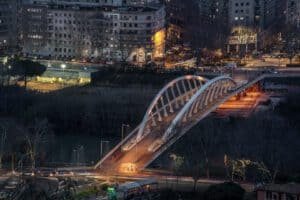
The Ponte della Musica, in front of the theater, leads across the Tiber toward the Foro Italico. A walk on the bridge on Sunday afternoon, before the show, is one of the simplest and nicest things to do at the Flaminio.
Toward the center
Along Via Flaminia you come to the Villa Giulia National Etruscan Museum, on the edge of Villa Borghese, and finally Piazza del Popolo.
Arrivano i Dunque in the season of Teatro Olimpico
Arrivano i Dunque closes at Teatro Olimpico a week that began with Back To Hawkins on February 17 and continued with Pink Floyd Legend and Guy Pratt on the 18th and 19th.
After Bergonzoni
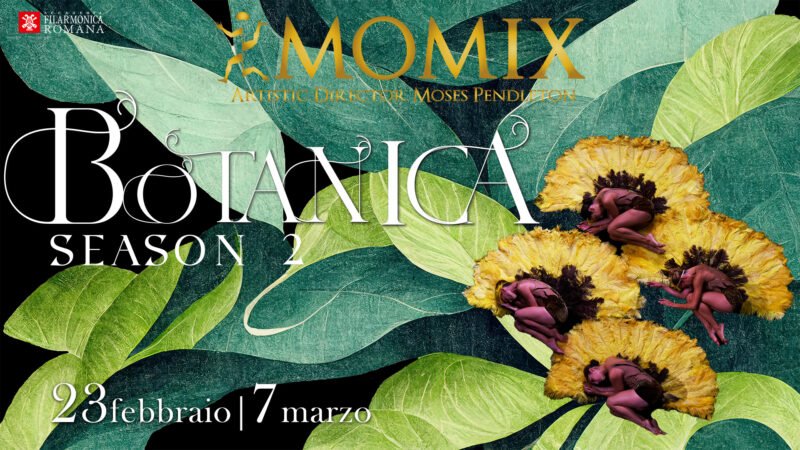
Right after, the program brings the Momix with Botanica, one of the most anticipated titles of the winter at the Olimpico.
Comedy in the season
In the same season the Olimpico hosts another, very different comedian, Angelo Pintus. The comparison between the two says a lot about the variety of Italian comedy today.
A curiosity about Alessandro Bergonzoni Arrivano i Dunque at Teatro Olimpico, February 20 and 21, 2027
The nicest curiosity is about Topolino. The character of the Wizard of Words, who appeared in issue 2936 of the Disney weekly, is inspired by Alessandro Bergonzoni. Few Italian theater authors have become comic book characters, and none for such a precise reason: his way of treating words as magic objects, to be transformed and made to disappear.
Second curiosity: Bergonzoni has a law degree. Anyone who hears him take sentences apart and put them back together backwards, looking for the flaw in common logic, recognizes something of the lawyer's habit of reading every word twice.
Third curiosity, a musical one. For decades he has been the trusted inventor of titles for Stadio: Siamo tutti elefanti inventati, from 1991, was his idea, and after it came other album titles by the group. He also wrote a lyric for Piero Pelù, Bomba Boomerang, in 2001. Bergonzoni's language, in short, has left its mark on Italian music too, without many people noticing. On February 20 and 21, at the Olimpico, you hear it at the source.
Something nobody tells you about Alessandro Bergonzoni Arrivano i Dunque at Teatro Olimpico, February 20 and 21, 2027
What is rarely said is how long and constant Bergonzoni's commitment is off the stage. Since 2000 he has been a testimonial of the Casa dei Risvegli Luca De Nigris in Bologna, and since then that link has never been broken. In 2001 he made Coma reading, and he co-signed with others the book La vita in gioco. In 2022 he received the Premio nazionale Cultura della Pace, for his ability to create, with his work as an artist, a culture of peace.
This commitment does not stay outside the show. The presentation of Arrivano i Dunque speaks explicitly of an artistic research in the territories where the author took part in person in artistic and social events, and of a future of peace to be reinvented day by day. Anyone going to the Olimpico expecting only wordplay will discover that, behind the games, there is a precise discourse on the world. This is the reason Bergonzoni does not age: his comedy always has something to say.
My advice for visiting Alessandro Bergonzoni Arrivano i Dunque at Teatro Olimpico, February 20 and 21, 2027
The first piece of advice is about the seat, and it goes against what I usually say for the Olimpico. For a dance show or a concert I recommend the balcony. For Bergonzoni I recommend the stalls, as close as possible. It is a monologue founded on words, pauses, the tiny movements of the face: the gold poltronissima costs €30, five more than the poltrona, and is worth every one.
Second piece of advice: choose the performance according to how tired you are. Bergonzoni demands continuous attention, and a tired spectator misses the best of it. If on Saturday you arrive at the theater after a week of work, take Sunday afternoon.
Third piece of advice: don't try to understand everything. Let the words pass, laugh when it comes, and trust the overall design. The meaning arrives, often on the tram ride back.
Last piece of advice: if you bring friends who don't know Bergonzoni, warn them. Those who arrive prepared for a different language have fun. Those who expect television cabaret risk spending the first half hour looking for the key.
Another well-known fact, yet rarely mentioned
It is known that Bergonzoni is a comedian. Less often remembered is that he is one of the few Italian comedians to have won the Ubu prize for best actor, for the show Nel, in the 2007/2008 season. Before that he had received the prize of the Associazione nazionale dei critici di teatro for Predisporsi al micidiale, and in 2008 the Hystrio prize. Italian theater considers him an author, even before a comedian.
Another known and rarely mentioned fact: his television career began in 1985 at the Maurizio Costanzo Show, and in 1986 came Il bello della diretta on Rai Uno. But Bergonzoni did not build his career on television: he preferred radio, with more than 140 episodes for Radio2, books, theater. It is a choice that has paid off over time.
And a fact about film: Bergonzoni is the circus director in Roberto Benigni's Pinocchio, from 2002. His trade as a juggler of words, transferred to a circus of puppets, was an almost obligatory casting choice.
The right photo to take at Alessandro Bergonzoni Arrivano i Dunque at Teatro Olimpico, February 20 and 21, 2027
The right photo depends on the performance. If you go on Sunday afternoon, photograph the Ponte della Musica in the light of late February, before the show: the river, the white bridge, the facade of the theater and the Foro Italico on the other side. If you go on Saturday night, the same shot in the dark, with the bridge lights on.
The second photo is the entrance of the theater with the poster of Arrivano i Dunque. The title, with its young fish and its shutter, is already an image: it is worth keeping.
In the hall the theater's rules on filming apply. In a monologue made of silences, even the noise of a shutter is disturbing. Keep your phone in your pocket.
The photo few people take is the one of the historic sets in the foyer: Corrado Cagli's golden forms, Giacomo Manzù's backdrop for the Histoire du soldat. For a Bergonzoni spectator, who is also a visual artist and loves the contamination between the arts, it is the photo most coherent with the day.
Some important events that happened here in history
On March 4, 1965 Pierre Boulez conducted at Teatro Olimpico the Italian premiere of Igor Stravinsky's Abraham and Isaac and the European premiere of his Elegy for J.F.K. It is the most important date in the musical history of the hall.
In the 1960s and 1970s the Olimpico hosted productions that joined music and the visual arts: Stravinsky's Histoire du soldat from October 11 to 14, 1966, with Manzù's backdrop. Niccolò Castiglioni's Tre misteri in 1968, with Mirko's sculpture. Stravinsky's Mass from October 29 to 31, 1975, with Cagli's forms.
In 1980 the citizens' subscription led to the birth of Teatro Olimpico spa. Since 1981 the stage has opened to drama, dance and comedy: the Momix arrive in 1982, the Lindsay Kemp Company in 1989, Baryshnikov in 1995, the Bolshoi in 1996. On January 28, 1998 Giorgio Gaber brings here Un'idiozia conquistata a fatica: a monologue of teatro canzone, a form that, like Bergonzoni's, entrusts everything to a man alone on stage and his word. In the 2009/2010 season the Agis rankings place the Olimpico second in Rome by number of spectators.
Who has been through Alessandro Bergonzoni Arrivano i Dunque at Teatro Olimpico, February 20 and 21, 2027
On the stage of the Olimpico have passed Arturo Benedetti Michelangeli, Jessye Norman, Zubin Mehta, Giuseppe Sinopoli, Luigi Dallapiccola and Pierre Boulez, for the season of the Accademia Filarmonica Romana. For dance, Baryshnikov, Joaquín Cortés, Lindsay Kemp, Maurice Béjart, the Bolshoi, Antonio Gades and the Momix. For music, Marillion, the Pooh, Lucio Dalla, the Nomadi.
For the theater of words, which is Bergonzoni's territory, the closest name is that of Dario Fo, whom the theater remembers among the protagonists of its history: another author-actor who made the word on stage a comic and civic instrument. And then Giorgio Gaber, who brought Un'idiozia conquistata a fatica here on January 28, 1998, and Nicola Piovani. For comedy, Gigi Proietti, Enrico Brignano, Vincenzo Salemme, Aldo, Giovanni e Giacomo, Lillo e Greg.
In Bergonzoni's personal story pass Maurizio Costanzo, who launched him on television. Loretta Goggi. Stadio. Piero Pelù. Roberto Benigni, who wanted him in his Pinocchio. Mimmo Paladino, for the Quijote. On February 20 and 21 these names meet, for two performances, in Piazza Gentile da Fabriano.
Frequently asked questions about Bergonzoni at Teatro Olimpico
When is Bergonzoni's Arrivano i Dunque on in Rome?
Alessandro Bergonzoni's Arrivano i Dunque is on stage at Teatro Olimpico in Rome on Saturday, February 20 and Sunday, February 21, 2027. The theater gives start times of 20:30 and 17:30. The time of each individual performance is shown at the moment of purchase.
How much do tickets for Bergonzoni at Teatro Olimpico cost?
Tickets for Arrivano i Dunque at Teatro Olimpico range from €20 to €30 plus a presale fee of €3 to €4.50. Under 12s pay from €14 to €21 plus presale. Online, a fee of €1.50 per ticket is added.
What is Arrivano i Dunque about?
Arrivano i Dunque is a monologue by Alessandro Bergonzoni presented as an auction of thoughts: comic writing, neologisms and Crealtà, the idea of reinventing a reality that is no longer enough, toward a future of peace. As always with Bergonzoni, there is no plot to tell.
Who is Alessandro Bergonzoni?
Alessandro Bergonzoni is a comedian, playwright, writer and visual artist born in Bologna in 1958, winner of the Ubu prize for best actor for Nel and of the theater critics' prize for Predisporsi al micidiale. He has published books such as Le balene restino sedute and acted in Benigni's Pinocchio.
Is Arrivano i Dunque suitable for teenagers?
Arrivano i Dunque has reduced prices for under 12s, but it is a complex show of words, better suited to high school students who love language. For a family, the Sunday afternoon performance is the most convenient choice.
How do you get to Teatro Olimpico by public transport?
You reach Teatro Olimpico by metro A to Flaminio and tram 2 to Piazza Mancini, then about 500 meters on foot. The 910 from Termini stops at Pannini, about 300 meters away. At Piazza Mancini the night bus n24 also passes.
Is Teatro Olimpico wheelchair accessible?
To see Arrivano i Dunque at Teatro Olimpico with reduced mobility needs, it is best to write to the box office before buying, at biglietti@teatroolimpico.it, to find out the suitable seats and the conditions for companions.
The final advice on Bergonzoni at Teatro Olimpico
Go, and sit close. Bergonzoni is an author you only really understand live, when the word leaves the page and takes on the rhythm of breathing. Choose the performance when you are most rested, leave at home the urge to understand everything right away, and bring someone to talk it over with on the tram ride back. Arrivano i Dunque, indeed: and they arrive afterward.
Article written by the editorial team of Tour Leader Pro, contact them for Private/Corporate/V.I.P. Tours and Experiences.
Planning a trip to Rome? The English guides to visiting the city are on ItalyPlanner.com.
Contact Information
Nearby
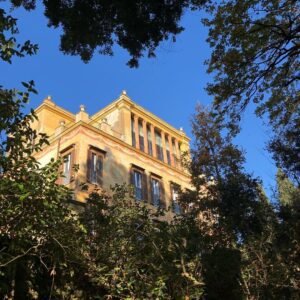
 Teatro Olimpico100 m
- Ponte della Musica – Armando Trovajoli200 m
- Flaminio400 m
- MAXXI – National Museum of 21st Century Arts500 m
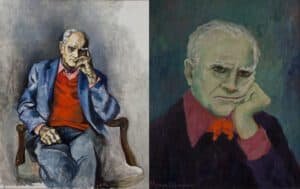
- Alberto Moravia House Museum700 m
- Villa Mazzanti700 m

Upcoming events nearby
- Maurizio Battista at Teatro Olimpico, Se non vinco… imparo, November 4 to 29, 2026100 m
- Angelo Pintus at Teatro Olimpico, Loro non sanno niente, January 14 to February 14, 2027100 m
- Slava’s SnowShow at Teatro Olimpico, January 27 to February 7, 2027100 m
- MOMIX Botanica at Teatro Olimpico, February 23 to March 7, 2027100 m
You might also like
- Raul Cremona Bravissssssimo! at Teatro Olimpico, February 9, 2027
- Maccio Capatonda, Spettacolo Teatrale at the Teatro Olimpico, December 21 and 22, 2026
- Riccardo Rossi, Non ho l’età! at Teatro Olimpico in Rome, January 19-24, 2027
- Ghemon in La prima volta, l’ultima volta, l’unica volta at Auditorium Parco della Musica, December 12, 2026
- Edoardo Leo, Ti racconto una storia at Auditorium Parco della Musica, December 31, 2026
- Maurizio Battista New Year’s Special 2026/2027 at Teatro Olimpico, December 31, 2026