Riccardo Rossi, Non ho l’età! at Teatro Olimpico in Rome, January 19-24, 2027
In short. Riccardo Rossi brings the new show “Non ho l'età!” (I'm Not the Right Age!) to Teatro Olimpico in Rome, Piazza Gentile da Fabriano 17 (Flaminio district), from January 19 to 24, 2027: Tuesday, January 19 to Saturday, January 23 at 8:30…
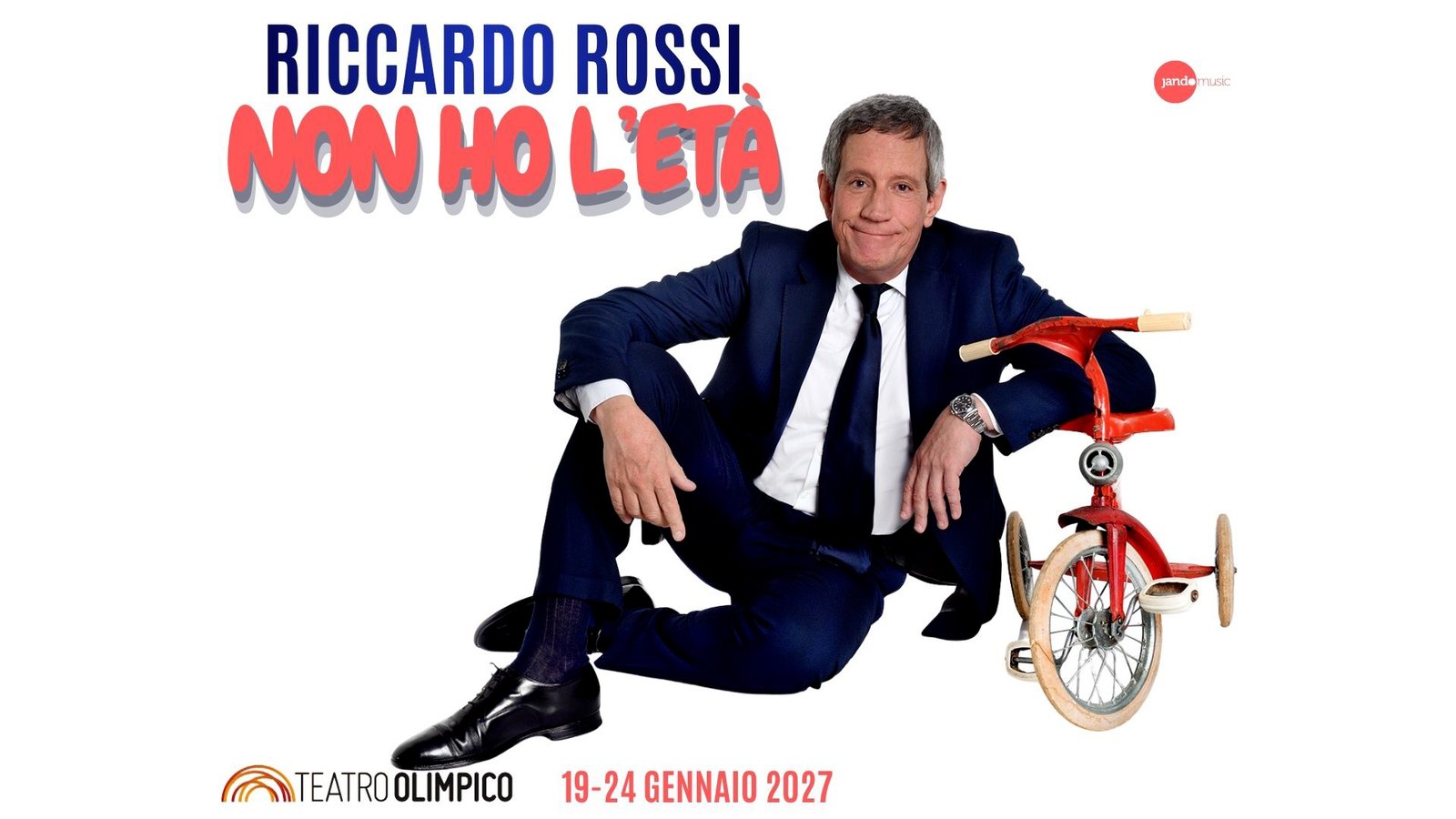
Riccardo Rossi brings the new show “Non ho l'età!” (I'm Not the Right Age!) to Teatro Olimpico in Rome, Piazza Gentile da Fabriano 17 (Flaminio district), from January 19 to 24, 2027: Tuesday, January 19 to Saturday, January 23 at 8:30 p.m., Sunday, January 24 at 5:30 p.m. The theater is reached by metro line A to Flaminio and then by tram 2 along Via Flaminia to the Ponte della Musica, from where you walk a few minutes toward the Tiber. The price list published by the theater runs from 25 euros plus 3.80 presale fee (side balcony with railing, reduced visibility) to 35 euros plus 5.30 presale fee (poltronissima gold), poltrona and central balcony cost 28 euros plus 4.20. For online purchase a 1.50 euro fee per ticket is added. Tickets are bought on the official website of Teatro Olimpico, at the box office on Piazza Gentile da Fabriano and on the presale network authorized by the organizer. The show is a Jando Music production.
Language: performed in Italian. No English version or English surtitles are announced.
Six nights in a row in the hall at Flaminio, in mid-January, with a Roman actor who has spent 40 years across film, television, radio and stage. The Olimpico is the hall where word-based comedy finds its most loyal audience, and where Rossi, here, plays at home. What follows is everything you need to choose the night, the seat and the way to get there.
Riccardo Rossi and “Non ho l'età!”: what the show is about
“Non ho l'età!” is a comic monologue about the man who never becomes an adult: the theater presents it as a show that tackles the problem of a male grappling with the meaning of his own life, from puberty to adulthood, among dodged responsibilities and heroic models impossible to imitate.
The theme
The official presentation starts from a simple idea: modern man is born, grows up, grows old, but never becomes an adult. The protagonist goes through puberty, adolescence and adulthood trying to avoid the responsibilities raining down on him, and all his life tries to grow up without managing it. It is a theme Rossi has long frequented: his 2010 book was titled “Alla mia età. Riflessioni di un comico sentimentale” (At My Age: Reflections of a Sentimental Comedian).
The model heroes
The comic thread runs through the “model heroes” instilled in boyhood: exploring space, discovering America, unifying Italy. And then, much more concretely, facing and ending a marriage, up to the hardest conquest: learning to do the grocery shopping alone. The contrast between the epic of school books and domestic daily life is the engine of the evening.
Fatherhood
The journey also includes the chapter on the father, handled with the line the theater highlights in the presentation: the mother will take care of it anyway. The close of the presentation is an invitation that sums up the spirit of the show: “Trust those who did not succeed!”
The format
It is a show built on words and storytelling, the genre in which Rossi has worked for over 20 years, from the monologues of “Pagine Rossi” onward. The running time is not given on the theater's page, for an evening of this kind it is still wise to expect a late finish and to plan the way back accordingly.
Dates and times for Riccardo Rossi at Teatro Olimpico
Riccardo Rossi is on at Teatro Olimpico for six performances, from Tuesday the 19th to Sunday, January 24, 2027: the evenings from Tuesday to Saturday start at 8:30 p.m., Sunday at 5:30 p.m.
The weeknight shows
Tuesday the 19th, Wednesday the 20th, Thursday the 21st and Friday, January 22, at 8:30 p.m. These are the best evenings for people living in Rome who want a less crowded house than Saturday's. Tuesday is the opening night: some rough edges of the first run, in exchange for an audience that is often warmer.
Saturday
Saturday, January 23, at 8:30 p.m. It is the night that sells out first, and the one when Flaminio is liveliest before and after the show.
Sunday afternoon
Sunday, January 24, at 5:30 p.m. It is the right performance for those coming from outside Rome who must leave in the evening, and for those bringing elderly parents who prefer not to get home late.
Tickets and prices for Riccardo Rossi at the Olimpico
Prices for “Non ho l'età!” at Teatro Olimpico run from 25 to 35 euros full price, to which the presale fee is always added, charged when the ticket is issued.
The price list, section by section
Poltronissima gold 35 euros plus 5.30 presale, side poltronissima 31 euros plus 4.70, poltrona 28 euros plus 4.20, balcony 28 euros plus 4.20, balcony with railing, reduced visibility, 28 euros plus 4.20, side balcony 26 euros plus 3.90, side balcony with railing, reduced visibility, 25 euros plus 3.80. For each ticket bought online a 1.50 euro fee is added.
Where to buy them
The direct channel is the online ticket office linked to the Teatro Olimpico website, together with the box office at Piazza Gentile da Fabriano 17. For information the theater gives the address biglietti@teatroolimpico.it. The show is also on sale on the presale network authorized by the organizer.
Which section to choose
For a monologue the actor's voice and face matter. The central poltrona, at 28 euros plus presale, is the best compromise between price and closeness, the central balcony, at the same price, guarantees a good overall view. I avoid the sections with a railing and reduced visibility: the saving is a few euros, and in a show of expressions every detail lost weighs.
Who Riccardo Rossi is: the biography
Riccardo Rossi was born in Rome on October 24, 1962: an actor, comedian, author, television and radio host, he has gone through 40 years of Italian entertainment, from the cinema of the 1980s to theater monologues, from the television of Canzonissima to the dubbing booth.
Early years in film
Rossi debuted in 1984 with “College” by Castellano and Pipolo, followed by Carlo Lizzani's “Mamma Ebe” (1985) and “Grandi magazzini” (1986). In the following years he worked with Luciano Salce (“Quelli del casco”), Carlo Vanzina (“Le finte bionde,” “Piccolo grande amore,” “S.P.Q.R. 2000 e ½ anni fa”), Alessandro D'Alatri (“Americano rosso”), Marco Risi (“L'ultimo capodanno”) and Fausto Brizzi (“Notte prima degli esami, Oggi”). What made him popular, though, was television: he is Mazzocchi in the Italia 1 series “I ragazzi della 3ª C” (The Kids of Class 3C), between 1986 and 1987.
Television in the 1990s
In the 1990s he was a recognizable face on the Mediaset networks: on “Non è la Rai” he played Cinderella, then took part in “Forum” and “Buona Domenica.” At Rai he moved from “Carràmba che fortuna” to “Segreti e bugie,” up to “Nessundorma,” hosted on Rai 2 alongside Paola Cortellesi. In 2003 he hosted “Assolo” on LA7, a program devoted to comedians, and covered the outside link-ups of “Quelli che il calcio.”
The theater of monologues
Theater is where Rossi built his own signature. He wrote and performed “Pagine Rossi” (2002) and its sequel “La più bella serata della vostra vita” (The Best Evening of Your Life, 2003), directed by Cristiano D'Alisera, from the two shows came the Mondadori book “Pagine Rossi. Manuale di sopravvivenza urbana” (Urban Survival Manual, 2004). Next came “Per fortuna che c'è Riccardo” (Luckily There Is Riccardo), in which he tells the dates that changed world history, “Stasera a casa Rossi” (Tonight at the Rossi House, 2010), with a different guest each night, “Di nuovo a casa Rossi,” “Riccardo Rossi show,” “That's Life! Questa è la vita!,” “Così Rossi che più Rossi non si può” and “W le donne!” and, in 2024, “Volevo fare il musicista” (I Wanted to Be a Musician), also credited as director.
Author, radio and cooking
Rossi is one of Fiorello's writers, and was a regular guest on the “Fiorello Show” on Sky Uno in 2009 and 2010. On radio he did the “Gazzettino di Rossi” in the Rai Radio 2 program “Gli Spostati.” From 2010 to 2014 he sat on the jury of “Cuochi e fiamme” on LA7d, alongside Fiammetta Fadda and Chiara Maci, in 2011 he hosted “Conosco un posticino” on Dove TV, a trip through Italy's tourist and food attractions.
Directing and vinyl
In 2014 he wrote, starred in and directed his first film, “La prima volta (di mia figlia)” (My Daughter's First Time), released in 2015. In 2019 he hosted “Battute?” in late night on Rai 2. He created and hosted, for Sky and then for Rai, “I miei vinili” (My Vinyls), a program entirely devoted to listening to music on records, revived in 2024 as “I vinili di...”. He is also the Italian voice of Walter Nelson in “Minions.”
Recent years
In 2022 he took part in “Il cantante mascherato” (The Masked Singer) under the Chameleon mask and finished third. In 2026 he is among the judges of “Canzonissima” on Rai 1 and, the same year, a contestant on “Ballando con le stelle.” He arrives at the Olimpico, then, in a season of great television visibility: one more reason not to wait until the last week to buy the ticket.
Teatro Olimpico: the hall that hosts Riccardo Rossi
Teatro Olimpico, at Piazza Gentile da Fabriano 17, has been active as a cinema-theater since 1936 and as a theater since 1981, with a hall of about 1,400 seats facing the Lungotevere Flaminio, near the Ponte della Musica. For the full history of the hall see our page on Teatro Olimpico.
A 1930s block
The block was built between 1935 and 1936 by the firm Garbarino, Sciaccaluga and Mezzacane for the Società Generale Immobiliare, in the years when Flaminio and the Foro Italico were taking shape. A reinforced concrete structure, travertine in the plinth and cornices: a building that restoration has returned to its original late-rationalist look.
Between variety and cinema
The theater describes its architecture as conceived between the variety theater and the movie house. Until the 1950s it worked mostly as a cinema, with vaudeville acts during the intervals: for this reason it had dressing rooms, stage equipment and a projection booth from the start.
Orchestra and gallery
The orchestra has 966 seats arranged in an amphitheater, the horseshoe gallery 444. The stage measures about 10 meters in depth by 12 in width. The hall is wider than it is deep, and this, for a monologue, is an advantage: even from the sides the distance from the stage stays contained.
The foyer
The foyer is a rotunda with wide corridors, where set elements from historic productions are kept: Corrado Cagli's gilded sets for Stravinsky's Mass (1975), Giacomo Manzù's backdrop for the “Histoire du soldat” (1966), Mirko's sculpture for Niccolò Castiglioni's “Chordination” (1968). 10 minutes of margin is enough to look at them.
A curiosity about Riccardo Rossi, Non ho l'età! at Teatro Olimpico in Rome, January 19-24, 2027
The curiosity is that the theme of “Non ho l'età!” has accompanied Riccardo Rossi for more than 15 years. In 2010 he published with Dalai Editore a book titled “Alla mia età. Riflessioni di un comico sentimentale”: age, and the way a man goes through it without ever feeling it on himself, is one of his comic obsessions. The 2027 show reverses the perspective of that title. Then it was “at my age,” with the slightly ironic wisdom of someone who has already walked part of the road, today it is “I'm not the right age,” with the protest of someone who does not feel ready to become an adult.
The theme of age, moreover, returns throughout his theater career. “Così Rossi che più Rossi non si può,” from 2017, was an ironic reckoning of a life, “Volevo fare il musicista,” from 2024, told of a boyhood dream never realized, and was the first show for which Rossi also signed the direction. “Non ho l'età!” ideally closes the circle: after the boy who wanted to play and the man who comes to terms with himself, comes the male who, at any age, never feels ready. Those who have followed Rossi in the theater will recognize a coherent line, built show after show with the same sentimental, disenchanted gaze.
There is also a calendar coincidence worth pointing out. In the same week, January 20 to 24, on the other side of the city, at Teatro Brancaccio Neri Marcorè is on with a show devoted to Giorgio Gaber, and Gaber, at the Teatro Olimpico, brought “Un'idiozia conquistata a fatica” on January 28, 1998. January, in Rome, has for decades been the month of spoken theater.
The Flaminio district around Riccardo Rossi
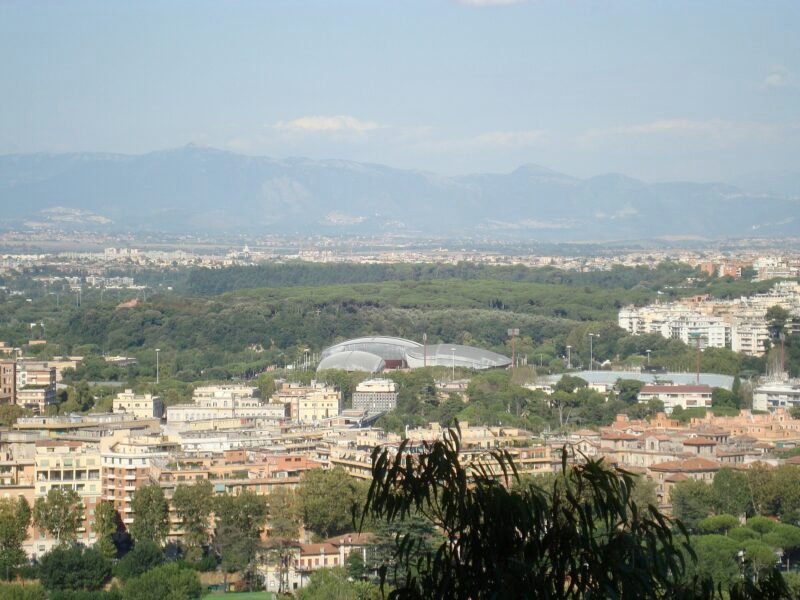
Flaminio is the first district of Rome, established in 1921 between Via Flaminia and the left bank of the Tiber: born as an industrial zone, it is today one of the city's hubs of culture and sport.
From factories to museums
In 1905 the Società Automobili Roma chose the bend of the Tiber for its plants, which with the First World War became the Reale Fabbrica d'Armi. The 1911 Exposition and then the 1960 Olympics shaped the district, since the 1990s have come Renzo Piano's Auditorium, Zaha Hadid's MAXXI and the Ponte della Musica.
The MAXXI
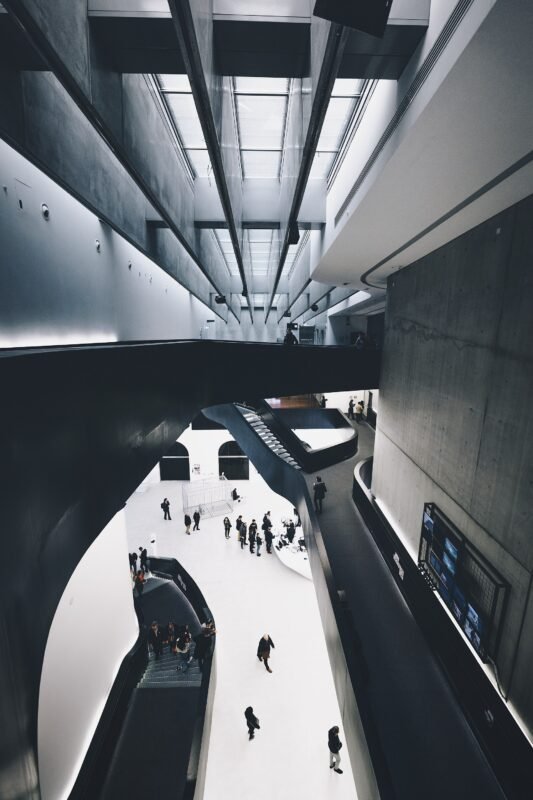
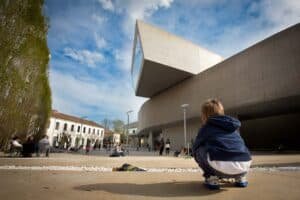
The MAXXI, the national museum of 21st-century arts, is on Via Guido Reni, a few minutes' walk from the theater. For those choosing the Sunday performance, an exhibition in the morning and the show at 5:30 p.m. make a full day without moving around.
Auditorium Parco della Musica
Across Via Flaminia is the Auditorium Parco della Musica: Renzo Piano's three halls are an excellent destination even just for a stroll among the open-air steps before the show.
Milvian Bridge
Going up Via Flaminia toward the north you reach Milvian Bridge, the Roman bridge built between 110 and 109 BC, today at the center of one of the liveliest areas of northern Rome in the evening. It is the natural direction for those looking for a table after the show.
Something nobody tells you about Riccardo Rossi, Non ho l'età! at Teatro Olimpico in Rome, January 19-24, 2027
What nobody says is that the price written large is not the price you pay. The Teatro Olimpico price list gives the full price and, in a separate column, the presale fee, which the theater specifies will always be charged when the ticket is issued. A 35-euro poltronissima gold thus becomes 40.30 euros, and if the ticket is bought online a 1.50 euro fee is added: 41.80 euros in all. A 28-euro poltrona comes to 33.70 euros. For a couple, the difference between the number you read and the one you spend is more than 10 euros.
The second thing concerns the balcony. In the price list there are two sections marked “railing, reduced visibility,” one central and one side, sold at the same price or a little lower than seats with no limitations. In the central balcony, for example, the seat behind the railing costs exactly the same as the free one: 28 euros. At purchase it is wise to look at the seating plan and choose the seat, not just the section.
Third point, often overlooked: the Sunday 5:30 p.m. performance is not a minor one. For those coming from outside Rome it is the most convenient, because it lets you get home in the evening, and at Flaminio it allows dinner after the show without hurry. Many spectators skip it thinking the afternoon is less lively. In comic monologues, the difference between afternoon and evening is made by the hall, not the clock.
How to get to Teatro Olimpico for Riccardo Rossi's show
Teatro Olimpico is reached by metro line A to Flaminio and then by tram 2 along Via Flaminia, or on foot from Piazzale Flaminio. The theater is at Piazza Gentile da Fabriano 17, facing the Lungotevere Flaminio, between Viale del Vignola and Via Giorgio Vasari.
Metro and tram
Line A stops at Flaminio, next to Porta del Popolo. From Piazzale Flaminio departs tram 2, which runs along Via Flaminia to Piazza Mancini for about 2.7 kilometers. From Via Flaminia to the theater it is a few minutes on foot toward the river. In the evening it is wise to check frequencies before heading out.
On foot from the center
From Piazza del Popolo you can walk along Via Flaminia or the Lungotevere: a long, flat walk, pleasant on clear January afternoons, less so on rainy evenings.
From the Foro Italico and Prati
The Ponte della Musica, reserved for pedestrians, bicycles and public transport, connects Piazza Gentile da Fabriano with the Lungotevere Cadorna and the Foro Italico. Those arriving from the Della Vittoria district cross the Tiber on foot and find themselves in front of the theater.
By car and taxi
Parking at Flaminio on show nights is contested, and with 1,400 people leaving at the same time the minutes lost multiply. The advice is firm: public transport or a taxi. On leaving, it is wise to move a few dozen meters away from the square, where traffic eases sooner.
The advice I give you for visiting Riccardo Rossi, Non ho l'età! at Teatro Olimpico in Rome, January 19-24, 2027
It is worth choosing a weeknight, Wednesday or Thursday, and a central poltrona seat. It is the combination that works best with comic monologues at the Olimpico: the hall is full but not packed, the audience is largely Romans who know the actor, and the laughter travels faster. Saturday has a more festive atmosphere but also a more scattered one, with last-minute arrivals and impossible parking.
Second piece of advice: arrive 20 minutes early and stop by the foyer. The rotunda with Cagli's sets and Manzù's backdrop is a small exhibition that most spectators cross without seeing, and it is the best way to enter the spirit of a hall that since 1936 has seen everything pass through, from vaudeville to Pierre Boulez.
Third piece of advice, a practical one: buy online choosing the seat on the plan, and keep in mind that the presale fee and the booking fee are added to the full price. If you are a group, talk to the box office first: for organized outings it is always the most reliable channel for getting seats together.
Finally, leave a bit of time afterward. Rossi is an actor who likes to greet the Roman audience, and Flaminio, after 10:30 p.m., empties fast: a walk to the lit Ponte della Musica, before looking for a tram or a taxi, closes the evening well.
Another well-known fact, yet rarely mentioned
That Riccardo Rossi is a television comedian everyone knows. Less often cited is that, behind the scenes, he was for years one of Fiorello's writers, with whom he also worked as a regular guest on the “Fiorello Show” on Sky Uno in 2009 and 2010, and then on “Edicola Fiore” in 2016. It is writing work that explains the kind of comedy you see in the theater: constructed, precise in timing, with little room for gratuitous improvisation.
Equally little remembered is his relationship with music. “I miei vinili,” the program he created and hosted first on Sky Uno and then on Rai 3, was entirely devoted to listening to vinyl records with guests: a formula far from the comic talk show, which bet everything on the memory of songs. In 2024 it became “I vinili di...” on Rai 1 and then on RaiPlay. And in 2026 Rossi was a judge on “Canzonissima.”
On the theater side, a fact known to insiders and little to spectators: in the 2009/2010 season the Olimpico ranked second in Rome and seventh in Italy for audience attendance according to the Agis rankings. The choice, since 1981, has been an eclectic program, with the big names of comedy alongside dance and music. Rossi therefore arrives in a hall used to filling up for a single actor on stage.
The right photo to take at Riccardo Rossi, Non ho l'età! at Teatro Olimpico in Rome, January 19-24, 2027
The right photo, for Riccardo Rossi's show at Teatro Olimpico, is taken outside: from the Ponte della Musica, with the theater facade and the Tiber in the same frame. Inside, during a monologue that lives on timing and pauses, a lit phone disturbs everyone, and photographing the show is not welcome.
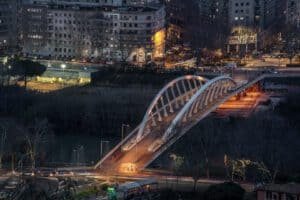
The Ponte della Musica, named in 2013 after Armando Trovajoli, is 190 meters long, with two large lowered steel arches tilted outward and wooden-paved walkways. From the middle of the bridge, looking toward Piazza Gentile da Fabriano, you get the theater facade framed by the arches, turning around, the Foro Italico and the hill of Monte Mario.
With the Sunday 5:30 p.m. performance, those arriving half an hour early find in late January the last light on the Tiber and the bridge lights coming on: the best moment for a photo that tells the evening. At the evening performances the lit facade reads well even with a phone, as long as you expose for the lights and leave the sky dark.
One last framing for those who arrive early: the show's poster at the entrance, with the stage photo credited to Claudio Porcarelli, and right behind it the circular foyer. That is where the audience stops, and it is the only image of the hall you can take home without breaking the rules.
Box office, services and accessibility at Teatro Olimpico
The box office of Teatro Olimpico is at Piazza Gentile da Fabriano 17, the theater also answers at biglietti@teatroolimpico.it and publishes on its website the discounts, promotions and subscriptions of the 2026/2027 season.
Information and contacts
For questions about seats, sections and date changes the reference is the box office. For tickets bought on the external presale network, contact the network itself.
Subscriptions and discounts
“Non ho l'età!” is part of the 2026/2027 season. Those who plan to return several times in the same season, for example also for Slava's SnowShow or for Angelo Pintus, do well to evaluate the subscription options published by the theater.
Accessibility
The hall has an orchestra with a constant slope and a gallery on the raised floor. For reduced mobility, dedicated seats and companions, it is best to contact the box office before buying to receive updated guidance and reserve the right seat.
Riccardo Rossi with teens and the family
“Non ho l'età!” is a comic show conceived for an adult audience, which talks about marriage, fatherhood and responsibility: the theater lists no age limits, but the themes are aimed at those who have lived or are living those experiences.
With teenagers
For a kid of 14 and up the evening can work, especially if they go to the theater with a parent: the story of the man who never grows up is also a comic lens on the relationship between generations, and kids often find their own fathers in it.
The right time
With kids the Sunday 5:30 p.m. performance is the most sensible choice: you come out in time for dinner and Monday is not a burden.
Some important events that took place here in history
On March 4, 1965 Pierre Boulez conducted at Teatro Olimpico the Italian premiere of Igor Stravinsky's “Abraham and Isaac” and the European premiere of his “Elegy for J.F.K.” It was perhaps the most important evening of the long season in which the Accademia Filarmonica Romana, present in the theater since the postwar years, brought 20th-century music to Flaminio.
Under the presidency of Adriana Panni the Filarmonica forged ties with the major musicians of the time, and the traces of that season are in the foyer: Manzù's backdrop for the “Histoire du soldat,” staged October 11 to 14, 1966, Mirko's sculpture for “Chordination,” October 2 to 4, 1968, Cagli's sets for Stravinsky's Mass, October 29 to 31, 1975.
The year 1980 marks the turning point: the Teatro Olimpico spa was born, subscribed by citizens, professionals and enthusiasts gathered around the Filarmonica, which bought the building. From 1981 full-time programming began and the hall became a theater.
Since then memorable dates have followed one another: Moses Pendleton's Momix from April 1982, Marillion in February 1988, the Lindsay Kemp Company in February 1989, Lucio Dalla with “Henna” from April 5 to 7, 1994, Pooh in late October 1994, Mikhail Baryshnikov's White Oak Dance Project in October 1995, Gigi Proietti with “A me gli occhi” in May 1996, the Bolshoi Ballet in September 1996, Giorgio Gaber with “Un'idiozia conquistata a fatica” on January 28, 1998, the Béjart Ballet Lausanne in October 2004.
Who has passed through Riccardo Rossi, Non ho l'età! at Teatro Olimpico in Rome, January 19-24, 2027
Through the stage of Teatro Olimpico have passed Pierre Boulez, Arturo Benedetti Michelangeli, Zubin Mehta, Jessye Norman, Dario Fo, Giorgio Gaber, Lucio Dalla, Mikhail Baryshnikov and Gigi Proietti, to cite only some names documented by the hall's history.
The era of the Accademia Filarmonica brought here performers such as Benedetti Michelangeli, Jessye Norman, Zubin Mehta, Giuseppe Sinopoli, and composers such as Luigi Dallapiccola. Alongside them, pop and singer-songwriter music: Marillion, the Nomadi, Pooh, Lucio Dalla, Nicola Piovani, Massimo Ranieri. International dance has seen Baryshnikov, Joaquín Cortés, Lindsay Kemp, Maurice Béjart, Antonio Gades.
Comedy is the largest family, and it is the one Riccardo Rossi slots into naturally: Gigi Proietti, Enrico Brignano, Vincenzo Salemme, Maurizio Battista, Aldo, Giovanni and Giacomo, Lillo and Greg, Ale and Franz, Neri Marcorè, Gioele Dix, Cinzia Leone, Max Giusti. Rossi has crossed paths with many of these names in 40 years of television, from “Buona Domenica” to “Quelli che il calcio.”
The theater also reports a judgment attributed to Orson Welles, according to which the Olimpico is the only place in Rome capable of recalling the atmosphere of Broadway theaters. Setting aside historical verification, it says a lot about how the hall is perceived: a popular theater, in the best sense of the word, where a Roman comedian with six performances in a row finds his natural audience.
January in Rome: the show period
Riccardo Rossi's performances fall in the second half of January 2027, weeks of low tourist season, with short days, often clear mornings and cool evenings.
The climate
January is among the coldest months of the Roman year. The Lungotevere at Flaminio, exposed to the wind off the river, makes itself felt: a real coat is a must for the walk on the Ponte della Musica.
Quieter museums
After the holidays the big museums are less crowded. Those who pair the show with a visit, to the MAXXI or to Villa Borghese, find emptier rooms and a more relaxed pace.
The week of theater
In the same week Rome offers plenty of spoken theater: for those in town a few days, a comic monologue at the Olimpico and an evening of teatro canzone elsewhere make a small personal season.
Where to eat near Teatro Olimpico
Around Teatro Olimpico the eating areas are three: Flaminio itself, Ponte Milvio to the north and Piazza del Popolo to the south. It is wise to choose them according to the time of the performance.
Before the evening performances
With a start at 8:30 p.m., an early dinner in the neighborhood or along Via Flaminia avoids the rush. Flaminio is residential, with neighborhood trattorias and pizzerias more than strolling venues: book, especially on Friday and Saturday.
After the Sunday performance
Coming out in the evening from the 5:30 p.m. performance, Ponte Milvio offers the widest choice, the Della Vittoria district, across the Ponte della Musica, is a quieter alternative.
After the show
Flaminio closes early. For a dish or a glass after 10:30 p.m. it is wise to head toward Ponte Milvio or the center, deciding beforehand where to go.
What to see around Teatro Olimpico before or after Riccardo Rossi
Within a walk of Teatro Olimpico are the MAXXI, the Auditorium Parco della Musica, the Ponte della Musica, the Foro Italico and Ponte Milvio: Flaminio is a district to discover on foot, with 20th-century architecture as the common thread.
The Foro Italico and the Stadio Olimpico
Crossing the Ponte della Musica you reach the Foro Italico and, a little farther, the Stadio Olimpico: a 1930s complex, from the same urban-planning season as the theater.
20th-century architecture
Flaminio preserves works by Libera, Moretti, Luccichenti, Vitellozzi and Nervi, besides the 1920s public housing on Piazza Perin del Vaga. An open-air lesson on Roman 20th-century architecture, from rationalism to the 1960 Olympics to Piano and Hadid.
The name of the square
Piazza Gentile da Fabriano bears the name of the painter from the Marche, among the greatest of the International Gothic, who died in Rome in 1427. The streets around are dedicated to architects and painters: Via Giorgio Vasari, Viale del Vignola, Piazza Perin del Vaga.
Frequently asked questions about Riccardo Rossi at Teatro Olimpico
When is Riccardo Rossi on at Teatro Olimpico in Rome?
Riccardo Rossi brings “Non ho l'età!” to Teatro Olimpico from January 19 to 24, 2027, for six performances. From Tuesday the 19th to Saturday, January 23, the show starts at 8:30 p.m., on Sunday, January 24 the performance is in the afternoon, at 5:30 p.m.
How much do tickets cost for Riccardo Rossi at the Olimpico?
Tickets for “Non ho l'età!” at Teatro Olimpico cost from 25 to 35 euros full price, plus the presale fee, from 3.80 to 5.30 euros. The poltrona costs 28 euros plus 4.20. For online purchase a 1.50 euro fee per ticket is added.
Where do you buy tickets for “Non ho l'età!”?
Tickets for Riccardo Rossi at Teatro Olimpico are bought on the online ticket office linked to the theater's official website, at the box office on Piazza Gentile da Fabriano 17 and on the presale network authorized by the organizer. For information the theater gives biglietti@teatroolimpico.it.
Where is Teatro Olimpico and how do you get there?
Teatro Olimpico is at Piazza Gentile da Fabriano 17, in the Flaminio district, on the Lungotevere near the Ponte della Musica. You get there by metro line A to Flaminio and then by tram 2 along Via Flaminia, walking a few minutes toward the Tiber.
What is Riccardo Rossi's show about?
Riccardo Rossi's “Non ho l'età!” tells of the man who goes through puberty, adolescence and adulthood without ever becoming an adult, among impossible model heroes, a marriage to face and end, grocery shopping to learn to do alone and a fatherhood delegated to the mother.
Who produces “Non ho l'età!”?
Riccardo Rossi's “Non ho l'età!” is a Jando Music production, as stated on the official page of Teatro Olimpico. The stage photo used for promotion is by Claudio Porcarelli.
Which performance is best to choose?
For Riccardo Rossi at the Olimpico the weeknights offer a full but more intimate hall than Saturday, while Sunday at 5:30 p.m. is the most convenient performance for those coming from outside Rome or going to the theater with kids and elderly parents.
The editorial team's verdict on Riccardo Rossi at Teatro Olimpico
Better to go on a Wednesday or Thursday, in a central poltrona, arriving early for the foyer and leaving half an hour for the Ponte della Musica on the way out. Rossi is a comedian of writing before punchline, and a hall like the Olimpico, wide and close to the stage, is the one that serves him best. Do not wait for the week of the show: in a January of great television visibility, the best seats vanish early.
Article written by the editorial team of Tour Leader Pro, contact them for Private/Corporate/V.I.P. Tours and Experiences.
Planning a trip to Rome? The English-language guides to visiting the city are on ItalyPlanner.com.
Contact Information
Nearby
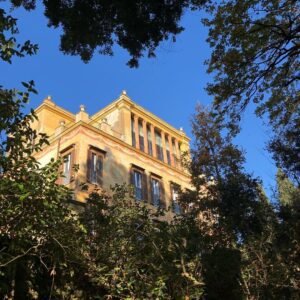
 Teatro Olimpico100 m
- Ponte della Musica – Armando Trovajoli200 m
- Flaminio400 m
- MAXXI – National Museum of 21st Century Arts500 m
- Alberto Moravia House Museum700 m
- Villa Mazzanti700 m

Upcoming events nearby
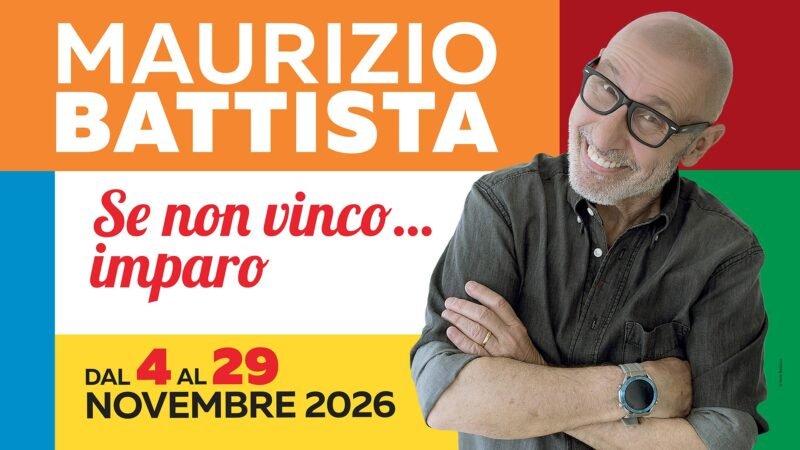
- Maurizio Battista at Teatro Olimpico, Se non vinco… imparo, November 4 to 29, 2026100 m
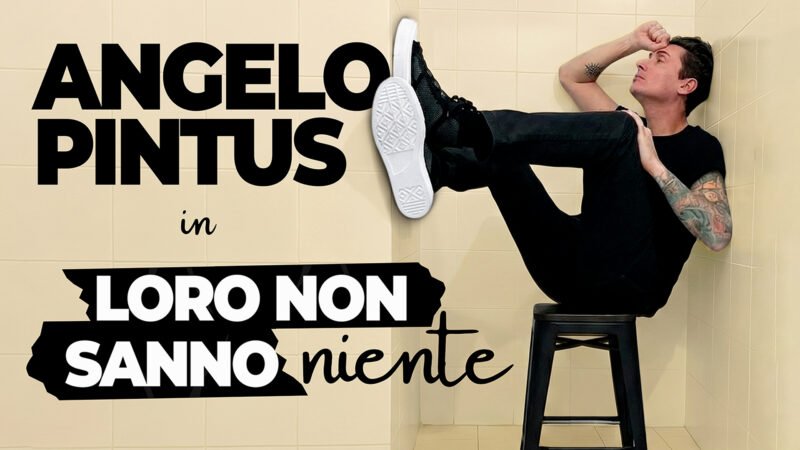
- Angelo Pintus at Teatro Olimpico, Loro non sanno niente, January 14 to February 14, 2027100 m
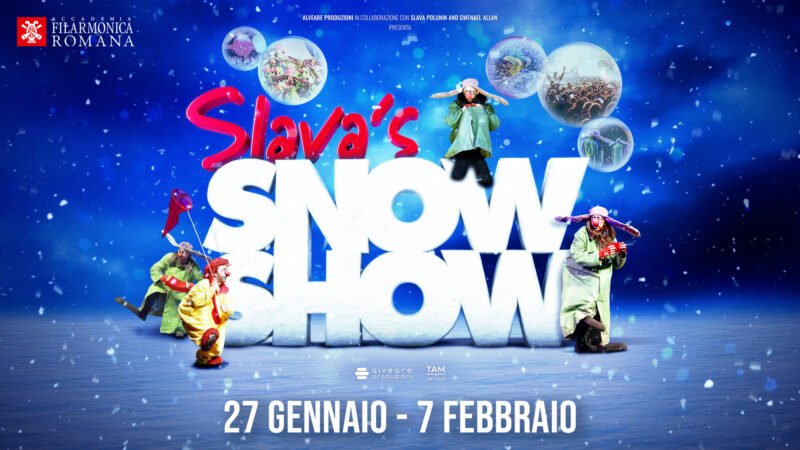
- Slava’s SnowShow at Teatro Olimpico, January 27 to February 7, 2027100 m
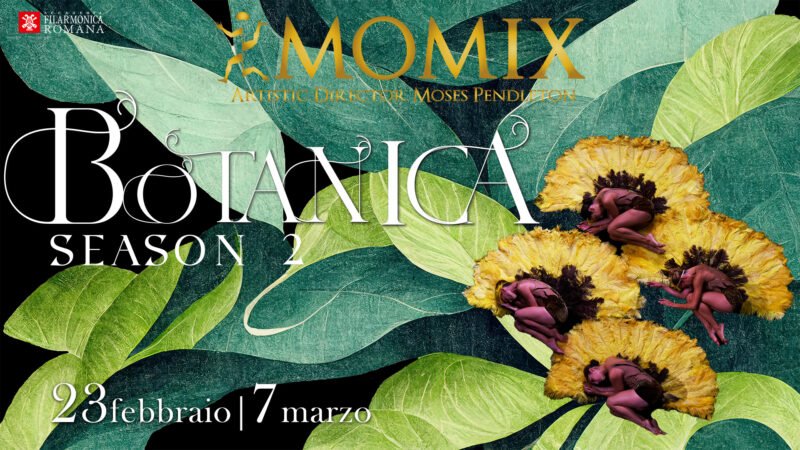
- MOMIX Botanica at Teatro Olimpico, February 23 to March 7, 2027100 m
You might also like
- Ghemon in La prima volta, l’ultima volta, l’unica volta at Auditorium Parco della Musica, April 19, 2027
- Alessandro Bergonzoni Arrivano i Dunque at Teatro Olimpico, February 20 and 21, 2027
- Raul Cremona Bravissssssimo! at Teatro Olimpico, February 9, 2027
- Maccio Capatonda, Spettacolo Teatrale at the Teatro Olimpico, December 21 and 22, 2026
- Edoardo Leo, Ti racconto una storia at Auditorium Parco della Musica, December 31, 2026
- Maurizio Battista New Year’s Special 2026/2027 at Teatro Olimpico, December 31, 2026