Maccio Capatonda, Spettacolo Teatrale at the Teatro Olimpico, December 21 and 22, 2026
In short. Maccio Capatonda makes his theater debut at the Teatro Olimpico in Rome, at Piazza Gentile da Fabriano 17 (00196 Rome), on Monday, December 21, and Tuesday, December 22, 2026, at 8:30 p.m., with a show titled, without beating around the…
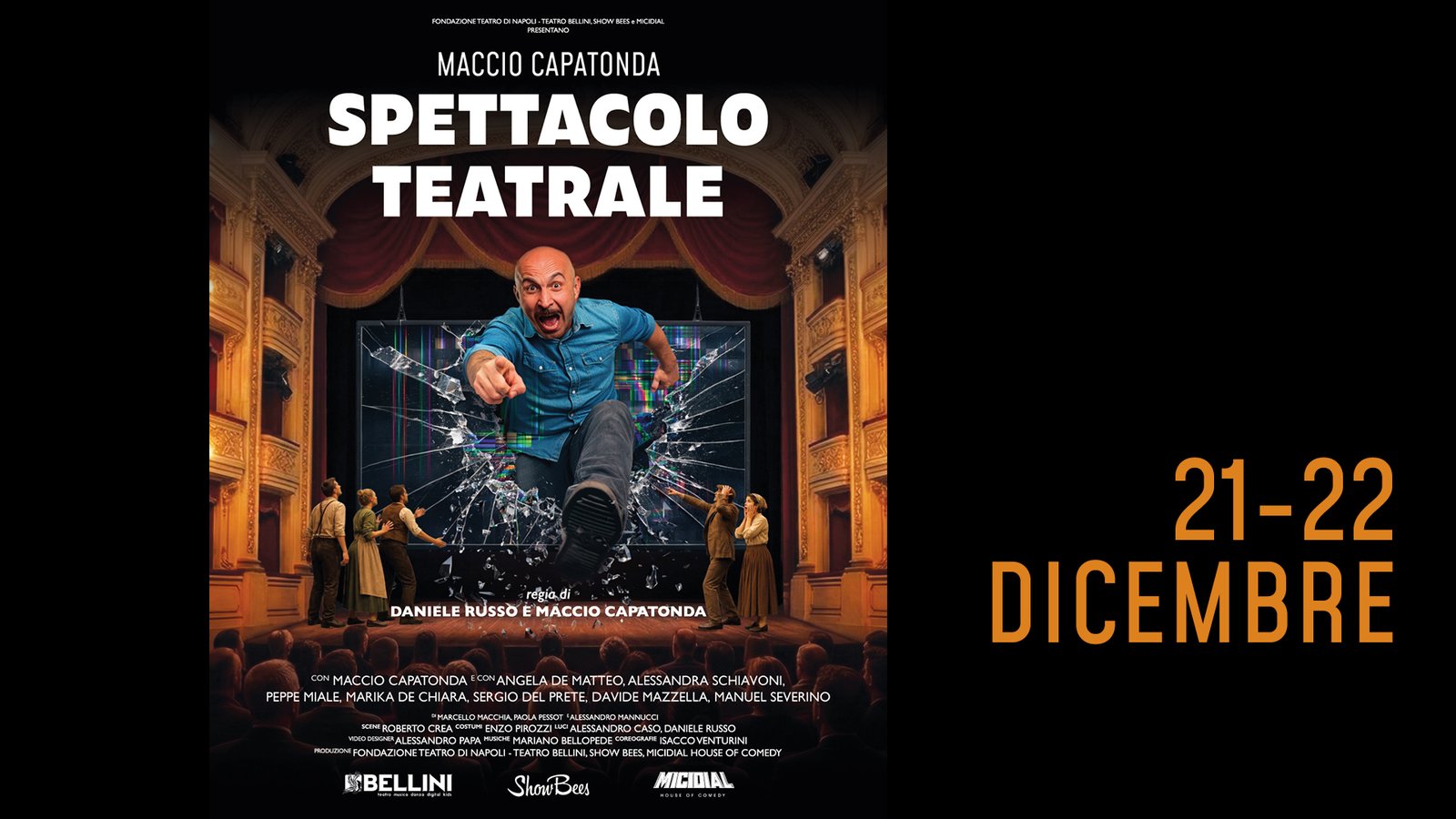
Maccio Capatonda makes his theater debut at the Teatro Olimpico in Rome, at Piazza Gentile da Fabriano 17 (00196 Rome), on Monday, December 21, and Tuesday, December 22, 2026, at 8:30 p.m., with a show titled, without beating around the bush, Spettacolo Teatrale ("Theatrical Show"). To get there, take Metro Line A to Flaminio and then tram 2 to the terminus at Piazza Mancini, from where you walk about 500 meters along Viale del Pinturicchio, alternatively, bus 910 from Termini to the Pannini stop, about 300 meters from the theater. The prices published by the theater range from 27 euros (side balcony with railing) to 47.80 euros (Poltronissima Gold), plus the presale fee, which runs from 4:10 to 7.20 euros depending on the section, online, a booking fee of 2.50 euros per ticket is added. Tickets are bought through the online box office linked from the official Teatro Olimpico website or at the box office on Piazza Gentile da Fabriano.
Language: performed in Italian. No English version or English surtitles are announced.
Two nights only, a few days before Christmas, to see live a comedian who in 20 years has worked almost always in front of a movie camera: fake trailers, TV series, films, web videos. The stage, for him, is new territory, and the show is built precisely on that novelty. Among the comedy titles of the Roman season it's the one with the most interesting gamble, because an author born with editing has to give up editing. Below you'll find what you'll see, who Maccio Capatonda is, how to choose your seat and how to get there, and then the story of a hall that was born as a movie theater and lends itself like few others to a show caught between screen and stage.
Maccio Capatonda's Spettacolo Teatrale: what it's about
Spettacolo Teatrale is a surreal, metatheatrical comedy in which a theater director on the brink of bankruptcy convinces Maccio Capatonda to make his stage debut in order to save the company and the hall from demolition. That is the premise published by the Teatro Olimpico, and it already contains the show's mechanism: the theater telling its own story while it risks disappearing.
The plot in a couple of lines
A desperate director, a group of actors with no hope left, a stroke of genius: bring a famous face from television and the web onto the stage. From there begins a comedy in which the boundary between reality and fiction melts away. Maccio plays, essentially, himself grappling with a trade he doesn't know, and his clumsiness becomes the comic engine of the evening.
The dialogue with his alter ego on video
The most curious detail of the official presentation is this: on stage Maccio converses with his alter ego on video. The screen, which has been his habitat for two decades, enters the theater as a character. It's an idea that anyone who knows his work will grasp at once: the Maccio of the trailers, the one who speaks with disproportionate emphasis and coins neologisms, finds himself arguing with the flesh-and-blood Maccio who has to hold the stage without cuts or second takes.
Misunderstandings, satire, impossible commercials
The theater lists the ingredients: misunderstandings, satire, impossible commercials, and sudden moments of poetry. Impossible commercials have been one of Capatonda's trademarks since his years with the Gialappa's Band, and finding them in the theater will be a pleasure for those who have been quoting them by heart for years. The word poetry, instead, is the surprise: the presentation speaks of a comic reflection on the actor's trade, on the power of imagination and on the meaning of theater today, on the fragility and the truth of being live.
From set to theater, and back
The closing line of the official presentation sums it up well: the show mixes film, television, and stage until it turns the theater into a set, and the set, finally, into theater. For an author who built his career parodying the languages of the media, theater is the last language left to take apart. And he takes it apart from the inside, with a real company and a setting, a theater in crisis, that will sound familiar to a Roman audience.
Instructions for use
The show's official page is also written in Maccio's style. The theater publishes instructions for use for those who don't know where to begin: buy the ticket, find the usher, decipher the row and seat coordinates, manage the dark, turn off your phone, applaud, and leave following the illuminated sign. It's a parody of theater etiquette, but it also contains sensible advice. The most useful concerns the phone: really turn it off, because an actor who dies on stage, the page warns, might come back to life, and the show would never end.
Who is behind Spettacolo Teatrale: writers, direction, and company
Spettacolo Teatrale is written by Marcello Macchia, Paola Pessot, and Alessandro Mannucci, directed by Daniele Russo and Maccio Capatonda himself, and produced by the Fondazione Teatro di Napoli, Teatro Bellini, with Show Bees and Micidial. Marcello Macchia is Maccio's real name: the principal author, then, is he.
Direction by four hands
The presence of Daniele Russo as director is the fact that says the most about the nature of the show. The production is by the Fondazione Teatro di Napoli, Teatro Bellini, that is, a drama theater with a tradition of its own, and the shared direction joins stage experience to the vision of an author who has always directed himself. Russo also signs the lighting, together with Alessandro Caso: a sign that the work on space and darkness, crucial in a show that alternates video and stage, was conceived firsthand by the direction.
The company on stage
Alongside Maccio Capatonda perform Angela De Matteo, Paola Sambo, Andrea Buscemi, Marika De Chiara, Manuel Severino, and Davide Mazzella. They are the desperate actors of the plot, the company to be saved, and their presence sets the show apart from a comic monologue: it is not Maccio alone telling a story, it is an ensemble comedy with a lead.
Sets, costumes, music, and video
The sets are by Roberto Crea, the costumes by Enzo Pirozzi, the music by Mariano Bellopede, the choreography by Isacco Venturini. The video designer is Alessandro Papa, and it is a role that carries more weight than usual here: the dialogue between Maccio and his double on the screen is one of the cornerstones of the official presentation. Micidial is the brand tied to Maccio, the same name that appears in his Podcast micidiali of 2021.
Who Maccio Capatonda is
Maccio Capatonda is the stage name of Marcello Macchia, born in Vasto on August 2, 1978: comedian, actor, screenwriter, director, and YouTuber, known to the general public for the parody trailers of Mai dire with the Gialappa's Band. His stage name was that of a fictional actor he played in the sketches, and the public identified him with it so thoroughly that it became his name.
Chieti, Perugia, Milan
Born in Vasto, he grew up in Chieti, where he began shooting his first comic sketches. After graduating from the liceo scientifico Filippo Masci, in 2001 he earned a degree in advertising techniques at the Università per Stranieri di Perugia. The detail isn't secondary: someone who spent years studying advertising knows its mechanisms, and his parodies of commercials and teleshopping come from there. In Milan he founded Shortcut Productions together with Enrico Venti, an old friend also from Chieti, whom the public knows as Ivo Avido.
The Gialappa's Band years
His first works are mock television reality shows with an ironic and goofy tone: il Divano Scomodo, il Gabinetto, il Grandangolo, broadcast in Mai dire Grande Fratello in 2004. The following year came the formula that made him famous, again with the Gialappa's in Mai dire Lunedì: a series of sketches parodying movie trailers, performed by an actor called Maccio Capatonda and a company of deliberately inept performers with improbable names. Thanks to circulation on the internet, especially on YouTube, those trailers became cult objects. From January 23, 2007, in Mai dire Martedì, Mariottide was born, the whiny singer who would remain one of his best-loved characters.
All Music, FlopTV, Tatami, the Zoo di 105
In the 2005/2006 season he was on All Music Show, with sketches lampooning teleshopping, TV series, and famous programs. From February 23, 2009, he and his team ran FlopTV, a web TV devoted to surreal comedy. From December 8, 2009, on Rai 3 in Tatami, he was Jerry Polemica, a parody of investigative journalism. From January 24, 2011, to December 21, 2017, with Herbert Ballerina and Ivo Avido, he was part of Lo Zoo di 105, the radio program where he revived Padre Maronno, Mariottide, and Jerry Polemica and invented new characters.
Mario and Italiano medio
From December 2011 he wrote for Ma anche no, on LA7, some fictional trailers, including that of Italiano medio, and the series Unreal TG. From February 28, 2013, MTV aired Mario, an 18-episode series in which he is the journalist protagonist and at the same time a series of supporting characters, a second season of 16 episodes followed in 2014. On January 29, 2015, his first film, Italiano medio, hit theaters, born precisely from that fake trailer, produced by Lotus Production and distributed by Medusa: the parody trailer becomes a real film. The film earned a Nastri d'argento nomination for best comedy.
Omicidio all'italiana, The Generi, Maccioverse
In 2016 he launched the sitcom Mariottide, 20 episodes, and played the parish priest don Isidoro in Quel bravo ragazzo, Herbert Ballerina's first film as a lead. On March 2, 2017, Omicidio all'italiana came out, written, directed, and starring him, also nominated for the Nastri d'argento for best comedy. In 2018 he was writer, director, and lead of the series The Generi, in 2022 he acted in Renato De Maria's Rapiniamo il duce and wrote and directed the series Maccioverse. In 2023 he co-directed, with Danilo Carlani and Alessio Dogana, Il migliore dei mondi.
LOL, Vita da Carlo, Sconfort Zone
The streaming audience discovered him with LOL: Chi ride è fuori ("LOL: Last One Laughing"): he won the second edition, in 2022. In 2024 he was in the third season of Vita da Carlo, Carlo Verdone's series, and returned to work with the Gialappa's in GialappaShow, where he revived his trailers. In 2025 he was director and actor of Sconfort Zone, a Prime Video series nominated for the Nastri d'argento Grandi Serie as best comedy. In 2026 he is in theaters in Eros Puglielli's Agata Christian, Delitto sulle nevi and in Svevo Moltrasio's Smart working.
Books, music videos, voice acting
In 2020 he published his autobiography Libro with Mondadori Electa, and in 2022 Libro 2, Racconti da mare. He has directed or appeared in music videos for Elio e le Storie Tese, Francesco Baccini, Rocco Hunt, Fabio Rovazzi with Gianni Morandi, and in 2025 for Tiromancino: Mi rituffo nella notte won the Premio Roma Videoclip as music video of the year. He is the Italian voice of Red in the Angry Birds films.
Maccio Capatonda's comedy: why it works in the theater too
Maccio Capatonda's comedy is based on parodying the mistakes of the Italian language, the languages of television, and movie trailers, with characters whose improbable names are built on wordplay. His characters talk like clumsy illiterates who invent neologisms to make themselves understood, and every word is pronounced with outsized emphasis.
A comedian of language
Anyone going to see Spettacolo Teatrale should know this: Maccio is first of all a comedian of language. He doesn't tell jokes, he doesn't do monologues about married life. He takes the twisted words that circulate on television, in advertising, in the newscasts, and pushes them to the extreme. In the theater, where the word is everything, this kind of comedy has a clear advantage.
The challenge of real time
The limit, if there is one, is something else. Maccio's trailers live on editing: hard cuts, short shots, a very tight rhythm. The stage imposes real time. The choice to put his alter ego on video on stage is also a clever way of getting around the problem: the editing doesn't disappear, it becomes a character to argue with. In all likelihood the evening will be decided precisely on this gap, and those who love Maccio will find him more exposed, and perhaps more likable, than he has ever been on screen.
Dates and times of Maccio Capatonda at the Teatro Olimpico
Maccio Capatonda is at the Teatro Olimpico on Monday, December 21, and Tuesday, December 22, 2026, starting at 8:30 p.m. both nights. They are the only two Rome performances announced by the theater, and they fall in the week before Christmas.
Monday, December 21, 8:30 p.m.
The first night falls on a Monday, a day when many Roman theaters are dark. It is often a quieter date for transport and traffic, and for those who work until the 23rd, an evening at the start of the week fits well with the last commitments before the holidays.
Tuesday, December 22, 8:30 p.m.
The second night is Tuesday. In Rome, in those days, the streets around the center are stormed by Christmas shopping, but Flaminio remains a residential neighborhood and getting to the theater by public transport is simpler than in the historic center.
Running time
The theater does not publish the show's running time. With an 8:30 p.m. start, to plan your trip home it's best to assume an end-of-evening exit and to check the running time at the box office when you buy.
Tickets and prices for Spettacolo Teatrale
Tickets for Maccio Capatonda at the Teatro Olimpico cost from 27 to 47.80 euros depending on the section, plus the presale fee, which the theater states is always charged when the ticket is issued. For online purchase there is a booking fee of 2.50 euros per ticket.
Sections and prices
- Poltronissima Gold: 47.80 euros, presale fee 7.20 euros.
- Side Poltronissima: 40 euros, presale fee 6 euros.
- Poltrona: 37 euros, presale fee 5.60 euros.
- Balcony: 35 euros, presale fee 5.30 euros.
- Balcony with railing: 32 euros, presale fee 4.80 euros.
- Side balcony: 30 euros, presale fee 4.50 euros.
- Side balcony with railing: 27 euros, presale fee 4.10 euros.
Where to buy
The purchase button on the Teatro Olimpico's official site leads to the hall's online box office. Alternatively there is the box office on Piazza Gentile da Fabriano, and the theater answers at biglietti@teatroolimpico.it. For groups, associations, and company recreation clubs the theater has a dedicated promotions office, ufficiopromozione@teatroolimpico.it: writing before you buy avoids splitting the group among different sections.
A Christmas gift
With two dates right before the holidays, a ticket for Maccio is an obvious Christmas gift for anyone with a fan of Mario or Italiano medio at home. The advice is to buy early: just two performances in a hall of more than 1,400 seats sell out faster than it seems, and the center sections go first.
A curiosity about Maccio Capatonda, Spettacolo Teatrale at the Teatro Olimpico, December 21 and 22, 2026
The name Maccio Capatonda was not born as a pseudonym: it was the name of a fictional actor that Marcello Macchia played in the fake trailers of Mai dire, and it became his stage name because the public could no longer tell the two apart. It is one of the rare careers in which the character has swallowed the author.
Spettacolo Teatrale works on exactly this confusion. The plot puts Maccio Capatonda, the famous character, on stage, called on to save a theater, the person playing him is Marcello Macchia, who also signs the text. And on the screen, on video, there is a third Maccio, the alter ego with whom the protagonist converses. Three levels of identity for one man: the metatheatrical game has roots in 20 years of career, it's not a device invented for the occasion.
There is also a second curiosity, entirely Roman and entirely Christmassy. 2026 is the year Maccio appears in theaters in Eros Puglielli's Agata Christian, Delitto sulle nevi, a title that openly plays on Agatha Christie. A few days after his two nights at the Olimpico, from December 26, the Teatro Brancaccio stages Murder on the Orient Express with Greg as Poirot. Anyone who wants an all-mystery Roman Christmas, between parody and original, has the calendar ready.
The Teatro Olimpico: from 1930s movie house to home of comedy
The Teatro Olimpico on Piazza Gentile da Fabriano was the Cine-Teatro Olimpico from 1936 and has been the Teatro Olimpico since 1981. It stands on the Lungotevere Flaminio, level with the Ponte della Musica, and is the venue for most of the performances of the Accademia Filarmonica Romana.
A 1930s city block
The block the theater belongs to was built in 1935 and 1936 by the firm Garbarino, Sciaccaluga e Mezzacane for the Società Generale Immobiliare, which had bought the area from the Banca Commerciale Italiana. These were the years when the Flaminio district and the Foro Italico were coming into being, and the city was stretching north along the Tiber.
A movie house with dressing rooms
From the late 1930s to the 1950s, war years aside, the hall operated mainly as a movie theater, and in the intervals between screenings avanspettacolo variety artists performed. For this reason the building had dressing rooms and stage equipment from the start, next to the projection machines. For a show like Maccio's, which stages the passage from screen to stage, it's hard to imagine a more fitting home: the Olimpico was for a long time, literally, a screen with a stage in front of it.
The Accademia Filarmonica and the 1980 subscription drive
After the war the Accademia Filarmonica Romana rented the hall for its season. At the end of the 1970s the company that owned it and the film agency went bankrupt and the theater was put up for sale. Adriana Panni, president of the Accademia, then promoted a subscription drive among citizens, professionals, and enthusiasts: the Teatro Olimpico spa was born, which in 1980 bought the building. Panni was its president until 1994. From 1981 the program opened up permanently to drama, dance, and big-draw comedy.
What the hall is like and where to sit for Maccio
The Teatro Olimpico's hall has 1,410 seats: 966 in the orchestra, arranged in a sloping amphitheater, and 444 in the gallery, in a horseshoe. The stage measures about 10 meters deep by 12 wide, with an orchestra pit.
The orchestra
The slope of the orchestra is the hall's main merit: those seated in the back rows see over the heads of those in front. For Spettacolo Teatrale, where it matters to see the lead's expression and the screen with his double at the same time, the center Poltronissima and the Poltrona are the right sections. The very first rows are close, but risk cutting off the overall view of stage and video.
The balcony
The center balcony costs 35 euros plus the presale fee and offers a frontal view of the whole stage, screen included. It's the advice for anyone who wants to spend a fair amount: in a show that alternates actors and projections, distance helps you read the overall design of the direction.
Sides and railing
The side sections and those with a railing cost less but look at the stage at an angle or have the lower part of the scene blocked. For a monologue the sacrifice would be limited, with a video on stage, the side position can distort the projected image. If the budget allows, center is better.
Something nobody tells you about Maccio Capatonda, Spettacolo Teatrale at the Teatro Olimpico, December 21 and 22, 2026
In the foyer and corridors of the Teatro Olimpico are preserved stage sets made by great twentieth-century artists for shows that played in that hall, and almost no spectator notices. You walk past with the ticket in your hand looking for your row, and you go in.
There are the golden forms Corrado Cagli made for Igor Stravinsky's Mass, staged at the Olimpico on October 29, 30, and 31, 1975. There is the backdrop painted by Giacomo Manzù for Stravinsky's Histoire du soldat, from October 11 to 14, 1966. There is Mirko's sculpture for Chordination, from Niccolò Castiglioni's Tre misteri, of October 2, 3, and 4, 1968, and Alfred Silbermann's set design for another performance of the Mass, on December 6, 2001.
The link to Maccio's show is less distant than it seems. Spettacolo Teatrale is about a theater at risk of demolition and a company looking for a stroke of genius to save it. The Olimpico really lived through that crisis, at the end of the 1970s, and the sets in the corridors are the relics of what was saved. The advice is to arrive 20 minutes early, make a tour of the foyer, and look up: few halls in Rome keep a Manzù and a Cagli in the corridor, and nobody points them out to you.
The tip I give you for visiting Maccio Capatonda, Spettacolo Teatrale at the Teatro Olimpico, December 21 and 22, 2026
The tip is to buy right away, choose the Monday, December 21, night, and take a center seat, in the Poltrona or the balcony, from which you can see the actors and the screen together. With only two performances there's no room to wait, and the Monday before Christmas is the night with the least traffic and the fewest competing commitments.
The second tip concerns arrival. In December the Lungotevere at night is heavily trafficked, and the streets around Piazza Gentile da Fabriano fill with cars on show nights. The combination of Metro A and tram 2 to Piazza Mancini, then five minutes on foot along Viale del Pinturicchio, is the most reliable. Anyone arriving by car at the last minute risks walking in after the lights go down, and in a show that begins with a ruined theater and a desperate director, missing the start means missing the key to everything.
Third tip, for those who know Maccio only from videos: first watch a couple of his classic trailers or an episode of Mario. You don't need it to understand the show, which stands on its own, but it helps you catch the references and the play with the character. And if you go as a group, write to the theater's promotions office first: sitting together, for a comedy like this, is half the evening.
Another well-known fact, yet rarely mentioned
The Teatro Olimpico belongs neither to a public body nor to a large group: it belongs to a joint-stock company born in 1980 from a subscription drive among citizens. Many people in Rome know it, but it's rarely recalled, and for Maccio's show it's worth saying.
At the end of the 1970s the hall was at risk of disappearing: the owner and the film agency had gone bankrupt and the building was for sale. In those years a big neighborhood movie house could become anything. Adriana Panni, president of the Accademia Filarmonica Romana, raised capital from professionals, entrepreneurs, intellectuals, and simple music lovers, and the Teatro Olimpico spa, also partly owned by the Accademia, bought the property from the Società Generale Immobiliare. It still owns it today.
The plot of Spettacolo Teatrale, a theater on the brink of demolition saved by a desperate idea, at the Olimpico sounds almost like a family tale. The difference is that here a famous comedian wasn't enough: it took hundreds of shareholders. Since then the theater has lived on full houses, and that explains a program that puts together the Filarmonica, international dance, and the biggest-draw comedians, from Gigi Proietti to Lillo e Greg. When you sit down in the orchestra for Maccio, you are a guest in a hall saved by Romans.
How to get to the Teatro Olimpico for Maccio Capatonda
The Teatro Olimpico is reached by Metro A to Flaminio and then tram 2 to the terminus at Piazza Mancini, from which it is about 500 meters on foot along Viale del Pinturicchio. These are the theater's own directions, and the simplest for anyone coming from the center or from Termini.
Metro A and tram 2
From Flaminio station, at Piazzale Flaminio, tram 2 goes to the terminus at Piazza Mancini. From there you walk along Viale del Pinturicchio to Piazza Gentile da Fabriano, a five-minute walk. From Termini the scheme is identical: Metro A to Flaminio, then tram 2.
Buses
The theater lists lines 220, 232, 233, 280, 301, 446, 48, 910, and 911, in addition to tram 2. The 910 leaves Termini toward Mancini: get off at Pannini, turn onto Viale del Pinturicchio, and walk about 300 meters. Lines 200, 201, 53, and the night line n24, useful for the return, also reach Piazza Mancini terminus. The 271 stops on the Lungotevere Maresciallo Cadorna: from there you cross the Ponte Duca d'Aosta and continue along the Lungotevere Flaminio for about 700 meters.
Roma-Viterbo railway
If you arrive on the Roma Nord line, get off at Flaminio and take tram 2 to Piazza Mancini, then follow the same route on foot.
By car
From the center take Viale del Muro Torto toward Piazzale Flaminio, then Via Luisa di Savoia, the Lungotevere Arnaldo da Brescia, and the Lungotevere delle Navi to the Lungotevere Flaminio. From the north follow the Lungotevere Maresciallo Diaz, cross the Ponte Duca d'Aosta, and turn right to Piazza Gentile da Fabriano. From outside Rome, from the Raccordo, take the Salaria or the Flaminia toward the Stadio Olimpico and Foro Italico. In Christmas week parking is the real problem: leave early, or leave the car at home.
The right photo to take at Maccio Capatonda, Spettacolo Teatrale at the Teatro Olimpico, December 21 and 22, 2026
The right photo, for anyone going to see Maccio at the Olimpico, is taken outside the theater, on the Ponte della Musica, which crosses the Tiber right in front of Piazza Gentile da Fabriano. The theater itself cites it as part of the Flaminio cultural hub, along with the Auditorium and the MAXXI.
The bridge links Flaminio to the bank of the Foro Italico. On a December evening, with the river dark and the lights on, it offers two framings: on one side the rationalist facade of the theater, with its high travertine base, on the other the opposite bank. It's an image that tells where you've been better than a selfie in front of the poster.
The second photo is the illuminated facade with the sign and the people waiting, about 20 minutes before the start, shot from the opposite side of the square. For a show that makes fun of the ritual of theater, the image of the line at the entrance has a slightly ironic flavor too.
In the hall, during the show, no photos and no video. The instructions for use written in Maccio's style on the theater's page ask for it, and common sense demands it: in a comedy that lives on comic timing and dialogue with the video, the glow of a phone in the orchestra ruins the joke for whoever sits behind you. The foyer with the historic sets, on the other hand, is a good place for photos before you go in.
Some important events that have happened here through history
On March 4, 1965, Pierre Boulez conducted at the Teatro Olimpico a concert with the Italian premiere of Igor Stravinsky's Abraham and Isaac and the European premiere of his Elegy for J.F.K. It is probably the most important date in the hall's musical history, and it tells how much weight the Accademia Filarmonica Romana carried then.
In the following years the Olimpico hosted productions in which art and music met: Histoire du soldat with Giacomo Manzù's backdrop in October 1966, Niccolò Castiglioni's Tre misteri with Mirko's sculpture in October 1968, Stravinsky's Mass with Corrado Cagli's golden forms in October 1975.
1980 is the turning-point year: the Teatro Olimpico spa was born and bought the building. From 1981 the hall changed name and vocation, and dance entered the program for good: Moses Pendleton's Momix debuted at the Olimpico in April 1982 and became regular guests. The Lindsay Kemp Company arrived in February 1989 with A Midsummer Night's Dream.
In the 1990s came Mikhail Baryshnikov with the White Oak Dance Project, from October 10 to 15, 1995, and the Bolshoi Ballet, from September 23 to 26, 1996, in 2004 the Béjart Ballet Lausanne. In the 2009/2010 season the Agis rankings placed the Olimpico second in Rome and seventh in Italy by number of spectators: confirmation, in figures, of the bet made 30 years earlier by the city's shareholders.
Who has passed through Maccio Capatonda, Spettacolo Teatrale at the Teatro Olimpico, December 21 and 22, 2026
On the Teatro Olimpico's stage have appeared musicians such as Arturo Benedetti Michelangeli, Jessye Norman, Zubin Mehta, and Giuseppe Sinopoli, and comedians such as Gigi Proietti, Enrico Brignano, Vincenzo Salemme, Aldo, Giovanni e Giacomo, and Lillo e Greg. It's hard to find a hall in Rome with such varied guests.
The theater's musical memory, tied to the Accademia Filarmonica, also holds Luigi Dallapiccola and Pierre Boulez. For song and rock, Marillion in February 1988, Lucio Dalla with Henna in April 1994, the Pooh with Musica dentro in October 1994, Giorgio Gaber with Un'idiozia conquistata a fatica on January 28, 1998. For dance, besides the Momix, Baryshnikov, Joaquín Cortés, Maurice Béjart, Antonio Gades.
Comedy is the part of this history that most concerns Maccio's evening. Gigi Proietti brought A me gli occhi in May 1996, then Enrico Brignano, Vincenzo Salemme, Neri Marcorè, Ale e Franz, Gioele Dix, Max Giusti, Maurizio Battista. The theater also cites Dario Fo among the protagonists of its history. Lillo e Greg, who are regulars at the Olimpico, return in this same season with MOVIe ERCULeO from May 7 to 15, 2027.
Maccio arrives on this list by a different road from all the others: not from cabaret or drama, but from television, radio, and the web. The fact that he debuts in the theater in a hall born as a movie house adds a coherent line to an already long history.
Flaminio around the Teatro Olimpico
The Teatro Olimpico is in the Flaminio district, north of Piazza del Popolo, in an area that in the past 20 years has become one of Rome's cultural hubs. The theater itself cites the Auditorium Parco della Musica, the MAXXI, and the Ponte della Musica as the places that have changed the face of the neighborhood.
The Ponte della Musica and the Foro Italico
In front of the theater the Ponte della Musica leads to the bank of the Foro Italico, built in the same years as the Olimpico. With an hour to spare you can cross the river and stroll among the sports architecture of the 1930s, which shares its era and its language with the theater.
Auditorium and MAXXI
A short distance away are the Auditorium Parco della Musica and the MAXXI. In the week before Christmas the Auditorium has a dense Christmas program, and an exhibition at the MAXXI in the afternoon combines well with the evening show.
Milvian Bridge
Going up the Tiber you reach Milvian Bridge, with its square full of bars and restaurants: the natural destination for anyone who wants to stay out late after the show.
Toward the center
In the opposite direction, along Via Flaminia, you come to the National Etruscan Museum of Villa Giulia, on the edge of Villa Borghese, and then Piazza del Popolo, next to Piazzale Flaminio where tram 2 departs. In December, with the lights of the center, walking to the theater from Piazza del Popolo is a pleasant stroll.
Where to eat before or after the show
Around the Teatro Olimpico, between Piazza Mancini, Via Flaminia, and Piazza Gentile da Fabriano, there are pizzerias, trattorias, and bars frequented by the audiences of the theater and the Auditorium. It is a neighborhood offering, broad and without tourist pretensions.
Before the show
With an 8:30 p.m. start, a quick dinner around 7 is the most practical solution: a pizza, a plate of pasta, a sandwich at the bar. In Christmas week many places have company dinners and large tables: booking even for a quick meal is prudent.
After the show
Dinner after the theater is a Roman habit that has its charm in winter. Ponte Milvio, a few minutes away by taxi, has places open late. For a quieter trattoria, it's better to stay in Flaminio and book ahead.
With a group
For a group the advice is to book the table before buying the tickets. The neighborhood is residential, and on show nights the nearest places all fill up in the same half hour, before and after.
How to organize the evening
For Spettacolo Teatrale at the Teatro Olimpico it's best to arrive at least half an hour before 8:30 p.m., to pick up your tickets, find your seat, and take a turn around the foyer. With more than 1,400 seats and only two dates, entry in the last minutes will be crowded.
The typical evening
Leave work, Metro A to Flaminio, tram 2, quick dinner at Piazza Mancini, show. On the way back, tram 2 or the night line n24 from Piazza Mancini, or a taxi from the Lungotevere.
The afternoon in the neighborhood
For those coming from outside Rome or with a free day: the MAXXI or the Auditorium in the afternoon, a walk on the Ponte della Musica at sunset, which in December falls around 4:40 p.m., then dinner and theater. All in the same neighborhood, without crossing the city during the days of Christmas traffic.
What to bring
The ticket, on your phone or printed, and a coat to hold on your lap. At the end of December Roman evenings are cold and damp, and the walk from Piazza Mancini is short but uncovered: a folding umbrella doesn't hurt.
Accessibility at the Teatro Olimpico
Anyone with reduced mobility who wants to see Maccio Capatonda at the Teatro Olimpico should contact the box office before buying, at biglietti@teatroolimpico.it. It is the surest way to learn about suitable seats, access arrangements, and conditions for companions.
The orchestra is an amphitheater, on a slope, and the gallery is on the upper floor: these are elements to consider when choosing the section. A phone call or an email to the box office resolves in a few minutes doubts that online remain unanswered.
Maccio Capatonda with teenagers
Spettacolo Teatrale is a comedy designed for a young and adult audience, and teenagers who know Maccio from LOL, from the YouTube trailers, or from the films are in all likelihood his most enthusiastic audience. For a devoted teenager, two nights right before the Christmas vacation are a rare chance to see him live.
For small children the evening, with an 8:30 p.m. start on a weekday and a comedy built on parodying language and the media, is less suitable. The theater does not state a minimum age: for discounts and guidance the point of reference is the box office.
December at the Teatro Olimpico: before and after Maccio
In the Teatro Olimpico's December 2026 schedule, Maccio Capatonda's show comes after Balletto di Roma's The Nutcracker, from December 17 to 20, and before Beauty and the Beast, the musical, from December 26 to 28. It's a holiday week in which the hall changes audience almost every night.
After Christmas the theater hosts Beauty and the Beast, the musical with Giulia Penna, Fabrizio Voghera, and Sergio Muniz, designed for families, and on December 31 Maurizio Battista's New Year's Eve special, who in November brings Se non vinco... imparo to the Olimpico. In the new year come, among others, Slava's Snowshow and Momix with Botanica. For everything else, our listing for the Teatro Olimpico collects history and practical information.
Frequently asked questions about Maccio Capatonda at the Teatro Olimpico
When is Maccio Capatonda at the Teatro Olimpico in Rome?
Maccio Capatonda is at the Teatro Olimpico in Rome on Monday, December 21, and Tuesday, December 22, 2026, with Spettacolo Teatrale, his theater debut. Both performances begin at 8:30 p.m. They are the only two Rome dates announced by the theater, at Piazza Gentile da Fabriano 17.
How much are Maccio Capatonda's tickets in Rome?
Tickets for Maccio Capatonda at the Teatro Olimpico range from 27 euros in the side balcony with railing to 47.80 euros in Poltronissima Gold, plus a presale fee from 4:10 to 7.20 euros. The Poltrona costs 37 euros plus a 5.60 presale fee, the center balcony 35 plus 5.30. Online, a booking fee of 2.50 euros per ticket is added.
Where do you buy tickets for Spettacolo Teatrale?
Tickets for Maccio Capatonda's Spettacolo Teatrale are bought through the online box office linked from the Teatro Olimpico's official site or at the theater box office, at Piazza Gentile da Fabriano 17. For information the theater answers at biglietti@teatroolimpico.it, for groups there is the promotions office.
What is Maccio Capatonda's show about?
Maccio Capatonda's Spettacolo Teatrale tells of a theater director on the brink of bankruptcy who convinces Maccio to make his stage debut in order to save the company and the hall from demolition. It is a surreal, metatheatrical comedy in which Maccio also converses with his alter ego on video, amid misunderstandings, satire, and impossible commercials.
Is Maccio Capatonda alone on stage?
No, in Spettacolo Teatrale Maccio Capatonda performs with a company: Angela De Matteo, Paola Sambo, Andrea Buscemi, Marika De Chiara, Manuel Severino, and Davide Mazzella. The direction is by Daniele Russo and Maccio himself, the production by the Fondazione Teatro di Napoli, Teatro Bellini, with Show Bees and Micidial.
How do you get to the Teatro Olimpico by public transport?
The Teatro Olimpico is reached by Metro A to Flaminio and then tram 2 to the terminus at Piazza Mancini, from which you walk about 500 meters on Viale del Pinturicchio. From Termini there is also bus 910 to the Pannini stop, about 300 meters away. On the way back from Piazza Mancini the night line n24 runs.
Who is Maccio Capatonda?
Maccio Capatonda is the stage name of Marcello Macchia, born in Vasto in 1978: comedian, actor, screenwriter, and director, famous for the parody trailers with the Gialappa's Band, the series Mario, the films Italiano medio and Omicidio all'italiana, and his win in the second edition of LOL: Chi ride è fuori.
How many seats does the Teatro Olimpico have?
The Teatro Olimpico in Rome has 1,410 seats: 966 in the orchestra, arranged in a sloping amphitheater, and 444 in the horseshoe gallery. Born as a movie theater in 1936, it has been the Teatro Olimpico since 1981 and is owned by a joint-stock company born in 1980 from a subscription drive among citizens.
One last word. Theater debuts by comedians who started elsewhere are always a risk, and that is exactly why they're worth the ticket: you see an artist without the safety net of editing. Buy early, take a center seat, arrive by public transport, and give Maccio the same patience you give anyone who steps onto a stage for the first time. If the gamble pays off, it will be one of the funniest evenings of the Roman Christmas.
Article written by the editorial team of Tour Leader Pro, contact them for Private/Corporate/V.I.P. Tours and Experiences.
Planning a trip to Rome? The English-language guides to visiting the city are on ItalyPlanner.com.
Contact Information
Nearby
 Teatro Olimpico100 m
- Ponte della Musica – Armando Trovajoli200 m
- Flaminio400 m
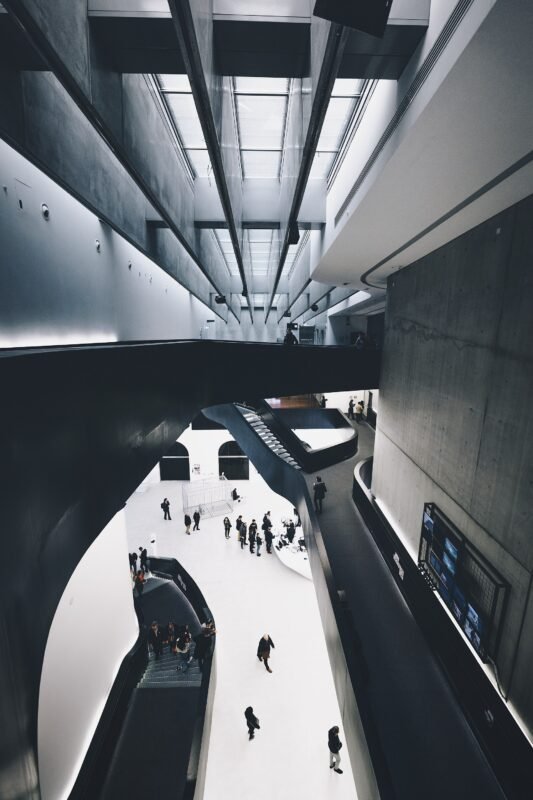
- MAXXI – National Museum of 21st Century Arts500 m
- Alberto Moravia House Museum700 m
- Villa Mazzanti700 m

Upcoming events nearby
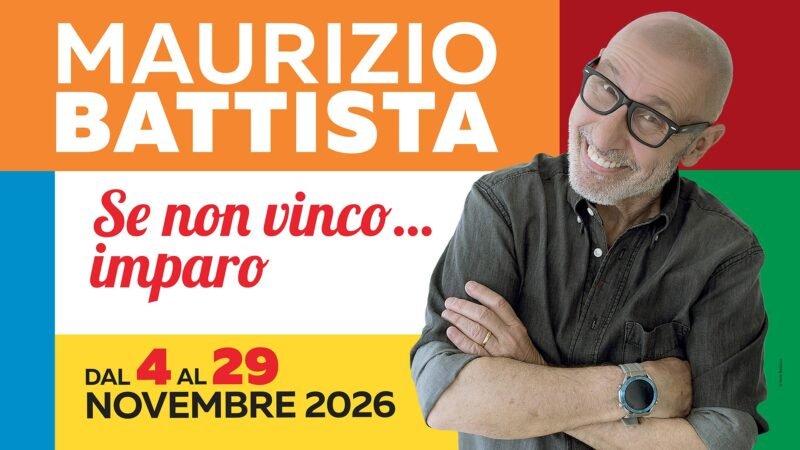
- Maurizio Battista at Teatro Olimpico, Se non vinco… imparo, November 4 to 29, 2026100 m
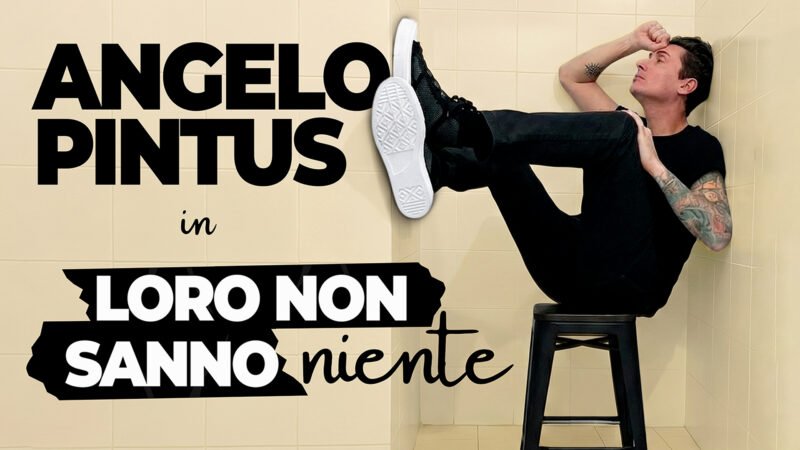
- Angelo Pintus at Teatro Olimpico, Loro non sanno niente, January 14 to February 14, 2027100 m
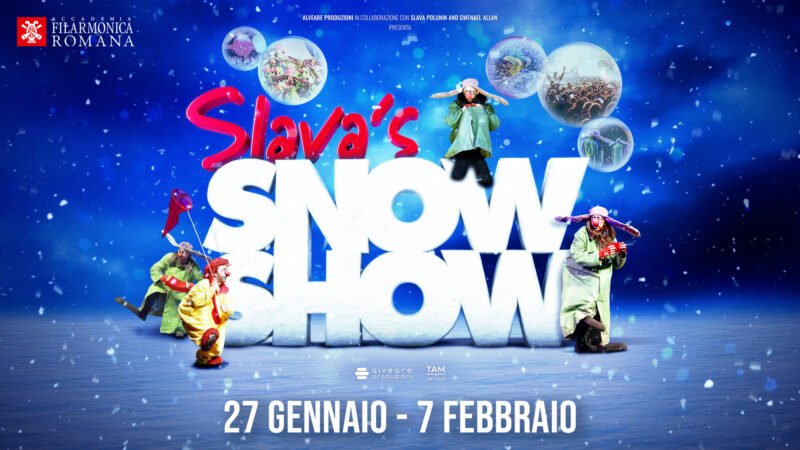
- Slava’s SnowShow at Teatro Olimpico, January 27 to February 7, 2027100 m
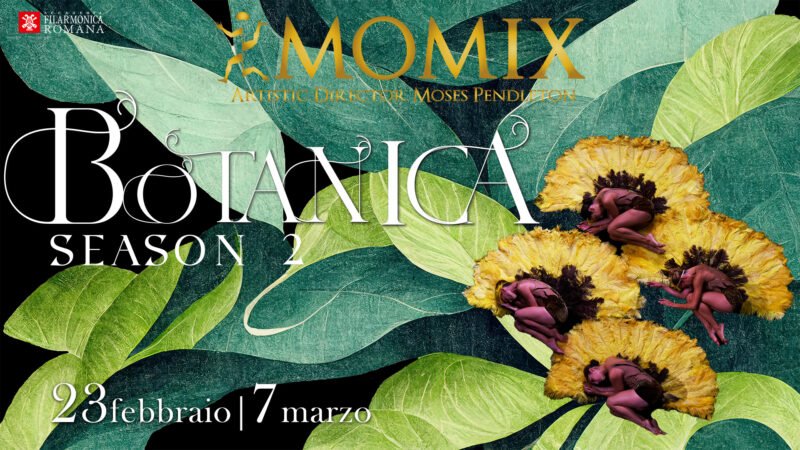
- MOMIX Botanica at Teatro Olimpico, February 23 to March 7, 2027100 m
You might also like
- Ghemon in La prima volta, l’ultima volta, l’unica volta at Auditorium Parco della Musica, April 19, 2027
- Alessandro Bergonzoni Arrivano i Dunque at Teatro Olimpico, February 20 and 21, 2027
- Raul Cremona Bravissssssimo! at Teatro Olimpico, February 9, 2027
- Riccardo Rossi, Non ho l’età! at Teatro Olimpico in Rome, January 19-24, 2027
- Edoardo Leo, Ti racconto una storia at Auditorium Parco della Musica, December 31, 2026
- Maurizio Battista New Year’s Special 2026/2027 at Teatro Olimpico, December 31, 2026