Angelo Pintus at Teatro Olimpico, Loro non sanno niente, January 14 to February 14, 2027
In short. Angelo Pintus brings "Loro non sanno niente" to Teatro Olimpico in Rome, Piazza Gentile da Fabriano 17 (Flaminio district), in two blocks of four performances: Thursday, January 14 and Friday, January 15, 2027 at 20:30, Saturday,…

Angelo Pintus brings "Loro non sanno niente" to Teatro Olimpico in Rome, Piazza Gentile da Fabriano 17 (Flaminio district), in two blocks of four performances: Thursday, January 14 and Friday, January 15, 2027 at 20:30, Saturday, January 16 at 16:00, Sunday, January 17 at 11:00, and then again Thursday, February 11 and Friday, February 12 at 20:30, Saturday, February 13 at 16:00, Sunday, February 14 at 11:00. The theater is reached by Metro Line A to Flaminio and from there by tram 2, which runs along Via Flaminia between Piazzale Flaminio and Piazza Mancini. From the line it is a few minutes on foot toward the Tiber, near the Ponte della Musica. The price list published by the theater runs from €30 plus €4.50 presale fee (side balcony with railing, €34.50 in all) to €60 plus €9 presale fee (Poltronissima gold, €69 in all), with a €2.50 per ticket fee for online purchase. Tickets are bought on the official Teatro Olimpico website, at the box office on Piazza Gentile da Fabriano, open every day from 10:00 to 19:00, and on the presale network authorized by the organizers.
Language: performed in Italian. No English version or English surtitles are announced.
Eight performances, one lead, 100 minutes in a single act: this is the show with which the Trieste comedian returns to the theater after his indoor arena season. The Olimpico is the hall where Italian comedy measures its staying power over distance. Pintus arrives with a new title and with numbers that, for a monologist, weigh a lot.
Angelo Pintus and "Loro non sanno niente": what kind of show it is
"Loro non sanno niente" ("They Don't Know Anything") is Angelo Pintus's new theater show, a comedy monologue of about 100 minutes in a single act, produced for the 2026/2027 season. The theater presents it in a dry sentence: after the great success of "Nabana," on tour in indoor arenas with over 150,000 tickets sold, Pintus returns to the theater with an all-new show. The return to the closed hall, after the arenas, is the real news.
What it is about
The descriptions circulated with the tour describe an ironic story made of modern paranoias, generational misunderstandings and situations in which everyone recognizes themselves. The material is what Pintus's audience knows: everyday life observed up close, the habits we take for granted, the constant feeling of having to keep everything under control. The title suggests a view split between two camps, "we" who know and "they" who don't. Who is who, the hall will find out.
The rhythm of the evening
The tour listings speak of a fast-paced show, with improvisation, sharp observations and constant shifts of perspective. The declared improvisation means no performance will be identical to another: the text has a structure, but the evening also depends on the hall. It is a concrete reason to prefer the theater to the screen.
Length and format
The stated running time is 100 minutes, in a single act. So no intermission: it is best to arrive with everything already sorted, from the coat to the silenced phone. The show is classified as comedy. In the theater's ticketing system it appears under the heading of plays, an administrative formula that doesn't change the substance.
Who is on stage
The lead is one only: Angelo Pintus. Neither the theater's page nor the tour listings name other performers, a director or musicians. The form is the solo act, which in Pintus's case means one man, one microphone and an audience to hold for an hour and 40 minutes.
Angelo Pintus at Teatro Olimpico: dates and times
Angelo Pintus is on stage at Teatro Olimpico for eight performances, split between January 14 and 17, 2027 and between February 11 and 14, 2027, with different times depending on the day. The February block was added later: the theater announces it as new dates on sale, a sign that the first January weekend went fast.
The January block
Thursday, January 14, 2027 at 20:30, Friday, January 15 at 20:30, Saturday, January 16 at 16:00, Sunday, January 17 at 11:00. Four appointments in four days, with two evening and two daytime shows.
The February block
Thursday, February 11, 2027 at 20:30, Friday, February 12 at 20:30, Saturday, February 13 at 16:00, Sunday, February 14 at 11:00. The last Roman performance therefore falls on the morning of Valentine's Day, a detail someone will turn into a gift.
The Sunday 11:00 performance
The most unusual time is Sunday morning. A comedy show at 11:00 is a choice Pintus makes across the whole tour, from Genoa to Turin, and in Rome it has a precise logic: on Sundays the Flaminio is quiet, the tram runs light and on the way out there is plenty of time for a long lunch. For those coming from out of town or traveling with older people, it is the slot I recommend without hesitation.
Saturday afternoon
The Saturday 16:00 performance ends around 17:40, a time that leaves the evening free. It is the solution for those who want to combine the show with dinner in the center or an evening walk along the Tiber.
Tickets and prices for Angelo Pintus at the Olimpico
Tickets for Angelo Pintus at Teatro Olimpico cost from €34.50 to €69, presale fee included, according to the price list published by the theater. The hall is divided into seven sections, with the full price and the presale fee listed separately. The presale fee, the theater specifies, is always required when the ticket is issued.
The price list section by section
Poltronissima gold: €60 plus €9 presale fee. Side Poltronissima: €55 plus €8. Poltrona: €51 plus €8. Balcony: €45 plus €6.50. Balcony with railing: €41 plus €6. Side balcony: €33 plus €5. Side balcony with railing: €30 plus €4.50. For online purchases a fee of €2.50 per ticket is added.
Where to buy
The direct channel is the Teatro Olimpico website, with the online purchase system linked to the event page. The box office at Piazza Gentile da Fabriano 17 is open every day from 10:00 to 19:00, without a break. It also answers at 349 2378200 and at biglietti@teatroolimpico.it. Tickets are also on sale on the presale network authorized by the organizers. Those who buy there, the theater warns, must contact that network itself for any problems.
Groups, Cral and agreements
Teatro Olimpico has a promotion office dedicated to groups and Cral (company recreation clubs), reachable at ufficiopromozione@teatroolimpico.it. Those organizing a company outing or a large group of friends do well to write there before buying, because group conditions are not published on the show page and must be requested directly.
Which section to choose
For a comedy monologue closeness matters more than perfect centrality, since facial expressions do half the work. If the budget allows, the orchestra Poltrona is the best compromise between price and view. The front balcony remains an honest choice for those who want to spend less and like seeing the reaction of the whole orchestra, which at a Pintus show is part of the fun.
Who Angelo Pintus is: the biography
Angelo Pintus is an Italian comedian and impressionist born in Trieste on May 21, 1975, to a father of Sardinian origin and a mother of Ligurian origins. He grew up between Liguria, France and Venezia Giulia and showed a comic streak from his school days. His is a career built step by step, with no shortcuts: the duo, television, theaters, finally arenas.
The early years as a duo
In 2000 he formed the duo Angelo & Max with comedian Max Vitale. From 2001 the pair were frequent guests on the Maurizio Costanzo Show and appeared on other television programs. In 2007 the duo won the contest "Stasera mi butto" on Rai 1. After the split, Pintus took part in several Mediaset programs, including "Guida al campionato," and between 2010 and 2011 he was in the cast of "Quelli che il calcio" on Rai 2.
The Colorado years
From 2009 to 2015 he was in the cast of "Colorado" on Italia 1. His first signature bit was "Sfighe," a parody of the sports program "Sfide," which made him known through his impressions of soccer personalities. The segment evolved into "Sfighe nella storia" and "Sfighe nel doposcuola." From 2011 came "Non sopporto più," which widened the impressions to the entertainment world. It is the phase in which the television audience learned to recognize his voice and timing.
The leap into theaters
From 2013 his presence on Colorado thinned out because the tour "50 sfumature di Pintus" began, which passed 150 dates. In November 2015 the second tour began, "Ormai sono una Milf," planned for fewer than 70 dates and reaching over 200. From October 30, 2017 to April 29, 2018 he was at Teatro Manzoni in Milan with "E se fosse stato il cavallo?", one week a month, for 42 dates and about 33,000 attendees. On October 5, 2018 he restarted from Teatro Sociale in Sondrio with "Destinati all'estinzione." Then came "Non è come sembra" (2021-2022), "Bau" (2023) and "Una brutta persona" (2024).
The television specials
On December 20, 2014 he staged the special show "Pintus@Forum" at the Forum in Assago, broadcast by Italia 1 on January 14, 2015. On September 10, 2016 came "Pintus@Arena," recorded at the Arena di Verona and aired on September 25. On September 8, 2018 he gave his only summer date at the theater in Ostia Antica, a show filmed for Italia 1. In the following years came "Pintus@Club" (Italia 1, May 2021, with guests including Alvin, Vittorio Brumotti and Katia Follesa), "Pintus@Christmas" (2021) and "Pintus@Taormina" (2022) on Prime Video.
Film, streaming and dubbing
He made his film debut in 2014 with Paolo Ruffini's "Tutto molto bello" and in the same year acted in Neri Parenti's "Ma tu di che segno 6?" Then came Davide Simon Mazzoli's "On Air, storia di un successo" (2016) and Fausto Brizzi's "Dove osano le cicogne" (2025). He voices a character in the Italian version of Mark Osborne's "The Little Prince" (2015). In April 2021 he was among the contestants of the first season of "LOL: Last One Laughing" on Prime Video, where his first series, "Before Pintus," also came out. In 2023 he was a judge on "LOL Talent Show."
Other television appearances
In 2014 he was a guest on "Zelig" with a monologue on advertising and took part in the Coca-Cola Summer Festival. He was a guest on the second night of the 2015 Sanremo Festival and from March 30 to May 29, 2015 hosted the program "Karaoke" on Italia 1. In 2016 he took part in an episode of "Bring the Noise." In 2023 he is in the series "La conferenza stampa" on RaiPlay.
Off stage
He has been married since 2017 to Michela Sturaro, with whom he had a son in 2022. He is part of the Italian national team of comedians and often works with the Fondazione De Marchi for children hospitalized in hospitals. He is a Milan fan, and the soccer player impressions, from "Sfighe" onward, have never disappeared from his repertoire.
From "Nabana" to theaters: Angelo Pintus's recent path
"Nabana" is the show with which Angelo Pintus toured Italian indoor arenas in the 2025/2026 season, passing 150,000 tickets sold according to the theater. The calendar released on the eve included, among others, the dates in Genoa, Bolzano, Trento, Padua, Perugia, Ancona, Bari, Naples, Florence, Casalecchio di Reno, Turin and Assago, and a Rome evening at the Palazzo dello Sport in EUR announced for April 24, 2026.
Why return to the theater
After the arenas, a 1,400-seat hall is a choice of scale. The arena rewards the event, the theater rewards the craft: you hear the breath of the audience, the pauses weigh, and improvisation gets an immediate response. For a comedian who works on interaction with the audience it is the most natural ground, and the Olimpico has the right size not to sacrifice the numbers.
The "Loro non sanno niente" tour
The calendar published on the artist's official website, angelopintus.com, opens at the Politeama Genovese from October 22 to 25, 2026, continues at Teatro Arcimboldi in Milan from November 5 to 8 and from November 19 to 21, arrives at the Olimpico from January 14 to 17, 2027, then Teatro Colosseo in Turin from January 21 to 24. Then come Cremona (Teatro Infinity 1, February 26), Brescia (Teatro Clerici, April 9) and Padua (Gran Teatro Geox, April 10). The February Rome performances were added by Teatro Olimpico at a later stage.
The four-performance formula
In every city with multiple days the tour repeats the same scheme: Thursday and Friday evening, Saturday afternoon, Sunday morning. It is an arrangement designed for family audiences and for those who travel, and in Rome, where distances discourage midweek outings, it works particularly well.
Teatro Olimpico: the venue for Pintus's show
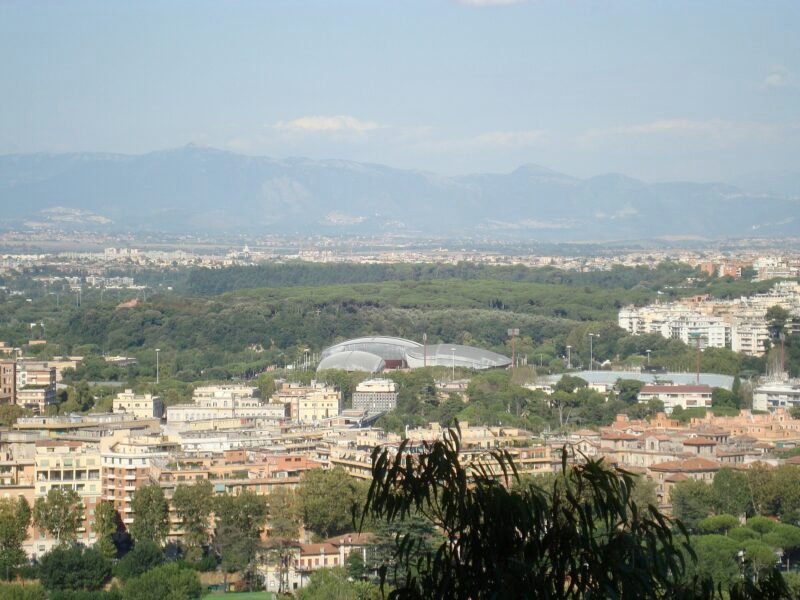
Teatro Olimpico in Rome, at Piazza Gentile da Fabriano 17, has been active as a cinema-theater since 1936 and as a theater since 1981, and has a hall of about 1,400 seats. It stands on the Lungotevere Flaminio, near the Ponte della Musica, and is the venue for most of the Accademia Filarmonica Romana's concerts. For the full profile of the place, see our page on Teatro Olimpico.
A 1930s building
The whole block was built in 1935-1936 by the firm Garbarino, Sciaccaluga and Mezzacane on behalf of the Società Generale Immobiliare, which had bought the area from the Banca Commerciale Italiana in 1935. These were the years in which the Flaminio district and the Foro Italico took shape. The construction is reinforced concrete, with facades in the style of the time and extensive use of travertine in the base course and in the frames of doors and windows.
Between variety and cinema
The theater itself describes its architecture as conceived between the idea of the variety theater and that of the movie hall. From the late 1930s to the 1950s, with a break for the war, it worked mostly as a cinema, with vaudeville numbers in the intervals. That is why from the beginning it had both dressing rooms and stage equipment and projection machines.
The hall
The orchestra has 966 seats arranged in an amphitheater on a sloping cavea. The gallery, wide and horseshoe-shaped, has 444. The stage measures about 10 meters deep by 12 wide, with a removable wooden floor and an orchestra pit. The hall is very wide, which means that even from the side sections the distance from the stage stays modest.
The foyer and the designer sets
The foyer is a circular rotunda, with wide corridors on the ground floor and in the gallery. Its spaces preserve scenic elements from historic productions: Corrado Cagli's gilded sets for Stravinsky's Mass (1975), Giacomo Manzù's backdrop for the "Histoire du soldat" (1966), Alfred Silbermann's set for Stravinsky's Mass (2001), Mirko's sculpture for "Chordination" from Niccolò Castiglioni's Tre misteri (1968). Arrive 15 minutes early and look at them. Few audience members notice.
The restoration
The theater was renovated with a technical upgrade to the needs of contemporary performance and with a restoration that brought back its original late-Rationalist look. It is one of the few Roman halls of its era that keep the original design legible.
A curiosity about Angelo Pintus at Teatro Olimpico, Loro non sanno niente, January 14 to February 14, 2027
Teatro Olimpico was not born for classical music or for comedy, but as a cinema with vaudeville, and its rescue in the 1970s was due to a public subscription by citizens. It is the story the theater itself tells on its presentation page, and it explains much of what you see in the hall today.
Until the late 1970s the hall alternated music and cinema. When the company that owned the building and the film body that ran it went bankrupt, the Olimpico was put up for sale, and the Roman public risked losing it. Adriana Panni, president of the Accademia Filarmonica Romana, then promoted a large subscription that brought many citizens together in a joint-stock company. In 1980 Teatro Olimpico spa bought the building from the Società Generale Immobiliare, and still holds it today. Panni was its first president, from 1980 to 1994.
The practical consequence is a program that resembles no other in Rome. The Filarmonica has been a regular guest since 1980 with its concerts, and alongside it the theater builds seasons ranging from dance to cabaret, from pop music to author monologues. Pintus fits into a program that in the same season lines up ballet, musical tributes, popular science and comedy. Those who come in to laugh walk past the sets by Manzù and Cagli, a mixing that at the Flaminio has been the rule for almost half a century, and it is the best reason to prefer this hall to an arena.
Then there is a detail that concerns Pintus closely. His early career runs through variety television, and the hall to which he returns in Rome was designed, 90 years ago, exactly for variety between one film screening and the next. In a certain sense, the circle closes.
The Flaminio district around Pintus's show
The Flaminio is the first district of Rome, officially established in 1921, squeezed between Via Flaminia and the left bank of the Tiber. Born as an industrial area at the start of the 20th century, over time it became a hub of culture, sport and entertainment.
From factories to the arts
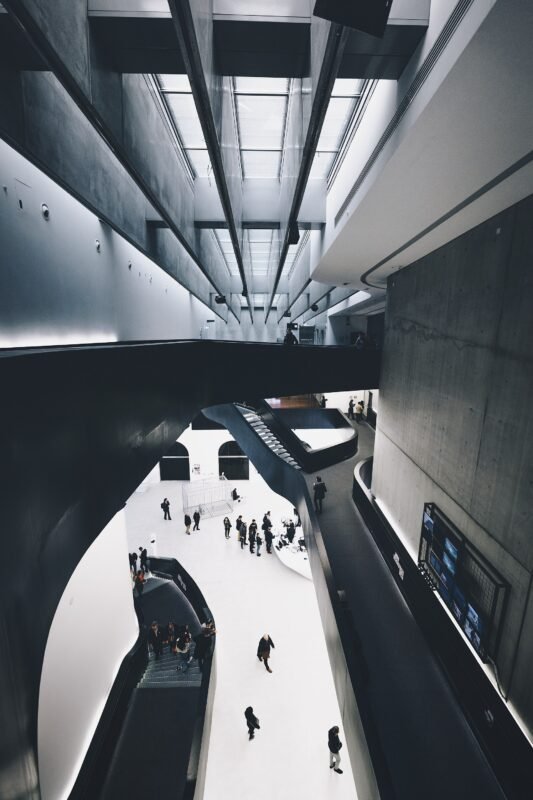
In 1905 the Società Automobili Roma chose the bend of the Tiber for its plants. With the First World War those buildings became the Reale Fabbrica d'Armi, then barracks. The 1911 Exposition had already set the character of the area, among the Stadio Nazionale, the Parioli racetrack and the exhibition venues of Valle Giulia. The 1960 Olympics brought the Villaggio Olimpico, the Palazzetto dello Sport and the Stadio Flaminio. From the 1990s came Renzo Piano's Auditorium, Zaha Hadid's MAXXI and the Ponte della Musica.
The MAXXI
The MAXXI, the national museum of 21st-century arts, is on Via Guido Reni, a few minutes on foot from the theater. Inaugurated in 2010 to a design by Zaha Hadid, it is the ideal complement to a day in the Flaminio: the exhibition in the morning, the Saturday afternoon show.
The Auditorium Parco della Musica
On the other side of Via Flaminia is the Auditorium Parco della Musica, designed by Renzo Piano. The theater itself cites the Auditorium, the MAXXI and the Ponte della Musica as the new places that made the Flaminio a reference point for art and entertainment.
The Andersen Museum
On Via Pasquale Stanislao Mancini is the Hendrik Christian Andersen Museum, less visited than the area's big museums and so more pleasant to visit at leisure.
Milvian Bridge
Going up Via Flaminia to the north you reach Milvian Bridge, the Roman bridge built by Marcus Aemilius Scaurus between 110 and 109 BC, today at the center of one of the liveliest evening areas of north Rome. It is the natural direction for those looking for a place after the show.
One thing nobody tells you about Angelo Pintus at Teatro Olimpico, Loro non sanno niente, January 14 to February 14, 2027
Teatro Olimpico is wider than it is deep, and this changes the choice of seat for a show like Angelo Pintus's. The hall is described as very wide, with seats arranged in an amphitheater on lines of constant height and a horseshoe-shaped gallery. In practice, the distance between the stage and the last rows is smaller than the capacity suggests.
Those who buy by instinct aim for the central Poltronissima, which is understandable. But in a hall built like this, the side Poltronissima and the Poltrona lose little in view and cost less. And the front balcony, thanks to the horseshoe shape, looks at the stage from a clean angle. The difference between the priciest section and the middle one is €10 a head, presale fee included: for a couple or a family that is a dinner.
The second thing nobody says concerns the rhythm of the day. Pintus's performances follow the tour pattern: two evening, one afternoon, one morning. Many Romans habitually choose Friday evening, which ends around 22:10 and forces a trip home when public transport thins out. Sunday at 11:00, instead, lets out at lunchtime with the whole day ahead, the Tiber nearby and the MAXXI open. For those who don't live in Rome or travel with children and grandparents, there is no contest.
Third point, often overlooked: the second February block was added after sales opened. On the theater's sales system several sections of the January performances already show as unavailable. Those who can't find a seat in January should look at February right away, without waiting.
How to get to Teatro Olimpico for Angelo Pintus's show
Teatro Olimpico is reached by Metro Line A to Flaminio and then tram 2 along Via Flaminia, or on foot, with a long walk from Piazzale Flaminio. The theater is at Piazza Gentile da Fabriano 17, facing the Lungotevere Flaminio, in the northern part of the block bounded by Viale del Vignola and Via Giorgio Vasari.
Metro and tram
Metro Line A stops at Flaminio, in Piazzale Flaminio, next to Porta del Popolo. From there leaves tram 2, which runs along Via Flaminia to Piazza Mancini, for a total trip of about 2.7 kilometers. From Via Flaminia to the theater it is a few minutes' walk toward the river. In the evening hours it is best to check frequencies on the transport company's website before heading out.
On foot from the center
From Piazza del Popolo you can also walk up Via Flaminia or the Lungotevere. It is a long but flat walk, pleasant on clear January days, less so on rainy evenings.
From the Foro Italico and Prati
The Ponte della Musica, reserved for pedestrians, bicycles and public transport, links Piazza Gentile da Fabriano with the Lungotevere Cadorna and the Foro Italico on the other bank. Those coming from the Della Vittoria district or from Prati can cross the Tiber on foot and find themselves in front of the theater.
By car
The theater is easily reached from the Lungotevere, which links it to the whole city. Parking in the Flaminio streets is contested on show nights, though, and with 1,400 people leaving at the same time the lost minutes multiply. The advice is firm: public transport or a taxi.
By taxi
For the evening performances a taxi remains the most comfortable solution, especially on the way back. On leaving, it is best to walk a few dozen meters away from the square, where traffic clears sooner.
The advice I give you for visiting Angelo Pintus at Teatro Olimpico, Loro non sanno niente, January 14 to February 14, 2027
For Angelo Pintus at Teatro Olimpico it is best to choose the Saturday 16:00 or Sunday 11:00 performance and build half a day around it in the Flaminio. A 100-minute show with no intermission lends itself perfectly to becoming the center of an afternoon, instead of being the appendix to a workday.
The recommended sequence is simple. On Saturday: light lunch, an hour at the MAXXI, 10 minutes on foot to Piazza Gentile da Fabriano, show at 16:00, out around 17:40 and a walk on the Ponte della Musica as the lights come on over the Tiber. On Sunday: arrive in the hall at 10:30, show at 11:00, and on the way out an unhurried lunch toward Ponte Milvio or in the neighborhood.
Second point: arrive early. The circular foyer preserves the sets of Manzù, Cagli, Silbermann and Mirko, and half the audience walks past them without seeing. 15 minutes early is enough to look at them and to settle in without rushing, which counts for a show with no break.
Third: buy from the theater. The official price list is clear, the presale fee is stated section by section, and the box office answers every day until 19:00. Be wary of secondary sellers who offer inflated prices: for this show the February dates were added precisely to absorb the demand.
Finally, phone off before the lights go down. In a show that lives on improvisation and comic timing, a lit screen in the orchestra ruins the evening for whoever sits beside you, and sometimes for whoever is on stage.
How to organize the day with Angelo Pintus at the Olimpico
With performances at 20:30, 16:00 and 11:00, Angelo Pintus's show allows three different ways to experience the Flaminio. The choice depends on who you are and how much time you have.
The Thursday or Friday evening
Starts at 20:30, ends around 22:10. It is best to dine beforehand, early and light, or put it off until after with a place already chosen toward Ponte Milvio or in the neighborhood. Get to the hall by 20:00: with a 1,400-seat hall, entry takes a few minutes.
Saturday afternoon
This is the most versatile slot. Morning in the center or at a museum, show at 16:00, and the evening free for dinner. For travelers, it is the time that lets you see Pintus without sacrificing anything of your stay.
Sunday morning
An 11:00 performance has something English about it, like a London matinee. The neighborhood is quiet, the tram runs smoothly, and on the way out you are ready for Sunday lunch. It is the preferable solution, without the dash for the last tram that cuts short so many evening shows.
Pairing a museum
The MAXXI is a few minutes on foot. Farther south, toward Valle Giulia, are the Etruscan Museum of Villa Giulia and the Galleria Nazionale. With an afternoon performance, a visit of an hour and a half before the show is realistic. Museum hours should be checked on their official sites.
Another well-known fact, yet rarely mentioned
Teatro Olimpico has been for years among the most visited theaters in Italy: in the 2009/2010 season it ranked second in Rome and seventh in Italy for attendance according to Agis rankings. The figure is known to insiders, but rarely recalled when people talk about the Flaminio hall, which many Romans still consider a neighborhood theater.
The theater itself, in its presentation, defines itself as the stage of Rome that for many years has confirmed itself among the top theaters in Italy for audience attendance. Behind those numbers is a precise choice, matured from 1981 onward: to intensify the program of theater, dance and comedy shows with broad appeal, with seasons built on eclecticism and variety. It is the line that brought here the great stars of comedy, from Gigi Proietti to Enrico Brignano, from Vincenzo Salemme to Aldo, Giovanni and Giacomo.
There is a second well-known and little-cited fact, this time about Pintus. His theater tours have always grown beyond expectations: "Ormai sono una Milf" was planned for fewer than 70 dates and reached over 200, and "50 sfumature di Pintus" passed 150. At Teatro Manzoni in Milan, with "E se fosse stato il cavallo?", he held 42 dates in six months, one week a month, with about 33,000 attendees. It is the residency formula, which repeats in Rome with the eight performances spread between January and February.
Put together, the two facts explain why this meeting works: a hall built for the general public and a comedian who, hall after hall, has shown he can fill more dates than planned. The February dates added along the way are the most recent confirmation.
The right photo to take at Angelo Pintus at Teatro Olimpico, Loro non sanno niente, January 14 to February 14, 2027
The right photo, for Angelo Pintus's show at Teatro Olimpico, is taken outside: from the Ponte della Musica, with the theater facade and the Tiber in the same frame. During the show, as in almost all theaters, photographing and filming is not welcome, and with a monologue that lives on timing and silences a lit phone bothers everyone.
The Ponte della Musica, named since 2013 after Armando Trovajoli, is an arch bridge 190 meters long, with two large lowered steel arches tilting slightly outward and side walkways paved in wood. From the middle of the bridge, looking toward Piazza Gentile da Fabriano, you get the theater facade framed by the arches. Turning the other way, the Foro Italico and the hill of Monte Mario.
With the Saturday 16:00 performance you come out around 17:40: in January and February that is the hour when the sky over the Tiber goes from light to dark and the bridge lights come on. It is the best moment for a photo that tells the evening without needing captions. With the Sunday 11:00 performance, instead, the early afternoon light illuminates the travertine facade, and the building's Rationalist details read well.
One last shot, for those who arrive early: the circular foyer with the historic sets. A discreet photo before going into the hall, without flash and without blocking the way, conveys the soul of the theater better than any shot of the stage. If you want a photo with the show's poster, look for it at the entrance, where most of the audience stops.
Box office, hours and services at Teatro Olimpico
The Teatro Olimpico box office, at Piazza Gentile da Fabriano 17, is open every day from 10:00 to 19:00 without a break. You can write to biglietti@teatroolimpico.it or call the number published by the theater.
Information and contacts
For questions about seats, sections or changing the date, the box office is the reference. For tickets bought on the external presale network, the theater says to contact that network, following its instructions.
Subscriptions and season
Pintus's show is part of Teatro Olimpico's 2026/2027 season, which publishes the full program and subscription options on its website. Those who plan to return several times in the same season do well to consider them.
Accessibility
The hall has an orchestra with a constant slope and a gallery on the raised floor. For the needs of people with disabilities or reduced mobility, dedicated seats, companions and access, the advice is to contact the box office before buying, so as to get up-to-date information and book the right seat.
Angelo Pintus with children and teenagers
"Loro non sanno niente" is a comedy show designed for an adult and family audience, and the tour listings speak of spectators of all ages. Neither the theater nor the official listings state an age limit, so the judgment is left to parents.
What to expect
Pintus's language is direct and the themes are those of adult life: couples, work, habits, generations compared. Teenagers, who often know him from LOL and the streaming specials, are the most receptive audience. For small children, 100 minutes of monologue without an intermission can be long.
The right time for families
The Saturday 16:00 and Sunday 11:00 performances are the best suited to those bringing teenagers: no late-night returns, lunch or an afternoon snack out right afterward. The ticket is single-price by age, and no reductions for kids are published on the show page.
The generations theme
One of the declared threads of the show is generational misunderstandings. It is the kind of subject that, seen in the hall by parents and children together, produces two different laughs at the same joke. It is the best reason to bring a teenage child.
Some important events that took place here in history
On March 4, 1965 Pierre Boulez conducted a concert at Teatro Olimpico with the Italian premiere of Igor Stravinsky's "Abraham and Isaac" and the European premiere of his "Elegy for J.F.K." It is perhaps the most important evening of the long season in which the Accademia Filarmonica Romana, renting the theater since the postwar years, brought 20th-century music to the Flaminio.
Under Adriana Panni's presidency the Academy went through a period of great momentum, forging ties with the major musicians of the time. The traces of that season are still visible in the foyer: Giacomo Manzù's backdrop for Stravinsky's "Histoire du soldat," staged October 11 to 14, 1966, Mirko's sculpture for "Chordination" from Niccolò Castiglioni's Tre misteri, October 2 to 4, 1968, and Corrado Cagli's gilded sets for Stravinsky's Mass, October 29 to 31, 1975.
1980 is the turning-point year: the constitution of Teatro Olimpico spa, subscribed by citizens, professionals and music lovers around the Filarmonica, and the purchase of the building. From 1981 the full-time program began, and the hall changed name and nature: from cinema-theater to theater.
On the dance front, a few dates remain in the city's memory: the Lindsay Kemp Company with "A Midsummer Night's Dream" in February 1989, Mikhail Baryshnikov's White Oak Dance Project from October 10 to 15, 1995, the Bolshoi Ballet from September 23 to 26, 1996, the Béjart Ballet Lausanne in October 2004. Moses Pendleton's Momix have been recurring guests since April 1982. For music, Marillion in February 1988, Lucio Dalla with "Henna" from April 5 to 7, 1994, the Pooh with the "Musica dentro" tour from October 25 to 30, 1994, and Giorgio Gaber with "Un'idiozia conquistata a fatica" on January 28, 1998. Gigi Proietti brought "A me gli occhi" in May 1996.
Teatro Olimpico and comedy: Pintus's context
Teatro Olimpico has been for 40 years one of the reference halls in Rome for great Italian comedy, and Angelo Pintus joins a well-defined tradition. Since 1981 the management has bet on broad-appeal comedy shows alongside music and dance.
The stars
Among the names the theater itself recalls are Gigi Proietti, Enrico Brignano, Vincenzo Salemme, Maurizio Battista, Aldo, Giovanni and Giacomo, Lillo and Greg, Ale and Franz, Neri Marcorè, Gioele Dix, Cinzia Leone and Max Giusti. A gallery that covers different generations and schools, from classic Roman theater to Milanese cabaret.
The 2026/2027 season
The same season's program places beside Pintus other monologists and comedians, from Paolo Cevoli to Fabio De Luigi, from Maurizio Lastrico to Alessandro Cattelan, from Maccio Capatonda to Lillo and Greg, as well as Riccardo Rossi, scheduled right after Pintus in the theater's calendar. For those who follow live comedy, the Olimpico remains the hall to keep an eye on.
A hall for the monologue
The width of the hall and the horseshoe gallery create an effect of embrace around the stage: the audience's laughter returns to the comedian without dispersing. For a solo act it is a precious condition, one that arenas cannot offer.
Who has played Angelo Pintus at Teatro Olimpico, Loro non sanno niente, January 14 to February 14, 2027
Through the stage of Teatro Olimpico have passed Pierre Boulez, Arturo Benedetti Michelangeli, Zubin Mehta, Jessye Norman, Dario Fo, Giorgio Gaber, Lucio Dalla, Mikhail Baryshnikov and Gigi Proietti, to cite only a few documented names. It is a list that few Italian halls of the same capacity can claim.
For classical music, the Accademia Filarmonica era brought performers here such as Arturo Benedetti Michelangeli, Jessye Norman, Zubin Mehta and Giuseppe Sinopoli, and composers such as Luigi Dallapiccola. Pierre Boulez conducted there in 1965 the Stravinsky premieres recalled above. Alongside them, the season of pop and singer-songwriter music: Marillion, the Nomadi, the Pooh, Lucio Dalla, Giorgio Gaber, Nicola Piovani and Massimo Ranieri.
International dance has seen Mikhail Baryshnikov, Joaquín Cortés, Lindsay Kemp, Maurice Béjart, Antonio Gades, the Bolshoi Ballet and Moses Pendleton's Momix. Author theater has had Dario Fo and Giorgio Gaber, and among the figures the theater recalls is also Marco Travaglio.
Comedy is the largest family: Gigi Proietti, Enrico Brignano, Vincenzo Salemme, Maurizio Battista, Aldo, Giovanni and Giacomo, Lillo and Greg, Ale and Franz, Neri Marcorè, Gioele Dix, Cinzia Leone and Max Giusti. The theater also reports a judgment attributed to Orson Welles, according to which the Olimpico would be the only place in Rome able to recall the atmosphere of Broadway theaters. It is a compliment that, historical verification aside, says a lot about how the hall sees itself.
Angelo Pintus arrives in this company with eight performances, which for a comedian on his first pass with a new title are a sign of confidence from the theater and the Roman public.
January and February in Rome: the show's season
Angelo Pintus's performances fall in mid-January and mid-February 2027, weeks of low tourist season in Rome, with short days and cool evenings. It is a period that, for those visiting the city, has specific advantages.
The weather
January and February are the coldest months of the Roman year, with evenings that call for layers and mornings that are often clear. The Lungotevere Flaminio, exposed to the river wind, makes itself felt. A real coat is a must for the walk on the Ponte della Musica.
Quieter museums
After the holidays and before spring, the big museums of the area and the center are less crowded. Those who pair the show with a visit, to the MAXXI or to Villa Borghese, find emptier rooms and a more relaxed pace.
Valentine's Day
The last Rome performance is Sunday, February 14 at 11:00. For a couple, a ticket to Pintus and a lunch toward Ponte Milvio is a less predictable way to celebrate than a candlelit dinner, and with much less trouble finding a table.
Where to eat near Teatro Olimpico
Around Teatro Olimpico there are three areas to consider for eating: the Flaminio itself, the Ponte Milvio area to the north and the area around Piazza del Popolo to the south. I don't name specific places. It is best to choose them based on the time of the performance.
Before the evening show
With a 20:30 start, an early dinner in the neighborhood or along Via Flaminia avoids the rush. The Flaminio is a residential district, with neighborhood trattorias and pizzerias rather than strolling spots. Book, especially on Friday.
After the Sunday morning performance
Coming out around 12:40, the Roman Sunday lunch is within reach. Ponte Milvio, reached by going up Flaminia, offers the greatest choice. The Della Vittoria district, across the Ponte della Musica, is a quieter alternative.
For Saturday
With the 16:00 performance, an aperitivo and dinner after the show are the natural solution. From Ponte Milvio to the historic center, Saturday evening offers the full range. Just decide beforehand where to go, so as not to lose time on the way out.
What to see around Teatro Olimpico before or after Pintus
Within a walk of Teatro Olimpico are the MAXXI, the Auditorium Parco della Musica, the Ponte della Musica, the Foro Italico and Ponte Milvio. The Flaminio is a district to discover on foot, with 20th-century architecture as the common thread.
The Foro Italico and the Stadio Olimpico
Crossing the Ponte della Musica you reach the Foro Italico and, a little farther, the Stadio Olimpico. The 1930s sports complex is in dialogue with the theater, which is from the same era and the same urban-planning season.
Piazza del Popolo and Villa Borghese
Heading south along Flaminia you reach Piazza del Popolo and from there the Pincio and Villa Borghese: a walk that, with an afternoon performance, can become the prologue to the day.
20th-century architecture
The Flaminio preserves works by Libera, Moretti, Luccichenti, Vitellozzi and Nervi, as well as the 1920s public housing in Piazza Perin del Vaga. Those who love architecture find here an open-air lesson on Roman 20th-century building, from Rationalism to the 1960 Olympics to Piano and Hadid.
The name of the square
Piazza Gentile da Fabriano bears the name of the Marche painter, one of the greatest exponents of International Gothic, who died in Rome in 1427. The streets of this part of the district are named for architects and painters: Via Giorgio Vasari, Viale del Vignola, Piazza Perin del Vaga.
Frequently asked questions about Angelo Pintus at Teatro Olimpico
When is Angelo Pintus on stage at Teatro Olimpico in Rome?
Angelo Pintus brings "Loro non sanno niente" to Teatro Olimpico from January 14 to 17, 2027 and from February 11 to 14, 2027, for eight performances in all. On Thursday and Friday the start is 20:30, on Saturday 16:00, on Sunday 11:00. The February dates were added by the theater after sales opened for the first block.
How much do tickets for Pintus at Teatro Olimpico cost?
Tickets for Angelo Pintus at Teatro Olimpico range from €34.50 (side balcony with railing, €30 plus €4.50 presale fee) to €69 (Poltronissima gold, €60 plus €9 presale fee). The orchestra Poltrona costs €59 in all, the front balcony €51.50. Online a fee of €2.50 per ticket is added.
How long is the show "Loro non sanno niente"?
Angelo Pintus's "Loro non sanno niente" lasts about 100 minutes, in a single act with no intermission, according to the tour listings. A 20:30 evening performance therefore ends around 22:10, the Saturday one around 17:40 and the Sunday morning one around 12:40.
Where is Teatro Olimpico and how do you get there?
Teatro Olimpico is at Piazza Gentile da Fabriano 17, in the Flaminio district, on the Lungotevere near the Ponte della Musica. You get there by Metro Line A to Flaminio and then tram 2 along Via Flaminia, which links Piazzale Flaminio to Piazza Mancini. From the line to the theater it is a few minutes on foot.
Where do you buy tickets for Angelo Pintus in Rome?
Tickets for Angelo Pintus at Teatro Olimpico are bought on the theater's official website, at the box office at Piazza Gentile da Fabriano 17, open every day from 10:00 to 19:00, and on the presale network authorized by the organizers. For groups and Cral there is a dedicated promotion office.
Is Pintus's show suitable for children?
Angelo Pintus's show is presented as suitable for spectators of all ages, and the theater lists no age limits. The themes are those of adult life, though, and the running time is 100 minutes with no break. For small children it can be long, while for teenagers it is the ideal chance. The Saturday and Sunday performances are the most convenient.
What did Angelo Pintus do before this show?
Angelo Pintus arrives at Teatro Olimpico after "Nabana," the indoor arena tour with over 150,000 tickets sold. Before that he took to theaters "50 sfumature di Pintus," "Ormai sono una Milf," "E se fosse stato il cavallo?", "Destinati all'estinzione," "Non è come sembra," "Bau" and "Una brutta persona," after the television years of Colorado.
Which performance is best to choose?
For Angelo Pintus at Teatro Olimpico the most convenient performance for those who travel or bring the family is Sunday at 11:00, which leaves the rest of the day free. Saturday at 16:00 lets you combine a museum and a dinner. The Thursday and Friday evenings are ideal for those who live in Rome and can get home without trouble.
The verdict on Angelo Pintus at Teatro Olimpico
The criterion is simple: when a comedian returns from the arenas to a theater, it is worth going to see him, because that is where you find out if the craft holds up. The Olimpico, with its wide orchestra and the gallery that embraces the stage, is the right hall for this test. The firm advice is to take a Poltrona or front balcony seat for Sunday at 11:00, arrive 15 minutes early to look at the sets in the foyer, and step out onto the Ponte della Musica with the day still ahead of you. If January is sold out, don't give up: February was opened for exactly that.
Article written by the editorial team of Tour Leader Pro, contact them for Private/Corporate/V.I.P. Tours and Experiences.
Planning a trip to Rome? The English guides to visiting the city are on ItalyPlanner.com.
Contact Information
Nearby
 Teatro Olimpico100 m
- Ponte della Musica – Armando Trovajoli200 m
- Flaminio400 m
- MAXXI – National Museum of 21st Century Arts500 m
- Alberto Moravia House Museum700 m
- Villa Mazzanti700 m

Upcoming events nearby
- Maurizio Battista at Teatro Olimpico, Se non vinco… imparo, November 4 to 29, 2026100 m
- Slava’s SnowShow at Teatro Olimpico, January 27 to February 7, 2027100 m
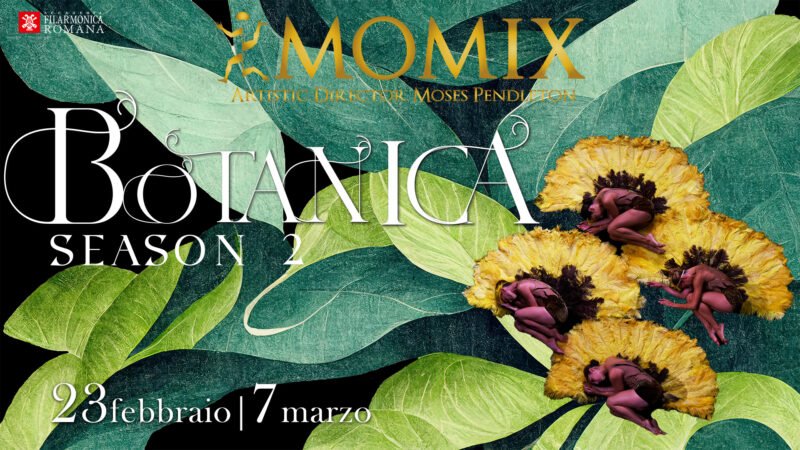
- MOMIX Botanica at Teatro Olimpico, February 23 to March 7, 2027100 m
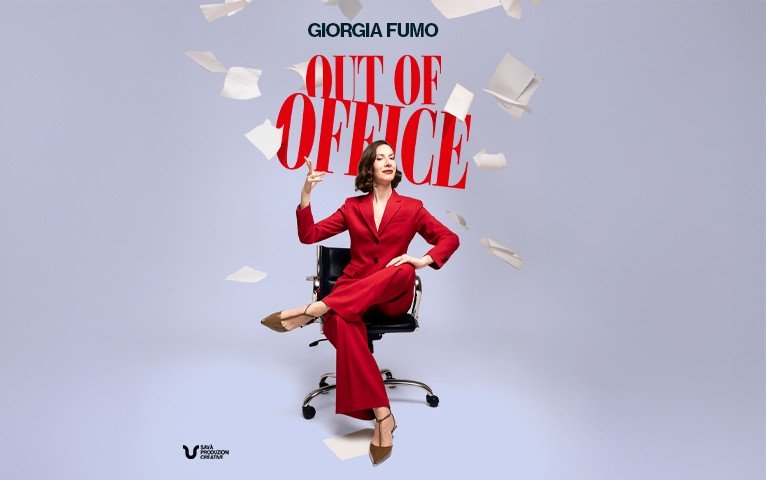
- Giorgia Fumo, Out Of Office at Teatro Olimpico, November 16 and 17, 2026100 m


You might also like
- Alessandro Bergonzoni Arrivano i Dunque at Teatro Olimpico, February 20 and 21, 2027
- Raul Cremona Bravissssssimo! at Teatro Olimpico, February 9, 2027
- Maccio Capatonda, Spettacolo Teatrale at the Teatro Olimpico, December 21 and 22, 2026
- Riccardo Rossi, Non ho l’età! at Teatro Olimpico in Rome, January 19-24, 2027
- Ghemon in La prima volta, l’ultima volta, l’unica volta at Auditorium Parco della Musica, December 12, 2026
- Edoardo Leo, Ti racconto una storia at Auditorium Parco della Musica, December 31, 2026