Fountain of Anna Perenna
In short. Let's start with what matters most: you can't visit the Fountain of Anna Perenna whenever you feel like it.
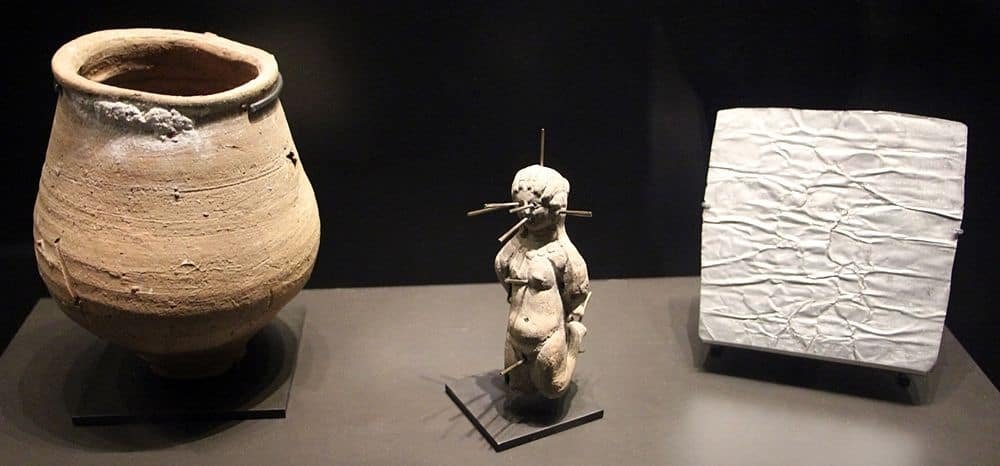
Let's start with what matters most: you can't visit the Fountain of Anna Perenna whenever you feel like it. The monument is in Rome, at the foot of the Parioli hill, at the corner of Piazza Euclide and Via Guidubaldo del Monte, six meters below street level, inside the underground volume of a parking garage. It has no ticket office, no regular hours, no turnstile. The doors open only for the free guided visits organized by the Soprintendenza Speciale di Roma, which announces them on its website a few weeks ahead, in limited groups and with mandatory booking until the places run out. The rest of the year the site is closed to the public. Anyone who arrives in Piazza Euclide hoping to find an open gate goes home with a photo of the square and nothing else.
The second practical point is about the objects. The materials that came out of the fountain's cistern, which are the reason this place matters in the history of scholarship, are not in Parioli. They are kept, and a large part of them displayed, at the Museo Nazionale Romano in the Baths of Diocletian building, Via Enrico De Nicola 78, 200 meters from Termini station. The museum is open Tuesday to Sunday from 9:00 to 19:00, with last entry at 18:00, and closed on Mondays. The single Museo Nazionale Romano ticket costs €15 full price and €2 reduced, is valid for a week from the first entry and includes the other sites of the circuit (Palazzo Massimo, Palazzo Altemps, the Medagliere, the Museo dell'Arte Salvata and the Aula Ottagona, while the Crypta Balbi is temporarily closed). There is an annual pass, the MNR Card, at €30 full price and €20 reduced. On the first Sunday of the month admission to state-run cultural sites is free, and that day you get into the Baths of Diocletian without paying. Anyone who wants to see only the Aula Ottagona has had a dedicated €5 ticket since July 2026.
The most elegant way to reach Piazza Euclide is by train: the Roma-Civita Castellana-Viterbo railway, the old Roma Nord, leaves from Piazzale Flaminio (the terminus is attached to the Flaminio stop of metro line A) and the first useful stop, just one station ahead, is called exactly Piazza Euclide. It is the only underground station on the whole line, opened on January 15, 1958, and it comes out right under the square where the fountain was found: you climb the stairs and you are a few steps from the site. On the surface, bus lines 910, which connects Termini and Piazza Mancini, 168, which comes from Tiburtina, and 982 stop in Piazza Euclide. If you arrive by car, go ahead and use the parking garage under the square: it is the one under which the monument is preserved, and that coincidence alone is worth the trip.
One last practical note, and then we get to the substance. The special openings are free but the places go fast, often within a few hours: booking is done on the website of the Soprintendenza Speciale di Roma, which publishes the calendar and the times of the groups each time, each lasting about 50 minutes. The route is short, indoors and underground, with stairs: if you have mobility problems, ask when you book. If the time you are in Rome doesn't match any opening, the alternative visit exists and it is not a consolation prize: the Baths of Diocletian, where the oil lamps, the thin tablets and the lead containers can be seen up close, in good light and without rushing.

If you want to fit the Fountain of Anna Perenna into a wider itinerary, the page on tourist attractions in Rome collects the places that combine well with this part of the city.
What the Fountain of Anna Perenna is, stated plainly
It is an ancient monumental fountain, fed by a natural spring, dedicated to an archaic Roman deity, Anna Perenna, and used for more than nine centuries. The masonry structure you see today dates in its earliest phase to at least the 4th century BC, was reworked and embellished several times in the imperial age and was abandoned at the beginning of the 6th century AD. Behind the visible basin ran a cistern that collected groundwater. Into that cistern, for centuries, someone threw objects. Many objects. And the mud that settled on the bottom sealed them in an oxygen-poor environment, preserving materials that normally rot within a few seasons: wax, resin, wood, eggshells, kneaded flour.
The result is that the cistern of the Fountain of Anna Perenna yielded the best documented deposit of ritual magic in the entire Roman world. Not a single curious object found by chance in a tomb, but a complete context: the tools, the containers, the texts, the figurines, the lamps, the coins, all together, in the same water, with a readable stratigraphy. It is the reason this name, almost unknown to the Romans who pass through Piazza Euclide every day, appears in the international literature on ancient magic next to Mainz, Bath and Carthage.
Why the Fountain of Anna Perenna matters more than its fame suggests
The number of ancient sites where we have found a defixio is high. The number of sites where we have found 22 defixiones together, inside their water container, with the oil lamps that accompanied them and the wax dolls still inside the sealed lead boxes, is one. This one. Whoever studies late antique religion almost always works on literary texts written by hostile authors, that is, by Christian polemicists who describe pagan practices in order to condemn them. Here instead the objects speak, and they speak in the language of the people who used them: personal names, precise requests, repeated gestures. The difference is the same as between reading the record of a trial and listening to the recording.
In our judgment the Fountain of Anna Perenna is the most underrated Roman archaeological site of all, compared with what it tells. The Colosseum tells the story of an institution. This cistern tells the story of people: jealousy, fear of losing a lawsuit, the wish to hurt a neighbor, the hope of living one more year. Pure human material, pulled out of the mud of Parioli.
October 1999: how the Fountain of Anna Perenna came back to light
The story begins with a construction site. In the late 1990s the Parioli neighborhood, which has always had few parking spaces compared with the density of its buildings, gets the green light for an underground garage under Piazza Euclide. Before digging, the law requires an archaeological check: what is called preventive archaeology, the discipline that sends archaeologists in front of the bulldozers instead of behind them. In a city like Rome it is a routine procedure that almost always turns up fragments, villa walls, stretches of paved road.
In October 1999 the routine breaks. The excavations, conducted under the direction of Marina Piranomonte for the Soprintendenza archeologica di Roma, intercept at a depth between 6.2 and 10.3 meters below street level a masonry structure in tuff blocks and brick, with a rectangular basin and a cistern behind it. On the front, an altar. On the altar, a Latin inscription that settles every doubt: NYMPHIS SACRATIS ANNAE PERENNAE, to the nymphs consecrated to Anna Perenna. From that moment the garage construction site becomes one of the most discussed urban excavations of the last 30 years.
The excavation of the Fountain of Anna Perenna that changed the map of ancient Rome
The value of the discovery is not only in the object. Before 1999 the sacred grove of Anna Perenna, the nemus Ovid mentions in the Fasti, was a ghost location: we knew it existed, we knew it was outside the city along the Tiber, but its position had been debated by generations of topographers. Some placed it on the right bank, some toward the Janiculum, some at the first mile of Via Flaminia. The inscription found at the foot of Parioli settled the question with one stroke: the sanctuary was there, in that fold of the hill, where a natural spring was still coming out of the ground at the end of the 20th century.
I'll add a detail Romans like: the water table that fed the ancient fountain was still active at the time of the excavation. The archaeologists worked in the water, with the pumps running. The same vein that quenched the drunken plebeians of the Ides of March wet the boots of those who brought it back to light 19 centuries later.
The silt, the real curator of the finds of the Fountain of Anna Perenna
Every archaeologist who worked in that cistern says it again and again: without the silt we would have nothing. The very fine mud that settled on the bottom created an oxygen-free environment, and without oxygen the bacteria that devour organic matter don't work. That is how things that we usually know only by hearsay have reached us: figurines modeled in wax, mixtures of flour and milk, resins used as seals, fragments of worked wood, whole eggshells. In a dry context they would be dust. Here they were still moldable under the restorers' fingers.
The Soprintendenza's restoration laboratory, with Giovanna Bandini directing the work and with Jarmila Polakova and Idana Rapinesi among the restorers working on the materials, had to invent procedures as it went: opening a lead container sealed with resin without destroying what it held is not a textbook operation. Some boxes were X-rayed before being touched. On this point the Fountain of Anna Perenna was also an experimental conservation site, and the results were presented at international conferences, from Zaragoza in 2005 to Mainz in 2008.
Piazza Euclide parking garage and the Fountain of Anna Perenna
An inevitable question, and the answer is less dramatic than the one told at café tables. The garage was built, and the monument was preserved in place and enclosed in a dedicated room inside the underground structure. It is a solution with several precedents in Rome and it always generates controversy: some consider it a smart compromise between the living city and the ancient city, and some see it as a second-hand burial. The fact is that the site still exists, has been cleaned, restored, lit and made visitable, while at other construction sites of the same period smaller structures were documented and then dismantled. I'll take a position: here preservation in place was the right choice, and the flaw is not the garage but the access regime, which even today keeps the monument closed for almost the entire year.

The architecture of the Fountain of Anna Perenna, piece by piece
Whoever goes in expects a temple and finds a hydraulic system. That's as it should be: Roman water sanctuaries are made of basins, channels, pipes and retaining walls, and the sacredness comes through the water, not the marble. It is worth looking at the structure part by part, because each part has a precise function and a different chronology.
The main basin of the Fountain of Anna Perenna
The rectangular basin measures about three meters by two and a half and is built with tuff blocks, later supplemented and faced with brickwork in the following phases. Tuff is the material of the early centuries of republican Rome, quarried in volcanic Lazio and used for everything that had to be in contact with water or with the ground. The earliest phase dates to at least the 4th century BC, and this is the fact that makes the fountain a monumentalized republican structure, not an improvised late antique little fountain: when the Romans decide to wall in a spring, the spring has already been a place of worship for a long time.
The basin was meant for collecting and drawing water. The water arrived by gravity from the cistern behind it, slightly higher, through pipes that fed into the basin. Whoever passed by could drink, fill, wash, water their animals. It was not an elitist place: it was a country fountain, just outside the walls, on the road that climbed from the Tiber toward the hills.
The cistern behind it, the real deposit of the Fountain of Anna Perenna
Behind the basin ran a rectangular vaulted room, fed directly by the spring vein. Its original dimensions can't be reconstructed precisely, because the garage works had already cut into a portion of it before archaeology came into play. Here, and not in the basin in plain view, the bulk of the materials was found: whoever wanted to entrust something to the water and to the deity did not leave it where everyone could see it, but let it slip into the darkness of the cistern, where nobody would recover it.
The technical detail that best tells the ancient mentality is the level. The cistern was higher than the basin so that the system worked by gravity, without pumps. No machinery, no hydraulic magic: slope and patience. The same logic that holds up Roman aqueducts on a monumental scale, here applied to a system the size of a room.
The walled-in inscriptions of the Fountain of Anna Perenna
Three inscriptions were found on the structure, two of them dedicated to the nymphs consecrated to Anna Perenna. The best known is that of a certain Suetonius Germanus, who with his wife Licinia fulfills a vow made in exchange for two victories: the text also carries a consular date that falls in the year 156 AD, under Antoninus Pius. A second dedication is again by the same Suetonius Germanus, and a third is the vow of a freedman, Eutychides, fulfilled for the victory of his own patron.
Who these winners were is debated, and caution is required: the word victoria in a Roman inscription can indicate an athletic contest, a chariot race, a lawsuit won in court. What the text proves with certainty is the vitality of the cult in the full Antonine age, in the middle of the 2nd century, when Rome was at its peak and an archaic deity like Anna Perenna could already have been filed away. She wasn't. A couple from the Roman lower middle class climbed up to Parioli to thank the nymphs, and had their name carved in marble.
The closing of the Fountain of Anna Perenna
The end is documented by the layers. Around the 5th century the basin is closed with shards of wine amphorae, an operation that seals the basin and ends its function. The definitive abandonment dates to the beginning of the 6th century AD. The fact that the last act was carried out with fragments of wine containers, in a place whose most famous festival consisted of drinking until you counted your years of life in cups, is one of those coincidences that archaeologists note in a footnote and guides tell out loud.
A curiosity about the Fountain of Anna Perenna
The real curiosity is not about the curses, which by now circulate everywhere, but about a laboratory detail. When the restorers opened one of the cylindrical lead containers found in the cistern, they noticed that the resin seal preserved a fingerprint. The analyses carried out with the support of the Polizia Scientifica led to an attribution as simple as it is dizzying: that hand was a woman's hand. Not a symbol, not a painted goddess, not a name written by a scribe. The fingertip of a woman who, on an afternoon in the 4th century, pressed the hot resin to close a box containing a wax figurine, and then dropped it into the water.
It is worth understanding why this fingerprint weighs so much. The ancient literature on sorceresses is very rich and almost all written by men who wanted to frighten or amuse: Horace's Canidia, Lucan's Erichtho, Apuleius's Pamphile. They are fictional characters, built on a mix of fear and contempt, and for centuries we studied Roman magic through those caricatures. The print on the seal of the Fountain of Anna Perenna is not a character: it is a physical trace, the involuntary signature of a professional who offered a paid service and most likely had regular clients. The distance between the witch of the poets and the woman who sealed lead boxes in Parioli is the distance between propaganda and craft.
There is a second element that makes the story even more concrete. The figurines enclosed in the containers were made with organic mixtures, wax, flour, milk, herbs, and in some cases they have a small internal skeleton made from a bone, sometimes inscribed with letters. It means that whoever made them had a transmitted technique, a repertoire of repeated gestures and materials, exactly like a craftsman. She did not improvise. She prepared.
In front of the display case at the Baths of Diocletian it has to be said that this is not folklore. It is economy. Someone paid, someone carried it out, someone delivered the finished product to the deity by throwing it into the water. A market, with its prices and its production times, working in the Christian Rome of the 4th and 5th centuries, a stone's throw from the imperial basilicas. Whoever imagines a city converted all at once after Constantine's edict should spend half an hour in front of these lead boxes.
Anna Perenna, who the goddess was that the fountain is dedicated to
The name says almost everything, and the Romans knew it well. Anna Perenna is the deity of the year that returns, of the cycle that closes and starts again. Her cult falls on the Ides of March, the 15th of the month, which in the archaic Roman calendar marked the first full moon of the new year: March opened the year, and on March 15 the passage was celebrated. Macrobius, in the Saturnalia, records the formula with which the goddess was sacrificed to, a wish to be able to pass the year comfortably and to go on passing more. A deity of duration, in short, which is something different from a deity of fertility or war: here what is asked for is time.
The versions of the myth collected by Ovid
The main literary source is the third book of Ovid's Fasti, the calendar poem that the poet from Sulmona left unfinished. Ovid writes within the Augustan project of religious restoration, and his work also consists in recovering very ancient cults whose own celebrants had lost the explanation. When he gets to Anna Perenna, the poet does something unusual and precious: instead of choosing one version, he lists them all. That is, he admits that not even in Rome, in the Augustan age, did anyone know for certain who this goddess was.
In the Latin text the survey is explicit: some identify Anna with the Moon, because with her months she fills the year, some with Themis, justice, some with Io, the Argive heifer, some with a nymph, daughter of Atlas, who supposedly gave Jupiter his first food. Four incompatible identifications, lined up without embarrassment. It is the sign of an archaic deity that survived her own meaning: the rite went on, the explanation was lost, and everyone filled the gap as best they could.
The sister of Dido
The version that Ovid develops at length is the one that links Anna to the Trojan cycle. Anna would be the sister of Dido, the queen of Carthage: after her sister's suicide, abandoned by Aeneas, Anna flees the city, lands in Malta, sets out again, is shipwrecked on the coast of Lazio and is received by Aeneas himself, by now settled on the bank of the Numicius. The welcome earns her the hostility of Lavinia, the Trojan's wife. Warned in a dream by the shade of Dido, Anna flees in the night and vanishes into the waters of the river.
What follows is the most beautiful passage. Those who look for her hear a voice saying that she is the nymph of the placid Numicius and that she is called Anna Perenna because she is hidden in a perennial river. It is a poetic etymology built on the assonance between amne perenne and Anna Perenna, and for a cultured Roman it counted as an explanation. The goddess is born at the moment a woman disappears into the water: for a sanctuary built around a spring there is no more fitting founding myth.
The old woman of Bovillae
Ovid also reports a plebeian version, and in a city like Rome this counts double. In 494 BC, during the first secession of the plebs on the Sacred Mount, the rebel people risked starvation. An old woman from the suburbs of Bovillae, named Anna, poor but very industrious, set about kneading rustic cakes with trembling hands and handing them out hot every morning among the strikers. Once they had obtained the tribunes of the plebs and returned to the city, the plebeians wanted to erect at their own expense a statue to the old woman who had fed them.
This version has an obvious political function: it makes Anna Perenna a goddess of the plebs, born from the bread handed out during the first strike in Roman history. And it perfectly explains the character of the March 15 festival, which indeed was not a state ceremony with priests and victims, but a popular outing in the countryside. The sanctuary at the foot of Parioli was outside the gate, in the country, where the people could stretch out on the grass without asking anyone's permission.
Anna and Mars, the trick told in the Fasti
The third Ovidian tale is a comedy. Mars, the armed god, falls in love with the armed Minerva and asks Anna, who has just become a goddess, to act as go-between: they are deities alike in their inclinations, he says, and the month of March unites them. Anna stalls, then announces that Minerva has yielded. Mars prepares the bridal chamber. The bride arrives, veiled. At the moment the god bends down to kiss her, he recognizes the old Anna under the veil. Shame and anger, and the laughter of all the gods.
Ovid adds that from that episode derive the obscene jests and the risqué songs the girls sang during the festival. The liturgical fact is what counts: the festival of Anna Perenna included explicit songs, sexual jokes and a freedom of language that the rest of the Roman calendar did not allow. The mythological frame served to legitimize a day of collective license, a mechanism societies know well, from carnival onward.
What the name Anna Perenna really means
Beyond the poetic etymology about the perennial river, the name evidently contains the root of annus, the year, and the idea of perenniality. Anna Perenna means something like the year that lasts and begins again. The ritual formula recorded by Macrobius goes in the same direction: one asks to be able to get through the year and to keep doing so. She is a deity of time that flows, and this explains the very late survival of her sanctuary. When a cult answers a universal question, how to last, the official theology can even change: the question remains.
On the readings that link the name to Sanskrit roots and to deities of the Indian pantheon, the correct position is clear and cautious: they are comparative suggestions that circulated in popular writing, not results established by philology. The strength of Anna Perenna does not need exotic kinships. She needs to be told for what she is: an Italic deity of the annual cycle, worshipped by drunken plebeians in a grove outside the city.

The Ides of March at the Fountain of Anna Perenna: Rome's merriest festival
Ovid opens the scene with a line any guide should know by heart: on the Ides falls the joyful festival of Anna Perenna, not far from your banks, foreign Tiber. Then he describes what happened, and the description is one of the few snapshots of popular life that antiquity has left us.
What people actually did on March 15
The plebs left the city and spread out on the green grass. They drank lying down, each beside his own companion. Some stayed under the open sky, a few pitched real tents, others built huts of branches, still others planted reeds in place of columns and stretched their togas over them. Keep that detail of the toga used as a sheet in mind: the civic garment par excellence, the symbol of the Roman citizen, turned into picnic cloth. On March 15 the city suspended its decorum.
The cups and the years of life
The game of the day was this: warmed by the sun and the wine, people prayed to live as many years as the cups they drank, and counted them as they drank. Ovid notes with malice that you could find there one who had drained the years of Nestor and one who, cup after cup, had become a Sibyl. The wine was mixed with water from the spring, and this is where the sanctuary enters the rite: people drank the water of Anna Perenna to borrow her duration.
Then they sang everything they had learned at the theater, accompanied the song with their hands, set down the mixing bowl and danced heavy dances, and the girls danced with their hair loose. A respectable Roman woman in the city never wore her hair loose. On the way back, the party returned staggering and was the spectacle of the crowd: those who met them called the drunks lucky. It was not disapproval, it was ritual envy.
Why the festival fell precisely on the Ides of March
Because in the archaic Roman calendar March was the first month and the Ides fell on the full moon. March 15 was, originally, the de facto new year: the festival of Anna Perenna is a popular New Year's festival, with the wish to get through the whole year. When the calendar reform moved the start of the year to January, the rite stayed where it was, as almost always happens with festivals: dates outlast the reasons that produced them.
March 15, 44 BC, and the background noise
The most famous date in Roman history coincides with the merriest day of the plebeian calendar. While Caesar's assassination was taking place in the Curia of Pompey, outside the gate, on the banks of the Tiber and on these slopes, thousands of Romans were drinking lying on the grass. The coincidence is documented by the simple overlap of the calendars and not by a plan of the conspirators: claiming that Brutus and Cassius chose that day because the city was half empty is a fascinating hypothesis with no proof. What can be said with certainty is that on March 15, 44 BC the festival was under way, and that the Romans returned to the city drunk and found the Forum in turmoil.
Something nobody tells you about the Fountain of Anna Perenna
That the place is closed almost all the time, everybody finds out sooner or later, with a pointless trek. What is almost never said is something else: the visitable part and the interesting part do not coincide. Under Piazza Euclide you see the masonry, the basin, the inscriptions, the emptiness of the cistern and a carefully done lighting setup. The objects, that is, what made this site famous in the world scientific literature, are elsewhere, at the Baths of Diocletian. Whoever plans the day thinking of seeing the wax dolls by going down the garage stairs is left empty-handed.
The corollary is that the right visit is double and has to be built the opposite way from how instinct builds it. First you go to the Baths of Diocletian to look at the materials, calmly, reading the labels. Then, if an extraordinary opening happens, you go down to Parioli and look at the hole they came out of. Done in this order, the descent under Piazza Euclide becomes memorable. Done the other way around, you risk looking at damp walls without understanding why they are worth the trip.
A second piece of information that is little known: the spring is not an archaeological memory. The water table that fed the fountain was still active when the archaeologists dug, and water is one of the conservation problems of that underground room. Whoever goes down feels the humidity on the skin even before seeing the masonry. The sanctuary was built there because there the water came out by itself, and it keeps doing what it did: it is the reason the place was sacred for nine centuries, and the reason it has to be kept under constant control today.
Third thing, the most uncomfortable. In Piazza Euclide, on the surface, there is almost nothing that signals that under the feet of passersby lies one of the most important magical contexts of the ancient world. No monumental apparatus, no urban evidence. In Parioli there are people who have walked past it for 20 years without knowing. I find it a failure of public communication, and I say it as a professional: a site of this importance would deserve at least permanent signage on the square, with a readable explanation and a pointer to the openings. Whoever arrives today must know in advance what they are looking for, otherwise they won't find it.
The sacred grove of Anna Perenna and the ancient topography of Parioli
To understand where we are you have to mentally erase the neighborhood. No Umbertine buildings, no Viale Parioli, no embassies. In place of all this, a rolling countryside north of the city, enclosed by the bend of the Tiber, crossed by the great consular roads and dotted with suburban villas, vegetable gardens and tombs. The sanctuary stood exactly here, in a fold between the little hills, where the water vein came out of the ground.
The sanctuary of Anna Perenna outside the gate
Ovid says the festival was celebrated not far from the banks of the Tiber. The wording is vague and for centuries it fed conflicting reconstructions, with proposals on the right bank, toward the Janiculum, or along the first stretch of Via Flaminia. The 1999 discovery gave a material answer: the sacred area was at the foot of Parioli, in a position compatible with Ovid's description, less than two kilometers as the crow flies from the river and a short distance from the course of Flaminia.
Its location outside the urban perimeter is not an accident. Cults that involved popular gatherings, drinking and obscene songs found their place outside: the city left the festival to the countryside, and the countryside gave it back in the evening in the form of staggering processions coming in through the gates. The same pattern holds for other Roman suburban sanctuaries, and it still holds today for the October outings outside the gate, the ottobrata, which are the direct heir of that model.
The roads, the water, the landscape
The area north of Rome was served by Via Flaminia, opened in 220 BC by Gaius Flaminius, and by Via Salaria, the salt road, much older. Between the two, the ground rose toward the Monti Parioli and then toward Monte Antenne, where the Sabine settlement of Antemnae stood, and toward the plateau of Acqua Acetosa, famous until the 20th century for its ferruginous mineral waters. The whole zone is a system of springs: the sanctuary of Anna Perenna belongs to this water landscape, and has to be read together with the other springs the Romans frequented and monumentalized.
Whoever wants an idea of the natural context a short walk from the site can climb up to Villa Ada, the big park that occupies the upper part of the same slope, or look out over Forte Antenne, built right on the hill of ancient Antemnae. On the other side of the Tiber, the Valle dell'Aniene nature reserve preserves the river character this area had before the building expansion.
The Auditorium villa and the ancient neighborhood
A few hundred meters away, under the construction site of the Parco della Musica, another important excavation emerged in the 1990s, that of the so-called Auditorium villa, an archaic farmhouse turned into a luxurious villa and studied in a collective monograph directed by Andrea Carandini. The two finds tell the same landscape: productive countryside, villas, water cults, all right up against the city. Whoever visits the Auditorium Parco della Musica today walks above that farmhouse, and almost nobody knows it.
The advice I give you for visiting the Fountain of Anna Perenna
There is only one piece of advice and I say it plainly: get on the list first, not after. The openings of the Fountain of Anna Perenna are few, free and limited in number, and the places run out within hours of the moment the calendar is published by the Soprintendenza Speciale di Roma. Whoever waits until they are in Rome to look for a ticket always arrives late. Whoever keeps an eye on the agency's website and books the same day as the announcement gets in. It is not a matter of luck, it is a matter of timing.
Second piece of advice, on the order of the day. If you have the booking, spend the morning at the Baths of Diocletian and the afternoon in Parioli, or do the museum the day before. Arriving under Piazza Euclide already knowing what the rolled-up thin tablets and the lead containers are completely changes the value of the 50 minutes of the visit: you look at the cistern and you see the exact point where those things were thrown, instead of looking at a wall.
Third, clothing and conditions. You go down below street level into a damp environment, with stairs and floors that are not always even: closed shoes with a sole that grips, and a sweatshirt even in summer, because down there it is several degrees cooler and you feel the humidity. No bulky tripods, no strollers: the route is narrow. If you are traveling with small children, consider a baby carrier.
Fourth, the date. If you can choose, choose an opening close to March 15. Visiting the sanctuary of an archaic New Year's goddess in the days when the Romans used to party there is one of those coincidences that make the day memorable, and it often happens that the European Heritage Days or the spring initiatives produce openings in that period. If instead your trip falls in any other month and you find no openings, don't insist: aim for the museum and forget the pilgrimage to the square. A closed gate teaches nobody anything.
Fifth, and it works as a general method for Rome: when you visit a site with limited access, bring a plan B within 10 minutes of it. Here plan B is excellent: going up toward Villa Ada or down toward the MAXXI and the Foro Italico the day holds up anyway, and nobody goes home angry.

The treasure of the cistern: what came out of the mud of the Fountain of Anna Perenna
Now we get to the reason this name appears in the textbooks. The list of materials recovered in the cistern is long and has to be read by category, because each category tells a different gesture.
The 549 coins of the Fountain of Anna Perenna
The number, studied from the numismatic side by Fiorenzo Catalli, is 549 coins, almost all bronze, spanning from the last century of the Republic to the 6th century AD with a very strong concentration in the period between Domitian and Julian. They are the offerings of passersby: the gesture of throwing a coin into sacred water is documented in dozens of sanctuaries and survives intact in today's Rome, in front of the Trevi Fountain, with a continuity that needs no comment.
The fact that causes debate is the almost total absence of coins earlier than Augustus in a context that archaeologically goes back to the 4th century BC. The explanations on the table are two, both reasonable: a periodic cleaning of the cistern, which would have removed the oldest deposits, or an imperial-age restoration that cleaned the bottom. Neither has been conclusively demonstrated, and whoever tells you the matter as an established fact is making your life simpler than it is.
The 74 oil lamps and the magic of the flame
From the cistern came 74 terracotta oil lamps. The detail that makes them extraordinary concerns their condition: 54 were new, never lit, and 20 showed signs of use. It means that a part had been bought and thrown without ever being used, and that the offering of the lamp made sense in itself, as an object. The types recognized range from the so-called beaded lamps, datable between the 4th and the early 5th century, to the catacomb-type lamps of the 5th century.
Six of these lamps contained a rolled-up defixio inside. The practice has a name in the specialist literature, lampenzauber, lamp magic, and is widely documented in the Greek magical papyri and in the pages of Apuleius: the lamp served to channel the request, lit or unlit depending on the rite. Putting a curse inside a lamp and entrusting it to the water meant combining the two elements, fire and water, and delivering the package to the deity. A technique, not an improvisation.
The pinecones and the eggshells of the Fountain of Anna Perenna
From the mud came out seven pinecones, twigs, fragments of worked wood, slivers and tablets made from different woods, and many eggshells. They are the materials of rites of prosperity and rebirth: the pinecone, with its closed seeds, and the egg are symbols of potential life in half the ancient world, and their presence in a sanctuary dedicated to the year that returns is perfectly coherent. No need for esoteric stretching: asking to get through the year and throwing an egg into the water are two ways of saying the same thing.
The caccabus of the Fountain of Anna Perenna, the cauldron of potions
The object that strikes visitors most is a copper cauldron, what the Latin sources call a caccabus, recovered with evident burn marks on the bottom. A small ritual ladle was found with it. The excavators' reading is that decoctions and potions were prepared on the spot: a fire was lit, a liquid was heated, it was stirred. It can't be proven 100 percent, because a burnt pot in theory can have other stories, but the context in which it was found, among curse tablets and wax figurines, makes the hypothesis very solid.
The amphorae and the ceramic containers
The picture is completed by three large ceramic pitchers and a considerable quantity of amphora fragments, some of which were deliberately thrown into the cistern. As said, around the 5th century the basin was closed precisely with shards of wine amphorae. In a sanctuary where the main rite consisted of drinking, the wine vessel is anything but an accessory detail: it is the tool of the festival, and it ends up in the water together with everything else.
The defixiones of the Fountain of Anna Perenna: curses written on lead
Here we enter the material that made this sanctuary an international case study. Defixiones are written curses, normally on thin lead sheets, rolled or folded, often pierced by a nail and entrusted to a place of passage to the underworld: a tomb, a well, a spring. The Latin verb defigere means to nail, to fix, to block, and that is exactly what the text sets out to do to the victim.
What a defixio is, in practice
The mechanism is legal before it is magical. The writer hands over a person to a deity, names them, describes them, lists the body parts they want to strike and asks for the execution. The typical formula resembles a notarial deed turned upside down: an asset is entrusted, in this case an enemy, and it is specified what must happen to him. In the Roman world the most frequent victims are charioteers and racehorses, opponents in court, rivals in love and competitors in business. Ancient magic is never vague: it is detailed, repetitive, obsessive about names.
The 22 tablets of the Fountain of Anna Perenna
From the cistern deposit 22 curse sheets were recovered: 16 in lead, two in copper preserved intact, four fragmentary. Six were rolled up inside as many oil lamps. The number, in this field, is enormous: very few contexts in the world yield a similar series in a single place, with the sole exception of the great deposits of Bath in Britannia and of the sanctuary of Isis and Mater Magna at Mainz, studied precisely by Jürgen Blänsdorf, the same philologist who worked on deciphering the Roman texts.
Reading these documents is a very hard job. The lead oxidizes, the letters are incised with fine points in late antique cursive, the texts mix Latin and Greek, alternating comprehensible words and sequences of letters with no apparent sense. Leading specialists worked on deciphering the Anna Perenna series, among them Blänsdorf himself and, on the Greek magic side, Christopher Faraone of the University of Chicago.
The names incised on the tablets of the Fountain of Anna Perenna
The detail that leaves a mark on visitors is that these texts contain the personal names of people who really lived in late antique Rome. On one container the name of Leontius appears. One figurine bears the name of Petronius Cornigus incised on the chest and the back. In another series the name of a woman, Decentia, appears, in a text laid out in two columns that calls on the Egyptian god Seth. Elsewhere an Antonius recurs, cursed together with his mother according to a formula that doubled the effectiveness by striking the offspring.
The tone of these requests leaves no room for doubt. In an execratio the victim is wished to melt away, to languish, to sink, and for all his bones to dissolve. They are not workshop jokes: they are documents of hatred, written by people who paid for that hatred to be put into the correct form and delivered to the right deity. Whoever reads these lines in front of a display case stops smiling.
Abrasax, the palindrome and the bird-headed demon
On the containers and on some tablets there appear images and formulas that belong to the Mediterranean magical repertoire of the imperial age. The name of Abrasax, or Abraxas, recurs, an entity tied to Gnostic speculation and solar religiosity, whose name is numerically worth 365 by Greek alphabetic reckoning: the number of days in the year, which in a sanctuary dedicated to the goddess of the year that returns produces a remarkable coincidence. The palindrome ablanathanalba recurs, one of the most widespread sequences in the whole ancient magical corpus, written so as to read the same in both directions, like a knot that closes.
On six tablets there appears the drawing of a bird-headed demon with a rounded body, covered in inscriptions. The identification with Abrasax, proposed at the beginning, has been put back in question by later studies: in a 2016 work György Németh observed that the Roman figure has human feet and never holds the shield, unlike the traditional snake-footed type, and proposed reading, in three lines of letters incised on the demon's belly, an abbreviation of the name of Jesus Christ of Nazareth. If the reading holds, we are looking at a non-Christian practitioner reusing Christian formulas the way one reuses a tool that works. It is the most exact image of late antique religiosity: a market of powers, where what counts is effectiveness and not orthodoxy.
Why lead, precisely
The choice of material is not random. Lead is cold, heavy, opaque, easy to work with a point and it does not burn. In ancient magical thought these qualities were transferred to the victim: as lead is cold and inert, so may the named person become. It is the same analogical principle that governs the wax dolls, which melt, and the nails, which fix. Add that lead was at hand in a city crossed by kilometers of water pipes, and you will understand why in antiquity curses were almost always written on that metal.

The wax dolls inside the lead containers
If the tablets are the text, the containers are the object that made the Fountain of Anna Perenna unique in the world. From the cistern came 18 containers in lead sheet and three in terracotta with a lead lid, all hermetically sealed with natural resins. No other archaeological site has a comparable series.
The lead matryoshkas
Some containers were built as cylinders nested one inside the other, three levels, like Russian dolls. One of the specimens studied measures about 7.5 centimeters in height by 6.5 in diameter in the outer cylinder, 7 by 5.5 in the middle one and 6.2 by 4.8 in the smallest. Inside the innermost cylinder, a single figurine. The construction of concentric boxes was not a whim: it multiplied the barriers between the victim and the world, and each wall was in turn incised with magical characters and symbols, so that the container itself functioned as a defixio.
What was inside the containers of the Fountain of Anna Perenna
The anthropomorphic figurines are modeled in wax and organic mixtures: flour, milk, sugars, herbs. Some have a small bone element inside, a kind of skeleton, sometimes incised with letters. The preservation of materials like these for 16 centuries is due exclusively to the anaerobic environment created by the silt and by the hermetic sealing: under normal conditions nothing would remain of those dolls, and in fact in the rest of the Roman empire we know almost none.
A male figurine is wrapped in the coils of a serpentine monster, with two nails driven in, one in the feet and one in the stomach. Another, as said, bears the name of Petronius Cornigus incised on the chest and the back. The language is transparent: you immobilize, you strangle, you strike the organ you want to strike. The figurine does not represent the victim, in ancient logic it replaces him.
The fingerprint of the female hand
The fingerprint detail deserves to be taken up again here, where the technical context makes it clearer. On the sealing resin of one of the containers a fingerprint was identified, and the checks carried out with the Polizia Scientifica led to attributing it to a female hand. In archaeological terms this means identifying the operator: not the originator of the rite, not the client, but the person who physically closed the object. In a context where the specialists of the magical art were paid professionals, that fingerprint makes it reasonable to imagine a professional sorceress active in Parioli in the 4th century.
What is the difference between an ancient doll and a voodoo doll
A question that always comes up, and the answer has to be given precisely. The term voodoo belongs to a modern Afro-American religion and has nothing to do with Rome: using it is a journalistic shortcut. The correct technical name, in the specialist literature, is poppet or magical figurine, and in Italian the Roman restorers simply talk about dolls. The ancient technique is documented in the Greek magical papyri of Egypt with detailed instructions on how to model the figure, how to name it and where to deposit it. What makes the Roman case exceptional is not the practice, which we knew from the texts, but the fact that here we have them in hand, with the containers still closed.
Another well-known fact, yet rarely cited
Everyone knows that Caesar was killed on the Ides of March. Many know that on the Ides of March Anna Perenna was celebrated. Almost nobody connects the two to the third thing, which is the most interesting: the archaic Roman calendar made the year begin in March, and the Ides, that is, the full moon, were the true threshold of the new year. March 15 was not just any date embellished by a country festival: it was the people's New Year, celebrated by drinking the water of a spring and asking the goddess to be able to get through another complete round of seasons.
This explains a series of things that usually remain hanging. It explains why the names of the months from September to December mean seventh, eighth, ninth and tenth, which makes no sense in a year that begins in January and is perfectly logical in a year that begins in March. It explains why the month of March is dedicated to Mars, the god who opened the military season, and why in the Fasti Mars and Anna end up in a common story. It explains why the festival was a rite of passage with all the classic ingredients of New Year: excess of food and wine, inversion of the rules, verbal sexual license, loose hair, obscene songs.
And it explains the function of the fountain. In a popular New Year, spring water is not a colorful detail: it is the substance that flows and doesn't end, the thing closest to duration that a Roman farmer could touch with his hands. Drinking that water by stretching the wine meant incorporating the perenniality of the goddess, and counting the cups meant bargaining for years. Beneath the comedy of the scenes described by Ovid runs a serious and very ancient idea of time.
Last piece, the one that is usually missing altogether from popular accounts: the festival did not die out with the arrival of Christianity. The sanctuary continued to be frequented for centuries after the official end of paganism, and in the 4th and 5th centuries its function changed sign, from a place of collective revelry to a place of private magical operations. The cistern documents this passage with a precision that no literary text would have given us: not the death of a cult, but its clandestine transformation.
Why the magic at the Fountain of Anna Perenna comes so late
It is the question any attentive person asks after seeing the display cases: if the sanctuary has existed since the 4th century BC, why is the bulk of the magical material concentrated between the 4th and 5th century AD, that is, 700 years later, in the full Christian era? The answer forces us to take apart a commonplace from school.
The fourth century is not a century of quiet faith
After the Edict of Milan of 313 and throughout the following century Rome lives through a phase of confused coexistence: temples that close and temples that stay open, aristocracies that convert and aristocracies that resist, Eastern cults that keep functioning, churches being built on the margins of the city. In a picture like that, magic is not a leftover of the past, it is a tool anyone can use regardless of their religious affiliation. The client of the sorceress of Parioli could very well go to church on Sunday and have a doll sealed on Monday.
The documentation of the Fountain of Anna Perenna is valuable precisely for this: it photographs the moment when the sanctuary changes function. In the early phase it collects public offerings, coins, vows fulfilled with signed inscriptions, like that of Suetonius Germanus. In the late phase it collects clandestine objects, written with other people's names and sealed so that no one opens them. From a place of collective festival to a private laboratory of hostility.
The laws against magicians
It must be said precisely: harmful magic was illegal already in the republican age. The 12 Tables punished those who enchanted other people's crops, the lex Cornelia de sicariis et veneficis of the Sullan age struck poisoners, and in the Late Empire the constitutions against magicians and diviners become very harsh, with capital penalties. Practicing what was practiced inside this cistern meant risking your head. Clandestinity explains the choice of place: outside the city, underwater, inside sealed containers, in a spot where nobody would have looked.
It also explains the silence of the written sources. No ancient author tells us that at the foot of Parioli wax dolls were sealed: it was illegal activity, and those who practiced it left no memoirs. Without the cistern and without the silt, this chapter of Roman history would have remained invisible forever.
The end of the Fountain of Anna Perenna, at the beginning of the 6th century
The use of the site stops at the beginning of the 6th century AD. The basin had already been closed in the previous century with amphora shards. As to why, the most common explanation links the abandonment to the tightening of legislation against pagan cults in the Justinianic age. It is a reasonable reading, not a documented certainty: in 6th-century Rome the Gothic wars also weigh, the demographic collapse, the cutting of the aqueducts, the depopulation of the suburban belt. A sanctuary outside the gate could die simply because nobody was left around it.
The right photo to take at the Fountain of Anna Perenna
First of all, a technical clarification that saves disappointment: the postcard photograph does not exist here. The monument is in an underground room, without natural light, with narrow spaces and a setup designed for the eye and not for the sensor. Whoever goes in hoping for a social media shot comes out unhappy. Whoever goes in knowing what to look for takes home two or three images worth more than 100 panoramas of the Colosseum.
Photo number one: the inscriptions in raking light
The setup lights the masonry with a white raking light, designed precisely to make the inscriptions legible. It is the ideal condition for photographing the epigraph: stand to the side of the light source, not facing it, and let the shadows fill the grooves of the letters. A dedication to the nymphs consecrated to Anna Perenna, read at the spot where it was walled in, is an image that tells the whole site in one frame. With your phone, turn off the flash: it flattens the letters and ruins the work of the raking light.
Photo number two: the blue of the water that is no longer there
The lighting design uses blue to evoke the presence of water in the space. Photographed handheld, the scene requires a long exposure and a surface to rest on: rest the phone on a railing or on the edge of a wall instead of raising your arms. If the device allows, lower the sensitivity and lengthen the time. The result is a dark, saturated image, with the masonry emerging from the blue. It's not the golden Rome of postcards, and that is exactly why it works.
Photo number three, the one nobody thinks of taking
Go back up to the surface and photograph the square: the cars, the traffic, Brasini's basilica in the background, the normal life of a middle-class neighborhood. Then put that photograph next to the one of the cistern. The diptych between the banality of the surface and the exceptional nature of what runs beneath it is the best synthesis of this place, and works as a lesson on the whole of Rome: the vertical city, where the level we walk on is always the last of a stack.
Photos of the finds, at the Baths of Diocletian
In the museum, photography without flash and without a tripod is normally allowed in state-run cultural sites, unless otherwise indicated in the room. The lead containers and the figurines are small, dark objects, closed in display cases with difficult reflections: bring the lens close to the glass until it almost touches, so you eliminate side reflections, and shoot slightly at an angle to avoid your own reflection in the center. The oil lamps come out better than the thin tablets, because terracotta reflects little and the shape reads immediately.

What you see today under Piazza Euclide
Whoever manages to get in finds a real museum space, not a construction site. In the autumn of 2024 the Soprintendenza Speciale di Roma presented the new setup of the site, the result of long work of cleaning, wall restoration and lighting design. Superintendent Daniela Porro spoke, on that occasion, of giving back to the city one of the most important discoveries made in Rome at the end of the last century. The archaeologist in charge of the site, Fabrizio Santi, explained the logic of the lighting system, with the blue that evokes the presence of water and the white raking light that makes the inscriptions legible.
The route of the visit to the Fountain of Anna Perenna
The group lasts about 50 minutes and takes place almost entirely in front of the ancient structures, with the guide reconstructing the topography of the area in Roman times starting from the natural cavity at the foot of Parioli. You see the rectangular basin, more than four meters long, the walls in tuff and brick, the walled-in inscriptions, the point where the cistern opened. The narrative component weighs as much as the visual one: without the story, an untrained eye would see only low walls in an underground room.
The video with the three-dimensional survey
A film built on a three-dimensional survey of the structures and finds was added to the setup. It does two things: it shows the construction features that remain invisible in person, and it shows the objects that are not there in person, because they are kept at the museum. It is the most honest solution possible for a site split in two, and it should be watched carefully even by those who normally skip the videos in museums.
What you don't see at the Fountain of Anna Perenna
Let's say it clearly, so nobody is disappointed: you don't see running water, you don't see mosaics, you don't see statues. You don't see the dolls, or the thin tablets, or the oil lamps. You see the architecture of a monumentalized spring and, standing inside the volume where it all happened, you understand the real scale of the sanctuary, which is surprisingly small. This smallness is itself information: the biggest story of Roman magic came out of a room the size of an apartment.
Some important events that happened here in history
A place used for nine centuries and then forgotten for 1,500 years has a dense chronology. I'll try to line it up, distinguishing what is documented from what remains hypothesis.
The monumentalization of the spring, 4th century BC
The first event is the decision, taken in the republican age, to wall in the pool of water and build around it a basin in tuff blocks. It is the moment when a country spring becomes a sanctuary. In the Rome of that century, busy with the Samnite wars and the construction of the first great aqueducts, monumentalizing a water vein outside the city means recognizing in it a stable sacred status.
The Ides of March, every year, for centuries
The most repeated event in the history of this place is a festival. Every March 15, for an unspecified number of generations, thousands of Romans left the city and occupied this stretch of countryside to drink, sing, dance and ask for years of life. Ovid describes it as an ordinary fact of the calendar. Whoever visits the site should try to imagine that field full of tents improvised with togas: it is the single historical event that has left the most traces in this place, and it left not one stone.
The vow fulfilled in 156 AD
On a precise day of 156 AD, under Antoninus Pius, Suetonius Germanus and his wife Licinia climb to the sanctuary and have their thanks to the nymphs consecrated to Anna Perenna carved for a vow tied to two victories. It is the best dated fact in the whole history of the site, the only episode with names and a year. On the exact day the transcriptions in circulation do not agree, so only the year is given here, which is certain.
The vow of the freedman Eutychides
A third inscription documents the vow of a freedman, Eutychides, fulfilled for the victory of his own patron. A freedman who thanks the nymphs for the success of the man who freed him tells in three lines the entire Roman social system: personal dependence continued after freedom, and passed through worship as well.
The season of magic, 4th and 5th century AD
Between the 4th and the 5th century the site becomes the center of continuous magical activity. Not an episode, a season lasting decades: 22 tablets, 21 sealed containers, dozens of oil lamps. It is the event that made this place famous in international research, and paradoxically it is also the only one that no ancient source mentions.
The closing of the basin and the abandonment
Around the 5th century the basin is closed with shards of wine amphorae, and at the beginning of the 6th the site is abandoned. From that moment memory goes out. The sacred grove disappears from the topography, the name survives only in Ovid's verses, and for 1,500 years nobody knows where it was.
October 1999: the discovery
The last great event is the rediscovery during the preventive archaeology excavation for Piazza Euclide garage, under the scientific direction of Marina Piranomonte. Within a few weeks a building site turns into one of the most cited excavations of contemporary Roman archaeology.
Autumn 2024: the new setup
The most recent chapter is the presentation of the new museum setup of the site by the Soprintendenza Speciale di Roma, with dedicated lighting, restoration of the walls, a video with a three-dimensional survey and a program of free guided visits by booking. After 25 years from the discovery, the monument is accessible again, even if only intermittently.
Who has passed through the Fountain of Anna Perenna
Don't expect the usual parade of emperors. This is a popular sanctuary, and its list of visitors is made of ordinary people, professionals of the occult and, in our time, archaeologists. It is a much more interesting list than that of certain blue-blooded monuments.
The plebs of Rome
The first to pass through here are the thousands of nameless Romans who every March 15 occupied the meadow. Ovid describes them one category at a time: the couples lying down, those who slept under the sky, those who put up huts of branches, the girls who danced with loose hair, the drunks who came back staggering in the evening. We don't know a single name among them, and they are the true protagonists of the place.
Ovid
The poet from Sulmona is the literary witness of the sanctuary: without the third book of the Fasti we would know nothing of the festival, and the fountain would not have been identified with this certainty. Ovid writes between 2 and 8 AD, before the exile to Tomis, and describes the day with a reporter's precision, from the theater songs to the togas stretched over the reeds. That he was there in person is not documented by a single line: the tone would suggest it, but an impression is not proof.
Suetonius Germanus and Licinia
In 156 AD this couple arrives at the sanctuary to fulfill a vow and leaves their name incised in stone, together with a second dedication by the same man. They are the two visitors with a certain name and date. We know nothing else about them: no career, no illustrious family, no tomb. Two ordinary Romans of the 2nd century who had asked for something and came back to give thanks.
Eutychides, the freedman
Third epigraphic name, third social cross-section: a freedman who fulfills a vow for the victory of his own patron. His Greek name tells of servile origin, the formula tells of loyalty, the stone tells that he could afford an inscription.
Leontius, Petronius Cornigus, Decentia, Antonius
These are the names that appear on the lead containers and on the figurines, and they have to be read the opposite way from the others: not the devotees, but the targets. People someone wanted to block, make ill or destroy, and who have come down to us for the bitterest possible reason, namely because someone hated them enough to pay to have them written on a sheet. Among them all, the figure that strikes most is that of the woman called upon in a two-column text together with the god Seth.
The sorceress of Parioli
She has no name, she has a fingerprint. The woman who sealed one of the containers with resin is the only material operator identified in the whole deposit, and her trace is the closest thing to a portrait that we have of a professional of Roman magic. No ancient literary source has left us a similar document.
The archaeologists and scholars
The contemporary chapter has precise names. Marina Piranomonte directed the 1999 excavation and edited the publication of the materials. Fiorenzo Catalli studied the 549 coins. Jürgen Blänsdorf, a philologist from Mainz, worked on deciphering the defixiones. Christopher Faraone, of the University of Chicago, brought the comparative perspective on Greek magic into the file. György Németh reread the drawings of the tablets in 2016. In the laboratory worked Giovanna Bandini, Jarmila Polakova and Idana Rapinesi. In 2024 Daniela Porro, special superintendent of Rome, and Fabrizio Santi, archaeologist in charge of the site, reopened the monument with the new setup. These are passages nobody celebrates in Rome, and they decide whether a place exists or stays buried.
What is around the Fountain of Anna Perenna
The visit lasts less than an hour and the neighborhood deserves the rest of the day. Here is what you can reach on foot or one stop away.
Piazza Euclide and the basilica by Armando Brasini
The monument that dominates the square is the Basilica of the Sacred Heart of the Immaculate Mary, designed by Armando Brasini and begun in 1923. The crypt was consecrated in 1936, the year the church was entrusted to the Missionary Sons of the Immaculate Heart of Mary, the Claretians. In 1951 the drum was completed, but the dome planned in the project was never built, and what you see today is the brick base of the drum with four small square windows. John XXIII raised it to minor basilica in May 1959 and Paul VI made it a cardinal title in February 1965. The plan combines a Greek cross inscribed in a circle with four octagonal side chapels. Outside run 28 Tuscan columns and a travertine pronaos.
Brasini is the most theatrical Roman architect of the 20th century, a man of great visions and few completed works: this unfinished church, with its stump of a drum, is his most sincere self-portrait. Look at it after coming back up from the fountain: above a pagan sanctuary unfinished in memory, a Christian basilica unfinished in stone.
The underground station of Piazza Euclide
Under the square also runs the station of the Roma-Civita Castellana-Viterbo railway, the only underground stop on the whole line, opened on January 15, 1958 and today under ASTRAL, with the service operated by Cotral. It is not a monument, but it is a piece of Roman transport history and explains why this corner of Parioli was dug deep several times in the 20th century.
Villa Ada, Villa Glori, Acqua Acetosa
Going north you enter Villa Ada, the second largest public park in Rome, with its woods, its little lake and the hill of Monte Antenne, where the Sabine city of Antemnae stood and where Forte Antenne is today. A little farther, toward the river, the Parco della Rimembranza of Villa Glori preserves the memory of the fallen of 1867, and the plateau of Acqua Acetosa owes its name to the ferruginous spring that Romans frequented for health reasons until the last century. The water theme, in this part of the city, never ends.
Coppedè, the MAXXI, the Auditorium, the Foro Italico
10 minutes by bus, toward Piazza Buenos Aires, the Coppedè neighborhood offers the perfect counterpoint to the day: an architectural invention of the early 20th century full of symbols, monsters and medieval quotations, that is, surface magic above a city that kept the real magic underground. Toward the river you reach the MAXXI by Zaha Hadid and the Auditorium Parco della Musica by Renzo Piano, while beyond the Tiber the Foro Italico and the Stadio Olimpico open up. Whoever wants to end on the river should go down to Milvian Bridge, the bridge of the battle of 312 between Constantine and Maxentius: another place where the religious history of Rome turned a corner.
The Catacombs of Priscilla and Via Salaria
Whoever still has energy and wants to stay on the theme of underground Rome should take Via Salaria and visit the Catacombs of Priscilla, one of the oldest Christian cemetery complexes in the city. Within a few kilometers you go from the pagan magical underground to the Christian funerary underground, in the same centuries. It is the best way to understand that in the 4th century worlds coexisted in Rome that school tells as successive.
The Baths of Diocletian: where the visit to the Fountain of Anna Perenna ends
The second half of this story is five kilometers away, in the Museo Nazionale Romano building at the Baths of Diocletian, at Via Enrico De Nicola 78, next to Termini. That is where the materials of the cistern are kept and, for the most part, displayed.
How to organize the visit to the museum
Open Tuesday to Sunday from 9:00 to 19:00, last entry at 18:00, closed Monday. Single Museo Nazionale Romano ticket at €15 full price and €2 reduced, valid for a week on all sites of the circuit, free on the first Sunday of the month. For a focused route on the materials of the fountain 90 minutes are enough. For the whole complex of the baths, with the Michelangelo cloister and the epigraphic section, you need half a day. Whoever wants to widen the tour on the same ticket has Palazzo Massimo, 200 meters away, and Palazzo Altemps near Piazza Navona.
What to look at first
The recommended order is this: first the oil lamps, because they are the most understandable object and immediately show the difference between the new ones and the used ones. Then the thin tablets, which need to be looked at calmly to catch the subtlety of the incision. Finally the lead containers with the figurines, which are the showpiece and should be kept for last. If you are in a hurry and can look at only one thing, look at a sealed container: that little lead box, the size of a coffee cup, holds a personal story of hatred from the fourth century that nobody was ever supposed to open again.
The Fountain of Anna Perenna with children
A legitimate question, a nuanced answer. The site in Parioli is not well suited to small children: underground space, stairs, narrow spaces, little to see for an eye that doesn't read masonry, 50 minutes of storytelling. Under eight I advise against it. Between eight and 13, instead, it works very well on one condition: tell the story first. A kid who knows that down there wax dolls with nails and curses written on lead were found goes down those stairs with different eyes.
At the museum the picture flips: the display cases of the Baths of Diocletian are a guaranteed success with kids, because the objects are small, strange and immediately understandable. A game that works with families: have them guess what was inside the containers before reading the label, and then have everyone write their own defixio on a sheet of paper, with the right formula, name and request. You learn more Latin in 10 minutes this way than in a week of exercises.
Accessibility, safety and conditions of the visit
The site is underground and is reached by stairs: those with mobility difficulties must report it at the time of booking and check the conditions of the group, because the shape of the room does not always allow alternative solutions. The environment is damp and cooler than outside in every season. The spaces are narrow and the groups are limited for exactly this reason. There are no dedicated restrooms or coat check: you go in with what you have on, and it's best to have little.
At the Baths of Diocletian, on the other hand, accessibility is that of a large state museum, with equipped routes and staff in the rooms. Whoever travels with a wheelchair will find there the part of the story that counts most, and in better conditions.
When to go and when to skip it
Go when there is an opening, period. Seasonality matters little for an underground space, except that in summer the descent is a relief and in winter you need a jacket. The best period remains mid-March, for obvious ancient-calendar reasons. The European Heritage Days, in autumn, are another traditional window for the Soprintendenza's extraordinary openings.
Skip it if you are in Rome for two days and have never seen the Forum: this is a place for a second or third trip, for people who have already come to terms with the city and want to understand it more deeply. Skip it also if you are looking for a spectacular experience: there is no spectacle here, there is a document. The value is all in the head of whoever looks, and that is why it is worth arriving prepared.
Anna Perenna outside the fountain: coins, calendars, words
The cult left traces also far from the sanctuary in Parioli, and it is worth collecting them because they help to understand how deeply rooted it was.
The female head on the denarius of the Sullan age
In the republican coinage of the 80s of the 1st century BC there appears a denarius, struck for Gaius Annius in traveling mints outside Rome, with a diademed female head on the obverse. A traditional reading, taken up in popular accounts, recognizes Anna Perenna in that face, because of the allusive play with the name of the gens Annia. It is a plausible identification and not a unanimous one: others read a different personification there. I point out the issue because the coin often circulates, also in the images that accompany articles on this sanctuary, and because the correct way to tell it is to say that it is a debated attribution, not a certified portrait of the goddess.
The place of Anna Perenna in the Roman calendar
The festival appears in the Roman epigraphic calendars on the date of March 15, and Macrobius, in the Saturnalia, preserves the formula of the sacrifice: it was offered to the goddess so that it might be granted to get through the year and to go on passing more. In a religion where every deity had a precise competence, the competence of Anna Perenna was duration. Not luck, not victory, not health: going on.
A goddess without a temple in the city
Something that always strikes whoever knows Rome: there is no known urban temple of Anna Perenna. The goddess has no cella on the Capitoline, no famous priesthood, does not appear in the great state ceremonies. She has a grove and a spring outside the gate, a popular festival and no apparatus. It is the typical profile of the oldest Italic deities, which precede the urbanization of the sacred and survive on the margins. This is why the 1999 discovery counts double: it gave back the sanctuary to a deity who had no other.
What remains of the sacred grove of Anna Perenna
Of the nemus nothing visible remains. The agrarian landscape that surrounded the spring was erased by the 20th-century urbanization of Parioli, and not even one tree of that grove can be pointed out. What remain are the ground, the water table, the slope of the hill and the names of the streets. Whoever wants an idea of the original vegetation should go up to Villa Ada and look at the holm oak wood on the north slope: it is not the grove of Anna Perenna, but it is the kind of grove that was there.
Quick questions about the Fountain of Anna Perenna
Can you visit the Fountain of Anna Perenna?
Not freely. The site is normally closed and is visited only during the extraordinary openings with free guided visits organized by the Soprintendenza Speciale di Roma, in limited groups and with mandatory booking. Whoever turns up in Piazza Euclide without a booking does not get in.
How much does it cost to enter the Fountain of Anna Perenna?
The guided visits to the site are free. The cost, if anything, is the effort of finding a place: the groups sell out fast and booking is indispensable.
Where exactly is the Fountain of Anna Perenna?
In Rome, Parioli neighborhood, at the corner of Piazza Euclide and Via Guidubaldo del Monte, six meters below street level, inside the underground volume of a parking garage.
How do you get to the Fountain of Anna Perenna by public transport?
The simplest way is metro line A to Flaminio, then the Roma-Civita Castellana-Viterbo railway from Piazzale Flaminio to Piazza Euclide station, just one stop. On the surface, lines 910, 168 and 982 stop in the square.
How long does the visit to the Fountain of Anna Perenna last?
The groups last about 50 minutes. Adding the wait and the entry time, it is best to count an hour and a quarter on site.
Where are the finds from the Fountain of Anna Perenna?
At the Museo Nazionale Romano, Baths of Diocletian building, Via Enrico De Nicola 78. They are kept there and, for a large part, displayed to the public.
How much is the ticket for the Baths of Diocletian?
The single Museo Nazionale Romano ticket costs €15 full price and €2 reduced, is valid for a week and includes the other sites of the circuit. On the first Sunday of the month admission is free. There is an annual pass at €30 full price and €20 reduced.
What do you actually see under Piazza Euclide?
The rectangular basin in tuff and brick blocks, the masonry, the walled-in inscriptions, the point where the cistern opened, the new lighting setup and a video with a three-dimensional survey. You don't see the objects, which are at the museum.
How many objects were found in the Fountain of Anna Perenna?
The most cited count concerns the 549 coins and the 74 oil lamps. To these are added 22 curse sheets, 18 lead containers and three in terracotta with a lead lid, a copper cauldron, a small ladle, three large pitchers, seven pinecones, eggshells, worked woods and a large quantity of ceramic fragments.
What are the defixiones of the Fountain of Anna Perenna?
Written curses, usually on lead sheets, in which a person is handed over to a deity with the request that he be blocked, made ill or destroyed. The verb defigere means to nail. They were a widespread practice throughout the ancient Mediterranean and formally illegal.
Is it true that voodoo dolls were found in the Fountain of Anna Perenna?
The term voodoo is improper and belongs to a modern religion. These are magical figurines, in Italian pupi, modeled in wax and organic mixtures and enclosed in sealed lead containers. The practice is ancient, Mediterranean and documented in the Greek magical papyri.
Why did the finds of the Fountain of Anna Perenna survive so well?
Because of the silt deposited on the bottom of the cistern, which created an oxygen-free environment, and because of the hermetic sealing of the containers with resins. Under normal conditions wax, flour, wood and eggshells would have vanished centuries ago.
What period is the Fountain of Anna Perenna from?
The earliest masonry phase dates to at least the 4th century BC. The site was reworked in the imperial age and abandoned at the beginning of the 6th century AD, after the basin had already been closed with amphora shards in the 5th century.
Who was Anna Perenna?
An archaic Roman deity of the year that returns, celebrated on the Ides of March. Ovid collects different versions of her identity: sister of Dido, old woman of Bovillae who fed the plebs, nymph of the river Numicius, and others besides. The name contains the idea of the year and of perenniality.
What was done at the festival of Anna Perenna?
People left the city, lay down on the grass, drank wine mixed with water from the spring asking to live as many years as the cups, sang, danced and went back to the city drunk. Ovid describes it in the third book of the Fasti.
What is the relationship between Anna Perenna and Caesar's Ides of March?
Only the date. March 15 was the goddess's festival because in the archaic calendar March opened the year. Caesar's assassination of 44 BC falls on the same day. That the conspirators chose that date to take advantage of the half-empty city is a hypothesis without proof.
Is the Fountain of Anna Perenna suitable for children?
Not under eight: underground space, stairs, narrow spaces and little to see for an inexperienced eye. From eight years up it works, as long as the story is told first. At the museum, on the other hand, the finds win over kids of any age.
Is the Fountain of Anna Perenna wheelchair accessible?
Access to the site is by stairs and the route is narrow: those with mobility difficulties must check the conditions at the time of booking. The Baths of Diocletian, where the finds are, offer instead the accessibility of a large state museum.
Can you take photos at the Fountain of Anna Perenna?
On the guided visits photography without flash is normally allowed, but the last word belongs to the staff leading the group. The light is scarce and the flash ruins the rendering of the inscriptions: it's best to rest the device and lengthen the exposure.
Do you need a guide to understand the Fountain of Anna Perenna?
The openings already include accompaniment. That said, arriving having read something changes everything: it is a site that offers very little to the eye and a great deal to the head.
What is the difference between the Fountain of Anna Perenna and any nymphaeum?
A nymphaeum is a water architecture, often ornamental, tied to a villa or a public complex. Here we are in front of a spring sanctuary with an explicit dedication to the nymphs consecrated to a precise deity and with a ritual deposit of nine centuries. The difference is not formal, it is functional: one decorates, the other receives offerings.
Why is the Fountain of Anna Perenna so important for scholars?
Because it yields a complete magical context, with texts, tools, containers and figurines found together in the same deposit. In international research on ancient magic there are few comparisons, and none with this variety of preserved organic materials.
Can you drink the water of the Fountain of Anna Perenna?
No. The spring no longer feeds any public fountain and the water present in the site is a conservation problem, not a drinkable resource.
What does the name Anna Perenna mean?
It contains the root of annus, the year, and the idea of perenniality: the year that lasts and begins again. Ovid also proposes the poetic etymology that ties her to a perennial river, playing on the assonance between amne perenne and Anna Perenna.
How much time do you need to see the Fountain of Anna Perenna and its finds?
A full day: 50 minutes in Parioli, 90 minutes at the Baths of Diocletian for the part that concerns the sanctuary, the rest for getting around and for the museum as a whole.
Are there other places in Rome with ancient curses like the Fountain of Anna Perenna?
Defixiones have been found in several Roman contexts, often in tombs and wells, but no other site in the city yields a series comparable to this one in number and state of preservation.
What is there to see near the Fountain of Anna Perenna?
Brasini's basilica on the square, Villa Ada and Forte Antenne to the north, the Coppedè neighborhood toward Piazza Buenos Aires, the MAXXI and the Auditorium toward the river, the Foro Italico and Ponte Milvio beyond the Tiber.
The last word on the Fountain of Anna Perenna
There are places that change people's heads, and this is one of them. This is one of them, and it does it without columns, without marble and without panoramas. The lesson is all in a little lead box the size of a cup: inside is a wax figurine with a name incised, closed by a woman's hand in the fourth century, thrown into the water of a goddess the Romans prayed to in order to live one more year. Between that gesture and our private fears the distance is much smaller than it suits us to believe.
If I may leave you a task: keep an eye on the calendar of openings, book the same day they come out and in the meantime go to the Baths of Diocletian. Whoever waits for the perfect moment to visit Rome usually visits it badly. Whoever prepares, gets in.
Article written by the editorial team of TourLeaderPro, contact them for Private/Corporate/V.I.P. Tours and Experiences.
Planning a trip to Rome? The English guides to visiting the city are on ItalyPlanner.com.