Daniel Harding Conducts Ravel and Debussy at Auditorium Parco della Musica, April 8, 9 and 10, 2027
In short. Daniel Harding conducts Ravel and Debussy with the Orchestra and Chorus of the Accademia Nazionale di Santa Cecilia on Thursday, April 8, 2027 at 19:30, Friday, April 9 at 20:00 and Saturday, April 10 at 18:00, in Sala Santa Cecilia at…
Daniel Harding conducts Ravel and Debussy with the Orchestra and Chorus of the Accademia Nazionale di Santa Cecilia on Thursday, April 8, 2027 at 19:30, Friday, April 9 at 20:00 and Saturday, April 10 at 18:00, in Sala Santa Cecilia at Auditorium Parco della Musica Ennio Morricone, at Viale Pietro de Coubertin 30, 00196 Rome. The program includes the early cantatas Ravel wrote for the Prix de Rome, Debussy's Prélude à l'après-midi d'un faune and La Mer, and Suite No. 2 from Daphnis et Chloé. The chorus master is Andrea Secchi. You get there by Metro Line A to Flaminio and then tram 2 to the Flaminia/Reni or Apollodoro stops, or by buses 910 from Termini, 53, 982 and 168. Tickets cost from €23 to €54 depending on the section and are bought at the Auditorium box office, at the box office at Via Vittoria 6 and on the presale network authorized by the Accademia, reachable from the official concert page. Doors close promptly at the start time.
The music director of Santa Cecilia brings to Rome an all-French evening, built around two composers who changed the way of writing for orchestra at the start of the 20th century. There is also a Roman thread, subtle and beautiful: the Prix de Rome, the prize that sent young French composers to study at Villa Medici, on the Pincio. Debussy won it, Ravel did not.
Daniel Harding with Ravel and Debussy: the three evenings in April
Daniel Harding's concert devoted to Ravel and Debussy is repeated three times with the same program: Thursday, April 8, 2027 at 19:30, Friday the 9th at 20:00 and Saturday the 10th at 18:00, always in Sala Santa Cecilia.
Which evening to choose
Thursday at 19:30 has the feel of an opening night, with the more loyal audience of subscribers. Friday at 20:00 is the most convenient evening for those getting out of work who want to have dinner unhurried afterward. Saturday at 18:00 suits those coming from outside Rome who have to catch a train, or those who prefer dinner after the concert without getting in late.
Advance sales
The Accademia has divided the advance sales for the 2026/2027 season into two periods: from September 10, 2026 for concerts from October 14, 2026 to February 27, 2027, from January 12, 2027 for concerts from March to the end of the season. The three April evenings fall in the second window.
A dense week
Harding's concert falls two days after another major draw in the same hall: on Tuesday, April 6, Martha Argerich plays Beethoven with the Orchestre de Chambre de Lausanne conducted by Renaud Capuçon. Anyone in Rome that week can hear two very distant musical worlds within a few days.
The program: Ravel, Debussy and the color of the orchestra
Daniel Harding's program at Santa Cecilia includes Ravel's Cantatas for the Prix de Rome (La Nuit, L'Aurore, Tout est lumière), Debussy's Prélude à l'après-midi d'un faune and La Mer and, in the second half, Ravel's Suite No. 2 from Daphnis et Chloé. The Accademia presents it as a program devoted to the refined orchestral palette of two leading figures of early 20th-century French music.
The Prix de Rome cantatas
The cantatas are early works, written by Ravel for France's most prestigious competition for young composers. They are rarely heard in concert: their place on the program is the real rarity of the evening, and the reason a Ravel enthusiast should choose this concert. Performing them requires orchestra and chorus, prepared by Andrea Secchi.
The Prélude à l'après-midi d'un faune
The Prélude is a symphonic poem written by Debussy between 1891 and 1894, inspired by Stéphane Mallarmé's poem of 1876. It was first performed on December 22, 1894 in Paris, at the Salle d'Harcourt, conducted by Gustave Doret. It opens with a famous flute solo: the piece is considered one of the masterpieces of musical impressionism.
La Mer
La Mer is Debussy's great symphonic work devoted to the sea, a fresco in which the orchestra becomes light, wind and the movement of water. In the same evening as the Prélude, it lets you measure how much Debussy broadened his palette in a few years.
Daphnis et Chloé, Suite No. 2
The evening closes with Suite No. 2 from Daphnis et Chloé, drawn from the ballet Ravel wrote for the Ballets Russes. According to the Accademia's presentation, the tale of love between the young shepherds Daphnis and Chloé becomes a musical fresco made of luminous and sensual atmospheres, delicate nuances and a masterly play of timbral colors. For an orchestra it is a test of collective virtuosity.
Ravel and Debussy: two roads to Rome
The Prix de Rome, the prize that gave its title to Ravel's cantatas, guaranteed the winner a period of study at Villa Medici, home since 1803 of the French Academy in Rome. The two composers of the evening had opposite fates with that prize.
Debussy at Villa Medici
Claude Debussy won the Prix de Rome in 1884 with the cantata L'enfant prodigue, after a failed attempt in 1882 and a second place the following year. He lived at Villa Medici from January 28, 1885 to March 2, 1887: in Rome he met Franz Liszt and discovered the music of Palestrina and Orlando di Lasso. The stay was difficult, though, and the young composer struggled to complete the works required by the Conservatoire.
Ravel and the five attempts
Maurice Ravel tried to win the Prix de Rome five times. In 1900 he was eliminated in the first round, in 1901 he got a second prize, in 1902 and 1903 he won nothing: according to the musicologist Paul Landormy, the judges suspected he was submitting cantatas so academic they seemed parodies. In 1905, by then in his thirties, he was eliminated again in the first round.
The Ravel affair
The 1905 exclusion became a national scandal: it turned out that Charles Lenepveu, a professor at the Conservatoire, sat on the jury and that only his students had reached the final. The affair led to the early retirement of the Conservatoire's director, Dubois, replaced by Gabriel Fauré with the task of reforming the institution. The cantatas Harding conducts in Rome are the documents of that long challenge.
Who is Daniel Harding, the conductor
Daniel Harding is a British conductor born in Oxford on August 31, 1975. Appointed on March 6, 2023 music director of the Orchestra of the Accademia Nazionale di Santa Cecilia, he took office in October 2024.
Very early beginnings
He studied trumpet at Chetham's School of Music in Manchester and joined the National Youth Orchestra at 13. At 17 he gathered an ensemble of musicians to conduct Schoenberg's Pierrot lunaire and sent the recording to Simon Rattle, who took him on as assistant at the City of Birmingham Symphony Orchestra for the 1993/1994 season.
With Abbado in Berlin
After his first year at the University of Cambridge, in 1996 Claudio Abbado called him as assistant to the Berliner Philharmoniker. The same year he made his debut at the London Proms, at 21: he was the youngest conductor in the festival's history up to that point.
The orchestras
He has been music director of the Trondheim Symphony Orchestra, the Norrköping Symphony Orchestra, the Deutsche Kammerphilharmonie Bremen and the Orchestre de Paris, from 2016 to 2019. He has a very long relationship with the Mahler Chamber Orchestra, from principal guest conductor to music director, up to the title of honorary conductor since 2011. Since 2006 he has been principal guest conductor of the London Symphony Orchestra and since 2007 music director of the Swedish Radio Symphony Orchestra.
Opera and La Scala
He has conducted at the Salzburg Festival, the Aix-en-Provence Festival, the Royal Opera House in London and the Vienna State Opera. In December 2005 he opened the season of Teatro alla Scala with Mozart's Idomeneo, after Riccardo Muti's resignation. He has returned to La Scala several times, up to Falstaff in 2013. Since 2011 he has conducted the New Year's Concert of La Fenice in Venice several times.
Recordings and awards
His recording of Britten's Billy Budd with the London Symphony Orchestra won the Grammy for best opera recording in 2010. In 2002 the French government named him Knight of the Order of Arts and Letters, a recognition that counts in an all-French evening.
The pilot
Away from the podium, Harding is a professional airplane pilot, an Air France employee. It's a detail that official biographies rarely mention and that audiences always remember.
The Orchestra and Chorus of Santa Cecilia
The Accademia Nazionale di Santa Cecilia, which organizes the concert, is one of the oldest music institutions in the world: born as a congregation of musicians, today it is a foundation with a symphony orchestra and chorus and an academic body, and has Daniel Harding as music director.
Harding's season
In the 2026/2027 season Harding opened the program in October with Wagner's Siegfried in concert form. After Ravel and Debussy he is back on the podium from April 22 to 24 for Beethoven's Ninth and in May for Leoncavallo's Pagliacci.
The chorus
The Accademia's chorus is prepared by Andrea Secchi, indicated by the official page as chorus master for this concert. In a French symphonic program its presence is unusual, and depends precisely on the Prix de Rome cantatas.
The patron saint of music
The Auditorium is the Accademia's main venue, which keeps there the Bibliomediateca and the Museum of Musical Instruments. Saint Cecilia, patron saint of music and of the institution, is venerated in the Basilica of Santa Cecilia in Trastevere.
A curiosity about Daniel Harding conducting Ravel and Debussy at Auditorium Parco della Musica, April 8, 9 and 10, 2027
The nicest curiosity is geographic. The Ravel cantatas on the program carry in their title the name of Villa Medici, the seat of the French Academy in Rome where the Prix de Rome winners spent their years of study. Ravel never got there: he tried for the prize five times and never won it. In 2027 those cantatas arrive in Rome anyway, a few kilometers from the Pincio, performed by the city's orchestra.
The second concerns Debussy. During his stay at Villa Medici, between 1885 and 1887, the composer felt little inspired and blamed the lack of ideas on the surroundings. Yet it was in Rome that he discovered Palestrina's polyphony, an encounter that biographies consider important for his development. The city he didn't love left him more than he thought.
Third: the Prélude à l'après-midi d'un faune, today a concert classic, in May 1912 was at the center of a scandal when the Ballets Russes staged it as a ballet, with choreography by Vaclav Nižinskij. Debussy attended the performance and was not happy with it. In the same Parisian spring of 1912 Ravel's Daphnis et Chloé debuted, written for the same company.
Sala Santa Cecilia, Harding's hall
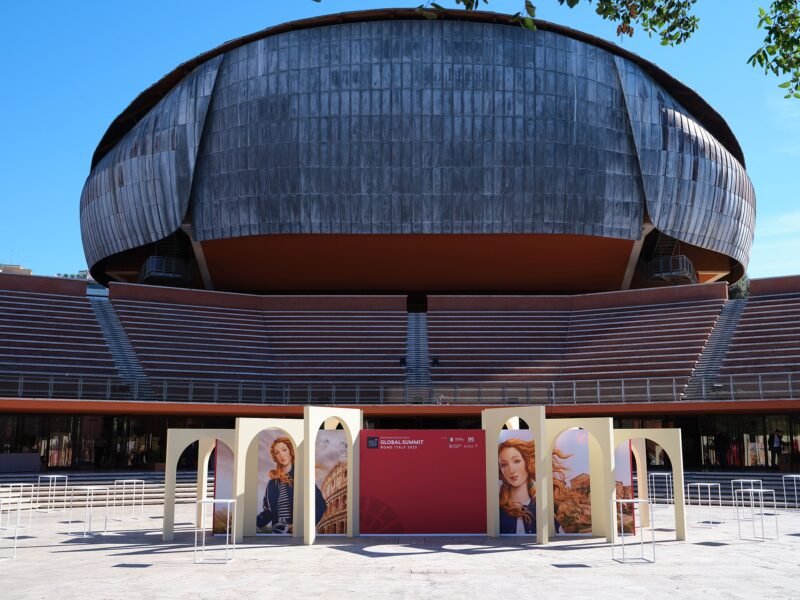
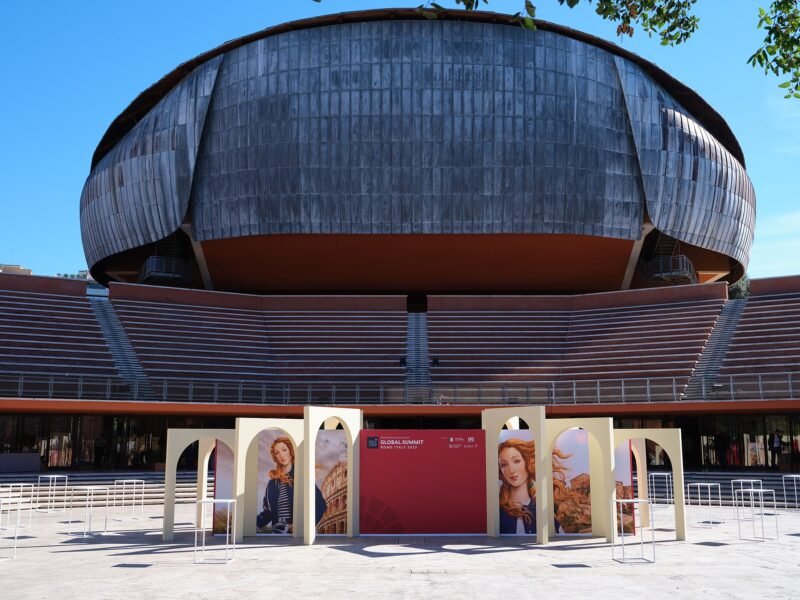
Sala Santa Cecilia is the largest of the three concert halls of Auditorium Parco della Musica Ennio Morricone: 2,756 seats, conceived by Renzo Piano for the symphony orchestra and inaugurated on December 21, 2002. Since 2003 it has been the home of the Accademia's season.
A ceiling that sounds
Above the audience stretch 26 shells of American cherry, each about 180 square meters. The hall behaves like a large soundboard, with a reverberation time of 2.2 seconds: ideal conditions for the music of Ravel and Debussy, which lives on layered timbres and very subtle dynamics.
The seat for hearing the colors
People who attend the hall observe that the sound intensity seems to drop up to the tenth row and then stay stable. For a program of orchestral colors the best choice is the central orchestra section beyond the tenth row or the front gallery, from which the orchestra comes across blended. Anyone who wants to see Harding's gesture from the front can choose the gallery behind the stage, which in this concert also lets you watch the chorus up close.
Three beetles and a cavea
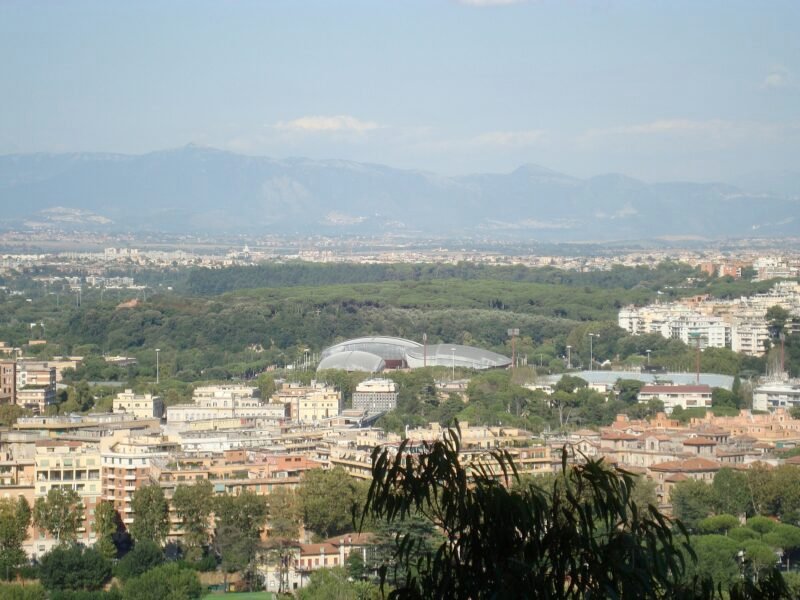
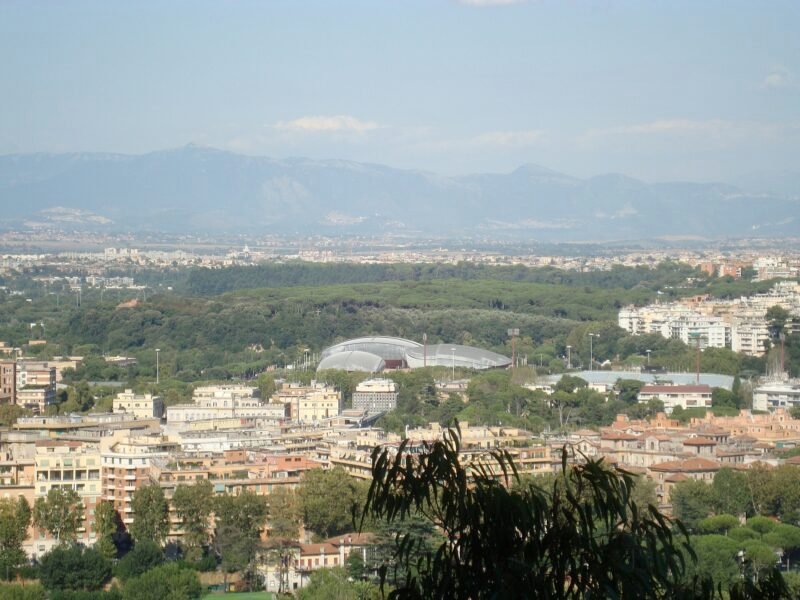
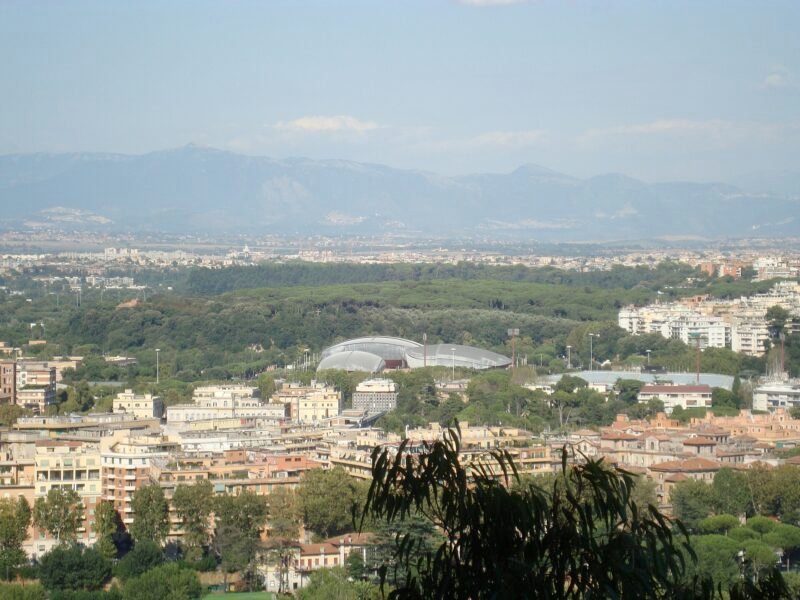
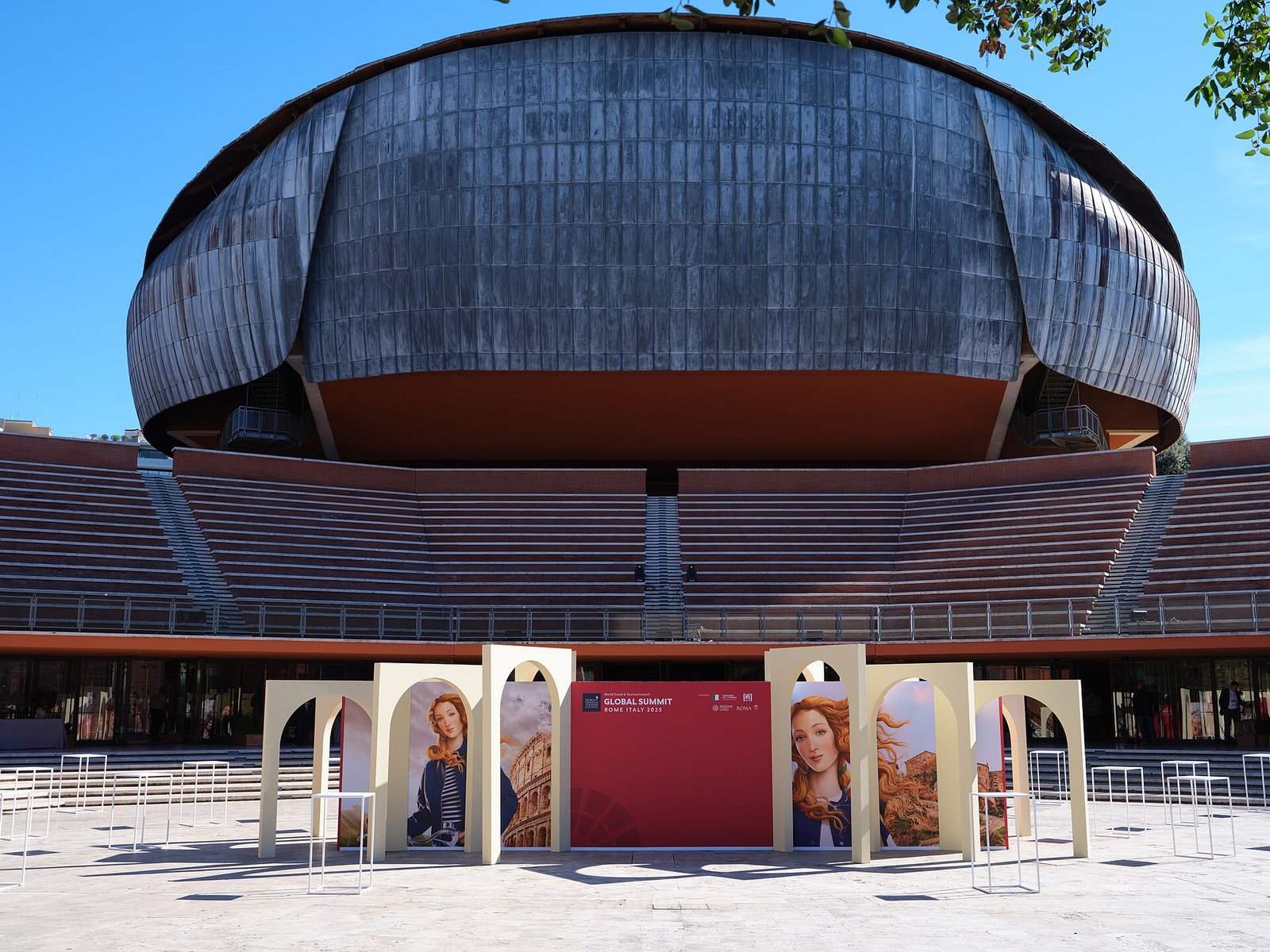
On the outside the three halls are large volumes clad in lead on a brick base, arranged in a fan around the open-air cavea dedicated to Luciano Berio. Piano won the competition in 1993 and worked with the acoustician Jürgen Reinhold of the Müller BBM firm in Munich and with the landscape architect Franco Zagari.
Something nobody tells you about Daniel Harding conducting Ravel and Debussy at Auditorium Parco della Musica, April 8, 9 and 10, 2027
At the Accademia di Santa Cecilia, punctuality is a strict rule. The concert page warns that doors close at the start time and that latecomers don't enter the hall: they follow the concert from the listening rooms, until seats run out. In a program that opens with short pieces like the cantatas and the Prélude, a few minutes' delay is enough to miss the rarest part of the evening.
A second little-known thing: Sala Santa Cecilia sits on a raised floor, because during construction the remains of a Roman villa emerged underground and digging was not possible. The galleries are served by only two elevators. Anyone with mobility difficulties and a ticket up high would do well to arrive very early.
Third: the hall has no pipe organ. The project was suspended in 2002, after an appeal by Italia Nostra, by the Accademia, then presided over by Luciano Berio. For Ravel and Debussy you won't feel its absence, but the bare wall behind the chorus has this history.
The advice I give you for visiting Daniel Harding conducting Ravel and Debussy at Auditorium Parco della Musica, April 8, 9 and 10, 2027
My advice is to arrive with your ear prepared for the first minutes. The flute solo that opens the Prélude à l'après-midi d'un faune is one of the most delicate moments of the repertoire: in the hall there is absolute silence, and anyone who comes in at the last minute or is still arranging their coat misses it. Seated five minutes early, the concert truly begins from the beginning.
Second piece of advice: devote 10 minutes, in the days before, to the history of the Prix de Rome and Villa Medici. Anyone who knows that Ravel tried for that prize five times without winning it listens to the cantatas with a different attention: not as minor pieces, but as the workshop of a composer who was becoming himself.
Third: for those in the city during the day too, a visit to Villa Medici before or after the concert closes the circle. The villa on the Pincio is a few minutes from Piazza del Popolo, from which tram 2 takes you to the Auditorium.
Finally, if you can choose, Saturday at 18:00 leaves time for an unhurried dinner and for discussing the evening.
Tickets for Harding at Santa Cecilia: prices and discounts
Tickets for Daniel Harding's concert with Ravel and Debussy cost €54 in section I, €47 in II, €37 in III, €35 in IV, €30 in V and €23 in VI. They are sold only by retailers authorized by the Accademia: the Auditorium box office, the box office at Via Vittoria 6 and the points of sale of the authorized presale network.
The box offices
The Auditorium box office, in the greenhouse space, is open every day from 11:00 to 20:00. The one at Via Vittoria 6, a few steps from Piazza del Popolo, is open Monday to Friday from 11:00 to 19:00 and Saturday from 11:00 to 14:00, with electronic payment only. Online, start from the purchase button under the chosen date, on the official concert page.
Young people and kids
For concerts in the subscription season the Accademia offers under-26s a 30% discount on tickets, and children under 14 with an adult enter at the symbolic price of €3. Reduced rates are bought only at the box offices, while promotional seats last, and discounts cannot be combined.
Information
The Accademia warns that it is not responsible for markups on tickets sold by unauthorized sellers. For information there is the infoline 06 8082058 and the addresses info@santacecilia.it and biglietteria@santacecilia.it.
How to get to the Auditorium for Harding's concert
You get to Auditorium Parco della Musica Ennio Morricone by Metro Line A to Flaminio and then tram 2, stops Flaminia/Reni or Apollodoro, or by buses 910, 53, 982 and 168. The metro does not go all the way to the entrance.
From the center by tram 2
Tram 2 leaves from Piazzale Flaminio and goes up Via Flaminia toward Piazza Mancini. From the Flaminia/Reni or Apollodoro stops you reach Viale Pietro de Coubertin in a few minutes on foot, through Villaggio Olimpico.
From Termini with the 910
The 910 connects Piazza dei Cinquecento, in front of Termini station, to the Auditorium with no transfers. It's the natural choice for anyone arriving by train for the Saturday afternoon concert.
The other lines
The 53 passes through Piazza Mancini and the center, the 982 comes from Viale XVII Olimpiade area, the 168 from Tiburtina station. Evening schedules and frequencies can be checked on the Roman transit company's route planner.
By car
The stretch of Viale Pietro de Coubertin in front of the entrance is closed to traffic. The complex's paid parking has limited spaces, and on concert nights Villaggio Olimpico fills with cars: better to take public transportation, especially on Friday.
Another well-known fact, yet rarely mentioned
It is well known that Daniel Harding was an enfant prodige of conducting. Less often mentioned is how his career began: at 17 he put together an ensemble of musicians, conducted Schoenberg's Pierrot lunaire and sent the recording to Simon Rattle. Rattle took him on as assistant in Birmingham. Three years later Claudio Abbado wanted him with him at the Berliner Philharmoniker.
The second fact, rarely told, concerns the conductor's ties to the French repertoire. Harding was music director of the Orchestre de Paris from 2016 to 2019, and in 2002 France named him Knight of the Order of Arts and Letters. With the violinist Renaud Capuçon he recorded a disc of French music for violin and orchestra, Le Bœuf sur le toit, with pieces by Ravel, Saint-Saëns, Massenet, Berlioz and Milhaud.
The April program, in short, is not a circumstantial choice: it is a repertoire that the music director of Santa Cecilia has frequented for 20 years, and that he brings to Rome with his orchestra.
How to organize the evening of the concert
For Harding's concert it's best to arrive at the Auditorium at least 40 minutes before the start. Ticket pickup, checks, coat check and the climb to the seats take time, and in a hall of over 2,700 seats lines form early.
Before going in
The foyer shared by the three halls hosts a bar, a cafe and a bookstore with records and music books. From the outdoor terrace, between Sala Santa Cecilia and Sala Sinopoli, you can see the remains of the Roman villa discovered during construction.
The length
The concert page gives neither the overall length nor the exact position of the intermission, but announces Daphnis et Chloé in the second half. The program has the form of a full symphonic concert: anyone who has to catch a train after the Saturday concert should allow a margin.
After the concert
On the way out the cavea lets the audience flow out unhurried. Anyone who has parked in Villaggio Olimpico should know that the side streets empty slowly.
The right photo to take at Daniel Harding conducting Ravel and Debussy at Auditorium Parco della Musica, April 8, 9 and 10, 2027
During the concert the phone stays off: with a program made of pianissimos, from the flute of the Prélude to the first bars of La Mer, any noise ruins the listening of others. Photos are taken before and after.
In April, especially for the Saturday concert at 18:00, it is still light outside. From the upper part of the cavea you frame Renzo Piano's three lead volumes against the spring sky: it's the photo that tells the Auditorium better than any other.
In the hall, before the start and if the staff allow it, the right shot is from above toward the stage, with the chorus already lined up in the gallery behind the orchestra and the cherry shells of the ceiling above. For once the hall looks full even behind the musicians.
After the concert, during the applause and without flash: Harding having the sections stand one by one after Daphnis et Chloé, a ritual that in an evening of orchestral colors has a precise meaning. Outside, the volumes of the halls seen from below on Viale Pietro de Coubertin give, in our opinion, the most original image.
Some important events that happened here in history
The ground of the Auditorium holds a history older than the complex. During excavations the remains of a Roman villa from the 3rd century BC came to light, built on the site of an archaic farm from the 6th century BC. To preserve them Renzo Piano modified the project and moved two of the three beetles west, almost to the Corso di Francia viaduct. The finds are displayed in a small museum under the cavea.
The musical history of the place is born from a void. In 1936 the Augusteo, Rome's great concert hall, was demolished, and for more than 60 years the city remained without a symphonic hall. In 1992 the city council chose the Villaggio Olimpico area, and in 1993 Piano won the competition. On April 21, 2002 Sala Sinopoli opened, with Goffredo Petrassi present at the world premiere of his Ouverture da concerto of 1931. On December 21, 2002 Sala Santa Cecilia was inaugurated, with the Accademia Orchestra conducted by Myung Whun Chung.
Since 2003 the Auditorium has permanently hosted the Accademia's season, since 2006 the Rome Film Festival, and in 2020 the city council approved naming it after Ennio Morricone. Since October 2024 Sala Santa Cecilia has been Daniel Harding's hall.
Who has passed through Daniel Harding conducting Ravel and Debussy at Auditorium Parco della Musica, April 8, 9 and 10, 2027
The first conductor on the podium of Sala Santa Cecilia was Myung Whun Chung, at the inaugural concert of December 21, 2002. Goffredo Petrassi had been present, a few months earlier, at the opening of the smallest hall, which today bears his name. The cavea is named after Luciano Berio, president of the Accademia in those years.
Since then the hall has been the home of Antonio Pappano and, since 2024, of Daniel Harding. In the 2026/2027 season, among others, Kirill Petrenko, conductor of the Berliner Philharmoniker, and Charles Dutoit, who in March conducts Martha Argerich in the concert with the Orchestra of Santa Cecilia, pass through from its podium.
Among the hall's regular soloists is Evgeny Kissin, a guest of the Accademia for decades, who in the same season returns in a duo with András Schiff, as the page for the Kissin and Schiff concert tells. In Harding's week, on April 6, the hall instead welcomes a guest orchestra, that of Lausanne, with Martha Argerich at the piano.
Accessibility and kids at Harding's concert
For people with disabilities who can walk, holders of the Disability Card, the Accademia offers a 15% reduction on two tickets, to be bought at the box office. For wheelchair users, admission costs €10 and the person assisting enters free, while available seats last.
How to book
For people who cannot walk, booking is mandatory, from 15 days before the concert until the day before, at 06 8082058 or at biglietteria@santacecilia.it. For the evening of April 8 the window opens on March 24.
The time margin
With the raised hall and the galleries served by two elevators, it's best to arrive an hour early and ask the hall staff right away for the route.
With kids
Daphnis et Chloé and La Mer are pieces that speak through images: the sea, the dawn, the dance. For a kid who already has a first experience of classical music they are an excellent step forward, and the €3 ticket for under-14s at the box offices makes the trial cheap. For a small child, though, a full symphonic evening remains long.
The neighborhood around the Auditorium
The Auditorium extends over about 55,000 square meters between Villa Glori, Villaggio Olimpico, the Corso di Francia viaduct and Viale Maresciallo Pilsudski: a quadrant of 20th-century Rome where greenery and contemporary architecture meet.
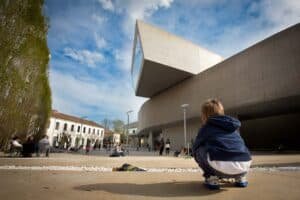
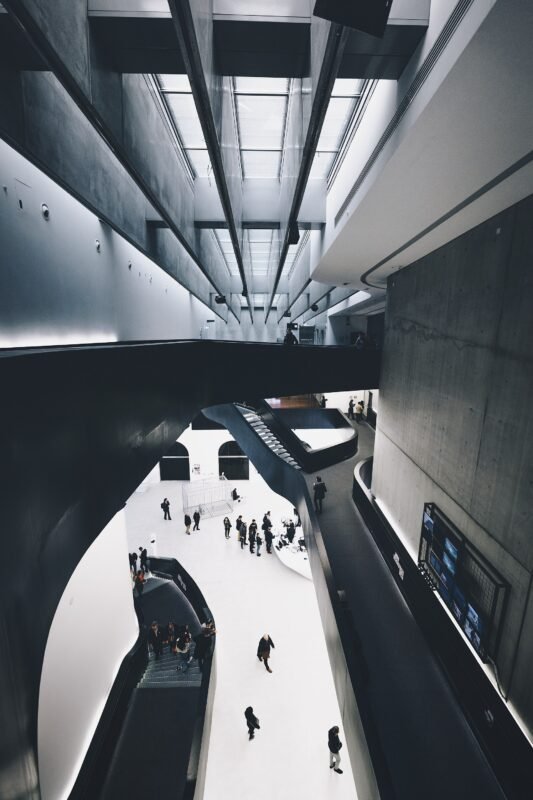
Zaha Hadid's MAXXI
Toward Via Guido Reni, a few minutes on foot, is MAXXI, the museum of 21st-century arts designed by Zaha Hadid. An exhibit in the afternoon and the concert in the evening make a full day without changing neighborhood.
The river
From the Auditorium you go down to Ponte della Musica, which joins Flaminio to Foro Italico. Farther north, Milvian Bridge is in the evening one of the liveliest meeting places in the city.
The Pincio and Villa Medici
With tram 2 you return to Piazzale Flaminio, at the gates of Villa Borghese. From there you go up to Pincio and reach Villa Medici: for this concert it is the most fitting walk Rome can offer.
Where to eat before or after the concert
Inside the Auditorium there are a bar and cafe in the foyer and a bar-restaurant with an entrance from the street too: for those coming from work on Thursday it's the safest solution, without risking closed doors.
In Villaggio Olimpico and Flaminio
Between Villaggio Olimpico, Via Flaminia and Piazza Mancini you find pizzerias, trattorias and neighborhood bars frequented mostly by residents. On Friday it's best to reserve and eat early, before the concert.
Ponte Milvio and the center
For dinner after the Saturday concert the widest offer is at Ponte Milvio, a few minutes away, with places open late. Toward the center, between Piazzale Flaminio and Piazza del Popolo, you find the historic center's choice, with historic center prices.
April in Rome: the time of year
April is one of the most pleasant months to be in Rome: days get longer, temperatures are mild and the historic gardens, from Villa Borghese to the Pincio, are in full bloom. For travelers it is a much-requested period, and it's best to plan ahead.
A week of music
Anyone staying in the city a few days can line up, on April 6, Martha Argerich with the Lausanne orchestra and, from the 8th to the 10th, Harding with Ravel and Debussy, always in Sala Santa Cecilia. Then, from April 22 to 24, Beethoven's Ninth with Harding himself.
The weather
April evenings can be cool, and the Auditorium is an open complex: between one entrance and the next you walk outdoors. A light jacket to leave at the coat check is enough.
Frequently asked questions about Harding, Ravel and Debussy at Santa Cecilia
When does Daniel Harding conduct Ravel and Debussy in Rome?
Daniel Harding conducts Ravel and Debussy with the Orchestra and Chorus of Santa Cecilia on Thursday, April 8, 2027 at 19:30, Friday, April 9 at 20:00 and Saturday, April 10 at 18:00, in Sala Santa Cecilia at Auditorium Parco della Musica Ennio Morricone, Viale Pietro de Coubertin 30. The three evenings have the same program.
What is the concert program?
Harding's concert includes Ravel's Cantatas for the Prix de Rome (La Nuit, L'Aurore, Tout est lumière), Debussy's Prélude à l'après-midi d'un faune and La Mer and Ravel's Suite No. 2 from Daphnis et Chloé. The chorus is prepared by Andrea Secchi.
How much do tickets cost?
Tickets for Harding with Ravel and Debussy cost from €23 to €54: €54, €47, €37, €35, €30 and €23 from section I to VI. For subscription-season concerts, under-26s get 30% off and children under 14 with an adult pay €3, only at the box offices and while promotional seats last.
Where do you buy tickets?
Tickets for Harding's concert are bought at the box office of Auditorium Parco della Musica, open every day from 11:00 to 20:00, at the box office at Via Vittoria 6 and on the presale network authorized by the Accademia, starting from the official concert page.
What are Ravel's cantatas for the Prix de Rome?
Ravel's cantatas for the Prix de Rome are early works written for the competition that rewarded young French composers with a stay at Villa Medici. Ravel tried for the prize five times between 1900 and 1905 without winning it. The 1905 exclusion became a national scandal.
How do you get to Auditorium Parco della Musica?
You get to Auditorium Parco della Musica by Metro Line A to Flaminio and then tram 2, stops Flaminia/Reni or Apollodoro, or by buses 910 from Termini, 53, 982 and 168. The stretch of Viale Pietro de Coubertin in front of the entrance is closed to cars.
Can you enter after the concert has started?
At Accademia di Santa Cecilia concerts, doors close promptly at the start time. Latecomers don't enter the hall and follow the concert from the listening rooms, while seats last. For Harding's concert it's best to arrive at least 40 minutes early.
Final advice on Harding, Ravel and Debussy
A music director who knows the French repertoire inside out, an orchestra and chorus that have worked with him for almost three seasons, two masterpieces of orchestral color like La Mer and Daphnis et Chloé, and, to open, a rarity that speaks of Rome and Villa Medici: in our view it is one of the smartest programs of the Santa Cecilia season. My advice is to pick a seat in the stalls past the 10th row, arrive early so you catch the flute in the Prélude and, if the weather allows, walk up to the Pincio to see Villa Medici before the concert.
Article written by the editorial team of Tour Leader Pro, contact them for Private/Corporate/V.I.P. Tours and Experiences.
Planning a trip to Rome? The English-language guides to visiting the city are on ItalyPlanner.com.
Contact Information
Nearby
 Museum of Musical Instruments (MUSA)100 m
- Auditorium Parco della Musica100 m
- Villa Glori500 m
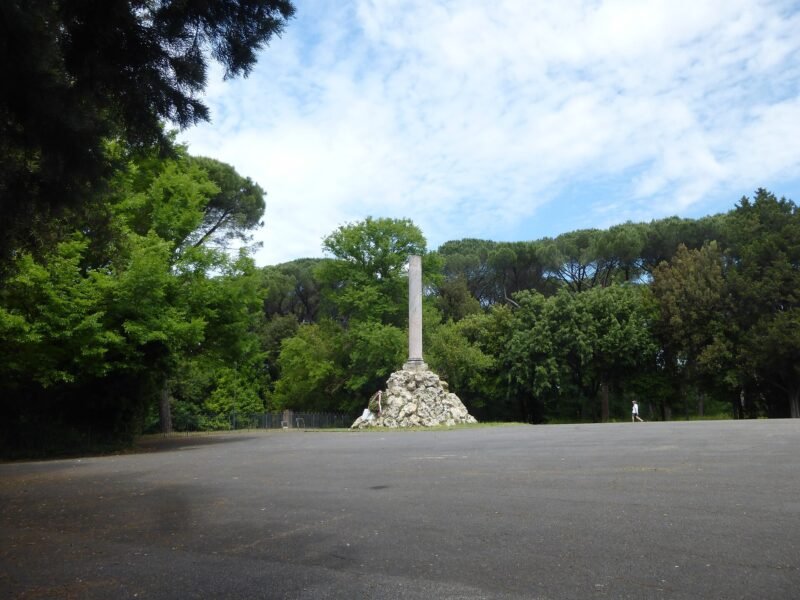
- Fountain of Anna Perenna500 m
- MAXXI – National Museum of 21st Century Arts700 m
- Flaminio700 m
Upcoming events nearby
- Roma Jazz Festival 2026, November 1 to 24 at the Auditorium and Casa del Jazz100 m
- Evgeny Kissin and András Schiff at Santa Cecilia, November 9, 2026100 m
- Roma Gospel Festival 2026 at Auditorium Parco della Musica, December 13, 2026 to January 1, 2027100 m
- Santa Cecilia 2026/2027 Concert Season at Auditorium Parco della Musica, October 21, 2026 to June 5, 2027100 m



You might also like
- Argerich and Capuçon for Beethoven at Auditorium Parco della Musica, April 6, 2027
- Gustavo Gimeno and Frank Peter Zimmermann at Auditorium Parco della Musica, April 1, 2 and 3, 2027
- Manfred Honeck Conducts Beethoven at Santa Cecilia: March 25, 26 and 27, 2027
- Grigory Sokolov at Santa Cecilia, March 22, 2027
- Charles Dutoit and Martha Argerich at Auditorium Parco della Musica, March 18, 19 and 20, 2027
- Lucas and Arthur Jussen at Auditorium Parco della Musica, March 17, 2027