Pagliacci conducted by Daniel Harding at Auditorium Parco della Musica in Rome, May 13 to 17, 2027
In short. Pagliacci conducted by Daniel Harding: Ruggero Leoncavallo's opera, in concert form, is on in Sala Santa Cecilia at Auditorium Parco della Musica Ennio Morricone, Viale Pietro de Coubertin 30, for three nights: Thursday, May 13, 2027 at…
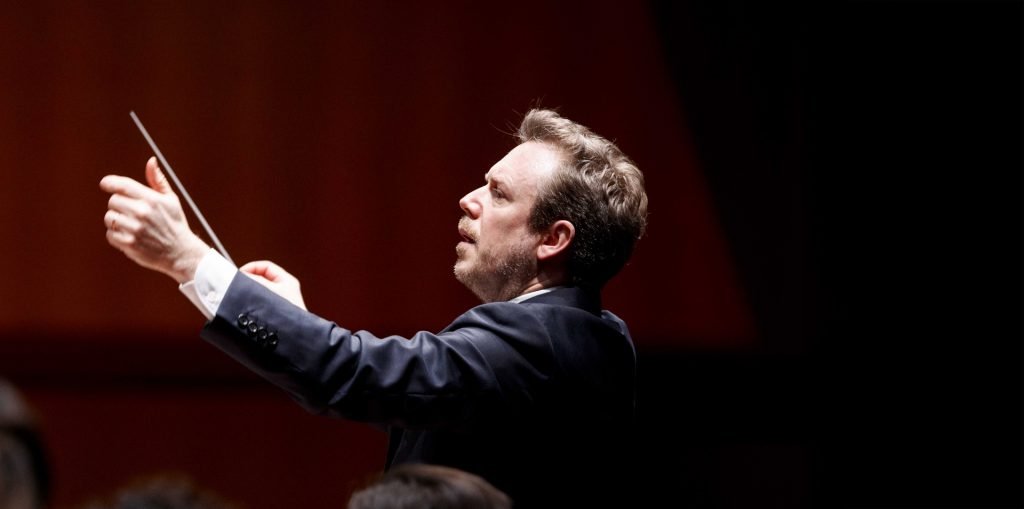
Pagliacci conducted by Daniel Harding: Ruggero Leoncavallo's opera, in concert form, is on in Sala Santa Cecilia at Auditorium Parco della Musica Ennio Morricone, Viale Pietro de Coubertin 30, for three nights: Thursday, May 13, 2027 at 19:30, Saturday, May 15 at 18:00 and Monday, May 17 at 20:00. Daniel Harding, music director of Accademia Nazionale di Santa Cecilia, leads the Accademia Orchestra, Chorus and Children's Chorus. Get there by tram 2 from Piazzale Flaminio (Metro A, Flaminio stop), getting off at Flaminia/Reni or Apollodoro, or by buses 910 from Termini, 53, 982 and 168. Tickets cost from €28 to €65, a higher price band set by the Accademia for this title, and are sold at the Auditorium box office, at Via Vittoria 6 box office, on the presale network authorized by the organizer and on the official Accademia Nazionale di Santa Cecilia website. The hall doors close at the start time.
Language: opera sung in its original language; no English surtitles are announced, so check with the theater.
The cast is the kind rarely gathered outside an opera house: Brian Jagde is Canio, Carolina López Moreno is Nedda, Ariunbaatar Ganbaatar is Tonio, Matteo Mezzaro is Beppe and Mattia Olivieri is Silvio. The chorus is prepared by Andrea Secchi, the Children's Chorus by Claudia Morelli. To put it plainly: among Rome's May programs, it's the one to choose if you want to hear verismo with a symphony orchestra in the foreground and the voices without the distraction of staging.
Pagliacci with Daniel Harding in brief: dates, times, series and prices
The three Pagliacci performances at Santa Cecilia are on May 13, 2027 at 19:30 (series G1), May 15 at 18:00 (series S1) and May 17 at 20:00 (series V1), all in Sala Santa Cecilia. The concert is part of the Accademia's 2026/2027 subscription symphony season.
The dates one by one
- Thursday, May 13, 2027, at 19:30, series G1.
- Saturday, May 15, 2027, at 18:00, series S1.
- Monday, May 17, 2027, at 20:00, series V1.
Note the last date: series V is usually played on Friday, but the Accademia warns that for organizational reasons some concerts take place on days or at times different from their series. For Pagliacci the third performance falls on a Monday.
Ticket prices
The Accademia places Pagliacci among the higher-priced concerts of the symphony season, along with Petrenko, Argerich with Dutoit and Beethoven's Ninth conducted by Harding: tickets range from €28 to €65, against the regular band that for Sala Santa Cecilia starts at €23. The most expensive section is orchestra A, the cheapest galleries 4 and 6.
When to buy
Presale for the season is split into two periods. For concerts from March 3, 2027 to the end of the season, Pagliacci included, subscriber priority is listed from January 7 and general sale from January 12, 2027. If you want a specific orchestra seat, move on those days.
Discounts
For young people the Accademia offers a 30% discount for under-26s on subscription concerts and a symbolic €3 price for under-14s accompanied by an adult. Discounted tickets are sold only at the Auditorium and Via Vittoria box offices, while promotional seats last, and discounts can't be combined.
Pagliacci, Leoncavallo's opera: history and plot
Pagliacci is an opera in two acts with music and libretto by Ruggero Leoncavallo, first staged in Milan on May 21, 1892, conducted by a young Arturo Toscanini. The May performances in Rome thus fall a few days before the anniversary of its premiere.
From Pagliaccio to Pagliacci
The opera was meant to be called Pagliaccio, in the singular. French baritone Victor Maurel, who helped Leoncavallo set up the premiere, didn't want his role, Tonio, to take a back seat to the tenor's, Canio, so the publisher, not to put the premiere at risk, changed the title to the plural. An anecdote that explains a lot about the opera: the Prologue, sung by the baritone in front of the closed curtain, is the page that gives Tonio the spotlight Maurel demanded.
An hour of music, an instant success
The success was immediately huge, and Leoncavallo never managed to repeat it with his later operas. Within two years Pagliacci was translated into many European languages and, because of its brevity, about an hour of music, it was soon paired with another one-act verismo opera, Mascagni's Cavalleria rusticana. The pairing is so rooted in theaters that hearing Pagliacci on its own, as here, is almost a rarity.
The plot in a few lines
A small company of traveling players arrives in a southern village on a feast day: the troupe leader Canio, his wife Nedda, Tonio and Peppe. Canio is fiercely jealous of his much younger wife. Tonio makes advances to Nedda, is rejected and humiliated, and swears revenge. Nedda has a lover, the villager Silvio, with whom she promises to run away after the show. Tonio spies on them and tips off Canio, who can't see his rival's face. In the second act the commedia dell'arte play in the square, with Colombina, Arlecchino, Taddeo and Pagliaccio, repeats as farce the drama just played out, until fiction gives way to reality.
Ruggero Leoncavallo, composer of Pagliacci
Ruggero Leoncavallo was born in Naples, in the Chiaia neighborhood, on April 23, 1857 and died in Montecatini Terme on August 9, 1919. He was a composer and librettist, author of operas and operettas, and he wrote the Pagliacci libretto himself.
Childhood in Calabria
His father, Vincenzo, was a magistrate, and the family followed his postings around the south: Sanza, Castellabate, Eboli, Cava de' Tirreni and finally Montalto Uffugo, in the province of Cosenza, where his father was a district judge. In Montalto the boy spent his childhood, began studying music on a spinet with teacher Sebastiano Ricci and stayed attached to the town all his life: in 1903 he was made an honorary citizen, and a festival devoted to him is still held there.
Studies and meeting Wagner
He studied piano at the San Pietro a Majella Conservatory in Naples with Beniamino Cesi. He then moved to Bologna, where in December 1876 he met Richard Wagner, in town for Rienzi, and the young Giovanni Pascoli. There he wrote the music and libretto of Chatterton, which wasn't staged for years because the impresario didn't keep his commitment.
Potenza, Egypt, Paris
Disappointed, he returned to Potenza, where according to a 1912 document he began writing what would become Pagliacci. After a short stay in Egypt he lived in Paris for six years, from 1882, as a singing teacher: he met Alexandre Dumas, had soprano Sybil Sanderson as a pupil, met Victor Maurel, the baritone who would play a decisive role in the Milan premiere, and married one of his students, Berthe Rambaud.
The real crime behind Pagliacci
According to Leoncavallo himself, Pagliacci comes from a murder that really happened in Montalto Uffugo in March 1865, when the composer was eight. It's the story that turns the opera from stock melodrama into a news report.
Gaetano Scavello and the D'Alessandro brothers
The victim was Gaetano Scavello, a young servant who looked after little Ruggero. According to documents of the time Scavello was having an affair with the wife of actor Luigi D'Alessandro, who, helped by his brother Giovanni, stabbed him as he left a theatrical performance. Scavello died a few hours later, but managed to name his killers, who were sentenced by none other than Leoncavallo's father, the town magistrate.
The clown costume
Leoncavallo later said he had witnessed the crime and seen the killer strike while still wearing his stage costume. Sources don't agree on every detail, starting with the date, given as either March 4 or 5, 1865, but the core is clear: a jealous actor, a show just over, a knife. 27 years later, that night became an opera.
The plagiarism charge
When Pagliacci was translated into French in 1894, poet and librettist Catulle Mendès accused Leoncavallo of copying his La Femme de Tabarin from 1887, which had a play within the drama, a jealous husband and a murder on stage. Leoncavallo replied by citing the crime he had witnessed as a child and pointing out that Mendès's work also resembled earlier pieces, like Manuel Tamayo y Baus's Un drama nuevo. Mendès withdrew the charge.
Daniel Harding, conductor of Pagliacci at Santa Cecilia
Daniel Harding, born in Oxford on August 31, 1975, has been music director of the Orchestra of Accademia Nazionale di Santa Cecilia since October 2024, an appointment announced on March 6, 2023. Pagliacci is one of the programs he conducts in his third Roman season.
Beginnings: Rattle and Abbado
Harding studied trumpet at Chetham's School of Music in Manchester and joined the National Youth Orchestra at 13. At 17 he conducted Schoenberg's Pierrot Lunaire with a group of musicians he had brought together, and sent the recording to Simon Rattle, who took him on as assistant at the City of Birmingham Symphony Orchestra for the 1993-1994 season. After his first year at Cambridge, in 1996, Claudio Abbado called him as assistant at the Berlin Philharmonic. The same year he debuted at the Proms, at 21, the youngest conductor in the festival's history up to then.
The orchestras
He has been music director of the Trondheim Symphony Orchestra, the Norrköping Symphony Orchestra, the Deutsche Kammerphilharmonie Bremen and the Orchestre de Paris from 2016 to 2019. He has a long bond with the Mahler Chamber Orchestra: principal guest conductor, then music director, principal conductor and since 2011 conductor laureate. Since 2006 he has been principal guest conductor of the London Symphony Orchestra, and since 2007 music director of the Swedish Radio Symphony Orchestra.
Opera: Aix, Salzburg, La Scala
His opera résumé is extensive. In Aix-en-Provence he conducted The Turn of the Screw, The Marriage of Figaro, Don Giovanni directed by Peter Brook, La traviata, and Così fan tutte directed by Patrice Chéreau. In Salzburg, Don Giovanni with the Vienna Philharmonic, The Marriage of Figaro, and Ariadne auf Naxos with Jonas Kaufmann. At La Scala he opened the 2005/2006 season with Idomeneo and conducted, among others, Salome, Il prigioniero, Bluebeard's Castle and Falstaff.
Harding and Pagliacci
Pagliacci isn't new to him: in 2011 he conducted it at La Scala, with José Cura, in a double bill with Cavalleria rusticana featuring Salvatore Licitra and Claudio Sgura. In 2002 the French government made him a Knight of the Ordre des Arts et des Lettres.
Brian Jagde, Ganbaatar, Olivieri and the other Pagliacci performers
The role of Canio goes to American tenor Brian Jagde, born on Long Island on August 21, 1979, who debuted in the part in 2026 at Maggio Musicale Fiorentino. Alongside him is an international cast with two Italian voices.
Brian Jagde, Canio
Jagde studied singing at Purchase College, initially as a baritone, and in 2010 received an Adler Fellowship. He has sung Cavaradossi, Pinkerton and Radamès at the Metropolitan, Don José and Alvaro at the Royal Opera House, and Cavaradossi at the Vienna State Opera and the Paris Opera. He debuted at La Scala in 2024 as Turiddu, then replaced Roberto Alagna as Calaf and Jonas Kaufmann as Alvaro in the La forza del destino that opened the 2024/2025 season, alongside Anna Netrebko. In 2025 he debuted as Otello at Teatro Real, and in 2026 as Lohengrin at La Fenice. He returns to Rome a few months before Pagliacci: in January 2027 he is Andrea Chénier at Costanzi, in Marco Bellocchio's production.
Ariunbaatar Ganbaatar, Tonio
The Mongolian baritone, born on April 8, 1988 west of Ulaanbaatar into a family with a nomadic tradition, graduated as an opera singer in 2010. For a time he worked as a traffic officer in the capital, and in 2014 he joined the Buryat National Opera in Ulan-Ude. In 2015 he won first prize and the Grand Prix at the Tchaikovsky Competition, and in 2017 he shared the song prize at BBC Cardiff Singer of the World. In 2016 he received the Order of Genghis Khan, Mongolia's highest honor. He too comes through Costanzi before May: he debuts at Opera di Roma in the January Andrea Chénier.
Mattia Olivieri, Silvio
Born in Sassuolo on June 8, 1984, Olivieri trained at the conservatories of Bologna and Fermo and at the Scuola dell'Opera Italiana in Bologna. Silvio is a role he knows well: he has sung it at La Scala, including in 2024, and with that character he debuted at the Royal Opera House in 2022. At La Scala he was also Figaro in the Barbiere conducted by Riccardo Chailly in 2021. In 2023 he debuted at the Metropolitan, and in 2025 at Opera di Roma in the title role of Il prigioniero.
Carolina López Moreno and Matteo Mezzaro
Nedda, the only female role, goes to soprano Carolina López Moreno. Beppe, the player who in the comedy plays Arlecchino, is Matteo Mezzaro, whom Teatro dell'Opera di Roma has cast as Prunier in the new La rondine of September 2027. The Accademia Chorus, prepared by Andrea Secchi, and the Children's Chorus, prepared by Claudia Morelli, complete the lineup: the children of the village celebrating in the first act are them.
A curious fact about Pagliacci by Leoncavallo conducted by Daniel Harding at Auditorium Parco della Musica in Rome, May 13 to 17, 2027
Mattia Olivieri, May's Silvio, has already sung at Auditorium Parco della Musica with the Accademia Orchestra: in 2022 he was Ping in the concert Turandot conducted by Antonio Pappano. Alongside him were Sondra Radvanovsky, Jonas Kaufmann, Ermonela Jaho and Michele Pertusi, and that concert produced a recording with the same cast, released in 2023.
It's a precedent that says a lot about how the Accademia works with opera. Sala Santa Cecilia has no pit, no curtain, no sets: opera arrives in concert form, with the orchestra on stage and the singers in front. In the Pappano years this formula produced reference evenings and recordings, and with Harding it continues, with Pagliacci as May's title. In the same season the Accademia opened with Wagner's Siegfried, again with Harding on the podium.
The second curious fact concerns the Prologue. In staged performances the baritone sings it in front of the closed curtain, wearing the Taddeo costume he'll wear in the second act. In a concert hall there's no curtain: the Prologue becomes what it has always really been, a speech addressed directly to the audience. Hearing Ganbaatar in those opening pages, you'll literally have in front of you the man who turns to the audience to warn them that what they're about to see is real.
Sala Santa Cecilia, where you hear Pagliacci
Sala Santa Cecilia is the largest of the three halls of Auditorium Parco della Musica Ennio Morricone: 2,756 seats, designed by Renzo Piano for symphonic music and inaugurated on December 21, 2002. The opening concert was given by the Accademia Orchestra conducted by Myung-whun Chung.
A cherry wood sounding board
The ceiling is made of 26 shells in American cherry wood, each with an average surface of about 180 square meters, and the whole hall works as a sounding board. The reverberation time is 2.2 seconds, a rare value in Italy. For a verismo opera, with an orchestra that jumps from a whisper to fortissimo, it's a hall that amplifies contrasts, all the way to the last row of the gallery.
Three lead beetles
From outside, the three halls look like huge beetles clad in lead sheets on a brick base, arranged like spokes around the open-air cavea named after Luciano Berio. Renzo Piano won the 1993 invited competition and worked with acoustician Jürgen Reinhold of the Müller-BBM firm and landscape architect Franco Zagari. The full profile of the complex is on our page about Auditorium Parco della Musica.
Something nobody tells you about Pagliacci by Leoncavallo conducted by Daniel Harding at Auditorium Parco della Musica in Rome, May 13 to 17, 2027
At Accademia Nazionale di Santa Cecilia concerts start exactly on time, and latecomers aren't let into the hall: they follow the show in the listening rooms, while seats last. For an opera of an hour and a little more, with no long intermission, arriving late means missing the Prologue, one of the title's most famous pages.
The second thing few people know concerns the building. Sala Santa Cecilia is built on a level well above the ground, because it wasn't possible to dig: the remains of a Roman villa came to light underground. There are only two elevators to reach the galleries. If you have a gallery seat and trouble climbing, arrive well ahead of time, not out of caution but out of necessity.
The third is a calendar coincidence. On Monday, May 17, 2027, the night of the last performance, a few hundred meters from Auditorium, Teatro Olimpico hosts BeatleStory at 20:30, the show devoted to the 60th anniversary of Sgt. Pepper's Lonely Hearts Club Band. That night the Flaminio district will have two very different audiences leaving at the same time: if you've parked in the Olympic Village, keep it in mind.
Accademia Nazionale di Santa Cecilia and Harding's season
Accademia Nazionale di Santa Cecilia, which produces Pagliacci, is one of the oldest musical institutions in the world and has been a foundation since 1998. Its music director is Daniel Harding. Auditorium is its main home, where it also keeps the Bibliomediateca and the Museum of Musical Instruments.
A season with Harding at the center
In the 2026/2027 symphony season Harding leads many programs: the opening with Wagner's Siegfried on October 21, 24 and 27, 2026, Brahms and Strauss in November, the concert with Beatrice Rana in March, Ravel and Debussy, and Mahler's Fifth and Beethoven's Ninth in April. Pagliacci is followed, a few days later, by Mahler's Sixth, on May 20, 21 and 22, 2027. An overview of the whole program is on our page about the Santa Cecilia 2026/2027 concert season.
Two weeks in May
If you're in Rome for several days you can build a small festival: Pagliacci between May 13 and 17, Mahler's Sixth between the 20th and 22nd, both in Sala Santa Cecilia, and meanwhile, at Costanzi, Shostakovich's Lady Macbeth of the Mtsensk District from May 14 to 22. Few times of the year offer Rome such a concentration of great music.
My tip for Pagliacci by Leoncavallo conducted by Daniel Harding at Auditorium Parco della Musica in Rome, May 13 to 17, 2027
My tip for Pagliacci at Santa Cecilia is to choose the Saturday, May 15 performance at 18:00 and buy your ticket on January 12, 2027, the day general sale opens. Saturday afternoon leaves the evening free for dinner and a stroll, and the best orchestra seats, in a season at higher prices, go quickly.
Second tip: listen to the opera beforehand, at least once, with the libretto in hand. In concert form there's no staging to help you tell Colombina from Nedda, or Arlecchino from Beppe, and the second act only works if you know that the characters of the comedy are the same as those of the drama. An hour of listening at home pays off double in the hall.
Third: don't sit too close. In a hall like Santa Cecilia, sound intensity seems to drop up to the 10th row and then hold steady. Beyond that point the balance between orchestra and voices is better, and the chorus with the children's voices sounds like a single block. The front-facing galleries are a great compromise between price and sound.
Last: arrive 40 minutes early. Security checks, the cloakroom and the climb to the hall take time, and the doors wait for no one.
How to get to Auditorium for Pagliacci
Auditorium Parco della Musica is reached by tram 2, Flaminia/Reni or Apollodoro stops, and by buses 910, 982, 168 and 53, which stop near the entrance. The metro doesn't come this far: the nearest station is Flaminio, on line A.
Metro A and tram 2
From Flaminio station you come out on Piazzale Flaminio and take tram 2 along Via Flaminia. Get off at Flaminia/Reni or Apollodoro and walk a few minutes toward Viale Pietro de Coubertin, through the Olympic Village. If you're coming from the center, it's the simplest option.
Bus 910 from Termini
The 910 leaves from Piazza dei Cinquecento, in front of Termini station, and reaches Auditorium with no changes. If you're staying near the station or arriving by train, it's the most straightforward option.
Lines 53, 982 and 168
The 53 links Piazza Mancini and the center, the 982 comes from Viale XVII Olimpiade area and Quattro Venti station, and the 168 from Tiburtina station. The 168 is a weekday line: for the Saturday, May 15 performance and for evening trips back, check times and routes on the ATAC journey planner.
By car
Viale Pietro de Coubertin is closed to traffic along the Auditorium stretch. The complex has an internal paid parking lot with limited spaces, and on concert nights cars end up in the streets of the Olympic Village. My view is clear: drive only if there's no alternative, and above all not on Monday the 17th, when Teatro Olimpico will be full too.
Another well-known fact, yet one rarely mentioned
Everyone knows Pagliacci and Cavalleria rusticana are almost always performed together. Few remember that Cavalleria had its world premiere in Rome, at Teatro Costanzi, on May 17, 1890. The most famous double bill in Italian opera thus has one foot in the capital, and the third Rome performance of Pagliacci falls on exactly that date, 137 years later.
The link between the two operas was born for practical reasons. Pagliacci lasts about an hour, and theaters needed a full evening: Mascagni's Cavalleria, also short and verismo, was the perfect complement. Since then the pairing has become such a strong habit that many feel hearing Pagliacci alone makes for an incomplete evening.
And yet there's an advantage. Without Cavalleria first, Pagliacci reaches the audience fresh, with its attention intact. In concert form, the hour of music becomes a compact block, where you hear better Leoncavallo's orchestral writing between one famous page and the next. It's a chance to discover how well built the opera is.
The right photo to take at Pagliacci by Leoncavallo conducted by Daniel Harding at Auditorium Parco della Musica in Rome, May 13 to 17, 2027
During Pagliacci your phone stays in your pocket: in a hall with such sensitive acoustics every click can be heard, and the right photo is taken before and after. In May, with long days, the light helps.
Before the concert, from the top of the cavea, frame Renzo Piano's three beetles with their lead cladding. For the Saturday 18:00 performance the afternoon light on the metal gives a full image. For the evening ones, wait for the lights to come on, when the lead reflects and the volumes stand out against the sky. Include the Sala Santa Cecilia entrance with the audience going in: the photo tells the evening better than a portrait.
Inside the hall, before the concert starts and if the staff allows, the shot to take is upward: the cherry wood shells of the ceiling have a geometry that photographs beautifully. With the full orchestra, the chorus lined up and the children's voices in position, the full hall becomes the record of the evening. At the final applause, if you really must, no flash.
Some important events that happened here in history
During the construction of Auditorium the remains of a Roman villa from the 3rd century BC came to light, built on the site of an archaic farm from the 6th century BC. The discovery forced Renzo Piano to change his design. Two of the three beetles were moved west, almost touching the Corso di Francia viaduct, and the finds are on display in a small museum under the cavea.
The modern story begins with a demolition. In 1936 the Augusteo concert hall was torn down, and for more than 60 years Rome was left without an auditorium built for symphonic music. In the 1950s the Borghetto Flaminio site was considered, in 1960 a zoning variance was approved, then everything stalled. Only in 1992 did the city choose the Villaggio Olimpico site, and in 1993 Piano won the competition.
Construction was troubled, with the contract of the first builder terminated and a new tender. On April 21, 2002 Sala Sinopoli opened, and on December 21, 2002 Sala Santa Cecilia, with Myung-whun Chung on the podium. Since 2003 the Auditorium has been the permanent home of the Accademia's season, and since 2006 it has hosted the Rome Film Festival. In 2020 the city council approved naming it after Ennio Morricone.
For opera in concert, the date to remember is more recent: in 2022, at the Auditorium, Antonio Pappano conducted Turandot with Radvanovsky and Kaufmann, later released on record. May's Pagliacci fits into that now 20-year tradition of great operatic repertoire heard with the orchestra in the foreground.
Who has passed through Pagliacci by Leoncavallo conducted by Daniel Harding at Auditorium Parco della Musica in Rome, May 13 to 17, 2027
The first conductor on the Sala Santa Cecilia podium was Myung-whun Chung, on December 21, 2002, and a few months earlier Goffredo Petrassi had heard in Sala Sinopoli the first performance in the new complex of his 1931 Ouverture da concerto. The smaller hall now bears his name, and the cavea that of Luciano Berio, who led the Accademia in those years.
In its first months the hall was also criticized: Wolfgang Sawallisch said he was puzzled by the stage and the acoustics, and acoustic problems surfaced during an Ivano Fossati concert, followed by corrections. Since then it has become the home of the Santa Cecilia Orchestra and its music directors, from Antonio Pappano to Daniel Harding.
Among the voices heard here in opera in concert are Sondra Radvanovsky, Jonas Kaufmann, Ermonela Jaho and Michele Pertusi, the stars of the 2022 Turandot, and Mattia Olivieri, who was Ping in that Turandot and returns in May as Silvio. Brian Jagde, who in 2024 replaced Kaufmann at La Scala in La forza del destino, sings with the Accademia for the first time in a role he debuted only the year before.
And then Harding himself, who since 2024 has tied his name to the hall with programs ranging from Wagner to Mahler. In the same season as Pagliacci the Auditorium audience heard Kirill Petrenko, Martha Argerich with Charles Dutoit, and Evgeny Kissin and András Schiff as a duo: in May the list grows with a first-rate verismo cast.
Accessibility and kids at Pagliacci
For people with disabilities, at subscription concerts like Pagliacci the Accademia offers a free ticket for a companion and €10 entry for wheelchair users, while available seats last. Booking is required from 15 days before until the day before the concert, at 06 8082058 or biglietteria@santacecilia.it.
Disability Card
Ambulatory people with disabilities holding the Disability Card get a 15% discount on two tickets, bought directly at the box office. Remember that the galleries are reached by just two elevators: better to arrive an hour early and ask the ushers for the route right away.
With children
Pagliacci is short and has a children's chorus on stage, two things that may pique a youngster's curiosity. The subject, though, is a crime of passion, and the ending is violent even without staging. For a teen who studies music it's an excellent gateway to verismo, and for a small child it's a long, dark evening. Accompanied children under 14 pay €3.
The neighborhood around the Auditorium
The Auditorium covers an area of about 55,000 square meters between Villa Glori, the Villaggio Olimpico, the Corso di Francia viaduct and Viale Maresciallo Pilsudski. It's 20th-century Rome, where contemporary architecture lives alongside greenery.
MAXXI and Teatro Olimpico
Near the Flaminia/Reni stop on tram 2 is MAXXI, which with the Auditorium forms the city's most important pair of contemporary buildings. A little farther, on the Lungotevere, is Teatro Olimpico.
Toward the Tiber
From the Auditorium you head down to the Ponte della Musica, the footbridge linking Flaminio to Foro Italico. Farther north, beyond Piazza Mancini, Milvian Bridge is north Rome's evening meeting point.
Where to eat before or after Pagliacci
Inside the Auditorium there's a bar and café in the foyer and a bar-restaurant also accessible from the street. If you're coming straight from work to the Thursday concert, it's the safest option.
In the neighborhood
Between the Villaggio Olimpico, Via Flaminia and Piazza Mancini there are pizzerias, trattorias and bars frequented more by residents than tourists. For the Monday 20:00 performance, book for 18:30 and eat calmly beforehand.
Ponte Milvio and the center
After the Saturday performance, or after the Thursday one that ends early, the Ponte Milvio area offers the widest choice of places open late. In the opposite direction, toward Piazzale Flaminio and Piazza del Popolo, you'll find the historic center's options, at historic center prices.
Frequently asked questions about Pagliacci with Daniel Harding
When is Pagliacci on at Santa Cecilia in 2027?
Pagliacci conducted by Daniel Harding is on in Sala Santa Cecilia at Auditorium Parco della Musica on May 13, 2027 at 19:30, May 15 at 18:00 and May 17 at 20:00. The three performances are part of the Accademia Nazionale di Santa Cecilia's subscription symphonic season, series G1, S1 and V1.
How much are tickets for Pagliacci at the Auditorium?
Tickets for Pagliacci at Santa Cecilia cost from €28 to €65, because the Accademia lists it among its higher-priced concerts. Under-26s get 30% off, and accompanied children under 14 pay €3. Reduced fares can be bought only at the box offices at the Auditorium and at Via Vittoria 6.
Is Pagliacci at the Auditorium staged?
No, Pagliacci at Auditorium Parco della Musica is an opera in concert: orchestra, chorus and children's chorus on stage, the soloists in front, with no sets or costumes. It's a format the Accademia has used for years for the great operatic repertoire, with the orchestra in the foreground.
Who sings in Pagliacci conducted by Harding?
The cast of Pagliacci at Santa Cecilia includes Brian Jagde as Canio, Carolina López Moreno as Nedda, Ariunbaatar Ganbaatar as Tonio, Matteo Mezzaro as Beppe and Mattia Olivieri as Silvio. The chorus is prepared by Andrea Secchi and the children's chorus by Claudia Morelli.
When do tickets for Pagliacci go on sale?
For Pagliacci, as for all Santa Cecilia concerts from March 3, 2027 to the end of the season, subscriber priority is listed from January 7 and general sale from January 12, 2027. Tickets are sold at the box offices, on the Accademia's website and on the authorized presale network.
Can you get in late to the concert?
No, at the Accademia Nazionale di Santa Cecilia the doors close at the start time. If you arrive late to Pagliacci you can follow the concert in the listening rooms, while seats last. With an opera of about an hour, arriving late means missing the Prologue: better to arrive 40 minutes early.
How do you get to the Auditorium by public transit?
Auditorium Parco della Musica is reached by Metro A to Flaminio and then tram 2 to the Flaminia/Reni or Apollodoro stops, or by bus 910 from Termini, which gets there with no changes. Lines 53, 982 and 168 also stop in the area.
How long is Pagliacci?
Leoncavallo's Pagliacci runs about an hour of music, which is why theaters often pair it with Mascagni's Cavalleria rusticana. The Accademia di Santa Cecilia doesn't list the evening's total length on the concert page: count on a short evening.
Final tip on Pagliacci with Harding
Go hear Pagliacci even if you know it by heart, in fact especially then. A symphonic conductor, an orchestra used to Mahler and Wagner, a hall that amplifies every contrast: it's the best way to discover that behind the famous pages there's a carefully built score, far more than a pretext for a tenor. Buy your ticket in January, choose Saturday, arrive early and listen to the Prologue as if someone were really talking to you. Because someone is.
Article written by the editorial team of Tour Leader Pro, contact them for Private/Corporate/V.I.P. Tours and Experiences.
Planning a trip to Rome? The English-language guides for visiting the city are on ItalyPlanner.com.
Contact Information
Nearby
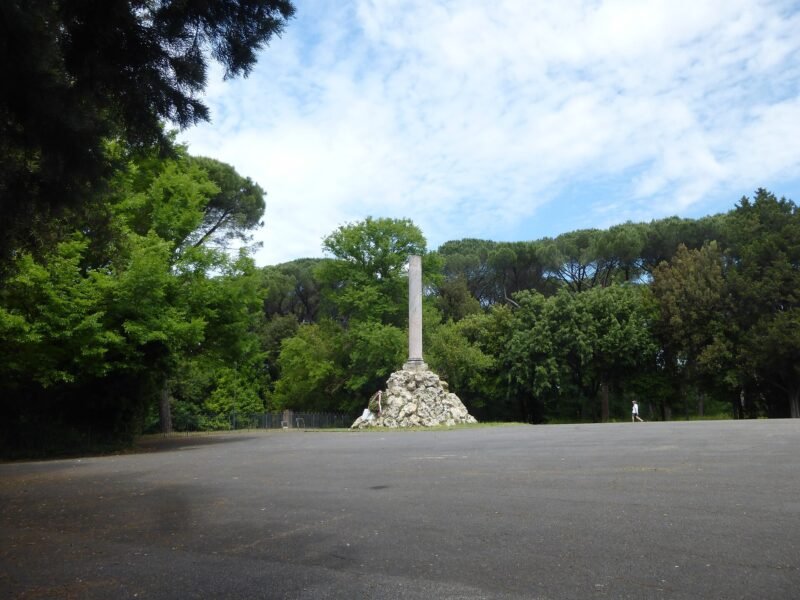
 Museum of Musical Instruments (MUSA)100 m
- Auditorium Parco della Musica100 m
- Villa Glori500 m
- Fountain of Anna Perenna500 m
- MAXXI – National Museum of 21st Century Arts700 m
- Flaminio700 m
Upcoming events nearby
- Roma Jazz Festival 2026, November 1 to 24 at the Auditorium and Casa del Jazz100 m
- Roma Gospel Festival 2026 at Auditorium Parco della Musica, December 13, 2026 to January 1, 2027100 m
- Santa Cecilia 2026/2027 Concert Season at Auditorium Parco della Musica, October 21, 2026 to June 5, 2027100 m
- Kyle Dixon and Michael Stein, The Music of Stranger Things at Auditorium Parco della Musica, November 19, 2026100 m




You might also like
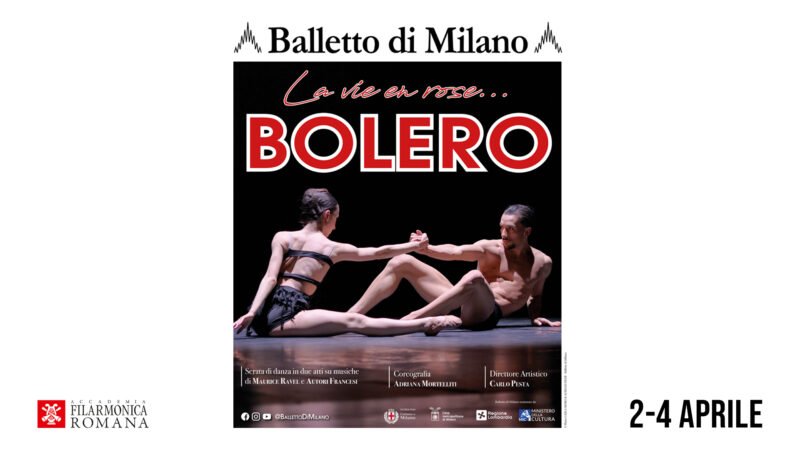
- La Vie en Rose and Bolero by Balletto di Milano at Teatro Olimpico, April 2 to 4, 2027
- Le Coliche in 10 anni di Coliche e siamo ancora vivi at Teatro Olimpico, March 25 and 31, 2027
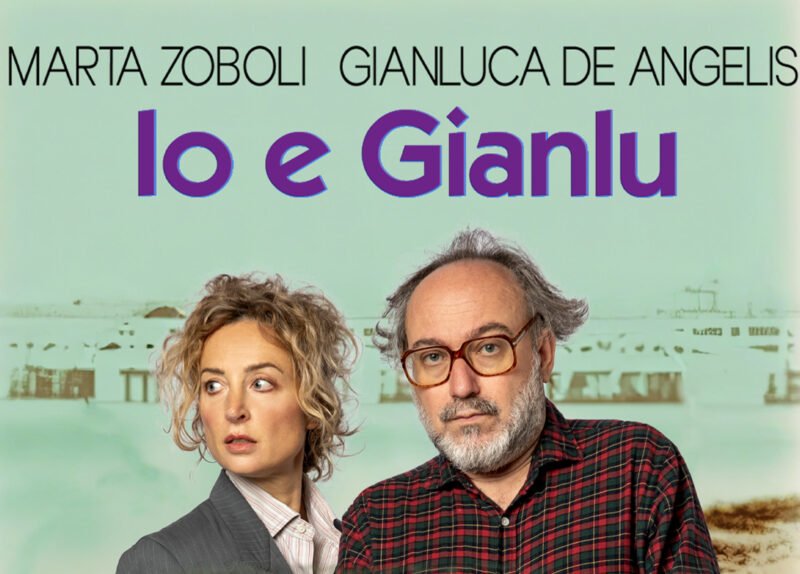
- Marta e Gianluca in Io e Gianlu at Teatro Olimpico, March 23 and 24, 2027
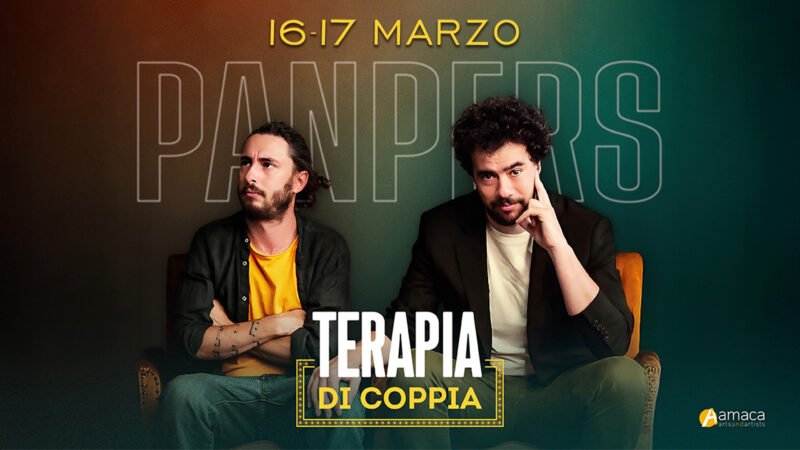
- PanPers, Terapia di coppia at Teatro Olimpico, March 16 and 17, 2027
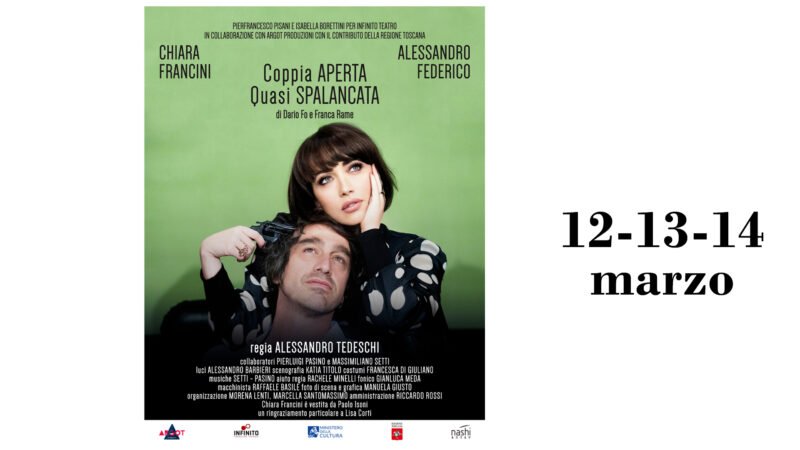
- Coppia aperta quasi spalancata with Chiara Francini at Teatro Olimpico, March 12 to 14, 2027
- Io Marte Tu Mercole with Scintilla and Federica Camba at Teatro Olimpico, March 10, 2027