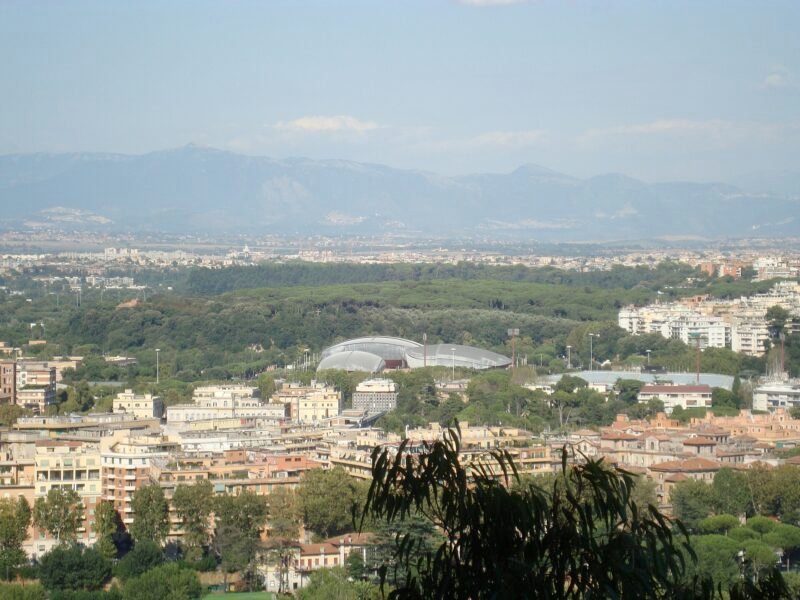
Grigory Sokolov at Santa Cecilia, March 22, 2027
In short. Grigory Sokolov performs a recital for the Accademia Nazionale di Santa Cecilia on Monday, March 22, 2027 at 20:00, in the Sala Santa Cecilia of the Auditorium Parco della Musica Ennio Morricone, at Viale Pietro de Coubertin 30.
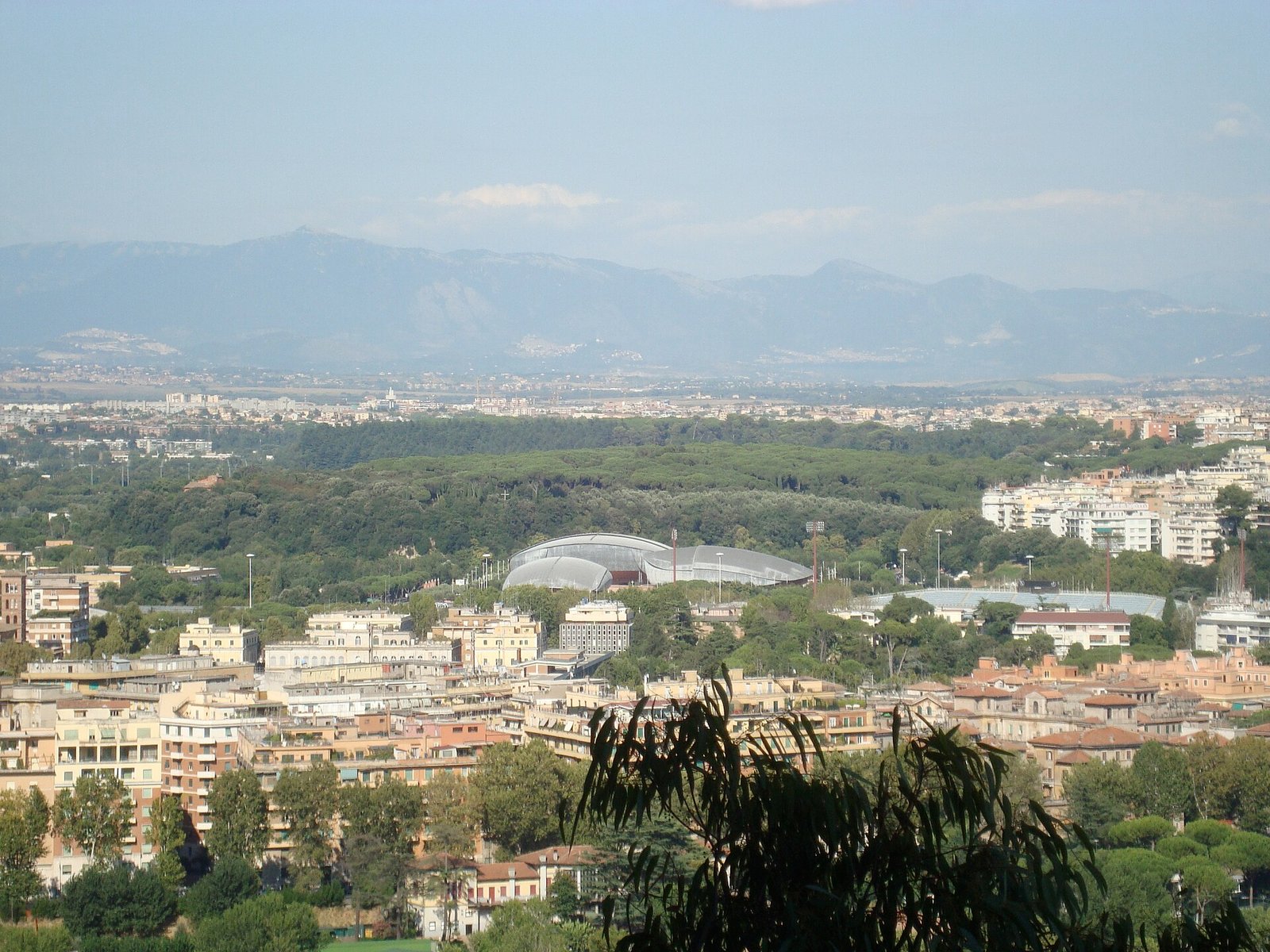
Grigory Sokolov performs a recital for the Accademia Nazionale di Santa Cecilia on Monday, March 22, 2027 at 20:00, in the Sala Santa Cecilia of the Auditorium Parco della Musica Ennio Morricone, at Viale Pietro de Coubertin 30. The program, on the Accademia's official page, is still to be determined. Tickets cost from 30 to 60 euros and are bought on the official website of the Accademia di Santa Cecilia, which links to the authorized presale circuit, at the Auditorium box office and at the box office at Via Vittoria 6. The Auditorium can be reached by metro line A to Flaminio and then tram 2 to the Apollodoro stop, about 500 meters from the entrance, or by bus 910 from Termini.
A Russian pianist born in Leningrad in 1950, a gold medalist at the Tchaikovsky Competition at 16, Sokolov is considered one of the greatest living pianists and for years has devoted himself almost only to the solo recital. He comes to Rome in Santa Cecilia's chamber season, in a hall of over 2,700 seats designed for the orchestra, for one night only.
Grigory Sokolov at Santa Cecilia: date, time and program
Grigory Sokolov's recital is on Monday, March 22, 2027 at 20:00, in the Sala Santa Cecilia, on a single date. The organizer is the Accademia Nazionale di Santa Cecilia, in its 2026/2027 chamber music season.
The program to be determined
The official page lists the program as to be determined. It's a condition that people who follow Sokolov know well: the evening's repertoire should be checked on the Accademia's website in the weeks before the concert. His repertoire, according to his biographies, runs from the 17th and 18th century harpsichordists, William Byrd, Froberger, Couperin, Rameau, to contemporary composers, by way of Bach, Mozart, Beethoven, Schubert, Schumann, Chopin, Brahms, Scriabin, Rachmaninoff, Prokofiev and Ravel.
The hall
The recital is in the Sala Santa Cecilia, the largest of the Auditorium's halls. The choice says a lot about audience expectations: for a solo piano, the Accademia uses the hall designed for the symphony orchestra.
Punctuality
The Accademia warns that concerts start on time: latecomers can't enter the hall and follow the concert in the listening rooms, until they are full. For a recital without an orchestra, in which every piece is part of a design, missing the beginning means missing an important part of the evening.
Tickets for Sokolov at Santa Cecilia
Tickets for Grigory Sokolov cost from 30 to 60 euros, depending on the section. The Accademia sells them only through the authorized sellers listed on its website.
Where to buy them
The only authorized channels are the presale circuit that the purchase button under the date links to, with its points of sale, the box office of the Auditorium Parco della Musica Ennio Morricone and the box office at Via Vittoria 6. The Accademia warns that it takes no responsibility for surcharges applied by unauthorized parties: for a recital with this kind of draw, avoid the secondary market.
Via Vittoria box office
The box office at Via Vittoria 6 is in the Tridente, next to Via del Corso: convenient for those staying in the center who prefer to choose their seat in person.
Young people and information
The Accademia has a section dedicated to discounts for young people. For reductions and availability the infoline is 06 8082058, with the addresses info@santacecilia.it and biglietteria@santacecilia.it.
Who Grigory Sokolov is: biography
Grigory Lipmanovich Sokolov was born in Leningrad on April 18, 1950. He began studying piano at 5, entered the Leningrad Conservatory at seven, and at 16 won the gold medal at the 1966 Tchaikovsky Competition, by unanimous decision of the jury chaired by Emil Gilels.
His training
At the Leningrad Conservatory he studied with Lea Zelikhman and then with Moisei Khalfin. At 12 he gave his first important concert. His win at the Tchaikovsky, while still a student, brought him to prominence in the Soviet Union.
Orchestras and conductors
In his career he has played with the Philharmonia Orchestra, the Concertgebouw of Amsterdam, the New York Philharmonic, the Leipzig Gewandhaus Orchestra, the La Scala Philharmonic, the St. Petersburg and Moscow philharmonics, the Munich Philharmonic, the Montreal Symphony and the Detroit Symphony, collaborating with more than 200 conductors, including Valery Gergiev, Neeme Järvi, Trevor Pinnock, Myung-whun Chung, Herbert Blomstedt and Evgeny Svetlanov. In recent years he has concentrated on solo programs, and collaborations with orchestras have become rare.
International fame
Little known outside the Soviet Union until the end of the 1980s, he rose firmly to international prominence with some memorable concerts, such as Rachmaninoff's Third Concerto in London in 1995. He made his debut at the Salzburg Festival in 2001 and returned from 2007 to 2011, in 2013 and in 2014. In 2008 he received the Arturo Benedetti Michelangeli prize at the Brescia and Bergamo International Piano Festival and gave a recital at La Fenice in Venice.
Teaching
He taught for years at the St. Petersburg Conservatory. For a long time now he has devoted himself exclusively to concert activity.
Sokolov's style and his relationship with recordings
Sokolov is an artist who prefers live performance: his discography is not large and is made up mostly of concert recordings. Anyone who wants to really know him has to hear him in the hall.
The sound
Biographies describe his pianism as having a great variety of timbre, a secure technical command of the instrument and an expansive eloquence, with very personal interpretations backed by lucidity and depth of musical thought. His readings of Bach are considered of absolute importance, as are those of Chopin, Beethoven, Mozart, Brahms, Schumann and Schubert.
The piano of the evening
A deep connoisseur of his instrument, down to its construction details, Sokolov has a habit of practicing at length on the day of the concert too, to become familiar with the piano he will play. It's a detail that explains a lot about how he understands the recital: every evening is an encounter with a specific hall and a specific instrument.
The recordings
Among the recordings cited in biographies are Bach's The Art of Fugue, the Ballades op. 10 and the Third Sonata by Brahms, Chopin's 24 Preludes op. 28 recorded in Paris in 1990, a disc with Scriabin, Prokofiev and Rachmaninoff, and for Deutsche Grammophon the 2008 Salzburg recital and the 2013 Warsaw concert with Schubert's Impromptus and Beethoven's Hammerklavier. In 2002 the director Bruno Monsaingeon, author of documentaries on Glenn Gould and Sviatoslav Richter, made a DVD of one of his concerts in Paris.
A curiosity about Grigory Sokolov at Santa Cecilia, March 22, 2027
The chairman of the jury that in 1966 unanimously awarded the gold medal of the Tchaikovsky Competition to a 16-year-old Sokolov was Emil Gilels, one of the great Soviet pianists of the twentieth century. A passing of the baton that few remember: the young student from Leningrad received his country's most important prize from the hands of a master of the previous generation.
The second curiosity concerns his relationship with Italy. In 2008 Sokolov received the prize named after Arturo Benedetti Michelangeli at the Brescia and Bergamo piano festival, and in the same year he played at La Fenice in Venice. Biographies also mention that he has a residence in Verona: his bond with the country is not limited to tours.
The third is the program. For a March recital, the official page still lists the program as to be determined: the audience buys the ticket for the pianist, not for the pieces. It's a form of trust that few performers in the concert world obtain, and it says more than any review about his relationship with the audience.
And finally the piano: biographies mention his habit of practicing at length on the instrument on the day of the concert. The piano the audience hears in the evening is, for Sokolov, an interlocutor he has gotten to know over the course of the day.
The Sala Santa Cecilia of the Auditorium Parco della Musica
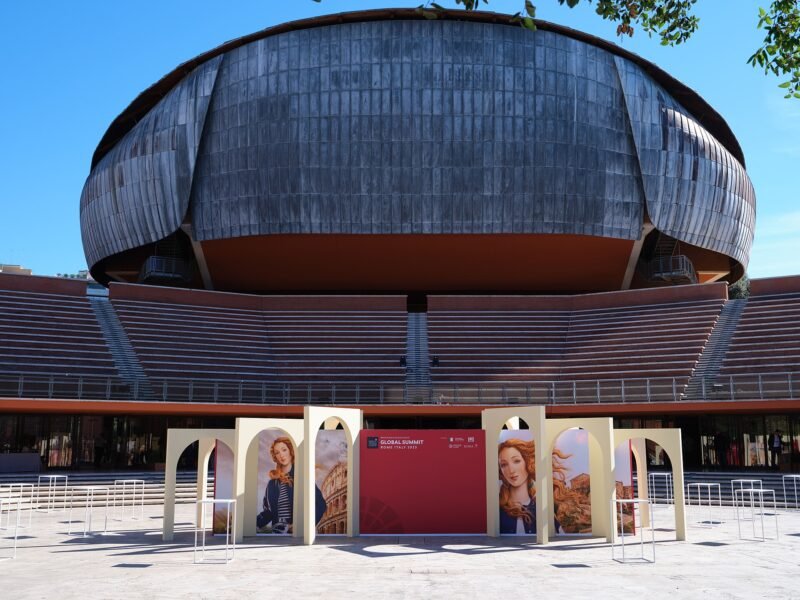
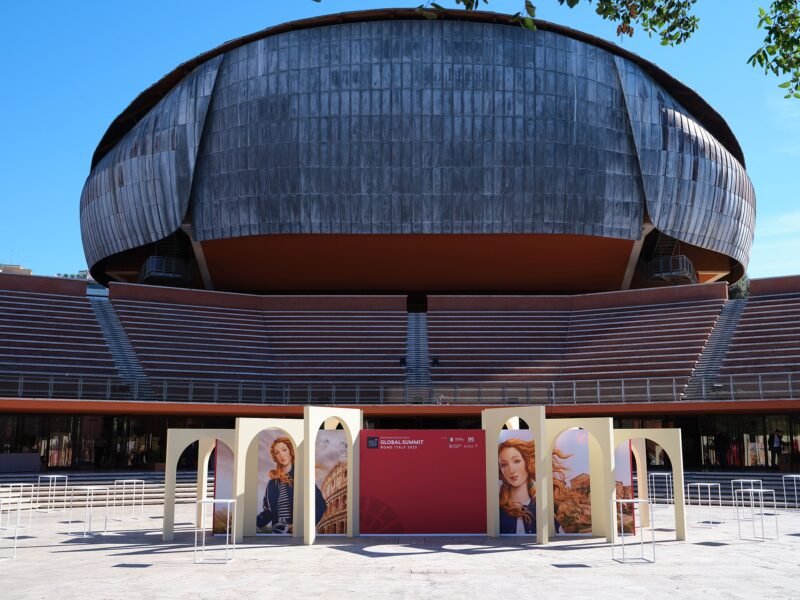
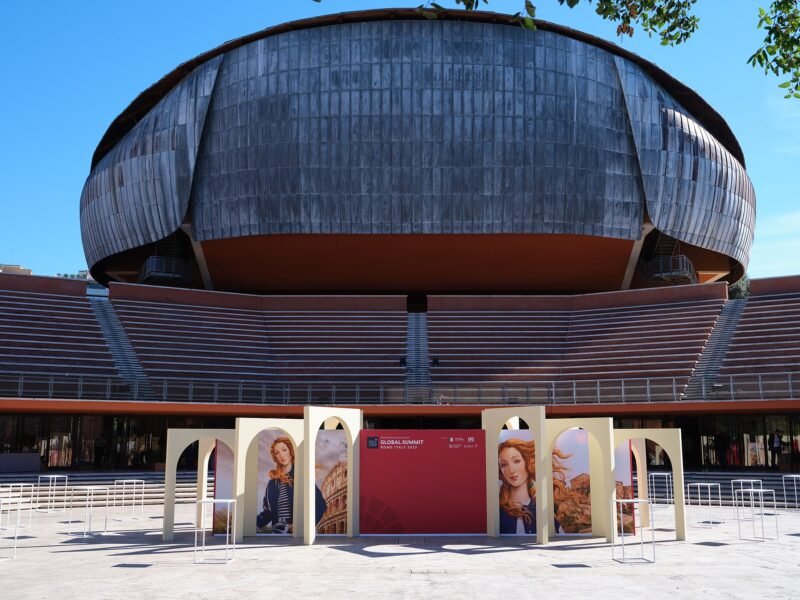
The Sala Santa Cecilia is the largest of the three concert halls of the Auditorium Parco della Musica Ennio Morricone: 2,756 seats, designed by Renzo Piano for symphonic music and inaugurated on December 21, 2002 with the Accademia Orchestra conducted by Myung-whun Chung.
The cherry wood ceiling
The ceiling is made of 26 shells in American cherry wood, each with an average surface of about 180 square meters. The hall works like a soundboard. The stage is wide, and around it, even behind the performers, runs a gallery with more seats. The reverberation time is 2.2 seconds, an unusual value in Italy.
A piano in a big hall
A recital in a hall of over 2,700 seats raises the question of sound: will the piano carry all the way to the back? Those who know the hall know that the sound intensity seems to drop until the 10th row and then stay constant. So you don't need to sit right up against the stage to hear well. To see the hands, though, what counts are the side seats of the gallery, on the keyboard side.
Architecture
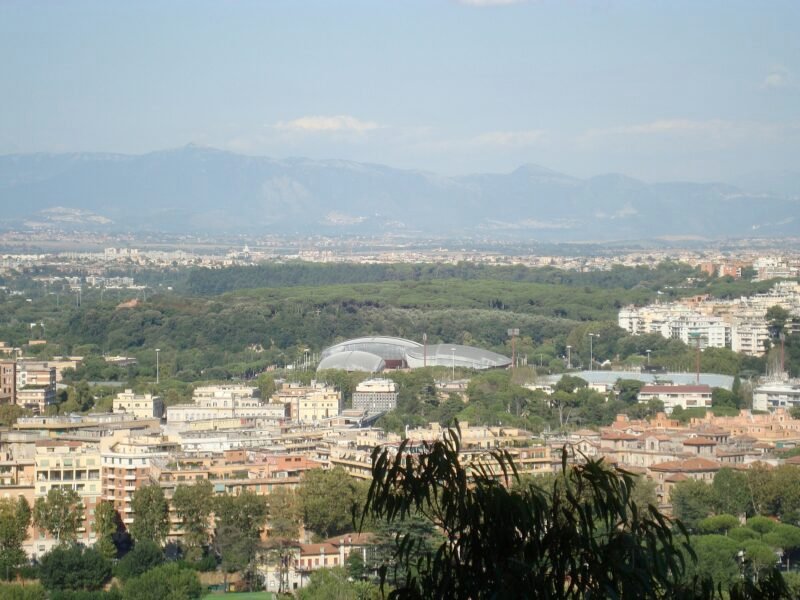
Renzo Piano won the 1993 competition and worked with the acoustician Jürgen Reinhold of the Müller-BBM firm in Munich and with the landscape architect Franco Zagari. Seen from outside, the three halls look like three big beetles clad in lead plates, arranged radially around the amphitheater named after Luciano Berio.
Something nobody tells you about Grigory Sokolov at Santa Cecilia, March 22, 2027
What the presentations don't say is that a Sokolov recital is not chosen for its program, because the program is often not known at the time of purchase. Anyone who waits to find out what he will play risks finding the hall sold out: for a pianist with this draw, on a single date, it's best to buy the ticket as soon as possible and find out the program afterward.
The second thing concerns the audience. Sokolov prefers the live concert to the record, and those who go to hear him know it: the recording doesn't replace the evening. In our opinion it is one of the evenings of the season in which the audience's silence is part of the experience, and in which even a hall of this size can gather around a single instrument.
The third is practical: March 22 is a Monday, a day when some neighborhood restaurants are closed for their day off. If you plan to eat out before or after the recital, you'd do well to check and book, or to count on the bar-restaurant inside the Auditorium.
The fourth: the Accademia's punctuality rule applies in a particular way to recitals. At a concert with orchestra a latecomer can enter between one piece and the next following the staff's directions. At a recital, those who stay outside listen from the listening rooms.
The Accademia Nazionale di Santa Cecilia and the chamber season
The Accademia Nazionale di Santa Cecilia, organizer of the recital, is one of the oldest musical institutions in the world: born as a congregation of musicians, today it has an academic body, a symphony orchestra and chorus, and an advanced teaching program. It has been a foundation since 1998. The music director is Daniel Harding.
The 2026/2027 chamber season
The Accademia's chamber season opened on October 14, 2026 with Lisette Oropesa at Teatro dell'Opera di Roma and has hosted, among others, Evgeny Kissin and András Schiff on November 9, the complete Beethoven quartets with the Quatuor Ebène, Sol Gabetta with Bertrand Chamayou and Jordi Savall with Vivaldi. Sokolov's recital is one of the piano peaks of the schedule.
The Accademia inside the Auditorium
The Auditorium is the Accademia's main home, where it also keeps the Bibliomediateca and the Museum of Musical Instruments. The full overview of the concerts is on the page for the 2026/2027 season of Santa Cecilia.
My advice for visiting Grigory Sokolov at Santa Cecilia, March 22, 2027
My advice is to buy the ticket right away, without waiting for the program, and to choose a central seat beyond the 10th row or a side seat in the gallery on the keyboard side. In the first case you favor the sound, in the second the view of the hands.
The second piece of advice concerns preparation. If you've never heard Sokolov, you can look for one of his live recordings, for example the 2008 Salzburg recital released by Deutsche Grammophon: the pianist himself considers the live concert the truest form of his art, and live recordings are the best way to approach him.
The third concerns arrival. It's best to be at the Auditorium at least 40 minutes before 20:00: ticket pickup, checks and the climb to the hall take time, and in a hall of this size lines form early. With the punctuality rule, being five minutes late means listening from the listening rooms.
The fourth concerns the week. If you love the piano, four days earlier you have Filippo Gorini's recital at Teatro Argentina, on Thursday, March 18, and in the same week Martha Argerich with Charles Dutoit at the Auditorium. Three pianists, three generations, in a few days.
How to get to the Auditorium for Sokolov
The solution suggested by the venue is metro line A to Flaminio, then tram 2 toward Piazza Mancini to the Apollodoro stop, on Via Flaminia, about 500 meters on foot from the entrance.
By bus
Lines 910 from Termini to Piazza Mancini, 53, 982 and 168 run near the Auditorium. The 910 is convenient for those staying near the station.
By train
From Piazzale Flaminio you can also take the Roma Nord railway and get off at Piazza Euclide, about 600 meters from the Auditorium.
By car
The Auditorium has two paid parking lots, both with spaces reserved for people with disabilities: one open-air with access from Viale Pietro de Coubertin and one covered multi-level with access from Viale de Coubertin and from Viale Maresciallo Pilsudski.
Getting back
The length of the recital is not published. Before going in, it's best to check on the transport company's route planner the last runs of tram 2 and of the night lines for your area.
Another well-known fact, yet rarely cited
It's well known that the Auditorium Parco della Musica bears the name of Ennio Morricone. It's cited less often that the naming is recent, from 2020, and that for almost 20 years the complex was called simply Auditorium Parco della Musica. Many Romans still call it that.
A second known and rarely cited fact concerns the history that led to this hall. In 1936 the Augusteo hall was demolished, and for over 60 years Rome was left without an auditorium built for symphonic music. Only in 1993 did the city announce the competition won by Renzo Piano, and only on December 21, 2002 was the Sala Santa Cecilia inaugurated. Sokolov's piano resonates in a hall the city waited for through two generations.
The third concerns Sokolov himself. It's known that he is one of the most admired pianists in the world. It's less often remembered that until the end of the 1980s he was little known outside the Soviet Union, despite his 1966 win at the Tchaikovsky Competition. His international fame came late, at 40 and over, with concerts like the London one in 1995. It's the career of a musician whom Western audiences discovered when he was already mature.
How to plan the evening of March 22
For Sokolov's recital the rule is to arrive at the Auditorium at least 40 minutes before 20:00. The foyer is the atrium shared by the halls and houses a bar, a coffee shop and a bookstore.
Before the concert
If you arrive early you can go up to the terrace that runs around the buildings: from there, between the Sala Santa Cecilia and the Sala Sinopoli, you can see the remains of the Roman villa discovered during the works. In the complex there is also the Museo Aristaios, with Giuseppe Sinopoli's archaeological collection.
The intermission
A recital usually includes an intermission. Its position and length are announced by the Accademia in the hall. There's enough time for a coffee at the foyer bar, not for leaving the complex.
After the concert
On the way out, the amphitheater and the terrace are the right place to wait for the crowd to thin out. If your car is in the Auditorium parking lots, you'd do well not to be in a hurry.
The right photo to take of Grigory Sokolov at Santa Cecilia, March 22, 2027
The right photo is taken before the start, from the gallery, with the piano alone at the center of the big stage of the Sala Santa Cecilia and the cherry wood shells of the ceiling above. It's an image that says it all: a single instrument, in a hall built for 100 musicians.
The second is taken outside, from the amphitheater, with Renzo Piano's three halls lit up. At the end of March, at 19:30, the sun has already set, and the three lead beetles stand out against the dark sky.
During the concert, phones off, no exceptions: in a hall as silent as that of a Sokolov recital, a lit screen can be seen from dozens of rows away. Even during the final applause the phone stays in your pocket: the best memory is that of listening.
If you want a photo of the artist, you can look on the Accademia's website for the official image of the concert, published on the evening's page.
Some important events that happened here in history
The Auditorium area has a longer history than the complex: during the works the remains of a Roman villa from the 3rd century BC emerged, built on the site of a small farm from the archaic era, from the 6th century BC. The discovery forced Renzo Piano to change the design. The finds are displayed in a museum created beneath the amphitheater.
The competition and the inauguration
In 1993 the city announced the competition for the new complex between the Olympic Village and the Flaminio stadium. On July 27, 1994 Renzo Piano's design won. On April 21, 2002 the Petrassi and Sinopoli halls were inaugurated, and on December 21 the Sala Santa Cecilia, with the Accademia Orchestra conducted by Myung-whun Chung.
Recent years
Since 2006 the Auditorium has hosted the Rome Film Festival. In 2020 it took the name of Ennio Morricone. In the current season the Sala Santa Cecilia welcomed the opening with Wagner's Siegfried conducted by Daniel Harding and the duo of Kissin and Schiff. On March 22, 2027 it welcomes Sokolov's recital.
Who has passed through Grigory Sokolov at Santa Cecilia, March 22, 2027
The first to come through the Sala Santa Cecilia was Myung-whun Chung, who inaugurated it on December 21, 2002 with the Accademia Orchestra. Luciano Berio, who led the Accademia in those years, gave his name to the amphitheater. Since then the conductors of the Orchestra of Santa Cecilia have passed through, from Antonio Pappano to Daniel Harding.
Among pianists, the hall has welcomed Evgeny Kissin, who performed Liszt's Second Concerto there with Pappano in 2019 and who returned in November 2026 in a duo with András Schiff. In March 2027, in the same week as Sokolov, Martha Argerich plays at the Auditorium.
Myung-whun Chung, the conductor who inaugurated this hall, also appears in Sokolov's biography. On March 22, 2027, though, Sokolov takes the stage without an orchestra and without a conductor: alone, as he prefers, in front of a hall designed for 100 musicians. Whoever is in the orchestra seats that night sees pass through here the pianist who at 16 received the gold medal from a jury chaired by Gilels.
Accessibility and children at Sokolov's recital
The Auditorium Parco della Musica declares a design conceived for full accessibility. People in wheelchairs can reserve their seat in the hall at 06 8024 1281, available every day from 11:00 to 18:00. Reserved seats are limited by law.
Inside the complex
The reception staff directs you to elevators and dedicated routes, and both parking lots have reserved spaces. For the discounts available for the individual concert, it's best to contact the Accademia's infoline.
With kids
A Sokolov recital is a demanding evening, with a program that isn't known in advance and a very silent audience. It suits kids who study the piano and are used to listening to music for long stretches. For the youngest, a shorter concert is better.
The neighborhood around the Auditorium
Around the Auditorium, less than a kilometer away, are MAXXI, the Ponte della Musica over the Tiber and Ponte Milvio.
MAXXI
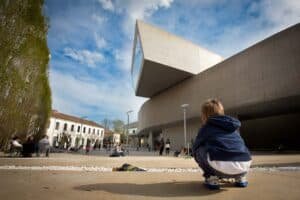
MAXXI, the national museum of 21st century arts on Via Guido Reni, is a few minutes' walk away: if you have a free afternoon you can visit it before the concert.
The Tiber
A little further on is the Ponte della Musica, the footbridge that links Flaminio to Foro Italico. Milvian Bridge can be reached in a few minutes and is the area of places open late.
Where to eat before or after the concert
Inside the Auditorium there are a bar and a coffee shop in the foyer and a bar-restaurant that also has street access. It's the most convenient option for those arriving straight from work.
In the neighborhood
Between the Olympic Village, Via Flaminia and Piazza Mancini there are pizzerias, trattorias and neighborhood bars. On Monday evenings some places are closed for their day off: it's best to check first.
Milvian Bridge
For dinner after the concert the widest choice is at Ponte Milvio, where many places stay open late even at the start of the week.
March 2027 in Rome: piano and the Beethoven bicentenary
Sokolov's recital falls in two particularly rich weeks for lovers of classical music in Rome, within the year of the bicentenary of Beethoven's death. The Accademia di Santa Cecilia celebrates the anniversary throughout the season.
The pianists of the season
In the Accademia's 2026/2027 season the piano has a central place: alongside Sokolov appear, among others, Mikhail Pletnev, Nikolai Lugansky, Igor Levit and the brothers Lucas and Arthur Jussen. Anyone who wants to build a path through different performers will find in the schedule generations and schools far apart from one another.
Beethoven at the end of March
Three days after Sokolov, from March 25 to 27, the same Sala Santa Cecilia hosts Manfred Honeck with the Accademia's Orchestra and Chorus, Beethoven's First Symphony and the oratorio Christ on the Mount of Olives. In April the Ninth conducted by Daniel Harding is scheduled.
The weather
At the end of March Rome's evenings are still cool and rain is possible: on the way out of the Auditorium, around 22:00, a light coat is almost always necessary.
Frequently asked questions about Sokolov in Rome
When does Grigory Sokolov play in Rome in 2027?
Grigory Sokolov plays on Monday, March 22, 2027 at 20:00 in the Sala Santa Cecilia of the Auditorium Parco della Musica Ennio Morricone, for the chamber season of the Accademia Nazionale di Santa Cecilia. It is a single date, at Viale Pietro de Coubertin 30.
How much do tickets for Sokolov at Santa Cecilia cost?
Tickets for Grigory Sokolov's recital at Santa Cecilia cost from 30 to 60 euros, depending on the section. They are bought from the Accademia's website, which links to the authorized presale circuit, at the Auditorium box office or at the box office at Via Vittoria 6.
What program does Sokolov play on March 22?
For Sokolov's recital on March 22, 2027 the official page of the Accademia di Santa Cecilia lists the program as to be determined. It's best to check the website in the weeks before the concert. The ticket can also be bought before the announcement.
What happens if I arrive late to a Santa Cecilia concert?
At the Accademia di Santa Cecilia concerts start on time: latecomers don't enter the hall and follow Sokolov's recital in the listening rooms, until they are full. It's best to arrive at least 40 minutes before 20:00.
How do you get to the Auditorium Parco della Musica?
The Auditorium Parco della Musica can be reached by metro line A to Flaminio and then tram 2 to the Apollodoro stop, about 500 meters from the entrance. Buses 910, 53, 982 and 168 also run nearby, and there are two paid parking lots.
Who is Grigory Sokolov?
Grigory Sokolov is a Russian pianist born in Leningrad in 1950, gold medalist at the 1966 Tchaikovsky Competition at 16, considered one of the greatest living pianists. He prefers live concerts to records and for years has devoted himself mainly to the solo recital.
Where is it best to sit for Sokolov's recital?
In the Sala Santa Cecilia the sound intensity stays constant after the 10th row: for the sound, a central seat beyond that row is best. To see Sokolov's hands, the side seats in the gallery on the keyboard side are better.
The final tip on Sokolov at Santa Cecilia
A pianist who prefers the hall to the record, a program you find out after buying the ticket, a hall built for the orchestra and filled by a solo piano: Grigory Sokolov's recital on March 22, 2027 is one of the most anticipated evenings of Rome's chamber season. My advice is to buy right away, arrive well in advance so as not to be left outside the hall, and listen in silence until the last encore.
Article written by the editorial team of Tour Leader Pro, contact them for Private/Corporate/V.I.P. Tours and Experiences.
Planning a trip to Rome? The English guides to visiting the city are on ItalyPlanner.com.
Contact Information
Nearby
 Museum of Musical Instruments (MUSA)100 m
- Auditorium Parco della Musica100 m
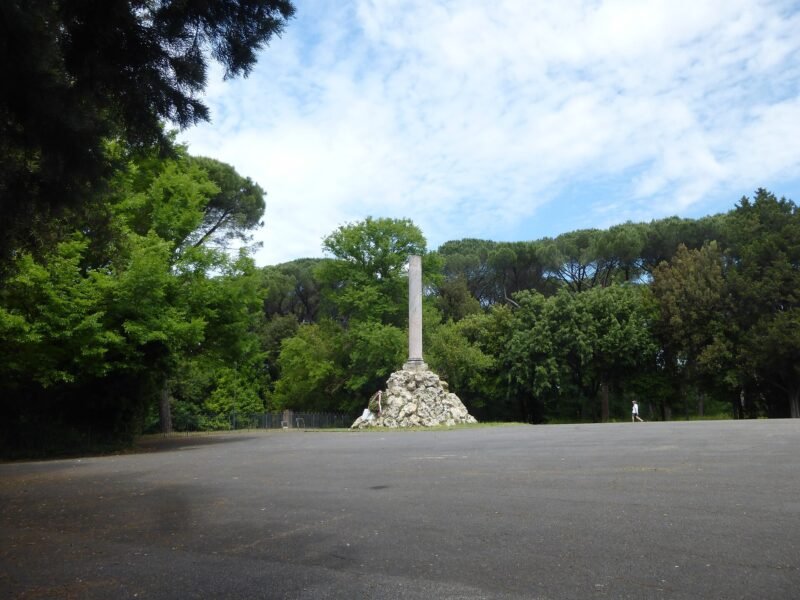
- Villa Glori500 m
- Fountain of Anna Perenna500 m
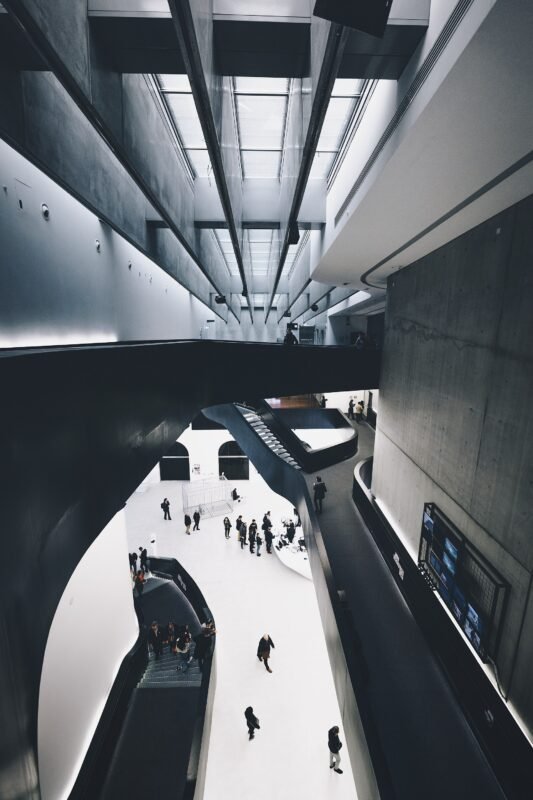
- MAXXI – National Museum of 21st Century Arts700 m
- Flaminio700 m
Upcoming events nearby
- Roma Jazz Festival 2026, November 1 to 24 at the Auditorium and Casa del Jazz100 m
- Evgeny Kissin and András Schiff at Santa Cecilia, November 9, 2026100 m
- Roma Gospel Festival 2026 at Auditorium Parco della Musica, December 13, 2026 to January 1, 2027100 m
- Santa Cecilia 2026/2027 Concert Season at Auditorium Parco della Musica, October 21, 2026 to June 5, 2027100 m



You might also like
- Daniel Harding Conducts Ravel and Debussy at Auditorium Parco della Musica, April 8, 9 and 10, 2027
- Argerich and Capuçon for Beethoven at Auditorium Parco della Musica, April 6, 2027
- Gustavo Gimeno and Frank Peter Zimmermann at Auditorium Parco della Musica, April 1, 2 and 3, 2027
- Manfred Honeck Conducts Beethoven at Santa Cecilia: March 25, 26 and 27, 2027
- Charles Dutoit and Martha Argerich at Auditorium Parco della Musica, March 18, 19 and 20, 2027
- Lucas and Arthur Jussen at Auditorium Parco della Musica, March 17, 2027