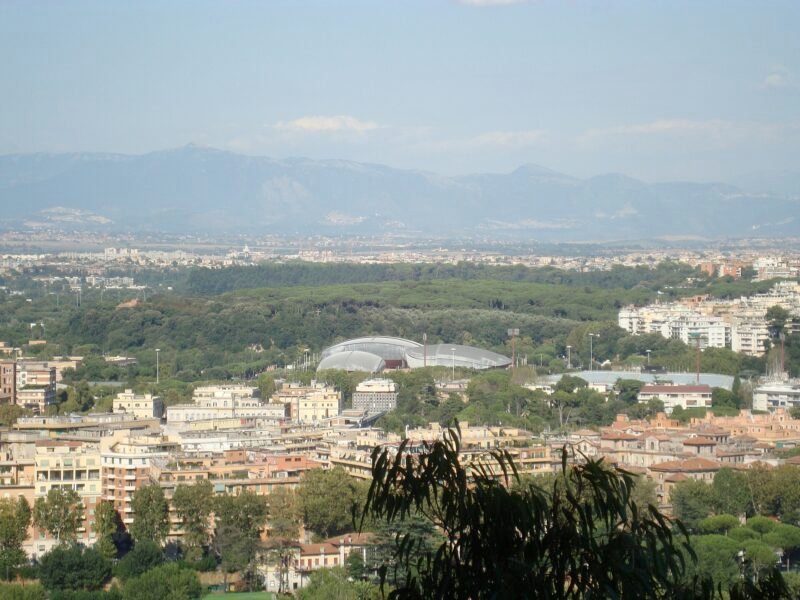
Gustavo Gimeno and Frank Peter Zimmermann at Auditorium Parco della Musica, April 1, 2 and 3, 2027
In short. Gustavo Gimeno conducts the Orchestra of the Accademia Nazionale di Santa Cecilia with Frank Peter Zimmermann on violin on Thursday, April 1, 2027 at 19:30, Friday, April 2 at 20:00 and Saturday, April 3 at 18:00, in Sala Santa Cecilia…
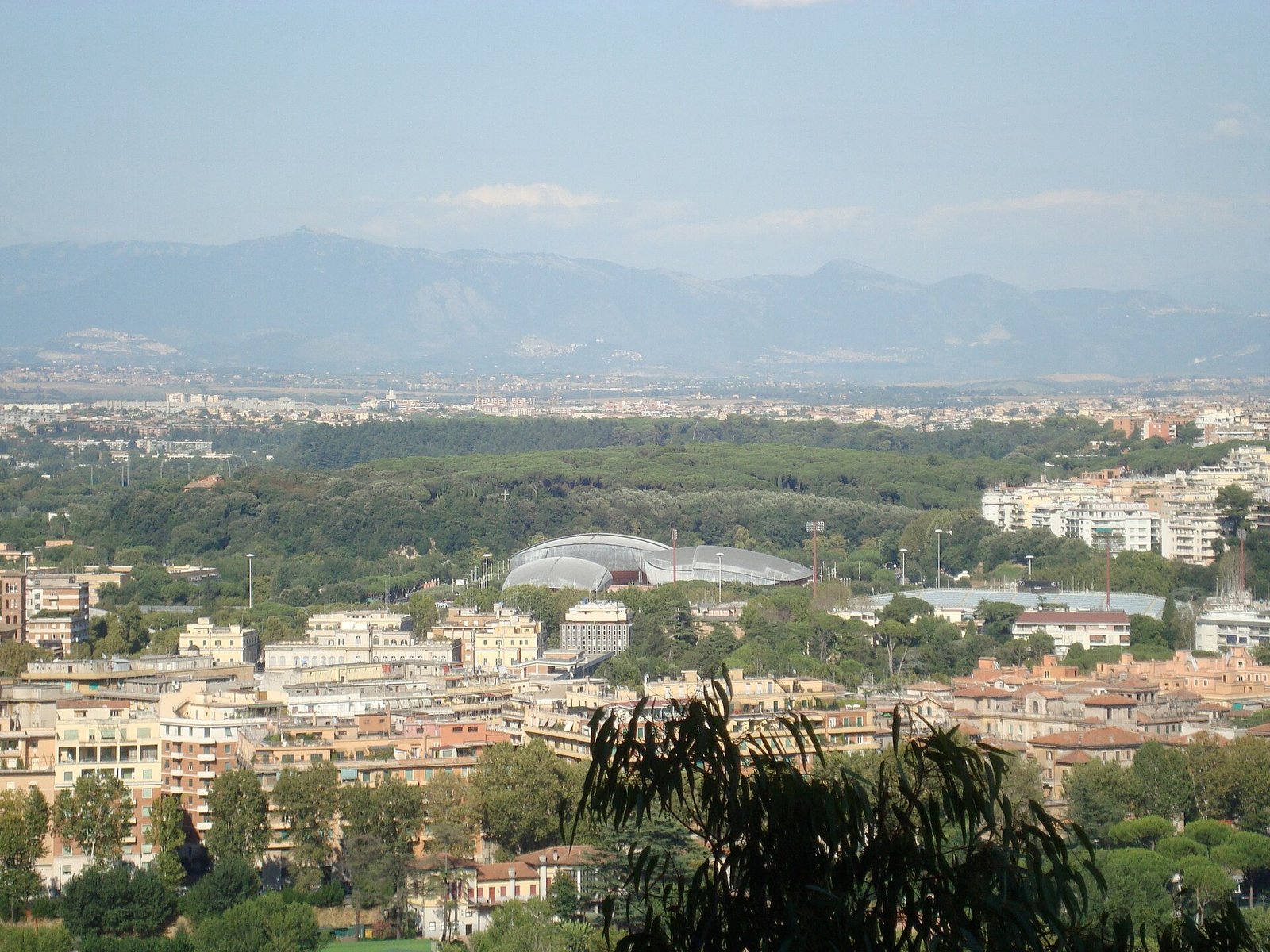
Gustavo Gimeno conducts the Orchestra of the Accademia Nazionale di Santa Cecilia with Frank Peter Zimmermann on violin on Thursday, April 1, 2027 at 19:30, Friday, April 2 at 20:00 and Saturday, April 3 at 18:00, in Sala Santa Cecilia of Auditorium Parco della Musica Ennio Morricone, at Viale Pietro de Coubertin 30. The program features the world premiere of Viaggio by Carlo Boccadoro, a new commission from the Accademia, Paul Hindemith's Violin Concerto and Rimsky-Korsakov's Scheherazade. You get to the Auditorium by Metro Line A to Flaminio and then Tram 2 to the Flaminia/Reni or Apollodoro stops, or by Bus 910 from Termini. Tickets cost from €23 to €54, in six sections, and are bought at the Auditorium box office, at the one on Via Vittoria 6 or on the presale network authorized by the Accademia, starting from the official concert page. For concerts from March to the end of the season, presale opens on January 12, 2027. The hall doors close at the start time.
A Spanish conductor who started as a percussionist in the Concertgebouw orchestra, a German violinist who has played with the world's great orchestras for more than 40 years, an Italian composer who signs a new page for the Accademia. Three different stories for a program that goes from a world premiere to one of the best-loved titles of the symphonic repertoire.
Gimeno and Zimmermann at Santa Cecilia: the dates
The concert of Gustavo Gimeno and Frank Peter Zimmermann has three performances, following the usual formula of the Accademia's symphonic season: Thursday, Friday and Saturday, each tied to a subscription series.
Thursday, April 1, 19:30
The first evening is that of series G-G1. The 19:30 time is designed for people leaving work who want to get home at a reasonable hour: with a program of this size you come out in the middle of the evening, without staying up into the small hours.
Friday, April 2, 20:00
The Friday performance, series V-V1, starts half an hour later. It's the best evening for those who want to dine out after the concert, in the Flaminio neighborhood or at Ponte Milvio.
Saturday, April 3, 18:00
On Saturday, series S-S1, it starts at 18:00. It is the most convenient performance for people coming from out of town or bringing kids: you come out at dinnertime and the whole evening remains for the rest.
The hall
All three evenings are in Sala Santa Cecilia, the largest in the Auditorium, the usual home of the Accademia's symphonic season.
The program: Boccadoro, Hindemith, Rimsky-Korsakov
The program of Gimeno and Zimmermann lines up three very different pieces: a world premiere, a 20th-century concerto written in wartime and a 19th-century Russian symphonic suite among the most performed in the world.
Carlo Boccadoro, Viaggio
The evening opens with Viaggio by Carlo Boccadoro, in its world premiere: it is a new commission from the Accademia di Santa Cecilia. Before the debut, only the title of the piece is known. Listening will tell the rest. For the audience it is a rare chance to hear a score that nobody has ever heard in a hall.
Paul Hindemith, Violin Concerto
At the center of the program is Hindemith's Violin Concerto, entrusted to Frank Peter Zimmermann. The Accademia's presentation places it in the midst of World War II, at the start of the composer's exile, and describes it as a work in the line of the classical tradition, built on a tight dialogue between soloist and orchestra, with great rhythmic precision and a rich variety of colors.
Rimsky-Korsakov, Scheherazade
The evening closes with Scheherazade, the symphonic suite Op. 35 that Nikolai Rimsky-Korsakov composed in 1888 inspired by the Arabian Nights. It is a score famous for the richness of its orchestration, and for the solo violin theme, accompanied by the harp, that gives voice to the narrator: after Hindemith's concerto, it creates a curious play of mirrors between two violin protagonists in the same evening.
Scheherazade: the story of a score
Rimsky-Korsakov wrote Scheherazade in the summer of 1888: the notes in the autograph indicate that the composition was completed between June 4 and August 7 of that year.
A winter with Prince Igor
The idea was born in the winter of 1887, while the composer was working to complete Prince Igor, the opera left unfinished at the death of his friend Alexander Borodin. Rimsky-Korsakov then decided to write an orchestral piece based on images from the Arabian Nights and on separate episodes, without tight narrative links.
The dacha on the lake
After the first sketches, the composer moved with his family to a dacha on Lake Cheremenets, not far from present-day Luga, in the Leningrad region. That house was destroyed during World War II. In the same summer Rimsky-Korsakov also completed the Great Russian Easter Overture.
The premiere in St. Petersburg
The suite was first performed in St. Petersburg on October 28, 1888, conducted by Rimsky-Korsakov himself. The grave theme of the unison strings that opens the first movement represents the sultan Shahriyar. Right after, a few chords from the woodwinds introduce the theme of the solo violin with the harp, who is the narrator.
The removed titles
The composer had thought of calling the four movements Prelude, Ballad, Adagio and Finale. Then he chose titles taken from the tales, deliberately vague, and in a later edition he removed them altogether. He wanted the listener to take home the impression of an Oriental tale made of many wonders, without being tied to a precise plot. The name of Scheherazade stayed, because it evoked the world of the Arabian Nights for anyone.
Who is Gustavo Gimeno, the conductor
Gustavo Gimeno was born in Valencia in 1976 and is now music director of the Toronto Symphony Orchestra and of the Teatro Real in Madrid, after 10 seasons at the helm of the Orchestre Philharmonique du Luxembourg.
From percussion to the podium
The son of a clarinetist, Gimeno studied percussion and piano. In 2001 he joined the percussion section of the Royal Concertgebouw Orchestra of Amsterdam, and from April 2002 he was its principal percussionist. In those same years he studied conducting at the Amsterdam Conservatory and took advanced courses with Ed Spanjaard, Iván Fischer and Hans Vonk.
The years with Jansons and Abbado
Mariss Jansons encouraged him and wanted him as assistant at the Concertgebouw. Among his mentors are also Bernard Haitink and Claudio Abbado, whom Gimeno assisted with the Orchestra Mozart of Bologna and with the Lucerne Festival Orchestra. Between 2009 and 2013 he led two Amsterdam orchestras, the Amsterdams Symphonie Orkest Con Brio and Het Orkest Amsterdam, before leaving the Concertgebouw to devote himself only to conducting.
The 2014 turning point
International fame arrived in February 2014, when he replaced Jansons at the helm of the Concertgebouw in a concert that included the Dutch premiere of Magnus Lindberg's Second Piano Concerto. The same year he replaced Lorin Maazel on the podium of the Munich Philharmonic.
Luxembourg, Toronto, Madrid
From 2015 to 2025 he was music director of the Orchestre Philharmonique du Luxembourg, with which he made many recordings for the Pentatone label: Bruckner, Ravel, Shostakovich, Mahler, Debussy, Stravinsky. In 2018 he conducted the Toronto Symphony Orchestra for the first time. It chose him as music director from 2020 and renewed his contract through 2030. From the 2025-2026 season he is music director of the Teatro Real in Madrid.
A curiosity about Luxembourg
Among the soloists who have played with Gimeno in Luxembourg, the encyclopedia mentions Isabelle Faust, Leonidas Kavakos, Anja Harteros and Frank Peter Zimmermann himself: the Roman collaboration therefore has behind it a mutual acquaintance.
Who is Frank Peter Zimmermann, the violinist
Frank Peter Zimmermann was born in Duisburg on February 27, 1965 and is one of the best-known German violinists of his generation, a regular guest of the great international orchestras for more than 40 years.
Childhood and debut
He started playing at age five with his mother, a violin teacher, and at 10 gave his first concert with orchestra. In 1976 he won the Jugend musiziert competition and became a student of Valery Gradov at the Folkwangschule in Essen. His official debut came in 1981 with the Berlin Philharmonic in Mozart's Concerto K 216. He then completed his studies with Saschko Gawriloff and Herman Krebbers.
The orchestras
Among the collaborations biographies mention: the New York Philharmonic, the Boston Symphony, the Chicago Symphony with Manfred Honeck, the Berlin Philharmonic with Bernard Haitink, the Philharmonia with Wolfgang Sawallisch, the Bavarian Radio Orchestra with Mariss Jansons. In February 2003, with the Berlin Philharmonic conducted by Peter Eötvös, he gave the world premiere of en sourdine, Matthias Pintscher's violin concerto.
Chamber music
Since 1998 his regular recital partner has been the Italian pianist Enrico Pace. He has also played with Heinrich Schiff, Piotr Anderszewski and Christian Zacharias. In 2007 he founded the Zimmermann Trio with Antoine Tamestit on viola and Christian Poltéra on cello. In 1990 he won the international prize of the Accademia Musicale Chigiana in Siena.
Recordings
He recorded for EMI Classics the major violin concertos and many works for solo violin and for violin and piano. He then recorded for BIS, Decca, Sony and ECM. He lives in Cologne.
Zimmermann's violin: a Stradivari story
From 2001 to 2015 Frank Peter Zimmermann played a 1711 Stradivari known as the Lady Inchiquin, which once belonged to Fritz Kreisler.
The interrupted loan
The instrument had been lent to him by the WestLB bank of Düsseldorf. In February 2015, when the contract expired, the legal successor of the failed bank asked for it back: an affair that stirred debate in the German music world.
The Général Dupont and the return
In January 2016 Zimmermann received on loan the 1727 Général Dupont Stradivari, also known as the Grumiaux because it belonged to the Belgian violinist Arthur Grumiaux. In July of the same year he regained possession of the Lady Inchiquin. Which of the two instruments he will bring to Rome has not been announced.
Who is Carlo Boccadoro, the author of the world premiere
Carlo Boccadoro was born in Macerata on July 20, 1963: a composer, conductor and musicologist, he is considered among the best-known contemporary Italian composers.
Training
With diplomas in piano and percussion instruments, he studied jazz improvisation with Giorgio Gaslini. He writes symphonic and chamber music, for theater and for dance, and collaborates regularly with Moni Ovadia.
Sentieri selvaggi
With Filippo Del Corno and Angelo Miotto he founded Sentieri selvaggi, a contemporary music ensemble in residence at Teatro Elfo Puccini in Milan. Since 2018 he has been artistic director of the Concerti della Normale in Pisa, where he succeeded Jeffrey Swann.
The writer
Alongside composition there is the popularizer: among his books are Musica Coelestis, conversations with 11 great figures of today's music, the Lunario della musica, Analfabeti sonori, Bach e Prince. Vite parallele and a book on Franco Battiato. Those who have read them know that Boccadoro writes about jazz, pop and classical without hierarchies: a useful clue for approaching Viaggio.
A curiosity about Gustavo Gimeno and Frank Peter Zimmermann at Auditorium Parco della Musica, April 1, 2 and 3, 2027
The curiosity concerns the conductor's path. Gustavo Gimeno did not reach the podium through piano or violin, as often happens, but through percussion: for more than 10 years he played timpani, cymbals and drums in one of the most celebrated orchestras in the world, the Concertgebouw of Amsterdam, where he was principal percussionist from 2002.
It's a detail that, for this program, carries precise weight. Scheherazade is famous for exactly the colors of the orchestra and for a rhythmic vitality that, in late 19th-century symphonic music, was by no means a given. A conductor who spent years at the back of the orchestra, behind the timpani, knows from the inside the weight of every stroke and every accent.
And there is a second detail, on the composer's side. Carlo Boccadoro too has a diploma in percussion instruments, as well as in piano. The conductor and the author of the world premiere thus come from the same family of instruments: a coincidence that makes it even more interesting to hear how Viaggio will treat rhythm and timbre.
Finally, rhythm is the keyword for Hindemith's Concerto too, which the Accademia describes precisely for its rigorous rhythmic precision. In our opinion it is the key to listening to the whole evening.
Sala Santa Cecilia and the Auditorium
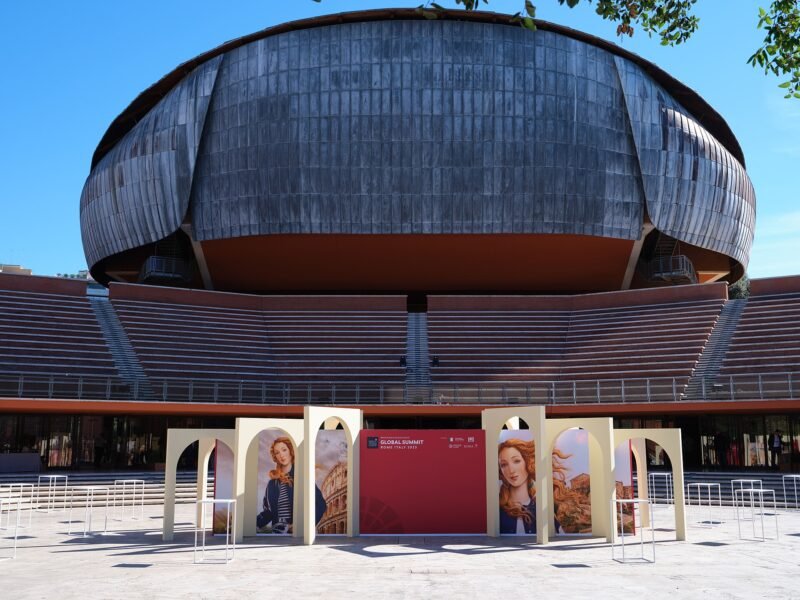
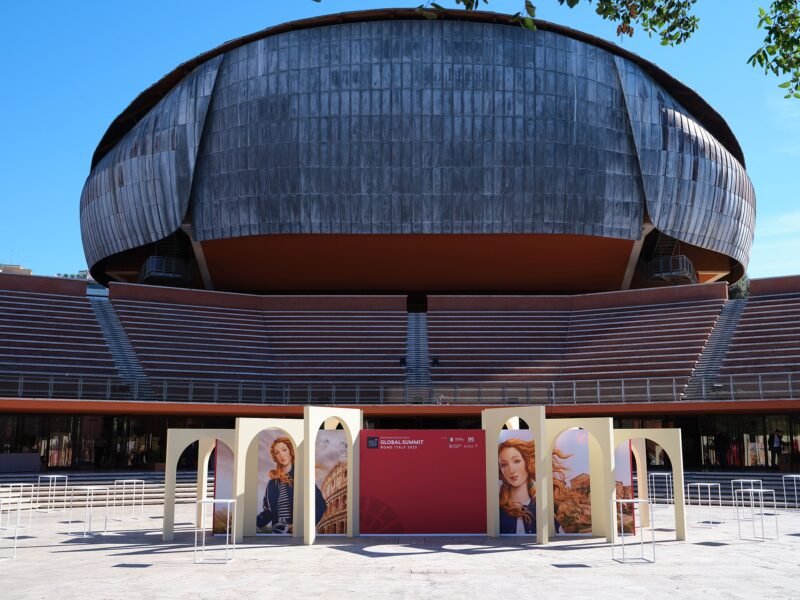
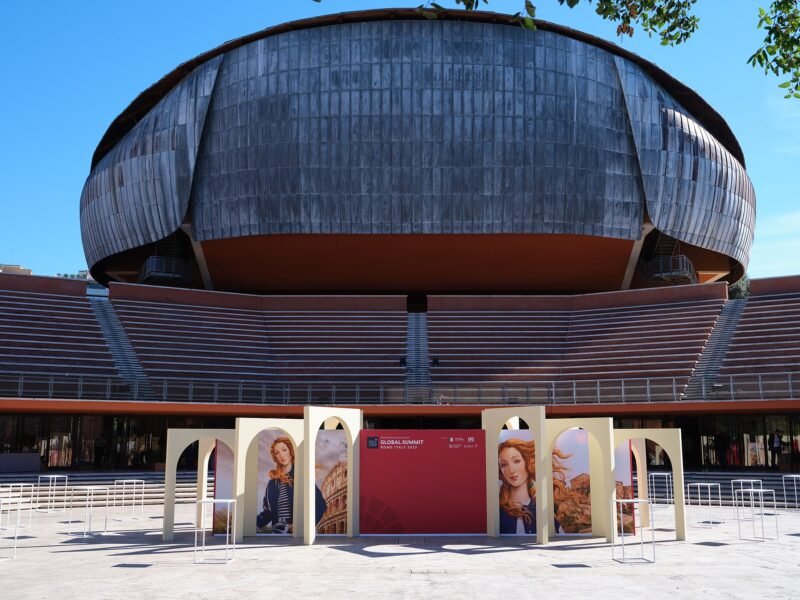
Since 2003 the Accademia's symphonic season has taken place in Sala Santa Cecilia, the largest of the three halls designed by Renzo Piano for Auditorium Parco della Musica Ennio Morricone, with 2,756 seats.
The cherry-wood shells
Above the orchestra open 26 shells of American cherry wood, each of about 180 square meters. The hall's reverberation time is 2.2 seconds. It's a generous acoustic, which suits a large Romantic orchestra like that of Scheherazade.
Where to sit
Those who frequent the hall know that sound intensity drops up to the 10th row and then stays stable. For a concert with a solo violin, the central orchestra beyond the 10th row and the front gallery give the best balance between soloist and orchestra. The gallery behind the stage lets you watch the conductor's gesture up close, but sacrifices the direct sound of the violin.
The architecture
Outside, the three lead-clad volumes rest on a brick base and open in a fan around the cavea named after Luciano Berio. Piano won the competition in 1993. With him worked the acoustician Jürgen Reinhold of the Müller-BBM firm and the landscape architect Franco Zagari. The general entry on the complex is that of Auditorium Parco della Musica.
Something nobody tells you about Gustavo Gimeno and Frank Peter Zimmermann at Auditorium Parco della Musica, April 1, 2 and 3, 2027
What few people know is that, in Scheherazade, the protagonist violin is not Zimmermann's. The voice of the narrator, the theme that returns between one tale and the next, is entrusted to a solo violin of the orchestra, accompanied by the harp: a tender and sinuous melody, among the most recognizable in the symphonic repertoire, which in the score belongs to the orchestra and not to a guest soloist.
In the same evening, then, you hear two solo violins in two opposite roles. In the first part the guest soloist, in front of the orchestra, in a concerto built on confrontation. In the second the house violin, seated at its stand, telling Scheherazade's stories over the harp's chords. Whoever pays attention to this passing of the baton experiences the concert differently.
The second thing concerns punctuality. The Accademia closes the doors at the start time, and latecomers follow the concert in the listening rooms, until seats run out. With a world premiere as the opener, arriving late means missing precisely the piece nobody has ever heard: a risk not to be run.
Third: the movement titles. Rimsky-Korsakov removed them in a later edition, but concert programs often print them. They shouldn't be taken literally: the composer wanted a tale, not a plot.
Tickets for Gimeno and Zimmermann: prices and discounts
Tickets for the concert of Gustavo Gimeno and Frank Peter Zimmermann cost from €23 to €54, in six sections: €54, €47, €37, €35, €30 and €23. Presale for concerts from March 3, 2027 to the end of the season opens on January 12, 2027.
Authorized resellers
The Accademia lists as the only authorized resellers the presale network linked to the official concert page, with its points of sale, the box office of Auditorium Parco della Musica and the one on Via Vittoria 6, near Piazza del Popolo. From the official page, under each date, the purchase button leads to the corresponding sales page. The Accademia is not responsible for surcharges applied by unauthorized resellers.
Information
The Accademia's infoline is 06 8082058. For the ticket office write to biglietteria@santacecilia.it, for general information to info@santacecilia.it. The full notices are published on the Accademia's website.
Young people
The Accademia has a page dedicated to discounts for young people. According to the conditions published for the season, under-26s get a discount on concerts and kids under 14 accompanied by an adult pay a token fare: conditions and availability should be checked at the time of purchase.
How to get to Auditorium Parco della Musica
Auditorium Parco della Musica Ennio Morricone is at Viale Pietro de Coubertin 30. The metro doesn't reach the entrance: you combine Metro Line A and Tram 2, or take a direct bus.
Metro and tram
Take Metro Line A to Flaminio. From Piazzale Flaminio, Tram 2 goes up Via Flaminia to the Flaminia/Reni or Apollodoro stops, from where you walk across the Villaggio Olimpico in a few minutes.
Bus
Bus 910 connects Piazza dei Cinquecento, in front of Termini, to the Auditorium without changes. Bus 53 connects Piazza Mancini and the center, Bus 982 Viale XVII Olimpiade area, Bus 168 Tiburtina station on weekdays. For the Saturday performance it's best to check schedules on the Rome public transport trip planner.
By car
The stretch of Viale Pietro de Coubertin in front of the entrance is closed to traffic, and the complex's paid parking lots have limited spaces: on concert nights the streets of the Villaggio Olimpico fill up early. It's best to leave well ahead, especially on Thursday and Friday, when evening traffic toward Flaminio is heavy.
My advice for visiting Gustavo Gimeno and Frank Peter Zimmermann at Auditorium Parco della Musica, April 1, 2 and 3, 2027
My advice is to arrive early and not miss the beginning. The opening piece is Boccadoro's Viaggio, in its world premiere: a score you can't listen to beforehand, nor find on a record. With the doors closing at the start time, it's the only part of the program that, once missed, can't be recovered.
Second piece of advice: listen to Scheherazade first in a good recording, paying attention to the solo violin theme that returns at the start of each movement. Recognizing it in the hall, and following how it changes from one tale to the next, makes the second part of the evening much richer. For Hindemith, on the other hand, it's best to arrive without expectations: the Violin Concerto is less often performed, and discovery is part of the pleasure.
Third: the seat. With a violin soloist, the central orchestra beyond the 10th row or the front gallery are the most balanced choices. Anyone looking for the thrill of the conductor's gesture can try the gallery behind the stage, knowing that the soloist's sound will arrive from behind.
Fourth: the performance. Saturday at 18:00 is the most relaxed evening, and leaves time for a calm dinner. Thursday at 19:30 has the appeal of the world premiere, because the first night really is the first time.
Another well-known fact, yet rarely mentioned
It's well known that Scheherazade is one of Rimsky-Korsakov's most popular works. Less often mentioned is that the composer did all he could not to tie it to a precise story. The movement titles, chosen after hearing the opinion of Anatoly Lyadov and other friends, were deliberately vague, so as not to associate the music with specific tales or voyages of Sinbad. Only in the finale does the epigraph refer to the adventure of Prince Ajib.
In a later edition Rimsky-Korsakov removed the titles altogether. His wish, he wrote, was that the listener, if the piece pleased him as symphonic music, would take home the impression of an Oriental tale made of many wonders, and not of four pieces played one after another. The narrator's name stayed for a simple reason: it evoked the Arabian Nights for anyone.
It's a fact that changes the way of listening. Instead of looking in the hall for Sinbad's ship or the young prince and young princess, it's best to let the colors of the orchestra carry you, as the author asked. The second fact little cited concerns the genesis: Scheherazade was born while Rimsky-Korsakov was completing his friend Borodin's Prince Igor, left unfinished at his death. Two Russian masterpieces of the late 19th century grew on the same worktable.
How to plan the evening
For the Gimeno and Zimmermann concert it's best to arrive at the Auditorium at least 40 minutes early: ticket pickup, checks, coat check and the climb to the hall take time.
Before going in
The foyer shared by the halls has a bar, a café and a well-stocked music bookstore. From the terrace that runs around the buildings you can see the remains of the Roman villa that emerged during construction: a good way to use 10 minutes of waiting.
How long it lasts
The concert page doesn't indicate the total running time. With a world premiere, a solo concerto and a four-movement symphonic suite, it's a complete symphonic evening, with an intermission.
On the way out
The cavea is the space where the audience files out. Those who left their car on the side streets of the Villaggio Olimpico should expect a few minutes' wait. Those going back by Tram 2 will find it a few minutes' walk away.
The right photo to take at Gustavo Gimeno and Frank Peter Zimmermann at Auditorium Parco della Musica, April 1, 2 and 3, 2027
During the concert the phone stays off: in Scheherazade the violin and woodwind solos are often in pianissimo, and a lit screen disturbs the whole hall. The photo is taken before and after.
The best one, in early April, is the exterior. At 18:00 on Saturday there is still light, and from the top of the cavea the three lead volumes of the Auditorium, with the green of Villa Glori behind, can be photographed in the warm light of late afternoon. On Thursday and Friday, at the 19:30 and 20:00 entrance, the sunset light on the metal shells offers a different, softer image.
Inside the hall, before the start and if staff allow it, the ready stage with chairs, stands and podium under the cherry-wood shells of the ceiling conveys the scale of Sala Santa Cecilia better than any portrait. During the final applause, without flash, you can photograph the bows of Gimeno and Zimmermann. And for those who love details, the program sheet with the title Viaggio and the words world premiere is the rarest keepsake of the evening.
Some important events that happened here in history
Beneath the Auditorium lies a very ancient history: during construction, the remains of a Roman villa from the 3rd century BC emerged, built in place of a small Archaic farm from the 6th century BC. To preserve them Renzo Piano moved two of the three volumes westward, almost to the Corso di Francia viaduct, and the finds are displayed in a small museum under the cavea.
The musical history of the place begins with a loss: in 1936 the Augusteo, Rome's great concert hall, was demolished, and for more than 60 years the city had no auditorium built for symphonic music. In 1992 the city chose the Villaggio Olimpico area, and in 1993 Piano won the competition.
Sala Sinopoli opened on April 21, 2002, Sala Santa Cecilia on December 21, 2002 with the Accademia orchestra conducted by Myung-Whun Chung. Since 2003 the Auditorium has been the permanent home of the Accademia's season, since 2006 of the Festa del Cinema di Roma, and since 2020 it has borne the name of Ennio Morricone. The world premieres commissioned by the Accademia, like Boccadoro's Viaggio, add a page to this history every season.
Who has passed through Gustavo Gimeno and Frank Peter Zimmermann at Auditorium Parco della Musica, April 1, 2 and 3, 2027
Sala Santa Cecilia has seen on the podium the Accademia's music directors, from Myung-Whun Chung, who inaugurated it, to Antonio Pappano and Daniel Harding. Goffredo Petrassi attended the opening of Sala Sinopoli, and Luciano Berio gave his name to the cavea. Among the Accademia's guest soloists over the years have been Viktoria Mullova, Andrei Gavrilov, Evgeny Kissin, Gidon Kremer and Frank Peter Zimmermann himself.
The 2026-2027 season, presented by the Accademia, lines up on the podium, among others, Daniel Harding, Kirill Petrenko, Alexander Soddy, Antonio Pappano, Fabio Luisi, Manfred Honeck, Semyon Bychkov and Gustavo Gimeno. Among the soloists, next to Zimmermann, are Daniil Trifonov, Lisa Batiashvili, Beatrice Rana and Rudolf Buchbinder. The season opens in October with Wagner's Siegfried conducted by Harding.
In the biographies of the three protagonists in April pass the names of Mariss Jansons, Claudio Abbado and Bernard Haitink for Gimeno, of the Berlin Philharmonic and Enrico Pace for Zimmermann, of Giorgio Gaslini and Moni Ovadia for Boccadoro. In our opinion it is precisely this network of encounters that makes the evening interesting: three different paths that meet again, for three nights, on the same stage.
Accessibility and kids
The Accademia offers discounts for people with disabilities and dedicated fares for wheelchair users, with free admission for the companion, while seats last. The updated conditions are in the Convenzioni e riduzioni section of the official website.
Reservations
People who cannot walk must reserve in advance by contacting the ticket office at 06 8082058 or at biglietteria@santacecilia.it. For the April 1 concert it's best to act in mid-March, without leaving it to the last minute.
The route
The hall is built on a raised floor, above the Roman villa, and the galleries are served by few elevators: arriving early avoids lines.
With kids
Scheherazade is one of the best titles for introducing a young person to symphonic music: the Arabian Nights, the sea, the ship, the feast of Baghdad. Whoever studies a string instrument will find in the evening's two solo violins a double model. The Saturday performance at 18:00 is the best suited to families.
The Auditorium neighborhood
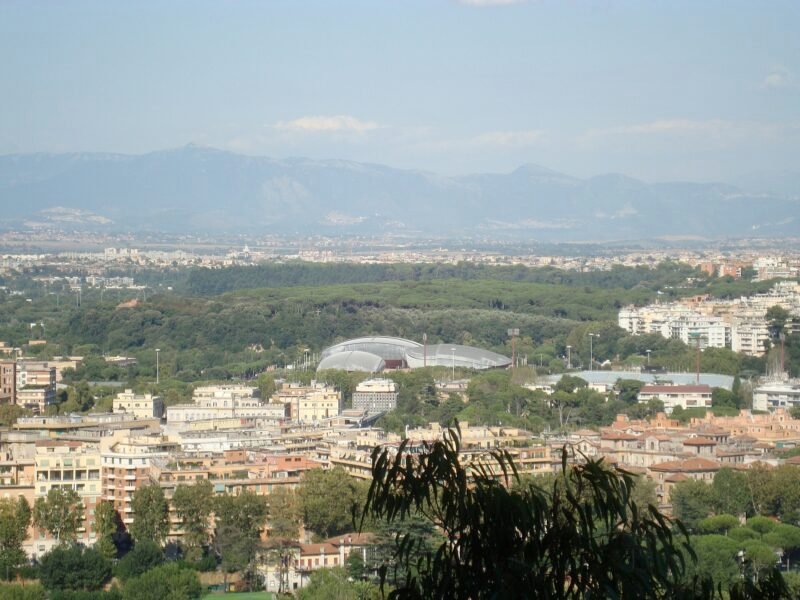
The Auditorium extends over about 55,000 square meters between Villa Glori, the Villaggio Olimpico, the Corso di Francia viaduct and Viale Maresciallo Pilsudski, in a quadrant of 20th-century Rome where contemporary architecture lives alongside greenery.
MAXXI
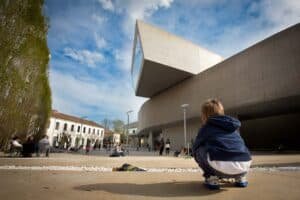
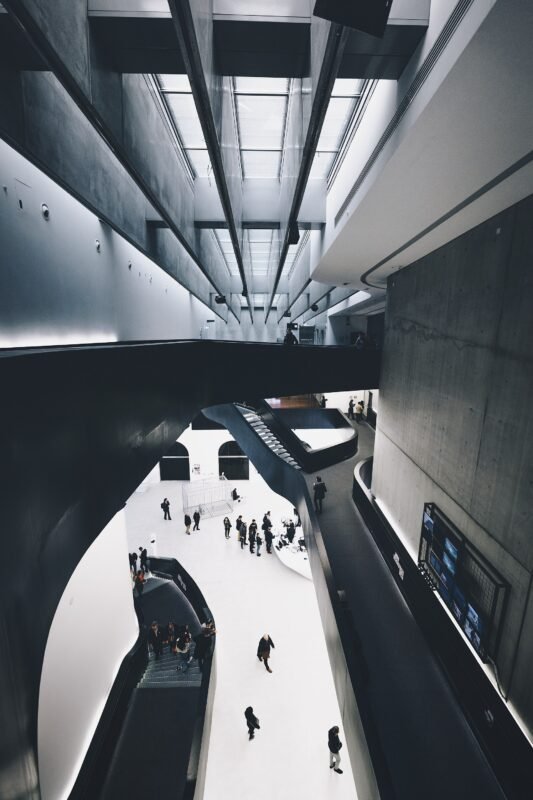
Toward Via Guido Reni, a few minutes' walk away, MAXXI by Zaha Hadid forms with the Auditorium the most important pair of contemporary architecture in the city. Those coming for the Saturday performance can devote the early afternoon to the museum.
Milvian Bridge
A little farther north, Milvian Bridge is the evening meeting point of north Rome, with the widest offering of venues for after the concert.
Villa Ada
Across Via Salaria, Villa Ada is one of the city's great parks: on an April day, a walk in the greenery before the concert is a pleasant way to arrive at the hall.
Where to eat before or after the concert
Inside the Auditorium there are a bar and café in the foyer and a restaurant-bar with an entrance from the street too, handy for the Thursday concert at 19:30.
Before
Between the Villaggio Olimpico, Via Flaminia and Piazza Mancini there are pizzerias, trattorias and neighborhood bars. With the Saturday start at 18:00, a substantial afternoon snack beforehand and dinner afterward is the most convenient formula.
After
After the Friday performance, Ponte Milvio offers venues open late. Toward Piazzale Flaminio and the Tridente the choice is that of the historic center, pricier.
April in Rome
Early April is one of the most pleasant times of the year in Rome: longer days, mild temperatures, parks in bloom. It's also a period of heavy tourist traffic, and anyone coming from out of town for the concert does well to book lodging in good time.
The evenings can still be cool, especially on the way out of the Auditorium, which stands in an open and breezy area at the foot of the Parioli: a jacket is a must. Anyone who builds a stay of a few days around the concert can contact Tour Leader Pro, which organizes tailor-made private tours and experiences.
Frequently asked questions about Gimeno and Zimmermann at Santa Cecilia
When do Gimeno and Zimmermann play at Santa Cecilia?
The concert of Gustavo Gimeno and Frank Peter Zimmermann with the Orchestra of the Accademia di Santa Cecilia is scheduled for Thursday, April 1, 2027 at 19:30, Friday, April 2 at 20:00 and Saturday, April 3 at 18:00, in Sala Santa Cecilia of Auditorium Parco della Musica Ennio Morricone. The doors close at the start time.
What does Frank Peter Zimmermann play in Rome?
At Santa Cecilia Frank Peter Zimmermann is the soloist in Paul Hindemith's Violin Concerto, composed at the start of the composer's exile, in the midst of World War II. In the same evening the orchestra performs the world premiere of Carlo Boccadoro's Viaggio and Rimsky-Korsakov's Scheherazade.
How much are tickets for Gimeno and Zimmermann?
Tickets for the Gimeno and Zimmermann concert at Santa Cecilia cost from €23 to €54, in six sections: €54, €47, €37, €35, €30 and €23. Presale for concerts from March to the end of the season opens on January 12, 2027. Discounts are available for young people.
Where do you buy tickets for Santa Cecilia?
Tickets for the Gimeno and Zimmermann concert are bought at the box office of Auditorium Parco della Musica, at the one on Via Vittoria 6 or on the authorized presale network, reachable from the purchase button under each date on the Accademia's official page. Other resellers are not authorized.
What is Carlo Boccadoro's Viaggio?
Viaggio is a new composition by Carlo Boccadoro commissioned by the Accademia di Santa Cecilia, performed in its world premiere by Gustavo Gimeno at the concert of April 1, 2 and 3, 2027. It opens the program: anyone who arrives late misses it, because the doors close at the start.
How do you get to Auditorium Parco della Musica?
You get to Auditorium Parco della Musica, at Viale Pietro de Coubertin 30, by Metro Line A to Flaminio and then Tram 2 to Flaminia/Reni or Apollodoro, or by Bus 910 from Termini. Parking is limited on concert nights.
Is the Santa Cecilia concert suitable for kids?
The Gimeno and Zimmermann concert is suitable for kids who are already familiar with classical music: Scheherazade, inspired by the Arabian Nights, is one of the titles most loved by young listeners. The Saturday performance at 18:00 is the most convenient for families.
The final tip on Gimeno and Zimmermann at Santa Cecilia
A former Concertgebouw percussionist on the podium, one of the great German violinists in a rarely performed concerto, a world premiere by an Italian composer who also comes from percussion, and to close one of the most colorful scores of the 19th century. In our opinion it is one of the most balanced programs of the Accademia's spring, able to satisfy both those looking for the repertoire and those looking for discovery. It's best to arrive early so as not to miss Viaggio, listen beforehand to the violin theme of Scheherazade and choose the orchestra beyond the 10th row.
Article written by the editorial team of Tour Leader Pro, contact them for Private/Corporate/V.I.P. Tours and Experiences.
Planning a trip to Rome? The English guides to visiting the city are on ItalyPlanner.com.
Contact Information
Nearby
 Museum of Musical Instruments (MUSA)100 m
- Auditorium Parco della Musica100 m
- Villa Glori500 m
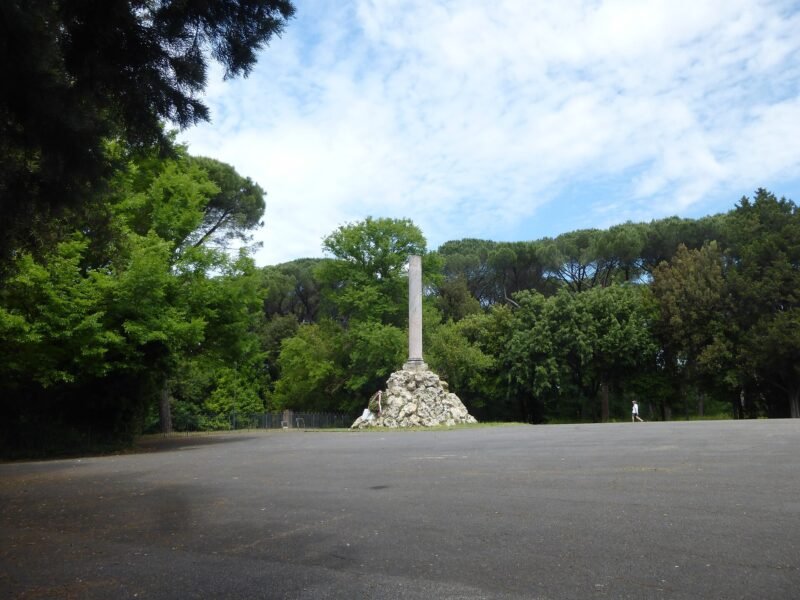
- Fountain of Anna Perenna500 m
- MAXXI – National Museum of 21st Century Arts700 m
- Flaminio700 m
Upcoming events nearby
- Roma Jazz Festival 2026, November 1 to 24 at the Auditorium and Casa del Jazz100 m
- Evgeny Kissin and András Schiff at Santa Cecilia, November 9, 2026100 m
- Roma Gospel Festival 2026 at Auditorium Parco della Musica, December 13, 2026 to January 1, 2027100 m
- Santa Cecilia 2026/2027 Concert Season at Auditorium Parco della Musica, October 21, 2026 to June 5, 2027100 m



You might also like
- Daniel Harding Conducts Ravel and Debussy at Auditorium Parco della Musica, April 8, 9 and 10, 2027
- Argerich and Capuçon for Beethoven at Auditorium Parco della Musica, April 6, 2027
- Manfred Honeck Conducts Beethoven at Santa Cecilia: March 25, 26 and 27, 2027
- Grigory Sokolov at Santa Cecilia, March 22, 2027
- Charles Dutoit and Martha Argerich at Auditorium Parco della Musica, March 18, 19 and 20, 2027
- Lucas and Arthur Jussen at Auditorium Parco della Musica, March 17, 2027