Argerich and Capuçon for Beethoven at Auditorium Parco della Musica, April 6, 2027
In short. Argerich and Capuçon bring Beethoven's Piano Concerto No. 2, with Martha Argerich at the piano and the Orchestre de Chambre de Lausanne, on Tuesday, April 6, 2027 at 20:00, in Sala Santa Cecilia at Auditorium Parco della Musica Ennio…
Argerich and Capuçon bring Beethoven's Piano Concerto No. 2, with Martha Argerich at the piano and the Orchestre de Chambre de Lausanne, on Tuesday, April 6, 2027 at 20:00, in Sala Santa Cecilia at Auditorium Parco della Musica Ennio Morricone, Viale Pietro de Coubertin 30, 00196 Rome. The all-Beethoven program opens with the Coriolan overture and closes with Symphony No. 7. You get there by Metro Line A to Flaminio and then tram 2 to the Flaminia/Reni or Apollodoro stops, or by buses 910 from Termini, 53, 982 and 168. Tickets cost from €30 to €60 and are bought at the Auditorium box office, at the box office on Via Vittoria 6 and through the presale circuit authorized by the Accademia Nazionale di Santa Cecilia, reachable from the official concert page. The doors close on time at the start.
A single evening, a spring Tuesday, and on stage two musicians who have known each other for decades: the Argentine pianist who marked the second half of the 20th century and the French violinist who now conducts the Lausanne chamber orchestra from the podium. The occasion is the bicentennial of Beethoven's death, which the Accademia di Santa Cecilia celebrates throughout 2027. For anyone who loves the piano, it's a date to mark before all the others.
Argerich and Capuçon at Santa Cecilia: the evening of April 6
The concert by Martha Argerich and Renaud Capuçon is scheduled only once, Tuesday, April 6, 2027 at 20:00, in Sala Santa Cecilia. There are no repeats, unlike the Accademia's symphonic concerts, which usually run for three evenings.
Why only one date
The orchestra is a guest: the Orchestre de Chambre de Lausanne comes from Switzerland for one Roman evening within its own calendar. It's the formula of touring orchestras, and it has one simple practical consequence: whoever puts off buying risks not finding the desired section anymore.
Presale
The Accademia has split the presale of the 2026/2027 season into two periods: from September 10, 2026 the concerts up to February 27, 2027 are on sale, from January 12, 2027 those from March to the end of the season. The April 6 concert falls in the second window, and the official page shows the purchase button to start from.
Beethoven 2027
The concert page places it within the Beethoven 2027 project, with which the Accademia celebrates the 200th anniversary of the composer's death, in 1827. In the same spring Sala Santa Cecilia also hosts Beethoven's Ninth conducted by Daniel Harding, from April 22 to 24.
The program: Coriolan, the Second Concerto and the Seventh
The program of Argerich and Capuçon at Santa Cecilia includes three pieces by Beethoven: the Coriolan overture, Piano Concerto No. 2 and Symphony No. 7. It's the classic form of the symphonic concert, with a short opening, a solo concerto and a symphony in the second half.
The Coriolan overture
The Coriolan overture is a short, tense piece built on violent contrasts between dry chords and a more lyrical theme. At the opening of the evening it has a precise function: it makes the sound of the orchestra and the character of the conductor clear right away. With a chamber orchestra, Coriolan loses a little mass and gains in sharpness.
Piano Concerto No. 2
The Second Concerto is the youngest of Beethoven's five piano concertos, and the closest to the world of Mozart and Haydn: an orchestra of modest size, a brilliant piano, a finale that plays with the accents. For this very reason it suits a chamber orchestra like the one from Lausanne. Martha Argerich recorded it with Claudio Abbado and the Mahler Chamber Orchestra, together with the Third Concerto: that album won the Grammy for best solo performance with orchestra.
Symphony No. 7
The Seventh closes the evening. It's the Beethoven symphony dominated by rhythm, with the Allegretto that the audience recognizes from the first bars and an overwhelming finale. Played by a chamber ensemble, it lets you hear the individual voices of the winds and the design of the strings with a clarity that large symphony orchestras often cover.
The thread of the evening
In our view the program is built with good sense: the heroic Beethoven of Coriolan, the young and still classical Beethoven of the Second Concerto, the mature and rhythmic Beethoven of the Seventh. In a little over two hours, three seasons of his music go by.
Who Martha Argerich is, the pianist
Martha Argerich is an Argentine pianist, naturalized Swiss, born in Buenos Aires on June 5, 1941, winner of the Chopin Competition in Warsaw in 1965 and considered one of the most authoritative performers of her era.
The formative years
She began studying with her mother, a piano teacher, and from age 5 to 15 trained with Vincenzo Scaramuzza, a teacher of the Neapolitan school born in Crotone. She made her concert debut at age 8. In 1955 she moved to Europe with her family and studied in Austria with Friedrich Gulda. In 1960 she attended the advanced courses of Arturo Benedetti Michelangeli in Arezzo and Moncalieri.
The competitions
In 1957, at age 16 and a few weeks apart, she won the Ferruccio Busoni Competition in Bolzano and the Geneva International Competition. In 1965 came first prize at the Chopin Competition in Warsaw, the recognition that made her a reference figure of world piano playing.
The stubborn juror
In 1980 she resigned from the jury of the Chopin Competition to protest the elimination in the second round of the Croatian pianist Ivo Pogorelić. The episode remains one of the most discussed in the history of piano competitions, and it gave her the reputation of a judge with an independent character.
Chamber music
From her earliest years she paired her solo career with a long activity in duos and chamber ensembles, with violinists, cellists and other pianists. This inclination explains the bond with Renaud Capuçon, with whom she has played for many years.
The Grammys
Among the awards she has received are three Grammys: in 2000 with Charles Dutoit and the Orchestre symphonique de Montréal for the Prokofiev and Bartók concertos, in 2005 with Mikhail Pletnev for a two-piano album, in 2006 with Claudio Abbado and the Mahler Chamber Orchestra for Beethoven's Concertos No. 2 and No. 3. In 1997 she received the Claudio Arrau medal.
Lugano and young people
For years she has promoted young pianists and composers with her festivals, in Lugano with the Martha Argerich Project, in Beppu in Japan and in Buenos Aires. On June 23, 2010 the Municipality of Lugano granted her honorary citizenship. In 2013 her daughter Stephanie directed Bloody Daughter, an intimate film about her life.
Who Renaud Capuçon is, the conductor
Renaud Capuçon is a French violinist born in Chambéry on January 27, 1976 and, since the 2021/2022 season, artistic director of the Orchestre de Chambre de Lausanne, which he conducts from the podium in Rome.
His training
He started the violin at age 4 at the conservatory of his hometown. At 14 he entered the class of Gérard Poulet at the Paris Conservatoire, where three years later he graduated with the Premier Prix in violin and chamber music. He played in the European Youth Orchestra and then in the Gustav Mahler Jugendorchester as concertmaster, under the direction of Claudio Abbado.
Soloist and chamber musician
He has built a double career, as a soloist and as a chamber musician, with regular partners such as the pianists Nicholas Angelich, Frank Braley, Hélène Grimaud and Martha Argerich, and with his younger brother, the cellist Gautier Capuçon. In 1996 he founded the Rencontres artistiques de Bel-Air near Chambéry, a festival that in about 10 years hosted, among others, Argerich herself.
Isaac Stern's violin
After playing a Vuillaume, a Guadagnini and a Stradivari, he received on loan from the Banca della Svizzera Italiana the 1737 Guarneri del Gesù “Panette,” which belonged to Isaac Stern.
The awards
In 2000 the Victoires de la Musique Classique named him new talent of the year and in 2005 soloist instrumentalist of the year. In 2006 he received the Georges Enesco prize from Sacem, the French society of authors.
The recordings with Argerich
His discography, first for Virgin Classics and then exclusively for Erato, includes in 2004 Beethoven's Triple Concerto with Martha Argerich, Mischa Maisky and the Orchestra della Svizzera Italiana. With the Orchestre de Chambre de Lausanne he recorded the complete Mozart violin concertos for Deutsche Grammophon.
The Orchestre de Chambre de Lausanne
The Orchestre de Chambre de Lausanne is a Swiss chamber orchestra founded in 1942 by Victor Desarzens, resident at the Salle Métropole in Lausanne and artistic partner of the Opéra de Lausanne, whose orchestra it is during the opera season.
The conductors
After Desarzens, artistic director until 1973, the podium has seen in succession Armin Jordan, Lawrence Foster, Jesús López Cobos, Christian Zacharias and Joshua Weilerstein. Renaud Capuçon took over the artistic direction in the 2021/2022 season.
A recording tradition
In the 1970s the orchestra recorded for Philips, with Antal Doráti, eight Haydn operas, from La fedeltà premiata to Armida, with singers such as Jessye Norman, Frederica von Stade and Samuel Ramey. Later it recorded with Christian Zacharias, as soloist and conductor, the complete Mozart piano concertos.
A first in Switzerland
It was the first Swiss orchestra to have a composer in residence every two years, and it collaborates with the Lausanne conservatories of music and theater. A large share of its concerts is recorded by the radio broadcaster Espace 2.
A fun fact about Argerich and Capuçon for Beethoven at Auditorium Parco della Musica, April 6, 2027
The nicest fun fact concerns the concerto Martha Argerich plays in Rome. Beethoven's Second Concerto is one of the two she recorded with Claudio Abbado and the Mahler Chamber Orchestra, on an album awarded the Grammy in 2006. Renaud Capuçon, who conducts the orchestra on April 6, was as a young man concertmaster of the Gustav Mahler Jugendorchester, precisely under Abbado's direction. Two different paths, the same maestro behind them.
The second fun fact is about recordings. In 2004 Argerich and Capuçon recorded Beethoven's Triple Concerto together, with Mischa Maisky on cello. 23 years later they meet again on Beethoven, but with the roles changed: he doesn't play beside her, he supports her from the podium.
Third: the violin Capuçon plays in his solo concerts, the 1737 Guarneri del Gesù “Panette,” belonged to Isaac Stern. In Rome, though, the instrument most likely stays in its case: on the evening of April 6 Capuçon is the conductor, and the program has no pieces for solo violin.
Sala Santa Cecilia, where Argerich and Capuçon play
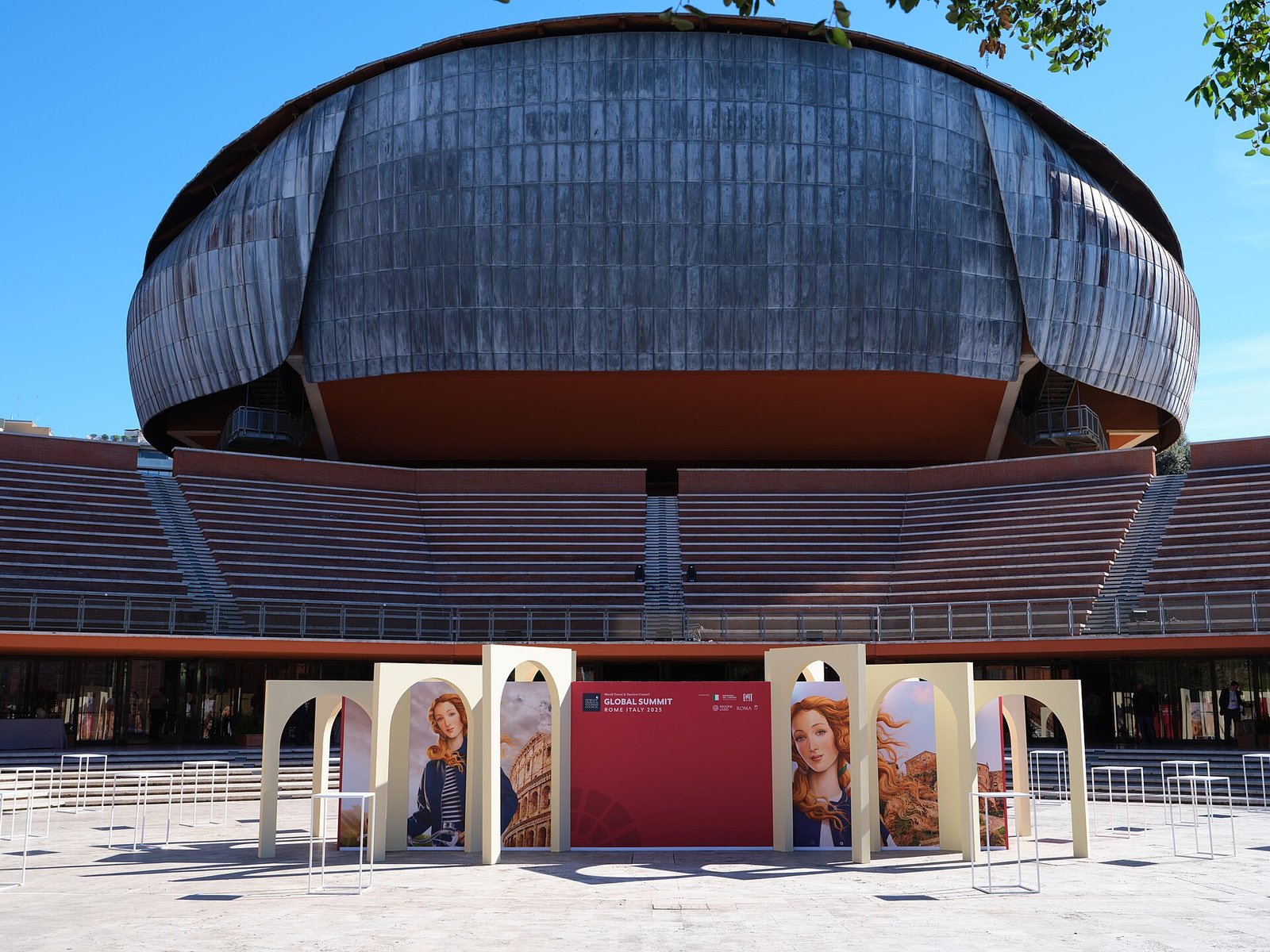
Sala Santa Cecilia is the largest of the three concert halls of Auditorium Parco della Musica Ennio Morricone: 2,756 seats, designed by Renzo Piano for symphonic music and inaugurated on December 21, 2002. Since 2003 it has been the permanent home of the Accademia's season.
The cherry-wood ceiling
The ceiling is made of 26 shells of American cherry wood, with an average surface of about 180 square meters each. The hall works like a large sounding box, with a reverberation time of 2.2 seconds. For a chamber orchestra, lighter than a symphonic one, it's an environment that amplifies without weighing down.
Where to sit for the piano
Regulars of the hall know that the intensity of the sound seems to drop until the 10th row and then stay constant. For Argerich's piano, the central orchestra section beyond the 10th row is best, or the side sections on the keyboard side, from which you can see the pianist's hands. The gallery behind the orchestra, on the other hand, lets you watch Capuçon from the front, the way the musicians see him.
Renzo Piano's beetles
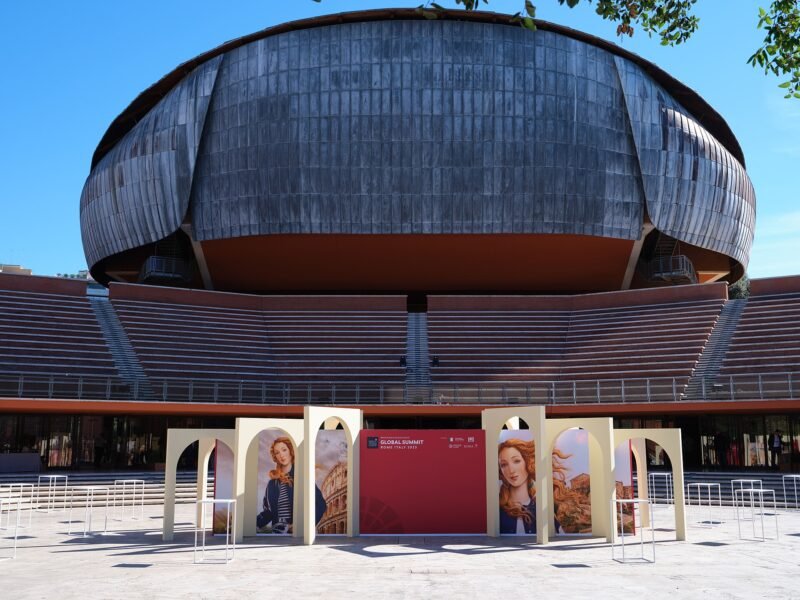
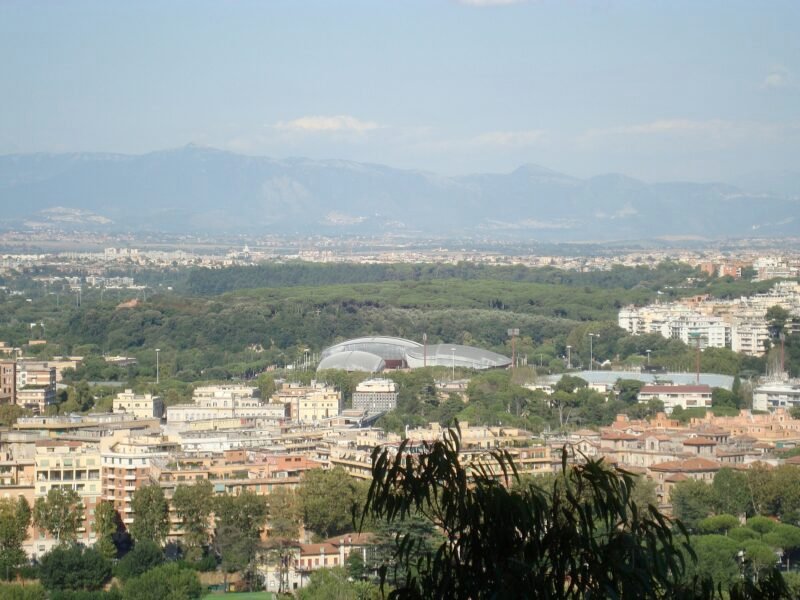
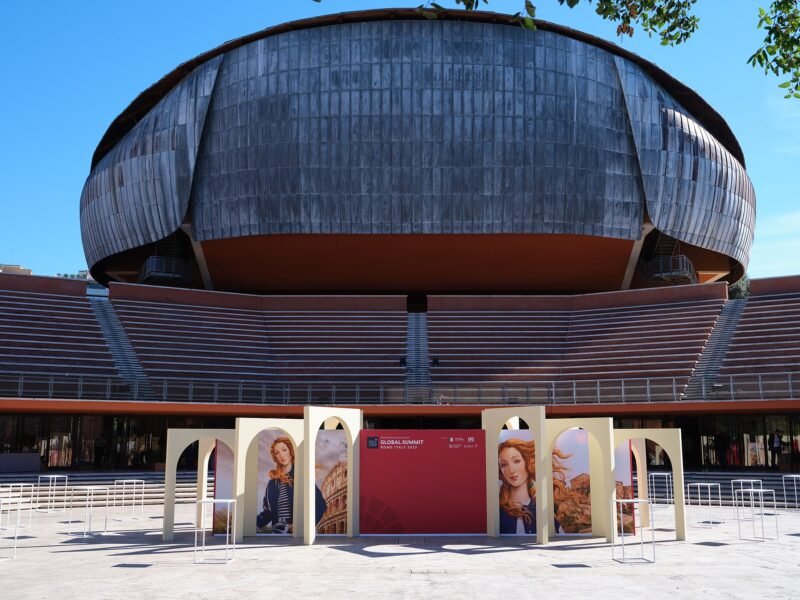
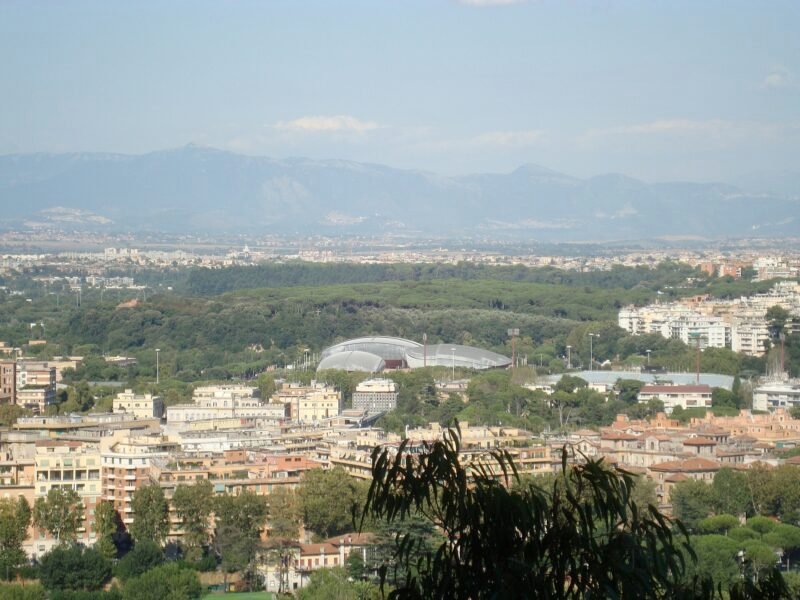
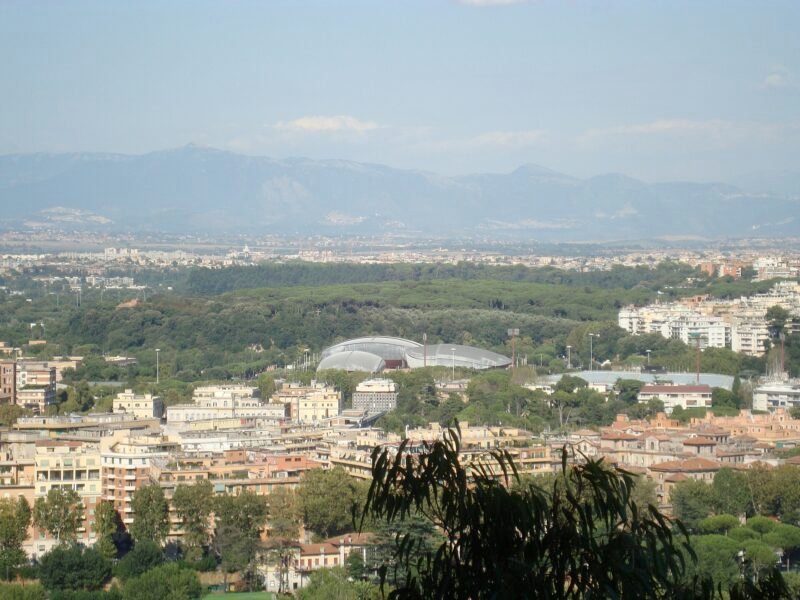
Seen from outside, the three halls are large volumes clad in lead on a brick base, arranged in a fan around the open-air amphitheater named after Luciano Berio. Renzo Piano won the competition in 1993 and worked with the acoustician Jürgen Reinhold of the Müller BBM firm in Munich and with the landscape architect Franco Zagari.
Something nobody tells you about Argerich and Capuçon for Beethoven at Auditorium Parco della Musica, April 6, 2027
The rule about the doors is applied to the letter. The Accademia warns that concerts start on time and that latecomers are not admitted to the hall: they can follow the concert in the listening rooms, while seats last. On April 6 the first piece is Coriolan, an overture of a few minutes: a modest delay means missing it and risking listening to Argerich's concerto in front of a screen. For a concert with a single date, it's a mistake that can't be repaired.
A second thing rarely said: Sala Santa Cecilia is built on a raised floor above the ground, because the remains of a Roman villa emerged in the subsoil and it wasn't possible to dig deep. The galleries have only two elevators, and anyone with mobility difficulties and a seat up high must arrive well in advance.
Third: the hall has no pipe organ. The issue exploded in 2002 with an appeal by Italia Nostra, and the Accademia, then presided over by Luciano Berio, suspended the project. For a Beethoven program the organ isn't needed, but it explains the bare wall behind the orchestra.
My advice for visiting Argerich and Capuçon for Beethoven at Auditorium Parco della Musica, April 6, 2027
The advice is to buy right away. A concert by Martha Argerich with orchestra is by now a rare event, the date is only one and the hall, however large, tends to fill up for names of this weight. For the same reason it's worth choosing the section carefully: better a side seat on the keyboard side than a row too close to the stage.
Second piece of advice: at home, in the days before, listen to the Second Concerto in Argerich's recording with Abbado. Not to compare, but to arrive in the hall with the shape of the piece already in your head. The Second is performed less often than the Fourth and the Fifth, and whoever knows it appreciates the details of a live performance better.
Third: stay seated during the applause after the Concerto. Argerich is a pianist whom the audience calls back to the stage several times, and the moment of the bows, before the intermission, is part of the experience of the evening.
Finally, for the way back, tram 2 and the 910 also run after the concert is over: there's no need to rush out before the last chord of the Seventh.
Tickets for Argerich and Capuçon at Santa Cecilia: prices and purchase
Tickets for the concert by Martha Argerich and Renaud Capuçon cost from €30 to €60, depending on the section of Sala Santa Cecilia. They are sold only by sellers authorized by the Accademia: the box office of Auditorium Parco della Musica Ennio Morricone, the box office at Via Vittoria 6 and the points of sale of the authorized presale circuit.
Where to buy
The Auditorium box office, in the greenhouse space, is open every day from 11:00 to 20:00. The one at Via Vittoria 6, a few steps from Via del Corso and Piazza del Popolo, is open Monday to Friday from 11:00 to 19:00 and Saturday from 11:00 to 14:00, with electronic payment only. Online, start from the purchase button on the official concert page.
Discounts and notices
Discounts for young people, partnerships and culture cards are described in the dedicated sections of the Accademia's website, together with the general notices for the public. The conditions apply depending on the type of concert: before counting on a discount, check that it applies to this date.
Unauthorized sellers
The Accademia warns that it is not responsible for markups on tickets sold by unauthorized parties. For information there is the infoline 06 8082058 and the addresses info@santacecilia.it and biglietteria@santacecilia.it.
How to get to the Auditorium for Argerich and Capuçon
Auditorium Parco della Musica Ennio Morricone is reached by Metro Line A to Flaminio and then tram 2, stops Flaminia/Reni or Apollodoro, or by buses 910, 53, 982 and 168. The metro doesn't reach the entrance.
Metro A and tram 2
From Piazzale Flaminio, tram 2 goes up Via Flaminia toward Piazza Mancini. Get off at Flaminia/Reni or Apollodoro and walk a few minutes toward Viale Pietro de Coubertin, through the Villaggio Olimpico. From the historic center it's the simplest solution.
The 910 from Termini
The 910 leaves from Piazza dei Cinquecento, in front of Termini station, and reaches the Auditorium without changes. For those arriving by train or sleeping near the station it's the most practical line.
The other lines
The 53 connects Piazza Mancini and the center, the 982 comes from Viale XVII Olimpiade area, the 168 from Tiburtina station. Evening schedules and frequencies are on the route calculator of the Roman transit company.
By car
The stretch of Viale Pietro de Coubertin in front of the Auditorium is closed to traffic. The complex has paid parking with limited spaces, and on concert nights cars fill the streets of the Villaggio Olimpico. On a Tuesday evening the Flaminio traffic is the office rush-hour exit: better to take public transport.
Another well-known fact, yet rarely mentioned
It's well known that Martha Argerich won the Chopin Competition in 1965. Less often mentioned is how much of her training passes through Italy. Her first real teacher, from age 5 to 15, was Vincenzo Scaramuzza, a pianist born in Crotone and trained in the Neapolitan school, who emigrated to Argentina and taught with a personal method: tackling technical problems inside the music, without separate exercises. Then, in 1957, her first great success came in Bolzano, at the Busoni Competition.
And in 1960 Argerich attended the advanced courses of Arturo Benedetti Michelangeli in Arezzo and Moncalieri. With him she actually had very few lessons, four according to biographies. When it was pointed out to Benedetti Michelangeli how little time he had given her, he replied that he had taught her “the music of silence.”
The pianist who plays Beethoven in Rome on April 6 thus has Italian roots deeper than her passport suggests: a Calabrian teacher, a South Tyrolean competition, a Tuscan course. A detail the audience of Sala Santa Cecilia can bring into the hall.
How to organize the evening of the concert
For the Argerich and Capuçon concert it's best to arrive at the Auditorium at least 40 minutes before 20:00. Ticket pickup, checks, coat check and getting up to the hall take time, and in a hall of over 2,700 seats the lines form early.
Before the concert
The foyer shared by the halls hosts bars, a café and a bookshop with records and music books. From the terrace that runs around the buildings you can see the remains of the Roman villa discovered during the works: 10 minutes well spent, if you arrive early.
The length
The Accademia doesn't give the total length on the concert page. The program is that of a full symphonic concert, with an overture, a piano concerto, an intermission and a symphony: if you have a train to catch after the concert, allow plenty of margin.
After the concert
On the way out, the amphitheater is the right place to let the crowd flow away. If your car is in the Villaggio Olimpico, don't be in a hurry: the first exits from the side streets are always the slowest.
The right photo to take at Argerich and Capuçon for Beethoven at Auditorium Parco della Musica, April 6, 2027
During the concert the phone stays off: in such a sensitive hall every noise is heard, and the second movement of Beethoven's Concerto lives on pianissimos. The photo is taken before and after.
At the beginning of April, at 19:30, there is still light in Rome. From the top of the amphitheater you can frame Renzo Piano's three beetles with the lead catching the last sun, and the entrance of Sala Santa Cecilia with the audience going in: it's the image that tells the evening better than a portrait.
In the hall, before the lights go down and if the staff allows it, the shot to take is the grand piano in the center of the stage, with the lid open and the chairs of the chamber orchestra arranged around it. It's the photograph that says right away what is going to happen.
After the concert, during the final applause and without flash: Argerich called back to the stage beside Capuçon. Outside, the volumes of the halls seen from below, on Viale Pietro de Coubertin side, give an almost abstract image, the least obvious and in our view the most successful.
Some important events that happened here in history
The ground on which the Auditorium stands has a much older history than the complex. During the works the remains of a Roman villa of the 3rd century BC emerged, built on the site of a small archaic farm of the 6th century BC. The discovery forced Renzo Piano to modify the design, moving two of the three beetles to the west, almost to the Corso di Francia viaduct. The finds are displayed in a small museum under the amphitheater.
The modern history begins with a demolition, that of the Augusteo in 1936, which left Rome for over 60 years without a real symphonic hall. In 1992 the city council chose the area of the Villaggio Olimpico, and in 1993 Piano won the competition. On April 21, 2002 Sala Sinopoli opened, in the presence of Goffredo Petrassi, who heard the world premiere of a Concert Overture of his written in 1931. On December 21, 2002 Sala Santa Cecilia was inaugurated, with the Accademia's Orchestra conducted by Myung Whun Chung.
Since 2003 the Auditorium has been the permanent home of the Accademia's season, since 2006 it has hosted the Rome Film Festival, and in 2020 the city council approved its naming after Ennio Morricone. In 2027 its halls host the Accademia's long tribute to Beethoven on the bicentennial of his death.
Who has passed through: Argerich and Capuçon for Beethoven at Auditorium Parco della Musica, April 6, 2027
Sala Santa Cecilia has had weighty guests since the first day. The inaugural concert of December 21, 2002 was conducted by Myung Whun Chung. A few months earlier, at the opening of the smallest hall, Goffredo Petrassi wanted to be present. Today that hall bears his name. Luciano Berio, then president of the Accademia, gave his name to the amphitheater.
Since then the hall has been the home of the Santa Cecilia Orchestra and its music directors, from Antonio Pappano to Daniel Harding, who in the 2026/2027 season conducts, among other things, Wagner's Siegfried and Leoncavallo's Pagliacci.
Martha Argerich herself passes through twice in the same season. In March, three weeks before the Lausanne concert, she plays with the Santa Cecilia Orchestra conducted by Charles Dutoit, the conductor with whom she recorded the Prokofiev and Bartók concertos awarded the Grammy. The evening is described in the listing for the Dutoit and Argerich concert. In April she returns with Renaud Capuçon and the Swiss orchestra. Two concerts with orchestra by the same pianist in less than a month, in the same hall, are a rare thing.
Accessibility and young people at the Argerich and Capuçon concert
For people with walking disabilities holding the Disability Card, the Accademia offers a 15% discount on two tickets, to be bought directly at the box office. For wheelchair users, admission costs €10 and the person assisting enters free, while available seats last.
Reservation
For people who cannot walk, reservation is mandatory, from 15 days before the concert until the day before, at 06 8082058 or at biglietteria@santacecilia.it. For the April 6 concert the window therefore opens on March 22.
Arriving early
The hall is raised above the ground and the galleries have only two elevators: arriving with an hour of margin and asking the staff right away for the route avoids the jam of the last minutes.
With young people
Beethoven's Seventh is one of the symphonies best suited to a teenager approaching classical music: rhythm, energy, an overwhelming finale. And hearing a pianist like Argerich live is a memory that lasts. For a small child, on the other hand, a full symphonic evening on a Tuesday night remains demanding.
The neighborhood around the Auditorium
The Auditorium occupies an area of about 55,000 square meters between Villa Glori, the Villaggio Olimpico, the Corso di Francia viaduct and Viale Maresciallo Pilsudski: a piece of 20th-century Rome where contemporary architecture coexists with greenery.
MAXXI
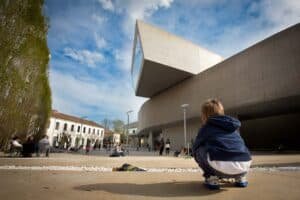
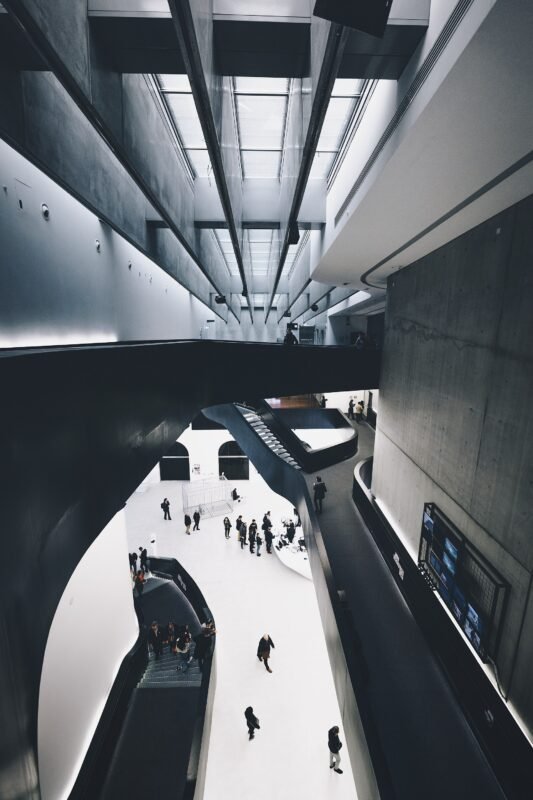
A few minutes' walk away, toward Via Guido Reni, is MAXXI by Zaha Hadid: with the Auditorium it forms the most important pair of contemporary architecture in the city. If you have a free afternoon you can see an exhibition and walk to the hall.
Toward the Tiber
From the Auditorium you go down to Ponte della Musica, the footbridge that connects Flaminio to the Foro Italico. Farther north is Milvian Bridge, in the evening one of the busiest meeting points of north Rome.
Toward the center
Tram 2 takes you back to Piazzale Flaminio, at the gates of Villa Borghese and the Tridente. A walk on the Pincio in the April afternoon, with the days already long, and the tram toward the concert are the most restful way to arrive.
Where to eat before or after the concert
Inside the Auditorium there are bars and a café in the foyer and a bar restaurant with access from the street as well: the most convenient solution for those coming from work who don't want to risk the doors closing at 20:00.
In the neighborhood
Between the Villaggio Olimpico, Via Flaminia and Piazza Mancini there are pizzerias, trattorias and neighborhood bars, frequented more by residents than by tourists. On a Tuesday evening it's easy to find a table, but it's best to eat early, before the concert.
Ponte Milvio and the center
For dinner after the concert the widest offer is at Ponte Milvio, a few minutes away, where many places stay open late. In the opposite direction, toward Piazzale Flaminio and Piazza del Popolo, the choice is that of the historic center, with historic-center prices.
April in Rome: the time of year
The beginning of April is one of the most beautiful periods to be in Rome: long days, mild temperatures, gardens in bloom.
A week of music
If you stay a few days, two days later you find Daniel Harding at the Auditorium with Ravel and Debussy, from April 8 to 10, again in Sala Santa Cecilia. It's a way to go in a few days from classical Beethoven to the French orchestral color of the early 20th century.
The weather
April evenings can still be cool, and the Auditorium is an open complex, where you walk outside between one entrance and another. A light jacket to leave at the coat check is almost always enough.
Frequently asked questions about Argerich and Capuçon at Santa Cecilia
When does Martha Argerich play in Rome in 2027?
Martha Argerich plays in Rome with the Orchestre de Chambre de Lausanne conducted by Renaud Capuçon on Tuesday, April 6, 2027 at 20:00, in Sala Santa Cecilia at Auditorium Parco della Musica Ennio Morricone, Viale Pietro de Coubertin 30. In the same season she is also a guest, in March, of the Santa Cecilia Orchestra with Charles Dutoit.
What is the program of the Argerich and Capuçon concert?
The Argerich and Capuçon concert is entirely devoted to Beethoven: the Coriolan overture, Piano Concerto No. 2 with Martha Argerich as soloist and Symphony No. 7. It is part of the Accademia di Santa Cecilia's celebrations for the bicentennial of the composer's death.
How much do tickets for Argerich at Santa Cecilia cost?
Tickets for the Argerich and Capuçon concert at Santa Cecilia cost from €30 to €60, depending on the section of the hall. They are bought at the Auditorium box office, at the box office at Via Vittoria 6 and through the circuit authorized by the Accademia, starting from the official concert page.
Does Renaud Capuçon play the violin at the concert?
At the April 6 concert Renaud Capuçon is listed as conductor of the Orchestre de Chambre de Lausanne, of which he has been artistic director since the 2021/2022 season. The program has no pieces for solo violin: the only soloist of the evening is Martha Argerich at the piano.
How do you get to Auditorium Parco della Musica?
You get to Auditorium Parco della Musica by Metro Line A to Flaminio and then tram 2, stops Flaminia/Reni or Apollodoro, or by buses 910 from Termini, 53, 982 and 168. The stretch of Viale Pietro de Coubertin in front of the entrance is closed to cars.
What happens if you arrive late?
At the Accademia di Santa Cecilia concerts the doors close on time at the start. Latecomers are not admitted to the hall and can follow the concert in the listening rooms, while seats last. For the Argerich concert it's best to arrive at least 40 minutes early.
Does the Argerich and Capuçon concert have repeat performances?
The Argerich and Capuçon concert has a single date, Tuesday, April 6, 2027 at 20:00. No repeats with the same program are planned: whoever wants to be there must choose that evening, and it's best to buy the ticket as soon as possible.
Final advice on Argerich and Capuçon at Santa Cecilia
A pianist who has lived through 60 years of the history of interpretation, a violinist who has known her all his life and here supports her from the podium, a chamber orchestra with a long tradition behind it and three pieces by Beethoven that cover his whole arc: in our view it is one of the most precious events of the Roman season. The advice is to buy early, choose a seat on the keyboard side beyond the 10th row, listen to the Second Concerto beforehand and arrive early, because at Santa Cecilia lateness can't be made up.
Article written by the editorial team of Tour Leader Pro, contact them for Private/Corporate/V.I.P. Tours and Experiences.
Planning a trip to Rome? The English guides for visiting the city are on ItalyPlanner.com.
Contact Information
Nearby
 Museum of Musical Instruments (MUSA)100 m
- Auditorium Parco della Musica100 m
- Villa Glori500 m
- Fountain of Anna Perenna500 m
- MAXXI – National Museum of 21st Century Arts700 m
- Flaminio700 m
Upcoming events nearby
- Roma Jazz Festival 2026, November 1 to 24 at the Auditorium and Casa del Jazz100 m
- Evgeny Kissin and András Schiff at Santa Cecilia, November 9, 2026100 m
- Roma Gospel Festival 2026 at Auditorium Parco della Musica, December 13, 2026 to January 1, 2027100 m
- Santa Cecilia 2026/2027 Concert Season at Auditorium Parco della Musica, October 21, 2026 to June 5, 2027100 m



You might also like
- Daniel Harding Conducts Ravel and Debussy at Auditorium Parco della Musica, April 8, 9 and 10, 2027
- Gustavo Gimeno and Frank Peter Zimmermann at Auditorium Parco della Musica, April 1, 2 and 3, 2027
- Manfred Honeck Conducts Beethoven at Santa Cecilia: March 25, 26 and 27, 2027
- Grigory Sokolov at Santa Cecilia, March 22, 2027
- Charles Dutoit and Martha Argerich at Auditorium Parco della Musica, March 18, 19 and 20, 2027
- Lucas and Arthur Jussen at Auditorium Parco della Musica, March 17, 2027