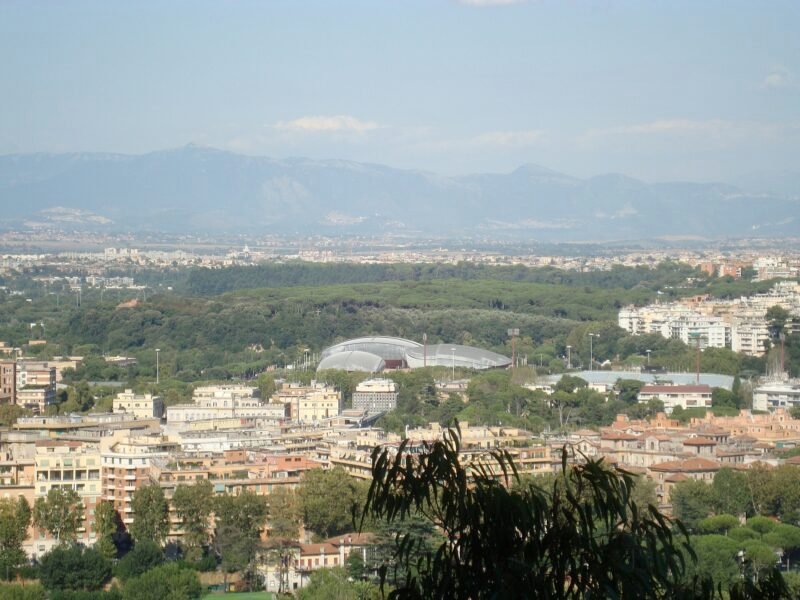
Lucas and Arthur Jussen at Auditorium Parco della Musica, March 17, 2027
In short. The Dutch pianist brothers Lucas and Arthur Jussen play for the Accademia Nazionale di Santa Cecilia on Wednesday, March 17, 2027 at 20:00 in Sala Sinopoli of Auditorium Parco della Musica Ennio Morricone, at Viale Pietro de Coubertin 30 (00196 Rome).
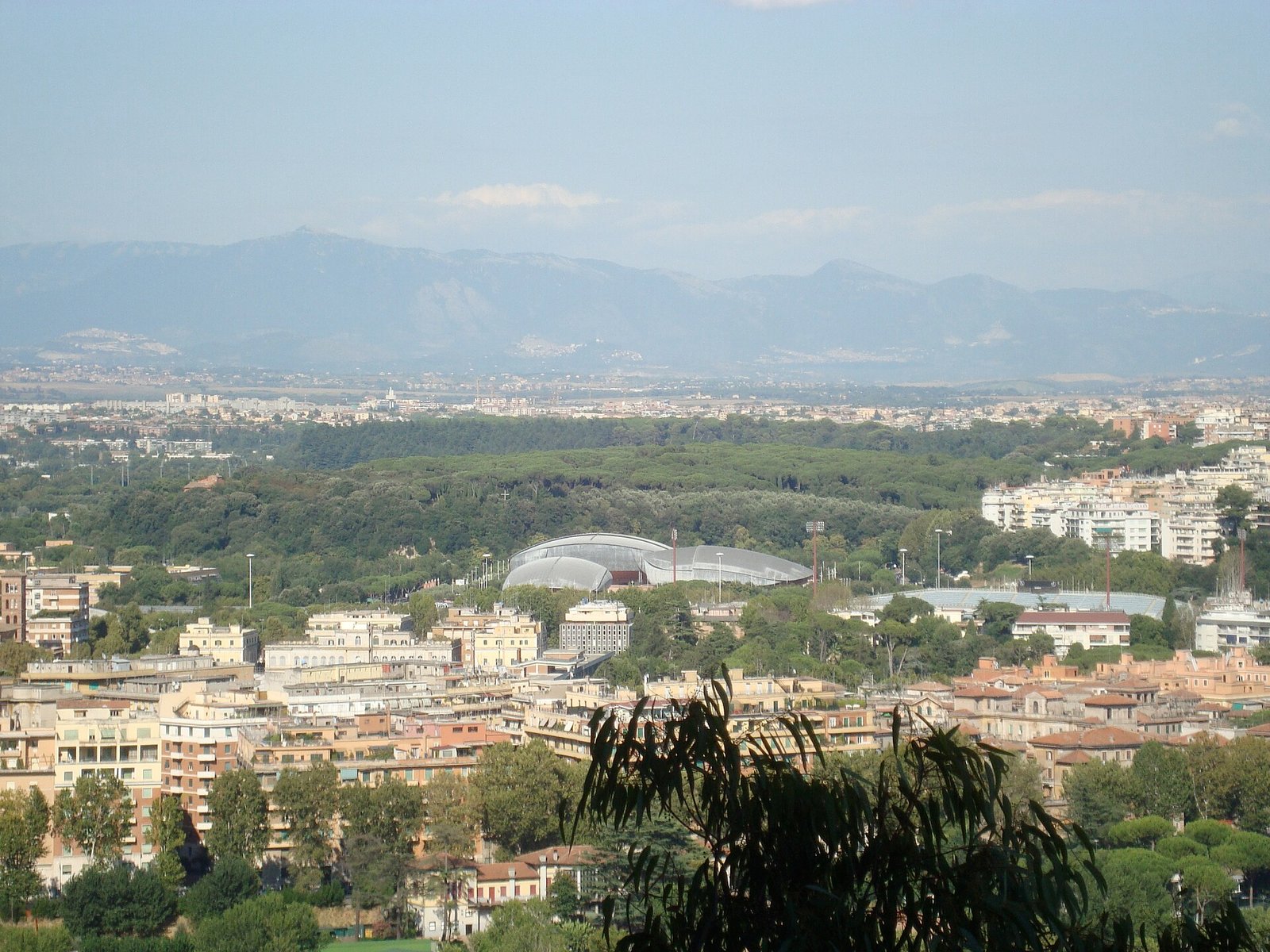
The Dutch pianist brothers Lucas and Arthur Jussen play for the Accademia Nazionale di Santa Cecilia on Wednesday, March 17, 2027 at 20:00 in Sala Sinopoli of Auditorium Parco della Musica Ennio Morricone, at Viale Pietro de Coubertin 30 (00196 Rome). The program for two pianos goes from three Bach chorales in György Kurtág's transcription to VAN… by Hanna Kulenty, from Brahms's Variations on a Theme by Haydn to Lutosławski's Variations on a Theme by Paganini, from Fauré's Dolly suite to Ravel's Introduction and Allegro, all the way to Gershwin's Rhapsody in Blue. Tickets cost 38 euros in the orchestra, 26 in the second-section gallery and 18 in the third-section gallery, go on sale from January 12, 2027, and are bought at the box offices of Auditorium Parco della Musica and Via Vittoria 6 and through the presale network authorized by the Academy, reachable from the official concert page. You get to Auditorium Parco della Musica by tram 2 from the Flaminio station of metro line A, stops Flaminia/Reni or Apollodoro, and by buses 910 from Termini, 53, 982 and 168.
Two brothers from Hilversum who played in public as children, students of Maria João Pires, under contract with Deutsche Grammophon since 2010: today the Jussens play in major halls on every continent. In Rome they bring a program that spans three centuries and ends in Gershwin's jazz.
Lucas and Arthur Jussen at Santa Cecilia: Date, Time and Tickets
The Lucas and Arthur Jussen concert is scheduled for Wednesday, March 17, 2027 at 20:00 in Sala Sinopoli of Auditorium Parco della Musica, with tickets from 18 to 38 euros. It's a single date.
Prices
The official page lists three tiers: 38 euros in the orchestra, 26 euros in the second-section gallery, 18 euros in the third-section gallery. Discounts for young people are gathered in the dedicated section of the Academy's website.
Advance Sales
The Academy has split ticket sales for the 2026/2027 season into two periods: from September 10, 2026 for concerts up to February 27, 2027, from January 12, 2027 for those from March 3 onward. Tickets for the Jussens are therefore bought from January 12.
Where to Buy
According to the Academy, the only authorized sellers are the points of sale of the presale network that the official page links to, the box office of Auditorium Parco della Musica Ennio Morricone and the one at Via Vittoria 6. The infoline answers at 06 8082058, the ticket office at biglietteria@santacecilia.it.
The Program: From Bach to Gershwin
The Lucas and Arthur Jussen program at Santa Cecilia includes three chorales by Johann Sebastian Bach transcribed by György Kurtág, VAN… by Hanna Kulenty, Brahms's Variations on a Theme by Haydn, Op. 56b, Lutosławski's Variations on a Theme by Paganini, Fauré's Dolly suite, Op. 56, Ravel's Introduction and Allegro and Gershwin's Rhapsody in Blue.
Three Bach Chorales
The concert opens with three Bach chorales in György Kurtág's transcription: Aus tiefer Not schrei ich zu dir BWV 687, Nun komm, der Heiden Heiland BWV 599 and Gottes Zeit ist die allerbeste Zeit BWV 106. A collected opening, almost a prayer, before the evening's virtuosity.
Hanna Kulenty, VAN…
VAN…, a piece by Hanna Kulenty, follows. It's the contemporary title of the program, alongside Kurtág's transcriptions.
Two Sets of Variations
The heart of the program is two large variation cycles: Brahms's on a theme by Haydn in the version for two pianos, Op. 56b, and Lutosławski's on a theme by Paganini. Two different centuries, a single form.
The French Color
Fauré's Dolly suite, Op. 56, and Ravel's Introduction and Allegro take the evening to France. They are two composers the Jussens have long played: their 2013 album Jeux was dedicated precisely to Fauré, Poulenc and Ravel.
The Rhapsody in Blue
George Gershwin's Rhapsody in Blue closes the evening, in our opinion the most brilliant finale you can imagine for a piano duo.
A Program Built Like a Journey
The Jussens' recital spans three centuries, from Bach's 18th century to Gershwin's 20th, passing through Brahms's Germany, Lutosławski's Poland and the France of Fauré and Ravel.
Silence and Noise
The evening begins in the stillness of the chorales and ends in the celebration of Rhapsody in Blue. In our opinion it's a clever construction: the audience moves from the most intimate sound to the most exuberant, without abrupt jumps.
Variations as a Thread
The two sets of variations, Brahms and Lutosławski, are the center of gravity of the program. For a duo they are a demanding test: every variation changes character, and the two pianists have to change together, breathing like a single instrument.
Music for Two
Almost the entire program is written or transcribed for two pianos. In our opinion it's a repertoire heard too rarely, also because it requires two instruments on stage and two performers used to playing together: for this reason a stable duo like the Jussens is an opportunity.
Who Lucas and Arthur Jussen Are
Lucas Jussen, born in Hilversum on February 27, 1993, and Arthur Jussen, born in Hilversum on September 28, 1996, are two Dutch pianist brothers who have played in public since childhood, often together as a duo. They have recorded for Deutsche Grammophon since March 12, 2010.
A Family of Musicians
They come from a family of musicians: their mother, Christianne van Gelder, teaches transverse flute. Their father, Paul Jussen, is timpanist of the Radio Filharmonisch Orkest in Hilversum and percussionist of Ensemble Da Capo.
Jan Wijn and Maria João Pires
The two brothers were students of the teacher Jan Wijn. Their first teacher, Leny Bettmann, put them in touch with Maria João Pires, with whom they lived and studied and from whom they received regular lessons. They have also played with the pianists Ricardo Castro and Lang Lang.
The Brothers' Paths
Lucas studied for two years in the United States with Menahem Pressler, then from October 2013 with Dmitri Bashkirov at the Escuela Superior de Música Reina Sofía in Madrid. He was also artist in residence of the Dutch Chamber Orchestra. Arthur continued his studies at the Amsterdam Conservatory, again with Jan Wijn.
The Jussens' Career, from the Concertgebouw to Salzburg
Lucas and Arthur Jussen's career began very early: on November 24, 2006, at 13 and 10, they played Mozart's Concerto for Two Pianos KV 365 at the Concertgebouw in Amsterdam with the Radio Kamer Filharmonie conducted by Jaap van Zweden.
For the Queen
Even earlier, on April 30, 2005, they had played in the Ridderzaal for the 25th anniversary of Queen Beatrix's reign. In 2018 they were the main guests at the Prinsengrachtconcert in Amsterdam, in 2022 they played at the King's Day concert in Maastricht.
Poulenc and Deutsche Grammophon
On November 30, 2009, they returned to the Concertgebouw with the same orchestra, conducted by Michael Schønwandt, for Poulenc's Concerto for Two Pianos. A few months later, on March 12, 2010, they signed the contract with Deutsche Grammophon.
Salzburg and the Return After the Pandemic
In 2019 they debuted at the Salzburg Festival. On July 4, 2020, after 111 days of pandemic closure, they were the first to hold a concert again at the Concertgebouw, in front of 350 people. Today they play in major halls on every continent.
The Jussens' Records and Awards
The Jussens' first album for Deutsche Grammophon, dedicated to Beethoven's sonatas, came out in 2010 and reached number two on the Dutch album chart, where it stayed for 24 weeks, earning a platinum record.
Discography
Schubert's Impromptus followed in 2011, a gold record. Then Jeux, with Fauré, Poulenc and Ravel, in 2013. Mozart's Concertos for Two Pianos in 2015. An album with Saint-Saëns, Poulenc and Fazil Say in 2017. A record dedicated to Bach in 2019. The Russian Album in 2021 and Dutch Masters in 2022.
Awards
In 2004 Arthur won a first prize at the Jong Muziektalent national competition. On June 8, 2011, the brothers received the first Concertgebouw Young Talent Award and in the same month the Edison Klassiek audience award. In 2013 the audience award of the Mecklenburg festival, in 2016 another audience Edison for the Mozart album, in 2018 an Opus Klassik and in 2022 the Luitpold Prize of the Kissinger Sommer.
On Screen
Their story has been told in several Dutch television documentaries, from 2006 up to a three-episode series in 2023 that followed them on a world tour.
The Concertgebouw, the Jussens' Home Hall
For Lucas and Arthur Jussen the Concertgebouw in Amsterdam is the hall of decisive milestones: the 2006 debut with orchestra, the 2009 Poulenc Concerto, the 2011 Concertgebouw Young Talent Award and the reopening concert after lockdown, in July 2020.
The Prize for Young People
On June 8, 2011, the two brothers were the first to receive the Concertgebouw Young Talent Award, the recognition with which the Amsterdam hall singles out talented young musicians. In the same month they also won the Edison Klassiek audience award.
The 2020 Reopening
On July 4, 2020, after 111 days of closed halls, it was the Jussens who brought live music back to the Concertgebouw, in front of 350 people. They arrive in Rome, then, with a history of concerts that have marked the musical life of their country.
The Jussens and Mozart: A Concerto for Two Pianos
Mozart has been with the Jussens from the beginning: the Concerto for Two Pianos KV 365 was their Concertgebouw debut in 2006, and in 2015 Mozart's Concertos for Two Pianos became an album, awarded in 2016 with the audience Edison.
From Concerto to Recital
The Rome program has no Mozart, but it keeps his spirit: music conceived for two equal instruments that converse, imitate each other, answer each other. In our opinion it's the key to listening to Brahms's Variations and Lutosławski's too, in which the two pianos pass the theme back and forth like a conversation.
A Repertoire to Discover
The Rome program also includes transcriptions: Bach's chorales in Kurtág's version are one example. Following the Jussens' program also means discovering how a composer rethinks another's music for a new ensemble.
How to Listen to a Duo of Brothers
A piano duo made up of two brothers who have played together since they were children offers, in our opinion, a different experience from two soloists brought together for one evening: the rapport isn't built in rehearsal, it's already there.
Entrances and Breaths
The first pleasure is watching how the two brothers start together, without obvious gestures: a glance, a breath. In Bach's chorales, slow and hushed, this synchrony is more noticeable than in fast passages.
Who Has the Theme
The second is following the theme as it passes from one piano to the other, especially in the variations. From the gallery you can see which of the two brothers is playing it. From the orchestra you recognize it by the side the sound comes from.
The American Finale
The third is letting yourself go in Rhapsody in Blue, the American piece of the program: after a long journey through European music, from Bach to Ravel, it's the surprise that closes the evening and sends the audience home with a melody in their head.
A Fun Fact About Lucas and Arthur Jussen at Auditorium Parco della Musica, March 17, 2027
The nicest fun fact is about age. When they first played a concerto for two pianos at the Concertgebouw in Amsterdam, in November 2006, Arthur was 10 and Lucas 13. In front of them was the Radio Kamer Filharmonie, with Jaap van Zweden on the podium. It's rare for an international career to begin in one of the most famous halls in the world, and even rarer for it to begin with two.
The second fun fact is tied to the Rome program. In 2013 the Jussens released Jeux, an album dedicated to Fauré, Poulenc and Ravel. In Rome, 14 years later, they are still playing Fauré and Ravel. French repertoire has been with them since they were little more than boys, and in Dolly and in Introduction and Allegro you hear a rapport built over years of work.
Third: on July 4, 2020, the two brothers were the first musicians to reopen the Concertgebouw after 111 days of closure, in front of a reduced audience of 350 people. A symbol, for the Dutch public, of the return of live music.
Sala Sinopoli at Auditorium Parco della Musica
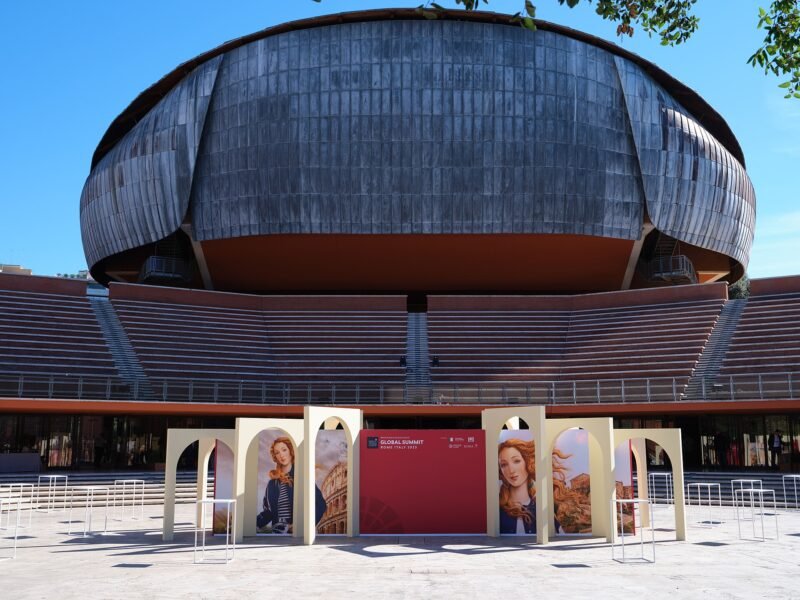
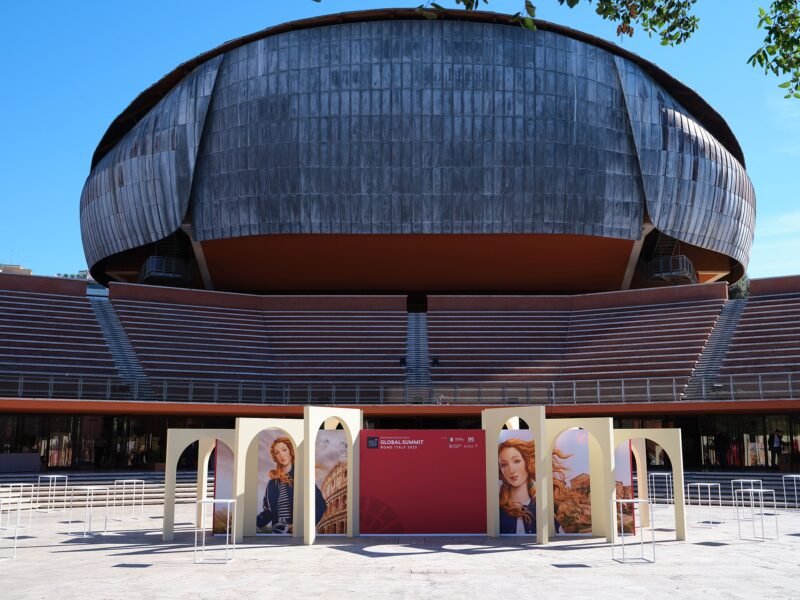
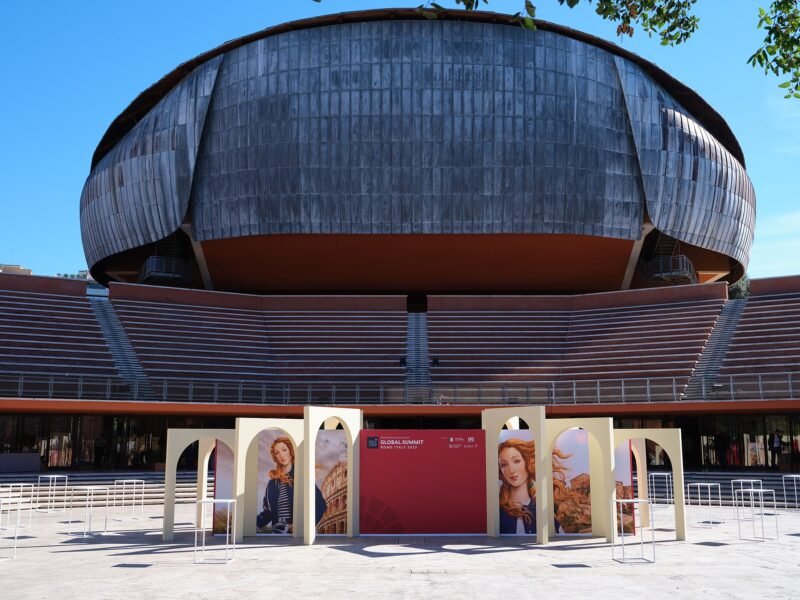
The Jussens' concert hall is Sala Sinopoli, one of the three large halls of Auditorium Parco della Musica Ennio Morricone, Renzo Piano's complex at Viale Pietro de Coubertin 30 that since 2003 has been the permanent home of the Accademia Nazionale di Santa Cecilia season.
The First to Open
Among the halls of the complex, Sinopoli was the first to open, on April 21, 2002, a few months before Sala Santa Cecilia was inaugurated on December 21, 2002. It's named after Giuseppe Sinopoli, one of the Academy's permanent conductors.
The Right Size for Two Pianos
Alongside Sinopoli are Sala Santa Cecilia, the largest, and Sala Petrassi, as well as the open-air cavea and Teatro Studio. For two grand pianos side by side, Sinopoli offers a more intimate dimension than the large symphonic hall.
The Academy and Auditorium Parco della Musica
In the complex the Academy also keeps its Bibliomediateca and the Museum of Musical Instruments. General information is on the page for Auditorium Parco della Musica.
Something Nobody Tells You About Lucas and Arthur Jussen at Auditorium Parco della Musica, March 17, 2027
The first thing few people say is that for a piano duo your seat in the hall matters, in our opinion, more than for a solo recital. With two instruments on stage, from the orchestra you see one brother's hands well. If you want to follow the dialogue between the two, you can choose the gallery, where the view of the keyboards is wider.
The second concerns the timing of advance sales. Tickets for concerts from March 3 onward only go on sale on January 12, 2027, four months after the autumn ones. Sala Sinopoli is smaller than Sala Santa Cecilia and the duo has a young, devoted audience: don't wait.
The third is practical: the Academy is inflexible about punctuality. The concert starts at 20:00 sharp, and the Bach chorales that open the evening are short and hushed: whoever arrives late misses all of them.
My Advice for Seeing Lucas and Arthur Jussen at Auditorium Parco della Musica, March 17, 2027
The first piece of advice is to listen first to the 2013 album Jeux, with Fauré, Poulenc and Ravel: it's the best way to get to know the duo's sound in the French repertoire that returns in the Rome program.
The second is not to underestimate the opening. Bach's chorales in Kurtág's transcription are short, hushed, far from the idea of virtuosity associated with a piano duo: listening to them in silence, unhurried, prepares the ear for everything else.
The third concerns the variations. Brahms and Lutosławski both start from a theme by another composer, Haydn and Paganini: keeping the initial theme in mind and following its transformations makes the listening much richer.
The fourth is to buy early, from January 12, and choose the seat with the view of the two keyboards in mind.
How to Get to Auditorium Parco della Musica
For the Jussens' concert at Auditorium Parco della Musica, take tram 2, stops Flaminia/Reni or Apollodoro, and buses 910, 982, 168 and 53. The nearest metro station is Flaminio, on line A.
From Metro A
From Flaminio station you exit onto Piazzale Flaminio and take tram 2 along Via Flaminia. From the Flaminia/Reni or Apollodoro stops, Viale Pietro de Coubertin is a few minutes' walk.
From Termini
The 910 leaves from Piazza dei Cinquecento, in front of Termini station, and arrives at Auditorium Parco della Musica with no transfers.
Other Lines and the Return
The 53, the 982 and the 168 complete the connections. March 17 is a Wednesday: for the return after 22:00, check the schedules on the ATAC route planner.
By Car
The stretch of Viale Pietro de Coubertin in front of Auditorium Parco della Musica is closed to traffic. The complex has a paid internal parking lot with limited spaces.
Another Well-Known Fact, Yet Rarely Mentioned
It's well known that the Jussens were students of Maria João Pires. Less mentioned is the role of their first teacher, Leny Bettmann: she put them in touch with the Portuguese pianist, with whom the two brothers then lived and studied. A meeting that marked their path.
A second little-mentioned fact concerns record success. The Jussens' first album, dedicated to Beethoven's sonatas and released in 2010, reached number two on the overall album chart in the Netherlands, not the classical one, and stayed there 24 weeks. For two kids playing Beethoven it was an extraordinary result.
And another: in 2018 the Jussens won an Opus Klassik in the category dedicated to classical music for children. A recognition that says a lot about their ability to speak to a young audience.
How to Plan the Evening
For the 20:00 concert, get to Auditorium Parco della Musica around 19:30, pick up your tickets and take your seat unhurried before the doors close.
Before the Concert
The foyer of Auditorium Parco della Musica has a bar and a coffee shop. If you're coming from work, you can eat something there, without rushing between a restaurant and the hall.
Mid-March at Auditorium Parco della Musica
The Jussens' concert ideally closes a small piano cycle: Mikhail Pletnëv on March 3 in the same Sala Sinopoli, Beatrice Rana with Daniel Harding from March 4 to 6 in Sala Santa Cecilia.
The Right Photo to Take at Lucas and Arthur Jussen at Auditorium Parco della Musica, March 17, 2027
The right photo is taken before the start: the two grand pianos in the center of the Sinopoli stage, lids open, the house lights still on. It's a rare image, because recitals for two pianos are few. During the concert, no photographs: Bach's chorales live on silence.
The best moment is the applause after Rhapsody in Blue, with the two brothers standing between the instruments: the image that best tells the evening.
Outside, the photo to take is Auditorium Parco della Musica lit up, with the three lead-clad volumes arranged around the cavea. If you arrive early, you can look, from the terrace between Sala Santa Cecilia and Sala Sinopoli, for the remains of the Roman villa discovered during construction.
Some Important Events That Happened Here in History
The history of the place begins long before Auditorium Parco della Musica. During construction, the remains of a Roman villa from the 3rd century BC emerged, built where there had been a small archaic farm from the 6th century BC. To preserve them Renzo Piano had to change the design and move two of the three halls. The finds are displayed in a small museum under the cavea.
In 1936 the demolition of the Augusteo hall left Rome for over 60 years without an auditorium built for symphonic music. In 1992 the city council chose the Olympic Village area, in 1993 Renzo Piano won the competition. On April 21, 2002, Sala Sinopoli opened, the one for the Jussens' concert. On December 21, 2002, the rest of the complex was inaugurated.
Since 2003 Auditorium Parco della Musica has permanently hosted the Academy's season, since 2006 the Rome Film Festival. In 2020 it was named after Ennio Morricone. In 2027 the bicentennial of Beethoven's death is celebrated there, with the Missa Solemnis in February and the Ninth in April.
Who Has Passed Through Lucas and Arthur Jussen at Auditorium Parco della Musica, March 17, 2027
Sala Sinopoli has had weighty guests from day one. At its opening, in 2002, the composer Goffredo Petrassi wanted to be present and heard the first performance in the new hall of his Concert Overture. The smallest hall of the complex bears his name today.
In the 2026/2027 season Sinopoli hosts, among others, Handel's Theodora with the Monteverdi Choir, the Quatuor Ebène with the complete Beethoven quartets, Sol Gabetta and Bertrand Chamayou, Jordi Savall, Allan Clayton's Winterreise and Mikhail Pletnëv's recital on March 3.
And through the Jussens' career pass Maria João Pires, Menahem Pressler and Dmitri Bashkirov, their teachers. Jaap van Zweden and Michael Schønwandt, the conductors of their first concerts at the Concertgebouw. Lang Lang and Ricardo Castro, with whom they have played. On March 17, on the Sinopoli stage, it's the two of them.
The Jussens in the Academy's 2026/2027 Season
The Lucas and Arthur Jussen concert is part of the Accademia Nazionale di Santa Cecilia's 2026/2027 season, which alongside symphonic concerts offers recitals and chamber music, largely in Sala Sinopoli.
The Piano in the Season
The piano has a leading role: from the recital by Evgeny Kissin and András Schiff in November to Pletnëv and Beatrice Rana in March, up to the Jussen duo.
The Overview
The full program is told on the page about Santa Cecilia's 2026/2027 season.
Accessibility, Kids and Families
For accessibility needs in Sala Sinopoli, contact the Academy's ticket office in advance at the infoline 06 8082058 or at biglietteria@santacecilia.it, to choose the most suitable seat and learn the access route.
With Kids
The Jussens' program is among the most suitable of the season for a kid: two young musicians, two pianos, short pieces like the Dolly suite and a finale with Rhapsody in Blue. The Opus Klassik award received in 2018 in the children's category confirms their attention to young audiences. The 20:00 start on a Wednesday remains demanding for the youngest.
The Neighborhood Around Auditorium Parco della Musica
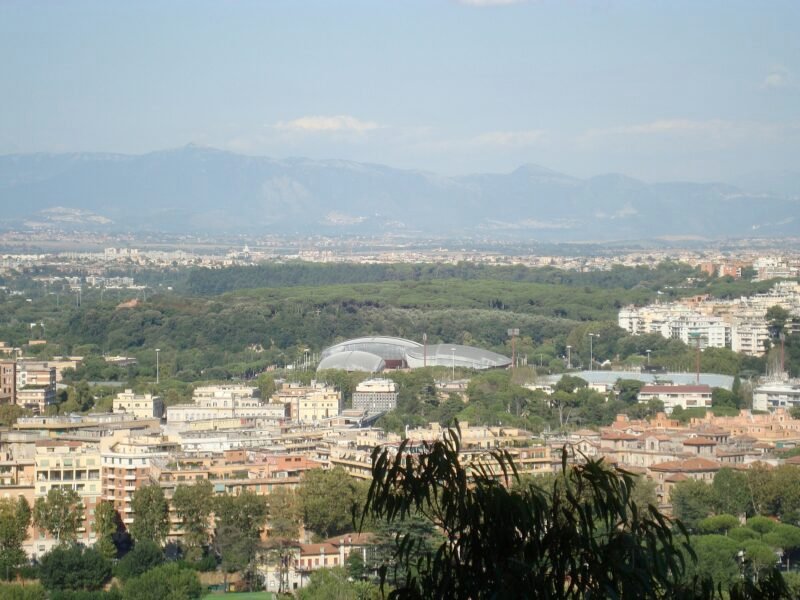
Around Auditorium Parco della Musica you find Villa Glori, the Olympic Village, the Corso di Francia viaduct and Viale Maresciallo Pilsudski: modern Rome, between contemporary architecture and greenery.
MAXXI and the River
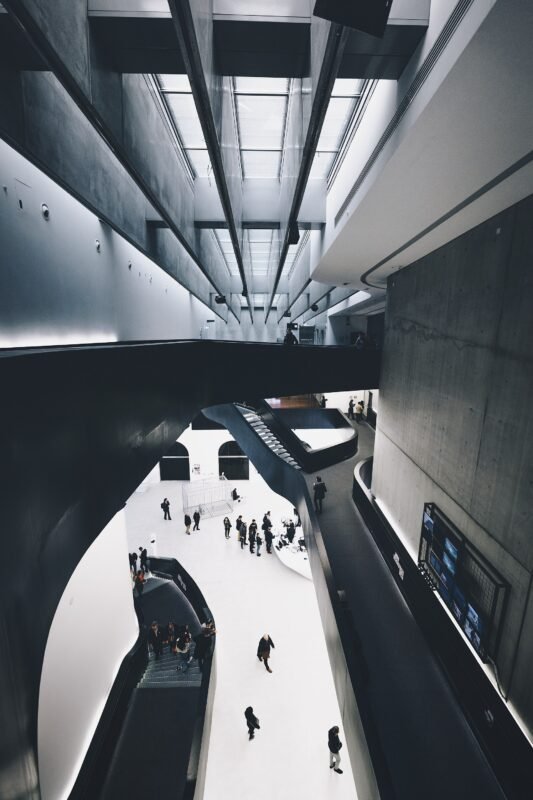
A few steps from the Flaminia/Reni stop is MAXXI, the national museum of 21st-century arts. Toward the Tiber, Ponte della Musica connects Flaminio to Foro Italico.
Toward the Center
Tram 2 takes you back to Piazzale Flaminio, where Villa Borghese begins.
Where to Eat Before or After the Concert
Inside Auditorium Parco della Musica there are a bar and a coffee shop in the foyer and a restaurant bar with access from the street as well. Between the Olympic Village, Via Flaminia and Piazza Mancini you find pizzerias, trattorias and neighborhood bars. For dinner after the concert, the widest offering is in the Ponte Milvio area, a few minutes away, where several places stay open late.
Mid-March in Rome
Mid-March is a good time for a trip to Rome: the days are longer and museum lines are still manageable. Evenings remain cool, and on leaving Auditorium Parco della Musica, around 22:00, you need a jacket. If you're staying in the city several days, you can pair the concert with a visit to MAXXI or a walk in Villa Borghese, both reachable by tram 2, which also goes to Auditorium Parco della Musica.
Frequently Asked Questions About the Jussens at Santa Cecilia
When Do Lucas and Arthur Jussen Play in Rome?
Lucas and Arthur Jussen play for the Accademia di Santa Cecilia on Wednesday, March 17, 2027 at 20:00 in Sala Sinopoli of Auditorium Parco della Musica Ennio Morricone, at Viale Pietro de Coubertin 30.
What Do the Jussens Play at Santa Cecilia?
The Jussens' program at Santa Cecilia includes three Bach chorales transcribed by Kurtág, VAN… by Kulenty, Brahms's Variations on a Theme by Haydn, Lutosławski's Variations on a Theme by Paganini, Fauré's Dolly, Ravel's Introduction and Allegro and Gershwin's Rhapsody in Blue.
How Much Are Tickets for the Jussens?
Tickets for the Lucas and Arthur Jussen concert cost 38 euros in the orchestra, 26 euros in the second-section gallery and 18 euros in the third-section gallery. They are on sale from January 12, 2027 at the box offices of Auditorium Parco della Musica and Via Vittoria 6 and through the network authorized by the Academy.
Who Are Lucas and Arthur Jussen?
Lucas and Arthur Jussen are two Dutch pianist brothers from Hilversum, born in 1993 and 1996, students of Maria João Pires. They play together as a duo, have recorded for Deutsche Grammophon since 2010 and debuted at the Salzburg Festival in 2019.
Is the Jussens' Concert Suitable for Kids?
The Jussens' concert at Santa Cecilia is among the most suitable for kids of the season: two young pianists, short pieces and a finale with Gershwin's Rhapsody in Blue. The 20:00 start on a Wednesday should be considered for the youngest.
How Do You Get to Auditorium Parco della Musica?
Auditorium Parco della Musica, on Viale Pietro de Coubertin 30, is reached by tram 2 from the Flaminio station of metro A, stops Flaminia/Reni or Apollodoro, and by buses 910 from Termini, 53, 982 and 168.
The Final Advice on the Jussens at Santa Cecilia
Two brothers who grew up next to Maria João Pires, a duo that reopened the Concertgebouw after the pandemic, a program that goes from Bach's chorales to Rhapsody in Blue: in our opinion it's the most festive chamber concert of Santa Cecilia's spring, and one of the best for anyone bringing a kid to their first recital. My advice is to buy early, from January 12, choose a seat with a good view of the two keyboards and arrive in time for the opening chorales.
Article written by the editorial team of Tour Leader Pro, contact them for Private/Corporate/V.I.P. Tours and Experiences.
Planning a trip to Rome? The English-language guides for visiting the city are on ItalyPlanner.com.
Contact Information
Nearby
 Museum of Musical Instruments (MUSA)100 m
- Auditorium Parco della Musica100 m
- Villa Glori500 m
- Fountain of Anna Perenna500 m
- MAXXI – National Museum of 21st Century Arts700 m
- Flaminio700 m
Upcoming events nearby
- Roma Jazz Festival 2026, November 1 to 24 at the Auditorium and Casa del Jazz100 m
- Roma Gospel Festival 2026 at Auditorium Parco della Musica, December 13, 2026 to January 1, 2027100 m
- Santa Cecilia 2026/2027 Concert Season at Auditorium Parco della Musica, October 21, 2026 to June 5, 2027100 m
- Gaia Banfi, L’ultima Maccaia at Auditorium Parco della Musica, November 15, 2026100 m




You might also like
- Daniel Harding Conducts Ravel and Debussy at Auditorium Parco della Musica, April 8, 9 and 10, 2027
- Argerich and Capuçon for Beethoven at Auditorium Parco della Musica, April 6, 2027
- Gustavo Gimeno and Frank Peter Zimmermann at Auditorium Parco della Musica, April 1, 2 and 3, 2027
- Manfred Honeck Conducts Beethoven at Santa Cecilia: March 25, 26 and 27, 2027
- Grigory Sokolov at Santa Cecilia, March 22, 2027
- Charles Dutoit and Martha Argerich at Auditorium Parco della Musica, March 18, 19 and 20, 2027