Jakub Hrůša and Daniil Trifonov at Santa Cecilia, January 28, 29 and 30, 2027
In short. Jakub Hrůša conducts the Orchestra of the Accademia Nazionale di Santa Cecilia with Daniil Trifonov at the piano on Thursday, January 28, 2027 at 19:30, Friday, January 29 at 20:00 and Saturday, January 30 at 18:00, in Sala Santa…
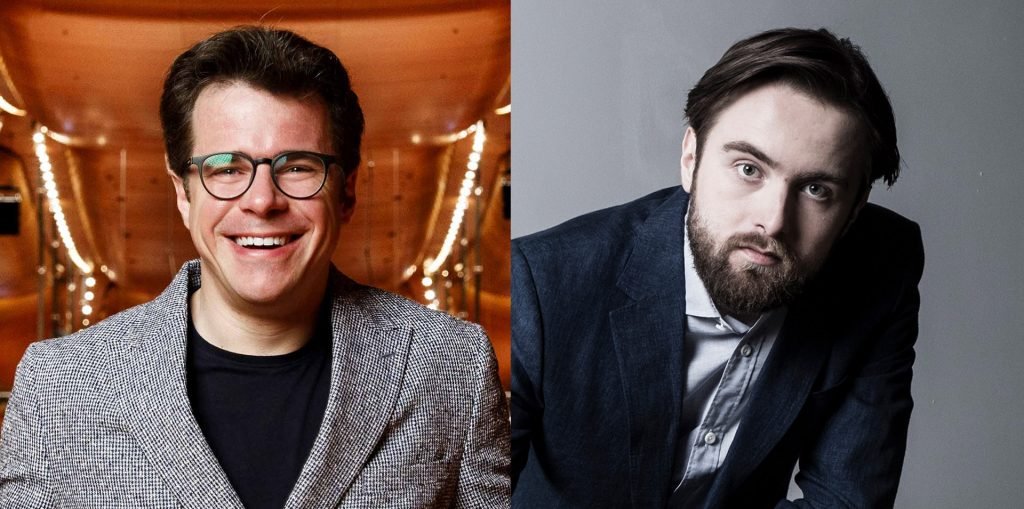
Jakub Hrůša conducts the Orchestra of the Accademia Nazionale di Santa Cecilia with Daniil Trifonov at the piano on Thursday, January 28, 2027 at 19:30, Friday, January 29 at 20:00 and Saturday, January 30 at 18:00, in Sala Santa Cecilia at Auditorium Parco della Musica Ennio Morricone, at Viale Pietro de Coubertin 30. On the program are the overture to Beethoven's Creatures of Prometheus, Dvořák's Piano Concerto and Schumann's Symphony No. 2. You get there on Metro A to Flaminio and then on tram 2 to the Flaminia/Reni or Apollodoro stops, or on buses 910 from Termini, 53, 982 and 168. Tickets for the symphonic season cost from 23 to 54 euros depending on the sector and are bought at the Auditorium box office, at the box office on Via Vittoria 6 and on the presale circuit authorized by the organization, reachable from the official concert page.
A Czech conductor who knows the Roman orchestra closely, a Russian pianist many consider the most complete virtuoso of his generation, the least performed piano concerto of the Romantic repertoire. It is a combination rarely seen, and in Rome you can hear it three times in three days. Whoever loves the piano and has only one free evening in late January already knows how to spend it.
Hrůša and Trifonov at Santa Cecilia: the program
The concert by Jakub Hrůša and Daniil Trifonov at Santa Cecilia lines up Beethoven, Dvořák and Schumann: the overture to The Creatures of Prometheus, Dvořák's Concerto for Piano and Orchestra and the Symphony No. 2. The Accademia places it within the celebrations for the 200th anniversary of Beethoven's death, 1827-2027.
Beethoven, The Creatures of Prometheus
The opening is entrusted to the overture of the ballet The Creatures of Prometheus, Beethoven's only major work for the dance stage. A few minutes of music, with a solemn opening and then a running allegro. It is a beginning that brings into the evening the Beethoven anniversary of 2027, which the Accademia celebrates throughout the season.
Dvořák, the Piano Concerto
The heart of the evening is the Piano Concerto in G minor, Op. 33 by Antonín Dvořák, the only one the Bohemian composer wrote for the instrument. It is heard far less than his Cello Concerto, and the reason is well known: the solo part is awkward, not very brilliant on the surface, full of pitfalls that cannot be seen. A concerto that asks a great pianist to put himself at the service of the orchestra, and a great conductor to know Dvořák like his own language. Here there are both.
Schumann, the Symphony No. 2
It closes with Robert Schumann's Symphony No. 2 in C major, written in a period of crisis and rebirth, with a whirling scherzo and an Adagio among the most intense pages of Romantic symphonic music. It is a score that asks the orchestra for precision and warmth together, and after the Dvořák concerto it completes a program built entirely on the Romanticism of the German and Bohemian world.
Three evenings, three series
The concert is repeated three times, following the series of the symphonic season: Thursday at 19:30 for series G, Friday at 20:00 for series V, Saturday at 18:00 for series S. The program is identical on all three evenings, only the time changes, and with it the way you organize the day.
Jakub Hrůša: the conductor's biography
Jakub Hrůša is a Czech conductor born in Brno on July 23, 1981, he is principal conductor of the Bamberger Symphoniker, music director of the Royal Opera House in London and designated conductor of the Czech Philharmonic from the 2028/2029 season. With the Santa Cecilia Orchestra he has a close bond: in 2021 the Accademia named him its principal guest conductor.
An architect's son
Hrůša is the son of the architect Petr Hrůša, in a family without professional musicians, tied rather to the technical and scientific world. At the gymnasium in Brno he studied piano and trombone and discovered conducting, he took lessons from Evžen Holiš, repetiteur and conductor at the National Theater of his city, where he soon learned the air of an opera house.
Bělohlávek's school
At 18 he entered the Academy of Performing Arts in Prague, where his teachers were Jiří Bělohlávek, Radomil Eliška and Leoš Svárovský. In 2000 he took part in the Prague Spring conducting competition, in 2003 he was awarded at the Lovro von Matačić international competition for young conductors in Zagreb. Of his teacher Bělohlávek he has always recalled the generosity in sharing ideas and rehearsals.
Early years at home
His first post after graduating was with the Bohuslav Martinů Philharmonic in Zlín, with which he toured Spain in 2004, even before officially taking up the job in 2005. In the same years he conducted Janáček's The Cunning Little Vixen and Mihalovici's Krapp at the National Theater in Prague and was associate conductor of the Czech Philharmonic. From 2005 to 2006 he was associate conductor of the Orchestre Philharmonique de Radio France, his first international post.
The Prague Philharmonia and Supraphon
From 2005 to 2008 he was first guest conductor of the Prague Philharmonia, then principal conductor from 2008 to 2015. In 2006 he signed a six-record contract with the Supraphon label: Dvořák, Suk, Janáček, Martinů, Smetana's Má vlast. It is in these years that his reputation as a reference interpreter of Czech music was built.
Glyndebourne and a gesture of consistency
In 2009 he was named music director of Glyndebourne on Tour, from 2010. In 2011 the Royal Danish Opera chose him as future music director, in January 2012, after the resignation of the artistic director Keith Warner following budget cuts, Hrůša gave up the post out of solidarity. A rare gesture, which says much about his character.
Bamberg, London, Rome
In 2015, after five guest concerts, the Bamberger Symphoniker named him principal conductor from the 2016/2017 season, the contract has been extended to 2029. From 2017 he was one of the two principal guest conductors of the Philharmonia Orchestra in London. In July 2021 the Orchestra of the Accademia Nazionale di Santa Cecilia named him principal guest conductor, from the 2021/2022 season, with an initial contract of three seasons.
Covent Garden
His debut at the Royal Opera House dates to February 2018, with Bizet's Carmen, in April 2022 he returned for Wagner's Lohengrin. A few months later, in October 2022, the London house chose him as music director from September 2025, successor to Antonio Pappano, who for many years had also led the Santa Cecilia Orchestra. In June 2025 the Czech Philharmonic named him principal and music director from the 2028/2029 season.
The Proms, Martinů and the medal of merit
At the BBC Proms he debuted in 2017 with a program devoted to the Hussite reform, from Smetana to Martinů, Dvořák, Janáček and Suk, in 2019 he returned with the complete Má vlast. He is president of the International Martinů Circle and in 2020 published a bilingual collection of essays on the composer, Hrůša on Martinů. In 2025 the president of the Czech Republic awarded him the Medal of Merit.
Daniil Trifonov: the pianist's biography
Daniil Trifonov is a Russian pianist and composer born in Nizhny Novgorod on March 5, 1991, in 2011 he won first prize and the grand prize at the Tchaikovsky Competition in Moscow and in 2018 a Grammy for Liszt's Études. The Anglo-American press has called him the most important virtuoso of our time.
A child prodigy
The only child of a composer father and a music-teacher mother, he began studying piano at 5 and gave his first recital at 7. At 8 he played with an orchestra for the first time, in a Mozart concerto, losing a baby tooth during the performance. In 2000 the family moved to Moscow and Daniil entered the Gnessin school, a pupil of Tatiana Zelikman, from 2006 to 2009 he also studied composition.
Cleveland and Sergei Babayan
In 2009, on Zelikman's advice, he moved to the Cleveland Institute of Music in the class of Sergei Babayan, where he remained until 2015, also studying composition with Keith Fitch. Babayan has said several times that he considers him a rare musician, of the kind met by very few in the world.
The competitions
At 15 he was third at the Chopin competition for young pianists in Moscow, held in Beijing, in 2008 he won the international competition of San Marino, with a special prize for a performance of a piece by Chick Corea. In 2010 he was third at the Chopin Competition in Warsaw, with the Polish radio prize for the best mazurka: Martha Argerich and Nelson Freire gave him the maximum score in the final. In May 2011 he won the Rubinstein competition in Tel Aviv, a few weeks later, the Tchaikovsky Competition in Moscow, with gold medal, grand prize and audience prize.
The international career
In the 12 months after the Tchaikovsky he played about 85 concerts, turning down many more. In 2012 he debuted with the New York Philharmonic, the Chicago Symphony, the Cleveland Orchestra, at Wigmore Hall, at the Musikverein in Vienna and at the Salle Pleyel in Paris, in February 2013 he gave his first solo recital at Carnegie Hall. In that same 2013 Italian music critics awarded him the Premio Abbiati as best soloist, a recognition that had gone before him to Pollini, Benedetti Michelangeli, Richter and Schiff.
Deutsche Grammophon and the Grammy
Since 2013 he has recorded exclusively for Deutsche Grammophon. The first record, the Carnegie Hall recital, was nominated for a Grammy, so was the second, with Rachmaninov's Rhapsody on a Theme of Paganini and the Philadelphia Orchestra under Yannick Nézet-Séguin. The third, Liszt's Transcendental Études of 2016, won the Grammy for best classical instrumental solo in 2018. Before Deutsche Grammophon he had recorded Chopin for Decca and other labels and Tchaikovsky's First Concerto with the Mariinsky Orchestra conducted by Valery Gergiev.
Awards and residencies
In 2016 he received Gramophone's Artist of the Year award and the Royal Philharmonic Society's award for best instrumentalist, in 2017 the Herbert von Karajan Prize at the Salzburg Easter Festival, in 2019 he was Musical America's Artist of the Year. He was artist in residence of the Berliner Philharmoniker in the 2018/2019 season and of the New York Philharmonic in the 2019/2020 season.
The composer
Trifonov is also a composer. In 2014 the Cleveland Institute of Music commissioned from him a Piano Concerto in E-flat minor, which he himself premiered on April 23 of that year, he has written a Piano Quintet and Rachmaniana, recorded on the album devoted to Rachmaninov. He lives in New York.
The Orchestra of the Accademia Nazionale di Santa Cecilia
The Orchestra of the Accademia Nazionale di Santa Cecilia is the symphony orchestra that animates the Accademia's season at the Auditorium Parco della Musica, today led by music director Daniel Harding. The Accademia is one of the oldest musical institutions in the world: born as a congregation of musicians, it is now a foundation with a symphony orchestra and choir and an academic body.
The 2026/2027 season
The Hrůša and Trifonov concert falls in the thick of the symphonic winter. The week before, on January 21, 22 and 23, Tugan Sokhiev conducts Bach and Tchaikovsky, right after, on February 4, 5 and 6, Tarmo Peltokoski conducts with Bertrand Chamayou at the piano, and on February 11, 12 and 13 Antonio Pappano returns with Jan Lisiecki. In March come Beatrice Rana with Harding and Martha Argerich with Charles Dutoit.
Chamber music in the same week
On Wednesday, January 27, the evening before the symphonic concert, the chamber season brings to Sala Sinopoli Benedetto Lupo with Schumann and Brahms. For piano lovers, two consecutive evenings at the Auditorium offer a comparison between two schools and two generations.
The museum and the patron saint
The Auditorium is the Accademia's main home, which keeps there its Bibliomediateca and the Museum of Musical Instruments. The patron saint of music and of the Accademia is venerated in the Basilica of Santa Cecilia in Trastevere, which is worth a daytime visit for those staying in Rome.
Sala Santa Cecilia, where Hrůša and Trifonov play
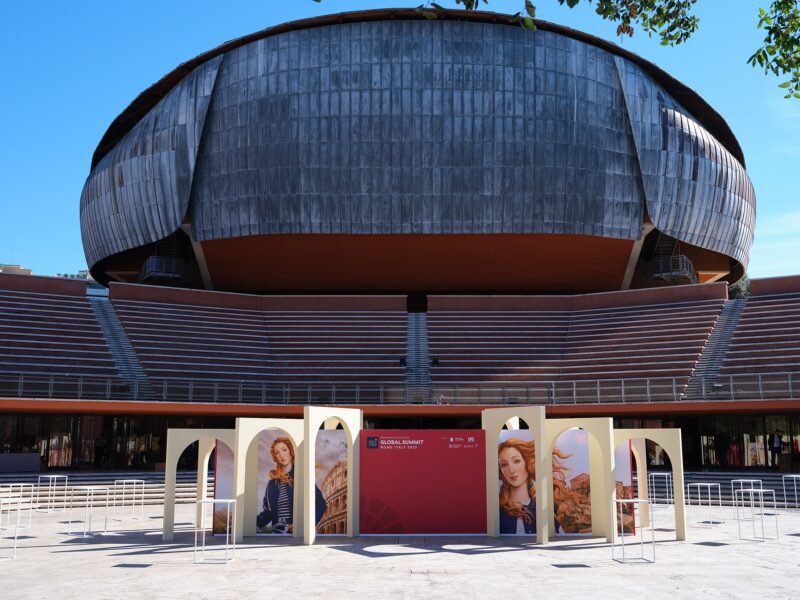
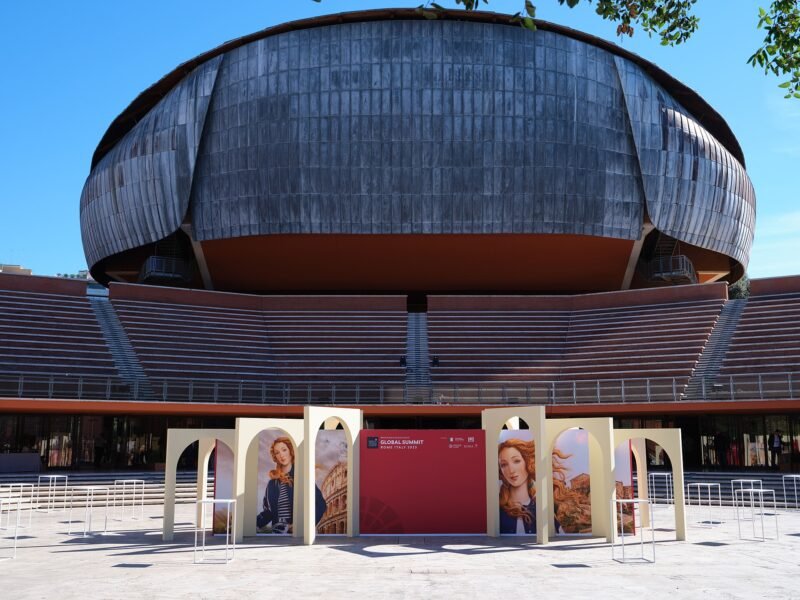
Sala Santa Cecilia is the largest of the three concert halls of Auditorium Parco della Musica Ennio Morricone: 2,756 seats, designed by Renzo Piano for symphonic music and inaugurated on December 21, 2002. Since 2003 it has been the permanent home of the Accademia's season.
The cherry wood
The ceiling is made of 26 American cherry shells, each with an average surface of about 180 square meters. The hall works like a great sound box, with a reverberation time of 2.2 seconds. For a piano concert it means that the sound of the instrument, even in the lightest passages, reaches the last rows.
Where to sit for a piano concert
Those who frequent the hall know that sound intensity seems to drop up to the 10th row and then stay constant: you do not need the orchestra seats right against the stage. For a pianist, though, position matters too: the open lid of the piano projects the sound toward the left side of the hall, as you face the stage, and from that side you also see the soloist's hands.
Renzo Piano's beetles
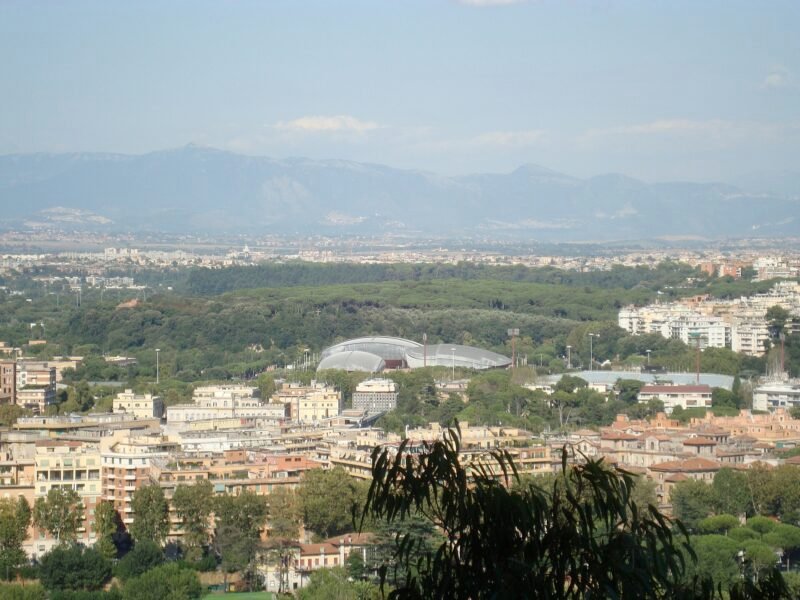
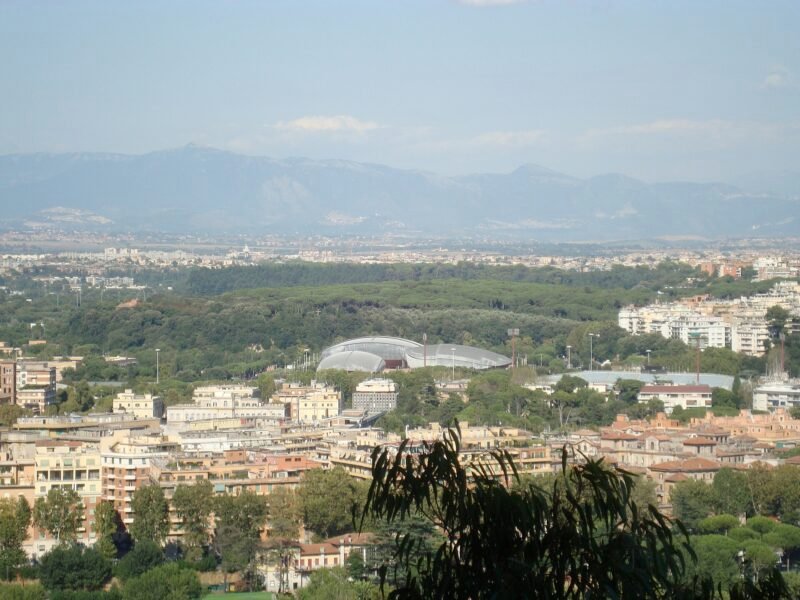
Seen from outside, the halls are three large lead-clad volumes on a brick base, arranged in a fan around the open-air cavea named for Luciano Berio. Piano won the invitation-only competition in 1993 and worked with the acoustician Jürgen Reinhold of the Müller-BBM firm in Munich and with the landscape architect Franco Zagari. The profile of the complex is on the page about the Auditorium Parco della Musica.
Tickets for Hrůša and Trifonov: prices and discounts
Tickets for the Hrůša and Trifonov concert cost from 23 to 54 euros depending on the Sala Santa Cecilia sector: 54 euros for orchestra A, 47 for orchestra B and central gallery 1, 37 for middle gallery 1 and gallery 5, 35 for gallery 7, 30 for side gallery 1 and the first rows of gallery 2, 23 for galleries 4 and 6.
Where to buy
Presale for concerts through February 27, 2027 opened on September 10, 2026. The Auditorium box office, in the greenhouse space, is open every day from 11:00 to 20:00. The one at Via Vittoria 6, a step from Via del Corso and Piazza del Popolo, is open Monday to Friday from 11:00 to 19:00 and Saturday from 11:00 to 14:00, with electronic payment only. Online, start from the official concert page.
Young people and kids
For subscription-season concerts, people under 26 get a 30% discount on tickets, and children under 14 accompanied by an adult enter at the symbolic price of 3 euros. People under 35 can use the 10-admission pass at 120 euros, valid for the Thursday and Friday series, this concert is not among those at a higher price. Reduced rates are bought only at the box offices, while promotional seats last, and the discounts cannot be combined.
Culture cards and teachers
The Carta della Cultura Giovani, the Carta del Merito and the bonus for permanent teachers can be used for tickets to the Accademia's concerts. The infoline 06 8082058 answers Monday to Friday from 10:00 to 17:00.
How to get to the Auditorium for Hrůša and Trifonov
Auditorium Parco della Musica Ennio Morricone is reached on Metro A to Flaminio and then tram 2, stops Flaminia/Reni or Apollodoro, or on buses 910, 53, 982 and 168. The metro does not go all the way to the entrance.
Metro A and tram 2
From Piazzale Flaminio tram 2 climbs Via Flaminia toward Piazza Mancini. You get off at Flaminia/Reni or Apollodoro and walk a few minutes toward Viale Pietro de Coubertin, through the Olympic Village. It is the simplest route from Piazza del Popolo and the center, passing by the Flaminio obelisk.
The 910 from Termini
The 910 leaves from Piazza dei Cinquecento, in front of Termini station, and reaches the Auditorium without changes. For those who sleep near the station, or arrive by train for the Saturday afternoon concert, it is the line to choose.
The other lines
The 53 links Piazza Mancini and the center, the 982 comes from the area around Viale XVII Olimpiade and from Quattro Venti station, the 168 from Tiburtina station. The 168 is a weekday line: on Saturday it is best to check the times on the transit company's website.
By car
The stretch of Viale Pietro de Coubertin in front of the Auditorium is closed to traffic. The complex has paid parking with limited spaces, on concert evenings cars flood the streets of the Olympic Village. Drive only if there is no alternative, and early.
How to organize the concert evening
For the Hrůša and Trifonov concert the rule is to arrive at the Auditorium at least 40 minutes before the start: ticket pickup, checks, coat check and the climb to the hall take time in a hall of over 2,700 seats.
The doors close
At start time the hall doors close, and latecomers wait outside. With an overture of a few minutes opening the program, the risk is to enter directly at the Dvořák concerto or, worse, to be left out until the intermission. Half an hour of margin against Flaminio traffic is not excessive caution.
Before the concert
The foyer shared by the halls hosts a bar, a coffee shop and a large bookstore with records and music books. From the terrace that runs around the buildings you can see the remains of the Roman villa discovered during construction. The Accademia's Courtesy Service is present on subscription concert days from one hour before the start.
Which evening to choose
Thursday at 19:30 is the evening for those leaving work who eat afterward. Friday at 20:00 leaves time for an aperitivo. Saturday at 18:00 is the best choice for those coming from out of town or who want to dine unhurriedly after the concert, discussing the evening at the table without watching the clock.
Accessibility and kids at the concert
For people with walking disabilities who hold the Disability Card, the Accademia offers a 15% reduction on two tickets, for wheelchair users admission costs 10 euros and the companion enters free, while available seats last.
Booking
For non-ambulatory people, booking is mandatory, from 15 days before the concert until the day before, at 06 8082058 or at biglietteria@santacecilia.it. For the January 28 concert the window therefore opens on January 13.
Arriving early
The hall is raised above the ground, because the remains of a Roman villa emerged underground, and the galleries have only two elevators: arriving an hour early and asking staff right away for the route avoids the bottleneck of the minutes before the start.
With kids
For a teenager who studies piano, seeing Trifonov live is a formative experience worth a year of lessons, and with 3 euros for accompanied children under 14 the Accademia makes it accessible. The advice: a seat on the left side of the gallery, from which you can see the hands on the keyboard.
The neighborhood around the Auditorium
The Auditorium occupies an area of about 55,000 square meters between Villa Glori, the Olympic Village, the Corso di Francia viaduct and Viale Maresciallo Pilsudski: a piece of twentieth-century Rome, where contemporary architecture coexists with greenery.
MAXXI and the Olympic Village
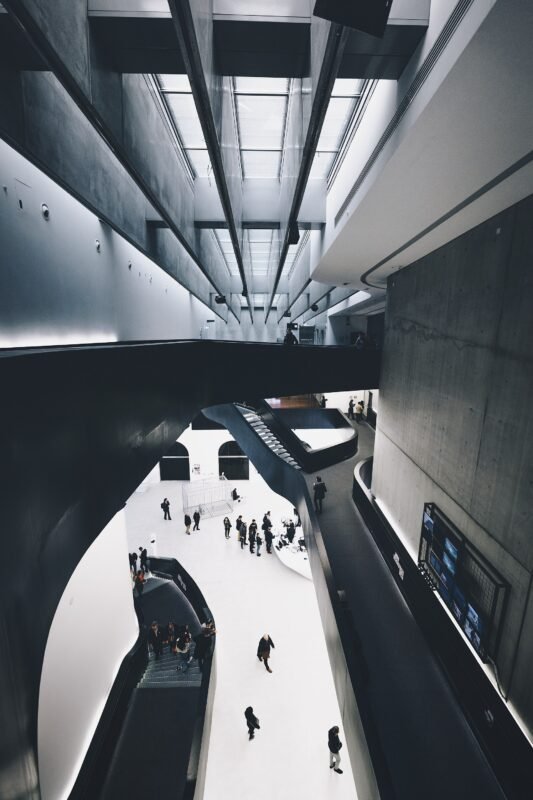
A few minutes on foot, toward Via Guido Reni, is Zaha Hadid's MAXXI: with the Auditorium it forms the most important pair of contemporary architecture in the city. If you have a free afternoon before the Saturday concert you can visit an exhibition and walk to the hall.
Toward the Tiber
From the Auditorium you go down to the Ponte della Musica, the footbridge linking Flaminio to the Foro Italico. Farther north is Milvian Bridge, in the evening one of the most frequented meeting points in northern Rome.
Toward the center
With tram 2 you return to Piazzale Flaminio, at the gates of Villa Borghese and the Tridente. Along Via Flaminia, halfway, is the Etruscan Museum of Villa Giulia, to pair with the Saturday concert.
Where to eat before or after the concert
Inside the Auditorium there are a bar and coffee shop in the foyer and a bar-restaurant with access from the street too: the most convenient option for those arriving from work on Thursday.
In the neighborhood
Between the Olympic Village, Via Flaminia and Piazza Mancini there are pizzerias, trattorias and neighborhood bars, frequented more by residents than by tourists. For Thursday and Friday it is best to book early and dine unhurriedly afterward.
Ponte Milvio and the center
For dinner after the Saturday concert the widest choice is at Ponte Milvio, reachable in a few minutes, where the places stay open late. In the opposite direction, toward Piazzale Flaminio and Piazza del Popolo, the choice is that of the historic center, with historic-center prices.
A curiosity about Jakub Hrůša and Daniil Trifonov at Santa Cecilia, January 28, 29 and 30, 2027
The first record Jakub Hrůša made for Supraphon, in 2006, was devoted to Dvořák: the Czech Suite, the Waltzes, the Polonaise, with the Prague Philharmonia. Since then Dvořák has remained at the center of his work, from the serenades to the overtures, from the Slavonic Rhapsodies to the Cello Concerto. The Piano Concerto he conducts in Rome therefore belongs to a composer he knows like few conductors in the world.
Trifonov too has a particular relationship with Sala Santa Cecilia, but an indirect one. In 2013 Italian music critics awarded him the Premio Abbiati as best soloist, a recognition that had gone before him to Maurizio Pollini, Arturo Benedetti Michelangeli, Sviatoslav Richter, Radu Lupu and András Schiff. Schiff, in the same 2026/2027 season, plays in this very hall in a duo with Evgeny Kissin.
Third curiosity: as a teenager, at the 2008 San Marino competition, Trifonov received a special prize for his performance of Chick Corea's Afterthought. A classical pianist rewarded for a jazz piece, at 17: the sign of a curiosity that has never left him, and that shows in the freedom with which he approaches even the best-known repertoire.
One thing nobody tells you about Jakub Hrůša and Daniil Trifonov at Santa Cecilia, January 28, 29 and 30, 2027
Dvořák's Piano Concerto has always been the neglected brother among his concertos. The Cello Concerto is among the most performed in the repertoire, the one for piano rarely appears on schedules, and even more rarely with a soloist of Trifonov's level. The reason is technical: the piano part is written in a not very idiomatic way, tiring without being spectacular. Hearing it entrusted to a virtuoso who has nothing to prove is the chance to understand what Dvořák really had in mind.
Second little-told thing: Hrůša is at home at Santa Cecilia. In 2021 the Accademia named him principal guest conductor of its orchestra. He does not arrive as a passing guest: he knows the principal players, the sound of the strings, the habits of the hall. It is an advantage you can hear, especially in a symphony like Schumann's second, where the cohesion of the orchestra counts for more than the individuals.
Third: of the three dates, the Saturday one at 18:00 is the only one that leaves the evening free. Those coming from outside Rome can return the same day with an evening train.
The advice I give you for visiting Jakub Hrůša and Daniil Trifonov at Santa Cecilia, January 28, 29 and 30, 2027
The advice is to listen, before the concert, to the second movement of the Dvořák Concerto, the Andante sostenuto. It lasts about 10 minutes and is the page in which you understand why this concerto deserves more than its reputation. Whoever enters the hall knowing its breath then feels the whole difference between a correct performance and one that sings.
Second piece of advice: choose your seat according to what you want to take home. For the sound, central orchestra beyond the 10th row or the frontal gallery. For the pianist, the left side as you face the stage: you see Trifonov's hands on the keyboard, and the piano's sound, projected by the open lid, arrives direct.
Third: stay for Schumann. It happens that you see spectators who, after the soloist and the intermission, leave. It is a mistake. The second symphony, with Hrůša, is one of the reasons for the evening, and the Adagio alone is worth the ticket. Tram 2 and the 910 run 10 minutes later too.
Finally, if Trifonov grants an encore, do not stand at the first applause. With him the encore is often a small piano lesson.
Another well-known fact, yet rarely mentioned
It is known that Jakub Hrůša became music director of the Royal Opera House in London in 2025. It is less remembered that at Covent Garden he took the place of Antonio Pappano, the conductor who for many years was also the face of the Santa Cecilia Orchestra. Two conductors, the same London podium, the same Roman orchestra: Hrůša arrives in Rome in Pappano's wake, and in the same season Pappano returns to conduct at Santa Cecilia in November and in February.
It is also known that Trifonov won the Tchaikovsky Competition in 2011. It is less remembered that the year before, at the Chopin Competition in Warsaw, he was only third, and that two jury members, Martha Argerich and Nelson Freire, gave him the maximum score in the final. Argerich later said she had never heard anything like it, speaking of a tenderness joined to a demonic element. In the same Santa Cecilia season Argerich plays in March with Charles Dutoit: a few weeks apart, the hall hosts the pianist who discovered him and the pianist she discovered.
The right photo to take at Jakub Hrůša and Daniil Trifonov at Santa Cecilia, January 28, 29 and 30, 2027
During the concert the phone stays off: in such a sensitive hall every shot can be heard, and a pianist like Trifonov works on pianissimos that the slightest noise ruins. The photo is taken before and after.
Before the concert, in late January, it gets dark early: from the top of the cavea you frame Renzo Piano's three beetles with the lead reflecting the lights, and the entrance of Sala Santa Cecilia with the audience going in. It is the image that tells the evening better than any portrait.
In the hall, before the lights go down and if staff allow, the shot to take is the grand piano at the center of the stage, with the lid open and the hall filling up, and above it the cherry shells of the ceiling. The empty piano, a few minutes before Trifonov, is an image of waiting.
After the concert, the final applause is the only moment to take out the phone, without flash. Outside, the volumes of the halls seen from below, along Viale Pietro de Coubertin, give an almost abstract image: the least obvious, and perhaps the most beautiful.
Some important events that took place here in history
The ground on which the Auditorium stands has a much longer history than the complex. During construction the remains of a Roman villa of the 3rd century BC emerged, built on the site of a small archaic farm of the 6th century BC. The discovery forced Renzo Piano to modify the project, moving two of the three beetles westward. The finds are displayed in a small museum under the cavea.
The modern history begins with a demolition. In 1936 the Augusteo, Rome's great concert hall, was torn down, and for more than 60 years the capital was left without an auditorium built for symphonic music. Only in 1992 did the city council choose the Olympic Village area, and in 1993 Piano won the competition.
On April 21, 2002 Sala Sinopoli opened, on December 21, 2002 Sala Santa Cecilia, with the Accademia's orchestra conducted by Myung-Whun Chung. Since 2003 the Auditorium has been the permanent home of the Accademia's season, since 2006 it hosts the Rome Film Festival, and in 2020 the city council approved naming it for Ennio Morricone. In 2021, in this hall, began the relationship between the orchestra and Jakub Hrůša as principal guest conductor.
Who has played at Jakub Hrůša and Daniil Trifonov at Santa Cecilia, January 28, 29 and 30, 2027
Sala Santa Cecilia has had weighty guests from the first day. The inaugural concert of December 21, 2002 was conducted by Myung-Whun Chung. A few months earlier, at the opening of Sala Sinopoli, Goffredo Petrassi wanted to be present to hear the first performance in the new hall of his Ouverture da concerto of 1931. Luciano Berio, then head of the Accademia, gave his name to the cavea.
Since then the hall has been the home of the Santa Cecilia Orchestra and its music directors, from Antonio Pappano to Daniel Harding. Jakub Hrůša has passed through as principal guest conductor since 2021, bringing to Rome his Czech and Central European repertoire.
In the 2026/2027 season, on the same stage pass Kirill Petrenko, conductor of the Berliner Philharmoniker, the orchestra of which Trifonov was artist in residence in 2018/2019, Martha Argerich with Charles Dutoit, Lisa Batiashvili with Lorenzo Viotti, Rudolf Buchbinder with Mozart, Semyon Bychkov with Katia and Marielle Labèque, and in the chamber season Evgeny Kissin and András Schiff, Grigory Sokolov, Igor Levit. In late January it is the turn of a Czech conductor and a Russian pianist, with a Bohemian concerto in the middle.
Frequently asked questions about Hrůša and Trifonov at Santa Cecilia
When does Daniil Trifonov play in Rome in 2027?
Daniil Trifonov plays in Rome with the Santa Cecilia Orchestra conducted by Jakub Hrůša on Thursday, January 28, 2027 at 19:30, Friday the 29th at 20:00 and Saturday the 30th at 18:00, in Sala Santa Cecilia at Auditorium Parco della Musica. The program is the same on all three evenings.
What do Hrůša and Trifonov play at Santa Cecilia?
The program of Hrůša and Trifonov at Santa Cecilia includes the overture to Beethoven's Creatures of Prometheus, Dvořák's Concerto for Piano and Orchestra with Trifonov as soloist and Schumann's Symphony No. 2. The concert is part of the celebrations for the 200 years since Beethoven's death.
How much do tickets for Hrůša and Trifonov cost?
Tickets for Hrůša and Trifonov at Santa Cecilia cost from 23 to 54 euros, depending on the sector: 54 for orchestra A, 23 for galleries 4 and 6. People under 26 get 30% off and accompanied children under 14 pay 3 euros, purchased at the box office.
Where do I buy tickets for Trifonov's concert in Rome?
Tickets for Trifonov's concert with the Santa Cecilia Orchestra are bought at the Auditorium Parco della Musica box office, open every day from 11:00 to 20:00, at the box office on Via Vittoria 6 and online from the official concert page on the Accademia's website.
Who is Jakub Hrůša?
Jakub Hrůša is a Czech conductor born in Brno in 1981, principal conductor of the Bamberger Symphoniker, music director of the Royal Opera House in London since 2025 and future conductor of the Czech Philharmonic. Since 2021 he has been principal guest conductor of the Santa Cecilia Orchestra.
How do I get to Auditorium Parco della Musica?
Auditorium Parco della Musica, at Viale Pietro de Coubertin 30, is reached on Metro A to Flaminio and tram 2 to the Flaminia/Reni or Apollodoro stops, or on bus 910 from Termini and lines 53, 982 and 168. Parking is limited and paid.
Which of the three dates should I choose for Hrůša and Trifonov?
The three dates of Hrůša and Trifonov at Santa Cecilia have the same program. Thursday at 19:30 suits those leaving work, Friday at 20:00 those who want an aperitivo beforehand, Saturday at 18:00 those coming from out of town or who prefer to dine unhurriedly after the concert.
In closing
At Santa Cecilia concerts the evenings you remember are the ones where the program surprises. This one has it all: a conductor who knows Dvořák like his own language and the Roman orchestra like his own, a pianist who has nothing to prove, a concerto almost nobody has heard live. Take a seat on the left side, arrive with half an hour of margin and stay until the last note of Schumann.
Article written by the editorial team of Tour Leader Pro, contact them for Private/Corporate/V.I.P. Tours and Experiences.
Planning a trip to Rome? The English guides to visiting the city are on ItalyPlanner.com.
Contact Information
Nearby
 Museum of Musical Instruments (MUSA)100 m
- Auditorium Parco della Musica100 m
- Villa Glori500 m
- Fountain of Anna Perenna500 m
- MAXXI – National Museum of 21st Century Arts700 m
- Flaminio700 m
Upcoming events nearby
- Roma Jazz Festival 2026, November 1 to 24 at the Auditorium and Casa del Jazz100 m
- Evgeny Kissin and András Schiff at Santa Cecilia, November 9, 2026100 m
- Roma Gospel Festival 2026 at Auditorium Parco della Musica, December 13, 2026 to January 1, 2027100 m
- Santa Cecilia 2026/2027 Concert Season at Auditorium Parco della Musica, October 21, 2026 to June 5, 2027100 m



You might also like
- Nubras Ensemble at Auditorium Parco della Musica, February 27, 2027
- Fabio Luisi and Beethoven’s Missa Solemnis at Auditorium Parco della Musica, February 25 to 27, 2027
- Lorenzo Viotti and Lisa Batiashvili at Auditorium Parco della Musica, February 18, 19 and 20, 2027
- Antonio Pappano and Jan Lisiecki at Auditorium Parco della Musica, February 11, 12 and 13, 2027
- Tarmo Peltokoski and Bertrand Chamayou at Auditorium Parco della Musica, February 4, 5 and 6, 2027
- Riccardo Minasi conducts the Eroica at Auditorium Parco della Musica, January 7, 8 and 9, 2027