Tarmo Peltokoski and Bertrand Chamayou at Auditorium Parco della Musica, February 4, 5 and 6, 2027
In short. Finnish conductor Tarmo Peltokoski conducts the Orchestra dell'Accademia Nazionale di Santa Cecilia with pianist Bertrand Chamayou on Thursday, February 4, 2027 at 19:30, Friday, February 5 at 20:00 and Saturday, February 6 at 18:00 in…
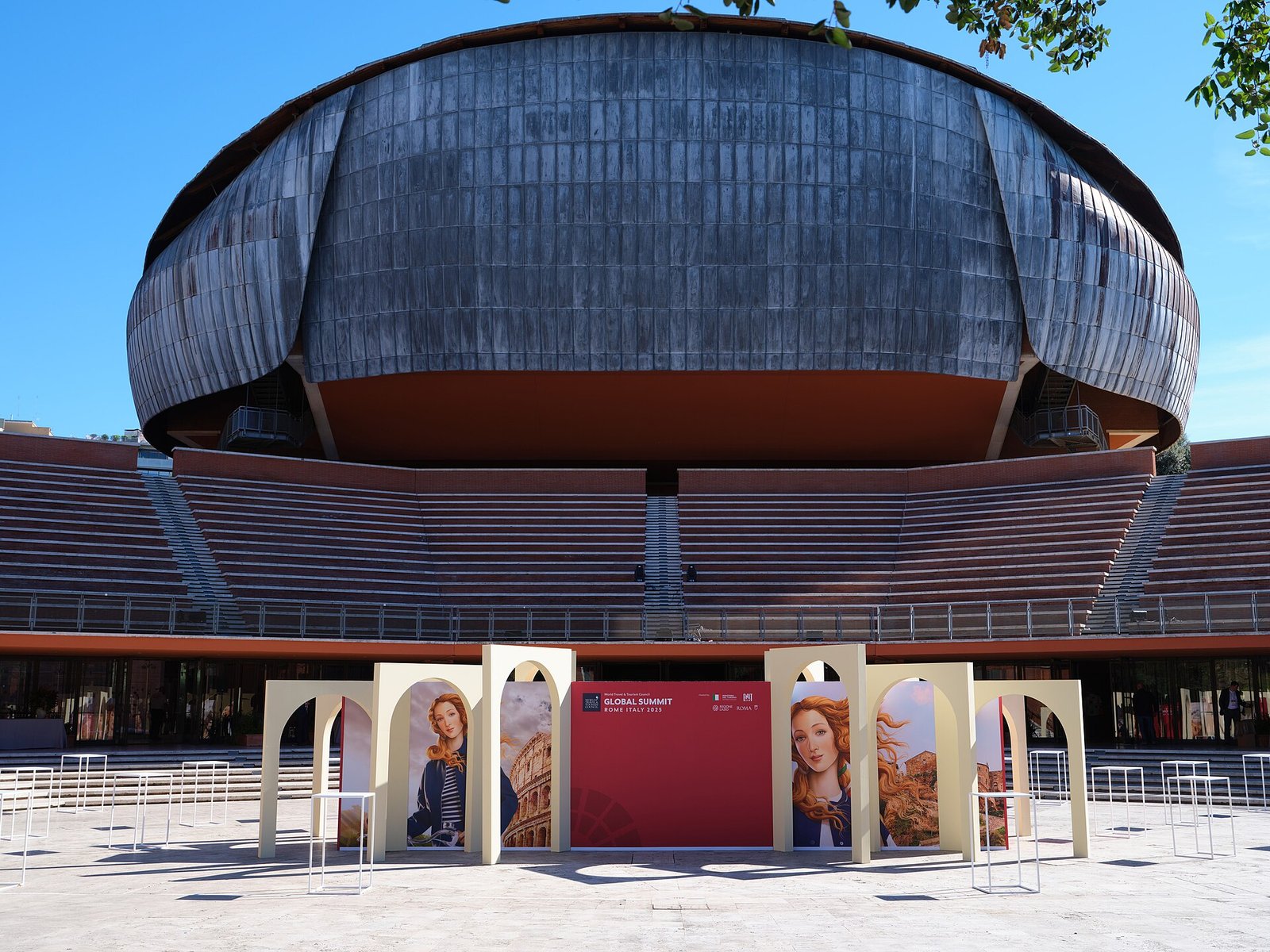
Finnish conductor Tarmo Peltokoski conducts the Orchestra dell'Accademia Nazionale di Santa Cecilia with pianist Bertrand Chamayou on Thursday, February 4, 2027 at 19:30, Friday, February 5 at 20:00 and Saturday, February 6 at 18:00 in the Sala Santa Cecilia of the Auditorium Parco della Musica Ennio Morricone, Viale Pietro de Coubertin 30. The program is Liszt's Piano Concerto No. 1 and Shostakovich's Symphony No. 7 "Leningrad." The Auditorium is reached by Metro Line A to Flaminio and then tram 2, stops Flaminia/Reni or Apollodoro, or by buses 910 from Termini, 53, 982 and 168. Tickets cost from 23 to 54 euros depending on the section. They are bought at the Auditorium box office, at the one on Via Vittoria 6 and on the presale network authorized by the Accademia, reached from the official concert page.
A conductor born in 2000 who at 26 leads orchestras in Toulouse, Riga, Rotterdam and Hong Kong, and a pianist from Toulouse who is the only artist to have won the Victoire de la Musique Classique three times. The Accademia's first symphonic program of February brings together the Romantic virtuosity of Liszt and the most monumental of the 20th century's war symphonies.
Peltokoski and Chamayou at Santa Cecilia: the three evenings
The concert by Tarmo Peltokoski and Bertrand Chamayou is repeated three times in the Sala Santa Cecilia: Thursday, February 4, 2027 at 19:30 (G series), Friday the 5th at 20:00 (V series) and Saturday the 6th at 18:00 (S series), within the Accademia's 2026/2027 symphonic season.
Which evening to choose
The program is the same on the three dates. The time changes: Thursday at 19:30 leaves the evening free after the concert, Friday at 20:00 is the most classic performance, and Saturday at 18:00 lets you have dinner calmly once the concert is over. For people coming from outside Rome, Saturday afternoon is the most convenient choice.
A return
The Accademia presents the concert as a return: the very young Finnish conductor comes back to Santa Cecilia. The Roman audience has therefore already seen him on the podium of the same orchestra, and now finds him again with a program of great symphonic breadth.
Presale
The Accademia has divided the season's presale into two periods: from September 10, 2026 the concerts from October 14, 2026 to February 27, 2027 are on sale, and from January 12, 2027 those from March to the end of the season. Peltokoski's concert falls in the first block, already available to buy.
The program: Liszt and Shostakovich's "Leningrad"
The program of Peltokoski and Chamayou includes Franz Liszt's Concerto for Piano and Orchestra No. 1, with Chamayou as soloist, and Dmitri Shostakovich's Symphony No. 7 "Leningrad" in the second half.
Liszt, Concerto No. 1
The Accademia describes Liszt's First Concerto as a score in which the soloist's virtuosity goes hand in hand with complex orchestral writing. Liszt worked on it for a very long time: the main themes date back to 1830, the definitive version is dated 1849. The first performance took place in Weimar on February 17, 1855, with Liszt himself at the piano and Hector Berlioz on the podium.
A compact concerto
The Concerto is in four movements but lasts about 20 minutes, and the movements follow one another without real pauses. It is a short, dense piece, in which the pianist moves from heroic gesture to lyrical nocturne within a few bars. Next to the symphony that follows, it makes up a relatively short first half.
Shostakovich, Symphony No. 7
Shostakovich's Seventh, explains the Accademia, was written in 1941 during the siege of Leningrad by Nazi troops and immediately became the musical emblem of Soviet resistance: a monumental symphonic construction in which martial rhythms, moments of tension and intense reflection alternate.
From the besieged city to the world
Shostakovich began it in Leningrad and completed it in December 1941 in Kuibyshev, present-day Samara, where the symphony was performed for the first time on March 5, 1942. On August 9, 1942 it was played in besieged Leningrad itself, broadcast by loudspeakers across the whole city and toward the German lines. The score, microfilmed, reached New York by way of Tehran and Cairo: on July 19, 1942 Arturo Toscanini conducted it with the NBC Symphony Orchestra in a radio broadcast.
Two worlds in one evening
The contrast is sharp: first the 19th-century salon and concert hall, with the piano as protagonist, then a war symphony, which takes up the whole second half by itself. In our view it is a pairing that shows well the two souls of Peltokoski, himself a pianist and conductor of great symphonic architectures.
Who Tarmo Peltokoski is
Tarmo Peltokoski is a Finnish conductor, pianist and composer born in Vaasa on April 20, 2000. At 26 he is music director of three orchestras and records exclusively for Deutsche Grammophon.
His training
Born to a Finnish father and a Filipino mother, he began piano at age eight at the Kuula-opisto in his city. At 14 his father contacted Jorma Panula, the legendary Finnish conducting teacher, who took him on as a private student for four years. He then studied at the Sibelius Academy, where his teachers included Sakari Oramo, leaving it without a degree. Among his mentors are also Hannu Lintu, Jukka-Pekka Saraste and Esa-Pekka Salonen.
Bremen, the first orchestra
During the lockdown the Deutsche Kammerphilharmonie Bremen invited him to conduct, at the end of 2020, on the suggestion of violinist Pekka Kuusisto and pianist Iiro Rantala. The first public concert with the orchestra was in June 2021. In January 2022 Bremen named him principal guest conductor, the first to receive that title in the orchestra's history.
Riga, Rotterdam, Toulouse, Hong Kong
From the 2022/2023 season he has been music and artistic director of the Latvian National Symphony Orchestra. From 2023/2024, principal guest conductor of the Rotterdam Philharmonic. From 2025/2026, music director of the Orchestre national du Capitole de Toulouse. From the 2026/2027 season, the one in which he returns to Rome, he is also music director of the Hong Kong Philharmonic Orchestra.
Recordings and honors
In October 2023 he signed a contract with Deutsche Grammophon. The first album, released in May 2024, contains Mozart symphonies with the Bremen Kammerphilharmonie. In March 2024 Classic FM included him among the 30 "Rising Stars" of the year. His North American debut was in January 2023, with the San Diego Symphony and the Toronto Symphony Orchestra.
The composer
Peltokoski also writes music. Among his compositions is a piece for solo piano titled Matka Maan Keskipisteeseen, journey to the center of the Earth. In 2017 he took part as a pianist in the Maj Lind Competition in Helsinki, playing one of his own études in the first round, and was eliminated before the semifinal.
Who Bertrand Chamayou is
Bertrand Chamayou is a French pianist born in Toulouse on March 23, 1981, the only artist to have received the Victoire de la Musique Classique three times: in 2006, 2012 and 2016.
From Toulouse to Paris
He studied at the Toulouse Conservatory with Claudine Willoth, where he soon approached contemporary music and composition. At 15, encouraged by pianist and conductor Jean-François Heisser, he moved to the Paris Conservatoire. In the same period he worked in London with Maria Curcio and received advice from Leon Fleisher, Dmitri Bashkirov and above all Murray Perahia.
Competitions and halls
At 20 he won fourth prize at the Long-Thibaud-Crespin Competition. Since then he has played at the Théâtre des Champs-Élysées, Lincoln Center, the Herkulessaal in Munich and Wigmore Hall, and at the festivals of Lucerne and Edinburgh, Mostly Mozart in New York, the Beethovenfest in Bonn and the Klavier-Festival Ruhr. In the 2015/2016 season he debuted with the Leipzig Gewandhaus and the Wiener Symphoniker.
Ravel, Saint-Saëns, Liszt
In 2016 he released for Erato the complete solo piano works of Ravel, recorded in his native Toulouse. The record with Saint-Saëns's Concertos No. 2 and No. 5, with the Orchestre National de France conducted by Emmanuel Krivine, won the Gramophone Recording of the Year in 2019. Liszt is a composer he is at home with: his discography includes the Années de pèlerinage and the First Concerto itself, recorded with Le Cercle de l'Harmonie conducted by Jérémie Rhorer.
Chamber music
Chamayou is a regular chamber musician, with partners such as Renaud and Gautier Capuçon, the Quatuor Ebène, Antoine Tamestit, Vilde Frang and Sol Gabetta. Among his most recent albums are a tribute to Satie, a record devoted to John Cage and, in 2025, Schubert for four hands with Leif Ove Andsnes. Since 2015 he has been a knight of the Order of Arts and Letters.
A curiosity about Tarmo Peltokoski and Bertrand Chamayou at Auditorium Parco della Musica, February 4, 5 and 6, 2027
The nicest curiosity of the evening is a thread leading to Toulouse. Bertrand Chamayou was born in Toulouse, studied at the city's Conservatory and recorded his complete Ravel there. Tarmo Peltokoski, since the 2025/2026 season, has been the music director of the Orchestre national du Capitole de Toulouse. On the stage of the Sala Santa Cecilia, then, the city's most famous pianist meets the conductor of its orchestra.
The second curiosity concerns Liszt. The First Concerto was presented in Weimar in 1855 with Liszt at the piano and Berlioz on the podium: a pianist and a conductor, two protagonists of Romanticism. Peltokoski is himself a pianist, and began his musical life at the keyboard before the podium. In 2017, at 17, he took part in a piano competition with an étude of his own.
Third curiosity: Chamayou is not coming to Rome only for the symphonic concert. In the same 2026/2027 season the Accademia also has him on the program in the chamber series, in a duo with cellist Sol Gabetta, his regular partner. The Roman audience can hear him in two guises in the same season, soloist with orchestra and chamber musician.
Sala Santa Cecilia, where the orchestra plays
The Sala Santa Cecilia, with 2,756 seats, is the largest of the three halls of the Auditorium Parco della Musica. Designed by Renzo Piano for symphonic music, it was inaugurated on December 21, 2002 and since 2003 has been the permanent home of the Accademia's season.
A cherry wood sound box
The ceiling is made of 26 shells of American cherry wood, each with an average surface of about 180 square meters. The hall works like a great sounding box, with a reverberation time of 2.2 seconds. For a full orchestra like the one required by the "Leningrad" it is an ideal condition, because the orchestral tuttis expand without blurring.
Where to sit for this program
In the Liszt Concerto the piano has to emerge above a full orchestra: the central orchestra seats and the front gallery are the positions from which the keyboard's sound arrives cleanest. For the symphony, instead, the side galleries and those behind the stage offer a rare perspective on the orchestra, and let you see Peltokoski's gesture from the front, as the musicians see it.
Piano's scarabs
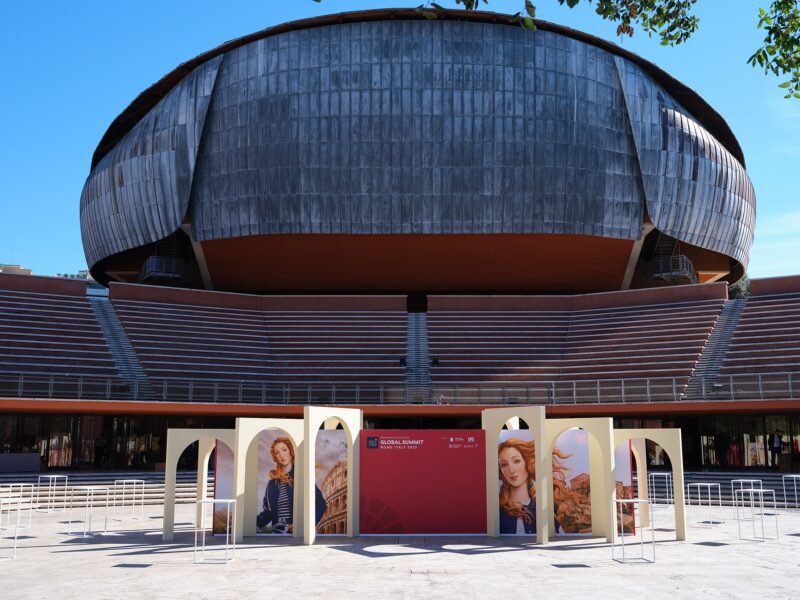
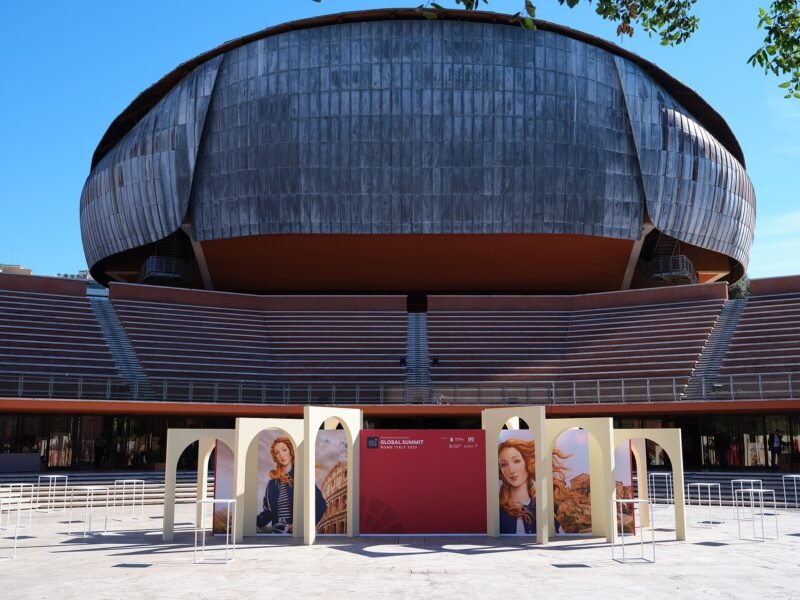
From outside the three halls are lead-clad volumes on a brick base, arranged in a fan around the open-air cavea dedicated to Luciano Berio. Renzo Piano won the competition in 1993 and worked with acoustician Jürgen Reinhold of the Müller BBM firm in Munich and with landscape architect Franco Zagari.
One thing nobody tells you about Tarmo Peltokoski and Bertrand Chamayou at Auditorium Parco della Musica, February 4, 5 and 6, 2027
The first thing few people mention concerns punctuality. The Accademia warns that its concerts start at the exact time and that latecomers do not enter the hall: they can follow the concert in the listening rooms, while seats last. With a 20-minute piano concerto opening the evening, arriving late means missing the whole first half and with it Chamayou.
The second concerns the cheaper seats. In the Sala Santa Cecilia the sound intensity seems to drop up to the tenth row and then stay constant. The most expensive section, under the stage, is not necessarily the best for listening to a symphony like the "Leningrad." With the 23 or 30 euro tickets in the upper sections you hear a full orchestra with a full sound.
The third is about times. Saturday at 18:00 is the time visitors use least: if you are in Rome for a weekend you can do a museum in the morning, the concert in the late afternoon and dinner right after, without giving anything up. Thursday at 19:30, instead, suits those who finish work and want to get home at a reasonable hour.
The advice I give you for visiting Tarmo Peltokoski and Bertrand Chamayou at Auditorium Parco della Musica, February 4, 5 and 6, 2027
My advice is to arrive prepared on the "Leningrad." It is enough to listen to it once in a good recording, at least the first movement, and to read a couple of lines on the history of the siege. Knowing its design lets you follow it in the hall like a story, between martial rhythms and moments of reflection, rather than just enduring it.
Second piece of advice: do not treat the Liszt Concerto as a mere appetizer. It is short, but in 20 minutes it concentrates virtuosity and orchestral writing. And Chamayou has already recorded it with Le Cercle de l'Harmonie.
Third: choose the seat in view of the symphony. For a symphony of this size, distance helps: front or side gallery rather than the first rows of the orchestra.
Finally, for those who can stay in Rome, Saturday, February 6 offers another musical evening as well: at 20:30 flutist Lucie Horsch plays at the Aula Magna of the Sapienza for the IUC Season. With the 18:00 concert at the Auditorium, the two events do not overlap.
Tickets for Peltokoski and Chamayou: prices and discounts
Tickets for the Peltokoski and Chamayou concert cost 54 euros in section I, 47 in II, 37 in III, 35 in IV, 30 in V and 23 in VI. The only authorized sellers are the Auditorium Parco della Musica box office, the box office at Via Vittoria 6 and the sales points of the presale network indicated by the Accademia.
The box offices
The Auditorium box office, in the greenhouse space, is open every day from 11:00 to 20:00. The one at Via Vittoria 6, between Via del Corso and Piazza del Popolo, is open Monday to Friday from 11:00 to 19:00 and Saturday from 11:00 to 14:00, with electronic payment only.
Online
On the concert's official page, under each of the three dates, a purchase button leads to the event page on the authorized network. The Accademia warns that it is not responsible for any surcharges applied by unauthorized parties.
Young people and kids
For symphonic season concerts the Accademia offers under-26s a 30% discount, and children under 14 with an adult get in for 3 euros. Reduced rates are bought only at the box offices, while promotional seats last, and cannot be combined. Updated conditions are at santacecilia.it/giovani. For information the infoline is 06 8082058, or biglietteria@santacecilia.it.
How to get to the Auditorium for Peltokoski and Chamayou
For the Peltokoski and Chamayou concert at Auditorium Parco della Musica, take Metro Line A to Flaminio and then tram 2 to the Flaminia/Reni or Apollodoro stops. Alternatively, buses 910, 53, 982 and 168.
Metro and tram
From Piazzale Flaminio tram 2 runs up Via Flaminia toward Piazza Mancini. From the Flaminia/Reni or Apollodoro stops it is a few minutes' walk through the Villaggio Olimpico to reach Viale Pietro de Coubertin.
Bus
The 910 leaves from Piazza dei Cinquecento, in front of Termini station, and reaches the Auditorium without changes. The 53 passes through Piazza Mancini, the 982 serves Viale XVII Olimpiade, the 168 comes from Tiburtina station. For evening hours, the Rome transit company's route planner is useful.
By car
In front of the entrance Viale Pietro de Coubertin is closed to traffic. The Auditorium's paid parking lots have limited spaces, and on evenings with more events the streets of the Villaggio Olimpico fill up early. It is better to leave with time to spare, especially on Friday.
Another well-known fact, yet rarely mentioned
It is well known that the "Leningrad" is the symphony of the siege. Less often mentioned is the journey of the score: Shostakovich completed it in Kuibyshev, and from there the music was microfilmed and sent through Tehran and Cairo to New York. On July 19, 1942 Arturo Toscanini conducted it with the NBC Symphony Orchestra in a radio broadcast, and Time magazine put Shostakovich on its cover. A symphony written in a besieged city became in a few months a symbol throughout the West.
Its fate after the war is also little cited. According to musicological reconstructions, the popularity of the Seventh declined after 1945, but the work has remained a musical testimony to the 27 million Soviet citizens who died in the Second World War, and is often performed at the Leningrad cemetery where half a million victims of the 900 days of siege rest.
On the piano side, a fact known to specialists: the premiere of the Liszt Concerto, in 1855, was conducted by Hector Berlioz. The composer of the Symphonie fantastique on the podium, the inventor of the piano recital at the keyboard: in Weimar two revolutionaries of Romanticism met.
How to organize the concert evening
For the Peltokoski and Chamayou concert it is best to arrive at the Auditorium at least 40 minutes before the start: ticket pickup, checks, coat check and getting up to the hall take time, and in a hall of more than 2,700 seats lines form early.
Before the concert
The foyer shared by the halls has a bar, a café and a large bookstore of records and music books, where you often find recordings by the performers on the program. From the terrace between the Sala Santa Cecilia and the Sala Sinopoli you can see the remains of the Roman villa that emerged during construction.
The length
The overall length is not stated on the concert page. The Liszt Concerto lasts about 20 minutes, and the "Leningrad" takes up the whole second half by itself. If you have a train to catch after the Saturday or Friday concert, allow extra time.
After the concert
At the exit the cavea is the right place to let the crowd thin out. Anyone with a car in the Villaggio Olimpico shouldn't be in a hurry: the first exits from the side streets are always the slowest.
The right photo to take at Tarmo Peltokoski and Bertrand Chamayou at Auditorium Parco della Musica, February 4, 5 and 6, 2027
In the hall, photographs are not allowed during the concert. The right shot is taken before the start: the grand piano at the center of the stage, in front of the orchestra's music stands, with the cherry wood shells of the ceiling above. It is the only moment when stage and hall can be seen together, clean.
The second photo is taken at intermission, when the piano is moved and the stage fills up for the symphony. The difference between the first and second half, told in two images of the same stage, says a lot about the program.
Outside, at the time of the Thursday and Friday concerts it is already dark and Renzo Piano's scarabs are lit: from the cavea you frame the three lead volumes with the lights reflected on the metal surface. On Saturday, with the 18:00 start, there is still the last light of February on arrival.
During the final applause, without flash, the orchestra on its feet after the "Leningrad": it is the moment when the phone disturbs no one.
Some important events that took place here in history
The ground on which the Auditorium stands was already inhabited in the 6th century BC, when a small archaic farm stood there. In the 3rd century BC a Roman villa was built in its place. The remains emerged during construction and forced Renzo Piano to move two of the three halls to the west, almost to the viaduct of Corso di Francia. The finds are displayed in a small museum under the cavea.
The musical history of the place was born from a void: in 1936 the demolition of the Augusteo left Rome without a symphonic hall. Only in 1992 did the city council choose the Villaggio Olimpico area, and in 1993 Piano won the competition. On April 21, 2002 the Sala Sinopoli opened, with Goffredo Petrassi present at the first performance of his Concert Overture. On December 21, 2002 the Sala Santa Cecilia opened, with the Accademia's orchestra conducted by Myung Whun Chung.
Since 2003 the Auditorium has been the permanent home of the Accademia's seasons, since 2006 it has hosted the Rome Film Festival, and in 2020 the city council approved naming it after Ennio Morricone. In February 2027 the Sala Santa Cecilia hosts here one of the great war symphonies of the 20th century.
Who has played Tarmo Peltokoski and Bertrand Chamayou at Auditorium Parco della Musica, February 4, 5 and 6, 2027
The first concert of the Sala Santa Cecilia, on December 21, 2002, was conducted by Myung Whun Chung. A few months earlier Goffredo Petrassi had attended the opening of the Sala Sinopoli. Luciano Berio, then president of the Accademia, gave his name to the cavea. Since then the hall has been the home of the orchestra and its music directors, from Antonio Pappano to Daniel Harding.
In the 2026/2027 season the Sala Santa Cecilia hosts Daniel Harding, who opened it in October with Wagner's Siegfried, and Kirill Petrenko, the protagonist in November of the concert with Benjamin Bernheim. Among the regular soloists is Evgeny Kissin, who returns in a duo with András Schiff, as described in our page on the Kissin and Schiff concert.
Tarmo Peltokoski has already been here: the Accademia presents the February concert as his return to Santa Cecilia. Bertrand Chamayou, in the same season, also plays at the Auditorium in a duo with Sol Gabetta. In the following weeks, on the same podium, come Antonio Pappano with Jan Lisiecki and Lorenzo Viotti with Lisa Batiashvili.
Accessibility and kids
For people with walking disabilities holding the Disability Card, the Accademia offers a 15% discount on two tickets, to be bought at the box office. Wheelchair users pay 10 euros and their companion enters free, while dedicated seats last.
Booking
For people who cannot walk, booking is mandatory, from 15 days before the concert until the day before, at 06 8082058 or biglietteria@santacecilia.it. For the February 4 performance the window opens on January 20.
Arriving with time to spare
The hall is raised above ground level and the galleries are served by only two elevators. Arriving an hour early and asking staff for the route right away avoids the crowding of the last minutes. The Accademia's Courtesy Service is present on subscription concert days from one hour before the start.
With kids
For a teenager who studies piano, a Liszt concerto played by a performer like Chamayou is a live lesson. The "Leningrad" is long and demanding, but it has a narrative force that strikes even beginners, especially if the story of the siege is told first. With 3 euros for children under 14 at the box offices, Saturday at 18:00 is the most suitable occasion.
The district around the Auditorium
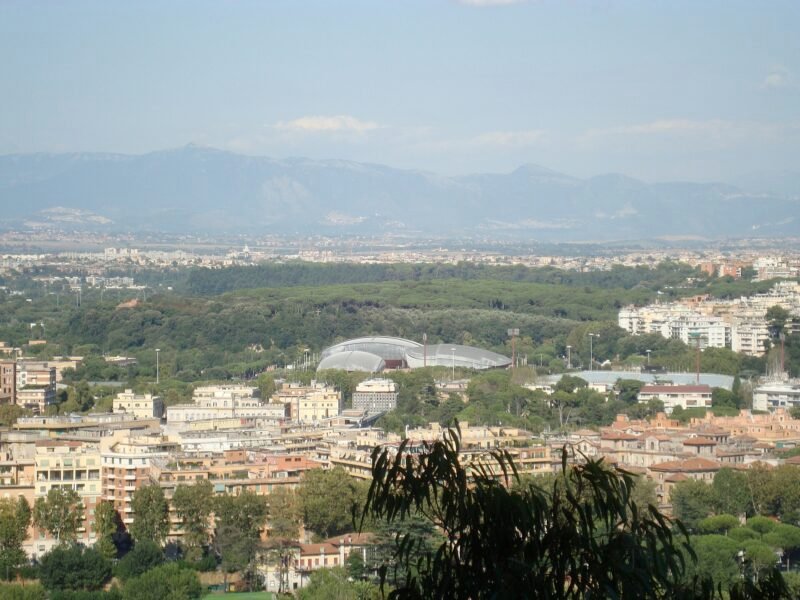
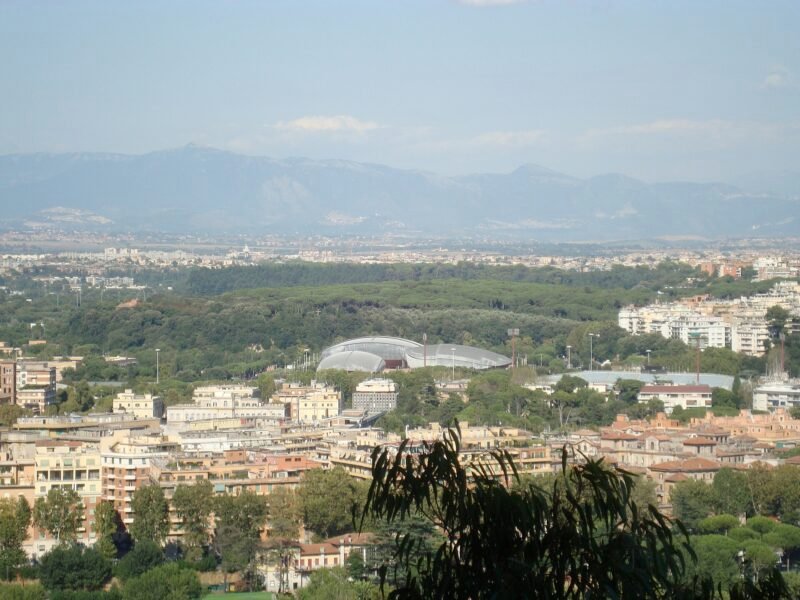
The Auditorium occupies about 55,000 square meters between Villa Glori, the Villaggio Olimpico, the Corso di Francia viaduct and Viale Maresciallo Pilsudski, in a part of Rome where 20th-century and contemporary architecture alternate with greenery.
MAXXI
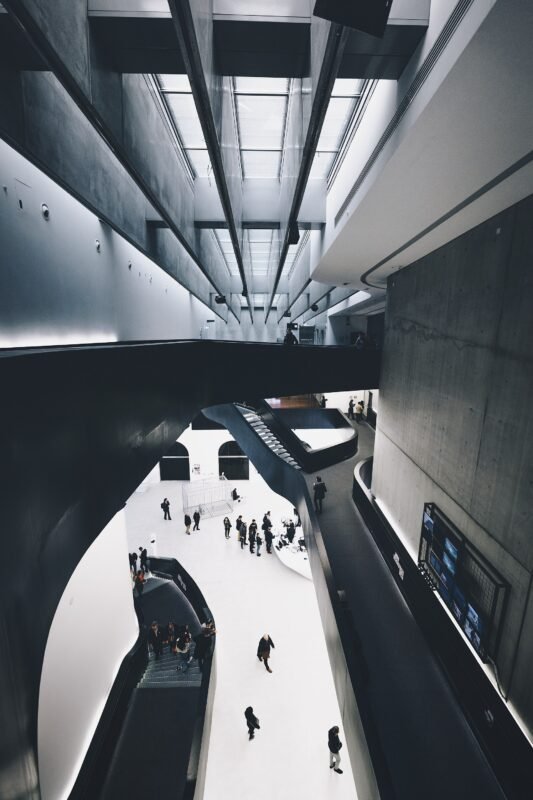
A few minutes' walk away, toward Via Guido Reni, is Zaha Hadid's MAXXI: an exhibition in the afternoon and then the walk to the Auditorium are a fitting way to spend the Saturday of the 18:00 concert.
Toward the Tiber
The Ponte della Musica links Flaminio to the Foro Italico a few steps from the Auditorium, farther north, Milvian Bridge is one of northern Rome's busiest evening gathering spots.
Toward the center
Tram 2 takes you back to Piazzale Flaminio, at the gates of Villa Borghese, Piazza del Popolo and the Tridente.
Where to eat before or after the concert
Inside the Auditorium there are a bar and café in the foyer and a restaurant bar with access from the street as well: the most convenient solution for those who arrive on Thursday straight from work.
In the neighborhood
Between the Villaggio Olimpico, Via Flaminia and Piazza Mancini there are pizzerias, trattorias and neighborhood bars, frequented more by residents than by tourists. With the 19:30 start on Thursday, it is best to eat afterward, or something light before.
After the concert
On Saturday, with the 18:00 start, the concert ends at the right time for dinner: the widest choice is at Ponte Milvio, a few minutes away. Toward Piazzale Flaminio you enter the historic center area, with its prices. On Friday it is best to book.
Early February in Rome
The first week of February is one of the quietest times to visit Rome: few crowds, days beginning to lengthen, concert and theater seasons in full swing. For those traveling off season it is a favorable moment.
The music week
On the days of the concert the city offers more: on Thursday, February 4 at 21:00 percussionist Adélaïde Ferrière plays at Teatro Argentina for the Accademia Filarmonica Romana, and on Saturday the 6th at 20:30 Lucie Horsch brings the recorder to the Aula Magna of the Sapienza. The following week, at the Auditorium, Antonio Pappano conducts Jan Lisiecki in Beethoven's "Emperor."
The weather
February evenings can be cold and damp. At the Auditorium you walk outdoors between the halls: a coat to leave at the coat check and a folding umbrella.
Frequently asked questions about Peltokoski and Chamayou at Santa Cecilia
When do Peltokoski and Chamayou play in Rome?
Tarmo Peltokoski and Bertrand Chamayou are in concert with the Orchestra dell'Accademia Nazionale di Santa Cecilia on Thursday, February 4, 2027 at 19:30, Friday the 5th at 20:00 and Saturday the 6th at 18:00, in the Sala Santa Cecilia of Auditorium Parco della Musica Ennio Morricone, Viale Pietro de Coubertin 30.
What is the program of the concert?
The Peltokoski and Chamayou concert includes Franz Liszt's Piano Concerto No. 1, with Chamayou as soloist, and Dmitri Shostakovich's Symphony No. 7 "Leningrad," written in 1941 during the siege of Leningrad and become a symbol of Soviet resistance.
How much do tickets cost?
Tickets for Peltokoski and Chamayou cost 54, 47, 37, 35, 30 and 23 euros from section I to section VI. Under-26s get a 30% discount and children under 14 with an adult pay 3 euros, only at the box offices and while promotional seats last.
Where do you buy tickets?
Tickets for the Peltokoski and Chamayou concert are bought at the Auditorium Parco della Musica box office, open every day from 11:00 to 20:00, at the box office on Via Vittoria 6 and on the authorized presale network, reached from the concert's official page on the Accademia website.
Who is Tarmo Peltokoski?
Tarmo Peltokoski is the Finnish conductor born in Vaasa in 2000, a student of Jorma Panula, music director of the Latvian National Symphony Orchestra, of the Orchestre national du Capitole de Toulouse and, from 2026/2027, of the Hong Kong Philharmonic. He records for Deutsche Grammophon.
Who is Bertrand Chamayou?
Bertrand Chamayou is the French pianist born in Toulouse in 1981, the only artist awarded three times at the Victoires de la Musique Classique. He recorded the complete Ravel and Saint-Saëns's Concertos No. 2 and 5, Gramophone Recording of the Year 2019.
What happens if you arrive late?
The concerts of the Accademia Nazionale di Santa Cecilia start punctually: latecomers do not enter the hall and can follow the concert in the listening rooms, while seats last. To avoid missing the Liszt Concerto it is best to arrive 40 minutes early.
How do I get to Auditorium Parco della Musica?
You reach Auditorium Parco della Musica on Metro A to Flaminio and then tram 2, stops Flaminia/Reni or Apollodoro, or by buses 910 from Termini, 53, 982 and 168. In front of the entrance the road is closed to traffic.
The final advice on Peltokoski and Chamayou at Santa Cecilia
A 26-year-old conductor already leading four orchestras, a pianist who is at home in Liszt, a symphony born under the bombs and become a symbol around the world, a hall built for large forces: in our view it is one of the most interesting symphonic concerts of the Roman winter. My advice is to choose Saturday at 18:00 if you are in the city for the weekend, to listen first to the first movement of the "Leningrad," to arrive early so as not to miss Liszt, and to prefer the gallery to the orchestra seats under the stage.
Article written by the editorial team of Tour Leader Pro, contact them for Private/Corporate/V.I.P. Tours and Experiences.
Planning a trip to Rome? The English guides to visiting the city are on ItalyPlanner.com.
Contact Information
Nearby
 Museum of Musical Instruments (MUSA)100 m
- Auditorium Parco della Musica100 m
- Villa Glori500 m
- Fountain of Anna Perenna500 m
- MAXXI – National Museum of 21st Century Arts700 m
- Flaminio700 m
Upcoming events nearby
- Roma Jazz Festival 2026, November 1 to 24 at the Auditorium and Casa del Jazz100 m
- Evgeny Kissin and András Schiff at Santa Cecilia, November 9, 2026100 m
- Roma Gospel Festival 2026 at Auditorium Parco della Musica, December 13, 2026 to January 1, 2027100 m
- Santa Cecilia 2026/2027 Concert Season at Auditorium Parco della Musica, October 21, 2026 to June 5, 2027100 m



You might also like
- Nubras Ensemble at Auditorium Parco della Musica, February 27, 2027
- Fabio Luisi and Beethoven’s Missa Solemnis at Auditorium Parco della Musica, February 25 to 27, 2027
- Lorenzo Viotti and Lisa Batiashvili at Auditorium Parco della Musica, February 18, 19 and 20, 2027
- Antonio Pappano and Jan Lisiecki at Auditorium Parco della Musica, February 11, 12 and 13, 2027
- Riccardo Minasi conducts the Eroica at Auditorium Parco della Musica, January 7, 8 and 9, 2027
- Sergej Khachatryan and Alexandre Kantorow at Auditorium Parco della Musica, February 3, 2027