Fabio Luisi and Beethoven’s Missa Solemnis at Auditorium Parco della Musica, February 25 to 27, 2027
In short. Fabio Luisi conducts the Orchestra and Chorus of the Accademia Nazionale di Santa Cecilia in Beethoven's Missa Solemnis on Thursday, February 25, 2027 at 19:30, Friday, February 26 at 20:00 and Saturday, February 27 at 18:00, in Sala…
Fabio Luisi conducts the Orchestra and Chorus of the Accademia Nazionale di Santa Cecilia in Beethoven's Missa Solemnis on Thursday, February 25, 2027 at 19:30, Friday, February 26 at 20:00 and Saturday, February 27 at 18:00, in Sala Santa Cecilia of Auditorium Parco della Musica Ennio Morricone, at Viale Pietro de Coubertin 30 (00196 Rome). The soprano Jacquelyn Wagner, the mezzo-soprano Olesya Petrova, the tenor Allan Clayton and the bass Christof Fischesser sing. The chorus is prepared by Andrea Secchi. Tickets cost €23 to €54 depending on the section and are bought at the box offices of Auditorium and of Via Vittoria 6 and on the presale network authorized by the Accademia, reachable from the official concert page. You get to Auditorium by tram 2 from Flaminio station on metro A, stops Flaminia/Reni or Apollodoro, and by buses 910 from Termini, 53, 982 and 168.
2027 marks 200 years since Beethoven's death, and the Accademia di Santa Cecilia celebrates the anniversary with his largest sacred work. On the score of the Kyrie the composer wrote a phrase that the Accademia chooses as the key to reading the concert: from the heart may it go to hearts. Three evenings, a conductor from Genoa who has led the Metropolitan, a home chorus and orchestra.
Fabio Luisi and the Missa Solemnis: Dates, Times and Performers
The Missa Solemnis conducted by Fabio Luisi is scheduled for three evenings in Sala Santa Cecilia: Thursday, February 25, 2027 at 19:30 for the G-G1 series, Friday, February 26 at 20:00 for the V-V1 series and Saturday, February 27 at 18:00 for the S-S1 series.
The Performers
Orchestra and Chorus of the Accademia Nazionale di Santa Cecilia, conductor Fabio Luisi, soprano Jacquelyn Wagner, mezzo-soprano Olesya Petrova, tenor Allan Clayton, bass Christof Fischesser, chorus master Andrea Secchi.
The Beethoven Bicentennial
The concert is part of the celebrations with which the Accademia di Santa Cecilia marks the 200th anniversary of Beethoven's death, 1827-2027. In the same season the composer returns with Mikhail Pletnëv's recital on March 3, with the complete quartets entrusted to the Quatuor Ebène and with the Ninth conducted by Daniel Harding in April.
Which Evening to Choose
The three performances are identical in program and performers. Thursday at 19:30 is the choice for those coming from work, Saturday at 18:00 for those coming from outside Rome who want to get home at a reasonable hour. Friday at 20:00 is the most classic evening.
Beethoven's Missa Solemnis
The Missa Solemnis in D major, Op. 123, is a sacred composition by Ludwig van Beethoven written between 1819 and 1823, for soloists, chorus, orchestra and organ, with an average length of about 75 minutes. Together with Bach's Mass in B minor it is commonly considered the most significant mass written since the Renaissance.
A Mass for an Archbishop
Beethoven conceived it for the installation of Archduke Rudolf of Habsburg as Archbishop of Olmütz, which took place on March 9, 1820. Rudolf was a pupil, friend and main patron of the composer, who had already dedicated to him the Archduke Trio, the Hammerklavier Sonata, the Les adieux Sonata and two piano concertos. The mass, however, was not ready for the ceremony: Beethoven worked on it for four years, from the spring of 1819 to the spring of 1823.
The Five Parts
Like every Catholic mass, the Missa Solemnis follows the Ordinary: Kyrie, Gloria, Credo, Sanctus with the Benedictus, and Agnus Dei. The Gloria and the Credo are the longest parts, and both end with a great fugue.
The Forces
The score calls for four soloists, mixed chorus and an orchestra with two flutes, two oboes, two clarinets, two bassoons, contrabassoon, four horns, two trumpets, three trombones, timpani, organ and strings. It is a body of forces for which Sala Santa Cecilia, the largest in Auditorium, was designed.
The Greatest Work
In a letter of June 5, 1822, Beethoven called the Missa Solemnis the greatest work he had composed up to then. To write it he had studied Gregorian chant, the sacred music of Palestrina, Bach, Handel and Carl Philipp Emanuel Bach, and the tradition of Austrian masses.
From the Heart to Hearts: How to Listen to the Missa Solemnis
The Accademia's presentation describes the Missa Solemnis as one of the peaks of late Beethoven and of 19th-century sacred music, a score in which the liturgical tradition confronts a musical conception of extraordinary breadth and intensity.
The Phrase on the Kyrie
In the autograph manuscript, at the start of the Kyrie, Beethoven noted: from the heart, may it again go to the heart. According to the Accademia it is a possible key to understanding the nature of his religious inspiration: a deeply personal faith, open to a universal conception of humanity.
The Prayer for Peace
A second inscription is found at the start of the Dona nobis pacem, in the Agnus Dei: prayer for inner and outer peace.
A Faith Without Borders
Scholars have always debated the religious character of the work. Maynard Solomon speaks of a non-denominational attitude. Nikolaus Harnoncourt recalled that Beethoven wrote in the score of the Credo that God had never abandoned him. The Accademia's presentation sums up: from prayer to meditation, from contemplation to dramatic tension, Beethoven transforms the liturgical text into a musical experience of extraordinary expressive force.
Who Is Fabio Luisi
Fabio Luisi is an Italian conductor born in Genoa on January 17, 1959, former principal conductor of the Metropolitan Opera in New York and today conductor of the Dallas Symphony Orchestra and of the Danish National Symphony Orchestra.
From the Piano to the Podium
He studied piano with Lily Chiesa and Memi Schiavina, graduating as a private student from the Niccolò Paganini Conservatory in Genoa, and furthered his studies with Aldo Ciccolini, Antonio Bacchelli and Adam Harasiewicz. His interest in conducting began while he was working as a rehearsal pianist for Leyla Gencer and Luciana Serra. He then studied conducting in Graz with Milan Horvat and worked at the Graz Opera as a répétiteur and conductor. He made his conducting debut in Italy in 1984.
Graz, Vienna, Leipzig, Geneva
From 1990 to 1995 he was principal conductor of the Graz Philharmonic, and from 1995 to 2000 artistic and principal director of the Tonkünstler-Orchester in Vienna. At the MDR Sinfonieorchester in Leipzig he was one of the three principal conductors from 1996, with Marcello Viotti and Manfred Honeck, and sole principal conductor from 1999 to 2007. From 1997 to 2002 he led the Orchestre de la Suisse Romande, and from 2005 to 2013 the Wiener Symphoniker.
Dresden and the Metropolitan
From 2007 to 2010 he was music director of the Staatskapelle and the Semperoper in Dresden. He made his debut at the Metropolitan in March 2005 with Verdi's Don Carlos. In September 2011 he became its principal conductor, a post he held until 2017. Before him, that post had been held only by Arturo Toscanini.
Zurich, Florence, Copenhagen, Dallas
From 2012 to July 2021 he was General Music Director of the Zurich Opera. Since 2016 he has been principal conductor of the Danish National Symphony Orchestra in Copenhagen, with a contract until 2029. In 2018 he was named music director of the Maggio Musicale Fiorentino, a post he left in 2019. Since 2020 he has been music director of the Dallas Symphony Orchestra, with the post extended until 2029. He is also music director of the Festival della Valle d'Itria in Martina Franca.
Luisi on Record and His Honors
Fabio Luisi has conducted recordings of rare Verdi operas such as Aroldo, Jérusalem and Alzira, and of Rossini such as Guillaume Tell. He has also recorded Bruckner's Ninth with the Staatskapelle Dresden and Bellini's I Capuleti e i Montecchi live in Vienna in 2008.
The Metropolitan Ring
His name is tied to the Metropolitan's Ring of the Nibelung directed by Robert Lepage, released in 2012 on DVD and Blu-ray together with the documentary Wagner's Dream about the production, with James Levine, Jonas Kaufmann and Bryn Terfel.
The Honors
He has been an Officer of the Order of Merit of the Italian Republic since June 2, 2006 and a Commander of the Order of the Star of Italian Solidarity since 2007. In 2002 he received the Austrian Cross of Honour for Science and Art, and in 2014 the Golden Griffin of his city, Genoa.
An Opera Conductor
A large part of Luisi's career has taken place in opera houses, from Graz to Dresden, from New York to Zurich. For a mass that Beethoven himself considered performable also as an oratorio, in our judgment, it is a valuable experience: the Missa Solemnis asks you to hold together four solo voices, a chorus and an orchestra as in a great theatrical act.
The Soloists and the Chorus
The vocal quartet of the Santa Cecilia Missa Solemnis is made up of Jacquelyn Wagner, soprano, Olesya Petrova, mezzo-soprano, Allan Clayton, tenor, and Christof Fischesser, bass. The Accademia Chorus is prepared by Andrea Secchi.
Allan Clayton, Return to Santa Cecilia
The tenor Allan Clayton is at home in the 2026/2027 season: on January 20, 2027, in Sala Sinopoli, he sings Schubert's Winterreise for the Accademia's chamber season. A month later he returns to the large hall with one of the most demanding tenor parts in the sacred repertoire.
The Santa Cecilia Chorus
In the Missa Solemnis the chorus is as much a protagonist as the orchestra: the two great fugues that close the Gloria and the Credo are theirs. The chorus master Andrea Secchi also prepares the ensemble for the choral concerts of the chamber season, like the one on October 28, 2026 in Sala Sinopoli.
Four Voices for an Oratorio
Beethoven himself, writing to Goethe, presented the mass as performable also in the form of an oratorio. The quartet chosen by the Accademia brings together voices active in opera and in the sacred repertoire, and works alongside the chorus more than in front of it.
A Curiosity About Fabio Luisi and Beethoven's Missa Solemnis at Auditorium Parco della Musica, February 25 to 27, 2027
The most surprising curiosity is that the Missa Solemnis was not first performed in a church in Vienna, but in Russia. The first complete performance took place in St. Petersburg on April 7, 1824, in the form of an oratorio, thanks to Prince Nikolai Galitzin, the same man who commissioned from Beethoven the quartets Op. 127, 132 and 130. In Vienna, a month later, on May 7, 1824, the audience heard only three parts, Kyrie, Credo and Agnus Dei, presented as Three Grand Hymns for chorus and solo voices. It was the same evening as the world premiere of the Ninth Symphony, at the Theater am Kärntnertor.
The second curiosity concerns business. While composing the mass Beethoven was going through serious financial difficulties and negotiated with at least four publishers at the same time, collecting advances from both Simrock of Bonn and Peters of Leipzig, and then publishing it in 1825 with Schott of Mainz. In 1823 he also started a subscription of handwritten copies, writing to the sovereigns of Europe, to Luigi Cherubini and to Goethe. The letter to Goethe, of February 8, 1823, went unanswered.
Third curiosity: in that letter Beethoven presented the mass as a work that could also be performed as an oratorio, useful, he wrote, to charitable societies. It is exactly the form in which it is heard at Santa Cecilia: in a concert hall, not during a liturgy.
Sala Santa Cecilia at Auditorium Parco della Musica
Sala Santa Cecilia is the largest of the three concert halls of Auditorium Parco della Musica Ennio Morricone: 2,756 seats, designed by Renzo Piano for symphonic music and inaugurated on December 21, 2002 with the Accademia Orchestra conducted by Myung-whun Chung. The general page on the complex is the one on Auditorium Parco della Musica.
A Cherry Wood Sounding Box
The ceiling is made of 26 shells in American cherry wood, each with an average surface of about 180 square meters, and the whole hall works as a sounding box. Around the stage, including behind the orchestra, runs a gallery with more seats. The reverberation time is 2.2 seconds, a value suited to large choral and orchestral masses.
Where to Sit for the Missa
Sound intensity seems to drop until the 10th row and then stay constant: you don't need to sit right up against the stage to hear well. For a mass with chorus and soloists, in our judgment, a frontal and central seat is best, from which the voices arrive balanced with the orchestra. The seats behind the stage, on the other hand, offer a close view of the conductor and the chorus.
Renzo Piano's Beetles
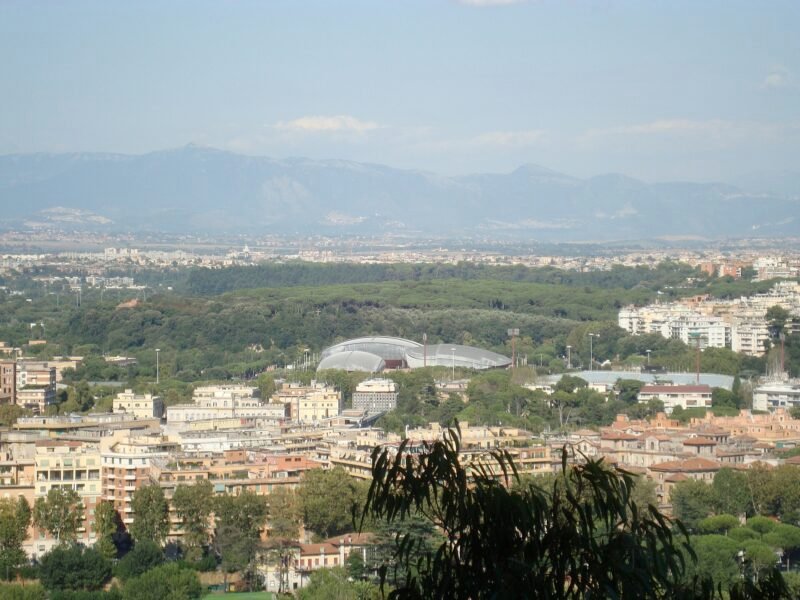
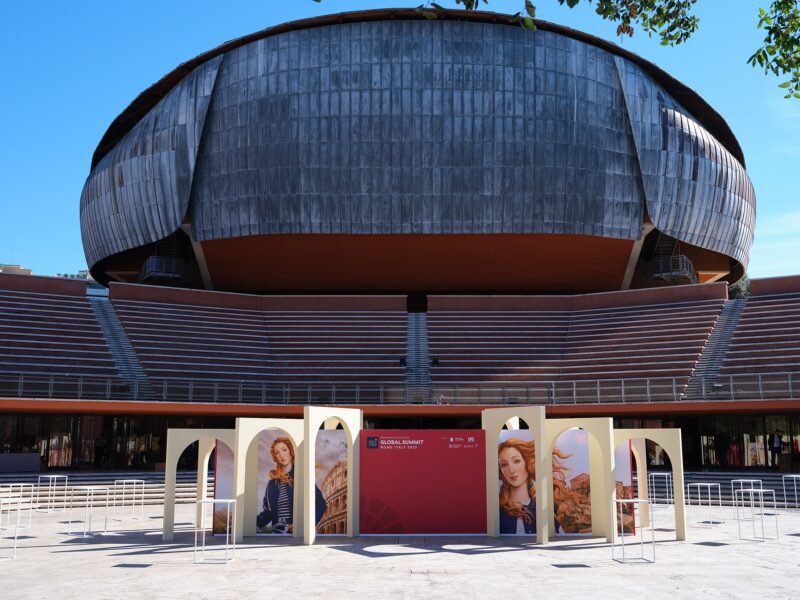
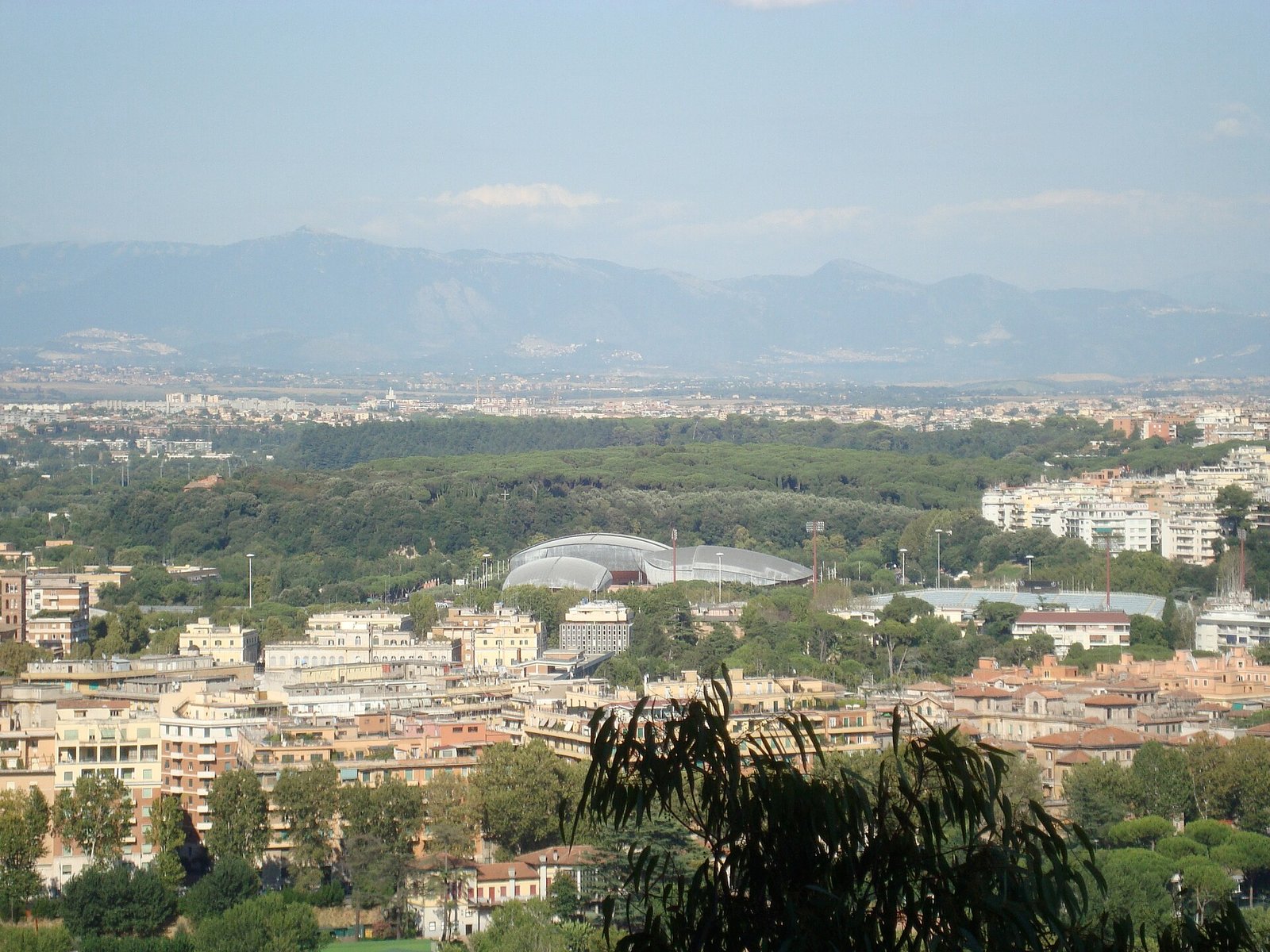
From outside the three halls look like three large beetles, clad in lead panels on a brick base and arranged in a radial pattern around the open-air cavea named after Luciano Berio. Renzo Piano worked with the acoustician Jürgen Reinhold of the Müller-BBM firm and with the landscape architect Franco Zagari.
Something Nobody Tells You About Fabio Luisi and Beethoven's Missa Solemnis at Auditorium Parco della Musica, February 25 to 27, 2027
The first thing few people mention is that the doors of Santa Cecilia really do close at the stated time. The Accademia warns that concerts start punctually and that latecomers cannot enter the hall: they can follow the concert in the listening rooms, until seats run out. For a long, continuous work like the Missa Solemnis, arriving late can mean hearing part of it away from the hall.
The second concerns presale. The Accademia has divided ticket sales for the 2026/2027 season into two periods: from September 10, 2026 for concerts up to February 27, 2027, from January 12, 2027 for the later ones. The Missa Solemnis falls exactly on the last date of the first period, so tickets have been on sale since September: if you wait for January you risk finding the best sections already taken.
The third is a matter of attention. The Missa Solemnis lasts about an hour and a quarter, and according to Theodor Adorno it has something peculiar: almost no repetition, a continuous musical narrative, especially in the Gloria and the Credo. If you are hearing it for the first time, you would do well to reread the Latin text of the Ordinary first.
Tickets for Fabio Luisi's Missa Solemnis
Tickets for the Missa Solemnis conducted by Fabio Luisi cost €54 in the first section, €47 in the second, €37 in the third, €35 in the fourth, €30 in the fifth and €23 in the sixth, and have been on sale since September 10, 2026.
Where to Buy
According to the Accademia, the only authorized sellers are the points of sale of the presale network that the purchase button on the official page links to, the box office of Auditorium Parco della Musica Ennio Morricone and the one at Via Vittoria 6. The Accademia is not responsible for surcharges applied by unauthorized parties.
Youth and Discounts
Discounts for young people are collected in a dedicated section of the Accademia website, together with the general notices about concerts. It's best to check them before buying, because they change by age and type of subscription.
Information
The Accademia infoline answers at 06 8082058. For the box office there is the address biglietteria@santacecilia.it.
The Advice I Give You for Visiting Fabio Luisi and Beethoven's Missa Solemnis at Auditorium Parco della Musica, February 25 to 27, 2027
The first piece of advice is to prepare with the text. The Missa Solemnis is sung in Latin, on the words of the Ordinary of the mass: rereading them beforehand, especially the Credo, lets you understand why Beethoven speeds up, slows down, lingers on certain words. The composer himself had noted on his text the nuances between terms like terra and mundus, natum and genitum.
The second is to listen to two pages before the concert: the final fugue of the Gloria and the Benedictus. They are the two extremes of the work, power and contemplation, and recognizing them in the hall helps you find your way through a long, dense score.
The third is to arrive at least half an hour early. The doors close on time, the foyer fills up, and a work of this intensity is better heard after a few minutes of silence in your seat.
The fourth concerns the choice of evening: Saturday at 18:00 is the ideal time for anyone who wants to pair the concert with an unhurried dinner, perhaps toward Ponte Milvio.
How to Get to Auditorium Parco della Musica
Auditorium Parco della Musica Ennio Morricone is reached by tram 2, stops Flaminia/Reni or Apollodoro, and by buses 910, 982, 168 and 53. The metro doesn't come all the way here: the closest station is Flaminio, on line A.
Metro A and Tram 2
From Flaminio station you exit onto Piazzale Flaminio and take tram 2, which runs along Via Flaminia. You get off at Flaminia/Reni or at Apollodoro and walk a few minutes toward Viale Pietro de Coubertin, crossing the Olympic Village.
Bus 910 from Termini
The 910 leaves from Piazza dei Cinquecento, in front of Termini station, and takes you to Auditorium with no changes: the most direct solution for anyone arriving by train.
The Other Lines
The 53, the 982 and the 168 complete the connections. For the evening return it's best to check the schedule on the ATAC route planner.
By Car
The stretch of Viale Pietro de Coubertin in front of Auditorium is closed to traffic. The complex has a paid internal parking lot with limited spaces. On concert nights the streets of the Olympic Village fill up early.
Another Well-Known Fact, Yet Rarely Mentioned
It is well known that the Missa Solemnis is Beethoven's second mass, after the Mass in C major, Op. 86. It is less often remembered why the second is so different from the first. The Mass in C followed the style of Viennese classicism. When he began the Missa Solemnis, Beethoven considered that style inadequate to express an elevated spirituality. He then began studying Gregorian chant, Palestrina, Bach and Handel: in the Gloria and the Agnus Dei scholars even recognize quotations from Handel's Messiah.
Another rarely cited fact: among Beethoven's sources was also an essay by E. T. A. Hoffmann on old and new sacred music, published in 1814. Carl Dahlhaus has suggested that the Missa Solemnis was written with it in mind.
And again: in the Credo Beethoven dwells very little on the words dedicated to the Church one, holy, catholic and apostolic. For some it is the sign of a faith independent of the Church. Harnoncourt objected that here catholic means universal, as in Bach's Mass in B minor.
How to Plan the Evening
For the Missa Solemnis evenings it's best to arrive at Auditorium at least half an hour early, pick up your tickets, leave your coat and take your seat unhurried before the doors close.
Thursday, Friday, Saturday
Thursday at 19:30 lets you have dinner after the concert. Friday at 20:00 is the traditional evening. Saturday at 18:00 leaves time for an unhurried dinner and a comfortable return for those coming from out of town.
Before the Concert
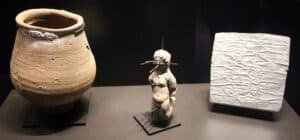
Anyone who arrives early can visit the Accademia's Museo degli Strumenti Musicali, inside Auditorium, checking the opening hours first.
The Right Photo to Take at Fabio Luisi and Beethoven's Missa Solemnis at Auditorium Parco della Musica, February 25 to 27, 2027
The right photo at a Santa Cecilia concert isn't taken during the performance: the Missa Solemnis lives also on pianissimos, and a lit screen in the hall disturbs those who sing and those who listen. The moment is the final applause, with the chorus standing on the risers, the four soloists at the front of the stage and Luisi pointing to the orchestra: an image that conveys the scale of the work.
Before the concert, the photo to take is Auditorium lit up, with the three large volumes clad in lead arranged around the cavea. In late February, after 7 p.m., it is already dark, and the foyer lights outline the shapes of the buildings well.
Anyone who arrives early can look for a less obvious detail: from the terrace between Sala Santa Cecilia and Sala Sinopoli you see the remains of the Roman villa discovered during the works, an image that pairs ancient and contemporary the way Beethoven's mass pairs Palestrina and the 19th century.
Some Important Events That Happened Here in History
The ground of Auditorium has a history longer than the complex. During the works the remains of a Roman villa from the 3rd century BC emerged, built on the site of a small Archaic farm from the 6th century BC. The discovery forced Renzo Piano to modify the project, moving two of the three halls. The finds are displayed in a small museum under the cavea.
The modern history begins with a demolition: in 1936 the Augusteo hall was torn down, and for over 60 years Rome remained without an auditorium built for symphonic music. In 1992 the city council chose the Olympic Village area, and in 1993 Renzo Piano won the competition. On April 21, 2002 Sala Sinopoli opened. On December 21, 2002 Sala Santa Cecilia was inaugurated with the Accademia Orchestra conducted by Myung-whun Chung.
Since 2003 Auditorium has been the permanent home of the Accademia's season, since 2006 it has hosted the Festa del Cinema di Roma, and since 2020 it has been named after Ennio Morricone. Since 2024 Sala Santa Cecilia has been the home of Daniel Harding, music director of the Accademia. In February 2027 it welcomes the Missa Solemnis in the year of the Beethoven bicentennial.
Who Has Passed Through for Fabio Luisi and Beethoven's Missa Solemnis at Auditorium Parco della Musica, February 25 to 27, 2027
Through Sala Santa Cecilia have passed, from the very first day, the conductors who have led the Accademia Orchestra: Myung-whun Chung, who inaugurated it in December 2002, Antonio Pappano, for a long time music director, and today Daniel Harding. In its first months the hall was also criticized, among others by the conductor Wolfgang Sawallisch, and acoustic corrections followed. Luciano Berio, president of the Accademia in the years of construction, gave his name to the cavea.
In the line of the Accademia's permanent conductors are Bernardino Molinari, Franco Ferrara, Fernando Previtali, Igor Markevitch, Thomas Schippers, Giuseppe Sinopoli, Daniele Gatti, Myung-whun Chung and Antonio Pappano. Fabio Luisi arrives in this hall with a career made of the Metropolitan, the Semperoper, the Wiener Symphoniker.
And through the history of the Missa Solemnis pass Beethoven and Archduke Rudolf, Prince Galitzin, Carolina Ungher and Anton Haizinger, who on May 7, 1824 sang in Vienna the three hymns taken from the mass. On record it has been conducted, among others, by Toscanini, Klemperer, Karajan, Böhm, Bernstein, Solti, Giulini and Harnoncourt.
The Missa Solemnis in Santa Cecilia's 2026/2027 Season
The Missa Solemnis is part of the 2026/2027 symphonic season of the Accademia Nazionale di Santa Cecilia, inaugurated on October 21, 2026 with Wagner's Siegfried conducted by Daniel Harding.
A Beethoven Year
The bicentennial of Beethoven's death runs through the season: Mikhail Pletnëv's recital on March 3, 2027 with the Pathétique and Moonlight Sonatas, the complete quartets with the Quatuor Ebène and the Ninth Symphony in April.
The Overview
The full program is described in the page on the 2026/2027 season of Santa Cecilia.
Accessibility and Kids
For accessibility needs in Sala Santa Cecilia, it's best to contact the Accademia box office in advance at the infoline 06 8082058 or at the address biglietteria@santacecilia.it, to choose the most suitable seat and learn the access route.
People with Reduced Mobility
Arriving well ahead of time lets you ask the hall staff for the best route before the line forms at the entrance.
With Kids
An hour and a quarter of sacred music in Latin is demanding for the little ones. For a kid who sings in a chorus or studies music, on the other hand, the Missa Solemnis live, with full chorus and orchestra, is an experience that stays with you. Discounts for young people are published by the Accademia.
The Neighborhood Around Auditorium
Auditorium stands between Villa Glori, the Olympic Village, the Corso di Francia viaduct and Viale Maresciallo Pilsudski: a piece of modern Rome where contemporary architecture converses with greenery.
MAXXI
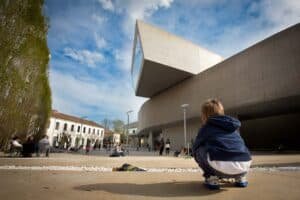
Near the Flaminia/Reni stop of tram 2 is MAXXI, the national museum of 21st-century arts: with Auditorium it forms the most important pair of contemporary architecture in the city.
Toward the Tiber
From Auditorium you go down toward the river and Ponte della Musica, the footbridge that connects Flaminio to Foro Italico.
Toward the Center
With tram 2 you go back to Piazzale Flaminio, where Villa Borghese begins: a walk at the Pincio on Saturday afternoon and the tram toward Auditorium are a restful way to arrive at the concert.
Where to Eat Before or After the Concert
Inside Auditorium there are a bar and a coffee shop in the foyer and a bar restaurant with access from the street as well: the most convenient solution for anyone coming straight from work on Thursday or Friday.
In the Neighborhood
Between the Olympic Village, Via Flaminia and Piazza Mancini there are pizzerias, trattorias and neighborhood bars. With a start at 19:30 or 20:00 it's best to book early and eat beforehand, or choose a place that also serves after 10 p.m.
Milvian Bridge
If you'd rather have dinner after the concert, the widest choice is in the Ponte Milvio area, a few minutes away, where several places stay open late. On Saturday, with the 18:00 start, it is the most suitable evening.
Late February in Rome
Late February is a quiet time to visit Rome: the museums are less crowded than in spring and the concert season is in full swing. On Saturday, February 20, five days before the Missa, the pianist Angela Hewitt plays Scarlatti, Bach and Chopin at Aula Magna of Sapienza University for the IUC. The evenings are still cold and often damp: leaving Auditorium you need a heavy coat.
Frequently Asked Questions About the Missa Solemnis at Santa Cecilia
When Is the Missa Solemnis Performed at Santa Cecilia?
Beethoven's Missa Solemnis conducted by Fabio Luisi is performed in Sala Santa Cecilia of Auditorium Parco della Musica on Thursday, February 25, 2027 at 19:30, Friday, February 26 at 20:00 and Saturday, February 27 at 18:00.
Who Sings in the Santa Cecilia Missa Solemnis?
In the Santa Cecilia Missa Solemnis the soprano Jacquelyn Wagner, the mezzo-soprano Olesya Petrova, the tenor Allan Clayton and the bass Christof Fischesser sing, with the Accademia Chorus prepared by Andrea Secchi and the Orchestra conducted by Fabio Luisi.
How Much Are Tickets for the Missa Solemnis?
Tickets for the Santa Cecilia Missa Solemnis cost from €23 in the sixth section to €54 in the first, with intermediate sections at €47, €37, €35 and €30. They are bought at the box offices of Auditorium and of Via Vittoria 6 and on the network authorized by the Accademia.
How Long Is the Missa Solemnis?
Beethoven's Missa Solemnis has an average length of about 75 minutes and is divided into five parts: Kyrie, Gloria, Credo, Sanctus with Benedictus, and Agnus Dei. The Accademia recommends punctuality: latecomers are not admitted to the hall.
Who Is Fabio Luisi?
Fabio Luisi, conductor of the Missa Solemnis at Santa Cecilia, was born in Genoa in 1959. He was principal conductor of the Metropolitan from 2011 to 2017 and conducts the Dallas Symphony Orchestra and the Danish National Symphony Orchestra.
How Do You Get to Auditorium Parco della Musica?
Auditorium Parco della Musica, at Viale Pietro de Coubertin 30, is reached by tram 2 from Flaminio station on metro A, stops Flaminia/Reni or Apollodoro, and by buses 910 from Termini, 53, 982 and 168.
Why the Missa Solemnis in 2027?
The Missa Solemnis is scheduled at Santa Cecilia in 2027 because the Accademia is celebrating the 200th anniversary of Beethoven's death, which occurred in 1827, with several concerts dedicated to the composer over the course of the season.
The Final Advice on Fabio Luisi's Missa Solemnis
The work that Beethoven considered the greatest he had written, in the bicentennial year, with a conductor of long operatic experience, the home chorus and orchestra and a hall built for these forces: in our judgment it is one of the most important symphonic-choral events of the Roman season. My advice is to reread the Latin text, listen first to the fugue of the Gloria and the Benedictus, choose a central seat and arrive early, because the doors of Santa Cecilia wait for no one.
Article written by the editorial team of Tour Leader Pro, contact them for Private/Corporate/V.I.P. Tours and Experiences.
Planning a trip to Rome? The English guides to visiting the city are on ItalyPlanner.com.
Contact Information
Nearby
 Museum of Musical Instruments (MUSA)100 m
- Auditorium Parco della Musica100 m
- Villa Glori500 m
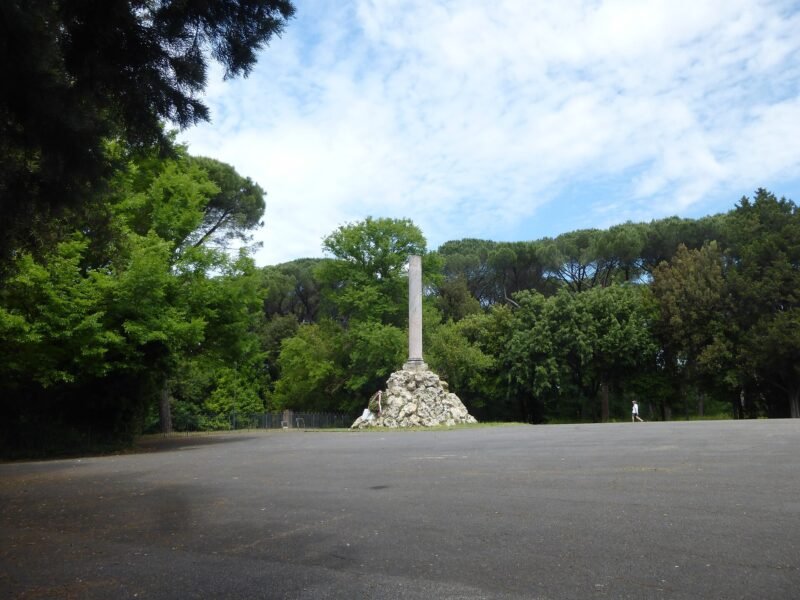
- Fountain of Anna Perenna500 m
- MAXXI – National Museum of 21st Century Arts700 m
- Flaminio700 m
Upcoming events nearby
- Roma Jazz Festival 2026, November 1 to 24 at the Auditorium and Casa del Jazz100 m
- Evgeny Kissin and András Schiff at Santa Cecilia, November 9, 2026100 m
- Roma Gospel Festival 2026 at Auditorium Parco della Musica, December 13, 2026 to January 1, 2027100 m
- Santa Cecilia 2026/2027 Concert Season at Auditorium Parco della Musica, October 21, 2026 to June 5, 2027100 m



You might also like
- Nubras Ensemble at Auditorium Parco della Musica, February 27, 2027
- Lorenzo Viotti and Lisa Batiashvili at Auditorium Parco della Musica, February 18, 19 and 20, 2027
- Antonio Pappano and Jan Lisiecki at Auditorium Parco della Musica, February 11, 12 and 13, 2027
- Tarmo Peltokoski and Bertrand Chamayou at Auditorium Parco della Musica, February 4, 5 and 6, 2027
- Riccardo Minasi conducts the Eroica at Auditorium Parco della Musica, January 7, 8 and 9, 2027
- Sergej Khachatryan and Alexandre Kantorow at Auditorium Parco della Musica, February 3, 2027