Antonio Pappano and Jan Lisiecki at Auditorium Parco della Musica, February 11, 12 and 13, 2027
In short. Antonio Pappano, conductor emeritus of the Accademia Nazionale di Santa Cecilia, conducts the Academy's orchestra with pianist Jan Lisiecki on Thursday, February 11, 2027 at 19:30, Friday, February 12 at 20:00 and Saturday, February 13…
Antonio Pappano, conductor emeritus of the Accademia Nazionale di Santa Cecilia, conducts the Academy's orchestra with pianist Jan Lisiecki on Thursday, February 11, 2027 at 19:30, Friday, February 12 at 20:00 and Saturday, February 13 at 18:00 in the Sala Santa Cecilia of the Auditorium Parco della Musica Ennio Morricone, Viale Pietro de Coubertin 30. The program is Beethoven's Piano Concerto No. 5 "Emperor" and Shostakovich's Symphony No. 8, in the year the Academy marks 200 years since Beethoven's death. The Auditorium is reached by Metro Line A to Flaminio and then tram 2, Flaminia/Reni or Apollodoro stops, or by bus 910 from Termini, 53, 982 and 168. Tickets range from €23 to €54 depending on the section and are bought at the Auditorium box office, at the one on Via Vittoria 6 and on the presale network authorized by the Academy, reachable from the official concert page.
Music director of the Roman orchestra since 2005, now conductor emeritus and also principal conductor of the London Symphony: Pappano returns to his home podium with a pianist he has known since 2013, when he conducted him at the London Proms with the Santa Cecilia orchestra itself. The program is the greatest of Beethoven's concertos and one of the most tragic symphonies of the 20th century.
Pappano and Lisiecki at Santa Cecilia: the three evenings
The Antonio Pappano and Jan Lisiecki concert is repeated three times in the Sala Santa Cecilia: Thursday, February 11, 2027 at 19:30 (series G), Friday, February 12 at 20:00 (series V) and Saturday, February 13 at 18:00 (series S), in the Academy's 2026/2027 symphonic season.
Pappano's second appearance
The Academy presents it as the second concert of the season by its conductor emeritus. After the autumn appearance, Pappano returns to the Sala Santa Cecilia podium in midwinter, this time with a soloist and with Beethoven.
Beethoven's year
2027 marks 200 years since Beethoven's death, in Vienna in 1827. The Academy builds an important part of its season around the anniversary, and the "Emperor" with Lisiecki is one of the central moments of this path.
Which performance to choose
The program does not change among the three evenings. Thursday at 19:30 is the time for those who want to get home early. Friday at 20:00 is the most traditional performance. Saturday at 18:00 leaves the evening free for dinner and is the natural choice for those in Rome for the weekend.
The program: the "Emperor" and Shostakovich's Eighth
The Pappano and Lisiecki concert includes Ludwig van Beethoven's Piano Concerto No. 5 in E-flat major, op. 73, "Emperor," and Dmitri Shostakovich's Symphony No. 8 in C minor, op. 65.
A revolutionary concerto
The Academy calls the "Emperor" a revolutionary work in conception and innovation, one that marks a turning point in the relationship between soloist and orchestra from its broad, virtuosic opening cadenza. The piano presents itself from the first bars, with a gesture that breaks the conventions of the classical concerto.
Vienna, 1809
Beethoven composed the Concerto in Vienna in 1809 and dedicated it to Archduke Rudolph, his patron, friend and pupil. The public premiere was in Leipzig on November 28, 1811, with Friedrich Schneider at the piano and the Gewandhaus orchestra. Beethoven, who usually played his own concertos, could not do so because of his worsening hearing.
Three movements, 40 minutes
The Concerto lasts about 40 minutes, longer than all of Beethoven's earlier piano concertos. The first movement, Allegro, is in sonata form and is the broadest. The Adagio un poco mosso is a nocturne that flows without a break into the final Rondo, Allegro ma non troppo.
Shostakovich, Symphony No. 8
After the brightness of Beethoven's page, the Academy writes, the music changes perspective radically. Shostakovich's Eighth, composed in 1943 in the midst of the Second World War, is one of his most dramatic and complex scores, a deep and painful reflection on the experience of war.
A tragic symphony
Shostakovich wrote it in the summer of 1943. The premiere, on November 4 of that year, was entrusted to the USSR State Symphony Orchestra conducted by Yevgeny Mravinsky, the work's dedicatee. After the American premiere in 1944 it was briefly called the "Stalingrad Symphony." Isaak Glikman, a friend of the composer, called it his most tragic work, and critics place it among his best scores.
Who Antonio Pappano is
Sir Antonio Pappano is a British conductor with Italian citizenship, born in Epping on December 30, 1959. He has been music director of the Orchestra of the Accademia Nazionale di Santa Cecilia since 2005 and is now its conductor emeritus.
A family from Castelfranco in Miscano
His parents came from Castelfranco in Miscano, in the province of Benevento, and emigrated to London. His father, a lover of Italian opera and an amateur pianist, passed on to him his love for Puccini. At 12 Antonio was already playing piano for young voice students. In 1973 the family moved to the United States, where he studied piano privately with Norma Verrilli, composition with Arnold Franchetto and conducting with Gustav Meier.
A conductor without a diploma
Pappano trained outside music institutions and earned no diplomas, not even in piano. He made his name as a coach and accompanist for singers, was an assistant at the Chicago Opera and worked with the New York City Opera from 1981. At Bayreuth he was an assistant to Daniel Barenboim.
Oslo, Brussels, London
In 1990 he became music director of the Den Norske Opera, from 1992 to 2002 of the Théâtre de la Monnaie in Brussels, and from September 2002 of the Royal Opera House at Covent Garden. Since October 1, 2005 he has been music director of the Santa Cecilia Orchestra, succeeding Myung Whun Chung. Since September 2024 he has been principal conductor of the London Symphony Orchestra.
Honors
He received the Laurence Olivier Award in 2003 and 2016, the Vittorio De Sica Prize in 2010 from President Giorgio Napolitano, the title of Knight Grand Cross of the Order of Merit of the Italian Republic in 2012 and, in the same year, that of Knight Bachelor from Queen Elizabeth II. Since April 16, 2007 he has been a full academician of Santa Cecilia.
Who Jan Lisiecki is
Jan Lisiecki is a Canadian pianist born in Calgary on March 23, 1995 to a Polish family. He has recorded exclusively for Deutsche Grammophon since the age of 15 and at 18 received the Gramophone Young Artist Award and the Leonard Bernstein Award.
An early debut
He began studying piano at five and debuted with an orchestra at nine. At 13 he was invited to the Chopin and His Europe festival in Warsaw, in 2008, to play Chopin's Second Concerto with the Sinfonia Varsovia and Howard Shelley. He returned the following year with the First. The recording of those concertos, released by the Fryderyk Chopin Institute, won the Diapason d'Or Découverte.
Deutsche Grammophon
In the same year Deutsche Grammophon offered him an exclusive contract. His first album for the label, in April 2012, contained Mozart's Concertos K 466 and K 467 with the Bavarian Radio Orchestra and Christian Zacharias, and was nominated for a Juno Award. In 2013 came Chopin's Études op. 10 and op. 25.
From the Canadian Parliament to Carnegie Hall
In 2010, for Canada Day, he played before Queen Elizabeth II and 100,000 people on Parliament Hill in Ottawa. He completed his studies at the Glenn Gould School of the Royal Conservatory in Toronto on a full scholarship. In January 2016, at 20, he debuted in the main hall of Carnegie Hall in New York.
Replacing Martha Argerich
In March 2013 he replaced Martha Argerich at short notice in Beethoven's Fourth Concerto in Bologna, with the Orchestra Mozart conducted by Claudio Abbado. Beethoven thus enters his Italian career through the front door, 14 years before the Roman "Emperor."
A curiosity about Antonio Pappano and Jan Lisiecki at Auditorium Parco della Musica, February 11, 12 and 13, 2027
The best curiosity is that Pappano, Lisiecki and the Santa Cecilia orchestra have already played together, and not in Rome. In summer 2013 the pianist, then 18, closed the season with Schumann's Concerto at the BBC Proms, at the Royal Albert Hall in London, with the Orchestra of the Accademia Nazionale di Santa Cecilia conducted by Antonio Pappano. The following year he made his recital debut at the Academy itself, in Rome.
The second concerns the Concerto's nickname. "Emperor" does not come from Beethoven, and the Concerto has no link to any emperor. The origin is uncertain, and it may have been coined by the English publisher Johann Baptist Cramer. According to several scholars, Beethoven would have hated it, given his view of Napoleon's conquests.
Third curiosity: the Concerto was one of Franz Liszt's warhorses, which he played all his life. The week before, in the same hall, Bertrand Chamayou plays Liszt's First Concerto with Tarmo Peltokoski: two weeks in a row, two piano concertos tied by the same thread.
The concert hall: Sala Santa Cecilia
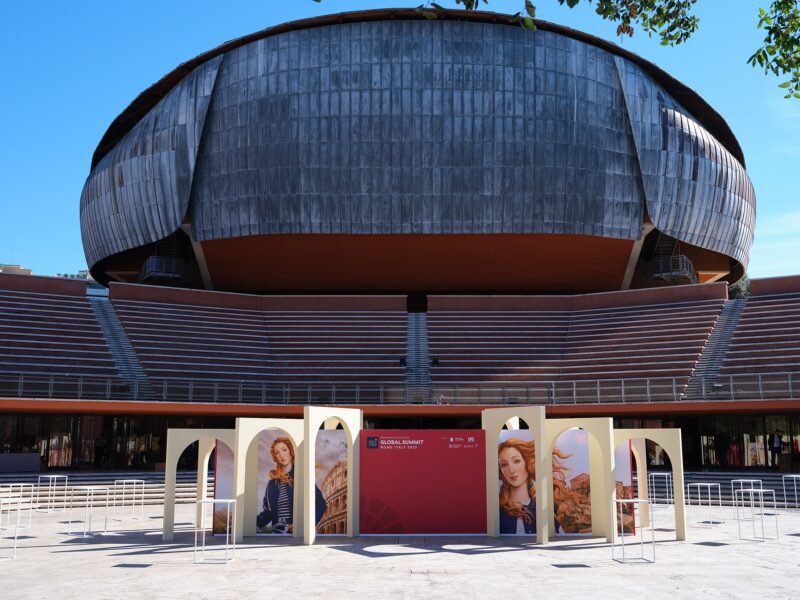
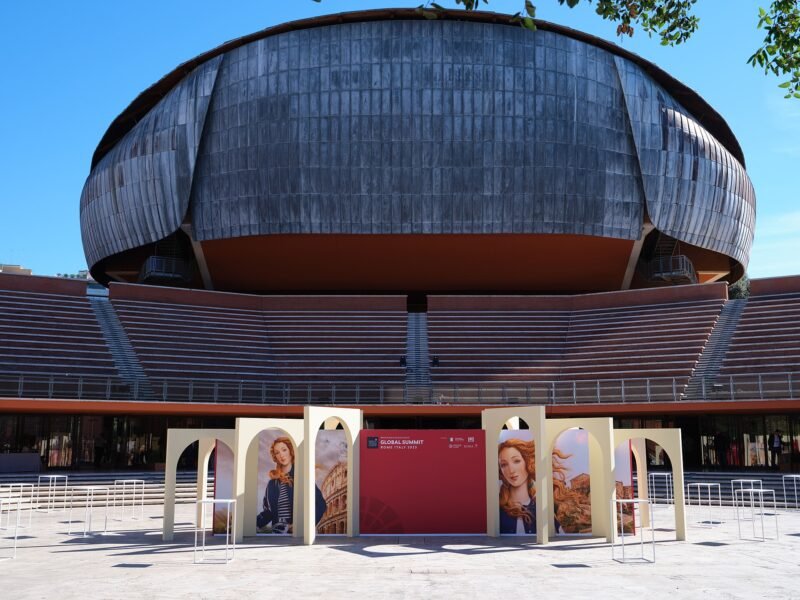
The Sala Santa Cecilia is the largest of the three halls of the Auditorium Parco della Musica, with 2,756 seats. Designed by Renzo Piano for symphonic music, it was inaugurated on December 21, 2002 and has hosted the Academy's season permanently since 2003.
The ceiling
26 American cherry shells, each with an average surface of about 180 square meters, form the hall's ceiling, which works like a large sounding box with a reverberation time of 2.2 seconds. For a piano concerto like the "Emperor," in which the soloist must be heard over a full orchestra, it is a clear advantage.
Where to sit
In the hall the sound intensity seems to decrease up to the tenth row and then stay constant, so the front rows are not the best. For the piano, the central orchestra or the front gallery is best. Those who want to see Pappano's gestures face on, as the musicians see them, can choose the gallery behind the orchestra.
The shape of the beetles
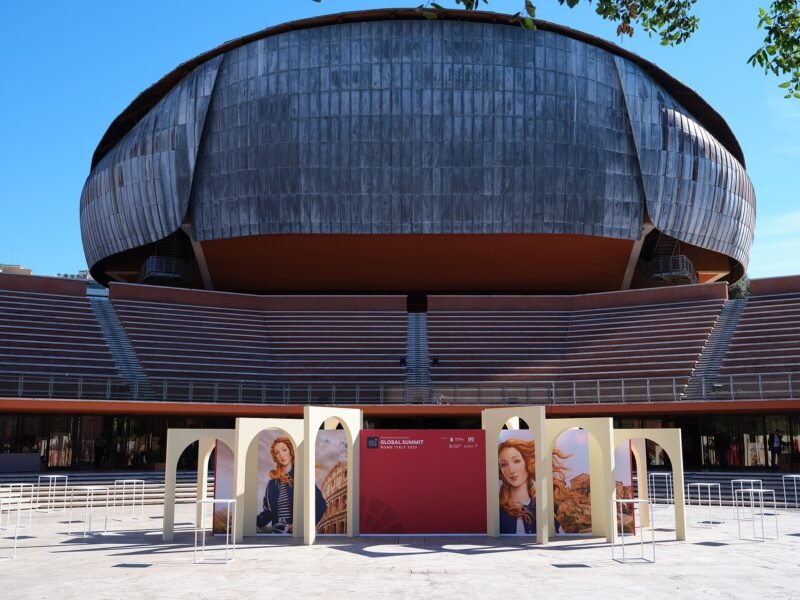
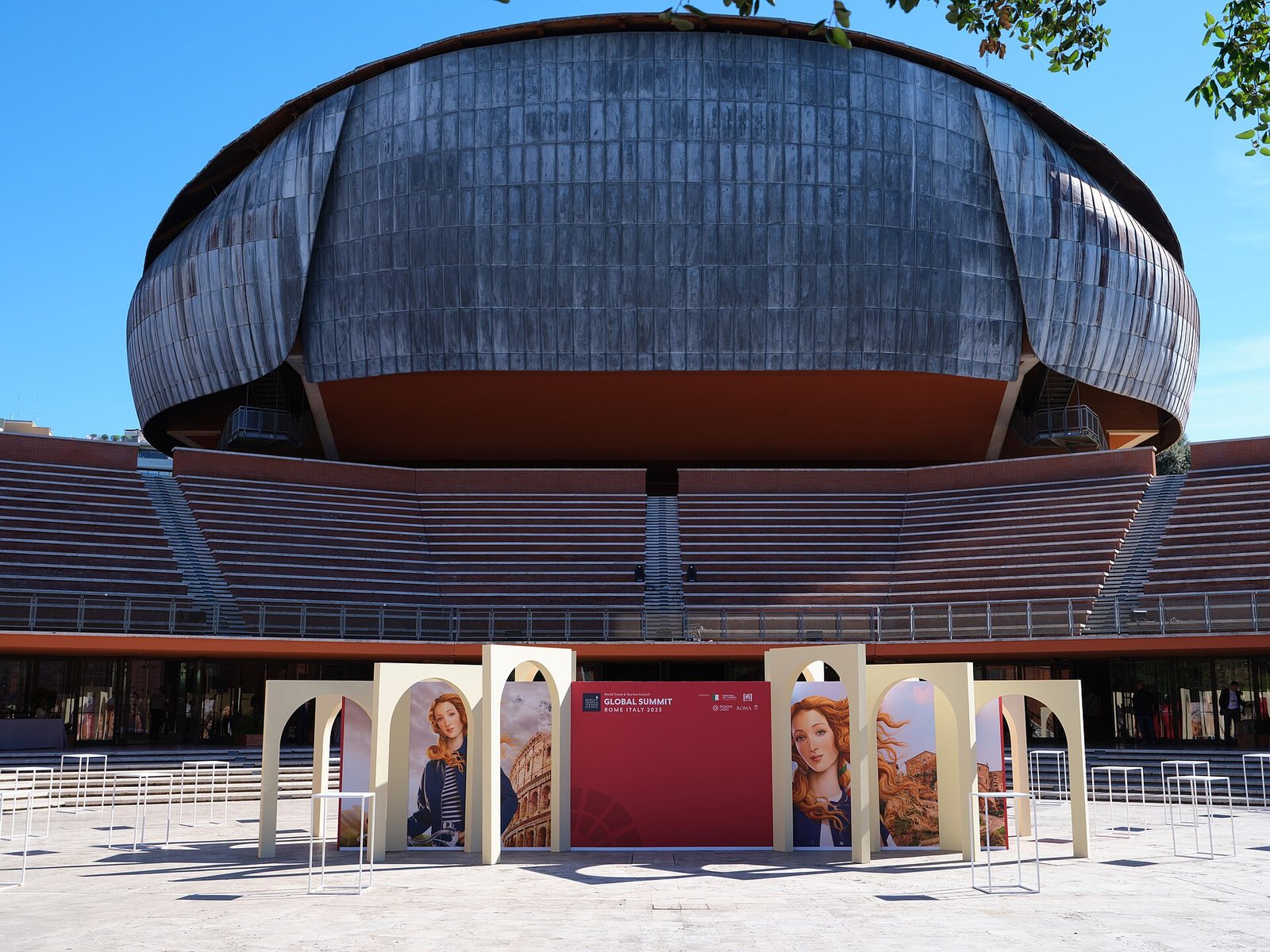
Seen from outside, the three halls are large volumes clad in lead on a brick base, arranged around the open-air cavea dedicated to Luciano Berio. Piano won the competition in 1993 and worked with acoustician Jürgen Reinhold of the Müller BBM studio in Munich and with landscape architect Franco Zagari.
One thing nobody tells you about Antonio Pappano and Jan Lisiecki at Auditorium Parco della Musica, February 11, 12 and 13, 2027
The first thing few people say is that the "Emperor" begins right away with the piano. As the Academy stresses, the soloist presents himself immediately with a broad, virtuosic opening cadenza. Those who come in at the last second, or arrive late and stay outside, miss the most spectacular moment of the evening.
The second is that the Academy closes the doors at the exact time. Latecomers do not enter the hall and can follow the concert in the listening rooms, while seats last. With Beethoven opening, being late costs you the whole piano concerto.
The third concerns the second half. Many people buy the ticket for Beethoven and Lisiecki, but Shostakovich's Eighth is a symphony critics rank among the composer's best. In our view it is the real surprise of the evening, and a test of the understanding between Pappano and the orchestra he has conducted since 2005.
The advice I give you for visiting Antonio Pappano and Jan Lisiecki at Auditorium Parco della Musica, February 11, 12 and 13, 2027
The advice is to spend half an hour on Shostakovich's Eighth before the concert. Many people know the "Emperor." Far fewer know the Eighth, a long, dark symphony that is appreciated more when you know where it is going. One hearing of the first movement and two lines on 1943 are enough.
Second piece of advice: choose Saturday at 18:00 if you are in Rome for the weekend. The concert ends at dinner time, and there is plenty of time to talk about Beethoven at the table.
Third: sit in the front gallery or the central orchestra for the piano, avoiding the very first rows, from which the orchestra's sound arrives unbalanced.
Finally, for those who love the repertoire, pair the concert with the previous week's one with Peltokoski and Chamayou, who have Shostakovich's Seventh on the program. The "Leningrad" and the Eighth seven days apart, in the same hall, are a rare chance to hear two war symphonies one after the other.
Tickets for Pappano and Lisiecki: prices and discounts
Tickets for the Pappano and Lisiecki concert cost €54 in section I, €47 in II, €37 in III, €35 in IV, €30 in V and €23 in VI. The authorized sellers are the Auditorium Parco della Musica box office, the one on Via Vittoria 6 and the points of sale of the presale network named by the Academy.
Advance sales
Since September 10, 2026 tickets have been on sale for concerts through February 27, 2027, this one included. From January 12, 2027 sales open for concerts from March to the end of the season.
Box offices
The Auditorium box office, in the greenhouse space, is open every day from 11:00 to 20:00. The one on Via Vittoria 6, near Via del Corso and Piazza del Popolo, is open Monday to Friday from 11:00 to 19:00 and Saturday from 11:00 to 14:00, electronic payment only. Online you start from the purchase button under the chosen date, on the official concert page.
Young people and kids
For symphonic season concerts, under-26s get a 30% discount and children under 14 with an adult get in for €3, at the box offices only and while promotional seats last. The discounts cannot be combined. Information at santacecilia.it/giovani, on the infoline 06 8082058 or at biglietteria@santacecilia.it.
How to get to the Auditorium for Pappano and Lisiecki
For the Pappano and Lisiecki concert at the Auditorium Parco della Musica the simplest way is Metro Line A to Flaminio and then tram 2 to Flaminia/Reni or Apollodoro. Buses 910, 53, 982 and 168 also serve it.
Tram 2
Tram 2 leaves from Piazzale Flaminio and runs along Via Flaminia toward Piazza Mancini. From the Flaminia/Reni and Apollodoro stops you walk through the Villaggio Olimpico to Viale Pietro de Coubertin in a few minutes.
Buses
The 910 links Piazza dei Cinquecento, in front of Termini, with the Auditorium. The 53 passes through Piazza Mancini, the 982 along Viale XVII Olimpiade, and the 168 comes from Tiburtina station. Evening schedules can be checked with the Rome transport company's route planner.
By car
The stretch of Viale Pietro de Coubertin in front of the entrance is closed to traffic, the Auditorium's paid parking has limited spaces, and on busy evenings the streets of the Villaggio Olimpico fill up. Public transport is better.
Another well-known fact, yet rarely mentioned
It is well known that Beethoven gradually lost his hearing. Less often remembered is that the "Emperor" is precisely the concerto he could not play in public: at the Leipzig premiere in 1811 the soloist was Friedrich Schneider. Until then Beethoven had been the first performer of his piano concertos, and the Fifth marks the end of that chapter of his life.
Another well-known and little-cited fact: the first recording of the "Emperor" dates to 1912, and since then the Concerto has been recorded countless times. Lisiecki adds in Rome a new page to his Beethoven, after the Fourth Concerto he played in Bologna in place of Martha Argerich.
On the Shostakovich side, musicologist David Haas read the Eighth in the tradition of the C minor symphonies that go "from tragedy to triumph," like Beethoven's Fifth or Brahms's First, but scholars do not agree on how optimistic the finale is. Pairing it with Beethoven, in Beethoven's year, has its own logic.
How to plan the evening
For the Pappano and Lisiecki concert it is advisable to be at the Auditorium at least 40 minutes early. In a hall of 2,756 seats ticket pickup, checks and the coat check take time, and with Pappano on the podium the audience is large.
The wait
In the foyer shared by the halls there are bars, a cafe and a large music bookstore. From the terrace between the Sala Santa Cecilia and the Sala Sinopoli you can see the remains of the Roman villa discovered during construction: 10 minutes well spent before going in.
The running time
The total running time is not listed on the concert page. The "Emperor" lasts about 40 minutes and the Eighth fills the whole second half. Those who must catch a train after the Friday or Saturday performance should leave plenty of margin.
On the way out
The cavea is the right place to let the crowd thin out. Those with a car in the Villaggio Olimpico should not hurry, since the first exits from the side streets are always the slowest.
The right photo to take at Antonio Pappano and Jan Lisiecki at Auditorium Parco della Musica, February 11, 12 and 13, 2027
Photographs are not allowed during the concert. The right photo is taken before the start: the open grand piano in the middle of the stage, in front of the orchestra's still-empty music stands, with the cherry shells of the ceiling above. In a hall of this size, a lone piano in the middle of the stage already says everything about the "Emperor."
The second is taken at the final applause, without flash: Pappano and the orchestra of which he is conductor emeritus, in front of the audience that has had him on the podium since 2005. It is the only moment when the phone disturbs no one.
Outside, on Thursday and Friday it is already dark on arrival, and Renzo Piano's three beetles are lit. From the cavea you frame them together, with the lights reflecting on the lead. On Saturday, with the 18:00 start, the light is that of the last afternoon of February, and the complex photographs better when arriving from the Villaggio Olimpico.
Some important events that took place here in history
The history of the place begins well before the music. During construction the remains of a Roman villa from the 3rd century BC emerged, built where a small archaic farm of the 6th century BC had stood. The discovery forced Renzo Piano to shift two of the three halls westward, almost to the Corso di Francia viaduct. The finds are displayed in a small museum under the cavea.
The modern story restarts from a demolition, that of the Augusteo in 1936, which left Rome without a symphonic hall for decades. In 1992 the city council chose the Villaggio Olimpico area, in 1993 Piano won the competition. On April 21, 2002 the Sala Sinopoli opened, with Goffredo Petrassi present, and on December 21, 2002 the Sala Santa Cecilia, with the Academy orchestra conducted by Myung Whun Chung.
Since 2003 the Auditorium has been the Academy's permanent home. Since 2006 it has hosted the Rome Film Festival, and in 2020 it was named after Ennio Morricone. Since October 1, 2005, with Pappano's arrival as music director, the Sala Santa Cecilia has become his Roman home.
Who has played Antonio Pappano and Jan Lisiecki at Auditorium Parco della Musica, February 11, 12 and 13, 2027
Myung Whun Chung conducted the inaugural concert of the Sala Santa Cecilia in 2002 and was its first music director. Antonio Pappano succeeded him on October 1, 2005. Since then the hall has seen Pappano's long tenure pass, up to Daniel Harding, who opens the 2026/2027 season with Wagner's Siegfried.
Luciano Berio, president of the Academy at the time of the opening, gave his name to the cavea. Goffredo Petrassi and Giuseppe Sinopoli gave theirs to the other two halls. Among the house soloists is Evgeny Kissin, who returns in the season in a duo with András Schiff, as the entry on the Kissin and Schiff concert tells. In November Kirill Petrenko takes the podium.
Jan Lisiecki, for his part, has known the Academy since his recital debut in the season after the 2013 Proms. February 2027 brings him back to Rome with the most imperial of Beethoven's concertos, beside the conductor who led him in London when he was 18.
Accessibility and children
People with walking disabilities holding the Disability Card get a 15% reduction on two tickets, to be bought at the box office. Wheelchair users pay €10 and their companions get in free, while the dedicated seats last.
Booking
For people who cannot walk, booking is mandatory, from 15 days before the concert until the day before, on 06 8082058 or at biglietteria@santacecilia.it. For the February 11 performance, booking opens on January 27.
The elevators
The hall is raised above ground level and the galleries are served by only two elevators. With an hour of margin and by asking staff for the route right away, you avoid the last-minute crowding. The Academy's Servizio Cortesia is present from one hour before subscription concerts.
With teenagers
The "Emperor" is one of the concertos best suited to a teenager who studies piano: a spectacular opening, a singing Adagio, a Rondo full of energy. Shostakovich's Eighth is more demanding. With €3 for children under 14 at the box offices, Saturday at 18:00 is the right performance.
The district around the Auditorium
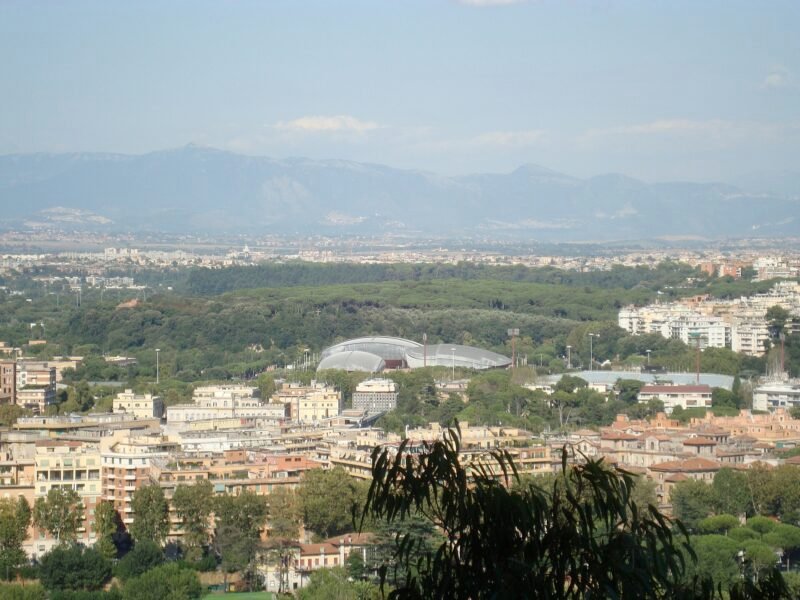
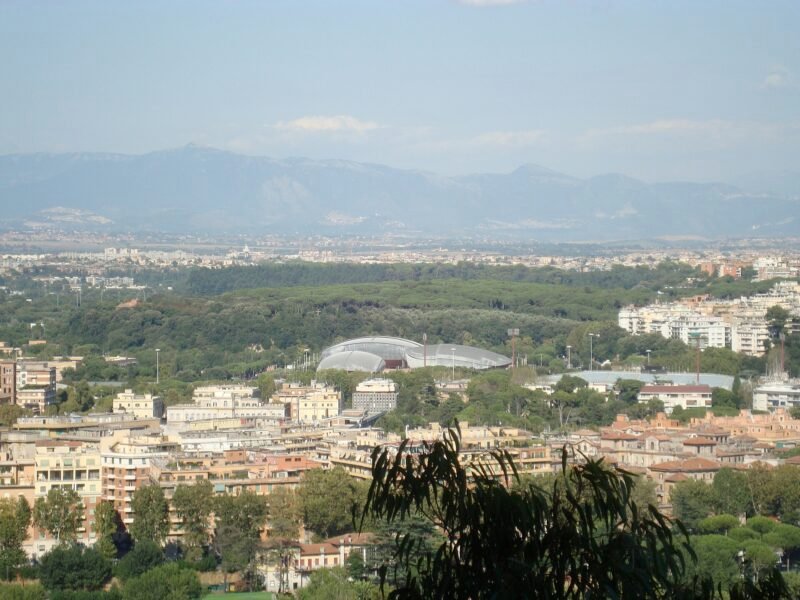
The Auditorium extends over about 55,000 square meters between Villa Glori, the Villaggio Olimpico, the Corso di Francia viaduct and Viale Maresciallo Pilsudski, in a quarter of Rome where 20th-century and contemporary architecture alternate with greenery.
Contemporary art
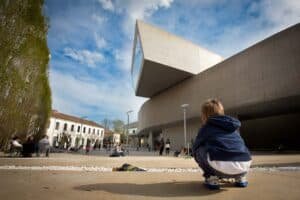
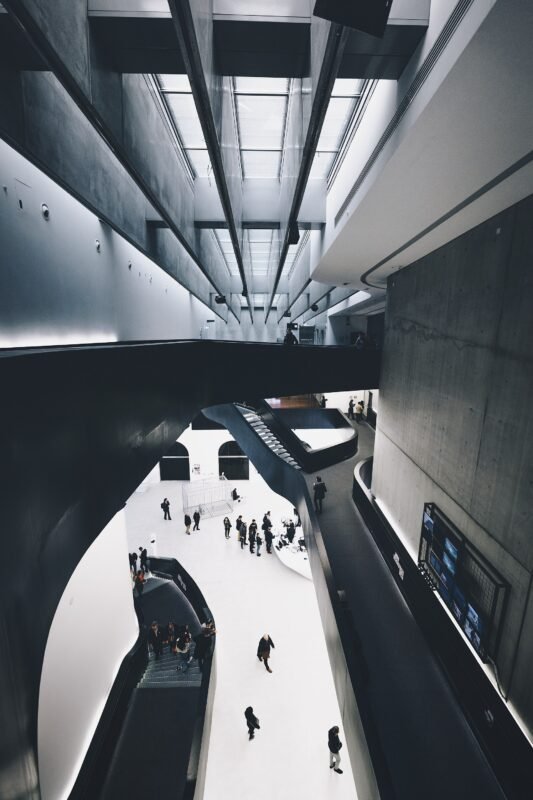
A few minutes on foot, toward Via Guido Reni, is Zaha Hadid's MAXXI. With the Saturday 18:00 concert, an exhibition in the early afternoon fits in without rushing.
The river and Ponte Milvio
The Ponte della Musica links the Flaminio district to the Foro Italico. Farther north, Milvian Bridge is one of the most popular evening hangouts in north Rome.
Back to the center
Tram 2 takes you back to Piazzale Flaminio, at the entrance to Villa Borghese and Piazza del Popolo.
Where to eat before or after the concert
In the Auditorium there are a bar and cafe in the foyer and a restaurant bar with street access too, useful for those who arrive on Thursday straight from work.
In the neighborhood
Between the Villaggio Olimpico, Via Flaminia and Piazza Mancini there are pizzerias, trattorias and neighborhood bars, frequented mostly by residents. With the 19:30 or 20:00 start, a light meal before and dinner after works best.
Saturday
With the 18:00 concert you come out at dinner time. Ponte Milvio, a few minutes away, offers the widest choice, while toward Piazzale Flaminio you enter the historic center area. On Saturday evening it is best to book.
Mid-February in Rome
Mid-February is still low season in Rome: museums that are comfortable to visit, lower prices, music seasons in full swing. Those traveling in this period find a quieter city than usual.
The music week
On Thursday, February 11 at 21:00 baritone Thomas Oliemans brings Schubert's Winterreise to Teatro Argentina for the Accademia Filarmonica Romana, playing the piano part himself. The following week, at the Auditorium, Lorenzo Viotti conducts Lisa Batiashvili and The Rite of Spring.
Valentine's Day and the weather
Saturday, February 13 is the eve of Valentine's Day: if you are thinking of dinner after the 18:00 concert, book well in advance. Evenings can be cold and damp, and at the Auditorium you walk outdoors between the halls.
Frequently asked questions about Pappano and Lisiecki at Santa Cecilia
When does Pappano conduct with Lisiecki in Rome?
Antonio Pappano conducts the Orchestra of the Accademia Nazionale di Santa Cecilia with Jan Lisiecki on Thursday, February 11, 2027 at 19:30, Friday, February 12 at 20:00 and Saturday, February 13 at 18:00, in the Sala Santa Cecilia of the Auditorium Parco della Musica Ennio Morricone, Viale Pietro de Coubertin 30.
What is the program of the concert?
The Pappano and Lisiecki concert includes Beethoven's Piano Concerto No. 5 "Emperor," in the bicentenary year of the composer's death, and Shostakovich's Symphony No. 8, composed in 1943 during the Second World War.
How much do tickets cost?
Tickets for Pappano and Lisiecki cost €54, €47, €37, €35, €30 and €23 from section I to VI. Under-26s get a 30% discount and children under 14 with an adult pay €3, at the box offices only and while promotional seats last.
Where do you buy tickets?
Tickets for the Pappano and Lisiecki concert are bought at the Auditorium Parco della Musica box office, open every day from 11:00 to 20:00, at the box office on Via Vittoria 6 and on the authorized presale network reachable from the official concert page on the Academy website.
Who is Jan Lisiecki?
Jan Lisiecki is the Canadian pianist born in Calgary in 1995, a Deutsche Grammophon artist since the age of 15, winner of the Gramophone Young Artist Award at 18. In 2013 he played Schumann at the BBC Proms with the Santa Cecilia Orchestra conducted by Pappano.
Is Antonio Pappano still the conductor of Santa Cecilia?
Antonio Pappano was music director of the Orchestra of the Accademia Nazionale di Santa Cecilia from 2005 and is now its conductor emeritus. The February concert is the second of his season. Since September 2024 he has been principal conductor of the London Symphony Orchestra.
How do I get to Auditorium Parco della Musica?
You reach Auditorium Parco della Musica on Metro A to Flaminio and then tram 2, stops Flaminia/Reni or Apollodoro, or by buses 910 from Termini, 53, 982 and 168. In front of the entrance the road is closed to traffic.
The final advice on Pappano and Lisiecki at Santa Cecilia
A conductor who made the recent history of the Roman orchestra, a pianist he has known since the pianist was 18, the "Emperor" in Beethoven's year and a Shostakovich Eighth that is rarely heard. In our view it is one of the most complete concerts of the season. The advice is to arrive well ahead to catch the piano's entrance, hear the Eighth beforehand, choose Saturday at 18:00 if you are in town for the weekend and book dinner right away, because it is the eve of Valentine's Day.
Article written by the editorial team of Tour Leader Pro, contact them for Private/Corporate/V.I.P. Tours and Experiences.
Planning a trip to Rome? The English guides to visiting the city are on ItalyPlanner.com.
Contact Information
Nearby
 Museum of Musical Instruments (MUSA)100 m
- Auditorium Parco della Musica100 m
- Villa Glori500 m
- Fountain of Anna Perenna500 m
- MAXXI – National Museum of 21st Century Arts700 m
- Flaminio700 m
Upcoming events nearby
- Roma Jazz Festival 2026, November 1 to 24 at the Auditorium and Casa del Jazz100 m
- Evgeny Kissin and András Schiff at Santa Cecilia, November 9, 2026100 m
- Roma Gospel Festival 2026 at Auditorium Parco della Musica, December 13, 2026 to January 1, 2027100 m
- Santa Cecilia 2026/2027 Concert Season at Auditorium Parco della Musica, October 21, 2026 to June 5, 2027100 m



You might also like
- Nubras Ensemble at Auditorium Parco della Musica, February 27, 2027
- Fabio Luisi and Beethoven’s Missa Solemnis at Auditorium Parco della Musica, February 25 to 27, 2027
- Lorenzo Viotti and Lisa Batiashvili at Auditorium Parco della Musica, February 18, 19 and 20, 2027
- Tarmo Peltokoski and Bertrand Chamayou at Auditorium Parco della Musica, February 4, 5 and 6, 2027
- Riccardo Minasi conducts the Eroica at Auditorium Parco della Musica, January 7, 8 and 9, 2027
- Sergej Khachatryan and Alexandre Kantorow at Auditorium Parco della Musica, February 3, 2027