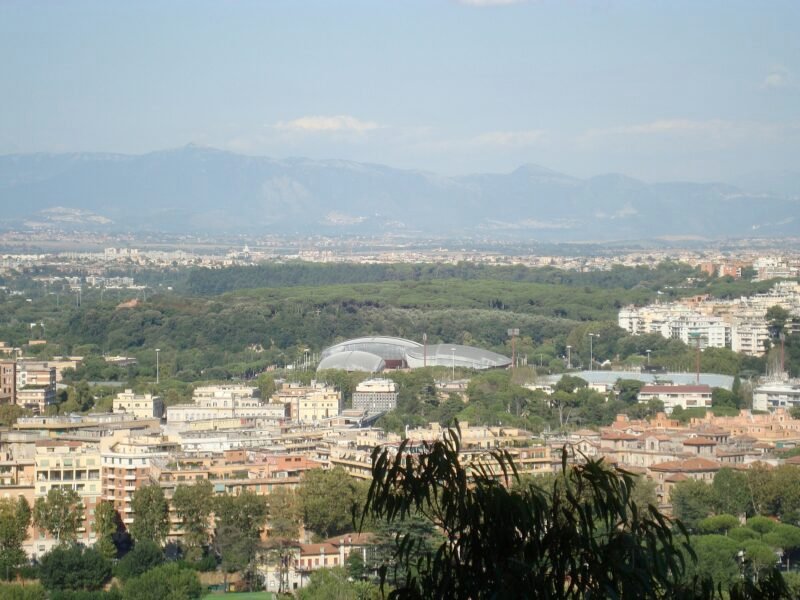
Kirill Petrenko conducts the Santa Cecilia Orchestra at Auditorium Parco della Musica, November 12, 13 and 14, 2026
In short. Kirill Petrenko, chief conductor of the Berliner Philharmoniker, conducts the Orchestra of the Accademia Nazionale di Santa Cecilia on Thursday, November 12, 2026 at 19:30, Friday, November 13 at 20:00 and Saturday, November 14 at…
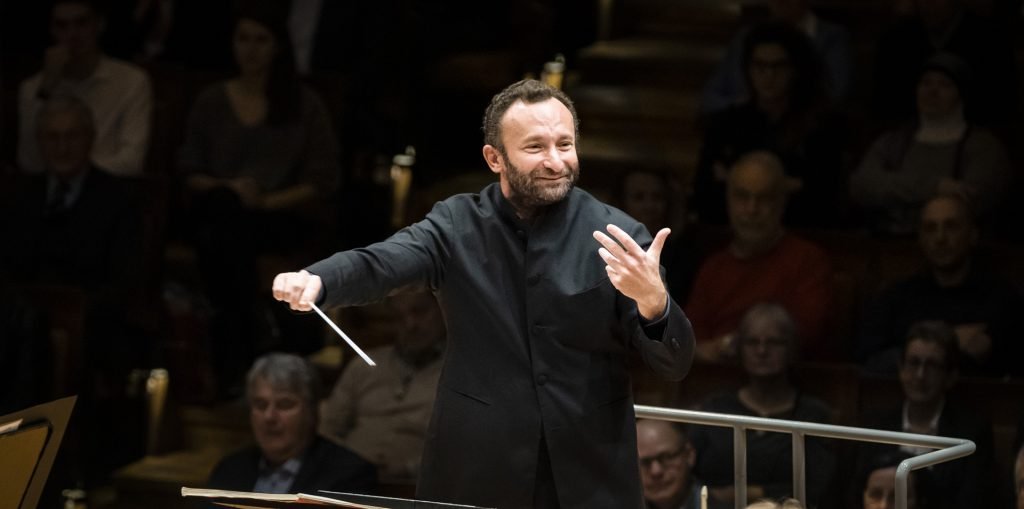
Kirill Petrenko, chief conductor of the Berliner Philharmoniker, conducts the Orchestra of the Accademia Nazionale di Santa Cecilia on Thursday, November 12, 2026 at 19:30, Friday, November 13 at 20:00 and Saturday, November 14 at 18:00, in Sala Santa Cecilia at Auditorium Parco della Musica Ennio Morricone, Viale Pietro de Coubertin 30. With him is tenor Benjamin Bernheim. On the program are Hindemith's Mathis der Maler, four orchestral Lieder by Richard Strauss and Schumann's Symphony No. 3 "Rhenish". You get there by metro A to Flaminio and then tram 2 to the Flaminia/Reni or Apollodoro stops, or by bus 910 from Termini, 53, 982 and 168. Tickets cost from 28 to 65 euros and are sold at the Auditorium box office, at the box office in Via Vittoria 6 and on the presale network authorized by the organization, reachable from the official concert page. The doors close at the start time.
There are concerts that get announced and concerts that people wait for. This one belongs to the second category: the conductor who for seven years has led the orchestra of Karajan and Abbado takes the podium at Santa Cecilia with an all-German program, built with rare intelligence. Anyone who loves symphonic music and is in Rome on those days doesn't have many excuses.
Petrenko at Santa Cecilia: the three November nights
Kirill Petrenko's concert is repeated three times, following the usual pattern of the Accademia's symphonic season: Thursday, November 12 at 19:30 for series G, Friday the 13th at 20:00 for series V, Saturday the 14th at 18:00 for series S. The program is the same on all three nights.
Which night to choose
Thursday has the most loyal audience, the longtime subscribers, and the atmosphere of a premiere. Friday is the most convenient night for those who work and want to have dinner afterward. Saturday at 18:00 is the right choice for those coming from outside Rome who have to catch a train back, or for those who want the concert and then an unhurried dinner. For a concert with this much pull, though, the real choice will be made by seat availability.
A concert at a higher price
The Accademia has placed the Petrenko night among the higher-priced symphonic concerts of the 2026/2027 season, together with Beethoven 9 and Pagliacci conducted by Daniel Harding and the Charles Dutoit concert with Martha Argerich. It's a clear signal: the Accademia itself considers this event one of the three or four high points of the year.
A diplomatic frame
The official page places the concert within the 75th anniversary of the resumption of diplomatic relations between Italy and Germany. A conductor at the head of the most famous German orchestra, a program of Hindemith, Strauss and Schumann, an Italian orchestra: the choice is consistent down to the details.
The program: Hindemith, Strauss and Schumann
The program of Kirill Petrenko's concert at Santa Cecilia includes Paul Hindemith's Mathis der Maler, four orchestral Lieder by Richard Strauss sung by Benjamin Bernheim and Robert Schumann's Symphony No. 3 in E-flat major, Op. 97 "Rhenish".
Hindemith, Mathis der Maler
The Mathis der Maler symphony is one of Hindemith's best-known orchestral works. It was born in 1934 at the request of Wilhelm Furtwängler, who wanted a new work for a Berliner Philharmoniker tour. Hindemith wrote three symphonic movements meant to later flow into the opera of the same name, dedicated to the painter Matthias Grünewald. The three movements, Angelic Concert, Entombment and Temptation of Saint Anthony, correspond to as many panels of the Isenheim Altarpiece, the great folding polyptych painted by Grünewald.
Four Lieder by Strauss
Three songs come from the Op. 27 collection: Heimliche Aufforderung, Morgen! and Cäcilie. The fourth, Verführung, is Op. 33 No. 1. Op. 27 was Strauss's wedding gift to his wife, the soprano Pauline de Ahna, in 1894. Morgen!, on verses by John Henry Mackay, is one of Strauss's most recorded Lieder: in the 1897 orchestral version, muted strings, harp and solo violin accompany the voice almost always in pianissimo, and the horns come in only on the word "stumm", silent.
Schumann, the "Rhenish"
Schumann's Third is the last symphony the composer wrote, though not the last published. Written between November 2 and December 9, 1850, it was first performed in Düsseldorf on February 6, 1851, conducted by Schumann himself. It has five movements instead of the canonical four. The fourth, Feierlich, that is, solemn, evokes a ceremony in Cologne Cathedral for the elevation of an archbishop to cardinal.
The thread that ties the program together
Read in order, the program tells a century of German music backward: from Hindemith's 1934 to Strauss's 1894 to Schumann's 1850. It's a journey that starts from an opera about the artist's duty in dark times and arrives at a river, the Rhine, and a cathedral. In our view it's the most thoughtful program of the Roman autumn.
Who Kirill Petrenko, the Berliner's conductor, is
Kirill Petrenko was born on February 11, 1972 in Omsk, Siberia, then in the Soviet Union. Since 2019 he has been chief conductor of the Berliner Philharmoniker, the orchestra led before him by Nikisch, Furtwängler, Karajan, Abbado and Simon Rattle. He is a Russian-Austrian conductor, raised in a family of musicians.
The training years
His father was a violinist, his mother a musicologist. Petrenko studied piano and debuted as a pianist at 11. At 18, with the opening of the Soviet borders, the family emigrated to Austria, to Vorarlberg, where his father joined the regional symphony orchestra. Kirill graduated with honors in piano at the Feldkirch conservatory and continued his studies at the University of Music in Vienna, with Uroš Lajovic among others. His teachers and mentors include Myung-Whun Chung, Edward Downes, Péter Eötvös, Ferdinand Leitner and Semyon Bychkov.
The debut and the apprenticeship in the theater
His debut as a conductor came in 1995, in Vorarlberg, with Benjamin Britten's Let's Make an Opera. From 1997 to 1999 he was Kapellmeister at the Vienna Volksoper. From 1999 to 2002 he was general music director of the theater in Meiningen, Thuringia, where in 2001 he conducted Wagner's entire Ring of the Nibelung on four consecutive days, his first professional encounter with Wagner.
Komische Oper and Munich
From 2002 to 2007 he led the Komische Oper in Berlin. He debuted at the Bavarian State Opera in 2003, returned there in 2009 with Janáček's Jenůfa, and in 2010 was named general music director starting in 2013. He held the post until 2021, succeeding Kent Nagano and preceding Vladimir Jurowski, in a line of music directors that includes Richard Strauss, Bruno Walter, Hans Knappertsbusch, Georg Solti and Wolfgang Sawallisch.
Bayreuth
From 2013 to 2015 Petrenko conducted the Ring at the Bayreuth Festival. For a conductor of his generation it's the Wagnerian consecration par excellence, and the bridge between the career in opera houses and the symphonic one that would come right after.
The election in Berlin
He had conducted the Berliner as a guest in 2006, 2009 and 2012. In June 2015 the orchestra elected him chief conductor, his first post at the head of a symphony orchestra after a life spent in opera houses. The official start of his tenure was August 19, 2019.
Taking a stand
Petrenko is a conductor known for being reserved with the press, but not silent on the issues that matter. In 2014, during the annexation of Crimea, he asked for Ukraine's sovereignty to be respected. In February 2022 he condemned the Russian invasion of Ukraine. In March 2020, with the federal culture commissioner Monika Grütters, he took on the patronage of a support fund for freelance musicians hit by the pandemic.
Awards and recent recordings
He won the conducting award at the International Opera Awards in 2014 and in the 2020/21 edition. In 2026 he received the Léonie Sonning Music Prize, Denmark's main music prize, and according to Bavarian radio he donated the money to Ukraine. With the Berliner he has paid great attention to Arnold Schönberg: Verklärte Nacht, the Chamber Symphony No. 1 and the unfinished oratorio Die Jakobsleiter, released in 2025.
Benjamin Bernheim, the tenor of the night
Benjamin Bernheim is a French-Swiss lyric tenor born in Paris on June 9, 1985, today one of the most sought-after names for the French and Italian repertoire. Raised in Geneva, he studied violin and piano there and began taking singing lessons at 10.
From Lausanne to Zurich
At 18 he entered the Lausanne Conservatory, as a student of Gary Magby. He was then admitted to the Zurich Opera Studio for the 2008/2009 season and from 2010 was part of the resident company of the Opernhaus, where he also sang in the world premiere of Marc-André Dalbavie's Gesualdo. In 2012 he debuted at the Salzburg Festival in Mozart's Il re pastore, in concert form, with William Christie.
The great opera houses
From the 2015/2016 season came the leading roles: Rodolfo in La Bohème in Zurich and then at Covent Garden and the Paris Opéra, Alfredo in La Traviata at the Berlin Staatsoper, La Scala and London, Faust in Chicago and at the Théâtre des Champs-Élysées, Nemorino at the Vienna State Opera, the Duke of Mantua in Munich, Des Grieux in the new Manon at the Paris Opéra.
Why Strauss in particular
Bernheim started early with Strauss, singing Narraboth in Salome, Matteo in Arabella and the Italian Singer in Der Rosenkavalier at La Scala. Orchestral Lieder ask for exactly what made him famous: a long line, a sustained pianissimo, clear diction. Hearing him in Morgen!, with the orchestra reduced to a whisper, is one of the reasons to buy a ticket.
A curious fact about Kirill Petrenko conducting the Santa Cecilia Orchestra at Auditorium Parco della Musica, November 12, 13 and 14, 2026
The first concert in Sala Santa Cecilia, on December 21, 2002, was conducted by Myung-Whun Chung at the head of the Accademia's orchestra. Chung is also one of the teachers and mentors Petrenko names in his own training. 24 years later, the student takes the same podium with the same orchestra: a small circle that closes and that no program note tells.
There's a second coincidence, a more historical one. The Mathis der Maler symphony was first performed on March 12, 1934 by the Berliner Philharmoniker conducted by Furtwängler. The orchestra Petrenko leads today is therefore the one that premiered the opening piece of the Rome concert. The conductor brings to Rome a piece of his own house's history, but entrusts it to another orchestra.
A third, for genealogy enthusiasts: among the music directors of the Bavarian State Opera who preceded Petrenko is Wolfgang Sawallisch, the same man who in the first months of Sala Santa Cecilia's life said he was puzzled by the stage and the acoustics. The hall has since been corrected, and the opinion of those who go there today is very different.
Sala Santa Cecilia, home of the orchestra
Sala Santa Cecilia is the largest of the three concert halls of Auditorium Parco della Musica Ennio Morricone: 2,756 seats, designed by Renzo Piano for symphonic music and opened on December 21, 2002. Since 2003 it has been the permanent home of the Accademia's season.
The cherry wood
The ceiling is made up of 26 shells of American cherry, each with an average surface of about 180 square meters. The hall works like a large soundboard, with a reverberation time of 2.2 seconds. For a score like the Rhenish, with the horns and trombones of the fourth movement coming in pianissimo, this means hearing every nuance.
Where to sit for a symphonic concert
Regulars know that the sound intensity seems to drop until the 10th row and then stay constant: you don't need the orchestra seats right up against the stage. For a conductor like Petrenko, though, there's an alternative to consider: the gallery behind the orchestra, from which you see the conductor's gestures face on. For anyone who wants to understand how an orchestra is rehearsed and led, it's the best seat.
Renzo Piano's beetles
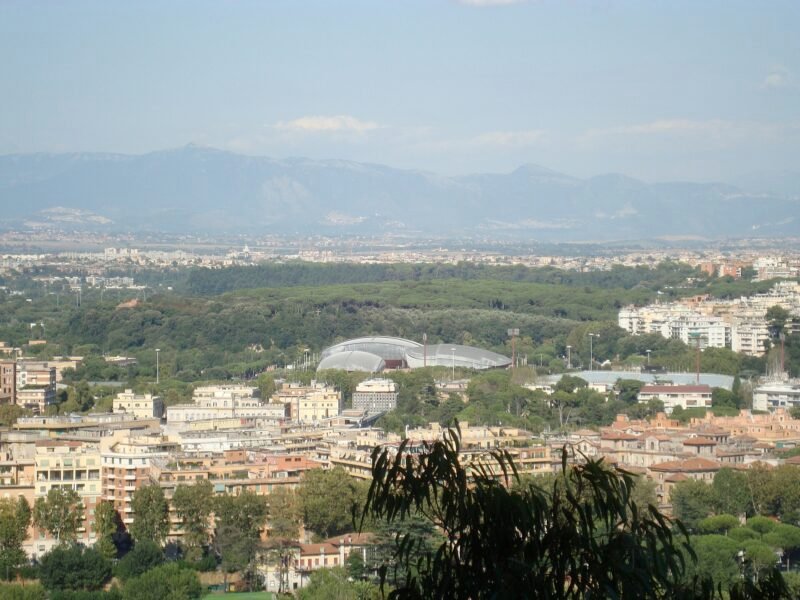
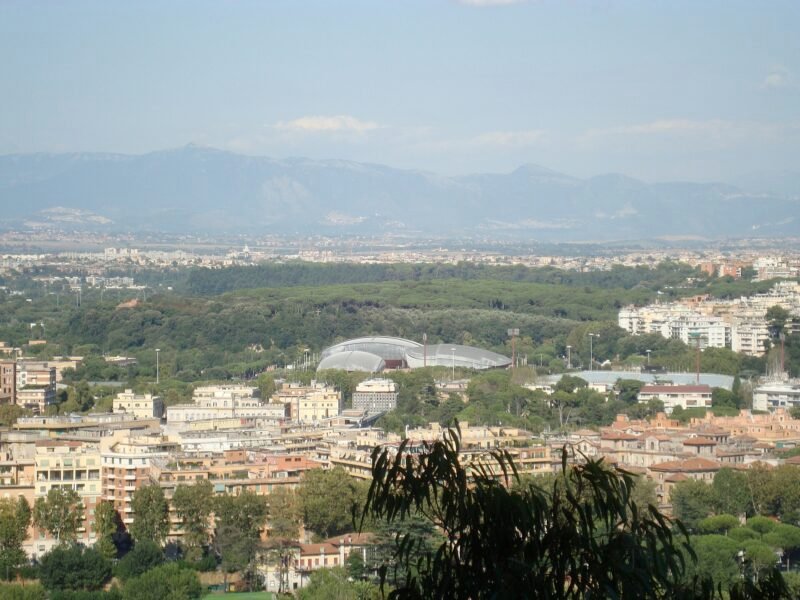
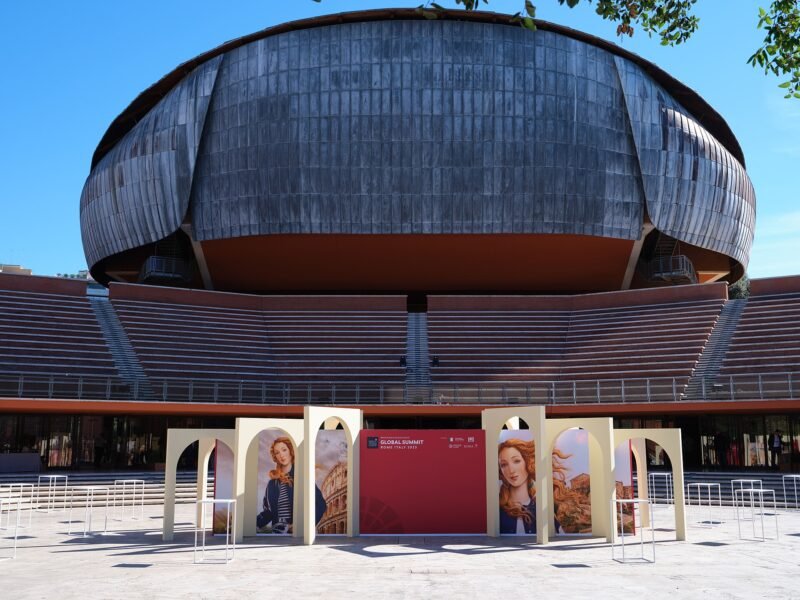
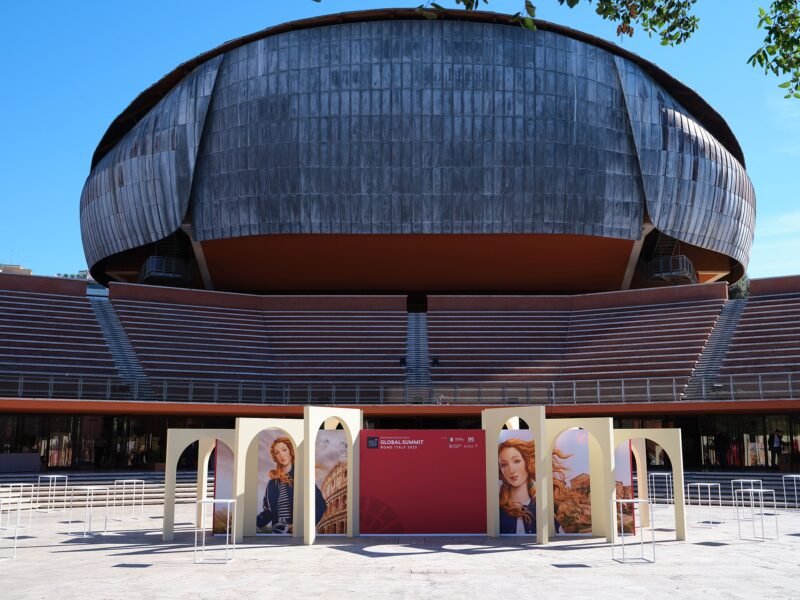
Seen from outside, the halls are three large lead-clad volumes on a brick base, arranged in a fan around the open-air cavea named after Luciano Berio. Piano won the 1993 invited competition and worked with acoustician Jürgen Reinhold of the Müller-BBM firm in Munich and with landscape architect Franco Zagari. The profile of the complex is on the Auditorium Parco della Musica page.
Something nobody tells you about Kirill Petrenko conducting the Santa Cecilia Orchestra at Auditorium Parco della Musica, November 12, 13 and 14, 2026
The doors close at the start time, and the Accademia applies this to the letter: latecomers don't enter the hall and follow the concert in the small listening rooms, while seats last. On a night with Mathis der Maler as the opener, this means missing the Angelic Concert, that is, the brightest piece on the program. The advice is obvious but worth gold: leave yourself half an hour of margin for the traffic in Flaminio.
A second little-mentioned thing: Sala Santa Cecilia is built on a level raised above the ground, because the remains of a Roman villa emerged underground and it wasn't possible to dig. There are only two elevators for the galleries. Anyone with mobility difficulties and a gallery seat has to arrive well in advance, not out of caution but out of necessity.
A third: the hall has no pipe organ. The issue blew up in 2002 with an appeal by Italia Nostra, and the Accademia, then led by Luciano Berio, suspended the project. This program doesn't need an organ, but it explains why the wall behind the orchestra is so bare compared with the great European halls, including the Berlin Philharmonie, Petrenko's home.
The Accademia Nazionale di Santa Cecilia and the 2026/2027 season
The Accademia Nazionale di Santa Cecilia, which organizes the Petrenko concert, is one of the oldest musical institutions in the world: born as a congregation of musicians, today it's a foundation with a symphony orchestra and chorus and an academic body. The music director is Daniel Harding.
A packed November
The concert falls in the middle of the Accademia's symphonic autumn. A few days earlier, on November 5, 6 and 7, Alexander Soddy conducts Poulenc, Prokofiev and Dukas. Right after, on November 19, 20 and 21, Antonio Pappano returns with Petrassi and Tchaikovsky, and on November 26, 27 and 28 Daniel Harding conducts Brahms and Strauss. The season opened in October with Wagner's Siegfried conducted by Harding, and on November 9 the chamber season brings the duo Evgeny Kissin and András Schiff to Sala Santa Cecilia.
The Accademia's museum
The Auditorium is the Accademia's main seat, where it keeps the Bibliomediateca and the Museo degli Strumenti Musicali. The patron saint of music and of the Accademia is venerated in the Basilica of Santa Cecilia in Trastevere, worth a visit by day for those staying in Rome.
My advice for Kirill Petrenko conducting the Santa Cecilia Orchestra at Auditorium Parco della Musica, November 12, 13 and 14, 2026
My advice is to listen to just one thing before the concert: Strauss's Morgen!, in the orchestral version. It lasts about three and a half minutes. Whoever arrives in the hall knowing how it breathes will then hear the whole difference between a correct performance and a suspended one, and with Petrenko and Bernheim it's fair to expect the second.
Second piece of advice: choose your seat based on what you want to take home. For the sound, central orchestra seats past the 10th row or the front gallery. For the conductor, the gallery behind the orchestra. Petrenko is a conductor to watch: the precision of his gestures is a show within the show, and from those seats you follow it face on, as the musicians see it.
Third: don't leave during the final applause. In the Rhenish the last movement closes in full light, and in a hall like this the applause of 2,700 people is part of the night. Tram 2 and the 910 still run 10 minutes later.
Finally, if you have to choose just one of the three dates, take Saturday at 18:00 and have dinner afterward: it's the only one that leaves time to talk about the concert at the table without looking at the clock.
Tickets for Petrenko at Santa Cecilia: prices and discounts
Tickets for the Kirill Petrenko concert cost from 28 to 65 euros, depending on the section of Sala Santa Cecilia. They're sold only by sellers authorized by the Accademia: the box office of Auditorium Parco della Musica Ennio Morricone, the box office in Via Vittoria 6 and the sales points of the authorized presale network.
Where to buy them
The Auditorium box office, in the greenhouse space, is open every day from 11:00 to 20:00. The one in Via Vittoria 6, a short walk from Via del Corso and Piazza del Popolo, is open Monday to Friday from 11:00 to 19:00 and Saturday from 11:00 to 14:00, with electronic payment only. Online, you start from the buy button under the chosen date, on the official concert page.
Young people and kids
For the subscription season concerts, under-26s get a 30% discount on tickets, and children under 14 accompanied by an adult get in for the symbolic price of 3 euros. Reduced fares can be bought only at the box offices, while the promotional seats last, and the discounts can't be combined. The under-35 carnet, on the other hand, excludes higher-priced concerts like this one.
Unauthorized sellers
The Accademia warns that it isn't responsible for markups on tickets sold by unauthorized parties. For a name like Petrenko the secondary market is predictable: better to avoid it, and if needed ask the infoline at 06 8082058 if seats become available.
How to get to the Auditorium for the Petrenko concert
Auditorium Parco della Musica Ennio Morricone can be reached by metro A to Flaminio and then tram 2, Flaminia/Reni or Apollodoro stops, or by bus 910, 53, 982 and 168. The metro doesn't go all the way to the entrance.
Metro A and tram 2
From Piazzale Flaminio, tram 2 goes up Via Flaminia toward Piazza Mancini. You get off at Flaminia/Reni or Apollodoro and walk for a few minutes toward Viale Pietro de Coubertin, through the Villaggio Olimpico. It's the simplest option from Piazza del Popolo and the center.
The 910 from Termini
The 910 leaves from Piazza dei Cinquecento, in front of Termini station, and reaches the Auditorium without changes. For those staying near the station, or arriving by train for the Saturday afternoon concert, it's the line to choose.
The other lines
The 53 connects Piazza Mancini and the center, the 982 comes from Viale XVII Olimpiade area and Quattro Venti station, the 168 from Tiburtina station. The 168 is a weekday line: on Saturday it's worth checking the times on the transport company's website.
By car
The stretch of Viale Pietro de Coubertin in front of the Auditorium is closed to traffic. The complex has paid parking with limited spaces, and on concert nights cars invade the streets of the Villaggio Olimpico. Drive only if there's no alternative, and early.
Another well-known fact, yet not often mentioned
Everyone knows that Mathis der Maler is a Hindemith masterpiece. Less often mentioned is the price it cost. The symphony was well received at its 1934 Berlin premiere, but Furtwängler was harshly attacked by the Nazi government for performing it, because other Hindemith scores had already been branded "degenerate". The plot of the opera, after all, revolves around an artist's duty to follow his own vision regardless of politics. Completed in 1935, the opera couldn't be staged in Germany and was first performed only in 1938, in Zurich.
Hearing that piece today opened by a conductor born in Siberia, who emigrated to Austria at 18 and today leads Furtwängler's orchestra, and who has taken a public stand on the war in Ukraine, gives the night a weight that goes beyond music. There's no need to underline it: it's enough to know it.
A second fact known to specialists concerns the Rhenish. At the Düsseldorf premiere in 1851 the reviews were mixed, from full praise to puzzlement, but the audience applauded after every movement and at the end the orchestra joined the applause shouting "hurrah" to Schumann. At Santa Cecilia, applause between movements is no longer the custom, but the temptation, after the Scherzo, is understandable.
How to organize the concert night
For the Petrenko concert the rule is to get to the Auditorium at least 40 minutes before the start. Picking up tickets, security checks, the coat check and going up to the hall take time, and in a hall with more than 2,700 seats lines form early.
Before the concert
The foyer shared by the halls has a bar, a café and a large bookshop with records and music books. From the terrace that runs around the buildings, between Sala Santa Cecilia and Sala Sinopoli, you can see the remains of the Roman villa discovered during construction.
Running time
The Accademia doesn't state on the concert page the total running time or where the intermission falls. The Rhenish alone lasts about 35 minutes. With Hindemith and the Strauss Lieder the night is that of a full symphonic concert, with an intermission. Anyone with a train to catch after the Saturday concert should leave plenty of margin.
After the concert
On the way out, the cavea is the right place to let the crowd thin out. Anyone with a car in the Villaggio Olimpico shouldn't hurry: the first exits from the side streets are always the slowest.
The right photo to take at Kirill Petrenko conducting the Santa Cecilia Orchestra at Auditorium Parco della Musica, November 12, 13 and 14, 2026
During the concert the phone stays off: in a hall this sensitive every click can be heard, and Petrenko is a conductor who asks the audience for the same concentration he asks of the orchestra. The photo is taken before and after.
Before the concert, in November, it gets dark early: from the top of the cavea you can frame Renzo Piano's three beetles with the lead reflecting the lights, and the entrance to Sala Santa Cecilia with the audience walking in. It's the image that tells the story of the night better than any portrait.
In the hall, before the lights go down and if the staff allow it, the shot to take is upward, at the cherry wood shells of the ceiling, with the orchestra already in place below. For those sitting in the gallery behind the stage, the right photo is the empty podium with the lit music stands: in a few minutes Petrenko will be there.
After the concert, the final applause is the only moment to take out your phone, without flash. Outside, the volumes of the halls seen from below, on Viale Pietro de Coubertin side, give an almost abstract image: the least obvious, and the most beautiful.
Some important events that happened here in history
The ground on which the Auditorium stands has a much longer history than the complex. During construction the remains of a Roman villa from the 3rd century BC emerged, built on the site of a small archaic farm from the 6th century BC. The discovery forced Renzo Piano to change the design, moving two of the three beetles westward, almost up to the Corso di Francia viaduct. The finds are on display in a small museum under the cavea.
The modern story begins with a demolition. In 1936 the Augusteo, Rome's great concert hall, was torn down, and for more than 60 years the capital remained without an auditorium built for symphonic music. Only in 1992 did the city council choose the Villaggio Olimpico area, and in 1993 Piano won the competition.
On April 21, 2002, Sala Sinopoli opened. On December 21, 2002, Sala Santa Cecilia opened, with the Accademia's Orchestra conducted by Myung-Whun Chung. Since 2003 the Auditorium has been the permanent home of the Accademia's season, since 2006 it has hosted the Rome Film Fest, and in 2020 the city council approved naming it after Ennio Morricone. In Sala Santa Cecilia the Accademia has since built the season with which today it brings conductors like Petrenko to Rome.
Who has passed through Kirill Petrenko conducting the Santa Cecilia Orchestra at Auditorium Parco della Musica, November 12, 13 and 14, 2026
Sala Santa Cecilia has had major guests from day one. The opening concert on December 21, 2002 was conducted by Myung-Whun Chung. A few months earlier, at the opening of Sala Sinopoli, Goffredo Petrassi wanted to be there to hear the first performance in the new hall of his 1931 Concert Overture. The smallest hall of the complex bears his name today. Luciano Berio, then at the head of the Accademia, gave his name to the cavea.
In its first months the hall was also criticized: Wolfgang Sawallisch said he was puzzled by the stage and the acoustics, and corrective work followed. Since then it has become the home of the Santa Cecilia Orchestra and its music directors, from Antonio Pappano, who returns this same season, to Daniel Harding.
Among the house soloists is Evgeny Kissin, a guest of the Accademia since 1991, who played Liszt's Second Concerto with Pappano in this hall in 2019. In the 2026/2027 season the same stage welcomes Martha Argerich with Charles Dutoit, Daniil Trifonov with Jakub Hrůša, Lisa Batiashvili with Lorenzo Viotti and Semyon Bychkov, who was one of Petrenko's mentors. In November it's his turn: the Berliner's conductor, with a tenor who sings in the major opera houses of Europe.
Accessibility and children at the Petrenko concert
For people with walking disabilities who hold the Disability Card, the Accademia offers a 15% discount on two tickets, to be bought directly at the box office. For wheelchair users admission costs 10 euros and the companion gets in free, while the available spaces last.
Booking
For people who can't walk, booking is mandatory, from 15 days before the concert until the day before, at 06 8082058 or at biglietteria@santacecilia.it. For the November 12 concert the window therefore opened on October 28.
Arriving early
The hall is raised above the ground and the galleries have only two elevators: arriving with an hour of margin and asking the staff for the route right away avoids the bottleneck of the minutes before the start. The Accademia's Courtesy Service is present on subscription concert days from one hour before the start.
With kids
For a small child a full symphonic night is demanding. For a teenager who studies music, on the other hand, seeing the Berliner's conductor live is a rare formative experience, and with 3 euros for accompanied children under 14 the Accademia makes it affordable. My advice: the gallery behind the orchestra, to see the conductor's face.
The neighborhood around the Auditorium
The Auditorium occupies an area of about 55,000 square meters between Villa Glori, the Villaggio Olimpico, the Corso di Francia viaduct and Viale Maresciallo Pilsudski: a piece of 20th-century Rome, where contemporary architecture lives alongside green space.
MAXXI and the Villaggio Olimpico
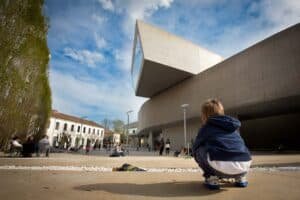
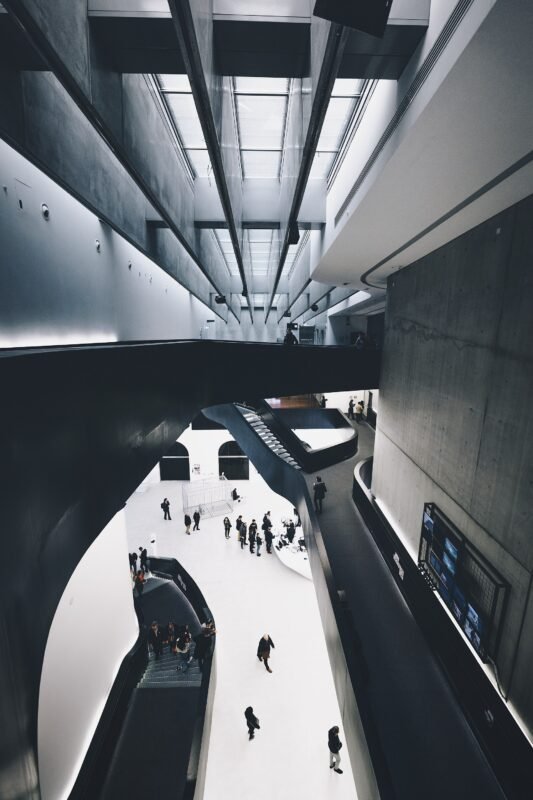
A few minutes' walk away, toward Via Guido Reni, is Zaha Hadid's MAXXI: together with the Auditorium it forms the most important pair of contemporary buildings in the city. Those with a free afternoon before the Saturday concert can visit an exhibition and walk to the hall.
Toward the Tiber
From the Auditorium you go down to the Ponte della Musica, the footbridge connecting Flaminio to the Foro Italico. Farther north is Milvian Bridge, in the evening one of the busiest meeting spots in north Rome.
Toward the center
Tram 2 takes you back to Piazzale Flaminio, at the gates of Villa Borghese and the Tridente. A walk on the Pincio in the afternoon and the tram to the concert are the most relaxing way to arrive.
Where to eat before or after the concert
Inside the Auditorium there are a bar and café in the foyer and a bar-restaurant also accessible from the street: the most convenient option for those coming from work on Thursday who don't want to risk the doors closing.
In the neighborhood
Between the Villaggio Olimpico, Via Flaminia and Piazza Mancini there are pizzerias, trattorias and neighborhood bars, frequented more by residents than by tourists. For Thursday and Friday my advice is to book early and have a relaxed dinner beforehand.
Ponte Milvio and the center
For dinner after the Saturday concert the widest choice is in Ponte Milvio, a few minutes away, where places stay open late. In the opposite direction, toward Piazzale Flaminio and Piazza del Popolo, the choice is that of the historic center, with historic center prices.
November in Rome: the moment of the year
November is the month when Rome goes back to the Romans: with the big tourist waves over, the concert and theater seasons get into full swing and the evenings turn cool. For travelers it's an excellent time, with less crowded museums by day and great concerts in the evening.
A week of music
Those staying in Rome for a few days can build a small personal festival without changing address: on November 9 Kissin and Schiff, from the 12th to the 14th Petrenko, on the 16th Handel's Theodora in Sala Sinopoli, on the 18th the Quatuor Ebène with Beethoven. In the same period the Auditorium also hosts the Roma Jazz Festival.
The weather
November evenings can be damp and rainy, and the Auditorium is an open complex, where you walk outdoors between one entrance and the next. A folding umbrella and a jacket to leave at the coat check avoid surprises.
Frequently asked questions about Petrenko at Santa Cecilia
When does Kirill Petrenko conduct at Santa Cecilia in Rome?
Kirill Petrenko conducts the Santa Cecilia Orchestra on Thursday, November 12, 2026 at 19:30, Friday, November 13 at 20:00 and Saturday, November 14 at 18:00. The three nights take place in Sala Santa Cecilia at Auditorium Parco della Musica Ennio Morricone, Viale Pietro de Coubertin 30, with the same program.
What does Petrenko play with the Santa Cecilia Orchestra?
Petrenko's concert at Santa Cecilia includes Hindemith's Mathis der Maler, four orchestral Lieder by Richard Strauss (Verführung, Heimliche Aufforderung, Morgen! and Cäcilie) sung by tenor Benjamin Bernheim, and Schumann's Symphony No. 3 "Rhenish".
How much are tickets for Petrenko in Rome?
Tickets for Petrenko at Santa Cecilia cost from 28 to 65 euros depending on the section. It's one of the higher-priced concerts of the season. Under-26s get 30% off and accompanied children under 14 pay 3 euros, buying at the box offices while the promotional seats last.
Where do you buy tickets for the Petrenko concert?
Tickets for the Petrenko concert are sold at the box office of Auditorium Parco della Musica, open every day from 11:00 to 20:00, at the box office in Via Vittoria 6 and on the presale network authorized by the Accademia, reachable from the buy button on the official concert page.
Who is Benjamin Bernheim?
Benjamin Bernheim, the tenor of the Petrenko concert, is a French-Swiss singer born in Paris in 1985, trained in Geneva and Lausanne and artistically grown at the Zurich Opera. He sings in the major European opera houses, from Covent Garden to La Scala to the Paris Opéra, in roles such as Rodolfo, Alfredo and Faust.
How do you get to Auditorium Parco della Musica by public transport?
You get to Auditorium Parco della Musica by metro A to Flaminio and then tram 2, Flaminia/Reni or Apollodoro stops, or by bus 910 from Termini, 53, 982 and 168. The stretch of Viale Pietro de Coubertin in front of the entrance is closed to cars.
What happens if I arrive late for the Santa Cecilia concert?
At the Accademia di Santa Cecilia's concerts the doors close punctually at the start time. Latecomers don't enter the hall and can follow the concert in the small listening rooms, while seats last. It's best to arrive at least 40 minutes early.
Is the Petrenko concert suitable for teenagers?
The Petrenko concert is a full symphonic program, demanding for small children but valuable for a teenager who studies music. Children under 14 accompanied by an adult get in for the symbolic price of 3 euros, buying at the box office while the promotional seats last.
My final advice on Petrenko at Santa Cecilia
The concerts that stay with you are the ones where program, performers and venue speak to each other. This is one of them: the Berliner's conductor, Rome's home orchestra, a century of German music told backward, a hall built for this repertoire. Buy early, choose a seat from which to see Petrenko's gestures, listen to Morgen! holding your breath. And arrive early: with these doors, lateness isn't forgiven.
Article written by the editorial team of Tour Leader Pro, contact them for Private/Corporate/V.I.P. Tours and Experiences.
Planning a trip to Rome? English guides for visiting the city are on ItalyPlanner.com.
Contact Information
Nearby
 Museum of Musical Instruments (MUSA)100 m
- Auditorium Parco della Musica100 m
- Villa Glori500 m
- Fountain of Anna Perenna500 m
- MAXXI – National Museum of 21st Century Arts700 m
- Flaminio700 m
Upcoming events nearby
- Roma Jazz Festival 2026, November 1 to 24 at the Auditorium and Casa del Jazz100 m
- Roma Gospel Festival 2026 at Auditorium Parco della Musica, December 13, 2026 to January 1, 2027100 m
- Santa Cecilia 2026/2027 Concert Season at Auditorium Parco della Musica, October 21, 2026 to June 5, 2027100 m
- Gaia Banfi, L’ultima Maccaia at Auditorium Parco della Musica, November 15, 2026100 m




You might also like
- Antonio Pappano conducts Petrassi and Tchaikovsky at Santa Cecilia, Auditorium Parco della Musica, November 19, 20 and 21, 2026
- Sol Gabetta and Bertrand Chamayou at Auditorium Parco della Musica, November 25, 2026
- Nubras Ensemble at Auditorium Parco della Musica, February 27, 2027
- Daniel Harding Conducts Ravel and Debussy at Auditorium Parco della Musica, April 8, 9 and 10, 2027
- Argerich and Capuçon for Beethoven at Auditorium Parco della Musica, April 6, 2027
- Gustavo Gimeno and Frank Peter Zimmermann at Auditorium Parco della Musica, April 1, 2 and 3, 2027