Lago di Alviano (TR) – WWF Oasis
In short. Lago di Alviano is in Umbria, in the province of Terni, in the lower stretch of the Tiber valley, a little over an hour and a half by car from Rome.
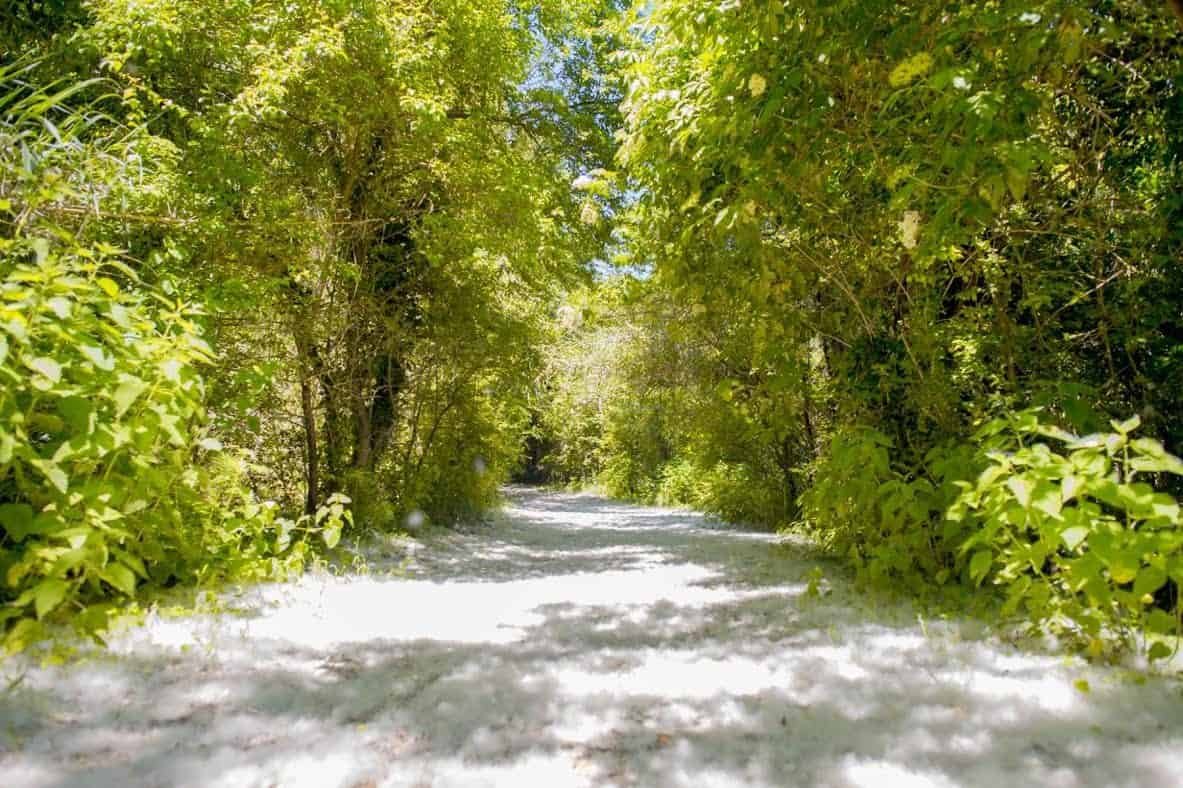

Lago di Alviano is in Umbria, in the province of Terni, in the lower stretch of the Tiber valley, a little over an hour and a half by car from Rome. The first thing to make clear, because it changes how you look at the place, is that it is not a natural lake: the body of water dates to 1963 and comes from a dam on the Tiber River built for hydroelectric reasons, downstream of Lago di Corbara, so it is a little over 60 years old. Around that reservoir, with the gradual silting of the banks and the arrival of thousands of migratory birds, one of the most important wetlands of central Italy has grown, managed since 1990 by WWF Italy and known as the Alviano Nature Oasis. The protected area covers about 900 hectares, of which about 400 are waters, largely marshy, with an average depth of around 30 centimeters: a figure that by itself explains why people don't come here to swim or sail, but to watch.
The entrance to the oasis is in the hamlet of Madonna del Porto, in the municipality of Guardea, while the perimeter of the protected area also extends into the municipalities of Alviano, Montecchio and Civitella d'Agliano, the latter already in the province of Viterbo. The oasis is part of the Tiber River Park, which also includes Lago di Corbara and the Gole del Forello, falls within a Site of Community Importance (SIC IT5220011) and is also a Special Protection Area. The visitor facilities are the classic ones of wetlands: trails, walkways over the water, towers and observation hides for birdwatching, plus an Environmental Education Center with a teaching pond. A warning worth reading before you get in the car: the oasis has seasonal openings and visits take place largely by reservation, with calendars that change from year to year and depend on the cycle of the birdlife and the water level. Hours, days and entry conditions must be asked of the operator directly, and in these lines you will never find an hour or a fare made up for convenience. Anyone combining the day with the upper part of the valley can also read the pages on Orvieto, Civita di Bagnoregio and Lake Bolsena, all a short distance away.
Where Lago di Alviano is and how to really get there
Geography, here, matters more than a sketchy map lets on. Lago di Alviano occupies the floor of the Tiber valley at the point where the river, coming out of the narrows of Corbara and the Gole del Forello, slows down and widens into an alluvial plain. To the west, a few kilometers as the crow flies, Lazio begins with the cliff of Civita di Bagnoregio. To the east rise the hills leading toward Amelia and the Terni basin. To the north the valley climbs toward Todi and Perugia. This hinge position between Umbria and upper Lazio is the reason the oasis works as a stopover for migratory birds, and also the reason you can go in a single day from a birdwatching hide to a medieval historic center without driving more than 20 minutes.
By car: the Orte-Orvieto route and the descent to the valley floor
From Rome the natural route is the A1 motorway toward Florence, with an exit in the area between Orte and Orvieto depending on the exact point where you want to go down into the valley. From there you take the ordinary roads of the Tiber valley floor, which follow the river and touch in succession the towns of Attigliano, Alviano Scalo, Guardea and Montecchio. The non-motorway alternative is the expressway that climbs from Orte toward Terni or, for those arriving from the Viterbo side, the network of provincial roads that descend from Civitella d'Agliano and from Lugnano in Teverina toward the river. Anyone coming from northern Lazio, for example from Viterbo or the area of Lake Bolsena, has an advantage: the distance from the cliff of Civita di Bagnoregio is on the order of four kilometers as the crow flies, and the road link too, though winding, remains short.
The point where it pays to be precise is the last stretch. The entrance to the oasis is not in the town of Alviano, which sits on a hill a few kilometers from the river, nor in the main town of Guardea, also in a high position. The access appears to be located on the valley floor, in the hamlet of Madonna del Porto, along the road that skirts the basin. Anyone who sets the navigator to the name of the town of Alviano risks ending up in front of a medieval castle with a magnificent view and no observation hide within five kilometers. It's the most common mistake and the easiest to avoid: set the hamlet, not the municipality.
By train: the line of the Tiber valley floor
The Tiber valley floor is served by the railway that connects Orte to Terni and continues toward Spoleto and Foligno, with stops at the small stations of the valley. The reference station for this part of the valley is Alviano Scalo, which is on the plain and not in the upper town. It must be said frankly that the train solves only half the problem: from the station to the entrance of the oasis there is a stretch you can't comfortably cover on foot with binoculars and a tripod on your shoulders, and local public transport in these valleys is sized for students and commuters, not for day visitors. The train only makes sense if someone picks you up at the station or if you've planned on a bicycle. In all other cases the car remains the realistic solution.
The entrance, the visitor center and reservations
The entrance to the oasis is located in the municipal territory of Guardea, in the locality of Madonna del Porto. Here you find the reception building and the Environmental Education Center named after the oasis, which also looks after a teaching pond used for scientific research and for programs aimed at schools. The visit, in the practice of Italian WWF oases, takes place on days and time slots set by the operator, often with a guide and almost always by reservation, especially for groups and school classes. Openings are seasonal and follow the natural calendar of the site, which in wetlands of this kind has its most interesting moment between autumn and spring.
You won't find in these lines an opening time, a ticket price or a calendar: they would be information destined to age badly and to make you find a closed gate. The rule is simple: call or write first, ask if the oasis is open on that date, if the visit is self-guided or accompanied, and what condition the trails are in, because after a flood of the Tiber some walkways can be impassable. The institutional reference is WWF Italia, which has managed the area since 1990, while the site dedicated to the Alviano Nature Oasis is the channel specific to the place.

What Lago di Alviano really is: a reservoir, not a natural lake
Clarity is needed here, because the name is misleading and because the artificial nature of the basin explains almost everything you see on the spot. Lago di Alviano is a reservoir, that is, a dam lake created by people by putting a weir on the course of the Tiber. It was built in 1963 and answers a precise technical need: to regulate the waters leaving Lago di Corbara, upstream, so they can be used for energy. That is, the Alviano basin was born as a service hydraulic work, a piece of a hydroelectric system that along the Tiber and its tributaries has deeply changed the regime of the river.
The consequence is that this body of water has nothing in common with the volcanic lakes of Lazio, those of Bolsena, Vico or Bracciano, which occupy craters tens or hundreds of meters deep and have clear waters and steep bottoms. At Alviano the water is scarce, turbid, rich in fine sediment carried by the river, and the average depth is around 30 centimeters. Anyone who arrives imagining a blue expanse is left thrown: what you see is a flooded plain, with islets, sandbars, reed beds, oxbows and wide areas where water and land are hard to tell apart.
Why the reservoir turned into a marsh
The mechanism is the one that affects every artificial valley-floor lake and that technicians call silting. The Tiber arrives loaded with solid material, the weir slows the current, and the material settles on the bottom of the basin instead of continuing downstream. Year after year the storage capacity shrinks and the depth falls, until the lake stops behaving like a lake and starts behaving like a marsh. At Alviano the process was fast and conspicuous, so much so that the gradual silting into marsh is indicated as the central fact in the recent history of the basin.
From the point of view of hydraulic engineering it's a problem. From the naturalist point of view it was an enormous stroke of luck, and it's worth saying so plainly: shallow wetlands are exactly the environment waterbirds need, and in central Italy very few are left after a century and a half of land reclamation. 30 centimeters of water over hundreds of hectares mean reachable food for herons, spoonbills, dabbling ducks and waders. They mean reed beds that expand. They mean islets to nest on, safe from land predators. A long-term technical error turned into an ecological gain that no restoration project could have achieved in such a short time.
From the weir to the oasis: how the protected area was born
When thousands of migrating birds began stopping regularly on the shallow waters, the question became one of land management. The local administrations, together with WWF Italia and Enel, promoted the transformation of the area into a nature oasis, which took the name Alviano Nature Oasis. Management by WWF Italia dates to 1990, and the oasis is today one of the largest among those of the association in Italy.
The numbers of Lago di Alviano
I'll sum up the main data, the ones worth having in mind before you arrive. The total surface of the oasis is about 900 hectares, of which about 400 are occupied by waters, largely marshy. The other roughly 500 are hygrophilous woodland, wet meadows, marginal cropland and transition strips. The average depth is around 30 centimeters. The year the dam was built is 1963. WWF management dates from 1990. The basin sits below Lago di Corbara and is about four kilometers from Civita di Bagnoregio and about eight from Lago di Bolsena, according to the distances given by local sources.
In terms of protection, the area falls within a Site of Community Importance identified by the code IT5220011 and is also a Special Protection Area, that is, it belongs to the two categories of the European Natura 2000 network that concern habitats and bird species respectively. It's not a formal label: it entails assessment obligations for any intervention that could affect the site, and it is the reason access is regulated and not free.
The WWF Oasis of Lago di Alviano: what you see and how the visit works
Trails, walkways over the water and observation structures
The area is equipped with trails, walkways over the water and observation towers for birdwatching. The walkways, that is, the raised wooden footbridges that cross flooded stretches and reed beds, are the standard solution for bringing people into the wet environment without trampling it and without getting wet: they let you get within a few meters of the reed bed, which is the habitat of otherwise invisible species such as the little bittern or the bittern, and they reduce disturbance to the substrate to zero.
The Environmental Education Center and the teaching pond
Inside the oasis is the Environmental Education Center named after the Alviano Oasis, which looks after a teaching pond where scientific research is also carried out. The teaching pond is a tool that in Italian protected areas has a precise function: to reproduce, on a reduced scale and in controlled conditions, a complete aquatic environment, from submerged vegetation to amphibians to invertebrates, so that a group of children can observe an ecosystem in half an hour without entering the delicate zones of the site. It is also a training ground for monitoring, because it allows biological cycles to be followed continuously.
The house rules, and why they make sense
In a wetland the rules are not formalities. Stay on the marked paths, don't raise your voice, don't lean out from the walkways, keep dogs on a leash where they are allowed or leave them at home where they aren't, don't use drones: these are requirements that follow from the biology of the place. A single loose dog on a sandbar can wreck the nesting of an entire colony. A drone over a reed bed in April produces the same effect as a raptor, that is, general panic and abandoned nests.
A curiosity about Lago di Alviano (TR) - WWF Oasis
The nicest curiosity about this place is that its natural value is, literally, a side effect. In 1963 nobody was planning a protected area: a piece of a hydroelectric system was being built, and the goal was to regulate the outflow of Lago di Corbara to use it for energy. The silting into marsh that followed, with the average depth dropping to around 30 centimeters, would have been classified by any engineer as a functional degradation of the work. The birds, which don't read acceptance tests, instead recognized in that expanse of shallow water exactly the environment that land reclamation had wiped out of central Italy, and began arriving by the thousands.
The result is a paradox worth telling in full: an industrial work considered partly a technical failure became one of the largest oases of WWF Italy, and the body that had built the weir, Enel, appears among the promoters of the protected area together with the local administrations and WWF Italia. It doesn't often happen that you can point to an exact spot on the map and say that there nature won a game nobody had put on the schedule.
There is a second, smaller curiosity, about place names. The name of the lake comes from Alviano, the town that sits on a hill and not on the water. The entrance to the oasis, instead, is in the municipality of Guardea, in a hamlet called Madonna del Porto. That "porto" has nothing to do with the lake, which in 1963 didn't yet exist: it's a river toponym, one of those that along the Tiber marked the ferry crossings from one bank to the other before modern bridges made the service unnecessary. The name of the place, in short, preserves the memory of a river crossed by boat in a spot that today you watch with binoculars. Local sources don't agree on the exact dating of these ferries, but the logic of the toponym is that, and it is found identical in dozens of other "porti" of the Tiber basin, all far from the sea.
Flora and fauna of Lago di Alviano: what you observe and when
Aquatic vegetation and the reed bed
The marshy areas of Lago di Alviano are characterized by wide expanses of submerged and floating aquatic plants: Potamogeton spp., that is, the pondweeds, Najas spp. and Ceratophyllum spp., the hornwort. These are names that mean little to anyone outside botany, but their ecological significance is enormous: these plants are the direct pasture of dabbling ducks and coots, they oxygenate the water and offer shelter to fry and invertebrates that make up the base of the food chain. A wetland without submerged vegetation is a liquid desert. With it, it becomes a dining hall.
Above the water surface the Phragmites australis reed bed dominates, the common reed, which forms continuous strips along the edges and around the islets. The reed bed is the most productive environment and also the most closed: inside live species you hear much more than you see, and learning to recognize their voices is worth more than any telephoto lens. It's also a fragile habitat, sensitive to changes in water level and to the entry of animals that trample it.
The hygrophilous woodland, one of the largest in central Italy
The dry-land part of the oasis hosts a hygrophilous woodland, that is, a woodland of a wet environment, which sources list among the largest in central Italy. The dominant species are black alder, poplars and willows, with ivy widespread climbing the trunks. Anyone who has in mind the Mediterranean woodland of holm oak and strawberry tree finds a completely different landscape in front of them: pale crowns, straight trunks, soft ground, green light and a feeling of river forest that in Italy has become extremely rare.
Waterbirds: ducks, herons, grebes and cormorants
The birdlife that frequents the lake is very rich. Among the ducks you see mallard, teal, shoveler and wigeon: they are all dabbling ducks, which feed by putting their heads under and tipping over without diving, and that is exactly why the shallow water of Alviano attracts them in numbers. The shoveler, with its spatula-shaped bill, filters the surface sediment. The teal is the smallest of the European ducks and the most nervous, and takes off all together at the slightest disturbance.
Alongside the ducks are the grebes, which instead dive and fish, the cormorants, which dry their wings in the sun in an upright position on branches and posts, and the coots, black with the white shield on the forehead, which are perhaps the easiest birds for a beginner to see. Herons are present with several species, and with them appear the bittern and the little bittern, two species tied closely to the reed bed. The first, camouflaged and shy, is one of the hardest birds to observe in Italy, and whoever sees it remembers the date. Two species that are worth a trip on their own complete the picture, the glossy ibis, a dark ibis with metallic reflections, and the spoonbill, white with a paddle-shaped bill, both tied to shallow waters and to wetlands of a certain extent.
Raptors and passerines
Among the raptors, the oasis hosts the marsh harrier and the osprey. The first is the typical raptor of reed beds: it flies low and slow in a V over the vegetation, scanning for coots, young birds and small mammals, and its passage always produces a visible reaction across the whole wetland. The osprey is instead a spectacular migrant, specialized in plunge fishing, which uses the wetlands of central Italy as stopover stations along the routes between northern Europe and Africa. Its presence is typically tied to the migration periods.
There are many passerines, in particular siskins and thrushes. They are the birds that fill the hygrophilous woodland in the cold season and that give anyone who knows how to listen the soundtrack of the visit. The siskin, a small yellow-green finch, moves in flocks on the alders, whose small cones it frequents. The thrushes arrive in numbers with winter and frequent the undergrowth. Anyone who concentrates only on the water misses half the oasis.
Mammals
Among the mammals present in the area, the coypu, the badger, the porcupine, the fox, the wild boar and the squirrel deserve a mention. The coypu is the most debated case: a South American rodent introduced into Europe for the fur trade and then spread in the wild, it is today considered an invasive alien species, and its effect on banks and reed beds is a cause of concern in Italian wetlands. Seeing it is very easy, which paradoxically makes it the animal children remember most.

Something nobody tells you about Lago di Alviano (TR) - WWF Oasis
It has to be said with due frankness: this is not a destination for an improvised outing, and it is the wrong place for anyone expecting to find a gate open every day of the year from 09:00 to 18:00. The oasis has seasonal openings and a substantial part of the visits takes place by reservation. It means the deciding factor for the success of the day is not the weather and not the season: it's the phone call made a few days before. It happens that people drive 150 kilometers to find the area closed, and the cause is always the same, the belief that a protected area works like a public park.
The second thing nobody says concerns the water level. In a reservoir fed by a river and regulated upstream by another reservoir, the level is not a fixed figure: it changes with the rains, with Tiber floods and with the operating needs of the plants. A perfectly dry walkway in September can be submerged in February, and a sandbar full of waders in October can be underwater in March. This makes the place different at every visit, which is fascinating, but it also makes it pointless to plan in detail from a report read the year before. The right question for the operator is not just "are you open," it's "what's the water level and which routes are passable."
Third thing, and perhaps the most useful. The general public associates nature with the warm season, and so arrives here in late spring or summer, which are the two worst moments for observing waterbirds. The paradox of Italian wetlands is that their greatest spectacle coincides with the period when nobody thinks of visiting them: the cold, foggy mornings between December and February, when the water is covered with wintering ducks and the woodland is full of thrushes and siskins. Anyone who agrees to get up early in winter has the oasis almost to themselves and sees 10 times what they would see in August.
My advice for visiting Lago di Alviano (TR) - WWF Oasis
The advice is one and it's worth more than all the others put together: treat the visit as an observation outing, not as a walk, and build the day around the early morning hours. Everything else follows from there.
The recommended sequence works like this. Leave Rome before dawn in the cold months, because first thing in the morning is when birds move between roosts and feeding areas and it is also the only time the light comes in low over the water. Arrive at the entrance at the agreed opening time, with the reservation already made. The first two hours inside the hides and on the towers, without hurry and without moving constantly: the golden rule of observation is that an hour standing still in one spot is worth three hours walking. Then the route on the walkways toward the reed bed, paying attention to sounds more than images. Mid-morning, when the light rises and activity drops, the hygrophilous woodland, which at that hour is more interesting than the water. In the afternoon you leave and give the time to the villages around, because the wetland in the middle hours gives little and insisting only tires you out.
To close the point, a clear judgment: if you have only one day and want a postcard landscape, go to Orvieto or to the Marmore Falls. If you want to understand how a wetland works and go home with something you can't buy at the bookshop, come here, but come prepared.
The Tiber River Park, Lago di Corbara and the Gole del Forello
Lago di Corbara
Upstream of Alviano is Lago di Corbara, also an artificial reservoir on the Tiber. The relationship between the two basins is a functional one: the Alviano dam was born, as said, to regulate the waters leaving Corbara and make them usable for energy. Corbara however has very different physical characteristics, with steeper banks and deeper waters, and the landscape around it is the hilly one of the Orvieto area, with vineyards that have given their name to a wine denomination. Anyone coming from Orvieto skirts it before going down toward Alviano, and the comparison between the two bodies of water is the quickest geography lesson you can get on the subject of reservoirs.
The Gole del Forello
Between the two lakes the Tiber crosses the Gole del Forello, a narrow limestone cut that is the most spectacular stretch of the river in Umbria. Here the landscape changes abruptly: rock walls, cliff vegetation, karst environments with caves and cavities. The walls of the Forello are also known for the presence of cliff-nesting raptors, which choose this type of environment for nesting, and for a system of caves that has yielded evidence of ancient occupation. The contrast with the flooded plain of Alviano, a few kilometers away, is total: the river goes in a few dozen kilometers from gorge to marsh.
Another well-known fact, yet rarely mentioned
The fact is this: Lago di Alviano is a few kilometers from one of the most photographed places in Italy, and almost none of the visitors to that place know it exists. Local sources give about four kilometers between the basin and Civita di Bagnoregio and about eight between the basin and Lake Bolsena. These are distances for a drive. Yet the tourist flow that every year climbs the pedestrian bridge of Civita, in numbers that in recent years have exceeded hundreds of thousands of people, is exhausted almost entirely on that cliff, and the wet valley that opens a little farther on stays outside the field of view of organized tourism.
The reason is both simple and instructive. Civita di Bagnoregio is an image: you understand it in a photograph, consume it in two hours, tell it in a caption. Alviano is a process: it takes time, silence, binoculars and a willingness to accept that on certain days you see almost nothing. Contemporary tourism is organized around images, not around processes, and this explains why two places four kilometers apart have such different destinies.
The right photo to take at Lago di Alviano (TR) - WWF Oasis
The photograph that brings this place home is not the close-up portrait of the heron, which is the photo everyone looks for and very few get without serious equipment. It's the wide frame taken from the walkway in the early morning hours, with the mist rising from the shallow water, the dark profiles of the reed beds in the foreground and, in the background, the line of the Umbrian hills with a village on the ridge. In a single frame are the two worlds that define this valley: the wet plain and the inhabited hill, recent nature and long history.
Technically, the useful window is narrow. The low light of early morning and that of the last hour of the afternoon do all the work: at noon the turbid water becomes a gray slab without character and the reed bed flattens. The morning mist, which on the Tiber valley floor in autumn and winter is the norm more than the exception, is the real ally: it separates the planes, eliminates the confused background and turns any silhouette into a drawing. A moderately long focal length, around 100 or 200 millimeters equivalent, compresses the planes and makes the succession of reed bed, water and hill more readable than a wide angle.
The second photo not to miss is the one from the hide, and it's a behavior photo, not a species photo: a cormorant drying its open wings, a coot running over the water to take off, a flock of teal rising all together. Here the advice is technical and counterintuitive: get the lens as close as possible to the water surface, using the low slit of the hide instead of the high one. The perspective at water level blurs the background, gives depth and makes the animal look like the protagonist instead of a detail in a landscape.
Some important events that happened here in history
The first event, in order of importance for the present look of the place, is 1963: the year the dam on the Tiber that gives rise to the basin is built. It's a date that belongs to Italian industrial history more than to natural history, and it falls in the season when the country completes its hydroelectric infrastructure along the Apennine watercourses. From that moment the landscape of the valley floor changes irreversibly: where there was a river with its floodplains, a permanent body of water appears.
The second event has no precise date and is the most important of all: the gradual silting of the basin into marsh in the following decades, with the depth dropping to an average of about 30 centimeters. It is a process, not an event, and for that very reason it doesn't appear in chronologies. Yet it is what turned a reservoir into a wetland of international significance and drew the thousands of migrating birds that then justified protecting the area.
The third is the political and associative decision that follows: the local administrations, together with WWF Italia and Enel, promote the creation of a nature oasis, which takes the name Alviano Nature Oasis. The move to management by WWF Italia dates to 1990, and it's the date that marks the site's entry into the national circuit of oases. From that moment the area stops being a technical leftover and becomes a managed asset, with staff, access rules, monitoring and educational activity.
The fourth event is legal in nature and concerns European recognition: the inclusion of the area among the Sites of Community Importance with the code IT5220011 and the designation as a Special Protection Area. These are the two instruments of the Natura 2000 network, born from the Community directives on habitats and wild birds, and their practical effect is to bind any project that could affect the site to an assessment procedure. In terms of concrete protection it counts for more than many declarations of principle.
Outside the recent chronology, this valley has a much older history that the basin has partly submerged and partly hidden. The Tiber was for centuries a transport route and a boundary, and the place names of the valley floor keep the memory of the crossing points, starting with that Madonna del Porto where the entrance to the oasis is today. The villages looking down from above, from Alviano to Guardea to Civitella d'Agliano, are all in an elevated, fortified position, which is the standard medieval answer to a valley of passage: you control the valley floor without living in it, because the valley floor is damp, malarial and unsafe. The geography of settlement, in this corner of Italy, can still be read today like an open book.
Who has passed through Lago di Alviano (TR) - WWF Oasis
Let's start with a necessary clarification, because the temptation here to build a list of illustrious names would be strong and dishonest: the lake, in its present form, has existed since 1963, so no historical figure before that date can have seen it. Whoever passed through here crossed a river valley, not an expanse of water. That being fixed, the territory has behind it notable events that are worth telling without forcing.
Bartolomeo d'Alviano
The best-known name tied to the town that gives the lake its name is Bartolomeo d'Alviano, a condottiero between the 15th and 16th centuries, lord of the place and a leading figure in the Italian Wars, in particular in the service of the Republic of Venice. His military career places him among the most significant captains of fortune of his generation, with famous victories and reverses in the campaigns of northern Italy. The layout of the castle of Alviano is tied to his name, which dominates the town on the hill and remains the main monument of the area. The sources don't agree on all the details of the chronology of the architectural interventions, and on this it's better to rely on what you read on site than on secondhand reconstructions.
The Franciscan tradition
The territory of Alviano also appears in the Franciscan tradition. According to the account handed down in the Fioretti, Saint Francis of Assisi preached at Alviano and, unable to make himself heard over the racket of the swallows, invited them to be quiet and got his silence. It's an episode that belongs to hagiography and not to documented chronicle, and as such it should be presented: according to local tradition and Franciscan literature, not according to a notarial deed. It remains significant, however, that precisely in a wet valley, where birds have always been a massive presence, religious memory has preserved a story about birds. Anyone who visits the oasis with a minimum of sensitivity to these overlaps will find the pairing instructive.
Who comes today
As for human beings, the public of the oasis is made up largely of school classes, which the Environmental Education Center welcomes with dedicated programs, of birdwatching enthusiasts and of nature photographers, often coming from Rome, from Terni and from the province of Viterbo. It's a different public from that of the nearby villages, smaller and much more loyal: whoever starts visiting a wetland tends to come back for years, because every season shows something different.
When to go to Lago di Alviano and when to avoid it
Between November and February the wetland hosts the wintering of waterbirds and it's the period of high numbers. The mornings are cold and often foggy, which discourages casual visitors and favors those who know what they're looking for. The low light is the best of the year for photography, and the bare woodland makes it easier to spot passerines. The flip side is the surface of the paths, which after rain can be heavy going, and the possibility that a rise in the water level makes some stretch inaccessible.
July and August are the months to avoid, if the goal is observation. Muggy heat on the valley floor, mosquitoes, bird activity concentrated in the first hours, low water levels and tall vegetation closing off the views. Anyone in the area in that period who still wants a nature outing has better alternatives at altitude, toward the Apennines. September and October mark the recovery, with the autumn migration bringing the first contingents and with temperatures finally manageable.
Lago di Alviano with children
It works well, on two conditions. The first is age: under five or six, the ability to stay still and quiet inside a hide is what it is, and the visit risks turning into an endurance test for the parents. From seven years up, with binoculars in hand and a small goal to reach, things change completely. The second condition is preparation: a wetland has no attractions, it has opportunities, and a child who has been told beforehand what to look for has much more fun than one left in front of an expanse of gray water.
Accessibility
The wooden walkways of wetlands are generally flat, which helps, but their width, the presence of steps and the condition of the surface of the dirt paths vary from site to site and over time. There is no answer valid a priori: anyone with mobility difficulties, or traveling with a wheelchair, must ask the operator in advance which stretches are passable in the season they plan to come, because after a phase of high water the situation can change. The information cannot be confirmed in general and must be checked case by case.
What's around Lago di Alviano
Toward Umbria
To the north, going up the Tiber beyond Lago di Corbara, you reach Orvieto, which with its tuff cliff, its cathedral and its system of underground cavities is the main destination of the area and pairs very well with a morning at the oasis. To the east, toward the Terni basin, is the Marmore Falls, the waterfall of Roman origin that remains one of the most famous hydraulic spectacles in Europe and which, as it happens, is another example of a landscape built by people and become nature in the collective imagination. The comparison between the Marmore and Alviano, two human interventions on water separated by 2,000 years, is one of the finest conceptual itineraries this region allows.
Toward Lazio
To the west, within a few kilometers, you enter the province of Viterbo. Civita di Bagnoregio is about four kilometers away, Lake Bolsena about eight, with the town of Bolsena on the shore and Montefiascone in a commanding position. Civitella d'Agliano, whose territory touches the area of the oasis, hides an open-air museum: La Serpara by Paul Wiedmer, the Swiss artist who in 1997 bought a valley to create a garden studio with more than 40 art installations and sculptures that blend into the surrounding nature. It must be said right away, because it's the note that avoids disappointment: the visit is possible only on certain days of the year, and the dates must be checked on the artist's channels before showing up.
Going down toward Viterbo the choice widens further, and upper Lazio never stops surprising those who have frequented it for years: the Park of the Monsters of Bomarzo with its 16th-century sculptures, the nearby Monte Casoli nature reserve, the ancient village of Chia and Soriano nel Cimino, the rock-built village of Calcata with its Opera Bosco Museum of Art in Nature, the gardens of Villa Lante at Bagnaia and the Palazzo Farnese at Caprarola, which is perhaps the most imposing 16th-century residence in Lazio. Anyone who wants to stay on the nature theme has instead the Lago di Vico nature reserve, a volcanic lake with a longer history of protection, and the Tuscania nature reserve.
Other wetlands to line up
For anyone who discovers birdwatching at Alviano and wants to continue, Lazio and southern Tuscany offer a circuit of wetlands that can be visited over the span of a season. Along the Tiber, closer to Rome, is the Nazzano Tevere Farfa nature reserve, also born from a river dam and also become a significant wetland: the parallel with Alviano is almost perfect and worth a comparative visit. On the coast, the WWF oasis of Macchiagrande and the Tarquinia Salt Pans represent two different environments, the coastal scrub and the saltworks, while farther north Lago di Burano is one of the historic WWF oases of the Tyrrhenian coast. For those who want to move to the mountains, the WWF oasis of the Gole del Sagittario in Abruzzo offers a completely opposite environment, rocky and Apennine.
Quick questions about Lago di Alviano and the WWF oasis
Where exactly is Lago di Alviano?
In Umbria, in the province of Terni, on the floor of the Tiber valley. The entrance to the oasis is located in the hamlet of Madonna del Porto, in the municipality of Guardea. The protected area also extends into the municipalities of Alviano, Montecchio and Civitella d'Agliano.
Is Lago di Alviano natural or artificial?
Artificial. The basin was born in 1963 from a dam on the Tiber River built to regulate the waters leaving Lago di Corbara and use them for energy.
How far is it from Rome?
A little over an hour and a half by car, on the natural route along the A1 motorway toward Florence and down into the Tiber valley floor between Orte and Orvieto.
How deep is the lake?
Not very. As a result of the gradual silting into marsh, the depth averages around 30 centimeters. It is not a navigable or swimmable body of water: it is a shallow-water wetland.
How big is the oasis?
About 900 hectares in all, of which about 400 are occupied by waters, largely marshy. It is one of the largest among the oases managed by WWF in Italy.
Since when has WWF managed it?
Since 1990. The protected area was born on the initiative of the local administrations together with WWF Italia and Enel, with the name Alviano Nature Oasis.
Do you need a reservation to visit?
Openings are seasonal and visits take place largely by reservation, with calendars that change from year to year. Hours, days and conditions must be asked of the operator directly before leaving: no hours or fares are given here, precisely because they change.
Can you swim in Lago di Alviano?
No. It is a protected area with shallow, marshy waters, not a swimmable lake, and access to the water is not among the activities allowed to visitors.
What do you actually see?
Waterbirds and reed bed birds observed from towers and observation hides along trails and walkways over the water, plus the hygrophilous woodland. The species cited for the site include ducks such as mallard, teal, shoveler and wigeon, grebes, cormorants, herons, bittern and little bittern, coots, glossy ibises and spoonbills, as well as the marsh harrier and the osprey.
Are there mammals?
Yes: coypu, badger, porcupine, fox, wild boar and squirrel are among the presences in the area. Nocturnal species are observed mostly by their tracks.
What is the best period for birdwatching?
Autumn and winter for the big numbers of wintering birds, spring for the return migration and for breeding behavior. Summer is the least productive period.
Do you need binoculars?
Yes, and it is the item that changes the quality of the visit the most. A mid-quality pair of binoculars makes recognizable the animals that to the naked eye remain dark spots on the water.
Can you bring dogs?
The access rules of protected areas on this point are restrictive, for reasons tied to disturbance of wildlife, and must be checked with the operator before showing up at the gate. The simplest solution, in a wetland with ground nesting, remains leaving the dog at home.
What is the Tiber River Park?
A regional protected area that follows the course of the river and that includes, besides the Alviano oasis, also Lago di Corbara and the Gole del Forello. The logic is the protection of a continuous river corridor.
What do SIC and ZPS mean?
They are the two categories of the European Natura 2000 network: the Site of Community Importance concerns habitats and species, the Special Protection Area concerns wild birds. The Alviano area falls within both, with the SIC code IT5220011.
Can you combine the visit with Civita di Bagnoregio?
Yes, and it's the smartest pairing in the area: local sources give about four kilometers between the basin and the cliff of Civita. Oasis early in the morning, village in the early afternoon.
Are there bars and restaurants near the entrance?
The valley floor is agricultural and services are found mostly in the hill towns, with provincial hours and weekday closures. Bringing water and something to eat is the prudent choice.
Is the oasis suitable for schools?
Yes. Inside is an Environmental Education Center with a teaching pond, where scientific research is also carried out, and school classes are an important part of the area's public.
In our judgment Lago di Alviano is one of the most instructive places in central Italy precisely because it matches none of the images you carry with you. It's not the blue lake of the photographs, it's not the pristine nature of the documentaries, it's not even a convenient destination to visit at the last minute. It is a flooded plain born from a hydroelectric weir, become by chance one of the most important wetlands of the region and then protected by a conscious decision. Anyone who arrives with binoculars, the reservation made and two hours of patience goes home having seen something that in Lazio and Umbria has remained in very few places. Anyone who arrives by chance, on an August Sunday at noon, finds a gray expanse and leaves disappointed. The difference, as almost always, is made by preparation.
Frequently asked questions about Lago di Alviano, WWF Oasis
Where exactly is Lago di Alviano?
Lago di Alviano is in Umbria, in the province of Terni, on the floor of the Tiber valley. The entrance to the oasis is located in the hamlet of Madonna del Porto, in the municipality of Guardea, while the protected area also extends into the municipalities of Alviano, Montecchio and Civitella d'Agliano.
Is Lago di Alviano a natural or an artificial lake?
Lago di Alviano is artificial: it was born in 1963 from a dam built on the course of the Tiber to regulate the waters leaving Lago di Corbara, upstream, and make them usable for hydroelectric purposes. The silting into marsh that followed then generated the natural value of the area.
Can you visit the WWF Oasis of Lago di Alviano every day?
No, the WWF Oasis of Lago di Alviano has seasonal openings and a substantial part of the visits takes place by reservation: it is not a destination for an improvised outing with a gate open every day of the year. It is therefore best to check the calendar before leaving.
When is the best time to go to Lago di Alviano to see birds?
Between November and February Lago di Alviano hosts the wintering of waterbirds and it's the period of the highest numbers. The mornings are cold and often foggy, a condition that discourages casual visitors but gives the best light of the year for photography.
How is the WWF Oasis of Lago di Alviano equipped for observation?
The WWF Oasis of Lago di Alviano is equipped with trails, walkways over the water, that is, raised wooden footbridges that cross the flooded stretches and the reed beds, and observation towers for birdwatching without disturbing the wet environment.
Is Lago di Alviano near Civita di Bagnoregio?
Yes, local sources give about four kilometers between the basin of Lago di Alviano and Civita di Bagnoregio, one of the most photographed villages in Italy, and about eight kilometers between the basin and Lago di Bolsena. Despite the closeness, few visitors to Civita know the oasis.
What is there to see around Lago di Alviano?
Going up the Tiber beyond Lago di Corbara you reach Orvieto, with its tuff cliff, its cathedral and its system of underground cavities, the main destination of the area, which pairs well with a morning at Lago di Alviano. To the east, instead, is the Cascata delle Marmore.
Article written by the editorial team of TourLeaderPro, contact them for Private, Corporate and V.I.P. Tours and Experiences. For a day organized between the lower Tiber valley, the oasis and the villages between Umbria and upper Lazio, with a licensed tour guide, start from the TourLeaderPro contact page. Tour operators building nature itineraries in central Italy will find the consulting service in the section dedicated to tour operators.
Planning a trip to Italy? The guides in English are on ItalyPlanner.com. For those thinking in terms of days out of the city there's the guide to the best day trips from Rome, useful for fitting the oasis and the nearby villages into a wider itinerary.