Tuscania Nature Reserve
In short. The Tuscania Nature Reserve is a regional protected area of 1,901 hectares that occupies the territory of the municipality of Tuscania, in the province of Viterbo, about 24 kilometers west of the main town.
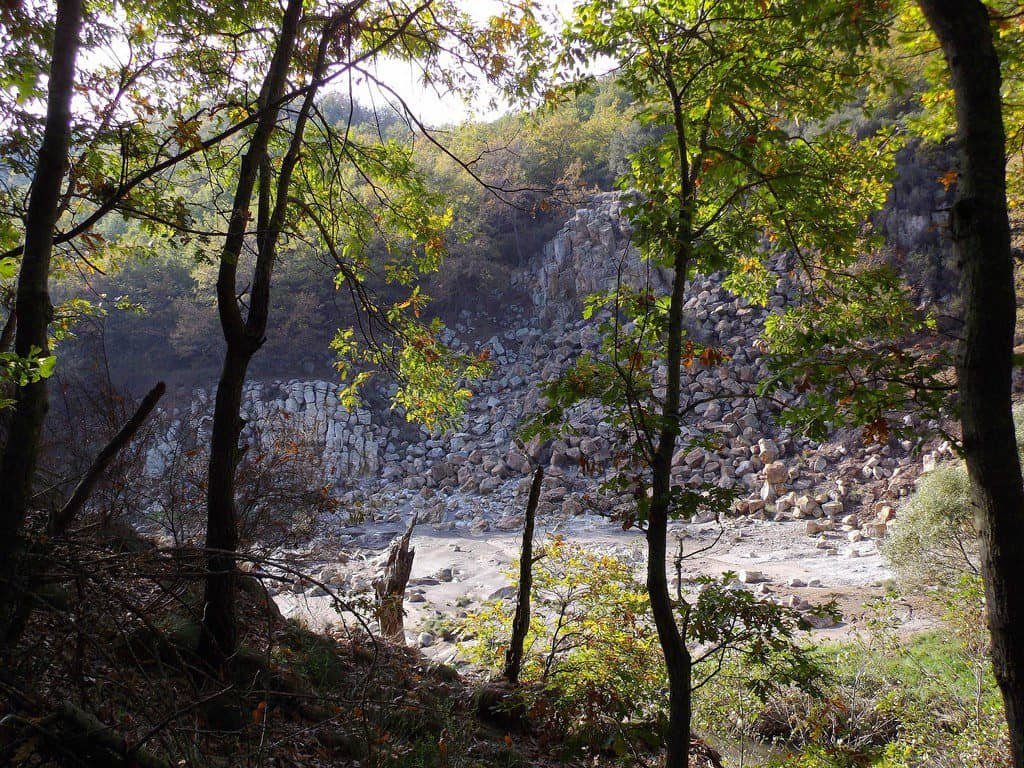
The Tuscania Nature Reserve is a regional protected area of 1,901 hectares that occupies the territory of the municipality of Tuscania, in the province of Viterbo, about 24 kilometers west of the main town. It was established in 1997 by Lazio regional law number 29 of October 6 and is managed by the Province of Viterbo in collaboration with the Municipality of Tuscania. Entry is free: there are no gates, ticket offices or hours, because the reserve is a living territory, made of cultivated fields, tuff gorges, riverside woods and archaeological sites, crossed by municipal and farm roads. For information, the parks office of the Province of Viterbo answers at 0761 313403 and 0761 313376, email address parchi@provincia.vt.it, based at Via Aurelio Saffi 49 in Viterbo. For the monumental part and for guided visits to the necropolises the point of reference is the Tuscania tourist office, phone 328 8872377, email visittuscaniavt@gmail.com.
Inside the perimeter of the reserve are the middle stretch of the Marta River, the only outflow of Lake Bolsena, the cork oak grove protected as a Site of Community Importance, the historic center of Tuscania with its walls, the two great Romanesque basilicas of San Pietro and Santa Maria Maggiore and 10 or so Etruscan rock-cut necropolises. It is one of the few cases in Lazio where a protected natural area and an archaeological park coincide on the same ground. If you are traveling from Rome, the page on tourist attractions collects the other destinations in the Tuscia that can be reached in a day.

Where the Tuscania Nature Reserve is and how to get there
Tuscania is the reference center of the whole protected area: the reserve surrounds it on three sides and takes in its oldest outskirts. If you arrive by car you find the town on a tuff rise, with the Marta valley running below it toward the south. There is no single entrance to the reserve: you enter and leave from the roads that connect Tuscania to Viterbo, Tarquinia, Montalto and Canino, and the access points to the trails and necropolises are signposted along these roads.
By car from Rome to the Tuscania Nature Reserve
The fastest way from the capital is the A12 Roma-Civitavecchia motorway as far as Civitavecchia, then State Road 1 Aurelia northward to Tarquinia and from there the provincial road that goes up the Marta valley toward the interior. It is a little over 100 kilometers and about an hour and 40 minutes of driving in normal conditions. The inland alternative goes through the Cassia bis and then Vetralla and Viterbo: it is slower and busier on weekdays, but it lets you fit other places of the Tuscia into the same trip. If you come from the north on the Aurelia, exit at Montalto di Castro and go up toward Tuscania on the provincial road.
By car from Viterbo to the Tuscania Nature Reserve
From Viterbo the distance is short: 24 kilometers of provincial road, barely half an hour, with the last stretch descending toward the valley and giving the first view of the two basilicas standing alone on the hill. It is the route I recommend to those with little time, because arriving from this direction you see the profile of San Pietro even before entering the town. From the sea, from Tarquinia, it is about 25 kilometers along the Marta valley, and this is the road that most resembles the old Etruscan route.
By public transport: bus and nearest station
Tuscania has no railway station. The useful stop is Tarquinia on the Tyrrhenian Roma-Grosseto line, or Viterbo for those arriving by the inland railway. From both cities regional intercity bus runs leave that serve Tuscania. The stops are in the built-up area and from there to the archaeological museum you walk a few hundred meters. The schedules change between the school period and summer and should be read on the regional carrier's website before leaving, because on holidays the runs thin out quite a lot. I'll say it as it is: the Tuscania Nature Reserve is only easy to tour with your own vehicle, because the points of interest are spread over kilometers of countryside and no bus line connects them to each other.
Where to park near the Tuscania Nature Reserve
In front of the National Archaeological Museum, in Largo Mario Moretti, there are paid spaces. A little further on you find free areas. For the basilicas there is an unpaved lot at the foot of the San Pietro hill. For the necropolises, instead, you park in lay-bys along the provincial road: allow for a few hundred meters on foot on packed earth, and with a wet surface a car that is not afraid of potholes is best.
What the Tuscania Nature Reserve really protects
Regional law 29 of 1997, the one that reorganized the entire system of protected natural areas in Lazio, established here a reserve of a particular kind. Not a virgin forest, not a mountain: a historic agricultural landscape with a river, a city and a thousand tombs inside. The protection has a precise reason: the stretch of the Marta valley between Tuscania and its tributaries preserves fish populations and riparian habitats that have disappeared elsewhere in Lazio, and the fabric of olive groves, hedgerows and gorges that surrounds them is exactly what keeps the river from being reduced to a canal in the middle of the fields.
The numbers of the Tuscania Nature Reserve
1,901 hectares, maximum elevation 224 meters above sea level in the locality of San Savino, in the northern sector, minimum elevation between 30 and 40 meters on the floor of the Marta valley. More than 60 percent of the surface is cultivated, with a clear prevalence of olive groves and arable land. The rest is divided among gorge woods, Mediterranean scrub, pasture meadows and the strips of riparian vegetation along the river. Two Sites of Community Importance fall within the perimeter: the upper course of the Marta River and the Tuscania cork oak grove.
Why the Tuscania Nature Reserve also includes the city
It is the choice that makes this place different from all the other reserves in Lazio. The perimeter does not stop at the countryside: it climbs right up under the walls, embraces the San Pietro hill and takes in the historic outskirts. The reason is practical before it is symbolic. The necropolises are dug into the tuff walls that face the city, the trails that connect them start from the town, and separating the monument from its landscape would have meant protecting half of the problem. Those who administer the reserve thus find themselves managing together a river habitat, a cork oak grove and a monumental archaeological heritage: a complicated job, and it must be acknowledged that the result is anything but a given.
The Marta River, backbone of the Tuscania Nature Reserve
Everything you see here depends on a single river. The Marta rises from Lake Bolsena, of which it is the only outflow, and after about 50 kilometers flows into the Tyrrhenian a little south of Tarquinia, where the Etruscan port of Martanum stood. It crosses three municipalities: Marta, Tuscania and Tarquinia. In the protected stretch it cuts the reserve in two, and to understand the territory you have to start here.
From Lake Bolsena to the sea, passing through the Tuscania Nature Reserve
The Marta leaves Lake Bolsena with a regulated flow, and this gives it a characteristic rare in inland Lazio: it never goes completely dry in summer. It is the reason its fish fauna has survived where other watercourses of the Lazio Maremma shrink to pools. It receives the Capecchio ditch from the left, the Catenaccio and the Traponzo from the right. The valley has always been a communication route: transhumance used it, the Etruscans brought goods along it from the port toward the interior, and the modern road follows it.
The tuff gorges of the Tuscania Nature Reserve
Where the river and its tributaries have cut into the tuff bank, narrow gorges open up, with vertical walls several tens of meters high and a cool, humid microclimate all year round. They are environments where the vegetation changes within 30 meters: at the top the downy oak and holm oak scorched by the sun, at the bottom the alder, the hornbeam and the mosses. Inside these gorges is preserved the most interesting part of the reserve's biodiversity, and it is no accident that it is also where the Etruscans dug their tombs: the tuff wall was at once quarry, shelter and cemetery.
Traponzo, Maschiolo and the sulfurous spring of Acquaforte
The minor tributaries have names that keep coming up in archaeological maps, because they are what separates one necropolis from another: the Maschiolo ditch divides Peschiera from Pian di Mola, the Traponzo descends on the opposite side. In the locality of Acquaforte a sulfurous spring surfaces, the last trace of the hydrothermal activity tied to the Vulsini volcanism. You smell it before you see it. It is not an equipped spa and there are no services: it is a natural phenomenon to look at, not a swimming pool.
Geology: why the Tuscania Nature Reserve is made of tuff
The landscape comes from three volcanic complexes: the Vulsini to the north, the Vico in the center, the Cimini to the east. Their eruptions spread thick banks of layered tuff over the whole area, a soft material, workable with simple tools, compact enough to hold up once dug out. The great eruptions that shaped the region date to the Pleistocene and continued for hundreds of thousands of years. The collapsed calderas gave rise to the lakes of Bolsena, Vico and Bracciano.
Tuff as a building and burial material
Here tuff is not just geology: it is the reason the Etruscan civilization of Tuscania left so much behind. A tuff wall is dug with the axe and the chisel, carved in imitation of wooden architecture, closed again with a slab. The facades of the reserve's rock-cut tombs reproduce doors, beams, cornices and roofs of real buildings that no longer exist: they are the only portrait we have of the Etruscan houses of this area. And the same material, quarried from the same walls, went into building the city walls and the walls of the two basilicas.
Seismicity of the area
The volcanism has died out, but the territory remains seismically active. The sequences affecting the Vulsini area are generally of moderate magnitude and with shallow hypocenters, which makes them more destructive than the number suggests. We will come back to this when we talk about 1971, because it is the event that marked Tuscania more than any other in the last century.

The flora of the Tuscania Nature Reserve
A reserve cultivated over more than half of its surface might seem like little from the botanical point of view. It would be a mistake. The richness here is concentrated in thin strips and isolated pockets: the riverbank, the bottom of the gorges, the cork oak grove, the springs. Anyone who walks with a minimum of attention finds in two hours a variety that in a uniform wood they would not meet in a day.
The riparian wood of the Marta
Along the upper course of the river grows hygrophilous and riparian vegetation: white poplar and black poplar, black alder, willows of several species, with large areas of reed bed in the slow-current stretches. It is a narrow strip, sometimes only a few meters wide, but it does three jobs at once: it holds the banks, shades the water keeping it cool for the fish and offers shelter and nesting to the birds. When a river loses this belt, it loses everything else within a few years.
The Tuscania cork oak grove, Site of Community Importance
East of the town survives a cork oak grove of some 40 hectares, protected as a Site of Community Importance. The cork oak is a Mediterranean evergreen oak that here stands at one of its northernmost inland stations in Lazio: a relict fragment, not a recent planting. The undergrowth is the part worth the detour, with asphodels flowering in late winter and several species of wild orchids in April and May. Wild asparagus also grows among the trees. A non-negotiable rule: orchids are photographed and left where they are, picking them is forbidden.
Maidenhair fern and the hidden springs
Near some springs of the reserve grows the maidenhair fern, Adiantum capillus-veneris, an elegant fern with thin fronds that lives only where water drips continuously from the rock and the air stays saturated with humidity. Elderberry appears beside it. These are tiny, fragile stations that repeated trampling destroys in a season: if you come across one, look at it from the trail and do not go near the wall.
The slope wood: Turkey oak, holm oak, downy oak
Going down in elevation along the slopes and in the gorges you meet Turkey oaks, holm oaks, mastic trees, hornbeams, downy oaks, maples, ash trees and cornelian cherries. It is the Mediterranean scrub mixing with the deciduous wood, a transitional situation typical of the inland Lazio Maremma. Hawthorn, manna ash and honeysuckle complete the picture, the latter filling the bottom of the gorges with scent in May.
The olive groves and arable land of the Tuscania Nature Reserve
The agricultural landscape is not filler between one wood and the next: it is itself an object of protection. The olive groves of Tuscania, many with centuries-old trees, draw the hill slopes with regular rows that in autumn fill with nets and voices. The arable land, alternating with pasture meadows for extensive grazing, hosts a community of open-country birds that in Italy is in steep decline precisely because this type of agriculture is disappearing. Put bluntly: if tomorrow intensive monoculture took over here, half of the species listed below would disappear in 10 years.
The fauna of the Tuscania Nature Reserve
The riparian wooded strips along the watercourses offer refuge to a still diversified fauna, and this is the real scientific reason for the protection. Don't expect big mammals on display: you come here for the birds, the fish and the rare feeling of a river that is still alive.
The fish of the Marta River
In the Marta, besides common species like the chub, live the brook lamprey, the allis shad, the barbel, the stream goby, the rovella and the vairone. Several of these are species of community interest, and their presence is the reason the upper course of the river was designated a Site of Community Importance. The lamprey in particular is a strict indicator: it lives only where the bottom stays gravelly and the water does not turn muddy for months. Finding it an hour and a half from Rome is less trivial than it seems.
The riverside birds of the Tuscania Nature Reserve
Near the river you can see the penduline tit, Remiz pendulinus, which builds pouch nests hanging from willow branches, the kingfisher, Alcedo atthis, and Cetti's warbler, Cettia cetti, much easier to hear than to see. The kingfisher is almost always picked up by its call, a sharp whistle, and then by the turquoise streak over the water. Bring 8x42 binoculars and sit still for 20 minutes on a bank: it works better than any walk.
The birds of the countryside
In the more agricultural areas downstream you meet the skylark, Alauda arvensis, the tawny owl, Strix aluco, Montagu's harrier, Circus pygargus, the quail, Coturnix coturnix, the roller, Coracias garrulus, the golden oriole, the calandra lark, Melanocorypha calandra, and the crested lark, Galerida cristata. The roller deserves a line to itself: it is a bird of almost tropical colors, blue and chestnut, that nests in the cavities of old trees and walls, and has become rare throughout Italy. The golden oriole, bright yellow, gives away its presence with a fluted whistle that in May can be heard from the poplars along the river.
The birds of prey of the Tuscania Nature Reserve
Among the diurnal raptors are the hobby, Falco subbuteo, the kestrel, Falco tinnunculus, and the sparrowhawk, Accipiter nisus. The hobby is a small and very fast falcon, a hunter of swallows and dragonflies, uncommon and tied precisely to the riverside tree lines. The kestrel is recognized by the "Holy Spirit," that motionless flight with rapid wingbeats over the cultivated fields. The tawny owl provides the night cover and in spring sings at dusk from the gorges.
The mammals
Among the mammals documented in the area are the wild boar, the porcupine, the fox and the hazel dormouse. The presence of the wildcat is reported but remains to be confirmed. The porcupine is known more from the quills lost along the trails than from the animal, because it is strictly nocturnal. The hazel dormouse, a tiny arboreal rodent, lives in the hedgerows and in the hazel and bramble undergrowth: another good reason not to clear the edges of the fields.
The Etruscan necropolises inside the Tuscania Nature Reserve
Here the reserve stops being only nature. In the tuff walls facing the Marta valley opens a succession of rock-cut necropolises that covers, without real interruption, the period between the 7th and the 1st century BC. The recurring names are Pian di Mola, Peschiera, Madonna dell'Olivo, Ara del Tufo, Carcarello, Scalette, Castelluzza, Sasso Pinzuto, San Lazzaro, del Guado. The quantity and richness of the grave goods say one thing only: Tuscania was fully inside the circuit of the great centers of Etruria, on a par with Vulci, Tarquinia and Caere.
Pian di Mola and the house tomb
The Pian di Mola necropolis is on the rise opposite Peschiera, past the Maschiolo ditch, and its oldest nucleus dates to around 700 BC. It appears as an imposing row of rock-cut tombs lined up along the wall. The showpiece is the so-called house tomb with portico: a burial that reproduces in tuff a real building, with an atrium, two chambers and a portico with four columns. The roof carried sculpted sphinxes and lions, and a side staircase allowed you to climb up to a terrace. In front of this monument you understand in 30 seconds why it is said that the Etruscans built tombs like houses: it is not a metaphor, it is an architectural fact.
Peschiera and the cube tomb
Peschiera is a vast rock-cut necropolis with tombs ranging from the 7th to the 2nd century BC. The dominant type is the cube tomb, a cubic block obtained by digging around the living rock, with the architectural facade turned toward the valley and the burial chamber inside. The visual result is that of a small stone city overlooking the river. Together with nearby Pian di Mola it makes up the most complete and easiest Etruscan itinerary of the reserve.
Madonna dell'Olivo and the Grotta della Regina
About two kilometers south of the town, next to a Renaissance chapel of the same name, the Madonna dell'Olivo necropolis develops over three superimposed terraces and overlooks an unrivaled panorama of the Marta valley. Here opens the Grotta della Regina, a hypogeum of the Hellenistic age, between the 4th and 2nd centuries BC, with a maze of corridors arranged on three levels: a structure that has few parallels in Etruria and whose function scholars still debate. In the same complex is the tomb of the Sarcophagus of the Amazons, with two chambers, whose sarcophagus is decorated with battle scenes.
The tombs of the Curunas family
Also at Madonna dell'Olivo are the three aristocratic tombs of the Curunas family, datable between the 4th and the 2nd century BC. They are the find that changed the modern perception of Etruscan Tuscania: burials of a single aristocratic family, with a series of nenfro sarcophagi on whose lids the deceased are sculpted reclining, with the inscription bearing the name and the indication of kinship. A family archive written in stone. The sarcophagi are now displayed in the National Archaeological Museum of Tuscania and, if I had to point to just one thing to see in the whole reserve, I would point to them.
Sasso Pinzuto, Ara del Tufo, Carcarello, Scalette, Castelluzza
The other necropolises are generally grouped in distinct but nearby nuclei, often still hidden among the gorges and the woods that surround the river. Sasso Pinzuto is the most cited after the two major ones and preserves chamber tombs with long access corridors. Ara del Tufo and Carcarello develop along the minor ditches. The Scalette owe their name to the steps carved in the rock that lead to the entrances. Castelluzza occupies an isolated spur. Several areas have been equipped with trails and panels, as in the case of the Macchia della Riserva, turned into an archaeological park with a nature trail.
The Campanari and the 19th-century rediscovery
A large part of these necropolises came back to light in the course of the 19th century through the work of the Campanari family, archaeologists and antiquarians of Tuscania. Their name is tied to one of the most singular stories in the history of European archaeology: the Tuscania excavations and the later London exhibition of the Etruscan materials contributed decisively to creating in Europe a taste for Etruscan antiquity. The Tuscania museum devotes part of its route precisely to the role of the Campanari in the excavations and Etruscological studies of the 19th century.
The National Archaeological Museum of Tuscania
The museum is housed in the former Franciscan convent of Santa Maria del Riposo, at Largo Mario Moretti 1, in the historic center. It keeps the collection of materials from the necropolises of the territory, the result of over a century of excavations: nenfro sarcophagi, funerary goods, ceramics, urns, and the documentation of the Etruscan aristocratic families of Tuscania. The route runs over several levels, opened progressively between 1970 and 2007, and is arranged chronologically and thematically. The museum keeps continuous hours from 08:30 to 19:30, with last entry at 19:00, and is closed on Monday, January 1 and December 25. Since 2025 entry is by ticket: the current fare can be read on the website of the Regional Directorate of National Museums of Lazio. The visit takes between 45 minutes and an hour, photographs are allowed and the entire route is wheelchair accessible thanks to the elevator. For groups of more than 25 people the use of the amplification system is recommended.
What to look for inside the museum
Go to the Curunas sarcophagi and stop. Look at the lids: the deceased are represented half-reclining, as at a banquet, with objects in hand and faces that are not portraits in the modern sense but not generic masks either. Then look for the inscriptions: Etruscan is read from right to left and the family names can be recognized even without knowing the language. It is the quickest way to understand that these tombs were not anonymous monuments, but the cemetery of people with a surname.

The two basilicas on the hill in the Tuscania Nature Reserve
The first and most striking impact, on arrival, is given by the two great medieval parish churches that rise on a hill just outside the city, inside the perimeter of the protected area. They are not just any two churches: they are among the most important Romanesque buildings in Lazio, and the fact that they stand isolated in the middle of the fields, with no houses around, multiplies the effect.
Santa Maria Maggiore
It stands on the slopes of the San Pietro hill. Its origins go back to the 8th century, it was the first cathedral of the ancient Tuscania diocese and was consecrated on October 6, 1206 in the Romanesque form we see today, built between the 11th and 12th centuries. The facade in local tuff is asymmetrical, with richly sculpted portals: the central one bears reliefs with biblical scenes and the figures of Peter and Paul, while above open a loggia with nine columns and 10 arches and a marble rose window with 12 columns on two orders, surrounded by the symbols of the four evangelists. The bell tower, from the 11th and 12th centuries, with small arches and pilaster strips of Lombard descent, was damaged in 1971. The three-nave interior keeps frescoes from the 13th to the 16th century, among them a large Last Judgment attributed to the Arezzo painters Gregorio and Donato, an octagonal baptismal font for immersion, a medieval ambo and a Gothic ciborium.
San Pietro
At the top of the hill of the same name, where the acropolis of the ancient city stood, San Pietro is one of the most important Lombard-style Romanesque basilicas of Western Christendom. The founding is attributed by tradition to the 8th century, perhaps on an earlier pagan place of worship. Part of the critics propose a later dating. The facade and side aisles were built between the 12th and 13th centuries. Having become the center of the diocese and the seat of fierce bishop-counts, the church looks almost like a fortress, flanked by two towers and by the bishop's palace. The facade shows a Cosmatesque rose window with three concentric circles, with the symbols of the evangelists at the corners, and two lateral mullioned windows whose symbolic reading sets the Lamb of Christ, on the left, against the figure of Satan, on the right. From the square there is a view over much of the reserve and the city.
The crypt of San Pietro
Under the presbytery opens a crypt with nine small aisles supported by reused columns and capitals, classical material reused in the medieval age. The vaults keep 14th-century frescoes attributed to Gregorio d'Arezzo, with the patron saints of Tuscania. The floor of the upper church is Cosmatesque, with geometric inlays, and along the aisles Etruscan sarcophagi are placed: an overlay of epochs that in few churches is seen so explicitly. The basilica opens from Tuesday to Sunday, approximately from 10 to 13 and from 15 to 17, with free entry. For group visits, limited to 15 people, you need to book. Hours vary with the season: a phone call to the tourist office before leaving avoids a wasted trip.
From the Etruscans to the Romans: the history of the territory of the Tuscania Nature Reserve
Until the Roman conquest the course of the Tiber and the Tyrrhenian Sea marked the natural borders of Etruria, the land of the ancient Tusci, whom the Greeks called Tyrrhenians and whom we know as Etruscans. Tuscania lies in the heart of that territory, and its name declares it.
Etruscan Tuscana
The origin of the Etruscan people has been a matter of discussion for 25 centuries: the ancient tradition, collected by Herodotus, had them arrive from Asia Minor, from Lydia, around the 7th century BC. Other ancient sources and a good part of modern research lean instead toward a local formation starting from the Villanovan populations of the early Iron Age. What is documented by the excavations is that here, between the 8th and 7th centuries, a center was born that grew rapidly, organized like the other cities of Etruria in a confederation of powerful centers that extended north to the Po Valley and south to Campania.
The Roman conquest and Via Clodia
The clash with Rome was inevitable. From the 4th century BC, after crossing the border of Veii, the Romans advanced north. The struggle continued throughout the 3rd century, although among the first kings of Rome there were Etruscans, such as Servius Tullius, whom tradition says was born in Vulci. After Veii, Nepi and Sutri fell. Only later did Rome dare to cross the Ciminian Forest and look out over the plain that slopes from Viterbo toward the Maremma. Tarquinia was conquered in 307 BC, Vulci in 280.
Why Tuscania did not decline
Here is the fact that makes this history different from the others. Tuscania reached its greatest prosperity between the 4th and the 1st century BC, thus largely during and after the Roman conquest, which took place in the 3rd century. Unlike what happened to other Etruscan cities, submission did not start its decline but favored its development. The Romans made it a great collection center for the foodstuffs destined to supply the capital: they built Via Clodia in 225 BC, then aqueducts, baths and public buildings. After the Social War of 90 BC, which marked the Romanization of the Etruscan world, the city became a municipium. Traces of Roman roads cut into the tuff, retaining walls and remains of buildings still surface today pretty much everywhere inside the reserve.
The Middle Ages of the bishop-counts
With the early Middle Ages the city reorganizes around the San Pietro hill, which becomes an acropolis again in the full sense: bishop's seat, fortification, power. The bishop-counts of Tuscania exercised for centuries an authority that was at once religious and military, and the fortress look of the basilica, with its two towers, is not a decorative whim. Around it grew the walls that still today delimit the oldest outskirts, the ones the reserve includes in its perimeter.
The 1971 earthquake and the Tuscania Nature Reserve
On February 6, 1971, at 19:09, an earthquake of moment magnitude 5.2 struck northern Lazio with its epicenter between Arlena di Castro and Tuscania, some 20 kilometers west of Viterbo. The estimated intensity was between the eighth and ninth degree of the Mercalli scale. At 20:20 the same evening a strong aftershock arrived. The victims were 22, the injured about a hundred, more than 4,000 people were left homeless and were placed in tent camps.
The damage
In Tuscania 60 percent of the buildings were declared unusable. The medieval quarter, built largely on volcanic rock, suffered widespread collapses. The church of San Pietro and the basilica of Santa Maria Maggiore suffered serious damage, as did the civil hospital and the bridge over the Marta, whose failure prevented rescuers in the first hours from reaching the town. On February 8 the President of the Republic Giuseppe Saragat and the Prime Minister Emilio Colombo visited the stricken area. In the same year law number 1155 exempted from military service the young people who took part in the reconstruction.
What you see today
The reconstruction and restorations have given back the two basilicas and a good part of the historic center. Whoever arrives today does not find a wounded town: they find a city put back on its feet with judgment, where however an attentive eye recognizes the sutures, the tie rods, the portions of rebuilt masonry. It is worth knowing this before entering Santa Maria Maggiore, because it changes the way you look at the bell tower.
How to really visit the Tuscania Nature Reserve
Here are the practical things in order, because this is a reserve that rewards those who organize it and punishes those who improvise.
How much time you need for the Tuscania Nature Reserve
A full day is the minimum to do the two basilicas, the museum and one necropolis. If you want to add a walk along the Marta and a second necropolis, allow two days and a night in town. If you only have half a day, choose: either the pairing of basilicas plus museum, or the pairing of Pian di Mola plus Peschiera. Doing everything in four hours means seeing nothing.
When to go and when to avoid
April and May are the best months: the orchids of the cork oak grove bloom, the river is strong, the countryside is green and the temperatures hold. October is also good, with the olive harvest under way and a low light that is a gift for photographs. July and August are hard: the inland Lazio Maremma bakes in summer, the necropolises have no shade and the afternoon becomes impractical. In deep winter the problem is not the cold but the mud, which makes some accesses difficult.
What to bring
Low trekking shoes or light boots, not sneakers: the necropolis trails are earth and rock, often sloping and slick after rain. Water, because there are no drinking fountains along the routes. A hat. Binoculars, for the birds. A small flashlight, which in the burial chambers is really needed. Mosquito repellent if you go down to the river on spring evenings.
The Tuscania Nature Reserve with children
It works better than you would think, as long as you focus on the rock-cut tombs. A child in front of the house tomb of Pian di Mola understands right away what you are telling them: it is a house, but dug into the rock, and inside they put the dead. The museum, with the sarcophagi and the figures reclining on the lids, holds up well for 45 minutes. The walk along the river should be measured out: the gorge stretches have narrow passages and with the little ones it is better to stop at the viewpoints.
Accessibility
The National Archaeological Museum is fully wheelchair accessible with an elevator. The necropolises, instead, are not: Madonna dell'Olivo offers no easier access modes for people with disabilities, and the same goes for the other rock-cut sites, reached by sloping dirt trails. The basilicas have steps at the entrance and the crypt of San Pietro is reached by stairs. Those with walking difficulties can still enjoy the basilica hill and the panorama from the square, which can be reached by car.
Rules of behavior in the Tuscania Nature Reserve
We are inside a protected area and a protected archaeological area at the same time. You don't pick plants or orchids, you don't light fires, you don't leave trash, dogs must be kept on a leash out of respect for nesting wildlife and grazing animals. In the necropolises you don't enter unsafe chambers and you don't touch anything: the use of metal detectors is forbidden by law. They seem obvious, and yet the territory has suffered from them for decades.
A curiosity about the Tuscania Nature Reserve
The real curiosity of this place is that the reserve protects a fish in order to protect a tomb, and vice versa. It sounds like a joke, but it is the logic of the protection. The stretch of the Marta included in the reserve is a Site of Community Importance because the brook lamprey, the barbel, the vairone, the stream goby and the rovella live there, species that require cool water, a gravelly bottom and shaded banks. Those shaded banks are the same tuff walls in which the Etruscans dug the necropolises of Peschiera and Pian di Mola. If the riparian wood were cut, the water would warm up and the fish would vanish. But the same operation would expose the tomb facades to direct sun, night frost and runoff, accelerating their disintegration. The plant cover that keeps the river alive is the same that slows the erosion of the monument.
There is more. The Marta does not run dry because it comes out of a lake, Bolsena, which guarantees it a minimum flow even in the worst summers. This hydrological singularity is the reason why, in an area that climatically is Maremma, you find ferns like the maidenhair and alders from humid woods. The Etruscans chose this valley for exactly the same reason there are orchids today: because the water never runs out. A settlement choice made 25 centuries ago and a community directive from the 1990s are defending the very same asset, and almost nobody tells it this way. I add a note that is worth a visit: the sulfurous spring of Acquaforte, inside the reserve, is the last breath of the Vulsini volcanism that generated all the tuff on which the landscape rests. The volcano that built the tombs is not entirely extinct.
Something nobody tells you about the Tuscania Nature Reserve
No guide tells you, but the perimeter of this reserve includes the historic center of Tuscania, and the practical consequence is that you are walking inside the protected area even when you are sitting at the bar in the square. It is not a bureaucratic detail. It means that the management of the area has to hold together the conservation of a river habitat and the daily life of a community of a few thousand people, with its cars, its building sites and its agriculture. In mountain reserves the boundary between inside and outside is sharp. Here it is not, and those who administer have to negotiate every day.
The second thing nobody will tell you concerns the necropolises: many are not constantly open. Some archaeological areas of the territory have known years of closure due to safety problems and trail maintenance, and the reopenings have happened in stages. Translated into practice: arriving here convinced you will find everything visitable is the surest way to be disappointed. Before leaving you phone the tourist office at 328 8872377 and ask which sites are accessible that day. This also applies to the guided visits, which are the only way to enter some chambers.
The third: the cork oak grove. It is a fragment of barely 40 hectares, and most visitors pass a few hundred meters away without knowing it is there. Under the cork oaks, in April and May, wild orchids of several species bloom, and that is the moment when the Tuscania Nature Reserve gives its best from the botanical point of view. No tourist sign announces it along the provincial road.
Frequently asked questions about the Tuscania Nature Reserve
How much does it cost to enter the Tuscania Nature Reserve?
Nothing. Access to the protected area of the Tuscania Nature Reserve is free, with no ticket offices or gates. You only pay where there is a separate service, namely the National Archaeological Museum of Tuscania and any guided visits to the Etruscan necropolises.
When was the Tuscania Nature Reserve established?
The Tuscania Nature Reserve was established in 1997 by Lazio regional law number 29 of October 6, the same framework law that reorganized the entire system of protected natural areas of Lazio. The protection covers together a historic agricultural landscape, the Marta River and the Etruscan necropolises dug into the tuff.
How much time do you need to visit the Tuscania Nature Reserve?
A full day is the minimum to visit the Tuscania Nature Reserve at an easy pace, including the two Romanesque basilicas, the archaeological museum and one necropolis. Those who want to add a walk along the Marta River and a second necropolis should allow two days with a night in town.
What can you see in the Tuscania Nature Reserve besides nature?
In the Tuscania Nature Reserve, besides the Marta River and its habitats, there are the Etruscan rock-cut necropolises that cover the period between the 7th and the 1st century BC, with the recurring names of Pian di Mola, Peschiera and Madonna dell'Olivo. The perimeter of the reserve also includes the historic center of Tuscania with its two Romanesque basilicas.
Is the historic center of Tuscania part of the reserve?
Yes, the perimeter of the Tuscania Nature Reserve includes the historic center of Tuscania, so you walk inside the protected area even when sitting at a bar in the square. The management of the area must therefore hold together the conservation of a river habitat and the daily life of a community of a few thousand people.
How were the tuff rocks of the Tuscania Nature Reserve formed?
The landscape of the Tuscania Nature Reserve comes from three volcanic complexes, the Vulsini to the north, the Vico in the center and the Cimini to the east, whose eruptions spread thick banks of layered tuff over the whole area. The great eruptions that shaped the region date to the Pleistocene and continued for hundreds of thousands of years.
Which film was shot in the basilica of San Pietro inside the Tuscania Nature Reserve?
The basilica of San Pietro, inside the perimeter of the Tuscania Nature Reserve, is one of the most frequented sets of cinema shot in Lazio: Orson Welles used it in his Othello, released in 1951, moving here the Cypriot setting of Shakespeare's tragedy. Franco Zeffirelli also set two decisive sequences of one of his films there.
The advice I give you for visiting the Tuscania Nature Reserve
The advice is one, flat out: reverse the order everyone follows. Most people arrive, park under the basilicas, photograph San Pietro, eat in the center and leave. Do the opposite. Arrive early, by nine, and go straight to the necropolises, when the raking light enters the rock-cut facades and you can read the architectural details that at noon vanish into the white. Then, around 11, go down to the Marta for an hour of walking along the bank: it is the moment when the birds are still active and the heat has not arrived. Eat in town. In the early afternoon go into the museum, which is indoors and air-conditioned, and save the two basilicas for the late afternoon, when the sun lowers over the San Pietro hill and the facade takes on the color that made it famous.
Second piece of advice, less obvious: book a local guide for the Etruscan part. I say it reluctantly because I usually preach independence. But here the panels are few, the burial chambers look alike and without someone to explain the difference between a cube tomb and a house tomb, between a grave assemblage of the 7th century and one of the 3rd, the risk is going home with 20 identical photographs. The Tuscania tourist office organizes guided visits to the necropolises: one morning with a guide is worth three days on your own.
Third: don't try to squeeze the Tuscania Nature Reserve into a tour that also includes Civita di Bagnoregio and the Park of the Monsters of Bomarzo on the same day. It can be done, anything can be done. But you would end up checking the clock everywhere and remembering none of the three. If you organize group trips and need a hand building the itinerary, professional tourist accompaniment exists exactly to avoid this mistake.
Another well-known fact, yet rarely cited
That Tuscania has two great Romanesque basilicas, many people know. What is rarely cited is the reason they stand outside the walls, isolated on a hill in the middle of the fields, while in almost all Italian cities the cathedral is in the middle of the built-up area. The reason is that the hill was the acropolis of the Etruscan and then Roman city, the high and defensible point around which the community had organized itself for centuries. When the settlement moved, in the course of the Middle Ages, the religious center and the civil center separated: the bishop's seat stayed where it had always been, while the population gathered elsewhere. San Pietro is not outside the town because someone wanted it isolated. It is the town that moved away from under it.
The second little-cited fact concerns the military character of San Pietro. The two towers that flank it and the bishop's palace beside it are not decoration: the bishops of Tuscania were bishop-counts, holders of temporal as well as spiritual powers, and their seat had to withstand a siege. Looking at the facade against the light you can clearly make out the double language, sacred and defensive, that lives together in the same building.
Third: the rose window of San Pietro is Cosmatesque, that is, the work of those families of Roman marble workers who in the 12th and 13th centuries worked throughout Lazio with the technique of inlaying colored marbles and reused material. Inside the church, the floor is of the same school. It means that this basilica, apparently Lombard and northern in layout, has a Roman skin. And the marble the Cosmati cut into tesserae came in good part from dismantled ancient monuments: the church is also made of imperial Rome in pieces.

The right photo to take at the Tuscania Nature Reserve
The photograph that takes this place home is not the close-up of the San Pietro rose window. Everybody takes that, and it is a correct and useless photo. The right photograph is shot from the Madonna dell'Olivo necropolis, from the middle terrace, keeping a rock-cut tomb facade in the foreground and in the background the Marta valley with the basilica hill. In a single frame come Etruria, the river and the Middle Ages: it is the exact visual summary of what the Tuscania Nature Reserve is.
Practical details. Best time: first thing in the morning, between eight and half past nine, when the low sun from the east lights the tuff walls from the side and brings out their grain. Late afternoon works, but the facades go into shadow. Season: April and May for the green, or November after the first rains, when the countryside regains color and the air is clear. Gear: a lens around 35 millimeters equivalent, because an extreme wide angle pushes the background too far away and the hill disappears. Close the aperture to f/8 and set the focus a third of the way into the scene.
Second photo not to miss: the facade of the house tomb of Pian di Mola, shot head-on and from a short distance, with a person beside it to give the scale. Without a human reference nobody understands how big it is. Third: the colonnaded portico against the light, at the hour when the sun passes between the supports. And if you have patience and binoculars, the real photographic trophy of the reserve remains the kingfisher perched on a branch above the Marta: you need a long telephoto lens, a hide and the willingness to come back several times. It is not a photo you take home by chance.
Some important events that happened here in history
The first event is the founding itself of the Etruscan center, between the 8th and the 7th century BC, when the Villanovan nuclei scattered on the hills around the Marta aggregate into a city. The proof does not come from a document but from the tombs: around 700 BC the Pian di Mola necropolis begins to fill with monumental burials, and a society that invests so much in its dead is a society that has given itself a structure.
The second is the Roman conquest of the 3rd century BC, and above all what happened afterward: in 225 BC Via Clodia is opened, connecting this territory to Rome, and Tuscania instead of fading becomes the agricultural warehouse of the capital. After the Social War of 90 BC it obtains the status of municipium. It is the only significant case in this part of Etruria in which conquest produces growth instead of ruin.
The third is the consecration of Santa Maria Maggiore, on October 6, 1206. The date marks the completion of the Romanesque reconstruction of the first diocesan cathedral and, indirectly, the phase of greatest power of the Tuscania bishop-counts.
The fourth is the 19th-century rediscovery. In the course of the 19th century the Campanari family brings to light a large part of the necropolises of the territory and brings the Etruscan materials to the attention of cultured Europe: Tuscania becomes one of the names that feed the Etruscan fashion in the 19th century, together with Vulci and Tarquinia.
The fifth, and the most painful, is the earthquake of February 6, 1971: 22 dead, about a hundred injured, more than 4,000 homeless, 60 percent of the buildings unusable, the two basilicas badly damaged and the bridge over the Marta collapsed, with rescuers blocked in the first hours. The reconstruction took years and changed the face of the historic center.
The sixth is from 1997, and has the bureaucratic flavor of the facts that then really matter: with regional law number 29 of October 6 the Tuscania Nature Reserve is born, 1,901 hectares entrusted to the Province of Viterbo. From that moment the river, the cork oak grove, the gorges and the necropolises stop being separate assets and become a single thing to defend.
Who has passed through the Tuscania Nature Reserve
Let's start with the living who left the most traces: the directors. The basilica of San Pietro is one of the most frequented sets of cinema shot in Lazio. Orson Welles used it in his Othello, released in 1951, moving inside this medieval church the Cypriot setting of Shakespeare's tragedy: he had already shot in Viterbo, in the Palazzo dei Papi, and continued here. Franco Zeffirelli set two decisive sequences of his Romeo and Juliet of 1968 here, the secret wedding of the two protagonists and the final scene, using the crypt as the tomb of the Capulets. That film won the Oscars for cinematography, to Pasqualino De Santis, and for costumes, to Danilo Donati. Mario Monicelli shot part of L'armata Brancaleone, 1966, at Tuscania and in the crypt of San Pietro. For Ladyhawke, of 1985, the basilica was even reproduced as a set at Cinecittà: a paradoxical recognition, because the place was considered so right that it was worth a copy.
Much further back in time, the Etruscan aristocratic families whose names we know from inscriptions passed through this valley: the Curunas, buried at Madonna dell'Olivo between the 4th and 2nd centuries BC, whose nenfro sarcophagi are now in the museum. They are not people whose biography can be told, but they are real people, with a surname, a kinship and a portrait sculpted on the lid. In Etruscan archaeology that is more than you get almost anywhere.
The Romans of Via Clodia passed through, opened in 225 BC: merchants, contractors, officials in charge of getting the grain and oil of this countryside to Rome. The medieval bishop-counts passed through, who from San Pietro exercised a power at once spiritual and military for centuries. In the 19th century the Campanari family passed through, who dug the necropolises and made Tuscania known to European archaeology.
On February 8, 1971 the President of the Republic Giuseppe Saragat and the Prime Minister Emilio Colombo arrived here, two days after the earthquake, before a town in tents. And in those days and in the following months a generation of young men passed through who, under law 1155 of the same year, could replace military service with work on the reconstruction: people who put a piece of this historic center back on its feet with their own hands.
What to see around the Tuscania Nature Reserve
The surrounding territory is among the densest in Lazio and allows you to build itineraries of two or three days without ever repeating yourself.
The nearby Etruscan sites
To the southwest, a few kilometers away, is Vulci, one of the greatest centers of Etruria, today an archaeological and nature park in which the settlement can be read in its entirety. On the coast, Tarquinia preserves the painted tombs that are the absolute masterpiece of Etruscan painting. Toward the sea, Montalto di Castro closes the picture. Anyone who wants to complete the route in Rome finds at the Etruscan Museum of Villa Giulia and at the museum of Etruscan and Italic Antiquities the materials that tell the story of the same civilization.
The lakes and the villages
To the north opens Lake Bolsena, from which the Marta rises, with the towns of Bolsena, Capodimonte and Montefiascone. To the east, beyond Viterbo, are Villa Lante at Bagnaia, Caprarola with the Palazzo Farnese and Lake Vico. Toward the Tiber valley you reach Civita di Bagnoregio and Orvieto. For lovers of rock landscapes, Calcata and Monterano offer the same relationship between tuff, gorge and settlement that you see at Tuscania.
The other protected areas of the zone
Those who travel with a nature interest can link the Tuscania Nature Reserve to the Canale Monterano reserve, to the Lake Burano oasis on the coast and to Monte Casoli di Bomarzo. They are all different environments and all less than an hour by car.
Quick questions about the Tuscania Nature Reserve
How much does it cost to enter the Tuscania Nature Reserve
Nothing. Access to the protected area is free, there are no ticket offices or gates. You only pay where there is a separate service, namely the archaeological museum and any guided visits to the necropolises.
When was the Tuscania Nature Reserve established
In 1997, by Lazio regional law number 29 of October 6.
How big is the Tuscania Nature Reserve
1,901 hectares, all in the municipality of Tuscania, in the province of Viterbo.
Who manages the Tuscania Nature Reserve
The Province of Viterbo, in collaboration with the Municipality of Tuscania. The parks office answers at 0761 313403 and 0761 313376, email address parchi@provincia.vt.it, based at Via Aurelio Saffi 49 in Viterbo.
How far is the Tuscania Nature Reserve from Rome
A little over 100 kilometers, approximately an hour and 40 minutes by car via the A12 motorway and Tarquinia.
How far is it from Viterbo
24 kilometers, barely half an hour of provincial road.
Can you reach the Tuscania Nature Reserve without a car
You reach Tuscania by regional intercity buses from Viterbo and from the coast, and the useful railway stations are Tarquinia and Viterbo. But the reserve's points of interest are spread over kilometers of countryside and there is no public transport connecting them: without your own vehicle you see the basilicas, the museum and little else.
How much time do you need to visit the Tuscania Nature Reserve
A full day for basilicas, museum and one necropolis. Two days to add a second necropolis and a walk along the Marta.
Which necropolises should you see
Pian di Mola, with the house tomb with portico, Peschiera with the cube tombs and Madonna dell'Olivo with the Grotta della Regina and the tombs of the Curunas. The others, from Sasso Pinzuto to Carcarello, are for those with more time.
Are the necropolises always open
No. Visitability changes over time and some areas may be closed for maintenance or safety. It is best to phone the Tuscania tourist office at 328 8872377 before leaving.
How much does the National Archaeological Museum of Tuscania cost
Since 2025 entry is paid and the current fare can be read on the website of the Regional Directorate of National Museums of Lazio.
What are the museum's hours
Every day from 08:30 to 19:30, last entry at 19:00, closed on Monday as well as January 1 and December 25.
Is the museum wheelchair accessible
Yes, the entire route is accessible thanks to the elevator. The necropolises, instead, do not offer easier routes.
Can you take photographs
In the museum yes, photographs are allowed. Outdoors, inside the reserve, there are no limitations except common sense: no drones over the archaeological areas without the required authorizations.
Is the basilica of San Pietro free to visit
Entry is free and the approximate opening is from Tuesday to Sunday, 10-13 and 15-17, with seasonal variations. For groups, limited to 15 people, you need to book.
What is the difference between San Pietro and Santa Maria Maggiore
Santa Maria Maggiore was the first cathedral of the diocese and stands on the slopes of the hill. San Pietro is at the top, on the ancient acropolis, and is a fortified complex with two towers and the bishop's palace. The first has the large frescoed Last Judgment and the baptismal font for immersion, the second the crypt with nine small aisles and the Cosmatesque floor.
Is the Tuscania Nature Reserve suitable for children
Yes, above all for the Etruscan part: the rock-cut tombs can be understood at a glance even at eight years old. Watch out for the gorge stretches, narrow and slippery.
Can you bring a dog
Yes, on a leash, out of respect for nesting wildlife and grazing animals. In museums the regulations of the individual institutions apply.
When is the best time to visit the Tuscania Nature Reserve
April and May, for the blooms and for the river at full strength. October and November as a second choice, with low light and colorful countryside. July and August are the worst months for the heat and the lack of shade in the necropolises.
Can you swim in the Marta River
No, it is not a bathing destination and there are no equipped areas. The river here is looked at and walked alongside: it is a protected habitat, with fish species of community interest.
Are there marked trails
There are routes equipped with panels in some areas, such as the Macchia della Riserva, turned into an archaeological park with a nature itinerary. The network is not as extensive as in a mountain park: it is best to ask the parks office of the Province.
What animals can you see
Kingfisher, penduline tit, Cetti's warbler along the Marta. Skylark, quail, roller, calandra lark and crested lark in the countryside. Hobby, kestrel and sparrowhawk among the raptors. Wild boar, porcupine, fox and hazel dormouse among the mammals.
What is the Tuscania cork oak grove
A cork oak wood of about 40 hectares east of the town, protected as a Site of Community Importance, with asphodels and wild orchids in the undergrowth.
Where do you eat
In town, in the historic center of Tuscania, where there are trattorias and osterias. Inside the reserve there are no refreshment points or drinking fountains along the trails: you bring your own water.
Did the 1971 earthquake destroy the monuments
It badly damaged them, not destroyed them. San Pietro, Santa Maria Maggiore, the civil hospital and the bridge over the Marta were the major damage, with 60 percent of the town's buildings declared unusable. The restorations have given the basilicas back.
Do you need to book to visit the Tuscania Nature Reserve
For the protected area no. For guided visits to the necropolises and for groups in the basilicas yes, through the Tuscania tourist office.
Can you go by bicycle
The farm roads and secondary provincial roads lend themselves to cycle touring on mixed surfaces, with modest elevation changes between 30 and 224 meters. In the archaeological areas and on pedestrian trails the bicycle must be walked.
What is the river of the Tuscania Nature Reserve
The Marta, the only outflow of Lake Bolsena, about 50 kilometers long, which flows into the Tyrrhenian near Tarquinia after crossing the municipalities of Marta, Tuscania and Tarquinia.
What pairs with the Tuscania Nature Reserve over a weekend
Vulci and Tarquinia for the Etruscan part, Lake Bolsena with Capodimonte and Montefiascone for the lake part, Civita di Bagnoregio and Orvieto for the rock and medieval part. If you plan the trip in English, you will find the day trips from the large Italian cities collected in a dedicated guide.
The final advice
If I had to choose just one thing to save from the Tuscania Nature Reserve, I would not choose the rose window of San Pietro, magnificent though it is. I would choose that half hour on the terrace of Madonna dell'Olivo, early in the morning, with the Marta glinting below and the tomb facades emerging from the wall as the sun rises. There you understand that landscape and archaeology here are the same thing, and that this reserve does not protect a postcard nature but a piece of territory worked by people for 25 centuries and not yet ruined. Go out of season, bring binoculars, and have yourself accompanied by someone who can read stones. Those who organize visits for groups and companies can rely on the professionals of TourLeaderPro in Rome. Those who want direct contacts find them on the contacts page. For those preparing the trip in English, the starting point is ItalyPlanner's guide to Italian destinations.
Article written by the editorial team of TourLeaderPro, contact them for Private/Corporate/V.I.P. Tours and Experiences.
Planning a trip to Rome? The English guides for visiting the city are on ItalyPlanner.com.