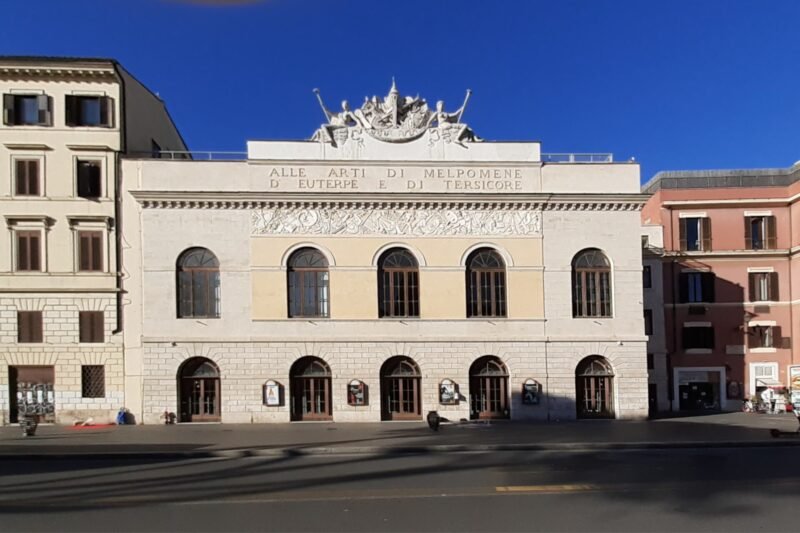
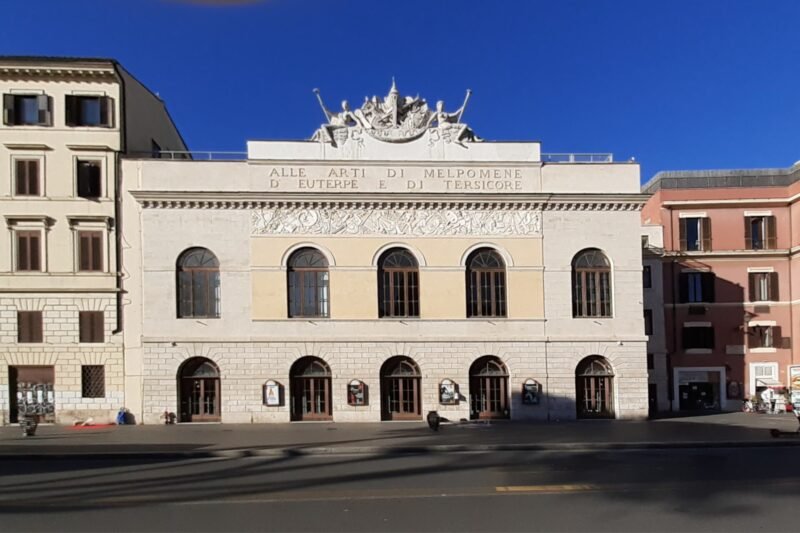
Quatuor Arod with Massimo Spada at Teatro della Cometa, November 29, 2026
In short. Quatuor Arod, a French string quartet among the most acclaimed of the new European scene, makes its Rome debut on Sunday, November 29, 2026 at 17:00 at Teatro della Cometa, at Via del Teatro di Marcello 4, at the foot of the Capitoline…
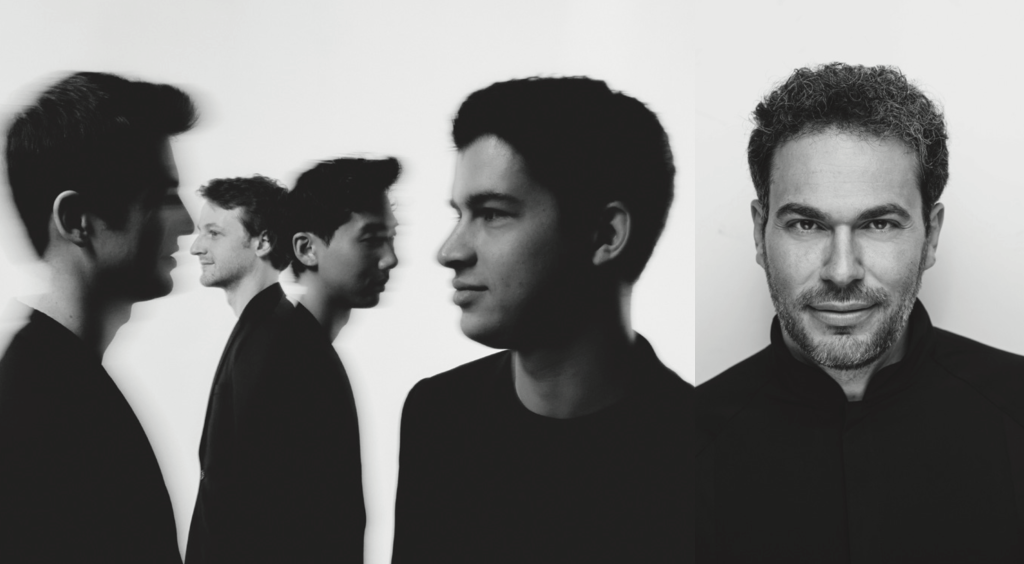
Quatuor Arod, a French string quartet among the most acclaimed of the new European scene, makes its Rome debut on Sunday, November 29, 2026 at 17:00 at Teatro della Cometa, at Via del Teatro di Marcello 4, at the foot of the Capitoline Hill, together with the Roman pianist Massimo Spada. The program pairs two great quintets for piano and strings: Erich Wolfgang Korngold's Quintet in E major, Op. 15 and César Franck's Quintet in F minor. You get there by buses 30, 4, 118, 160 and 170, Via del Teatro di Marcello stop, or by metro line B to Colosseo and five minutes on foot toward Piazza Venezia. On Sundays the historic center's limited traffic zone is not in effect. Prices are published on the theater's official website, where tickets can be bought through the venue's online box office.
Quatuor Arod at the Cometa: date, time and tickets
The concert by Quatuor Arod with Massimo Spada is scheduled for Sunday, November 29, 2026 at 17:00 at Teatro della Cometa: it's a single date, and the theater presents it as the quartet's Rome debut.
Time
The 17:00 start is the time of the Cometa's Sunday concerts, which in the 2026/2027 season offers music in the late afternoon. The running time isn't given by the theater. Arriving half an hour early lets you see the foyer overlooking the garden of Palazzo Pecci Blunt and take your seat calmly.
Tickets
Tickets are sold on the Teatro della Cometa online box office, linked to the concert page on the official website, where prices are also published. For assistance requests, including for people with disabilities, the theater provides a contact form.
The music season
The concert is part of the Cometa's multidisciplinary program, which alternates drama, dance and music. On the music side, after the opening with Metaphora Ensemble on October 4, the theater hosts pianist Boris Petrushansky on December 13, Georgian pianist Giorgi Gigashvili on April 18, 2027 and Rosa Feola and Vincenzo Rana on May 16, 2027, in an evening of singing from Mozart to Puccini.
The program: Korngold and Franck
The program of Quatuor Arod and Massimo Spada sets two great quintets for piano and strings in dialogue, two profoundly different ways, the theater writes, of moving through late Romanticism.
Korngold, Quintet in E major, Op. 15
Erich Wolfgang Korngold's Quintet for piano and strings in E major, Op. 15 is in three movements: Mäßiges Zeitmaß, mit schwungvoll blühendem Ausdruck. Adagio, mit größter Ruhe, stets äußerst gebunden und ausdrucksvoll. Finale, gemessen, beinahe pathetisch. The markings, in German, call for a moderate tempo with a sweeping, blossoming expression, then the utmost calm, then a measured, almost pathetic finale.
Korngold's color
In Korngold's quintet the theater highlights the density of the writing and the richness of color, which foreshadow the cinematic sensibility that would become one of the composer's trademarks. It's the simplest key to approaching the piece: a full, orchestral, almost visual language, concentrated in five instruments.
Franck, Quintet in F minor
César Franck's Quintet for piano and strings in F minor is also in three movements: Molto moderato quasi lento. Lento, con molto sentimento. Allegro non troppo, ma con fuoco. In Franck's quintet, the theater explains, chromaticism and harmonic tension build a restless emotional landscape, crossed by a constant sense of transformation.
Two quintets side by side
Placed side by side, the two works convey the richness of chamber music between the 19th and 20th centuries and entrust the dialogue between piano and strings to performers called upon, according to the theater, to share listening, balance and risk. In our view it's a program designed to show off a quartet: two scores in which the strings don't serve as a backdrop to the piano, but face it as equals.
Quatuor Arod
Quatuor Arod is a French string quartet based in Paris, founded in 2013 and today made up of Jordan Victoria and Alexandre Vu on violins, Tanguy Parisot on viola and Jérémy Garbarg on cello.
The halls
According to its official biography, the quartet plays in the great halls of France and the world: the Philharmonie and the Konzerthaus in Berlin, the Konzerthaus and the Musikverein in Vienna, the Concertgebouw in Amsterdam, Carnegie Hall, the Gulbenkian, the Konzerthuset in Stockholm, the Philharmonie Luxembourg, Oji Hall in Tokyo, the Mozarteum in Salzburg, the Elbphilharmonie in Hamburg, LSO St Luke's in London and De Bijloke in Ghent. It has played at the festivals of Verbier, Aix en Provence, Menton, Mecklenburg-Vorpommern and Bremen and at the Prague Spring.
Awards
The quartet trained with Mathieu Herzog, Jean Sulem and the Artemis Quartet, and has worked with Quatuor Ebène and Quatuor Diotima. In 2014 it won first prize at the European FNAPEC competition, in 2015 first prize at the Carl Nielsen International Competition in Copenhagen, and in 2016 first prize at the ARD International Music Competition in Munich. In 2016 it was an HSBC laureate of the Aix Festival Academy. From 2017 to 2019 it was a BBC New Generation Artist, and in the 2018/2019 season an ECHO Rising Star.
Recordings
Quatuor Arod records exclusively for Erato/Warner Classics. The first album, devoted to Mendelssohn, came out in 2017. The second, from 2019, is devoted to the figure of Mathilde Zemlinsky, with music by Schoenberg, Zemlinsky and Webern and the participation of soprano Elsa Dreisig, and it received the Edison Klassiek 2020. In 2020 an album devoted to Schubert came out, and in 2023 a French record with Debussy, Ravel and Attahir, accompanied by Bruno Monsaingeon's documentary Ménage à Quatre, which follows the quartet in everyday life and in a meeting with György Kurtág. In 2025 the complete Op. 76 Quartets by Haydn came out.
Haydn with classical bows
For the Haydn record the quartet had a new set of bows made, modeled on examples produced in the 1770s by the Tourte brothers. The instruments, which date back to the 17th and 18th centuries, remained set up for modern practice. The musicians say the classical bows made the articulation more natural and the sound more transparent.
The instruments
The official biography lists each player's instrument: Jordan Victoria plays a violin by Francesco Goffriller, Alexandre Vu a violin by Giovanni Battista Guadagnini, Tanguy Parisot a composite viola by Carlo Ferdinando Landolfi and Pietro Giovanni Mantegazza from 1775, and Jérémy Garbarg a cello by Giovanni Battista Ruggieri from around 1700. Four old instruments, in Rome with the quartet for the first time.
Today's music and collaborations
The quartet has collaborated with artists such as Klaus Mäkelä, Thibaut Garcia, Alexandre Tharaud, Amihai Grosz, Gary Hoffmann, Julia, Veronika and Clemens Hagen, Maximilian Hornung, Timothy Ridout, Daniel Hope, Augustin Dumay and Kit Armstrong. In 2017 it gave the world premiere of the First Quartet by French composer Benjamin Attahir, and it regularly commissions short pieces from young composers such as Thomas Enhco, Attahir and Eugene Birman.
Massimo Spada, Roman pianist
Massimo Spada is a pianist born in Rome in 1986, who graduated with top marks and honors from the Santa Cecilia Conservatory in 2005.
Training
According to the biography published by MITO SettembreMusica, Spada began studying piano at six with Ines Salvucci and from 1999 with Pieralberto Biondi, with whom he graduated. In 2009 he earned a degree with honors in Music History from Sapienza. At 11 he entered the Art Music Academy in Sesto Fiorentino for the chamber music course, working with many musicians in different ensembles.
Imola and his teachers
Spada pursued advanced studies at the Incontri col Maestro International Piano Academy in Imola, with Boris Petrushansky and Riccardo Risaliti, and attended master classes with Lazar Berman, Elisso Virsaladze, Joaquín Soriano and Andrea Lucchesini, as well as advanced courses in Lucca, Cortina d'Ampezzo, Agrigento, Rome and Arezzo.
Repertoire
In his solo recitals Spada sets alongside the classics, Beethoven, Chopin, Schumann, Brahms and Liszt, less frequently played composers such as Albéniz, Saint-Saëns, Medtner and Villa-Lobos. He has played at festivals all over Italy, including the International Festival for Peace in Assisi and the Sagra Malatestiana in Rimini, and he works regularly with violinist Masha Diatchenko.
Awards
Among his awards, the biography mentions second prize at the Anemos International Competition in Rome in 1999, with a special mention for piano collaboration, and several outright first prizes in national competitions, including the Rossomandi in Foggia in 2001 and the Città di Nettuno in 2002.
Quatuor Arod today: residencies and recommended listening
Quatuor Arod arrives in Rome after a 2025/2026 season of residencies and major halls, described in the quartet's official biography.
Residencies
In the 2025/2026 season the quartet was in residence at the Mendelssohn-Haus in Leipzig and with La Belle Saison, together with clarinetist Pierre Génisson, with whom it performed among other places at the Théâtre des Bouffes du Nord in Paris. It played again at Flagey in Brussels, in Tenerife, in The Hague, at the Elbphilharmonie and at Wigmore Hall, and at the string quartet biennials of Paris, at the Philharmonie, and of Amsterdam, at the Muziekgebouw, where it performed with Klaus Mäkelä. With Quatuor Danel it played at the Southbank Centre and the Concertgebouw in Amsterdam.
Four Beethoven records
On the official website each musician recommends a quartet recording, and all four choose Beethoven. Jordan Victoria picks the third movement of Op. 59 No. 1 in the Lindsay Quartet's version, Alexandre Vu the third movement of Op. 135 with the Hagen Quartet, Tanguy Parisot the second movement of Op. 18 No. 1 with the Artemis Quartet, and Jérémy Garbarg the Beethoven quartets by Quatuor Ebène, in particular Op. 132.
Why listen to them beforehand
In our view it's the simplest way to get to know the quartet before the concert: listen to the records its musicians consider models, and then hear them live, in a small hall, taking on Korngold and Franck.
A curious fact about Quatuor Arod with Massimo Spada at Teatro della Cometa, November 29, 2026
The curious fact is a link between two concerts of the same season. Massimo Spada did his advanced training at the Imola Piano Academy with Boris Petrushansky, one of the masters of the Russian school, who has taught at that academy since 1990. Two weeks after the concert with Quatuor Arod, on December 13, Petrushansky himself plays on the same Cometa stage, in a recital with Tchaikovsky's The Seasons and Mussorgsky's Pictures at an Exhibition. Student and teacher, 15 days apart, in the same small hall at the foot of the Capitoline Hill.
The second curious fact concerns the instruments. Quatuor Arod's four instruments, the quartet explains, date from the 17th and 18th centuries and bear Italian names: Goffriller, Guadagnini, Ruggieri, and for the viola Landolfi and Mantegazza. The Paris quartet's Rome debut, in its own way, brings a small heritage of violin making back to Italy.
The third concerns the theater. The Cometa was created at the wish of Mimì Pecci Blunt, who from 1933 organized the Concerti di Primavera in Rome with Goffredo Petrassi, Vittorio Rieti and Mario Labroca. A quintet for piano and strings on a Sunday afternoon is exactly the kind of chamber music event the founder loved to host in her salons.
Teatro della Cometa, the concert venue
Teatro della Cometa is a small historic hall at Via del Teatro di Marcello 4, on the slopes of the Capitoline Hill, created by Anna Laetitia Pecci Blunt, known as Mimì, in a small palazzo next to her residence on Piazza d'Aracoeli, and inaugurated on November 17, 1958.
A little theater inspired by court theaters
Mimì Pecci Blunt described her project as a little theater inspired by the old court theaters: an intimate space, refined in its details. The hall has stalls, a parterre and two balconies. The architect Tomaso Buzzi, who took over the project in 1956, also designed the chandeliers in the shape of stars and comets, the heraldic emblem of the Pecci family.
The preserved facade
In 1937 the Pecci Blunts bought the small palazzo next to their home, deciding to keep its historic facade intact and transform only the interiors. The first works, entrusted to the engineer Stefano Gentiloni Silverj, stopped with the war.
Restoration and reopening
From 2020 the theater was restored to a design by Fabio Tudisco and Andrea Panzini: the brass doors, the chandeliers and the stage machinery designed by Buzzi and Virgilio Marchi were recovered, the revolving stage works again and a foyer overlooking the garden of Palazzo Pecci Blunt was restored. The theater reopened on May 25, 2025.
A hall for chamber music
For a piano quintet, a hall of this size is a rare advantage: the distance between the stage and the last row is short, and the sound of the strings arrives without dispersion. In our view it's the ideal place to hear a quartet making its debut in a city.
Something nobody tells you about Quatuor Arod with Massimo Spada at Teatro della Cometa, November 29, 2026
What few people say is that there are two Cometas in the city, and it's easy to mix them up. Teatro della Cometa at Via del Teatro di Marcello 4 is the Pecci Blunts' historic hall, reopened in 2025. Teatro Cometa Off, on the other hand, is in Testaccio, on Via Luca della Robbia, and was created as a second hall by Giorgio Barattolo, who ran the historic theater at the foot of the Capitoline for more than 30 years. The concert is at the historic venue: check the address before calling a taxi.
The second rarely mentioned thing concerns Sunday. The historic center's limited traffic zone, the theater explains, is in effect Monday to Friday from 6:30 to 18:00 and on Saturday from 14:00 to 18:00. On public holidays access is free. On Sunday, November 29 you can drive in without a permit, but the theater has no reserved parking and points to the paid parking in the nearby streets and the parking areas toward Piazza Venezia and Via Petroselli.
The third concerns the audience. The Rome debut of a quartet that won the ARD in Munich, in a small hall, tends to fill up fast among chamber music fans. If you want a central seat, buy in advance.
My advice for Quatuor Arod with Massimo Spada at Teatro della Cometa, November 29, 2026
My advice is to listen to the Franck Quintet beforehand, since it's the better known of the two, and to discover Korngold in the hall, which few people know live. Korngold's quintet, with the cinematic sensibility the theater attributes to it, is the piece that stays with you as you leave.
As for seats, a central position in the stalls or the first balcony is best: in a piano quintet the balance between the voices matters more than closeness to the stage, and in an intimate hall like the Cometa the sound arrives full from almost everywhere. As for timing, arriving around 16:30 lets you see the foyer over the garden of Palazzo Pecci Blunt in the late November light, which at that hour is already sunset light.
One last tip: if you follow the Cometa's music season, you can combine this concert with Boris Petrushansky's recital on December 13. Two Sunday afternoons, two very different programs, the same theater: the best way to get to know the new Cometa.
How to get to Teatro della Cometa
Teatro della Cometa is at Via del Teatro di Marcello 4, 00186 Rome, between Piazza Venezia, the Capitoline Hill and the Theater of Marcellus.
By bus
The stop indicated by the theater is Via del Teatro di Marcello, served by lines 30, 4, 118, 160 and 170. From Termini, Trastevere and the Aventine you can get there without changing with at least one of these lines.
By metro
The nearest station indicated by the theater is Colosseo, on line B. From there continue on foot for about five minutes toward Piazza Venezia.
By car
The theater is inside the Centro Storico limited traffic zone, which is not in effect on Sundays. There is no reserved parking: the theater points to the paid parking in the nearby streets or the parking areas toward Piazza Venezia and Via Petroselli.
On foot
From the historic center the theater is a few minutes' walk from Piazza Venezia or the Capitoline Hill: the most convenient option.
Another well-known fact, yet rarely mentioned
It's well known that the ARD competition in Munich is a prestigious competition for young performers. Less often do people remember how quickly Quatuor Arod got there: it won first prize in 2016, three years after it was founded, and the year before it had already won the Carl Nielsen in Copenhagen. Two international first prizes in two years, a few years after its founding, explain how quickly the quartet reached the great European halls.
The second fact concerns film. The documentary Ménage à Quatre, made in 2023 by Bruno Monsaingeon, follows Quatuor Arod in everyday life and up to its meeting with the composer György Kurtág. A documentary devoted to such a young quartet says a lot about the esteem Quatuor Arod enjoys in France.
The third fact is more practical. The quartet has changed cellists over the years: in the first lineup Samy Rachid played, and today Jérémy Garbarg is on cello. On November 29 Garbarg is on cello.
The right photo to take at Quatuor Arod with Massimo Spada at Teatro della Cometa, November 29, 2026
The right photo at the Cometa is taken before the concert, with the lights on, from the balcony. From there you see the whole hall: the intimate stalls, the balconies, the comet-shaped chandeliers designed by Tomaso Buzzi and recovered in the restoration. With the piano and the four music stands already on stage, the image tells the story of the concert before it even begins.
During the concert the phone stays in your pocket. Chamber music lives on silences and small gestures between the musicians, and a lit screen in such an intimate hall can be seen by the whole audience.
The second photo is taken in the foyer overlooking the garden of Palazzo Pecci Blunt. The third outside, after the concert, when at 19:00 in late November the Theater of Marcellus is already lit, with its ancient arches and the houses built on top of it in the following centuries.
The area around Teatro della Cometa
Teatro della Cometa is in one of the most history-packed spots in central Rome, between the Capitoline Hill, the Theater of Marcellus and the Ghetto: everything is a few minutes' walk away.
The Capitoline and the Aracoeli
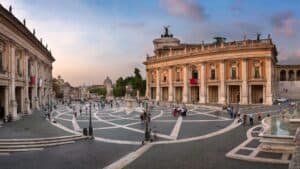
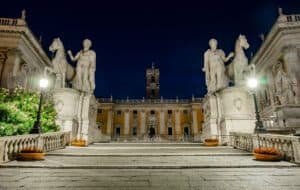
Above the theater opens the Capitoline Hill, with the square designed by Michelangelo, the Cordonata and the Capitoline Museums. Next to it, the staircase leads to the church of Santa Maria in Aracoeli, on the same Piazza d'Aracoeli where the Pecci Blunt palace stands.
The Theater of Marcellus and the Ghetto
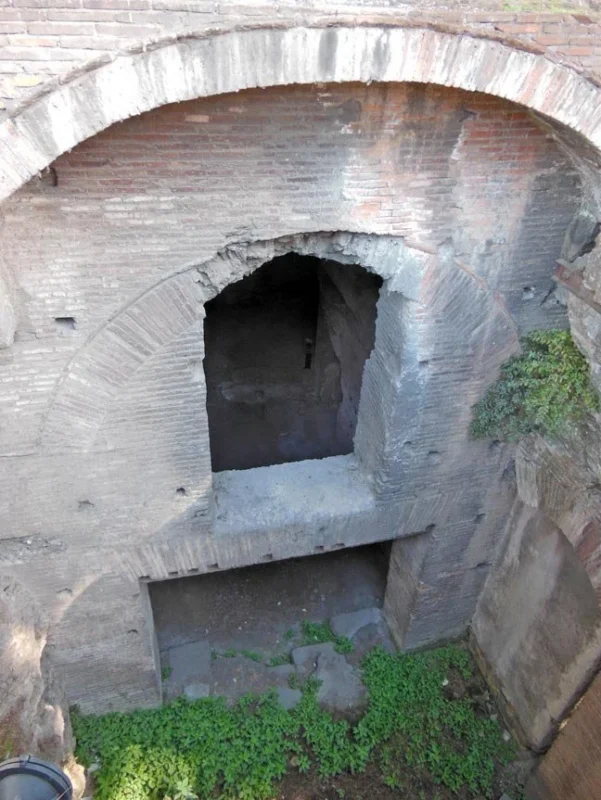
A short walk away is the Theater of Marcellus, and right after it the Portico of Octavia, gateway to the Jewish Ghetto of Rome: the ideal area for dinner after the concert.
Toward the river
Heading down toward the Tiber you reach Tiber Island and, along Via Petroselli, the Mouth of Truth.
Some important events that happened here
The history of Teatro della Cometa begins before the theater. In 1935 Mimì Pecci Blunt founded the Galleria della Cometa with the poet Libero De Libero, opened with an exhibition of drawings by Corrado Cagli. In 1937 it also opened a branch in New York. In 1938, with the racial laws, the gallery was forced to close. In that same year, 1937, the Pecci Blunts bought the small palazzo where the theater would stand.
The war stopped everything. In 1956 Mimì entrusted the project to Tomaso Buzzi. On November 17, 1958 the theater opened with Alfred de Musset's Les Caprices de Marianne, with Linda Chittaro as artistic director. From November 1959 management passed to the impresario Remigio Paone, founder of Teatro Nuovo in Milan. In the 1960s, with Diego Fabbri, the Cometa hosted Beckett, Ionesco and Stravinsky, with productions directed by Giorgio Strehler.
On October 18, 1968 a short circuit near the stage caused a fire that destroyed the theater. Mimì died in 1971. The hall stayed closed for about 17 years. In 1986 her daughter Viviana reopened it with the engineer Giorgio Barattolo, who would run it for more than 30 years. The reconstruction was by the architect Alberto Filippi. In 2020 restoration began, and on May 25, 2025 the theater reopened. On November 29, 2026 Quatuor Arod makes its Rome debut here.
Who has passed through Quatuor Arod with Massimo Spada at Teatro della Cometa, November 29, 2026
The history of the Cometa is full of names. Through Mimì Pecci Blunt's salon and gallery passed, in a 1936 photograph, Mirko Basaldella, Corrado Cagli, Sibilla Aleramo, Alberto Moravia, Giuseppe Ungaretti and Libero De Libero. In Paris, in her home on Rue de Babylone, her guests included Salvador Dalí, Paul Valéry and Jean Cocteau. Goffredo Petrassi, Vittorio Rieti and Mario Labroca worked on her Concerti di Primavera in Rome.
The Cometa's stage has seen the company of the opening night, with Les Caprices de Marianne, and Remigio Paone's season. In the Diego Fabbri years Giorgio Strehler directed productions here, and the program included works by Beckett, Ionesco and Stravinsky. Behind the scenes, the architects: Tomaso Buzzi, Virgilio Marchi, then Alberto Filippi for the reconstruction, Fabio Tudisco and Andrea Panzini for the restoration.
On November 29 the Cometa welcomes Jordan Victoria, Alexandre Vu, Tanguy Parisot and Jérémy Garbarg, with their instruments by Goffriller, Guadagnini, Landolfi and Mantegazza, and Ruggieri, and the Roman pianist Massimo Spada. With them, in spirit, the composers who have worked with the quartet, from Benjamin Attahir to György Kurtág.
Accessibility and practical tips
The restoration completed in 2025 improved accessibility and visibility for the audience, the theater explains. The website's contact form has an option dedicated to assistance for people with disabilities: it's best to write before buying to arrange seat and access.
With teenagers
The concert is suited to young people studying a string instrument or the piano: seeing an international-level quartet a few meters away, in a small hall, is a rare learning experience.
Late November in Rome
In late November the Roman afternoon is cool and darkness comes early. When you come out, around 19:00, you'll want a coat and, if the weather is uncertain, an umbrella for the walk toward the Ghetto or Piazza Venezia.
Where to eat before or after the concert
The concert ends in the late afternoon, and the area offers the best choice in the center for dinner. A short walk away, around the Portico of Octavia and in the streets of the Ghetto, you'll find trattorias and restaurants serving Roman and Roman Jewish cooking, with Jewish-style artichokes among the best-known dishes. Toward Campo de' Fiori and Trastevere, across the river, the options multiply. On Sunday evening it's best to book.
Before the concert
With a 17:00 start, the concert fits well after a Sunday lunch and a walk in the center. If you arrive early, you can climb the Capitoline, cross the square designed by Michelangelo and walk down to the theater a few minutes before the hall opens. A coffee in the cafés around Piazza Venezia is the simplest break before going in.
After the concert
When you come out, around 19:00, the Ghetto is five minutes away on foot. If you prefer a later dinner, a walk along the Tiber to Tiber Island fills the time between the end of the concert and Roman dinner time.
Frequently asked questions about Quatuor Arod at the Cometa
When does Quatuor Arod play in Rome?
Quatuor Arod plays in Rome on Sunday, November 29, 2026 at 17:00 at Teatro della Cometa, Via del Teatro di Marcello 4, with pianist Massimo Spada. The theater presents the concert as the quartet's Rome debut.
What do Quatuor Arod and Massimo Spada play?
Quatuor Arod and Massimo Spada play two quintets for piano and strings: Erich Wolfgang Korngold's Quintet in E major, Op. 15 and César Franck's Quintet in F minor, both in three movements.
Who are the musicians of Quatuor Arod?
Quatuor Arod, a French quartet founded in 2013, is made up of Jordan Victoria and Alexandre Vu on violins, Tanguy Parisot on viola and Jérémy Garbarg on cello. It won first prize at the ARD Competition in Munich in 2016.
Who is Massimo Spada?
Massimo Spada is a Roman pianist born in 1986, who graduated with honors from the Santa Cecilia Conservatory and holds a degree in Music History from Sapienza. He did his advanced training at the Imola Piano Academy with Boris Petrushansky and Riccardo Risaliti.
Where do you buy tickets for Teatro della Cometa?
Tickets for the Quatuor Arod concert are sold on the Teatro della Cometa online box office, linked to the event page on the theater's official website, where prices are also published.
Is Teatro della Cometa the same as Cometa Off?
No, Teatro della Cometa and Teatro Cometa Off are two different halls. The Quatuor Arod concert is at Teatro della Cometa, the historic hall at Via del Teatro di Marcello 4, at the foot of the Capitoline Hill. Cometa Off is in Testaccio.
How do you get to Teatro della Cometa?
You reach Teatro della Cometa by buses 30, 4, 118, 160 and 170, Via del Teatro di Marcello stop, or by metro line B to Colosseo and five minutes on foot. On Sundays the historic center's limited traffic zone is not in effect.
Final advice on Quatuor Arod at the Cometa
Quatuor Arod's Rome debut is, in our view, one of the most interesting chamber music events of the autumn: a quartet with prizes from Munich and Copenhagen, four instruments of Italian violin making, a Roman pianist trained at the Imola school and two quintets rarely heard on the same evening. Buy early, choose a central seat, arrive in time to see the foyer and have dinner afterward in the Ghetto.
Article written by the editorial team of Tour Leader Pro, contact them for Private/Corporate/V.I.P. Tours and Experiences.
Planning a trip to Rome? The English-language guides to visiting the city are on ItalyPlanner.com.
Contact Information
Nearby
 Insula of the Ara Coeli100 m
- Capitoline Museums100 m
- Tor de’ Specchi Monastery100 m
- Palace of the Conservators on Capitoline Hill100 m
- Capitoline Hill100 m
- Capitoline Cordonata100 m
Upcoming events nearby
- White Rabbit Red Rabbit at Teatro della Cometa, December 1 to 6, 2026100 m
- The Vagina Monologues with Lella Costa at Teatro della Cometa, from November 3 to 8, 2026100 m
- Boris Petrushansky at Teatro della Cometa, December 13, 2026100 m
- The Colossus of Constantine, the Reconstruction at the Capitoline Museums100 m
You might also like
- Anna Fedorova at Teatro Argentina, November 19, 2026
- I Solisti della Filarmonica: Mahler, Symphony No. 4 at Teatro Argentina, November 5, 2026
- Samuele Rizzuto, Il pianista dell’anima at Teatro Sala Umberto, March 31, 2027
- Filippo Gorini for Filarmonica Romana at Teatro Argentina, March 18, 2027
- Quartetto Prometeo and Claudio Pasceri at Teatro Argentina, March 4, 2027
- Thomas Oliemans, Winterreise at Teatro Argentina, February 11, 2027