Vetralla (VT)
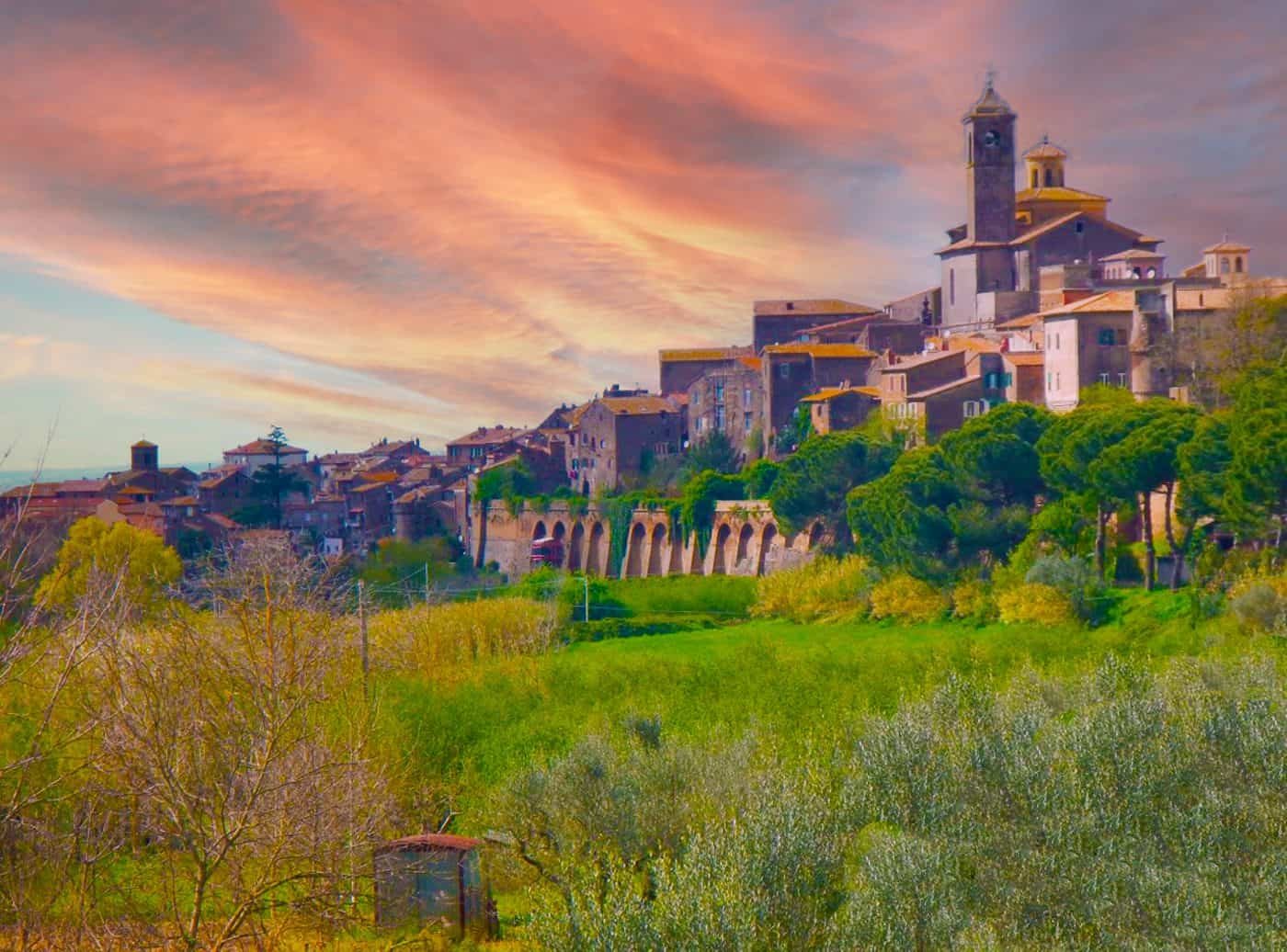
In short. Vetralla is in the Viterbo Province, on the southern slopes of the Cimini Mountains, at about 300 meters above sea level and a little under an hour from Rome's Grande Raccordo Anulare.

Vetralla is in the Viterbo Province, on the southern slopes of the Cimini Mountains, at about 300 meters above sea level and a little under an hour from Rome's Grande Raccordo Anulare. The town sits on Via Cassia, which has run through it for centuries, halfway between the provincial capital Viterbo, 10 kilometers to the north, and Lake Vico, the volcanic basin that marks its eastern boundary. You almost always get there by car: from the capital you take the Cassia SS2 and follow it to the town, while those traveling by public transport use the regional Cotral buses that connect Viterbo and the municipalities of the lower Tuscia. You pay no ticket to enter the historic center, which is a living, inhabited village, with shops, workshops, restaurants and farm stays. The hours and entrances of the individual museums and churches change with the season and it's best to check them beforehand, for example with the local Pro Loco, which is based in town and handles a large part of the tourist information on the site prolocovetralla.it. Vetralla has just over 13,000 inhabitants, celebrates its patron saint Sant'Ippolito on August 14, and its territory spreads out into about 10 hamlets scattered among the woods and the countryside: Cura di Vetralla, Tre Croci, Mazzocchio, Pietrara, La Botte, Le Valli, Giardino, Cinelli and others besides.
Anyone planning an itinerary in the Tuscia will do well to read Vetralla within its system of villages and Etruscan sites: the pages on Viterbo and on Lake Vico are the two nearest references, but the town also dialogues with Caprarola and with Via Francigena, which really does pass here. The village is not a quick stop to be used up in half an hour: it's a whole medieval center, with a first-rate Romanesque church, one of the most scenic Etruscan necropolises in Lazio and a station of ancient Rome still readable in the fields.
Where It Is and How to Get to Vetralla (VT)
Vetralla holds a dominant and easily defended position within the ancient Etruscan territory, on a spur that Via Cassia climbs before descending toward Viterbo. The distance from Rome is about 60 kilometers, almost all of it on the Cassia SS2, and the town is reached in barely an hour when the traffic leaving the capital allows. By car it's the most convenient option, and it then lets you move toward the sites scattered in the countryside, which are hard to reach by public transport: the necropolis of Norchia, the Forum Cassii, the minor necropolises are all outside the built-up area.
Anyone arriving without a car counts on the regional Cotral buses, which serve Viterbo and the network of municipalities of the lower Tuscia along the Cassia. The timetables vary a lot between weekdays and holidays and it's prudent to check them in advance on the carrier's site. The most useful railway station for the area remains the one in Viterbo, from where you continue by bus. Once in town, the historic center can only be toured on foot: the streets are narrow, partly uphill, and the car has to be left in the parking areas along the ring road and the Cassia.
Entrance to the village is free. Costs concern only the museums, some churches at particular hours and any guided visits to the archaeological sites, which in summer are organized by local associations: here too it's best to ask at the Pro Loco of Vetralla, which coordinates a large part of the openings and the events.
The Historic Center of Vetralla (VT): The Walk Inside the Walls
Vetralla preserves, inside its fortified circle of walls, a medieval historic center that has remained surprisingly intact. It is largely the fruit of the century of rule by the Di Vico prefects, between 1345 and 1432, and it can still be read today as a unified organism of lanes, palaces and churches. The best visit starts from the western entrance and follows the axis of Via Cassia Interna, the main street that cuts the village from one side to the other: just follow it to meet, one after the other, almost all the monuments of the town.
Piazza Marconi and the Church of San Filippo e Giacomo
You enter the town along a short avenue and, leaving the Villa Comunale and the Parco della Rimembranza on the left, you arrive in Piazza Marconi. Here the eye falls at once on an old fountain of late medieval forms and on the church of San Filippo e Giacomo, a building of the centuries between the 15th and the 17th. It's the right opening of the walk: a gathered widening that prepares you for the rhythm of the village, before the streets narrow.
Piazza della Rocca and the Di Vico Tower
Taking Via Roma you reach Piazza della Rocca, where the Rocca of the Di Vico prefects once stood, the fortress of the lords who governed Vetralla for nearly a century. Of the Rocca there remains today a large cylindrical crenellated tower, restored in a way that is not always happy, which nonetheless continues to mark the skyline of the town and to recall who held its keys in the 14th century. The square is also the arrival point of the Good Friday procession, which here culminates with the scene of the Crucifixion.
Via Cassia Interna: Palazzo Anselmi and Palazzo Franciosoni
From Piazza della Rocca you continue along Via Cassia Interna, and on the left appears Palazzo Anselmi, dated 1537, which still shows on its facade traces of painted decoration in faux rustication, that 16th-century technique that simulated the relief of the stone blocks with the brush alone. Opposite, past a wide lowered arch, you enter Piazzetta Franciosoni: on the left faces Palazzo Franciosoni, a work of the school of Vignola, the architect whom the Farnese had at work not far away, in Caprarola, and whose hand can be recognized in several noble buildings of the area.
Piazza Umberto I, the Palazzo Comunale and the Duomo of Sant'Andrea
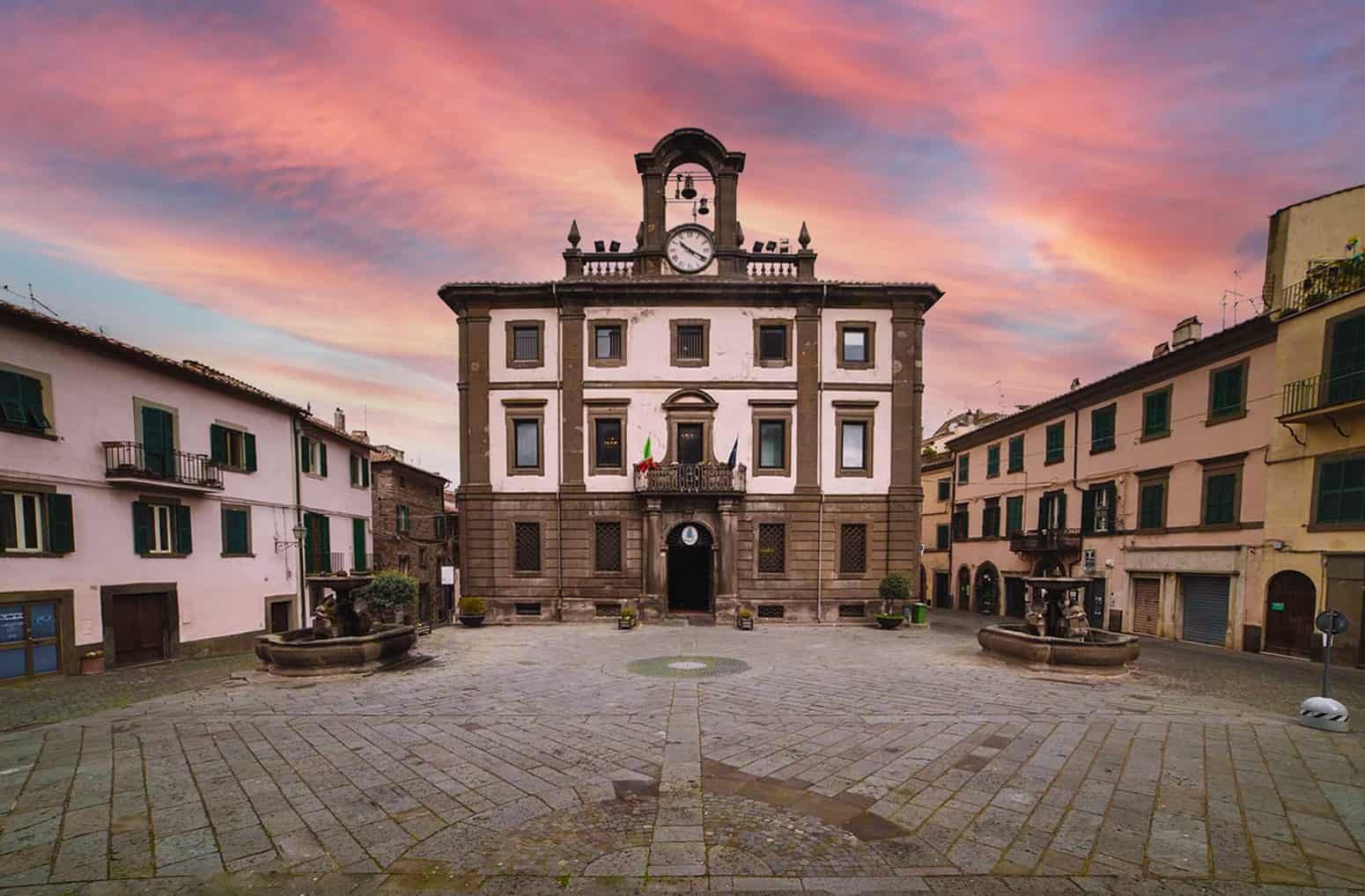
A little further on opens Piazza Umberto I, adorned with two 18th-century fountains and closed by the elegant facade of the Palazzo Comunale, the seat of city government built in the 18th century, which also once housed the town's jails. The story of the Di Vico and of Cardinal Vitelleschi, who in 1435 removed the last lord, has left its name tied to the civic memory of Vetralla, but the palace you see today is the 18th-century one. Opposite the town hall rises the tall facade of the Duomo dedicated to Sant'Andrea, from the 18th century, which we'll cover further on together with the other churches.
The Alleys, Profferli and Tower-Houses of Vetralla (VT)
Off the main street, dozens of alleys open leading to the most secluded corners of the village, where it's pleasant to lose your way on purpose. Here appear the profferli, the outside stone staircases that climb to the first floor of the medieval houses, and then the tower-houses, the carved portals, the framed windows, the little fountains. It's the minor building stock that gives Vetralla its physiognomy: not the great isolated monuments, but the continuous fabric of stone and tuff that links them. The oldest tower-houses date to the 11th and the first half of the 12th century, and belonged to people of high rank. Many were later absorbed into later buildings along the central street, and have to be looked for with a trained eye.
Palazzo Zelli, Palazzo Vinci and the Secret Garden of Palazzo Piatti
Behind the Palazzo Comunale stands Palazzo Zelli, an 18th-century residence of the counts of that name, now owned by the town and the usual venue of exhibitions, lectures and events. A little further on, a fine example of late 16th-century noble building is Palazzo Vinci, also known as Palazzo Brugiotti Carpegna, once again of the Vignola school. On the left, opposite, stretches the narrow facade of Palazzo Piatti, with its large portal: behind that measured wall are hidden rich frescoes and a secret garden, one of those walled green spaces that the Tuscia's noble palaces kept sheltered from view.
The House Museum in the Torre del Capitano del Popolo
Continuing along Via Cassia Interna, at number 36, inside the most important tower of Vetralla, the Torre del Capitano del Popolo, built between the end of the 12th and the 13th century, you visit a house museum that reconstructs the typical peasant and working-class dwelling between the 19th and 20th centuries. Original furnishings, utensils and household objects tell the daily life of those who lived in these houses, and it's the best way to understand from the inside what a Vetralla tower-house was like before the modern renovations.
The Museo della Città e del Territorio of Vetralla (VT)
Along a narrow alley, at Via di Porta Marchetta 2, you reach the Museo della Città e del Territorio, housed in a building partly dug out of the tuff that belonged to the town's defensive circuit, datable between the 13th and the 15th century. The museum keeps the documentation of local history and traditional trades: the display is divided into sections dedicated to stone, iron and metals, wood, bricks and ceramics. It is today part of the holdings of the University of Tuscia in Viterbo, which also uses it as a teaching tool. For anyone who wants to place Vetralla in its territory, before heading out to the Etruscan sites, it's the right stop.
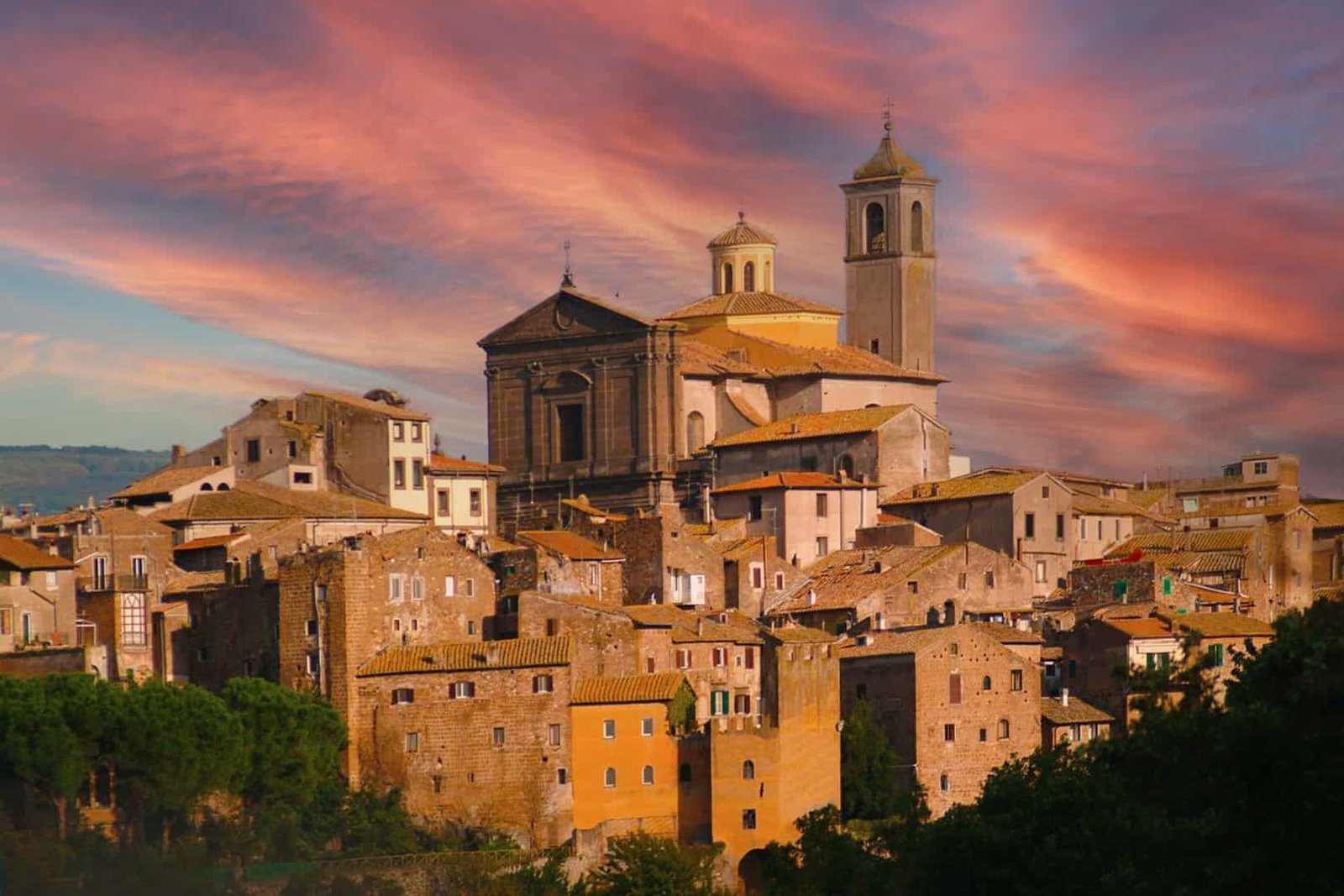
After a long stretch the street arrives at Piazza Vittorio Emanuele II, where on the left appears the church of San Francesco, one of the major monuments of the town. Facing the church, across the street, extends the Castello quarter, which arose on the remains of the oldest settlement of Vetralla, attested already in the second half of the 8th century BC: late 19th-century authors report that a small late Villanovan burial ground existed here, contemporary with the one at Poggio Montano. It's the sign that the hill of Vetralla was inhabited long before the Middle Ages that today defines its appearance.
The Church of San Francesco, the Romanesque of Vetralla (VT)
The church of San Francesco is the most beautiful thing in Vetralla, and by itself justifies the detour from the Cassia. It's a Romanesque church with three aisles, divided by reused columns, with a roof of wooden trusses. Its foundation goes back to the 12th century, on earlier buildings, and local tradition holds that even older structures lie beneath it, perhaps Etruscan, a hypothesis that has to be taken for what it is, an unproven tradition. Inside, the church keeps a cycle of frescoes from different periods, layered from the 14th to the 17th century: it's this overlapping of hands and centuries that makes it precious, because it lets you read on the walls the evolution of devotional painting in the Tuscia over three centuries.
The reused columns deserve a look: they are ancient material put back in service by medieval builders, a normal practice in a territory where Roman and Etruscan remains were close at hand and became a quarry for new buildings. Next to the church stands the attached oratory, reworked in the modern era. My advice is not to rush through: the light that enters from the windows of the nave changes a great deal over the day, and the frescoes are read best in mid-morning, when the angle is raking.
On the value of San Francesco there are no doubts: in a town that many drive through without stopping, this church is worth the whole visit, and it's the point where medieval Vetralla shows its best quality.

The Duomo of Sant'Andrea and the Other Churches of Vetralla (VT)
The Duomo of Sant'Andrea, from the first half of the 18th century, dominates Piazza Umberto I with its tall facade. Inside it's a large hall with side chapels, and it keeps a good number of works of art, both paintings, of the Roman school of the 18th century and earlier periods, and wooden pieces. It's the main church of the town and the focus of the big celebrations, starting with the Good Friday procession, which winds from the Duomo along the central street.
Outside the built-up area, on the slope of Monte Fogliano, stands the church and convent of Sant'Angelo, founded on a Lombard oratory in the 12th century: occupied at first by the Benedictines, then abandoned and reduced to a hermitage, it was recovered in the 18th century by the Passionists, who still hold it and offer hospitality there. In the rest of the territory there are then the church of Santa Maria, the Monastero Regina Pacis, the church of Sant'Antonio Abate and, in the hamlet of Cura di Vetralla, the old Capuchin convent, built at the end of the 16th century by the friars who stayed there until 1962. Since 1972 that convent has housed a community of cloistered Benedictine nuns. Finally there is the church of the Madonna del Riscatto, from which on Christmas night the living nativity scene that winds through the streets of the center sets out.

The Walls, the Rocca and the Civic Architecture of Vetralla (VT)
Besides the Rocca of the Di Vico, of which only the tower remains, Vetralla is ringed by about a kilometer of walls from the 12th and 13th centuries, reinforced by several towers, cylindrical and square, and by tower-houses incorporated into the building fabric. The square-plan towers are generally the oldest. It's a defensive system that doesn't have the monumentality of the great Farnese fortresses of the area, but that keeps its military logic, readable by following the outer perimeter of the village.
Among the civic architecture, besides the palaces already met along Via Cassia Interna, the War Memorial should be mentioned, the work of the sculptor Pietro Canonica, one of the major names of Italian sculpture between the 19th and 20th centuries, author in Rome of the museum that bears his name at Villa Borghese. The presence of a work of his in the town is a detail that escapes many and that says something about the weight Vetralla had as a center of the lower Tuscia.
The Rock-Cut Necropolis of Norchia and the Temple Tombs
If San Francesco is the treasure of the village, Norchia is that of the countryside, and for many it's the very reason for coming this far. The rock-cut necropolis of Norchia is in the territory of Vetralla, along the Aurelia bis between the town and Monteromano, in a wild and little-visited landscape that is half of its appeal. Getting there requires a short stretch on foot along a path, suitable shoes and, in summer, water with you: it's not a site equipped like the big archaeological parks, and for that very reason it's almost always visited in solitude.
The Lost Etruscan City of Norchia
The Etruscan settlement stood on a narrow plateau at the confluence of the Pile and Acqualta ditches with the Biedano stream, defended on three sides by the gorges. The ancient name is not documented with certainty, but it must have resembled the form Orcla, preserved in the early medieval variants of the place name. The city lived mostly between the end of the 4th and the middle of the 2nd century BC, and was crossed by Via Clodia, the Roman road that cut across the plateau and crossed the Biedano on a three-arched bridge, now in ruins, then cutting into the tuff in a passage that is still called Cava Buia. Of the city proper little remains: it's the necropolis, dug into the tuff walls around the settlement, that has withstood the centuries.
The Temple Tombs of the Acqualta
The showpiece of Norchia is the temple tombs, lined up on the wall that looks onto the Acqualta ditch. They are funerary monuments carved into the living tuff in imitation of a temple, with pediment, columns and entablature cut from the rock: two of the three Doric temple tombs made by the Etruscans in all of Etruria are right here, while the third, the famous Tomba Ildebranda, is at Sovana. From the pediment of one of them comes the so-called Gorgoneion of Norchia, the big mask that decorated the tympanum. Carved between the 4th and the 2nd century BC, these tombs were conceived to be seen from below, from the bottom of the gorge, like theater wings facing the stream: and that's how they still have to be looked at today, raising your gaze from the bank.
The Cube Tombs, the Portico Tombs and the False Facades
Norchia is not only the temple tombs. The complex also includes the necropolis of the Pile, with splendid portico tombs such as the Tomba Smurinas and those of the Ciarlanti, the Camino and the Veie, and the necropolis of the Biedano, with the Tomb of the 40 Funerary Beds and the Tomba Lattanzi, famous for its carved sphinx. The most common type remains the cube tomb, a cubic block cut from the tuff wall with the false door carved on the front, to which corresponded a burial chamber dug lower down. The tombs are arranged on two or three levels, using the natural rock banks, and form real streets of the dead: whoever walks along them walks inside an Etruscan cemetery that has stayed almost intact for 2,200 years.
The Di Vico Castle and the Church of San Pietro at Norchia
On the plateau of the ancient city there arose, in the Middle Ages, a Di Vico castle, the church of San Pietro and a watchtower, whose remains still dominate the gorge today. It's the same dynamic as Vetralla: a site inhabited by the Etruscans, then fortified in the Middle Ages, finally abandoned. The medieval village of Norchia was depopulated and nature took everything back, leaving the ruins suspended above the necropolises. Whoever comes all the way up here finds, in one go, the Etruscan funerary monument and the medieval ruin, one above the other, in one of the least tamed archaeological landscapes of Lazio.
Grotta Porcina, the Cerracchio and the Tempietto di Demetra: The Etruria Around Vetralla (VT)
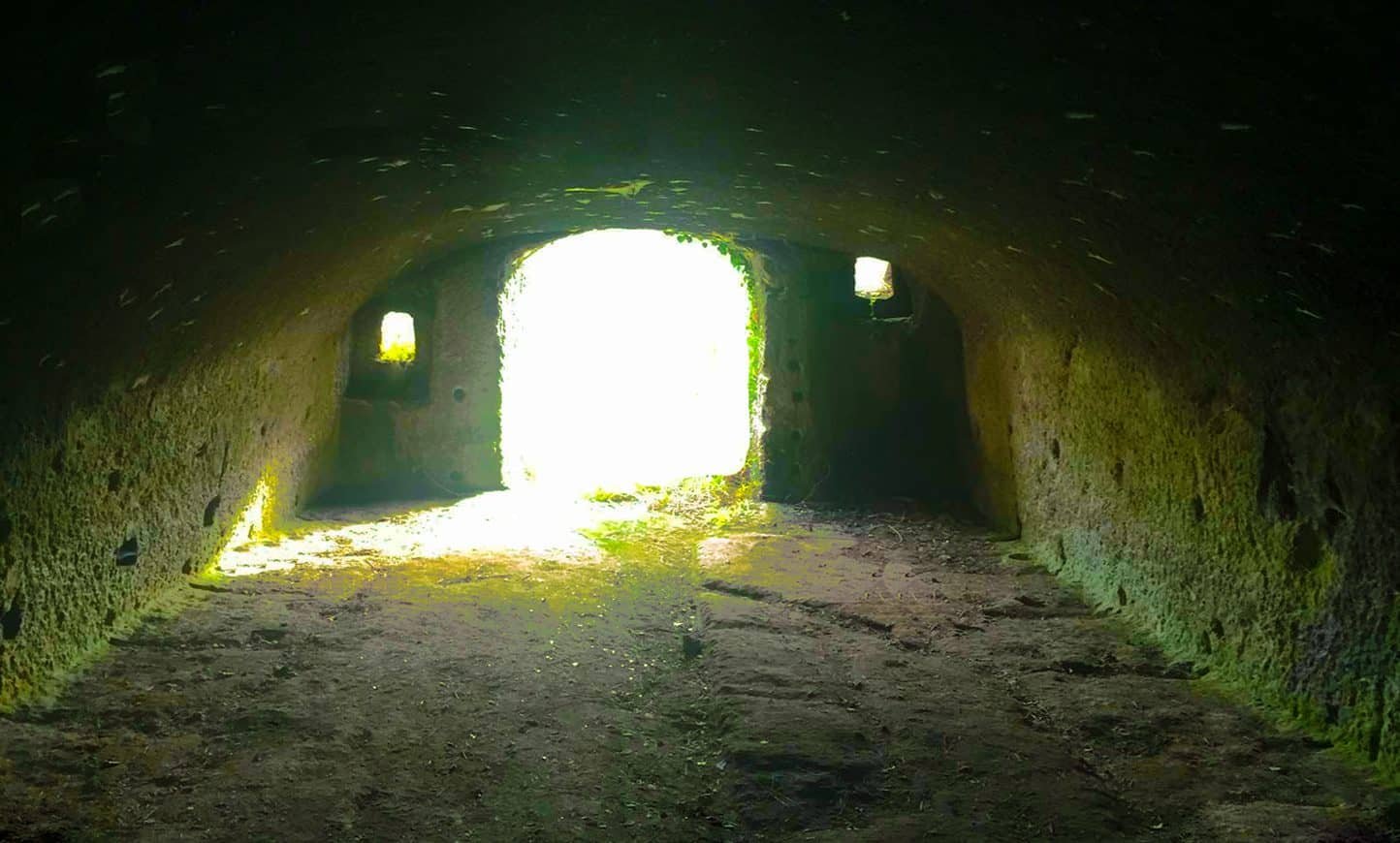
The territory of Vetralla is scattered with minor Etruscan sites that are worth the trouble for those who have already seen Norchia and want to go deeper. Grotta Porcina is an archaeological zone tied to an Etruscan center not yet identified: its main tumulus, called the Grande Ruota, measures 28 meters in diameter and includes three tombs. The name Grotta Porcina comes from its use, lasting centuries, as a shelter for animals. Not far away, on the road to Monteromano, the necropolis of the Cerracchio is tied to a rural village also not yet located: the oldest tombs go back to the 6th century BC, and some keep carved moldings on the doors.
Then there is the Tempietto di Demetra, which is reached from provincial road 41 toward Blera, at the level of the settlement of Macchia delle Valli: a path of half a kilometer leads to a votive complex cut into the tuff, made in what was also a quarry. It's a secluded place, one of those that repay the effort of the path with silence. Those who want to widen the Etruscan tour can then head for the nearby Parco Marturanum, famous for its many rock-cut necropolises, and the rock-cut villages of Barbarano Romano and Blera, which complete the picture of inland Etruria south of Vetralla.
Forum Cassii and Santa Maria in Forcassi
Before the Middle Ages, Vetralla was Rome. On Via Cassia, about two kilometers from the medieval settlement, stood Forum Cassii, the post station of the consular road. The Forum began as a statio along the Cassia, probably around the middle of the 2nd century BC, when the road was opened, and in the Tabula Peutingeriana it appears as the seventh station from Rome, between Vico Matrini to the south and Aquas Passaris to the north. The settlement followed an orthogonal layout and, according to documents of the 17th and 18th centuries, included a bath complex with mosaics, hydraulic works, tombs and buildings with columns and marble floors. Today few remains survive, mostly on private property: stretches of the ancient Cassia, funerary monuments and concrete structures, long plundered.
At the center of those remains stands the church of Santa Maria in Forcassi, whose story tells the continuity of the place. Around the 9th century, on the ruins of the Forum, a church dedicated to the Virgin was built, which became the new center of the settlement. In the 13th century a leper hospital was added, a sign of the importance of the locality on Via Francigena. The Archbishop of Canterbury Sigeric, returning from Rome between 990 and 994, recorded it in his itinerary under the name of Furcari. The building, with a single nave and three small apses, has in front an atrium with an arched entrance and keeps a screen decorated with interlaced ribbons that can be referred to the 8th or 9th century, as well as traces of frescoes that document its use from the 11th to the 15th century. The church has been the subject of recovery work for years, and it's one of those places that sum up two millennia of road in a few stones.
Via Francigena at Vetralla (VT)
Vetralla is a real stage of Via Francigena, the route that brought pilgrims from northern Europe to Rome and that today is walked in great numbers. The town lies on the stretch that joins Viterbo to Sutri, and the stage that leaves from it heads toward the provincial capital through the woods of the Cimini. It's no small detail: the Francigena passed right through here already in the 10th century, as shown by the passage of Sigeric and the recording of Forum Cassii in his travel diary. Anyone walking the modern Francigena finds again at Vetralla the classic sequence of the pilgrim, the church, the rest stop, the fountain, and a countryside that in some stretches still keeps the ancient bed. For those who want to walk the route as a whole, the page dedicated to Via Francigena in Lazio gathers the stages and the support points.
The Ceramics and the Pignattari of Vetralla (VT)
Vetralla has a long tradition of ceramic work, and in particular of red ceramics, a close relative of Roman Arretine ware. The right clay is taken near Monte Panese, in caves dug in the tuff, and only that particular earth, found only in this territory, gives Vetralla ceramics their characteristics. The craftsmen who worked it were known as the pignattari, and the art of the pignattari, the traditional way of making pottery with that local clay, is one of the identity marks of the town. It's a craft that has almost disappeared, but one that explains a lot about the material culture of Vetralla, and the Museo della Città e del Territorio dedicates one of its sections to it for obvious reasons. Anyone looking for a souvenir of the town that is different from the usual should ask around if some workshop still keeps that tradition alive: the red ceramics of Vetralla are a piece of local identity worth more than any ordinary souvenir.
The Events and Traditions of Vetralla (VT)
The calendar of Vetralla is full, and follows the rhythm of the seasons and of popular devotion. Anyone who happens to be in town at the same time as one of these festivals takes home the best memory of it.
The Sposalizio dell'Albero at the Bosco di Fogliano
Every year, at the Bosco di Fogliano, about 10 kilometers from the town near Lake Vico, the Sposalizio dell'Albero is celebrated: an ancient ceremony during which the mayor of Vetralla symbolically reaffirms the right of possession of the mountain, contested for centuries with Viterbo. It's a rite that has its roots in the medieval territorial quarrels and that the town has kept alive as an act of identity.
The Fiorita of the Madonna del Carmelo and the Good Friday Passion
In mid-May the Fiorita of the Madonna del Carmelo fills the procession route with petals, with a contest among volunteer decorators who carpet the paving with floral designs. The people of Vetralla are very devoted to this Madonna, whose original statue was stolen in 1979. On Good Friday, since 2018, a procession with figured scenes of the Passion played by the young people of the place leaves from the Duomo, and ends with the Crucifixion in Piazza della Rocca.
The Living Nativity, the Olive Oil Festival and the Night of San Lorenzo
On Christmas night, in the streets of the historic center, the living nativity scene takes place, setting out from the church of the Madonna del Riscatto. Between November and December the Festa dell'Olio, with the slogan Olio e Salute, celebrates a product that is the pride of local agriculture and makes room for meetings and talks between producers and consumers. On August 10, for the Night of San Lorenzo, the historic center turns off its lights and fills with candles and art installations along the streets and alleys, for the event called Stelle e Candele. And in September the Sagra del Fungo porcino returns, dedicated to the signature product of the Vetralla woods.
The Kingdom of Santa Claus at Cura di Vetralla
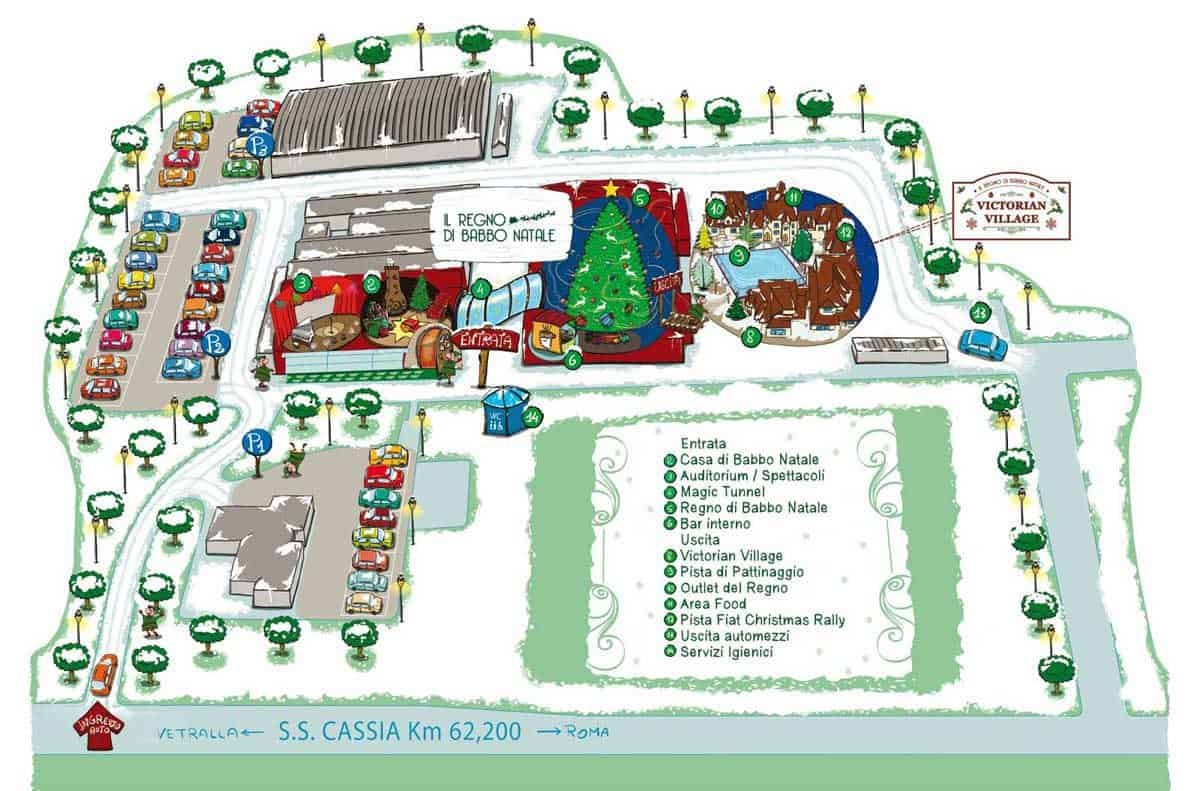
On Via Cassia, at kilometer 62.200, in the Cura di Vetralla area, the Kingdom of Santa Claus operates in winter, a Christmas village with events and costumed characters. Admission is free: the facility supports itself with the photographs children take with Santa Claus and with purchases in the big Christmas goods shop. Over the years it has become a destination for families from all over Lazio, and in the holiday period it's best to arrive early to avoid the lines.
What to Eat in Vetralla (VT): Mushrooms, Olive Oil and Truffles
At the table Vetralla speaks the language of its woods. The star product is the porcini mushroom, which grows abundantly in the age-old woods around the town and which the September festival celebrates as it deserves: in the restaurants of the center you find it in tagliatelle, in risottos, grilled when the season is good. Quality truffles are still gathered, less known than the porcini but present. And then there's the olive oil, the protagonist of the late autumn festival, a hill extra virgin that goes with home cooking. The practical advice is to aim for the farm stays in the countryside around, where mushrooms, oil and meats often come from the same farm that serves them, and where the ratio of quality to price remains better than in many more famous destinations of the Tuscia.
The Cimini Woods and Monte Fogliano Around Vetralla (VT)
The landscape is an integral part of the visit to Vetralla, and not a simple backdrop. The town stands on the southern slopes of the Cimini Mountains, a massif of volcanic origin covered with beech groves and with chestnut and Turkey oak woods, the same ones that in autumn give the porcini of the festival. The relief most tied to local history is Monte Fogliano, which towers over Lake Vico: on its slopes are the convent of Sant'Angelo, kept by the Passionists, and the Bosco di Fogliano where the Sposalizio dell'Albero is celebrated every year, the ceremony with which the town reaffirms its ancient rights over the mountain. For centuries that wood was contested with Viterbo, and the dispute says well how much firewood, pasture and the fruits of the undergrowth were worth in a peasant economy.
To the east opens Lake Vico, the basin that fills an ancient crater and is today a nature reserve: its wooded shores, the beech grove of the Reserve on the slope of Monte Venere and the paths that surround it serve as a natural complement to the visit to the village. Anyone who wants to combine culture and nature can alternate a morning among the palaces of Vetralla with an afternoon on the shores of the lake, about 10 kilometers away, where you walk, bike and in season swim. It's this alternation of stone and green that makes Vetralla a comfortable base for more than a day.
Cura di Vetralla and the Other Hamlets
The municipal territory of Vetralla is wide and is distributed across about 10 hamlets scattered among the countryside and the woods. The best known is Cura di Vetralla, which stretches along Via Cassia in the direction of Rome: here the Kingdom of Santa Claus operates in winter, and here stands the old Capuchin convent that since 1972 has housed a community of cloistered Benedictine nuns. Other hamlets and localities, from Tre Croci to Mazzocchio, from Pietrara to La Botte, from Le Valli to Giardino and Cinelli, dot the territory with small farming settlements, farm stays and olive-growing businesses. It's among these countrysides, and not only in the historic center, that you grasp the real Vetralla: that of the mushroom woods, the olive groves and the white roads that still follow, in stretches, the route of the ancient roads.
The History of Vetralla (VT), from Forum Cassii to the Farnese
The name of Vetralla, according to the most widespread hypotheses, would derive from the Latin Vetus aula, old place, or from Vetus alia, another old city, in reference to Viterbo, the Vetus urbs. They are traditional etymologies, to be taken with caution, but they express well the ancient and conflictual relationship between the two centers.
In Roman times the focus of the territory was Forum Cassii, the post station on the Cassia. In the late empire the population, reduced in number and looking for security, moved to the present hill, which was easier to defend. The small fortress soon entered the papal holdings thanks to the Donation of Sutri of 728, by which the Lombard king Liutprand ceded territories to Pope Gregory II. Between 1110 and 1134 Vetralla was under the rule of the lords of Viterbo.
From 1145 Pope Eugene III settled in Vetralla to escape the infighting in Rome, and from here, according to the sources, he proclaimed the Second Crusade with the bull Quantum praedecessores. It is the most important episode in the history of the town: for some time little Vetralla was one of the seats from which Christendom was governed. The territory remained contested for a long time between the popes and the lords of Viterbo, and the memory of that dispute survives in the ceremony of the Sposalizio dell'Albero.
Over the centuries the fief was assigned to several families tied to the papacy: first the Orsini, then the prefects of Vico, until 1435, when the last lord, Giacomo di Vico, was deposed by Cardinal Giovanni Vitelleschi, imprisoned in the fortress of Soriano and executed. Vetralla then passed to Cardinal Giovanni Borgia in 1474, to Lorenzo Cybo in 1529 and finally, in 1534, to Cardinal Alessandro Farnese: it's to that Farnese period that the hand of Vignola in the town's palaces is due. In the Risorgimento era Vetralla was touched by episodes of the Garibaldian campaign of 1867. And during the Second World War, near it, one of the largest prison camps in Italy operated, which housed mainly British prisoners before being assigned, at the beginning of 1943, to civilians displaced from the area: of the many buildings of that time a dozen remain today, in poor condition and used as farm storage.
A Curiosity About Vetralla (VT)
The curiosity that few people know concerns the temple tombs of Norchia. In all of Etruria, the vast territory the Etruscans occupied between Tuscany and northern Lazio, only three tombs are counted that were carved in imitation of a complete Doric temple, with pediment and columns cut from the tuff. One is the famous Tomba Ildebranda at Sovana, in Tuscany, which the books always cite. The other two are here, in the territory of Vetralla, facing the Acqualta ditch at Norchia. It means that this municipality of the lower Tuscia alone has two thirds of a very rare funerary type, and does so at a site that almost no general guidebook mentions. Whoever arrives at Norchia knowing this looks at those carved facades with different eyes: they are not just any ruins, they are among the very few surviving examples in the world of an Etruscan way of building death in the image of a temple.
Something Nobody Tells You About Vetralla (VT)
What you find written almost nowhere is that Vetralla, for a few years, was a capital of the Church. In 1145 Pope Eugene III, unable to govern a Rome in communal revolt, moved here, and from Vetralla issued the bull Quantum praedecessores that called the Second Crusade to arms. For a pilgrim or a distracted tourist it's just a town on the Cassia. For European history, this is one of the places from which one of the great military mobilizations of the Middle Ages set out. It's a documented and underrated fact, worth keeping in mind as you cross Piazza della Rocca: in this respect Vetralla plays in a higher league than the one assigned by its current reputation as a quiet village of the Cimini.
The Advice I Give You for Visiting Vetralla (VT)
My advice is to split the day into two clear halves. The morning is devoted to the village: you park along the ring road, enter from Piazza Marconi and follow Via Cassia Interna to San Francesco, slowly, stopping at the church's frescoes while the light is still raking. The afternoon is for Norchia: you leave town toward Monteromano, leave the car where indicated and walk down to the necropolis, allowing a good hour of walking between the way there, the visit and the return. The two Vetrallas, the medieval one and the Etruscan one, aren't visited well in a rush at the same time of day: the first asks for the slow pace of the historic center, the second for hiking shoes and a bit of effort. Whoever keeps them separate enjoys both. And if you have to choose a single season, spring and early autumn beat summer by a long way, when the paths of Norchia become scorching.
Another Well-Known Fact, Yet Rarely Cited
That Via Francigena passes through the Tuscia many people know. That Vetralla is an authentic stage of it, documented already in the 10th century, is rarely mentioned. And yet the proof is solid: when the Archbishop of Canterbury Sigeric returned from Rome toward England, between 990 and 994, he noted the stops of his journey, and among them appears Furcari, that is Forum Cassii, the Roman station in the territory of Vetralla. That diary is one of the founding documents of the Francigena, and puts Vetralla, or rather its ancient Forum, in black and white on the pilgrims' itinerary more than a thousand years ago. Whoever walks the modern Francigena today between Viterbo and Sutri retraces, without always knowing it, a road that an English bishop was noting down already at the end of the first millennium.
The Right Photo to Take at Vetralla (VT)
The photograph to take home isn't in the village: it's at Norchia, from the bottom of the Acqualta gorge. You have to go down to the level of the stream and turn toward the tuff wall, so as to frame the temple tombs from below, as they were conceived to be seen: the carved facades emerge from the rock and the vegetation, suspended above the viewer, and the best light catches them in the late afternoon, when the raking sun digs out the reliefs and detaches the pediment from the background. In the village, instead, the right photo is the Di Vico tower from Piazza della Rocca at golden hour, or the interior of San Francesco in mid-morning, with the reused columns and the frescoes. But if you have to come back with a single image, choose Norchia: few things in Lazio tell the story of the Etruscans with that force, and almost nobody has that photograph.
Some Important Events That Happened Here in History
The history of Vetralla has known moments that go far beyond the size of the town. The first is the Donation of Sutri of 728, when the Lombard king Liutprand ceded to Pope Gregory II the territories of this area, laying one of the first stones of the future temporal dominion of the Church: Vetralla then entered, and for centuries, the papal orbit. The second, the most sensational, is the stay of Pope Eugene III from 1145 and the bull Quantum praedecessores by which, from Vetralla, the Second Crusade was proclaimed.
The third event is gloomy and concerns the lords of the town: in 1435 Cardinal Giovanni Vitelleschi, the armed arm of the papacy, deposed the last of the prefects of Vico, Giacomo, had him imprisoned in the fortress of Soriano and condemned him to death, closing an era. Then the long Farnese season, opened in 1534 with the arrival of Cardinal Alessandro Farnese, which brought Vignola's architectural culture to the area. In more recent times, the Garibaldian campaign of 1867 brushed the town. And during the Second World War, near it, one of the largest Italian prison camps operated, intended for British prisoners and then, from 1943, for displaced civilians. They are events of very different scale, from the government of Christendom to the tragedy of war, and all of them left a mark on this hill of the Cassia.
Who Has Passed Through Vetralla (VT)
A lot of history has passed through Vetralla, and its Roman Forum. The most illustrious figure is Pope Eugene III, who resided here from 1145 and from here proclaimed the Second Crusade: for some time the papal curia had its seat within these walls. Before him, on the route of Forum Cassii, the Archbishop of Canterbury Sigeric had passed, returning from Rome between 990 and 994, who noted the stop in the diary that still guides the pilgrims of the Francigena today. Cardinal Giovanni Vitelleschi imposed the heavy hand of the papacy here in 1435. Cardinal Giovanni Borgia, then Lorenzo Cybo, finally Cardinal Alessandro Farnese were its lords in the following decades, and with the Farnese came the architect Jacopo Barozzi da Vignola, whose school can be recognized in the palaces of the village. In the Risorgimento era the Garibaldian campaign of 1867 touched the territory. Along the Cassia, over the centuries, armies, pilgrims bound for Rome and Grand Tour travelers have also passed, for whom Vetralla was one of the last stops before the capital.
A One-Day Itinerary in Vetralla (VT)
For those who arrive in the morning and leave in the evening, here is the order that works best. You start from the historic center around nine or 10, when the shops open and the light is still low: entrance from Piazza Marconi, then Via Cassia Interna step by step, with stops at the Di Vico tower in Piazza della Rocca, at the 16th-century palaces, at Piazza Umberto I with the Palazzo Comunale and the Duomo of Sant'Andrea. The church of San Francesco should be kept for last, toward noon, when the light enters the nave well. Lunch is in town or, better, in a farm stay in the countryside, with porcini if it's the season.
The afternoon is for archaeology. Anyone with the legs and the shoes for it heads for Norchia, leaving toward Monteromano and walking down to the necropolis: two or three hours between the walk and the visit, with the advantage of the raking light of the late afternoon on the temple tombs. Anyone who prefers something shorter stays closer, with Forum Cassii and the church of Santa Maria in Forcassi two kilometers from the village. Before heading back, a quick trip to the shores of Lake Vico closes the day with green after stone. It's a full but not frantic program, which does justice to the two souls of the town without rushing.
Vetralla (VT) and the Vignola School in the Tuscia
One of the threads that tie the palaces of Vetralla together is the presence of the Vignola school. Jacopo Barozzi da Vignola was the architect of the Farnese, and in Caprarola, a few kilometers away, he built for them the monumental Palazzo Farnese, one of the masterpieces of the Italian 16th century. When in 1534 the fief of Vetralla passed to Cardinal Alessandro Farnese, the family's architectural culture spread through the territory, and in the palaces of Vetralla, from Palazzo Franciosoni to Palazzo Vinci, you can recognize the hand of Vignola's followers: measured proportions, rusticated portals, regular courtyards. They are not isolated masterpieces, but tesserae of a homogeneous taste that ran through the whole Farnese lower Tuscia. For those who also visit Palazzo Farnese in Caprarola, recognizing that same language, on a smaller scale, among the alleys of Vetralla is one of the finest pleasures of a tour of the Viterbo area.
What to See Around Vetralla (VT)
Vetralla is an excellent base for exploring the Tuscia, because almost all the best of the area lies within half an hour. To the north is Viterbo, the city of the popes, with its medieval San Pellegrino quarter and the famous Macchina di Santa Rosa. To the east is Lake Vico, one of the best-preserved volcanic lakes in Italy, and above it Caprarola with the monumental Palazzo Farnese, Vignola's masterpiece. Toward Rome you meet Sutri with its Etruscan-Roman amphitheater dug into the tuff, and Ronciglione overlooking the lake. For Etruscan archaeology there are Tarquinia with its painted tombs, Barbarano Romano and the Parco Marturanum. Not far away open the Monster Park of Bomarzo, the fairytale Civita di Bagnoregio, the gardens of Villa Lante at Bagnaia and the rock-cut city of Tuscania. Anyone with time left goes down toward Nepi and Civita Castellana, or toward Lake Bracciano.
When to Go, with Children and Accessibility at Vetralla (VT)
The best time for Vetralla is the shoulder season: spring, when the Cimini woods fill with green and the paths of Norchia are dry and cool, and autumn, with the porcini, the new oil and the first festivals. Summer is fine for the village, but it's hard for open-air archaeology, where shade is scarce. Winter has its moment with the Kingdom of Santa Claus and the living nativity.
With children the town works: the historic center is small and safe, the Kingdom of Santa Claus is made just for them, and Norchia, with its tombs dug into the rock and the bottom of the gorge, becomes a small adventure, as long as you have suitable shoes and keep an eye on the path. On accessibility I have to say frankly that the medieval historic center, made of slopes, staircases and cobbles, is difficult for those with walking problems, and that the archaeological sites, Norchia first, can only be reached on a dirt path, not suitable for strollers. The Duomo, the Palazzo Comunale and the main squares, on the other hand, are easier.
Quick Questions About Vetralla (VT)
Where is Vetralla (VT)?
Vetralla is in the Viterbo Province, in Lazio, in the Cimini Mountains, on Via Cassia, about 10 kilometers from Viterbo and about 60 kilometers from Rome, a little under an hour from the Grande Raccordo Anulare.
How far is Vetralla from Rome?
About 60 kilometers along the Cassia SS2, covered in barely an hour by car outside rush hours.
How do you get to Vetralla (VT) without a car?
With the regional Cotral buses that serve Viterbo and the municipalities of the lower Tuscia. The reference railway station is the one in Viterbo, from where you continue by bus. The timetables have to be checked in advance.
Do you pay to enter Vetralla (VT)?
No, the historic center is an inhabited village and entrance is free. You pay only for some museums, certain guided visits and events that charge for it.
What can you see in Vetralla (VT) in half a day?
The historic center from Piazza Marconi along Via Cassia Interna, with the Di Vico tower, the 16th-century palaces, the Duomo of Sant'Andrea and above all the Romanesque church of San Francesco.
Why is the necropolis of Norchia famous?
Because it keeps two of the only three Doric temple tombs carved by the Etruscans in all of Etruria, facing the Acqualta ditch, in an archaeological landscape that has stayed almost intact.
How do you reach the necropolis of Norchia from Vetralla (VT)?
By car along the Aurelia bis toward Monteromano, then leaving the car and walking down a path to the gorge. You need suitable shoes and, in summer, water.
How much time do you need to visit Norchia?
Allow at least an hour and a half between the approach walk, the visit to the necropolises and the return. Much more if you want to see all the sectors.
Can the church of San Francesco in Vetralla (VT) be visited?
Yes, but the opening hours vary: it's best to check them in advance with the Pro Loco or the parish. Inside you see the three Romanesque aisles and the frescoes from the 14th to the 17th century.
What is Forum Cassii?
It was the Roman post station on Via Cassia, about two kilometers from the village, active from the 2nd century BC. Today few remains survive, near the medieval church of Santa Maria in Forcassi.
Is Vetralla (VT) on Via Francigena?
Yes, it's a stage of the route between Viterbo and Sutri, documented already in the 10th century by the passage of Archbishop Sigeric, who noted the stop at Forum Cassii.
What do you eat in Vetralla (VT)?
The porcini mushrooms of the Cimini woods are the star product, celebrated by the September festival. You also find truffles, a good extra virgin olive oil and the country cooking of the farm stays.
When is the Sagra del Fungo porcino held in Vetralla (VT)?
In September. The precise dates change from year to year and are checked on the channels of the Pro Loco and the Comune.
What is the Sposalizio dell'Albero?
An annual ceremony at the Bosco di Fogliano, near Lake Vico, in which the mayor reaffirms the town's historic right over the mountain, contested for centuries with Viterbo.
Is Vetralla (VT) suitable for children?
Yes. The historic center is small and quiet, in winter there is the Kingdom of Santa Claus at Cura di Vetralla, and Norchia becomes a small outdoor adventure with due caution on the path.
Does the Kingdom of Santa Claus have an entrance ticket?
No, admission is free. The facility supports itself with the photographs with Santa Claus and with purchases in the Christmas goods shop. It's on Via Cassia at kilometer 62.200.
Is Vetralla (VT) accessible with mobility disabilities?
The historic center, made of slopes and cobbles, and the archaeological sites on paths are difficult. The Duomo, the Palazzo Comunale and the main squares are easier.
What is the best time to visit Vetralla (VT)?
Spring and early autumn, for the climate and for the dry paths of Norchia. Summer is hot for open-air archaeology, and winter has its Christmas festivals.
Who was the patron saint of Vetralla (VT)?
The patron is Sant'Ippolito, celebrated on August 14.
Which villages to visit near Vetralla (VT)?
Viterbo, Caprarola with Palazzo Farnese, Sutri, Ronciglione, Tuscania, Tarquinia, Barbarano Romano, Bomarzo and Civita di Bagnoregio are all within half an hour or a little more.
Why is Vetralla (VT) tied to Vignola?
Because in 1534 the fief passed to the Farnese, the same patrons of the nearby Palazzo Farnese in Caprarola: the school of the architect Jacopo Barozzi da Vignola left its mark on the palaces of the village, like Palazzo Franciosoni and Palazzo Vinci.
What is the Sposalizio dell'Albero and when is it held?
It's an annual ceremony at the Bosco di Fogliano in which the mayor reaffirms the town's historic right over the mountain. The dates are checked every year on the channels of the Comune and the Pro Loco.
Is it worth staying a whole day in Vetralla (VT)?
Yes. Between the medieval historic center, the Romanesque church of San Francesco and the Etruscan sites of Norchia and Forum Cassii, the town easily fills a full day.
Are there woods and nature near Vetralla (VT)?
Yes, the Cimini Mountains with their beech groves and chestnut woods, Monte Fogliano and nearby Lake Vico, a nature reserve about 10 kilometers from the town.
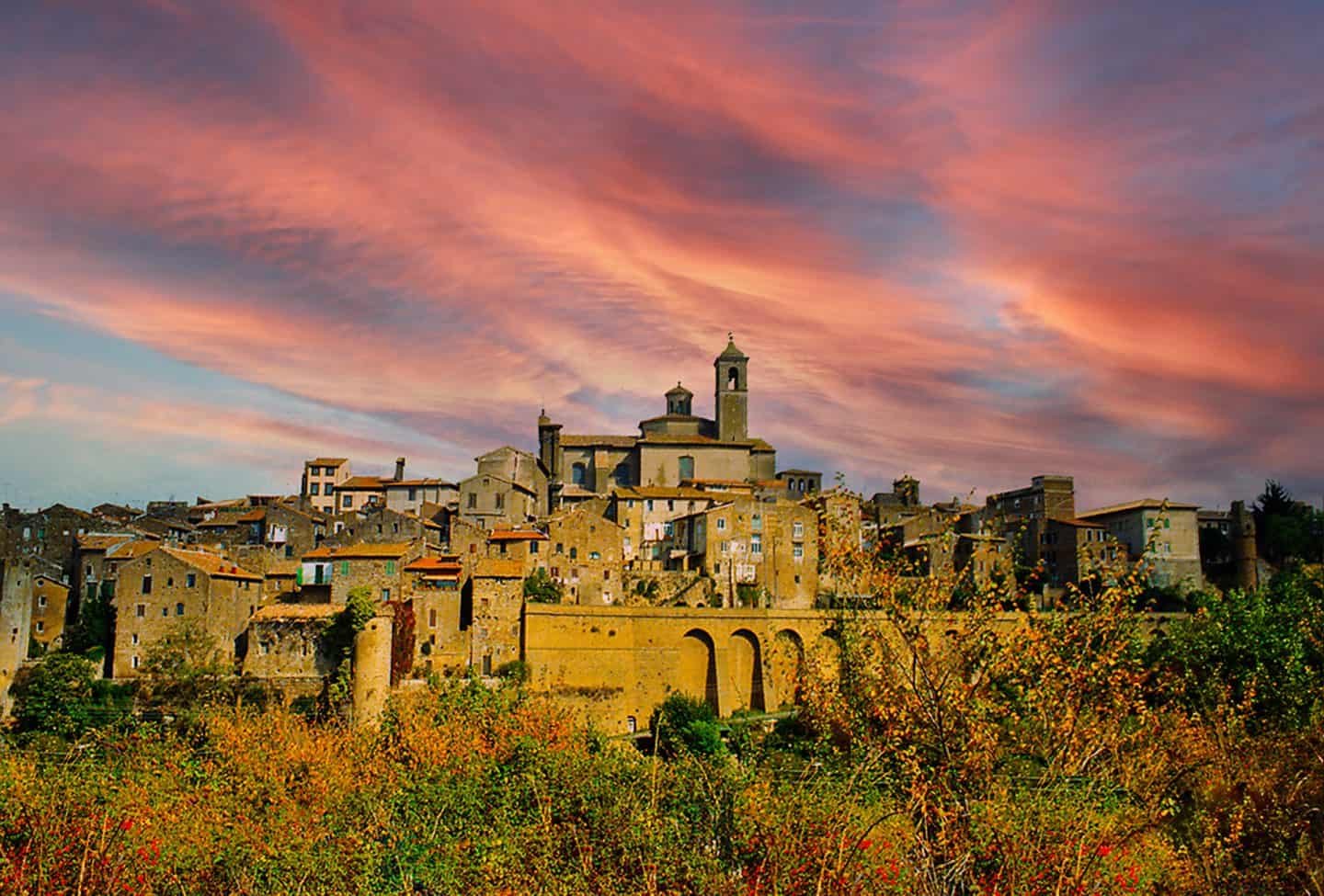
Vetralla is one of those towns that are judged badly from the car window: the Cassia cuts through it quickly and it seems to promise little. Stopping, instead, gives back much more than expected. In a single day you line up a first-rate Romanesque church, an intact medieval center with its Vignola-style palaces, one of the rarest Etruscan necropolises in the world and a station of ancient Rome still readable in the fields. My suggestion is not to use it as a stopover on the way to Viterbo or Lake Vico, but to give it the full day it asks for: the village in the morning, Norchia in the afternoon, and a plate of porcini in a farm stay in the countryside to finish. You go home with the feeling of having seen a real Tuscia, the one the tour buses don't touch.
Article written by the editorial team of TourLeaderPro, contact them for Private/Corporate/V.I.P. Tours and Experiences.
Planning a trip to Rome? The English-language guides for visiting the city are on ItalyPlanner.com.