Solo by Arturo Brachetti at Teatro Brancaccio, January 15 to 17, 2027
In short. Solo by Arturo Brachetti, his one-man quick-change show now in its tenth season, comes to Teatro Brancaccio in Rome from Friday, January 15 to Sunday, January 17, 2027: Friday and Saturday at 21:00, Sunday matinee at 16:00 according to the artist's calendar.
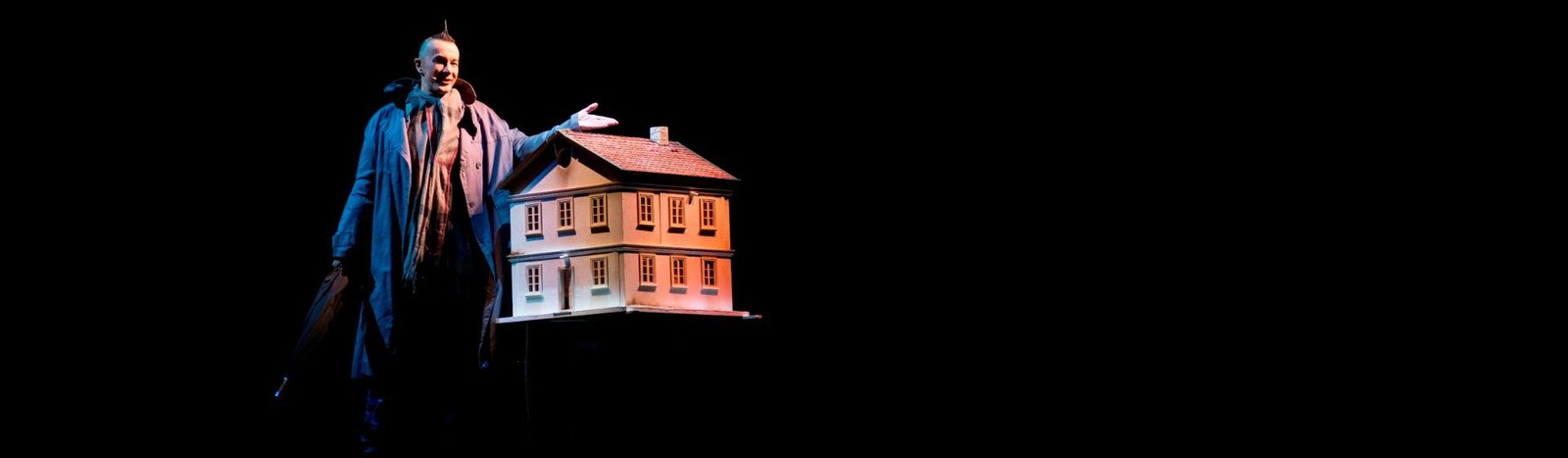
Solo by Arturo Brachetti, his one-man quick-change show now in its tenth season, comes to Teatro Brancaccio in Rome from Friday, January 15 to Sunday, January 17, 2027: Friday and Saturday at 21:00, Sunday matinee at 16:00 according to the artist's calendar. The theater is at Via Merulana 244 (00185 Rome), in the Esquilino district, a few minutes on foot from the Vittorio Emanuele stop of metro line A, and lines 16, 75, 714, 717 and C3 run along Via Merulana. The price list published by the theater goes from 29 euros for Poltrona B to 65 euros for Poltronissima Gold, with Poltronissima A at 55, Poltronissima B at 45 and Poltrona A at 39 euros. Tickets are bought at the box office on Via Merulana, on the official website of Teatro Brancaccio and on the presale network authorized by the organizers. For Sunday the published start time is not consistent across the official sources (16:00 or 21:00): check the one printed on your ticket.
Language: performed in Italian. No English version or English surtitles are announced.
More than 700 performances and a million spectators, according to the production: in 10 years Solo has become the classic of Italian visual theater, and its author the most famous quick-change artist in the world. Three evenings in Rome, in the largest hall on Via Merulana, for 90 minutes in which one man changes face, costume and world dozens of times. Anyone who has never seen it has a good reason to go. Anyone who has seen it already knows they will be back.
What Solo by Arturo Brachetti is
Solo is the one-man show written, produced and performed by Arturo Brachetti, produced by Arte Brachetti: 90 minutes of quick-change, Chinese shadows, chapeaugraphie, sand painting and laser beams, built like a visit to the rooms of an imaginary house.
A house outside time
The thread of the show is a secret house, with no present, past or future, where dreams and wishes are kept. Brachetti opens one door after another, and each room tells a different side of the person who lives there. Objects of everyday life come to life and become the doorway to other worlds. It is a simple frame, and that is exactly why it works: it leaves all the room to wonder.
The rooms
In the children's room there is the world of fairy tales. In the parents' bedroom there is an intimate moment devoted to the relationship with his mother. In the kitchen there is a madcap Italian-style wedding that seems straight out of a neorealist film. There is also a playlist that runs through 50 years of pop music, where the costume changes follow the rhythm of the songs.
The little thoughts
Tying the scenes together are the pensierini, the short school compositions that Arturo, like all children, wrote as a boy: sentences to remember, which marked his growing up. It is the autobiographical touch that sets Solo apart from variety numbers: behind the technique there is a personal story.
The shadow
Brachetti's alter ego onstage is his shadow, played by Kevin Michael Moore. It represents the rational side, the one that would like to keep dreamers with their feet on the ground. Between the two there is a constant confrontation that ends in a battle of laser beams.
The arts of Solo: quick-change, shadows, sand and lasers
In Solo the protagonist is quick-change, the art of which Brachetti is the best-known performer in the world, joined by other disciplines of visual theater: Chinese shadows, chapeaugraphie, sand painting and the manipulation of laser beams.
Quick-change
Theatrical quick-change is the art of rapid changes of costume and character. Its inventor was Leopoldo Fregoli, and after Fregoli's death, in 1936, it had almost disappeared. Brachetti brought it back to the stage in Italy and in part of Europe: a costume change lasts a few seconds, and the audience never understands how.
Chinese shadows
Chinese shadows are figures projected with the hands on a lit screen. Brachetti also devoted a book to them, Le ombre cinesi, published by Priuli e Verlucca. Onstage they are the quietest moment of the evening.
Chapeaugraphie
Chapeaugraphie is an old variety art: a ring of felt that, folded and turned over in the hands, becomes dozens of different hats, and with each hat a character. It is quick-change stripped to the bone.
Sand painting and lasers
Sand painting is drawing with sand on a lit plate, projected large as it is composed and undone. The laser is the novelty that Brachetti introduced into a variety show in 2014, with Brachetti che sorpresa!: beams of light handled like solid objects. In Solo it is the weapon of the final duel.
Arturo Brachetti: the biography
Arturo Brachetti, born Renzo Arturo Giovanni Brachetti, was born in Turin on October 13, 1957: a quick-change artist, actor, illusionist and theater director, he is considered the most important performer of theatrical quick-change in the world.
Turin, the Salesians, Mago Sales
His family comes from Corio, a town near Lanzo Torinese. His father and grandfather worked at FIAT, and Arturo is the first of four brothers. He studied at the Salesian boarding school San Filippo Neri in Lanzo and then, from 1967, at the Istituto Maria Ausiliatrice in Turin, where he stayed until 1976. In those years, with costumes borrowed from the seminary theater, he staged his first show of quick changes. He frequented the Circolo della Magia on Via Santa Chiara, where he met the actor Macario, and at the seminary in Chieri he met Don Silvio Mantelli, a Salesian priest known as Mago Sales, who taught him the rudiments of illusionism. He understood that he had no vocation for the priesthood, but he did for show business.
Paris, Germany, London
In 1978, at 20, he left Turin with a suitcase, six costumes and a one-act show. In Paris he performed at the Paradis Latin cabaret, under the direction of Jean Marie Rivière. The success earned him an engagement with the Viennese artist André Heller, who in 1981 wanted him as host in Germany for the tour of the variety show Flic Flac. In 1983 he presented one of his own productions, Y, at the Piccadilly Theatre in London, which earned him a Swet Award nomination, and he took part in the Royal Variety.
Back in Italy, in Rome
That same year he returned to Italy, and it was in Rome that the television director Antonello Falqui noticed him and wanted him as a regular guest in 10 episodes of Al Paradise on Rai Uno. Then came the theaters: Varietà, M. Butterfly with Ugo Tognazzi, L'Histoire du Soldat, In Principio Arturo, Amami Arturo, Il Mistero dei Bastardi Assassini. Between one tour and the next he went back to London, to the National Theatre, and presented magic programs for British television.
The man of a thousand faces
In the early 1990s he perfected quick-change: his storeroom went from about 100 costumes to more than 200. In the Massibili he played 33 roles, in Brachetti in Technicolor 40, and in L'uomo dai 1000 volti 80 characters with 100 costume changes. From 1994, with Saverio Marconi's Compagnia della Rancia, he worked on the musical Fregoli, which won the Biglietto d'Oro as the most-seen show of the season. In 1999 he debuted in Montréal with a show produced by the Juste Pour Rire festival. With L'uomo dai 1000 volti he won the 2000 Molière award in Paris.
The Guinness record and directing
Since 2002 he has been in the Guinness World Records as the fastest quick-change artist in the world, after playing 81 characters in a two-hour show. At Christmas 2004 he performed at the Élysée for President Jacques Chirac. As a director he signed all the theater shows of Aldo, Giovanni e Giacomo, including Anplagghed in 2006, and worked with Raul Cremona and Angelo Branduardi. For two seasons he directed the Wintergarten variety theater in Berlin.
Change, Ciak si gira, Solo
In 2009 he was in London with Change, directed by Sean Foley, which earned him a Laurence Olivier Award nomination. In 2010 he created, with Serge Denoncourt, Ciak si gira, devoted to cinema. In 2014 he returned to Italy with Brachetti che sorpresa!, also written with the cartoonist Leo Ortolani. In 2016 Solo was born, debuting in November in his native Turin. In 2023 he toured with the musical Cabaret alongside Diana Del Bufalo.
Honors
In 2010 he received an honorary degree in set design from the Accademia Albertina in Turin. In 2011 he was named Chevalier des Arts et des Lettres in France. In 2013 his wax statue entered the Grévin museum in Paris. On May 6, 2014 he was named Commendatore of the Order of Merit of the Italian Republic. He has won the Premio Flaiano for theater. He wrote the autobiographies Uno, Arturo, Centomila (2007) and Tanto per cambiare (2015).
10 seasons of Solo: from 2016 to today
Solo debuted in Turin in November 2016. In 2027 it celebrates its tenth season after more than 700 performances and a million spectators, while Brachetti approaches 50 years of career.
A contemporary classic
The theater presents it as a timeless classic of visual theater, a show you go to see and then go back to see again. It is an advertising line, but the numbers support it: few Italian shows with a single protagonist reach 10 seasons.
The Legend of Quick-Change
On the international tour and in the sales network the show carries the subtitle The Legend of Quick-Change. It is how Brachetti is known outside Italy, where trasformismo is called quick-change.
Why see it again
The show has changed over the years, with numbers added and touched up. Those who saw it in the first season will find a better-oiled machine and a performer who, at almost 70, still does what he did at 40.
A curiosity about Solo by Arturo Brachetti at Teatro Brancaccio, January 15-17, 2027
Quick-change has a precise inventor, and Brachetti is his biographer as well as his heir. Leopoldo Fregoli invented the art of the rapid change, and after his death, in 1936, the genre almost completely vanished from the stage. Brachetti brought it back to life in three ways: by playing Fregoli in the musical of the same name by the Compagnia della Rancia, which won the Biglietto d'Oro, by editing in 2007, with Fregoli's own memoirs, the volume Fregoli raccontato da Fregoli, and by writing in 2011 the preface to the biography of Fregoli by Alex Rusconi, the first historical research on the inventor of quick-change.
For a Roman audience the curiosity has a local twist. Brachetti's first encounter with Italian television took place in Rome itself, in 1983, when Antonello Falqui saw him and wanted him for Al Paradise. Via Merulana is not just any stop on the tour: it is one of the places where this story has its roots.
One last note: in 2002 the Guinness World Records registered Brachetti as the fastest quick-change artist in the world, with 81 characters in two hours. In Solo the rhythm is different, more narrative, but try counting the changes: you will lose count before the halfway point.
Teatro Brancaccio, the hall of Solo
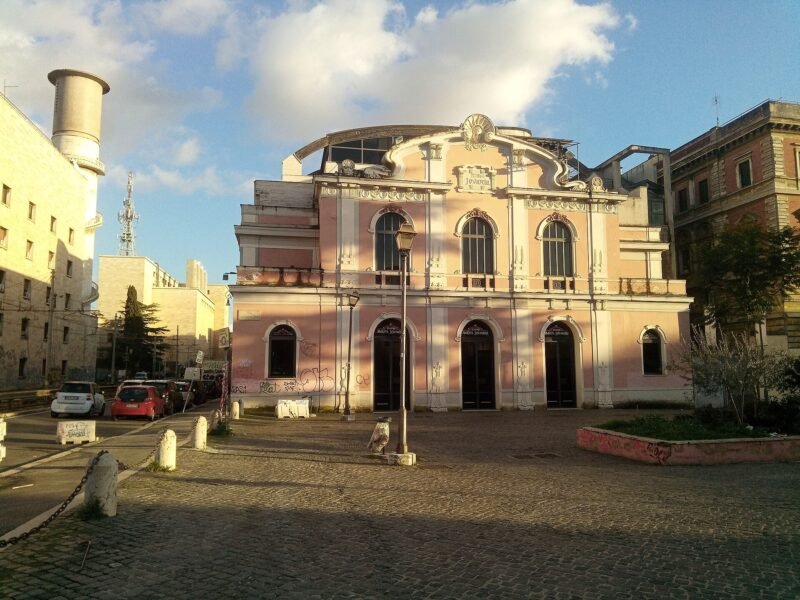
Teatro Brancaccio at Via Merulana 244 has had its present form since 1937: two foyers, a large orchestra level and two balconies, for about 2,000 seats at the time. It is one of the largest halls in Rome for drama, musicals and visual theater. The complete listing is the one for Teatro Brancaccio.
Orchestra and balconies
The hall is divided into three levels. On the orchestra level are the Poltronissima and Poltrona sections, with the Gold bands at the front. Above is the first balcony, divided into A and B, and higher still the second. For Solo the published price list covers the orchestra sections, from Poltronissima Gold to Poltrona B.
Where to sit for Solo
Here the advice is precise. Quick-change is enjoyed best from a medium distance: from the first row you see too closely and risk catching the trick, and from the back you lose the expressions. Poltronissima B, at 45 euros, is the best compromise. The Chinese shadows and the sand painting are projected large and can be seen well from anywhere in the hall. The laser works best from the center. The balconies are not served by elevators.
The Brancaccio complex
Next to the main hall are the Brancaccino, a theater of about 100 seats for contemporary drama and children's theater, a green area for training and a terrace on Via Merulana. The complex is the home of Viola Produzioni and hosts the Accademia STAP Brancaccio and the Brancaccio Musical Academy.
Something nobody tells you about Solo by Arturo Brachetti at Teatro Brancaccio, January 15-17, 2027
The show is called Solo, but Brachetti is not alone onstage. His antagonist is the shadow, played by Kevin Michael Moore, and the duel between the two is the hidden structure of the show. The shadow is the rational side, the one that would like to bring the dreamer back down to earth: every time Arturo opens a door onto fantasy, the shadow tries to close it. The final battle of lasers is not a special effect placed at the end, it is the resolution of a conflict that runs through the whole evening.
The second thing nobody mentions is that behind a one-man show there is a team. A costume change of a few seconds requires costumes built on purpose, with fastenings and layers designed to come off in the right order, and hands offstage that know exactly where to put each piece. Brachetti has a storeroom of more than 200 costumes, and each one is a small mechanism. The audience applauds the performer, and rightly so, but the precision of Solo is also the work of people you don't see.
The verdict: Solo is not a show for children that adults also enjoy. It is a show for adults, with the mother's room and the childhood pensierini, that children can watch with pleasure. The difference can be felt, and it makes Solo more than a variety show.
Dates, times and prices of Solo at the Brancaccio
Solo by Arturo Brachetti plays at Teatro Brancaccio on Friday, January 15 and Saturday, January 16, 2027 at 21:00 and on Sunday, January 17 as a matinee, at 16:00 according to the artist's calendar.
The price list
The theater publishes these full prices: Poltronissima Gold 65 euros, Poltronissima A 55 euros, Poltronissima B 45 euros, Poltrona A 39 euros, Poltrona B 29 euros. The show lasts 90 minutes.
Box office
The Brancaccio box office, at Via Merulana 244, is open Tuesday to Saturday from 16:00 to 19:00. On Sunday it opens at show time, and on Monday it is closed. The contact address is botteghino@teatrobrancaccio.it.
Official channels
The theater's rules list as official channels the website teatrobrancaccio.it, the theater box offices, the official call center and authorized points of sale. Tickets are named, and the theater warns that those bought through unauthorized channels may not give access to the hall.
Exchanges and refunds
Tickets cannot be exchanged or refunded, except in case of cancellation of the show or legal provisions. For groups, companies and schools the Brancaccio has a dedicated promotions office.
How to get to Teatro Brancaccio for Solo
Teatro Brancaccio is on Via Merulana, in the Esquilino, less than a kilometer from Termini station: the nearest stop is Vittorio Emanuele on metro line A, and the alternative is Cavour on metro line B.
By metro
From the Vittorio Emanuele stop you come out onto Piazza Vittorio and in a few minutes reach Via Merulana. Cavour, on line B, is convenient for those arriving from the Colosseum or from Monti, with a longer walk. From Termini the walk passes by Santa Maria Maggiore.
By bus
On Via Merulana, at the Merulana/Brancaccio and Merulana/Mecenate stops, lines 16, 75, 714, 717 and C3 run. At the intersection with Via Labicana lines 3, 53, 85, 87, 186, 571, 810 and the night line N10 also run, useful for the return after the evening shows.
By taxi
The nearest taxi stands are at Largo Brancaccio, Piazza Vittorio, Via Principe Amedeo, Via Giolitti and Via Venosta. When a full evening show lets out, the stand at Largo Brancaccio empties at once: better to move to Piazza Vittorio or to book.
By car
I advise against it. The theater lists no partner car parks, and evening parking in the Esquilino is difficult. Those coming from outside can leave the car near a metro station and continue on line A or B.
The advice I give you for visiting Solo by Arturo Brachetti at Teatro Brancaccio, January 15-17, 2027
It is best to choose the performance according to who is coming with you. With children, the Sunday matinee is the obvious choice: it ends in time for dinner and doesn't tire anyone. Among adults, Friday evening is the calmest performance, with an audience that comes straight from work and is in no hurry to leave. Saturday is the fullest evening, and also the warmest in the hall.
Arrive early. The Brancaccio rules ask you to show up an hour before, and they do not allow entry once the show has started: for a 90-minute show with no long pauses, missing the start means missing the first room of the house, which holds the key to all the others.
On site: Poltronissima B, central. And one last thing: don't try to work out how he does it. It is everyone's temptation, especially adults', and it ruins the evening. Brachetti has spent 50 years making the trick invisible. Enjoy the result, and leave the whys for the trip home.
Before the show, if you have time, take a short walk to Santa Maria Maggiore: the basilica, in the evening, is one of the most beautiful images of the Esquilino, and puts you in the right frame of mind for a theater of wonders.
House rules at Teatro Brancaccio
The rules of Teatro Brancaccio apply to all performances of Solo: arrival at least an hour early, no entry once the show has started, no photos or filming, no food in the hall.
Seats and late arrivals
You occupy only your assigned seat: for safety reasons you do not change seats, even if the one next to you is free. Reduced rates are valid only with a document proving entitlement.
Coat check and objects
The theater has a coat check and a bar. Umbrellas do not enter the hall. Bulky containers, plastic bottles over half a liter, glass, helmets, professional cameras, tripods and selfie sticks are forbidden.
Phones
Photos and filming are forbidden, with or without flash. For a show of illusions the rule makes even more sense: a flash at the wrong moment can ruin an effect for the whole hall.
Another well-known fact, yet rarely mentioned
Everyone knows Brachetti as a quick-change artist. Less remembered is that he is one of the most important directors of Italian comedy of the last 30 years: he directed all the theater shows of Aldo, Giovanni e Giacomo, including Anplagghed in 2006, which also became the film Anplagghed al cinema, co-directed by him with Rinaldo Gaspari. In 2012 and 2013 he directed Ammutta muddica, and in 2016 The Best of Aldo, Giovanni e Giacomo Live. He also appears in two films by the trio, Così è la vita and Chiedimi se sono felice, in small cameos.
And not only comic theater. Brachetti has worked for American television, with an episode of The Drew Carey Show and a few episodes of the sitcom Nikki, and in Germany he directed the Wintergarten in Berlin for two seasons. In 2013 Le Monde gave him a front-page interview.
The point that matters for those going to see him in Rome is this: Solo is the show of a man who knows how to build other people's comedy, and who builds his own with the same precision. The comic timing of the wedding in the kitchen is not improvised. It is the fruit of a craft in directing that has few equals in Italy.
The right photo to take at Solo by Arturo Brachetti at Teatro Brancaccio, January 15-17, 2027
The right photo is taken outside, under the Brancaccio sign on Via Merulana, before going in. In January it is already dark at five in the afternoon, and the lit facade of the theater, with the Solo poster, is enough on its own to tell the story of the evening. Stand on the opposite sidewalk to get the whole facade. With a bit of luck, a passing tram or bus adds movement to the image.
The second photo is for those arriving on foot from Termini: Santa Maria Maggiore lit up, seen from Piazza dell'Esquilino with the obelisk in front. It is a classic Roman image, and 10 minutes later you are in your seat.
Inside, no photos during the show: the theater's rules forbid them, and in a show of illusions a flash is also discourteous to the artist. If you want a memento of the stage, wait for the end, when the house lights come back on and the curtain is still open. A photo of the program or of the ticket, with the date of the tenth season, is the most understated souvenir.
Solo by Brachetti with children
Solo is a show for all ages, and the theater itself describes it as able to win over spectators of every age for 10 seasons: the Sunday matinee is the performance designed for families.
Rules for minors
The Brancaccio rules provide that children under 14 enter accompanied by an adult. Children under 3 enter free if they don't occupy a seat, with a document certifying their age. Admission remains at the discretion of the production.
From what age
From six or seven years old Solo works well: the costume changes, the shadows and the laser hold attention, and 90 minutes is a sustainable length. For the youngest, choose an aisle seat, so you can leave without disturbing anyone.
Accessibility at Teatro Brancaccio
Teatro Brancaccio declares barrier-free access to the orchestra level, with a ramp, an area for wheelchairs and an accessible restroom on the ground floor.
Wheelchairs and reduced mobility
For the performances organized by the operator, while available, four seats on the orchestra level are reserved for people in wheelchairs with a companion and two for people with walking difficulties. The balconies are not accessible. Seats are booked by sending the box office the required form with the requested documentation.
Visual and hearing disabilities
On request the theater reserves seats on the orchestra level for spectators with visual and hearing disabilities, and allows entry with service dogs. Solo is a very visual show with few words: for a spectator with a hearing disability it is one of the most suitable choices of the season.
Some important events that took place here in history
Teatro Brancaccio was born in January 1916 under the name Teatro Morgana, built against the embankment of the gardens of Palazzo Brancaccio, the residence of the Field-Brancaccio family, which owes its name to Isabella Field, married to Prince Brancaccio. The link between the theater and the palace is therefore physical even before it is in the name.
The decisive step is 1937, when the hall was inaugurated in its present configuration, with two foyers, a large orchestra level and two balconies for about 2,000 seats, and took the name Teatro Brancaccio. These are the years in which the hall welcomed Roman variety, which had been the natural home of Fregoli's quick-change.
In 1985 the theater became the seat of the Fondazione dell'Opera di Roma, where it stayed until 2000: 15 years of opera on Via Merulana. Then the City of Rome entrusted its direction to Gigi Proietti, until 2007. Maurizio Costanzo followed until 2010 and Stage Entertainment Italia until 2012. Since September 2012 the artistic direction has been Alessandro Longobardi's.
The most recent years are those of the transformation into a cultural hub: the Brancaccino, the green area for training, the terrace, the academies, and the Spazio Impero, inaugurated in 2014 with nine rehearsal rooms, networked with Sala Umberto and Spazio Diamante. Brachetti's return in January 2027 fits into a history made of variety, opera and grand spectacle: all the families of visual theater have passed through here.
Around the Brancaccio: Esquilino, Monti and Via Merulana
Via Merulana links two major basilicas, Santa Maria Maggiore and St. John Lateran, and the Brancaccio stands on the stretch between the two. Anyone arriving an hour early has around them one of the densest areas of history in the city.
A few steps away
On the same street are Palazzo Merulana and, a little farther on, the Auditorium of Maecenas. To the north, beyond the metro, is Piazza Vittorio with the Porta Alchemica. To the west is the Monti district.
Where to eat
Via Merulana and the nearby streets have neighborhood bars and restaurants for a quick meal before 21:00. Piazza Vittorio and its surroundings are the multiethnic Esquilino, with cuisines from half the world and modest prices. Monti, a quarter of an hour on foot away, has trattorias, osterias and wine bars, the best choice for dinner after the show. Book ahead: a full hall comes out all at once.
Who has passed through Solo by Arturo Brachetti at Teatro Brancaccio, January 15-17, 2027
On the Brancaccio stage, over its history, have appeared Totò, Anna Magnani, Aldo Fabrizi and Gigi Proietti among the actors, and Fabrizio De André, Louis Armstrong and Jimi Hendrix among the musicians. The theater itself recalls these names, and for a show like Solo they are a precise genealogy.
Totò and Fabrizi come from Roman variety and avanspettacolo, the same tradition from which Fregoli was born and which Brachetti brought back to the theater. Totò, in particular, was a master of the comic transformation of body and face: a close relative of the quick-change artist. Proietti is the closest case. A showman able to change character, voice and register in a few seconds, he directed the Brancaccio for the City of Rome until 2007 and made Via Merulana the home of popular actor-centered theater. Brachetti arrives in this hall within the same family: that of the lone artist onstage who carries a whole evening with his own versatility.
The 2026-2027 season gives an idea of who passes through here today: the musical Il Principe d'Egitto in the fall, Mrs Doubtfire in the spring, with Francesco Cicchella in another disguise role, and concerts by singer-songwriters and performers. Among them, the show of a Turin quick-change artist turned international legend is right at home.
Mid-January in Rome, the time of Solo
The performances of Solo fall on the second weekend after Epiphany, when Rome returns to its ordinary rhythm after the holidays.
The weather
January is the coldest month in Rome, with clear, damp evenings. For the walk back to the metro you need a real coat.
A Roman weekend
For those coming from out of town, Friday evening at the theater and Saturday around the city make a good combination: the museums are less crowded than during the holidays, and Santa Maria Maggiore, a few steps from the theater, can be visited at leisure.
Frequently asked questions about Solo by Arturo Brachetti in Rome
When does Solo by Arturo Brachetti play in Rome?
Solo by Arturo Brachetti plays at Teatro Brancaccio in Rome from January 15 to 17, 2027: Friday 15 and Saturday 16 at 21:00, Sunday 17 as a matinee, at 16:00 according to the artist's calendar. The theater lists 21:00 for Sunday too: the time printed on the ticket is the one that counts.
How much do tickets for Solo at the Brancaccio cost?
Tickets for Solo at Teatro Brancaccio cost 65 euros in Poltronissima Gold, 55 in Poltronissima A, 45 in Poltronissima B, 39 in Poltrona A and 29 in Poltrona B, according to the price list published by the theater. They are bought at the box office, on the theater's website and on the authorized network.
How long is Solo by Brachetti?
Solo by Arturo Brachetti lasts 90 minutes, according to the presentation by Teatro Brancaccio. The theater's rules ask you to arrive an hour early and do not allow entry once the show has started.
Is Solo by Brachetti suitable for children?
Solo by Arturo Brachetti is suitable for all ages, and the Sunday matinee is the most convenient performance for families. At the Brancaccio children under 14 enter with an adult, and children under 3 enter free if they don't occupy a seat.
Who is Arturo Brachetti?
Arturo Brachetti is a quick-change artist, actor, illusionist and director born in Turin in 1957, considered the most important performer of theatrical quick-change in the world. He is in the Guinness World Records as the fastest quick-change artist, has won the Molière award and has directed the shows of Aldo, Giovanni e Giacomo.
Who is onstage with Brachetti in Solo?
In Solo Arturo Brachetti shares the stage with his shadow, played by Kevin Michael Moore, who represents the rational side of the protagonist. Their confrontation runs through the show and ends in a battle of laser beams.
How do you get to Teatro Brancaccio?
Teatro Brancaccio, at Via Merulana 244, is reached by metro line A to Vittorio Emanuele or metro line B to Cavour, and buses 16, 75, 714, 717 and C3 run along Via Merulana. From Termini it is less than a kilometer on foot.
In closing
Among shows of wonder, few hold up to a second viewing. Solo does, because behind the costume changes there is a true story, told by a man who has made quick-change a form of autobiography. Take Poltronissima B, arrive early, and leave at home the urge to discover the trick. After 90 minutes you will step out onto Via Merulana with the feeling of having seen something that, in a few years, may no longer be seen live.
Article written by the editorial team of Tour Leader Pro, contact them for Private/Corporate/V.I.P. Tours and Experiences.
Planning a trip to Rome? The English-language guides to visiting the city are on ItalyPlanner.com.
Contact Information
Nearby
 Teatro Brancaccio100 m
- Auditorium of Maecenas100 m
- Palazzo Brancaccio200 m
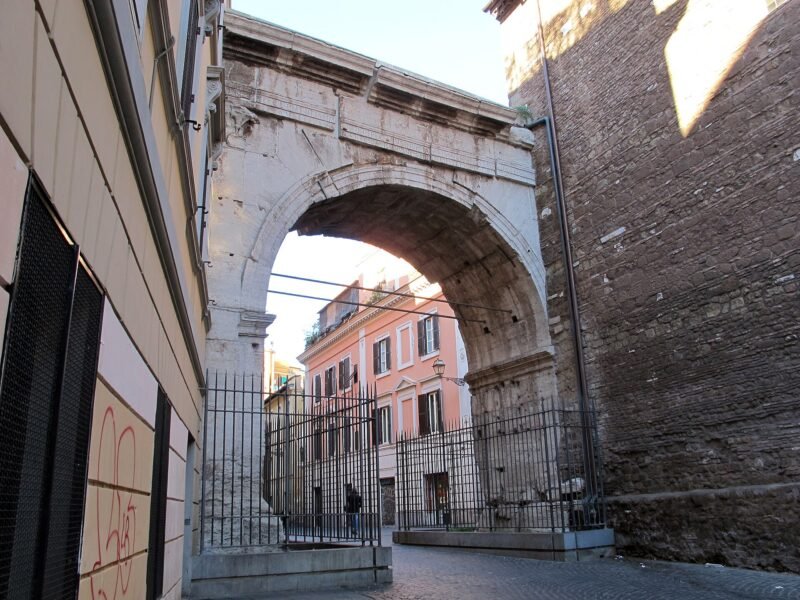
- Arch of Gallienus300 m
- Museum of Illusions in Rome300 m
- Esquiline Hill300 m
Upcoming events nearby
- The Prince of Egypt the Musical at Teatro Brancaccio, October 29 to November 15, 2026100 m
- Mrs Doubtfire the Musical at Teatro Brancaccio, March 31 to April 18, 2027100 m
- Raffaella il Musical at Teatro Brancaccio, February 10 to March 6, 2027100 m
- Francesco Renga at Teatro Brancaccio, Live Teatri 2026, May 11, 2027100 m


You might also like
- Mahler’s Third Symphony by John Neumeier at Teatro dell’Opera di Roma, February 4 to 10, 2027
- The Rake’s Progress at Teatro dell’Opera di Roma, November 27 to December 5, 2026
- Aggiungi un posto a tavola at the Teatro Brancaccio in Rome, December 10 to December 20, 2026
- Otello with Giorgio Pasotti and Giacomo Giorgio at Teatro Ambra Jovinelli, February 24 to March 7, 2027
- Lucia di Lammermoor at Teatro dell’Opera di Roma, February 21 to 28, 2027
- Educazione sentimentale with Giuseppe Fiorello at Ambra Jovinelli, February 10 to 21, 2027