Nikolai Lugansky, Schumann and Chopin at Auditorium Parco della Musica, April 14, 2027
In short. Russian pianist Nikolai Lugansky plays Schumann and Chopin for the Accademia Nazionale di Santa Cecilia's chamber season on Wednesday, April 14, 2027 at 20:00, in Sala Sinopoli at Auditorium Parco della Musica Ennio Morricone, Viale…
Russian pianist Nikolai Lugansky plays Schumann and Chopin for the Accademia Nazionale di Santa Cecilia's chamber season on Wednesday, April 14, 2027 at 20:00, in Sala Sinopoli at Auditorium Parco della Musica Ennio Morricone, Viale Pietro de Coubertin 30 (00196 Rome). The program features Robert Schumann's Two Fantasiestücke Op. 111 and Fantasy Op. 17, then Fryderyk Chopin's 24 Preludes Op. 28. The Auditorium is reached by Metro A to Flaminio and then tram 2, Flaminia/Reni or Apollodoro stops, or by bus 910 from Termini. Tickets cost €38 in the orchestra, €26 in gallery section II and €18 in section III. They are sold from the concert's official page on the Accademia website, which links to the authorized presale network, and at the box offices at the Auditorium and at Via Vittoria 6. Presale for concerts from March to the end of the season opens on January 12, 2027.
Nikolai Lugansky at Santa Cecilia: the evening
Nikolai Lugansky's recital is a single date, Wednesday, April 14, 2027 at 20:00, in Sala Sinopoli, within the Accademia Nazionale di Santa Cecilia's 2026/2027 chamber season.
Just one date
Unlike the symphonic concerts, performed three times, the chamber season's recitals take place on a single evening. If you want to hear Lugansky in Rome there's no second chance: that's the main reason not to put off buying.
The presale
The Accademia has split the season's presale into two periods: from September 10, 2026 for concerts until February 27, 2027, and from January 12, 2027 for those from March to the end of the season. Lugansky's recital falls in the second block.
Santa Cecilia's week
The recital falls on the eve of an important symphonic event: from April 15 to 17, in Sala Santa Cecilia, Daniel Harding conducts Mahler's Fifth Symphony. If you are in Rome for a few days you can combine the two evenings, one of solo piano and one of full orchestra.
The program: Schumann and Chopin
Nikolai Lugansky's program lines up two works by Robert Schumann, the Two Fantasiestücke Op. 111 and the Fantasy in C major Op. 17, and the complete cycle of Chopin's 24 Preludes Op. 28.
Schumann, Two Fantasiestücke Op. 111
The Two Fantasiestücke Op. 111 are short pieces that open the evening. Opening the recital with a short piece lets pianist and audience settle into the hall's sound before the great Fantasy.
Schumann, Fantasy Op. 17
The Fantasy in C major was written in 1836, revised before publication and published in 1839 with a dedication to Franz Liszt. It is considered one of Schumann's greatest works for solo piano and one of the central works of early Romanticism. It has three movements in free sonata form: the first passionate and rhapsodic, the second a grand rondo on a majestic march, the finale slow and meditative.
Chopin, 24 Preludes Op. 28
The 24 Preludes are short piano pieces, one for each of the 24 major and minor keys, published in 1839. Chopin wrote them between 1835 and 1839, mostly in Paris and partly in Valldemossa, Majorca, where he spent the winter of 1838-39 with George Sand and her children. The order follows the circle of fifths, with each major key followed by its relative minor.
A program built on 1839
In our view the thread of the program is clear: Schumann's Fantasy and Chopin's Preludes were both published in 1839. Two masterpieces from the same year, placed one after the other on the same evening.
The Fantasy Op. 17: Clara, Beethoven and Liszt
Schumann's Fantasy Op. 17 was born from a farewell and a monument: the first movement expresses the pain of separation from Clara Wieck, and the whole work was designed to raise funds for the Beethoven monument in Bonn.
Ruinen, Trophäen, Palmen
At the beginning of 1836 Schumann composed a piece titled Ruines, which expressed his suffering at being apart from Clara, his future wife: it became the first movement. The same year he added two more movements to contribute to the fundraising for the Beethoven monument in the composer's hometown. The original subtitles, Ruins, Trophies, Palms, changed several times and were then dropped altogether before publication.
The hidden quotation
In the coda of the first movement Schumann quotes a phrase from Beethoven's song cycle An die ferne Geliebte, To the Distant Beloved. The quotation was not declared by the composer and, it seems, was identified only in 1910. At the head of the score Schumann placed a stanza by Friedrich Schlegel about a soft sound running through all sounds, for the one who listens in secret.
Liszt and the monument
The Beethoven monument was completed mainly thanks to Liszt, who made the largest single contribution. Liszt received the dedication of the Fantasy, considered it a work of the highest kind and included it in his teaching repertoire, but never played it in public. He returned the favor in 1853 by dedicating his Sonata in B minor to Schumann.
Chopin's 24 Preludes, a complete cycle
Chopin's 24 Preludes Op. 28 are a repertoire classic today, but for decades nobody performed them complete in concert.
Bach in Majorca
In Majorca Chopin had with him a copy of Bach's Well-Tempered Clavier, and like Bach's two collections of preludes and fugues, his Op. 28 goes through all the keys, in a different order. Most of the preludes were already finished before he arrived on the island, but Chopin completed them there, as he wrote to Pleyel.
Dedications and fees
The manuscript is dedicated to the German pianist and composer Joseph Christoph Kessler. The French and English editions were dedicated to Camille Pleyel, piano maker and publisher, who had commissioned the work for 2,000 francs.
Never all together
Chopin never played more than four preludes in a single public concert, and for 25 years after his death nobody played them all in one evening. The first complete performance in recital was probably Anna Yesipova's in 1876. The first complete recording was by Ferruccio Busoni in 1915, on piano rolls, followed by Alfred Cortot's in 1926.
A new idea of the prelude
Before Chopin the prelude was an introductory piece. With Op. 28 each piece becomes an independent unit, with a specific idea or emotion: miniatures that can open other music or stand alone. Publishing them together in a single opus was a challenge to the way his time viewed small forms.
Who Nikolai Lugansky is
Nikolai Lugansky was born in Moscow on April 26, 1972 to parents who were research scientists. He is one of the best-known Russian pianists of his generation and teaches at the Moscow Conservatory.
A precocious talent
At five, before he could read music, he played a Beethoven sonata learned entirely by ear. He studied at the Central Music School and at the Moscow Conservatory with Tatiana Kestner, Tatiana Nikolayeva and Sergei Dorensky.
The competitions
In the 1980s and early 1990s he won prizes at many competitions: first prize at the All-Union competition in Tbilisi in 1988, the silver medal at the Bach Competition in Leipzig the same year and second prize at the Rachmaninoff Competition in Moscow in 1990. His most important recognition is the silver medal at the 1994 Tchaikovsky Competition, in an edition in which first prize was not awarded.
The recordings
He began recording for Melodiya and Vanguard Classics, and the Tchaikovsky winners' gala concert was released by Pioneer Classics. Then came Warner Classics, Erato, Pentatone, Onyx, Deutsche Grammophon and Naïve, and since 2018 he has had an exclusive contract with Harmonia Mundi. He has won three Diapason d'Or awards, in 2000, 2001 and 2002, the German Record Critics' Award in 2003, three Echo Klassik awards and the BBC Music Magazine Award in 2011.
Partners and conductors
He has played with Vadim Repin, Alexander Kniazev, Anna Netrebko, Joshua Bell, Yuri Bashmet, Mischa Maisky and Leonidas Kavakos, and with conductors such as Riccardo Chailly, Christoph Eschenbach, Valery Gergiev, Kurt Masur, Mikhail Pletnev, Gennady Rozhdestvensky, Tugan Sokhiev and Evgeny Svetlanov.
Honors
He has been a People's Artist of Russia since 2013 and an honorary member of the Russian Academy of Arts since 2012, and in 2016 he received the International Sergei Rachmaninoff Award.
A curious fact about Nikolai Lugansky, Schumann and Chopin at Auditorium Parco della Musica, April 14, 2027
The most surprising curious fact in Nikolai Lugansky's life concerns his childhood. At five, before he had even learned to read music, the future pianist played a Beethoven sonata he had learned entirely by ear, just by listening. His parents were research scientists, not musicians, and their son's calling showed itself before any lessons. It's a detail that ties in well with the Rome program: Schumann's Fantasy, which Lugansky plays on April 14, was written precisely to honor Beethoven, and hides in the coda of its first movement a Beethoven quotation that went unnoticed for decades.
The second curious fact concerns Chopin's Preludes. Today performing the complete Op. 28 in a single evening is a habit of great pianists, but Chopin never played more than four in a public concert, and for a quarter of a century after his death nobody offered them complete. Hearing them all in a row, as the Sala Sinopoli audience will, is a relatively recent practice: the first complete performance in recital probably dates back to 1876, with pianist Anna Yesipova.
Sala Sinopoli, the chamber music hall
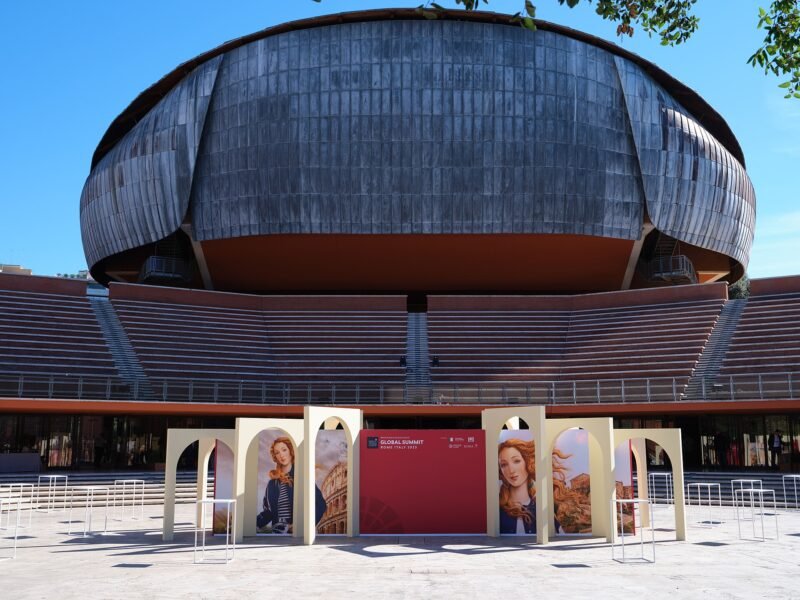
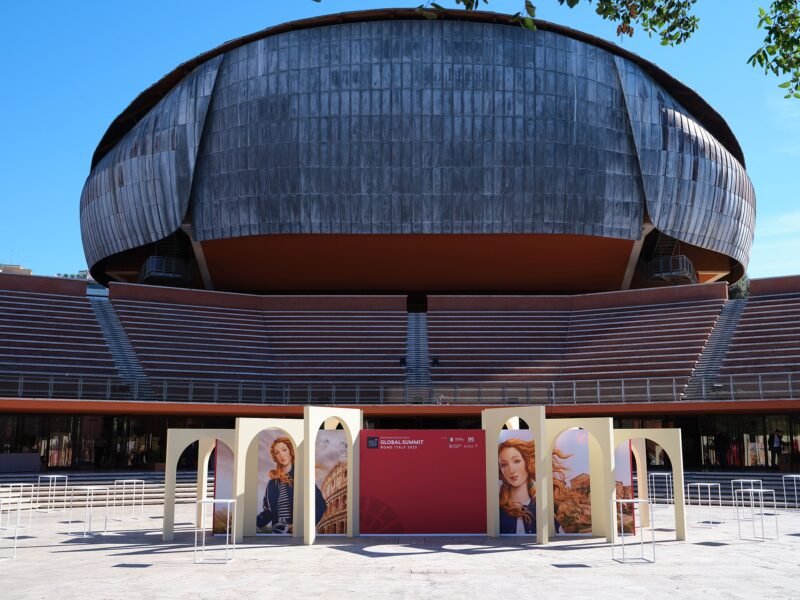
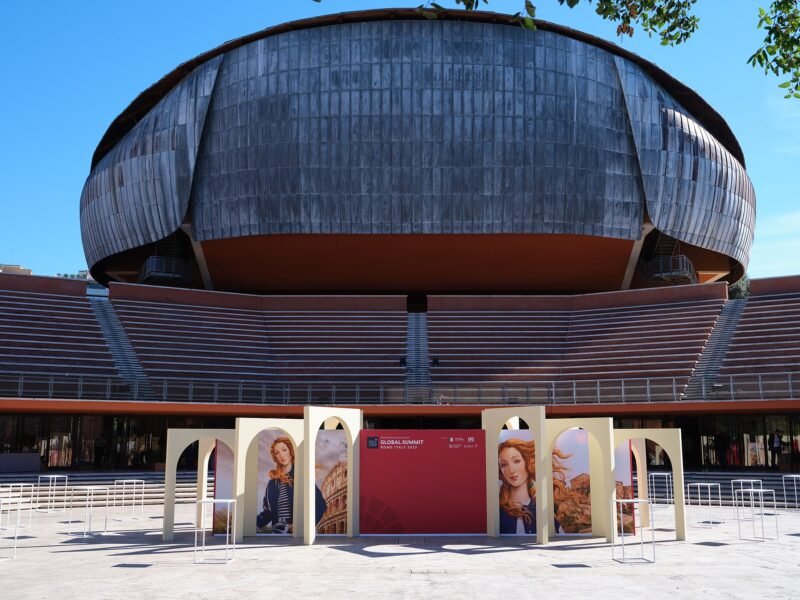
Sala Sinopoli is the middle-sized of the Auditorium Parco della Musica's three halls, with 1,133 seats, named after conductor Giuseppe Sinopoli. It was the first to open, on April 21, 2002.
An adaptable space
Sala Sinopoli's strength is the adaptability of its interior to the number of performers and the acoustic behavior required. The interior is plainer than the main hall's, with perpendicular walls and ceiling, and a gallery runs along three of its four sides.
The opening with Petrassi
At the opening, in April 2002, Goffredo Petrassi wanted to be present and heard in this hall the world premiere of his Ouverture da concerto for orchestra, written in 1931. The smallest hall of the complex now bears his name.
Why a recital in an intimate hall
A piano recital lives on details: the pedal, the half voices, the pianissimos of the shortest Preludes. In a mid-size hall these details reach the gallery too, and the audience gets the feeling of an almost private concert, even inside one of the largest music complexes in Europe.
Something nobody tells you about Nikolai Lugansky, Schumann and Chopin at Auditorium Parco della Musica, April 14, 2027
What is rarely said about the Fantasy Op. 17 is that its dedicatee himself considered it almost unsuited to the concert hall. Franz Liszt was one of the few pianists able to tackle the score's difficulties, in particular the fast, simultaneous leaps in opposite directions in the coda of the second movement. He played it privately for Schumann and included it in his teaching repertoire, but never performed it in public. When Lugansky reaches that coda, the Sala Sinopoli audience will hear one of the passages the greatest virtuoso of the 19th century preferred to keep to himself.
The second thing concerns punctuality. The Accademia warns that its concerts start at the stated time and that latecomers don't enter the hall, but can follow the concert from the listening rooms while seats last. The program opens with the short Fantasiestücke: if you're a few minutes late you risk missing the whole first piece. The third is practical: in a piano recital every cough can be heard, and unwrapping your throat lozenges before the start is a courtesy to the whole hall.
My tip for Nikolai Lugansky, Schumann and Chopin at Auditorium Parco della Musica, April 14, 2027
My advice is to listen to Chopin's 24 Preludes in full at least once before the evening, following the order: major key, relative minor, and so on around the circle of fifths. Some last less than a minute, others are small dramas. Arriving in the hall knowing the sequence lets you appreciate Lugansky's choices, as he has to turn 24 miniatures into a single narrative arc. If you want a historical starting point, look for Alfred Cortot's 1926 recordings, among the first complete sets ever recorded.
The second tip concerns your seat. In Sala Sinopoli the gallery runs along three sides: for a piano recital, a seat on the keyboard side lets you see the pianist's hands, which isn't always possible from the central orchestra. In our view gallery section II, at €26, is the best compromise between price, view and sound. The third concerns timing: with a 20:00 start, arriving at 19:30 lets you collect your tickets and sit down without rushing.
Tickets for Lugansky at Santa Cecilia: prices and sales points
Tickets for Nikolai Lugansky's recital cost €38 in the orchestra, €26 in gallery section II and €18 in gallery section III. The only authorized sellers are the Auditorium box office, the one at Via Vittoria 6 and the sales points of the presale network authorized by the Accademia.
The box offices
The Auditorium box office is in the greenhouse space. The one at Via Vittoria 6 is near Via del Corso and Piazza del Popolo. Opening hours are listed on the Accademia website.
Online
To buy online, start from the concert's official page, with the purchase button below the date, which takes you to the event page on the authorized network. The Accademia warns that it is not responsible for markups applied by unauthorized resellers.
Young people and information
Discounts for young people are listed at santacecilia.it/giovani. For questions about seats and reductions there's the infoline 06 8082058, as well as info@santacecilia.it and biglietteria@santacecilia.it.
How to get to the Auditorium for the recital
For Lugansky's recital at Auditorium Parco della Musica the simplest combination is Metro A to Flaminio and then tram 2 to the Flaminia/Reni or Apollodoro stops. Alternatively there are buses 910, 53, 982 and 168.
From the center by tram
Tram 2 leaves from Piazzale Flaminio and runs along Via Flaminia toward Piazza Mancini. From the Flaminia/Reni and Apollodoro stops you walk to Viale Pietro de Coubertin through the Olympic Village in a few minutes.
From Termini by the 910
If you're staying near the station or arriving by train you can take the 910 in Piazza dei Cinquecento: it takes you to the Auditorium with no changes.
Other lines and cars
The 53 goes via Piazza Mancini, the 982 serves Viale XVII Olimpiade area and the 168 comes from Tiburtina station. For evening times, use the ATAC route planner. In front of the Auditorium, Viale Pietro de Coubertin is closed to cars, and the complex's paid parking has limited spaces.
Another well-known fact, yet one rarely mentioned
It's well known that Nikolai Lugansky's name is tied to Rachmaninoff's: from second prize at the Rachmaninoff Competition in Moscow, in 1990, to the International Sergei Rachmaninoff Award in 2016. Less often mentioned is his long activity as a chamber musician and teacher: he has played with violinists such as Vadim Repin, Joshua Bell and Leonidas Kavakos, with cellists Alexander Kniazev and Mischa Maisky, with violist Yuri Bashmet, even with soprano Anna Netrebko, and he teaches at the Moscow Conservatory, the school where he trained with Tatiana Nikolayeva.
A second rarely mentioned fact concerns the 1994 Tchaikovsky Competition. Lugansky won the silver medal, but that year first prize was not awarded: his second place was, in effect, the highest recognition in the piano section. The winners' gala concert was recorded and released on disc and on LaserDisc, a format that by itself tells how much time has passed. Since then Lugansky's career has developed far from the logic of competitions, on concert stages and in the recording studio.
How to plan the evening
For the Wednesday, April 14 recital it's best to arrive at the Auditorium half an hour before 20:00: Sala Sinopoli is smaller than Santa Cecilia, but the cloakroom and security checks still take a few minutes.
Before the concert
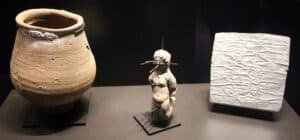
The foyer shared by the halls has a bar, a café and a large shop of music books and records. From the terrace between Sala Santa Cecilia and Sala Sinopoli you can see the remains of the Roman villa discovered during construction, whose finds are displayed in a small museum beneath the cavea.
Length
The official page doesn't give the length of the recital or the position of the interval. A program with the Fantasy and the complete Preludes generally fills a whole evening.
After the concert
On the way out, the cavea named after Luciano Berio is the natural place to wait for the audience to disperse before heading to the tram.
The right photo to take at Nikolai Lugansky, Schumann and Chopin at Auditorium Parco della Musica, April 14, 2027
The right photo, for a piano recital, is taken before the pianist walks on: the big grand piano alone on the Sala Sinopoli stage, with the hall filling up around it. It's a simple image that tells the solitude of a recital better than any shot during the concert. During the performance your phone stays off, as the Accademia asks.
Outside, in mid-April, at 19:30 there's still daylight: from the cavea Renzo Piano's three halls, with the lead roofs reflecting the sunset sky, make the most recognizable image of the Auditorium. If you arrive early you have time to photograph them from different points on the terrace.
For a less predictable image, try the remains of the Roman villa seen from the terrace between Sala Santa Cecilia and Sala Sinopoli: ancient brick and contemporary architecture in the same shot. During the final applause, without flash, you can photograph Lugansky taking his bow: it's the only moment when doing so disturbs no one.
Some important events that happened here in history
Long before the Auditorium, a Roman villa from the 3rd century BC stood on this ground, built where there had been a small archaic farm from the 6th century BC. The remains emerged during construction and forced Renzo Piano to revise the design, shifting two of the three halls westward. The finds are now in the museum beneath the cavea.
The modern story starts with the demolition of the Augusteo, in 1936, which left Rome without a symphony hall for more than 60 years. In 1992 the city council chose the Olympic Village area, and in 1993 Piano won the competition. On April 21, 2002 Sala Sinopoli itself opened, the hall of Lugansky's recital, with Goffredo Petrassi present at the world premiere of his 1931 Ouverture da concerto. On December 21, 2002 Sala Santa Cecilia was inaugurated, with the Accademia's orchestra conducted by Myung-Whun Chung.
Since 2003 the Auditorium has been the permanent home of the Accademia Nazionale di Santa Cecilia's season, which also houses its Bibliomediateca and the Museum of Musical Instruments there. Since 2006 the complex has hosted the Rome Film Fest and since 2020 it has borne the name of Ennio Morricone.
Who has passed through Nikolai Lugansky, Schumann and Chopin at Auditorium Parco della Musica, April 14, 2027
Sala Sinopoli was inaugurated in the presence of Goffredo Petrassi, who heard there the premiere of a score of his from 1931. The hall bears the name of Giuseppe Sinopoli, conductor and composer, and the cavea that of Luciano Berio, who was then president of the Accademia. Over the years the Accademia's music directors have passed through the Auditorium, Antonio Pappano and Daniel Harding, who opened the 2026/2027 season with Wagner's Siegfried.
Among the pianists of the current season are Evgeny Kissin and András Schiff, stars of a duo concert in November. Among the conductors, Kirill Petrenko, on the podium for the concert with Benjamin Bernheim. Lugansky's career includes Tatiana Nikolayeva, his teacher, and conductors such as Valery Gergiev, Kurt Masur, Mikhail Pletnev and Tugan Sokhiev. On April 14, in the same hall that welcomed Petrassi, Schumann, Clara Wieck, Liszt and Chopin pass through.
Accessibility and kids
For Accademia concerts, people with walking disabilities who hold the Disability Card get a 15% reduction on two tickets, to be bought at the box office. Wheelchair users pay €10 and their companion enters free, while dedicated spaces last.
Booking
For people who cannot walk, booking is required, from 15 days before the concert until the day before, at 06 8082058 or biglietteria@santacecilia.it. For the April 14 recital, bookings open on March 30.
Arriving at leisure
If you have mobility difficulties, arrive with some margin and ask staff right away for the easiest route to Sala Sinopoli: the complex is open, and between entrances you walk outdoors.
With kids
For a kid who studies piano, hearing Chopin's complete Preludes live is a rare formative experience: many of those pieces are in the study repertoire. For young children a full recital is still demanding.
The Auditorium's neighborhood
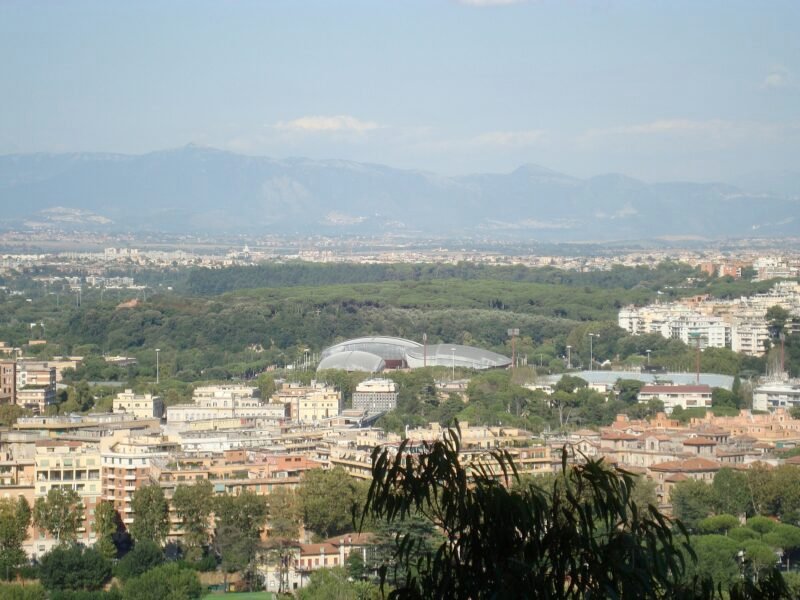
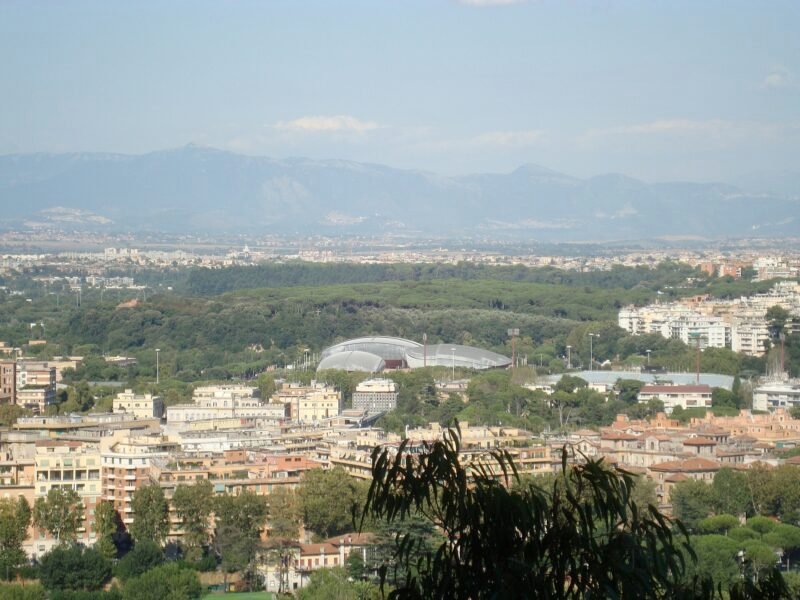
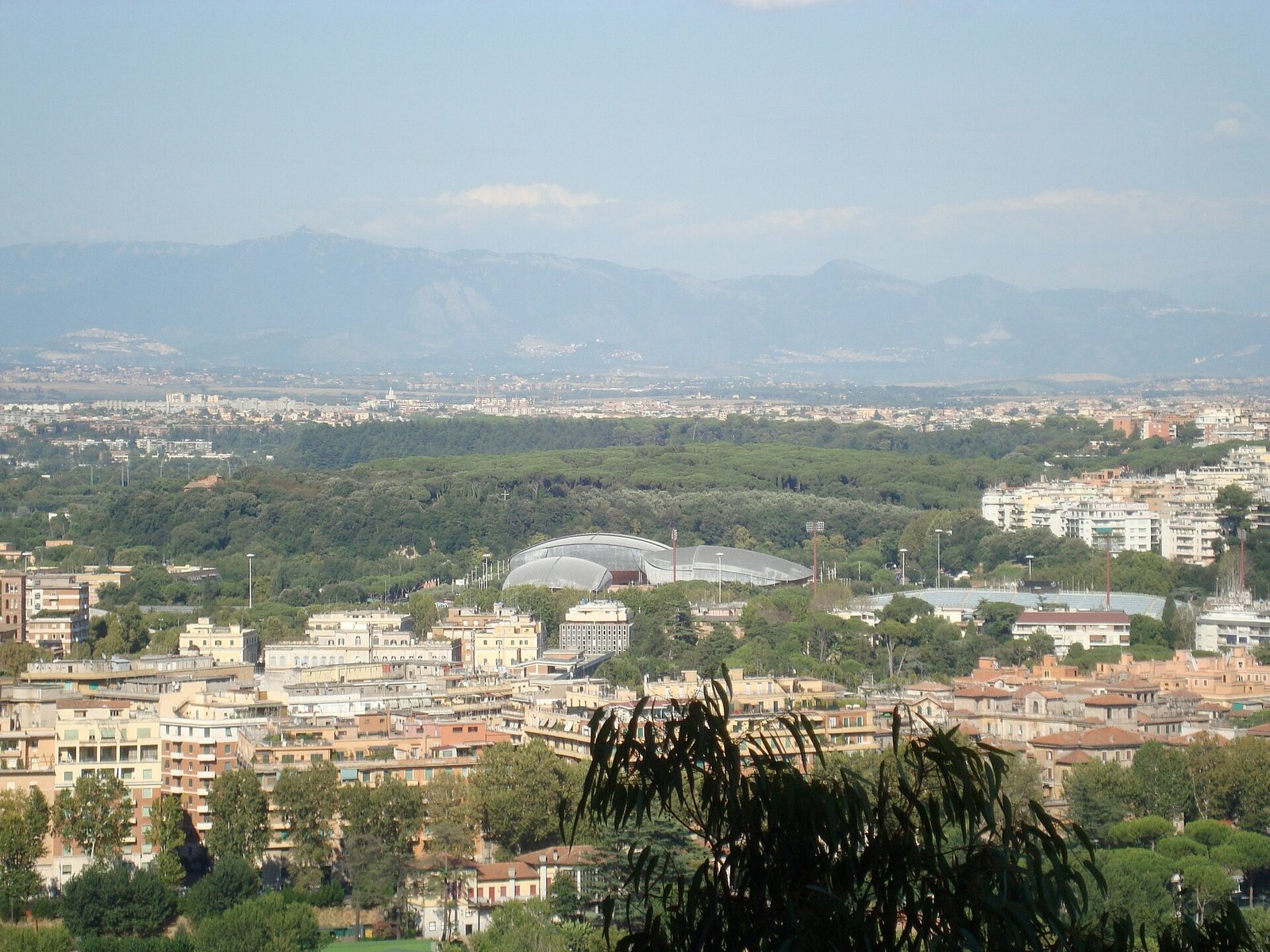
The Auditorium stretches between Villa Glori, the Olympic Village, the Corso di Francia viaduct and Viale Maresciallo Pilsudski, in a part of Rome marked by 20th-century architecture and greenery.
MAXXI a few steps away
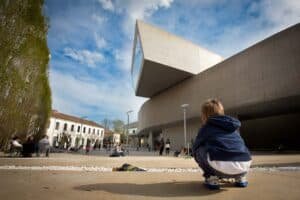
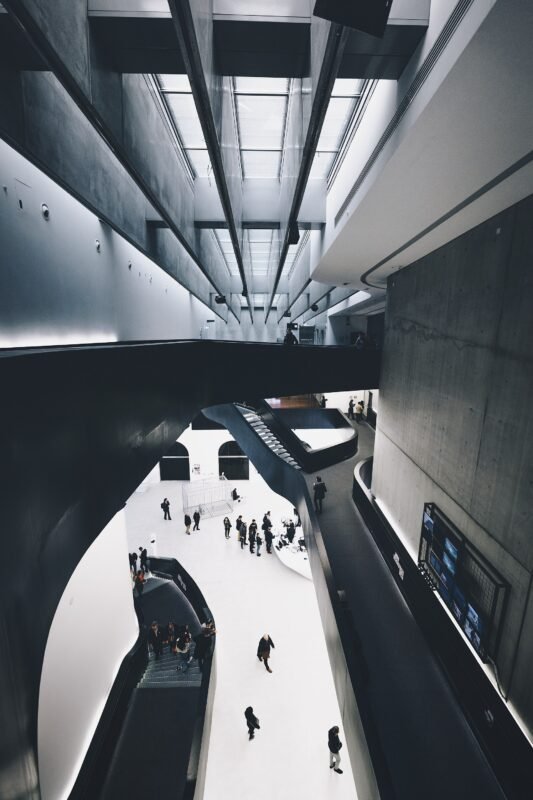
Toward Via Guido Reni, a few minutes' walk away, is Zaha Hadid's MAXXI: together with the Auditorium it forms Rome's best-known pair of contemporary buildings.
The river and the bridges
Going down toward the Tiber you come to Ponte della Musica, the footbridge between Flaminio and Foro Italico. A little farther north, Milvian Bridge is one of the liveliest evening spots in the north of the city.
Back toward the center
Tram 2 takes you back to Piazzale Flaminio, at the entrance to Villa Borghese: an afternoon on the Pincio and then the tram to the concert is the most relaxed combination.
Where to eat before or after the recital
Inside the Auditorium, the bar, the foyer café and the bar-restaurant, which also has a street entrance, solve a quick dinner for people coming straight from work.
Olympic Village and Flaminio
In the streets between the Olympic Village, Via Flaminia and Piazza Mancini there are pizzerias, trattorias and bars frequented mostly by local residents. On a Wednesday it's best to eat before the concert, with a booking.
After the concert
After the recital the widest choice is in Ponte Milvio, where places stay open late even on weekdays. Toward Piazzale Flaminio and Piazza del Popolo you enter the historic center's range of options.
Mid-April in Rome
The April 14 recital falls in the heart of the Roman spring, with long days and mild evenings, and opens a busy week for the Accademia di Santa Cecilia.
The weather
In mid-April Rome's evenings are generally pleasant, but the Auditorium's open, breezy terrace can be cool when you come out: a light layer is useful.
A week of concerts
After Lugansky's recital, from April 15 to 17, Daniel Harding conducts Mahler's Fifth in Sala Santa Cecilia, and the following week, from April 22 to 24, Beethoven's Ninth. If you love the Romantic repertoire you can build 10 days of music around the Auditorium.
Frequently asked questions about Nikolai Lugansky in Rome
When does Nikolai Lugansky play Rome?
Nikolai Lugansky plays Rome on Wednesday, April 14, 2027 at 20:00, in Sala Sinopoli at Auditorium Parco della Musica Ennio Morricone, for the Accademia Nazionale di Santa Cecilia's chamber season. It is a single-date recital.
What does Lugansky play at Santa Cecilia?
Nikolai Lugansky's program at Santa Cecilia includes Robert Schumann's Two Fantasiestücke Op. 111 and Fantasy Op. 17 and Fryderyk Chopin's 24 Preludes Op. 28, performed complete. The Fantasy and the Preludes were both published in 1839.
How much are tickets for Lugansky?
Tickets for Nikolai Lugansky's recital cost €38 in the orchestra, €26 in gallery section II and €18 in gallery section III. There are discounts for young people, listed on the page santacecilia.it/giovani.
Where do you buy tickets?
Tickets for Lugansky at the Auditorium are sold from the concert's official page on the Accademia di Santa Cecilia website, which links to the authorized presale network, or at the Auditorium box office and the one at Via Vittoria 6. Sales for the spring concerts open on January 12, 2027.
Who is Nikolai Lugansky?
Nikolai Lugansky, born in Moscow in 1972, is a Russian pianist trained at the Moscow Conservatory with Tatiana Nikolayeva. He won the silver medal at the 1994 Tchaikovsky Competition, when first prize was not awarded, and has recorded exclusively for Harmonia Mundi since 2018.
How do you get to Auditorium Parco della Musica?
Auditorium Parco della Musica, at Viale Pietro de Coubertin 30, is reached by Metro A to Flaminio and then tram 2 to the Flaminia/Reni or Apollodoro stops. From Termini there's bus 910, with no changes.
Can you go in after the concert has started?
At Accademia di Santa Cecilia concerts, latecomers don't enter the hall: they can follow the recital from the listening rooms, while seats last. For Lugansky's recital it's best to be at the Auditorium at least half an hour before 20:00.
My final tip on Nikolai Lugansky at Santa Cecilia
Nikolai Lugansky's recital is, in our view, one of the most complete piano events of Santa Cecilia's chamber season: Schumann's Fantasy, with its love story and its homage to Beethoven, and Chopin's complete Preludes, a cycle its own author never dared present in full. My advice is to buy tickets as soon as the January sale opens, choose a gallery seat on the keyboard side and arrive early, knowing that the doors close at the start time. If you're staying in Rome for a few days you can round off the week with Mahler's Fifth conducted by Harding.
Article written by the editorial team of Tour Leader Pro, contact them for Private/Corporate/V.I.P. Tours and Experiences.
Planning a trip to Rome? The English-language guides for visiting the city are on ItalyPlanner.com.
Contact Information
Nearby
 Museum of Musical Instruments (MUSA)100 m
- Auditorium Parco della Musica100 m
- Villa Glori500 m
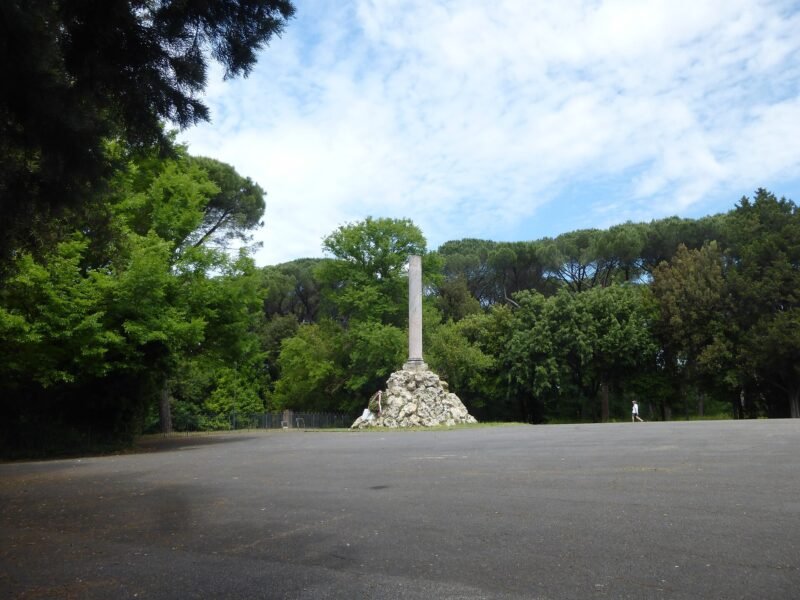
- Fountain of Anna Perenna500 m
- MAXXI – National Museum of 21st Century Arts700 m
- Flaminio700 m
Upcoming events nearby
- Roma Jazz Festival 2026, November 1 to 24 at the Auditorium and Casa del Jazz100 m
- Evgeny Kissin and András Schiff at Santa Cecilia, November 9, 2026100 m
- Roma Gospel Festival 2026 at Auditorium Parco della Musica, December 13, 2026 to January 1, 2027100 m
- Santa Cecilia 2026/2027 Concert Season at Auditorium Parco della Musica, October 21, 2026 to June 5, 2027100 m



You might also like
- Daniel Harding Conducts Ravel and Debussy at Auditorium Parco della Musica, April 8, 9 and 10, 2027
- Argerich and Capuçon for Beethoven at Auditorium Parco della Musica, April 6, 2027
- Gustavo Gimeno and Frank Peter Zimmermann at Auditorium Parco della Musica, April 1, 2 and 3, 2027
- Manfred Honeck Conducts Beethoven at Santa Cecilia: March 25, 26 and 27, 2027
- Grigory Sokolov at Santa Cecilia, March 22, 2027
- Charles Dutoit and Martha Argerich at Auditorium Parco della Musica, March 18, 19 and 20, 2027