La Traviata by Giuseppe Verdi at St. Paul’s Within the Walls, through December 19, 2026
In short. La Traviata by Giuseppe Verdi is staged at St. Paul's Within the Walls, with entrance at Via Nazionale 16/A in Rome, in the season that the Rome city tourism portal gives as June 13 to December 19, 2026.

La Traviata by Giuseppe Verdi is staged at St. Paul's Within the Walls, with entrance at Via Nazionale 16/A in Rome, in the season that the Rome city tourism portal gives as June 13 to December 19, 2026. The performances follow the calendar published by the organizer, Opera e Lirica: doors open at 20:00, the show starts at 20:30 and ends at 22:30, with a 10-minute intermission. The church is a few minutes' walk from Termini Station. Tickets start at 25 euros, taxes included, and are bought on the official Opera e Lirica website, where for each evening you choose the date and seat category. Children under seven and people with disabilities attend free, until the dedicated seats run out. Tickets are non-refundable.
Language: opera sung in its original language; no English surtitles are announced, so check with the theater.
A Traviata in a 19th-century Anglican church, with Burne-Jones's mosaics behind the singers. Anyone who turns up their nose, thinking of the opera house, is half right: this isn't a grand-theater production, and it doesn't pretend to be. It's something else, an opera told up close, with the singers a few yards from the audience and a chamber orchestra. For those visiting Rome who want to hear Verdi without committing a whole evening to a big theater, it's an honest formula. For those looking for the definitive Traviata, the Teatro dell'Opera season remains the reference.
La Traviata at St. Paul's Within the Walls: what you see
Opera e Lirica presents Giuseppe Verdi's Traviata with opera singers and live orchestra, at St. Paul's Within the Walls. The stated running time is about two hours. The official title is La traviata, melodrama in three acts, with libretto by Francesco Maria Piave and music by Giuseppe Verdi.
The published cast
The program published by the organizer lists: Aleksandra Buczek as Violetta Valéry. Emil Alekperov as Alfredo Germont. Cristian Alderete as Giorgio Germont. Anastasiia Demchenko in the roles of Flora Bervoix and Annina. Andrea Pecci as Gastone, Viscount of Letorières. Andrea Scorsolini as Baron Douphol. Matteo Nardinocchi as Marquis d'Obigny. Giuseppe Trovato as the commissionaire. The cast is completed by the chorus, which plays servants and gentlemen friends of Violetta and Flora, picadors and matadors, gypsies.
Direction and production
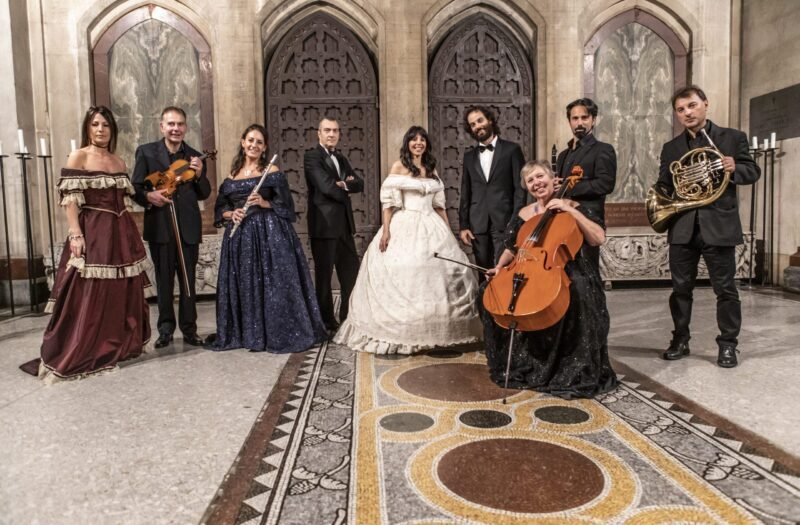
The orchestra is conducted by Maestro Elvin Dhimitri. The artistic direction is by Giusi Cuccaro. Sets and costumes are by Bolero Sartoria. The Opera e Lirica Orchestra plays, in a lineup of strings, winds and piano. As in any production with performances all year long, the cast may vary from evening to evening: the reference is the show's official page.
A production in an intimate format
Don't expect the orchestra pit and the curtain. The space is that of the nave, with the audience arranged in rows and the action taking place in front of the apse. The organizer insists on the closeness between artists and audience and recommends the front rows for experiencing the opera up close. That's the real strength of the evening.
La Traviata: Verdi's opera in brief
La Traviata is an opera in three acts by Giuseppe Verdi with a libretto by Francesco Maria Piave, first staged on March 6, 1853 at the Teatro La Fenice in Venice. For the Venetian audience Verdi chose an original and provocative theme, basing the story on La dame aux camélias by Alexandre Dumas fils, in the 1852 stage version drawn from the novel.
A title that was supposed to be a name
The opera was originally called Violetta, like the protagonist. The final title, La traviata, shifts the attention from the character to society's moral judgment of her: a choice that says a lot about the opera. The organizer calls it the most performed opera in the world.
The plot
Violetta is a Parisian courtesan who leads a life free of any ties. The love of Alfredo, a young man from a good family, overwhelms her against her own expectations. He warns her to take care of herself, because the life she leads has made her ill with consumption. Violetta gives up her position and her independence and leaves Paris to live with Alfredo in the country. His father, Giorgio Germont, reaches her and asks her to end the relationship, which compromises the family's honor and prevents the marriage of Alfredo's sister. Alfredo discovers the truth when it's too late: Violetta, consumed by the illness, dies in his arms.
Marie Duplessis, the real woman
Behind Violetta there is a person who really existed: the courtesan Marie Duplessis, with whom Dumas fils himself had had a tormented relationship. She died at 23, and the writer gathered her memory in La Dame aux camélias, from which La Traviata is born. Knowing this before going in changes how you hear the third act.
Who organizes it: Opera e Lirica
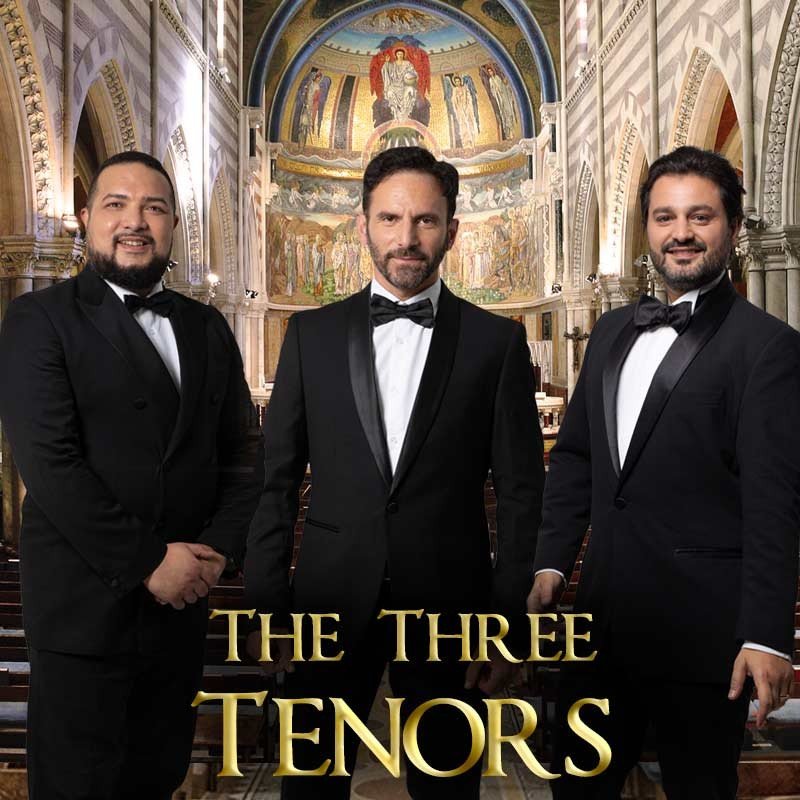
Opera e Lirica Srl is an events agency with offices in Rome and Sorrento, which produces concerts and opera shows aimed largely at visitors. At St. Paul's Within the Walls it offers, besides La Traviata, the concert The Three Tenors in Rome and other programs.
A model for travelers
The formula is clear: shows repeated throughout the season, short running time, no dress code, affordable prices, numbered seats by category. The organizer's website is multilingual and designed for people booking from far away. It's a different model from that of the traditional theater, and should be judged for what it promises.
The conductor and the artistic direction
Elvin Dhimitri, listed as conductor of La Traviata, also appears as first violin in the Three Tenors concerts in the same church. Giusi Cuccaro signs the artistic direction. It's a stable team, which works in that space continuously: a concrete advantage for the sound, because the acoustics of a church are learned with repeat performances.
St. Paul's Within the Walls: the venue
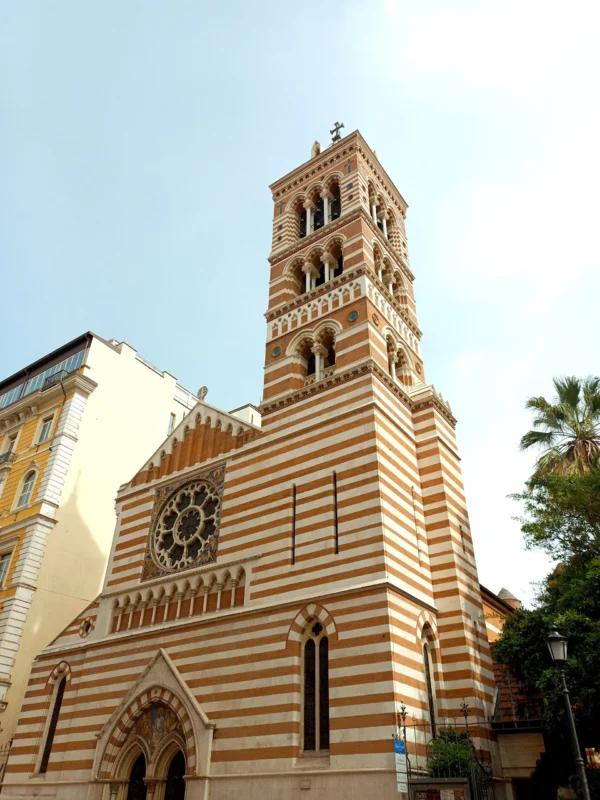
St. Paul's Within the Walls, in Italian Chiesa di San Paolo entro le Mura, is an American Episcopal church on Via Nazionale, in the Castro Pretorio district. It was the first non-Catholic church built in Rome after the Unification of Italy.
How it came about
It was wanted by Reverend Robert J. Nevin, who bought the land and obtained from the Italian government the necessary authorizations. Until then the American Episcopal community had met at the seat of the American Legation to the papal court. The project was entrusted to the English architect George Edmund Street, and the church was built between 1873 and 1880.
The architecture
The style is Neo-Romanesque and Neo-Gothic, with the apse in Neo-Byzantine forms. Outside, red bricks from Siena alternate with travertine. On the facade a rose window bears the symbols of the Evangelists. The bell tower houses a ring of 23 bells cast in 1876. Street also designed Rome's other Anglican church, All Saints, for British worshippers.
The Burne-Jones mosaics
The interior has three naves, with stained-glass windows that tell the life of St. Paul. In the apse are the mosaics made from designs by Edward Burne-Jones, with scenes from the Book of Revelation: in the half-dome Christ enthroned in the heavenly Jerusalem, flanked by five archangels, Uriel with the sun, Michael in armor, Gabriel with the lily, Chamuel with the cup, Zophiel with the moon.
The organ
In the church is a Mascioni organ from 1962, opus 833, with electric action, with 41 stops on three manuals and pedal. It replaces an 1878 instrument by the American firm Hilborne L. Roosevelt, moved to the church of Gesù Bambino at Sacco Pastore.
How to get to St. Paul's Within the Walls for La Traviata
The organizer gives the entrance at Via Nazionale 16/A and stresses that the church is a few minutes' walk from Termini Station. It's the simplest route for those staying in the area or arriving on regional trains.
On foot
The church is recognizable from afar by the red bricks alternating with travertine and by the bell tower. From Termini and from Piazza della Repubblica you get there on foot in a few minutes.
By public transportation
To choose the best combination from your hotel, the ATAC route planner gives the up-to-date solution. Keep in mind that the show ends at 22:30: it's best to check the route back beforehand too.
By car
The organization doesn't indicate dedicated parking. In a central area like Via Nazionale, in the evening, a car is more of a problem than a solution.
Tickets for La Traviata at St. Paul's Within the Walls
Tickets start at 25 euros, taxes included, and are bought on the official Opera e Lirica website, choosing date and seat category. The organizer notes that shows are often sold out and recommends booking in advance.
The seat categories
The official information speaks of a category B, with back-row seats, at 25 euros, and of a category A with center seats, whose commercial value is 35 euros. The organizer recommends the front rows for the best view.
The Roma Pass discount
Roma Pass holders are entitled to a discount of 10 euros in the formula indicated by the organizer: by buying a 25-euro ticket in category B you sit in the center seats of category A.
Free admission and conditions
Children under seven and people with disabilities attend free, until the dedicated seats run out, according to the terms and conditions published on the website. Tickets are non-refundable: before buying, check the date and time carefully.
How to organize the evening of La Traviata
The show starts at 20:30 and ends at 22:30. It's a schedule that leaves two possibilities: dine before, early, or after, late. For those traveling with children or with an early alarm the next day, the first is the better choice.
When to arrive
The organizer suggests arriving at least 30 minutes before the start to secure the best seat in your category. Doors open at 20:00. The advice should be taken literally: within the same category the seats are not all equal.
What to wear
No dress code is required. The church is climate-controlled all year, cool in summer and warm in winter, according to the organizer's information. Since it's a place of worship anyway, modest clothing is a form of respect.
With children
Children under seven get in free until the dedicated seats run out. Two hours of opera with an intermission is demanding for the youngest. With kids from age 10 up, telling the plot beforehand makes the evening much more enjoyable.
Accessibility
People with disabilities attend free in the dedicated seats. For specific needs of access to the church's spaces it's best to contact the organizer before buying, through the contacts given on the official website.
Around St. Paul's Within the Walls: what to see
The church is in an area rich in monuments, ideal for filling the afternoon before the show.
Piazza della Repubblica and the Baths
A few steps away is Piazza della Repubblica, with the Baths of Diocletian. The museum of Palazzo Massimo alle Terme is another excellent afternoon stop.
Palazzo delle Esposizioni
In the same area is the Palazzo delle Esposizioni, with its temporary exhibitions.
The Teatro dell'Opera
A short distance away is the Rome Opera House. Anyone who wants to compare two ways of doing opera in the same city can do so in a single week.
Santa Maria Maggiore and the Quirinale
Within a walk are also Santa Maria Maggiore and, going up the hill, the Quirinale Palace.
Where to eat near St. Paul's Within the Walls
The area between Via Nazionale, Termini and the Monti district offers restaurants of every kind. The streets right around the station are designed for passing tourism. The Monti district, a few minutes' walk away, has more interesting trattorias and osterias.
Before the show
A dinner at 18:30 or at 19:00 is compatible with doors opening at 20:00. Choose a place nearby: arriving in a rush to an opera evening takes away half the pleasure.
After the show
At 22:30 many downtown restaurants are still serving. For a dinner after the opera, the inner streets of Monti are the closest and most pleasant choice.
A curiosity about La Traviata by Giuseppe Verdi at St. Paul's Within the Walls, through December 19, 2026
The most surprising curiosity of this venue is in the apse, and it concerns the faces. In the mosaics designed by Edward Burne-Jones, some 19th-century figures lent their faces to the saints. St. Ambrose has the features of Junius Spencer Morgan, father of the banker John Pierpont Morgan, who contributed to the construction of the church. St. Gregory the Great recalls Archibald Campbell Tait, Archbishop of Canterbury. St. Basil has the face of George Perkins Marsh, American diplomat in Rome between 1861 and 1881.
And it doesn't end there. In the procession of the female saints, St. Barbara is Georgiana Burne-Jones, the artist's wife, and St. Dorothea is their daughter Margaret. Among the Christian warriors on horseback, St. Andrew has the face of Abraham Lincoln, St. James that of Giuseppe Garibaldi, St. Patrick that of General Ulysses S. Grant. St. Longinus, on foot with the lance, is Thomas Matthews Rooke, Burne-Jones's assistant.
There is something very Verdian in all this: a church built right after Unification that puts Garibaldi among the saints. During La Traviata those faces are there, behind the singers. Arrive early and look at them calmly before the lights go down.
Something nobody tells you about La Traviata by Giuseppe Verdi at St. Paul's Within the Walls, through December 19, 2026
What the promotional pages don't say is that, in a show of this kind, the difference between a good evening and a mediocre one is made by the seat. The nave of a church is not a theater hall: it has no raked seating, and from the middle of the hall onward the view depends on the height of whoever sits in front. The organizer hints at it when recommending the front rows and arriving 30 minutes early.
The second thing concerns the cast. A production that runs for months inevitably rotates the performers. The published cast is a serious indication, but not a guarantee for a single evening. Anyone who cares about a particular name should ask the organizer before buying.
The third concerns the running time: about two hours, with a 10-minute intermission. For anyone who knows the complete Traviata, it's obvious that this is a performance designed for the visitor's evening. I don't consider it a flaw: I consider it information to have beforehand, to choose knowingly between this formula and that of the big theater.
My advice for visiting La Traviata by Giuseppe Verdi at St. Paul's Within the Walls, through December 19, 2026
The advice is simple: pay for the category that puts you in front. The difference between the last row and the center seats, in a church, is much bigger than in a theater. If you have the Roma Pass, use the discount indicated by the organizer, which lets you sit in the center seats of category A while paying the price of category B.
Second: arrive at 20:00, when the doors open, not at 20:25. That half hour is for choosing your seat well within your category and for looking at Burne-Jones's apse in the right light. It's also the moment when you understand what kind of space you're about to hear the opera in.
Third: read the plot beforehand. Not out of pedantry, but because a two-hour performance moves along quickly, and anyone who already knows what happens in the second act, when the elder Germont asks Violetta for the sacrifice, follows the music instead of trying to understand the story. Finally, if you're in Rome for several days, try comparing this experience with a performance at the Teatro dell'Opera: they are two different ways of loving Verdi, and knowing both enriches.
Another well-known fact, yet rarely cited
It's well known that La Traviata debuted at La Fenice in Venice on March 6, 1853. Less often remembered is that Verdi deliberately chose a contemporary and provocative subject: the story of a courtesan, drawn from a text by Dumas fils that was barely a year old. Putting on stage the Paris of his own time, with its salons and its hypocrisies, was a courageous choice.
A second known but little-cited fact concerns the venue. St. Paul's Within the Walls is not just a lovely setting for concerts: it was the first non-Catholic church built in Rome after Unification. Before, the American Episcopal community met at the seat of the American Legation to the papal court. Its very existence is in itself a sign of the political change that followed Unification.
And a third, for lovers of instruments: the original 1878 organ, built by the American firm Hilborne L. Roosevelt, was not lost. Replaced in 1962 by the current Mascioni, it was moved to the church of Gesù Bambino at Sacco Pastore, where it still is, modified and enlarged several times.
The right photo to take at La Traviata by Giuseppe Verdi at St. Paul's Within the Walls, through December 19, 2026
The right photo is taken before the show, not during. During the performance the rules on filming are set by the organizer, and respect for those who sing and those who listen comes first.
The first photo is the facade on Via Nazionale, at sunset: the red Sienese bricks alternating with travertine take a warm light, and the rose window with the symbols of the Evangelists reads well. Look for a framing that includes the bell tower, the one with the ring of 23 bells cast in 1876.
The second is the apse, from inside, before the lights go down. The Burne-Jones mosaics with Christ enthroned and the five archangels are the real scenic backdrop of the evening. If you manage to include in the image the orchestra's music stands in front of the mosaic, you'll have the photo that tells better than any words this kind of show: 19th-century opera in front of 19th-century art.
The third, for the most patient: use the zoom to find one of the famous faces hidden in the mosaics, Lincoln or Garibaldi among the warriors on horseback. It's a photo you show friends for years.
Some important events that happened here in history
The history of St. Paul's Within the Walls is short compared with that of Rome's medieval churches, but dense. The first event is its very founding: after the Unification of Italy, Reverend Robert J. Nevin obtains from the Italian government the authorizations to build a church for the American Episcopal community, which until then met in the American Legation to the papal court.
The second is the construction, from 1873 to 1880, entrusted to George Edmund Street, the same architect who would design All Saints for British worshippers. In 1876 the 23 bells of the bell tower are cast. In 1878 the Roosevelt organ arrives.
The third is the decoration of the apse from designs by Edward Burne-Jones, with portraits in the form of saints of people of the time: Morgan, Tait, Marsh, Lincoln, Garibaldi, Grant. It's a figurative manifesto of an Anglo-American world that looked at unified Italy with sympathy.
Finally 1962, when the original organ is replaced by the Mascioni opus 833 and moved to Sacco Pastore. Since then the church has also been a place of music: the organizer of La Traviata presents it as a church famous for having hosted opera events for years.
Who has come through La Traviata by Giuseppe Verdi at St. Paul's Within the Walls, through December 19, 2026
Who has passed through St. Paul's Within the Walls? First of all, those who made it: Reverend Robert J. Nevin, who wanted it, and the architect George Edmund Street, who designed it. Then Edward Burne-Jones, who designed the apse mosaics, and his assistant Thomas Matthews Rooke, who appears there in the guise of St. Longinus.
Then the people who entered the mosaics with their own faces. Junius Spencer Morgan, father of John Pierpont, contributed to the construction. George Perkins Marsh was the American diplomat stationed in Rome between 1861 and 1881. Next to him is depicted his wife, Mary Dahlgren Astor, as St. Cecilia. Georgiana Burne-Jones and her daughter Margaret are among the virgin saints.
And of course, every evening of the season, Violetta, Alfredo and Giorgio Germont pass through here, with the Opera e Lirica singers conducted by Elvin Dhimitri. It's nice to think that in the apse, among the saints, there is the face of a 19th-century woman: it's the same century in which Verdi was writing La Traviata.
How to listen to La Traviata act by act
Anyone coming to La Traviata without knowing it can follow it with a simple map, built on the plot. Three acts, three places of Violetta's soul.
Act one: the party
We are in Paris, in the world of the courtesan who lives free of any ties. This is where Alfredo declares his love to her and warns her about her illness. Listen to how the music moves from worldly sparkle to intimacy: it's the heart of the opera, the clash between Violetta's life and a feeling she hadn't foreseen.
Act two: the country and the renunciation
Violetta has left Paris to live with Alfredo. Giorgio Germont arrives and asks her to give up his son in the name of the family's honor and the sister's marriage. It's the central dramatic moment: a woman who agrees to sacrifice herself for the judgment of others.
Act three: the end
Violetta is consumed by consumption. Alfredo discovers the truth when it's already too late, and she dies in his arms. In an intimate space like a nave, the final silence weighs more than in a big theater.
Traviata or Three Tenors: which evening to choose at St. Paul's Within the Walls
In the same church Opera e Lirica also offers The Three Tenors in Rome, with tickets also from 25 euros. The two evenings are very different.
La Traviata
A whole opera in an intimate format, with a story to follow, a cast of eight roles plus the chorus and a running time of two hours. It's the choice for those who want to experience melodrama as a story.
The Three Tenors
A concert of famous arias and Neapolitan songs, about 90 minutes, ending at 22:00. It's the choice for those who want to hear the best-known pieces without committing to a plot. Anyone staying in Rome a few days can do both.
La Traviata at St. Paul's Within the Walls: who it's for
This evening is designed for people visiting Rome who want an accessible opera experience, in a beautiful and convenient place, without the formality of a big theater.
For those who have never seen an opera
Two hours, reduced cast, famous plot, audience close to the singers: it's a first encounter with melodrama that is unlikely to discourage.
For those who love Verdi
Anyone who knows La Traviata well should go knowing that it's a chamber formula. It can be a pleasant experience, as long as you don't look for comparison with the big productions.
For those traveling as a couple or a family
The starting price is modest, children under seven get in free in the dedicated seats and the schedule allows a dinner before or after. It's an easy evening to organize.
Frequently asked questions about La Traviata at St. Paul's Within the Walls
Until when is La Traviata on at St. Paul's Within the Walls?
Opera e Lirica's La Traviata at St. Paul's Within the Walls is scheduled, according to the Rome city tourism portal, from June 13 to December 19, 2026. The individual available dates are chosen on the organizer's official website at the time of purchase, because the performances follow a seasonal calendar.
What time does La Traviata start and how long is it?
La Traviata at St. Paul's Within the Walls starts at 20:30 and ends at 22:30, with a 10-minute intermission. Doors open at 20:00. The organizer recommends arriving at least 30 minutes early to choose the best seat in your category.
How much do La Traviata tickets cost?
Tickets for Opera e Lirica's La Traviata start at 25 euros, taxes included, for category B in the back row. Category A with center seats has a value of 35 euros. With the Roma Pass you get a discount of 10 euros in the formula indicated by the organizer. Tickets are non-refundable.
Where is St. Paul's Within the Walls?
St. Paul's Within the Walls is on Via Nazionale, in the Castro Pretorio district. The organizer gives the entrance at Via Nazionale 16/A. It's an American Episcopal church built between 1873 and 1880 and is a few minutes' walk from Termini Station.
Can children attend La Traviata?
Yes, at La Traviata at St. Paul's Within the Walls children under seven attend free, until the dedicated seats run out and according to the conditions published by the organizer. Two hours with an intermission is demanding for the youngest: telling the plot beforehand helps a lot.
Is there a dress code for La Traviata in a church?
No, for La Traviata at St. Paul's Within the Walls no dress code is required. The church is climate-controlled all year. Since it's a place of worship, modest clothing is nonetheless the most suitable choice.
Who sings in La Traviata at St. Paul's Within the Walls?
The cast published by Opera e Lirica for La Traviata lists Aleksandra Buczek as Violetta, Emil Alekperov as Alfredo and Cristian Alderete as Giorgio Germont, with the orchestra conducted by Elvin Dhimitri. In a production with performances all season the performers may alternate from evening to evening.
The final advice on La Traviata at St. Paul's Within the Walls
For those going to the opera for the first time, that first evening counts. This Traviata is not an opening night at La Fenice, but it is a sincere evening in a place worth the visit by itself. Buy the seats up front, arrive when the doors open, look at the faces hidden in the mosaics and let Verdi carry you. It's a good way to close out a Roman day.
Article written by the editorial team of Tour Leader Pro, contact them for Private/Corporate/V.I.P. Tours and Experiences.
Planning a trip to Rome? The English-language guides to visiting the city are on ItalyPlanner.com.
Contact Information
Nearby
 St. Paul’s Within the Walls100 m
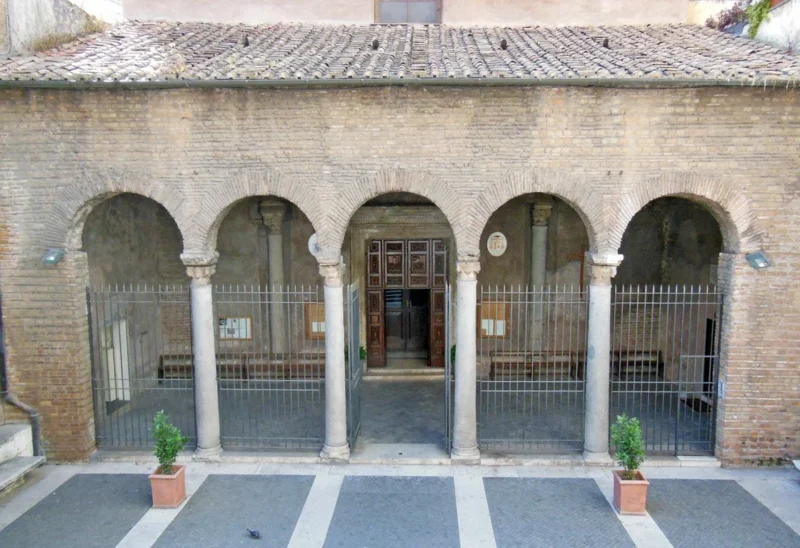
- Basilica of San Vitale100 m
- Rome Opera House100 m
- Enrico Fermi Center – Historical Museum of Physics and Study and Research Center at the Viminale200 m
- Teatro Nazionale200 m
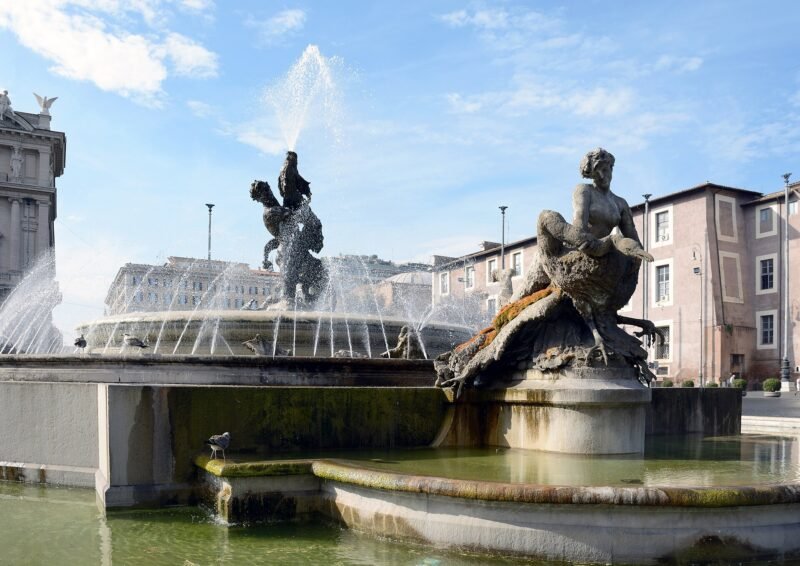
- Fontana delle Naiadi200 m

Upcoming events nearby
- The Three Tenors at the Church of San Paolo entro le Mura, through December 22, 2026100 m
- Opera Concerto at St. Paul’s Within the Walls, Every Thursday Through December 9, 2027100 m
- Swan Lake at Teatro dell’Opera di Roma, December 17 to 31, 2026100 m
- Andrea Chénier at the Teatro dell’Opera di Roma, January 17-26, 2027100 m

You might also like
- Mahler’s Third Symphony by John Neumeier at Teatro dell’Opera di Roma, February 4 to 10, 2027
- The Rake’s Progress at Teatro dell’Opera di Roma, November 27 to December 5, 2026
- Bluebeard’s Castle with Anna Netrebko at Teatro dell’Opera di Roma, December 4, 2026
- The Nutcracker at Teatro Nazionale, November 24 to December 3, 2026
- Motus by Blanc, McGregor and Ekman at Teatro dell’Opera di Roma, March 31 to April 4, 2027
- I due Foscari at Teatro dell’Opera di Roma, March 13 to 21, 2027