Bluebeard’s Castle with Anna Netrebko at Teatro dell’Opera di Roma, December 4, 2026
In short. Anna Netrebko sings Béla Bartók's Bluebeard's Castle at Teatro Costanzi, the main hall of Teatro dell'Opera di Roma at Piazza Beniamino Gigli 7, on Friday, December 4, 2026, at 20:00, for one night only and in concert form.

Anna Netrebko sings Béla Bartók's Bluebeard's Castle at Teatro Costanzi, the main hall of Teatro dell'Opera di Roma at Piazza Beniamino Gigli 7, on Friday, December 4, 2026, at 20:00, for one night only and in concert form. Alongside her are bass Alexander Köpeczi as Bluebeard, the Hungarian Radio Symphony Orchestra and Henrik Nánási on the podium. In the first part of the evening pianist Misi Boros plays Liszt's Concerto No. 1. You get there with Metro A, Repubblica Teatro dell'Opera stop, or with the buses on Via Nazionale (H, 40, 60, 64, 70, 71, 170) and Via Depretis (70, 71). Prices are published on the official website of Teatro dell'Opera. Tickets for individual performances of the 2026/2027 season have been on sale since October 8, 2026, at the box office at Piazza Beniamino Gigli 1 and on the authorized presale circuit listed on the venue's official website.
Language: opera sung in its original language; no English surtitles are announced, so check with the theater.
Frankly: among the evenings of the Rome season, this is the one you can least afford to put off. A single performance, one of the most famous voices in the world making her Italian debut in a role she had never sung here, a Hungarian orchestra that plays Bartók the way you speak your own language. The rest of the program has repeat performances and second chances. December 4 doesn't.
Anna Netrebko and Bluebeard at Costanzi in brief
The December 4, 2026, evening at Teatro Costanzi is a concert in two parts starting at 20:00: first two pieces by Franz Liszt, then Bartók's one-act opera performed without sets or costumes. It's one of the two operas in concert form of the 2026/2027 season of Teatro dell'Opera di Roma.
The program published by the theater
The official page of the performance lists, in order, Liszt's Hungarian Rhapsody No. 2, Liszt's Concerto No. 1 in E-flat major for piano and orchestra with Misi Boros at the piano and finally Bartók's Bluebeard's Castle (A Kékszakállú Herceg Vára), with Alexander Köpeczi (Bluebeard) and Anna Netrebko (Judith, his wife). The Hungarian Radio Symphony Orchestra plays, Henrik Nánási conducts.
A stop on an international tour
The season presentation release places the evening within the Hungarian Radio Symphony Orchestra's international tour: Rome hosts the stop for one night only. The concert is supported by Banca del Fucino, a patron of the theater. For the audience there's only one practical meaning: there's no backup performance, and if you miss that night you've lost the chance.
Why the Italian debut matters
The theater stresses that Netrebko is taking on the role of Judith in Italy for the first time. In the repertoire she's known for, from Verdi to Puccini, from Tchaikovsky to Donizetti, Bartók doesn't appear: it's new territory for the Italian audience that has followed her for almost 30 years. The hall will likely fill up before Christmas with fans from outside Rome.
The evening's program: from Liszt to Bartók
The first part of Anna Netrebko's evening at Costanzi is entirely devoted to Franz Liszt, the composer Hungary considers its 19th-century musical father. The choice builds a path: from Liszt's romantic, virtuosic Hungary to Bartók's modern, restless one.
Hungarian Rhapsody No. 2
In the program it appears with the catalog number S244/2, that is the second of the Hungarian Rhapsodies. It's the most popular of the series, the one that even people who don't go to concert halls have heard at least once, in a cartoon or a commercial. Hearing it played by a Hungarian orchestra makes precise sense: the rhythm, the accents, the sudden accelerations come from a language those musicians have always had in their ears.
Concerto No. 1 with Misi Boros
The Concerto No. 1 in E-flat major for piano and orchestra, S124, is entrusted to pianist Misi Boros. It's a compact concerto, in a single continuous arc, built to show off the soloist: for a young pianist it's the most demanding calling card in Liszt's repertoire. The theater hasn't published a biography of Boros on the performance page. My advice is to look for it in the program booklet that evening.
Then the castle
After Liszt comes Bartók, and everything changes. The orchestra grows, the light in the hall becomes more intimate, and for about an hour just two voices tell a story of closed doors and secrets. It's the moment the hall will be full for. But if you arrive late for the first part, you miss the contrast that gives meaning to the whole evening.
Bluebeard's Castle, Bartók's only opera
Bluebeard's Castle is Béla Bartók's only opera: a single act of about an hour, on a Hungarian libretto by poet Béla Balázs, composed in 1911 and first performed on May 24, 1918, at the Royal Hungarian Opera in Budapest. The singing characters are only two, Bluebeard and his new wife Judith.
A libretto born for Kodály
Balázs had conceived the libretto in 1908 for his roommate, Zoltán Kodály, and wrote it over the next two years. When he published it, in 1910, he dedicated it to both Kodály and Bartók. It was Bartók who set it to music, driven by the deadline of a competition, the Ferenc Erkel Prize, which the opera didn't win. A second competition, in 1912, rejected the work because with only two characters and a single setting it didn't seem theatrical enough. Bartók revised the score in 1912 and added a new ending in 1917.
The premiere, after years of waiting
It was the success of the ballet The Wooden Prince, in 1917, that opened the way to the May 1918 premiere, with the same conductor, Egisto Tango. The first Bluebeard was Oszkár Kálmán, the first Judith Olga Haselbeck. In a 1915 letter to his wife Márta, to whom he had dedicated the opera, Bartók said he was by then convinced he would never hear it in his lifetime. After Balázs's exile in 1919, and the ban on his works, the title disappeared from Hungarian stages until 1936.
The story of the seven doors
Judith arrives in Bluebeard's dark castle and asks that seven closed doors be opened, one after another. Behind the first is a torture chamber, behind the second an armory, then the treasure, a secret garden, the view over the prince's boundless kingdom. Everything is soaked in blood. The sixth door reveals a lake of tears. Behind the seventh are the three previous wives, alive, crowned and covered in jewels: Bluebeard celebrates them as the brides of dawn, noon and evening, and then crowns Judith as the bride of night. She follows them over the threshold, and the prince is left alone in the dark.
The music: the blood motif
The most recognizable feature of the score is the minor second interval, used every time Judith sees blood in the castle: a tight dissonance that comes back in the slow passages as melancholy and in the fast ones as alarm. The opera begins and ends in the area of F-sharp and touches C in the middle, at the fifth door, the point of greatest light: the largest tonal distance possible, translated into dark and light. If you listen carefully, you hear the door swing open even before you understand what it means.
A huge orchestra for two voices
Bartók calls for an imposing ensemble: four flutes, four bassoons, four horns, four trumpets, four trombones, tuba, timpani and a large percussion section with xylophone, two harps, celesta, organ and strings, plus stage music for another four trumpets and four alto trombones. This is the paradox that makes the opera so suited to concert form: the real set is the orchestra, and seeing all of it on the Costanzi stage, instead of hidden in the pit, makes visible what is usually only heard.
Anna Netrebko: the career of the Costanzi's Judith
Anna Netrebko was born in Krasnodar on September 18, 1971, is a Russian soprano who has been an Austrian citizen since 2006 and has sung in all the great opera houses of the world, from the Metropolitan to La Scala, from the Royal Opera House to the Salzburg Festival. In 2007 Time magazine put her on its list of the 100 most influential people in the world: the first opera singer to appear on it.
From the floors of the Mariinsky to the stage
Of Kuban Cossack origin, to pay for her singing studies she worked cleaning the floors of the Mariinsky Theater in Saint Petersburg, then the Kirov Opera. There Valery Gergiev noticed her and became her mentor: under his guidance she debuted in 1994 as Susanna in The Marriage of Figaro. The next year, on tour with the theater's company in San Francisco, she was Lyudmila in Glinka's Ruslan and Lyudmila, and American critics noticed her right away.
Salzburg 2005 and the birth of a diva
In 2002 she debuted at the Metropolitan in New York as Natasha Rostova in Prokofiev's War and Peace, again with Gergiev. Her consecration came in 2005 at the Salzburg Festival, with La traviata alongside Rolando Villazón, a success with audiences and critics that the Deutsche Grammophon recording captured on disc. The same year she received the Russian State Prize. In 2008 Musical America named her musician of the year.
A repertoire that grows with the voice
Hers is the path of a voice that has broadened over the years: from the light roles of her beginnings, Susanna, Zerlina, Norina, Adina, Gilda, to Lucia, Violetta, Mimì, then to Tatiana, Anna Bolena, Leonora in Il trovatore, Lady Macbeth, Aida, Tosca, Turandot, up to Elsa in Lohengrin. In January 2020 she debuted as Turandot at the Nationaltheater in Munich, and in the same year as Elisabetta in Don Carlo at the Bolshoi. Judith, at this point in her career, fits a precise line: dramatic roles, with great psychological depth.
The Scala openings
She debuted at La Scala in 1998 with a concert of Russian music conducted by Gergiev. Since then she has opened several of its seasons: in 2011 as Donna Anna in Don Giovanni conducted by Daniel Barenboim, in 2015 in the title role of Giovanna d'Arco conducted by Riccardo Chailly, in 2017 in Andrea Chénier directed by Mario Martone, in 2019 as Tosca directed by Davide Livermore. In summer 2019 she debuted at the Arena di Verona in Franco Zeffirelli's Il trovatore.
The records
Her first studio album, Opera Arias, from 2003, was one of the biggest commercial successes in classical music of those years. Then came Sempre libera with Claudio Abbado in 2004, The Russian Album in 2006, the duets with Villazón in 2007, Souvenirs in 2008, the Verdi album with Gianandrea Noseda in 2013, Verismo with Antonio Pappano and the Accademia di Santa Cecilia in 2016 and Amata dalle tenebre with Chailly and the Orchestra of La Scala in 2021. With Pappano and Santa Cecilia she also recorded Britten's War Requiem. In 10 years of recordings for Deutsche Grammophon she has sold almost 4 million records.
Henrik Nánási, Alexander Köpeczi and the Hungarian Radio Symphony Orchestra
Henrik Nánási, the evening's conductor, was born in Pécs in 1975 and from 2012 to 2018 was general music director of the Komische Oper in Berlin, alongside intendant Barrie Kosky. He's one of the Hungarian conductors most present in German-speaking opera houses.
Nánási's training
He studied piano and composition at the Béla Bartók Conservatory in Budapest, then from 1993 conducting, répétiteur work and composition at the University of Music in Vienna. From 1999 he worked at the Stadttheater in Klagenfurt, where from 2002 he was first Kapellmeister. In 2005 he moved to Theater Augsburg, in 2007 to the Staatstheater am Gärtnerplatz in Munich.
Berlin and the great opera houses
In 2009 he debuted at the Frankfurt Opera with La bohème, in 2010 at the Semperoper in Dresden with Rossini's L'italiana in Algeri. He has conducted at the Volksoper in Vienna, the Bayerische Staatsoper and the Opéra de Monte-Carlo. At the Komische Oper, in the 2012/2013 season when it was named opera house of the year, he began his partnership with Kosky. The curious detail for the Rome audience: in the same season Kosky brings to Costanzi his Lady Macbeth of Mtsensk, a production of the Komische Oper itself.
Köpeczi's Bluebeard
Alexander Köpeczi is the bass singing the title role. The theater presents him simply as Bluebeard alongside Netrebko, without an extended biography on the performance page. The role, written for bass or bass-baritone, calls for a dark voice and an authority that doesn't need to raise its tone: Bluebeard is the man who resists, grants, gives in, and in the end is left alone.
An orchestra playing its own language
The Hungarian Radio Symphony Orchestra comes to Rome on tour with an all-Hungarian program. Here lies the real value of the evening: Balázs's libretto is in Hungarian, a difficult language for foreign singers, and Bartók's vocal writing follows the rhythm of speech. An orchestra and a conductor who have known that language since childhood are the best guarantee that the musical accent is right.
A curious fact about Bluebeard's Castle with Anna Netrebko at Teatro dell'Opera di Roma, December 4, 2026
Bluebeard's Castle isn't new to Teatro dell'Opera di Roma: the title was staged there as early as 1962, after the Italian premieres in the major opera houses. The real novelty of December 4 is the leading lady, and the way the opera is presented.
The opera's Italian chronology is a small lesson in 20th-century music history. The Italian premiere was at the Maggio Musicale Fiorentino on May 5, 1938, conducted by Sergio Failoni, with Mihály Székely in the title role and Ella Némethy as Judith: the same Hungarian performers who two years earlier had brought the opera back to Budapest. The San Carlo in Naples staged it on April 19, 1951, with Ferenc Fricsay on the podium and Mario Petri as Bluebeard. La Scala on January 28, 1954, again with Petri. Then came Turin in 1961, Rome in 1962, Bologna in 1966, La Fenice in 1967, Parma in 1970.
A second curiosity is about the conductors. Failoni, who brought the opera to Italy, was the same conductor Bartók clashed with in 1936 during rehearsals for the Budapest revival: the composer sided with the new Bluebeard, Székely, against the conductor's insistence on literal fidelity to the printed score. It's an anecdote that says a lot about Bartók: the written text mattered, but the voice that brought it to life mattered more. The third is about interpretation: among the famous Judiths on record is Christa Ludwig, in the 1965 recording with István Kertész, who maintained that Judith always tells the truth when she repeats to her husband that she loves him.
The evening in the 2026/2027 season of Teatro dell'Opera
The 2026/2027 season of Teatro dell'Opera di Roma is called Il dolce suono mi colpì, from the line in Lucia di Lammermoor, and includes 11 opera titles, 2 operas in concert, 7 ballets and 4 special events. Netrebko's Bluebeard is the first of the two operas in concert form.
In the middle of opening week
The season opens on November 27 with Stravinsky's The Rake's Progress, conducted by Michele Mariotti and directed by Rafael R. Villalobos, with performances until December 5. Netrebko's concert therefore falls within the opening days: in a single week Costanzi goes from Stravinsky to Bartók, two faces of the 20th century that the program openly puts at the center.
The other opera in concert
The second is Il barbiere di Siviglia with Cecilia Bartoli, on May 27, 2027, also for one night only, to celebrate exactly 40 years since her debut at Costanzi as Rosina. If you're interested in great voices in concert, you'll find the details on the page dedicated to the Barbiere di Siviglia with Cecilia Bartoli.
December at Costanzi
After Bluebeard, for the holidays Swan Lake returns from December 17 to 31, with Fumi Kaneko, Vadim Muntagirov and Paul Marque. If you're coming to Rome for a December weekend, you can build a whole program around the theater.
Something nobody tells you about Bluebeard's Castle with Anna Netrebko at Teatro dell'Opera di Roma, December 4, 2026
For Bartók's Bluebeard, concert form isn't a fallback: it's the way the opera most often lives around the world. The chromatic vocal writing modeled on the rhythm of speech, the difficulty of the Hungarian libretto for foreign singers and the static action make stagings relatively rare. Concert performances are much more frequent.
If you're used to opera with sets and costumes, you may fear getting bored in front of two singers standing at music stands. The opposite happens. In Bluebeard the real action is inner, and it's the colors of the orchestra that tell it: the blood red of the first door, the gold of the treasure, the blue-green of the garden, the dazzling light of the fifth door, the darkness of the sixth, the moonlit silver of the seventh. These are the directions Bartók himself wrote for the stage, and in concert form it's the music that paints them. My advice is to close your eyes at the fifth door, at least for a few seconds: the explosion of the orchestra, with the organ, does on its own what no set could.
Second thing nobody mentions: the opera opens, as the authors intended, with a spoken prologue by the bard, who asks the audience where the stage is, outside or inside us. The prologue is often left out. If it will be there tonight you'll only find out from the program booklet: but the question still holds, and it's the key to everything. Third: the score calls for ghostly sighs that seem to come from the castle when some doors open. Every performance solves them in its own way, with instruments or voices. Keep your ears open.
Tickets for Anna Netrebko at Teatro dell'Opera di Roma
Tickets for Bluebeard's Castle with Anna Netrebko have been on sale since October 8, 2026, the date Teatro dell'Opera opens sales for individual performances of the season. Prices by section are published on the Prices page of the official website.
Where to buy
The theater's box office is at Piazza Beniamino Gigli 1, open Monday to Saturday from 10:00 to 18:00 and Sunday from 9:00 to 13:30, closed on holidays. On the day of the performance tickets are sold at the theater from an hour before the start. Online you buy on the authorized presale circuit listed on the performance page. The theater recommends using only the channels authorized by the foundation.
How to go about buying
A one-night event with an international star sells out fast. Buy in the first days of sales, without waiting for last-minute deals: on some evenings the theater offers a last-minute discount, at its discretion, but for a date like this it would be a bet lost from the start.
Paying at the box office
At the box office you pay in cash, by debit card and with the main credit cards, as well as by check made out to the Fondazione Teatro dell'Opera di Roma. The Carta del Docente and the Carta della Cultura are also accepted, during box office hours.
Subscriptions
The Gran Teatro subscription campaigns closed in September. The other packages can be bought from October 1, 2026. If you're thinking of coming back to Costanzi several times in the season, you can consider the Concert Subscription or the other packages: the details are in the subscriptions section of the theater's website.
My tip for Bluebeard's Castle with Anna Netrebko at Teatro dell'Opera di Roma, December 4, 2026
My tip for Netrebko's Bluebeard is to choose a seat facing the stage and high up, in the balcony or a central box, and to listen to the opera at home first, at least once, with the translated libretto in front of you. For a single act in Hungarian, preparation is worth more than a front-row seat.
Here's the reasoning. In concert form the orchestra is on stage, enlarged as Bartók wanted it, with harps, celesta, organ and extra brass. From the lower stalls you see the soloists but lose the geometry of the orchestra. From above you take in all of it, and the sound of Costanzi's horseshoe hall arrives more balanced. If you choose a side box, take a front seat: from the back you see little.
On preparation: the discography is rich. A good way in is the 1965 recording with Christa Ludwig, Walter Berry and István Kertész. Another, with Jessye Norman and Pierre Boulez, won the Grammy for best opera recording in 1999. Listen to one, read the plot of the seven doors, and that evening you'll find yourself recognizing every turn.
A last practical recommendation: arrive at least 40 minutes before 20:00. It's Friday night, in December, the center is crowded with Christmas shoppers, the coat check is mandatory for bags and umbrellas and once the music has started you can't get into the stalls. For an evening that won't be repeated, it's not worth the risk.
Teatro Costanzi: the hall that hosts Bluebeard
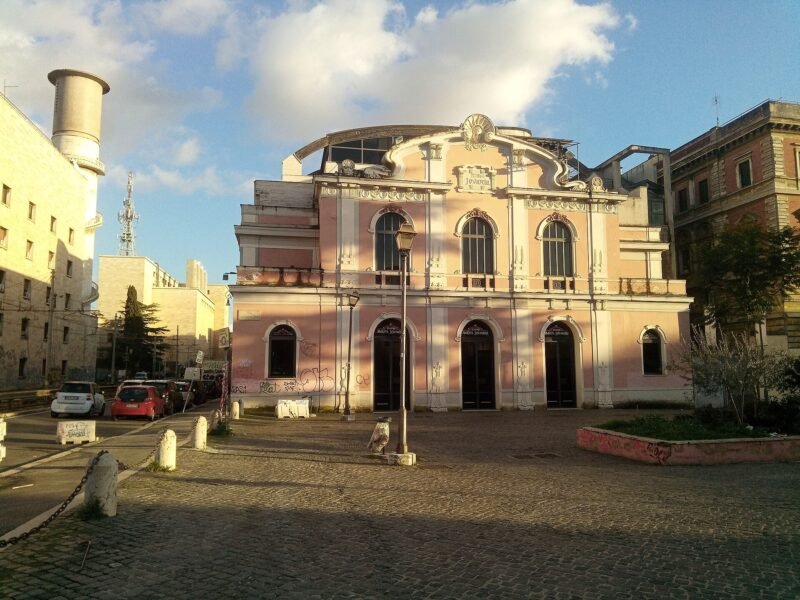
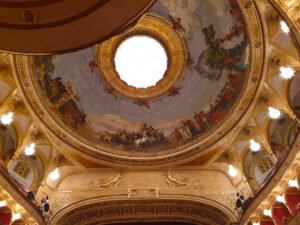
Teatro Costanzi today has 1,560 seats across the stalls, three tiers of boxes, balcony and gallery, under a dome frescoed by Annibale Brugnoli from Perugia. It was designed in 1879 by Milanese architect Achille Sfondrini for builder Domenico Costanzi, and built in just 18 months.
A horseshoe sounding box
Sfondrini, a theater specialist, put acoustics first: the horseshoe hall was conceived as a sounding box able to enhance the sound of operas. When it opened, in 1880, it could hold up to 2,212 spectators. For an opera like Bluebeard, where the tension comes from the orchestra's extreme dynamics, from a whisper to full sound with organ, the hall's response is part of the show.
The chandelier and the dome
The great chandelier, with its 27,000 crystal drops, was lit for the first time on February 27, 1928, at the theater's second inauguration after Marcello Piacentini's renovation. Above it is Brugnoli's dome. Get to the hall a few minutes before the lights go down: those are the minutes when the theater shows itself in full.
The sections
The theater's price list distinguishes premium and regular stalls seats, stall boxes, first, second and third tier boxes, central and side, with front and back seats, the balcony and the gallery. The updated seating plan is in the maps section of the official website. For the full profile of the building there's our page on Rome Opera House.
How to get to Teatro Costanzi for Netrebko's concert
Teatro Costanzi can be reached with Metro A, Repubblica Teatro dell'Opera stop, a few minutes' walk from Piazza Beniamino Gigli. It's the simplest way, and on a Friday evening in December also the fastest.
By metro
From the line A stop in Piazza della Repubblica you reach the theater in a few minutes. From Termini station, where lines A and B cross, you can take the metro for one stop or walk.
By bus
The theater lists the lines on Via Nazionale (H, 40, 60, 64, 70, 71, 170, 116T), on Via Depretis (70, 71), on Via Cavour (16, 75, 84, 360, 590, 649, 714) and those leaving from Termini (16, 38, 75, 86, 90, 217, 310, 360, 649, 714). Via Nazionale and Via Depretis run along the two sides of the theater's block.
By taxi
There's a taxi service for the audience at the theater entrance. During intermissions the house staff take bookings for the trip back. After a 20:00 concert that ends late in the evening, it's the option I suggest if you don't live in the center.
By car
I advise against it. The area between Via Nazionale, the Viminale and Termini is central and busy, the theater has no parking of its own, and on a Friday in December things get worse. If you're coming from outside Rome, leave the car at a park-and-ride lot along line A and continue by metro.
Another well-known fact, yet rarely mentioned
Teatro Costanzi, where Cavalleria rusticana premiered in 1890 and Tosca in 1900, was for its first 46 years a private theater: it was built and run by a building contractor, Domenico Costanzi, after the State had refused to take over its management. Many people know it, few recall it.
The theater was inaugurated on November 27, 1880, with Rossini's Semiramide, in the presence of King Umberto I and Queen Margherita. From then on the program went ahead thanks to the financial efforts of the builder and then of his son Enrico, who staged the world premieres of Mascagni and Puccini. From 1907 management passed to impresario Walter Mocchi and from 1912 to his wife, soprano Emma Carelli: 14 years in which La fanciulla del West, Il trittico, Parsifal, Samson et Dalila and Diaghilev's Ballets Russes came to Rome. Only in 1926 did the City of Rome buy the theater, which became the Teatro Reale dell'Opera.
The link with the December 4 evening is closer than it seems. Bartók's Bluebeard was also born outside the institutions: rejected by two juries, left in a drawer for seven years, brought to the stage thanks to the success of a ballet. The theater that hosts it and the opera heard there share a story of private stubbornness, before public recognition.
House rules at Costanzi for Netrebko's evening
At Teatro dell'Opera di Roma, once the performance has started you can't enter the stalls or the numbered seats in the balcony and gallery: latecomers wait in the foyer. In a two-part concert, that means missing Liszt and taking your seat only after the intermission.
Mandatory coat check
Umbrellas, hats, bags, helmets, cameras and recording devices must be left at the coat check. On a December evening with coats and umbrellas the line gets longer: it's the main reason to arrive early.
Phones and photos
In the hall it's forbidden to use your cell phone, take photos with or without flash and record. Food and drink are allowed only at the theater's bars, and smoking is forbidden everywhere.
Dress
The theater indicates dark attire as welcome at opening nights and premieres. For a one-night event with an international star, during the season's opening week, dressing with a minimum of care is a form of respect for the evening: nobody will stop you at the entrance, but you'll feel more at ease.
The right photo to take at Bluebeard's Castle with Anna Netrebko at Teatro dell'Opera di Roma, December 4, 2026
At Costanzi you can't take photos in the hall, not even during the applause: the right photo of the evening is taken outside, in Piazza Beniamino Gigli, before going in. It's the square onto which Marcello Piacentini moved the theater's entrance with the renovation that followed 1926.
In December, at 19:30, it's fully dark: the lit facade, the audience arriving, the foyer lights on are the image that stays with you. My advice is to stand on the opposite side of the square and wait for the moment when the flow of people thickens, about 20 minutes before the start. A photo with the evening's poster, if the theater displays it at the entrance, is the most concrete souvenir of a concert that won't be repeated.
The second image you take home with your eyes: the hall with the chandelier lit and the orchestra already arranged on stage, the harps, the celesta, the organ, the brass in a row. It's an arrangement rarely seen at Costanzi, because in operas the orchestra plays in the pit. Look at it carefully before the lights go down. And if you want to see the theater empty and lit, calmly, Teatro dell'Opera organizes guided tours by reservation.
Some important events that happened here in history
Teatro Costanzi was inaugurated on November 27, 1880, with Rossini's Semiramide and took the name Teatro dell'Opera di Roma in 1946. In between are the two world premieres that made it famous and a change of ownership that changed its look.
The dates
1879: Domenico Costanzi entrusts the design to Achille Sfondrini. November 27, 1880: inauguration with Semiramide, after 18 months of work. May 17, 1890: world premiere of Pietro Mascagni's Cavalleria rusticana. January 14, 1900: world premiere of Giacomo Puccini's Tosca. 1907: management passes to Walter Mocchi. From 1912 Emma Carelli leads it. 1926: the City buys the theater, which becomes the Teatro Reale dell'Opera. The renovation is by Marcello Piacentini. February 27, 1928: second inauguration with Arrigo Boito's Nerone. 1935: the permanent Chorus is founded at the wish of Tullio Serafin. 1946: the theater takes the name Teatro dell'Opera di Roma. 1958: new work by Piacentini ahead of the 1960 Olympics.
The 20th century on the program
Among the less cited dates, for those coming on December 4, is 1962, the year Bartók's Bluebeard entered the Rome theater's repertoire. And the 2026/2027 season adds another first: Shostakovich's Lady Macbeth of Mtsensk, in May, had never been staged at Costanzi. The theater that calls itself the cradle of verismo opera thus keeps coming to terms with the 20th century, which has had more room on its program than people think.
Who has passed through Bluebeard's Castle with Anna Netrebko at Teatro dell'Opera di Roma, December 4, 2026
King Umberto I and Queen Margherita, present at the 1880 inauguration, passed through Teatro Costanzi, and then Mascagni, Puccini and Respighi, the musicians the theater names as those who shaped its destiny. On December 4 Anna Netrebko joins the list, for the first time in Italy as Judith.
The theater's history keeps names from every era. Emma Carelli, soprano and impresario, who led Costanzi from 1912 for 14 years. Tullio Serafin, who created the permanent chorus in 1935. Marcello Piacentini, who reworked the building in 1926 and in 1958. On the podium, in the histories of the orchestra and chorus recalled by the theater, Victor de Sabata, Gianandrea Gavazzeni, Herbert von Karajan, Carlo Maria Giulini, Karl Böhm, Zubin Mehta, Georges Prêtre, Georg Solti, Giuseppe Sinopoli, Mstislav Rostropovich, Riccardo Muti and Daniele Gatti.
Netrebko is no stranger to Rome: in February 2014 she was in the city for rehearsals of a Manon Lescaut. And with her, on December 4, a piece of Hungarian music history takes the stage: a conductor born in Pécs and trained at the Conservatory that bears Bartók's name, a Budapest radio orchestra, a Hungarian bass in the role of the prince. It's the first time Costanzi welcomes a Bluebeard with these linguistic credentials, and you'll hear it.
Around Costanzi before the concert
Teatro Costanzi is between Via Nazionale, Via del Viminale and Via Depretis, a few minutes from Piazza della Repubblica and Termini station. If you arrive an hour early, you have some places from ancient and late 19th-century Rome around you.
Piazza della Repubblica and the Baths
Coming out of the metro you're in Piazza della Repubblica, with the basilica of Santa Maria degli Angeli e dei Martiri carved out of the Baths of Diocletian. Toward Termini is Palazzo Massimo alle Terme, home of the Museo Nazionale Romano: if you're free in the afternoon, you can combine museum and concert without taking any transportation.
Two churches a few steps away
From the opposite side of the square you reach San Bernardo alle Terme and Santa Maria della Vittoria in a few minutes. A 15-minute stop before the theater is the best way to enter the hall with a clear head.
Toward Monti and Santa Maria Maggiore
Going down Via Nazionale, the Monti rione begins, described in our guide to the Monti rione. In the opposite direction, past Via Cavour, Santa Maria Maggiore is a good quarter of an hour on foot. In December, in the evening, the basilica with its lights on is worth the detour.
Where to eat before and after the concert
Around Teatro dell'Opera, the options are concentrated on Via Nazionale, the Viminale, the streets toward Termini and, a bit farther, the Monti rione. In the theater you can only eat and drink at the inside bars: dinner needs to be planned before or after.
Before 20:00
With a 20:00 start, an early dinner around 18:30 works best, or a hearty aperitivo and dinner afterward. The trattorias between Via Nazionale and the Viminale let you walk to the theater in a few minutes.
After the concert
The concert includes two pieces by Liszt, an intermission and an opera of about an hour: you come out late in the evening. Monti is the most natural choice for an after-theater dinner, but on a Friday in December booking is essential. I don't name places, because they change more often than productions do. The rule is to avoid the menus translated into five languages posted outside the door around Termini and to push a few streets toward Monti.
Rome in early December, the week of Bluebeard
December 4, 2026, is a Friday, and it opens the weekend leading to the Immaculate Conception on Tuesday, December 8. If you're coming from outside Rome, it's a great chance for a long weekend, with the concert as the main evening.
Weather and clothing
Early December evenings in Rome are cool and often damp. Umbrellas go to the theater's coat check: better a folding one, or a good coat with a hood.
Christmas lights
In those days the city turns on its holiday lights. A walk from Costanzi toward Via Nazionale and Piazza Venezia, in the afternoon, puts the decorated center and the evening concert in the same day.
Accessibility at Teatro Costanzi
For Teatro Costanzi the theater indicates a visitor route accessible to those with walking difficulties, except for some points like the Royal Box and the gallery. The concert page doesn't give specific information on accessible seats.
My practical advice is to contact the box office before buying, at 06 48160255 or at ufficio.biglietteria@operaroma.it, explaining your needs: it's the way to get a suitable seat and updated information on entrances and services. If you have mobility issues, avoid the gallery in any case.
Bluebeard for first-time operagoers
Bluebeard's Castle lasts about an hour and is, in many ways, a good way into 20th-century music theater: a clear story, two characters, a progression in seven stages that even a beginner can follow easily. The whole evening, though, with Liszt and the intermission, is long.
With teenagers
The theater doesn't publish age guidelines for this concert. It's suitable for kids aged 14 and up who have a minimum of familiarity with classical music. The story is dark, full of symbolic blood, and kids like it more than adults think. Tell them Perrault's fairy tale before you go out: comparing the fairy tale and the opera is the key to getting them involved.
If you come from the Italian repertoire
If you love Verdi and Puccini, you won't find arias to hum on the way out. In exchange you'll find one of the voices that has sung that repertoire best, grappling with something completely different: one more reason to be there.
Frequently asked questions about Anna Netrebko at Teatro dell'Opera di Roma
When does Anna Netrebko sing at Teatro dell'Opera di Roma?
Anna Netrebko sings at Teatro Costanzi, the hall of Teatro dell'Opera di Roma, on Friday, December 4, 2026, at 20:00, for one night only. She plays Judith in Bartók's Bluebeard's Castle in concert form, with Alexander Köpeczi, the Hungarian Radio Symphony Orchestra and Henrik Nánási. No repeat performances are planned.
When can you buy tickets for Netrebko in Rome?
Tickets for Bluebeard with Anna Netrebko have been on sale since October 8, 2026, when Teatro dell'Opera di Roma opens sales for individual performances of the 2026/2027 season. They're sold at the box office at Piazza Beniamino Gigli 1 and on the authorized presale circuit listed on the official website. Prices are published on the theater's Prices page.
What's on the concert program?
Anna Netrebko's concert at Costanzi begins with two pieces by Liszt: Hungarian Rhapsody No. 2 and Piano Concerto No. 1, with Misi Boros at the piano. The second part is Bartók's Bluebeard's Castle, a one-act opera of about an hour sung in Hungarian.
What does opera in concert form mean?
The December 4 Bluebeard at Teatro dell'Opera di Roma is performed in concert form: no sets, costumes or staging, the orchestra on stage and the singers in front. For this static, inward-looking Bartók opera, it's a common format all over the world, and it puts in the foreground the large orchestra the composer called for.
Has Anna Netrebko already sung Bluebeard in Italy?
No: according to Teatro dell'Opera di Roma, on December 4, 2026, Anna Netrebko takes on the role of Judith in Bluebeard's Castle in Italy for the first time. In Italy audiences have heard her mostly in Verdi, Puccini and Giordano, in particular at the Scala openings of 2011, 2015, 2017 and 2019.
How do you get to Teatro dell'Opera di Roma?
Teatro dell'Opera di Roma, at Piazza Beniamino Gigli 7, can be reached with Metro A, Repubblica Teatro dell'Opera stop, a few minutes' walk away. Many buses run along Via Nazionale (H, 40, 60, 64, 70, 71, 170) and Via Depretis (70, 71). There's a taxi service for the audience at the theater entrance.
Can you get in after the concert has started?
At Teatro dell'Opera di Roma, once the performance has started you can't enter the stalls or the numbered seats in the balcony and gallery: latecomers wait in the foyer. For Netrebko's concert, which starts at 20:00 with Liszt, being late means missing the whole first part. The coat check is mandatory for bags and umbrellas.
How long is Bluebeard's Castle?
Bartók's Bluebeard's Castle lasts about an hour and is a single act, with no intermissions within it. At Teatro Costanzi on December 4 it's preceded by two pieces by Liszt, Hungarian Rhapsody No. 2 and Piano Concerto No. 1. The total length of the evening hasn't been published by the theater.
To close, a practical tip. Buy your ticket in the first days of sales, get a seat high up and facing the stage, listen to a recording of the opera at home and get to Piazza Gigli before 19:30. Evenings like this in Rome are few per season: a voice everyone knows taking on a role nobody has heard her sing here yet, and an orchestra playing Bartók in its own language. If you want to build a weekend around the concert between late 19th-century Rome and the museums of the Baths, you can contact Tour Leader Pro.
Article written by the editorial team of Tour Leader Pro, contact them for Private/Corporate/V.I.P. Tours and Experiences.
Planning a trip to Rome? English-language guides for visiting the city are on ItalyPlanner.com.
Contact Information
Nearby
 Rome Opera House100 m
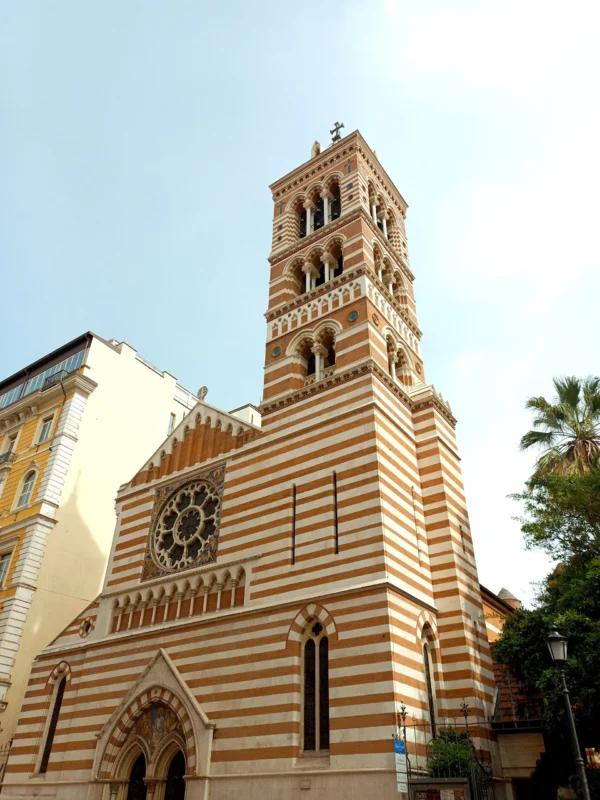
- St. Paul’s Within the Walls100 m
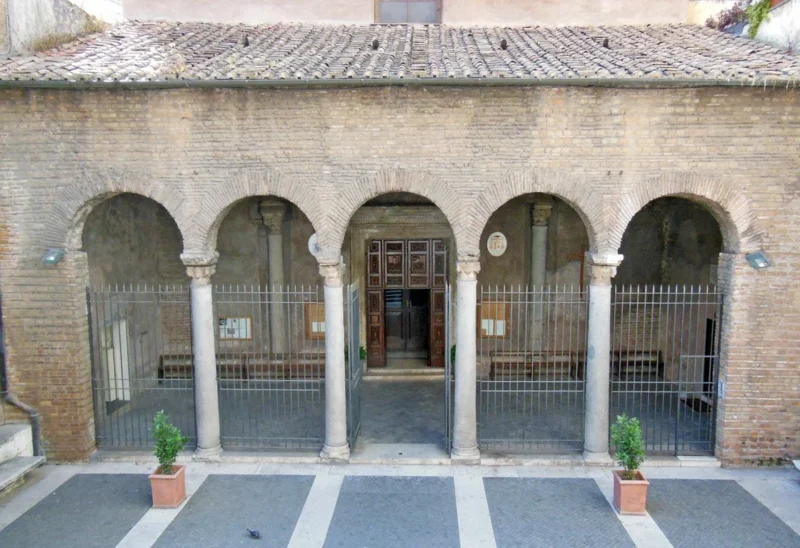
- Basilica of San Vitale100 m
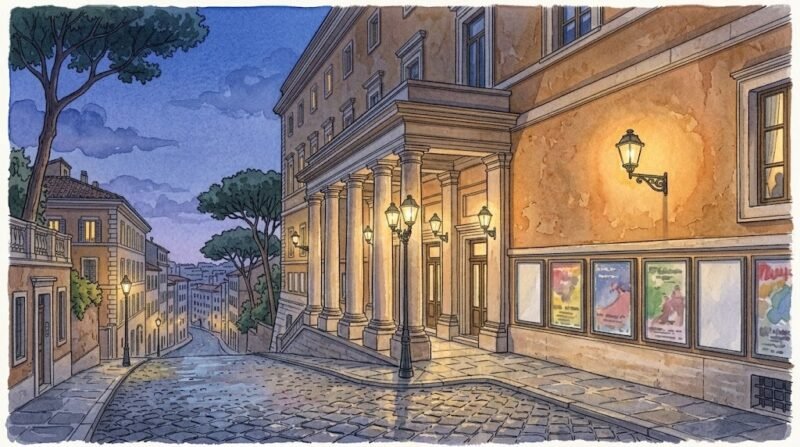
- Teatro Nazionale100 m
- Enrico Fermi Center – Historical Museum of Physics and Study and Research Center at the Viminale200 m
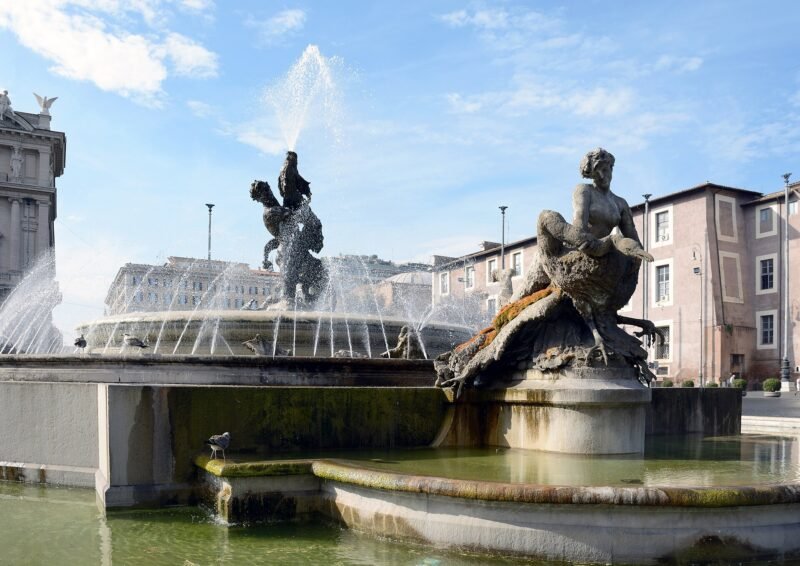
- Fontana delle Naiadi200 m

Upcoming events nearby
- Swan Lake at Teatro dell’Opera di Roma, December 17 to 31, 2026100 m
- Andrea Chénier at the Teatro dell’Opera di Roma, January 17-26, 2027100 m
- Il barbiere di Siviglia with Cecilia Bartoli at Teatro dell’Opera di Roma, May 27, 2027100 m
- Goecke / Robbins / Bausch at Teatro dell’Opera di Roma, from October 27 to November 8, 2026100 m


You might also like
- Mahler’s Third Symphony by John Neumeier at Teatro dell’Opera di Roma, February 4 to 10, 2027
- The Rake’s Progress at Teatro dell’Opera di Roma, November 27 to December 5, 2026
- The Nutcracker at Teatro Nazionale, November 24 to December 3, 2026
- Motus by Blanc, McGregor and Ekman at Teatro dell’Opera di Roma, March 31 to April 4, 2027
- Aggiungi un posto a tavola at the Teatro Brancaccio in Rome, December 10 to December 20, 2026
- Otello with Giorgio Pasotti and Giacomo Giorgio at Teatro Ambra Jovinelli, February 24 to March 7, 2027