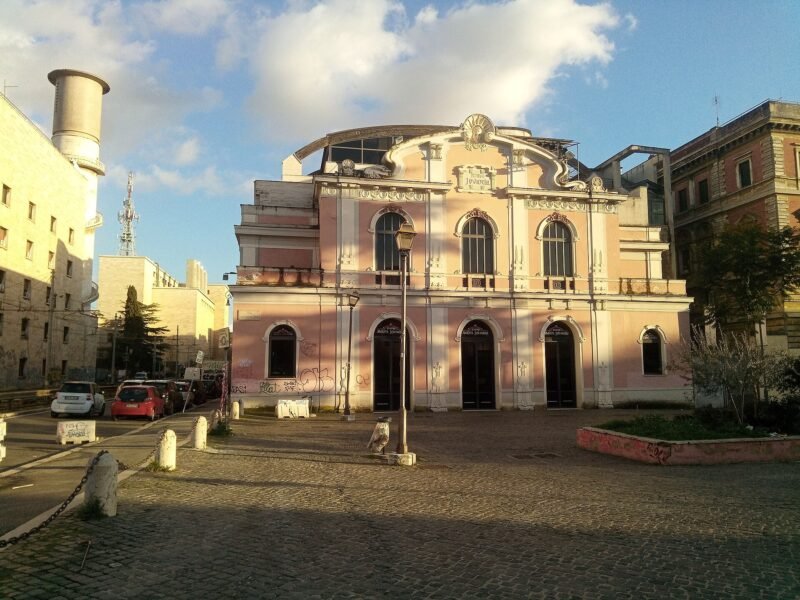
I due Foscari at Teatro dell’Opera di Roma, March 13 to 21, 2027
In short. I due Foscari by Giuseppe Verdi returns to Teatro Costanzi, home of Teatro dell'Opera di Roma at Piazza Beniamino Gigli 7 (00184 Rome), March 13 to 21, 2027, in Pier Luigi Pizzi's historic production, with Riccardo Frizza on the podium…
I due Foscari by Giuseppe Verdi returns to Teatro Costanzi, home of Teatro dell'Opera di Roma at Piazza Beniamino Gigli 7 (00184 Rome), March 13 to 21, 2027, in Pier Luigi Pizzi's historic production, with Riccardo Frizza on the podium and Nicola Alaimo as Doge Francesco Foscari. The premiere is Saturday, March 13 at 20:00 (series A). The repeat performances are Sunday the 14th at 16:30, Tuesday the 16th at 20:00 (series B), Wednesday the 17th at 20:00, Friday the 19th at 20:00 (series C), Saturday the 20th at 18:00 (series D) and Sunday the 21st at 16:30 (series E). On Friday, March 12 at 19:00 there is a youth preview. You reach the theater by Metro Line A, stop Repubblica Teatro dell'Opera, a few minutes on foot. Tickets for the individual shows of the 2026/2027 season go on sale October 8, 2026 at the theater's box office and on the official website. Prices are published on the Prezzi page of Teatro dell'Opera. The show has surtitles in Italian and English.
Language: in Italian with English surtitles.
I due Foscari at the Costanzi at a glance: dates, times, series and cast
Seven performances in nine days, plus a preview reserved for young people: I due Foscari is the March Verdi title of the 2026/2027 season, which the theater has called «il dolce suono mi colpì», a line from Lucia di Lammermoor. It's a revival, not a new production, and the theater presents it as a tribute to Pier Luigi Pizzi, a director deeply tied to the house.
The performance calendar
- Friday, March 12, 2027, 19:00: youth preview.
- Saturday, March 13, 20:00: opening performance, series A.
- Sunday, March 14, 16:30.
- Tuesday, March 16, 20:00: series B.
- Wednesday, March 17, 20:00.
- Friday, March 19, 20:00: series C.
- Saturday, March 20, 18:00: series D.
- Sunday, March 21, 16:30: series E.
Who conducts and who signs the production
Conductor Riccardo Frizza. Direction, sets and costumes by Pier Luigi Pizzi. Chorus master Ciro Visco. On stage the Orchestra and Chorus of Teatro dell'Opera di Roma, in a production by the theater itself.
The singing cast
Francesco Foscari is Nicola Alaimo, making his debut in the role, alternating with Lucas Meachem on March 14, 17 and 20. Jacopo Foscari is Kang Wang, with Giorgio Berrugi on the same three dates. Lucrezia Contarini is Marta Torbidoni, with Marigona Qerkezi on the 14th, 17th and 20th. Marko Mimica (Jacopo Loredano), Paolo Antognetti (Barbarigo) and Carlotta Vichi (Pisana) complete the cast. If you want the first cast, pick the opening night or the performances of the 16th, 19th and 21st. If you want the second, the three performances indicated.
I due Foscari, the opera Verdi premiered in Rome
I due Foscari is a lyric tragedy in three acts by Giuseppe Verdi to a libretto by Francesco Maria Piave, based on Lord Byron's 1821 verse drama The Two Foscari, and it was first staged at Teatro Argentina in Rome on November 3, 1844. It is therefore an opera born in Rome, and every revival in the city feels like a homecoming.
The story
The action takes place in Venice in 1457. Jacopo Foscari, the doge's son, having returned illegally from exile, is accused of the murder of two relatives of Jacopo Loredano, member of the Council of 10 and his accuser. The Council condemns him to a new exile in Crete. His wife Lucrezia Contarini begs her father-in-law to intervene, but the old doge, crushed between paternal love and the law of the Republic, can do nothing. In the third act, as St. Mark's fills with people for the regatta, Jacopo leaves and dies of grief. The confession of the real culprit arrives, too late. The Council asks the doge to abdicate: Francesco lays down his insignia and dies as the bells announce his successor.
A young, dark Verdi
It's an opera from years in which Verdi was writing at a tight pace, and it has a color all its own: nocturnal, closed, dominated by the impersonal power of the Council of 10. The musical numbers are those of convention, arias, cabalettas, trios, a sextet in the finale of the second act, but the tint is unified and dark. The character of the doge, old and powerless, anticipates figures Verdi will develop later. Anyone who knows only the Verdi of Traviata and Rigoletto discovers here a more essential, almost rough composer, and for that very reason a surprising one.
The pages to wait for
Among the best-known moments are Jacopo's aria «Dal più remoto esiglio» in the first act, the doge's romanza «O vecchio cor, che batti», the prison scene of the second act with the vision of the Count of Carmagnola, the barcarolle «Tace il vento, è queta l'onda» at the start of the third and the doge's final aria «Questa è dunque l'iniqua mercede». Three leading voices, baritone, tenor and soprano, and a chorus that is almost a fourth character.
The first performers and the versions
At the 1844 premiere Achille De Bassini (Francesco), Jacopo Roppa (Jacopo) and Marianna Barbieri-Nini (Lucrezia) sang. Verdi sat at the harpsichord for the first three performances, then replaced by Pietro Romani. The opera immediately circulated in several versions: the second debuted at the Teatro Rossini in Livorno on December 26, 1844, then came Naples, Parma, Bergamo, Turin, Bologna, Lisbon, Paris, La Fenice in Venice in 1847 and London the same year.
Pier Luigi Pizzi, director, set designer and costume designer of I due Foscari
Pier Luigi Pizzi, born in Milan on June 15, 1930, is a director, set designer and costume designer, and signs all three functions in this production of I due Foscari, created at the Costanzi in 2001 and reworked for the 2027 revival. The theater calls him a unique figure in the history of Italian theater, who helped define the visual imagination of European opera from the second half of the 20th century to today.
From architecture school to the stage
After studying architecture at the Politecnico di Milano, Pizzi began in 1951 as a set and costume designer. In 1952 he designed his first opera, a Don Giovanni at the Teatro Comunale in Genoa. From 1955 he tied his name to the De Lullo, Falk, Guarnieri, Valli company. In the 1960s he worked at La Scala with Giorgio De Lullo, on Il trovatore, La Cenerentola, Lucia di Lammermoor, and for a long time at the Maggio Musicale Fiorentino, where he also signed an Orfeo ed Euridice, a Nabucco and a Trovatore directed by Luca Ronconi and conducted by Riccardo Muti.
The move to directing
In 1977 he made his directing debut with Don Giovanni at the Teatro Regio in Turin. In 1978 Vivaldi's Orlando furioso at the Teatro Filarmonico in Verona opened, in modern times, a new international interest in the works of the Venetian composer. In the 1980s he became one of the leading figures in the revival of bel canto and the Baroque, with Semiramide, Tancredi, Ariodante, Les Indes galantes and many Rossini titles at the Rossini Opera Festival, in Aix-en-Provence and in Reggio Emilia. Rodolfo Celletti wrote in 1983 that Baroque opera and Rossini finally had a director of their own.
The great inaugurations
Pizzi inaugurated the Wortham Center in Houston with Aida in 1987 and the Opéra Bastille in Paris with Berlioz's Les Troyens in 1990. He opened La Scala's season in December 2004 with Salieri's Europa riconosciuta. He was artistic director of the Sferisterio Opera Festival in Macerata from 2006 to 2011. He has won the music critics' Premio Abbiati several times, is a Knight Grand Cross of the Order of Merit of the Republic and an Officer of the Legion of Honor. In 2026 he received the Premio Piccinni. On April 1, 2025, on the verge of turning 95, he was still signing the direction of Anna Bolena at La Fenice. In Rome, among other things, he staged Semiramide.
Riccardo Frizza, Nicola Alaimo and the singing cast
The season press release of Teatro dell'Opera announces that Nicola Alaimo makes his debut in the role of Francesco Foscari, alongside Marta Torbidoni as Lucrezia Contarini and Kang Wang as Jacopo Foscari, with Riccardo Frizza as musical director. For an opera built on three voices, the casting weighs more than the staging.
Nicola Alaimo's doge
The theater lists Alaimo among the great voices of the season, alongside names like Sonya Yoncheva, Ludovic Tézier and Francesco Meli. The role of the doge is one of the great Verdi roles for baritone: it requires authority, legato and an ability to portray old age and impotence without losing nobility. A debut in a role like this, at the Costanzi, is an event for those who follow voices.
The double cast
On March 14, 17 and 20, Lucas Meachem, Giorgio Berrugi and Marigona Qerkezi sing. Anyone who can afford two evenings has the rare chance to hear the same production with two different casts, an exercise that teaches more than any listening guide.
The conductor
Riccardo Frizza appears among the guest conductors of the 2026/2027 season, alongside Juraj Valčuha, Nicola Luisotti, Daniel Oren and Giacomo Sagripanti. In an opera like I due Foscari the podium decides the overall color: the dark tint of the score has to be supported without weighing it down.
A curiosity about I due Foscari at Teatro dell'Opera di Roma, March 13 to 21, 2027
I due Foscari was born in Rome, at Teatro Argentina, on November 3, 1844, and Verdi himself sat at the harpsichord for the first three performances: the Costanzi, which did not yet exist in 1844, keeps its memory in the city today. Between the world premiere and this revival lie 183 years and a little over a kilometer and a half, the distance between Largo Argentina and Piazza Beniamino Gigli.
The second curiosity is about the Costanzi itself. The opera was given there in 1968, according to the revival chronology, in the third version, with Bruno Bartoletti on the podium and Luisa Maragliano, Renato Cioni and Mario Zanasi on stage. Then, in 2001, came Pizzi's production, which the theater revives today. Those are the two appearances the chronologies record in over half a century: for an opera born in Rome it's little, and it says a lot about how long I due Foscari remained on the margins of the repertoire.
Third curiosity, for those who love painting: the same subject inspired Francesco Hayez's The Last Meeting of Jacopo Foscari with His Father, Doge Francesco Foscari, painted in 1840, four years before the opera and today at the Gallerie d'Italia in Milan. Byron, Hayez, Verdi: in the 19th century the tragedy of the Foscari was a quintessentially Romantic theme, the father forced by reason of state to sacrifice his son.
Finally, a detail for insiders: in the same week, on March 18, the Costanzi hosts the Orchestra Nazionale Barocca dei Conservatori, with Beethoven's First Symphony and two unpublished concertos by Ranieri Nanni in their first modern performance. Anyone staying in Rome a few days has, in the same theater, young Verdi and young Beethoven within a day of each other.
Teatro Costanzi: the hall for I due Foscari
Teatro Costanzi today has 1,560 seats across orchestra, three tiers of boxes, balcony and gallery, under a dome frescoed by Annibale Brugnoli. At its birth, in 1880, it could hold 2,212. It was designed by the Milanese architect Achille Sfondrini on commission from the builder Domenico Costanzi, and construction lasted just 18 months.
A hall designed for sound
Sfondrini, a theater specialist, put acoustics first: the horseshoe-shaped hall was conceived as a sound box. For an opera like I due Foscari, where the chorus and the orchestra build the gloomy atmosphere of the Council of 10, the hall's resonance does part of the work.
Choosing your seat
The orchestra is divided into poltronissime and poltrone. The boxes are orchestra-level, first, second and third tier, central and lateral, with seats in front and seats behind. Above are the balcony and gallery. From the back of a side box the view of the stage is greatly reduced. For a Pizzi production, in which sets, costumes and lighting are signed by the same hand and the overall image counts, I recommend a frontal seat, even a high one: the central balcony gives the whole picture better than a side box close to the stage.
The other halls
The foundation also runs the Teatro Nazionale at Via del Viminale 51 and, in summer, the Baths of Caracalla. In the 2026/2027 season it also returns to the Teatro Valle, where La Cenerentola closes the opera schedule. The full profile of the theater is the one for the Rome Opera House.
Something nobody tells you about I due Foscari at Teatro dell'Opera di Roma, March 13 to 21, 2027
What almost nobody says is that tickets for the individual shows of the 2026/2027 season at Teatro dell'Opera are on sale only from October 8, 2026: before that date you can see I due Foscari only with a subscription. Gran Teatro subscriptions could be signed up for until September 26. The other formulas open from October 1.
The detail matters because the performances in series, marked with the letters A, B, C, D and E, are those of subscribers: some of the best seats are already assigned before open sales begin. The out-of-series performances, Sunday, March 14 and Wednesday, March 17, are those where someone buying a single ticket generally has more choice. They also happen to coincide with two of the second cast's dates: anyone who wants Meachem, Berrugi and Qerkezi and a central seat knows where to aim.
Second thing to know: at the Costanzi, once the show has started, you can't enter the orchestra or the numbered seats in the balcony and gallery, and latecomers wait in the foyer. I due Foscari opens with a short prelude and the chorus of the members of the Council, «Silenzio... Mistero...»: it's the introduction that sets the tone for the whole opera, and missing it means walking into the middle of an atmosphere. Third: the coat check is mandatory for umbrellas, bags, hats and cameras. On rainy March evenings, the coat check line is the real bottleneck of the evening.
Tickets for I due Foscari: where and how
Tickets for I due Foscari are bought from October 8, 2026 at the box office of Teatro dell'Opera, at Piazza Beniamino Gigli 1, and on the theater's official website, Biglietteria section. Prices by section are on the Prezzi page of the site. The theater urges you to use only the channels authorized by the foundation.
The counter
The box office at Piazza Beniamino Gigli 1 is open Monday to Saturday from 10:00 to 18:00 and Sunday from 9:00 to 13:30, closed on holidays. For the show of the day it sells from one hour before until 15 minutes after the start. You pay in cash, by card and debit card. The Carta del Docente and the Carta della Cultura are accepted.
Discounts
For some evenings, at the theater's discretion, a last-minute discount is offered on tickets sold in the hour before the show, excluding balcony and gallery. For young people there is the March 12 youth preview and the Carta Giovani Opera, whose conditions for the new season should be checked on the theater's website.
Information
For special needs or for groups, the box office answers at 06 48160255 and 06 4817003 and at ufficio.biglietteria@operaroma.it.
My advice for visiting I due Foscari at Teatro dell'Opera di Roma, March 13 to 21, 2027
My advice to anyone going to I due Foscari is to read the plot and listen to at least the doge's romanza «O vecchio cor, che batti» before going in: it's a rarely staged opera, and those who arrive prepared catch its tension from the first chorus. With the surtitles in Italian and English you can follow the text anyway, but knowing the story lets you watch the stage instead of the lit panel.
Second piece of advice: pick the performance by cast and by your own pace. The Saturday 13th premiere is the gala evening, with the dark attire the theater welcomes. The Sundays at 16:30 are perfect for those coming from outside Rome who want to head home that evening. Saturday the 20th at 18:00 leaves time for dinner after the show. If you're curious, hear both casts: the 13th and the 14th, two days in a row, are enough.
Third piece of advice: get to the hall a few minutes before the lights go down and look at the lit chandelier. Then, during the show, concentrate on the chorus. In this opera the Council of 10 has no single face, it's a mass that judges, and how that mass comes across on stage is the test of every production. Pizzi, a man of images before words, knows it better than anyone.
Last piece of advice: book the taxi during the intermission. The hall staff does it for you, and it saves you the hunt for a car in the square at the end of the performance.
How to get to Teatro dell'Opera for I due Foscari
Teatro Costanzi is reached by Metro Line A, stop Repubblica Teatro dell'Opera, in Piazza della Repubblica, a few minutes on foot from Piazza Beniamino Gigli. It's the simplest way, and on rainy evenings the driest.
By bus
The theater lists the lines on Via Nazionale (H, 40, 60, 64, 70, 71, 170, 116T), on Via Depretis (70, 71), on Via Cavour (16, 75, 84, 150 holiday service, 360, 590, 649, 714) and at Termini station (16, 38, 75, 86, 90, 217, 310, 360, 649, 714). Via Nazionale and Via Depretis run on the two sides of the theater.
From Termini
From Termini station you can walk in about 10 minutes, or take one Metro Line A stop to Repubblica. For those coming by train from outside Rome for the Sunday afternoon, it's the most convenient solution.
By taxi and car
At the theater entrance there is a taxi service with Radio Taxi 6645, and during intermissions the staff takes bookings for the ride back. I advise against the car: the area between Via Nazionale, the Viminale and Termini is busy, and the theater lists no parking of its own.
Another well-known fact, yet rarely cited
It's well known that Cavalleria rusticana premiered at Teatro Costanzi on May 17, 1890 and Tosca on January 14, 1900. It's much less often mentioned that, for its first 46 years, it was a private theater that the State had refused to take over. Anyone going in for I due Foscari sits in a hall born from a private initiative and made public only in 1926.
Domenico Costanzi inaugurated it on November 27, 1880 with Rossini's Semiramide, in the presence of Umberto I and Queen Margherita, and ran it with his own means. It was he, and then his son Enrico, who staged the premieres of Mascagni and Puccini. From 1907 the theater passed to the impresario Walter Mocchi and from 1912 to his wife, the soprano Emma Carelli, who for 14 years brought there La fanciulla del West, Il trittico, Turandot, Parsifal and Diaghilev's Ballets Russes.
Only in 1926 did the City of Rome buy it and rename it Teatro Reale dell'Opera. The architect Marcello Piacentini moved the entrance to the square now named after Beniamino Gigli. In 1946 it took its current name.
The parallel with I due Foscari is almost ironic. The opera tells of a Republic that sacrifices everything, even the son of its head, to the institution. The hall that hosts it was instead born from the tenacity of private citizens who took the place of institutions. Knowing that during the intermission makes you look at the curtain with different eyes.
House rules and dress code for I due Foscari
At Teatro dell'Opera di Roma, dark attire is welcome at the opening night and at premieres: for I due Foscari this applies to the Saturday, March 13 premiere. For the repeat performances the theater gives no dress code.
Phones, photos and coat check
Cell phones, photographs with or without flash and any recording are forbidden in the hall. Umbrellas, hats, bags, helmets and cameras must be left at the coat check. Food and drink are allowed only in the theater's bars.
Late arrivals
Once the show has started, you can't enter the orchestra or the numbered seats in the balcony and gallery. Latecomers wait in the orchestra foyer. For the Sunday 16:30 performances, with downtown traffic, allow a wide margin.
The right photo to take at I due Foscari at Teatro dell'Opera di Roma, March 13 to 21, 2027
At the Costanzi you don't take photos in the hall, with or without flash: the right photo of your Due Foscari is taken in Piazza Beniamino Gigli, in front of the entrance, before going in. It's the theater's rule, and it applies during the applause too.
The square is the one Piacentini moved the entrance onto after 1926, to make room for the audience that crowded under the arcades on show nights. In mid-March, for the 20:00 performances, you arrive after dark and the illuminated facade looks its best. For the 16:30 Sundays there is still full daylight, and the group photo comes out sharp even with a phone.
The advice of someone who has seen a lot of them: photograph the people, not the building. A couple in front of the entrance with the program, a group of friends before the premiere, a kid at the March 12 youth preview. You'll find the building in any archive. Your evening, no.
The hall, with Brugnoli's dome and the great crystal chandelier first lit in 1928, remains an image to take home with your eyes. If you want to see it at leisure, you can book one of the theater's guided tours. And as a keepsake of the show there is the official image of I due Foscari published by the theater, the same as on the poster.
Some important events that happened here in history
Teatro Costanzi was inaugurated on November 27, 1880 with Rossini's Semiramide and took the name Teatro dell'Opera di Roma in 1946. Between the two dates, two world premieres that made opera history. To these are added the appearances of I due Foscari, which tie the March title to the history of the house.
- November 3, 1844: world premiere of I due Foscari at Teatro Argentina in Rome.
- November 27, 1880: inauguration of the Costanzi with Semiramide, in the presence of Umberto I and Queen Margherita.
- May 17, 1890: world premiere of Pietro Mascagni's Cavalleria rusticana.
- January 14, 1900: world premiere of Giacomo Puccini's Tosca.
- 1912: the soprano Emma Carelli takes over the Impresa Costanzi.
- 1926: the City buys the theater, which becomes Teatro Reale dell'Opera. Renovation by Marcello Piacentini.
- February 27, 1928: second inauguration with Arrigo Boito's Nerone and lighting of the great chandelier.
- 1935: the permanent Chorus is created at the wish of Tullio Serafin.
- 1946: the theater takes the name Teatro dell'Opera di Roma.
- 1958: new work by Piacentini ahead of the 1960 Olympics.
- 1968: I due Foscari at Teatro dell'Opera, conducted by Bruno Bartoletti.
- 2001: Pier Luigi Pizzi's production of I due Foscari debuts at the Costanzi.
- March 13, 2027: the revival, reworked by Pizzi, with Frizza and Alaimo.
The sequence tells of a house that calls itself the cradle of verismo opera but has always had a special relationship with Verdi. I due Foscari, born in Rome and revived at the Costanzi at intervals of decades, is one of the threads that tie the city to the composer.
Orchestra and Chorus, protagonists of the Council of 10
The Chorus of Teatro dell'Opera di Roma, created in 1935 at the wish of Tullio Serafin, has been led since November 2022 by Ciro Visco, who also prepares it for I due Foscari. In this opera the chorus embodies the Council of 10 and the Giunta, the Venetian ladies and the people celebrating the regatta: it is on stage almost all the time.
The chorus
In its history the chorus has worked with Karajan, Böhm, Giulini, Mehta, Prêtre, Solti and for a long time with Riccardo Muti, in a Verdi cycle that included Otello, Nabucco, Macbeth and Attila. It is an ensemble used to the Verdi of the early years, that of the great civic choruses, and I due Foscari is an example.
The orchestra
The orchestra became permanent only at the end of the 1940s, after decades of impresario management. In 1935 the roster was fixed at 143 players. It has worked with de Sabata, Gavazzeni, Karajan, Giulini, Sinopoli, Rostropovich, Muti and Gatti. Since 2022 the music director has been Michele Mariotti. Among the band players added in 1935 was Pietro Sordi, bass tuba, father of Alberto Sordi.
Who has performed at I due Foscari at Teatro dell'Opera di Roma, March 13 to 21, 2027
Teatro Costanzi has seen King Umberto I and Queen Margherita at the 1880 inauguration, and then Pietro Mascagni, Giacomo Puccini and Ottorino Respighi, whom the theater lists as the musicians who marked its destiny. For I due Foscari the list has names of its own.
In 1968 on the podium of I due Foscari at Teatro dell'Opera was Bruno Bartoletti, with Luisa Maragliano, Renato Cioni and Mario Zanasi. Four years later Bartoletti himself would conduct the opera in Chicago with Katia Ricciarelli and Piero Cappuccilli. In 2001 Pier Luigi Pizzi staged there the production that returns today, and now he returns himself, at almost 97, to rework it.
The theater's history adds other appearances: Emma Carelli and Walter Mocchi at the head of the company. Marcello Piacentini with his two renovations. Tullio Serafin, father of the permanent chorus. And the conductors: Victor de Sabata, Gianandrea Gavazzeni, Herbert von Karajan, Carlo Maria Giulini, Karl Böhm, Zubin Mehta, Georg Solti, Giuseppe Sinopoli, Riccardo Muti, Daniele Gatti. In the same season as I due Foscari, on the Costanzi stage come Anna Netrebko, for the first time in Italy in Bluebeard's Castle, and Cecilia Bartoli, who on May 27, 2027 celebrates 40 years of career in the very theater where she debuted.
In 1844, finally, Verdi himself was in Rome, at the harpsichord of the Argentina for the first three performances. It's the name that counts most, even if he never set foot in this hall for this opera: the Costanzi would be born only 36 years later.
Around the Costanzi: Repubblica, Viminale and Monti
Teatro Costanzi sits between Via Nazionale, Via del Viminale and Via Depretis, a few minutes from Piazza della Repubblica and Termini station. It's a transit area, but those who arrive an hour early have ancient Rome and Umbertine Rome within reach.
Piazza della Repubblica and the Baths
From the metro you come out in Piazza della Repubblica, with the remains of the Baths of Diocletian. Toward Termini is Palazzo Massimo alle Terme, home of the Museo Nazionale Romano: if you have a free afternoon before an evening performance you can combine museum and opera without taking any transport.
Toward Monti and Santa Maria Maggiore
Going down Via Nazionale you reach the Monti district, with its evening life. Beyond Via Cavour, the Basilica of Santa Maria Maggiore is a quarter of an hour on foot.
Largo Argentina, where the opera was born
For those who want to close the circle, Teatro Argentina, where I due Foscari debuted in 1844, faces onto Largo Argentina, reachable on foot going down Via Nazionale and Piazza Venezia. A walk the day before or the day after the performance to see the facade of the theater where Verdi presented the opera is the best possible complement to the evening.
Where to eat before and after I due Foscari
Around Teatro dell'Opera the options are concentrated on Via Nazionale, Via del Viminale, the streets toward Termini and the Monti district. In the theater food and drink are allowed only in the inner bars, so dinner has to be arranged before or after.
For the 20:00 performances
You can eat early, around 18:30, in a trattoria near Via Nazionale or the Viminale: the theater is a few minutes away and you arrive without rushing. After the show many kitchens close: if you want to eat afterward, book.
For the 16:30 Sundays and the 18:00 Saturday
Late lunch before, dinner after: the Monti district, on foot from Via Nazionale, offers osterias, wine bars and pizzerias. Avoid places with the menu in five languages at the door near Termini and go a few streets toward Monti: at the same price, you can tell the difference.
I due Foscari for young people, students and families
For I due Foscari Teatro dell'Opera has scheduled a youth preview on Friday, March 12, 2027 at 19:00. It's the best occasion for a first encounter with the lesser-known Verdi.
It's an opera for kids 14 and up who have already seen at least one more popular title. The story is dark and political, with no light love stories. On the other hand it's short and compact, and the Italian surtitles help. Tell the plot beforehand, starting from the idea of the father who, as head of state, can't save his son: it's a conflict a teenager understands right away. The Sunday afternoon is the most convenient choice for families.
Accessibility at Teatro Costanzi
For Teatro Costanzi the theater lists a tour route accessible to people with mobility difficulties, with the exception of some points such as the Royal Box and the gallery. For the performances, the I due Foscari page gives no specific indications. The advice is to contact the box office before buying, at 06 48160255 or 06 4817003 or at ufficio.biglietteria@operaroma.it, explaining your needs. If you have mobility difficulties, avoid the gallery. The Repubblica stop on Metro Line A and the taxi service at the entrance, with booking during intermissions, help at the end of the evening.
Frequently asked questions about I due Foscari at the Costanzi
When is I due Foscari at Teatro dell'Opera di Roma?
I due Foscari is staged at Teatro Costanzi from March 13 to 21, 2027: premiere Saturday the 13th at 20:00, repeat performances on the 14th at 16:30, the 16th, 17th and 19th at 20:00, the 20th at 18:00 and the 21st at 16:30. On Friday, March 12 at 19:00 there is the youth preview.
Who sings in I due Foscari at the Costanzi?
In I due Foscari at the Costanzi Nicola Alaimo is Francesco Foscari, Kang Wang is Jacopo and Marta Torbidoni is Lucrezia Contarini. On March 14, 17 and 20, Lucas Meachem, Giorgio Berrugi and Marigona Qerkezi alternate. Marko Mimica, Paolo Antognetti and Carlotta Vichi complete the cast. Riccardo Frizza conducts.
Who directs I due Foscari?
The direction of I due Foscari at Teatro dell'Opera di Roma is by Pier Luigi Pizzi, who also signs sets and costumes. It is the revival of his production created at the Costanzi in 2001, reworked for 2027 as the theater's tribute to a director tied to the house for a long time.
When do tickets go on sale for I due Foscari?
Tickets for the individual shows of the 2026/2027 season of Teatro dell'Opera, including I due Foscari, are on sale from October 8, 2026, at the box office at Piazza Beniamino Gigli 1 and on the theater's official website. Prices are on the Prezzi page of the site.
Where was the opera I due Foscari born?
Verdi's I due Foscari was born in Rome: the world premiere was held at Teatro Argentina on November 3, 1844, with Verdi at the harpsichord for the first three performances. The libretto is by Francesco Maria Piave, from Lord Byron's 1821 drama The Two Foscari.
Does I due Foscari have surtitles?
Yes, I due Foscari at Teatro Costanzi is performed with surtitles in Italian and English, as indicated by the show's official page. The text can therefore be followed even without knowing the libretto, and foreign audiences can follow the story.
How do you get to Teatro dell'Opera di Roma?
Teatro dell'Opera di Roma, at Piazza Beniamino Gigli 7, is reached by Metro Line A, stop Repubblica Teatro dell'Opera, a few minutes on foot. It is also served by many buses on Via Nazionale, Via Depretis and Via Cavour, and from Termini you can walk in about 10 minutes.
Final advice on I due Foscari at the Costanzi
Don't be discouraged by the less famous title: I due Foscari is an essential, tense Verdi, born in Rome, in a production signed by one of the great men of theater of the second half of the 20th century, who reworks it at almost 97. Read the plot, pick a frontal seat even if high up, arrive in time for the opening chorus and, if you can, come back to hear the other cast. And the next day stop by Largo Argentina: in front of the theater where it all began, in 1844, the evening takes on one more meaning.
Article written by the Tour Leader Pro editorial team, contact them for Private/Corporate/V.I.P. Tours and Experiences.
Planning a trip to Rome? The English guides to visiting the city are on ItalyPlanner.com.
Contact Information
Nearby
 Rome Opera House100 m
- St. Paul’s Within the Walls100 m
- Basilica of San Vitale100 m
- Teatro Nazionale100 m
- Enrico Fermi Center – Historical Museum of Physics and Study and Research Center at the Viminale200 m
- Fontana delle Naiadi200 m

Upcoming events nearby
- Swan Lake at Teatro dell’Opera di Roma, December 17 to 31, 2026100 m
- Andrea Chénier at the Teatro dell’Opera di Roma, January 17-26, 2027100 m
- Il barbiere di Siviglia with Cecilia Bartoli at Teatro dell’Opera di Roma, May 27, 2027100 m
- Goecke / Robbins / Bausch at Teatro dell’Opera di Roma, from October 27 to November 8, 2026100 m


You might also like
- Molière, l’arte della beffa with Alessio Boni at Teatro Ambra Jovinelli, March 31 to April 11, 2027
- Motus by Blanc, McGregor and Ekman at Teatro dell’Opera di Roma, March 31 to April 4, 2027
- Perfetti sconosciuti by Paolo Genovese at Teatro Ambra Jovinelli, May 19 to 23, 2027
- Din Don Down with Paolo Ruffini and Compagnia Mayor Von Frinzius at Teatro Brancaccio: March 27, 2027
- Ubaldo Pantani, Inimitabile at Teatro Brancaccio, March 25, 2027
- Vincenzo Schettini, Viaggio al centro della fisica at Teatro Brancaccio, March 24, 2027