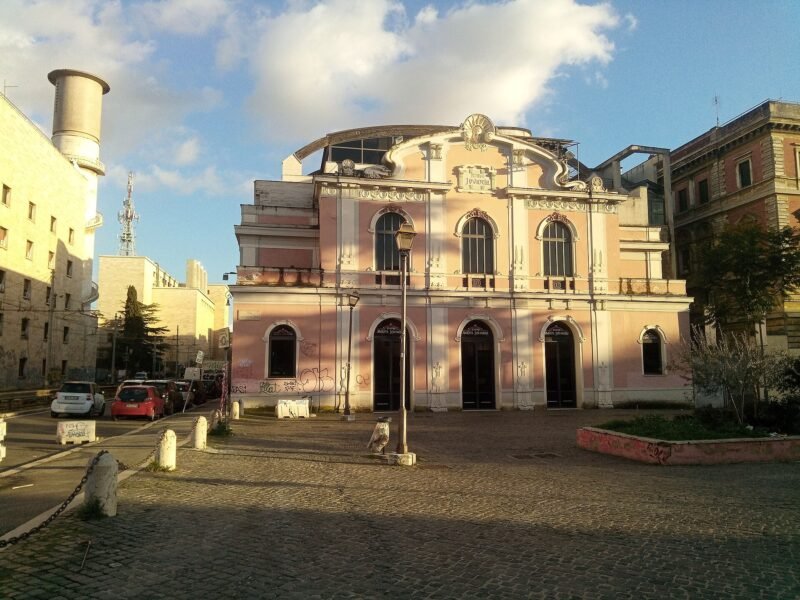
Gaber, Mi fa male il mondo at Teatro Brancaccio in Rome, January 20-24, 2027
In short. Neri Marcorè brings “Gaber, Mi fa male il mondo” (The World Hurts Me) to Teatro Brancaccio in Rome, Via Merulana 244 (Esquiline Hill), from January 20 to 24, 2027: Wednesday, January 20 to Saturday, January 23 at 9:00 p.m., Sunday,…
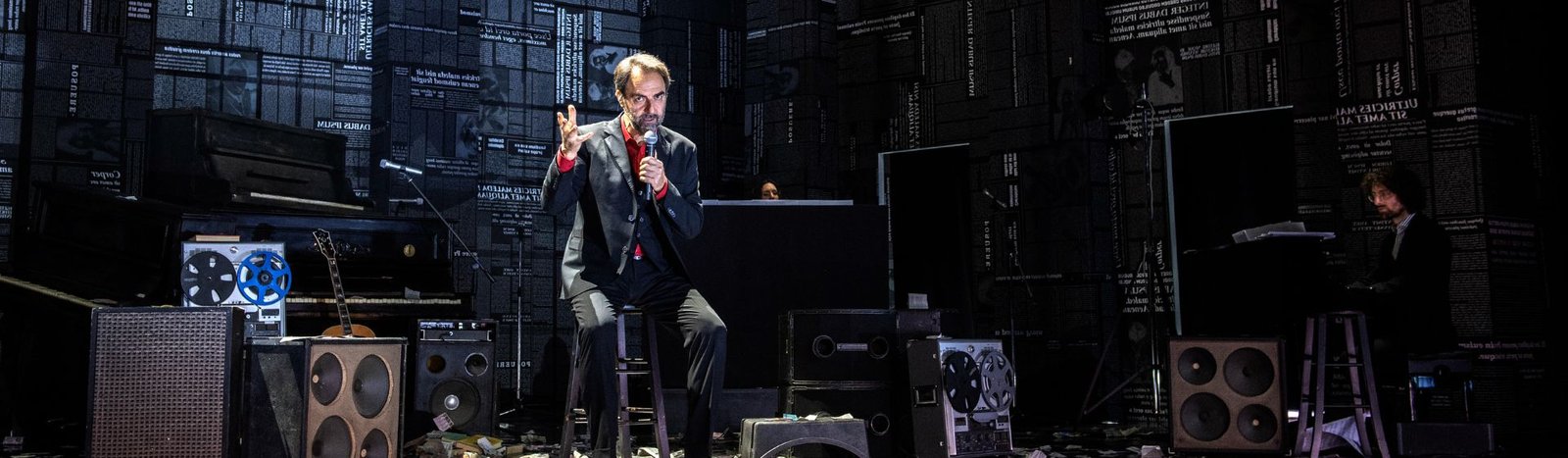
Neri Marcorè brings “Gaber, Mi fa male il mondo” (The World Hurts Me) to Teatro Brancaccio in Rome, Via Merulana 244 (Esquiline Hill), from January 20 to 24, 2027: Wednesday, January 20 to Saturday, January 23 at 9:00 p.m., Sunday, January 24 at 4:00 p.m., running 80 minutes. The nearest stop is Vittorio Emanuele on metro line A, alternatively Cavour on metro line B, buses 16, 75, 714, 717 and C3 run on Via Merulana. The theater publishes the full prices of four sections: poltronissima A 46 euros, poltrona A 39 euros, poltrona B 33 euros, second balcony B 32 euros. Tickets are bought from the show's page on the official website of Teatro Brancaccio, which links to the presale network authorized by the organizer, and at the box office at Via Merulana 244, open Tuesday to Saturday from 4 to 7 p.m. Dramaturgy and direction are by Giorgio Gallione, the production is by Teatro Stabile di Bolzano and Teatro della Toscana, in collaboration with Fondazione Giorgio Gaber and Centro Servizi Culturali Santa Chiara.
Language: performed in Italian. No English version or English surtitles are announced.
Five performances, one actor, four pianos and the songs of Giorgio Gaber and Sandro Luporini. It is Neri Marcorè's return to a repertoire he has frequented for almost 20 years, in the largest hall on Via Merulana. Teatro canzone (song theater) has a long history in Rome: these pages help you choose the evening, the seat and the way to get there, and understand what you will hear.
Gaber, Mi fa male il mondo: what kind of show it is
“Gaber, Mi fa male il mondo” is a teatro canzone show on texts by Giorgio Gaber and Sandro Luporini, with Neri Marcorè onstage alongside four pianists, dramaturgy and direction by Giorgio Gallione, new arrangements and musical direction by Paolo Silvestri.
A return to the roots
The theater presents the show as an exploration of the creative, narrative, ethical and literary universe of the two authors. Gallione, in the director's notes published by the Brancaccio, explains that he wants to return to the roots of the inspiration of these works in music, ideally entering the studio where Gaber and Luporini worked for over 40 years. Marcorè and Gallione, the presentation recalls, have long frequented the Gaber material: this return is described as an ethical and artistic necessity.
The “thief” of insights
One thread of the show is Gaber's declared debt to writers and thinkers: he himself, with irony, called himself a thief of other people's insights. The list cited by the theater includes Pasolini, Céline, Adorno, Calvino, Berlinguer, Brecht, Beckett and Botho Strauss, distilled into songs and monologues that the Brancaccio describes as still alive with authenticity today.
The staging
Sets and costumes are by Guido Fiorato, lighting design by Marco Filibeck. Onstage, with Marcorè, play Eugenia Canale, Lorenzo Fiorentini, Eleonora Lana and Francesco Negri, four young pianists, the cast list gives the names with the notation “o.a.”, meaning in rotation among the performers.
The running time
The show runs 80 minutes. It is a compact length, which allows a relaxed dinner after the evening performances and leaving in the late afternoon after the Sunday one.
The songs of Gaber and Luporini in the show
Teatro Brancaccio publishes the list of the tracks that dot the show, and it is the best way to know what you will hear in the hall. The titles are, in the order given by the theater, “Mi fa male il mondo,” “Il sosia” (The Double), “L'uomo che sto seguendo” (The Man I Am Following), “La nave” (The Ship), “L'odore” (The Smell), “Non è più il momento” (It Is No Longer the Time), “La festa” (The Party), “La peste” (The Plague), “Si può” (It Can Be Done), “Io se fossi Dio” (If I Were God) and “C'è solo la strada” (There Is Only the Road).
Mi fa male il mondo
The song that gives the show its title comes from the season of “E pensare che c'era il pensiero,” staged between 1994 and 1996, in which Gaber returned to analyzing social reality with new tracks such as “Destra-Sinistra” and “Quando sarò capace d'amare.” It is a song of maturity, written by an artist who had already gone through 30 years of theater.
Io se fossi Dio
“Io se fossi Dio” is the most famous and most uncomfortable piece in the repertoire. Written in 1978, after the killing of Aldo Moro, it was published only in 1980, on a 12-inch record cut on one side only, because the record companies feared lawsuits, it lasts 14 minutes. Gaber then included it in the show “Anni affollati,” between 1981 and 1982.
La festa
“La festa” comes from “Polli d'allevamento,” the recital of the 1978-1979 season that marked the break between Gaber and Luporini and part of their audience: in many theaters the singer was the target of thrown objects. It is one of the moments when teatro canzone stopped consoling those who listened.
C'è solo la strada
“C'è solo la strada” closes the list. Under the same title, in August 1985, Gaber was the protagonist of a meeting at the Meeting di Rimini, from which a correspondence with Don Luigi Giussani was born: a detail that says how far his songs spoke to audiences very distant from one another.
Four pianos: Paolo Silvestri's arrangements
The musical signature of the show is the new arrangements by Paolo Silvestri for four pianos, played live onstage: a small orchestra of keyboards in place of the guitar with which Gaber wrote his songs.
The idea
Silvestri, in the show's presentation, recounts that he was always struck by the regularity with which Gaber and Luporini wrote the songs of the next show every summer, a method that reminds him of classical composers. Hence the choice of the piano, the instrument on which musicians have imagined orchestra and musical theater: onstage there are four of them, forming a true orchestra of pianos.
The summers in Viareggio
That method is documented: from 1971 Gaber and Luporini met every summer in Viareggio to prepare the next year's show. Conception and texts were born together, then Gaber composed the music alone. From 1979 the meetings moved to the house Gaber had bought in Montemagno di Camaiore, in the Versilia hills.
What changes for the listener
Those who know the original versions will find songs that are recognizable but shifted: the piano takes away the roughness of the guitar and adds harmonic depth. For those who have never heard Gaber live, it is a way to discover him without the direct comparison with his voice.
Who Giorgio Gaber was: the biography
Giorgio Gaber, stage name of Giorgio Gaberscik, was born in Milan on January 25, 1939 and died in Montemagno di Camaiore on January 1, 2003: a singer-songwriter, playwright, actor, guitarist and director, he is considered the creator of teatro canzone.
The guitar and rock and roll
As a child he contracted polio, which left him with a slight paralysis of the left hand, his father gave him a guitar so he could exercise his fingers. As a teenager he played jazz, he then joined Adriano Celentano's Rock Boys, where Enzo Jannacci was on piano. In 1958 he signed with the newly founded Dischi Ricordi, “Ciao ti dirò” is one of the first rock tracks in Italian.
The success of the 1960s
With Jannacci he formed the duo Due Corsari. Success came in 1960 with “Non arrossire” and “La ballata del Cerutti,” on a text by Umberto Simonetta, “Trani a gogò,” “Goganga” and “Porta Romana” followed. He took part in Sanremo four times and became one of the most popular faces on television, up to the 1970 variety show “E noi qui.”
The 1970 turning point
At the height of his popularity Gaber left television and took song to the theater. On October 21, 1970 “Il signor G” debuted at Teatro San Rocco in Seregno, produced by Paolo Grassi of the Piccolo Teatro di Milano. Il Signor G was a character who did not play a role: he played himself, a man full of contradictions.
The shows of the 1970s
The shows that followed in those years, with the titles that fans of the Signor G know by heart, were “Storie vecchie e nuove del Signor G” (Old and New Stories of Signor G), “Dialogo tra un impegnato e un non so” (Dialogue Between a Committed Man and a Don't-Know), “Far finta di essere sani” (Pretending to Be Healthy), “Anche per oggi non si vola” (No Flying Today Either), “Libertà obbligatoria” (Compulsory Freedom) and “Polli d'allevamento” (Farm-Raised Chickens). The numbers tell the phenomenon: the “Dialogo” reached 166 performances and 130,000 attendances, “Far finta di essere sani” 182 performances and 186,000 spectators.
From the 1980s to the 2000s
In the 1980s Gaber alternated teatro canzone and drama: “Il caso di Alessandro e Maria” with Mariangela Melato, “Io se fossi Gaber,” “Parlami d'amore Mariù,” the monologue “Il Grigio.” In 1990 he staged “Aspettando Godot” with Jannacci, Paolo Rossi and Felice Andreasi. The 1990s brought “Il Teatro Canzone,” with the monologue “Qualcuno era comunista,” “E pensare che c'era il pensiero” and “Un'idiozia conquistata a fatica.” He is among the artists most awarded by the Club Tenco, with two Targhe and a Premio Tenco.
Sandro Luporini
The co-author of almost all of this is Sandro Luporini, a painter from Viareggio, whom Gaber met in the early 1960s. Together they wrote “Così felice,” brought to Sanremo in 1964, and then for 30 years the texts of the songs and monologues. Marcorè's show carries both names on the poster, and rightly so.
Who Neri Marcorè is: the biography
Neri Marcorè was born in Porto Sant'Elpidio on July 31, 1966: an actor, impersonator, voice actor, host and director, he won the Nastro d'argento for best leading actor in 2003 for Pupi Avati's “Il cuore altrove.”
The beginnings
At 12 he was already taking part in Giancarlo Guardabassi's traveling shows. In 1988 he won an episode of Corrado's “Corrida”, in 1990, a graduate in conference interpreting in English and German from the “Carlo Bo” school in Bologna, he reached the final of “Stasera mi butto” and was hired for the satirical strip “TG X” within Raffaella Carrà's “Ricomincio da due.”
Television satire
With Serena Dandini, Corrado and Sabina Guzzanti he took part in the “Pippo Chennedy Show” (1997) and the “Ottavo nano” (2001), then in “Parla con me” on Rai 3, where his impressions of Maurizio Gasparri, Alberto Angela, Piero Fassino and Antonio Di Pietro became popular. From 2001 to 2011 he hosted “Per un pugno di libri” with Piero Dorfles.
Cinema
With Pupi Avati he shot “Il cuore altrove,” which won him the Nastro d'argento and a David di Donatello nomination, “La seconda notte di nozze” and “Gli amici del bar Margherita.” He has worked with Sydney Sibilia in “Smetto quando voglio,” with Paolo Genovese, Cristina Comencini, Walter Veltroni (“Quando,” 2023). In 2024 he made his directing debut with “Zamora,” nominated for the David for best debut and awarded the Premio Flaiano.
The voice actor
He is one of the most recognizable voices of Italian dubbing: Dug in “Up,” Joe Gardner in “Soul,” Baloo in the 2016 “Jungle Book,” Snake Jailbird and Comic Book Guy in “The Simpsons,” Mr. Mackey of “South Park.”
Teatro canzone
In the theater Marcorè has built an almost entirely musical path, often directed by Gallione: “Un certo signor G.,” a tribute to Gaber, from 2008, “Beatles Submarine” with the Banda Osiris, “Quello che non ho”, “La Buona Novella” from Fabrizio De André's record. In 2022 he won the “Quelli che cantano Fabrizio” Targa at the Premio De André, in 2023 the Premio Bindi for career achievement. Since 2017 he has been the creator of the RisorgiMarche festival, born for the lands hit by the earthquake. He has been an Officer of the Order of Merit of the Italian Republic since 2020.
Giorgio Gallione, Marcorè's director
Giorgio Gallione signs the dramaturgy and direction of “Gaber, Mi fa male il mondo,” and is the director with whom Neri Marcorè has built the largest part of his theater work.
A long partnership
Marcorè's theater credits list, under the direction of Gallione, the shows “La lunga notte del dottor Galvan” (The Long Night of Doctor Galvan, 2005-2008), “Un certo signor G.” (A Certain Mr. G, 2007-2010), “Terra padre” (Father Land), “Eretici e corsari” (Heretics and Corsairs), “Beatles Submarine,” “Quello che non ho” (What I Don't Have), “Tango del calcio di rigore” (Tango of the Penalty Kick), “La Buona Novella” (The Good News) and, from 2025, this new show on Gaber.
The view of the show
In the notes published by the Brancaccio Gallione describes Gaber as a great storyteller and total artist, who accompanied the audience between the private and the political on the uncertain path of a society grappling with conformism. It is a reading that bets on the present more than on nostalgia.
Dates, times and tickets for Gaber, Mi fa male il mondo
“Gaber, Mi fa male il mondo” is on at Teatro Brancaccio for five performances: Wednesday, January 20, Thursday the 21st, Friday the 22nd and Saturday the 23rd, 2027 at 9:00 p.m., Sunday, January 24 at 4:00 p.m.
The published prices
The theater lists the full prices of four sections: poltronissima A 46 euros, poltrona A 39 euros, poltrona B 33 euros, second balcony B 32 euros. The booking system lists other sections, from poltronissima gold to the first balcony, whose prices are shown when you choose.
Where to buy them
From the “Buy” button on the show's official page you go to the authorized presale network, alternatively there is the box office at Via Merulana 244, open Tuesday to Saturday from 4 to 7 p.m., on Sunday during show hours, closed on Monday.
Which seat to choose
For a show of voice and pianos, the best choice is the central poltrona A: close enough to see Marcorè's face, far enough to hear the four instruments blended. The central first balcony often offers the most balanced sound, because you hear the whole hall.
A curiosity about Gaber, Mi fa male il mondo at Teatro Brancaccio in Rome, January 20-24, 2027
The curiosity is a calendar coincidence linking Neri Marcorè, Giorgio Gaber and Rome. On January 22, 2008 Marcorè debuted at the Ambra Jovinelli with “Un certo signor G.,” his first tribute to Gaber, directed by Giorgio Gallione. 19 years later, almost on the same days, he returns to Rome with the same director and a new Gaber show: the Friday, January 22, 2027 performance falls exactly on the anniversary of that debut.
And there is a second date: January 25 is the day Gaber was born, in Milan, in 1939. The five Roman performances close on Sunday the 24th, on the eve of what would have been his 88th birthday. It is not a round anniversary, but those who know the biography of Signor G will not let it pass.
The third curiosity concerns the working method, told by Paolo Silvestri in the show's presentation: the regularity with which Gaber and Luporini wrote the next show every summer reminds him of classical composers, and it is from this suggestion of method, more than from the guitar with which the songs were born, that the idea of the four pianos comes. A show about Gaber without a guitar onstage: put like that it sounds like a provocation, heard it is a coherent choice.
Teatro Brancaccio: the hall on Via Merulana
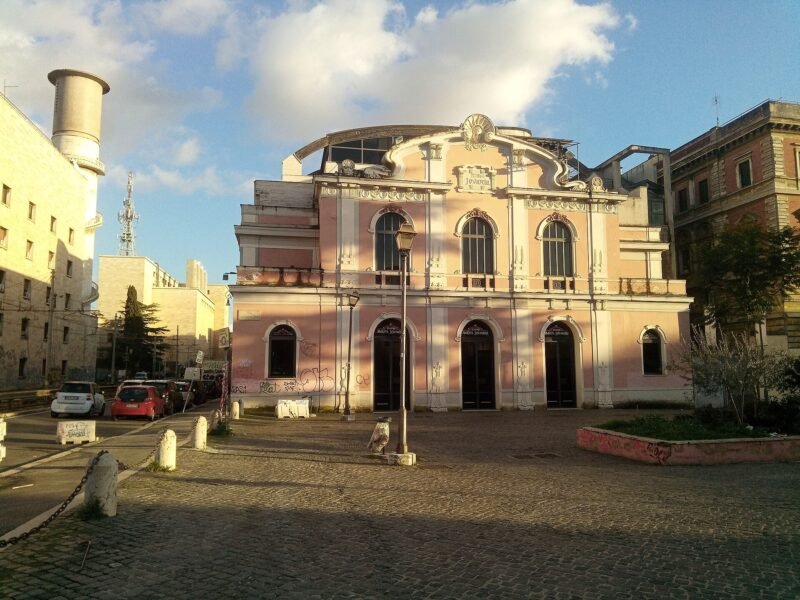
Teatro Brancaccio, at Via Merulana 244, has had its current configuration since 1937: two foyers, a wide orchestra and two balconies. It is one of the largest halls in Rome for musicals, drama and concerts, for the full profile see our page on Teatro Brancaccio.
Orchestra and balconies
The orchestra is divided into Poltronissima and Poltrona sections, in A and B bands, with the Gold and Gold Vip bands, above are the first and second balconies, also divided into A and B. The balconies are reached on foot: there are no elevators to the upper sections.
The Brancaccio complex
The main hall is part of a larger complex: the Brancaccino, a theater of about 100 seats devoted to contemporary playwriting and children's theater, a training area and a terrace on Via Merulana. The theater is home to Viola Produzioni and hosts the STAP Brancaccio Academy and the Brancaccio Musical Academy.
A hall for teatro canzone
The Brancaccio is a musical hall, but its audience knows well the seated, intimate concerts of the singer-songwriters. A show like this, made of words and pianos, fills the stage with few elements: the voice is what matters, and the hall carries it well up to the second balcony.
Something nobody tells you about Gaber, Mi fa male il mondo at Teatro Brancaccio in Rome, January 20-24, 2027
What nobody says is that at the Brancaccio it pays to arrive an hour early, and not out of excess caution. The theater's rules ask spectators to show up at least an hour ahead: in a hall of this size there are visual checks of bags and backpacks, and umbrellas must be left at the coat check. In January, with rain, the coat-check line is real. And entering the hall after the show has started is forbidden: in an 80-minute show with no intermission, latecomers risk waiting a long time in the foyer for a useful break.
The second thing concerns tickets. At the Brancaccio they are named, tied to a mandatory registration, and the rules do not allow handing them over without an agreement with the theater. Anyone buying for a friend must know this beforehand. Tickets are neither exchanged nor refunded, except if the event is cancelled.
The third thing, a practical one: the rules forbid bringing into the hall bulky containers over 17 liters, plastic bottles over half a liter, professional cameras and selfie sticks. A work backpack, for those coming straight from the office on Thursday night, ends up at the coat check. Factor it in, and choose a small bag.
How to get to Teatro Brancaccio for Gaber, Mi fa male il mondo
Teatro Brancaccio is at Via Merulana 244, in the Esquiline Hill district, less than a kilometer from Termini station and a few minutes' walk from the Vittorio Emanuele stop on metro line A: it is among the Roman theaters best served by public transport.
By metro
Metro line A, Vittorio Emanuele stop, is the closest: you come out on Piazza Vittorio and reach Via Merulana in a few minutes. Metro line B, Cavour stop, is handy for those coming from the Colosseum or Monti. From Termini you can also walk, passing by Santa Maria Maggiore.
By bus
On Via Merulana, at the Merulana/Brancaccio and Merulana/Mecenate stops, lines 16, 75, 714, 717 and C3 run. At the Labicana/Merulana stop run lines 3, 53, 75, 85, 87, 186, 571, 810, C3 and the night line N10, useful for the way back.
By taxi
The taxi stands indicated by the theater are in Largo Brancaccio, in Piazza Vittorio Emanuele II at number 113, in Via Principe Amedeo at 138, in Via Giolitti at 6 and in Via Venosta.
By car
I advise against the car: evening parking in the Esquiline area is difficult and the theater lists no partner garages. Those coming from outside Rome do better leaving the car near a metro station and continuing to Vittorio Emanuele or Cavour.
The advice I give you for visiting Gaber, Mi fa male il mondo at Teatro Brancaccio in Rome, January 20-24, 2027
It is worth listening, before going, to three songs: “Mi fa male il mondo,” “Io se fossi Dio” and “Qualcuno era comunista.” Not to learn the words, but to have Gaber's voice in your ear. The show is not an imitation, and Marcorè, though an impersonator by trade, does not try to redo Signor G: the comparison between the original and the new reading for four pianos is half the pleasure of the evening.
Second piece of advice: choose the central poltrona A or the central first balcony, and avoid the far side ends of the orchestra. With four pianos onstage, sitting too far to the side means hearing one instrument more than the others. For an arrangement conceived as an orchestra, balance matters.
Third piece of advice: the Sunday 4 p.m. performance is perfect for those coming from outside Rome or who want to make the show the center of a day on the Esquiline Hill. You come out around 5:30, with time for a walk to Santa Maria Maggiore and dinner in Monti.
Finally, if you go in a group, stop by the theater's Promotions Office before buying: for organized outings it is the most reliable channel for getting seats together and the conditions provided for groups.
Another well-known fact, yet rarely mentioned
That Gaber invented teatro canzone is well known. Less often cited is that the choice cost him his audience at first. After the 1970 tour with Mina, in which he sang in the first half and she in the second, the theaters of “Signor G” stayed half empty: the first show drew 18,000 spectators in all. It was Paolo Grassi, director of the Piccolo Teatro di Milano, who convinced him the path was right. Three years later “Far finta di essere sani” counted 186,000.
Equally little remembered is Gaber's tie to Rome. Here he recorded, at the Teatro Giulio Cesare, between March 4 and 10, 1985, the double album “Io se fossi Gaber”, here, in 1990, he repeated “Il Grigio,” surpassing the previous year's attendance, at the Teatro Sistina the musical comedy “A che servono gli uomini?” (What Are Men For?) was staged, with his original music and direction by Pietro Garinei, at the Teatro Olimpico he brought “Un'idiozia conquistata a fatica” (An Idiocy Won with Difficulty) on January 28, 1998.
And on the hall's side: for 15 years, from 1985 to 2000, the Brancaccio was the seat of the Fondazione dell'Opera di Roma. The stage on which Silvestri's four pianos arrive was for a long time one of the homes of opera in the capital.
The right photo to take at Gaber, Mi fa male il mondo at Teatro Brancaccio in Rome, January 20-24, 2027
During the show, no photos: the Brancaccio's rules forbid photographing and filming, even with a phone. The right photo is taken beforehand, outside or from the balcony while the hall is still lit.
The first is the Brancaccio facade on Via Merulana with the show's poster, taken from the opposite sidewalk with a wide lens. In January, at 8 p.m., it is already dark: the lit facade and the audience queue tell the evening. Expose for the theater's lights and leave the street a little darker.
The second is the hall from above, before the lights go down. From the first balcony you see the orchestra filling up and the four pianos already arranged on the stage, with Marco Filibeck's lights still unmoving: an image that tells the show better than any stage shot. Then the phone goes in your pocket.
The third, for those choosing Sunday afternoon, is Via Merulana itself, one of the straightest streets in the center, with Santa Maria Maggiore at one end and San Giovanni at the other. A photo taken safely from the sidewalk, with the basilica at the end in the last January light, is the Esquiline Hill in one image.
Accessibility at Teatro Brancaccio
Teatro Brancaccio states that it has no architectural barriers to the orchestra: there is a ramp, an area for wheelchairs and an accessible restroom on the ground floor, reached from the orchestra foyer.
Wheelchairs and reduced mobility
For shows organized by the operator the theater reserves, while they last, four orchestra seats for wheelchair users with a companion and two seats for people with difficulty walking. The balconies are not wheelchair accessible. Seats are reserved by sending the box office the form, with the disability certificate or the Disability Card.
Visual and hearing disabilities and service dogs
For spectators with visual and hearing disabilities the theater reserves orchestra seats on request. Those with a service dog can ask to enter with the animal by writing to the box office and attaching the certification.
Some important events that took place here in history
The history of Teatro Brancaccio begins in January 1916, when the hall opened under the name of Teatro Morgana, built against the embankment of the gardens of the Field Brancaccio palace, whose name comes from Isabella Field, married to Prince Brancaccio. The link with the neighboring Palazzo Brancaccio is physical even before it is in the name.
The decisive step is 1937: the hall is redesigned in its current configuration, with two foyers, a wide orchestra and two balconies for about 2,000 seats at the time, and takes the name Teatro Brancaccio.
In 1985 a different chapter opens: the hall becomes the seat of the Fondazione dell'Opera di Roma, where it remains until 2000. Then the city entrusts the direction to Gigi Proietti, until 2007, the management of Maurizio Costanzo follows until 2010 and that of Stage Entertainment Italia until 2012. Since September 2012 the artistic direction has been Alessandro Longobardi's, with Viola Produzioni.
Recent years are those of the cultural hub: the Brancaccino, the academies, the terrace on Via Merulana, the Spazio Impero inaugurated in 2014 with nine rehearsal rooms, networked with the Sala Umberto and the Spazio Diamante. The theater has also launched an energy efficiency project financed with Next Generation EU funds through the Ministry of Culture.
Around the Brancaccio: Esquiline Hill, Monti and Via Merulana
Teatro Brancaccio is on Via Merulana, between Santa Maria Maggiore and San Giovanni in Laterano, a few steps from Piazza Vittorio and the Monti district: those who arrive early have around them one of the densest areas of history in the city.
What is a few steps away
Via Merulana connects two major basilicas: Santa Maria Maggiore and St. John Lateran. On the same street are Palazzo Merulana and, a little farther, the Auditorium of Maecenas. Toward the north, in Piazza Vittorio, is the Porta Alchemica.
Where to eat before or after the show
Via Merulana and the surrounding streets have neighborhood bars and venues for an aperitivo or a quick dinner. Piazza Vittorio is the multiethnic Esquiline Hill, with cuisines from half the world and low prices. The Monti district, a quarter of an hour's walk away, has trattorias, osterias and wine bars, and is the best choice for dining after 10:30 p.m., on leaving the evening performances. With a full hall coming out all at the same hour, it is wise to book.
Who has passed through Gaber, Mi fa male il mondo at Teatro Brancaccio in Rome, January 20-24, 2027
Some of the biggest names in Italian and international entertainment have passed through the Brancaccio stage: the theater itself recalls Totò, Anna Magnani, Aldo Fabrizi and Gigi Proietti among the actors, and among the musicians Fabrizio De André, Louis Armstrong and Jimi Hendrix.
The name of De André, in this list, carries weight. Neri Marcorè has devoted an important part of his career to Faber, from “La Buona Novella” directed by Gallione to the “Quelli che cantano Fabrizio” Targa won at the Premio De André in 2022, and between 2018 and 2019 he staged an “Incontro in musica tra Faber e Gaber” (Meeting in Music between Faber and Gaber). Stepping onto the same stage where De André sang, with Gaber's songs, closes a circle that Marcorè himself drew.
Proietti was not only a guest: after 2000 he directed the theater on behalf of the City of Rome, until 2007. After him the management passed to Maurizio Costanzo. Two figures who made the spoken word onstage, acted or interviewed, the center of their work.
The 2026-2027 season program confirms the hall's double soul: alongside the singer-songwriters' concerts are the big musicals, from The Prince of Egypt to Mrs. Doubtfire. In between, for five January nights, an actor from the Marche with four pianos and the words of two authors who changed the theater.
January in Rome: the week of the show
The performances of “Gaber, Mi fa male il mondo” fall in the second half of January 2027, weeks of low tourist season, with cold and often damp evenings.
Weather and clothing
January is among the coldest months of the Roman year. Bring a coat and an umbrella, remembering that the umbrella does not go into the hall and must be left at the coat check.
A day on the Esquiline Hill
For those coming from outside, the Sunday performance lets you devote the morning to the basilicas of Via Merulana and lunch to Monti, with the show in the afternoon and the train in the evening from Termini, less than a kilometer away.
Spoken theater in the city
In the same week, January 19 to 24, at the Teatro Olimpico Riccardo Rossi plays “Non ho l'età!”: for those in Rome a few days, a comic monologue and an evening of teatro canzone make a small season.
Frequently asked questions about Gaber, Mi fa male il mondo at the Brancaccio
When is Gaber, Mi fa male il mondo on at Teatro Brancaccio?
“Gaber, Mi fa male il mondo” with Neri Marcorè is on at Teatro Brancaccio in Rome from January 20 to 24, 2027: Wednesday, January 20 to Saturday, January 23 at 9:00 p.m., Sunday, January 24 at 4:00 p.m. There are five performances in all.
How much do tickets cost for Neri Marcorè's show at the Brancaccio?
Teatro Brancaccio publishes these full prices for “Gaber, Mi fa male il mondo”: poltronissima A 46 euros, poltrona A 39 euros, poltrona B 33 euros, second balcony B 32 euros. The other sections appear with their price in the booking system.
How long is the show on Gaber with Neri Marcorè?
“Gaber, Mi fa male il mondo” runs 80 minutes, as stated on the official page of Teatro Brancaccio. With the evening performances at 9:00 p.m. you come out around 10:30, with the Sunday one at 4:00 p.m., around 5:30.
Which Gaber songs can you hear in the show?
Neri Marcorè's show at the Brancaccio includes, according to the theater, “Mi fa male il mondo,” “Il sosia,” “L'uomo che sto seguendo,” “La nave,” “L'odore,” “Non è più il momento,” “La festa,” “La peste,” “Si può,” “Io se fossi Dio” and “C'è solo la strada,” all of them songs of Gaber and Luporini that the theater lists for the evening.
Who plays onstage with Neri Marcorè?
In “Gaber, Mi fa male il mondo” Neri Marcorè is joined by four pianists, Eugenia Canale, Lorenzo Fiorentini, Eleonora Lana and Francesco Negri, listed on the poster in rotation. Arrangements and musical direction are by Paolo Silvestri.
How do you get to Teatro Brancaccio by public transport?
Teatro Brancaccio, at Via Merulana 244, is reached by metro line A at the Vittorio Emanuele stop or by metro line B at Cavour. On Via Merulana run buses 16, 75, 714, 717 and C3, for the night return there is line N10 from Labicana/Merulana.
Where do you buy tickets for Gaber, Mi fa male il mondo?
Tickets for the show at Teatro Brancaccio are bought from the show's official page on the theater's website, which links to the authorized presale network, or at the box office at Via Merulana 244, open Tuesday to Saturday from 4 to 7 p.m.
The final advice on Gaber at the Brancaccio
The best choice is Thursday or Friday night, in a central poltrona A, arriving an hour early as the theater asks and dining in Monti after the show. 80 minutes is short for telling 30 years of teatro canzone, but enough to understand why Gaber and Luporini are still listened to: their questions, on conformism and freedom, have not lost relevance. Marcorè brings them onstage with the care of someone who has worked on them for 20 years.
Article written by the editorial team of Tour Leader Pro, contact them for Private/Corporate/V.I.P. Tours and Experiences.
Planning a trip to Rome? The English-language guides to visiting the city are on ItalyPlanner.com.
Contact Information
Nearby
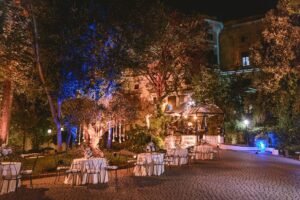
 Teatro Brancaccio100 m
- Auditorium of Maecenas100 m
- Palazzo Brancaccio200 m
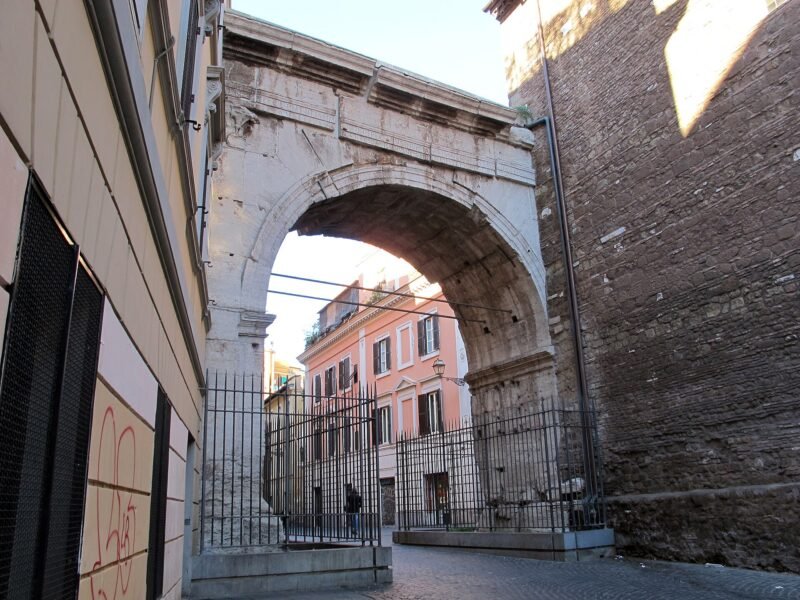
- Arch of Gallienus300 m
- Museum of Illusions in Rome300 m
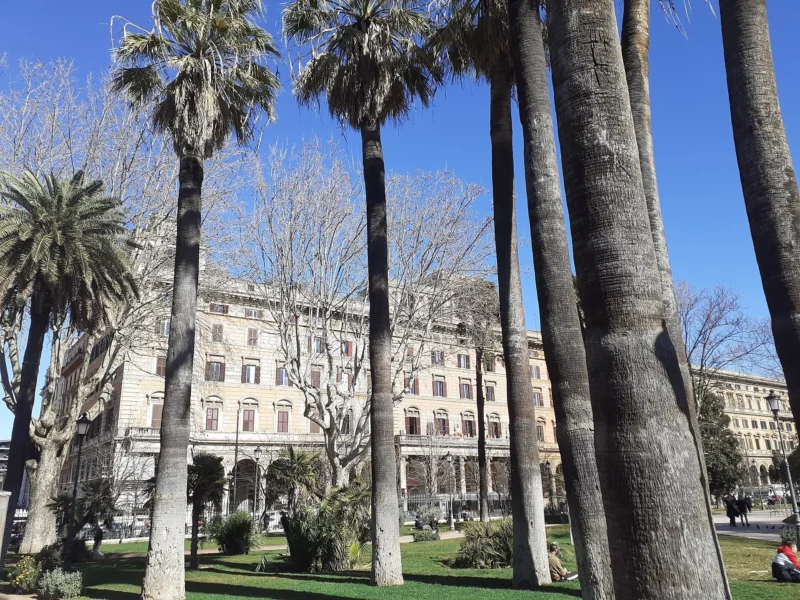
- Esquiline Hill300 m
Upcoming events nearby
- The Prince of Egypt the Musical at Teatro Brancaccio, October 29 to November 15, 2026100 m
- Mrs Doubtfire the Musical at Teatro Brancaccio, March 31 to April 18, 2027100 m
- Raffaella il Musical at Teatro Brancaccio, February 10 to March 6, 2027100 m
- Francesco Renga at Teatro Brancaccio, Live Teatri 2026, May 11, 2027100 m


You might also like
- Mahler’s Third Symphony by John Neumeier at Teatro dell’Opera di Roma, February 4 to 10, 2027
- The Rake’s Progress at Teatro dell’Opera di Roma, November 27 to December 5, 2026
- Aggiungi un posto a tavola at the Teatro Brancaccio in Rome, December 10 to December 20, 2026
- Otello with Giorgio Pasotti and Giacomo Giorgio at Teatro Ambra Jovinelli, February 24 to March 7, 2027
- Lucia di Lammermoor at Teatro dell’Opera di Roma, February 21 to 28, 2027
- Educazione sentimentale with Giuseppe Fiorello at Ambra Jovinelli, February 10 to 21, 2027