Federico Buffa, Number 23 at Teatro Olimpico, March 8 and 9, 2027
In short. Federico Buffa brings Number 23. Vita e splendori di Michael Jordan to Teatro Olimpico in Rome on March 8 and 9, 2027, starting at 20:30, accompanied on piano by Alessandro Nidi.
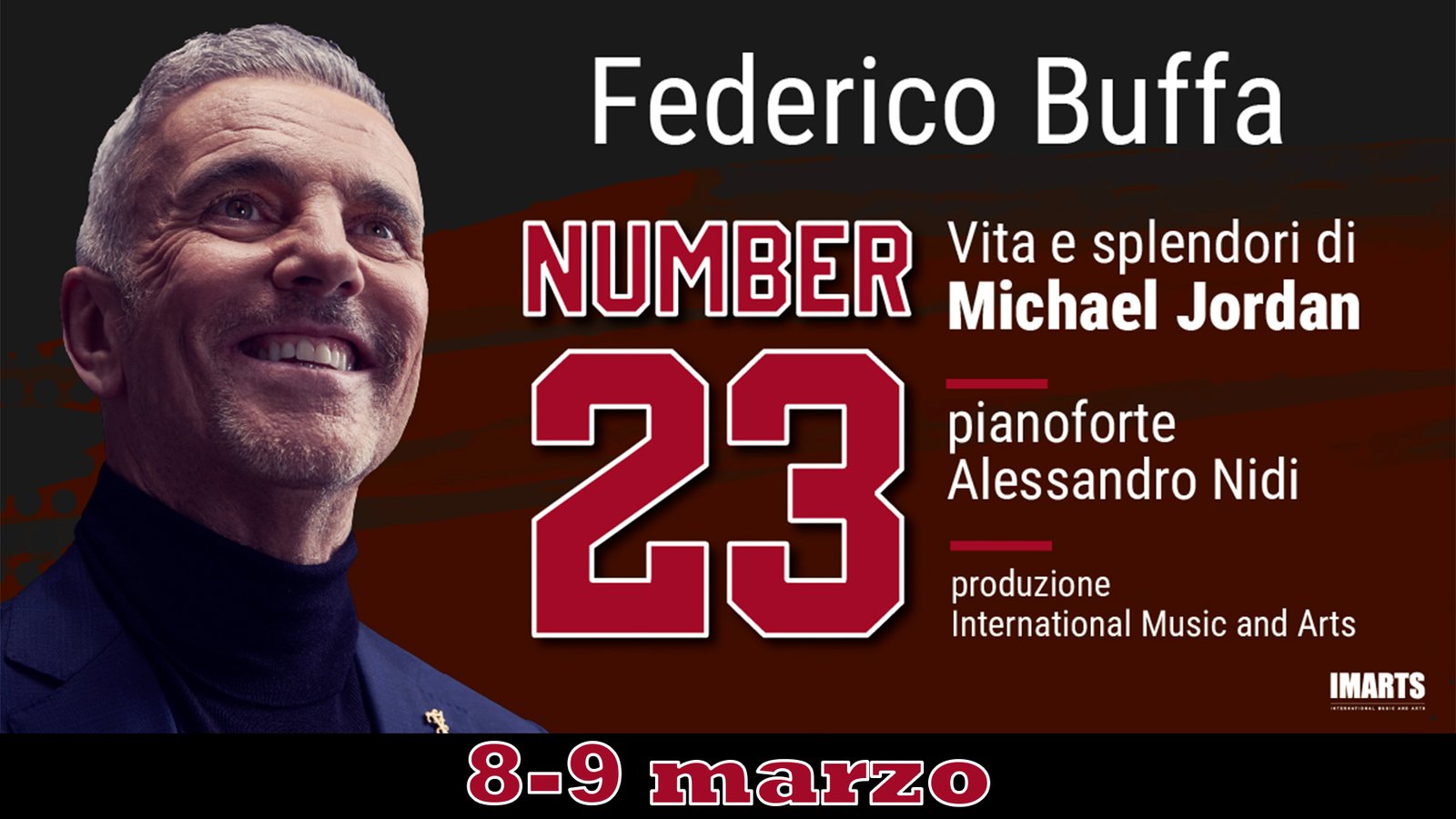
Federico Buffa brings Number 23. Vita e splendori di Michael Jordan to Teatro Olimpico in Rome on March 8 and 9, 2027, starting at 20:30, accompanied on piano by Alessandro Nidi. The theater is at Piazza Gentile da Fabriano 17, in the Flaminio neighborhood. You get there by Metro Line A to Flaminio and then tram 2 to the terminus at Piazza Mancini, from where it is about 500 meters on foot, or by bus 910 from Termini, Pannini stop. The prices listed by the theater range from €22 to €38 plus presale fee, depending on the section. Tickets are bought on the official Teatro Olimpico website and at the box office.
Language: performed in Italian. No English version or English surtitles are announced.
The greatest sports storyteller on Italian television tells the story of the greatest basketball player of all time, or at least the one most fans consider such. Two evenings in Flaminio, with a piano on stage. The verdict is clear: anyone who loved Buffa's Storie on Sky must not miss the chance to hear him live, where his way of telling a story comes across even better.
Number 23: Federico Buffa's show on Michael Jordan
Number 23. Vita e splendori di Michael Jordan is a show by and with Federico Buffa, with Alessandro Nidi on piano, on stage at Teatro Olimpico in Rome on March 8 and 9, 2027 at 20:30. The story follows Jordan's career on the court, from 1984 to 2003, and his transformation into a businessman.
The story
The theater's presentation starts from a precise idea: Jordan's feats on the court were the engine of his narrative once he became a businessman, owner of one of the most recognizable sports brands in the world. Basketball, that is, as the foundation of a commercial and cultural myth that goes far beyond sport.
Arriving in the League
The show tells how Jordan, just arrived in the NBA, immediately made champions like Magic Johnson and Larry Bird understand what he was made of, despite his young age. Magic and Bird were the two faces of American basketball in the 1980s, and the arrival of a kid able to match their level was an event.
Beyond the statistics
Six NBA titles, individual and team records broken: the theater cites them, but adds that the numbers tell only part of the greatness of a figure who is hard to fit inside the fence of statistics. It is exactly Buffa's ground, who has always used results as a starting point and not as an endpoint.
Alessandro Nidi's piano
On stage, next to Buffa, is Alessandro Nidi's piano. The live music accompanies the narration and marks its passages. It is a formula Buffa has adopted in many of his theater shows, and one that turns sports storytelling into something close to narrative theater.
Dates and times for Federico Buffa at Teatro Olimpico
Federico Buffa is on the Teatro Olimpico program on March 8 and 9, 2027, a Monday and a Tuesday, with the show at 20:30. The show is part of the theater's 2026/2027 season.
Two weeknight evenings
The two dates fall at the beginning of the week, and this has a practical advantage: the Flaminio neighborhood is quieter than on the weekend, public transportation is less crowded, restaurants are freer. For an evening of storytelling, far from the Saturday night mood, it's a good slot.
When to arrive
With the start at 20:30, getting to Piazza Gentile da Fabriano around 20:00 lets you pick up any tickets, find your seat and take a stroll in the foyer without rushing.
Tickets and prices for Number 23 at Teatro Olimpico
Tickets for Federico Buffa's Number 23 at Teatro Olimpico cost from €22 to €38 plus the presale fee, according to the table published by the theater. Online, a €2 fee per ticket is added.
Sections and prices
Poltronissima Gold costs €38 plus €5.70 presale. Poltronissima Laterale €34.50 plus €5.20. Poltrona €30 plus €4.50. Balcony €30 plus €4.50. Balcony with railing €29 plus €4.40. Side Balcony €24.50 plus €3.70. Side Balcony with railing €22 plus €3.30. The theater specifies that the presale fee is always required when the ticket is issued.
Where to buy
Tickets are bought on the official Teatro Olimpico website, under Acquista online, and at the theater's box office. For doubts about seats and availability the theater lists the address biglietti@teatroolimpico.it.
The railing
The sections with a railing cost less because the gallery railing partly enters the field of view. For a spoken show, with a narrator and a piano, the sacrifice is small: you hear everything, you see a bit less.
Who is Federico Buffa
Federico Buffa, born in Milan on July 28, 1959, is a journalist, sports commentator and writer, known to the general public for the NBA broadcasts with Flavio Tranquillo and for the sports storytelling programs on Sky Sport. For more than 10 years he has also brought his stories to the theater.
UCLA and Superbasket
In 1978 Buffa attended the Summer Session in Sociology at UCLA, in California, and in the same year he wrote his first article for the magazine Superbasket, then directed by Aldo Giordani, whom he considers his teacher. The article told of that very American experience.
Player agent
Two years later he began working as an agent, representing Mike Mitchell in Tel Aviv and some players in the women's Serie A, among them, as he himself has told, Debra Rodman, sister of Dennis Rodman. It's a detail that explains a lot: Buffa knows basketball from the inside, from negotiations and locker rooms, even before the commentary booth.
Radio and meeting Tranquillo
In 1984 he became the official radio commentator for Olimpia Milano games, and in the same year, at the seventh round of the league season, he began to share the microphone with Flavio Tranquillo. In 1986 he became a pubblicista journalist. He graduated in law in Milan, after enrolling in Pavia, with a thesis on the sports employment contract.
Television: from Telereporter to Sky
In 1987 he made his television debut on Telereporter, next to Guido Bagatta. In 1991 he moved to TV Koper Capodistria, in 1994 to Tele+ as second voice of American college basketball. A year later, with the return of the NBA to pay television, he was chosen to partner Tranquillo in the most important games, first on Tele+ and then on Sky Sport, where he remained an NBA commentator until 2013.
Soccer
Buffa is not only basketball. From 2003 to 2005 he was a pundit on Studio Milan on Milan Channel, then he hosted La Partita Tattica until 2011. During the 2010 World Cup in South Africa he was a pundit for Swiss television RSI, then a regular guest on Calciomercato on Sky Sport.
The Storie
From April 5, 2014, Sky Sport aired Federico Buffa racconta Storie Mondiali, 10 episodes on the history of the soccer World Cups. It is the format that made him famous: a monologue in front of the camera, with no archive footage covering the voice. The critic Aldo Grasso, in the Corriere della Sera, called him an extraordinary storyteller, able to create real culture by establishing connections and opening digressions. In 2019 Buffa conceived and produced for Sky the documentary on Gigi Riva, L'uomo che nacque due volte.
The theater
In 2015 Buffa made his theater debut with Le Olimpiadi del '36, dedicated to the Berlin Games. Since then the stage has become a steady part of his work. In 2016 he also dubbed a character in the film Race, il colore della vittoria, dedicated to Jesse Owens. In 2019 he received the Special Award of the Premio Alessandro Cicognini.
The books
His bibliography begins with Black Jesus, a journey through American basketball in 23 plus one stops, published by Castelvecchi in 1999, followed by Black Jesus 2 in 2002 and an anthology in 2005. Then L'ultima estate di Berlino for Rizzoli in 2015, Storie mondiali and Nuove storie mondiali with Carlo Pizzigoni, Muhammad Alì with Elena Catozzi in 2017, La Milonga del Futbol with Fabrizio Gabrielli in 2024.
A curiosity about Federico Buffa, Number 23 at Teatro Olimpico, March 8 and 9, 2027
Federico Buffa's first book, published by Castelvecchi in 1999, was titled Black Jesus. A great journey through American basketball in 23 plus one stops. Almost 30 years later the same number returns at the head of the title of a show entirely dedicated to Michael Jordan, Number 23. Between the two titles lies a very long career arc, started with an article in Superbasket in 1978 and passing through radio, television, books and the stage: a circle that closes on a single number.
Between that book and this show lies Buffa's whole career as the voice of American basketball in Italy. From 1995, with the return of NBA games to pay television, he was chosen to partner Flavio Tranquillo in the most important broadcasts, first on Tele+ and then on Sky Sport, until 2013. For many Italian fans the NBA had for almost 20 years the voice of those two. Those who go to Olimpico on March 8 or 9 will, in large part, be going to hear again a voice they have always known.
The second curiosity concerns the method. The critic Aldo Grasso, in the Corriere della Sera, described Buffa as a storyteller able to establish links, create connections and open digressions. His storytelling works like this: a historical digression, a personal detail, and then back to the court. Those who know the Storie on Sky know it. Those who don't will find out in the hall, with Alessandro Nidi's piano as counterpoint.
Michael Jordan: the number 23 as told by Buffa
Michael Jordan, according to the Teatro Olimpico's presentation, is a player as iconic as very few others in the history of world sport: his feats on the court run from 1984 to 2003, and brought six NBA titles and individual and team records.
The court
The show starts from the court: the arrival in the League, the immediate comparison with Magic Johnson and Larry Bird, the six titles. It is a story that already has the shape of a novel, and Buffa, who built his fame on the narrative structures of the Storie on Sky, knows how to pace it.
The myth
The heart of the presentation is an idea: the numbers tell only part of Jordan's greatness, a figure hard to fit inside the fence of statistics. It is the point where the commentator gives way to the storyteller.
The businessman
After the court, the brand. The presentation recalls that the feats on the court were the lifeblood and driving force of Jordan's narrative once he became a businessman, owner of one of the most recognizable sports brands in the world. It is the second half of the story.
Teatro Olimpico: from a 1930s movie theater to a home for storytelling
Teatro Olimpico in Piazza Gentile da Fabriano has been active as the Cine-Teatro Olimpico since 1936 and as Teatro Olimpico since 1981. It is on Lungotevere Flaminio, at the height of Ponte della Musica, and is the venue of most of the Accademia Filarmonica Romana's shows.
The construction
The block that includes the theater was built between 1935 and 1936 on behalf of the Società Generale Immobiliare, in the years when Flaminio and Foro Italico were taking shape. For two decades the hall worked mainly as a movie theater, with pre-show variety acts in the intervals: hence its double nature of a big cinema with the services of a theater.
The theater bought by the citizens
At the end of the 1970s the building was put up for sale. Adriana Panni, president of the Accademia Filarmonica Romana, promoted a subscription among citizens and in 1980 Teatro Olimpico spa was born, which bought the property. From 1981 the program opened to drama, dance and the big names of entertainment.
The hall
The hall has 1,410 seats: 966 in the orchestra, arranged as a sloping amphitheater, and 444 in the horseshoe gallery, which in the ticket office corresponds to the balcony sections. The stage measures about 10 meters deep by 12 wide. For a story with a narrator and a piano it is a large space, and the slope of the orchestra guarantees a good view even from the back rows.
Something nobody tells you about Federico Buffa, Number 23 at Teatro Olimpico, March 8 and 9, 2027
In the foyer and corridors of Teatro Olimpico are kept set designs made by great artists of the 20th century for shows staged in that very hall. Almost nobody looks at them: the audience walks by with the ticket in hand, looking for the line.
There are the golden shapes Corrado Cagli made for Igor Stravinsky's Mass, performed at Olimpico from October 29 to 31, 1975. There is the backdrop painted by Giacomo Manzù for Stravinsky's Histoire du soldat, on stage from October 11 to 14, 1966. There is Alfred Silbermann's set for another performance of the Mass, in December 2001, and Mirko's sculpture for Niccolò Castiglioni's Tre misteri, from October 1968.
For those going to hear Buffa this detail has a special flavor. Buffa is a narrator who builds his stories through unexpected connections, from sport to literature, from political history to art. Olimpico's foyer, with a Manzù and a Cagli next to the coat check, is an unexpected connection made of matter: 20th-century art in the service of music, in a hall built as a movie theater.
The practical advice is simple: arrive 20 minutes early and look up. Few halls in Rome keep works of this level in their corridors, and at Olimpico nobody points them out to you.
My advice for seeing Federico Buffa, Number 23 at Teatro Olimpico, March 8 and 9, 2027
It's best to choose your seat for hearing, even before seeing. Number 23 is a show of words and music: a narrator, a piano, no spectacular set announced. Buffa works with his voice, with pauses, with changes of tone, and Alessandro Nidi's piano dialogues with him. In a hall of 1,410 seats closeness counts, but being central counts too.
The central orchestra, in the Poltronissima Gold and Poltrona sections, is the best choice if you want to catch the narrator's expressions. Thanks to the amphitheater layout, even the central and back rows of the orchestra see well. The central Balcony costs the same as the Poltrona, €30 plus presale, and offers a frontal overview. The side sections with a railing, the cheapest, suit those who mainly want to listen.
Second piece of advice: prepare, if you want, but not too much. Rewatching a few Jordan games helps you recognize the references, but the pleasure of Buffa is also the surprise: the detail you didn't know, the minor character who becomes central, the link with another world.
Third piece of advice: bring someone who doesn't like basketball. It seems a paradox, but Buffa's stories work best with those who know nothing about the subject. It is the best proof of a narrator's quality, and those who get dragged along reluctantly usually come out convinced.
How to get to Teatro Olimpico for Number 23
You get to Teatro Olimpico by Metro Line A to Flaminio and then tram 2 to the terminus at Piazza Mancini, from where you walk about 500 meters along Viale del Pinturicchio to Piazza Gentile da Fabriano. These are the directions provided by the theater.
Metro Line A and tram 2
From Flaminio station, in Piazzale Flaminio, tram 2 takes you to the terminus at Piazza Mancini. From there, on foot along Viale del Pinturicchio, it is five minutes. From Termini the scheme is the same: Metro Line A to Flaminio, then the tram.
Bus
The lines with a stop near the theater listed by Olimpico are 220, 232, 233, 280, 301, 446, 48, 910 and 911. The 910 leaves Termini toward Mancini: you get off at the Pannini stop, turn left onto Viale del Pinturicchio and walk about 300 meters. The 200, 201, 53 and the night line n24 also arrive at Piazza Mancini.
Roma Viterbo railway
If you arrive by the Roma Nord railway, get off at Flaminio and take tram 2 to Piazza Mancini, then follow the same route on foot.
By car
From the center you take Viale del Muro Torto toward Piazzale Flaminio, then Via Luisa di Savoia and the lungotevere roads to Lungotevere Flaminio. From the north you cross Ponte Duca d'Aosta from Foro Italico. Parking on show nights is the real problem: on a Monday or Tuesday in March it goes a bit better, but it is still preferable to leave the car at home.
Another well-known fact, yet rarely mentioned
Everybody knows that Federico Buffa and Flavio Tranquillo were for years the NBA broadcasting pair in Italy. Less known is for how long: their partnership was not born on television, but on radio, in 1984, at Olimpia Milano games. Buffa was the team's official radio commentator, and from the seventh round of that season he began to share the microphone with Tranquillo. The two were calling Milan basketball on the radio 11 years before commentating the NBA together on Tele+.
1984, by coincidence, is also the year Michael Jordan arrived in the NBA. The show starts right from there: from 1984 to 2003, says the theater's presentation. Buffa and Jordan began their careers in the same year, on two shores of the Atlantic, and their paths crossed throughout the 1990s, in live overnight broadcasts, through the screen.
The second fact concerns the nature of his success. Buffa became a popular phenomenon when television took away the images from him. The 2014 Storie Mondiali were monologues: a man talking, a few photographs, no game action covering the story. It is a bet that few would have made on television, and it is the reason the move to the theater was natural. On stage Buffa didn't have to change anything: he was already doing theater in front of the camera.
The right photo to take of Federico Buffa, Number 23 at Teatro Olimpico, March 8 and 9, 2027
The right photo, for those going to hear Buffa at Olimpico, is taken outside, on Ponte della Musica, facing Piazza Gentile da Fabriano. The bridge crosses the Tiber in front of the theater and leads to Foro Italico bank. On a March evening, with the lights on and the dark river below, it offers a double frame: on one side the rationalist façade of the theater with its high travertine base, on the other the sports architecture of the 1930s.
For a show about sport, this second frame has a precise sense. Foro Italico is Rome's great sports complex, built in the same years as the theater, with Olimpico stadium a little farther on. A photo that puts the theater and the Foro together tells the evening better than any poster.
The second photo, an easier one, is the lit-up façade of the theater with people waiting, about 20 minutes before the start. Shoot from the opposite side of the square to get the whole building.
Inside, during the show, no photos and no video. A story lives on pauses and silences, and the lit screen of a phone in the orchestra ruins them. If you want a memento of the hall, photograph the foyer and the historic sets before going in.
Some important events that happened here in history
On March 4, 1965, Pierre Boulez conducted at Teatro Olimpico a concert with the Italian premiere of Igor Stravinsky's Abraham and Isaac and the European premiere of his Elegy for J.F.K. Almost exactly 62 years before Buffa's evenings, the hall hosted one of the most important dates of its musical history.
In the following years Olimpico became the place where art and music met: Stravinsky's Histoire du soldat in October 1966 with the backdrop by Giacomo Manzù, Castiglioni's Tre misteri in 1968 with Mirko's sculpture, Stravinsky's Mass in 1975 with Corrado Cagli's shapes.
1980 is the turning-point year: Teatro Olimpico spa is born, with a broad shareholder base, and buys the building from the Società Generale Immobiliare. From 1981 the hall changes name and calling. In April 1982 Moses Pendleton's Momix make their debut at Olimpico and will become regular guests. The Lindsay Kemp Company arrives in 1989 and in 1993.
In the 1990s the big names of international dance arrive: Mikhail Baryshnikov with the White Oak Dance Project in October 1995, the Bolshoi Ballet in September 1996, the Béjart Ballet Lausanne in 2004. In the 2009/2010 season the Agis rankings place Olimpico second in Rome and seventh in Italy by number of spectators. It is the confirmation, in numbers, of a bet made 30 years earlier by a group of citizens.
Who has passed through: Federico Buffa, Number 23 at Teatro Olimpico, March 8 and 9, 2027
Musicians like Arturo Benedetti Michelangeli, Jessye Norman, Zubin Mehta and Giuseppe Sinopoli, tied to the Accademia Filarmonica Romana season, have passed through the stage of Teatro Olimpico, along with Luigi Dallapiccola and Pierre Boulez. It is a list few Italian theaters can claim.
For popular and singer-songwriter music, the theater's memory holds Marillion in February 1988, Lucio Dalla in April 1994, the Pooh in October of the same year, the Nomadi, and Giorgio Gaber with Un'idiozia conquistata a fatica on January 28, 1998. Gaber, with his teatro canzone, is perhaps the closest precedent to what Buffa does: a man alone on stage, the word at the center, music as companion.
Dance has brought here Baryshnikov, Joaquín Cortés, Lindsay Kemp, Maurice Béjart, the Bolshoi, Antonio Gades and the Momix. Among the protagonists of its history the theater also recalls Dario Fo and Nicola Piovani. Comedy has seen Gigi Proietti with A me gli occhi in 1996, and then Enrico Brignano, Vincenzo Salemme, Aldo, Giovanni e Giacomo, Lillo e Greg, Max Giusti. The theater also cites journalists like Marco Travaglio among the protagonists of its history.
Federico Buffa enters this history through a particular door: that of storytelling. He is not an actor, not a musician, not a comedian. He is a journalist who turned sports reporting into narration, and who steps onto the same stage as Dario Fo and Gaber. It is not a forced pairing: spoken theater, in Italy, has always needed people able to hold a hall with just their voice.
Flaminio around Teatro Olimpico
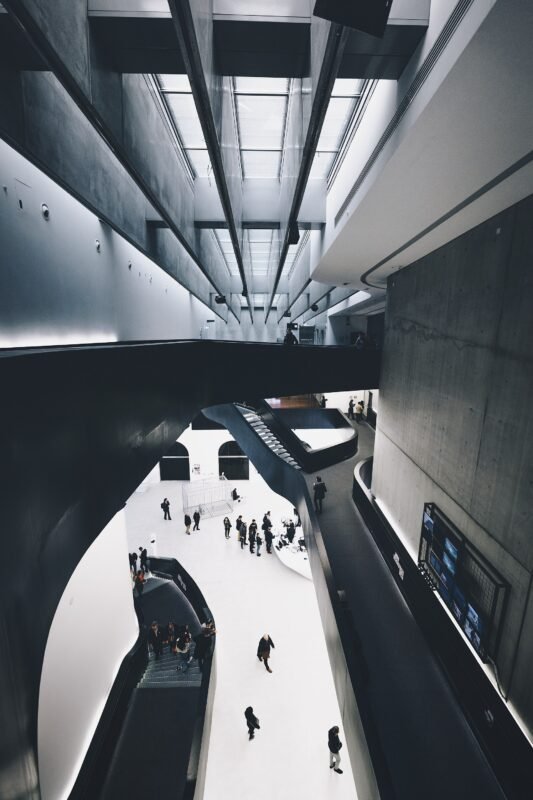
Teatro Olimpico is in the Flaminio neighborhood, north of Piazza del Popolo, in an area that in the last 20 years has become one of Rome's cultural hubs, with Auditorium Parco della Musica, the MAXXI and Ponte della Musica.
Foro Italico and the stadium
Across from the theater Ponte della Musica leads to Foro Italico, built in the same years as the theater, and to the Stadio Olimpico. For an evening dedicated to a sports champion, a walk among the sports architecture of the 1930s before the show is the right preamble.
Auditorium and MAXXI
A short distance away, toward the interior of the neighborhood, are Auditorium Parco della Musica and the MAXXI. An exhibit in the afternoon and Buffa in the evening is a sensible combination for those coming from out of town.
Milvian Bridge
Going up the Tiber toward the north you reach Milvian Bridge, with its square full of places: the natural destination for those who want to stay out late after the show.
Toward the center
Along Via Flaminia you meet the Etruscan Museum of Villa Giulia, on the edge of Villa Borghese, and then Piazza del Popolo, next to Piazzale Flaminio, where tram 2 starts.
Where to eat before or after the show
Around Teatro Olimpico, between Piazza Mancini, Via Flaminia and Piazza Gentile da Fabriano, there are pizzerias, trattorias and bars frequented by the audience of the theater and the Auditorium, with a neighborhood offering that makes no tourist pretenses.
Before the show
With the start at 20:30 a quick dinner around 19:00 is the most practical solution. On Monday and Tuesday the neighborhood's places are less crowded, but some restaurants may be closed for their day off: better to book.
After the show
Dinner after the theater is a good Roman habit. At Ponte Milvio, a few minutes away by taxi, some places stay open late even on weekdays.
Accessibility at Teatro Olimpico
Anyone with reduced mobility needs who wants to see Number 23 at Teatro Olimpico should contact the box office before buying, at biglietti@teatroolimpico.it, to learn which seats are suitable and how to access the hall.
The hall
The orchestra is organized as an amphitheater, sloping, and the gallery is on the upper floor: these are elements to consider when choosing the section.
With kids
For a kid who loves basketball, hearing Jordan's story told by Buffa can be a formative experience: a way to discover that sport can be told like history and literature. The show is in the evening and lasts a whole evening, and it is not designed for small children.
The rest of the season at Teatro Olimpico
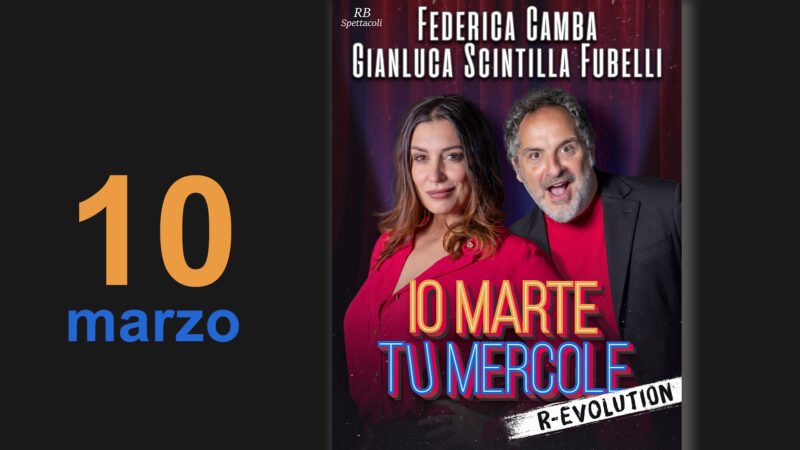
Number 23 is part of Teatro Olimpico's 2026/2027 season. In the theater's calendar, before Buffa, come the Momix with Botanica, Moses Pendleton's company, which made its debut at Olimpico in 1982. After Buffa comes Io Marte Tu Mercole R-Evolution with Gianluca Fubelli and Federica Camba. For the full program see the entry on Teatro Olimpico.
Frequently asked questions about Federico Buffa at Teatro Olimpico
When is Federico Buffa at Teatro Olimpico in Rome?
Federico Buffa brings Number 23. Vita e splendori di Michael Jordan to Teatro Olimpico in Rome on March 8 and 9, 2027, with the show at 20:30. The theater is at Piazza Gentile da Fabriano 17, in the Flaminio neighborhood.
How much do tickets for Federico Buffa's Number 23 cost?
Tickets for Federico Buffa's Number 23 at Teatro Olimpico range from €22, Side Balcony with railing, to €38, Poltronissima Gold, plus the presale fee. Online, a €2 fee per ticket is added.
Where do you buy tickets for Federico Buffa in Rome?
Tickets for Federico Buffa at Teatro Olimpico are bought on the theater's official website, under Acquista online, and at the box office in Piazza Gentile da Fabriano. For information the theater lists the address biglietti@teatroolimpico.it.
What is the show Number 23 about?
Federico Buffa's Number 23 tells the life and career of Michael Jordan, from his feats on the court between 1984 and 2003, with six NBA titles, to his transformation into a businessman and owner of one of the most recognizable sports brands in the world.
Who plays in Federico Buffa's show?
In the show Number 23 Federico Buffa is accompanied on piano by Alessandro Nidi. The show is by and with Buffa, and the live music accompanies and paces the narration.
How do you get to Teatro Olimpico by public transportation?
You get to Teatro Olimpico by Metro Line A to Flaminio and then tram 2 to the terminus at Piazza Mancini, from where it is about 500 meters on foot. From Termini there is also bus 910, Pannini stop.
Do you have to love basketball to see Number 23?
You don't need to know basketball to see Federico Buffa's Number 23. Buffa's stories are built on connections between sport, history and culture, and they work even with people who have never watched a Michael Jordan game.
How many seats does Teatro Olimpico in Rome have?
Teatro Olimpico in Rome has 1,410 seats: 966 in the orchestra, arranged as an amphitheater, and 444 in the horseshoe gallery, which corresponds to the balcony sections.
Final advice on Federico Buffa
Good storytellers are rare, and those able to hold a thousand people with just a voice and a piano even more so. Buffa is one of them. Take a central seat, arrive early to look at the Manzùs and the Caglis in the foyer, and bring along someone who knows nothing about Michael Jordan. They will come out knowing more than you, and wanting to rewatch a Jordan game.
Article written by the editorial team of Tour Leader Pro, contact them for Private/Corporate/V.I.P. Tours and Experiences.
Planning a trip to Rome? The English guides to visiting the city are on ItalyPlanner.com.
Contact Information
Nearby
 Teatro Olimpico100 m
- Ponte della Musica – Armando Trovajoli200 m
- Flaminio400 m
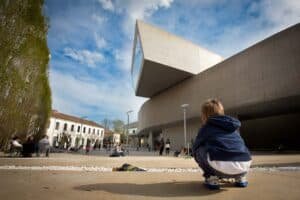
- MAXXI – National Museum of 21st Century Arts500 m
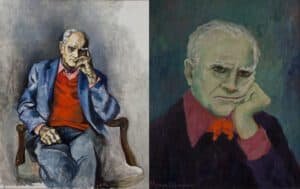
- Alberto Moravia House Museum700 m
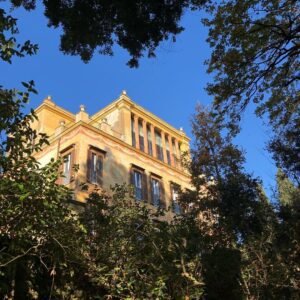
- Villa Mazzanti700 m

Upcoming events nearby
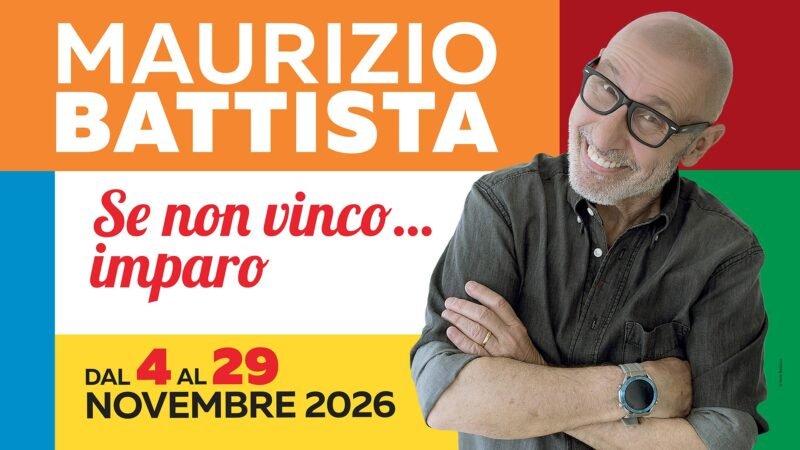
- Maurizio Battista at Teatro Olimpico, Se non vinco… imparo, November 4 to 29, 2026100 m
- Angelo Pintus at Teatro Olimpico, Loro non sanno niente, January 14 to February 14, 2027100 m
- Slava’s SnowShow at Teatro Olimpico, January 27 to February 7, 2027100 m
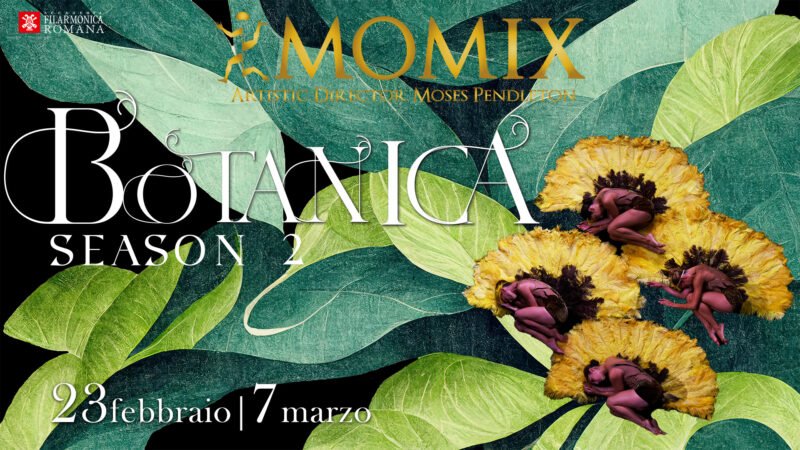
- MOMIX Botanica at Teatro Olimpico, February 23 to March 7, 2027100 m


You might also like
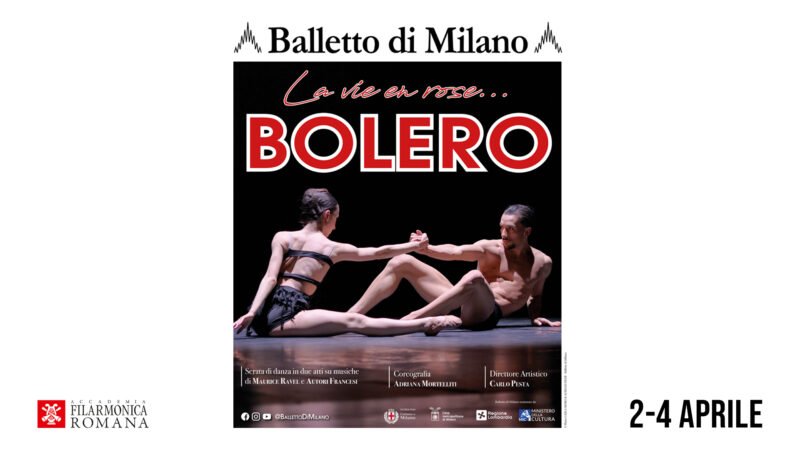
- La Vie en Rose and Bolero by Balletto di Milano at Teatro Olimpico, April 2 to 4, 2027
- Le Coliche in 10 anni di Coliche e siamo ancora vivi at Teatro Olimpico, March 25 and 31, 2027
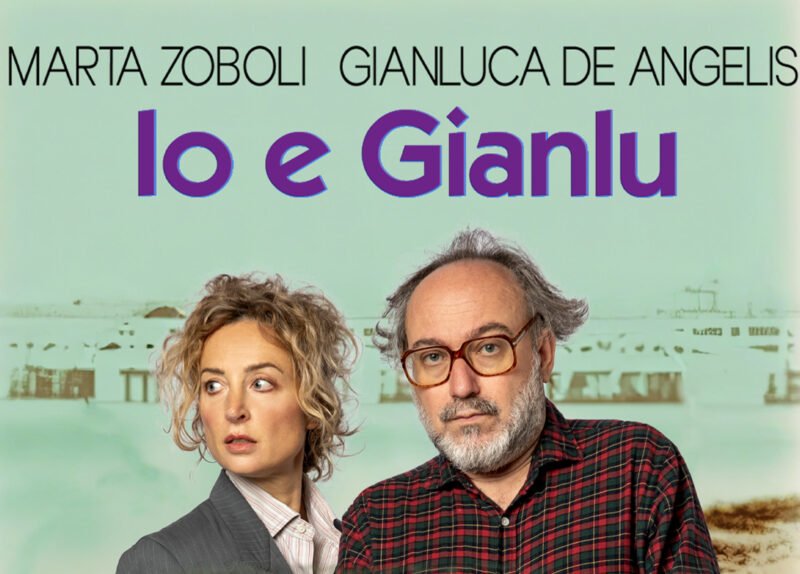
- Marta e Gianluca in Io e Gianlu at Teatro Olimpico, March 23 and 24, 2027
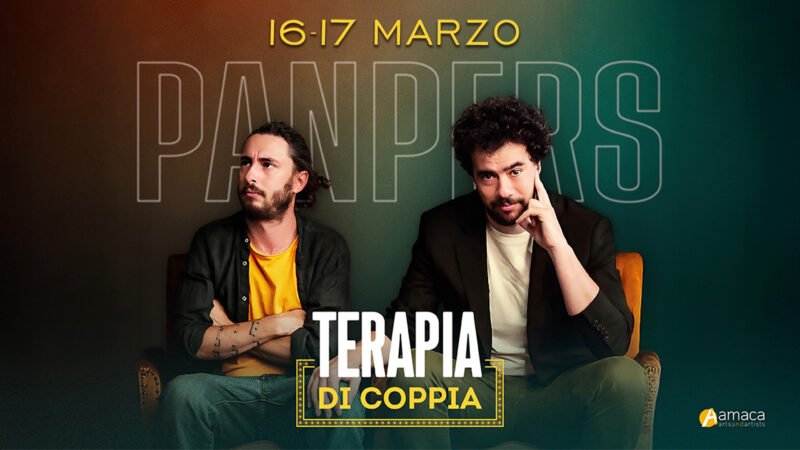
- PanPers, Terapia di coppia at Teatro Olimpico, March 16 and 17, 2027
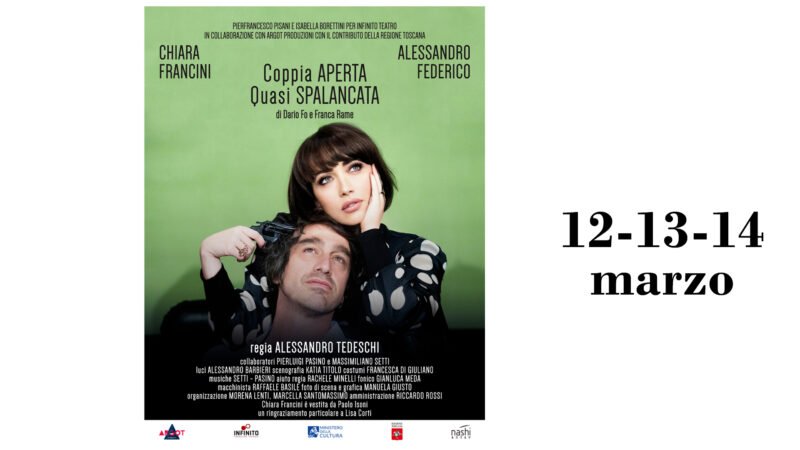
- Coppia aperta quasi spalancata with Chiara Francini at Teatro Olimpico, March 12 to 14, 2027
- Io Marte Tu Mercole with Scintilla and Federica Camba at Teatro Olimpico, March 10, 2027