Civitella San Paolo (RM)
In short. Civitella San Paolo is a walled village of just over 2000 inhabitants in the province of Rome, on the right bank of the Tiber, about 40 kilometers from the capital.
Civitella San Paolo is a walled village of just over 2000 inhabitants in the province of Rome, on the right bank of the Tiber, about 40 kilometers from the capital. The town hall is at Piazza Santa Maria 16, postal code 00060, switchboard 0765 335121. The square is also the natural endpoint of the visit, because the castle, the parish church and the municipal historical archive all face onto it. By car you come from the Grande Raccordo Anulare taking the A1 toward Florence and exiting at Fiano Romano, then the Civitellese provincial road for seven kilometers. From the Raccordo allow about half an hour when the toll gate isn't clogged, more on Friday afternoons. By public transportation the town is served by the Cotral regional buses that leave from Roma Saxa Rubra, terminus of the Roma Nord railway and a station of Line A by shuttle. Runs are few and concentrated in school hours, so it's best to check the updated timetable on the carrier's website before leaving. The historic center is toured on foot and you park for free outside the walls, in the area below Porta Capena or along the provincial road. Entry to the village costs nothing, the churches are free to enter, and the municipal castle is visited by appointment by asking the Municipality. It has no ordinary entrance ticket nor continuous hours, and this is the first thing to know so as not to arrive in front of a closed door.
The municipal territory rises to the 288 meters of the hill of Monte Cucolo and slopes down to the east toward the Tiber plain. It is the southern edge of that district which medieval documents call Collinense, the fief of the monks of Saint Paul Outside the Walls, and it borders Capena to the south, Fiano Romano to the east, Sant'Oreste and Rignano Flaminio to the west, Ponzano Romano and Nazzano to the north. Those who want to place the area before leaving will find the natural setting in the page on the Nazzano Tevere Farfa Nature Reserve, which begins a few kilometers farther on and explains why this bend of the river was for centuries a commercial frontier before being a landscape.

How to Get to Civitella San Paolo (RM) and How to Get Around
I'll say an unpopular thing right away: here the car wins. Not out of laziness, but because the sense of Civitella San Paolo is understood only by lining it up with the neighboring villages in the same day, and public transportation on this route doesn't allow it. From the Raccordo you take the A1 highway to Fiano Romano, exit onto the provincial road and go up. Those who prefer to avoid the toll use Via Tiberina, which is slower but much more beautiful: it runs along the river, crosses the Capena countryside and gives back exactly the landscape that the monks watched from above.
The train doesn't reach the town. The useful station of the FL1 regional line is Fara Sabina Montelibretti, on the other bank of the Tiber, and from there you still need a vehicle or a ride. The Cotral bus lines connect the town to Roma Saxa Rubra and to the centers of the valley. The runs are designed for commuters and students, with long gaps in the middle of the day and reduced service on holidays. If your plan is to arrive on Sunday morning by bus and leave in the afternoon, check the runs before leaving home, because the risk of being left on foot is real.
Inside the walls you don't drive: the streets are very narrow, partly stepped, and the village is designed to be crossed on foot in 20 minutes. Those with mobility difficulties should know that the historic center is all uphill and that the two town gates are at very different elevations from each other. The most convenient parking for those who don't want to face the main ramp is the one in the lower district, by Porta Capena.
The Abbey Castle of Civitella San Paolo
The castle is the reason the detour is worth it. It is not a romantic manor reworked in the 1800s: it is a medieval military organism that grew by successive layers, welded to the circuit of the walls, and preserved in a surprising way for a building that stayed in ecclesiastical hands until yesterday. The Abbey of San Paolo handed it over to the Municipality only at the end of the twentieth century, after a possession lasting almost a millennium, and the change of ownership opened the season of restorations and openings to the public.

The Keep, the Tower That Comes Before Everything
The original nucleus is an isolated tower. The current architectural reading dates it to the 10th or 11th century and interprets it as a lookout post over the river traffic, over the passage of armies, goods and livestock along Via Tiberina: a customs control tower before being a fortress. Some local studies date it back to the 9th century and attribute it hypothetically to the Cenci family, which had old interests in the valley. These are two different readings and it is best to keep them separate: the lookout function is documented by the position and the structure, the attribution to the Cenci remains a hypothesis.
The body you see today has an elongated plan of about 32 meters by 13 and almost reaches 20 meters in height. Look at it from below, from the square: the masonry is thickened at the base with a scarp, the upper edge projects, the battlements are Guelph and wide. There were no windows originally, and the few current openings were made in much later phases. It is the vocabulary of a tower that had to withstand the shock, not host a court.
The Monks' Quadrilateral Fortress
In the 14th century the monks of San Paolo turned the tower into a quadrilateral fortress with a moat and a drawbridge. The leap is political before military: the abbey had received the territory with the bull of Gregory VII of 1081 and for two centuries had administered it from afar, granting it in emphyteusis. When the great Roman barons began to bite at the borders, the monks decided to physically garrison the fief. From here on the castle is at once barracks, court, granary and residence of the cellarer, that is, of the administrator who governed on behalf of the abbot.
The Pentagonal Bulwark and the Palazzetto
The 15th century brings artillery and forces an adaptation. To the bastion was added a pentagonal bulwark facing the present Piazza San Giacomo: a point that breaks the trajectories of the shots and allows flanking fire. In the same period the residential palazzetto takes shape, completed then in the 16th century, with a portico that the documents recall and that served as a model, centuries later, for the cloister of the monastery of Santa Scolastica. Whoever visits the castle should look for exactly this: the moment when the fortress stops being only a fortress and begins to resemble a noble residence without giving up the loopholes.
The Halls, the Underground Rooms and the Terrace
Inside you cross a large reception hall with stone vaults, go down into an underground hall that in all likelihood housed the soldiery, and go up to the first floor where a third hall and some adjoining rooms complete the route. At the top, the terrace offers two strategic observation points: one toward the Tiber and Fiano, the other toward the interior, in the direction of Monte Soratte. From up there you understand in three seconds why somebody built a tower exactly there.
The Courtyard and the Roman Marbles
In the courtyard are gathered archaeological finds of the Roman age: funerary inscriptions, sarcophagus fragments, architectural elements from the villas and necropolises of the territory. It is not a lapidarium arranged with museum criteria, and that is precisely its interest: it is the way ancient material kept circulating here for centuries, reused as building stone and then recovered as memory. Those who arrive with the idea that Lazio's villages are only medieval are thrown off: under the Middle Ages there is always Rome.
The Historical Archive Inside the Castle
This is the part that almost no visitor knows. In the municipal castle is kept the historical archive of Civitella San Paolo: 213 handwritten registers covering from the end of the 15th century to the early 19th. The oldest piece dates from 1493 and belongs to the series of the prior's sindacato. There is a register of the salt tax of 1540 and there is the register for the formation of the new cadastre of 1777, the one of the great papal survey. Inside there are council deliberations, notarial deeds, civil and criminal cases, taxes. Part of the collection was lost in two popular uprisings accompanied by fires, one at the end of the 18th century and one in the early 20th. What remains was restored, reordered and inventoried in 2000. Consultation is by appointment with the Municipality. For an amateur historian it is a mine. For a normal visitor it is proof that this town has a written memory, not just a scenic one.
The Walls of Civitella San Paolo: Three Concentric Circuits
The urban particularity of Civitella San Paolo is to have had a triple concentric circuit of walls, corresponding to as many phases of expansion of the village. It is not common: most castles in the valley stopped at two. Walking along the perimeter with this key in mind completely changes the walk, because you stop seeing houses and begin to see rings.
The First Stretch, Under the Castle
The oldest and best-preserved segment is recognizable on the right side of the base of the castle, near Porta Capena. It is little in linear meters, but it is the masonry that held together the first inhabited nucleus around the tower.
The La Rocca District, Second Half of the 13th Century
The second phase corresponds to the oldest nucleus of the village, the one that documents call the La Rocca district or simply Castello. It had a perimeter of about 235 meters and an oval shape, punctuated by square towers with open gorges, that is, lacking the inner side: an economical and clever solution, because it prevented an enemy who had taken the tower from using it as a position. Of those towers almost nothing remains today, except one, by the so-called new stairs on Via Cavour, preserved very well even if converted into a dwelling. Look for it: it is one of the few points where the 13th century can be touched with your hands.
The masonry of this circuit is hard to read because the 15th century built over it. The intensive building of the following century raised, filled in, reused the defensive structures for civil purposes. It is the fate of every village that doesn't die: the walls become house walls.
The Last Expansion, Between the 15th and 16th Centuries
The final expansion can be dated between the end of the 15th and the beginning of the 16th century and brings the overall perimeter to about 600 meters. It is worth pausing a moment on this figure, because it is more impressive than it seems. To double the circuit it was necessary to quarry the stone, reclaim, excavate and fill in the steep area of the Piscericata and the Piaggie: enormous earth-moving works for a community that in 1416 numbered perhaps 850 souls. The enclosure, punctuated by towers and bastions, joins directly to the castle forming a single defensive organism.
The Circular Bastion Tower with Gun Ports
The showpiece is the bastion tower with a circular plan and internal gun ports, that is, with the openings for firearms carved in the thickness of the wall. It is located on the southernmost corner of the walls, where the perimeter turns 90 degrees to follow the lie of the land, and it served to cover the sector that the castle's artillery could not hit. If I had to point to a single spot of the fortifications for those who have half an hour, I would point to this one: it is the moment when medieval defense notices gunpowder and changes geometry.

The Town Gates of Civitella San Paolo
Porta Romana, Also Known as Porta Castello
For centuries it was the only entrance to the town. The present forms date from the jubilee year 1800 and are made almost entirely in stucco applied in relief on the medieval masonry of the castle: a stage set laid over a military structure. The two-leaf wooden door has been lost. The architecture is neoclassical with a still 18th-century flavor: at the base two simple Doric pilasters hold up a molded entablature, above which sits an upper part animated by a pair of pinnacles and a sort of aedicule with a broken triangular pediment, which frames the coat of arms of the Abbey of San Paolo with festoons, cherub and baronial crown.
The dedicatory inscription is legible and deserves a stop: Laetantibus ciuitellensibus monachi sancti Pauli de Vrbe iterum ad ornamentum posuere anno Domini MDCCC Iacobus Ricci fabermurarius operam dedit. The name that appears, Giacomo Ricci, is that of the master mason, not of the designer: in the archive documents he appears as a factotum in the service of the Municipality in those years. Who devised the design remains unknown, and this is a distinction that tourist panels almost never make.
Porta Capena, the New Gate
In the 15th century the village had grown outside the walls, especially in the district called Pisciricata. When, between the end of the 15th and the beginning of the 16th century, the circuit of walls was enlarged, the new Gate was opened, called Porta Capena because that is where the route of the old road from Leprignano, the historic name of Capena, ended. It was not just an alternative access: it was the only carriageable opening for that populous district, located at a much lower elevation than the castle.
The dress is Renaissance and sober: a travertine arch in rustication worked in spuntato style, with alternating long and short blocks, resting directly on the torus of the walls. Above the arch there was a small tower that served as a guardhouse, with lateral arquebus loopholes. What remains are the narrow main facade and the trace of the floor in a single surviving wooden beam. From the guardhouse the garrison controlled the entrance and, in case of attack, could quickly reach the west bulwark and the next bastion through a stepped wall-walk. The year of construction is not documented: it is presumed to be around 1520.
The Posterula
There was a third opening, the Posterula, a small secondary country entrance, now vanished. Posterns served peasants to go out into the fields without opening the main gate and, in bad moments, to let in messengers and supplies. No trace of it is seen any more above ground, but knowing it was there helps to understand how daily life inside a fortified enclosure really worked.
Palazzo Malatesta
Between Via Roma and Via Garibaldi, straddling the La Rocca and Pisciricata districts, stands Palazzo Malatesta, built literally on top of the innermost circuit of walls and exploiting the two different elevations of the two sides. The front on Via Garibaldi can be dated to the 15th century: three arched access portals, a string-course cornice, arched windows on the main floor. On Via Roma side, which is higher, the palace is preceded by a small courtyard closed by an arch and by an important radial rustication portal of the 16th century.
Inside, on the main floor which here corresponds to the ground floor, some simple rooms survive with wooden ceilings and a molded stone fireplace with the inscription IO.ES MALATESTA CAN.S, that is, Iohannes Malatesta Canonicus, evidently referring to the owner. The most curious piece, however, is below: the cellar rooms, partly dug into the rock, with the vats for pressing grapes and an oil mill. It is the real economy of the village, wine and oil, carved in the tuff under the canon's house. The palace was the seat of the Municipality from the early 20th century until 2000 and has been the object of restoration work: before showing up at the door it's best to ask the Municipality whether it can be visited.

The Churches of Civitella San Paolo
The Church of San Giacomo Maggiore
The parish church is dedicated to the patron saint and faces Piazza Santa Maria, free to enter. The original San Giacomo was already attested in the 13th century, built opposite the castle and on the same spot as the present building. In 1868 the monks of San Paolo, faced with the growth of the population, decided to demolish it and rebuild it larger.
The design is by Francesco Vespignani, son of that Virginio Vespignani who was the papal architect par excellence of nineteenth-century Rome, and the declared model is twofold: the basilica of San Paolo fuori le Mura, mother house of the owning abbey, and the chapel of Santa Maria della Misericordia built by Virginio between 1856 and 1860. On the date of the laying of the first stone the sources differ by 10 days, between May 7 and 17, 1868, in the presence of abbot Leopoldo Zelli Jacobuzzi. The capture of Rome in 1870 and the later suppression of ecclesiastical bodies halted the building site for some 20 years: the church was solemnly dedicated on Sunday, October 5, 1890 by the same abbot Zelli.
The layout is basilican, about 20 meters by 15, with three naves divided by columns with Corinthian capitals on arches, with a semicircular apse and two balustraded side choir lofts. The facade is reached by a travertine staircase of 15 steps and opens into a vestibule with two columns and three doors with wooden frames. The bell tower, on the right side, is 38 and a half meters tall, of Doric order, on three levels with rectangular and arched windows. The wooden barrel vaults have coffers of chestnut, pine and fir decorated with stars.
The pictorial cycle is mostly the work of Salvatore Nobili, who painted the eight angels with the Virtues, Faith, Hope, Charity, Prudence, Justice, Temperance and Fortitude, lit by the double-glazed oculi with ruby-red motifs, and the apotheosis of Saint James in the apse. The apse vault also keeps interventions by Luigi Manzoni and Ulisse Ghiglioni with the dove of the Holy Spirit. In the altars of the side naves there are canvases by Costante Porta, Vincenzo Bubali and Nobili himself. The high altar was built with marbles from the demolished church of Santa Elena in Rome, with a gilded cross on a malachite ground: a clear case of nineteenth-century reuse, when the Rome of small things, the fragments of demolished churches, migrated into country parishes. Among the oldest furnishings remain a triptych of the Most Holy Savior from the 17th century and a polychrome wooden statue of Saint James between the 17th and 18th centuries.
Without beating around the bush: this church is underrated. It passes for any ordinary nineteenth-century parish church and instead it is a documented Vespignani project, with a coherent decorative apparatus and an altar made of marbles with a biography. If you go to Civitella San Paolo and find it open, go in.
The Church of San Lorenzo and Santa Maria del Soccorso
About 500 meters from the historic center, along the route of the old Via della Fontana Vecchia and today annexed to the cemetery, stands the oldest sacred building in the town. The church was built in the medieval period on the ruins and with the materials of a Roman villa: a textbook case of spoliation, in which the construction of the church directly contributed to the destruction of the ancient.
The villa was excavated and investigated by the Archaeological Superintendency for Southern Etruria during the works to enlarge the cemetery, in 1981 and 1982. Terraces and vaulted rooms in opus reticulatum emerged, with building phases between the 1st century BC and the 5th century AD. Today they are buried again and not visible, except for some walls restored in 2002 inside the hermitage attached to the church.
The original architectural core most likely dates to the 10th or 11th century and arose from the worship needs of the residents scattered across the surrounding countryside. The first documentary mention is from 1218, in a bull of Honorius III, when the church appears among the properties of the Abbey of San Paolo. The expansion of the late 1600s was almost a refounding: in 1693 Father Francesco Maria Ricci, the cellarer and vicar general of the abbey's castles, oversaw the construction of a large chapel covered by an elliptical dome and dedicated to the Madonna del Soccorso, under the auspices of Abbot Onorio de Silvestri and the pontificate of Innocent XII. The medieval chapel effectively became a transept, and three chapels with rich Baroque stucco opened around it: St. Lawrence, St. Philip Neri and Santa Maria del Soccorso.
The venerated Marian image has been stolen. The 2002 restoration, however, brought to light a trompe l'oeil fresco by an unknown artist of the Roman school, from between the late 17th and early 18th century, with architecture in perspective in the manner of Andrea Pozzo: a country quadratura, painted by someone who had seen Sant'Ignazio in Rome and was trying to match it with lesser means. The chapel of St. Lawrence holds an 18th-century altarpiece with the martyrdom of the saint. The one of St. Philip Neri keeps the burial slabs of the Malatesta family. Set into the walls are the inscriptions for the fallen of the two world wars, which make this church a rare case of a military memorial inside a rural place of worship. Next to it, separated by a bell gable, is the small hermitage, once the caretaker's home and a guesthouse for pilgrims.
The Church of Santa Maria of the Nativity
Of ancient origin, 14th century, it is attached to the abbey castle like an appendage that extends from the small square of the same name onto Via Piave. It remained the parish church inside the walls until 1890, that is, until the consecration of the new San Giacomo, and it was also called de Castello. In 1578 it was enlarged through the efforts of Abbot Marco Pedoche da Mirandola and the cellarer abbot Girolamo da Puppio.
Today it is hard even to pick it out as a building separate from the castle, if it weren't for the bell tower: the changes of the centuries have absorbed it. The interior is bare and without antiquities, and it hosts the catechism activities of the San Giacomo parish. At one point it even had a movie theater carved out of it. I'll say it plainly: don't go to Civitella San Paolo to see the inside of Santa Maria. Go see it from the outside, because the way a 14th-century church has fused with a fortress is more instructive than many intact interiors.

The Monastery of Santa Scolastica in Civitella San Paolo
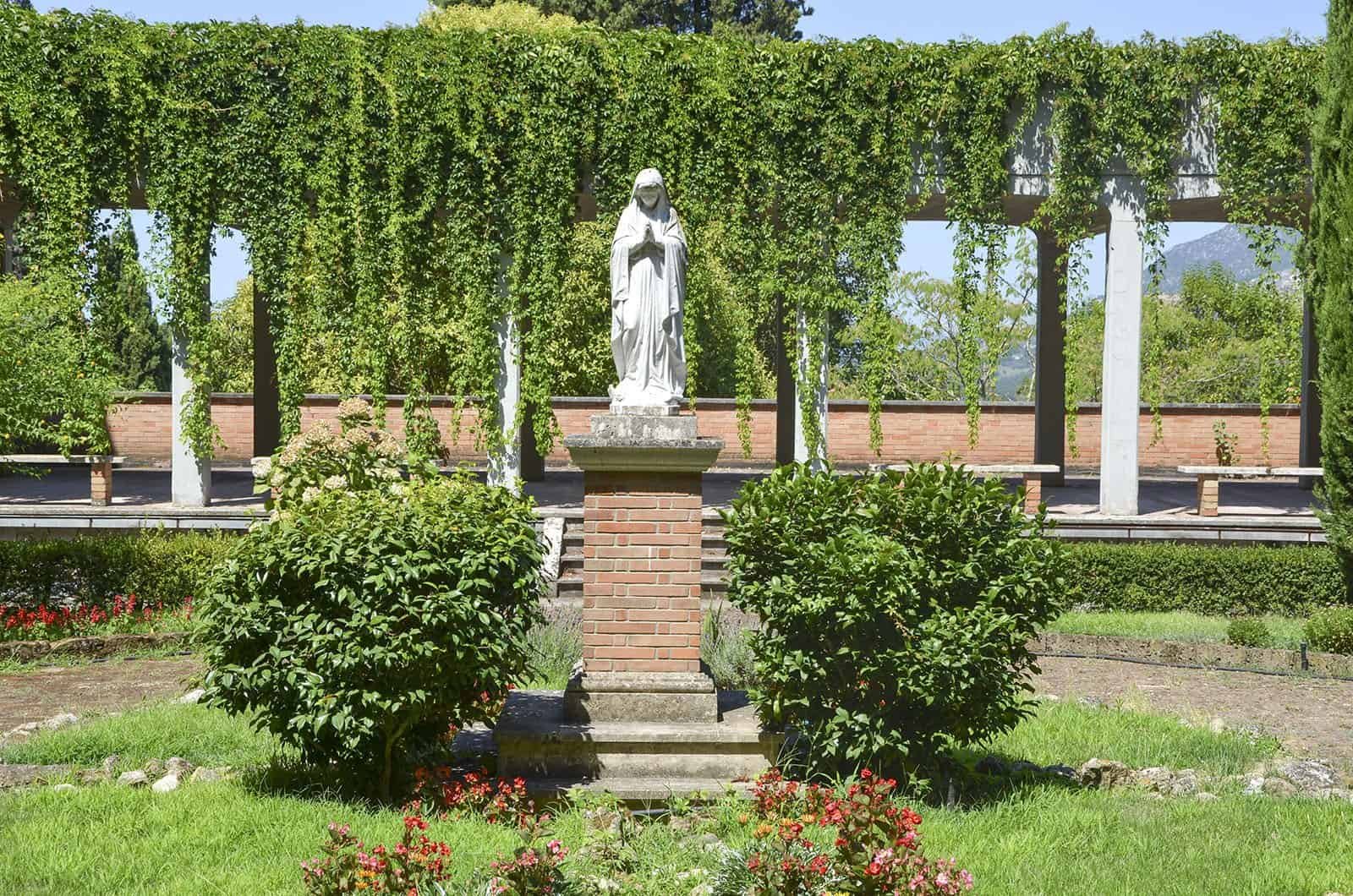
On the road to Nazzano, in the locality of Monte Lino, stands the Santa Scolastica monastery, named for the sister of St. Benedict. The address is Via Civitellese 11. It is a living community, not a monument, and visitors should behave accordingly.
The Foundation Wanted by Abbot Schuster
The project is by Alfredo Ildefonso Schuster, abbot of San Paolo fuori le Mura from 1918, then archbishop of Milan from 1929 and now Blessed. Schuster wanted a Benedictine community of women in the abbey's fief and turned to the French nuns of the abbey of Dourgne, in the Midi. In 1932 his successor Ildebrando Vannucci went to France, and the abbess Maria Cronier committed to training the Italian candidates. The first stone was laid on August 10, 1932. On April 9, 1934 the first group of nuns arrived from Dourgne, among them Andrea Bonnafous, named prioress and then abbess in 1947. The construction was largely financed by Sister Maria Angela Bonomi, a Poor Clare from Milan, and the land was donated by the Abbey of San Paolo. The building design is by the engineer Enrico Campa.
In some details the cloister recalls the portico that existed in the small abbey palace of the castle, a deliberate homage to the fief. In 1970 the complex was enlarged with a guesthouse and spaces for conferences. The library is theological and today holds about 30,000 volumes. The monastery belongs to the Subiaco Cassinese Congregation of the Order of St. Benedict.
The Sisters of Bose in Civitella
Since October 4, 2013, a small group from the Bose Monastic Community has shared the life of the monastery with the Benedictine nuns. It was the Benedictines themselves who asked the prior of Bose to send sisters to guarantee the continuity of monastic life. The two communities each keep their own autonomy but share the fundamental moments of the day: liturgy of the hours, meals and work. Bose is a community of monks and nuns from different Christian churches, and this coexistence with a Benedictine community of ancient observance is an uncommon ecclesial experiment, in a town of 2,000 residents 40 kilometers from Rome. The fraternity's address is Via Civitellese per Nazzano 11, phone 0765 335114.
How to Visit
The guesthouse welcomes individuals and groups for retreats, lectio divina and days of silence, and it also hosts programs for young people and scouts. It is not a hotel and not a museum: you write or call first, you agree on a time, and you respect the community's schedule. The nuns work the vegetable garden, the vineyard and the olive grove, produce a white wine called Quam bonum and extra virgin olive oil, and in the craft workshop they make candles, icons, booklets and bookbinding. Buying a bottle or a jar there means something different from a souvenir: it is how this community supports itself.
The La Corona Sant'Andrea Municipal Nature Park
The municipal park extends over about 149 hectares and overlooks the Tiber valley. The name Corona alludes to the centuries-old oaks that once circled the town like a diadem. Until a few years ago, a centuries-old oak was pointed out in this area that local tradition held to have been planted by Nicolò Orsini, lord of Pitigliano and Sorano and duke of Fiano in the 16th century. It is tradition, not documentation, and it should be told as such.
Geologically, the hills of the area date to the Plio-Pleistocene, with marly-sandy-clayey units. The flora is made up of scrub and patches of woodland. The fauna is the main reason to bring binoculars. Among the species of interest reported are sparrowhawk, lesser kestrel, falcon, black kite, tawny owl, little owl, scops owl, cuckoo, nightjar, bee-eater, hoopoe and green woodpecker, plus passage species such as wood pigeon, thrush, blackbird and chaffinch. The lesser kestrel and the black kite in particular are sightings that don't happen everywhere in the province of Rome.
The park has ordinary facilities that are very useful if you travel with family: a sports field, a tennis court, a picnic area and a playground for children. There are three entrances: from the Civitellese provincial road, from the historic center and from the border with Fiano Romano. In summer it hosts events and festivals organized by the town's associations. Practical advice: enter from the historic center and leave toward the provincial road, so the return is downhill and the view of the valley stays in front of you the whole way.
L'Arca dei Camaleonti, the Wildlife Park of Civitella San Paolo
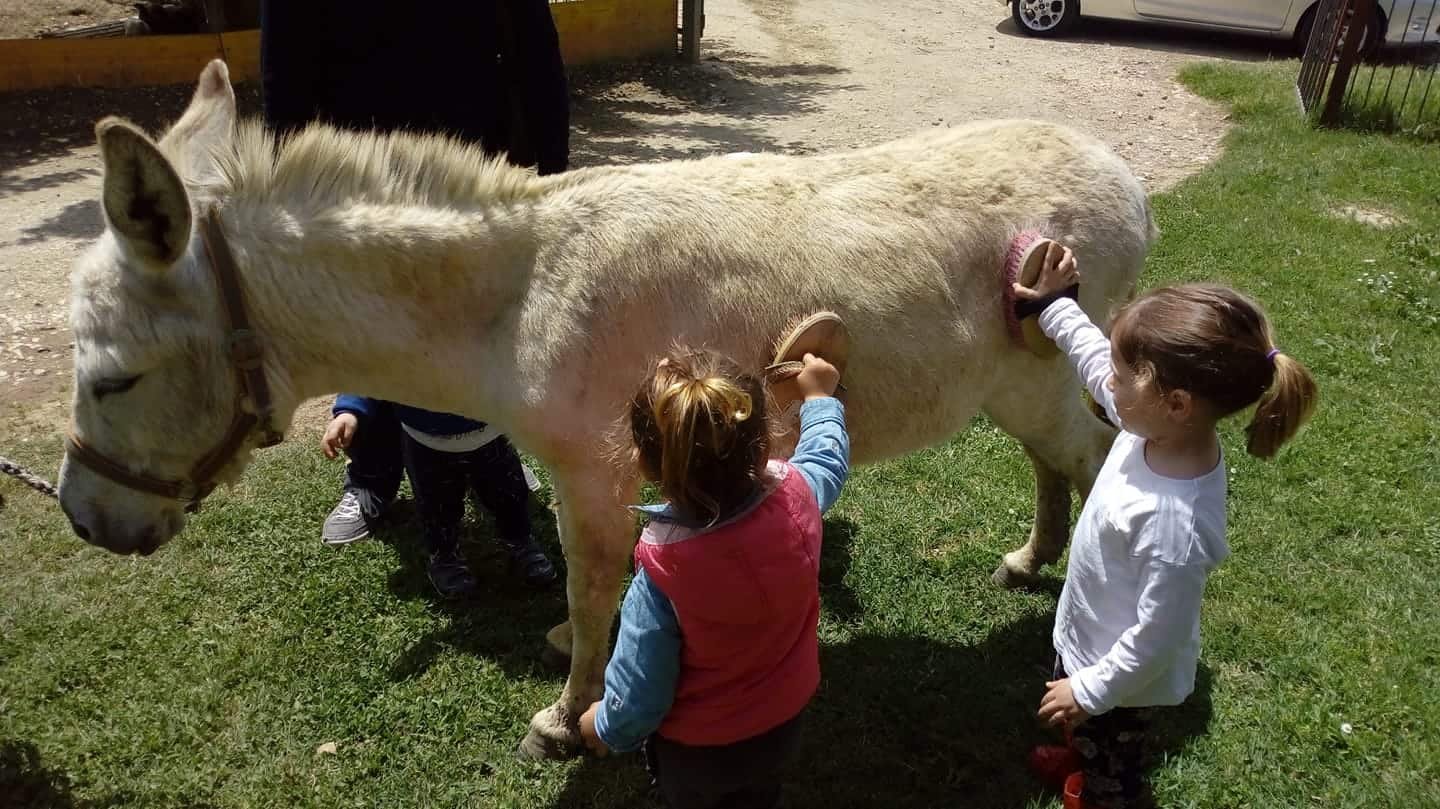
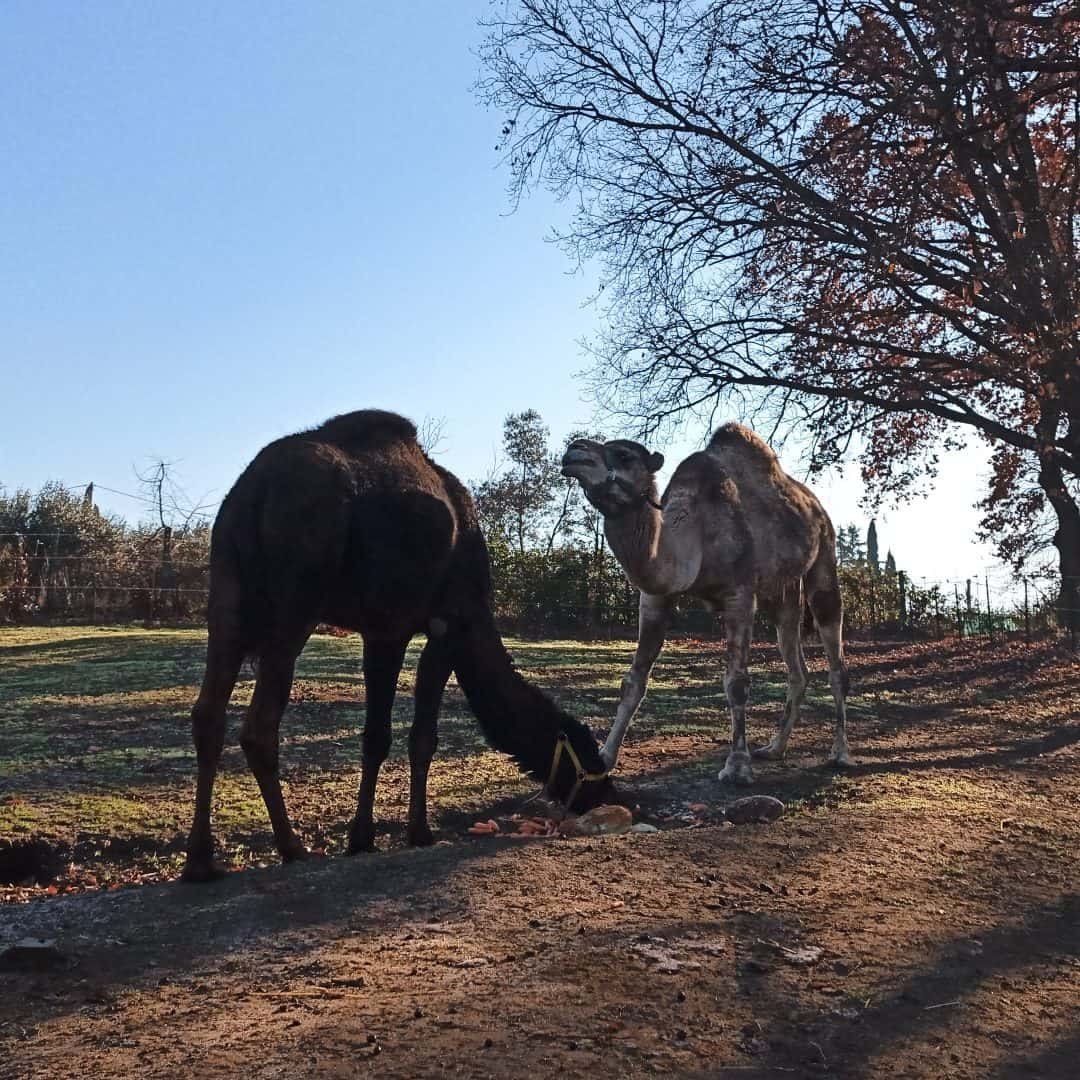
Within the municipal territory is the wildlife park and educational farm Arca dei Camaleonti, one of the few facilities of its kind north of Rome. It's the argument that gets children into the car when the parents want to see a castle: use it without shame, it works.
The facility combines the wildlife side with educational activity and a refreshment service. Hours, rates and booking arrangements change with the seasons and with school programs, so they should be checked on the park's official website or by phoning before you leave. On spring weekends a reservation is often essential. If you plan a mixed day, castle in the morning and park in the afternoon, allow about 15 minutes for the transfer and don't turn the visit to the village into a dash.

The History of Civitella San Paolo from Its Origins to the Municipality
The Name
Civitella comes from the Latin civitatula, a diminutive of civitas, so little city, which passed into the vernacular as Civitatella and was finally shortened to Civitella. In the Middle Ages a qualifier was added to the place name indicating the status of colonia, that is, of a settlement founded directly by the Papal State. The second element, San Paolo, comes from the monks who owned it.
The Capenate Origins
The site was inhabited around the 4th century BC, as confirmed by the many archaeological finds, with necropolises near Monteverde and San Martino and remains of temples and villas in the territory. The most widely accepted hypothesis ties the birth of the settlement to the end of Capena: in 396 BC the Romans destroyed the Capenate city and the survivors sought refuge on the surrounding hills. A second, alternative reading considers Civitella one of the federated cities of the Capenate territory even before that date. A third hypothesis moves the abandonment of Capena much later, between the 4th and 5th century AD. Three reconstructions, all plausible, none proven. The position along the route between the Flaminia and the Tiberina remains the underlying explanation in any case.
The Monks of San Paolo and the Collinense Fief
The founding document of the town's medieval history is the bull of Pope Gregory VII of 1081, in which Civitella appears as Civitas de Colonis, a dependency of the monastery of San Paolo fuori le Mura. With that bull Gregory VII gave the abbey an enormous power: the right to be released from local civil and ecclesiastical authority, the condition of dioecesis nullius, subject only to the authority of the pontiff. The Pauline monks thus obtained control and jurisdiction over a vast territory lying largely between the right bank of the Tiber, Via Cassia and Monte Soratte, an area previously under the dioceses of Nepi and Sutri. This feudal monastic state reached as far as the Flaminia and the Cassia and included Capena, Castelnuovo di Porto, Riano, Morlupo, Magliano, Cesano, Galeria and Campagnano.
In the 12th century the monks granted the village in emphyteusis to Tebaldo di Cencio. Later the possession was usurped by his sons Cencio and Stefano. It is the classic script of the Roman countryside: the temporary grant becomes property in practice, and the church body spends decades getting it back.
The 1400s, Between the Colonna and the Condottieri
In 1416 Civitella Sancti Pauli appears in the list of communities subject to the semiannual payment of the salt tax and the hearth tax, with a consumption of 10 rubbi, corresponding to a population estimated at about 850 inhabitants. In 1427 it is recorded as the personal property of Odoardo Colonna, whose family had been assigned it by Pope Martin V. With the election of Eugene IV the Colonna had to return it to the Church.
In 1434 Eugene IV gave it in emphyteusis to Giorgio and Battista di Giovanni da Narni, his creditors for 5,000 florins. Between 1434 and 1435 Civitella San Paolo was called on to contribute by sending 30 armed foot soldiers to Bracciano, to swell the papal army against Niccolò Fortebraccio. On March 18, 1452 the monks of San Paolo bought the fief back from Battista da Narni and from the sons of the late Giorgio, Antonio and Giovanni, for 2,000 ducats. In 1497 the town again sent armed foot soldiers, this time in the army of Alexander VI, in the ill-fated war against Gentil Virginio Orsini at Bracciano.
La Barcana, the Port on the Tiber
The most forgotten chapter of local history is the river one. In the Middle Ages Civitella San Paolo had its own landing on the Tiber, called Barcana. The name comes from the boat maintained at the community's expense at the modern crossing of Fiano. It is probable that near the castle of Meana there was an equipped pier, some huts and a boat, used by the community and by the monastery of San Paolo until the early 17th century under the name Porto Vecchio. A hill village that owns a port: it is proof that the Tiber was a highway and that the real wealth here was the toll, not the land.
Statutes, Earthquakes, Seals
In 1616 Abbot Alessandro da Brescia issued and approved the community's statute. In 1703, when the Papal State was shaken by the great tremors that devastated the central Apennines, Civitella San Paolo suffered no particular damage. Between the 17th and 19th century the community used on official documents a round dry stamp with the patron saint, St. James the Greater, holding the staff and the pilgrim's hat, with the inscription Civitelle S.P. Castrum.
Napoleon, the Famine, the Restoration
After the secularization decree of 1789 and during the Roman Republic of 1798 and 1799, the monastery lost every right of ownership over the Collinense fief. Between 1802 and 1803 the community, which numbered 600 inhabitants and was already hit by the general famine of the Papal State, was decimated by an epidemic of malignant fever: 120 people died, and two doctors. One fifth of the population in two years.
Under the arrangements of the first Roman Republic, Civitella San Paolo was part of the canton of Morlupo, department of Cimino. During the French Empire, between 1809 and 1814, the division was confirmed but the town passed to the arrondissement of Rome, department of the Tiber. With the restoration of Pius VII and the new administrative subdivision of July 6, 1816, it returned to the Comarca of Rome as part of the Government of Nazzano. In 1828 the government seat moved to Castelnuovo di Porto. The papal census of 1853 records 771 inhabitants, of whom 768 in the built-up area and 3 in the countryside, distributed in 167 houses and 169 families, with the parish church of Santa Maria.
From the Kingdom of Italy to Today
With the capture of Rome in 1870 and the suppression of church bodies in 1873, the monastery of San Paolo showed a growing disinterest in a territory that was now part of the Kingdom of Italy. The abbatial government of Alfredo Ildefonso Schuster, between 1918 and 1929, reversed the trend: the castle was restored between 1924 and 1929, the church of San Lorenzo was restored in 1926, and the monastery of Santa Scolastica was built from scratch in the locality of Monte Lino. In 1996 the Abbey of San Paolo definitively gave up the castle, consenting to its acquisition by the municipality. The purchase was completed in 1998 with regional funds, and in 2000 the Province of Rome financed further exterior works. On the dates of the transfer the sources waver between 1996 and 1998, presumably because one marks the agreement and the other the deed.
Traditions and Festivals of Civitella San Paolo
The festival that gives the town its identity is the Festa dei Canestri, on May 1, also called the Festa del Pane Benedetto. Local tradition traces it back without interruption to Roman times, reshaped over the centuries on the Christian liturgy. This continuity should be taken as an identity story, not a documented chronology, but the agrarian core of the festival, the blessing of the bread and the greeting to the good season, is evident.
The women bearers wear the costumes of peasant civilization and carry the canestri, large cylindrical cones covered with flowers and ribbons, and march in procession. At the end of the parade and the liturgy, small loaves prepared according to the old recipe for the anise braid are distributed, recognized as a typical product of Civitella San Paolo. If you have to choose a single day of the year to come, this is it: the town of 2,000 residents fills up and you see the community at work, not a reenactment for tourists.
The feast of the patron saint, St. James the Apostle, falls on July 25. During the year, food festivals and medieval festivals are organized, often named after the Barcana itself, the old river port. The exact dates change from year to year and should be checked on the channels of the municipality and the local associations before setting out.
What to Eat in Civitella San Paolo
Two products, both tied to the festivals. The anise braid is a savory bread with a characteristic braided shape, scented with anise, which is distributed blessed on May 1 but can also be found out of season in the local bakeries. The cacione is the sweet: a sort of half-moon pastry turnover filled with pumpkin pulp with sugar, almonds and toasted hazelnuts, in some versions with cocoa and cinnamon, prepared for the Christmas holidays. The recipe is traditionally traced back to the Renaissance.
The rest of the table is that of the Tiber Valley and the Roman countryside: extra virgin olive oil, white wine from the Colli della Sabina and the Capena area, grilled meats, seasonal vegetables. I don't name restaurants because in a town this size the management changes fast and a year-old tip is worse than no tip: ask in the square, the answer will be honest. If you stop by the monastery of Santa Scolastica, the white wine Quam bonum and the nuns' oil are sensible purchases and support the community directly.
Civitella San Paolo with Children
It works better than you think, on two conditions. The first is to alternate: half an hour of castle and walls, then the Parco della Corona with the playground and the picnic, then possibly the Arca dei Camaleonti. The second is to tell stories, not list things. The tower with the gun loops, the stepped sentry walk, the postern to let messengers in at night, the boat of the port on the Tiber: these are images an eight-year-old keeps in mind far more than a date.
A stroller is not comfortable in the historic center, which is made of ramps and big steps. With the youngest, a baby carrier or backpack is better. The municipal park, by contrast, is flat in the equipped part and is the right place to let them burn off energy before heading back to Rome.
Accessibility and Visiting If You Don't Walk Much
The village is on a slope and the paving is historic, therefore uneven. Those who use a wheelchair or struggle to walk can still see a lot. Piazza Santa Maria, with the church of San Giacomo open to the public, the front of the castle, the church of Santa Maria leaning against the fortress and the viewpoints over the valley can be reached without facing the interior stairs. The walls, the tower and the lower districts instead require legs. The church of San Lorenzo, being outside the center near the cemetery, is reached by car. For the castle, which has stairs and underground rooms, it's best to ask at the town hall which rooms can actually be reached before fixing the visit.
When to Go to Civitella San Paolo and When to Avoid It
Spring and early fall. In April and May the countryside of the Tiber valley is at its peak, the oaks of the Corona are green and the migration brings the interesting birds. On May 1 there is the festival. In October the late-afternoon light on the walls is the best of the year. July and August are hot, and the village, which is made of stone and has no trees, gives back heat until evening: if you come in high summer, arrive early in the morning or after 18:00. In winter the visit makes sense only if you have already arranged entry to the castle, because otherwise it comes down to a 40-minute walk around the outside.
On the day of the week, one practical warning: the town offices, which are the key to opening the castle and the archive, work on weekdays. On weekends the village is livelier but the heritage is more closed. It's the paradox of all the small towns of Lazio, and it's best to know it beforehand.
A Curiosity About Civitella San Paolo (RM)
The real curiosity of this town is not in a church and not in the castle: it is in a trade. Between the Middle Ages and the 1600s the community of Civitella San Paolo kept up a boat. Not just any boat: a boat paid for with the castle's public money, kept on the Tiber at the crossing of Fiano, which gave its name to a whole locality, the Barcana. Around that boat, and probably near the castle of Meana, there were an equipped pier and some service huts, called Porto Vecchio.
Stop for a moment on what that means. A village perched on a hill, with three rings of walls and a keep 20 meters high, had a river vessel as a budget line. It means that the wealth of Civitella San Paolo came not only from fields and livestock, but from control of a crossing. The Tiber here was not a scenic boundary: it was the main road between Rome and Umbria, on which timber, grain, oil and lime came down, and return goods went back up. Whoever owned the boat owned the passage, and whoever owned the passage collected the money.
This also explains the position of the keep, which looks not only toward land but toward the river, and it explains why the monks of San Paolo went to such lengths to take back the fief every time they lost it, going as far as paying 2,000 ducats in 1452 to the descendants of the Narni condottieri. They weren't buying a scenic castle: they were buying a customs position. The boat disappears from the records in the early 17th century, when river traffic reorganized and the crossing of Fiano took over. What remains of the Barcana is the place name and the name of the medieval festivals that the town still dedicates to it today. A village that remembers its own port even after four centuries is a village with a precise idea of itself.
One Thing Nobody Tells You About Civitella San Paolo (RM)
No guide will tell you that inside the castle of Civitella San Paolo there is a municipal archive with 213 handwritten registers, the oldest of which dates to 1493. Yet it is the town's rarest heritage, rarer than the walls and rarer than the tower, because Lazio has many 16th-century towers and very few intact municipal archives of an abbey castle.
The contents tell things that no monument tells. There is the salt tax register of 1540, that is, the accounts of the tax that shaped the economy of the Papal State for centuries. There is the register for the establishment of the new land registry of 1777, the great survey of property ordered by the Apostolic Chamber. There are the council's deliberations, notarial deeds, civil and criminal cases: that is, boundary quarrels, disputes over water, trials for stealing firewood. It is the real life of a community of 800 people, written day by day.
There is also a wound. A substantial part of the collection was lost in two popular uprisings accompanied by fires, one at the end of the 1700s and one in the early 1900s. It was no accident: burning the archive meant burning the property titles, the tax registers and the debts. It is a constant in European rural revolts, and Civitella San Paolo bears the scar on its shelves. What survived was restored, reordered and inventoried in 2000, and it can be consulted by appointment at the town hall. If you have an interest in local history, in genealogy or simply in how a monastic fief worked, ask: it is an access almost nobody requests and it will change how you look at the square when you step out.
The Advice I Give You for Visiting Civitella San Paolo (RM)
Phone the town hall before you leave. I write it first because it is the advice that saves the day: the castle, which is the main monument, has no regular ticket and no continuous schedule, and without an arranged appointment you risk driving 40 kilometers to look at a door. The switchboard number is 0765 335121, and the same call serves for the historical archive and for finding out if Palazzo Malatesta can be visited at that moment.
The second piece of advice concerns the order of the visit. Don't enter by the main gate. Park below, near Porta Capena, and climb on foot. This way you cross the three rings of walls in reverse chronological order, from the most recent to the oldest, and you reach the keep after seeing how the village grew. It is a 20-minute walk that is worth an hour of explanations. Look at the rusticated ashlar of the arch of Porta Capena, then look for the 13th-century open-backed tower near the new stairs on Via Cavour, then come out into Piazza Santa Maria.
Third: set aside at least half a day and don't make Civitella San Paolo a 30-minute stop between two more famous stops. It is the worst way to visit it. A plan that works is this: morning in the village, lunch, afternoon at the monastery of Santa Scolastica if you have arranged the visit, or at the Parco della Corona with binoculars, or at the Arca dei Camaleonti if you travel with children. If you have the whole day, add the Nazzano Tevere Farfa reserve, which is a few minutes away and completes the story of the river.
Fourth, and take it as a firm opinion: bring sturdy shoes and leave the stroller at home. The historic center is made of ramps, big steps and historic paving. Anyone who arrives badly shod spends the visit looking at their feet instead of the walls, and that would be a shame.
Another Well-Known Fact, Yet Rarely Cited
That Civitella San Paolo belonged to the monks of San Paolo fuori le Mura everybody knows: it's in the name. Almost nobody, however, remembers what that ownership really meant in legal terms. With the bull of 1081 Gregory VII did not simply grant the abbey some lands: he granted it the condition of dioecesis nullius, that is, release from ordinary civil and ecclesiastical authority, subject only to the direct authority of the pontiff.
Translated: here neither the bishop of Nepi nor the one of Sutri was in charge, no baron was in charge, no governor was in charge. The abbot of San Paolo was in charge, who appointed a cellarer as vicar general of the castles and administered a vast territory between the right bank of the Tiber, Via Cassia and Monte Soratte, including Capena, Castelnuovo di Porto, Riano, Morlupo, Magliano, Cesano, Galeria and Campagnano. It was a feudal monastic state in the middle of the Patrimony of St. Peter, with its own civil and criminal jurisdiction and its own statute, the one issued in 1616 by Abbot Alessandro da Brescia.
The consequence is still visible today when walking around the town. The coat of arms above Porta Romana is not that of a noble family but that of the Abbey of San Paolo, with a baronial crown, because the abbot was for all purposes the baron of the place. The 19th-century parish church was designed by a papal architect and imitates the basilica of Ostia. The 20th-century women's monastery was born by the will of an abbot of San Paolo on land donated by the abbey. 800 50 years of institutional continuity, from 1081 to the transfer of the castle to the municipality between 1996 and 1998: very few Italian municipalities can tell such a straight line, and almost nobody tells it.
The Right Photo to Take in Civitella San Paolo (RM)
The photo everybody takes is the castle from the square. It is an honest photo and it should be taken, but it is not the best one, because from the square the keep is seen foreshortened and you lose the relationship with the valley, which is the whole point of this place.
The right photo is taken from outside the walls, on the southern side, framing the circular tower with the sloping base at its foot and, behind it, the profile of the keep. Go in the late afternoon: the raking light enters the ashlar blocks of the travertine and the gun loops, and the stone goes from gray to honey. If you have a medium telephoto lens, compress the plane of the tower with that of the castle: a single mass emerges, and it is exactly how a 16th-century besieger saw Civitella San Paolo.
The second photo, the one you'll really take home, is taken from the terrace of the castle if you can get up there, or from the viewpoints along the perimeter of the walls: the Tiber valley opening toward Fiano, the fields, and in the background the unmistakable silhouette of Monte Soratte, the isolated mountain that Horace made famous. On clear winter days the Soratte stands out with a sharpness you'll never have in summer. Wait for a cloud to pass: the shadow running across the valley floor gives the image scale and takes away that postcard look.
Third pointer, for those who love detail: the dedicatory inscription of Porta Romana, with the abbey coat of arms and the cherub, photographed head-on and without direct sun. The stucco of 1800 on medieval masonry is a contrast of materials that looks great in a photograph, and the plaque with the name of the master mason Giacomo Ricci is one of those details nobody ever frames.

Some Important Events That Happened Here in History
The first is from 1081: the bull of Gregory VII that names Civitas de Colonis among the dependencies of the monastery of San Paolo fuori le Mura. It is the documentary birth certificate of the town and at the same time the origin of its legal anomaly.
The second is military and deserves to be told well. Between 1434 and 1435 Civitella San Paolo was called on to supply 30 armed foot soldiers to send to Bracciano, in the army of Pope Eugene IV at war against the condottiero Niccolò Fortebraccio. 30 men for a community that 15 years earlier was estimated at about 850 inhabitants means one able-bodied adult male in seven or eight: a heavy mobilization. As a sign of gratitude, or more likely to settle a debt of 5,000 florins, Eugene IV granted the Castellum Civitellae to the condottieri Giorgio and Battista Ridolfini da Narni. The monks bought it back on March 18, 1452 for 2,000 ducats. The town, in practice, was used as currency.
The third is from 1497: Civitella San Paolo again sent armed foot soldiers, this time for Alexander VI, in the campaign against Gentil Virginio Orsini, again in the Bracciano area. It went badly. Two mobilizations in 60 years on the same front say how much the Tiber valley was a strategic corridor between Rome and the north.
The fourth is from 1703, and it is an event in the negative. That year a devastating seismic sequence struck the central Apennines and the tremors were felt throughout the Papal State, with very serious damage in many places. Civitella San Paolo suffered no particular damage. For a village built on three rings of walls and with a 20-meter keep, coming out of it unharmed is a fact worth remembering.
The fifth is the hardest. Between 1802 and 1803 the community, reduced to 600 inhabitants and already exhausted by the famine afflicting the Papal State, was struck by an epidemic of malignant fever: 120 people died, and two doctors. One fifth of the population. No monument in town remembers it, and that says something about what we choose to celebrate.
The sixth and the seventh are 20th-century and go together: the construction of the monastery of Santa Scolastica, with the first stone on August 10, 1932 and the arrival of the French nuns of Dourgne on April 9, 1934, and the transfer of the castle to the municipality between 1996 and 1998, which closes an ecclesiastical possession that lasted more than nine centuries.
Who Passed Through Civitella San Paolo (RM)
The biggest name is Alfredo Ildefonso Schuster. Abbot of San Paolo fuori le Mura from 1918 to 1929, then cardinal and archbishop of Milan, beatified in 1996. Schuster did not pass through here by chance: he governed this territory as abbot and intervened in person, having the castle restored between 1924 and 1929, the church of San Lorenzo in 1926, and wanting the foundation of the women's monastery of Monte Lino. Whoever visits Civitella San Paolo walks inside a pastoral and building program conceived by one of the most influential churchmen of 20th-century Italy.
Two other names enter the same story. Ildebrando Vannucci, Schuster's successor as abbot, who in 1932 went personally to France to negotiate with the abbess Maria Cronier of Dourgne. And Andrea Bonnafous, the French nun who led the first group that arrived on April 9, 1934 and became abbess in 1947: a woman who left the Midi for a hill in the Roman countryside and stayed there her whole life.
On the artistic side the name is Francesco Vespignani, designer of the parish church of San Giacomo Maggiore, son of Virginio Vespignani, the architect who redesigned half of papal Rome. Working with him were the painters Salvatore Nobili, author of the angels with the Virtues and of the apse apotheosis, Luigi Manzoni and Ulisse Ghiglioni for the vault of the apse, and Costante Porta and Vincenzo Bubali for the canvases of the side altars. Abbot Leopoldo Zelli Jacobuzzi laid the first stone in May 1868 and consecrated the church on October 5, 1890: 22 years between the two acts, with the capture of Rome in between.
Among the condottieri, those who passed through here, in the property sense if not the physical one, were Giorgio and Battista Ridolfini da Narni, emphyteutic holders of the castle from 1434 to 1452, and before them the Colonna family with Odoardo, who held it by grant of Martin V. On the papal side, three pontiffs left an act on this village: Gregory VII in 1081, Honorius III in 1218 with the bull that cites San Lorenzo, and Eugene IV in the 1430s.
A local tradition then holds that Nicolò Orsini, lord of Pitigliano and Sorano and duke of Fiano in the 16th century, personally planted one of the centuries-old oaks in the area that is now the Parco della Corona. It should be taken as tradition, because that is what it is, and it is more honest to say so than to pass it off as history. Finally the monks of Dourgne and the sisters of Bose, who arrived on October 4, 2013: people who passed through here and decided to stay, which is the best way to pass through a place.
What to See Around Civitella San Paolo
The village combines very well with the Nazzano Tevere Farfa reserve, which is the oldest protected area in Lazio and is a few minutes to the north: observation hides, a river museum and the same bend of the Tiber that the castle here watched over. A little farther up, in the Sabina, are the Abbey of Farfa and the village of Farfa, the other great monastic power of the valley. Seeing them on the same trip means understanding how two abbeys divided up a territory.
To the west, beyond the Soratte, the Viterbo area begins and the choice widens. Civita Castellana with the Cosmati portico and the Sangallo fortress, Calcata on its tuff spur, Faleria, Castel Sant'Elia with the Romanesque basilica and the frescoes, Nepi and Sutri with the amphitheater carved in tuff. The Corchiano Gorges are the alternative for walkers. Farther north still, Ronciglione and Lake Vico, and of course Viterbo with the San Pellegrino quarter.
On the side of the volcanic lakes, a little under an hour away, are Bracciano with the Orsini Odescalchi castle, Trevignano Romano and Anguillara Sabazia. Above Civitella San Paolo, literally, is Monte Soratte, with its hermitages and the World War II bunkers. The nearest neighbor remains Filacciano, tiny and overlooking the river. A note to avoid confusion: Civitella d'Agliano is a different town, in the province of Viterbo, and has nothing to do with this one.

Visiting Civitella San Paolo with a Guide
A village like this gives you twice as much with someone who can read masonry. The difference between seeing a wall and understanding that the wall is the 13th-century second ring absorbed into a 15th-century house is all there. For groups, companies, private trips and itineraries built to order in the Tiber valley and in Lazio, the editorial team works with the certified guides of TourLeaderPro, who handle logistics and group leadership, and with their division dedicated to custom experiences for small groups. Anyone organizing an incentive or a corporate day outside Rome will find the team building and corporate offerings on the same site.
If you accompany foreign guests, English-language material is another matter and it's best to prepare it beforehand. The day trips guides explain how to build a day outside the capital with the right transport, while the section on art and history helps frame abbeys, castles and villages for those unfamiliar with the history of the Papal State. For those arriving in Rome with only three days, the three-day Rome itinerary is the starting point from which to cut out the detour into the Tiber valley.
Quick Questions About Civitella San Paolo (RM)
How far is Civitella San Paolo from Rome?
About 40 kilometers from the center, a little over 40 from the Grande Raccordo Anulare via the A1 and the Fiano Romano exit. In normal traffic conditions count 35 or 40 minutes from the Raccordo.
How much does it cost to visit Civitella San Paolo?
Walking around the village costs nothing and the churches are open to the public. The municipal castle has no regular ticket and the visit is arranged with the municipality. Any paid admissions concern private facilities in the area, such as the wildlife park, which publishes its own rates on its official website.
How much time do you need to visit Civitella San Paolo?
An hour and a half for the historic center at an easy pace. Half a day if you add the Parco della Corona or the monastery. A full day if you also include the wildlife park or the Nazzano reserve.
Can you visit the castle of Civitella San Paolo?
Yes, but by appointment: the castle is municipal property and has no continuous opening schedule. The municipality's switchboard is 0765 335121.
How do you get to Civitella San Paolo by public transportation?
By Cotral regional buses from Roma Saxa Rubra. The runs are few and concentrated in the commuter hours, with reduced service on holidays: check the updated schedule on the carrier's website before leaving.
Is there a train station in Civitella San Paolo?
No. The most useful station is Fara Sabina Montelibretti on the FL1 regional line, on the other bank of the Tiber, and from there you still need a road vehicle.
Where do you park in Civitella San Paolo?
Outside the walls, in the lower district area near Porta Capena and along the Civitellese provincial road. Traffic is not allowed inside the historic center.
Is Civitella San Paolo suitable for wheelchairs?
Only in part. Piazza Santa Maria, the church of San Giacomo and the viewpoints are reachable. The lower districts, the walls and the castle interiors involve stairs and steep slopes.
Can you take photos in Civitella San Paolo?
Outdoors yes, without limits. Inside the churches and the monastery the rules of whoever manages the place apply: ask, especially during services, and don't use the flash.
Do you need to book to visit Civitella San Paolo?
For the village no. For the castle, for the historical archive and for the monastery guesthouse yes, always.
What is the Festa dei Canestri of Civitella San Paolo?
It is the festival of May 1, also called the Festa del Pane Benedetto: women bearers in peasant costume march in procession with large canestri covered with flowers and ribbons, and at the end the small loaves of anise braid are distributed.
Who is the patron saint of Civitella San Paolo?
St. James the Apostle, celebrated on July 25. The parish church is dedicated to St. James the Greater.
What do you eat in Civitella San Paolo?
The two typical products are the anise braid, a savory braided bread, and the cacione, a half-moon sweet filled with pumpkin, sugar, almonds and toasted hazelnuts, prepared for Christmas.
Can you visit the monastery of Santa Scolastica?
The guesthouse welcomes individuals and groups for retreats and days of prayer, after contact. It is not a museum and has no free tourist visits: you phone and arrange.
Is Civitella San Paolo suitable for children?
Yes, alternating the village with the Corona Municipal Nature Park, which has a playground and picnic area, and with the Arca dei Camaleonti wildlife park. A baby carrier is better than a stroller in the historic center.
When is the best time to go to Civitella San Paolo?
April, May and October. In July and August arrive early in the morning or after 18:00, because the stone village holds the heat.
What is the difference between Civitella San Paolo and Civitella d'Agliano?
They are two different municipalities. Civitella San Paolo is in the province of Rome, on the right bank of the Tiber. Civitella d'Agliano is in the province of Viterbo, in badlands country, and hosts a contemporary art garden.
Why is it called Civitella San Paolo?
Civitella comes from the Latin civitatula, little city. San Paolo comes from the monastery of San Paolo fuori le Mura, owner of the fief from 1081 to the end of the 20th century.
How many inhabitants does Civitella San Paolo have?
A little over 2,000. In 1416 about 850 were estimated, and in 1853 the papal census recorded 771.
What is there to see near Civitella San Paolo in half a day?
The Nazzano Tevere Farfa reserve, Monte Soratte, Filacciano, and for those heading toward the Viterbo area Civita Castellana, Calcata and Castel Sant'Elia.
Can you visit the historic center of Civitella San Paolo in winter?
Yes, and with the Soratte sharp on the horizon the view is the best of the year. Check access to the castle, though, because without an appointment the visit comes down to the walk around the outside.

Not all the towns of Lazio hold up to a second visit. Civitella San Paolo does, on one condition: that you arrive prepared. Whoever happens by sees a pretty village with a closed castle and leaves in half an hour, convinced of having seen everything. Whoever phones first, climbs on foot from Porta Capena, gets the keep opened and perhaps asks to take a look at the registers of 1493, comes away with the feeling of having touched a piece of Papal State history that never appears in books. They are the same stones, but it is not the same day. The final suggestion is to treat it as an appointment, not as a stop.
Article written by the editorial team of TourLeaderPro, contact them for Private/Corporate/V.I.P. Tours and Experiences.
Planning a trip to Rome? The English-language guides to visiting the city are on ItalyPlanner.com.