Pitigliano (GR)
In short. Pitigliano is in the province of Grosseto, in Tuscany, a little over two hours by car from Rome, just past the northern border of Lazio and a stone's throw from Lake Bolsena.
Pitigliano is in the province of Grosseto, in Tuscany, a little over two hours by car from Rome, just past the northern border of Lazio and a stone's throw from Lake Bolsena. The village stands 313 meters above sea level on a spur of tuff that drops sheer into the valleys cut by the Lente, Meleta and Prochio rivers. From a distance the houses look like they grew out of the rock, because they are made of that same rock. There is no train station. You get here by car, usually going up the Cassia to Viterbo and then taking the Maremmana road toward Manciano, or coming down from Tuscany through Sorano and Sovana. The local buses linking Grosseto and the tuff area stop here, but runs are few and it's best to check them the same day. The historic center can only be visited on foot. Cars stay in the parking lots along the ring road and below the walls, in front of Piazza della Repubblica. Strolling through the alleys is free and is already worth the trip. The Synagogue with the Jewish itinerary and the museums of Palazzo Orsini (Palazzo Orsini museum and the civic archaeological museum) do have a ticket, and you should check their fares and hours before leaving on the official website of the Comune and on that of the Jewish Community, because they change with the season. Anyone who wants a yardstick for the value of the destination already has one in their pocket: Pitigliano carries the Touring Club Italiano Orange Flag and is listed among ANCI's Most Beautiful Villages in Italy. If you're looking for a base to explore the upper Maremma and the strip of volcanic lakes, nearby Lake Bolsena rounds out a two or three day trip well.
How to get to Pitigliano (GR) and how to get around
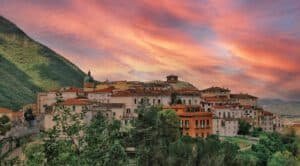
Pitigliano is one of those places where how you get there is part of the pleasure. The last stretch of road, whichever direction you choose, gives the view everyone photographs: the whole village hanging on the tuff, with the Medici aqueduct running down its side and the bell tower of the Duomo poking out of the houses. It's worth slowing down and stopping at the lookout before you go in.
By car from Rome to Pitigliano (GR)
The simplest way from Rome is the Cassia (SS2) to Viterbo, then the expressway toward Montefiascone and the Maremmana road (SR74) in the direction of Valentano, Farnese and Manciano, with the last climb leading to the village. Alternatively you take the A1 motorway to Orvieto and from there head down toward Sovana and Sorano, entering Pitigliano from the north. It's the most scenic route, because it crosses the tuff area where the three towns look at each other from one hill to the next. Either way, count about two and a quarter hours without traffic. Practical tip: leave early, because on spring Sundays and long weekends the final road and the parking lots fill up fast.
By public transport to Pitigliano (GR)
The village has no railway. The nearest useful station for those arriving by train is Orvieto, on the Rome-Florence line, from where you continue by bus or with a rental vehicle. The bus lines of Tuscan public transport serve Pitigliano from Grosseto and the towns of the area, but with frequencies designed for residents and students. Check the schedules the same day, because on holidays the runs thin out. For a single day, the car remains the reasonable choice.
Where to park and how to get around Pitigliano (GR)
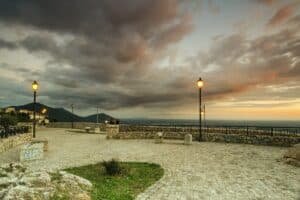
Cars are left outside the city walls, in the parking lots along the road that circles the spur and in the area in front of Piazza della Repubblica, the panoramic terrace from which you enter the historic center. From there on you walk. The urban fabric is all uphill and downhill, paved, with narrow alleys and stairways. Comfortable shoes are required, and a stroller is not recommended. The full tour of the village, including stops at the Duomo, the ghetto and Palazzo Orsini, takes a full half day. Anyone who wants to add the Vie Cave and the necropolises should plan on the whole day.
Pitigliano (GR): the village on the tuff in three streets
The historic center has an elongated shape, almost like a spindle, imposed by the tongue of tuff on which it formed. Three parallel streets run along its length, from the entrance square to the tip occupied by the Orsini Fortress: Via Vignoli, Via Roma and Via Zuccarelli. Linking them is a network of alleys, arches and little stairways that open suddenly onto vertical views of the valley. It is a medieval layout left almost intact, where every few meters the view changes and the rock resurfaces under the plaster. Under the houses, dug into the tuff, run cellars, storerooms and Etruscan columbaria reused over the centuries. The Pitigliano you see on the surface has an equally inhabited double underground. The village borders the Selva del Lamone Nature Reserve and the municipalities of Farnese, Ischia di Castro, Latera and Valentano, in an area where the so-called brigands' path still runs, which joins the tuff towns along ancient routes.

Little Jerusalem: the Jewish ghetto of Pitigliano (GR)
The nickname that made Pitigliano famous comes from a long story that, for once, is more happy than tragic. Between the late 1500s and the early 1600s a Jewish community settled permanently in the village, finding a more tolerant coexistence here than elsewhere, protected for a long time by the Orsini counts and later by the grand dukes. The Jews built their own quarter in the part of the center between the Duomo and the church of Santa Maria, a maze of alleys and rooms dug into the tuff that you can still visit almost in full today. The community reached a considerable demographic and economic weight for such a small town, enough to leave its mark on the language, the cooking and the urban landscape. The name Little Jerusalem tells exactly this integration: not a ghetto of harsh segregation like elsewhere, but a lived-in quarter, with its religious and civil institutions up and running.
The Synagogue of Pitigliano (GR)
At the heart of the itinerary is the Synagogue, a 16th-century building overlooking the void of the cliff. Inside are preserved the Aron, the holy ark that holds the Torah scrolls, the Tevà from which the reading is done, the biblical verses on the walls and the women's gallery. Badly damaged by a collapse in the 1900s, when the community had by then dwindled, it was recovered with a restoration completed in 1995 that gave it back to worship and to visitors. It is among the oldest synagogues in Tuscany still standing in its original setting, and its survival is already a rare fact in itself. Standing in front of the Aron, under the painted verses, in a room that looks out over the tuff precipice, gives the measure of how deeply rooted this presence was: not a parenthesis, but a piece of the village's identity, grown together with the Catholic houses a few steps away. The community that built it and kept it for centuries no longer exists as a living body today, but the synagogue remains the place where that history can still be heard.
The ritual bath, the matzo oven and the kosher shops
The strength of Pitigliano's Jewish itinerary is the service rooms of community life, all carved into the rock and open to visitors in the underground spaces next to the Synagogue. You go down to the ritual bath, the mikveh, fed by spring water as the rules require. You see the matzo oven, where the unleavened bread for the Jewish Passover was baked. What remains are the kosher butcher shop, the cellar for kosher wine and the dye works, concrete traces of a complete neighborhood economy. Walking through these tunnels, with light filtering in from the ventilation shafts, is the most memorable part of the visit: here history is not told, it is touched.

The Jewish cemetery of Pitigliano (GR)
Outside the town, along the road toward Manciano, is the Jewish cemetery, established in the second half of the 1500s on land granted by the Orsini. The oldest gravestones, eaten away by moss and tilted by time, tell of generations of the village's families. Next to the ghetto, the area also holds the open-air archaeological museum named after Alberto Manzi, the television teacher of that program that taught more than 1,000,000 Italians to read and write. His name tied to Pitigliano says how much this land has cultivated the idea that culture is a good to be handed out.
Why Pitigliano (GR) is called Little Jerusalem
The label should be taken for what it is: an affectionate recognition of the long Jewish presence and of the coexistence that came out of it. In the centuries when in much of Europe Jews were confined and driven out, here they found better conditions for a long time, open shops, a real weight in trade and crafts. The community almost died out over the 1900s, between emigration and persecution, but the village chose not to forget it. The restored Synagogue, the museum itinerary, the place names and even the sweets hand down that memory. It's best to reach the ghetto without hurry, maybe late in the morning, when the groups have thinned out and the alleys go quiet again.
The sfratto of Pitigliano (GR): a sweet that tells of an expulsion
No souvenir says Pitigliano better than the sfratto. It is a long, thin sweet shaped on purpose to look like a stick: inside a shell of pastry is a dense filling of honey, walnuts, orange zest, anise and nutmeg, fragrant and not cloying. The name is the part that sticks. It carries the memory of the expulsion of the Jews of Pitigliano, Sovana and Sorano into the town ghetto, imposed in the Medici era in the early 1600s. The messengers who delivered the order knocked on the doors of the houses with a stick, and that very brutal gesture is what the community chose, centuries later, to turn into a sweet to make and share. Taking a painful episode and baking it into a little sweet to give as a gift is a reversal that says a lot about the character of this place. The ingredients, for that matter, sink their roots in very old local traditions, perhaps Etruscan, so the sfratto is at once Jewish memory and the peasant root of the area. You buy it in the shops of the center and in the bakeries: take a box home, and tell the story while you serve it.
Palazzo Orsini and the museums of Pitigliano (GR)
At the far end of the village, where the spur of tuff narrows, rises the bulk of Palazzo Orsini, the fortress that for centuries was the center of power over the area. It deserves a slow visit, because it holds nearly the whole history of Pitigliano in a single complex.
The Aldobrandeschi fortress and Sangallo's hand at Palazzo Orsini
The building began as a fortress built by the Aldobrandeschi between the 11th and 12th centuries, when the family ruled the Maremma from the tuff side. Passed to the Orsini in the 1200s, the fortress was turned into a noble residence and reshaped in the 1500s through the work of Antonio da Sangallo the Younger, called in by Niccolò Orsini to modernize its defenses and rooms. The later Medici and then Lorraine rule added alterations between the 1700s and 1800s. The result is a layered palace, with courtyards, halls and walkways that tell of the passage from war machine to Renaissance court.
The well and the courtyard of Palazzo Orsini
In the courtyard you find the famous Renaissance well-cistern, decorated in bas-relief with the coats of arms and symbols of the family: an elegant piece that solved a concrete problem, the water supply of a fortress hanging over the void. It's the spot where you should look up and read on the walls the layering of the coats of arms, the Orsini one with the she-bear and the ones added by later lords.
Palazzo Orsini museum in Pitigliano (GR)
Inside the palace is Palazzo Orsini museum, diocesan in character, which gathers the artistic and sacred heritage of the area: paintings, liturgical furnishings, goldwork, vestments and works from the churches of the zone. It is the visual memory of the upper Maremma, with panels and canvases that span several centuries and that without this shelter would have been scattered. The visit also lets you walk through the palace's noble rooms and appreciate their ceilings and views.
The civic archaeological museum of Pitigliano (GR)
Also in Palazzo Orsini is the civic archaeological museum, dedicated to the Etruscan civilization that shaped these valleys. It collects grave goods from the necropolises of the area, ceramics, bucchero, urns and materials from the excavations of Gradone, San Giovanni, San Giuseppe and Poggio Buco. It is the ideal key to reading the area before or after walking the Vie Cave: the objects on display give a face and a context to the tombs dug into the tuff that you see outdoors.
The jacket makers' museum and peasant civilization
In the underground rooms of the Orsini Fortress you can visit the jacket makers' museum, ethnographic in approach, dedicated to the peasant civilization of the tuff. Tools, furnishings, reconstructions of workshops and home rooms tell of work in the fields, the processing of products and the everyday life of the past. The name recalls the old trades tied to the making of garments: a museum modest in size but valuable for understanding how people really lived here before tourism.

The civic palaces and Teatro Salvini of Pitigliano (GR)
Besides the fortress, the village keeps a fabric of civic buildings that tell of the administrative and middle-class life of past centuries. Palazzo Comunale, in Neo-Renaissance style, was built between 1934 and 1939 above Teatro Salvini, a hall put up in 1823 by the Ravvivati amateur dramatic society, renovated in 1870, absorbed into the palace in the 1930s and restored in the 1970s: a small historic theater that bears witness to the cultural liveliness of the town. On the main square stands Palazzo Sadun, also called the palace of the Jews, an imposing late 19th-century building tied to one of the most prominent families of the community. Walking through the center you then recognize many noble and institutional palaces, from Palazzi Bruscalupi, Incontri and Lucci-Petruccioli to the Pretura, the Monte di Pietà, the courthouse, Palazzi Santelli and Vignoli, down to the old hospitals and the offices tied to the administration of the fortress. They are not monuments you queue for, but facades to read by looking up as you stroll, clues to a town history richer than the size of the village would suggest.
The Duomo of Saints Peter and Paul and the churches of Pitigliano (GR)
Pitigliano is not only tuff and Judaism: the Catholic side left a dense network of churches, many of them now deconsecrated or reduced to ruins, which tell the long religious history of the village.
The Cathedral of Saints Peter and Paul
The Duomo, dedicated to Saints Peter and Paul, is the mother church of the village. The layout is medieval, but the building was heavily reworked in the 1500s and then given a late Baroque facade, flanked by a tuff bell tower that rises on the town's profile. The interior, with a single nave and side chapels, is Baroque and holds works from the 1600s to the 1800s, among them the canvas of Henry IV at Canossa by the Maremma painter Pietro Aldi. It is the main parish of the village and keeps, under the later decorations, the memory of centuries of town life.
Santa Maria Assunta and the Sanctuary of the Madonna delle Grazie
The church of Santa Maria Assunta, in Piazza Dante, is a 19th-century Neo-Romanesque building, large and bright. The Sanctuary of the Madonna delle Grazie, instead, began as a 14th-century chapel, turned into a sanctuary in the 1500s and then enlarged and restored in the 1900s. It is the destination of the torchlight procession of September 8 and one of the viewpoints from which you take in the village from outside.
The minor and deconsecrated churches of Pitigliano (GR)
Walking through the center you come across many minor churches, many of them no longer used for services. The church of Santa Maria e San Rocco, of medieval origin, stands where a pagan temple used to stand and keeps a three-nave plan with 17th-century paintings. The Oratory of the Santissimo Crocifisso is a small 17th-century building near Piazza Gregorio VII. The church of Sant'Antonio, along Via Zuccarelli, of 13th-century origin, is now deconsecrated and used for civic purposes. The same fate befell the church of San Michele, of medieval roots and 18th-century changes. The church of San Rocco, from the 1400s, between Via Vignoli and Vicolo San Rocco, has become a private home. The chapel of the Madonna del Fiore, Renaissance, grew by additions over the centuries.
San Francesco and the signature of Antonio da Sangallo
Outside the town, toward the Manciano road, are the church and convent of San Francesco, Renaissance structures attributed to Antonio da Sangallo the Younger, the same man who remodeled the fortress. The church keeps a fresco of the Madonna and Child from the early 1500s, while the convent, now a rural residence, keeps a 16th-century cloister. In the area there are then country churches and chapels: San Paolo della Croce at Casone, Santa Maria in Vinca reduced to a ruin near the Poggio Buco necropolis, the chapel of Saints James and Philip along the Vie Cave of Gradone, the chapel of Pian di Morrano, the one of San Lorenzo and a rock oratory carved in a cave near the Porta di Sovana.

The Medici Aqueduct and the fountains of Pitigliano (GR)
The postcard of Pitigliano almost always has a row of arches in the foreground: it is the Medici aqueduct, the work that for centuries solved the thirst of a village perched on tuff, with no springs at that height. It was started in the mid-1500s and completed only in the following century, under the rule of the Medici who had taken the place of the Orsini. Its tuff masonry arches, set against the flank of the village, carried water to the center and have become one of the visual symbols of the town, the one that appears in every photograph from above. For a settlement built on a cliff, with no watercourses at that height, securing water was a matter of survival before it was a matter of urban decorum. The aqueduct solved a daily problem and at the same time displayed the power of those who governed, able to bend hydraulic engineering to the needs of a town hanging over the void. Even today walking under its spans, with the valley opening beneath your feet, is one of the moments that stay most in the mind from the visit.
The Fountain of the Seven Spouts
The point where the water arrived was the Fountain of the Seven Spouts, from the mid-1500s, which closes the south side of Piazza della Repubblica. The seven mouths that give the fountain its name poured the water brought by the aqueduct: it was the place of daily life, where people stocked up and met. Not far away are the so-called twin fountains, two basins from the early 1900s that double the water theme on the same panoramic terrace.
The walls, gates and castles of Pitigliano (GR)
The village is a defensive organism before it is an aesthetic one. Its beauty comes from the need to stay safe on a cliff.
The walls and gates of Pitigliano (GR)
The walls, raised by the Aldobrandeschi starting from the 9th century on an even older Etruscan fortification, owe their present look to the Renaissance restructuring by Antonio da Sangallo the Younger. You enter the center through historic gates. The Porta di Sovana, of 13th-century origin, opened toward Sovana along the line of the Vie Cave. The Porta della Cittadella, from the 1500s, is a gallery dug into the southeast bastion. Walking the perimeter of the walls, where possible, lets you read the joint between natural rock and human work that makes Pitigliano almost indistinguishable from its spur.
The castles and monuments of the area
In the area there are the remains of old castles. Castel dell'Aquila, near the Fiora river, keeps the ruins of a medieval fortress. Castello di Morrano, from the 9th century, in the locality of Morranaccio, was an Aldobrandeschi possession and an Orvieto garrison, probably destroyed in the 1400s, and ruins of it remain. In the village, to the right of the cathedral, stands the monument to the Ursine progeny, from 1490: a square base topped by a bear on an amphora with the Orsini coat of arms, a heraldic tribute to the family. On the Poggio Strozzoni, finally, survives Parco Orsini, a late 16th-century garden modeled on the example of the nearby park of Bomarzo, with sculptures and monumental stone thrones carved out in the woods.
The Vie Cave and the Etruscan necropolises around Pitigliano (GR)
If the historic center is medieval and Renaissance, the landscape around it is deeply Etruscan. The Vie Cave are the least advertised wonder of this corner of the Maremma.
What the Vie Cave of Pitigliano (GR) are
The Vie Cave, or Cavoni, are deep trenches dug by hand into the tuff, corridors that in some stretches reach tens of meters in height, with vertical walls covered in moss and ferns. The Etruscans made them, for reasons still debated among scholars: a link between settlements and necropolises, protected transit routes, perhaps a sacred and ritual function. Walking inside them, with light barely coming down from above and the sound of seeping water, is a physical experience before it is an archaeological one. The Vie Cave of Gradone open south of the center and lead to the necropolises, beyond the Meleta bridge.
The Etruscan necropolises of the tuff
The area is dotted with necropolises. The one at Gradone keeps chamber tombs of the 7th-6th century BC. The one at San Giovanni, not far away, combines chamber tombs of the 6th century BC and cassone tombs of the Hellenistic age, and takes its name from the bridge Leopold II had built in 1843. The one at San Giuseppe, toward Sovana, holds chamber tombs of the 7th-6th century BC. Farther off, Morranaccio was in use from the Bronze Age to the Roman era, with ancient wells, tombs, rock caves and the ruins of the medieval castle. Poggio Buco, finally, was an ancient Etruscan city that flourished between the 12th and 6th centuries BC, dependent on Vulci, whose identification with ancient Statonia was long proposed and then questioned by scholars: a point to take for what it is, an archaeological hypothesis, not a certainty.
The Bianco di Pitigliano (GR) and the cooking of the tuff
The table here has a distinct personality, a child of the volcano and of the cellar dug in the rock.
The Bianco di Pitigliano, a DOC wine since 1966
The signature wine is the Bianco di Pitigliano, which obtained its controlled designation of origin by decree of March 28, 1966, making it one of the first Tuscan whites to be recognized. The production rules base the wine on Trebbiano toscano, present in the dominant share, joined by other white grapes such as Greco, Grechetto, Malvasia bianca lunga, Verdello, Ansonica and international varieties within set limits. The production zone includes the municipalities of Pitigliano and Sorano and portions of Scansano and Manciano. It is a fresh, mineral white, born to go with local cooking, and its history goes well beyond the date of recognition, in a tuff viticulture centuries old.
The cellars dug into the tuff and the Rosso di Sovana
Beneath the houses of the village open cellars cut into the rock, where the temperature stays constant all year. They are ideal places to let wine rest, and many become osterie or tasting spots. The area also produces Rosso di Sovana, another designation of the tuff territory, in its different types. The open cellar days of spring and the wine events of summer and fall are the best chance to taste directly from the producers.
The sweets, the dishes and the Wednesday market
Besides the sfratto, the village's pastry tradition keeps a rich repertoire: the torsetto con la bolla, the tortello dolce, the tozzetto, the cialdino dei tufi, the focaccia bastarda, the Easter focaccia, the migliaccia, the frittelle di San Giuseppe. The savory cooking leans on handmade pasta, like picio, a long hand-rolled spaghetti dressed with meat or aglione sauces, and on products of the garden and the woods: mushrooms, chestnuts, legumes, sheep's cheeses and Maremma meat. Jewish cooking left its mark on everyday food too, among breads, sweets and dishes that mixed with the local peasant tradition until they became indistinguishable. Every Wednesday the center hosts a characteristic weekly market, a good moment to combine shopping and a stroll. A tip from someone who eats here often: look for the osterie set up in the tuff cellars, where the cool temperature and the rock walls do half of the atmosphere, and pair a plate of picio with a glass of local Bianco served young.
The festivals and events of Pitigliano (GR)
The village calendar is packed and it is worth planning your visit to coincide with one of its occasions: they completely change the atmosphere of the town.
The Torciata di San Giuseppe
The most spectacular event is the Torciata di San Giuseppe, on March 19. A procession in historic costume crosses the village carrying bundles of lit reeds, in a rite that marks the end of winter. At the climax a big effigy, the Invernaccio, is burned, while the torches light up the tuff alleys. It is one of the most spectacular fire festivals in central Italy, with very ancient roots, and whoever happens to be in Pitigliano that evening witnesses a rite that seems to come out of a very distant time, with the rock lit by flames and the smell of burning cane filling the alleys.
The Festa della Contea and the Palio dei Rioni
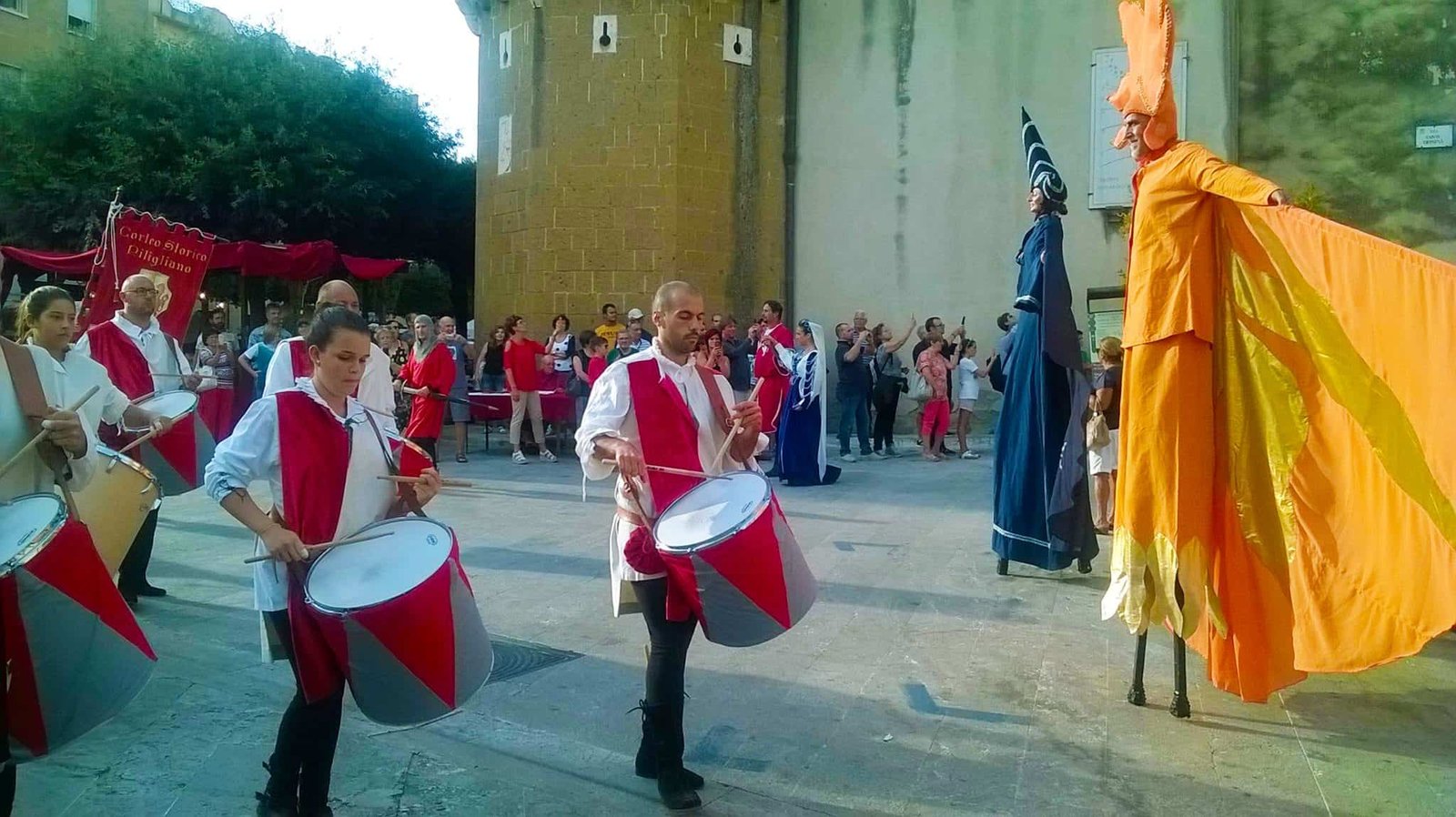
On the third weekend of August the village goes back to the Renaissance with the Festa della Contea: historic market, taverns, 16th-century costumes, jugglers, jesters, musicians, archers and dancers, up to the Renaissance banquet at Palazzo Orsini in honor of Count Niccolò III Orsini. At the center of the contests is the Palio dei Rioni, the competition among the four historic quarters of the town, which sparks local rivalry with the same seriousness as a more famous palio.
Wine in celebration: Cantine Aperte, Calici di Stelle and Settembre DiVino
The wine vocation is celebrated at several moments of the year: Cantine Aperte in May, with tastings and visits to the vineyards, Calici di Stelle on August 10, with tastings along the streets of the center under the sky of San Lorenzo, and Settembre DiVino, the cellar festival with music and events. In May there are also the Festival dell'olio delle Terre del Tufo and, in November, the Santi Vinai with tastings of oil and new wine.
The other events of the year
The calendar is rounded out by the Carnevale pitiglianese, the Infiorata del Corpus Domini in June, with carpets of flowers in the streets, the Notti dell'Archeologia in early July, with Etruscan-themed performances, the Festa di San Rocco on August 16 for the patron saint, the Sagra del picio, the Festa del Contadino and the torchlight procession to the Madonna delle Grazie on September 8. Few weeks of the calendar stay truly empty.
A short history of Pitigliano (GR)
The history of the village is the history of a position: a defensible cliff, at the crossroads of the Maremma, inland Etruria and the Fiora valley.
The Etruscans and the origins of Pitigliano (GR)
The hill was inhabited as early as the Final Bronze Age, between the 12th and 11th centuries BC, with traces of human presence going back to the Neolithic and the Copper Age. An Etruscan settlement existed on the site of the present town, with remains of walls in the Capisotto district, before dying out between the end of the 6th and the start of the 5th century BC. The Etruscan name is unknown. The current one would derive from the gens Petilia, and legend attributes the founding to two Romans, Petilio and Celiano.
Aldobrandeschi and Orsini
The first documented mention dates to 1061, in a bull of Pope Nicholas II, which indicates possession by the Aldobrandeschi family. In 1293 Anastasia Aldobrandeschi married Romano Orsini, bringing the county of Sovana as dowry. The county seat was moved to Pitigliano and the long lordship of the Orsini began. They governed for centuries, defending themselves from the designs of Siena, of Orvieto and then of the Medici, and enriching the village with Renaissance monuments thanks to architects such as Antonio da Sangallo the Younger, Baldassarre Peruzzi and Anton Maria Lari.
The Medici, the Lorraine and Unification
In the 1500s the county entered the Florentine orbit. Niccolò IV Orsini was proclaimed lord by the people with the backing of Cosimo de' Medici, but after the fall of Siena in 1562 the inhabitants preferred grand-ducal laws and ended up accepting the Medici. In 1574 the fortress passed to Florence and in 1604 Pitigliano was annexed to the Grand Duchy of Tuscany to settle the debts of the Orsini. The 1700s, with the Medici first and the Lorraine from 1737, were marked by a long decline and a slow recovery. In 1860 the plebiscite sealed the union with the Kingdom of Italy. Today the village lives mainly on cultural tourism and on a fame built on the peculiarity of its historic center.
A walking itinerary to visit Pitigliano (GR)
For those arriving without a guide who want a sensible order, here is the recommended route. You start from Piazza della Repubblica, the entrance terrace, where it's worth leaning over the parapets right away to understand the layout of the village: on one side the Lente valley, on the other the Meleta one, and in between the tongue of tuff you walk on. On the square you see the Fountain of the Seven Spouts and the twin fountains, and from here begins the view of the Medici aqueduct. You then take Via Roma, the central street, and in a few minutes reach the area of the Duomo of Saints Peter and Paul, with its late Baroque facade and tuff bell tower. From there you go down into the Jewish ghetto, the heart of Little Jerusalem, to visit the Synagogue and the underground spaces with the ritual bath, the matzo oven and the kosher shops. Back on the surface, you continue toward the tip of the village, where Palazzo Orsini dominates with its museums, its courtyard and the Renaissance well. Anyone with energy left goes out of the walls toward the Porta di Sovana and takes the Vie Cave of Gradone, going down into the tuff trenches as far as the Etruscan necropolises. The return, at the end of the day, closes the circle in Piazza della Repubblica, maybe with a stop in a cellar dug into the rock. It is a loop of about four hours at an easy pace, more time if you stop in the museums and the shops.
Tuff: the stone Pitigliano (GR) is made of
You can't understand Pitigliano without understanding tuff. It is a soft volcanic rock, yellow-gray in color, born from the deposits of the great Lazio volcanoes that, more than 1,000,000 years ago, shaped this whole strip of land, from Lake Bolsena to the Fiora valley. Tuff has a quality that decided the history of the village: it is very easy to dig when fresh, and it hardens in the air. The Etruscans understood this first and dug tombs, tunnels and the Vie Cave into it. The people of Pitigliano in the following centuries carried on, carving out cellars, storerooms and columbaria under the houses. The same stone, cut into blocks, was used to build the walls you see on the surface, so the village is at once dug out and built with the same material. This is also the reason for Pitigliano's fragility: tuff erodes, water digs into it, and every so often a piece of cliff gives way. Walking along the edges of the center you notice the consolidation works that hold up the houses overlooking the void. The beauty of this place, in short, rests on a delicate balance between people and a rock that keeps working.
A curiosity about Pitigliano (GR)
The curiosity that almost no visitor knows concerns the underground. Under the Pitigliano you walk on there is a second Pitigliano, a labyrinth of rooms dug into the tuff that families have used for centuries as cellars, storerooms, columbaria, stables and depots. Many of these spaces reuse cavities of Etruscan origin: funerary columbaria, tunnels, cisterns, adapted in the Middle Ages and the Renaissance to domestic uses. The constant temperature makes them perfect for storing wine, and that is why the Bianco di Pitigliano found a natural home here. In practice the village is a two-level building: the rock is not just the base the houses sit on, it is itself inhabited. There is more: the same stone the town is dug out of, tuff, is the material the town is built with, so Pitigliano is born literally from the hole it leaves behind. Walking through the alleys, when you glimpse a little wooden door going down into the dark under a house, you are looking into a history 3,000 years long: that is Etruscan tuff reused as the cellar of yesterday's farmer and the osteria of today.
Something nobody tells you about Pitigliano (GR)
What the guidebooks skip over is that the Jewish community of Pitigliano, for a long stretch of its history, did not live the fierce segregation of the ghettos of other Italian cities. The formal ghetto came late, imposed in the Medici era, and even then coexistence stayed more open than elsewhere. Jews kept shops, traded, had a recognized economic weight, and the protection of the Orsini first and the relative tolerance of the grand dukes later allowed the community to thrive until it became, in proportion, one of the largest in Tuscany. That is why the nickname Little Jerusalem sounds different here: it does not recall an enclosure, it recalls coexistence. The memory of the expulsion, turned into a sweet instead of a lament, says the same thing. A second practical detail few people point out: the underground Jewish itinerary, with the ritual bath and the matzo oven, is the most intense part of the visit and is less crowded than the panoramic viewpoints, because it requires going down under the Synagogue. If you're short on time and have to choose, choose the underground: it is worth the ticket more than any terrace.
The advice I give you for visiting Pitigliano (GR)
My advice is to reverse the instinctive order. Almost everyone goes straight into the village from Piazza della Repubblica. Do the opposite: before you park, stop at the lookout on the road coming from Manciano or Sovana and look at Pitigliano from outside, with the aqueduct and the houses growing out of the tuff. That view, early in the morning or at sunset, is the reason this place stays in your mind. Only then go in. Give the first part to the ghetto and its underground while the air is still cool and the groups haven't arrived, then go up to the Duomo and Palazzo Orsini in the middle hours, and keep the Vie Cave for the afternoon, when the slanting light enters the tuff trenches and makes them theatrical. Avoid long-weekend Sundays if you can: the final road is narrow and the parking lots fill up. If you stay for dinner, order a plate of picio, a glass of Bianco di Pitigliano and buy a box of sfratti for the trip home. And wear serious shoes: here you go up, you go down and you walk on paving for hours.
Another well-known fact, yet seldom cited
Everyone knows Pitigliano is beautiful. Few remember that its Renaissance fortification bears the signature of Antonio da Sangallo the Younger, one of the greatest military architects of the Italian 1500s, the man who worked on the walls of Rome and the fortresses of the Papal State. Called in by the Orsini, Sangallo put his hand to the walls, the gates and the transformation of the old Aldobrandeschi fortress into Palazzo Orsini, and his work intertwines with that of other top-rank names like Baldassarre Peruzzi. It means that this provincial village, apparently marginal, was for a time a construction site of architecture of the highest level, on a par with far more famous cities. When you walk along the walls or enter by the Porta della Cittadella, that gallery dug into the bastion is not a colorful detail: it is Renaissance military engineering conceived by one of the minds that rewrote the art of defense. It is a documented fact, and it changes the way you look at the stones.
The right photo to take in Pitigliano (GR)
The photograph that takes Pitigliano home isn't shot inside the village, but from outside. The right spot is the lookout on the provincial road that climbs from Manciano, or the terrace near the Sanctuary of the Madonna delle Grazie: from there you frame the whole town hanging on its spur of tuff, with the houses looking like a vertical extension of the rock and the Medici aqueduct running in the foreground with its arches. The best light is the late afternoon, when the low sun warms the tuff and turns it golden, or the dawn, when mist rises from the valleys and sets the village apart like an island. For the night version, wait for dark: the lights of the town set the cliff aglow and the effect is memorable. Inside the center, instead, the photo to look for is a narrow alley with a little door going down into the tuff, or the sudden view over the void at the bottom of a small stairway. One last suggestion from someone who has tried them all: don't shoot only the overall panoramic view, look for the details, the Orsini coats of arms, the well of Palazzo Orsini, the verses in the Synagogue. Those are what, looked at again back home, really bring you back here.
Some important events that happened here in history
Several moments have marked the destiny of the village. In 1293 the marriage between Anastasia Aldobrandeschi and Romano Orsini moved the seat of the county of Sovana to Pitigliano and started the long Orsini lordship: a dynastic fact that turned a frontier castle into the center of power over the tuff. In the 1500s the story became dramatic: Niccolò IV Orsini, proclaimed lord by the people with the backing of Cosimo de' Medici, was later imprisoned by the Inquisition, a sign of how fragile these border balances were. After the fall of Siena, in 1562, the inhabitants chose the Florentine grand-ducal laws, going as far as driving out the Orsini and accepting the Medici. In 1574 the fortress passed to Florence. In 1604 the village was formally annexed to the Grand Duchy of Tuscany to settle the debts of the Orsini house, closing centuries of autonomy. Then there is the long story of the Jewish community: the settlement between the 1500s and 1600s, the imposition of the ghetto in the Medici era that the sfratto recalls, the flourishing of the 1800s and the near extinction of the 1900s between emigration and racial persecution. Finally, in 1860, the plebiscite that brought Pitigliano into the Kingdom of Italy. Every stone of the village keeps the mark of one of these passages.
Who has passed through Pitigliano (GR)
The name that weighs most on Pitigliano is that of Antonio da Sangallo the Younger, the Florentine architect who in the 1500s remodeled the fortress, the walls and the gates for the Orsini, and to whom the church and convent of San Francesco are also attributed: his hand gave the village the form we still admire today. With him, architects such as Baldassarre Peruzzi and Anton Maria Lari worked in the service of the Orsini court. Through here passed, as lords or as antagonists, the Aldobrandeschi and the Orsini, houses that held the territory for centuries, and in the background move the Medici, from Cosimo the Elder to the grand dukes who ended up absorbing the county. Painting of the 1800s left the signature of Pietro Aldi, a Maremma artist, author of the canvas of Henry IV at Canossa kept in the Duomo. And the 1900s tied to the village the name of Alberto Manzi, the teacher who taught Italians to read and write from television, after whom the open-air archaeological museum of the area is named. It's not the crowd of celebrities of the great art centers, but it's first-rate company for a village with such a small population.
Sovana and Sorano: the tuff triangle of Pitigliano (GR)
Pitigliano shouldn't be thought of alone. Together with Sovana and Sorano it forms a triangle of villages dug into the same rock, a few kilometers apart and linked by a shared history, that of the Aldobrandeschi and the Orsini. Sovana, the smallest and the oldest, was a bishop's seat and gave birth, according to tradition, to Pope Gregory VII, the pontiff of the investiture struggle. It keeps a splendid Romanesque cathedral, the church of Santa Maria with its pre-Romanesque ciborium and, just outside, one of the most important Etruscan funerary complexes in central Italy, with the famous Ildebranda Tomb carved like a temple into the rock. Sorano, perched on an even more dizzying spur, is dominated by the Orsini Fortress, an imposing Renaissance defensive machine, and by the Masso Leopoldino, the bastion from which the view over the valley takes your breath away. Beneath the village open the ruins of the Sasso, the quarter abandoned after the landslides. Anyone with two or three days should give them to all three towns, walking the Vie Cave that linked them already in Etruscan times. It is an itinerary that tells, in a few tens of kilometers, 3,000 years of history written on the same tuff.
What to see around Pitigliano (GR): the tuff surroundings
Pitigliano forms a triangle with two other villages dug into the tuff, Sovana and Sorano, which deserve a visit on the same trip: Sovana for the Romanesque cathedral and the Etruscan Ildebranda tomb, Sorano for the Orsini fortress and its cliffs. A little farther south you descend toward Lazio and the strip of volcanic lakes: Lake Bolsena with its lakeside towns, the town of Bolsena with the basilica of Santa Cristina, Capodimonte and Marta facing the water, and the upper village of Montefiascone. A short distance away are Civita di Bagnoregio, the dying city clinging to its tuff hill, medieval Viterbo with the San Pellegrino quarter, and Orvieto with its Duomo, also born on a cliff. Anyone looking for the real Etruria continues to Tuscania, the necropolises of Tarquinia and the archaeological park of Vulci, the ancient power on which Poggio Buco depended. It is an area you can drive around in a few dozen minutes between one village and the next, ideal for a long weekend.
Quick questions about Pitigliano (GR)
Where is Pitigliano (GR)?
Pitigliano is in the province of Grosseto, in southern Tuscany, just past the border with Lazio, near Lake Bolsena and the villages of Sovana and Sorano. It is a little over two hours by car from Rome.
Why is Pitigliano called Little Jerusalem?
For the historic presence of a Jewish community, settled between the 1500s and 1600s and well integrated for a long time, with its own synagogue, ritual bath, matzo oven and kosher shops. Coexistence here was more open than in many other Italian cities.
How much time do you need to visit Pitigliano (GR)?
Half a day is enough for the historic center, the ghetto, the Duomo and Palazzo Orsini. Adding the Etruscan Vie Cave and the necropolises makes it a full day.
Do you pay to enter Pitigliano?
Walking in the village is free. The Synagogue with the Jewish itinerary and the museums of Palazzo Orsini have a ticket. Fares and hours change with the season and it's best to check them on the official websites before the visit.
How do you get to Pitigliano from Rome?
By car, going up the Cassia to Viterbo and then the Maremmana road toward Manciano, or from the A1 exiting at Orvieto and going down through Sovana and Sorano. There is no train station in the village.
Can you get to Pitigliano by train?
Not directly. The nearest useful station is Orvieto, on the Rome-Florence line, from where you continue by bus or with a rental vehicle. Local bus connections are designed for residents and should be checked the same day.
Where do you park in Pitigliano (GR)?
In the parking lots along the ring road outside the walls and in the area in front of Piazza della Repubblica. The historic center can only be visited on foot.
What is the sfratto of Pitigliano?
A stick-shaped sweet, with a filling of honey, walnuts, orange zest, anise and nutmeg. The name recalls the messengers who, with a stick, knocked on the doors of the Jews to order the move into the ghetto. The community turned that memory into a sweet.
What wine do you drink in Pitigliano (GR)?
The Bianco di Pitigliano, a DOC wine since 1966 made from Trebbiano toscano and other white grapes, fresh and mineral. The area also produces Rosso di Sovana. Many cellars are dug into the tuff beneath the village.
What are the Etruscan Vie Cave?
Deep trenches dug by hand into the tuff by the Etruscans, in some stretches tens of meters high, which linked settlements and necropolises and probably also had a ritual function. The Vie Cave of Gradone are walked on foot south of the center.
Is Pitigliano suitable for children?
Children like the village for the cellars, the alleys and the stories of the ghetto, but it is all uphill and downhill, with stairways and paving: better to wear comfortable shoes and skip the stroller. The Vie Cave are an adventure, with some care needed on the damp and slippery ground.
Is Pitigliano wheelchair accessible?
The historic center is demanding, with slopes, stairs and uneven paving. Some viewpoints and the main square can be reached, but several areas such as the ghetto underground and the Vie Cave have barriers. It's best to find out about accessible routes in advance.
When is the best time to visit Pitigliano (GR)?
Spring and early fall offer ideal weather and better light. Summer is lively with festivals but hot. Winter is quiet and, on March 19, gives you the Torciata di San Giuseppe. Avoid long-weekend Sundays if possible, when the road and parking lots get crowded.
What is the Medici aqueduct of Pitigliano?
An aqueduct with tuff arches, started in the mid-1500s and completed in the following century under the Medici, which carried water to the Fountain of the Seven Spouts in the center. Its arches are one of the visual symbols of the village.
What is there to see at Palazzo Orsini?
Palazzo Orsini museum, diocesan in character, with paintings and sacred art of the area, and the civic archaeological museum, with the grave goods of the Etruscan necropolises. In the fortress underground there is also the ethnographic jacket makers' museum.
Can you visit the cellars in the tuff?
Yes, many cellars dug into the rock beneath the village have become osterie, wine shops or tasting spots, above all during events like Cantine Aperte and Settembre DiVino.
What are the main festivals of Pitigliano (GR)?
The Torciata di San Giuseppe on March 19, the Festa della Contea with the Palio dei Rioni in late August, the Calici di Stelle on August 10, the Settembre DiVino and the torchlight procession to the Madonna delle Grazie on September 8, plus many food festivals and food and wine shows.
Can you visit the synagogue of Pitigliano?
Yes, the 16th-century Synagogue, restored in 1995, is open to visitors together with the underground Jewish itinerary with the ritual bath, the matzo oven, the kosher butcher shop and cellar. Hours and ticket should be checked on the official channels of the community.
What is there to see near Pitigliano?
The tuff villages of Sovana and Sorano, Lake Bolsena with Bolsena, Capodimonte and Marta, Montefiascone, Civita di Bagnoregio, Viterbo, Orvieto and the Etruscan sites of Tuscania, Tarquinia and Vulci, all reachable in a few tens of minutes by car.
Can you visit Pitigliano, Sovana and Sorano on the same day?
With a car yes, because the three villages are a few kilometers apart, but it would be a rush. To do justice to the tuff triangle, with its Vie Cave, Etruscan necropolises and fortresses, plan on two days, giving at least one full day to Pitigliano.
Are there hot springs near Pitigliano (GR)?
The area is rich in thermal waters. In Pitigliano itself, in the locality of Valle Orientina, there is a pool fed by thermal water, while a short distance away you reach the famous free hot springs of Saturnia, with the Cascate del Mulino, one of the most frequented places in the Maremma.
What is Parco Orsini of Pitigliano?
A late 16th-century garden on the Poggio Strozzoni, conceived on the model of the nearby park of Bomarzo, with sculptures and monumental stone thrones carved out in the woods. It is one of the testimonies to the Renaissance taste of the Orsini court.
Why is there a bear on the coat of arms of Pitigliano?
The bear, or rather the she-bear, is the heraldic symbol of the Orsini family, which governed the village for centuries. You find it again in the monument to the Ursine progeny of 1490, to the right of the cathedral, and in the coats of arms carved at Palazzo Orsini and along the walls.
Is Pitigliano worth the trip from Rome?
Yes. Even for just a day, the village hanging on the tuff, the Jewish ghetto, the aqueduct and the Etruscan Vie Cave justify the two hours of road. Combined with the nearby villages of Sovana and Sorano and the strip of volcanic lakes, it becomes a full and varied weekend.
I come back to Pitigliano every time with the same pleasure, and every time I recommend the same thing: don't treat it as a quick stop to tick off. Give it a day, go down into the underground of the ghetto, walk through a Via Cava, drink a glass of Bianco in the cool of a cellar dug into the tuff and wait for late afternoon for the view from the lookout. Few villages give back so much to those with the patience to really look at them. And if you have to choose a single image to take away, choose it from the lookout at dusk, when the tuff turns gold and the town seems to float over the valley: that is the moment that, once you're back home, will make you want to leave again.
Article written by the editorial team of TourLeaderPro, contact them for Private/Corporate/V.I.P. Tours and Experiences.
Planning a trip to Rome? The English guides for visiting the city are on ItalyPlanner.com.