CityLab 971
In short. CityLab 971 is a cultural and innovation space born from the reuse of a building along Via Ardeatina, in the southern sector of Rome, in a stretch of the city halfway between the established urban fabric and the Roman countryside that…
CityLab 971 is a cultural and innovation space born from the reuse of a building along Via Ardeatina, in the southern sector of Rome, in a stretch of the city halfway between the established urban fabric and the Roman countryside that opens up toward Divino Amore and Santa Palomba. The street number, 971, went straight into the project's name, a direct, no-frills way of saying where you are without needing any other label. The area doesn't have the tourist fame of the Appia Antica, which runs not far away and partly parallel, nor the devotional pull of the Divino Amore shrine, but it is a piece of south Rome that in recent decades has seen its population, residential neighborhoods and demand for shared spaces grow, and where initiatives like this are born precisely to answer that demand: a place to work, meet, and organize events and neighborhood activities without having to cross the city to get to the center. To get your bearings in the rest of the sector, the page on Appia Antica Park and the one on the Ardeatine Caves Mausoleum are also useful, two reference points that help in understanding the character of this part of the city.
Telling the story of CityLab 971 means, in large part, telling the story of the sector around it: a piece of south Rome that almost no tourist guide treats in an organic way, squeezed as it is between the best-known image of the archaeological Appia Antica and that, just as well known but different, of the pilgrimage to Divino Amore. In between, along Via Ardeatina, runs a strip of city made of relatively young neighborhoods, grown at different times and with different logics, where the demand for places of cultural gathering is all the stronger the scarcer the historical supply of this kind of service. Understanding this context is the necessary premise to understand why a space named after a street number, instead of a catchier sign, can become an important reference point for the people who live here.
Where CityLab 971 is and how to get there
The reference address is Via Ardeatina, one of the great consular roads leaving Rome to the south, at number 971: a position that puts the space well beyond the Grande Raccordo Anulare, in a strip of city where residential neighborhoods alternate with stretches that are still rural. Anyone who doesn't know the area tends to underestimate how long Via Ardeatina is: it starts at the Aurelian Walls, passes through the historic neighborhoods next to the Baths of Caracalla, runs alongside the Ardeatine Caves complex, cuts through Appia Antica Park and continues for several kilometers toward Santa Palomba and the towns of the Castelli. An address with the number 971 already tells the distance from the historic center by itself.
By car along Via Ardeatina
From central Rome you take Via Ardeatina at Porta San Sebastiano or, more conveniently for those coming from other sectors, from the Grande Raccordo Anulare, Ardeatina exit. Traffic on this consular road flows well for most of the day, with predictable peaks at office rush hours and at times when the road also absorbs traffic heading to Divino Amore, a very popular pilgrimage destination especially on weekends and on Marian feast days. Coming from the Raccordo, you find the road fairly straight, with few traffic lights in the stretch outside the city and clear signage toward the main points of interest.
One point to keep in mind for those coming from outside Rome: Via Ardeatina, although it is one of the city's historic consular roads, has no expressway status and shouldn't be confused with the Pontina, which runs farther west toward the coast, nor with the Appia, which runs parallel to it farther east toward the Castelli Romani. It's a road with two lanes in each direction in the busiest stretches, which gradually narrows as you move away from the Raccordo Anulare and which passes through small built-up centers where the speed limit drops and it's wise to slow down, both out of respect for the traffic code and because the pedestrian crossings in these stretches are not always marked with great visibility.
Anyone using a satellite navigator would do well to set the full address, Via Ardeatina 971, as the destination, rather than relying on a generic point of interest: on such a long consular road, an error of even a few hundred meters in the destination can mean having to stop, turn around and get back on the road in a stretch where the chances to turn are limited. The same rule applies that holds for many other destinations spread along the great Roman consular roads: a precise address is better than an approximate reference.
By bus and public transport
The sector is not served by a direct metro line: the closest station on the rail network remains Laurentina on line B, from which you then need a surface vehicle or a car ride to cover the last kilometers toward the far end of Via Ardeatina. City bus lines run along the Ardeatina with stops that thin out the farther you get from the Grande Raccordo Anulare: it's the price paid for being in a low-density area compared with the rest of the city, but also one of the reasons a space like CityLab 971 makes sense at this point, that is, to offer a presence where there were none before.
By bicycle and on foot
Via Ardeatina is not, in the stretch outside the city, a road designed for gentle mobility: there is no continuous bike lane and vehicle traffic, though not very heavy, moves at a brisk speed. Anyone who wants to get around by bike finds more suitable routes by moving toward the nearby Appia Antica Park, where the paths and dirt trails make it possible to link several points of the southern sector safely, until reaching, with a few more kilometers, the area of Via Appia proper.
Useful distances and landmarks
To really understand the position it's better to think in landmarks than in exact kilometers, because along a consular road the perceived distances depend a lot on the traffic of the moment. From the Grande Raccordo Anulare, taking the exit for Via Ardeatina, number 971 is reached in a few minutes by car in normal traffic conditions. The historic center of Rome, with its best-known destinations, is at a distance more comfortably measured in a good half hour by car than on foot or by bike. The city's airports, Fiumicino and Ciampino, can both be reached without crossing the city center, by following the Raccordo Anulare in the opposite direction from the one taken to reach CityLab 971: a detail that can be useful for anyone planning a stop in this area as part of a wider itinerary, perhaps at the end of a visit to the southern sector before leaving.
What CityLab 971 really is: a space reclaimed for culture and innovation
The name already says a lot: an urban laboratory, a place designed to bring together people, ideas and projects in a setting that would otherwise remain peripheral to the cultural circuits of central Rome. The formula of reusing an existing building, given new collective functions, is one of the paths most followed in recent years by Rome's administrations and third-sector groups in response to the chronic shortage of public and semi-public spaces in the outer and semi-outer neighborhoods of the capital. CityLab 971 fits into this trend: a physical space that becomes a container for different activities, from shared work to events, from association initiatives to small markets, with the stated aim of offering those who live in the southern sector a reference point that did not exist before at that distance from the center.
The word laboratory, in the name, should be understood in the most concrete sense: not a place that delivers a fixed, predictable service, but a space that transforms depending on who passes through it and which projects find a home inside it in a given period. It's a different approach from that of a traditional cultural center, with annual programming set in advance, and closer to the logic of the community spaces that have spread in many European cities over the last 20 years: public or private buildings, often born with another function, which are given back to the neighborhood as open containers, able to host a Saturday morning market just as well as an evening presentation or an afternoon course.
Coworking, events and activities for associations
Among the functions that a space of this kind typically brings together are shared workstations for those who don't want to or can't work from home, rooms available for meetings, presentations and small events, and areas designed to host local associations looking for a temporary base or a place to organize meetings open to the public. To this are added, in many similar experiences in the Roman outskirts, periodic appointments such as markets for secondhand goods, vintage or small local producers, music moments and themed evenings that serve to bring in audiences from outside the neighborhood too. Anyone planning a visit or wanting to take part in a specific initiative would do well to check the updated calendar directly on the space's social channels, because the programming of this type of venue often changes from month to month and doesn't always stay visible online for long.
One thing that sets spaces of this kind apart from traditional commercial venues is their ability to adapt quickly to new needs: a room set up in the morning for shared work can become, in the afternoon, the site of a workshop for children and, in the evening, the stage of a small acoustic concert. This functional flexibility is at once the strength and the limit of the model: it makes it possible to maximize the use of a physical space that would otherwise remain underused for long stretches of the day, but it also requires constant organizational work that not all groups manage to sustain over the long term.
Why a space like this is born right here
The choice to place a project of this kind along Via Ardeatina, far from the historic center and the big tourist axes, follows a precise logic: the neighborhoods that developed in recent decades toward Santa Palomba, Divino Amore and the outermost strip of the southern sector have seen the resident population grow much faster than the cultural services available on the spot. Anyone living in this area who wants an aperitivo with live music, a course, a shared workspace or simply a place to find other people from the neighborhood has for years had to look toward Eur, toward Ostiense or even toward the center. Groups like this are born to shorten that distance.
A trend that affects the whole Roman periphery
CityLab 971 is not an isolated case. In Rome, in recent years, projects are multiplying that turn sheds, covered markets, former industrial complexes and disused buildings into hybrid spaces for the community: think of the Garbatella Urban Gardens, which gave a green area a new social and educational purpose, or the Eur Social Park, born to give the Eur sector an outdoor gathering place with events, sports and culture. In a context like this, a space like CityLab 971 represents the Ardeatina-sector version of a broader phenomenon: that of urban regeneration from below, which in Rome has found its most fertile ground in the outlying neighborhoods, precisely because that is where the lack of quality public places was felt most during the years of fastest building growth.
It must be said honestly that the concrete programming of a space like this, the names of those who run it and the conditions of access to the different activities are pieces of information that change over time and should always be checked on the space's official channels before planning a visit: here we limit ourselves to describing the type of function that a center with this vocation typically performs in a neighborhood of this kind, without replacing the direct source for the hours and the program of the moment.
A curiosity about CityLab 971
Few connect the name of the space with the fact that the street number of a Roman consular road like Via Ardeatina is not at all random in its progression: the old out-of-town roads of the capital number their buildings following the course of the road from the center toward the outskirts, so a high number like 971 tells, even before any map, how far from the historic center you have gone. It's the same principle that governs the numbering of other great Roman consular roads, from Via Appia to Via Tiburtina, where three-digit numbers begin to appear only well beyond the Raccordo Anulare. Using the street number as a proper name, instead of inventing a more evocative label, is a choice that speaks for itself: no other brand is needed, it's enough to say where you are.
A second detail that escapes many concerns the very road the space faces. Via Ardeatina is one of the oldest consular roads in the Roman road system, whose original route linked Rome to the Latin city of Ardea, on the coast south of the capital: an axis that over the following two millennia changed function several times, from military and commercial road in Roman times to a connecting route among the farming estates of the Agro Romano in later centuries, until becoming, in the 20th century, one of the lines of urban expansion toward the south. Every building that goes up today along this route, CityLab 971's included, thus fits into a layering much longer than its recent history would suggest.
Something nobody tells you about CityLab 971
The first thing no tourist listing tells you is that this stretch of Via Ardeatina, although a few kilometers from the center of Rome, lives at a completely different rhythm from the historic city. There are no flows of tourists, no density of bars and restaurants like the one inside the walls, and the landmarks for those arriving from outside are few and very distinct: Divino Amore, Appia Antica Park, not much else. In a context like this, a space like CityLab 971 works as a local beacon more than as a city attraction, and is designed first of all for those who live or work in the sector, not for the occasional visitor following a guidebook itinerary. Anyone arriving expecting the atmosphere of a cultural space in the center, with shop windows, lit signs and a constant flow of passersby, is thrown off: here the setting is residential, the road is a fast consular road and the relationship between the space and the neighborhood is built over time, not through occasional foot traffic.
The second thing few consider concerns the logistics of the area: anyone getting around without their own car has to allow for longer times than expected, because public transport on this stretch of Via Ardeatina is designed to serve residents at peak times, not to guarantee a convenient frequency for people traveling off-hours to reach an evening event. Before organizing an evening out in this area, it's worth checking the return times in advance, or arranging a ride by car: it's a practical detail that makes the difference between a good evening and a long wait at the bus stop.
The third thing, less practical and more substantive: a space like CityLab 971 lives, more than happens in the center, on the direct relationship with the people who animate it. In a historic-center neighborhood a venue can count on a constant flow of passersby even without a particular relationship with the surrounding social fabric. In a sector like this, where occasional foot traffic is much rarer, the survival of a cultural project depends largely on the ability to build a community of regulars. It's a more fragile model in the short term, but when it works it creates a bond with the territory much stronger than the one formed in a high-traffic area, where venues follow one another and the public keeps changing.
My advice for visiting CityLab 971
The most useful advice is not to treat the visit as an isolated outing, but to fit it into a day that also covers the rest of the sector: Via Ardeatina, in this stretch, is a few minutes from both Appia Antica Park and the Divino Amore shrine, two destinations that deserve time of their own and that combine well with a stop at a neighborhood cultural space. Anyone planning a day off the usual itineraries can start with a morning walk in the archaeological park, continue around midday with a stop at the shrine, and close the afternoon or evening around Via Ardeatina 971, when local events programming, if there is any, tends to concentrate.
Before setting out, it's always best to check the space's social channels to find out what is actually scheduled: spaces of this kind live on periodic initiatives rather than on a fixed, predictable opening like that of a museum, and showing up without checking risks finding closed doors or a calendar different from the one you imagined. The second practical suggestion concerns transport: if you don't have a car, better to organize your return in advance, because evening public transport on this stretch of the Ardeatina is not designed for people leaving an event late at night.
A third piece of advice, more about substance than practicalities: anyone visiting CityLab 971 expecting the offering and variety of a cultural space in the center risks being disappointed, because the scale a project of this kind works on is that of the neighborhood, not of the whole city. The best way to appreciate it is to change your expectations from the start: not a museum or a big-draw events center, but a local outpost that is worth above all for the function it serves in the daily life of those who live nearby. With this key, even an evening with few participants or a small market takes on a different meaning, that of a piece that holds together a community scattered over a very wide and sparsely built territory.
Finally, one piece of advice that holds for the whole sector and not only for the space itself: bring water and, in the hottest months, sun protection, because between one point of interest and another in this area you often walk outdoors, along streets with little shade, and refreshment services are not as frequent as in the historic center. It's a trivial detail but it really makes a difference on a day organized between Ardeatina, Appia Antica and Divino Amore.
Another well-known fact that is still rarely mentioned
That Via Ardeatina is tied to the memory of the Ardeatine Caves everyone knows. What tends to be forgotten is how much that memory conditioned for decades the urban development of the whole sector. The massacre of March 1944, which took place in the pozzolana quarries a few kilometers from the historic center, turned a stretch of this consular road into a place of national memory and imposed restrictions of respect and protection that, indirectly, held back the most intensive building in the very strip closest to the city. It's one of the reasons why, continuing south along the Ardeatina, in a few kilometers you pass from an area strongly marked by 20th-century history to a landscape that gradually opens toward the Roman countryside, with much lower population densities the farther you go.
A second element rarely mentioned concerns the role the pilgrimage to the Divino Amore shrine played, throughout the 20th century, in keeping alive the function of this road as a link between Rome and its agricultural outskirts. Long before the residential neighborhoods that now line it were born, Via Ardeatina was already traveled by thousands of faithful heading to the shrine, especially on the feast of the Nativity of Mary in early September. That tradition of passage left a lasting mark on the road's vocation, which even today remains more a corridor of transit than a true commercial axis, with shops and public establishments concentrated at intervals rather than along the whole route.
An element should be added that bears more closely on the sphere of 20th-century memory: the stretch of Via Ardeatina closest to the center, the one that runs alongside the quarries where the 1944 massacre took place, is now protected not only as a place of national memory but also as an integral part of the system of Christian catacombs that has developed along this route since the first centuries after Christ. It's an overlap few notice: the same area that hosts one of the gravest symbols of the Roman Resistance holds, a few meters away, some of the oldest testimonies of Rome's Christian community. Two layers of memory completely different in era and meaning, held together by the same road.
A third fact, this one truly marginal in collective memory, concerns the countryside that opens beyond the last urbanized stretch of the Ardeatina: the strip that slopes toward Santa Palomba is part of the Agro Romano that for centuries fed the city with grain, fodder and extensive livestock raising, an agricultural landscape that 20th-century building expansion eroded but did not entirely erase. Anyone traveling Via Ardeatina beyond number 971 today still finds, alternating with the new settlements, cultivated fields and farmhouses that tell of that older agricultural vocation: a contrast that makes this sector different from many other Roman suburbs grown on a fabric that was already completely urbanized.
The landscape around CityLab 971, between the Ardeatina and the Roman countryside
Anyone arriving from outside the sector and expecting a uniform suburb is often surprised by the variety of landscapes found within a few kilometers of number 971. To the north, toward the Raccordo Anulare, the residential fabric grown in recent decades prevails, made of apartment blocks, small shopping centers and fast-moving roads. Continuing south, the landscape gradually opens: fields take up space again, houses thin out and the views lengthen until they meet, on the clearest days, the profile of the Colli Albani on the horizon.
Appia Antica Park as a green hinge
The Appia Antica Regional Park, which runs a short distance from the stretch of Via Ardeatina where CityLab 971 is located, is one of the largest urban protected areas in Europe and works as a hinge between the two worlds that coexist in this sector: the established city and the Roman countryside. The park holds not only the famous Via Appia with its ancient paving, but also aqueducts, Roman villas, farming estates still under cultivation and a network of paths that let you walk for hours without ever losing sight, in the distance, of the city skyline. It's the big reference park for those who live in this part of Rome, and it's the reason many outdoor initiatives organized in the sector choose to rely on its spaces.
The protection of this area, established as a regional park in 1988 after decades of battles fought by citizens' committees and environmental associations against the building speculation that in the 1960s and 1970s had already eaten into part of the historic landscape of Via Appia, has had direct consequences also on the way Via Ardeatina sector developed: the landscape and archaeological restrictions that protect the park have indirectly contained the most intensive building in the strip immediately adjoining it, maintaining a discontinuity between the urban fabric grown along the Ardeatina and the protected countryside of the park. It's a balance that can't be taken for granted, considering how intense urbanization was in other, less protected portions of the Roman periphery.
The Divino Amore Shrine, between faith and history
The shrine, which also gives its name to one of the best-known borgate of the southern sector, has its roots in an episode traditionally placed in the 18th century: the legend has it that a pilgrim heading to Rome, attacked by feral dogs near a ruined farmhouse, was saved by calling on the Madonna depicted in a sacred image painted on that ruin, giving rise to a cult that in the following decades drew a growing number of faithful. The present shrine, rebuilt on a monumental scale in the second half of the 20th century in view of the great Jubilee of 2000, is today one of the most visited pilgrimage destinations in the capital, with a calendar of celebrations that has always marked, together with the rhythm of the farming seasons, the life of this stretch of Roman countryside.
The Divino Amore borgata, an urban model apart
Around the shrine, over time, one of the most particular borgate of the southern sector has developed, grown with a logic different from that of the dormitory neighborhoods in the rest of the Roman periphery: a low-density settlement, with wide green spaces and a vocation tied more to welcoming pilgrims and scattered residential life than to the large-scale public housing that characterized other areas of south Rome in the same period. It's a model that influenced, at least in part, the development of the neighboring districts along Via Ardeatina too, where low density and the presence of large free lots remain, even today, a distinctive feature compared with other suburbs of the capital grown at far higher densities.
The right photo to take at CityLab 971
The most effective photograph is not the one of the sign on Via Ardeatina, but the one that manages to relate the space to the landscape around it: on one side the reclaimed building, with its sober consular-road Roman facade, on the other the open backdrop of countryside that you glimpse as soon as you move a few dozen meters from the main road. It's a contrast that tells the character of this stretch of city well, suspended between recent urbanization and remnants of the Roman countryside, and that is hard to capture in a photo taken inside the historic center.
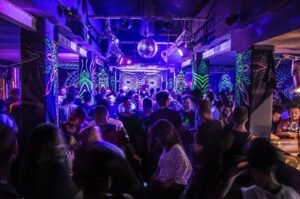
Those attending an evening event can instead aim for an interior shot, capturing the audience gathered in a space designed for meeting more than for architectural spectacle: these are the images that, better than any description, convey the real function of a center like this, that of bringing people together in a quadrant of the city where occasions to meet cannot be taken for granted.
A third possibility, for those with time to widen the photographic tour beyond the space itself, is the late afternoon light on the countryside that opens beyond the last urbanized stretch of the Ardeatina: the cultivated fields, the scattered farmhouses and, in the background, the profile of the Colli Albani give an image of the Roman periphery very different from the better-known one made of big apartment blocks and busy roads. It's a photograph less immediate to find, but one that perhaps tells the meaning of this sector better than any other, suspended between city and countryside.
Some important events that took place here in history
The history of this stretch of Via Ardeatina is marked, first of all, by an event that left an indelible mark on the whole sector: the massacre of the Ardeatine Caves in March 1944, which took place in the quarries along the same consular road, a little closer to the center than number 971, but near enough to make this road, as a whole, one of the most charged with historical memory in all of Rome. From that event came the Ardeatine Caves Mausoleum, the destination of school visits and institutional commemorations that every year bring attention back to this stretch of city.
Earlier still, and on a much longer time scale, this stretch of Roman countryside was crossed by the routes of medieval pilgrims heading to Rome from the south, along a network of secondary roads that flanked the great ancient consular roads and that in part coincide with the routes now followed by Via Ardeatina and the neighboring roads. It's a story less documented than that of Via Appia, the most celebrated consular road of antiquity, but it still tells of a function of connection between Rome and its southern hinterland that remained practically constant for two millennia, with only the means of transport and the reasons for the journey changing.
On the wider scale of the sector, the second event to remember is the slow but steady urban expansion that, from the postwar period and with a decisive acceleration in the last 30 years, has transformed the strip between the Grande Raccordo Anulare and Santa Palomba from an almost exclusively agricultural countryside into a mosaic of residential neighborhoods, productive complexes and, more recently, spaces like CityLab 971 born to answer the needs of a growing population. It's a transformation less told than that of the historic center, but just as significant for understanding how Rome has changed in recent decades.
A third moment to keep in mind is the rebuilding of the Divino Amore Shrine in its present monumental form, which took place in the second half of the 20th century in view of the Jubilee of 2000: a building site that brought to this sector flows of pilgrims and institutional attention well above those of an ordinary periphery, helping to keep alive, along the whole of Via Ardeatina, a function of passage and rest that dates back centuries before the birth of the modern residential neighborhoods. It is in this frame, made of memory, faith and urban growth, that the more recent birth of groups like CityLab 971 fits, the latest chronological piece of a much longer story.
Who has passed through CityLab 971
More than through a list of famous names, the story of a space like this passes through the people who frequent it every day: freelancers and remote workers who choose to work in company rather than staying isolated at home, neighborhood associations that find here a base for their periodic meetings, small producers and craftspeople who take part in the markets organized in the common spaces, local musicians and collectives who animate the themed evenings. It's an audience that constantly renews itself, made largely of residents of the southern sector, but able to draw people from other neighborhoods of Rome too when the program deserves it.
Alongside this audience, with a certain regularity, are the third-sector groups in Rome looking for accessible spaces to organize courses, listening desks and training meetings: a type of presence less visible from outside, but one that explains well why projects like CityLab 971 have found fertile ground precisely in the city's periphery, where the demand for low-cost shared spaces remains high and doesn't always find an answer.
A particular role, in many spaces of this kind born in the Roman periphery, is also played by the area's sports and youth groups: amateur clubs, scout groups, small neighborhood teams that, having no base of their own, find in a multipurpose center like this a place to hold meetings, season presentations or small fundraising events. It's a type of use less showy than a concert or a market, but just as important to understand how much a project like CityLab 971 can become, over time, an infrastructural piece of the associative life of a whole sector, more than a simple container of cultural events.
Finally, the more occasional audience should not be forgotten: those who arrive in the sector for the Divino Amore shrine or for a walk in Appia Antica Park and discover CityLab 971 almost by chance, perhaps drawn by an outdoor market or by an event shared on social media. It's a type of visitor that in central Rome would be the norm and that in this sector remains instead a minority, but that over time helps make the space known outside the narrow borders of the neighborhood.
When to go to CityLab 971
For a space whose life depends on the programming of events more than on a fixed opening schedule, the right question is not so much which season to go in, as on which occasion. Groups of this kind, across the whole Roman periphery, tend to concentrate their activity in the months when it is easiest to organize outdoor initiatives and evenings accessible also to those arriving by car from outside the neighborhood, so spring and autumn typically remain the most dynamic seasons, while summer brings evening events designed to take advantage of the cooler hours of the day. Winter, as for many initiatives of this kind, generally sees more limited programming, geared more to indoor spaces than outdoor ones.
The practical advice remains always the same: check the updated calendar on the space's official channels before planning the visit, especially if the goal is to attend a specific event and not simply to see the place. Anyone who instead wants to combine the stop with a day in the sector can do so at any time of year, since the area's reference destinations, from Appia Antica Park to the Divino Amore shrine, remain accessible all year round.
What's around CityLab 971
Closeness to Appia Antica Park is probably the area's main strength: a large green area holding Roman villas, catacombs and aqueducts, reachable in a few minutes by car from number 971 on the Ardeatina. Among the park's best-known stops is the Villa of the Quintilii, one of the largest ancient residential complexes in the whole Roman countryside, as well as the famous Catacombs of San Callisto and the Catacombs of San Sebastiano, both among the most visited Christian underground complexes in Rome.
Not far away, toward the city center along the same Via Ardeatina, is the Ardeatine Caves Mausoleum, a place of memory that every year welcomes school visits and official ceremonies. To the south, the Shrine of the Madonna del Divino Amore remains one of the capital's main pilgrimage hubs, the destination of constant flows especially on weekends. Anyone who wants to widen the view to the rest of the southern sector can also read the page devoted to the Eur Social Park, another group born from the redevelopment of a public space for cultural and social uses, a useful point of comparison to understand how projects with aims similar to those of CityLab 971 are multiplying in the periphery.
For those who like to combine nature and sport, the sector also offers the Circolo Sportivo Tor Carbone, set in greenery next to Appia Antica Park, while those looking for another stop of spirituality and religious architecture can go as far as the Abbey of the Three Fountains, a little farther north toward Eur. These are all destinations easily reached by car over a day organized around the southern sector, and they make it possible to build an itinerary much richer than the stop at CityLab 971 alone.
If you want to go a little farther afield, the southern sector also offers the great Christian catacombs scattered along the Appia and the Ardeatina: besides the Catacombs of San Callisto and San Sebastiano already mentioned, the area holds an entire system of underground cemeteries that shows the role of this strip of Roman countryside as a favored burial area since the first centuries of Christianity, when burials could not take place inside the walls of the ancient city and were concentrated precisely along the great consular roads leaving Rome, the Ardeatina included.
Accessibility and tips for families
Anyone moving with small children or with people with reduced mobility must allow for the fact that the sector, though rich in points of interest, is designed mainly for those who travel by car: the sidewalks are not continuous along the whole stretch of Via Ardeatina and the pedestrian crossings, as already noted, are not always marked with the same care found in the historic center. Inside a space like CityLab 971, having been born from the reuse of an existing building, the provision of ramps, elevators or barrier-free routes should be checked case by case: the layout of a reclaimed building depends a lot on the original structure and doesn't always guarantee the same level of accessibility as a building designed from scratch.
For families with children, the strength of the sector remains Appia Antica Park, with its wide open spaces and the chance to alternate stretches of walking with stops in the shade. Less suited to the youngest, apart from specific occasions designed for them, is the part more strictly tied to the evening events at CityLab 971, which like many spaces of this kind tends to be aimed mainly at an adult audience.
For those traveling with pets, the nature of the sector, made of wide open spaces and a regional park a short distance away, makes this area easier to manage than the historic center: Appia Antica Park, in particular, is one of the destinations most frequented by Romans who walk their dogs, thanks to the wide paths and the less trafficked areas compared with the more central urban parks.
Quick questions about CityLab 971
Where exactly is CityLab 971?
Along Via Ardeatina, at number 971, in the southern sector of Rome, beyond the Grande Raccordo Anulare, in the direction of Divino Amore and Santa Palomba.
How do I get there without a car?
The stretch is not served by a direct metro line: the closest rail stop remains Laurentina, on line B, from which you then need a surface vehicle or a car ride for the last kilometers along Via Ardeatina.
What kind of activities does CityLab 971 host?
The typical activities of a space of this kind include shared workstations, rooms for meetings and events, initiatives open to local associations and periodic appointments such as markets and themed evenings, with a program that should always be checked on the space's social channels.
Is it far from the center of Rome?
Yes, it is well beyond the Grande Raccordo Anulare: the high street number, typical of Roman consular roads, reflects precisely the distance from the historic center.
What is there to see nearby?
Appia Antica Park with the Villa of the Quintilii and the catacombs of San Callisto and San Sebastiano, the Ardeatine Caves Mausoleum and the Divino Amore Shrine are the main destinations, a few minutes away by car.
Is it worth going by car?
Yes, it's the most practical solution: Via Ardeatina in this stretch is a fairly free-flowing consular road, with simpler parking than in the central areas of Rome.
Why is the space called CityLab 971?
The number directly takes up the street number on Via Ardeatina where the space is located, a choice that replaces a more evocative name with a direct reference to its location.
Can I organize private events at CityLab 971?
Spaces with this vocation generally make rooms and areas available for private initiatives too, as well as for those open to the public: the actual availability and conditions, however, should always be requested directly from the space.
Is there parking available?
Being along a consular road in a stretch of low building density, parking in the surrounding area is generally less problematic than in the central areas of Rome, although availability can shrink during events with a large audience.
Is it worth combining the visit with an outing in Appia Antica Park?
Yes, it's the most natural combination: the park is a few minutes away by car and lets you build a day that joins archaeology, nature and the stop at the cultural space.
Is it a suitable space for remote workers?
The typical coworking functions found in spaces of this kind make them suitable for those looking for an alternative to their own home for working, especially for those who live in the southern sector and don't want to travel all the way to the center or toward Eur.
What is CityLab 971's relationship with the neighborhood?
Because of its location, far from the tourist circuits and set in a mostly residential context, the space's vocation is above all that of a local outpost, designed for those who live in the area permanently more than for the passing visitor.
How long does it take to get to CityLab 971 from the center of Rome?
In normal traffic conditions, by car from the historic center it's a good half hour of travel: the distance should always be checked at the time, taking into account traffic on Via Ardeatina and on the Grande Raccordo Anulare.
Are there other spaces similar to CityLab 971 in the southern sector?
Yes, the phenomenon of cultural spaces born from the reuse of existing buildings is widespread across the Roman periphery: among the best-known examples in the southern sector are the Eur Social Park and the Garbatella Urban Gardens, both born with similar aims of gathering and urban regeneration.
Do I need to book to take part in CityLab 971 events?
It depends on the type of initiative: some activities, such as markets and public openings, are generally free entry, while courses, workshops or events with limited capacity may require booking. The correct procedure should be checked each time on the space's channels.
Is it worth pairing a visit to CityLab 971 with the Divino Amore shrine?
Yes, since both are on the same line of Via Ardeatina, the two places lend themselves well to being put in the same day, perhaps also adding a stop in the nearby Appia Antica Park.
What is the difference between CityLab 971 and a traditional cultural center?
The main difference concerns the model: a space like CityLab 971 works more as a flexible container of different initiatives, with a program that changes over time, while a traditional cultural center generally has fixed programming set in advance.
The sector that opens up along Via Ardeatina beyond the Raccordo Anulare remains one of the least-told stretches of Rome, suspended between the memory of the Ardeatine Caves, the spirituality of Divino Amore and the scattered archaeology of Appia Antica Park. In this context, a space like CityLab 971 represents an attempt to give the neighborhood a stable cultural outpost, able to reach those who live in the area every day more than those passing through: a small but concrete piece of a part of the city that deserves more attention than it usually gets.
Anyone who just looks up CityLab 971 on a map and ticks it off as an isolated stop misses the truest sense of this corner of south Rome. The value of the place is measured in the sum of its parts: the ancient road it faces, the heavy memory of the Ardeatine Caves closer to the center, the popular spirituality of Divino Amore, the scattered archaeology of Appia Antica and, in the middle of all this, a small cultural outpost born to give a name and a precise address to a part of the city that for decades had very few. It's a sector that asks for time and attention, not a quick in-and-out stop, and it gives back more to those who approach it in this spirit.
Frequently asked questions about CityLab 971
Where is CityLab 971?
CityLab 971 is along Via Ardeatina, at number 971, in the southern sector of Rome, beyond the Grande Raccordo Anulare, in the direction of the Divino Amore shrine and Santa Palomba. It's a stretch of Roman consular road where residential neighborhoods alternate with views that are still rural.
What is CityLab 971?
CityLab 971 presents itself as a reclaimed space given over to collective functions, an urban laboratory designed to bring together people, ideas and projects in a setting that is peripheral to the cultural circuits of central Rome. The formula of reusing an existing building for cultural and social uses has spread in recent years in Rome's third sector.
What kinds of activities take place at CityLab 971?
The space appears to be frequented by freelancers and remote workers looking for a shared environment, by neighborhood associations that find a base there for their meetings, and by small producers and craftspeople who take part in the markets organized in the common spaces. The information is not systematically confirmed and it's best to check the updated calendar on the official channels.
How do I get to CityLab 971 without a car?
The stretch of Via Ardeatina where CityLab 971 is located is not served by a direct metro line: the closest rail stop remains Laurentina, on line B, from which you then need a surface vehicle or a car ride for the last kilometers.
What are the opening hours of CityLab 971?
Since it is a space whose activity depends on event programming more than on a fixed schedule, the hours do not come from stably verifiable sources: it's best to contact CityLab 971 directly through its official channels before planning a visit.
What is near CityLab 971?
Near CityLab 971 is Appia Antica Park, a green area holding Roman villas, catacombs and aqueducts, among them the Villa of the Quintilii, reachable in a few minutes by car. Not far away is also the Divino Amore shrine, a pilgrimage destination.
Article written by the editorial team at TourLeaderPro, contact them for Private/Corporate/V.I.P. Tours and Experiences. For a day organized in the southern sector of Rome, between Appia Antica, the Ardeatine Caves and Divino Amore, with a licensed tour leader, start from the TourLeaderPro contact page. Tour operators building itineraries off the beaten track will instead find the consulting service in the section devoted to tour operators.
Planning a trip to Rome? The English-language guides to visiting the city are on ItalyPlanner.com. For those thinking in terms of days off the best-known routes there is the guide to the best day trips from Rome, while those who want to understand how to organize a balanced vacation between the center and the periphery will find ideas in the section devoted to the city's neighborhoods.
Contact Information
Via Salaria, 971
Roma Roma Città, Roma Città