Circolo Sportivo Tor Carbone
In short. Circolo Sportivo Tor Carbone is a private sports facility with a pool, set in the Roman countryside along Via Ardeatina, on the edge of the Appia Antica Regional Park, in the area that local place names call, precisely, Tor Carbone.
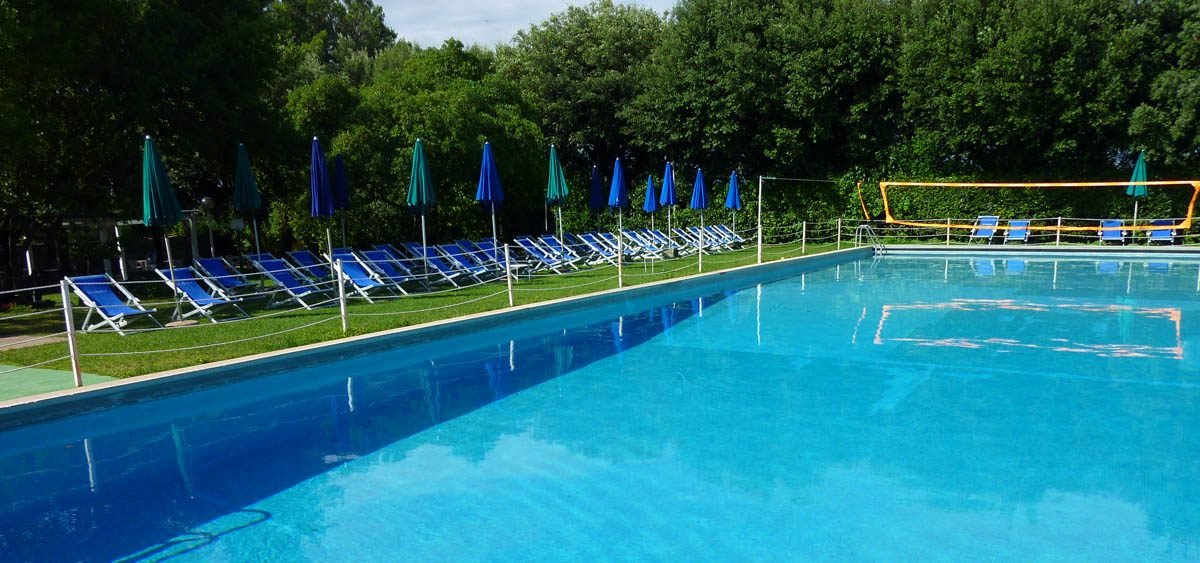
Circolo Sportivo Tor Carbone is a private sports facility with a pool, set in the Roman countryside along Via Ardeatina, on the edge of the Appia Antica Regional Park, in the area that local place names call, precisely, Tor Carbone. It is a place meant for those looking for a swim away from the traffic and the chaos of the city beach clubs, with a 25 by 12.5 meter pool and a large lawn surrounding it, in a farming setting that recalls the Lazio countryside more than the Roman outskirts. The position, straddling Via Ardeatina and Via Appia Antica, puts it in one of the stretches richest in history and protected nature in the whole metropolitan area, between the Caffarella, the monumental tombs of the Appia and the catacomb complex. For those coming from outside it's useful to also read the pages on the Appian Way Park and the Caffarella Park, which describe the territory the club sits in.
Circolo Sportivo Tor Carbone: What to Know Before You Go
The central point to be clear about is that this is a private sports club, not a public park or a beach establishment open indiscriminately to anyone: access goes through a membership or an entry regulated by the facility, under arrangements that must be checked directly with the club before planning the day. This sets Tor Carbone apart from the big city lidos and the municipal pools, and explains why the atmosphere stays calm even in the hottest months: it's not a place built for big numbers, but for a more intimate use, made largely of local families and regular members.
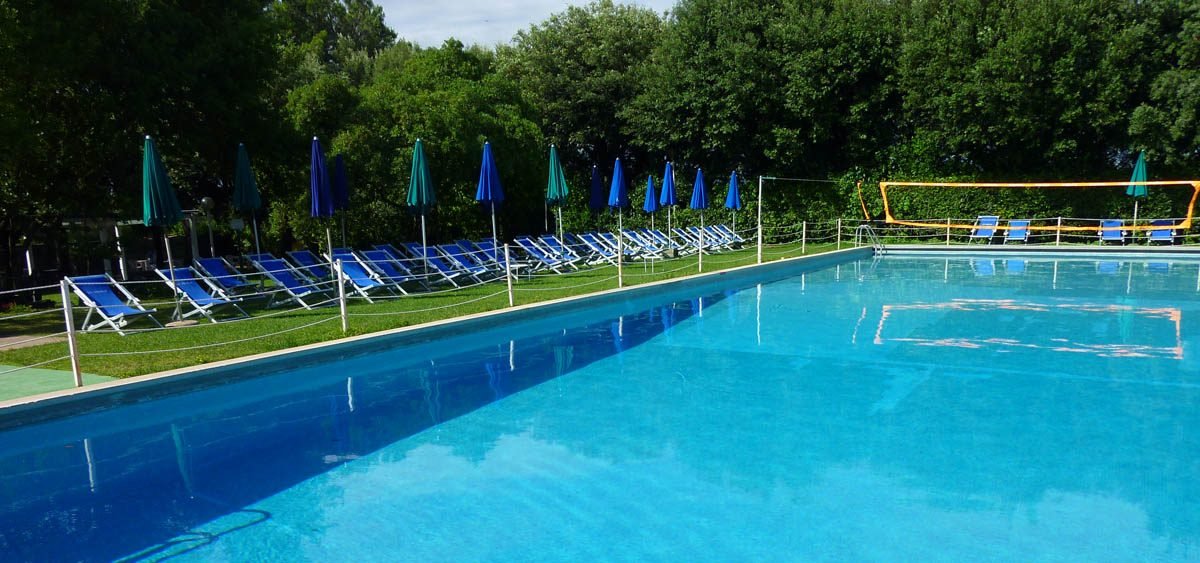
The pool, 25 by 12.5 meters, is an intermediate size very common in medium-sized Italian sports clubs: long enough to swim a full length, small enough to stay manageable with one lifeguard and not to require the space of an Olympic facility. Around it, the lawn is the element that most characterizes the place compared with other pools in the south of Rome: a well-kept turf, with natural shade offered by scattered trees, meant for those who want to spend the whole day between one swim and the next without leaving the lawn.
Where exactly it is
The club stands in the strip of countryside between Via Ardeatina and Via Appia Antica, in the locality that bears the name Tor Carbone, south of the city within the perimeter of the Grande Raccordo Anulare but in a setting that, in landscape and in silence, feels much farther from Rome than it is in kilometers. It's a stretch of Roman countryside that has stayed surprisingly intact precisely because it falls, in large part, inside the Appia Antica Regional Park, which since the 1980s has protected a good part of this territory from building expansion.
A facility designed for the warm season
As with most clubs with an outdoor pool in the Roman countryside, Tor Carbone's offer revolves around the swimming season: the bulk of attendance is concentrated in the warm months, when the pool and the lawn become the reference point for those looking for a swim without going too far from the city. Outside that seasonal window, the activity of the facility, its opening hours and any alternative offerings must be checked directly with the club, because they can change from one year to the next and it's not advisable to take them for granted on the basis of outdated information.
The tradition of sports clubs in the Roman countryside
Circolo Sportivo Tor Carbone belongs to a type of facility deeply rooted in Rome's recent history: the club with a pool born in the countryside, often starting in the 1960s and 1970s, when the growth of the city toward the outskirts and the spread of the private car made it possible to reach, in a short time, farmland that was still free and turn it into sports facilities. Many of these clubs, unlike the big municipal pools or the coastal establishments, were born as private initiatives tied to a group of founding members, and have kept over time a deliberately contained size, closer to that of a neighborhood club than to a water park. It's a model that in south Rome, in the strip between the Appia, Ardeatina and Laurentina, has been preserved better than elsewhere, thanks precisely to the presence of the Appia Antica Regional Park, which has held back building expansion and left room for a fabric of small sports operations set in greenery.
Compared with the big multifunction facilities that have spread in recent decades, with several pools, padel courts and indoor gyms, a club like Tor Carbone keeps a more essential approach: the pool and the lawn remain the heart of the offer, without the multiplication of accessory services typical of newer and larger facilities. For some regulars that is precisely the added value, the chance to still find, a few kilometers from the center of Rome, a place that has not chased the trends of recent years.
The farming landscape around the club
Stepping out of the club's gate, the landscape that opens up is that of the southern Roman countryside: cultivated fields, rows of trees, scattered farmhouses and, on the horizon, the outline of the Alban Hills on the clearest days. It's a landscape that has kept, better than many other areas of the metropolitan zone, the agricultural fabric that characterized the whole southern outskirts of Rome before the urban expansion of the post-war period, and that today survives precisely thanks to the protection restrictions imposed by the regional park. Those coming from more densely urbanized parts of the city are often surprised by the contrast, so close to the edge of the Grande Raccordo Anulare, between the traffic on the main arteries and the almost total silence you breathe at Tor Carbone as soon as you move a few hundred meters from the road.
Circolo Sportivo Tor Carbone between Appia Antica and Via Ardeatina
The name of the place tells more than it seems at first glance. Tor Carbone is one of the many place names of the Roman countryside that start with the word Tor, like Tor Marancia, Tor Pagnotta, Tor Fiscale or Tor Sapienza: almost always the origin is a tower, often medieval, raised in the central centuries of the Middle Ages as a farm outpost or landmark along the great consular roads leaving Rome. The countryside south of the city is dotted with these towers, many of which survive only in the name of an estate or a street, others still visible as isolated ruins among the fields. The name Carbone, according to local tradition, is plausibly tied to the charcoal-making activities that for centuries exploited the coppice woods of this area to supply fuel to the city, an activity common across the whole wooded strip between the Appia and Ardeatina until relatively recent times.
Between the Caffarella and the tombs of the Appia
From Tor Carbone, in a few minutes by car or bicycle, you reach some of the places richest in history in the whole southern outskirts of Rome. To the north opens the Caffarella valley, an agricultural park that follows the course of the Almone among meadows, grazing flocks and archaeological remains, with the church of Sant'Urbano alla Caffarella, carved out of a Roman temple, and a little further the small church of Domine Quo Vadis, tied to the legend of the meeting between Saint Peter and Christ. Toward the Appia Antica proper, the queen road of the Roman consular roads, the funerary monuments of the great Roman families line up for kilometers, up to the mausoleum of Cecilia Metella and the remains of the Villa of the Quintilii, one of the most extensive and sumptuous suburban residences of the whole Roman antiquity.
Via Appia Antica was opened in 312 BC at the will of the censor Appius Claudius Caecus, from whom it takes its name, with the aim of quickly connecting Rome with Capua and, later, with Brindisi, the port of embarkation toward Greece and the East. It was the first great consular road in Roman history built to rigorous engineering criteria, with a road bed of basalt paving stones meant to last for centuries, so that wide stretches of the original paving can still be walked today, 2,300 years after its construction. Precisely for this combination of antiquity, historical importance and state of preservation, the ancient Romans themselves called it Regina Viarum, the queen of roads, a title the Appia still carries today in common perception.
The catacomb system
The same area, for geological reasons tied to the tuff nature of the subsoil, hosts the most important system of Christian catacombs of the ancient world: the catacombs of San Callisto and those of San Sebastiano stand a short distance from Tor Carbone, along the same Via Appia Antica, and together tell a fundamental chapter in the history of early Christianity. Whoever stops at Tor Carbone for a swim can easily devote the second part of the day to a visit to one of these sites, alternating time spent in the water with a route through underground Rome.
The catacombs of San Callisto, in particular, were for centuries the main official cemetery of the Church of Rome, with galleries dug on several levels that extend for kilometers under the surrounding countryside, and they hold the so-called Crypt of the Popes, where many bishops of Rome of the first centuries were buried. The catacombs of San Sebastiano, a little further along the same consular road, owe their name to the Roman martyr who was buried there and preserve, along with the underground galleries, the remains of an early Christian basilica built on the surface. Visiting them requires a guide, since access to the galleries is not free for reasons of safety and protection, but it gives an experience hard to compare with any other monument of surface Rome.
Cecilia Metella and the funerary landscape of the Appia
Continuing along the Appia Antica toward the south, past the catacombs, you meet the mausoleum of Cecilia Metella, one of the best-preserved monumental tombs on the whole road, built in the Augustan age for a Roman noblewoman and transformed, in the Middle Ages, into a defensive tower by the Caetani family, who incorporated it into a wider fortified system controlling the road. The monument, with its cylindrical drum clad in travertine, has become one of the most recognizable symbols of the whole Appia Antica, and is visible from several points in the countryside that also surrounds Tor Carbone, testifying to how much the landscape of this area has remained, in large part, the one drawn by the funerary monuments of Roman antiquity.
How to get to Circolo Sportivo Tor Carbone
The location between Ardeatina and Appia Antica makes the club easy to reach by car for those coming from south Rome, less convenient for those relying exclusively on public transport, since the area keeps a rural character and the bus network is designed more for residents than for occasional visitors.
By car
The simplest way to arrive remains the car, driving along Via Ardeatina southbound from the Grande Raccordo Anulare, or going up the Appia Antica from Porta San Sebastiano toward the countryside. Those coming from the Raccordo Anulare exit at the junction for Via Ardeatina and continue toward the city center for a few kilometers up to the Tor Carbone area. Those starting from the center of Rome can instead choose the more evocative route along the Appia Antica itself, crossing the ancient paving in the pedestrian and cycling stretch of the park, or the parallel Via Appia Pignatelli, faster for those in a car. Parking, since this is a countryside area, should be assessed on site based on the spaces available near the entrance.
By public transport
The Atac bus lines serving Via Ardeatina and the Tor Carbone area connect the agricultural strip south of the city with the stations of Metro Line A, in particular Colli Albani and San Giovanni, from which you can continue with suburban runs. The service, as with most of the protected Roman countryside, is not as frequent as the main urban lines, and those traveling by bus must allow for a longer final stretch on foot than those arriving by car. For those staying in the center who want to avoid the car, it's best to check the updated schedules directly on the Roma Servizi per la Mobilità website the same day as the visit.
By bicycle along the Appia Antica
A pleasant alternative, especially on days that aren't too hot, is to reach Tor Carbone by bicycle following the cycle route that crosses the Appia Antica Regional Park from Porta San Sebastiano out to the open countryside. The stretch, closed to traffic on holidays in its most central part, lets you ride among Roman funerary monuments, dry-stone walls and glimpses of the countryside, on one of the most evocative cycle routes in all of Rome. It's a way of arriving that makes the trip itself part of the experience, and that I recommend to those who have time and want to live the day as a real outing out of town, while staying inside the city limits.
For those without their own bicycle, bike rental points have been active in the park area for years, designed precisely for visitors to the Appia Antica, concentrated mainly near the main park entrances and the visitor center. It's a convenient service for those arriving by metro or bus as far as the edge of the park who then want to continue by bicycle toward the more open countryside of Tor Carbone, without having to bring their own bike from home.
On foot from the park
Those staying in the neighboring districts, such as the Quadraro or the Colli Albani area, can also consider a walking route that crosses the Caffarella and rejoins the Appia Antica before reaching the countryside of Tor Carbone: a longer itinerary, suited to those who like walking and want to discover at leisure a landscape that changes gradually from the urban one of the residential districts to the rural one of the protected countryside. It's not the quickest solution, but it's probably the one that best conveys the sense of this territory, where a few kilometers separate the dense fabric of the city from the almost intact countryside.
When to go to Circolo Sportivo Tor Carbone
The useful season for the pool coincides, as in all the outdoor facilities of the area, with the warm months of the year, approximately from June to September, with the period of peak attendance concentrated between the second half of July and the first half of August. The exact seasonal opening and closing dates, as well as the daily hours, are set by the club each year and must be checked directly with the facility before planning the visit, because they can vary depending on weather conditions and the facility's management needs.
On weekdays
Those who can choose a weekday generally find lower attendance and a less crowded lawn, an ideal condition for those truly looking for relaxation and calm, perhaps with small children who need space to move without the overcrowding typical of the weekend.
On weekends and holidays
Saturday, Sunday and holidays remain traditionally the times of greatest demand for any club with a pool on the Roman outskirts, Tor Carbone included: those who want to go precisely on those days would do well to arrive early to secure a good spot on the lawn, especially at the August peaks.
Off season
In the cold months the facility, like all the outdoor pools of the area, suspends swimming activity. Ask the facility directly if the club keeps other services open during the winter: it's not something that can be taken for granted without a direct check, and the online pages of small clubs of this type are not always updated in real time.
How much Circolo Sportivo Tor Carbone costs
The price list of a club with a pool like this is typically structured in several bands, following a scheme common to many facilities of the same category in the Roman countryside: a full daily entry for those arriving in the morning, a reduced rate for those entering in the afternoon, and a supplement on Saturdays, Sundays and holidays compared with weekdays. To this are added, in many similar facilities, seasonal subscription options designed for those who use the pool regularly throughout the summer, often cheaper than a single entry repeated several times.
The precise amounts, however, change from season to season and shouldn't be taken for granted on the basis of rates noted in the past: to know the current price list, including any discounts for children, large families or long-standing members, it's best to contact the club directly before the visit, so as to avoid surprises and plan the day with truly updated costs.
What to ask before paying
Besides the price of the entry itself, in a club of this type it's wise to ask about a few aspects that affect the real cost of the day: if the rental of loungers and umbrellas is included in the ticket or has to be paid separately, if there is an internal bar or refreshment service with a separate price list, and if payment methods other than cash are accepted. They are simple questions, but they let you arrive at the club with a clear idea of the overall cost of the day, without having to work it out on the spot at the last moment.
Options for those who come back often
For families planning to return several times in the same summer, as mentioned, most clubs of this type offer seasonal subscriptions or multiple-entry packages, generally cheaper than the sum of single daily entries. Here too, however, conditions and prices must be checked directly with the club's office, which is the only truly reliable source on how to sign up, any documents required and the expiry dates of the membership card.
Circolo Sportivo Tor Carbone with kids
The big lawn surrounding the pool is probably the element that makes this club particularly suited to families with children: a wide green space where the little ones can run, play ball or simply stay in the shade between one swim and the next, without the concrete and crowding typical of urban pools. The contained size of the pool, 25 by 12.5 meters, and the character of a private club rather than a big public establishment, contribute to a more controlled and less chaotic atmosphere than the busiest city lidos, a factor many parents appreciate precisely when they bring small children.
Before setting out with the little ones it's still worth asking the club about a few practical aspects that change from facility to facility: if there is a dedicated area for the youngest children with reduced depth, if refreshment services or a simple bar are provided, and if you're allowed to bring umbrellas, loungers or garden toys from home. These are details that can make the difference between a simple day and a day with too many surprises to handle, especially with small children and in the hottest hours of the day.
For those looking for alternatives in the same south Rome area, devoted more to team sports than swimming, it's worth knowing that in the strip of countryside between the Appia and Ardeatina there is also Appia Rugby, a sports operation rooted in the territory that gives an idea of how widespread, in this area, the tradition of amateur and club sport tied to the Roman countryside is.
A day designed for the little ones too, not just for adults
Many Roman families choose clubs like Tor Carbone precisely because they let you spend a whole day away from home without having to organize constant transfers: you arrive in the morning, stay until late afternoon, and meanwhile the children alternate swimming with play on the lawn, while the adults can relax without the level of attention required, for example, by a beach with currents or a pool with no separate areas for the youngest age. It's a model of day closer to that of an outing in the countryside than to a day at the sea, and one that many parents find less tiring to manage with small children.
It's still worth remembering, as for any pool used by children, the importance of direct supervision by adults even when lifeguard staff are present, and of always bringing adequate sun protection, since the big open lawn offers shade only in some areas and in the central hours of the day exposure to the sun can be quite intense.
Where to eat near Circolo Sportivo Tor Carbone
The area between the Appia Antica, Ardeatina and Caffarella is historically rich in farmhouses and agricultural estates converted, in recent decades, into restaurants and agriturismi that focus on Roman and Lazio cooking, often with zero-kilometer products grown on the surrounding land. It's a type of offer very different from that of the city-center restaurants: rustic settings, large outdoor spaces, menus tied to the peasant tradition, from starters of local cured meats and cheeses to first courses with seasonal vegetables, up to meat grills cooked over embers in the gardens of the farmhouses.
For a quicker lunch, those who stop in the Appia Antica park or in the Caffarella after the swim can also count on small informal food operations born precisely to serve the park's visitors: simple refreshment points, meant for those looking for a light meal before setting off again on foot or by bicycle along the ancient consular road. Those who prefer to organize everything themselves can bring a packed lunch and eat it directly on the club's lawn or, heading out toward the park, in one of the many shady corners of the Caffarella, where picnicking has been a common practice among Romans for generations.
For more targeted advice, with updated names and addresses, it's best to ask the club's staff directly, who know better than anyone the places in the area open at a given time, since the food offer in a countryside like this changes more often than it does in the central neighborhoods of the city.
Having dinner in the evening after the swim
Those who stretch the day into the evening find, in the same corridor between the Appia and Ardeatina, some of the restaurants most appreciated by Romans for a dinner out of town: places carved out of country farmhouses, often with large lit gardens that in the summer months let you dine entirely outdoors, away from the traffic and the heat of city asphalt. It's a kind of outing very common among those who live in the neighboring districts, such as Colli Albani, the Quadraro or Appio Latino, who in this strip of countryside find the closest alternative to a dinner in a village trattoria without really having to leave Rome.
Shopping for food in the area
For those who prefer to organize everything on their own, bringing food from home or buying it along the way, nearby Via Ardeatina and the neighboring districts offer enough grocery shops and supermarkets to cover the needs of a day out of town, while on weekends you may come across small zero-kilometer farmers' markets organized by some of the farms in the area, a useful opportunity to bring to the club seasonal fruit and vegetables grown a few steps from where they are eaten.
A curiosity about Circolo Sportivo Tor Carbone
The size of the pool, 25 by 12.5 meters, is not random: it corresponds exactly to half of a standard Olympic pool, which measures 50 meters in length. It's a design choice very common in medium-sized Italian sports clubs built in the post-war period, because it still allows long-course swimming, with calculable lap times, without requiring the space and maintenance costs of an international competition-level facility. Those who swim lengths in pools of this format, all over Italy, are in fact covering exactly half the Olympic distance, a detail few regulars really know.
Another curiosity concerns the very type of lawn that surrounds the pool. English-style lawn, unlike the more common Mediterranean turf, requires constant irrigation and frequent mowing to maintain its characteristic dense and uniform look: a demanding maintenance choice, especially in the hottest months of the Roman summer, but one that gives a barefoot comfort very different from that of a simple wild meadow, and is probably one of the most visible and most appreciated investments for the members of a club like this.
One thing nobody tells you about Circolo Sportivo Tor Carbone
Since it's a private club and not a public establishment, access is not always guaranteed to those who show up without first checking the entry conditions: membership arrangements, any need to be accompanied by a member, or simple capacity limits on the busiest days are all aspects that change from club to club and that, in facilities of this type, are not always clearly indicated online. Before organizing a whole day out, with children and gear in tow, it's always best to make a direct phone call to the facility to confirm the access conditions for that very day, rather than relying only on information found online, which for small neighborhood and countryside clubs tends to age faster than for big city facilities.
Another little-told aspect concerns the club's closeness to the boundary of the Appia Antica Regional Park: those who arrive at Tor Carbone thinking only of the pool often discover only on site how easy it is, with a short detour, to enter the heart of the park and find yourself immersed in the archaeological countryside without having planned anything in advance. It's an added value that rarely appears in the short descriptions of the club, but that those who have already been tend to cite as one of the things that made the day most memorable, beyond the pool itself.
The advice I give you for visiting Circolo Sportivo Tor Carbone
The most useful advice, for those who really have time available, is not to treat the day at Tor Carbone as a simple trip for a swim, but as an opportunity to combine the relaxation of the pool with a visit to one of the densest archaeological territories in Italy. Arriving in the morning, before the heat becomes oppressive, it's best to devote the first part of the day to a walk in the Appia Antica or the Caffarella, when the light is nicest and the heat less intense, and then take refuge in the afternoon on the club's lawn, with a swim and a few hours of rest in the shade. It's the combination that makes this area different from any other swimming spot on the Roman outskirts: no other club with a pool in the city has, a few minutes away, a historical heritage of this density, and it's a shame to reduce the visit to just the dip in the water.
A second, more practical piece of advice concerns equipment: those planning to combine pool and archaeological walk in the same day should bring comfortable shoes in addition to a swimsuit, since the Roman paving of the Appia Antica, however fascinating, is not at all easy to walk on in flip-flops or beach sandals. A small detail that makes the difference between a pleasant walk and an uncomfortable one, especially in the best-preserved stretches of the road, where the ancient basalt slabs are still visibly irregular today, as they were 2,000 years ago.
Another well-known fact, yet rarely cited
In July 2024 the entire route of Via Appia, from Porta San Sebastiano in Rome to Brindisi, was inscribed on the UNESCO World Heritage List, on the grounds that it is the oldest and most important of the great Roman consular roads, the Regina Viarum. The stretch that passes a short distance from Tor Carbone, among the funerary monuments, the original paving and the protected countryside, fully falls within that international recognition: those who use the sports club, often without knowing it, are therefore literally a step away from a site that all of humanity recognizes as heritage to be protected, a detail few occasional visitors to the area really know.
The right photo to take at Circolo Sportivo Tor Carbone
The most successful photo, in a place like this, is not the one taken inside the pool, but the one taken from the edge of the lawn, toward sunset, when the low light passes through the trees and draws long shadows on the grass: a framing that conveys well the sense of countryside that makes this club special compared with just any pool in the city. For those with energy left after the swim, it's worth moving a few minutes away toward the Appia Antica and trying a classic but always effective shot: the Roman paving disappearing toward the horizon among the pines and the funerary monuments, perhaps in the low light of the end of the day, when the tourist groups have already thinned out and the road becomes almost silent.
Some important events that happened here in history
The same Via Ardeatina that runs past the club is tied to one of the most tragic episodes in Rome's recent history: on March 24, 1944, in the pozzolana quarries a little further along this road, the German occupation forces killed 335 people in reprisal for Via Rasella attack, in what has gone down in history as the Fosse Ardeatine massacre. Today that site hosts the Ardeatine Caves Mausoleum, a national shrine and place of remembrance that every year, on March 24, draws official ceremonies and citizens in quiet reflection. It's a context that makes Via Ardeatina itself a road axis of strong symbolic value, not just a connecting road toward the countryside and its sports facilities.
Further back in time, the entire area between the Appia and Ardeatina was for centuries land of large agricultural estates of the Roman nobility and, in antiquity, home to some of the most sumptuous suburban residences of Rome, as the nearby Villa of the Quintilii bears witness, requisitioned by Emperor Commodus precisely for its magnificence. Tor Carbone, with its more modest and rural vocation, fits in continuity with this long history of a territory that has always combined agricultural production, noble residence and, in more recent times, sports and recreational activity.
In the Middle Ages too this countryside never stopped being crossed and garrisoned: the great Roman baronial families, from the Caetani to the Colonna, repeatedly controlled the stretches of the Appia that led away from the city, often fortifying existing towers or building new ones precisely to secure control of the traffic of men and goods along the old consular road, by then fallen from the splendors of the imperial age but still strategically important. It's in this context of watchtowers and agricultural outposts that, in all probability, the origin of the place name Tor Carbone also fits, one more piece of a territorial history that ties together, on the same piece of countryside, Roman antiquity, the baronial Middle Ages and the contemporary post-war Rome that has seen the birth of sports clubs like today's.
Who has passed through Circolo Sportivo Tor Carbone
More than individual figures directly tied to the club, what should be underlined is the uninterrupted flow of people that for 2,000 years has crossed this stretch of countryside: from Roman legionaries marching toward the south of the peninsula, to medieval pilgrims heading to Rome along the roads that converged on the Appia, up to the Grand Tour travelers of the 18th and 19th centuries, who considered a walk among the funerary monuments of the Appia Antica an obligatory stop of their Roman stay, often described in their travel diaries as one of the most evocative moments of the whole Italian itinerary. Tor Carbone, with its contemporary sports club, is the latest chapter of this long history of transit and stopping along one of the most traveled roads in Western history.
What's around Circolo Sportivo Tor Carbone
Whoever organizes a day at Tor Carbone has, literally within bicycle reach, some of the most important destinations of the southern outskirts of Rome. The Appia Antica Regional Park is the natural and scenic frame of the whole area, a protected area of thousands of hectares that crosses the city without a break from the historic center to the most open countryside. Within it, besides the funerary monuments already mentioned, worth a stop are Capo di Bove, a Roman-era complex with an antiquarium run by the Soprintendenza, and the Villa of the Quintilii, with its baths and its monumental rooms still legible.
To the west, past Via Appia Nuova, stretches the Aqueducts Park, famous for the arches of the Claudian aqueduct and the Acqua Felice crossing a landscape almost like the Roman countryside of another era, a regular destination for runners and photography enthusiasts especially at dawn and sunset. To the north, as already mentioned, the Caffarella valley offers another big park, which can be walked along the course of the Almone among grazing sheep and scattered archaeological remains. Together, these parks make up one of the most extensive and best-preserved systems of protected green space in all of Europe within the boundaries of a capital city.
Those with time left after the swim and the catacombs can also consider a stop at the Parco Appio, another green area in the same southern part of the city, useful for those who want to extend the day without leaving the natural setting that characterizes this whole strip of Rome. It's a way to realize how much, in this part of the capital, protected green space is not an isolated exception but a continuous system of parks following one after another, from the countryside of Tor Carbone to the most central neighborhoods of the city.
The protection of the Appia Antica Regional Park
To understand why the countryside around Tor Carbone has stayed so intact, you have to look at the history of its institutional protection. The Appia Antica Regional Park was established by the Lazio Region in 1988, after decades in which building pressure had already wiped out a good part of the historic Roman countryside in other directions of the city. The establishment of the park came at the end of a long cultural and political battle, sustained since the 1950s by intellectuals, archaeologists and urban planners who denounced the risk of seeing one of the most significant landscapes in Western history disappear under pours of concrete.
An exceptional urban park
What makes the Appia Antica Park a special case, even in the international panorama of protected areas, is its location: it's not a nature park far from inhabited centers, but a green area that wedges into the urban fabric of a European capital, reaching to within a few hundred meters of the Aurelian Walls. Crossing it means passing, within a few kilometers, from the densest city traffic to a farming landscape that seems suspended in time, with grazing flocks, historic farmhouses and ancient monuments dotting the countryside. Tor Carbone, by position, lies precisely in the outermost and most rural strip of this protected system, in that part of the park where the agricultural component still clearly prevails over the monumental one better known to tourists.
Why this matters for those who visit the club
The presence of the protection restriction has a direct consequence also for those who use Circolo Sportivo Tor Carbone: it means that the landscape you see on leaving the club's lawn will, in all likelihood, remain substantially the same even 10 or 20 years from now, an exception that is not to be taken for granted in the recent history of the Roman outskirts. It's also the reason why, in this strip of territory, new construction and expansions are subject to stricter rules than in the rest of the city, with the park authority called on to assess every intervention in relation to the landscape and archaeological protection of the area.
Frequently asked questions about Circolo Sportivo Tor Carbone
Is Circolo Sportivo Tor Carbone open to the public?
It's a private sports club: access follows membership or entry arrangements set by the facility, to be checked directly with the club before the visit.
How big is the pool?
The pool measures 25 by 12.5 meters, which is exactly half of a standard 50-meter Olympic pool.
Is there a lawn to relax on?
Yes, the pool is surrounded by a wide lawn, one of the distinguishing elements of the club compared with other facilities in the area.
How do you get there by car?
Along Via Ardeatina or the nearby Via Appia Antica and Appia Pignatelli from the Grande Raccordo Anulare toward the city center, up to the Tor Carbone area.
Can you get there by bicycle from the center of Rome?
Yes, following the cycle route of the Appia Antica Regional Park from Porta San Sebastiano out to the open countryside beyond Cecilia Metella.
When is the pool open?
As with the outdoor facilities of the area, the swimming season covers approximately the months from June to September. The precise dates must be checked with the club every year.
How much does entry cost?
The price list typically follows a daily band, a reduced afternoon one and a supplement on holidays. Updated amounts must be asked of the club directly.
Is it suitable for children?
Yes, especially thanks to the big lawn where children can play outdoors. It's still best to ask about any areas set aside for the youngest.
What is there to see nearby?
The Appia Antica Park, the Caffarella valley, the catacombs of San Callisto and San Sebastiano, the Villa of the Quintilii and the Mausoleo delle Fosse Ardeatine, all reachable in a few minutes.
Why is the area called Tor Carbone?
The name probably derives from an ancient tower, following a place-name pattern common in the Roman countryside, perhaps tied to charcoal-making activities in the surrounding woods.
How far is Tor Carbone from the center of Rome?
A few kilometers as the crow flies from Porta San Sebastiano and the Aurelian Walls, generally less than half an hour by car from the historic center outside rush hours.
Can you visit the Appia Antica the same day as the swim?
Yes, in fact it's the recommended combination: the closeness between the club and the archaeological park lets you devote part of the day to the walk and part to relaxing at the pool.
Is there parking near the club?
Since it's a countryside area, parking spaces must be assessed on site. It's best to ask the club about the solutions available near the entrance.
Does the club have other facilities besides the pool?
The central and best-documented element of the offer remains the pool with its adjoining lawn. For any other sports facilities, it's best to ask the club for direct confirmation.
Is it worth booking before going?
In a private club with limited capacity, especially on summer weekends, checking access conditions and availability in advance is always the most prudent choice.
The overall verdict on Circolo Sportivo Tor Carbone is that of a small countryside club worth the stop precisely for its context, more than for the pool alone: an honest pool, a big lawn to relax on, and around it one of the densest territories of history and protected nature in all of Rome, from the Christian catacombs to the funerary monuments of the ancient Appia, up to the shrine of the Fosse Ardeatine. Those looking just for any pool will probably find other solutions closer to the center. Those who instead want to combine a swim with a day in the authentic Roman countryside, with the chance to walk among 2,000 years of history a few minutes from the lawn, find in Tor Carbone an ideal starting point.
Planning a trip to Rome? The English-language guides to visiting the city are on ItalyPlanner.com, with in-depth pieces also on the best day trips from Rome. For those organizing instead a guided day on the Appia Antica and in the Roman countryside, with a licensed tour guide, the point of reference is the TourLeaderPro contact page, while tour operators that build itineraries for this part of Rome will find a dedicated service in the tour operator section of the TourLeaderPro site.
Contact Information
Via di Tor Carbone, 41
Roma Roma Città, Roma Città