Appia Rugby
In short. Appia Rugby is an amateur sports association based on viale Appio Claudio, in the southeast quadrant of Rome between via Appia Nuova, via Tuscolana and the Parco degli Acquedotti, right next to the Appio Claudio, Quadraro and Cinecittà neighborhoods.
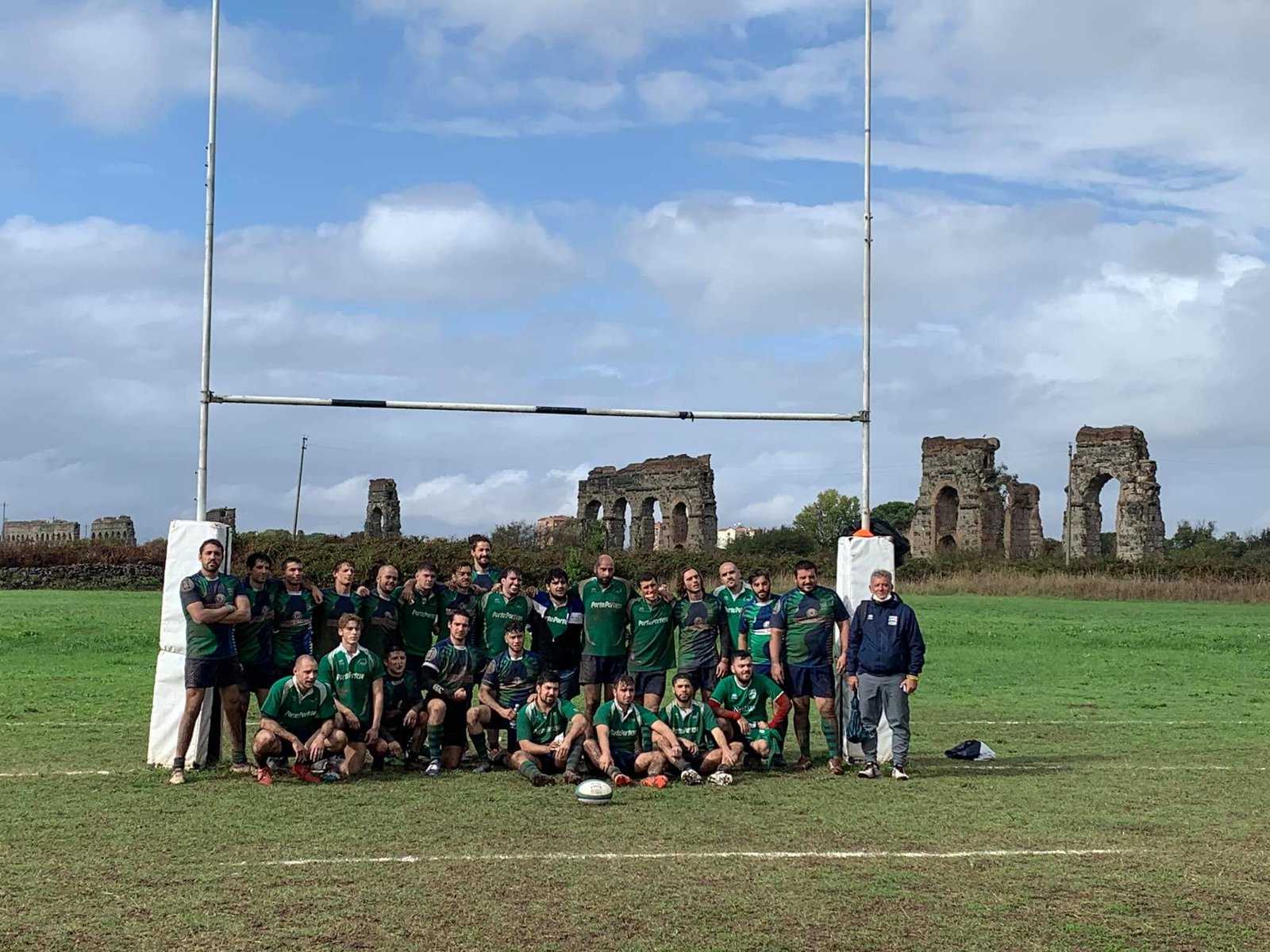
Appia Rugby is an amateur sports association based on viale Appio Claudio, in the southeast quadrant of Rome between via Appia Nuova, via Tuscolana and the Parco degli Acquedotti, right next to the Appio Claudio, Quadraro and Cinecittà neighborhoods. The club is affiliated with the Italian Rugby Federation and over the years has built its identity around the youth section, from mini-rugby up to the competitive categories, with a field that several Roman rugby clubs have also used for training and joint gatherings. The neighborhood that hosts it takes its name from Appius Claudius Caecus, the Roman censor to whom we owe Via Appia and the city's first aqueduct, and this is no small coincidence: around the Appia Rugby field runs one of the densest archaeological landscapes in Europe, with the Appian Way Regional Park, the Park of the Aqueducts and the Caffarella a few minutes away. For those who follow grassroots sport in Rome, or who simply bring a child to try a first oval ball, this is one of the areas where the sports field and history share the same block. The pages that follow tell together the sports club, the neighborhood that hosts it and the archaeological and natural context that surrounds it, because in the case of Appia Rugby the three things can't really be separated: understanding the club's name means understanding the street's name, and understanding the street's name means entering one of the most layered historic landscapes of the capital.
Where Appia Rugby is and how to get there
The Appio Claudio neighborhood, urban zone 10B of Municipio Roma VII, is bounded by precise borders: to the northeast via Tuscolana separates it from the Don Bosco neighborhood, to the east via delle Capannelle marks the passage toward the Capannelle zone, to the west via Appia Nuova divides it from Torricola and from Appio-Pignatelli, while via del Quadraro borders it with Tuscolano. Viale Appio Claudio crosses this grid lengthwise, at the height of viale Giulio Agricola, in an urban fabric born in the 1950s with the INA-Casa projects and made an official neighborhood in 1961.
By car: Appia Nuova, Tuscolana and the Grande Raccordo Anulare
From central Rome the most direct way is the Appia Nuova, which you follow to the height of the Quadraro and then merge into the mesh of interior streets that leads to viale Appio Claudio. Alternatively you arrive from the Tuscolana, going down toward the Don Bosco neighborhood. Whoever comes from outside Rome finds the Grande Raccordo Anulare convenient, with the Appia or Tuscolana exit depending on the point of origin, and a travel time that in normal conditions stays contained while at morning and late-afternoon rush hours, when the Tuscolana and the Appia Nuova get congested, it can stretch considerably. The area has no large parking lots dedicated to the sports facilities: parking is found along the surrounding residential streets, and on match days or youth gatherings, with several visiting teams, it's best to arrive with some time to spare. It should also be remembered that, as in much of Municipio VII, some streets of the neighborhood apply paid parking rules in daytime hours on weekdays: the blue lines must be read on the vertical signs, because the zones subject to charges change fairly often according to the city's parking plans. One last note for drivers: viale Appio Claudio and the neighboring streets have the typical cross-section of 1950s public housing, with roadways that are not always very wide and local traffic that, at school and office entry and exit hours, can slow circulation. Whoever has an appointment at a precise time, I'm thinking especially of those bringing a child to a mini-rugby trial for the first time, would do well to allow a few extra minutes beyond the travel time indicated by satellite navigators.
By metro and bus
Line A of the Rome metro, opened in 1980, gave a decisive push to the development of the neighborhood and is still the most convenient way to arrive without a car: the reference stops for Appio Claudio are Giulio Agricola and Subaugusta, both within walking distance of the viale Appio Claudio grid, with Cinecittà a little farther east. From Termini station the subway trip takes about 20 minutes. The bus network of the area connects Appio Claudio to Tuscolano, to the Quadraro and to via Appia Nuova, with lines that also let you reach the Park of the Aqueducts without changing vehicles. For those arriving from outside the city by air, Ciampino airport is the closest, a handful of kilometers along the Appia Nuova. Fiumicino remains farther away and generally requires the connection toward the center and then toward the southeast. Whoever gets around by bicycle finds in the network of bike paths and secondary streets of the southeast quadrant a good alternative on weekends, when traffic eases: from the Appio Claudio neighborhood you reach in a few minutes both the Park of the Aqueducts and the start of Via Appia Antica, two destinations that on holidays see a steady flow of Roman cyclists.
Appia Rugby: who it is and how the club works
Appia Rugby is an amateur sports association, that is a nonprofit structure that rests on the classic model of Italian grassroots sport: families' enrollment fees, the contribution of volunteer managers, the support of local sponsors. The mission declared by the club is the spread of the fundamental principles of rugby, a language that recurs often in the oval-ball world and that sums up the idea of a sport built on respect for the opponent, on the discipline of the rules and on team collaboration even before the result. It's an approach typical of small neighborhood clubs, which in a city like Rome live alongside the historic clubs and the university centers without competing on the same ground: their strength is closeness, not the trophy record.
Rugby, as a discipline, has a highly codified training structure at the national level, and the clubs affiliated with the Italian Rugby Federation generally follow common paths for starting the youngest, with progressive rules on contact, field size and number of players that increase gradually with age. A club like Appia Rugby, to be able to offer this path continuously, must guarantee every year not only the field but also the regular registration of its athletes, the insurance coverage required by the federation and the training of the coaches, often through the federal courses dedicated to the youth sector. It's an organizational commitment that, in a small neighborhood organization, falls almost entirely on the shoulders of a few volunteer managers and coaches, and is one of the reasons why turnover among small Italian amateur clubs, in rugby as in other sports, remains historically high.
The categories: from mini-rugby to competitive
Appia Rugby's sports offering covers the whole path of Italian youth rugby. It starts with mini-rugby, designed for the smallest children and organized around play and coordination more than competition, continues with the categories of youth rugby proper, which accompany the kids in technical and physical growth up to adolescence, and finally arrives at the competitive section. The federation, for both 15-a-side and 7-a-side rugby, arranges the youth categories by age bands and clubs like Appia Rugby take part in the gatherings organized by the regional committee, meetings in which several clubs meet on the same field to let the youngest play in a non-competitive format, often followed by a convivial moment between parents and kids. Appia Rugby's youth teams have met over the years Roman rugby clubs such as the Unione Sportiva Roma Rugby, in U10 and U12 category matches played right on the home field, and the club has made an agreement with the Centro Universitario Sportivo di Roma Tor Vergata, which brings the CUS sevens team to train on the Appia Rugby field and grants mutual benefits to the members of the two organizations.
The field and the headquarters on viale Appio Claudio
The facility where Appia Rugby trains its teams and hosts home matches is on viale Appio Claudio, number 113, in the heart of the neighborhood of the same name. It is a grass field dedicated to rugby, of a size suited both to youth-section training and to matches of the higher categories, and over the years it has also hosted the gatherings organized by the Lazio regional committee of the Italian Rugby Federation, with several clubs taking turns on the same playing field on the same day. Whoever shows up for the first time, to accompany a child to a trial or to watch a match, would do well to contact the club first through the official channels: training hours and the days the field is open change from one season to the next and shouldn't be taken for granted on the basis of what you read online.
Appia Rugby's organizational model is no different from that of most Italian amateur rugby clubs: a board made up of parents and enthusiasts, coaches who are often former players of the club or of nearby clubs, and a calendar of activities that is built week by week around the availability of the field. Compared with soccer, rugby needs larger spaces that are less common in the urban area, and this makes every dedicated facility, like the one on Viale Appio Claudio, a relatively rare resource in the city's sports landscape: not every part of Rome can count on a grass field of the size needed to host regulation matches, and it is one of the reasons why clubs like this one end up also hosting visiting teams, youth tournaments and sharing agreements with other organizations in the area.
A curiosity about Appia Rugby
The club's name is not a commercial whim: it is the very place-naming of the neighborhood that tells a story stretching back more than 2,000 years. Viale Appio Claudio takes its name from Appius Claudius Caecus, the Roman censor who in 312 BC had Via Appia built, the consular road that linked Rome to Capua and that the Romans called regina viarum, the queen of roads, and who in the same year also had the city's first aqueduct built, the Aqua Appia. A rugby player who trains a few minutes from here plays, almost always without knowing it, on ground named after the man who invented the infrastructure on which the Romans built their empire: roads to move the legions, water to keep the city alive. With its name, Appia Rugby has unintentionally placed itself in the same genealogical line.
The second curiosity concerns the sports geography of the area more than ancient history. Within a few hundred meters of Viale Appio Claudio there are other neighborhood sports organizations that share the same logic of proximity: the Appio Claudio Tennis Club and the basketball club Cinecittà Basketball Polaris. It is a detail that says a lot about this corner of Rome: a working-class neighborhood born from postwar public housing that, decade after decade, has filled up with small amateur sports facilities, often ignored by tourist guides and heavily used by residents.
A third curiosity concerns the name chosen by the founders. In a Roman sports scene where many clubs take their name from the municipio, the parish or the sponsor of the moment, the choice to call themselves Appia Rugby explicitly ties the team not to the administrative neighborhood, Appio Claudio, but to the ancient road from which that neighborhood descends, Via Appia. It is a subtle but not accidental difference: the club's name looks beyond the urban planning perimeter of the 1950s and attaches itself to a symbol that predates the postwar urbanization by 2,000 years, the same symbol that in July 2024 brought Via Appia onto the UNESCO World Heritage List.
The Appio Claudio neighborhood, between Quadraro and Cinecittà
Understanding the neighborhood helps in understanding the club that lives in it. Appio Claudio was born in the 1950s with the INA-Casa projects, the national public housing plan that in that decade built entire neighborhoods on the outskirts of the large Italian cities. Before that building season, the area was largely undeveloped and the neorealist films of the postwar period show glimpses of it around Cinecittà. The area also hosted shantytowns inhabited by families who had migrated from Abruzzo, Molise and Calabria looking for work in the capital. The neighborhood became administratively autonomous in 1961, and the opening of Metro line A in 1980 gave the decisive push to its urban growth, bringing services and connections that had been missing until then.
Today Appio Claudio borders the Don Bosco neighborhood to the northeast, beyond Via Tuscolana, the Capannelle area to the east, beyond Via delle Capannelle, and Torricola and Appio-Pignatelli to the west, across Via Appia Nuova. To the southwest, beyond Via del Quadraro, you enter the Tuscolano and the historic working-class neighborhood of Quadraro. It is a quadrant of Rome that rarely appears in guides for visitors and that lives a daily life made of neighborhood markets, parishes, schools and, precisely, small sports clubs like Appia Rugby.
The Quadraro and the memory of the 1944 roundup
The neighboring district that gives its name to Via del Quadraro deserves a separate mention, because its history is among the most dramatic of occupied Rome. Considered by the German command a den of partisans, draft evaders and opponents of the regime, the Quadraro was the scene, on April 17, 1944, of a large-scale roundup organized by SS Major Herbert Kappler under the code name Unternehmen Walfisch, Operation Whale. German troops, with the support of the Gestapo and the Koch gang, isolated the neighborhood and arrested about 2,000 men. The men actually deported, according to the sources, numbered between 683 and 947. A detail that ties this page of history directly to the neighborhood of Appia Rugby is the destination of the first stop: the men rounded up were taken precisely to Cinecittà, whose studios were requisitioned and used as a collection and selection center, before the transfer to Grottarossa, Terni and finally the Fossoli transit camp, from where on June 24, 1944 they were deported to Germany and Poland. It is a story that the neighborhood remembers every year with public ceremonies, and that makes the contrast all the starker, with hindsight, between the dream factory that Cinecittà would become in the following years and the use to which those same studios were bent in the spring of 1944.
Cinecittà, from the studios of 1937 to Hollywood on the Tiber
The Cinecittà studios, a few minutes from the Appia Rugby field, were inaugurated on April 28, 1937, strongly wanted by the Fascist regime and built at the initiative of Luigi Freddi with the collaboration of the entrepreneur Carlo Roncoroni. With about 400,000 square meters of area, they remain to this day the largest film studio in Europe. In the 1950s, helped by a law that pushed foreign producers to reinvest their earnings locally instead of exporting them, Cinecittà lived through the season known as Hollywood on the Tiber, with international productions of enormous appeal: Quo vadis, Ben-Hur and, decades later, Martin Scorsese's Gangs of New York and Mel Gibson's The Passion of the Christ were shot here, in different eras. In total, about 3,000 films have been shot on the same soundstages, 90 of them nominated for an Oscar and 51 winners. For those who frequent the Appia Rugby field, knowing that a few minutes away by metro stands one of the symbolic places of world cinema adds a piece to a neighborhood that, at first sight, looks like nothing but residential outskirts.
Something nobody tells you about Appia Rugby
Anyone arriving from outside the area for the first time, perhaps bringing a child to a mini-rugby tryout, expects an anonymous peripheral neighborhood and is surprised by how much green surrounds it. Viale Appio Claudio and the neighboring streets do not have the dormitory look that the name of the urban zone might suggest: a few steps from the field opens the Appia Antica Regional Park, which with its thousands of hectares is one of the largest protected urban areas in Europe, and a little farther north is the Aqueducts Park, made famous around the world by the opening scene of Federico Fellini's La dolce vita, with the helicopter flying over the arches of the Claudian aqueduct. Whoever brings a child to train on this field, in practice, brings them a step away from one of the most photographed archaeological landscapes on the planet, without any sign pointing it out.
The second thing that is rarely said concerns the very nature of a club like this. Appia Rugby does not compete to attract a paying audience and does not chase media visibility: its reason for being is to keep open a field where the neighborhood's kids, and not only them, can try a sport that in Rome remains a niche compared with soccer. This means two very concrete things for anyone approaching it: first, that practical information, from schedules to registration fees, is better obtained with a phone call or a message to the club's channels than with an online search, because the details change every season. Second, that the atmosphere of a field like this, without imposing stands or international sponsors, is the genuine one of Italian amateur sport, where parents, coaches and kids share the same space without filters.
A third thing that few people put in order concerns the relationship between rugby and territory in this part of Rome. Italian rugby has traditionally had its center of gravity in the north of the country, in Veneto, Piedmont and Lombardy, where the game has older and more widespread roots. In Rome rugby grew mostly around university circles and a few historic clubs of the center, while in outskirts like Appio Claudio its presence is more recent and more fragile, tied to the staying power of a few people who keep the club going from year to year. This means that a club like Appia Rugby should not be taken for granted: every season it manages to complete, with an open field and teams registered in several categories, is the result of organizational work that in big cities often remains invisible to anyone who has never set foot there.
The advice I give you for visiting Appia Rugby
The practical advice is simple and holds both for those who want to enroll a child and for those who only want to watch a training session or a match: before showing up, contact the club through its official channels, phone, social page or the contact form on the website, and ask for confirmation of day and time. Amateur rugby clubs, by their nature, adapt the calendar to the availability of the field, to the weather and to the federal commitments of each category, and information found online months earlier risks being out of date. Whoever shows up unannounced on a random afternoon may find the field closed or occupied by another category.
The second piece of advice concerns those who want to combine the sports visit with a discovery of the neighborhood. Arrive an hour before the start of the training or match and use that time for a walk toward the Aqueducts Park: it is at a distance compatible with an easy walk from the Appio Claudio neighborhood, and seeing the arches of the Claudian aqueduct up close before watching a rugby training session offers an unusual perspective on this part of Rome, where ancient infrastructure and contemporary sport share the same urban ground. The clear advice, for those with small children who want to give them a first contact with rugby away from the traffic and confusion of the center, is precisely this: a neighborhood field like Appia Rugby, in a green setting and without the pressure of the big clubs, is often the best starting point.
A third suggestion concerns those who organize a visit from outside Rome, perhaps as part of a longer stay devoted to Via Appia and its monuments. In this case the Appia Rugby field is certainly not the main stop of the itinerary, but it can become an interesting side vantage point: understanding how grassroots sport lives in a Roman working-class neighborhood adds a perspective that the great monuments alone do not give. Those who accompany school or university groups interested in the social history of 20th-century Rome can include a short stop in the Appio Claudio neighborhood, perhaps combining it with a visit to the nearby Quadraro and its historical memory, before or after the visit to the archaeological digs of Via Appia Antica.
The Appia Antica Regional Park, between Caffarella and the aqueducts
The Appia Rugby field lies in the area of influence of one of the most important urban park systems in Italy. The Appia Antica Regional Park, established by regional law on November 10, 1988, extends over about 4,580 hectares across the territories of Rome, Marino and Ciampino, from the Aurelian Walls to Frattocchie, for 11 Roman miles along the ancient paving. It is one of the largest urban parks in Europe and protects together Via Appia Antica, Roman villas, catacombs, aqueducts and an agricultural landscape that has inspired painters and writers for centuries, from the 19th-century Grand Tour to contemporary photographers. In July 2024 Via Appia became part of the UNESCO World Heritage List, Italy's 60th site overall, a milestone that has brought international attention to a stretch of Roman countryside that the residents of Municipio VII, and with them the families of Appia Rugby, have frequented for generations like a home garden.
Within this system of protected areas lies also the Caffarella valley, one of the best-preserved portions of the Roman countryside inside the Grande Raccordo Anulare, crossed by the Almone river and dotted with ancient ruins, from the Church of Sant'Urbano alla Caffarella to the Church of Domine Quo Vadis, where tradition places the meeting between Saint Peter fleeing Rome and Christ. The Aqueducts Park, farther east toward Cinecittà and a step from the Appio Claudio neighborhood, instead shows the most scenic stretch of the Roman aqueducts still standing, with the arches of the Aqua Claudia crossing an open meadow used every day by runners, families and cyclists. It is the same landscape, it should be remembered, that bears the name of the man after whom the Appia Rugby neighborhood is named: it was Appius Claudius Caecus who, in 312 BC, inaugurated the season of the Roman aqueducts with the Aqua Appia.
Another well-known fact, yet rarely mentioned
That Via Appia was the first great consular road of Rome, more or less everyone knows. What tends to be forgotten is that Appius Claudius Caecus, the censor who had it built in 312 BC, also built the city's first aqueduct, the Aqua Appia, in the same year: road and water were born together, from the same political mind and the same censorial mandate, like two faces of a single project of power. Rome, at that moment, was consolidating its control over Lazio and Campania, and Appius Claudius understood that a city able to grow needed to move armies and goods as much as to secure running water. It is a principle that 2,300 years later still holds, even if in less epic forms: a working-class neighborhood like Appio Claudio grew in the 1950s thanks to a public housing plan, and became truly livable only when, in 1980, the metro arrived to connect it to the rest of the city. Infrastructure and community, yesterday as today, go together.
The second little-cited fact concerns the very fate of these aqueducts. The Aqua Appia ran almost entirely underground, for defensive and technical reasons, and for this reason is little visible today. The majestic arches admired in the Parco degli Acquedotti belong instead to later channels, like the Aqua Claudia, completed in AD 52 under the emperor Claudius, who has nothing to do with Appius Claudius Caecus beyond the partial similarity of the name. It is a misunderstanding many fall into, and a good example of how much Roman history likes to overlay similar names across centuries, leaving visitors the task of telling who built what.
The right photo to take at Appia Rugby
The most effective photograph is not taken during the match, when the game captures all the attention, but in the minutes before the opening whistle or right after, when the two youth teams line up at the side of the field for rugby's traditional sporting greeting, the third half that precedes and follows every match. It is an image that conveys the spirit of this sport better than any caption: rows of kids with grass-stained jerseys shaking hands, regardless of the result just obtained. In the background, if the frame is wide, you can often glimpse the public housing blocks of the Appio Claudio neighborhood, an honest contrast between the codified discipline of rugby and the Roman periphery that hosts it.
For those with more time, it is worth moving a quarter of an hour away from the field on foot or by bike and reaching the Aqueducts Park: there the late-afternoon light, when the sun sits low and raking behind the arches of the Aqua Claudia, produces the shot that made this corner of Rome famous around the world, the same one that opens Fellini's La dolce vita. Putting the two photographs in sequence, the third half on the Appia Rugby field and the aqueduct arches at sunset, tells in two images what these pages try to explain with words: two different ways, one sporting and one monumental, of living the same piece of Roman history.
Some important events that happened here in history
The first great event concerns the year 312 BC, when the censor Appius Claudius Caecus has Via Appia built and, in the same term, the Aqua Appia: a double infrastructure investment that marks the beginning of Roman expansion toward the south of the peninsula and that gives its name, more than two millennia later, to the neighborhood where Appia Rugby now trains. It is an event that is rarely connected to a contemporary sports facility, yet the continuity of the name is there, written on the everyday street signs.
The second key moment is more recent and concerns the birth of the neighborhood: in the 1950s, with the INA-Casa plan, the first large residential complexes of Appio Claudio were built, transforming a largely agricultural and peripheral area, already marked by the presence of shantytowns inhabited by families who had migrated from the Center-South, into a structured working-class neighborhood. Administrative recognition as an autonomous neighborhood came in 1961.
The third event is the opening of Rome's Metro line A in 1980, which for the first time directly connects Appio Claudio to the historic center and to Termini, profoundly changing the daily life of the neighborhood and making it more accessible also to those who, like the members and families of Appia Rugby, come from other parts of the city for trainings and matches.
The fourth event, chronologically set between the second and the third, is the most dramatic that this quadrant of Rome knew in the 20th century: on April 28, 1937 the Cinecittà studios were inaugurated, a few minutes from where the Appia Rugby field stands today, destined to become the largest film studio in Europe. Seven years later, on April 17, 1944, those same studios were requisitioned by German troops and used as a collection center for the men rounded up in the nearby Quadraro neighborhood during Operation Whale, before the deportation to Germany and Poland. The two events, the birth of the dream factory and its use as an antechamber to deportation, are separated by just seven years and by a few hundred meters from the ground where the club's youth teams train today.
The fifth event belongs to the recent history of the sports club: in the 2022-2023 season Appia Rugby and the Centro Universitario Sportivo of Roma Tor Vergata signed a collaboration agreement, with Viale Appio Claudio field becoming a training base for the CUS rugby sevens team and with mutual benefits for the members of the two organizations. It is a step that conveys well how the network of Roman amateur rugby works in practice: agreements between small and medium clubs, sharing of fields and resources, more than rivalry.
Who has come through Appia Rugby
Appia Rugby is not a club that collects well-known names of professional sport, and it is honest to say so clearly: its history is made mostly of volunteer coaches, managers who devote their weekends to the field and generations of neighborhood kids who took their first steps in rugby here. It is a type of path that in Italian sport concerns the vast majority of amateur clubs, and that rarely produces front-page names but builds, season after season, the broad base on which a sport rests.
The ones who have come through this field most consistently are the youth teams of the Roman clubs with which Appia Rugby has shared matches and tournaments: among them the Unione Sportiva Roma Rugby, which in its U10 and U12 categories has faced Appia's teams in games also played on the home field on Viale Appio Claudio, and the Centro Universitario Sportivo of Roma Tor Vergata, tied to the club by a collaboration agreement that brings the CUS rugby sevens team to train on this same ground. At the head of the club, in recent years, a management has taken turns that counts president Massimiliano Scaringella as one of the most-cited public points of reference on institutional occasions, such as the signing of the agreement with CUS Roma Tor Vergata.
As for youth tournaments, Viale Appio Claudio field has hosted over the years gatherings organized by the Lazio regional committee of the Italian Rugby Federation, with under-age teams from several Lazio clubs alternating on the same ground on single days of non-competitive play. It is the kind of event that leaves no roll of honor and no trophy case, but that forms the silent keystone of Lazio's youth rugby movement: without clubs willing to make their field available for an afternoon, the tournaments among the youngest simply could not exist in the widespread form the federation knows.
It must be said just as clearly that the level of public documentation on a small amateur club like this remains, by its nature, limited: there are no digitized historical archives and no sports press dedicated to peripheral youth rugby comparable to that reserved for the professional categories. Anyone looking for a complete list of coaches, players and seasons must turn directly to the club, which better than any outside source can reconstruct its own internal history.
When to follow Appia Rugby and how a rugby Sunday works
Italian youth and amateur rugby generally follows the federal calendar, with the sports season running from September to May and a pause in the central months of summer, when the fields stay closed or are given over to maintenance work on the turf. Youth matches are often concentrated on the weekend, with Saturday or Sunday morning reserved for the youngest and the afternoon for the older categories, while tournaments, that is, the days when several clubs meet on the same field to have different teams play in sequence, are typically organized in autumn and spring. Those who want to watch a mini-rugby training or match for the first time will find an informal atmosphere, open to parents, where the background noise is not that of organized fans but of families who have known each other for years.
For adults approaching it, perhaps to enroll a child, the practical advice remains the one already given: check with the club, through the official channels, the schedules for the current season, because days and time slots change every year depending on the availability of the field and the number of teams registered in the different categories. Registration fees, like weekly training schedules, are information to ask the club for directly for the current season, not to recover from a calendar of previous years.
One last practical aspect concerns the weather and the maintenance of the field. A grass field, unlike a synthetic one, suffers from heavy rain and long dry spells, both frequent in the Roman season. It is not rare for amateur clubs to have to postpone a training or move a match to protect the turf, especially in the autumn and winter months when rainfall is more concentrated. Anyone planning a trip from outside the neighborhood would do well to consider this variable and ask for confirmation within the previous 24 hours, especially after days of bad weather.
What's around Appia Rugby
The neighborhood that hosts Appia Rugby is a few minutes from some of the most important archaeological sites in Rome. The Aqueducts Park is the most immediate destination, reachable on foot or in a few minutes by car, with the arches of the Aqua Claudia and the Anio Novus cutting across an open meadow used all year round. A little farther west opens the Caffarella valley, with its mosaic of ruins and pastures and the Church of Sant'Urbano, and the nearby Church of Domine Quo Vadis, an ideal starting point for those who want to take the first stretch of Via Appia Antica on foot.
Continuing along the paving of the Regina Viarum you meet the Catacombs of San Callisto and the Catacombs of San Sebastiano, with the adjoining Basilica of San Sebastiano fuori le Mura, and farther on the archaeological area of Capo di Bove and the grand Villa of the Quintilii, one of the largest suburban residences of ancient Rome. Anyone entering the city from the same direction also crosses the Porta San Sebastiano, the largest of the Aurelian Walls, and the Ardeatine Caves Mausoleum, a place of memory of the Roman Resistance that ideally dialogues with the history of the nearby Quadraro roundup.
For those who stay in the Appio Claudio and Cinecittà quadrant, besides the Appia Rugby field there are other neighborhood sports organizations such as the Appio Claudio Tennis Club and the basketball club Cinecittà Basketball Polaris, as well as the famous Cinecittà Studios, the film studios active since 1937 and still fully in production today, which can be visited with guided tours open to the public. The southeast quadrant of Rome, moreover, does not end with Via Appia alone: following Via Appia Nuova toward the outside of the Grande Raccordo Anulare you reach the Castelli Romani, with Lake Albano, the territory of Marino and the town of Albano Laziale, all destinations within the wider Castelli Romani Park. It is a useful reminder for those planning a longer day: starting from Appio Claudio, in a little over half an hour by car you go from the rugby outskirts of Rome to the volcanic countryside of the Castelli, a change of scale that in few other cities in the world is made so easily.
Quick questions about Appia Rugby
Where exactly is Appia Rugby?
At Viale Appio Claudio 113, in the Appio Claudio neighborhood, Municipio Roma VII, in the southeast quadrant of the city between Via Appia Nuova, Via Tuscolana and the Parco degli Acquedotti.
How do you get to Appia Rugby without a car?
By Metro line A, getting off at the Giulio Agricola or Subaugusta stops, both within walking distance of the neighborhood. Several bus lines also connect Appio Claudio to the Tuscolano and the Quadraro.
What categories does Appia Rugby offer?
The program covers mini-rugby for the youngest, the youth rugby categories and the competitive section, according to the age-group structure set by the Italian Rugby Federation.
Is Appia Rugby a club affiliated with the Italian Rugby Federation?
Yes, it is an amateur sports association affiliated with the FIR, which takes part in the tournaments and activities organized by the Lazio regional committee.
Why is the neighborhood called Appio Claudio?
From the name of the Roman censor Appius Claudius Caecus, who in 312 BC had Via Appia built, along with the city's first aqueduct, the Aqua Appia.
How much does it cost to join Appia Rugby?
Registration fees change every sports season and must be requested directly from the club through its official channels, without relying on information from previous seasons.
What is the relationship between Appia Rugby and CUS Roma Tor Vergata?
In the 2022-2023 season the two organizations signed a collaboration agreement: the Appia Rugby field became a training base for the CUS rugby sevens team, with mutual benefits for members.
Is there parking near the field?
There is no parking dedicated to the facility: parking is found along the residential streets of the neighborhood, and on tournament days with several teams it is best to arrive early.
What can you visit near Appia Rugby?
The Parco degli Acquedotti, the Appia Antica Regional Park, the Caffarella valley, the Catacombs of San Callisto and San Sebastiano and the Villa of the Quintilii are all within a few minutes of the neighborhood.
Is the Appia Rugby field open to the public to watch matches?
Youth and amateur matches are generally open to parents and family members. For the schedules of the current season it is always best to check with the club before showing up.
What time of year is rugby played at Appia Rugby?
The sports season follows the federal calendar, from September to about May, with a pause in the central months of summer devoted to resting the fields.
Who is the president of Appia Rugby?
In recent years the presidency has been held by Massimiliano Scaringella, identified as such on the occasion of the signing of the agreement with CUS Roma Tor Vergata.
What is the difference between Appia Rugby and the big Roman rugby clubs?
Appia Rugby is a neighborhood organization, centered on the youth and amateur sector. The big Roman clubs compete in the higher national championships, with facilities and resources of a different order.
At what age can you start playing rugby at Appia Rugby?
The mini-rugby program, following the general approach of the Italian Rugby Federation adopted by affiliated clubs, is designed for the youngest children, with an approach based on play and motor coordination even before competition. For the minimum age of enrollment in the current season, however, it is best to ask the club directly for confirmation.
Does Appia Rugby also have a women's team?
The publicly verifiable information concerns mostly the mixed youth section and the club's under-age categories. For the exact makeup of the teams in the current season, including any women's sections, the most reliable source remains the club itself.
What is the nearest metro stop to Appia Rugby?
Giulio Agricola and Subaugusta, both on Line A, are the stops closest to the Appio Claudio neighborhood and to Viale Appio Claudio.
What can you see on foot starting from the Appia Rugby neighborhood?
In a few minutes you reach the Parco degli Acquedotti, with the arches of the Aqua Claudia. A little farther, toward the west, are the start of Via Appia Antica, the Caffarella valley and the historic Quadraro neighborhood.
Does the Appio Claudio neighborhood have ties to the ancient Via Appia?
Yes, both in the name, which comes from the censor Appius Claudius Caecus, builder of Via Appia, and in its geographic position, right next to the Appia Antica Regional Park and its system of aqueducts, catacombs and Roman villas.
How big is the Appia Antica Regional Park?
About 4,580 hectares, established by regional law in November 1988, spread across the territories of Rome, Marino and Ciampino, from the Aurelian Walls to Frattocchie.
Is Cinecittà close to the Appia Rugby field?
Yes, the Cinecittà studios, inaugurated in 1937 and still the largest film complex in Europe, are a few minutes by metro from the Appio Claudio neighborhood.
In our view the value of Appia Rugby lies precisely in the small scale of the thing: an amateur rugby field in a Roman working-class neighborhood, named without intending it after the man who built the city's first road and first aqueduct. Anyone looking for a full stadium and well-known names will find better elsewhere. Anyone who wants to understand how grassroots sport works in Rome, the kind made of volunteers, families and kids who learn to shake hands after a lost match, finds in Appia Rugby and its neighborhood a small, very concrete example. And it is an example that deserves more attention than it usually receives: in talking about Rome we tend to stop at the monuments and skip the neighborhoods around them, while it is precisely in those neighborhoods, on fields like this one, that a not-small part of the city's real sports life is played out every weekend.
Frequently asked questions about Appia Rugby
Where exactly is Appia Rugby?
Appia Rugby is at Viale Appio Claudio 113, in the Appio Claudio neighborhood, Municipio Roma VII, in the southeast quadrant of the city between Via Appia Nuova, Via Tuscolana and the Parco degli Acquedotti. The neighborhood is bounded by precise borders that separate it from Don Bosco, the Capannelle area, Torricola and the Tuscolano.
How do you get to Appia Rugby without a car?
You reach Appia Rugby by Metro line A, getting off at the Giulio Agricola or Subaugusta stops, both within walking distance of the Appio Claudio neighborhood. Several bus lines complete the connections with the rest of the city, making the field accessible also to those coming from other municipi without having to use a car.
What kind of club is Appia Rugby?
Appia Rugby is an amateur sports association, that is, a nonprofit structure that rests on the classic model of Italian grassroots sport: registration fees from families, the contribution of volunteer managers and the support of local sponsors. The club's stated mission is spreading the fundamental principles of rugby among the neighborhood's kids.
Does Appia Rugby offer courses for children?
Appia Rugby is designed also for the youngest, with mini-rugby tryouts open to anyone who wants to approach this sport for the first time. Those who come from outside the area to bring a child to a tryout are often surprised by the green surrounding the field, a few steps from the Appia Antica Regional Park.
How does the Appia Rugby sports season work?
Italian youth and amateur rugby, and therefore Appia Rugby's too, generally follows the federal calendar, with the season running from September to May and a pause in the central months of summer. Youth matches are concentrated on the weekend, with Saturday or Sunday morning reserved for the youngest.
How much does it cost to join Appia Rugby?
The precise figure for Appia Rugby registration costs is not available here: as with most Italian amateur clubs, the activity rests on fees paid by families, but the exact amount is not public in this venue. It is best to contact the club by phone, social page or contact form to get a definite answer.
Has Appia Rugby had famous players in its history?
Appia Rugby is not a club that collects well-known names of professional sport, and it is right to say so clearly: its history is made mostly of volunteer coaches, managers who devote their weekends to the field and generations of neighborhood kids who took their first steps in rugby here.
Article written by the editorial team of TourLeaderPro, contact them for Private/Corporate/V.I.P. Tours and Experiences. For a day organized between archaeology and authentic neighborhoods of southeast Rome, with a licensed tour leader, start from the TourLeaderPro contact page. Tour operators building itineraries along Via Appia will instead find the consulting service in the section dedicated to tour operators.
Planning a trip to Rome? The English-language guides for visiting the city are on ItalyPlanner.com. For days off the beaten path there is the guide to the best day trips from Rome, while those who want to discover rugby and sport as a key to reading Italian cities will find ideas in the site's other guides.
Contact Information
Viale Appio Claudio, 113
Roma Roma Città, Roma Città