Appio Claudio Tennis Club
In short. Appio Claudio Tennis Club occupies a lot inside the perimeter of the Parco degli Acquedotti, with its entrance on Viale Appio Claudio at number 115, in Municipio VII.
Frequently asked questions about Appio Claudio Tennis Club
Where exactly is Appio Claudio Tennis Club?
Appio Claudio Tennis Club occupies a lot inside the perimeter of the Parco degli Acquedotti, with its entrance on Viale Appio Claudio at number 115, in Municipio VII. The neighborhood develops between the Tuscolana and the Appia Nuova, right up against the archaeological park that gives the area its name, and borders Quadraro to the east and Cinecittà to the south.
How many courts does Appio Claudio Tennis Club have?
Appio Claudio Tennis Club has 12 tennis courts, 10 in red clay and two in synthetic grass, all equipped with evening lighting for play after sunset, with a surcharge on the hourly rate for use of the floodlights. It is a large facility for a club that began as a neighborhood sports outpost.
Is there padel at Appio Claudio Tennis Club?
Yes, alongside the tennis courts of Appio Claudio Tennis Club there are padel courts, the sport that has seen the fastest growth in Italy in recent years. The club introduced it precisely in the relaunch phase of the facility following 2014.
Does Appio Claudio Tennis Club have a pool?
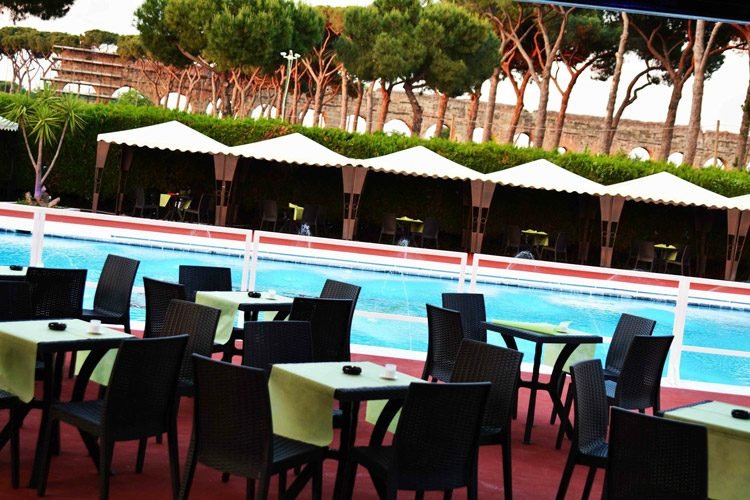
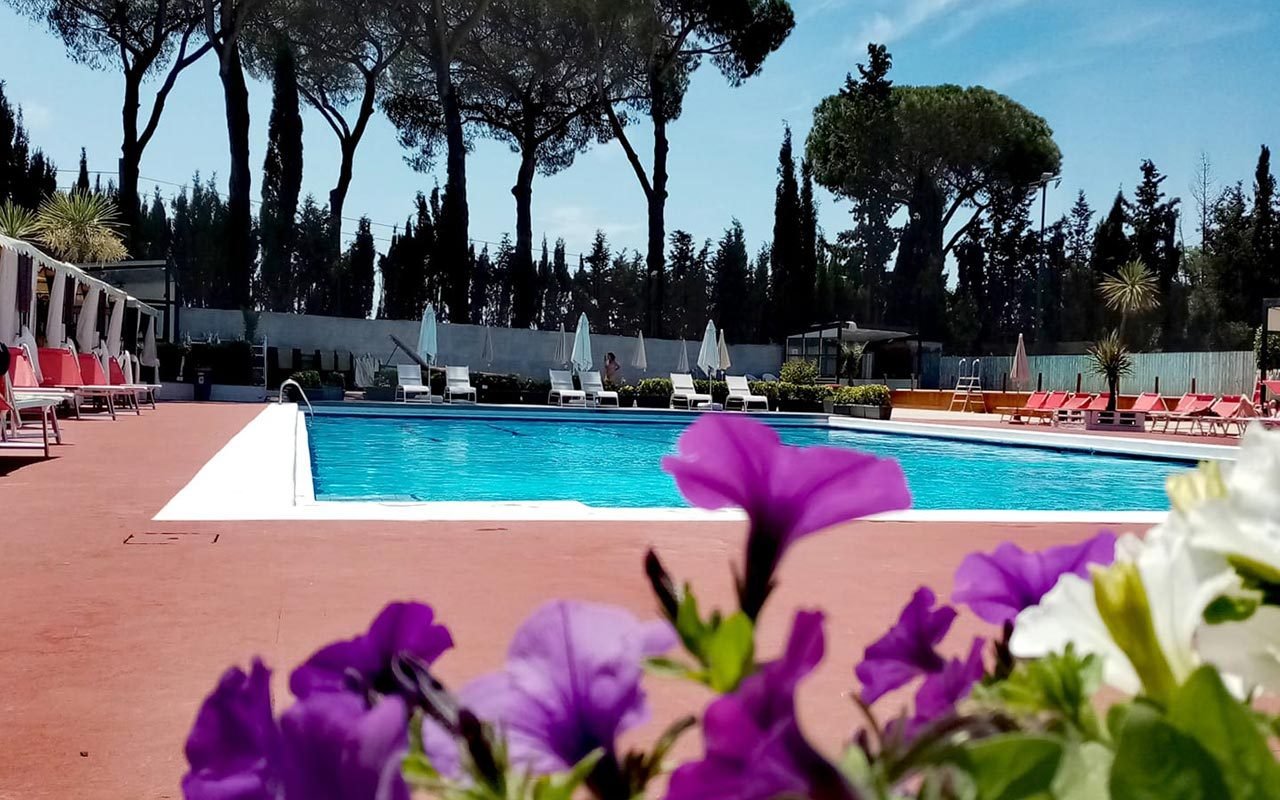
Yes, Appio Claudio Tennis Club has a summer pool open every day of the warm season from 9:00 to 19:00. It is one of the services that, together with the restaurant on site, completes the club's offering for those who use the facility outside playing hours.
Since when has Appio Claudio Tennis Club existed?
Appio Claudio Tennis Club has been active since 1974, at a time when the Appio Claudio neighborhood was still in full building expansion and had very few organized sports facilities. For more than 50 years the club has been a reference point for generations of tennis players and, more recently, for padel enthusiasts of the southeast quadrant of Rome.
Do you have to be a member to book a court at Appio Claudio Tennis Club?
The exact access conditions for non-members at Appio Claudio Tennis Club are not confirmed precisely here: the current management, led by president Angela Colucci, has in any case introduced a more modern booking system in the club's relaunch phase. For the up-to-date terms it's best to contact the facility directly.
When is it best to play at Appio Claudio Tennis Club?
The best time to play at Appio Claudio Tennis Club remains spring and the beginning of autumn, when Roman temperatures stay in a comfortable range even in the central hours of the day and the red clay courts remain in optimal condition without the risk of excessive dust typical of summer.
Appio Claudio Tennis Club is a private sports club in southern Rome, at Viale Appio Claudio 115, in the heart of the neighborhood that carries the same name as the ancient Roman aqueduct from which the nearby Parco degli Acquedotti also takes its name. The club was founded in 1974 on the initiative of a group of tennis enthusiasts and, after a management relaunch begun at the end of 2014, today offers 12 tennis courts, some padel courts, a summer pool, a gym, five-a-side soccer, badminton, a tennis school for children, teenagers and adults, a restaurant and a bar. It is affiliated with the Italian Tennis and Padel Federation and hosts tournaments open to members, including one named after the very park that surrounds it. The quadrant where it stands, between Appio Claudio, Quadraro and Cinecittà, is one of the stretches of southern Rome where, within the same radius of a few kilometers, there coexist one of the most photographed archaeological landscapes of the capital, a harsh episode of Italian 20th-century history and one of the most important film production hubs in Europe. For those organizing a sports stay in Rome or wanting to pair the club with a broader sightseeing itinerary, the tools of TourLeaderPro in Rome and the guides of ItalyPlanner remain a useful reference for planning travel between the southeast quadrant of the city and the historic center.
Where Appio Claudio Tennis Club is and how to get there
The club occupies a lot inside the perimeter of the Parco degli Acquedotti, with its entrance on Viale Appio Claudio at number 115, in Municipio VII. The Appio Claudio neighborhood develops between the Tuscolana and the Appia Nuova, right up against the archaeological park that gives the area its name, and borders Quadraro to the east and Cinecittà to the south. It is a dense residential area, built largely in the postwar period, with few monumental landmarks of its own but with one of the most photographed archaeological landscapes of Rome within a few minutes' walk. Those who don't know southern Rome tend to imagine the whole quadrant as an undifferentiated periphery, whereas you only have to leave the club and walk five minutes to find yourself in a preserved rural setting, which makes this area very different from other Roman peripheries that grew with no residual green margin at all. It is a combination worth keeping in mind for anyone organizing a stay in Rome with more than one day available: the Appio Claudio quadrant lets you alternate sport, archaeology and neighborhood life without having to choose between historic center and periphery, because here the two dimensions coexist in the same space.
By car and public transport to Appio Claudio Tennis Club
Those arriving by car from the Grande Raccordo Anulare exit at the Tuscolana junction or at the Appia one, and in both cases reach Viale Appio Claudio in about 10 minutes outside rush hours. The club's internal parking covers part of the demand, but in the evening hours and on summer weekends it's wise to allow a few minutes to find a spot on the surrounding streets as well. By public transport, the area is served by the bus lines that run along Viale Appio Claudio and Via Lemonia, and the nearest metro stop is on line A, from which you continue on foot or with a short bus ride. The line A stops that cover this quadrant most closely are those on the stretch between Colli Albani and Cinecittà, from which in 10 to 15 minutes on foot, or a few minutes by bus, you reach Viale Appio Claudio. If you are staying near the center and want to reach the club for a match or a lesson, you should consider that the quadrant is peripheral with respect to the classic tourist destinations, but well connected for those who move with a resident's logic, with a continuous public transport service throughout the day.
For those arriving from outside Rome, the distance from the two main airports is greater than that from the historic center: from Ciampino airport, the closest, the club is about 20 minutes away by car in normal traffic, via Via Appia Nuova or the Tuscolana. From Fiumicino airport the trip takes about three quarters of an hour, having to cross the whole city or take the Grande Raccordo Anulare. Anyone organizing a tournament or a sports trip with same-day arrival should therefore calculate transfer times consistent with a large city like Rome, avoiding squeezing the window between landing and the first commitment on court too tightly.
On foot from the Parco degli Acquedotti
The most pleasant way to arrive, for those with time, is on foot from inside the Parco degli Acquedotti, following the dirt paths that run alongside the Claudio Aqueduct and the Acqua Felice. This way you pass from the Roman countryside cultivated with wheat and fodder, among the brick arches and the sheep grazing that here are not a staged scene for tourists but a real agricultural use of the land, to the entrance of a sports club with 12 courts, in a few minutes' walk. It is a contrast that tells well what this part of Rome became in the 20th century: protected historic countryside and a residential neighborhood grown right up against it, with no break between them. The pedestrian route inside the park is not signposted as thoroughly as in an equipped urban garden: the main paths are nonetheless intuitive, follow the line of the arches and connect the park's different entrances to one another, from Via Lemonia to Via Appia Nuova to Via del Quadraro.
Metro line A and the reference stops
Rome's metro line A crosses Municipio VII with several stops useful for those heading to the Appio Claudio quadrant, among them Colli Albani, Arco di Travertino and Cinecittà, the latter right at the entrance of the historic film studios. None of these stops leaves you directly in front of the club, but all are within walking distance of a good quarter of an hour, or a few minutes if you take one of the buses that connect the station to the neighborhood. For those who don't know Rome, it's worth remembering that line A is the same one that serves the historic center, with stops like Termini, Repubblica, Barberini and Spagna, which makes the trip from the tourist heart of the city to the club relatively simple even without a car, provided you allow for a change between metro and bus or a final stretch on foot.
What Appio Claudio Tennis Club offers today
The facility has 12 tennis courts, 10 in red clay and two in synthetic grass, all equipped with evening lighting for play after sunset, with a surcharge on the hourly rate for use of the floodlights. Alongside the tennis courts there are padel courts, the sport that has seen the fastest growth in Italy in recent years and that the club introduced precisely in the relaunch phase after 2014 to reach a wider audience than just tennis members. The pool is a summer one, set in the green of the park, open every day of the warm season from 9:00 to 19:00. The club normally opens Monday to Friday from 9:00 to 20:30, and on Saturday from 9:00 to 20:00. For Sunday hours and seasonal variations it's best to check directly with the office, because as in all Roman sports clubs the summer schedules differ from the winter ones.
Tennis school, courses and family activities
The club's tennis school runs courses for children, teenagers and adults, with programs differentiated by age and playing level, as well as summer camps for the youngest during the school break. It is a model common in Roman clubs of this size: competitive tennis coexists with recreational activity and with the seasonal use of the pool by neighborhood families, who often use the club more for the pool and the courses than for real competitive activity. The summer camps fill the weeks when schools are closed, generally from June to September, and combine tennis lessons, pool games and group activities, a formula designed for families living within a radius of a few kilometers and looking for an alternative to the summer camps organized in the more central neighborhoods of the city.
Additional services: five-a-side soccer, badminton, gym
Besides racket sports, the facility offers a five-a-side soccer field, spaces for badminton and a fitness area. The restaurant and bar on site complete the offering, making the club a gathering place that goes beyond pure sport, with private parties, children's events and, according to what the management reports, a wellness area project with cryotherapy and a hyperbaric chamber under development, meant to complete the sports offering with muscle recovery services closer to those of a specialized medical center than to those of a traditional club. The presence of a space for parties and birthdays is an element that sets this club apart from many purely technical sports facilities: in recent years Appio Claudio Tennis Club has also become a reference point for organizing children's parties in the eastern quadrant of Rome, thanks to the green spaces, the pool and the possibility of renting dedicated areas for the refreshments. This type of offering, which goes beyond pure sports activity, is common to Roman sports clubs with large grounds like this one, which over time have learned to diversify revenue by focusing on private events, birthday parties and small outdoor ceremonies, in a model that allows them to spread the running costs of a facility with 12 courts, a pool and several common spaces distributed over a rather extensive area. For those organizing a sports day in southern Rome combined with a visit to the archaeological quadrant, it's worth pairing the stop at the club with a look at the general guides to Rome offered by ItalyPlanner.com, useful for building an itinerary that also includes the historic center in the same stay.
Membership, rates and booking courts
Access to the courts generally follows the classic model of Roman clubs: an annual enrollment or membership fee, to which are added hourly rates for renting a single court, differentiated between red clay and synthetic grass and with a surcharge for evening lighting. The club uses a digital booking system, introduced in the most recent years precisely to reduce overlaps between members and speed up access to the courts in the most requested time slots, typically late afternoon and evening on weekdays, and morning on weekends. The exact rates change from season to season and should be checked directly with the club's office or by consulting the official channels, because an online publication ages quickly on this type of data.
Padel as a national phenomenon, not just a local one
Appio Claudio Tennis Club's choice to add padel to its offering, in the relaunch phase after 2014, reflects a trend that has swept the whole country over the last decade. Padel, born in Mexico and developed above all in Spain, has seen very rapid growth in Italy starting from the second half of the 2010s, driven by how easy it is to learn compared with traditional tennis and by the smaller size of the courts, which lets a club carve out more playing surfaces in the same space occupied by a smaller number of tennis courts. Many historic Roman clubs, founded like ours in the 1970s with a tennis-only offering, have followed the same path, converting part of their spaces or building new dedicated structures, a phenomenon that has redrawn the city's sports offering in a relatively short time.
A curiosity about Appio Claudio Tennis Club
Few of those who book a court online know that the club stands on land that until a century ago was open countryside, part of that agricultural belt that surrounded Rome to the south of the walled city and that today survives only thanks to the protection of the Parco degli Acquedotti. Playing tennis here therefore means doing it a few meters from a landscape that, apart from the presence of the courts themselves, a Roman citizen of the 19th century would recognize almost intact: the same rows of pines, the same arches, the same low horizon typical of the Roman countryside. The real curiosity is that the Appio Claudio neighborhood, so densely built in the postwar years, still keeps this green margin within racket's reach today, a rare case in the Roman periphery where building expansion has often erased every trace of the earlier agricultural landscape. You only have to raise your eyes beyond the fence of the outermost courts to see, in the distance, the outlines of the brick arches standing out against the sky, a backdrop that no other tennis club in central Rome can offer to the same extent.
Something nobody tells you about Appio Claudio Tennis Club
Those who book a court thinking only of the match often don't realize that the club, with its history going back to 1974, is one of the longest-lived sports outposts of the Appio Claudio neighborhood, an area that in the 1970s was still in full building expansion and had very few organized sports facilities. The club was therefore born at a stage when the neighborhood itself was taking shape, and for decades it was one of the few points of sports gathering in the area, before the 2000s saw fitness and team-sport offerings multiply in the capital, with chain gyms and new-generation sports centers that have progressively widened the offering even in the most peripheral neighborhoods of Rome. The management change of late 2014 is not an administrative detail: it coincided with the introduction of padel, the restyling of the pool and the computerization of bookings, a path that many historic Roman clubs have tackled late or not at all, staying anchored to a more traditional management model and less accessible to those who haven't already been members for years.
There is then a lesser-known aspect that concerns the club's very geographic placement: being entirely surrounded by land protected by the archaeological park, every building intervention on the facility, from expanding the courts to creating new spaces like the wellness area announced by the management, has to deal with the landscape restrictions proper to a protected area. It is a constraint that in other contexts would be perceived as a limit, but which here has probably helped preserve the facility from excessive densification, keeping around the courts a margin of green that other Roman sports facilities, squeezed into narrower urban lots, cannot afford.
The advice I give you for visiting Appio Claudio Tennis Club
If the aim is only to play a match, it's best to book in advance on weekends and in the evening hours, when demand for lit courts rises considerably. But the most useful advice concerns those visiting the area for archaeological tourism: combine the stop at the club, maybe just for a coffee or a meal at the restaurant on site, with a walk in the Parco degli Acquedotti before or after. The park is open all year, entrance is free and the paths that run alongside the Claudio Aqueduct and the Acqua Felice let you see up close two of Rome's 13 ancient aqueducts without covering large distances from the center. If you have a car, you can leave it near the club and use it as a base to explore the whole green area on foot, which extends for several kilometers until it touches the boundaries with Via Appia Antica.
A second piece of advice, less obvious, concerns the season. The Roman summer makes tennis on the uncovered red clay courts rather demanding in the central hours of the day, with temperatures that in July and August regularly exceed 30 degrees Celsius: the best time slot to play remains early morning or evening, helped by the artificial lighting of the courts. If you visit Rome in this period and still want to try the club, you should schedule your match in the cooler hours and reserve the central hours for a walk in the shade of the park's pines or a stop at the restaurant on site, which offers shelter from direct sun.
Another well-known fact, yet rarely cited
It is often said, when talking about the Parco degli Acquedotti, that the Claudio Aqueduct is the most photographed monumental element of the area, but it is rarely remembered how long the work was as a whole. The Aqua Claudia, begun by Caligula in AD 38 and completed by Claudius in 52, measured about 68 kilometers 700 meters from the spring to Rome, of which only the last stretches, about 16 kilometers, ran on arches above ground: for the rest the route was underground, following the natural drop of the terrain from the Aniene valley to Porta Maggiore. The stretch you see today in the park, the one that serves as the background to so many photos and runs alongside the club, is therefore only the final and most spectacular portion of a hydraulic infrastructure that crossed a good part of Lazio, a technical detail that makes even more impressive the precision with which the Romans calculated gradients over tens of kilometers without modern instruments.
The aqueduct drew its water from the Curzia and Cerulea springs in the Aniene valley, between Arsoli and Marano Equo, followed the course of the river for a long stretch, passed near Vicovaro and Tivoli, then bent toward Via Prenestina and Via Latina, crossed the Alban Hills and finally reached Rome near Porta Maggiore, where it shared the final route with another great aqueduct, the Anio Novus. Over the centuries the work was restored several times, by Vespasian, Titus, Trajan, Hadrian and the Severan dynasty, a sign of how central it was to the water supply of the capital of the empire, which probably counted more than a million inhabitants at its peak. An empire able to sustain a population of this size necessarily had to rely on infrastructure of industrial scale by the standards of the time, and the aqueducts that today run beside the club's tennis courts are the most direct physical testimony of that organizational capacity, handed down to us thanks to the not-obvious choice to protect the area as an archaeological park instead of leaving it to the building expansion that swallowed much of the surrounding Roman countryside.
The right photo to take at Appio Claudio Tennis Club
The right photo is not taken inside the club, but just outside, on the side facing the Parco degli Acquedotti: from there the arches of the Claudio Aqueduct line up with the horizon in a way that, in the late afternoon hours, with the raking light typical of the Roman countryside, creates a sharp contrast between the red of the ancient bricks and the green of the meadows. It is the image that best tells the club's position: not a sports facility isolated in the periphery, but a structure that literally overlooks one of the most iconic landscapes of Rome. Those who play on the outermost courts, the ones with the most open view toward the park, can take the same photo from inside the facility as well, with the arches serving as the natural backdrop to the match.
For those who instead want to move a few hundred meters away, the most photographed viewpoint of the whole park remains the one where the Claudio Aqueduct and the Acqua Felice run parallel, separated by a few dozen meters of meadow: a framing that lets you capture in a single shot 2,000 years of Roman hydraulic engineering history, from the age of Claudius to the 1500s of Sixtus V. The recommended hours remain those of dawn, when the light is softer and the park is almost deserted, or of sunset, when the sky takes on warm tones that enhance the color of the bricks.
The 13 ancient aqueducts of Rome
Ancient Rome came to have 13 main aqueducts, built over a span of more than seven centuries, from the first, the Aqua Appia of 312 BC, to the last late imperial interventions. Each of these aqueducts drew water from different springs, often tens of kilometers from the city, and conveyed it with a system of channels that exploited only the natural slope of the land, without any mechanical pump. The Parco degli Acquedotti, and therefore the stretch that runs alongside the tennis club, preserves the traces of more than one of these systems, superimposed over the centuries: the Claudio Aqueduct and the Anio Novus in the Roman era, the Acqua Felice in the Renaissance, a palimpsest of hydraulic engineering that makes the park a more-than-unique case study in the European urban landscape.
Some important events that happened here in history
The Appio Claudio neighborhood and the surrounding area carry the weight of one of the harshest episodes of the German occupation of Rome. On April 17, 1944 Nazi troops carried out in nearby Quadraro, a few minutes from the club, a vast roundup known as Operation Whale, in German Unternehmen Walfisch. About 2,000 men between 19 and 50 years old were detained, but only some were selected for deportation: the historical sources give different figures, ranging between about 700 and almost 1,000 deportees, with estimates that go from the 683 counted by the local parish priest don Gioacchino Rey to the 947 given by other scholars, passing through the 744 reported by Marisa Musu and Ennio Polito and the roughly 750 given by the American historian Robert Katz. Those arrested were transferred first to Grottarossa, then by train to Terni and to the Fossoli transit camp, from where on June 24, 1944 they were deported to Germany and Poland for forced labor in the concentration camps. Only about half returned to Quadraro after the war. It is a page of history that directly concerns the urban fabric in which the club stands today, and that is worth knowing before considering this quadrant as a simple residential periphery with no memory.
Further back in time, the area of the Parco degli Acquedotti that surrounds the club was the setting for the construction of two of the main hydraulic infrastructures of ancient Rome, the Claudio Aqueduct, completed in AD 52 under the emperor from whom it takes its name, and the Acqua Felice, built in the 1500s at the wish of Pope Sixtus V partly reusing the route of the ancient Marcio Aqueduct. The two structures run parallel for a stretch in the very park that borders Viale Appio Claudio, offering a direct comparison between Roman hydraulic technique and Renaissance hydraulic technique at a distance of more than a thousand years from each other. The construction of the Acqua Felice was one of the great public works of the pontificate of Sixtus V, part of a broader program to restore the city's water supplies after centuries in which many of the ancient aqueducts had been interrupted by the Gothic-Byzantine wars and the consequent abandonment of imperial infrastructure.
Sixtus V, born Felice Peretti, took the name of his hydraulic work precisely from his own baptismal name, in a gesture that united the exercise of papal power with the desire to leave a lasting mark on the city. The Acqua Felice drew its water near Pantano Borghese and Colonna, along Via Prenestina, and conveyed it to Rome by a route that for a long stretch runs parallel to that of the ancient Claudio Aqueduct, also exploiting in part the remains of the Marcio Aqueduct of the Republican era. The work, completed in 1586, fed for centuries the monumental fountains of the center of Rome, among them the famous Fountain of Moses on Via XX Settembre, which bears the name precisely in honor of the project wanted by Sixtus V. Walking today along the stretch of the park that borders the club therefore means walking along an infrastructure that, although built more than a millennium after the Roman aqueduct beside which it runs, performed the same function with the same gravity-engineering logic, without any mechanical pump.
On the more recent level, the Appio Claudio neighborhood followed in the second half of the 20th century the trajectory common to much of the Roman periphery built in the postwar period: a rapid, often poorly planned building expansion that turned an agricultural belt into a dense residential neighborhood in a few decades, while leaving intact, fortunately, the protected strip of the archaeological park. The birth of the tennis club in 1974 falls precisely in this phase of urban consolidation, when the neighborhood had by then reached a stable population and was beginning to demand services and organized sports facilities.
The memory of Quadraro today
Since the 2000s Quadraro has built around the memory of the roundup of April 17, 1944 a commemoration program that is renewed every year on that date, with initiatives promoted by the Resistance associations, the neighborhood's schools and the municipal administration. It is an appointment that has progressively brought back to the center of public attention an episode long less known than other events of occupied Rome, such as the massacre of the Fosse Ardeatine that took place a few weeks later. Those who visit the neighborhood at that time of year often find marches, commemorative plaques and public moments of remembrance, an occasion to understand how much the history of the Second World War remains engraved in the social fabric of this part of Rome, a short walk from the tennis courts where today people play in complete peace.
Who has passed through Appio Claudio Tennis Club
The club, active since 1974, has lived through more than 50 years of local sports history as a reference point for generations of tennis players and, more recently, for padel enthusiasts of the southeast quadrant of Rome. The current management, led by president Angela Colucci, has publicly told the story of the facility's relaunch, stressing how the introduction of a digital booking system has cut waiting times and overlaps between members, a problem common to medium to large Roman sports clubs with 12 courts to manage at the same time. The club is affiliated with the Italian Tennis and Padel Federation and hosts tournaments reserved for members and registered players, including one that bears the name of the park in which the facility is set, the Parco degli Acquedotti event.
Tennis in Rome, a sport with ancient roots
Tennis is a sport with a long tradition in the capital, which hosts every year one of the most important tournaments on the international calendar, the Internazionali d'Italia at the Foro Italico, a fixture of the Roman spring that brings the best male and female players of the world circuit to the city. Around this flagship event, Rome has always had a dense network of neighborhood clubs, born in different eras and of very different sizes, which are the fabric on which everyday sports practice rests, far more than the showcase of the big international tournament. Appio Claudio Tennis Club, with its history going back to 1974, belongs to this second category: a club designed not for the elite of competitive tennis but for widespread practice and for the families of the neighborhood where it stands, a model that has allowed generations of Romans to approach the racket sport without necessarily aiming for the highest competitive level.
Over more than 50 years of activity, a club of this size has inevitably seen different generations of members pass through its courts, from the founders of the 1970s to the young people who today are taking up padel, the most recent sport to arrive in the facility's offering. It is the kind of continuity that characterizes many Roman sports clubs born in the same years, able to get through the social and sporting changes of the city while remaining a fixed point for the families of the neighborhoods where they stand. Those who grow up playing tennis on these courts as children, maybe in the tennis school courses or the summer camps organized every year, often come back as adults to play with their own children, a generational turnover that is probably the most concrete measure of a club's roots in its neighborhood, much more than competitive rankings or the results of tournaments reserved for members.
The Appio Claudio neighborhood and its place in the geography of southern Rome
The Appio Claudio neighborhood was born as a residential expansion in the postwar period, in an area that until then had been mainly agricultural, part of the Roman countryside that extended south of the historic city along the corridor of the ancient aqueducts. The name comes precisely from the Claudio Aqueduct, which crosses the municipal territory in this stretch and which also gave rise to the place name of the nearby park. Administratively the neighborhood falls within Municipio VII, the same one that includes Quadraro, Cinecittà and part of Appio Latino, and shares with these neighboring districts a rapid and largely unplanned urban growth in the middle decades of the 20th century.
The street layout of the neighborhood largely follows the course of the two great historic routes that bound it, Via Tuscolana to the northeast and Via Appia Nuova to the southwest, with Viale Appio Claudio acting as the central axis that crosses the whole built-up area connecting the neighboring districts. It is a mainly residential area, with few large offices and businesses, where the social fabric is made largely of families who have lived here for several generations, an element that also explains the longevity of a sports outpost like the tennis club, born to answer a stable need of the neighborhood rather than to catch passing trade.
Cinecittà and the movies a stone's throw from the club
A few minutes from Viale Appio Claudio is Cinecittà, the historic film studio complex founded in 1937 and become over the years the main Italian audiovisual production hub, the setting of international productions that have marked the history of world cinema. The proximity between a residential neighborhood born to house families and office workers and one of the most important film production centers in Europe is one of the distinctive traits of this part of Rome, where the glamour of the studios coexists with the daily life of a peripheral neighborhood without great monuments of its own but with a historical and landscape heritage that you discover only by walking. It's not rare, for those who live in or frequent the tennis club, to run into film crews or extras on the street heading to the studios, a detail that makes the daily geography of this quadrant even more particular.
Cinecittà was born at the will of the Fascist regime as a production hub meant to make Italy independent of foreign films, and in the postwar years became the beating heart of so-called neorealism first and of so-called Hollywood on the Tiber afterward, when international directors and producers chose the Roman studios to shoot historical epics and large-scale productions, helped also by the cost of skilled Italian labor compared with the US standards of the time. In the following decades the studios went through alternating phases, between moments of great productive vitality and periods of crisis tied to changes in the world film industry, while remaining a constant reference point for Italian cinema and television. Today Cinecittà continues to host national and international productions, as well as a museum route that tells the story of the studios to the public, an element that makes the Appio Claudio quadrant one of the few in Italy where a neighborhood sports club, an archaeological park of world importance and a historic film hub lie within the same radius of a few kilometers.
Quadraro, from the memory of the war to street art
Quadraro, bordering the Appio Claudio neighborhood, has transformed its identity in recent decades: from a working-class neighborhood marked by the memory of the 1944 roundup to an open-air street art laboratory, thanks to urban redevelopment projects that have covered the facades of many buildings with works by Italian and international artists. Those who frequent the tennis club and have a few free hours can easily reach, on foot or in a few minutes by car, the streets of Quadraro where this mural route has developed, a contemporary counterpoint to the archaeological countryside of the Parco degli Acquedotti that lies on the opposite side of the neighborhood. The neighborhood takes its name from its original urban form, a grid of streets on a square base drawn in the 1930s, and is today one of the most cited cases in Italy of urban redevelopment carried out through public art rather than through traditional building interventions.
The project that more than any other brought national attention to the neighborhood was born from the initiative of local collectives and associations that, starting in the early 2010s, invited Italian and foreign artists to paint the facades of otherwise anonymous public housing buildings. Within a few years Quadraro turned into one of the densest street art maps of Rome, with works of monumental size that cover entire buildings and that coexist with the daily life of a still strongly working-class neighborhood, not turned into an open-air museum designed for tourists but lived every day by its residents. It is a contrast that, once again, tells well the double nature of this quadrant of southern Rome: on one side the heavy memory of the war, on the other the ability to reinvent itself through contemporary culture without denying its own history.
The Parco degli Acquedotti, green heart of the quadrant
The Parco degli Acquedotti is the best-preserved portion of the ancient Roman countryside landscape still visible inside the Grande Raccordo Anulare. Inside it run, among others, the Claudio Aqueduct and the Acqua Felice, which in the stretch within the park proceed for about 4 and a half kilometers on parallel arches, partly sharing structures with the Anio Novus, another of the ancient Roman aqueducts. The park is part of the broader Appia Antica Regional Park, the largest protected area in Europe among urban ones, which protects a continuous green corridor from Via Appia Antica to Cinecittà, passing right through the quadrant where the tennis club stands. Inside this protected corridor are other sites of archaeological importance, such as the nearby Villa dei Quintili, one of the largest suburban residences of ancient Rome, which is worth including in the same visiting itinerary for those with a whole day available.
How to visit the park starting from the club
From the club's entrance on Viale Appio Claudio you reach on foot in a few minutes the main paths of the park, which can be walked freely every day of the year. There are no entrance tickets or strict closing hours as for a museum, but the general rule of Roman green areas applies: the natural light of dawn and sunset offers the best conditions for photographing the arches and for enjoying the walk without the heat of the central hours in the summer months. The surface of the paths is largely dirt, so comfortable footwear is more useful than city shoes. The park is also a much-frequented destination for those who jog and cycle, with routes that lend themselves to an outdoor workout immersed in green, a natural alternative for those who, after a tennis or padel session at the club, want to complete the sporting day with a run among the arches.
An itinerary that works well for a whole day, designed for those with a family with children or who simply want to combine sport and culture without long transfers, includes a morning devoted to tennis or padel at the club, a light lunch at the restaurant on site or in one of the places of the Appio Claudio neighborhood, and an afternoon for a walk in the park, perhaps going as far as the Villa dei Quintili for those who still have energy. Those traveling with small children can instead alternate the club's pool in the hottest hours with a short walk in the park in the cooler hours, a balance that lets them enjoy both attractions without tiring the little ones too much in the Roman summer heat.
Those who instead have only a few hours available, maybe in transit to Ciampino airport or coming back from a visit to the Villa dei Quintili and the broader Appia Antica Park, can limit themselves to a short stop at the club for a coffee or an aperitivo, taking advantage of the favorable position with respect to both archaeological destinations without necessarily having to book a court. It is a solution that many visitors discover only after having already organized the main itinerary, and that is worth keeping in mind precisely for its logistical convenience compared with the rest of the southern Rome quadrant.
A still-active agricultural ecosystem
One of the lesser-known aspects of the Parco degli Acquedotti is that a large part of the land inside it remains devoted to agricultural use, with crops of cereals and fodder and, in some stretches, grazing of flocks. This is not a decorative element added for visitors, but the continuation of a land use that in this area has never truly been interrupted from Roman times to today, apart from the interruptions due to wars and famines of past centuries. This detail explains why the landscape you see today from the tennis club resembles so closely the one painted by the 19th-century view painters who portrayed the Roman countryside with its arches and its shepherds, an iconography that became familiar all over the world through art and landscape photography.
The coexistence of agricultural use and public enjoyment is not without rules: the cultivated lands remain private property or under concession, and visitors are required to respect the crops and the fences that delimit the grazing areas, walking the marked paths rather than crossing the fields freely. It is a distinction that those coming from outside Rome, used to fully equipped urban parks with no productive activity inside them, sometimes struggle to grasp, but that is precisely the particularity of the Parco degli Acquedotti compared with a conventional public garden: here landscape protection has not driven out agricultural activity, it has simply regulated it within a protected perimeter.
When to go to Appio Claudio Tennis Club and when to avoid it
For those who want to play tennis or padel, the best period remains spring and the beginning of autumn, when Roman temperatures stay in a comfortable range even in the central hours of the day and the red clay courts remain in optimal condition without the risk of excessive dust typical of the driest months of summer. Full summer, between July and August, is still workable thanks to the evening lighting of the courts and to the pool, which in these months becomes the main attraction for many neighborhood families, but those who don't like intense heat should aim for the early morning hours or the evening. The Roman winter, with temperatures in any case mild compared with the rest of Italy while rarely dropping below zero, allows play all year round, taking care to check in advance for any closures for maintenance of the clay courts after the heaviest rains.
For those who instead plan the visit to the Parco degli Acquedotti in combination with the stop at the club, the best period largely coincides with the one indicated for tennis: spring, with the meadows in bloom and the countryside turning an intense green after the winter rains, offers probably the most photogenic conditions of the whole year. Summer brings the dry heat typical of the Roman countryside, which makes the walk in the central hours not very pleasant but gives spectacular sunsets over the arches in the evening hours. Autumn and winter, less frequented by tourists, are the ideal time for those looking for an almost deserted park and a softer light for landscape photography.
What's around Appio Claudio Tennis Club
Besides the Parco degli Acquedotti, which directly surrounds the club, the quadrant offers several important destinations reachable in a few minutes by car or by public transport. The Villa of the Quintilii, one of the largest and most elegant suburban residences of ancient Rome, is not far along the archaeological corridor that links the Parco degli Acquedotti to Via Appia Antica, and is a stop that deserves a separate visit for the extent of the ruins and for the museum that houses its finds. The villa was built in the 2nd century AD by the Quintili brothers, two wealthy Roman senators, and its wealth was such that the emperor Commodus, according to the ancient historiographic tradition, had the property confiscated precisely out of the desire to take over so sumptuous a residence, after having the owners condemned. From that moment the villa became part of the imperial estate, a fate shared by several great private properties of ancient Rome requisitioned by the most unscrupulous emperors. The ruins visible today, with the remains of the baths, the nymphaeum and the reception rooms, give the idea of a residence designed to astonish, not too different in spirit from the great showpiece villas that still dot the Roman countryside today. The broader Appia Antica Park is the territorial container within which both the Parco degli Acquedotti and the Villa dei Quintili sit, a protected area that extends for several kilometers to the southeast of the city and that guards some of the most important monuments of ancient Rome, from the catacombs to the imperial villas.
On the film front, Cinecittà Studios remains the best-known destination of the quadrant internationally, with the possibility at certain times of visiting sets and historic structures of the studios that have hosted leading Italian and international productions since the 1940s. For those who follow sport besides tennis, in the same Municipio there also operates an organization like Cinecittà Basketball Polaris, evidence of how the quadrant between Appio Claudio, Quadraro and Cinecittà hosts a network of sports clubs different from one another in discipline but united by the same roots in the local fabric.
Quick questions about Appio Claudio Tennis Club
How many courts does the club have? 12 tennis courts, 10 in red clay and two in synthetic grass, all lit for evening play. Is there padel? Yes, the club has padel courts introduced in the relaunch phase after 2014. Is there a pool? Yes, a summer pool open every day of the warm season from 9:00 to 19:00. Do you have to be a member to book a court? The access terms and rates should be checked directly with the club's office, which also manages the tennis school courses for children, teenagers and adults. How do you get there from central Rome? By car via the Tuscolana or the Appia Nuova, exiting the Grande Raccordo Anulare, or by public transport to Viale Appio Claudio area, continuing on foot for the last stretch. What can you see in the surroundings? The Parco degli Acquedotti with the Claudio Aqueduct and the Acqua Felice, the Quadraro neighborhood with its murals, and Cinecittà with the historic film studios, all reachable in a few minutes from the club. When was the club founded? In 1974, on the initiative of a group of tennis enthusiasts, with a management relaunch that at the end of 2014 brought padel, the renovation of the pool and digital booking. Can you play all year round? Yes, the courts are usable in all seasons, taking care to check in advance for any closures for maintenance after the heaviest rains on the red clay courts. Is it suitable for beginners? Yes, the tennis school follows differentiated levels for children, teenagers and adults, and padel in particular is designed precisely for those approaching a racket sport for the first time thanks to a faster learning curve than classic tennis. To organize your whole stay around these stops, the planning resources of TourLeaderPro and the practical guides of ItalyPlanner help build an itinerary that combines sport, archaeology and neighborhoods less trodden by mass tourism.
Contact Information
Viale Appio Claudio, 115
Roma Roma Città, Roma Città