Circo Maximo Experience 2026 at the Circus Maximus, until December 31, 2026
In short. Circo Maximo Experience 2026 is the augmented and virtual reality visit of the Circus Maximus, open until December 31, 2026 with departures every 15 minutes from Tuesday to Sunday (closed on Mondays, May 1 and December 25).
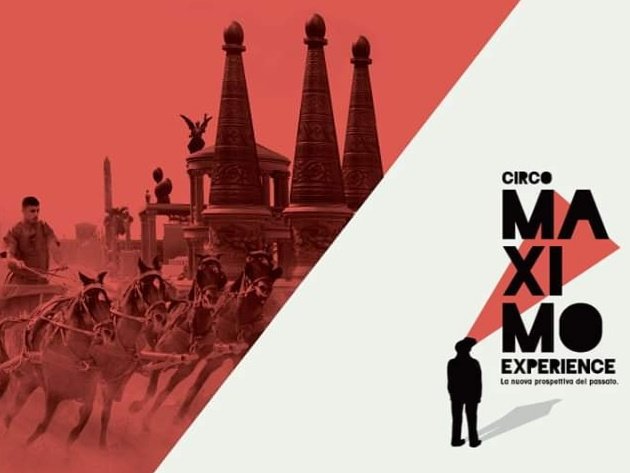
Circo Maximo Experience 2026 is the augmented and virtual reality visit of the Circus Maximus, open until December 31, 2026 with departures every 15 minutes from Tuesday to Sunday (closed on Mondays, May 1 and December 25). From October 1 to December 31 the hours are from 10:00 to 16:00, with last entry at 14:50. On December 24 and 31 it closes at 14:00, with last entry at 12:35. The entrance and ticket office are on Viale Aventino side, on Via del Circo Massimo, in Rome. You get there by metro line B, Circo Massimo stop, or by tram 3, Circo Massimo stop. The full ticket costs 12 euros, the reduced 10 euros, the family rate (two adults and children under 18) 22 euros. Tickets are bought on the experience's official website, at the 060608 contact center, at the site's ticket office and at Roma Capitale's Tourist Infopoints. Booking is recommended and in case of rain the experience does not take place.
Language: in Italian with English surtitles.
What the Circo Maximo Experience is
The Circo Maximo Experience is a walking visit of about 40 minutes, in eight stops within the archaeological area, done wearing a headset and a pair of headphones. Visitors walk on the real valley, stop at the points marked on the ground and at each stop see appear, superimposed on what is in front of them, the Circus as it was at a precise moment in its history.
It is a public project: it is promoted by Roma Capitale, through the Department for Cultural Growth and the Capitoline Superintendency for Cultural Heritage, and organized by Zètema Progetto Cultura, the company that manages the services of the civic museums. The technical realization was assigned through a public tender to GSNET Italia and Inglobe Technologies. The scientific direction, texts and script are by the Superintendency. Put differently, what you see in the headset is not a theme park fantasy: it is the reconstruction that the archaeologists responsible for the monument have written and signed.
Augmented reality and virtual reality, the difference in the field
The two technologies alternate along the route. With augmented reality the reconstructions rest on the real landscape: the lawn, the ruins, the Palatine in the background remain visible and above them appear stands, shops, arches. With virtual reality the real image disappears entirely and you find yourself inside a reconstructed scene, like the chariot race. The passage from one to the other is the reason the experience works: you always return to the point where you really are, and you understand where what you have just seen stood.
A monument that cannot be read without help
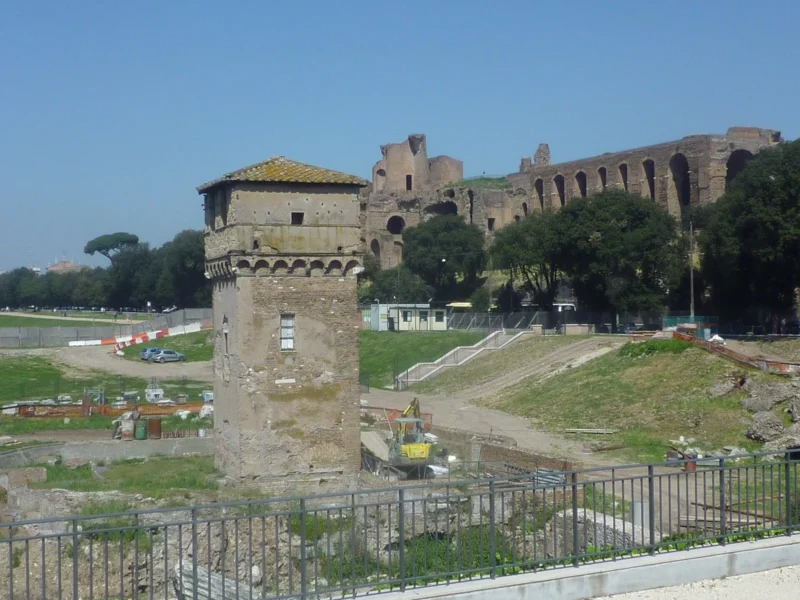
The Circus Maximus is the typical case of a famous place that disappoints those who arrive unprepared: a large elongated lawn, an elliptical depression, a few walls at the far end toward the Torre della Moletta. Those who do not know what to look at see a park. This is exactly why the augmented visit makes sense here more than elsewhere: it restores the volume of a building of which very little remains on the surface, and does so on the spot, at the right scale. Plainly put: it is one of the few cases in Rome where technology does not distract from the monument, but finally makes it visible.
What you see in the eight stops of the Circo Maximo Experience
The eight stops of the Circo Maximo Experience retrace all the phases of the Circus, from the first wooden construction to the splendor of the imperial age, and then from the Middle Ages to the first decades of the 20th century.
The Murcia valley before the Circus
The story begins with the natural landscape: the ancient Murcia valley, between the Palatine and the Aventine, which in the headset gradually fills with buildings. It is the clearest way to understand why the Circus was born right here. The valley was flat and close to the landing on the Tiber, a place of markets and exchanges, and the flanks of the two hills offered a natural slope on which to place the audience.
From wooden structures to stone
The first structures, in wood, date back to Tarquinius Priscus, in the 6th century BC. In 329 BC the first permanent carceres, the chariots' starting gates, were built. Julius Caesar, from 46 BC, built the masonry seats and gave the building the form that would then be preserved. The reconstruction shows this growth in phases, and it is the most instructive part of the visit for those who have studied Roman history only in books.
A walk among the shops
One of the stops takes the visitor walking among the shops that opened under the Circus's stands. It is a detail often forgotten: the Circus was not only a sports facility, it was also a very long commercial front, with premises, stalls and services, which lived off the crowd on race days and off the city on ordinary days.
The chariot race
The most awaited moment is the chariot race, in virtual reality: the shouts of encouragement from the crowd, the chariots brushing against each other at the turns, the overturnings. 12 chariots started together from 12 gates arranged on an arc of a circle, so that each chariot had the same distance to the start of the spina, and they made seven laps around the spina, turning around the metae. Seeing it reconstructed on the place where it was really run has a different weight from any film.
The Arch of Titus at 1:1 scale
The final coup de théâtre is the Arch of Titus, about 20 meters high, reconstructed in augmented reality at full scale before the visitor's eyes, at the curved end of the Circus. It should not be confused with the arch of the same name on Via Sacra, in the Roman Forum: this one was dedicated by the Senate to Titus in 81 AD at the center of the curve, and its remains were found in the 2015 excavations. Seeing it rise again, at its height, where today there are a few blocks, is the moment visitors remember.
From the Middle Ages to the 20th century
The story does not stop at the end of the games. The last stops show the Circus abandoned, the valley filling with earth, gardens and buildings, the medieval tower of the Frangipane, up to the first decades of the 20th century, when the area was still occupied by service buildings. It is the most surprising part for those who think of ancient Rome as a single block: the Circus Maximus remained for centuries an agricultural periphery inside the walls.
The voices and languages of the Circo Maximo Experience
The narration of the Circo Maximo Experience is available in eight languages, and the Italian version is read by the actors Claudio Santamaria and Iaia Forte.
Eight languages
Besides Italian, the story is available in English, French, German, Spanish, Russian, Chinese and Japanese. For those accompanying a mixed group it is a concrete advantage: everyone chooses their own language on their own headset and the group walks together, with no interpreters and no translations repeated at each stop.
The subtitled versions
Subtitled versions in Italian and English are also available for deaf people. It is a choice few multimedia routes make and it deserves mention: the story, otherwise entirely entrusted to audio, becomes readable even for those who cannot hear.
Who wrote and signed the route
Coordination, scientific direction, texts and script are by the Capitoline Superintendency for Cultural Heritage, with Marialetizia Buonfiglio as scientific head and with Stefania Pergola, Federica Michela Rossi and Gianluca Zanzi. The music is by Vito Terribile. The virtual experience titled Una giornata al Circo is curated by Sebastiano Deva, while the artistic direction and supervision of the graphic reconstructions are by Tiziana Primavera. It is a group in which the archaeologists wrote the history and the technicians staged it: the right order.
Circo Maximo Experience 2026 hours month by month
The Circo Maximo Experience changes hours with the seasons: from October to December you visit by day, from 10:00 to 16:00, with departures every 15 minutes and last entry at 14:50.
The published calendar
The official 2026 calendar provides, from January 2 to May 31, opening from 10:00 to 16:00 with last entry at 14:50. From June 2 to July 31 the experience becomes an evening one, from 17:00 to 21:00, with last entry at 19:50. From August 1 to 9 the hours are from 17:30 to 20:30, from August 11 to 23 from 17:00 to 20:00, from August 25 to September 13 from 16:30 to 19:30, from September 15 to 30 from 16:00 to 19:00. From October 1 to December 31 it returns to daytime hours, from 10:00 to 16:00, and on December 24 and 31 it closes at 14:00, with last entry at 12:35.
Closing days
The experience is closed on Mondays, May 1 and December 25. In case of rain the multimedia visit cannot be done. Any cancellations for technical or weather reasons are communicated by email to the address left at the time of purchase.
Punctuality
The organization advises arriving 15 minutes before the booked time. It is advice to take literally: in case of delay neither a refund nor a move to another slot is provided. With departures every 15 minutes, groups are small and a missed slot is a missed slot.
Tickets and prices for the Circo Maximo Experience
The Circo Maximo Experience ticket costs 12 euros full price and 10 euros reduced. The family rate, 22 euros for two adults and children under 18, is booked only at 060608 or at a Tourist Infopoint.
Who is entitled to the reduced rate
The reduced rate applies to young people up to 26, working teachers, journalists with Order membership cards, police and military with ID, groups of at least 10 people, and holders of the Roma Pass and the MIC card. There is also a curious reduction: it applies to anyone holding a ticket for one of the summer and fall concerts held in the Circus Maximus area, but only in the month of the concert. Those buying a reduced ticket online must bring with them the document entitling them to the reduction.
Who gets in free
Admission is free for children under 6, for people with disabilities and one companion, and for European Union tour guides and interpreters. Free tickets are booked at the 060608 contact center or at the Tourist Infopoints paying one euro presale, or collected at the site's ticket office without presale.
Where to buy
Tickets are bought online on the experience's official website, at the 060608 contact center (every day from 9:00 to 19:00), at the Circus Maximus ticket office on Viale Aventino and at the Tourist Infopoints on Via Marco Minghetti, at the corner with Via del Corso, on Via dei Fori Imperiali, at Piazzale San Paolo and at the Ciampino and Fiumicino airports. Those buying on site for a later date must leave their details. The Circo Maximo Experience is part of the Roma Pass circuit.
Changes and refunds
Date changes and refunds are possible only if the visit is canceled for technical or weather problems, and must be requested by email within 15 days of the canceled date. Presale costs are not recoverable in any case, and no refunds are made on site.
The visit without the headset
Those who do not want the headset can visit the archaeological area by buying at the ticket office the entrance ticket alone. It is a useful option for those accompanying a small child or those who get sick with the headset, and still want to follow the group in the field.
The Circus Maximus, the largest entertainment building of antiquity
The Circus Maximus occupies the Murcia valley, between the Palatine and the Aventine: an area of about 85,000 square meters, managed by the Capitoline Superintendency, which for more than a thousand years hosted chariot races.
The legendary origins
According to Livy's account, the rape of the Sabine women took place here, during the games proclaimed by Romulus in honor of the god Consus. The legend has a concrete basis: the flat valley close to the landing on the Tiber was from the beginning a place of markets, of exchanges with other peoples and of rites tied to trade, such as those of the Ara Maxima of Hercules.
From Caesar to Trajan
Julius Caesar, besides the masonry seats, had a protective channel dug around the track, the euripus, about three meters wide, which Nero had filled in after the great fire of 64. Augustus added on the spina an Egyptian obelisk from the time of Ramses II. After a fire under Domitian, the reconstruction was completed by Trajan in 103, and much of the visible remains date from that time.
How the track was made
The track narrowed from about 80 meters at the curved end to about 64 meters at the carceres. On the spina, the long central base, there were shrines, basins, statues, the lap counters in the shape of dolphins and eggs, and two obelisks. The metae, the conical pillars at the two ends of the spina, were the most dangerous point of the race: it is there that the chariots collided and overturned.
The last race and the long silence
The Circus remained in operation until the last races organized by the Gothic king Totila in 549. Then the valley filled: the ground rose by about 10 meters above the level of the Roman track, and above it arose gardens, buildings, a Jewish cemetery in 1645 and a gasworks in 1852. The area was cleared between 1911 and the 1930s. For the full profile of the monument see the page on the Circus Maximus.
How to get to the Circo Maximo Experience
The simplest way to reach the Circo Maximo Experience is metro line B, Circo Massimo stop, at the eastern end of the area, toward Piazza di Porta Capena.
By metro
From Termini station the Circo Massimo stop is a few stations away on line B. From the Colosseum it is the next stop. On exiting, the ticket office is on Viale Aventino side: allow a few minutes' walk along the edge of the lawn to reach it, especially if you have a booked slot.
By tram
Tram 3 has a Circo Massimo stop along Viale Aventino, on the ticket office side. It is the most convenient solution for those arriving from Trastevere, the Pyramid or San Giovanni.
By bus
Several surface lines run along Via dei Cerchi, Viale Aventino and the Bocca della Verità area. Lines and times change often in the center because of works and events: it is best to check them on the public transport company's journey planner before leaving.
By car
A private car, in an archaeological zone of the center, is a choice I advise against. Those arriving from outside Rome do better to leave the car near a metro line B station and continue by public transport: the Circo Massimo stop leaves you a short walk from the experience.
A curiosity about the Circo Maximo Experience 2026 at the Circus Maximus, until December 31, 2026
The loveliest curiosity about the Circo Maximo Experience is also the simplest: the visitor walks 10 meters above the Roman track. After the abandonment, the valley filled with earth, debris and gardens, and the walking surface rose by about 10 meters above the one on which the chariots ran. The lawn you walk with the headset is thus a modern ground, and the reconstructions that appear in the headset are, literally, buried under your feet.
A second curiosity concerns the obelisks, which in the headset you see towering on the spina. Both still exist, but not here. The first, brought by Augustus, was moved in the 16th century by Sixtus V to Piazza del Popolo, where it still stands. The second, erected by Constantius II in 357, is today beside San Giovanni in Laterano. Those with time in the following days can go looking for them: it is the most concrete way to grasp their size, after seeing them reconstructed in their original place.
And there is a curiosity about the visit itself: the Italian version of the narration is entrusted to two voices of Italian cinema and theater, Claudio Santamaria and Iaia Forte. For those following it in Italian, listening to them while watching the chariot race is part of the pleasure.
Something nobody tells you about the Circo Maximo Experience 2026 at the Circus Maximus, until December 31, 2026
What nobody says about the Circo Maximo Experience concerns documents. To rent the headset you must leave an original identity document as a deposit, ID card or passport. Those arriving with only a photocopy, or with the document left at the hotel, risk being turned away. It is worth remembering the night before: it is the detail that ruins the morning.
The second thing concerns young people. Children and teenagers under 14 may wear the headset only if accompanied by an adult who signs a release, available at the ticket office and downloadable from the official website. An organized family prints and fills it in at home, and saves the line at the desk.
The third concerns the weather. The experience is not held in the rain, and this means that in fall and winter the day should be chosen by looking at the forecast. Cancellations for bad weather are communicated by email, but only tickets canceled by the organization can be changed or refunded, and the request must be made within 15 days. A practical tip: book a mid-morning slot, so that a brief rain at dawn does not compromise the visit.
The advice I give you for visiting the Circo Maximo Experience 2026 at the Circus Maximus, until December 31, 2026
The Circo Maximo Experience is best done as the first thing of the day devoted to ancient Rome, not the last. 40 minutes with the headset give a mental map that you then use for everything else: the Palatine you see rising above the stands, the Forum you reach by climbing, the Colosseum one metro stop away. Those who do the Circus after the Palatine experience it as an appendix. Those who do it first understand the Palatine.
In fall and winter, with the 10:00 to 16:00 hours, the 10:00 or 10:15 slot is the best: raking light, few people on the lawn, pleasant temperature. Arrive a quarter of an hour early, with your original document in your pocket and comfortable shoes, because you walk on uneven ground.
One last recommendation, as a professional: before going in, stop for two minutes at the edge of the lawn and look at it without the headset. Then, at the end, return to the same spot. It is the comparison that gives the measure of what you have seen, and that makes you understand how much research lies behind every reconstruction.
Another well-known fact, yet rarely mentioned
It is well known that the Circus Maximus is the largest entertainment building of antiquity, and one of the largest of all time. It is much less often mentioned that the triumphal arch of Titus, the one the Circo Maximo Experience raises at full scale, is not the Arch of Titus everyone photographs on Via Sacra. They are two different monuments dedicated to the same emperor. The one in the Circus, with three arches, was dedicated by the Senate in 81 AD at the center of the curve, for the victory in the Jewish war. For centuries its trace had been lost, and its remains were found only in the 2015 excavations.
A second fact rarely mentioned concerns film. In 1959 the Circus Maximus was supposed to host the filming of the chariot race of Ben Hur. The authorization was denied, and the set moved to the Circus of Maxentius, on the Appian Way. The most famous race in film history, then, was not shot here. Today, with the headset, the race is seen in the place where it was really run, and it is a small revenge of the Murcia valley over the cinema.
And a third, about the calendar: the discount on the experience ticket also applies to anyone holding a ticket for one of the big concerts at the Circus Maximus, in the same month. Few know it, and it is a lovely way to return by day to the lawn seen at night.
The right photo to take at the Circo Maximo Experience 2026 at the Circus Maximus, until December 31, 2026
The right photo at the Circo Maximo Experience is not taken inside the headset, but outside. The scene to take home is the lawn with the Palatine in the background, shot from the curved end, toward the Torre della Moletta: from there the elongated shape of the valley can be read in full, and you understand how the two hills served as a natural grandstand.
The second photo is of the group at the stations: the visitors standing still on the marked points, with the headset over their eyes and gaze toward the void, have an uncanny air that tells the experience well. Ask permission first from those you photograph.
The third, for those with time, is taken from above. Climbing the Aventine to the Orange Garden, the terrace looks toward the Tiber and the city. From October to December, with the low light of early afternoon, the ruins of the imperial palaces take on a warm color they do not have in summer.
Some important events that took place here in history
In the Circus Maximus valley, according to Livy, the rape of the Sabine women took place, during the games proclaimed by Romulus in honor of Consus. In the 6th century BC Tarquinius Priscus had the first wooden structures built there. In 329 BC the first permanent carceres were built.
In 46 BC Julius Caesar built the masonry seats and the euripus, the channel about three meters wide that Nero had filled in after the great fire of 64. Augustus had the Egyptian obelisk now in Piazza del Popolo raised on the spina. In 81 AD the Senate dedicated to Titus the triumphal arch at the center of the curve. In 103 Trajan completed the reconstruction after the fire of the Domitianic age. In 357 Constantius II had the second obelisk raised. In 549 the Gothic king Totila organized the last races.
In modern times, in 1645 the Jewish cemetery was opened there, in 1852 the gasworks. Between 1911 and the 1930s the area was cleared, and in the 1930s it hosted temporary exhibitions of the regime. In 2015 excavations at the curved end brought back the remains of the Arch of Titus. Since the 1980s the Circus Maximus has been the site of the city's great concerts, jubilees and mass celebrations, and since 2026 you can also walk it with a headset that tells all its phases.
Who has passed through the Circo Maximo Experience 2026 at the Circus Maximus, until December 31, 2026
Through the Circus Maximus have passed kings and emperors. Romulus in legend, with the games in honor of Consus. Tarquinius Priscus, with the first structures for the Ludi Romani. Julius Caesar, with the building site that gave the Circus its form. Augustus, with the obelisk of Ramses II. Nero, with the works after the fire of 64. The Senate that honored Titus with his arch. Trajan, with the great reconstruction of 103. Constantius II, with the second obelisk. The last to organize a race was a Gothic king, Totila, in 549.
After the long medieval silence, the valley belonged to the Frangipane, who for centuries controlled this part of the city and to whom the Torre della Moletta, still visible on the south side, belonged. In the 20th century the archaeologists who cleared it passed through, and in the 1980s the season of great public events began.
In the Circo Maximo Experience pass, in a sense, also the people who built it: the archaeologists of the Capitoline Superintendency led by Marialetizia Buonfiglio, who wrote the script, and the voices of Claudio Santamaria and Iaia Forte, who tell it in Italian to every visitor.
How to organize the visit to the Circo Maximo Experience
The Circo Maximo Experience lasts about 40 minutes, but it is best to allow an hour and a half between arrival, deposit of the document, visit and return of the headset.
When to go
From October to December the daytime hours make the experience easier to fit into a day of visits. Weekdays, from Tuesday to Friday, are the quietest. On the days of large events at the Circus Maximus the area may change layout: before leaving it is best to consult the notices page of the Capitoline Superintendency.
What to bring
Original identity document for the headset deposit, closed and comfortable shoes, and in winter a heavy layer: you are outdoors for the whole visit, and in the valley the wind is felt. Those entitled to a reduction bring the document that justifies it.
With a group
Groups of at least 10 people are entitled to the reduced rate. Entry is organized in small limited groups, so a large group must be split across several consecutive slots: it is something to organize in advance with the 060608 contact center. Those looking for a private or corporate outing with a guide who coordinates times and slots can contact Tour Leader Pro.
What to see around the Circus Maximus
The Circus Maximus is surrounded by some of the loveliest places in Rome: the Palatine, the Aventine, the Bocca della Verità and the Baths of Caracalla are all a few minutes' walk away.
The Palatine
On the north side rises the Palatine, with the remains of the imperial palaces that overlooked the track. It is the visit that best completes the experience: after seeing the reconstructed stands, you climb the hill from which the emperor watched the races.
The Aventine
On the south side rises the Aventine, with the Giardino degli Aranci and, farther on, the famous keyhole of the villa of the Knights of Malta. At the foot of the hill is the municipal rose garden.
Bocca della Verità and Forum Boarium
At the end toward the Tiber you reach Santa Maria in Cosmedin, with the Mouth of Truth, and the area of the Forum Boarium, the ancient cattle market, with the Temple of Hercules Victor.
The Baths of Caracalla
Beyond the FAO headquarters open the Baths of Caracalla, one of the best-preserved bath complexes of antiquity, about 10 minutes' walk away. With the Circo Maximo Experience in the morning and the Baths in the afternoon you make a day of ancient Rome without taking any transport.
Where to eat after the Circo Maximo Experience
Around the Circus Maximus the safest choice for eating is Testaccio, about 10 minutes' walk beyond Viale Aventino and the Pyramid.
Testaccio
Testaccio is the Roman neighborhood of traditional cuisine tied to the old slaughterhouse, with trattorias, pizzerias and a covered market. For those leaving the visit at lunchtime it is the natural destination: you eat Roman, spend a fair amount and avoid places designed for tourists.
Toward the center
On the opposite side, between the Bocca della Verità, the Ghetto and Campo de' Fiori, the offer is wide and varied. On weekends it is best to book.
A practical tip
In the immediate vicinity of the lawn there are few places. Those with children should bring water and a snack: after 40 minutes on your feet, hunger arrives before you have found a table.
Accessibility and children at the Circo Maximo Experience
The Circo Maximo Experience is accessible to people with motor disabilities, and admission is free for people with disabilities and one companion.
Motor disability
The official information lists the experience as accessible to people with motor disabilities too. The terrain is that of an open-air archaeological area: it is still best to call 060608 before the visit to agree on the slot and arrangements.
Hearing disability
The subtitled versions in Italian and English allow deaf people to follow the whole story. It is a possibility to ask for when booking.
With children
Children under 6 get in free. Under 14 the headset is used only with the release signed by a parent. The family rate at 22 euros, for two adults and children under 18, is booked only at 060608 or at the Tourist Infopoints. The chariot race is the moment kids remember: for a class or a family with children between 8 and 14 it is one of the most effective visits in Rome.
The Circus Maximus in fall and winter
From October to December the Circus Maximus changes face: with the season of big concerts over, the lawn returns to being an open and quiet space, and the headset visit is held by day.
It is the best season for this experience. The light is low and soft even at noon, the summer heat has passed, and on the lawn you mostly meet Romans jogging or walking the dog. In December, with short days, the morning slot is the safest, and on the 24th and 31st the last entry is moved up to 12:35. Those coming to Rome for the holidays can fit it into a morning between the Palatine and the Aventine, and close with lunch in Testaccio.
Frequently asked questions about the Circo Maximo Experience
How long does the Circo Maximo Experience last?
The Circo Maximo Experience lasts about 40 minutes and is organized in eight stops within the archaeological area of the Circus Maximus. It is best to arrive 15 minutes before the booked time and allow an hour and a half in all between deposit of the document, visit and return of the headset.
How much does the Circo Maximo Experience cost?
The Circo Maximo Experience ticket costs 12 euros full price and 10 euros reduced. The family rate, for two adults and children under 18, costs 22 euros and is booked only at 060608 or at the Tourist Infopoints. Children under 6 get in free.
What are the Circo Maximo Experience hours from October to December?
From October 1 to December 31, 2026 the Circo Maximo Experience is open from 10:00 to 16:00, with departures every 15 minutes and last entry at 14:50. On December 24 and 31 it closes at 14:00. It is closed on Mondays and December 25.
Can the Circo Maximo Experience be done in the rain?
No, in case of rain the Circo Maximo Experience cannot be done. Cancellations are communicated by email. Only for visits canceled by the organization can a date change or refund be requested, within 15 days, and presale costs are not returned.
Can children use the Circo Maximo Experience headset?
Yes, at the Circo Maximo Experience young people under 14 can use the headset if accompanied by an adult who signs a release, available at the ticket office or downloadable from the official website. Children under 6 get in free.
In which languages is the Circo Maximo Experience available?
The Circo Maximo Experience is narrated in Italian, with the voices of Claudio Santamaria and Iaia Forte, and in English, French, German, Spanish, Russian, Chinese and Japanese. There are also subtitled versions in Italian and English for deaf people.
How do you get to the Circo Maximo Experience?
The Circo Maximo Experience is reached by metro line B, Circo Massimo stop, or by tram 3, Circo Massimo stop on Viale Aventino. The ticket office is on Viale Aventino side.
Do you need a document for the Circo Maximo Experience?
Yes, to rent the Circo Maximo Experience headset you must leave an original identity document as a deposit, ID card or passport. Without a document the headset is not handed over.
The final advice is simple: book the Circo Maximo Experience for the first slot of the morning, before the Palatine. It is the best 40-minute investment you can make to understand ancient Rome, and it costs less than a lunch in the center.
Article written by the editorial team of Tour Leader Pro, contact them for Private/Corporate/V.I.P. Tours and Experiences.
Planning a trip to Rome? The English-language guides to visiting the city are on ItalyPlanner.com.
Contact Information
Nearby
 Harry Styles in Rome 2027: The Two Concerts at Circo Massimo100 m
- Garum, Library and Museum of Cuisine100 m
- Sant’Anastasia al Palatino200 m
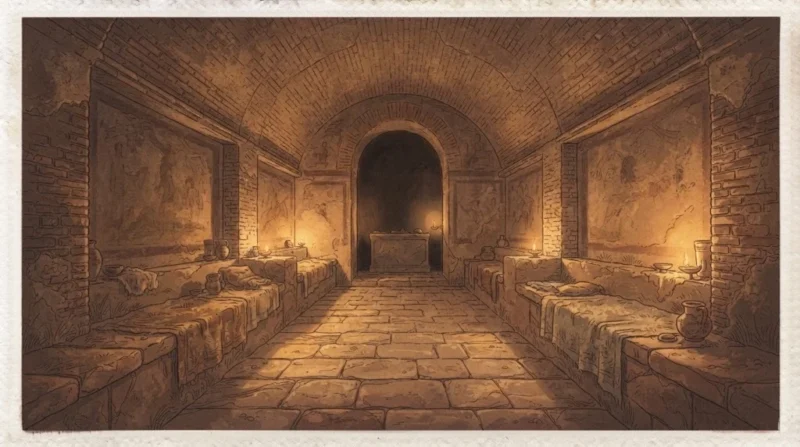
- Mithraeum of the Circus Maximus200 m
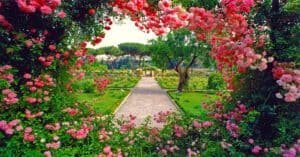
- Rome Rose Garden200 m
- Rione Ripa: What to See200 m



Upcoming events nearby
- Xi Niu: In Search of New Routes at the Rhinoceros Gallery, September 11, 2026 to January 6, 2027300 m
- LIVING! Julian Beck pittore at Ripense, Accademia Nazionale di San Luca, from July 10 to November 14, 2026600 m
- Volumina, the Park’s reading group: Il più grande uomo scimmia del Pleistocene at Museo del Foro Romano600 m
- I Colori dell’Antico. Marmi Santarelli at the Capitoline Museums, April 13, 2022 to April 30, 2032700 m

You might also like
- We Run Rome 2026 at the Baths of Caracalla, December 31, 2026
- Frank Horvat at the Baths of Caracalla, until January 10, 2027
- The Body of an American by Jacopo Gassmann at Teatro India, February 20 to 28, 2027
- Il commissario Montalbano with Vincenzo Pirrotta at Teatro Quirino, February 16 to 28, 2027
- Vorrei una voce by Tindaro Granata at Teatro India, February 9 to 14, 2027
- Il giuoco delle parti with Pippo Pattavina at Teatro Quirino, February 9 to 14, 2027